When a vehicle is damaged in an accident and requires repairs, many people assume that the role of an insurance company is to restore the vehicle to its pre-accident condition. In practice, however, disputes regarding vehicle repairs are quite common. These disputes may involve repair arrangements, the selection of replacement parts, or the disclosure of actual repair details.
An important question is whether an insurance company has the right to decide how a vehicle should be repaired on behalf of the vehicle owner. Equally important, what should vehicle owners check before accepting their repaired vehicle?
In this article, Attorney Arm Supasit examines a common practice in the insurance industry and highlights issues that consumers should be aware of.
What Does the Law Say About Vehicle Repairs Under an Insurance Policy?
In principle, an automobile insurance policy is intended to compensate for losses or damages in accordance with the terms and conditions of the policy. However, there is no specific provision requiring an insurance company to procure replacement parts itself or to carry out all repair work on its own.
In general, insurance companies maintain networks of repair garages or service centers with which they work. This approach allows them to manage costs and control vehicle repair expenses more efficiently.
Nevertheless, vehicle owners remain entitled to receive repairs that are of appropriate quality and suitable for restoring the vehicle to its original condition before the accident.
Why Should Vehicle Owners Request a Copy of the Repair Estimate Every Time?
One thing that many consumers overlook is the vehicle repair estimate.
A repair estimate can be compared to a doctor’s treatment plan, as it sets out details such as:
- Which parts will be replaced
- Which components will be repaired
- What type of replacement parts will be used
- The labor charges and other related costs
Requesting and reviewing the repair estimate in detail allows vehicle owners to verify whether the repairs have been carried out according to the appropriate standards and to compare the repair work with the actual damage sustained by the vehicle.
If the repair details are not clearly disclosed, consumers may not even know what type of replacement parts have been installed in their vehicles.
What Is the Difference Between Genuine Parts, Aftermarket Parts, and Counterfeit Parts?
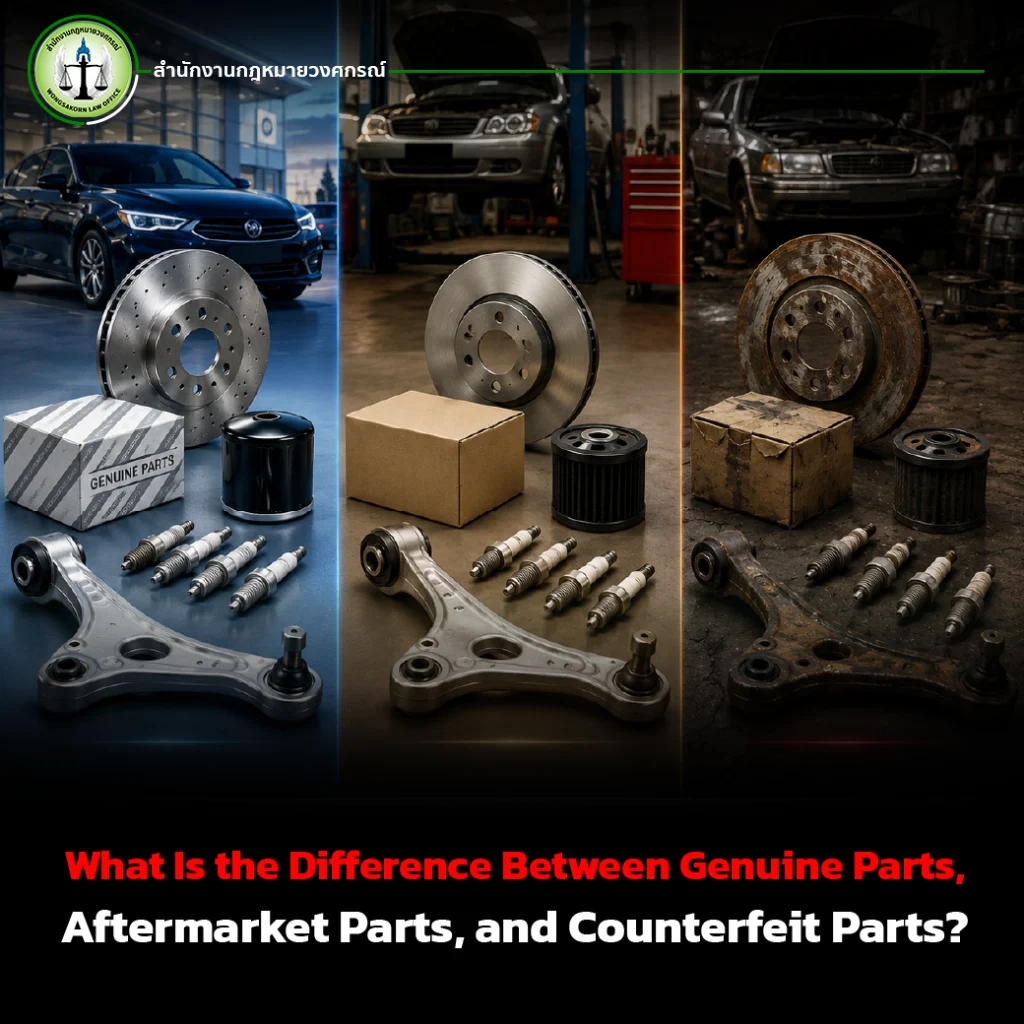
One of the most frequently debated issues in vehicle repairs concerns the type of replacement parts used. The differences are as follows:
1. Genuine Parts
Genuine parts are components manufactured by the vehicle manufacturer or officially approved by the manufacturer. They meet the original factory specifications of the vehicle.
2. Aftermarket Parts
Aftermarket parts are components manufactured by companies other than the vehicle brand owner. They can be used as replacements for original parts, although their quality may vary depending on the standards of each manufacturer.
3. Counterfeit Parts
Counterfeit parts are components that imitate genuine products or use trademarks without authorization. Such parts may constitute an infringement of intellectual property rights and may affect the safety of vehicle operation.
Vehicle owners should therefore clearly inquire about the type of parts being used in the repair process and whether such information is listed in the repair documentation.
If a Vehicle Originally Used Genuine Parts, How Should It Be Repaired?
A fundamental principle of insurance is to compensate for losses or damages in a manner that restores the property, as nearly as possible, to its condition prior to the incident.
Therefore, if a vehicle was originally equipped with genuine factory parts before the accident, the use of any other type of replacement part in the repair process should be clearly disclosed to, and approved by, the vehicle owner.
Consumers have the right to inquire about the parts being used in the repair process and to request supporting repair documentation for subsequent review and verification.
What Should You Do If Problems Are Found After Vehicle Repairs?
If a vehicle owner discovers any issues after receiving the repaired vehicle, such as:
- Unsatisfactory repair work
- Paint color mismatch
- Defective replacement parts
- Abnormal vehicle performance following the repair
the owner should promptly notify the repair garage, service center, or insurance company and retain all relevant evidence, including photographs, repair documents, and the vehicle handover receipt.
If the parties are unable to reach an agreement, consumers may file a complaint with the relevant regulatory authority or consult a lawyer to further assess their legal rights.
Repairing a vehicle after an accident involves more than simply sending the vehicle to a repair garage or service center and waiting to collect it. Vehicle owners should actively participate in reviewing the repair process at every stage, particularly with respect to the repair documentation and the types of replacement parts used.
Requesting repair documents, verifying the details of replacement parts, and closely monitoring the quality of the repair work can help consumers receive fair treatment and ensure that their vehicles are repaired appropriately and in accordance with the applicable standards.
If a dispute arises regarding vehicle repairs, insurance claims, or the rights of an insured person, seeking legal advice from a qualified professional at an early stage may help prevent further complications and protect those rights more effectively.
If You Encounter Vehicle Repair Issues, Do Not Let Your Rights Be Overlooked Seeking Legal Advice Early Is Often the Best Option
In practice, disputes relating to vehicle repairs after an accident occur more frequently than many people realize. These may involve unclear repair documentation, the use of replacement parts without prior notification, substandard repair work, or disagreements regarding the responsibilities of insurance companies and repair garages.
Importantly, consumers should not wait for problems to escalate or put themselves at a disadvantage. In many cases, reviewing documents, evidence, and policy terms from the outset may help prevent further losses and enable consumers to protect their rights more effectively.
Based on its experience in providing legal advice on insurance matters and motor vehicle accidents, Wongsakorn Law Office has found that many disputes can be resolved at an early stage when vehicle owners receive proper legal guidance before making important decisions.
Therefore, if you are experiencing issues relating to vehicle repairs, insurance claims, denial of liability, or disputes with repair garages or insurance companies, you may consult Wongsakorn Law Firm for legal advice and guidance on protecting your rights.
Most importantly, following a motor vehicle accident, you should not wait until a problem arises before consulting a lawyer. Establishing an appropriate course of action from the very beginning, preserving evidence, reviewing relevant documents, and communicating properly with the insurance company may be important factors in protecting your rights and interests in the long term.