
Over the past several years, Thailand has remained one of the most popular destinations for foreign nationals, particularly Chinese nationals seeking to live, invest, or retire in the country. This is largely due to Thailand’s reasonable cost of living, well-developed infrastructure, diverse cuisine, and convenient transportation system.
However, one of the most common questions asked by Chinese nationals is:
“Can Chinese nationals purchase a house or own land in Thailand?”
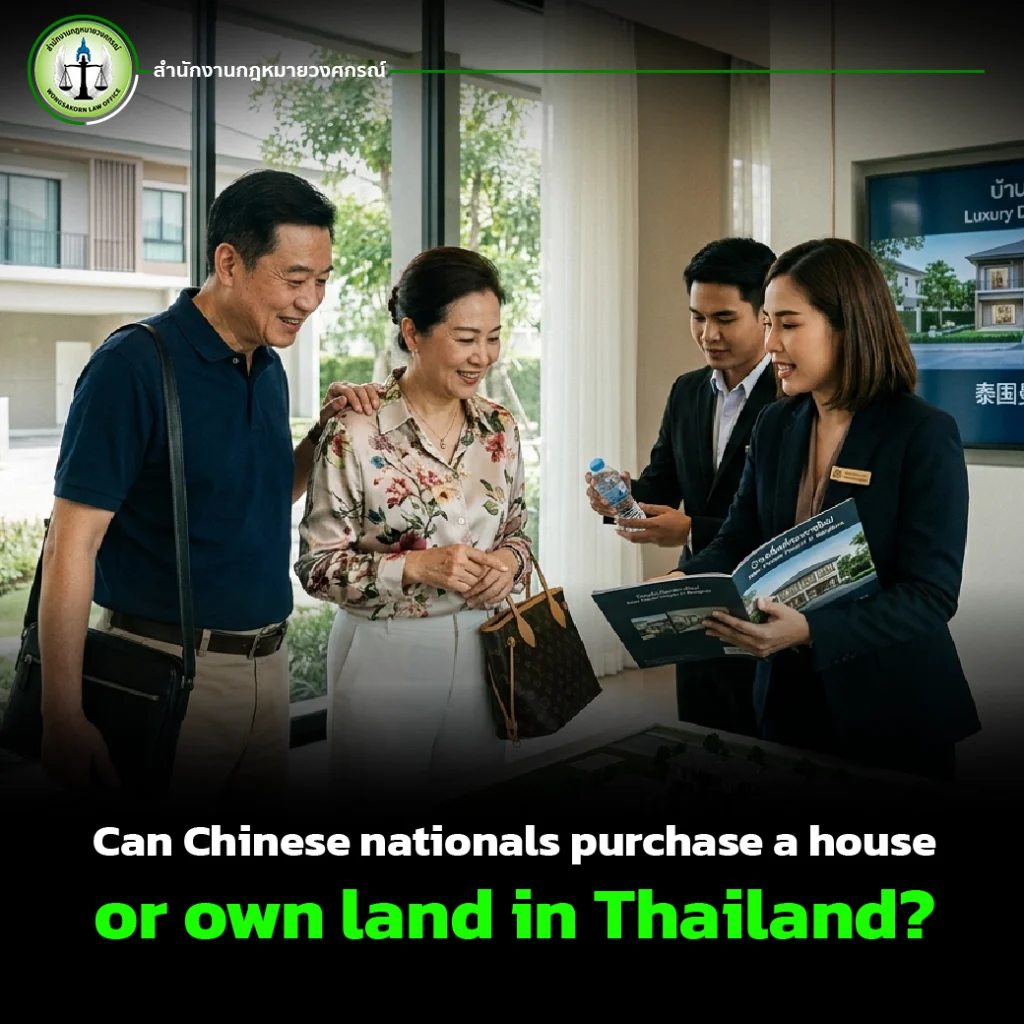
The answer is that foreign nationals may acquire rights in certain types of real estate in Thailand, but such ownership or use must be structured and carried out in compliance with Thai law.
In this article, Wongsakorn Law Firm explains the lawful options available to Chinese nationals who wish to own a home or make use of real estate in Thailand.
Can Chinese Nationals Own Land in Thailand?
Under Thai law, foreign nationals are generally prohibited from directly owning land in Thailand in the same manner as Thai citizens.
As a result, a Chinese national cannot, in ordinary circumstances, purchase land and register ownership in his or her own name.
In the past, some individuals attempted to acquire land through nominees or other structures that were not compliant with Thai law. Such arrangements may create significant legal risks, including civil and criminal liability, as well as the potential loss of the property in the future.
For this reason, foreign nationals who wish to invest in or reside in Thailand should pursue only those ownership or investment structures that are clearly recognized and permitted under Thai law.
Chinese Nationals Can Purchase Condominium Units in Thailand
One of the most popular ways for Chinese nationals to own real estate in Thailand is through the purchase of a condominium unit.
Thai law permits foreign nationals to own condominium units, provided that the legal requirements are satisfied, including compliance with the foreign ownership quota applicable to the condominium project.
Key advantages include:
- Direct ownership of the condominium unit
- The ability to resell the unit in the future
- The ability to lease the unit and generate rental income
- Greater legal certainty and security compared to high-risk ownership structures
For these reasons, purchasing a condominium has become one of the most common and practical options for Chinese nationals seeking either a residence or a real estate investment in Thailand.
How Can Chinese Nationals Have a House with Land in Thailand?
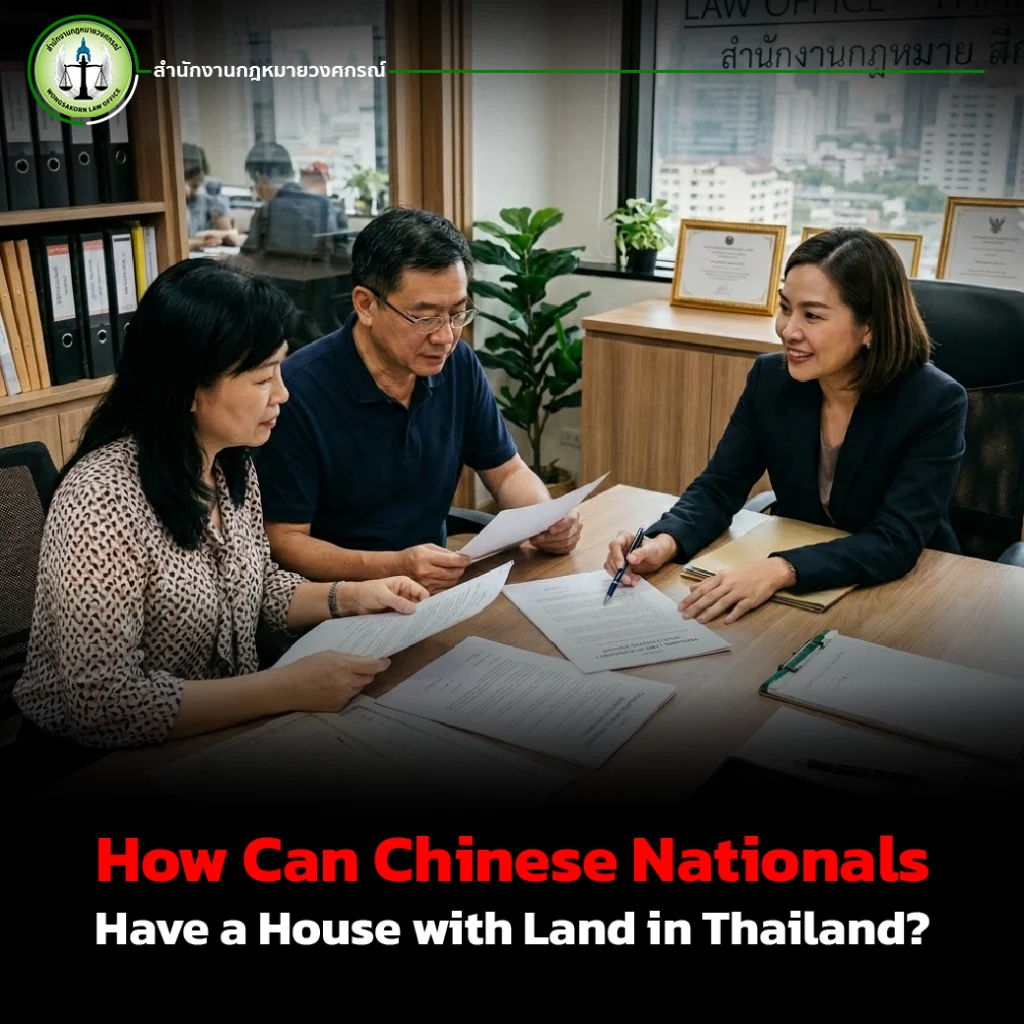
Although Chinese nationals cannot directly own land in Thailand, Thai law provides several legal mechanisms that allow foreign nationals to lawfully use and benefit from land.
A usufruct is a right that can be registered with the relevant authority, granting the holder the right to possess, use, and enjoy the benefits derived from the land or immovable property.
Examples include:
- Living in a house on the land
- Gardening or agricultural use
- Operating a business as permitted by law
- Leasing the property and receiving rental income
A usufruct allows Chinese nationals to legally use and benefit from land in Thailand, even though they do not hold ownership of the land itself.
Long-Term Lease Rights
Another option is to enter into a long-term lease agreement in accordance with Thai law.
Leasing land or a house on a long-term basis can enable foreign nationals to reside in and make use of real estate without acquiring ownership.
However, lease agreements should be carefully reviewed and structured by legal professionals to help prevent future disputes and protect the interests of all parties involved.
Where the Foreign National Has a Thai Spouse
Many Chinese nationals who are married to Thai citizens often ask:
“Can a house or land be purchased if my spouse is Thai?”
As a general rule, a Thai national spouse may legally own land in Thailand.
However, the ownership structure and rights relating to the property should be carefully planned to avoid potential issues in the future, such as:
- Division of property
- Transfer of ownership rights
- Divorce proceedings
- Inheritance matters
In many cases, legal mechanisms such as a usufruct or other rights recognized under Thai law may be utilized to provide greater security and protection for both parties.
Do Not Rely on Illegal Land Ownership Arrangements
Today, there is a significant amount of information and advertising online regarding ways for foreign nationals to acquire land rights in Thailand.
Some of these arrangements may carry substantial legal risks or could be regarded as attempts to circumvent Thai law.
Before making any investment decision, Chinese nationals should carefully verify the information they receive and seek advice from qualified real estate legal professionals.
Establishing a legally compliant ownership or usage structure from the outset is always safer and more effective than attempting to resolve legal disputes after problems arise.
Wongsakorn Law Firm Is Ready to Assist Chinese Nationals Seeking to Own a Home in Thailand
If you are a Chinese national or other foreign investor seeking to purchase a home, invest in real estate, enter into a long-term lease, register a usufruct, or establish a legally compliant real estate ownership structure in Thailand, Wongsakorn Law Firm is ready to provide comprehensive legal consultation, document review, and related legal services.
A successful real estate investment is not merely about acquiring property. It is about ensuring that the property can be legally owned, used, and enjoyed in a secure manner while receiving long-term protection under Thai law.
If you require legal advice regarding the purchase of a home, the registration of a usufruct, long-term lease arrangements, or real estate ownership structures for Chinese nationals, you may contact Wongsakorn Law Firm for guidance tailored to your specific circumstances.