


As many people are well aware, in an era when communication through the internet and online platforms has become part of many people’s daily lives, images and various types of information can be published easily and quickly, reaching a large number of people within a short period of time. However, one important thing we must keep in mind is that not all types of information can be produced, possessed, published, or shared without restrictions, especially pornographic content, which may involve offenses under the Criminal Code and the Computer Crime Act.
Many people may mistakenly believe that publishing or sharing information through online channels is simply a matter of sharing general content. However, from a legal perspective, such actions may constitute an offense if all the elements of an offense prescribed by law are met. Therefore, content creators, publishers, individuals who share or forward content, and anyone else involved should understand the relevant laws in order to exercise caution and prevent their actions from leading to legal problems later.
Criminal Code Section 287: Offenses Relating to Obscene Materials
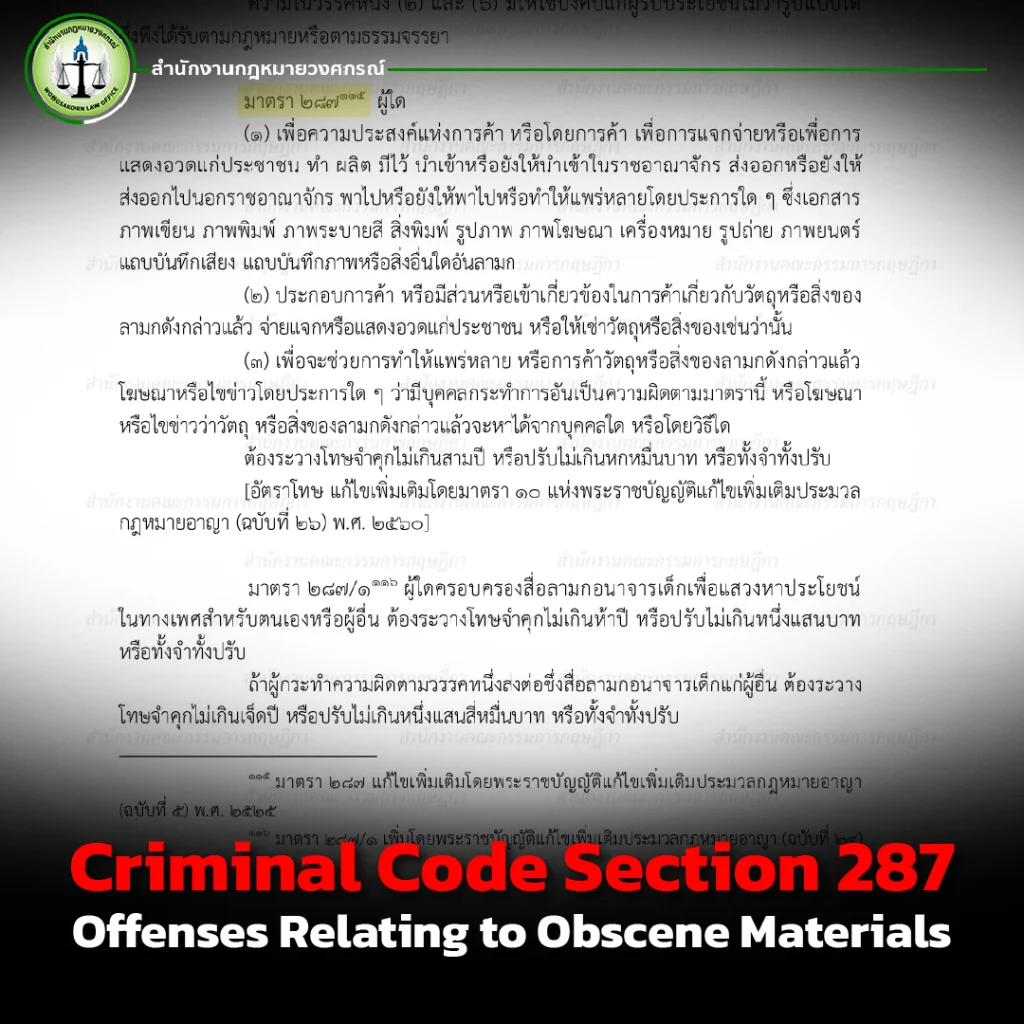
Section 287 of the Criminal Code sets out offenses involving documents, photographs, films, publications, or other obscene materials. It covers several types of conduct, which can be divided into three main categories as follows:
Case 1: Production or Distribution for Commercial Purposes
This case involves a person who makes, produces, possesses, imports, exports, transports, or distributes obscene materials for commercial purposes, for distribution, or for public display. Examples include producing content and publishing it with the aim of obtaining commercial benefits or making it available to the general public.
Case 2: Involvement in the Trade of Obscene Materials
This category covers individuals who engage in or are involved in the trade of obscene materials, including distributing them, publicly displaying them, or renting out such objects or materials. In other words, a person does not have to be the content creator to be held liable. Those who participate in or are involved in commercial activities as prescribed by law may also be held legally responsible.
Case 3: Advertising or Encouraging the Dissemination of Obscene Materials
This case involves a person who advertises or publishes messages to facilitate the dissemination or trade of obscene materials. Examples include promoting or informing the public about where such materials can be obtained, from whom they can be obtained, or how to access them.
The three cases mentioned above differ in their elements and the nature of the conduct involved. From a legal perspective, the facts must therefore be carefully examined to determine the role of each person involved and whether they acted with the intent or purpose prescribed by law. Section 287 provides for a penalty of imprisonment for up to three years, a fine of up to 60,000 baht, or both.
How Do Sections 14(4) and 14(5) of the Computer Crime Act Apply?
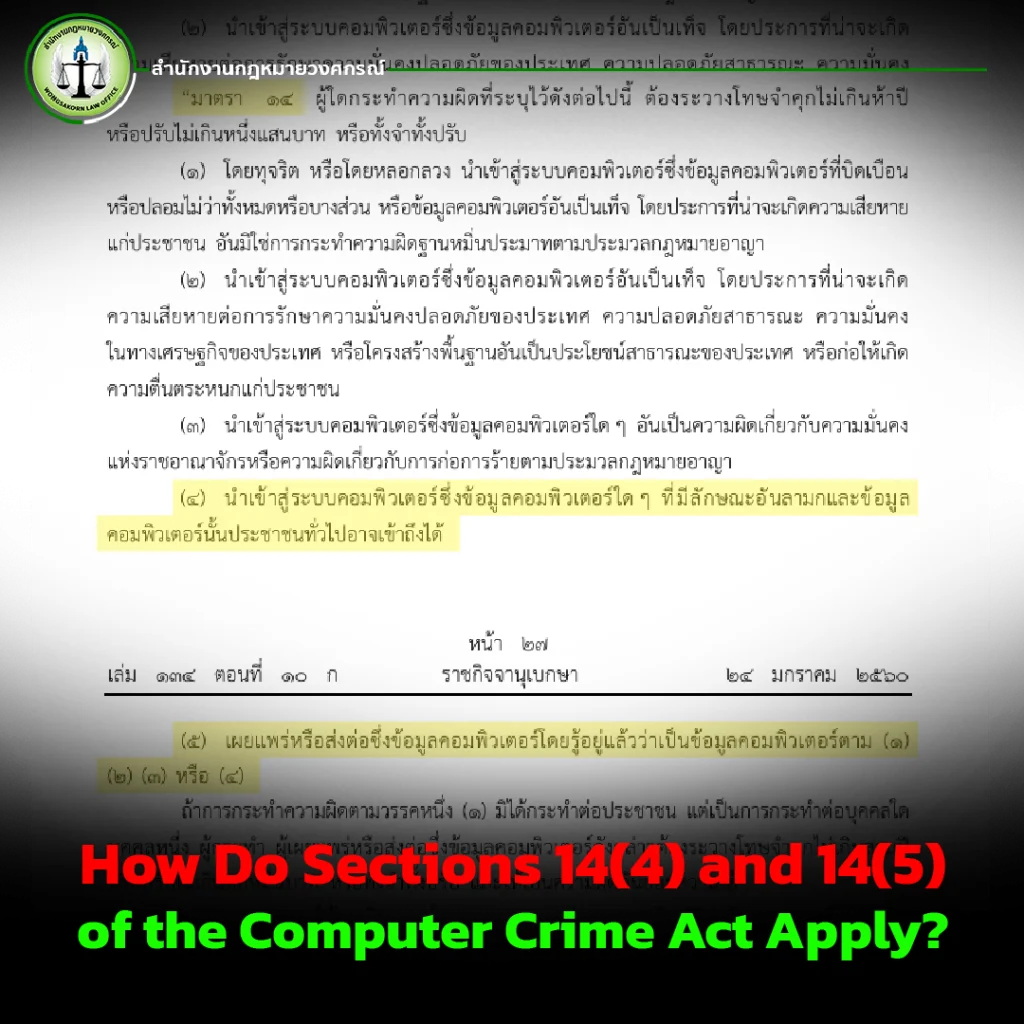
In addition to the Criminal Code, publishing images or information of an obscene nature through a computer system may also involve the Computer Crime Act B.E. 2550 (2007), as amended by the second amendment in B.E. 2560 (2017), particularly Sections 14(4) and 14(5).
Section 14(4): Inputting Obscene Computer Data into a Computer System
This provision establishes an offense for anyone who inputs obscene computer data into a computer system, provided that the data is accessible to the general public.
The key issue is therefore not simply whether data has been entered into a computer system, but also whether the data is considered obscene under the law and whether it can be accessed by the general public.
Section 14(5): Disseminating or Forwarding Data with Prior Knowledge
This section covers individuals who disseminate or forward computer data while already knowing that the data falls under Sections 14(1) through 14(4). Therefore, if a person already knows that the data they are forwarding falls within Section 14(4) but still proceeds to publish or forward it, they may be held liable under this provision.
The key point to consider is the sender’s awareness or knowledge, because the law specifies that the dissemination or forwarding must be carried out with prior knowledge. This does not mean that forwarding data in every case automatically constitutes an offense.
Under Paragraph One of Section 14, a person who commits such an offense may be subject to imprisonment for up to five years, a fine of up to 100,000 baht, or both.
Do Content Creators, Publishers, and Individuals Who Forward Content Have Different Legal Liabilities?
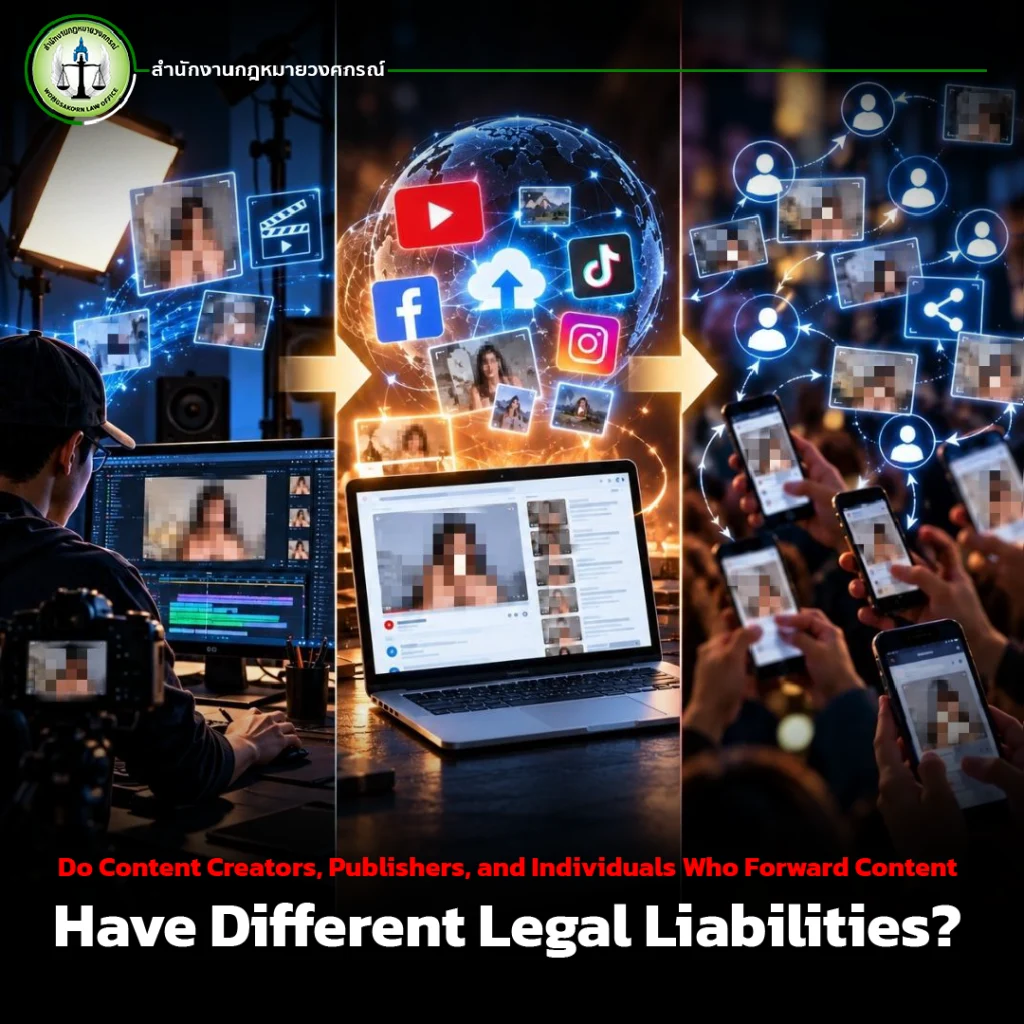
Liability must be assessed based on each individual’s role, whether they create or produce the data, store it for purposes covered by law, publish it through online channels, or forward it to other people, because each role may involve different elements of an offense.
In addition, if several people act together, the facts concerning the division of responsibilities, cooperation, and intent of each individual must be considered alongside the legal principles governing joint offenders. Simply being a member of a group or participating in the same communication channel is not, by itself, sufficient to conclude that everyone is equally guilty.
What Should You Do If You Are Accused of Committing an Offense?
If you are contacted by authorities or accused of being involved in the production, publication, or transmission of data that may constitute an offense, you should prioritize examining the facts and evidence, such as information about the content creator, publisher, distribution channels, how the data can be accessed, and the circumstances indicating the knowledge or awareness of those involved.
Evidence should be collected lawfully, and any data that may be relevant to the case should not be altered or destroyed. You should also consult a lawyer to assess the relevant legal issues before giving a statement or taking any action that may affect your rights.
The Role of a Lawyer in Cases Involving the Distribution of Obscene Content
คดีที่เกี่ยวข้องกับประมวลกฎหมายอาญา มาตรา 287 และ พ.ร.บ.คอมพิวเตอร์ มาตรา 14 (4) และ (5) เป็นคดีที่ต้องพิจารณาทั้งลักษณะของข้อมูล วิธีการเผยแพร่ วัตถุประสงค์ และเจตนาของผู้เกี่ยวข้อง ทนายความจึงมีบทบาทสำคัญในการตรวจสอบองค์ประกอบความผิด วิเคราะห์พยานหลักฐาน ให้คำปรึกษาเกี่ยวกับสิทธิของผู้ถูกกล่าวหา ตลอดจนช่วยวางแนวทางการดำเนินคดีตามกระบวนการยุติธรรม
การผลิตสื่อ มีไว้เพื่อวัตถุประสงค์ตามที่กฎหมายกำหนด เผยแพร่ หรือนำส่งข้อมูลที่มีลักษณะอันลามกอนาจารณ์ อาจก่อให้เกิดความรับผิดทั้งตามประมวลกฎหมายอาญาและ พ.ร.บ.คอมพิวเตอร์ได้ โดยเฉพาะเมื่อการกระทำนั้นมีองค์ประกอบครบตามกฎหมาย การทำความเข้าใจข้อกฎหมายตั้งแต่ต้นจึงเป็นเรื่องสำคัญ หากมีข้อสงสัยหรือกำลังเผชิญปัญหาทางคดี ควรปรึกษาทนายความเพื่อประเมินข้อเท็จจริงและวางแนวทางดำเนินการอย่างเหมาะสม