


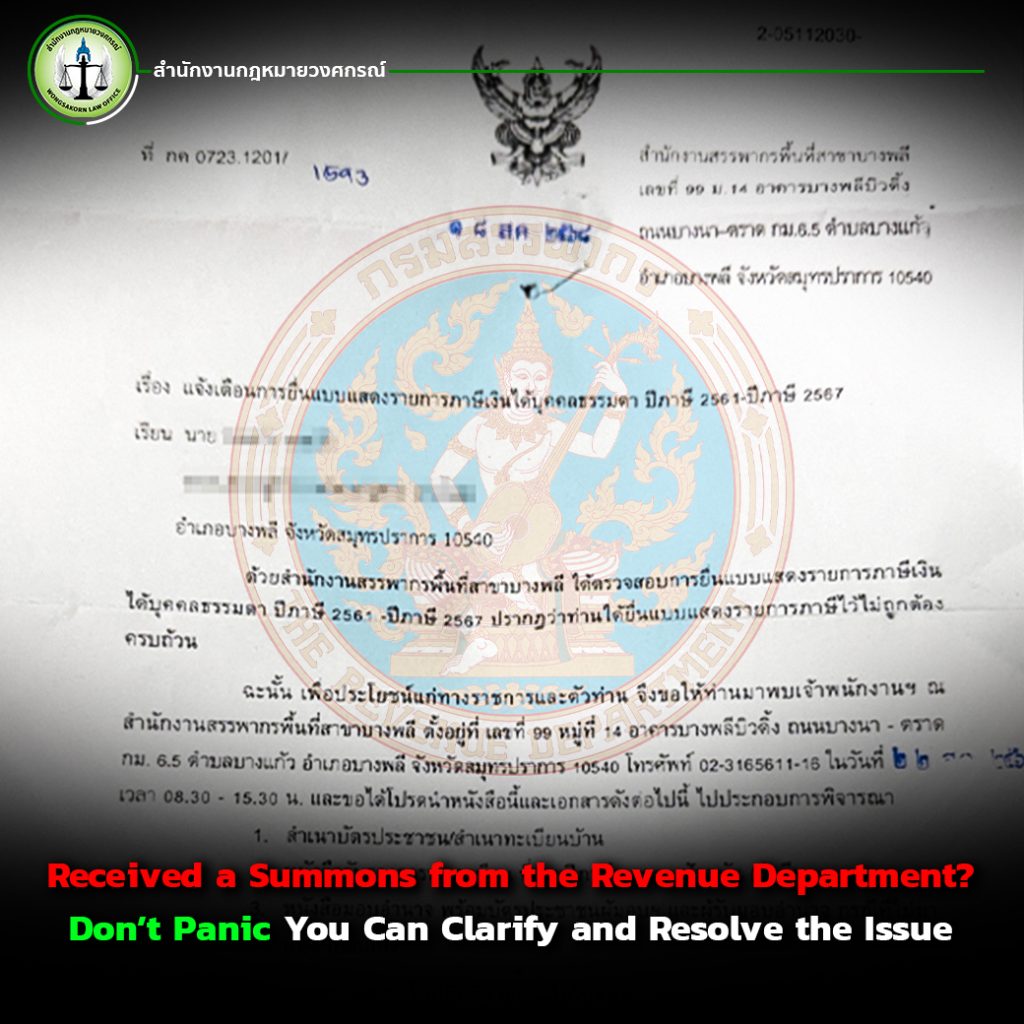
Receiving a summons from the Revenue Department often causes taxpayers to worry. Many fear that it might lead to criminal charges or serious legal trouble. In reality, however, a summons is usually part of the normal process where officials request taxpayers to clarify certain information or correct misunderstandings in their tax filings. If you understand the procedure and prepare the necessary documents, the issue can usually be resolved without undue concern.
Why Does the Revenue Department Issue Summons?
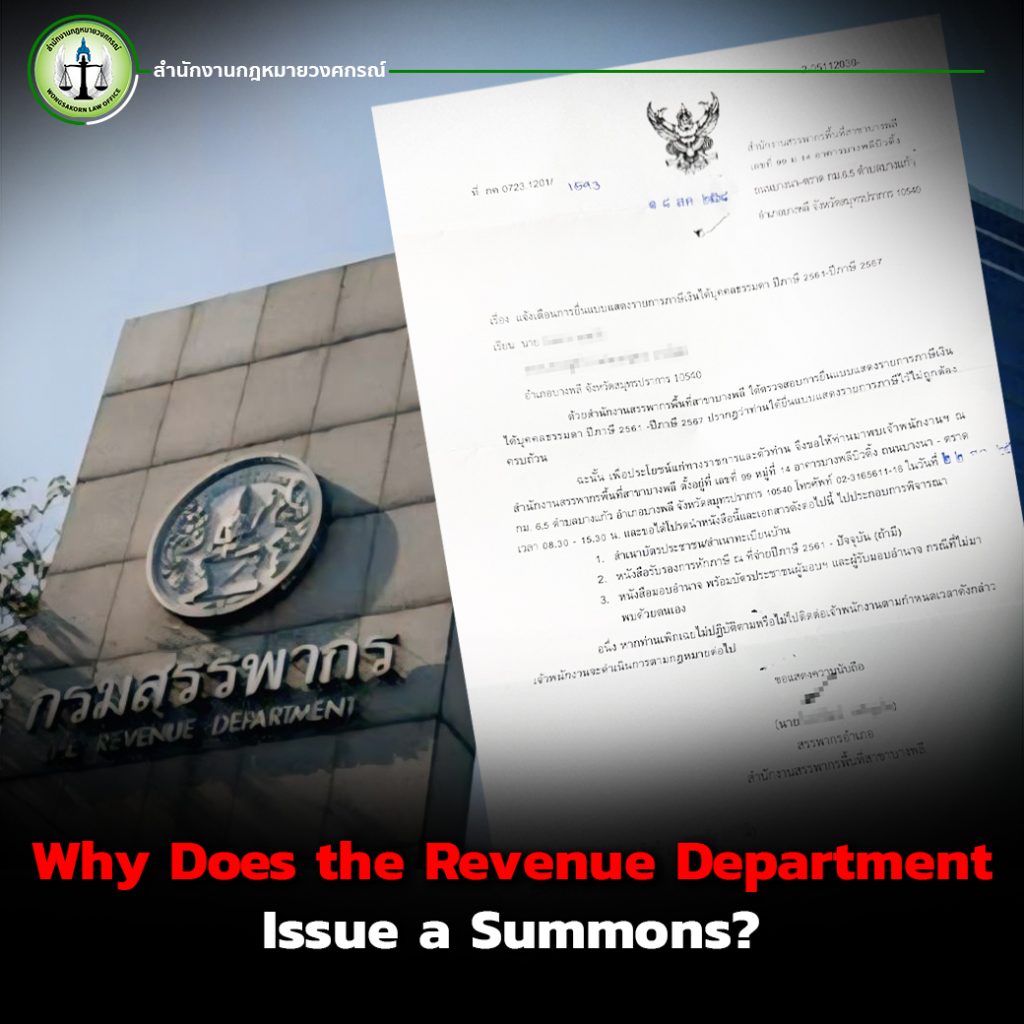
Many wonder what it means to be summoned by the Revenue Department. The main reasons include:
1. Suspicious tax filings – for example, declared income does not match information reported by other agencies.
2. Errors in tax calculation – such as incorrect data entry or misinterpretation of tax deductions.
3. Discrepancy between income and spending – e.g., large bank transactions that do not align with declared income.
4. Random audits – sometimes officials conduct random checks to verify accuracy.
Thus, receiving a summons does not automatically mean wrongdoing; it is an opportunity to provide clarification.
What Should You Do If You Receive a Summons?
1. Read the summons carefully – It specifies the date, time, place, and purpose. Understand clearly why you were summoned.
2. Prepare relevant documents – such as income statements, withholding tax certificates, bank statements, expense records, or investment documents.
3. Verify your information before the meeting – Ensure that the filed data matches the actual documents.
4. Attend as scheduled – Ignoring the summons could escalate the matter unnecessarily.
Meeting with the Revenue Department Is Not as Intimidating as It Seems
Many fear they will be accused immediately, but in reality, the meeting is a chance to explain. If errors are found in your tax return, you can file an amended return. With proper documentation, officers are usually willing to accept corrections.
Situations That Require Extra Caution
- Filing taxes that do not match actual income, which may appear as intentional evasion.
- Lacking proof of income or expenses, which could affect tax deductions.
- Failing to appear after being summoned, which may result in fines or legal action.
In such cases, consult an expert such as a tax expert. A lawyer can help you respond properly and minimize risk.
Why Should You Consult a Lawyer When Dealing with the Revenue Department?
A summons may cause anxiety, but having a lawyer by your side can make the process far smoother. Lawyers can:
1. Analyze and review documents – Identify errors or weak points in your filing.
2. Communicate with officials effectively – Legal and tax language may be clearer when explained by a lawyer.
3. Prevent misinterpretation – A lawyer ensures that your statements are not misunderstood as tax evasion.
4. Suggest solutions – Such as filing an amended return or negotiating reduced penalties.
Having a knowledgeable lawyer helps you prepare accurate explanations, avoid unnecessary penalties, and proceed with confidence.
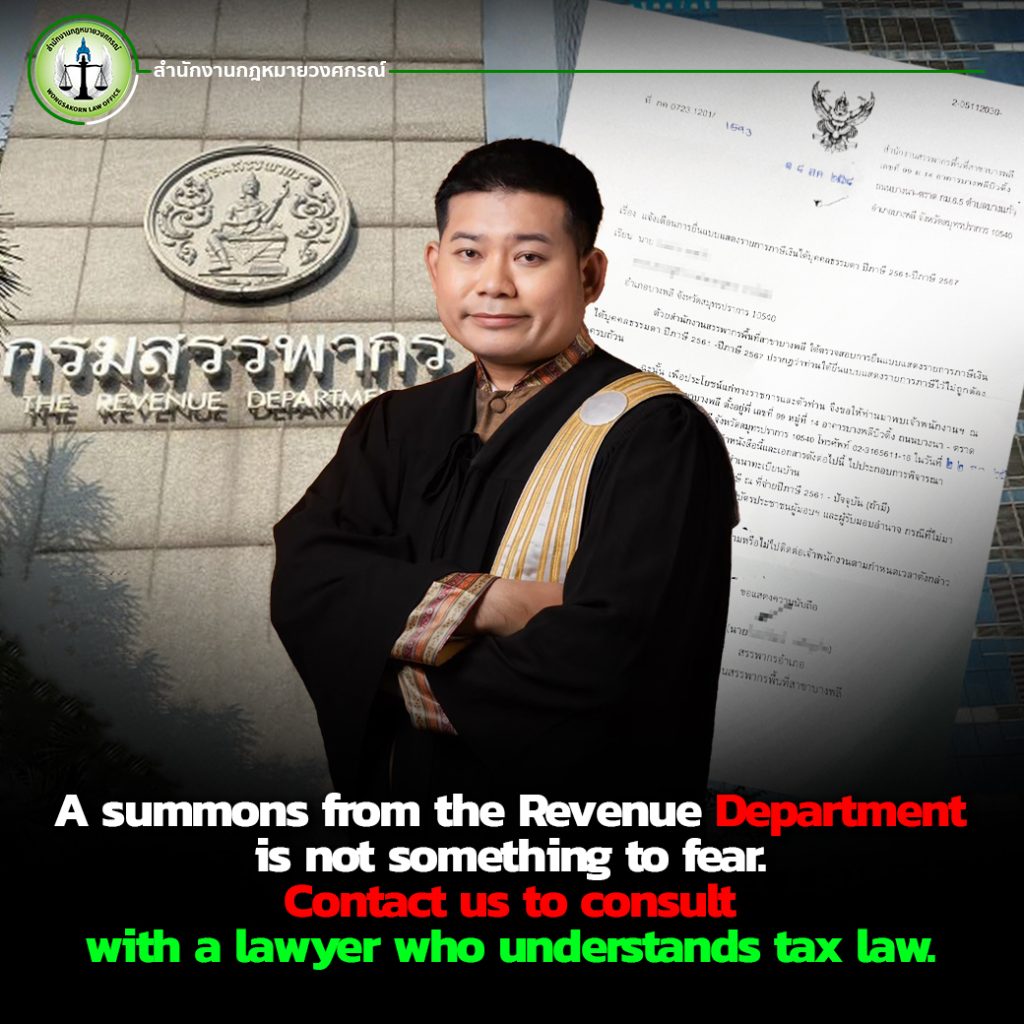
A summons from the Revenue Department is not something to fear. Contact us to consult with a lawyer who understands tax law.
How Can Tax Issues Be Resolved?
- Amended returns – Correct inaccurate information by filing additional forms.
- Back tax payments – Settle unpaid taxes along with surcharges.
- Tax appeals – If you disagree with the assessment, you may file an appeal under the law.
👉 A summons from the Revenue Department is not something to fear. It is an opportunity to clarify matters and resolve misunderstandings. The key is preparation, proper documentation, and, if necessary, professional legal support.
Click >>Contact Us<< for professional tax legal consultation.
The Revenue Department is not to be panick. If you are truthful, prepared, and well-advised, any issue can be resolved!