


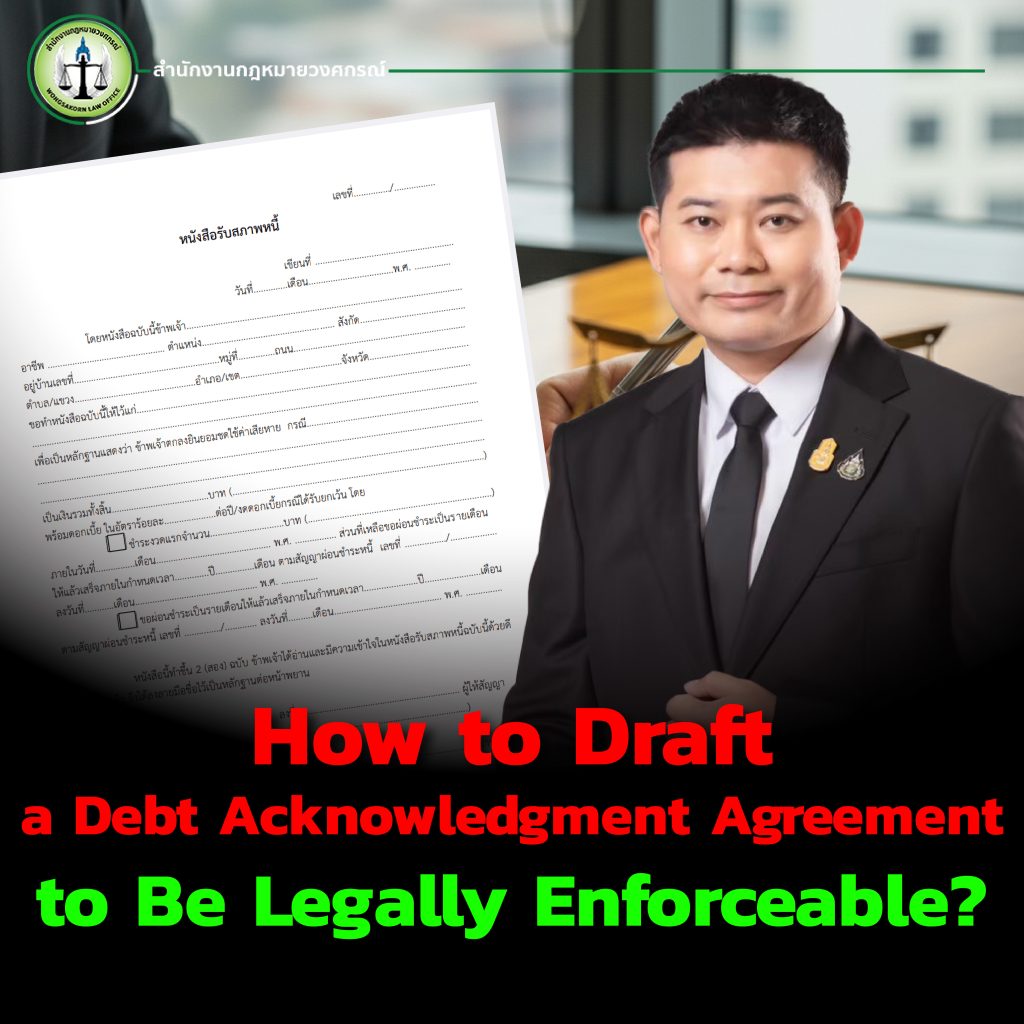
In the world of transactions, whether it is borrowing money, purchasing property, or providing services with outstanding payments, the term “debt” is something frequently encountered. When a debt arises, the most important thing is to have clear documents or evidence to confirm the legal relationship between the debtor and the creditor. One of the most effective tools to safeguard the rights of the creditor is the “Debt Acknowledgment Agreement.”
The question is: how can you draft a Debt Acknowledgment Agreement so that it is truly legally enforceable? This article will explain the key principles, essential components, and precautions, as well as why hiring a lawyer to draft such agreements can provide greater protection of your rights.
What is a Debt Acknowledgment Agreement?

A Debt Acknowledgment Agreement is a document in which the debtor expressly admits that they owe a debt to the creditor and agree to repay it as stipulated. This agreement serves as confirmation of an existing debt, not the creation of a new one. Therefore, having a Debt Acknowledgment Agreement provides the creditor with strong evidence in case legal enforcement in court becomes necessary.
Why is a Debt Acknowledgment Agreement Important?

1. Clear Legal Evidence
In the event of a dispute, the creditor can use the agreement to confirm their right to claim repayment.
2. Reduces the Chance of Debt Denial
Once the debtor signs the acknowledgment, it becomes much harder for them to deny the existence of the debt.
3. Facilitates Litigation
Courts can rely on the agreement as evidence when ruling that the debtor must repay the debt.
Essential Components of a Debt Acknowledgment Agreement
Drafting such an agreement involves more than just writing down numbers and signatures. It must include complete details to be legally enforceable:
1. Details of the Parties – Full names, ID numbers, and addresses of both creditor and debtor.
2. Exact Debt Amount – Clearly state the total debt owed, and specify which contract it originated from (loan, sales, or services).
3. Interest Rate (if applicable) – Must be explicitly stated and within the legal limit (currently not exceeding 15% annually, unless otherwise stipulated by law).
4. Repayment Period – Specify when repayment must be made and the consequences of default (e.g., late interest charges).
5. Method of Repayment – Lump sum, installments, and how payments must be made (e.g., bank transfer).
6. Default Clause – State that in case of default, the creditor may immediately file a lawsuit without further notice.
7. Signatures of Debtor and Witnesses – Having witnesses strengthens the legal weight of the document.
Example of a Debt Acknowledgment Clause
“I, Mr. A, acknowledge that I owe Mr. B the sum of … baht under the Loan Agreement dated … and agree to repay by … date. In case of default, I agree that Mr. B has the right to sue and enforce repayment immediately according to the law.”
This type of wording clearly confirms that the debtor acknowledges the debt and agrees to pay.
Precautions in Drafting a Debt Acknowledgment Agreement
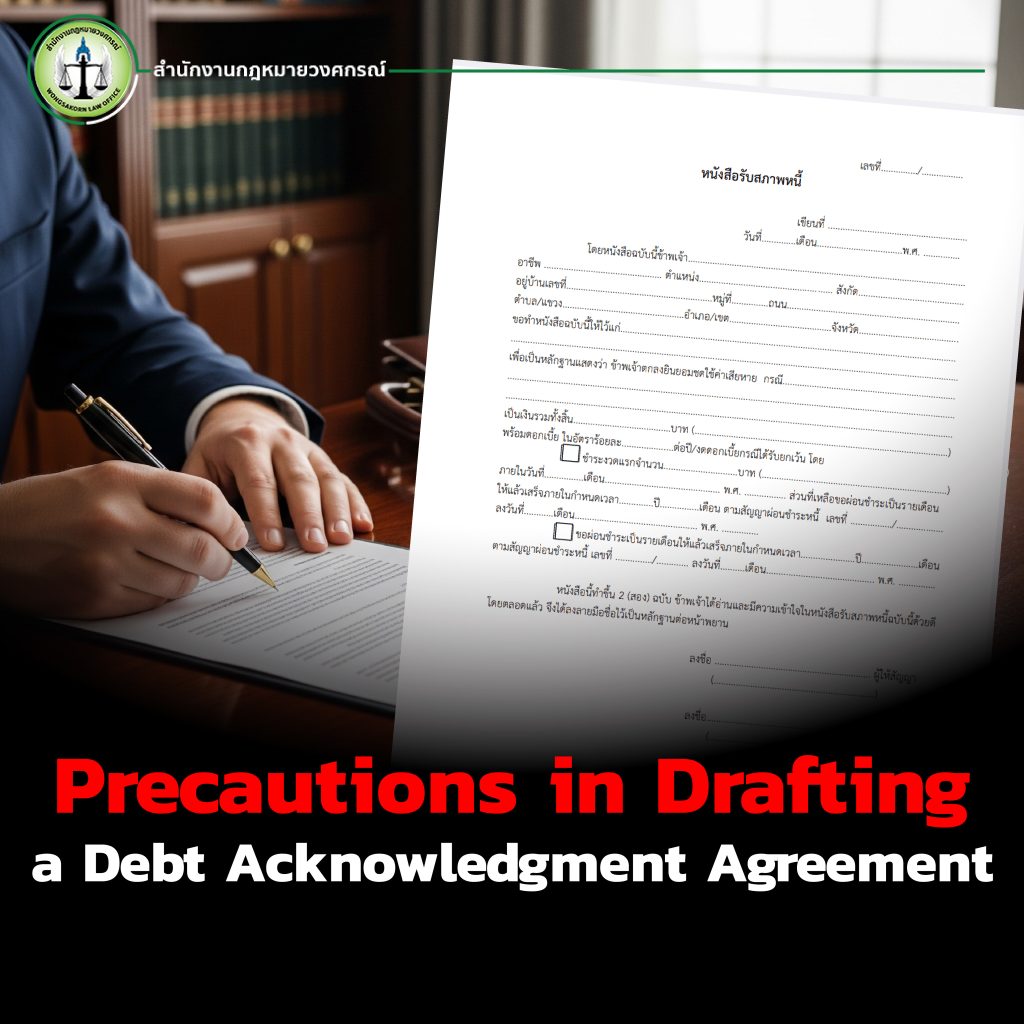
1. Avoid ambiguous wording – state clearly the origin and amount of the debt.
2. Avoid generic templates – they may miss essential legal details.
3. Check the legality of interest – excessive rates may not be enforceable.
4. Require real signatures – not just typed names.
5. Safely store documents – losing them may result in losing the right to prove the debt.
What if the Debtor Fails to Comply?
If the debtor does not comply with the agreement, the creditor may file a lawsuit using the agreement as strong evidence in court to enforce repayment.
Why Should a Lawyer Draft the Agreement?

Although creditors may draft the agreement themselves, in reality self-drafted agreements often contain flaws, missing information, ambiguous terms, or legally invalid clauses. These shortcomings may result in losing rights during litigation.
Engaging a lawyer or professional law Office ensures that the agreement is comprehensive, legally correct, and minimizes future disputes.
A Debt Acknowledgment Agreement is a crucial tool to protect creditors’ rights by confirming that the debtor owes and agrees to repay. If drafted correctly, it serves as strong evidence in lawsuits and enforcement proceedings.
However, drafting such an agreement is not a simple task. Doing it without legal knowledge may render the agreement unenforceable. Therefore, using the services of Wongsakorn Law Office or engaging a professional lawyer ensures that your documents are accurate, enforceable, and fully protective of your rights.
👉 If you want your Debt Acknowledgment Agreement to be legally enforceable, contact Wongsakorn Law Office for consultation and professional legal services.