


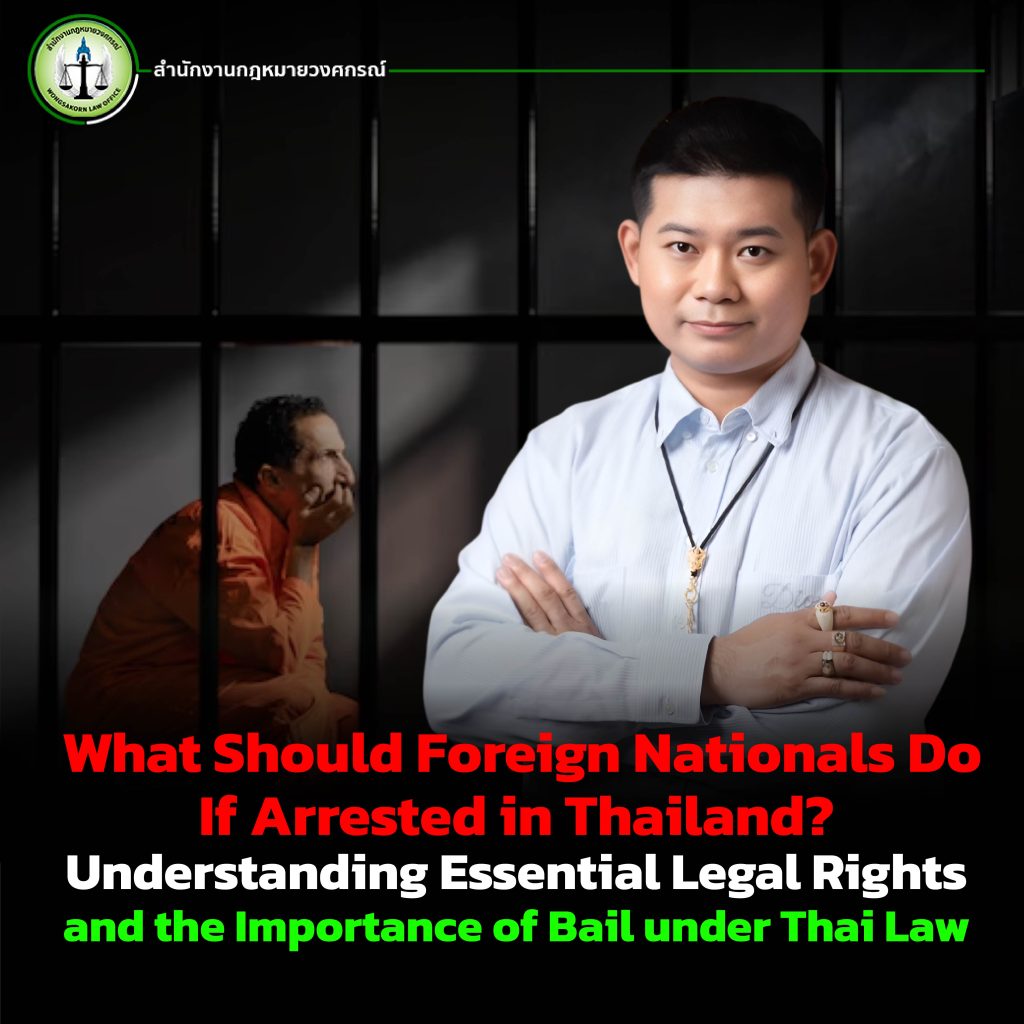
Thailand welcomes a large number of foreign nationals each year for residence, employment, tourism, and business purposes. However, despite the best precautions, situations may arise in which a foreign national is arrested by Thai authorities, whether in connection with criminal matters, labor disputes, immigration issues, or other legal proceedings under Thai law.
It is important to emphasize that foreign nationals in Thailand are entitled to fundamental legal rights under Thai law, particularly rights within the criminal justice process and the right to apply for bail in order to defend their case fairly. Unfortunately, many foreign nationals are not fully aware of these rights, which may place them at a disadvantage during legal proceedings.
This article provides an overview of the essential rights of foreign nationals when arrested in Thailand and explains how these rights, including the right to bail, can be exercised to ensure proper legal protection.
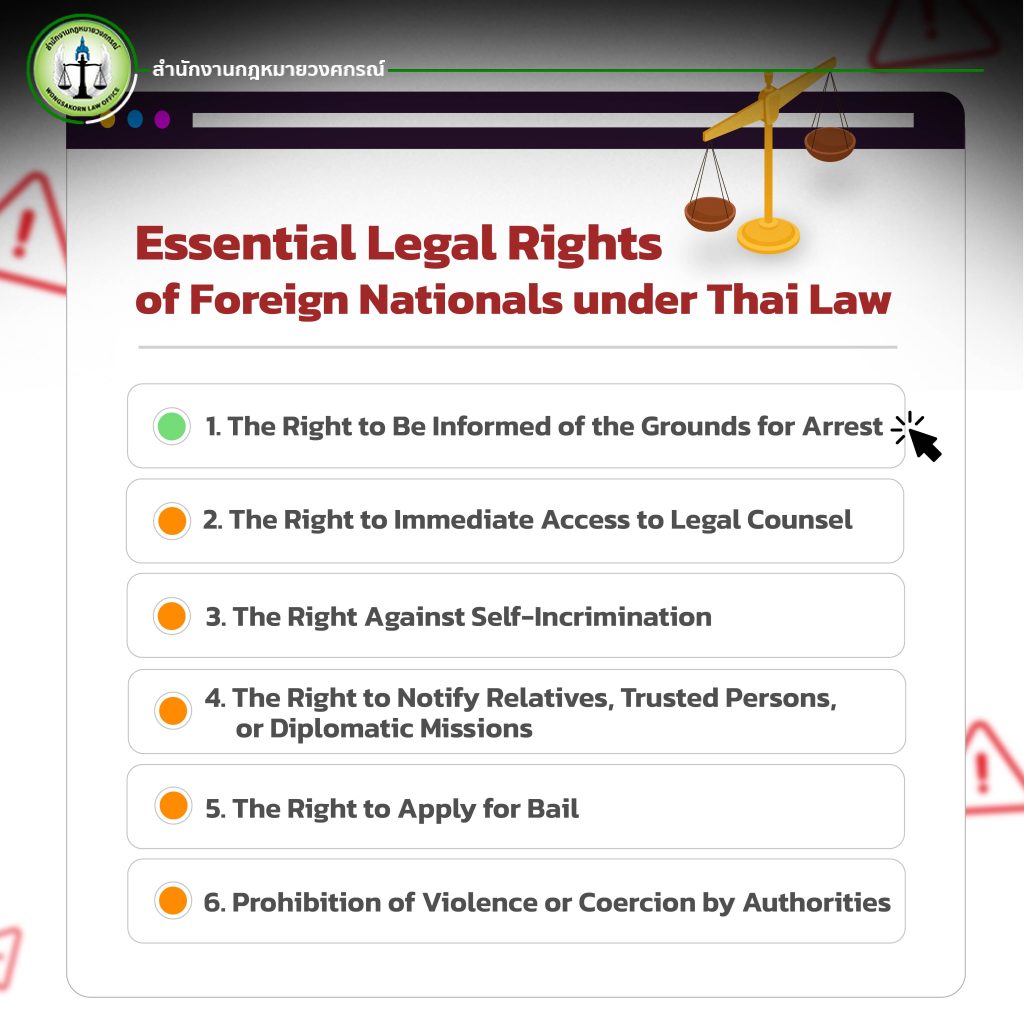
1. The Right to Be Informed of the Grounds for Arrest
One of the most fundamental rights of an arrested person is the right to be informed of the reason for the arrest.
Thai law requires law enforcement officers to clearly inform the arrested person of:
- The specific charge(s),
- The factual grounds for the arrest, and
- The legal provisions relied upon.
Failure to properly inform the arrested person may render the arrest unlawful and may be challenged during the investigation or court proceedings.
2. The Right to Immediate Access to Legal Counsel
A foreign national who has been arrested has the right to consult with a lawyer immediately, either:
- A lawyer of their own choosing, or
- A lawyer arranged with the assistance of the authorities.
The arrested person is also entitled to consult with legal counsel privately before providing any statement to investigators. Early legal representation is particularly important in cases involving language barriers, as it helps prevent misunderstandings and protects the individual’s legal interests from the outset.
3. The Right Against Self-Incrimination
Under Thai law, an arrested person has the right to:
- Remain silent,
- Decline to answer certain questions, or
- Wait until legal counsel is present before giving a written statement.
It is important to note that remaining silent does not constitute an offense. Any statement given may later be used as evidence in legal proceedings; therefore, exercising this right carefully and with legal guidance is strongly advised.
4. The Right to Notify Relatives, Trusted Persons, or Diplomatic Missions
A foreign national who has been arrested has the right to request that authorities:
- Notify a relative or trusted person, and
- Inform the relevant embassy or consulate.
Notification of the embassy or consulate is particularly significant, as diplomatic missions may assist with communication, coordination, and the protection of their citizen’s fundamental rights.
5. The Right to Apply for Bail
The right to apply for bail is one of the most important procedural rights available to an arrested person.
Where Thai law permits temporary release, a foreign national may submit a bail application at any stage of the proceedings, including:
- During the police investigation,
- At the public prosecutor’s stage, or
- Before the court.
Bail allows the suspect or defendant to prepare their defense effectively, gather evidence, and consult with legal counsel outside of detention. For foreign nationals, bail may be subject to specific conditions, such as financial security, a guarantor, or restrictions on travel outside Thailand. Professional legal representation significantly increases the likelihood of a successful bail application.
6. Prohibition of Violence or Coercion by Authorities
Law enforcement officers are strictly prohibited from using violence, threats, physical force, or coercive measures to compel a confession.
Any evidence obtained through unlawful means may be challenged and may be deemed inadmissible by the court. Arrested persons have the right to file complaints and seek legal remedies if such violations occur.
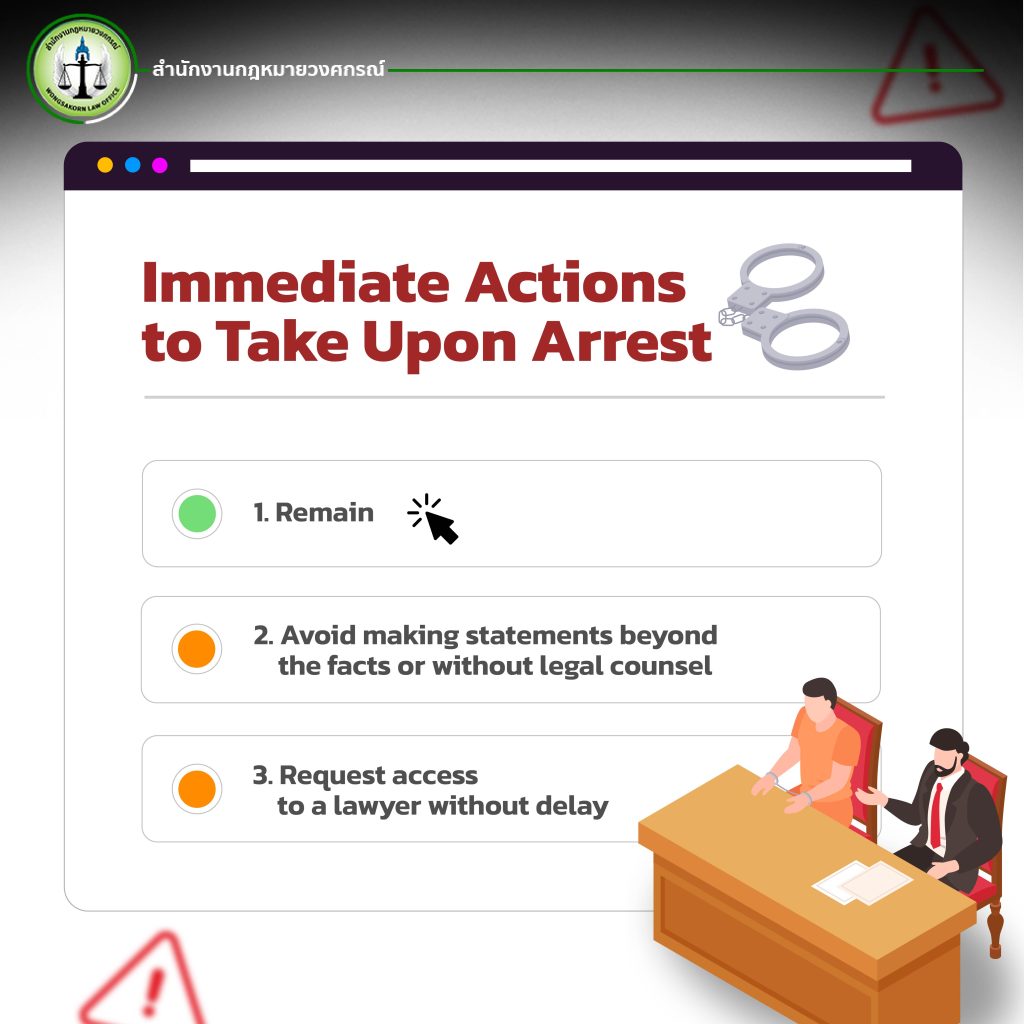
In the event of an arrest, the most critical response is not to hastily explain or justify one’s actions, but to remain calm and exercise one’s legal rights appropriately. Many legal cases are adversely affected by panic, inaccurate statements, or providing testimony without legal counsel.
If you or someone close to you is arrested, the following steps should be taken immediately:
1. Remain calm
2. Avoid making statements beyond the facts or without legal counsel
3. Request access to a lawyer without delay
Every statement may later be used as evidence. Having legal counsel involved from the earliest stage is the most effective way to protect one’s rights.
Foreign Nationals Have Legal Rights Legal Counsel Is Essential

Regardless of the nature of the arrest, foreign nationals in Thailand are protected by fundamental legal rights, including the right to legal counsel and the right to apply for bail.
If you or someone close to you is a foreign national who has been arrested in Thailand, prompt consultation with an experienced lawyer is strongly recommended. In legal matters, time is critical, and a clear understanding of one’s rights is essential to ensuring fair treatment under the Thai legal system.