


Human resource issues remain one of the most significant risks faced by companies and organizations, particularly in today’s highly competitive business environment. One situation that often causes serious concern for employers is discovering that an employee has taken on work or provided services to a competing company. This may include performing similar work, providing consultancy services, selling confidential information, or engaging in outside employment that could adversely affect the interests of the original employer.
The key question is: what actions can an employer legally take in such circumstances, and how should the situation be handled properly to avoid placing the company at a disadvantage or triggering legal disputes in the future?
This question cannot be answered simply with a “yes” or “no.” It must be assessed on a case-by-case basis, taking into account several factors, including:
1.The Nature of the Work Performed
oIs the work similar to the employer’s business?
oDoes it involve direct competition or the solicitation of the employer’s clients?
2.The Employee’s Position and Responsibilities
oIs the employee in a management or executive role, or a position with access to sensitive information?
oDoes the role involve company strategies, pricing, clients, or confidential data?
3.Employment Contract Terms
oIs there a non-moonlighting clause?
oIs there a non-competition clause?
oIs there a confidentiality or non-disclosure agreement (NDA)?
If the employee engages in work for a competitor in violation of contractual obligations or breaches the duty of loyalty and good faith owed to the employer, such conduct may constitute a breach of contract or a violation of labor discipline.
Potential Risks to the Employer
An employee working for a competing company may expose the employer to several risks, including:
- Leakage of internal or confidential information, such as client lists, pricing, or business strategies
- Loss of clients or business opportunities
- Conflicts of interest
- Damage to the company’s reputation and credibility
- Negative impact on employee morale within the organization
Such behavior should not be overlooked, as it may result in long-term and irreparable damage to the business.
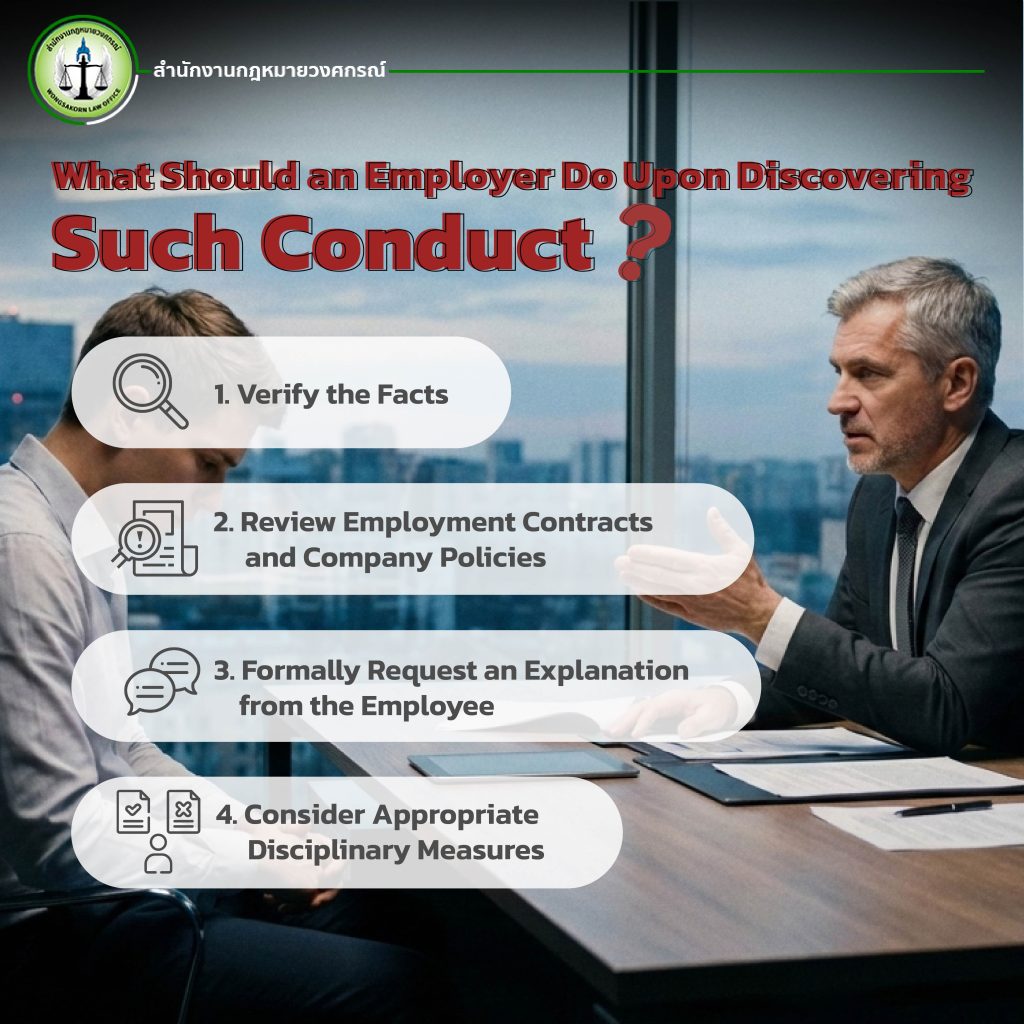
When an employer becomes aware of, or suspects, that an employee is working for a competitor, the matter should be handled carefully and systematically:
1. Verify the Facts
oCollect evidence such as documents, communications, or witness statements
oAvoid making decisions based solely on rumors or assumptions
2. Review Employment Contracts and Company Policies
oExamine contractual restrictions and relevant company regulations
oReview policies on outside employment and conflicts of interest
3. Formally Request an Explanation from the Employee
oProvide the employee with an opportunity to explain
oDocument the discussion in writing for evidentiary purposes
4. Consider Appropriate Disciplinary Measures
oIssue a written warning
oImpose disciplinary action in accordance with company rules
oIn serious cases, consider lawful termination under labor law
All actions must be conducted fairly, transparently, and in compliance with labor laws to avoid potential counterclaims against the company.
Can the Employer File a Lawsuit?
In certain cases, if it can be proven that the employee:
- Breached the employment contract
- Misused or disclosed confidential information
- Engaged in unfair competition
The employer may be entitled to claim damages or seek court-issued injunctive relief to prevent further misconduct. However, litigation requires careful legal planning and strong supporting evidence.
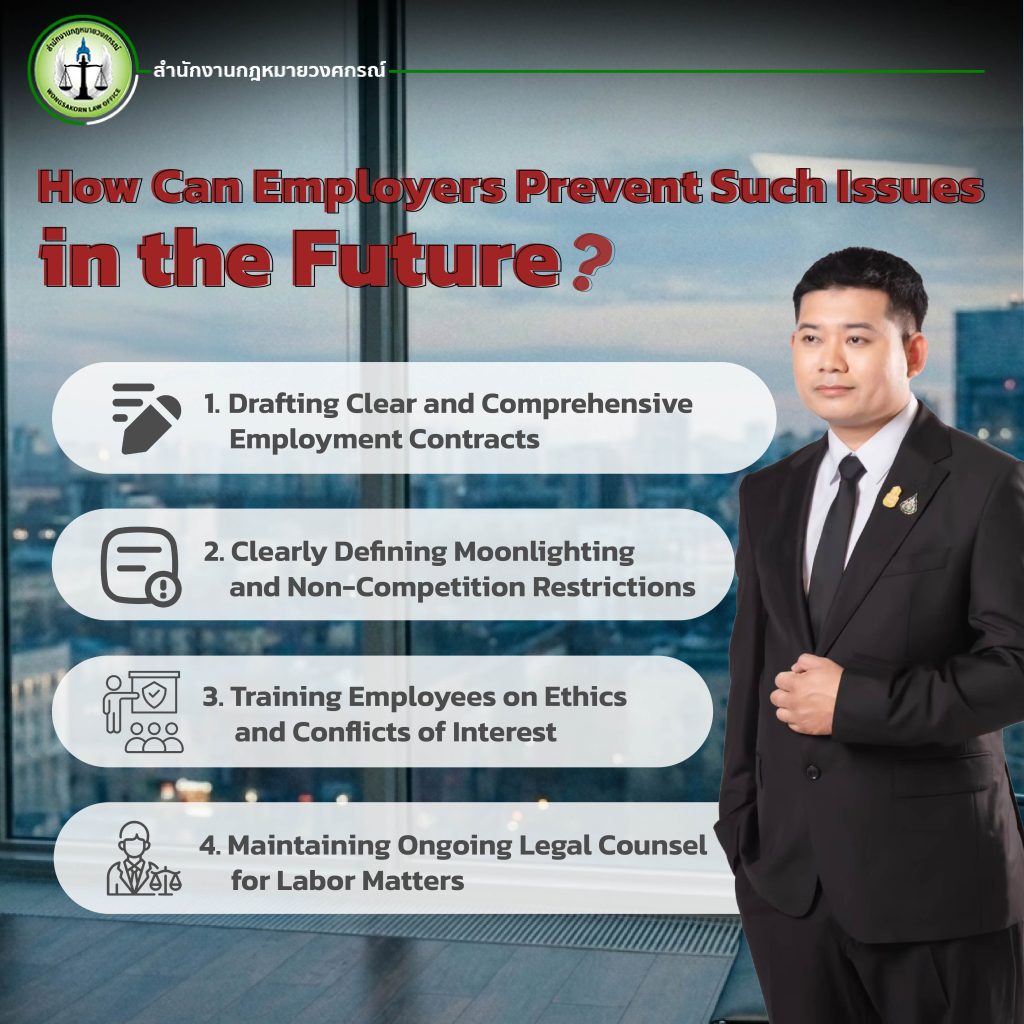
Preventive measures should be part of an organization’s management system from the outset, not only after a problem arises. Key preventive strategies include:
1.Drafting Clear and Comprehensive Employment Contracts
Employment contracts should clearly define duties, responsibilities, scope of work, and necessary restrictions especially for roles involving sensitive information or competitive activities.
2.Clearly Defining Moonlighting and Non-Competition Restrictions
Policies and contractual clauses should specify permissible and prohibited outside work, including scope, duration, and what constitutes a breach, ensuring enforceability under the law.
3.Training Employees on Ethics and Conflicts of Interest
Regular training and communication on ethical conduct, confidentiality, and legal consequences can reduce misunderstandings and foster a culture of transparency and accountability.
4.Maintaining Ongoing Legal Counsel for Labor Matters
Having an experienced labor law advisor allows employers to update contracts and policies, assess risks, and address potential issues proactively rather than reactively.
In summary, preventing employees from working for competitors requires more than disciplinary control. It requires a solid legal framework, clear communication, and continuous legal oversight to ensure sustainable and secure business operations.
Consulting a Lawyer The Safest Solution for Employers

Cases involving employees working for competitors are legally sensitive and complex. Mishandling such matters may place the employer at risk of legal disadvantage or counterclaims.
Consulting a lawyer from the outset enables employers to fully understand their rights, obligations, and appropriate courses of action. In labor-related matters, making the right decision at the beginning is the key to effectively protecting the organization’s long-term interests.