


The Consumer Protection Police Division (CPPD) is an agency that the public and business operators should be familiar with because it is responsible for preventing and suppressing criminal offenses related to consumer protection. These may include issues involving illegal products, advertisements that may mislead consumers, or products that may pose a risk to public safety. Understanding the powers and duties of the CPPD helps the public know what steps to take when they suffer harm or loss. At the same time, business operators can assess risks and establish appropriate measures to prevent legal problems, with lawyers providing advice on their rights, obligations, and lawful courses of action.
What Is the Consumer Protection Police Division (CPPD), and What Are Its Responsibilities?
The Consumer Protection Police Division (CPPD), officially known in Thai as the Consumer Protection Police Division (บก.ปคบ.), is an agency under the Central Investigation Bureau of the Royal Thai Police. Its main mission is to prevent and suppress criminal offenses related to consumer protection, as well as other related offenses within the scope of its authority and applicable laws.
Although many people are familiar with the Office of the Consumer Protection Board (OCPB), the Consumer Protection Police Division (CPPD) is another important agency worth knowing, especially when encountering conduct that may constitute a criminal offense involving goods and services.
Why Should the Public Know About the Consumer Protection Police Division (CPPD)?
In everyday life, everyone is a consumer, whether purchasing products online, using beauty clinic services, buying health products, or choosing services from various types of businesses. If consumers discover that a product they have received may be illegal, an advertisement may be misleading, or a product may pose a safety risk, knowing the relevant authorities can help them choose the most appropriate channel for filing a complaint.
However, not every dispute between a buyer and a seller constitutes a criminal case or falls directly under the jurisdiction of the Consumer Protection Police Division (CPPD). Consumers should consider the facts and nature of the problem and may also consult a lawyer to assess which authority they should file a complaint with and what evidence they should prepare.
What Are the Responsibilities of the Consumer Protection Police Division (CPPD)?
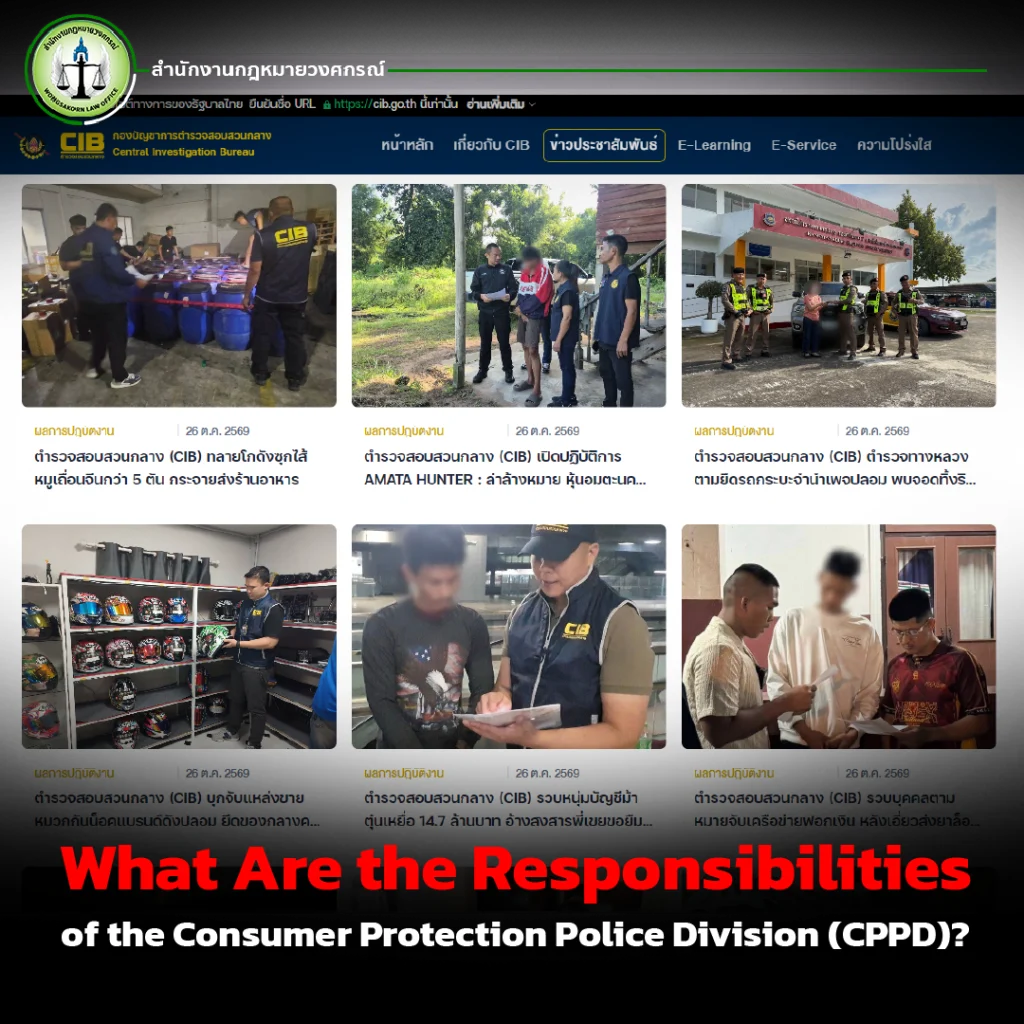
Image Credit: Central Investigation Bureau (CIB)
Source: https://cib.go.th/
In general, the responsibilities of the CPPD involve conducting inspections, carrying out investigations, and taking legal action in cases within its jurisdiction. The key responsibilities are outlined below.
1. Investigating Leads of Possible Offenses
Examining information or complaints concerning goods and services that may violate consumer protection laws or other relevant specific legislation.
2. Investigating Criminal Cases
Gathering facts, interviewing victims and witnesses, and examining relevant documents and evidence to support legal proceedings in accordance with the law.
3. Taking Legal Action Against Suspects
When sufficient evidence is available and the legal requirements are met, officers may exercise their legal powers, such as making arrests, conducting searches, or seizing items related to a case, in accordance with the criteria and procedures prescribed by law.
4. Coordinating with Relevant Agencies
When an issue involves specialized goods or services, it may be necessary to coordinate with the relevant regulatory authorities that have legal jurisdiction to ensure that the matter is investigated and appropriate action is taken.
Examples of Situations That May Warrant a Complaint to the Consumer Protection Police Division (CPPD)
- Selling Potentially Illegal Products For example, products suspected of being counterfeit or sold in violation of relevant laws.
- Exaggerated or Potentially Misleading Advertising For example, making claims about a product’s benefits without supporting evidence, or using statements that may mislead consumers and potentially constitute an offense under the law.
- Potentially Hazardous Products For example, health products suspected of being illegal or failing to meet applicable requirements.
- Conduct Involving Potential Consumer Fraud Cases in which facts or evidence indicate that a criminal offense may have occurred.
The above examples are intended as general guidance only. Each case must be assessed individually to determine which laws may have been violated and which authority has jurisdiction over the matter.
What Is the Difference Between the Consumer Protection Police Division (CPPD) and the Office of the Consumer Protection Board (OCPB)?
The Consumer Protection Police Division (CPPD) is a police agency that focuses on criminal investigations and prosecutions within its area of responsibility. The Office of the Consumer Protection Board (OCPB), on the other hand, handles consumer complaints, protects consumer rights, and works to resolve issues or coordinate dispute mediation within its authority and responsibilities.
What Are the Powers of the Consumer Protection Police Division (CPPD), and How Can a Lawyer Help?
The CPPD has the authority to investigate cases and take legal action in matters within its jurisdiction. However, it does not have the absolute authority to order businesses to issue refunds or compensate consumers in every case. Claims for compensation may need to be pursued through negotiation, mediation, or court proceedings, depending on the nature of the dispute.
A lawyer can help assess the facts and legal issues, review documents and evidence, provide advice on filing complaints or meeting with officers, and assist business operators in preparing responses to allegations and exercising their rights appropriately throughout the legal process. Having a lawyer does not guarantee the outcome of a case, but it helps ensure that the process is handled systematically and reduces the risk of misunderstandings about the law.
What Should Business Operators Be Aware of If They Risk Facing a Complaint to the Consumer Protection Police Division (CPPD)?

Business operators should ensure that their goods and services comply with relevant laws, that all necessary permits and licenses are in place, and that advertising claims are accurate and supported by evidence. They should also maintain contracts, receipts, service records, and customer communications in an organized manner.
Beauty clinics are one example of businesses that should pay close attention to legal compliance, as they may be subject to regulations concerning healthcare facility advertising, claims about treatment results, the use of products, and service standards, which may fall under various laws and regulatory requirements.
Receiving a complaint does not necessarily mean that a business has committed an offense. However, if there are any concerns or the business receives an official summons from an officer, it should promptly review the facts and consult a lawyer.
Understand Your Rights and Consult a Lawyer Immediately If Your Business May Be Subject to a CPPD Complaint.
As mentioned above, the Consumer Protection Police Division (CPPD) plays an important role in preventing and suppressing criminal offenses related to consumer protection. Members of the public should understand the role of this agency so they can exercise their rights appropriately, while business operators should familiarize themselves with relevant laws and regularly review their business operations.
If there are concerns about a complaint, allegations, or legal risks facing the business, consulting a lawyer at an early stage may help clarify available options and allow the business to prepare an appropriate and well-considered response.
Wongsakorn Law Firm provides legal advice and guidance on handling disputes based on the specific facts of each case. Whether you are a consumer seeking to understand your rights or a business operator concerned about complaints and legal proceedings, you can contact us for a consultation with a lawyer.
Consult Lawyer Arm Supasit Siri at Wongsakorn Law Firm to understand the relevant legal provisions and determine an appropriate course of action. Contact Us
Click >> Contact Us <<