How Can Foreigners File a Lawsuit in Thailand?

Thailand is a major destination for foreigners, whether for tourism, business, or long-term residency. However, legal disputes can arise, requiring legal proceedings in Thai courts. Many foreigners may wonder: How can I file a lawsuit in Thailand? Are there any special restrictions or requirements? This article will guide you through the steps and key considerations for foreigners filing lawsuits in Thailand.

Can Foreigners File a Lawsuit in Thailand?
The answer is yes. Under Thai law, foreigners who have suffered damages or have legal disputes can file lawsuits in Thai courts. This includes civil, criminal, and administrative cases. However, there are legal aspects to consider, such as court jurisdiction and the legal standing of the plaintiff.

Important Considerations Before Filing a Lawsuit in Thailand

1. Hiring a Thai Lawyer

Foreigners seeking to file lawsuits in Thailand should have a Thai lawyer represent them. Thai law is complex, and legal proceedings are conducted in Thai. A lawyer ensures smooth case handling and provides essential legal guidance.

2. Having a Residence or Contact Address in Thailand

Foreigners residing in Thailand can file lawsuits as usual. However, those without a residence in Thailand may need to appoint a legal representative or provide a local contact address for receiving legal documents.

3. Gathering Sufficient Evidence and Witnesses

Before filing a lawsuit, it is crucial to prepare relevant evidence, such as:

  • Contracts or agreements (if applicable)
  • Proof of payment
  • Witness testimony
  • Records of the incident

If documents are in a foreign language, they must be translated into Thai and officially certified before submission to the court.

Steps for Foreigners to File a Lawsuit in Thailand
1. Consult a Lawyer

Before filing a lawsuit, consult a lawyer to understand legal procedures and assess the chances of winning the case.

2. Submit the Complaint to the Court

Once all necessary documents are prepared, the lawyer will assist in filing the lawsuit with the appropriate court, specifying claims and supporting evidence.

3. Serving Court Summons

The court will issue a summons to the defendant (the opposing party) and notify them to appear in court on a set date. If the defendant is a foreigner residing outside Thailand, diplomatic channels may be required to serve the summons.

4. Court Hearings and Trial

On the scheduled hearing date, the plaintiff (the person filing the lawsuit) must appear in court to present their case. The defendant has the right to contest the claims and submit counter-evidence.

5. Court Judgment and Enforcement

If the court rules in favor of the plaintiff, the defendant must comply with the judgment. If the defendant refuses, the plaintiff can request court enforcement to seize assets or take necessary legal actions.

Common Legal Cases Filed by Foreigners in Thailand
Foreigners living in Thailand may encounter legal disputes in various situations, including:

  • Civil Cases – Contract disputes, business conflicts, debts, and real estate transactions
  • Criminal Cases – Fraud, deception, or damages from crimes
  • Family Cases – Divorce filings and child custody disputes
  • Labor Cases – Unfair dismissal or labor disputes
  • Property and Real Estate Cases – Land disputes and property ownership claims

Court Fees and Legal Costs

Filing a lawsuit in Thailand involves certain expenses, such as:

  • Court fees – Based on case type and claim amount
  • Lawyer fees – Vary depending on case complexity
  • Document translation and certification costs – If foreign documents are required, they must be translated and certified

Legal Advice for Foreigners Filing Lawsuits in Thailand
Consult an experienced Thai lawyer specializing in the relevant area of law
Ensure all necessary evidence and documents are complete before filing
Avoid signing legal documents that you do not fully understand
Hire an interpreter or bilingual lawyer if language barriers exist
Familiarize yourself with Thai laws to avoid legal complications

Legal Representation for Foreigners – Wongsakorn Law Office
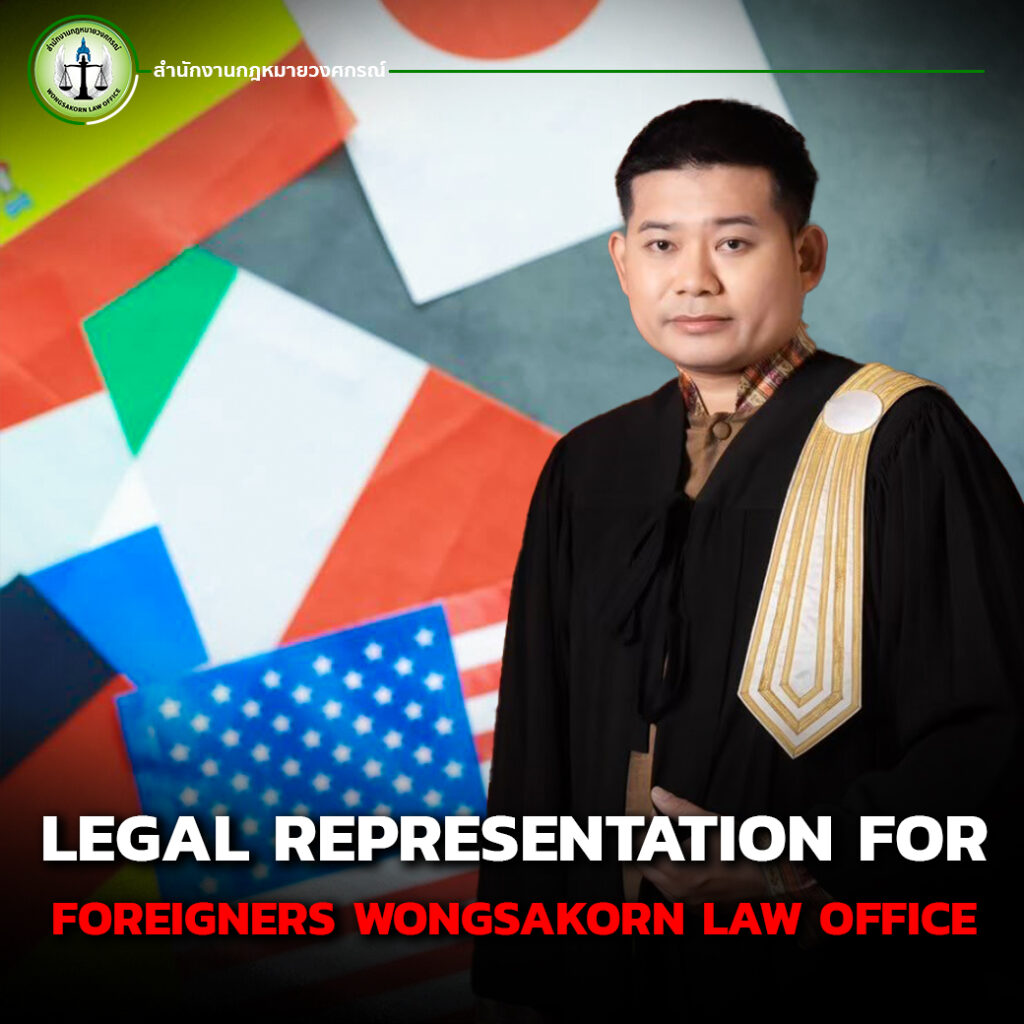
As discussed, foreigners can file lawsuits in Thailand, but they must comply with Thai legal procedures and engage professional legal representation. Thailand’s legal system is complex and primarily conducted in Thai, making it essential to have legal counsel fluent in both the language and the law.

If you are a foreigner seeking legal assistance in Thailand, it is highly recommended to consult a trusted law firm that can ensure fair representation and protect your rights.

📌 For expert legal services in Thailand, contact Wongsakorn Law Office. Our experienced legal team will guide you through the legal process efficiently and help maximize your chances of a successful case outcome.

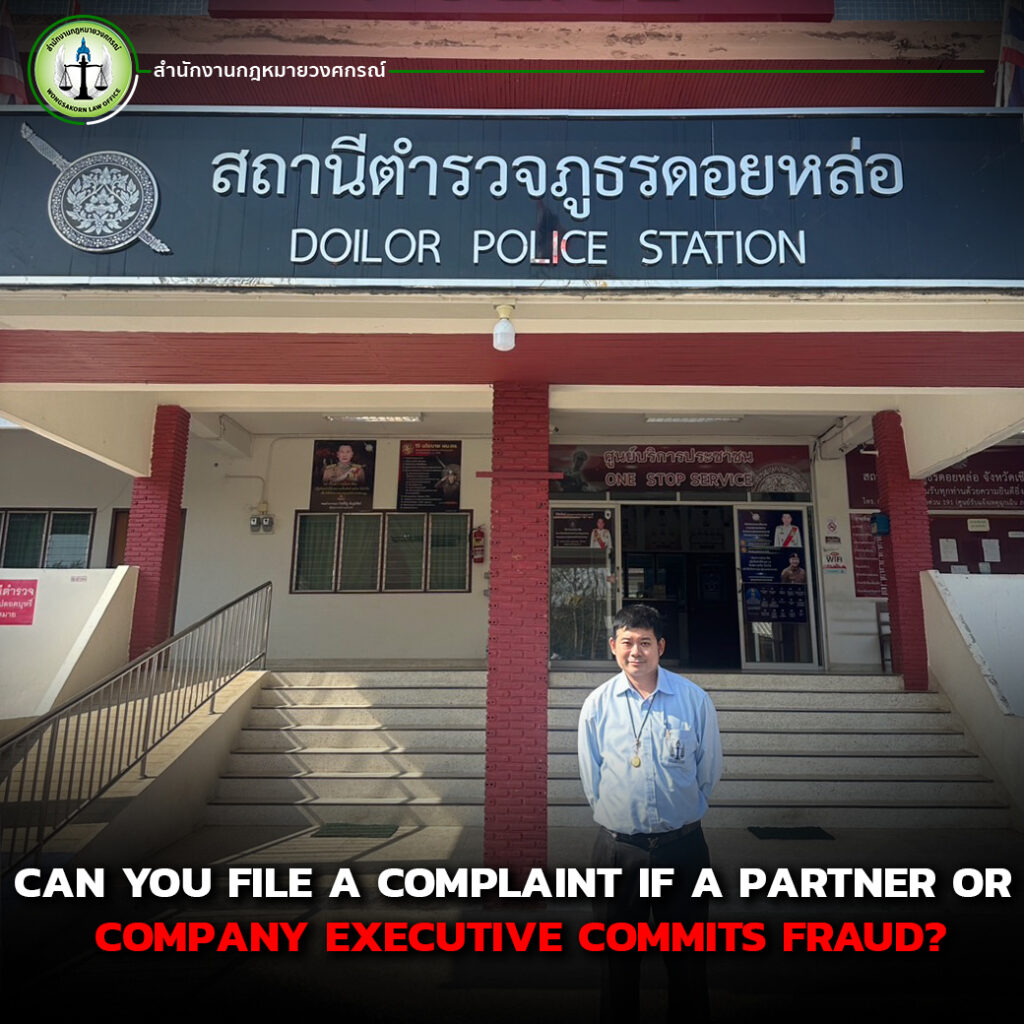
Fraud Among Business Partners / Internal Company Fraud: Should You File a Complaint? What Legal Actions Can Be Taken?

Doing business with others, whether in the form of a partnership or a limited company, always carries risks, particularly in financial transparency. Issues such as partners embezzling company funds, executives misappropriating assets, or individuals abusing their positions for personal gain can cause serious damage to a business.

Many people wonder: Should a complaint be filed when fraud occurs? What legal actions can be taken? This article will provide a legal guide on how to handle such situations.

Can You File a Complaint if a Partner or Company Executive Commits Fraud?

The answer is “Yes.” If there is evidence of embezzlement, fraud, or corruption within the organization, a criminal complaint can be filed with the police. Additionally, a civil lawsuit can be pursued to claim damages and recover stolen funds.

Filing a complaint has the advantage of pressuring the offender through legal means, which may lead to a settlement or return of funds before the case proceeds further. However, failing to report the fraud could allow the perpetrator to escape justice and continue causing financial harm.

What Criminal Offenses Apply to Internal Company Fraud?

When fraud occurs within a company, it may fall under several legal offenses, including:

1. Embezzlement (Section 352 of the Thai Criminal Code)

If a partner or company director is responsible for managing company assets but misuses the funds for personal gain without authorization, they may be charged with embezzlement, which carries a penalty of up to 3 years in prison or a fine of up to 60,000 baht, or both.

Examples:

  • A partner responsible for the company’s finances withdraws money from the company’s account for personal use.
  • A director transfers company funds to their personal account without a legitimate business reason.

2. Fraud (Section 341 of the Thai Criminal Code)

If an individual uses deception, false information, or fraudulent schemes to make a partner or company transfer funds improperly, it constitutes fraud, which carries a penalty of up to 3 years in prison or a fine of up to 60,000 baht, or both.

Examples:

  • An executive forges accounting records to withdraw money from the company unlawfully.
  • A partner persuades others to transfer investment funds under false pretenses but uses them for personal expenses instead.

If the fraud involves the general public, such as tricking outsiders into investing in a company with no genuine business intention, the penalty increases to up to 5 years in prison.

3. Document Forgery (Section 264 of the Thai Criminal Code)

If someone falsifies accounting records, receipts, or financial documents to withdraw company funds, they may be charged with document forgery, which carries a penalty of up to 3 years in prison or a fine of up to 60,000 baht, or both.

Examples:

  • An executive signs company checks without authorization.
  • Someone forges another director’s signature to transfer money from the company account.

4. Abuse of Position in a Company (Sections 307-315 of the Thai Criminal Code)

If a company director or an executive abuses their authority to commit fraud, it may fall under offenses related to misuse of official position:

  • Section 307: An official (including company directors) misuses their power unlawfully.
  • Section 308: An official misappropriates company funds under their management.

Examples:

  • A company director knowingly allows fraudulent activities.
  • An executive uses their position to gain illicit personal benefits.

What Should You Do If You Are a Victim of Internal Fraud?

If you suspect fraud within your company, take the following steps:

1. Gather Evidence – Collect accounting records, bank transactions, chat messages, contracts, and other relevant documents.

2. File a Complaint with the Police – Initiate criminal proceedings against the perpetrator.

3. File a Civil Lawsuit – Seek compensation and force the return of stolen funds.

4. Notify Relevant Authorities – If it’s a limited company, report the misconduct to the Department of Business Development (DBD) for investigation.

5. Consult a Lawyer – Take legal action effectively and ensure compliance with Thai laws.

Take Legal Action—Consult a Professional Lawyer

If fraud occurs within a company, legal action is crucial to prevent further financial losses and ensure justice. Various charges can be applied, such as embezzlement, fraud, document forgery, and abuse of position.

Thus, if you discover fraudulent activity within your company, do not ignore it—take legal steps to protect your rights and uphold corporate integrity.

For further legal advice, consult a professional lawyer to ensure proper legal action and prevent future business disputes.

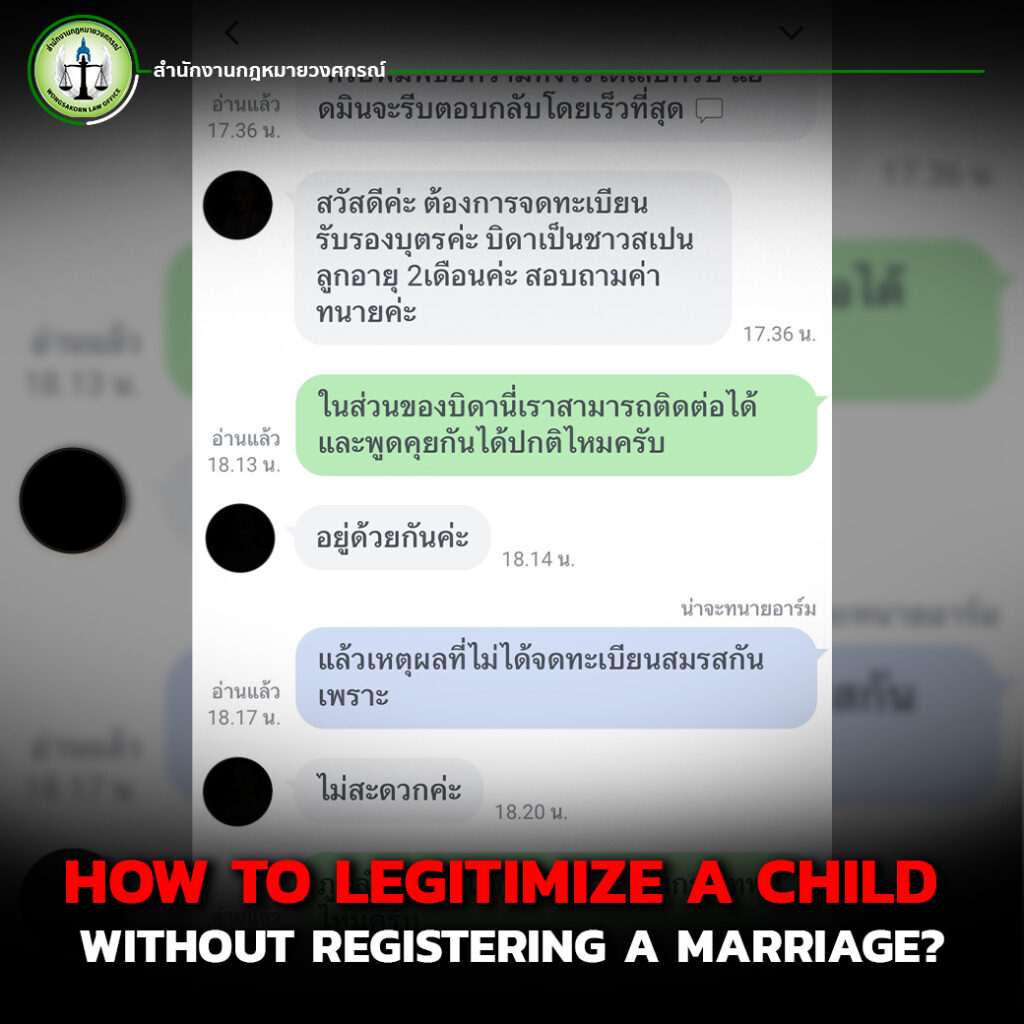
How to Legitimize a Child Without Registering a Marriage?

In modern society, many couples choose to live together without registering their marriage for various reasons, including personal beliefs, convenience, or lifestyle choices. However, if they have a child together, both parents usually want their child to have full legal rights.

Under Thai law, a child born to a legally married couple is automatically recognized as the legitimate child of both parents. However, if the parents are not legally married, additional steps must be taken to ensure that the child is legally recognized as the father’s legitimate child.

This article explains the ways to legitimize a child born out of wedlock, along with the legal rights and obligations that come with it.

What Does It Mean to Be a Legitimate Child?

According to Section 1546 of the Thai Civil and Commercial Code:

“A child born to a woman who is not married to the child’s father is deemed to be the legitimate child of the mother only.”

This means that if the parents are not legally married, the child is automatically recognized as the mother’s legitimate child but not the father’s.

Without proper legal recognition, the child has no legal rights concerning the father, such as inheritance rights or the right to receive financial support.

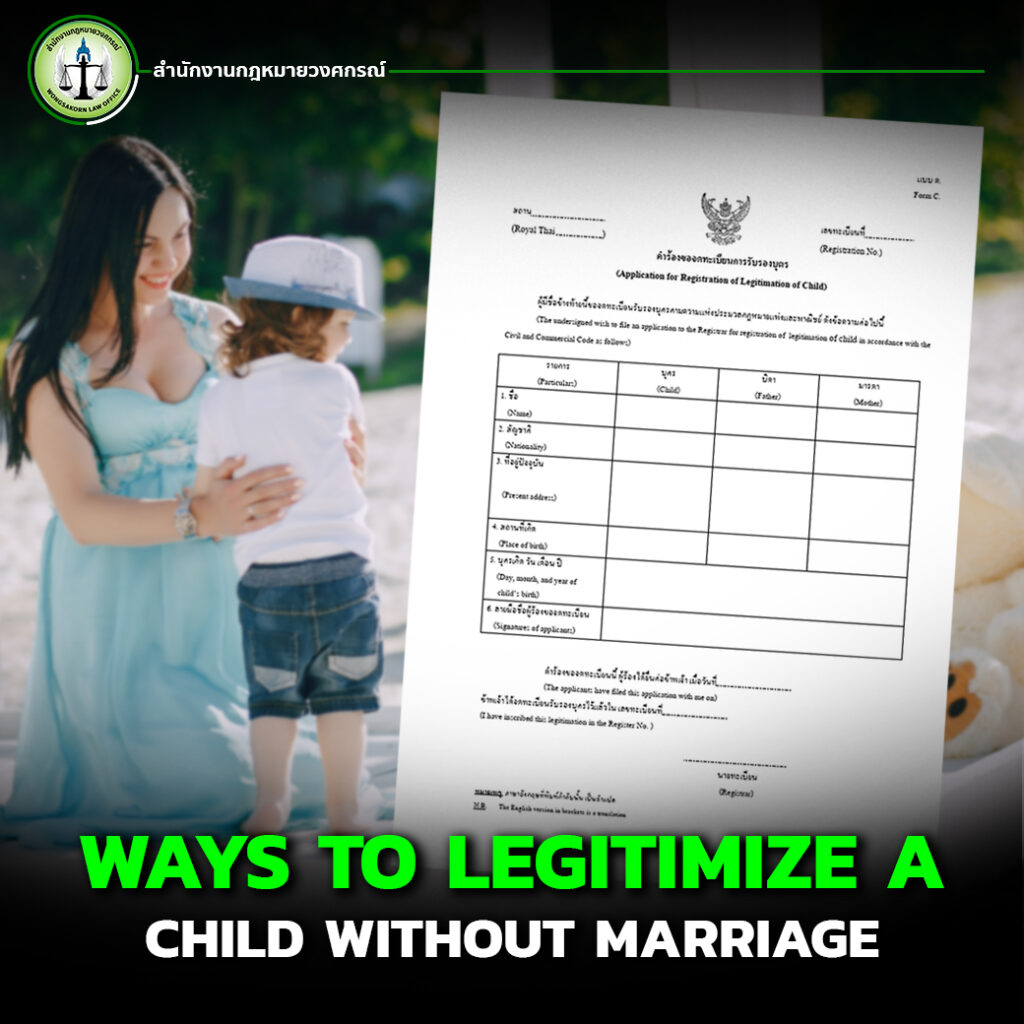
Ways to Legitimize a Child Without Marriage

If the parents are not legally married but want the child to be recognized as the father’s legitimate child, there are three ways to do so:

1. Registration of Paternity (Sections 1547-1555)

The most common and straightforward way to legitimize a child is for the father to register paternity at the district office or local administrative office. The process includes:

  • The father must provide proof of paternity, such as the child’s birth certificate.
  • The mother and the child (if aged 7 or older) must consent to the registration.
  • The registration can be completed at the district office or local administrative office.

Once registered, the child will have the same legal status and rights as a child born to married parents.

2. Filing a Lawsuit to Establish Paternity (Section 1556)

If the mother does not consent to the father registering paternity, the father can file a lawsuit in court to establish paternity. The father must provide evidence such as:

  • DNA test results
  • Proof of a father-child relationship, such as photos, messages, or witness testimonies

If the court determines that sufficient evidence exists, it will issue an order recognizing the child as the father’s legitimate child.

3. Marriage and Retroactive Legitimization (Section 1548)

If the parents later decide to marry and register their marriage, the child will automatically become the father’s legitimate child.

This is the easiest method but is not an option for couples who do not wish to marry.

Legal Rights of a Legitimate Child

Once a child is recognized as the legitimate child of the father, they are entitled to several legal rights, including:

1.Inheritance Rights – The child can inherit from the father.

2.Right to Financial Support – The father is legally obligated to provide financial support.

3.Right to Use the Father’s Surname – The child can take the father’s last name.4.      Access to Benefits from the Father – The child may be eligible for social security and other employment-related benefits.

Important Considerations When Registering Paternity

  • Once the father registers paternity, he is legally responsible for the child – including financial support and parental duties.
  • The father may gain parental rights – which could lead to custody disputes if the parents separate.
  • If the father refuses to recognize the child, the child has the right to file a lawsuit – to establish paternity and claim legal rights.

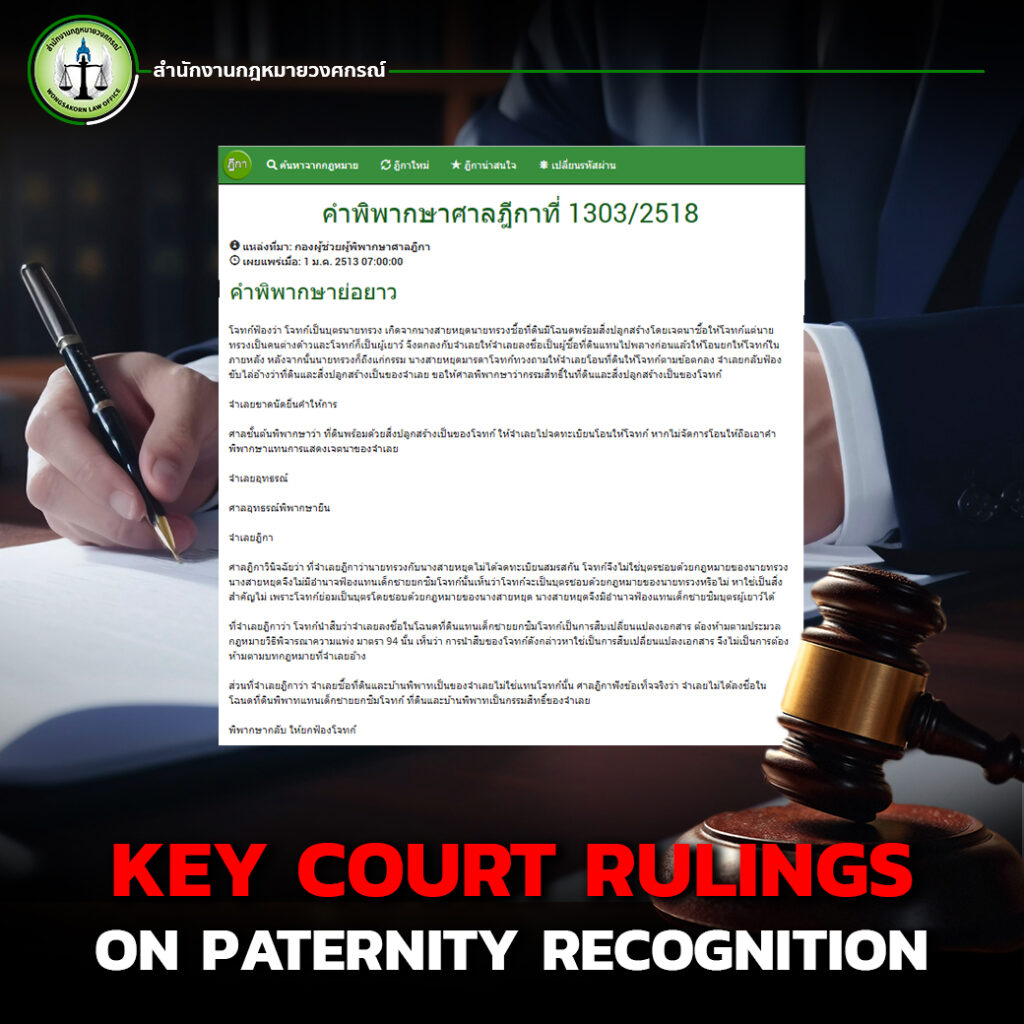
Key Court Rulings on Paternity Recognition

Supreme Court Judgment No. 11631/2556
The court ruled that a child is the legitimate child of the father even though the parents were not married, as DNA evidence and the father’s involvement in the child’s life were sufficient proof.

Supreme Court Judgment No. 5738/2560
A father petitioned to recognize his child legally, but the court denied the request due to insufficient evidence and opposition from the mother.

Consult on Child Legitimization with Wongsakorn Law Office

If parents are not legally married but want their child to have full legal rights, they can register paternity, file a lawsuit for paternity recognition, or marry later to automatically legitimize the child.

Recognizing paternity is crucial as it ensures the child’s legal rights, such as inheritance and financial support from the father. If marriage is not an option, parents should follow the legal procedures to avoid future complications.

For legal assistance regarding paternity registration or any related legal matters, consult Wongsakorn Law Office (翁萨功律师事务所) for expert legal advice and representation.

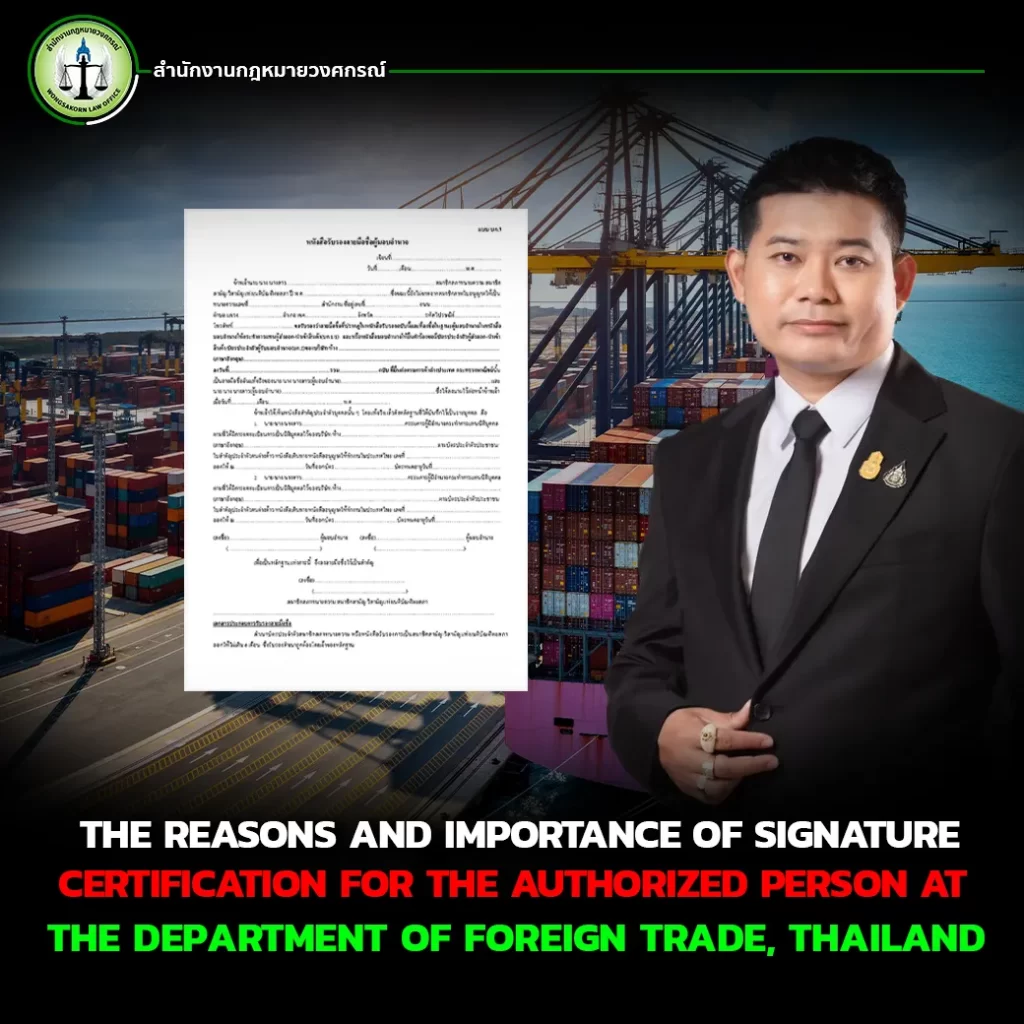
The Reasons and Importance of Signature Certification for the Authorized Person at the Department of Foreign Trade, Thailand

In international business transactions, authorization is a common practice, especially when business owners or decision-makers are unable to personally handle certain tasks. They may delegate authority to another person to act on their behalf. When submitting documents to the Department of Foreign Trade, Thailand, the certification of the authorized person’s signature is a legal requirement.

This article, prepared by Wongsakorn Law Office, explains the meaning of signature certification, its importance, and why it is necessary for businesses engaged in foreign trade.

What is Signature Certification for an Authorized Person?

Signature certification is a process where an authorized individual, such as a lawyer or government official, verifies that the signature appearing on a document genuinely belongs to the stated person. In the context of the Department of Foreign Trade, this certification is often required for power of attorney documents used in import-export transactions or other trade activities requiring government approval.

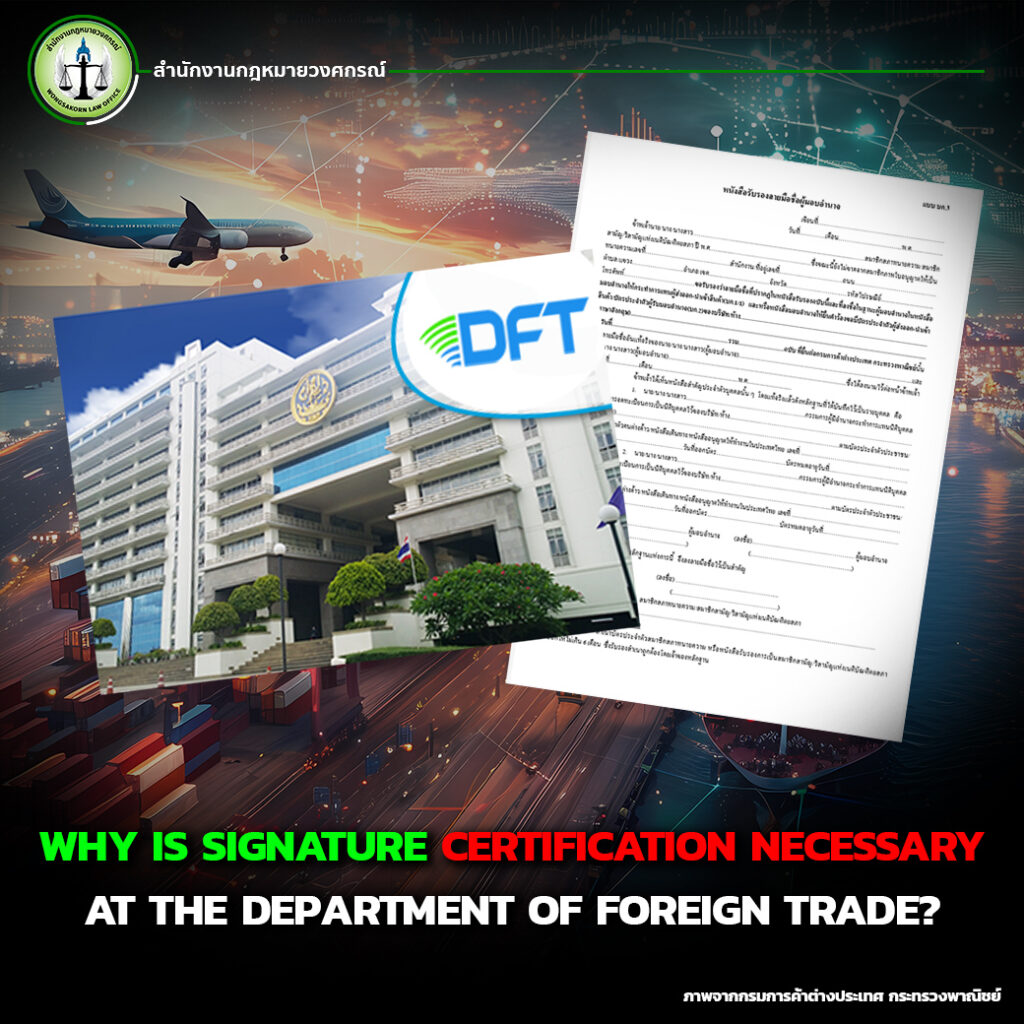
Why is Signature Certification Necessary at the Department of Foreign Trade?

1. To Verify the Identity of the Authorized Person

Signature certification ensures that the authorized person is genuine and that the signature on the document belongs to them. This helps prevent identity fraud and unauthorized claims, reducing legal risks.

2. To Prevent Document Forgery

International business transactions are vulnerable to fraud, including document forgery. Criminals may attempt to create fake authorization documents for illicit gains. Signature certification is an effective measure to minimize these risks and ensure the legal validity of submitted documents.

3. To Enhance Business Transparency and Credibility

Without proper signature certification, businesses may face credibility and transparency issues, which could affect their reputation. Certified signatures demonstrate compliance with regulations, fostering trust between businesses and regulatory authorities.

4. To Comply with the Department of Foreign Trade Regulations

The Department of Foreign Trade has strict requirements regarding the certification of authorization documents, particularly for import-export licenses and other government-regulated trade activities. Signature certification is a mandatory step in meeting these requirements.

5. To Facilitate Business Operations

Once the authorized person’s signature is correctly certified, the Department of Foreign Trade can process and approve applications more efficiently, reducing waiting times and ensuring smooth business operations.

How to Certify an Authorized Person’s Signature?

The certification process can be carried out by

  1. Licensed Lawyers – A lawyer with a valid professional license can certify signatures on authorization documents.
  2. District or Local Government Offices – Government agencies can certify the signature of an authorized person for official administrative purposes.
  3. The Department of Business Development (DBD), Thailand – For company-related documents, certification by the DBD may be required before submission to the Department of Foreign Trade.
  4. Thai Embassies Abroad – If the authorized person is located outside Thailand, the Thai Embassy must certify the signature before it is used in Thailand.

Important Considerations for Signature Certification

  • Ensure complete and accurate documentation – Verify all details, including information about both the authorizing and authorized persons, before submitting for certification.
  • Sign in the presence of an authorized certifier – Some certifications require the authorized person to sign the document in the presence of a certifier.
  • Use an officially recognized certification authority – To avoid rejection, ensure that the certifying entity is officially recognized by the Department of Foreign Trade.

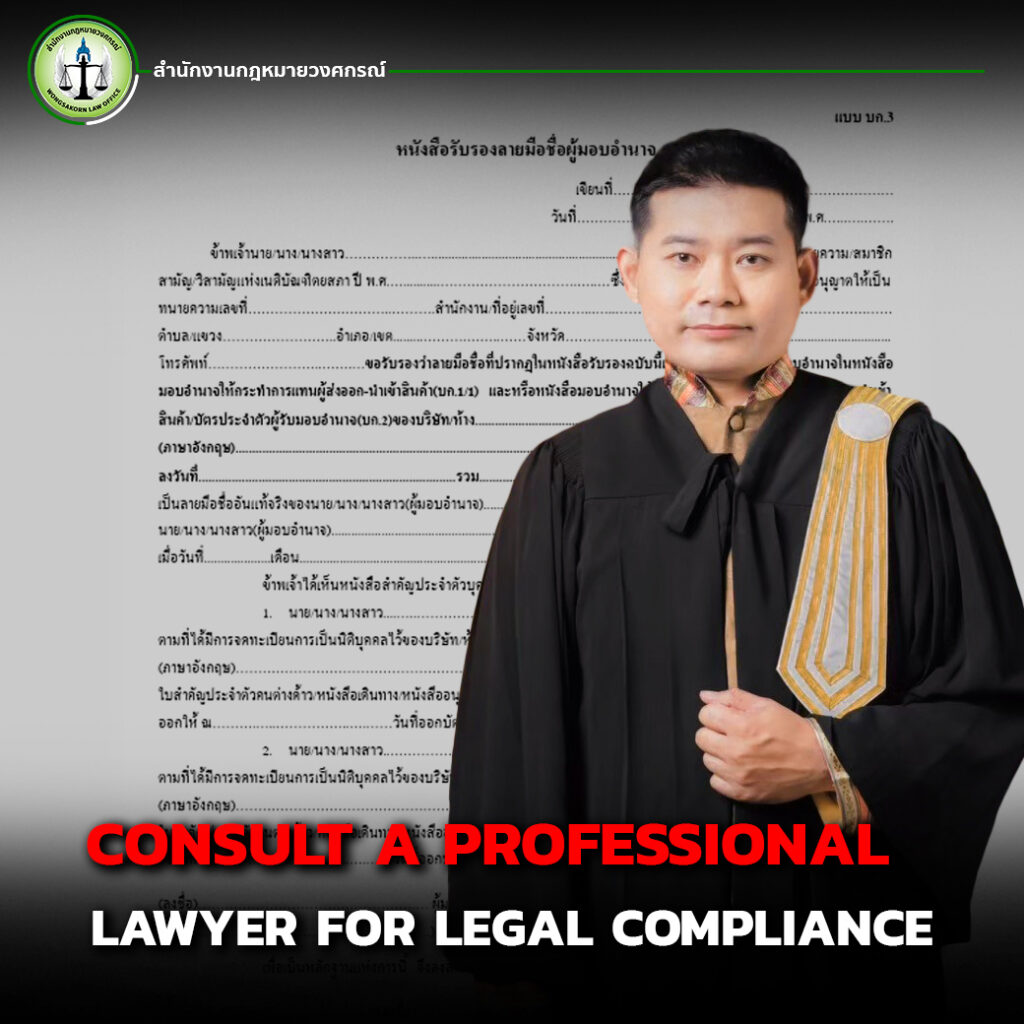
Consult a Professional Lawyer for Legal Compliance

Signature certification is a crucial legal step for businesses engaging in foreign trade. It helps prevent forgery, strengthens transaction credibility, and ensures smooth business operations. Understanding the requirements of the Department of Foreign Trade and seeking certification from authorized entities can prevent future legal issues.

If you have any concerns regarding signature certification or legal matters, consulting an experienced lawyer is recommended to ensure compliance and proper guidance.

Why Chinese Business Owners in Thailand Must Understand Check Laws?

Chinese businesses in Thailand are growing rapidly, covering trade, import-export, and service industries. Financial transactions are essential for smooth business operations, and one widely used financial tool in Thailand is the check. However, many people are unaware that a check has a legal validity of only 3 months from the date of rejection.

What is a Check, and How is it Used in Thai Business?

A check is a financial instrument used as a cash substitute, ensuring future payment. The issuer (drawer) instructs the bank to pay the specified amount to the recipient (payee). In Thailand, checks are a crucial business tool, especially for transactions between Thai and Chinese entrepreneurs.

However, checks have legal limitations, particularly regarding their statute of limitations, which Chinese business owners in Thailand must pay close attention to.

Check Statute of Limitations in Thailand

According to Thai law, if a check is bounced (e.g., due to insufficient funds or a closed account), the payee has the right to take legal action against the issuer. However, this must be done within 3 months from the date of rejection.

If this period lapses, the right to file a claim based on the check expires, meaning the payee may lose their chance to recover the money.

Why Chinese Business Owners Must Be Aware of This?

1.Prevent Financial Losses
Not knowing the statute of limitations may lead to missed opportunities for debt recovery and costly legal complications.

2.Ensure Secure Transactions
Checks can serve as financial security if business owners understand their legal implications.

3.Reduce Fraud Risks
If action is not taken within 3 months, businesses may lose their ability to take legal action against bounced checks.

4.Improve Financial Planning
Proper knowledge of check usage helps in planning cash flow and legal strategies effectively.

What to Do If a Check is Rejected?

1.Contact the Issuer Immediately
Verify the reason for rejection and attempt negotiation.

2.Retain All Evidence
Keep the bounced check, bank rejection notice, and any relevant documents for legal purposes.

3.File a Criminal Complaint
If fraud is suspected, such as knowingly issuing a check without sufficient funds, legal action can be taken.

4.File a Civil Lawsuit Within 3 Months
If the issuer refuses to pay, legal action must be initiated within 3 months.

Supreme Court Cases on Fraudulent Check Issuance

Thai Supreme Court rulings have established that knowingly issuing a bad check can be considered fraud. For example, in one case, the court ruled that issuing a check without sufficient funds constituted fraudulent intent.

The Best Solution: Hire a Legal Consultant

Understanding check laws is crucial for Chinese business owners in Thailand, particularly regarding the 3-month statute of limitations. Seeking legal advice can prevent financial loss and legal risks.

For professional legal assistance, contact us today!

Essential Facts About Checks! File a Police Report Within 3 Months or Hire a Lawyer Immediately

A “check” is a widely used financial instrument in business transactions and financial dealings in Thailand. Many people assume that once they receive a check, they can always cash it. However, checks have legal limitations, particularly regarding their “statute of limitations,” which is a crucial aspect that everyone should understand.

One of the most common mistakes is receiving a bounced check but failing to take legal action within the specified time frame, resulting in the loss of the right to claim the amount due. Therefore, if you receive a bounced check, you must act quickly—either by filing a police report within 3 months or hiring a lawyer to sue immediately.

What Is a Bounced Check?

A bounced check is a check that has been submitted for payment at the bank but has been rejected for reasons such as:

  • Insufficient funds in the account
  • The account has been closed
  • The check issuer has stopped payment on the check
  • Errors on the check, such as incorrect signatures or wrong dates

Regardless of the reason, if a check is dishonored, the recipient must take legal action as soon as possible.

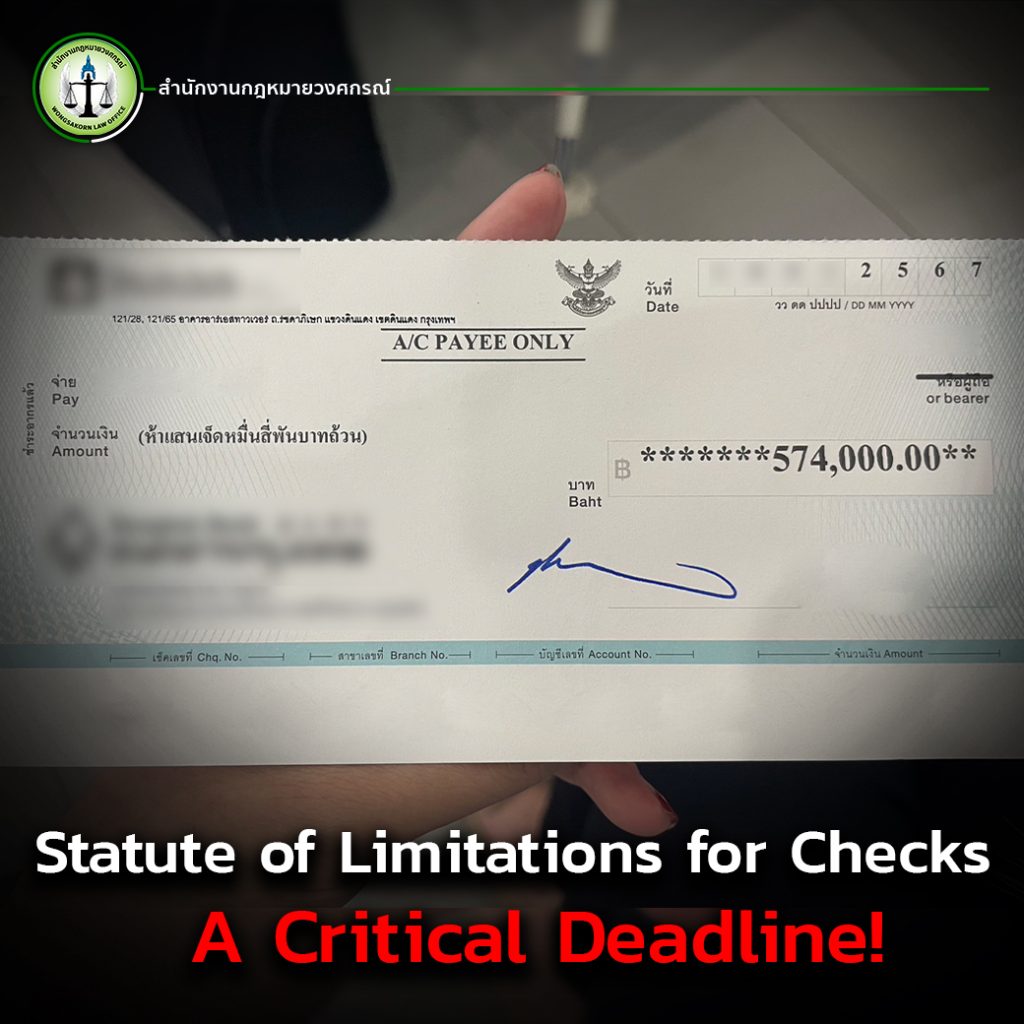
Statute of Limitations for Checks – A Critical Deadline!

Under Thai law, the statute of limitations for a check is 3 months from the date the bank rejects the payment. If the recipient fails to take action within this period, they lose their right to claim the amount under check law.

After 3 months, legal action may still be taken under civil law, such as suing for outstanding debt, but this process can be more complex and time-consuming.

What to Do If You Are Defrauded by a Bounced Check?

When receiving a dishonored check, you have two main legal options:

1. File a Police Report Within 3 Months

If the check issuer knowingly issued the check without sufficient funds, this may be considered fraud. The check recipient can file a police report within 3 months to initiate criminal prosecution under the offense of “issuing a check without sufficient funds.”

🔹 Advantages of Filing a Police Report:
✅ Increases pressure on the check issuer to repay quickly
✅ The issuer may face criminal charges, encouraging them to settle the debt
✅ No personal legal fees involved in filing the complaint

🔹 Disadvantages of Filing a Police Report:
❌ The process can be time-consuming
❌ If the check issuer had no fraudulent intent, criminal charges may not apply

2. Hire a Lawyer and File a Civil Lawsuit Immediately

If you want to recover the money quickly, hiring a lawyer to file a civil lawsuit may be a better option. This eliminates the need to wait for a police investigation.

🔹 Advantages of Filing a Civil Lawsuit:
✅ Full control over the case, without relying on law enforcement
✅ If you win the case, you can enforce asset seizure for repayment
✅ Immediate legal action—no need to wait for a police investigation

🔹 Disadvantages of Filing a Civil Lawsuit:
❌ Legal fees for hiring a lawyer
❌ The court process can take time

Steps for Filing a Police Report or Lawsuit

📌 Filing a Criminal Complaint

1.Gather evidence, including the bounced check and the bank rejection notice.

2.Report the case at the police station with jurisdiction.

3.Provide details of the transaction and the issuer’s fraudulent behavior.

4.If the police determine fraudulent intent, they will proceed with the case.

📌 Filing a Civil Lawsuit

1.Consult a lawyer to review the case.

2.File a lawsuit with the court, submitting all relevant documents.

3.Attend court hearings and present the case.

4.If the court rules in your favor, enforcement actions like asset seizure may follow.

Tips for Check Recipients

Act before the statute of limitations expires – decide quickly whether to pursue criminal or civil action.
Keep all relevant documents, such as the bounced check, bank rejection notice, and transaction records.
Verify the check issuer’s credibility – for new clients, request supporting documentation before accepting checks.
Ensure check details are correct before accepting them (e.g., dates, amounts, and signatures).

Filing a Police Report VS Suing?

🔹 If you want to pressure the check issuer to pay quickly and suspect fraud → File a police report within 3 months.
🔹 If you want a more effective legal approach to recover your money and enforce repayment → Hire a lawyer and file a civil lawsuit immediately.

Taking swift and proper legal action will help you recover your money efficiently, avoid legal pitfalls, and protect your business. If you’re unsure, consult a lawyer immediately!

Knowledge About Cheques and Notable Supreme Court Rulings

A cheque is a widely used financial instrument in business and financial transactions in Thailand. However, improper use of cheques or issuing a cheque without sufficient funds can lead to legal consequences. Therefore, cheque users should understand the relevant legal principles and Supreme Court rulings regarding cheques to ensure proper and lawful practice.

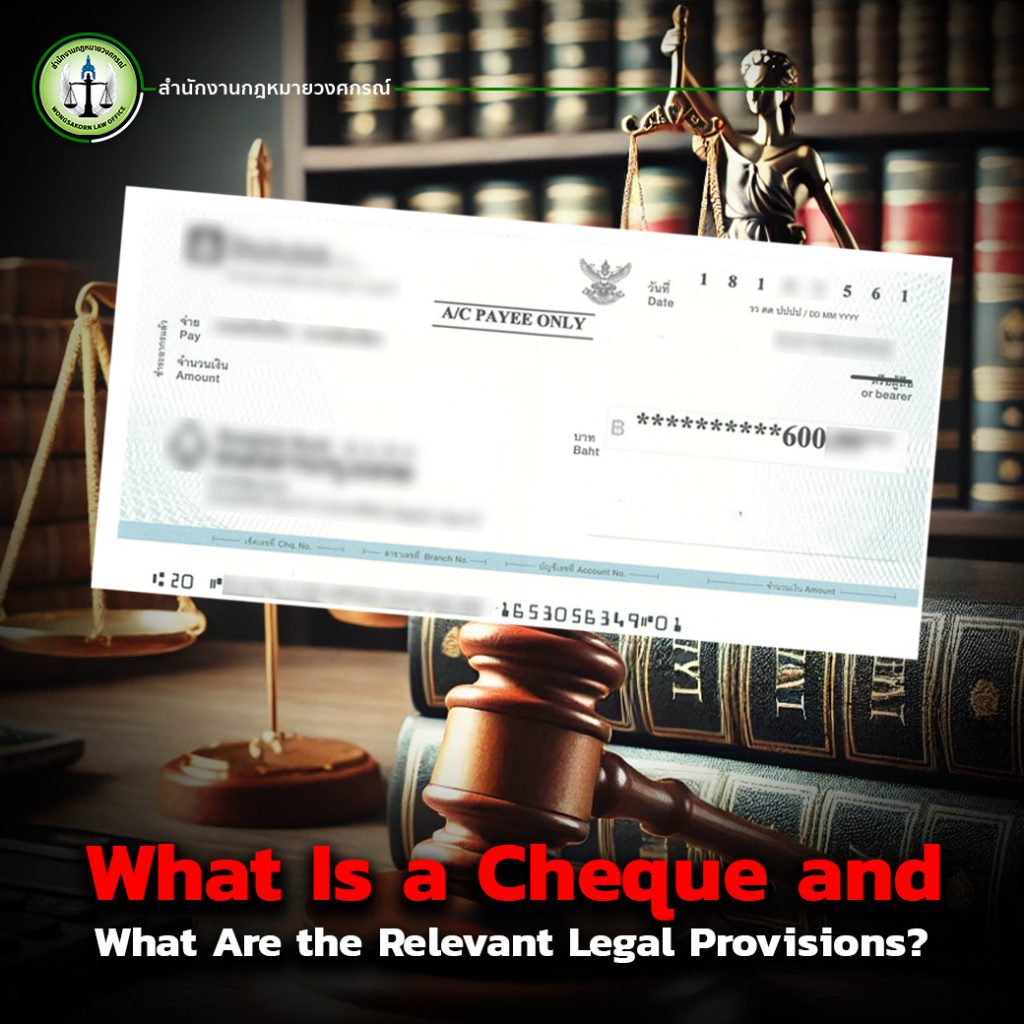
What Is a Cheque and What Are the Relevant Legal Provisions?

A cheque is a written document instructing a bank to pay a specified amount from the drawer’s bank account to the payee. The key elements of a cheque include:

  • The name of the bank where the cheque is to be cashed.
  • The name of the payee, which can be a specific person or “bearer.”
  • The amount to be paid.
  • The date of issuance, which marks when the cheque becomes valid.
  • The signature of the drawer, which must match the signature on the bank account.

According to the Cheque Offenses Act B.E. 2534 (1991), issuing a cheque without sufficient funds or unlawfully stopping payment may constitute a criminal offense.

Dishonored Cheques and Their Legal Consequences

dishonored cheque (bounced cheque) occurs when a bank refuses to honor a cheque due to various reasons, such as:

  • Insufficient funds in the account.
  • A closed bank account.
  • Errors on the cheque, such as an incorrect signature.
  • The drawer unlawfully stopping payment without a valid reason.

Criminal Liability for Issuing a Dishonored Cheque

Under Section 4 of the Cheque Offenses Act B.E. 2534 (1991), a person who issues a bounced cheque may face:

  • Imprisonment for up to one year,
  • A fine of up to 100,000 baht, or
  • Both imprisonment and a fine.

Additionally, the cheque holder may pursue civil litigation to reclaim the amount owed, including interest, provided that the lawsuit is filed within three months from the date the cheque was dishonored.

Notable Supreme Court Rulings on Cheques

Supreme Court Judgment No. 341/2559 (2016)

  • Facts: The defendant issued a cheque to the plaintiff for deposit, but when the plaintiff presented it for payment, the bank refused due to insufficient funds. The plaintiff then filed a criminal complaint.
  • Court Ruling: The Supreme Court ruled that the defendant knowingly issued a cheque without sufficient funds, constituting an offense under the Cheque Offenses Act B.E. 2534 (1991). The defendant was found guilty.
  • Key Takeaway: Issuing a cheque without available funds, regardless of intent, can result in criminal liability.

Supreme Court Judgment No. 8723/2560 (2017)

  • Facts: Mr. A issued a cheque for 500,000 baht to Company B. However, the bank refused payment because the account had already been closed. Company B then sued Mr. A in both civil and criminal court.
  • Court Ruling: The Supreme Court determined that Mr. A knowingly issued a cheque from a closed account, demonstrating fraudulent intent. As a result, he was held criminally liable.
  • Key Takeaway: Issuing a cheque from a closed account may indicate fraudulent intent and result in criminal penalties.

Supreme Court Judgment No. 1839/2561 (2018)

  • Facts: Mr. C received a cheque from Mr. D and attempted to cash it. The bank refused due to insufficient funds. Mr. C filed a criminal complaint but did so more than three months after the cheque bounced.
  • Court Ruling: The Supreme Court ruled that a criminal complaint must be filed within three months from the date the cheque is dishonored. Since Mr. C failed to file within this period, criminal charges could not proceed. However, he could still pursue a civil lawsuit.
  • Key Takeaway: Criminal complaints for dishonored cheques must be filed within the legal time frame, or the right to criminal prosecution is lost.

Best Practices for Using Cheques Properly

To avoid legal issues when using cheques, consider the following recommendations:

  • Verify the credibility of the drawer before accepting a cheque. Ensure the account holder is financially stable.
  • Avoid issuing cheques without sufficient funds to prevent legal complications.
  • Take immediate action if you receive a bounced cheque. File a complaint within three months or pursue civil litigation.
  • Keep all relevant documentation, including the dishonored cheque, the bank’s rejection notice, and other supporting evidence.

Cheques play a crucial role in the financial system, but improper use can lead to both civil and criminal liabilities. Understanding legal provisions and relevant Supreme Court rulings can help cheque users comply with the law, reduce legal risks, and protect their rights.

If you encounter legal issues related to cheques, consulting a lawyer can help ensure appropriate and timely legal action.

Line @ คลิก! โทรหาเรา คลิก!