


“In an era where social media has become a platform for free expression, many may forget that ‘freedom of speech’ must still operate within the boundaries of the law. This is especially true when posting or retweeting messages that may be considered defamatory, which Thai law clearly regards as an offense. Even if you did not write the message yourself, simply retweeting a post that insults or uses offensive language towards others can lead to legal action and potential liability for damages.”
Retweeting Insults for Fun, but in the End, You Have to Pay Real Money!
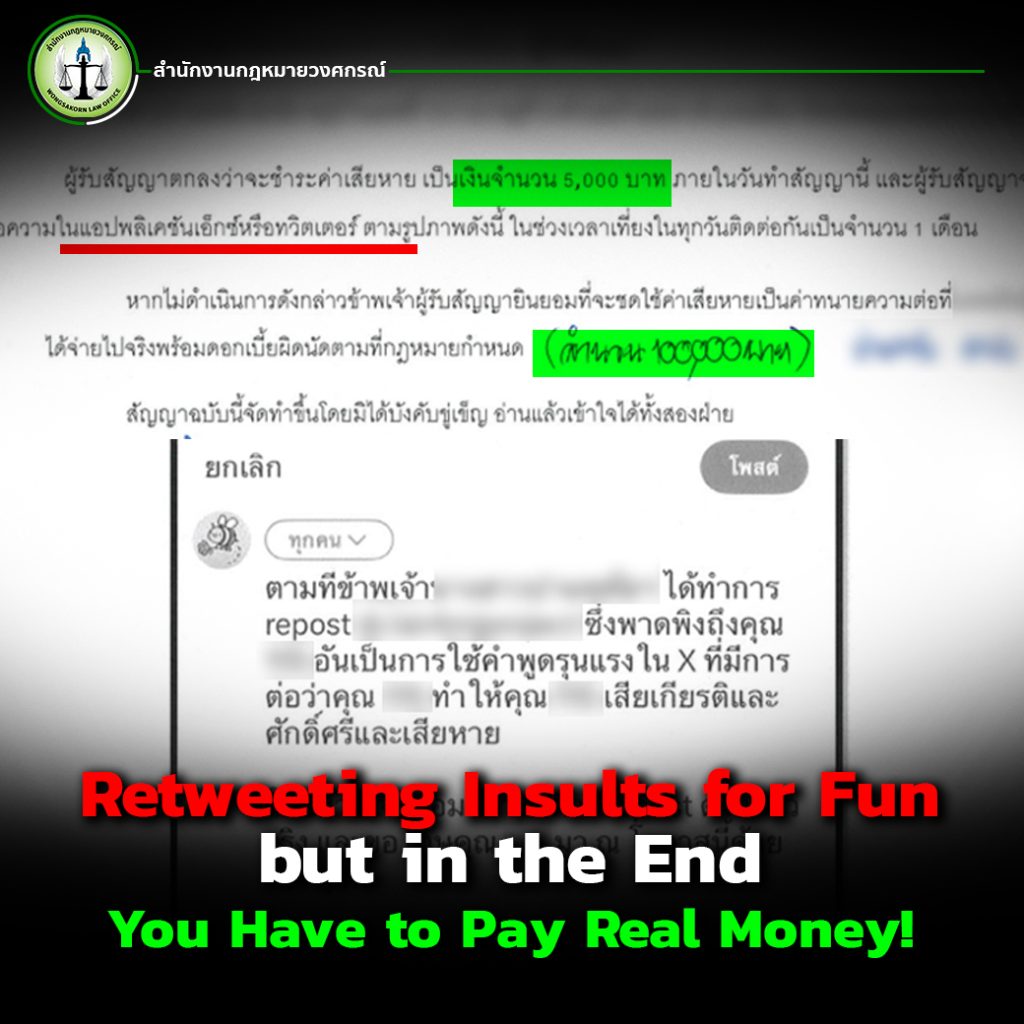
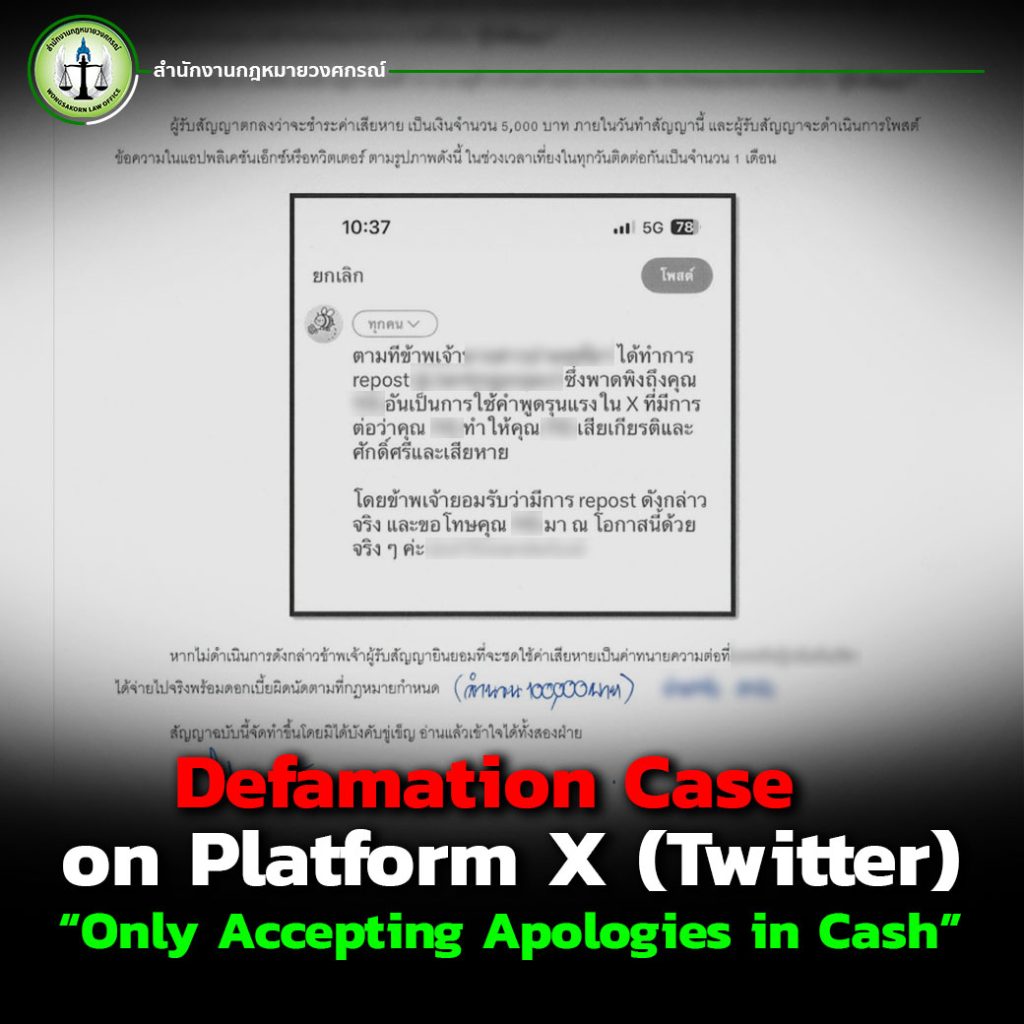
This is based on a real case handled by Wongsakorn Law Office, which represented a victim who had been defamed through rude comments reposted on Platform X (formerly known as Twitter). The victim felt that their reputation was tarnished, their honor was damaged, and they were publicly slandered.
Although the perpetrator did not write the original post, retweeting the message without denying or indicating disagreement led the court to see it as spreading defamatory content, which violates the law.
As a result, Wongsakorn Law Office issued a formal warning to the individual, and an agreement was made stating that the person who retweeted must:
- Pay 5,000 Baht in damages to the victim.
- Post an apology to the victim every day at 12:00 PM for one month.
- Pledge not to post or mention the victim again.
- Not delete the apology posts.
- Failure to comply with this agreement will result in an additional 100,000 Baht in damages, along with interest as per the law.
This is not a threat, but rather the outcome of careless use of social media.”
What is Defamation?
According to the Criminal Code, Section 326, “Anyone who makes false statements about another person to a third party in a manner that damages the reputation, dishonors, or incites hatred towards that person is committing the offense of defamation.” This includes speaking, writing, printing, or even posting and sharing online.
If the act is committed through online platforms such as Facebook, Twitter, Instagram, or TikTok, it will be considered defamation by advertisement, which carries a heavier penalty. The maximum punishment can be up to 2 years in prison, a fine of up to 200,000 Baht, or both imprisonment and a fine.
Retweet = Being an Accomplice in Defamation? Is it a Crime?”
A popular question is, “Can just retweeting be considered a crime?”The answer is “Yes.” If you retweet defamatory content without denying or expressing disagreement, the court may view it as your intention to spread the defamatory message publicly, which can make you an “accomplice” in committing the offense.
Don’t Claim It’s Just a Joke or Fun
Many people post or share content simply to join online trends, without realizing the potential harm to someone else’s reputation, which can be severe and have real consequences. It’s not just a trivial matter.
Statements like “It’s just a retweet, why sue me?” are not valid excuses in court. When the court summons arrives at your door, every post you made can be used as evidence in the case.
Only Accepting Apologies in Cash” is Not a Joke
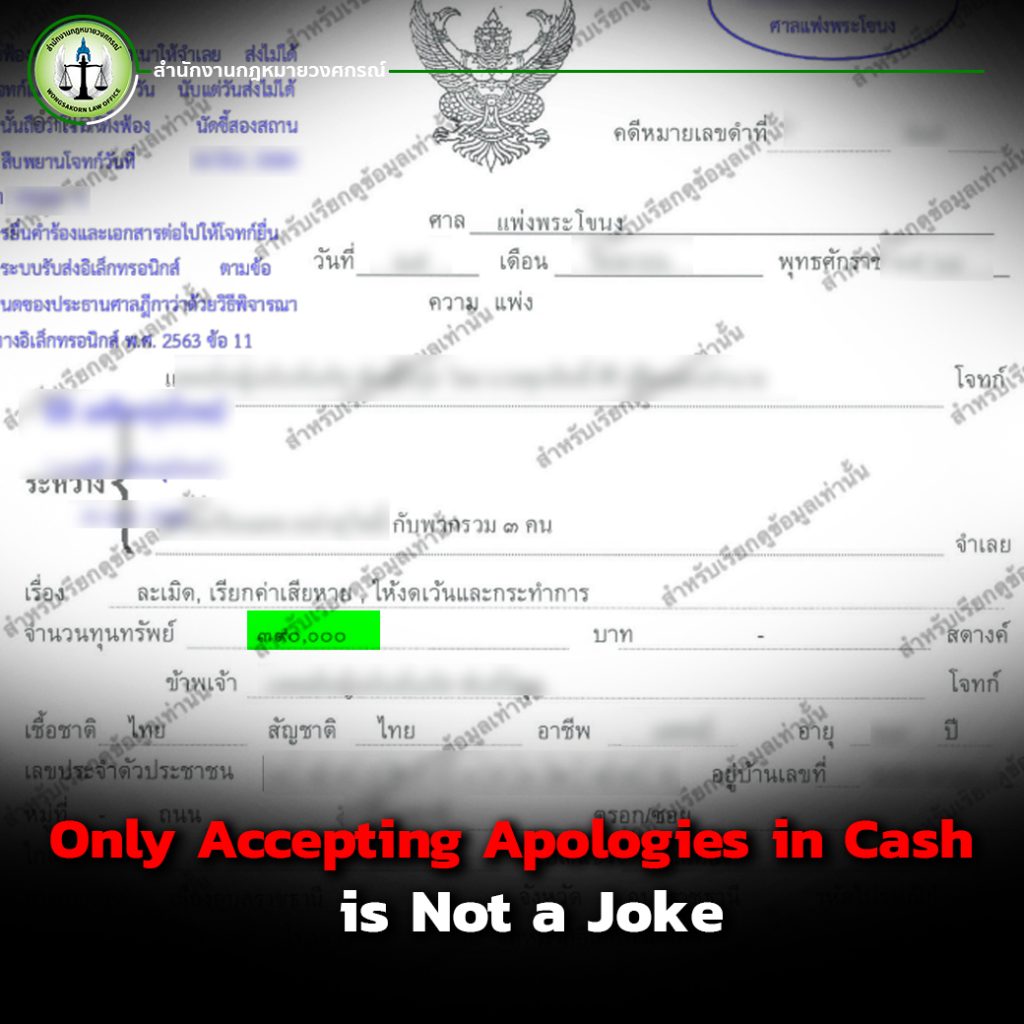
Online defamation cases have been on the rise, with many victims choosing to pursue legal action seriously. They are not just asking for an apology, but also seeking compensation for the damage to their reputation. In some cases, the compensation can amount to hundreds of thousands or even millions of Baht.
What to Do if You’re Defamed?
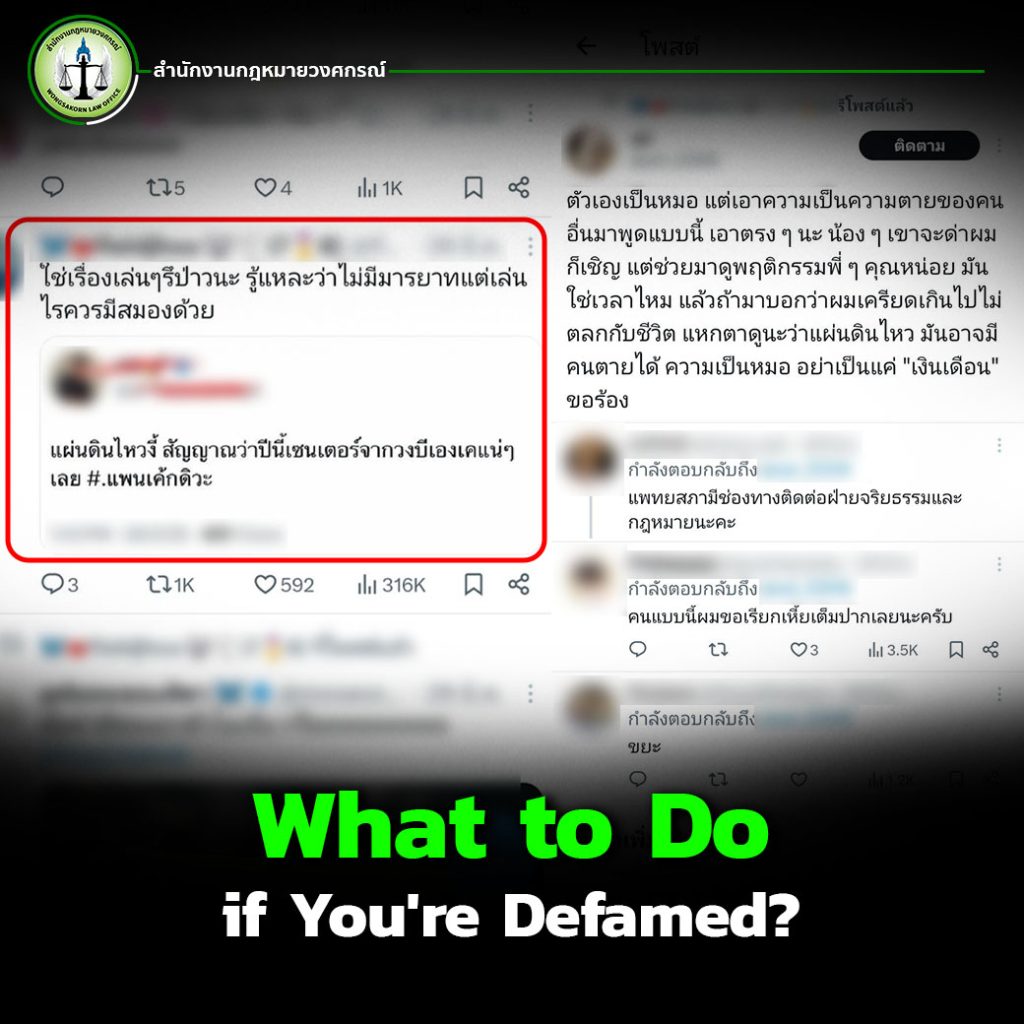
If you are the victim of defamatory posts on social media, here are the steps you should take:
- Take screenshots and gather evidence, including images, messages, links, and the date and time of the post.
- Consult a lawyer immediately to evaluate your legal options.
- Do not respond by insulting or retaliating, as this could make you liable as an accomplice in the offense.
Consult a Lawyer to Prevent Further Damage
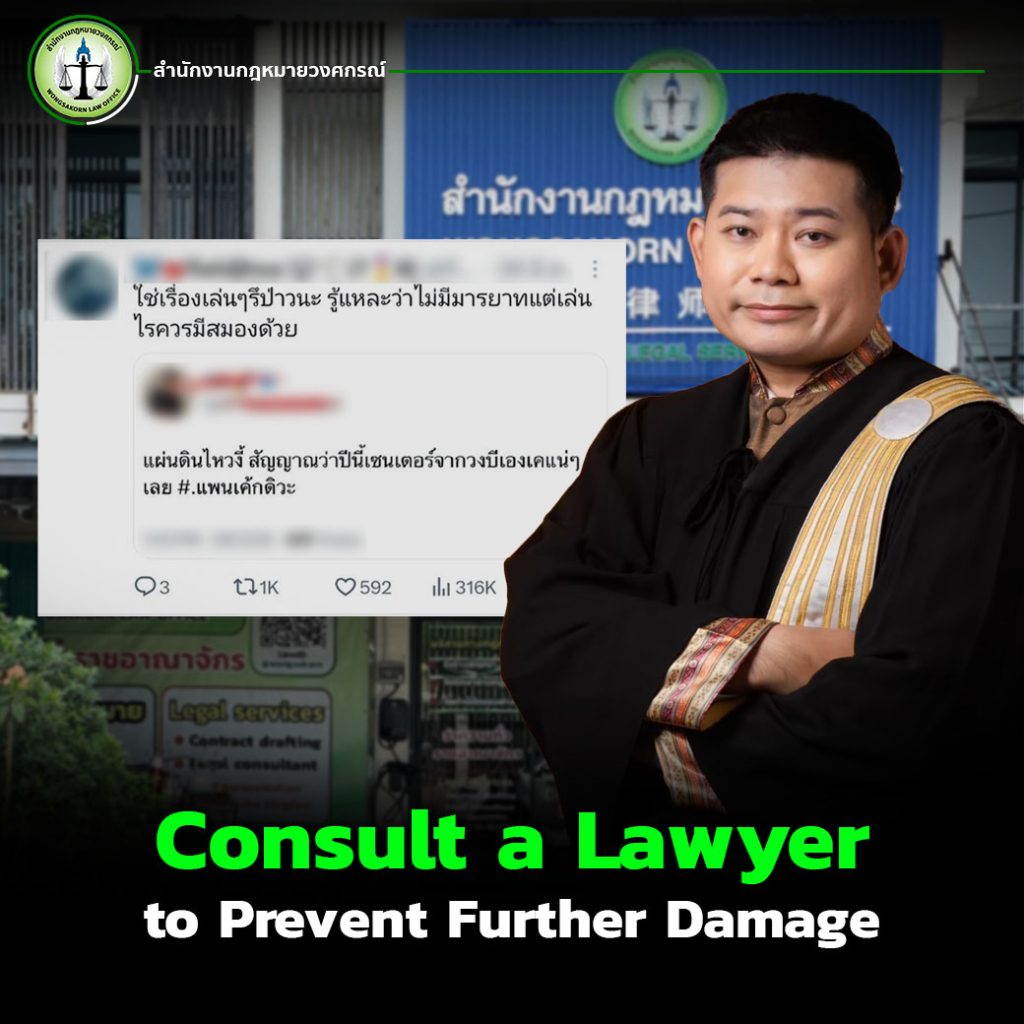
Fighting a defamation case is no small matter, as it requires legal expertise in analyzing messages, gathering evidence, and navigating the court process. If you’re looking for reliable legal support, Wongsakorn Law Office is here to assist you every step of the way.
We have a team of lawyers specializing in defamation cases, whether it involves posting, sharing, retweeting, or sending private messages that could be considered defamatory. We will help you assess the case and strategize to protect your rights professionally.
The online world is not a law-free zone. Don’t think that a simple retweet or “playful” insult won’t have consequences, because every message can become evidence in a defamation case. Before you share or post, think carefully, as your words online could come with a real price to pay.
If you need legal advice regarding a defamation case, contact Wongsakorn Law Office immediately to prevent further damage from escalating beyond control.