



Avoid Losing Your Legal Rights Without Realizing It
When it comes to shares and transactions involving shares, whether buying, selling, transferring, or changing shareholders, many people assume that simply signing a share transfer agreement or registering the change with the Department of Business Development (DBD) is legally sufficient.
However, in reality, this misunderstanding could cause you to lose your rights in the shares without even knowing it.
This article explains what is legally required for a valid share transfer and why the share certificate is a critical element that must not be overlooked.
What Is a Share Transfer and Why Is It Important?
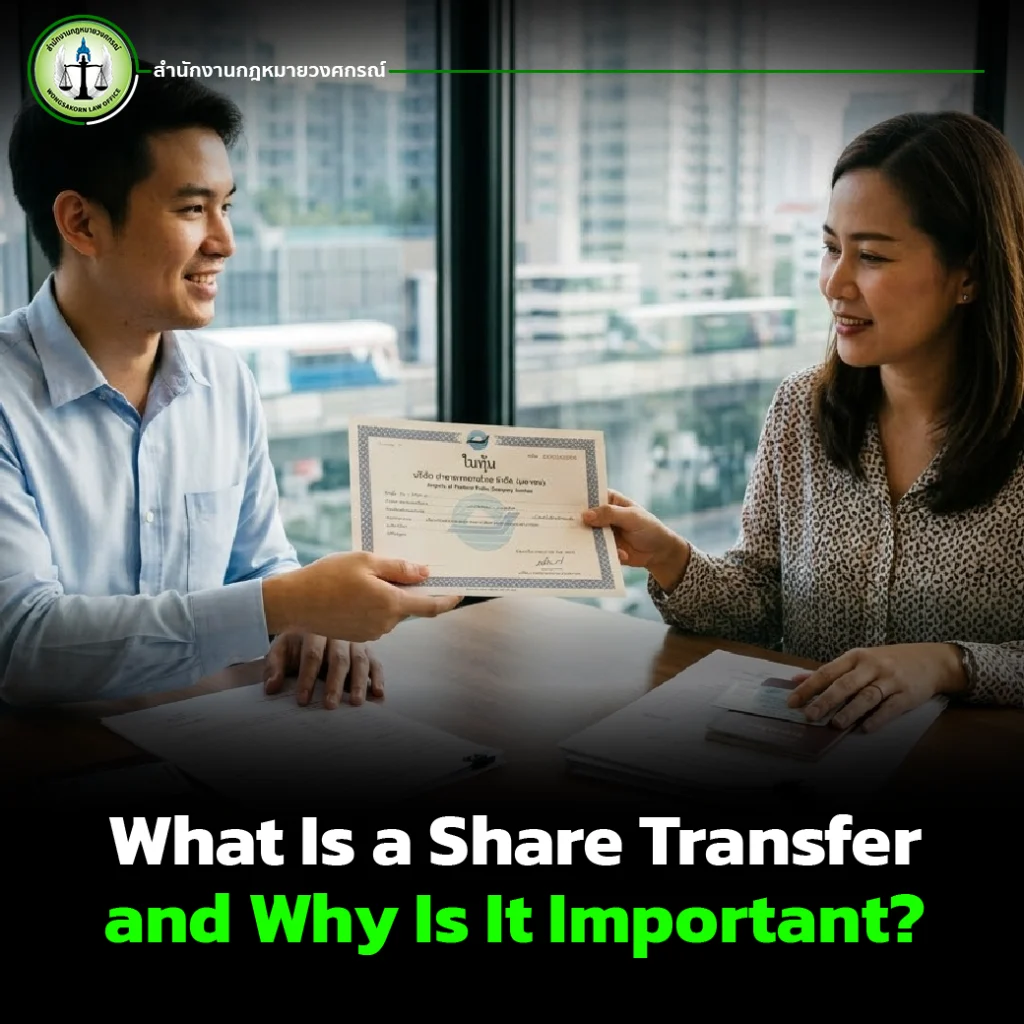
A share represents ownership in a company. In a limited company, shareholders have the right to receive dividends, vote, and participate in key business decisions.
Therefore, when a share transfer occurs whether selling shares to another person or transferring them to a relative it is not merely a change of name in documents. It is a direct transfer of legal rights.
If the transfer process is not properly completed
-The buyer may not acquire actual ownership rights
-The seller may still carry legal liabilities
-Disputes may arise in the future
Common Misunderstanding A Share Transfer Agreement Alone Is Enough
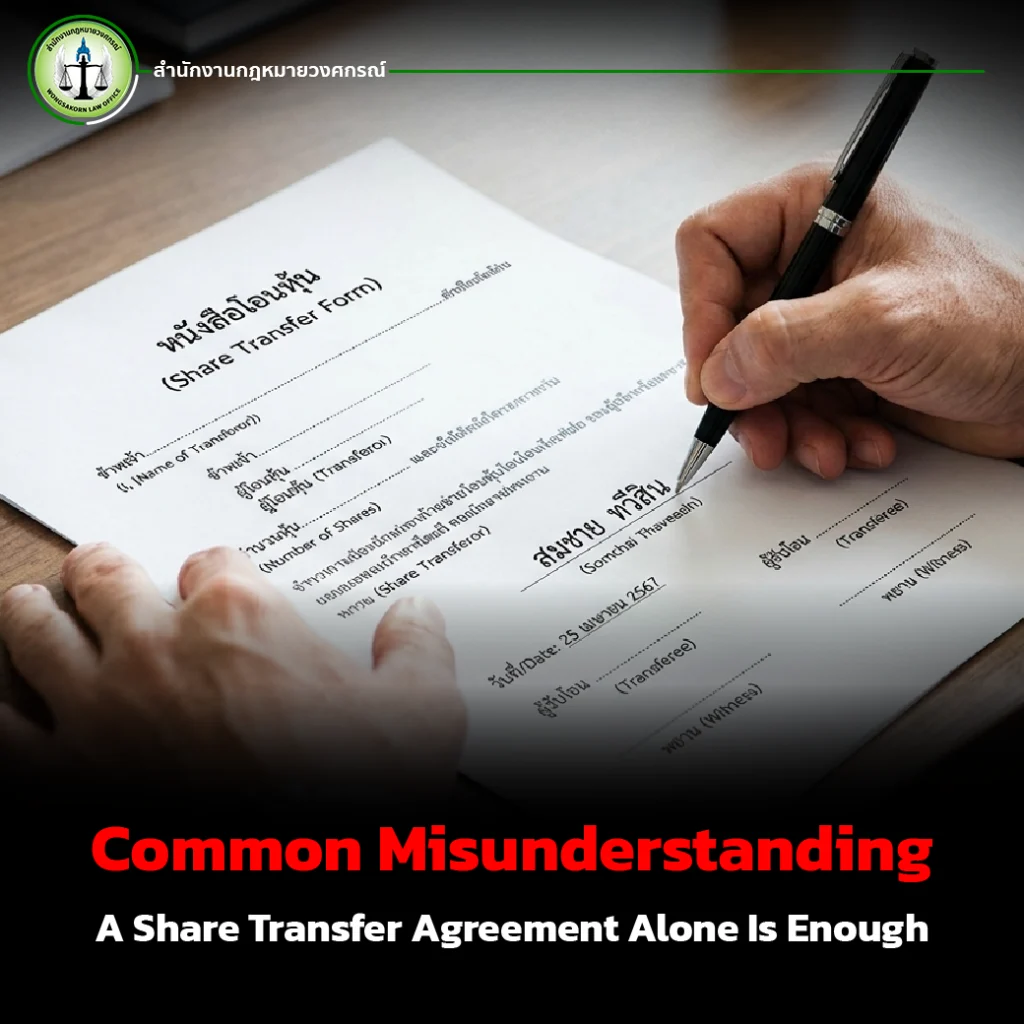
Many people believe that signing a share transfer agreement is sufficient. Some even proceed to register the change of shareholders with the DBD and assume the process is complete.
The answer is Not enough.
Under Thai law, a share transfer in a limited company must meet specific legal requirements to be considered valid.
The Key Element The Share Certificate Must Be Delivered

One of the most overlooked but critically important elements is the share certificate.
A share certificate is the legal evidence of share ownership. Therefore, a valid share transfer must include:
-A share transfer agreement
-Signatures of both transferor and transferee
-Witnesses as required by law
-Most importantly Delivery of the share certificate to the transferee
Without the delivery of the share certificate, the transfer may not be legally complete.
In simple terms:
Even if the agreement is fully executed, without the share certificate, the transferee may not legally own the shares.
Is Registration with the Department of Business Development Enough?
Registering with the Department of Business Development is merely a disclosure to the government, not the act that completes the share transfer.
Many people mistakenly believe that registration is the final step. In reality:
- Registration = Disclosure of information
- Valid share transfer = Full compliance with legal requirements
Therefore, if the share certificate is not delivered, even a registered transfer may be challenged in the future.
Real-Life Problems from Incomplete Share Transfers
To better understand the risks, here are common real-world issues:
1. Paid for Shares but No Ownership Rights
The buyer pays in full and signs the agreement but does not receive the share certificate
→ Unable to prove ownership
2. Shareholder Disputes
Incomplete transfer documentation
→ The company cannot determine the rightful shareholder
3. Legal Liability After Transfer
The seller believes the shares have been transferred, but legally remains a shareholder
→ May still be liable for company debts or obligations
Why Should You Consult a Lawyer Before Transferring Shares?
A share transfer is not just paperwork, it is a matter of legal rights. Even a small mistake can lead to significant losses.
Consulting a lawyer from the beginning helps to
-Verify the validity of the share transfer agreement
-Ensure all legal steps are properly completed
-Prevent future risks and disputes
-Handle the process correctly from start to finish
This is especially important when the share value is high or when there are multiple shareholders involved.
A Valid Share Transfer Requires Contract + Share Certificate + Legal Process

A legally valid share transfer is not just about signing an agreement or registering with authorities. It requires all essential elements, especially the delivery of the share certificate.
If any step is missing, the transfer may be legally incomplete and unenforceable.
Do not take risks by relying on incomplete information or incorrect advice.
Let Wongsakorn Law Firm Handle Your Share Transfers

If you are planning to transfer shares, buy or sell shares, or have questions about shareholder rights, Wongsakorn Law Firm is ready to assist you at every step in full compliance with the law ensuring your interests are fully protected.
Because shares are not a small matter,
and a single mistake could mean losing your rights entirely.Contact us today for legal consultation before making your decision.