


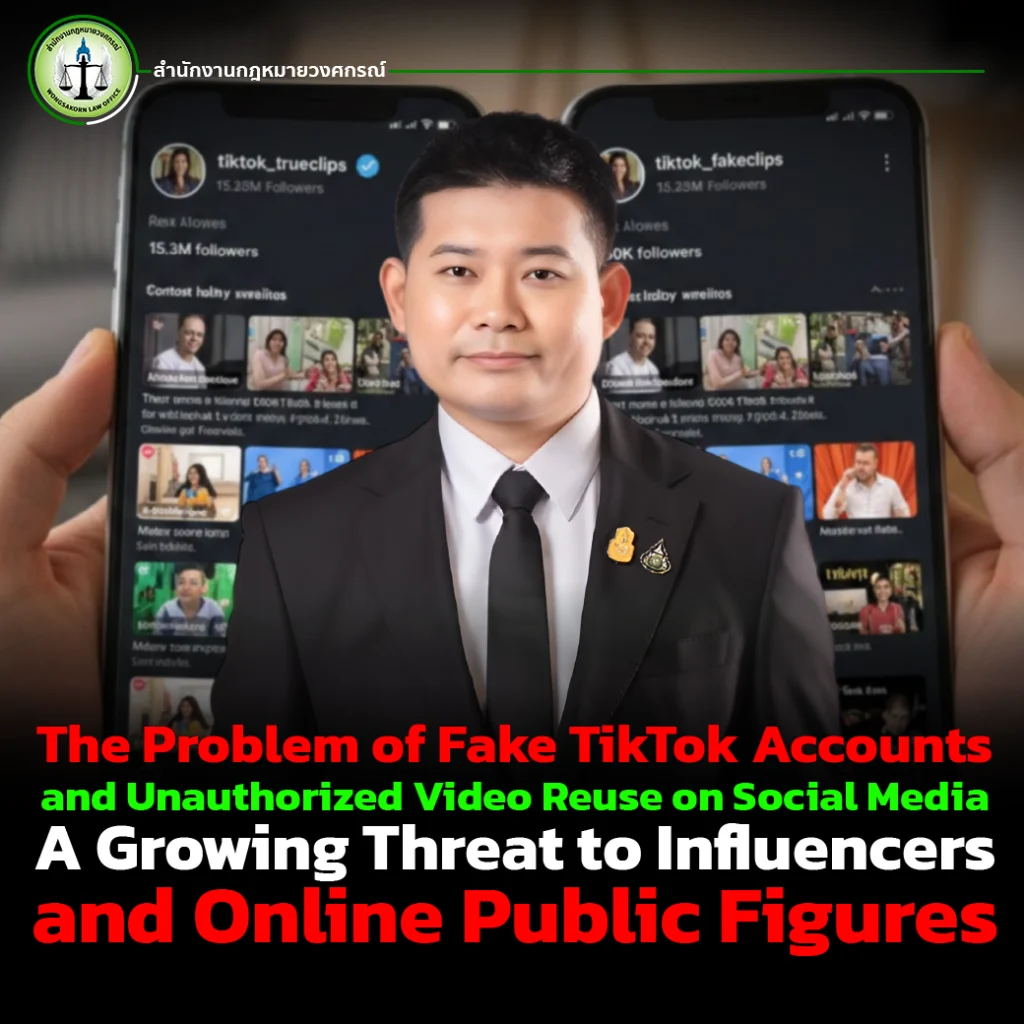
In an era where TikTok has become a leading platform for personal branding, income generation, and social influence, an unavoidable problem has emerged: impersonation on TikTok and other social media platforms, as well as the unauthorized reuse or “scraping” of videos. Influencers, net idols, content creators, and even ordinary individuals with a large following are all at risk of becoming victims of online rights violations.
These issues are not merely an inconvenience. In many cases, they escalate into serious legal problems that can severely affect an account owner’s reputation, income, and credibility.
What Is TikTok Account Impersonation and How Does It Happen?
TikTok account impersonation refers to situations where someone creates a TikTok account or other social media account using a name, profile picture, content, or style that closely resembles the real owner, causing others to mistakenly believe it is the official or authentic account.
Common forms of impersonation include:
- Using a username similar to the real account
- Reusing profile pictures or videos from the genuine account
- Claiming to be a “backup account” or a new official channel
- Using fake accounts to sell products, accept advertisements, or solicit money transfers
Such cases are especially common among influencers and net idols on TikTok due to their large follower base and the trust audiences place in their public image.
Unauthorized Use or “Scraping” of TikTok Videos
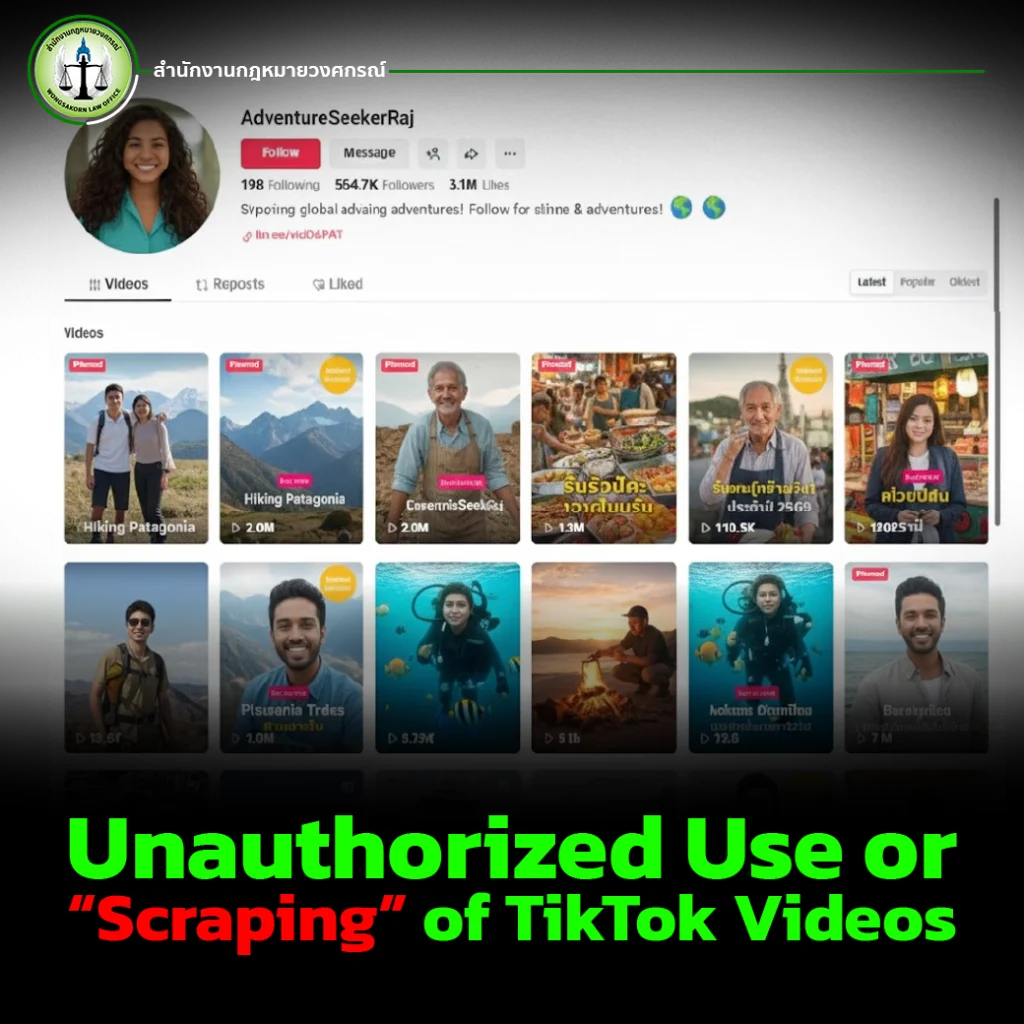
Another equally common issue is the unauthorized reuse or “scraping” of TikTok videos for use on other platforms, such as:
- Advertising websites, lottery sites, or gambling websites
- Online sales pages
- Other TikTok or YouTube channels
- Promotional media falsely claiming endorsements
Offenders often edit videos, add new text, or use the creator’s image to promote products or services without consent, causing significant damage to both reputation and commercial interests.
Who Is at Risk of TikTok Impersonation or Video Scraping?
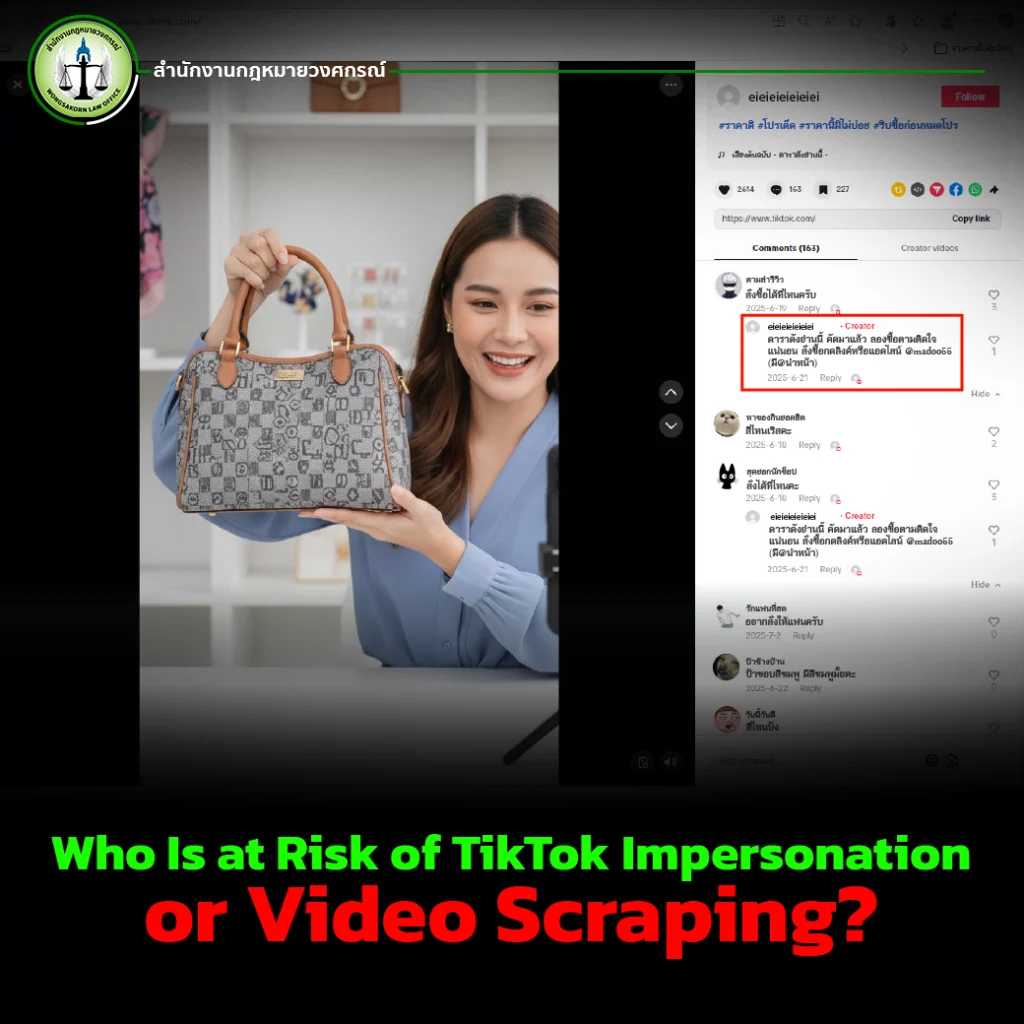
Many people believe this problem only affects celebrities, but in reality, those at risk include:
- TikTok influencers and content creators
- Net idols or individuals with a large following
- Online business owners using TikTok as a marketing channel
- Ordinary users whose videos go viral or gain public attention
The more followers an account has, the more likely it becomes a target for impersonation and rights violations.
Is It Illegal to Impersonate an Influencer’s TikTok Account to Generate Income?
One increasingly common form of infringement on TikTok is impersonating influencers or creators to generate income, such as through advertisements, product sales, affiliate links, or receiving gifts from followers. This behavior not only exploits another person’s reputation but may also constitute multiple legal offenses.
Offenders often rely on the influencer’s popularity and credibility by using similar account names, profile images, or videos, and claiming to be a backup account or part of the influencer’s team. When followers are misled, they may unknowingly transfer money, purchase products, or financially support the fake account.
From a legal perspective, such conduct may constitute:
- Violation of reputation and image rights
- Copyright infringement through unauthorized reuse of videos or content
- Fraud, if money transfers or purchases are induced
- Computer-related offenses involving false or misleading information
Even if the offender does not use the influencer’s real name, legal liability may still arise if the public is misled into believing the account is authentic.
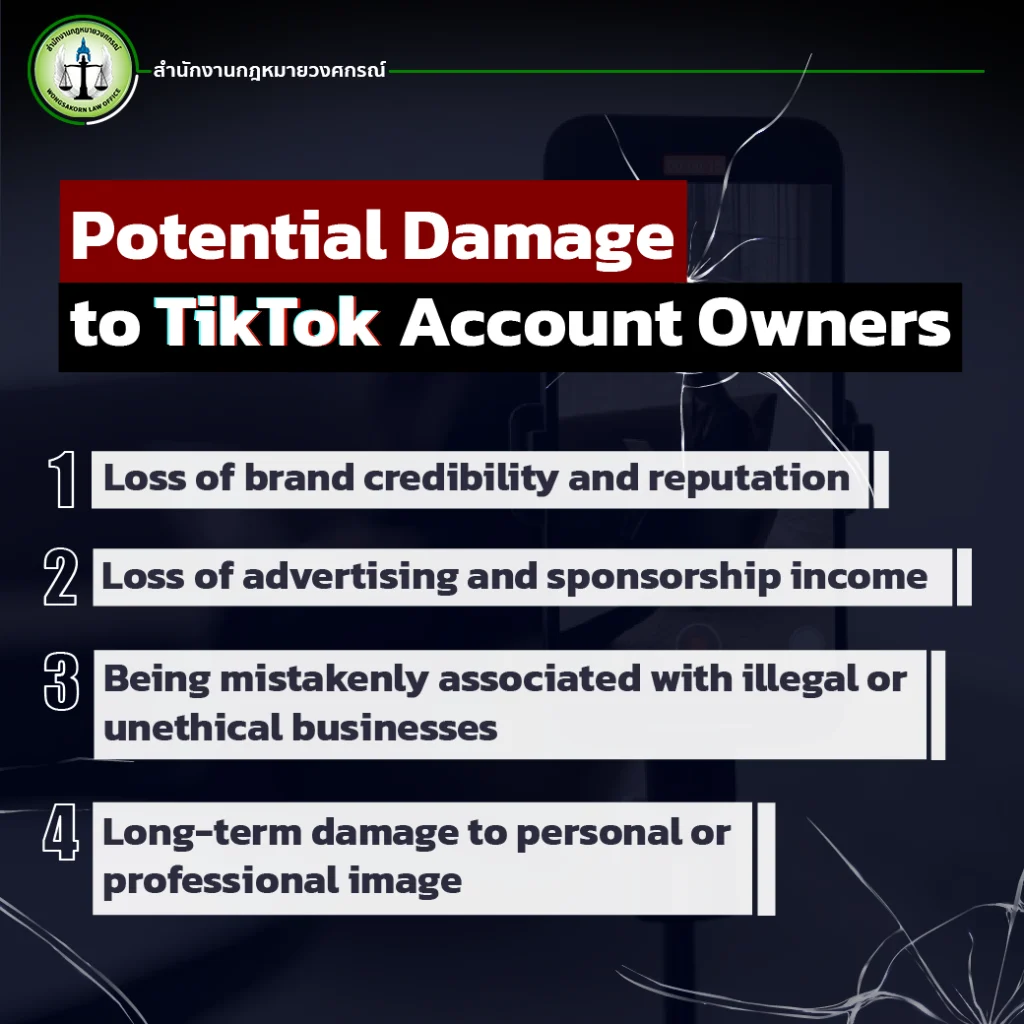
The impact of account impersonation or video scraping extends far beyond discomfort and may include:
- Loss of brand credibility and reputation
- Loss of advertising and sponsorship income
- Being mistakenly associated with illegal or unethical businesses
- Long-term damage to personal or professional image
In some cases, creators must spend significant time and financial resources to restore their reputation.
What Should You Do If Your TikTok Account Is Impersonated or Your Videos Are Misused?
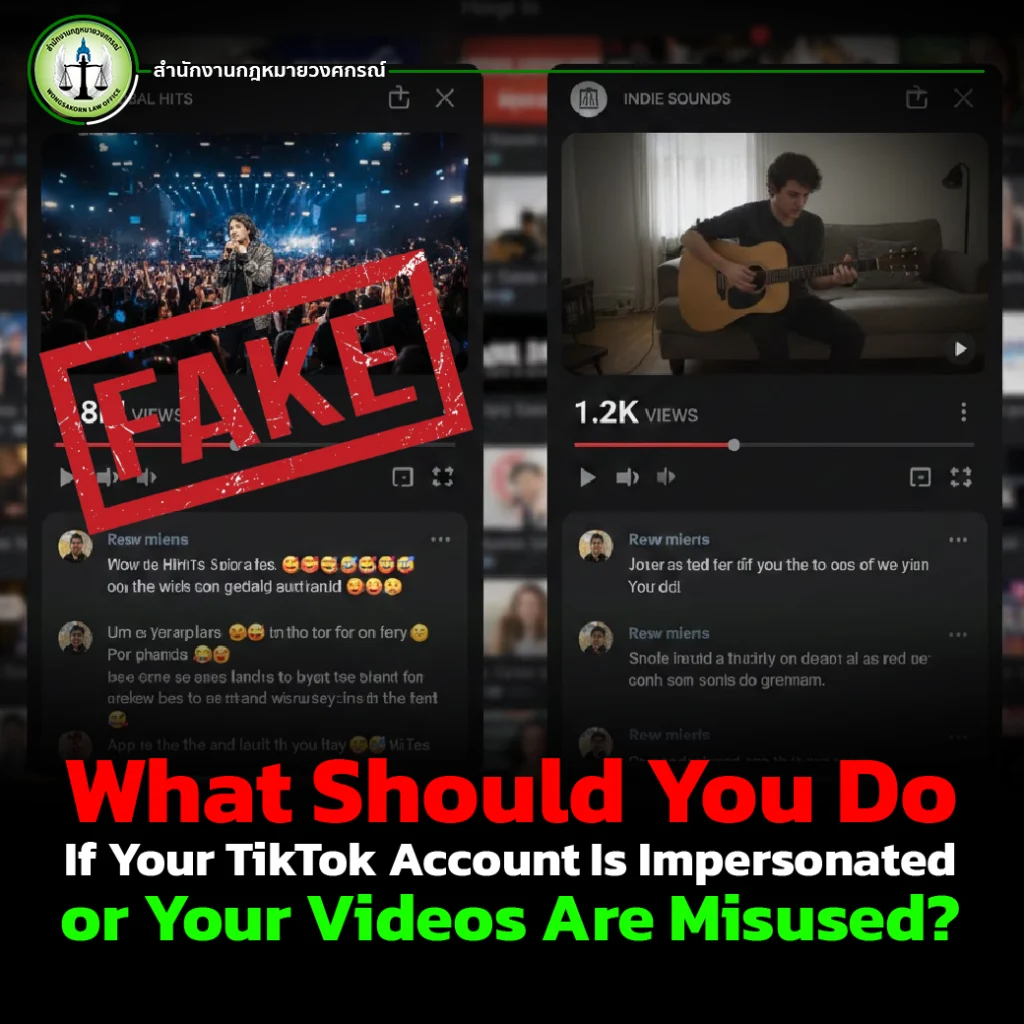
If you discover that your TikTok account has been impersonated or your videos reused without permission, you should:
1. Collect evidence such as fake account links, reused videos, and screenshots
2. Report the issue to TikTok or the relevant social media platform
3. Avoid direct confrontation without proper evidence
4. Consult a lawyer to assess legal options
Taking prompt and appropriate action can help minimize damage and increase the chances of claiming compensation.
Do Not Underestimate TikTok Impersonation or Video Scraping Consult a Lawyer Immediately
Although TikTok and social media platforms provide freedom of expression, this does not mean anyone can freely exploit another person’s work or reputation. Impersonation and unauthorized video use remain subject to legal regulation, just as in the offline world.
If you are an influencer, net idol, or TikTok user facing these issues, do not allow the damage to escalate. Consulting a lawyer early can help you protect your rights, reputation, and commercial interests in the most effective and legally sound manner.