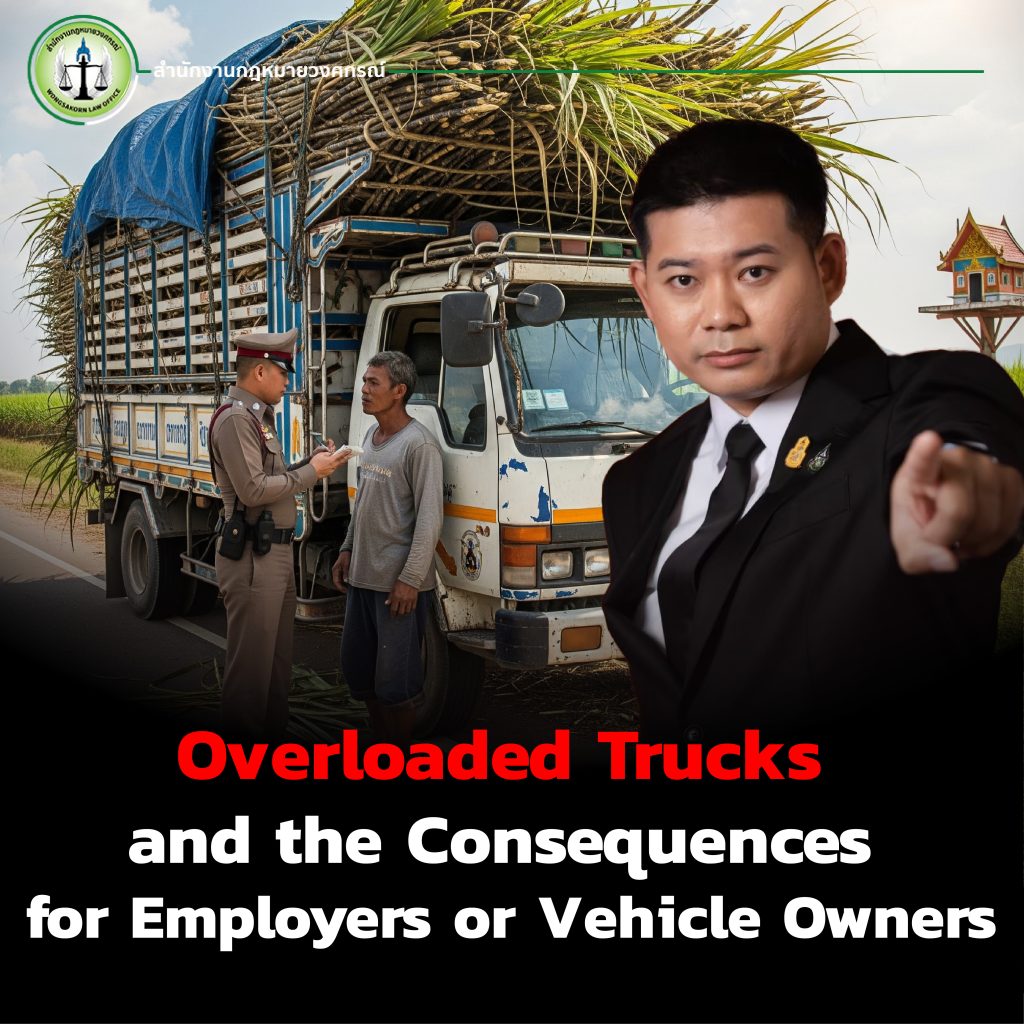
Overloaded Trucks and the Consequences for Employers or Vehicle Owners

Trucks and the Overloading Problem
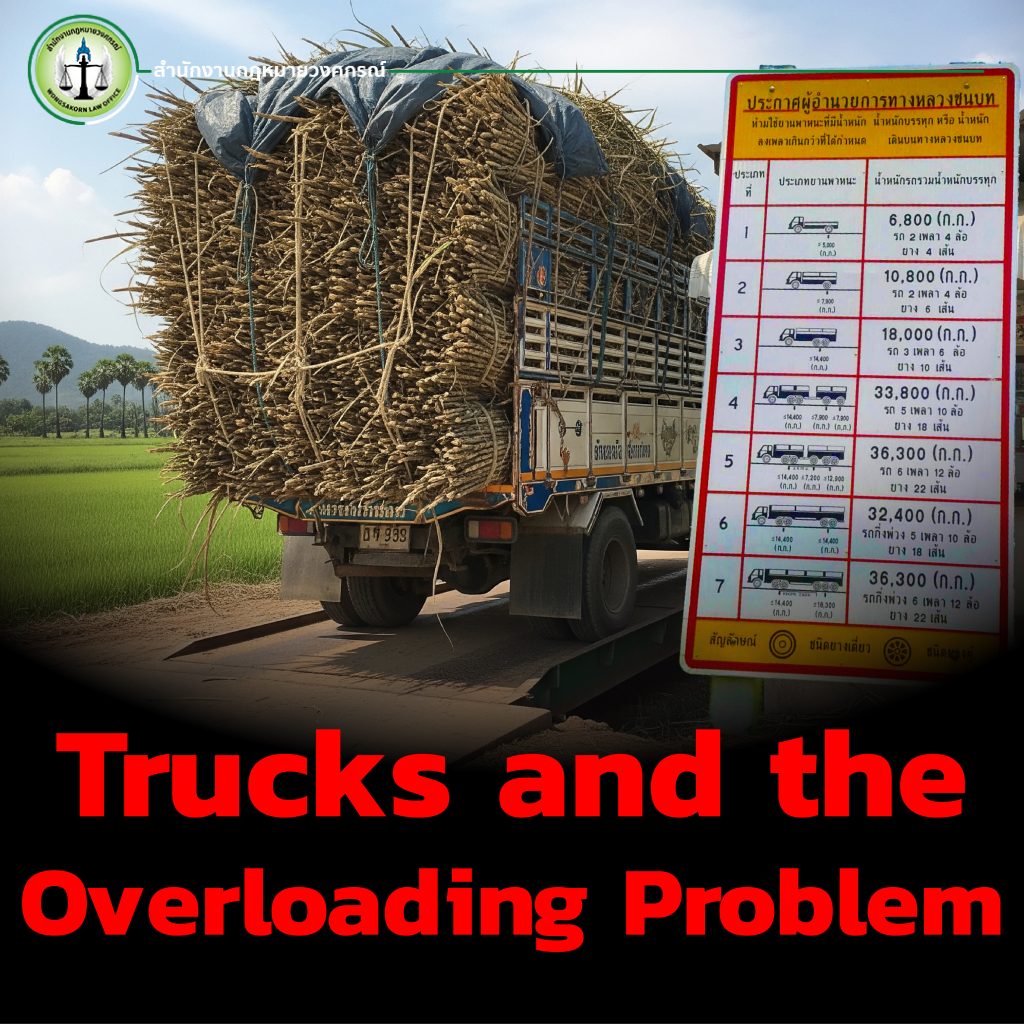
Today, trucks are an essential tool in Thailand’s transport and logistics sector, whether for agricultural products, construction materials, or industrial goods. However, a common issue is overloading beyond the legal limit. This is a violation under the Highway Act and related laws, directly linked to road safety.
Overloading not only damages roads but also poses serious legal and business risks for employers or truck owners.

Laws on Overloading

The law specifies the maximum permissible weight for each type of truck, such as:

  • 6-wheel trucks: maximum gross weight of 15 tons
  • 10-wheel trucks: maximum gross weight of 25 tons
  • Trailers or semi-trailers: weight depends on structural design
  • If a truck exceeds the limit, authorities have the right to stop, inspect, and impose fines immediately.

Consequences for Employers or Truck Owners
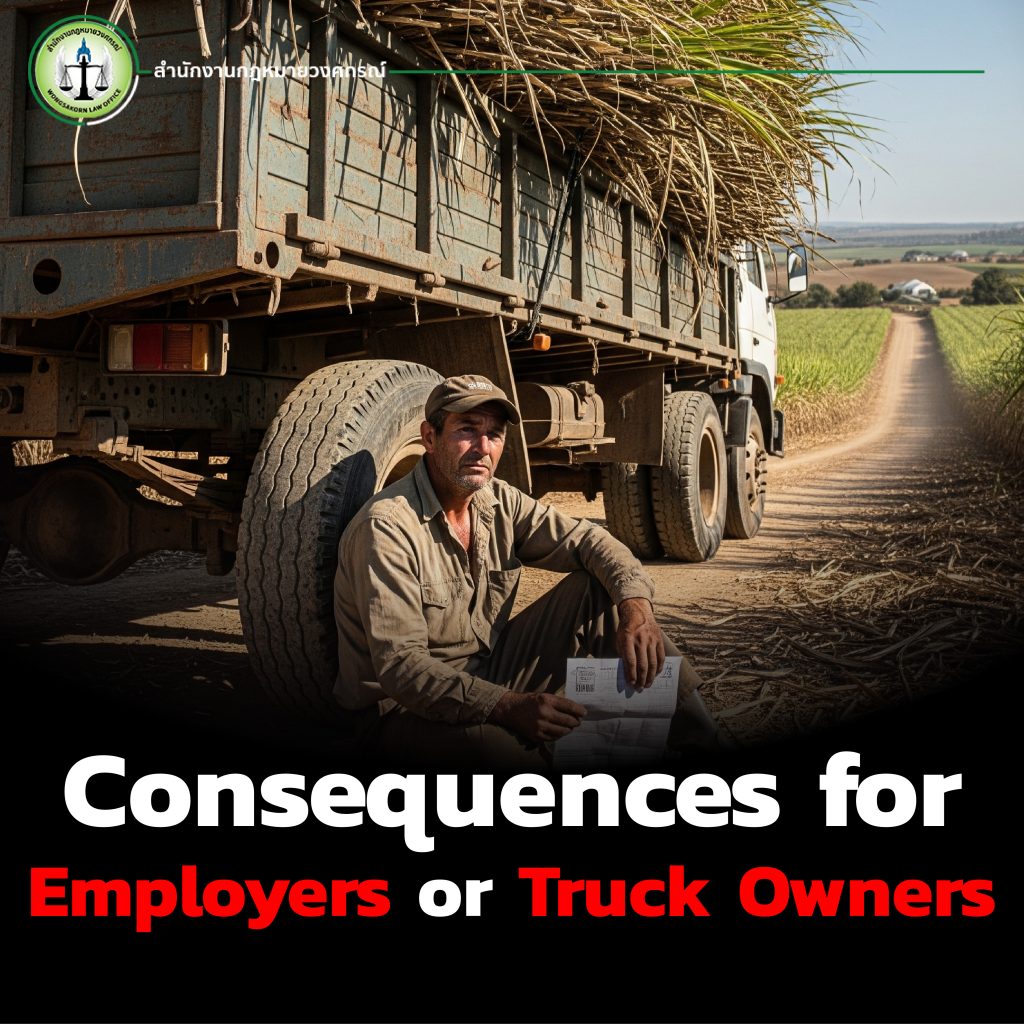
Even though the driver is the one who physically overloads the truck, the law may hold the employer or vehicle owner jointly liable. Key consequences include:

  • Legal fines – ranging from tens of thousands to hundreds of thousands of baht. Repeat violations may lead to revocation of the transport license.
  • Damage to business reputation – frequent violations reduce credibility and may cause contractors to cancel agreements.
  • Insurance risks – in the event of an accident while overloaded, insurers may refuse coverage, leaving the employer liable for damages.
  • Reduced vehicle lifespan – overloading accelerates wear on suspension, tires, and chassis, leading to higher maintenance costs.
  • Risk of license revocation – repeated offenses without correction could lead to suspension of the transport license, halting business operations.

What if the Employer Was Unaware?

A common scenario is when drivers take trucks for unauthorized work or overload for personal gain without the employer’s knowledge. When caught, the liability often still falls on the employer or truck owner.
In such cases, employers must prove non-involvement, such as keeping written work orders specifying weight limits, employment contracts, or records of driver instructions. These serve as valuable evidence in legal defense.

Preventive Measures

To avoid overloading issues, companies should:

  • Train drivers on relevant laws and penalties
  • Establish internal rules and disciplinary measures
  • Install weighing systems or monitoring tools before trips
  • Draft clear employment contracts outlining responsibilities
  • Monitor delivery documents to prevent unauthorized jobs

Importance of Having a Lawyer

When charged with overloading, employers or truck owners may be disadvantaged in legal proceedings. Having a lawyer is crucial, as they can:

  • Provide accurate legal advice from the moment charges are filed until trial
  • Gather evidence to prove the employer’s non-involvement
  • Negotiate with authorities to reduce penalties
  • Protect business rights and prevent license revocation or reputational harm

Why Consult the Wongsakorn Law Office?

If faced with an overloading case, legal consultation from transport law specialists is vital. Wongsakorn Law Office has an experienced legal team dedicated to transport-related cases. We provide case strategy, evidence collection, negotiations, and court representation to protect clients’ rights and minimize losses.

Overloading is a serious issue with legal, financial, and reputational impacts on employers or truck owners. Even if the employer was unaware, liability may still apply if the driver overloaded the vehicle. Therefore, if such a situation arises, consult a lawyer from Wongsakorn Law Office immediately to ensure lawful resolution and safeguard your business interests.
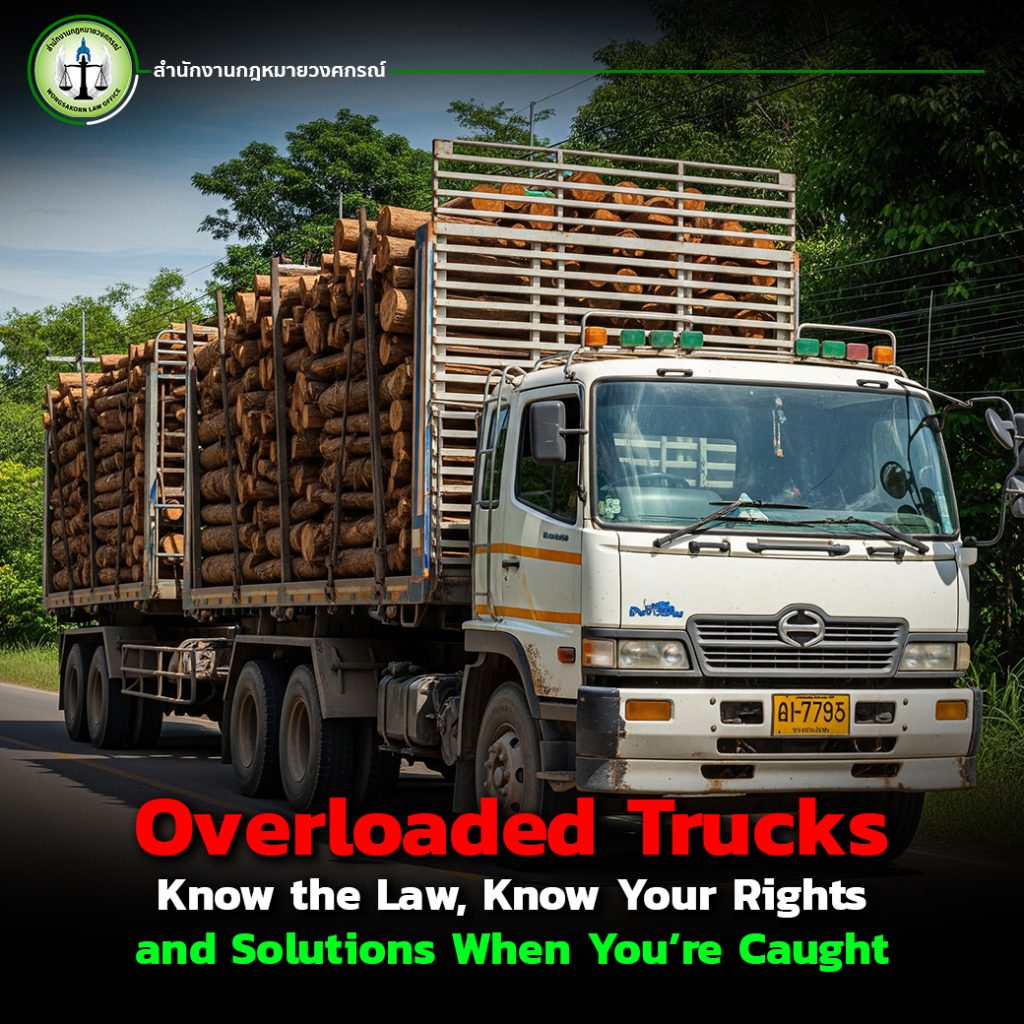
Overloaded Trucks: Know the Law, Know Your Rights, and Solutions When You’re Caught

Trucks are the backbone of Thailand’s logistics industry, whether for transporting raw materials for manufacturing, delivering goods to other provinces, or moving import-export products. However, trucking operations face certain legal limitations particularly regarding overloaded trucks, a challenge many transport operators and drivers may encounter.

This article explains the legal framework surrounding overloaded trucks, the possible consequences, and how consulting a lawyer can help resolve the issue if you are caught.

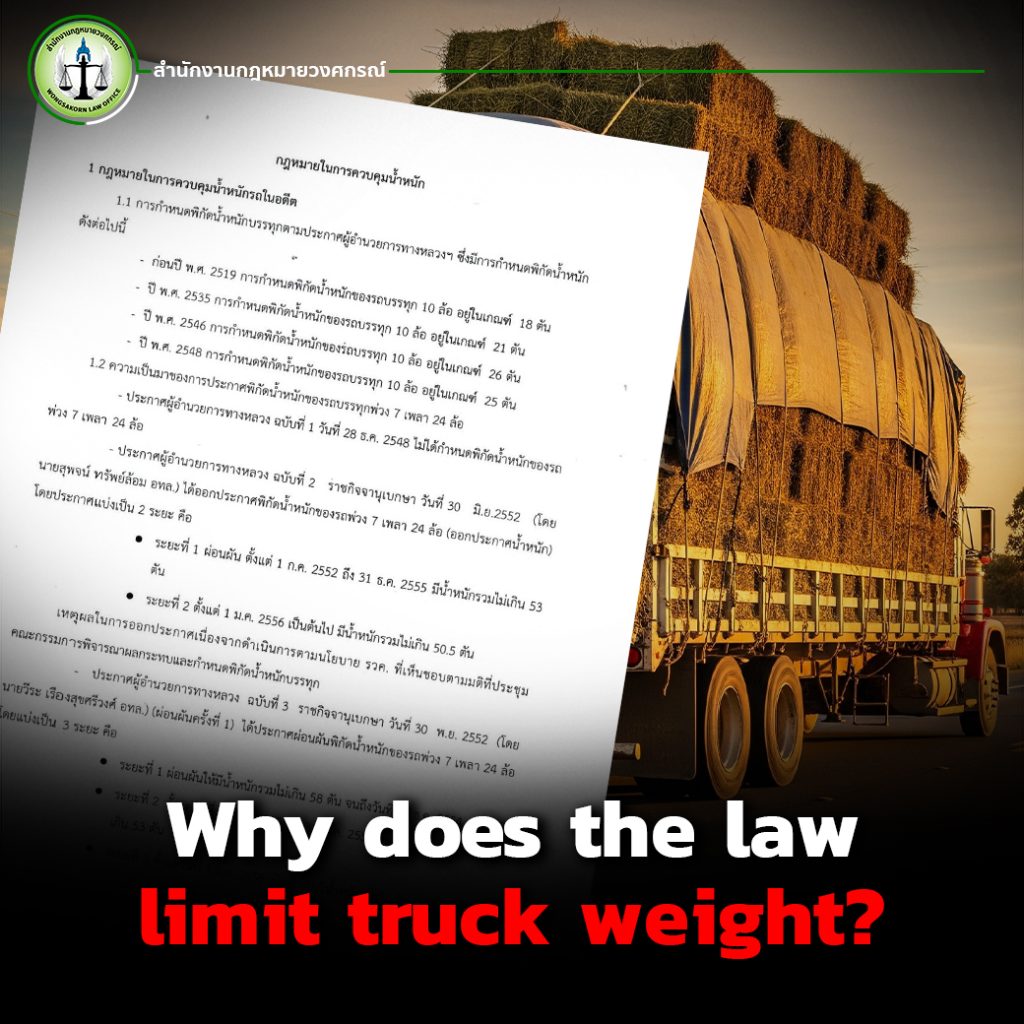
Why does the law limit truck weight?

The law specifies the maximum load for each truck type in order to:

1. Protect road user safety – Overloaded trucks may impair braking and steering systems, increasing accident risks.

2. Prevent damage to roads and bridges – Excess weight accelerates wear and tear on infrastructure.

3. Maintain fair transportation standards – To ensure fair business competition and prevent unsafe practices for cost-cutting.

Legal truck weight limits

In Thailand, truck weight limits depend on the type and number of axles, for example:

  • 2-axle trucks: Maximum 15 tons
  • 3-axle trucks: Maximum 25 tons
  • Trailer trucks: Maximum 50.5 tons

These figures are examples only check the latest announcements from the Department of Highways or Department of Land Transport.
If a truck exceeds legal limits, it constitutes a violation and may result in fines and other penalties.

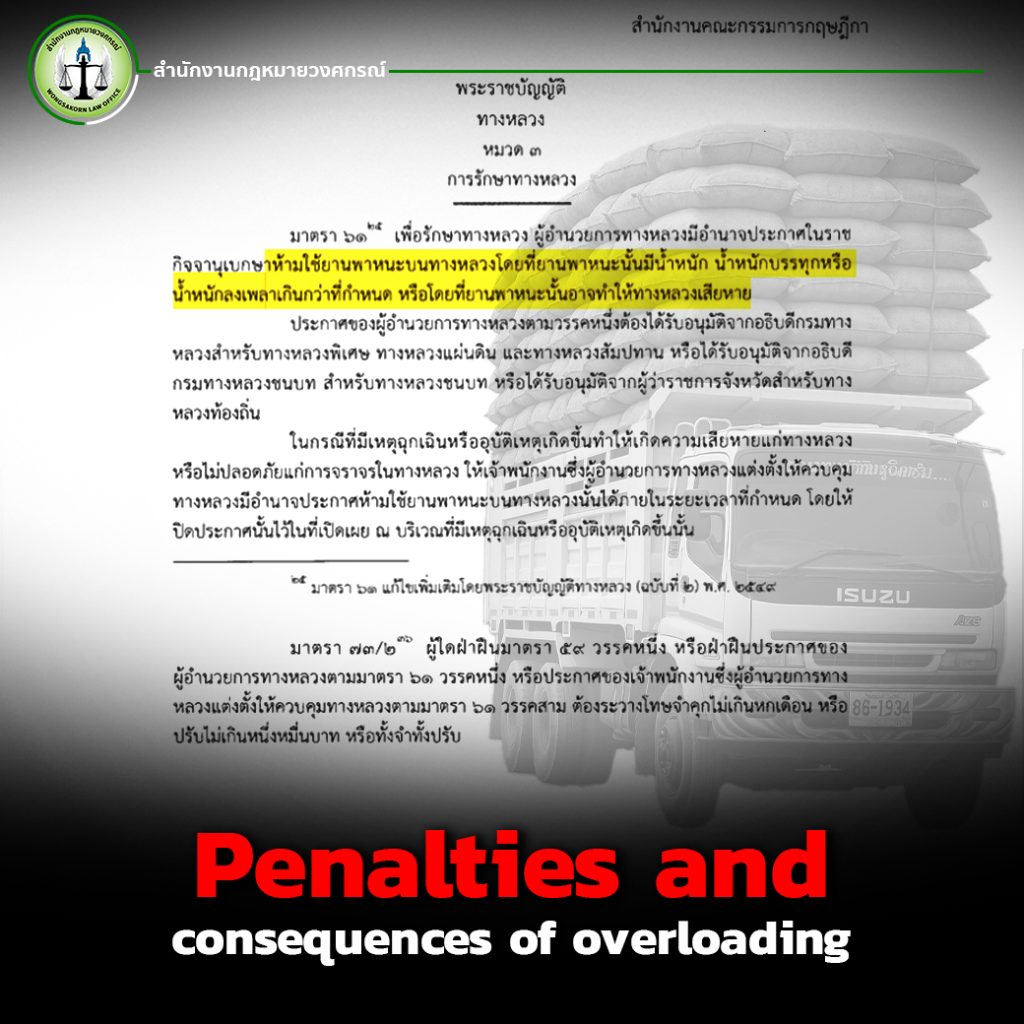
Penalties and consequences of overloading

Possible consequences include:

  • Fines – Under the Highway Act or Land Transport Act, fines may range from thousands to hundreds of thousands of baht, depending on the excess weight.
  • License suspension or revocation – Both driver’s licenses and operating licenses may be suspended.
  • Vehicle impoundment – Authorities may hold the vehicle until the load is corrected.
  • Business impact – Delays, loss of business opportunities, and damaged customer trust.

Causes of overloaded trucks

Overloading is not always intentional various economic, knowledge-based, and operational factors may be involved, such as:

1. Reducing transport trips – Maximizing load per trip to cut costs.

2. Incorrect weight estimation – Especially for goods with unclear unit weight.

3. Employer pressure – Drivers may be forced to comply despite knowing it’s illegal.

4. Lack of awareness of regulations – Not knowing current laws or weight limits.

Rights and steps if caught

If caught for overloading

1. Request to verify weighing results to ensure accuracy and calibration.

2. Keep evidence photos of goods, loading arrangements, and related documents.

3. Do not admit guilt immediately consult a lawyer before signing any documents.

4. Request official case documents for legal defense.

Why consult a lawyer in overloaded truck cases?

Overloading cases can seriously impact both drivers and operators. Lawyers can:

1. Verify facts and evidence, including weighing accuracy.

2. Provide legal advice on rights and legal processes.

3. Negotiate with authorities to reduce penalties.

4. Represent you in court to reduce stress and workload.

5. Advise preventive measures to avoid future overloading.

Real case examples

  • Faulty weighing – A driver accused of overloading was acquitted after the lawyer proved the scale was inaccurate.
  • Minor overloading – A lawyer negotiated reduced fines, citing business necessity and lack of intent.
  • Employer pressure – Evidence showed the driver had no authority over loading, reducing penalties.

Preventing overloading

  • Weigh cargo before departure.
  • Train drivers and logistics staff on legal limits.
  • Install on-board weighing systems for real-time monitoring.
  • Refuse risky jobs even under client pressure.

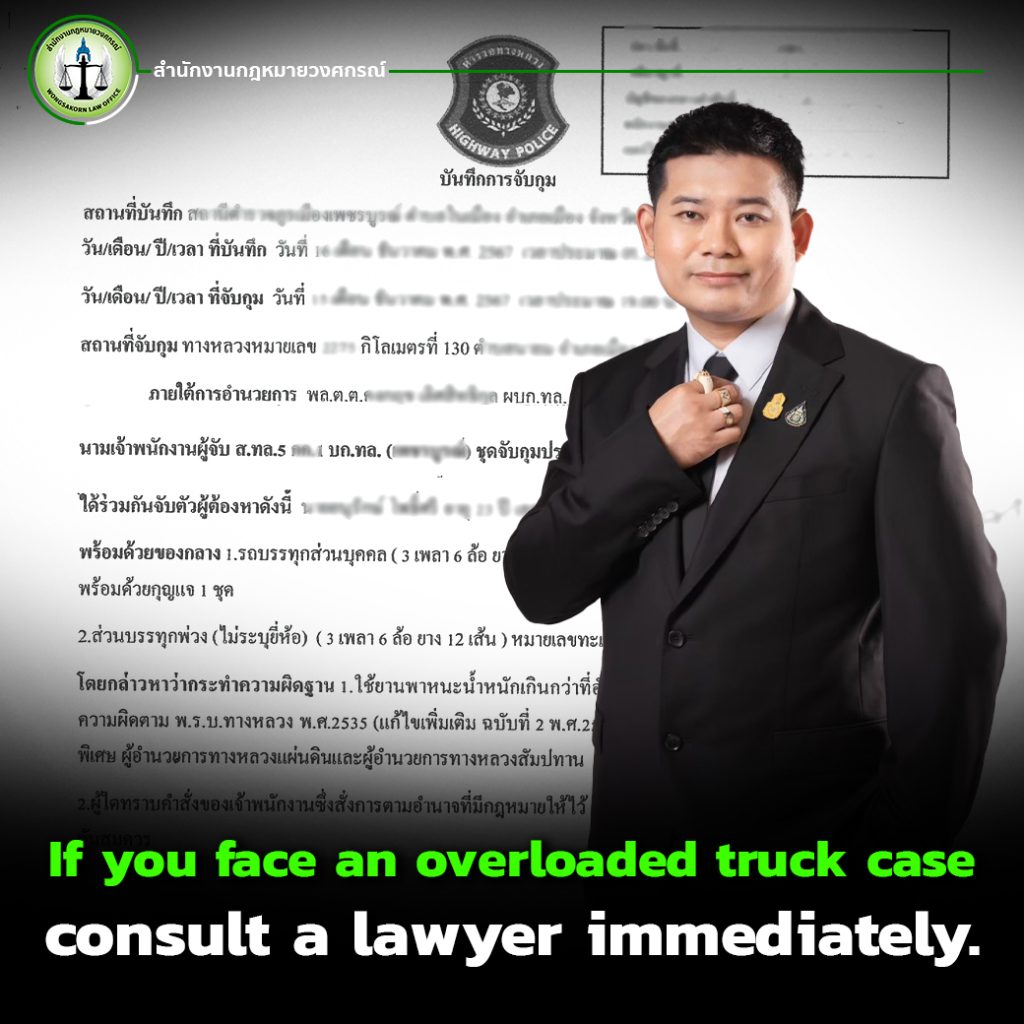
If you face an overloaded truck case, consult a lawyer immediately.

 Using trucks legally not only improves road safety and infrastructure maintenance but also ensures smooth business operations. If charged with overloading, seeking legal advice early is the safest choice. It helps you understand the law, know your rights, and resolve the issue professionally.

Line @ คลิก! โทรหาเรา คลิก!