


In the digital age, anyone can leave comments on social media, review websites, or Google Maps. Writing a review has become routine for many—but did you know that just a few lines you post might land you in legal trouble for defamation by publication? This is a criminal offense, punishable by imprisonment and fines.
If you’ve never heard of this before, this article might just help you avoid being sued over a review at the eleventh hour.
What is Defamation by Publication?
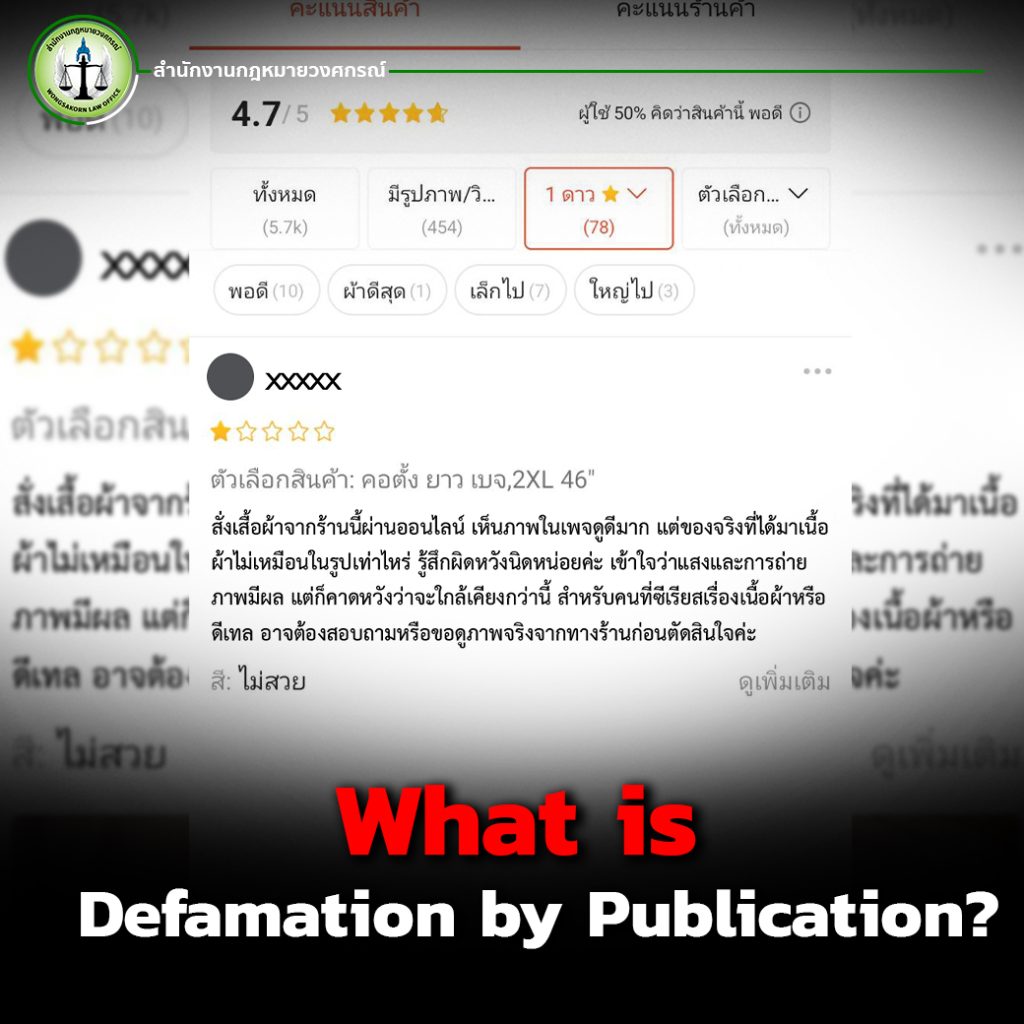
“Defamation by publication” is a criminal offense defined under Section 328 of the Thai Criminal Code. It involves making a statement about someone to a third party through any form of publication, including:
- Newspapers
- Printed materials
- Television or radio
- Social media
- Websites
- Review systems (e.g., Google Reviews, Facebook Reviews)
If your post harms someone’s reputation, causes public contempt, or incites hatred, it’s considered illegal.
Penalty: Up to 2 years in prison, a fine of up to 200,000 THB, or both.
A Careless Review Can Ruin Your Life
Many believe “if it’s the truth, it’s safe.” But in law, truth alone isn’t always a shield. If you can’t prove it, or if your words are insulting, satirical, or otherwise defamatory, you can be prosecuted immediately.
For example, writing on Google that a doctor “speaks terribly, like they’re hungry” or “I fear the doctor might kill me.” Even if it’s a personal feeling, such targeted statements can damage the healthcare provider’s reputation and result in legal action—you might easily be sued over your review.
Be Cautious Your Post Could Be Evidence in Court
Even if you delete your comment, screenshots taken by others can still serve as legal evidence. Claims like “no intention” or “just stating the truth” are not accepted defenses in court.
If your review:
- Identifies specific individuals
- Uses harsh, insulting, or humiliating language
- Lacks corroborating evidence
…it may immediately qualify as defamation by publication, regardless of how widely it was shared.
Risks Reviewers Often Overlook
- Naming individuals without anonymizing them
- Emotionally charged language (e.g., “I fear the doctor might kill me,” “Worst experience ever”)
- Criticizing without any proof (e.g., no receipts or recordings)
- Causing others to avoid the service or misunderstand the situation
How to Review Safely Without Risk?
1. Avoid naming individuals directly
Use neutral terms like “a staff member” or “a duty doctor” instead of names.
2. Back your statements with proof
Attach receipts, photos, or recordings for personal experiences.
3. Use objective, neutral language
Avoid emotionally loaded or insulting phrasing.
4. Inform the business first, before posting
Giving them a chance to respond or correct may reduce conflict.
5. Don’t repost or share others’ defamatory content
Even sharing can make you legally responsible.
2025 Update: What Reviewers Should Know?

1. Avoid identifying individuals explicitly (name, time, date, unique behaviors).
2. Use polite, neutral language; say “I felt disappointed” or “Communication didn’t suit me.”
3. Support claims with evidence if you criticize behaviors or statements.
4. Avoid sensational language designed to provoke or shame.
5. If unsure, don’t post publicly—report to the service provider or consult a lawyer.
Key Takeaways for Reviewers
- Your words on social media count as “publication” under Thai law.
- Deleted comments can still be used as evidence.
- Accusing someone publicly without proof—even unintentionally—can be illegal.

What to Do If You’re Sued Over a Review?

If you receive a court summons
1. Don’t panic or ignore it.
2. Preserve all related evidence (screenshots, receipts, recordings).
3. Consult a lawyer immediately for legal defense.
Wongsakorn Law Office offers expert advice in defamation and online cases. We understand that every word carries weight—and legal consequences.
In today’s world, where reviews influence consumer choices, your public statements aren’t trivial. Be mindful, or risk losing time, money, and reputation.
Click here to consult a lawyer
Remember: just because it’s a review doesn’t mean it’s legally safe—many have been sued over a review without realizing it.