


In today’s digital age, anyone with a smartphone and social media account can become a reviewer—whether it’s for restaurants, hotels, attractions, repair shops, or clinics. However, many overlook the fact that an impulsive or careless review could immediately expose you to a defamation lawsuit by the business owner—especially if your review harms their reputation or causes public embarrassment.
Many believe “telling the truth” protects you from being sued. But legally speaking, truth alone is not always a defense. Courts also consider your intent, wording, and the impact of your review.
Wongsakorn Law Office invites you to explore the hidden legal risks behind impulsive reviews and offers practical guidelines on how to review safely without facing defamation charges.
What is Defamation by Review?
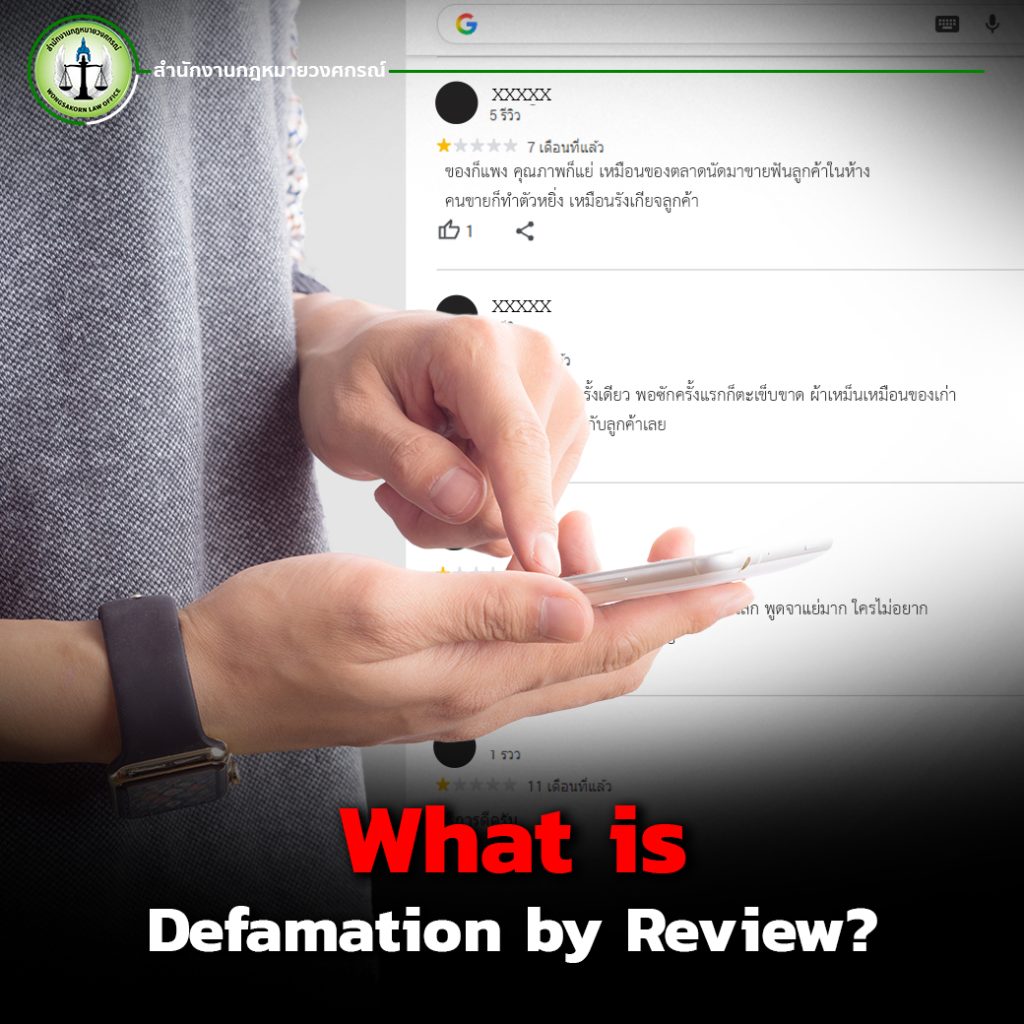
Defamation occurs when someone’s reputation is harmed by false statements or allegations shared with third parties. If you post public reviews on platforms like:
•Google Review
•X (Twitter)
•Pantip
•TikTok
•Any review website
…you may be liable under Article 328 of Thailand’s Criminal Code, which defines “defamation by advertising.” Penalties include up to 2 years in prison and/or fines up to 200,000 THB.
Real Cases : Reviewers Were Sued
Several reviewers or consumers posted negative experiences such as
•Calling food “smelly like rotten”
•Saying a staff member spoke “as if on drugs”
•Claiming “I fear the doctor will kill me”
Even if subjective, if the review names individuals, uses harsh language, or lacks evidence, legal action can be taken immediately—without needing the review to be widely shared.
Free Speech ≠ Unlimited Speech

Many assume reviewing is protected free speech. But legally, your right to speak must not infringe upon others’ rights.
Reviews colored by emotion, exaggeration, harsh insults, or personal vendettas can violate the business owner’s rights—even if your intent was personal opinion.
Inaccurate Reviews Are Even Riskier
Reviews that contain falsehoods or exaggerations especially when they harm a business’s reputation or revenue can be treated as intentional defamation. Courts may impose heavier penalties if
•The reviewer never used the service
•The incident never occurred
•The reviewer intended to damage the business’s image
In such cases, businesses may pursue both criminal defamation charges and civil damages.
Case Example: Fake Negative Review
A business owner received a Google Review claiming poor service and dirty food. CCTV confirmed the person never entered the store. The owner hired legal counsel and successfully filed defamation claims and demanded compensation for reputational harm.
How to Review Safely Without Risk of a Lawsuit?
1.Avoid naming specific individuals
•Use neutral terms like “a staff member during my visit” instead of identifying individuals.
2.Use neutral, polite language
•Avoid emotional or defamatory labels. Prefer “I felt disappointed” rather than “worst ever,” “dumb,” or “shouldn’t exist.”
3.Provide solid evidence
•Back your review with photos, receipts, or recordings not just feelings or hearsay.
4.Give the business a chance to resolve first
•Always contact the business directly before posting your review.
5.Don’t share or repost defamatory content written by others
•Even if you’re not the original author, sharing defamatory posts can make you liable.
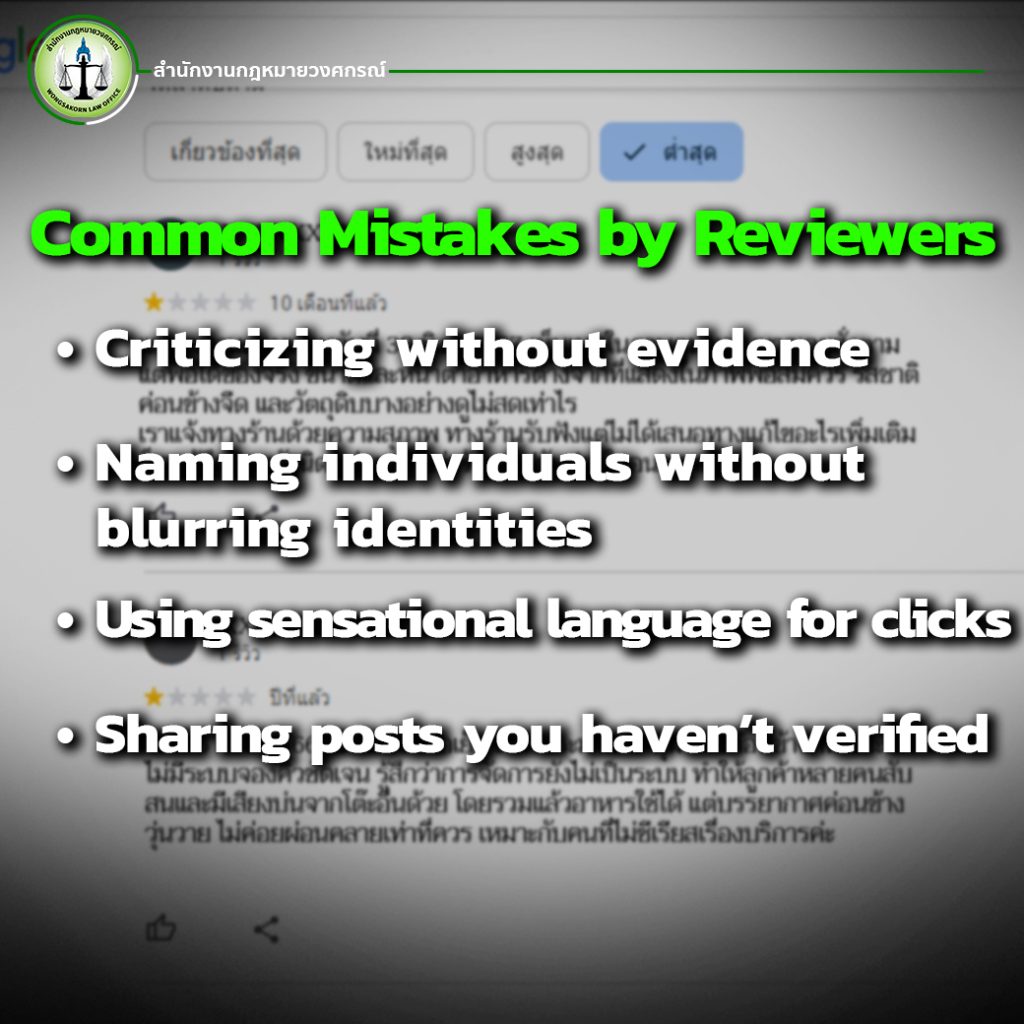
Common Mistakes by Reviewers
• Criticizing without evidence
• Naming individuals without blurring identities
• Using sensational language for clicks
• Sharing posts you haven’t verified
Warnings in the Age of Review Power
• Always consider the impact your reviews have on others.
• If you’re an influencer or have many followers, your words carry more weight and risk.
• Avoid turning reviews into public shaming instead of constructive feedback.
If You’re Sued for a Review?
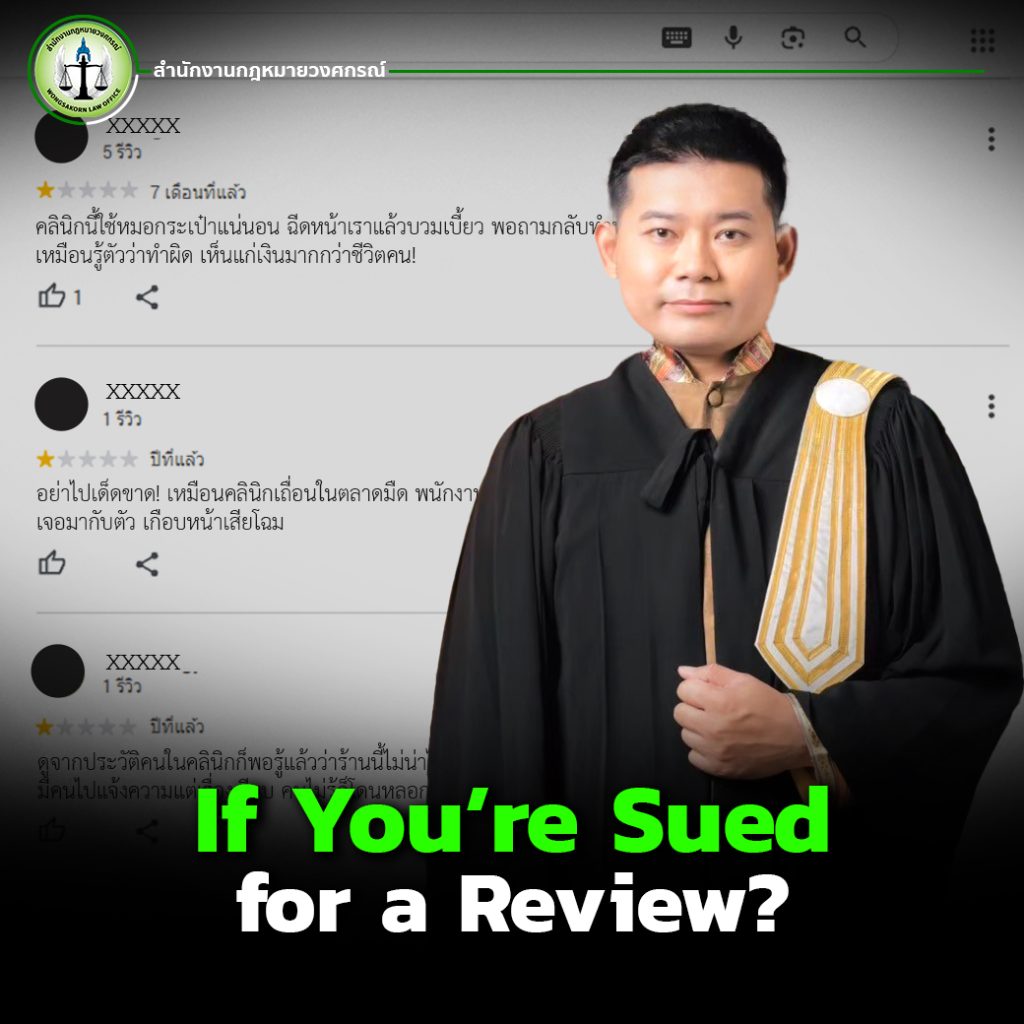
If you receive legal notice or a letter from the affected party’s lawyer
•Stop sharing or reposting the content immediately.
•Collect all relevant evidence (photos, messages, receipts).
•Contact a lawyer promptly for legal advice.
•Avoid negotiating or apologizing on your own such acts can be used against you in court.
A thoughtless review can turn your effort to warn others into a criminal case. Words on social media have power and sometimes legal consequences.
If you’re unsure whether your review could be defamatory, or if you’re facing legal action, contact Lawyer Arm at Wongsakorn Law Office for expert legal consultation. Click to contact us.