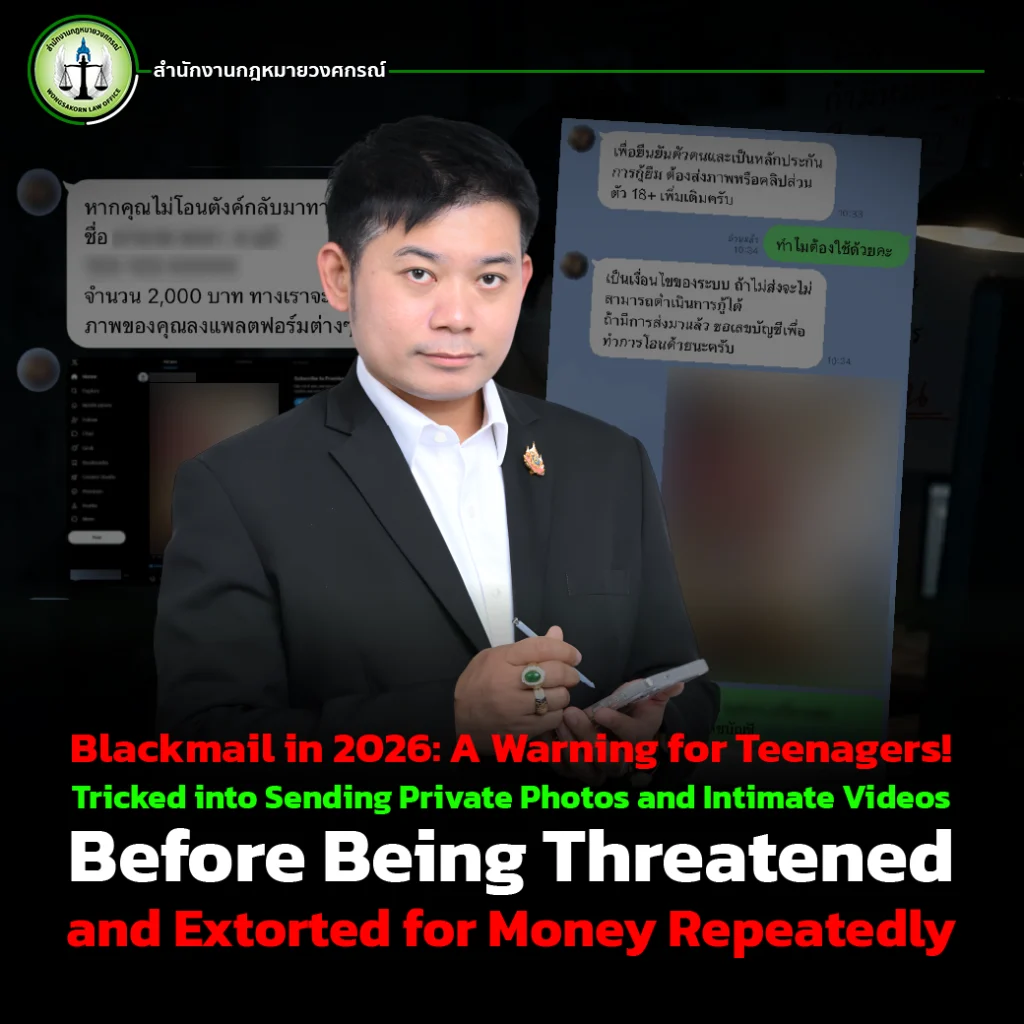
In 2026, blackmail conducted through online channels remains a serious threat that continues to cause significant harm to many people. Teenagers and youths, in particular, have increasingly become targets of new and evolving schemes used by criminals.
Based on the legal consultation experience of Wongsakorn Law Firm, a considerable number of victims have been deceived through social media platforms. Offenders often begin by establishing credibility, building familiarity, and engaging in conversations until trust is formed. They then offer rewards or various incentives to persuade victims to send private photos or personal videos.
Once the offenders obtain the desired content, the promised rewards are never delivered. Instead, the photos or videos are used as tools to threaten and extort money from the victims. As a result, many victims suffer substantial financial losses, while some experience severe psychological distress.
A New Tactic Used by Criminals: Get the Victim to Send Images First, Then Blackmail Them
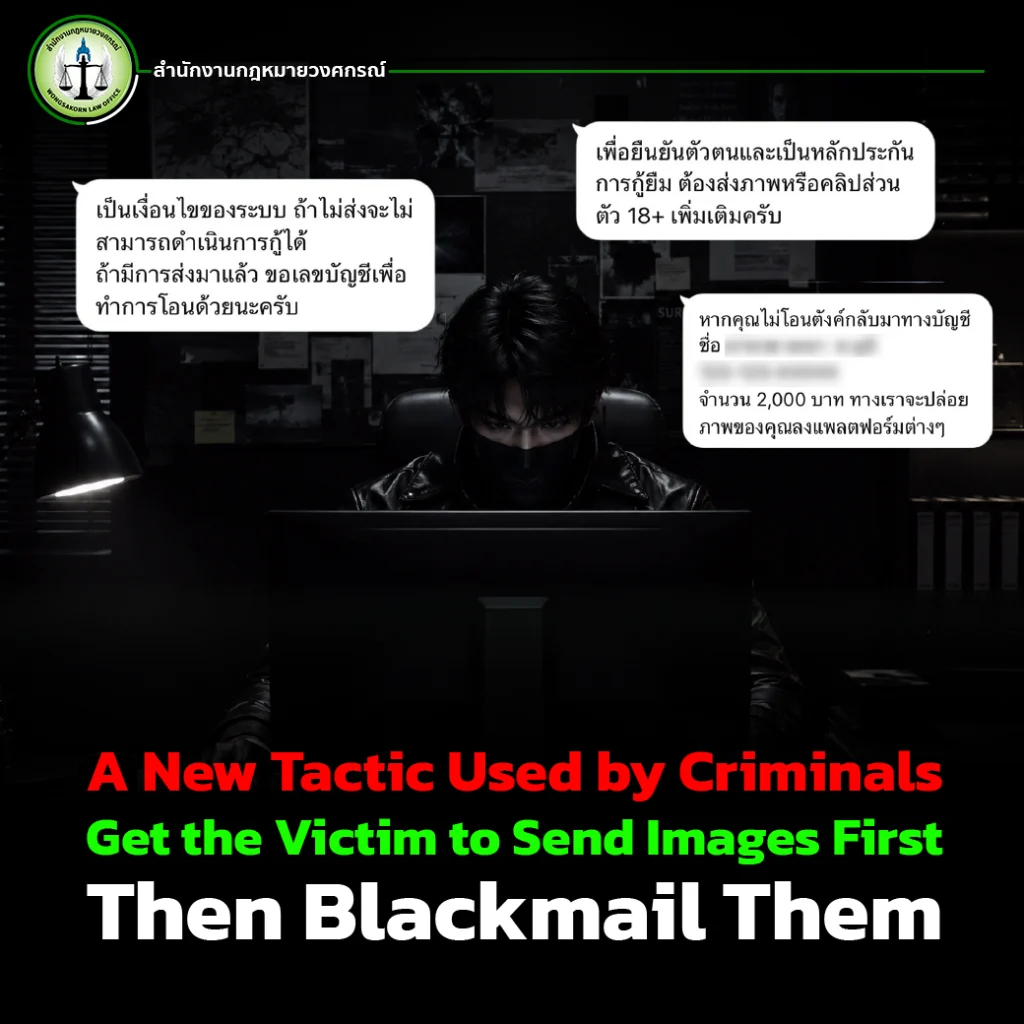
Today, criminals rarely begin with direct threats. Instead, they create incentives that encourage victims to voluntarily send photos or videos of themselves.
Common examples include:
- Claiming they will transfer money to the victim
- Promising special compensation or rewards
- Offering a brand-new smartphone for free
- Promising expensive gifts
- Offering financial assistance
- Claiming they can provide employment opportunities or make the victim a brand ambassador
Once the victim is persuaded to send private photos or videos, the offender’s behavior changes immediately. The offender then begins threatening to distribute the content to the victim’s family members, friends, school, or the public unless the victim transfers the amount of money being demanded.
This is one of the most common forms of blackmail increasingly seen today.
Why Are Teenagers Common Targets?
Teenagers and young people are among the most active users of online platforms and are generally more likely to communicate with strangers through various social media channels.
In addition, offenders often use psychological manipulation to gain trust, such as:
- Pretending to be someone of a similar age
- Using trustworthy-looking profile photos
- Spending a long period building rapport before initiating the scam
- Creating relationships that resemble friendship or romance
- Offering benefits or rewards that appear attractive
Once the victim’s trust has been gained, the offender begins requesting private photos or videos, using various reasons to persuade the victim to voluntarily provide the content.
If the Victim Sent the Images Voluntarily, Does That Mean They Have Committed an Offense?
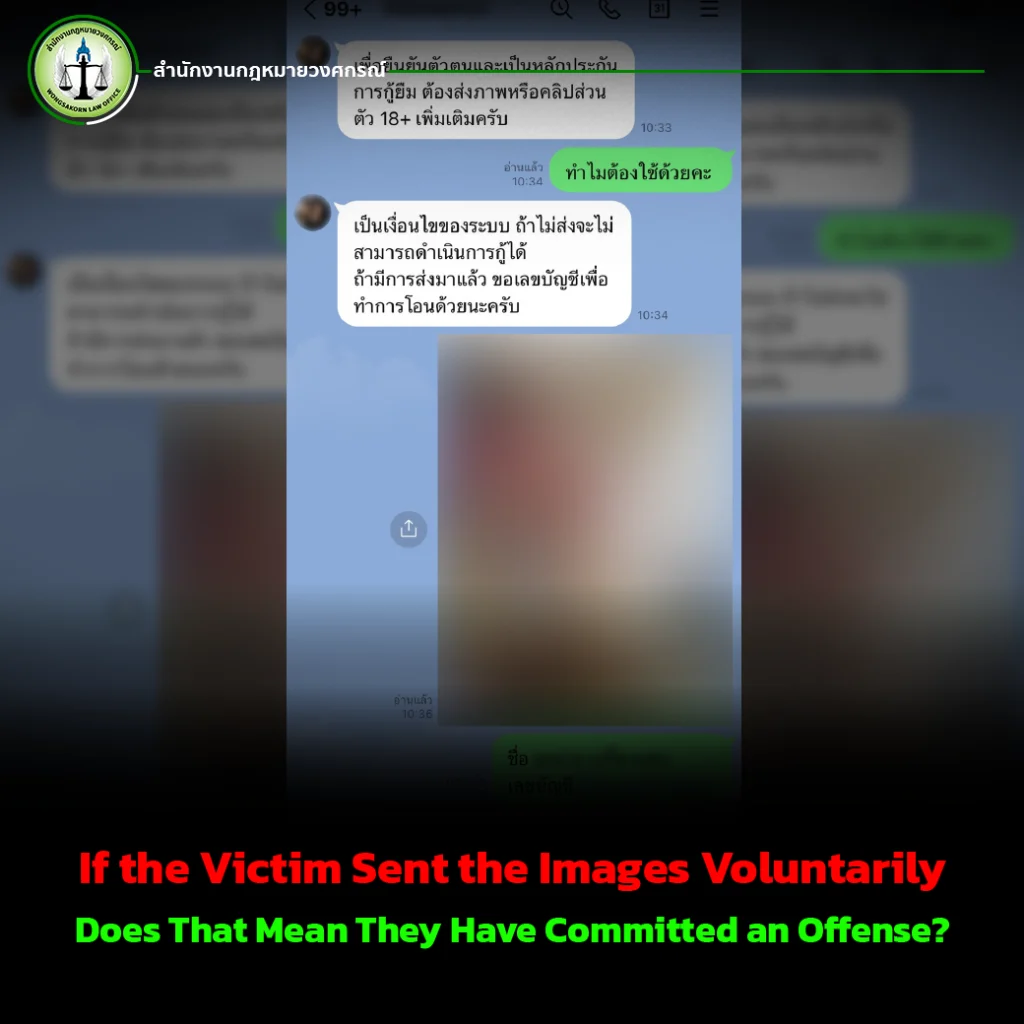
This is one of the most common concerns among victims.
Many people are afraid to seek help because they believe that, since they voluntarily sent the photos or videos, they may not be entitled to legal protection.
In reality, the fact that a victim previously shared personal photos or information does not give another person the right to use that content as a tool for intimidation or financial gain.
If photos or videos are used to coerce, threaten, or demand money from a victim, such conduct may constitute a criminal offense under Thai law.
Therefore, individuals who are threatened or extorted for money using private photos or videos are considered victims, not perpetrators, in cases of blackmail.
Is It True That the More You Pay, the More They Demand?
Based on experience with cases of this nature, the answer is: “Yes, it happens frequently.”
Many victims believe that making the first payment will bring the problem to an end. In reality, however, offenders often keep the photos and videos and continue using them as tools of intimidation.
Once the offender realizes that the victim is willing to pay, additional demands often follow, such as:
- Requesting more money
- Demanding repeated transfers
- Asking for other assets or valuables
- Threatening the victim into complying with further demands
As a result, some victims lose substantial amounts of money while the problem never truly ends.
What Should You Do If You Are Being Blackmailed?
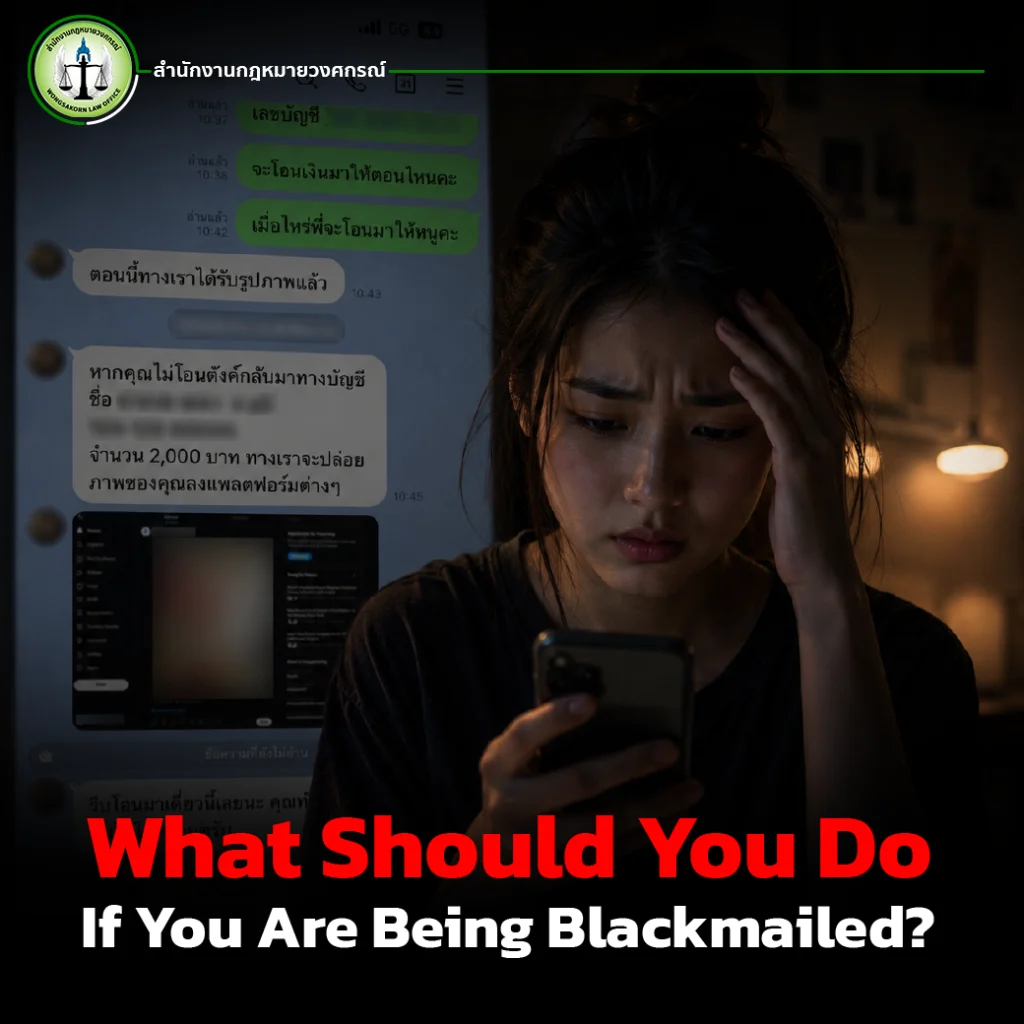
The most important thing is not to panic and delete the evidence.
Victims should preserve all relevant information, including:
- Chat messages and conversation records
- Screenshots of threats or extortion attempts
- Proof of money transfers
- Bank account details used by the offender
- The offender’s social media accounts
- Dates and times of all communications
This evidence can play a crucial role in any legal proceedings.
In addition, victims should seek legal advice as soon as possible in order to develop an appropriate strategy, prevent further damage, and take the necessary legal steps.
Do Not Let Fear Cause Greater Harm
What criminals want most is the victim’s fear.
When victims are afraid that their information will be exposed, afraid that their family will find out, or afraid of public embarrassment, offenders use that fear as a tool to continue demanding money.
In many cases, victims who consult a lawyer at an early stage are able to develop an effective response strategy, preserve evidence properly, and pursue legal remedies more effectively than those who attempt to handle the situation alone.
If you or someone close to you is being blackmailed, threatened with the release of private photos or personal videos, or being forced to pay money because of information previously shared with another person, do not let fear prevent you from protecting your legal rights.
Wongsakorn Law Firm is ready to provide legal consultation regarding blackmail cases, extortion cases, and online-related offenses. Our goal is to help victims develop an appropriate legal strategy, minimize potential damage, and protect their rights in accordance with the law.
Remember:
“The more afraid you are, the greater the damage may become. The sooner you consult a legal professional, the sooner the problem may be brought under control.”