


Today, communication through online platforms has become a normal part of life for many people, whether for chatting, doing business, or even applying for loans online. However, such convenience also comes with risks that many people may not expect, especially becoming a victim of blackmail, or being threatened for property through the use of another person’s private information.
Recently, a victim contacted Wongsakorn Law Firm for legal advice after becoming a victim of deception and being threatened for money using private photos and video clips that had previously been sent to a person known through an online platform.
Case Study: From Applying for a Loan to Being Blackmailed
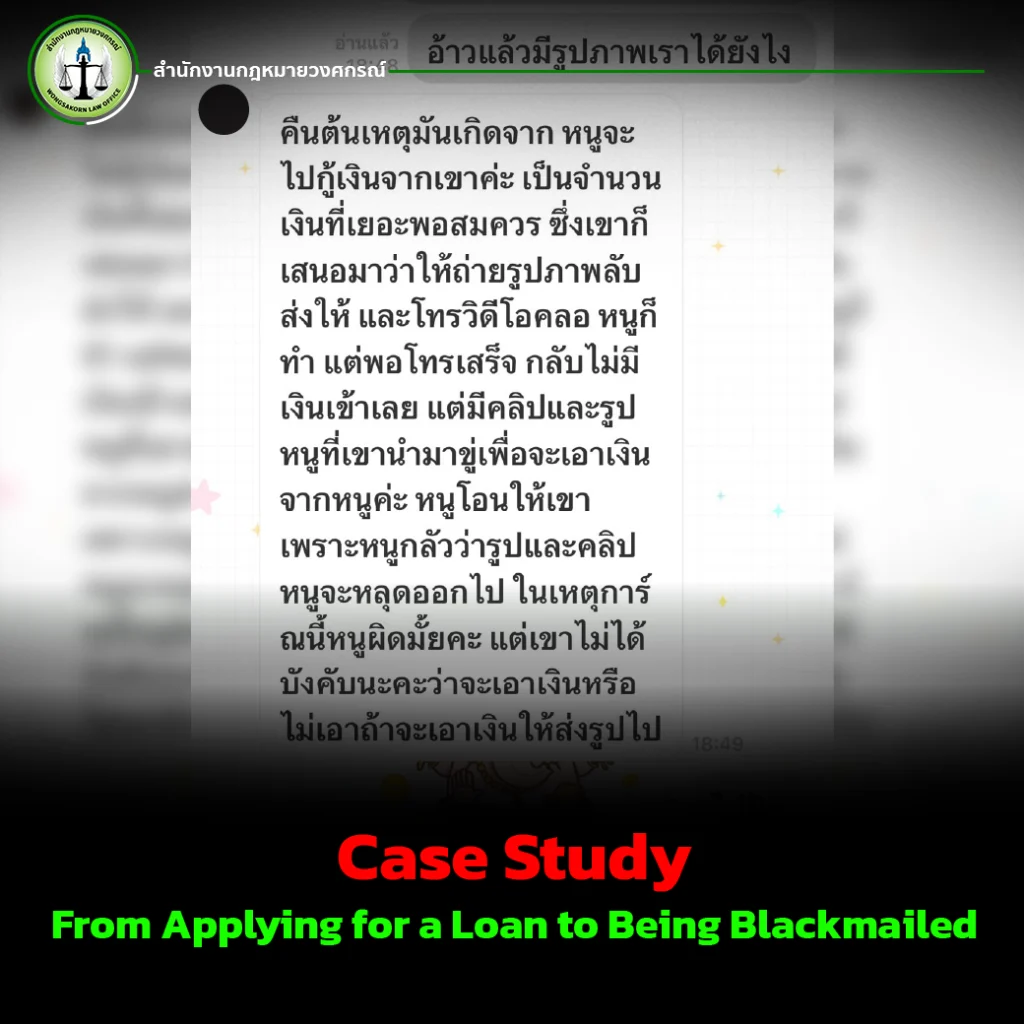
The victim needed money and therefore contacted a person known through an online platform to apply for a loan.
During their conversation, the other party proposed a condition that, in order to obtain loan approval, the victim would have to send private photos and participate in a private video call for consideration in the lending process.
Out of trust and necessity, the victim complied with that condition. However, after sending the photos and participating in the video call, the victim did not receive the loan as agreed.
The matter did not end there. After that, the other party used the photos and private video clips received as a tool for making threats, claiming that if the victim did not transfer money, those photos and clips would be shared with other people.
Fearing embarrassment and damage to reputation, the victim transferred money several times as demanded.
If You Voluntarily Sent the Photos, Does That Mean the Victim Is at Fault?
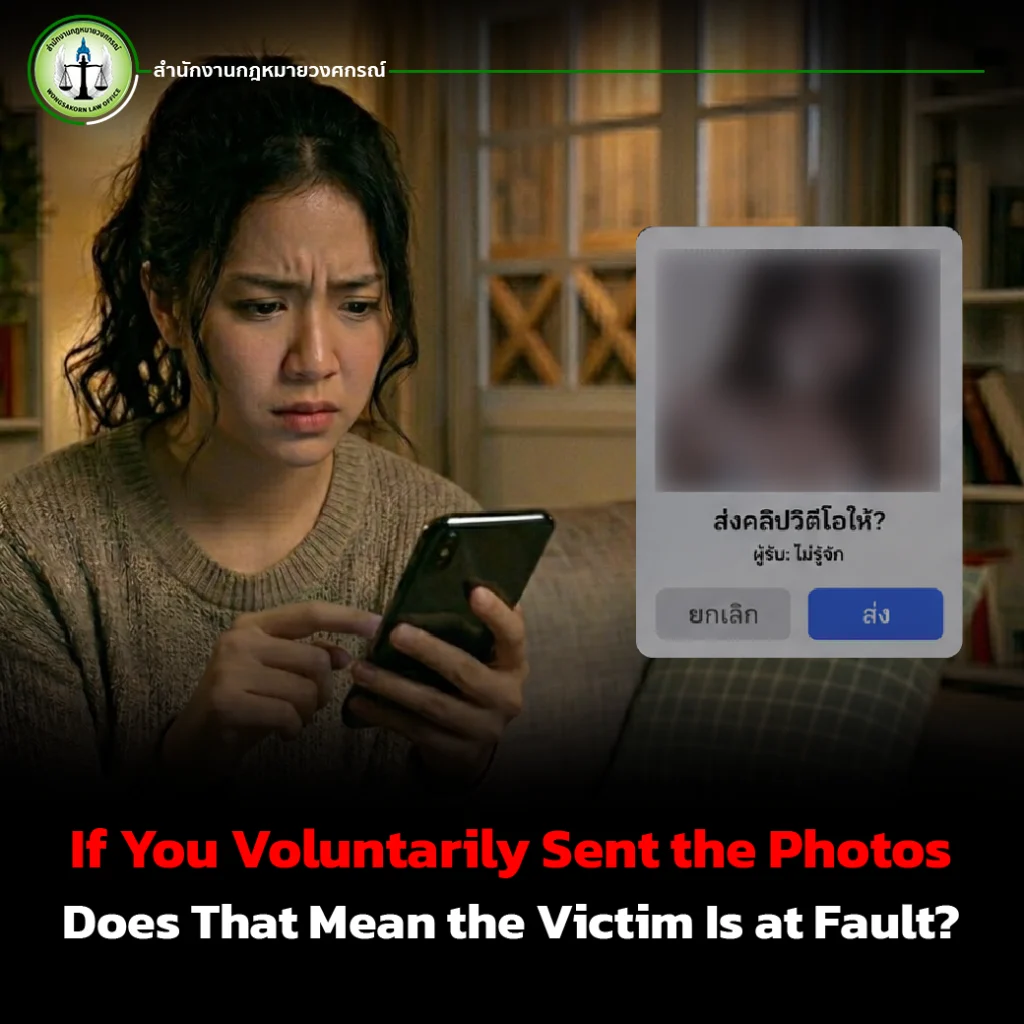
This is a question that concerns many victims.
Many people believe that if they voluntarily sent photos or personal information to another person, they would not be able to take legal action against that person, or they might themselves be considered to be at fault.
However, in reality, the key issue is not simply the act of sending photos or personal information.
What must be considered is the subsequent conduct of the person who received that information.
If that person uses photos, video clips, or personal information as a tool to threaten, demand money, or force the victim to do anything for their own benefit, such conduct may constitute a criminal offence.
In other words, in cases of this nature, the victim is the person who was deceived and threatened, not the person who committed the act of threatening and demanding money.
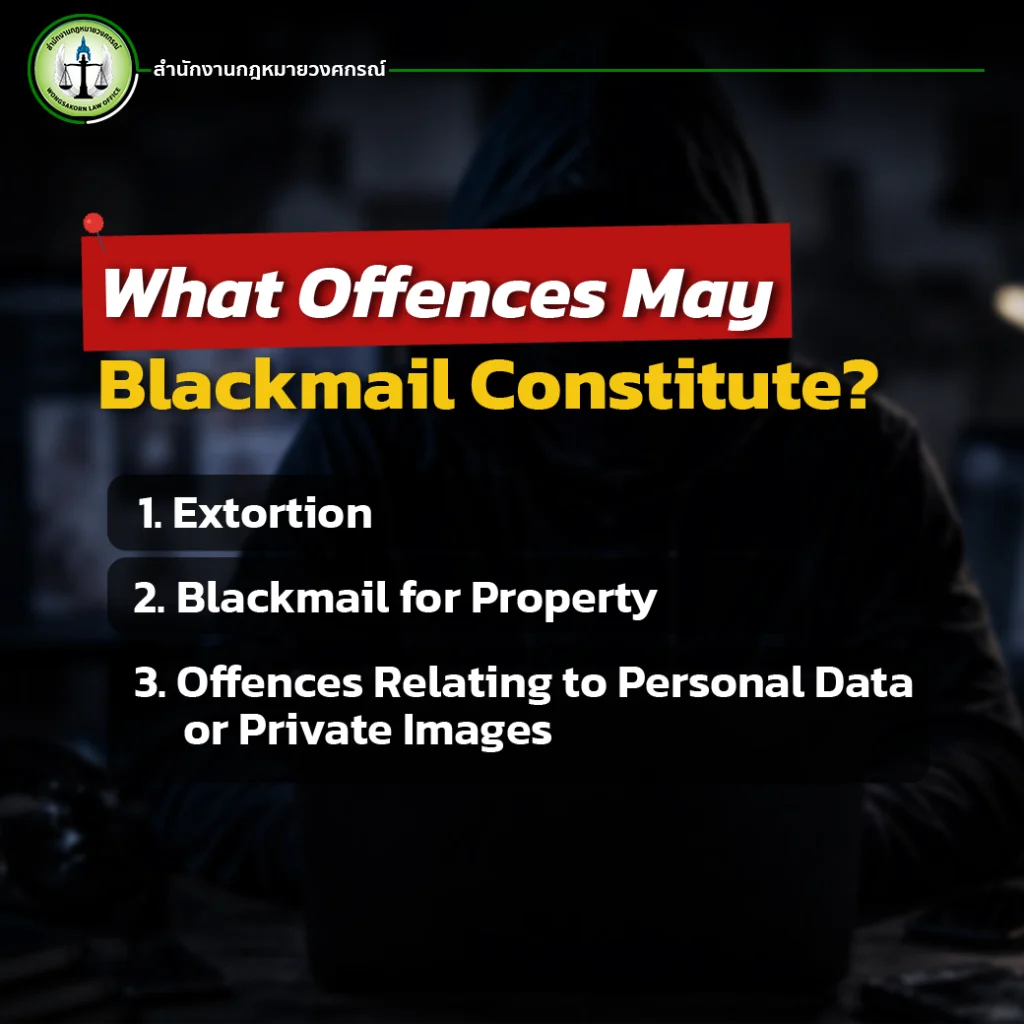
Although the term “Blackmail” is commonly used, under Thai law such conduct may fall under several offences, depending on the facts of each case.
For example:
1. Extortion
Where there is a threat to cause damage to the victim’s reputation, property, or rights in order to make the victim hand over money or property.
2. Blackmail for Property
Where threats or coercion are used to obtain property or benefits from the victim.
3. Offences Relating to Personal Data or Private Images
If photos or personal information are distributed, forwarded, or disclosed to the public without consent, there may be additional legal liability depending on the facts of each case.
Therefore, even if the victim voluntarily sent photos or video clips, it does not mean that the other party has the right to use such information to threaten or obtain benefits from the victim.
What Should You Do If You Are Being Blackmailed?
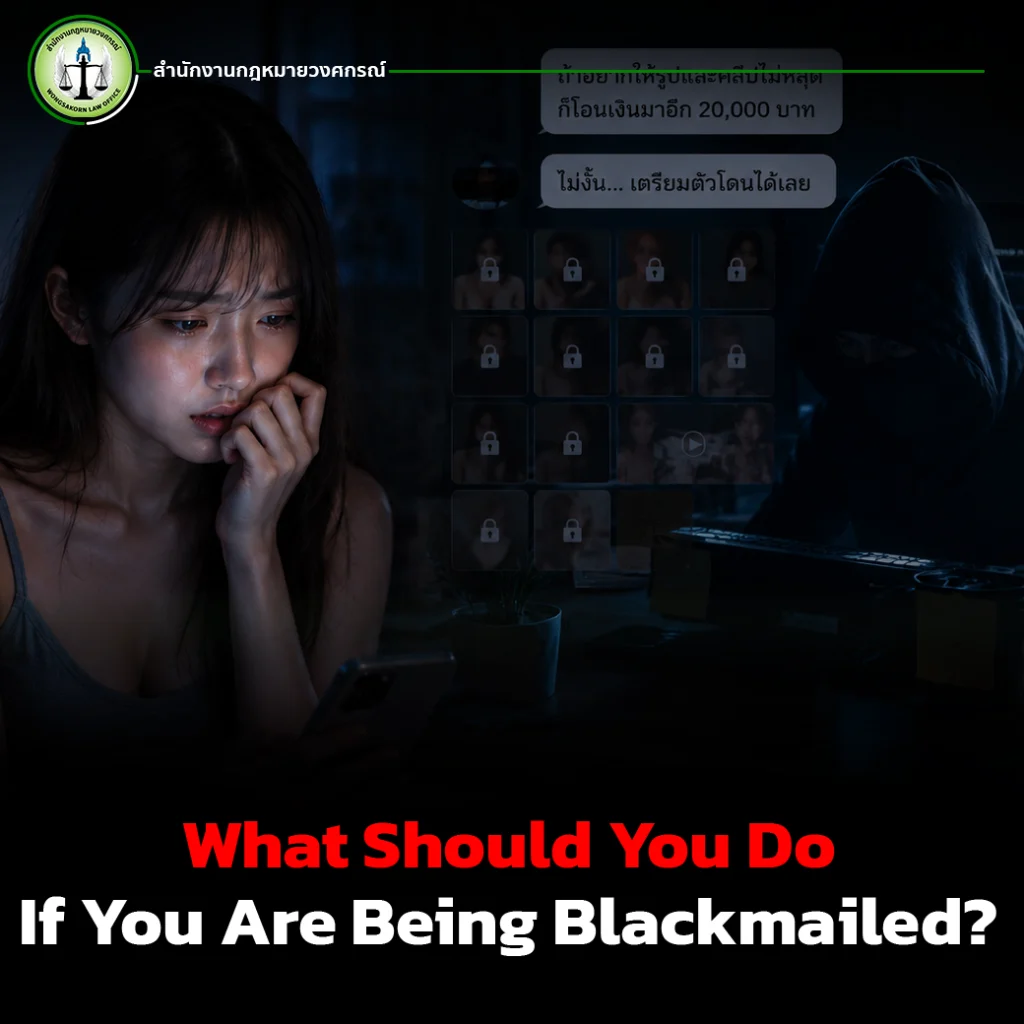
The most important thing is: “Do not delete the evidence.”
The victim should collect and keep all relevant information, such as:
- Chat messages
- Screenshots of the threats
- Proof of money transfers
- Recipient bank account details
- Social media account information
- Links or contact channels of the perpetrator
These pieces of evidence are extremely important for legal proceedings and for tracing the perpetrator.
In addition, a lawyer or legal professional should be consulted as soon as possible before taking any action, in order to plan the reporting process and properly protect one’s rights.
Do Not Let Fear Make You a Victim Again

From the experience of Wongsakorn Law Firm in providing legal consultations, it has been found that many victims choose to pay money as demanded because they fear that their photos or personal information will be disclosed.
However, in many cases, paying money does not bring the problem to an end. Instead, it creates an opportunity for the perpetrator to continue demanding more money.
If you are facing blackmail, being threatened for money using photos or private video clips, or being deceived through online channels, you should consult a legal professional as soon as possible.
Wongsakorn Law Firm provides legal consultation on blackmail cases, cases involving threats to obtain money, online-related cases, and related criminal proceedings, in order to plan the direction of the case, protect your rights, and reduce possible future damage. For legal consultation, click >>Contact Us<<