


Many people still have misconceptions about legal procedures, particularly regarding arrest warrants. A common misunderstanding is that before the police can issue an arrest warrant, they must first send documents, issue a summons, or notify the suspect in advance. Such misunderstandings may cause individuals to act carelessly and unknowingly expose themselves to serious legal consequences.
In reality, under Thai law, an arrest warrant can be issued without any prior notice to the suspect if the investigating officer has sufficient evidence and reasonable grounds to believe that the person has committed a criminal offense. This article explains what an arrest warrant is, how it can be issued, how it differs from a summons, and why failing to check for an arrest warrant may pose serious legal risks.
What Is an Arrest Warrant?
An arrest warrant is a court order authorizing police officers to arrest a person suspected of committing a criminal offense in order to proceed with legal prosecution. An arrest warrant takes immediate effect, and officers are legally empowered to arrest the suspect wherever they are found.
Key characteristics of an arrest warrant include:
- Issued by a court
- Used in criminal cases
- Legally binding and enforceable
- Does not require prior notification to the suspect
Is It True That an Arrest Warrant Can Be Issued Without a Summons?

Yes, it is true.
Under the Thai Criminal Procedure Code, an investigating officer may apply to the court for an arrest warrant without first issuing a summons or notifying the suspect, provided there are reasonable grounds to believe that:
- The suspect has committed the offense
- There is sufficient evidence
- The suspect may flee
- The suspect may interfere with evidence or witnesses
- The offense is serious in nature
In such cases, the court may issue an arrest warrant immediately without informing the suspect in advance.
What Is the Difference Between a Summons and an Arrest Warrant?
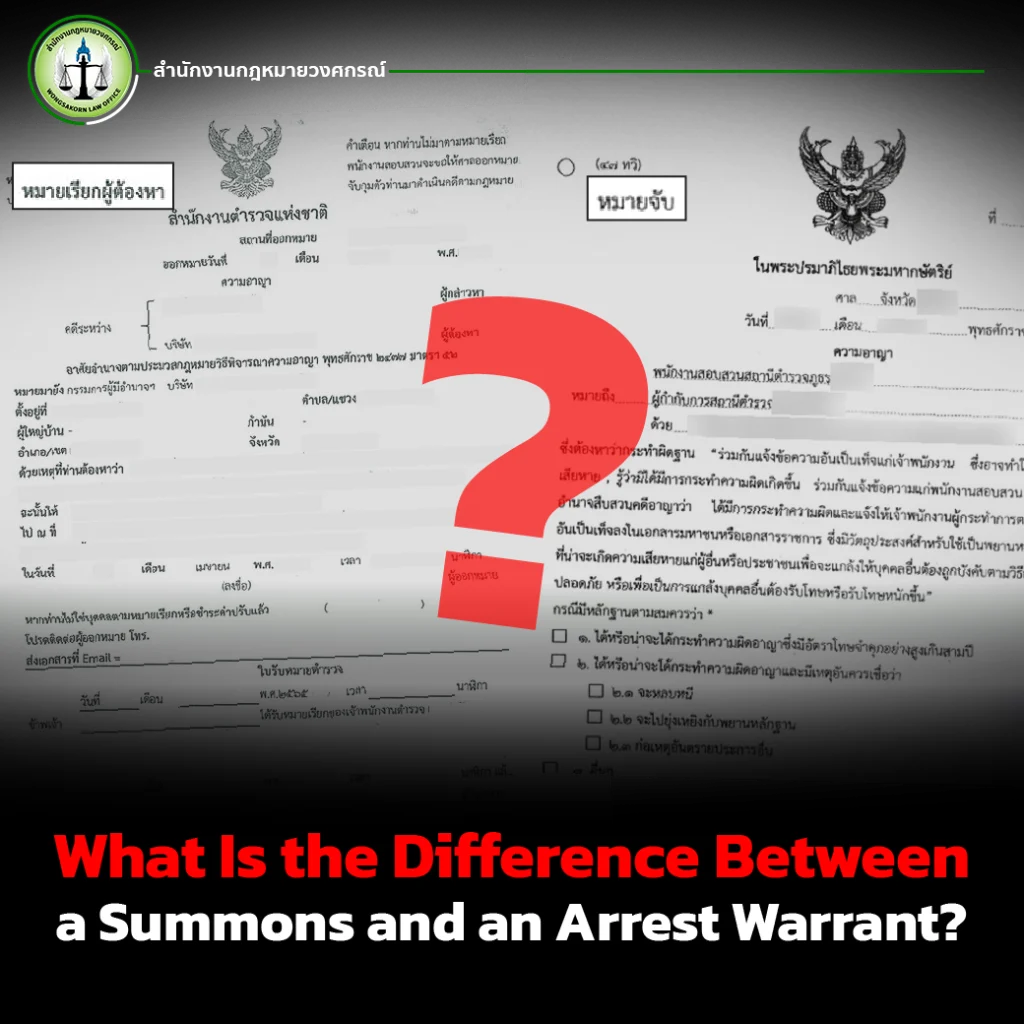
Many people confuse a summons with an arrest warrant and believe that an arrest warrant cannot be issued unless a summons has been issued first. This misunderstanding can lead to serious misjudgment of one’s legal situation.
A Summons
- A written request inviting the suspect to meet the investigating officer
- Used when arrest is not yet necessary
- Does not restrict personal liberty
An Arrest Warrant
- A court order authorizing arrest
- Issued when legally necessary
- Allows immediate detention by authorities
Importantly, the law does not require a summons to be issued before an arrest warrant in every case.
Why Can the Police Issue an Arrest Warrant Without Prior Notice?
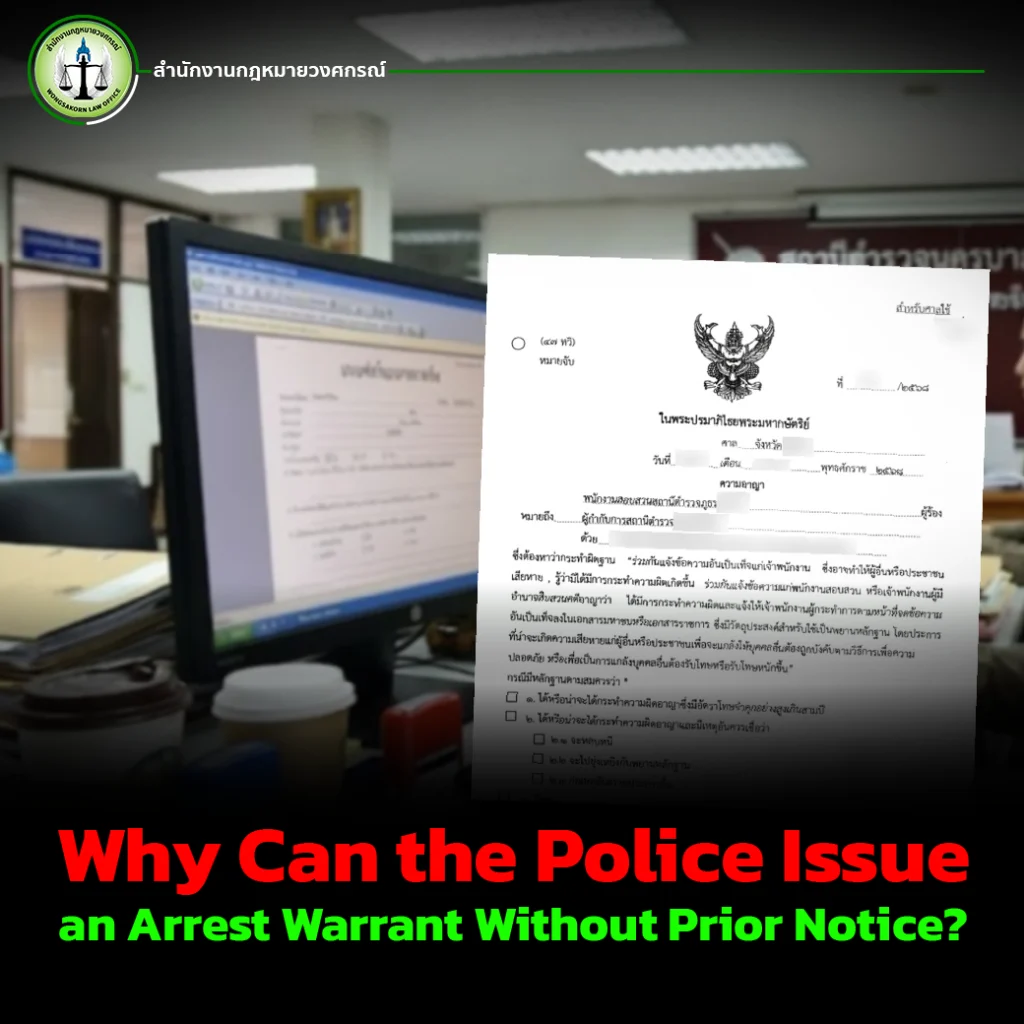
The main purpose of allowing arrest warrants without prior notice is to prevent suspects from:
- Fleeing the area or leaving the country
- Destroying evidence
- Intimidating witnesses
- Repeating the offense
Requiring prior notification in all cases would undermine the effectiveness of law enforcement and the justice system.
Risks of Being Unaware of an Existing Arrest Warrant

In practice, many individuals are unaware that an arrest warrant has been issued against them until they:
- Are arrested at an airport
- Are detained while traveling
- Have their documents checked by authorities
- Are denied certain transactions or procedures
Such situations often occur unexpectedly and can severely affect one’s reputation, career, and personal life.
Why Should You Check for an Arrest Warrant in Advance?
Checking for an arrest warrant is an important preventive legal measure, especially if you:
- Have been involved in a dispute or legal case
- Have been accused of a criminal offense
- Have previously given a statement to police
- Are planning to travel internationally
- Are a foreigner residing or working in Thailand
Knowing your legal status in advance allows you to plan appropriately, such as voluntarily meeting investigators or preparing a bail application.
How Should an Arrest Warrant Be Properly Checked?
Checking for an arrest warrant should be done lawfully and confidentially. Consulting a lawyer allows you to:
- Verify information from reliable sources
- Assess legal risks
- Plan appropriate legal responses if a warrant exists
- Reduce the risk of sudden arrest
Understanding Arrest Warrants Is Essential Legal Consultation Is Available

In summary, an arrest warrant can be issued without prior notice or a summons if legal requirements are met and sufficient evidence exists. Understanding arrest warrants correctly is essential to avoid unintended legal risks.
If you wish to check whether an arrest warrant has been issued against you or have concerns about your legal status, you may contact us for consultation. We provide confidential, careful, and professional legal advice to help you handle the situation properly and lawfully.