


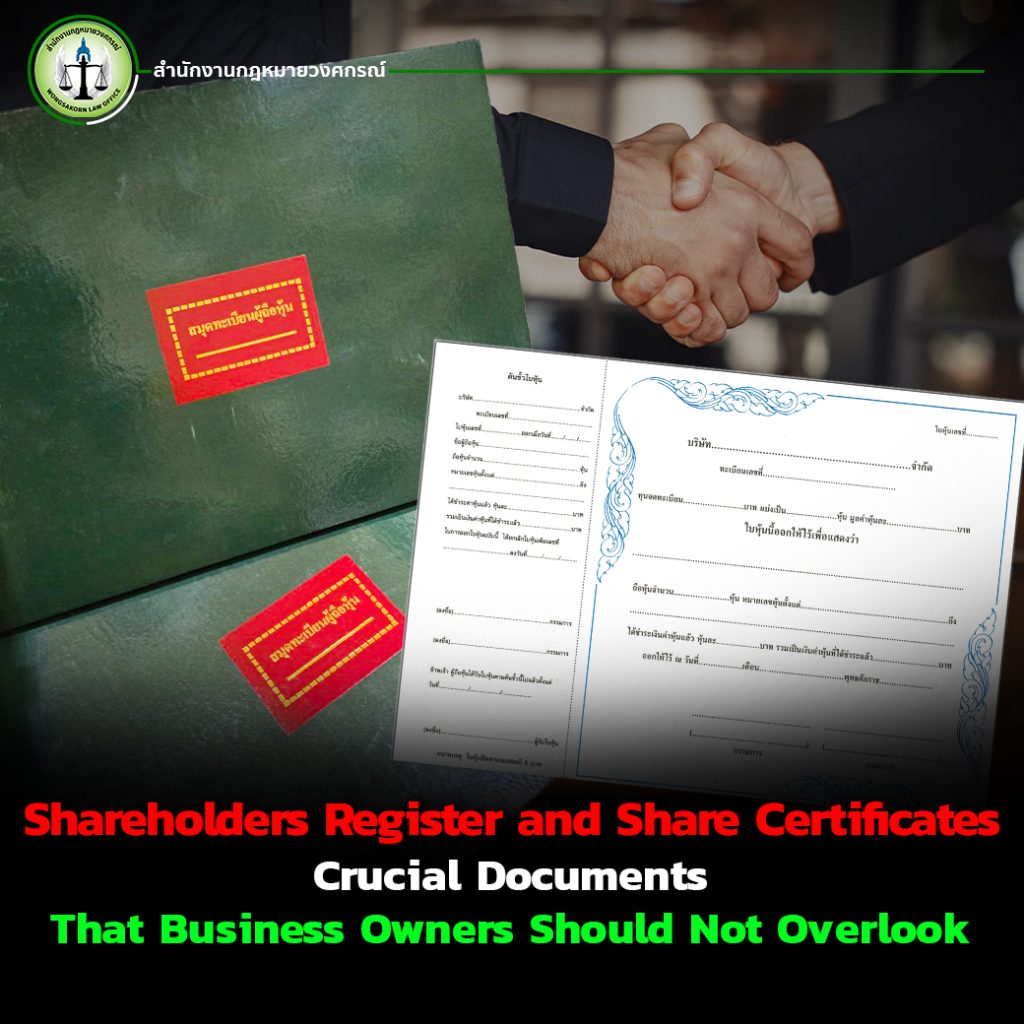
The “Shareholders Register” and “Share Certificates” are essential legal documents for operating a limited company, especially when there are changes in shareholder structure, share transfers, or disputes concerning shareholder rights. If these documents are improperly prepared or there is a lack of legal understanding, unexpected business issues may arise.
Wongsakorn Law Office would like to explain the importance of these two types of documents and provide guidance on how to prepare them correctly in accordance with the law, so that business owners and executives can confidently manage internal corporate matters.
What is a Shareholders Register?
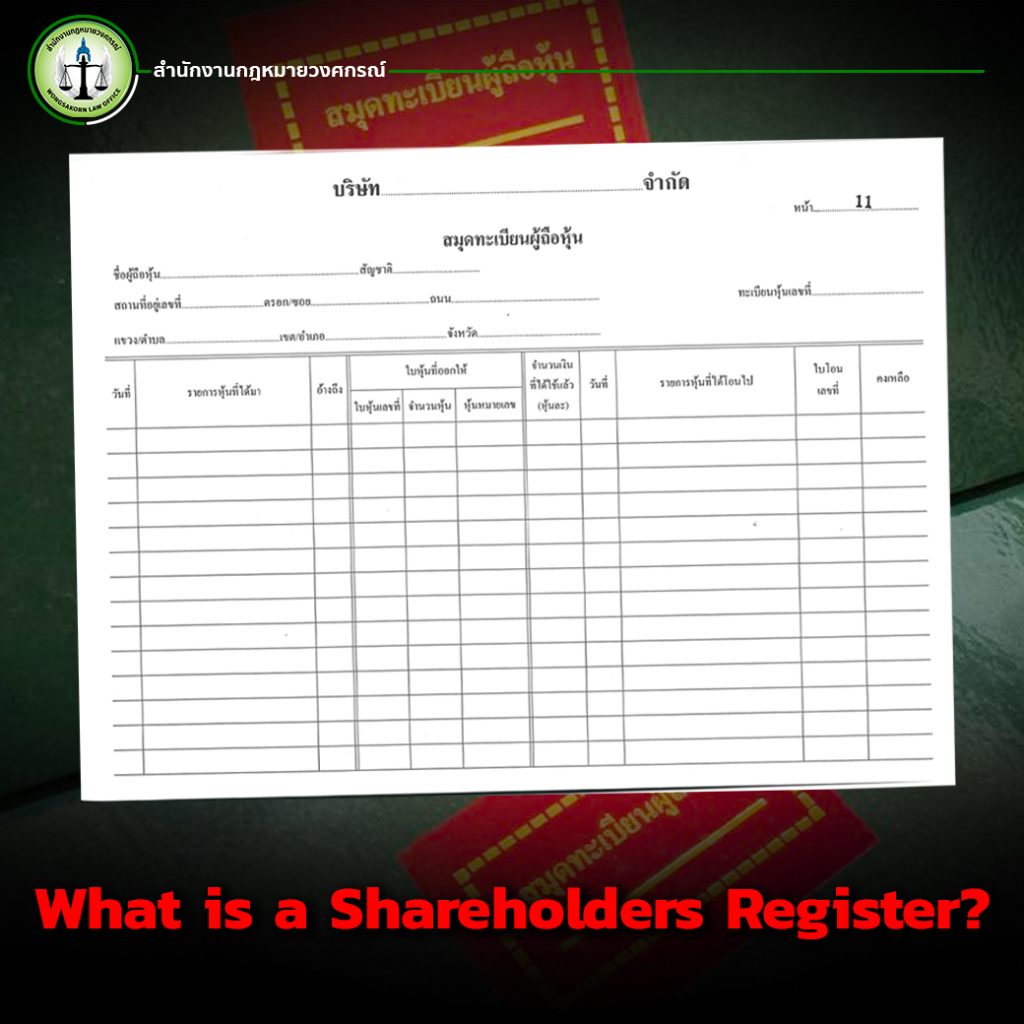
A Shareholders Register is a document created by a company to record the names of all shareholders. Information required in the Shareholders Register includes:
- Name and address of each shareholder
- Number of shares held
- Share certificate number (if any)
- Date of acquiring the shares
- Date of share transfer (if applicable)
- Other information as required by law
This register serves as critical evidence to prove who the rightful “owner” of the company’s shares is. It must be kept at the company’s registered office and be made available for inspection by the Department of Business Development or other legally entitled parties.
What is a Share Certificate?
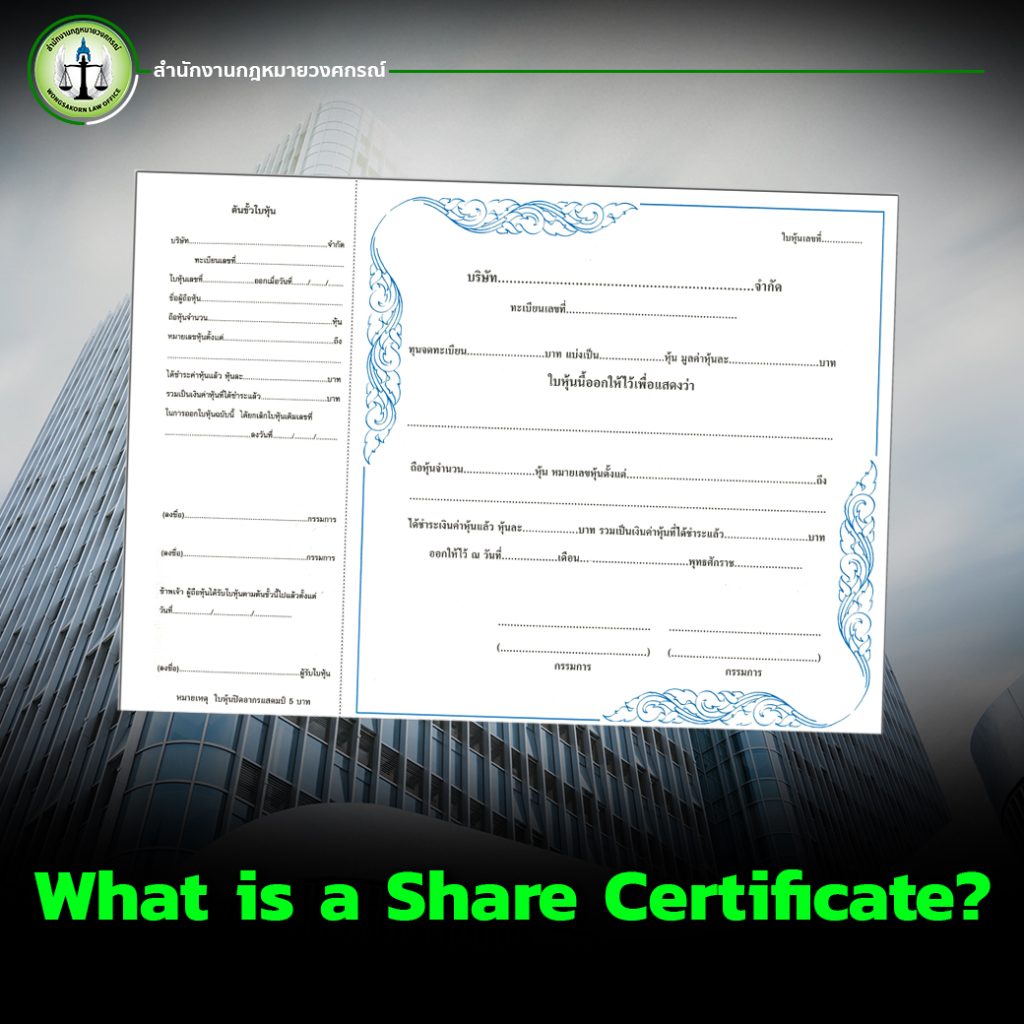
A Share Certificate is a document issued by a company to its shareholders as official proof of share ownership. It usually includes the certificate number, shareholder’s name, number of shares, and is signed by a company director as per the Articles of Association.
Although a Share Certificate is not as legally significant as the Shareholders Register (which is considered the primary legal evidence), it still holds psychological and practical value. Many shareholders prefer to have tangible proof and use it in business negotiations or to demonstrate their right to transfer shares.
The Relationship Between the Shareholders Register and Share Certificates
The Shareholders Register carries more legal weight than Share Certificates. In the event of ownership disputes, the register is used as the primary proof of shareholding.
In practice, Share Certificates support changes in the register. For example, when shares are transferred, the original certificate must be returned, a new certificate issued to the transferee, and the register updated accordingly.
Common Issues with Shareholders Registers and Share Certificates
1. Failure to maintain a Shareholders Register
This is common among SMEs and family-run businesses. If a legal dispute arises, the company may be at a disadvantage in court.
2. Issuing Share Certificates without updating the Register
If the shareholder’s name does not appear in the register, they may not be entitled to legal rights, such as voting at meetings or receiving dividends.
3. Failure to update share transfer information
If shares are transferred but the register is not updated, the buyer may not be legally recognized as the shareholder.
4. Fake or duplicate Share Certificates
Without proper control systems, a company may accidentally issue certificates exceeding the registered number of shares, leading to serious consequences.
Did you know the Shareholders Register is admissible in court?
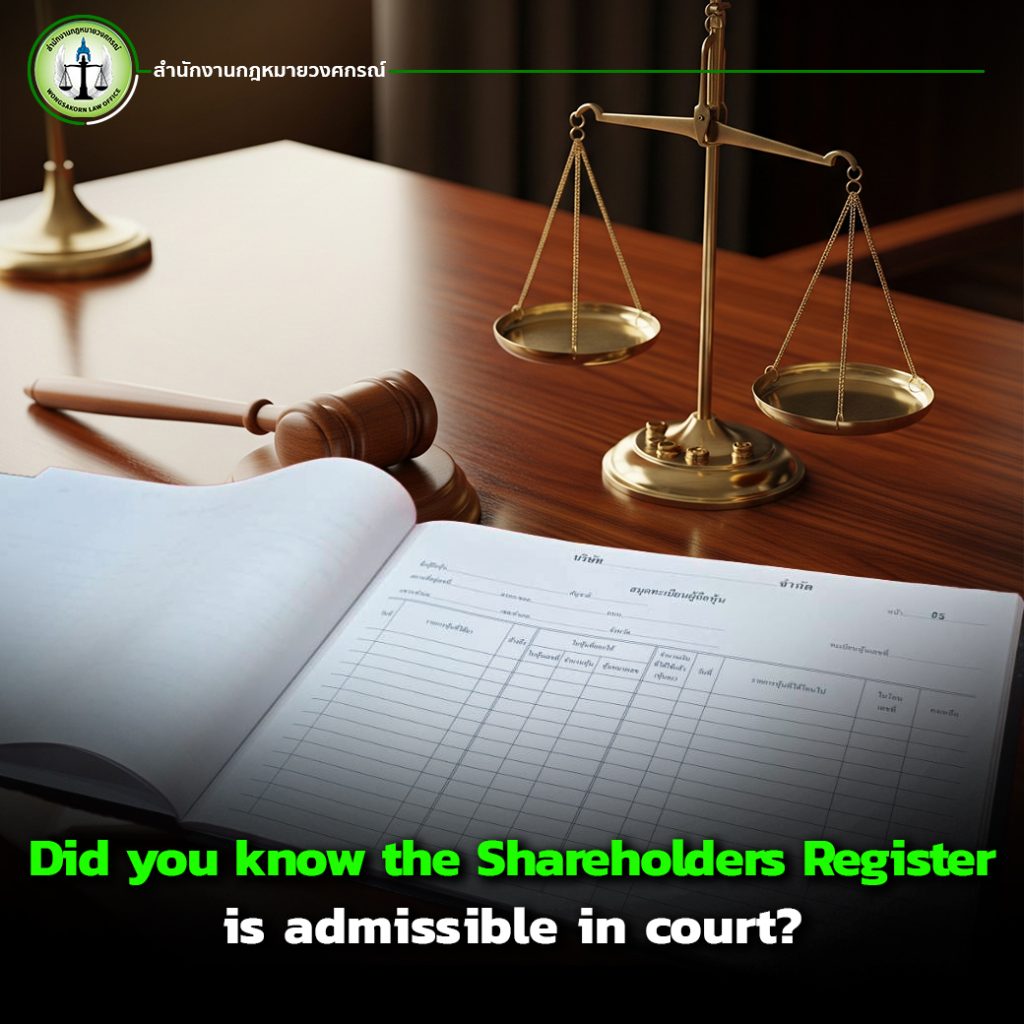
Courts give significant weight to the Shareholders Register as it clearly documents internal shareholder rights. Failure to maintain or inaccuracies in the register may heavily impact legal proceedings, such as:
- Disputes over shareholding proportions
- Appointment of directors or voting rights
- Requests to annul meeting resolutions
- Claims for past dividends
If your company is facing issues with Shareholders Registers or Share Certificates, consult a lawyer immediately.
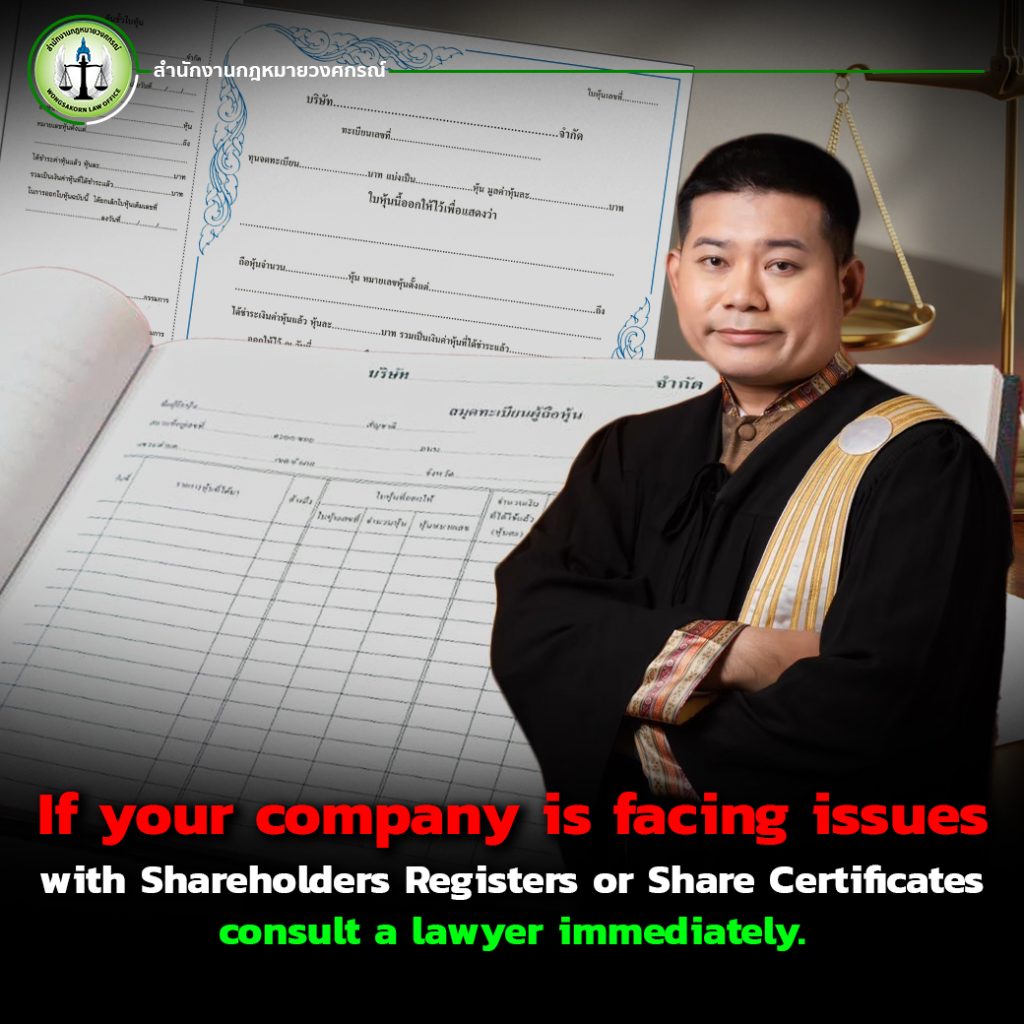
Preparing these documents is not a minor clerical task—it is crucial to managing a company’s shareholder structure. Mistakes can affect ownership rights and corporate control.
Wongsakorn Law Office has a team of lawyers specializing in business and corporate law, ready to assist with preparing or correcting registers, issuing certificates, transferring shares, and resolving shareholder disputes in compliance with the law.
If your company is facing uncertainty regarding shareholding or wants to ensure legal compliance, we recommend seeking legal advice promptly to avoid turning small issues into major legal disputes.
Even though Shareholders Registers and Share Certificates may seem like just a few sheets of paper, legally, they carry the weight of defining who truly owns a company. Proper, systematic documentation is key to transparent and stable business management. consult a lawyer immediately.