


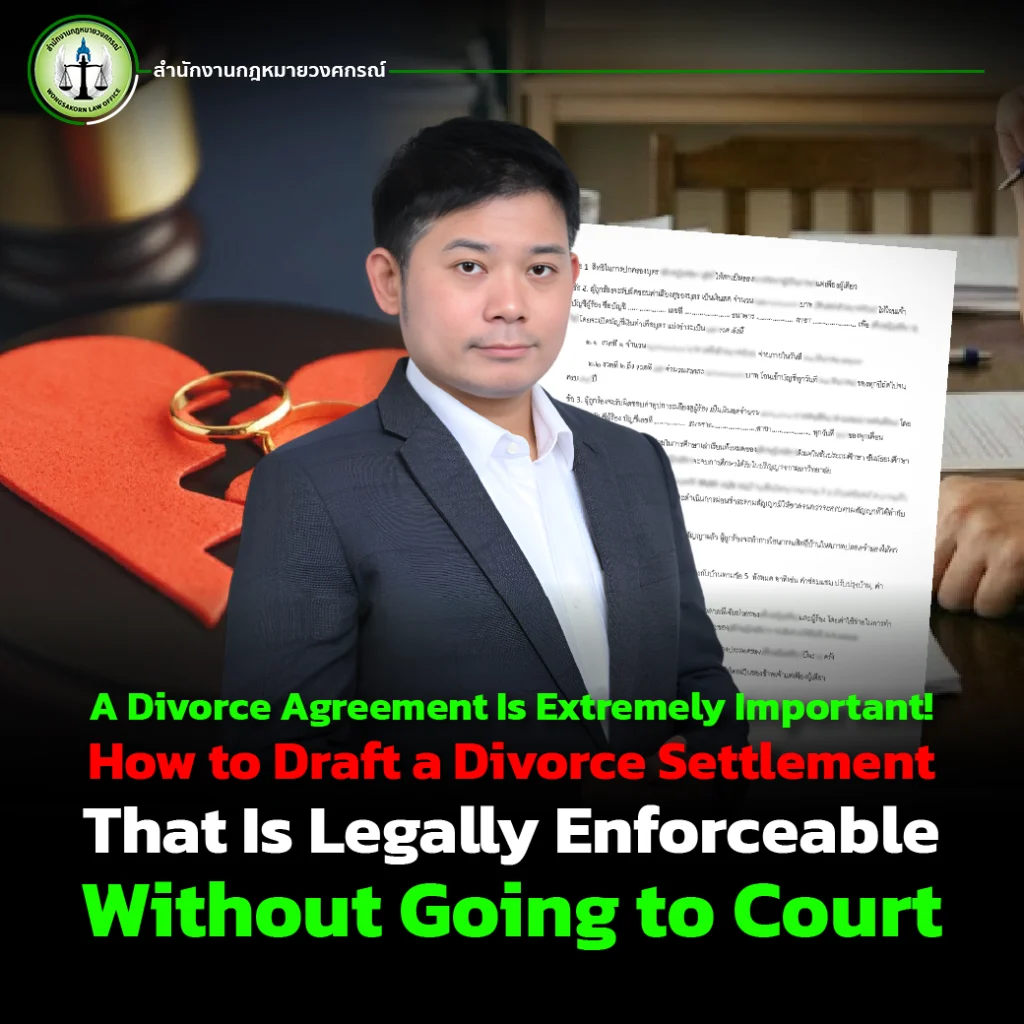
Divorce is a sensitive matter involving legal issues, personal relationships, and the property of both spouses. Many people believe that simply registering a divorce at the district office is enough to complete the process. In reality, however, if there is no clear divorce settlement agreement, disputes may arise later especially regarding property, debts, and child custody.
Therefore, preparing a divorce agreement is an essential step. This document outlines the details of the arrangements between spouses after the divorce. If it is properly drafted in accordance with the law, the agreement can be legally enforceable and significantly reduce the need to file a lawsuit in court in the future.
This article explains what a divorce agreement is, why it is important, and the techniques for drafting one so that it can be effectively enforced without the need for court proceedings.
What Is a Divorce Settlement Agreement?

A divorce settlement agreement is a document in which spouses mutually agree on various conditions following their divorce, such as
- Division of marital property
- Allocation of debts
- Child custody arrangements
- Child support payments
- Visitation rights
- Spousal support (if any)
This document serves as important evidence showing the mutual intention of both parties and how they agreed to handle matters after the divorce. If disputes arise in the future, the court may consider this agreement when making its decision.
However, if the agreement is drafted without careful consideration or contains unclear language, it may create difficulties in enforcement later. In some cases, the parties may need to bring the matter back to court so that a judge can formally determine the rights and obligations of each party.
Why Is a Divorce Agreement Important?

Many people assume that a mutual divorce only requires signing documents at the district office. In reality, registering a divorce alone does not specify the detailed rights and responsibilities of the parties after the divorce.
Without a clear divorce agreement, problems may arise, such as:
- One party refusing to divide property as previously discussed
- Failure to pay child support
- Disputes over child custody
- One party denying prior verbal agreements
When such issues occur, the parties may have to file a lawsuit in court, which can result in additional time, costs, and increased conflict.
Techniques for Drafting an Enforceable Divorce Agreement
If you want your divorce agreement to be legally enforceable and reduce the risk of future litigation, consider the following important techniques.
1. Clearly Specify All Details
The agreement should clearly describe details such as:
- Which spouse owns each asset
- How property will be divided
- Who is responsible for which debts
For example, instead of writing “the property will be divided equally,” it is better to specify clearly who will receive the house, car, or bank accounts. This helps prevent different interpretations later.
2. Include Comprehensive Terms Regarding Children
If the couple has children, the agreement should clearly address:
- Legal custody
- Monthly child support
- Educational expenses
- Visitation rights
Clearly defining these conditions helps reduce future disputes and ensures that the child’s welfare is properly maintained.
3. Specify Payment Methods Clearly
If the agreement includes child support or spousal support, it should specify:
- The exact amount
- The payment due date
- The payment method
For example, payments may be transferred to the receiving party’s bank account on a specified date each month. This allows payments to be verified later if necessary.
4. Both Parties Must Sign the Agreement
The agreement carries stronger legal weight when it includes the signatures of both spouses. It is also advisable to have witnesses sign the document to confirm that both parties entered into the agreement voluntarily.
5. Attach the Agreement to the Divorce Registration
An important technique that many people are unaware of is attaching the divorce settlement agreement to the divorce registration at the district office.
When the agreement is recorded as part of the divorce registration, it provides greater clarity and can serve as official evidence if disputes arise in the future.
Common Mistakes in Divorce Agreements

Many post-divorce disputes occur because of mistakes such as
- Vague or unclear wording
- No details about property division
- No agreement on child support
- No specified payment method
- No witnesses signing the document
These mistakes may weaken the enforceability of the agreement and could result in the need to take the matter to court for a judicial decision.
Consult a Lawyer Before Drafting a Divorce Agreement to Protect Your Rights

Preparing a legally sound divorce settlement agreement is not simply about writing down general terms. It requires careful consideration of legal provisions, property details, and the rights of each party.
Consulting a lawyer before drafting the agreement can help ensure that it complies with the law, covers all key issues, and minimizes the risk of future disputes. A properly prepared agreement can often be enforced without the need to bring the case to court.
If you are planning a divorce or preparing a divorce settlement agreement, consulting a lawyer who specializes in family law can help make the process smoother and ensure that your rights are properly protected.
Consult a lawyer – Click here >> Contact Us <<