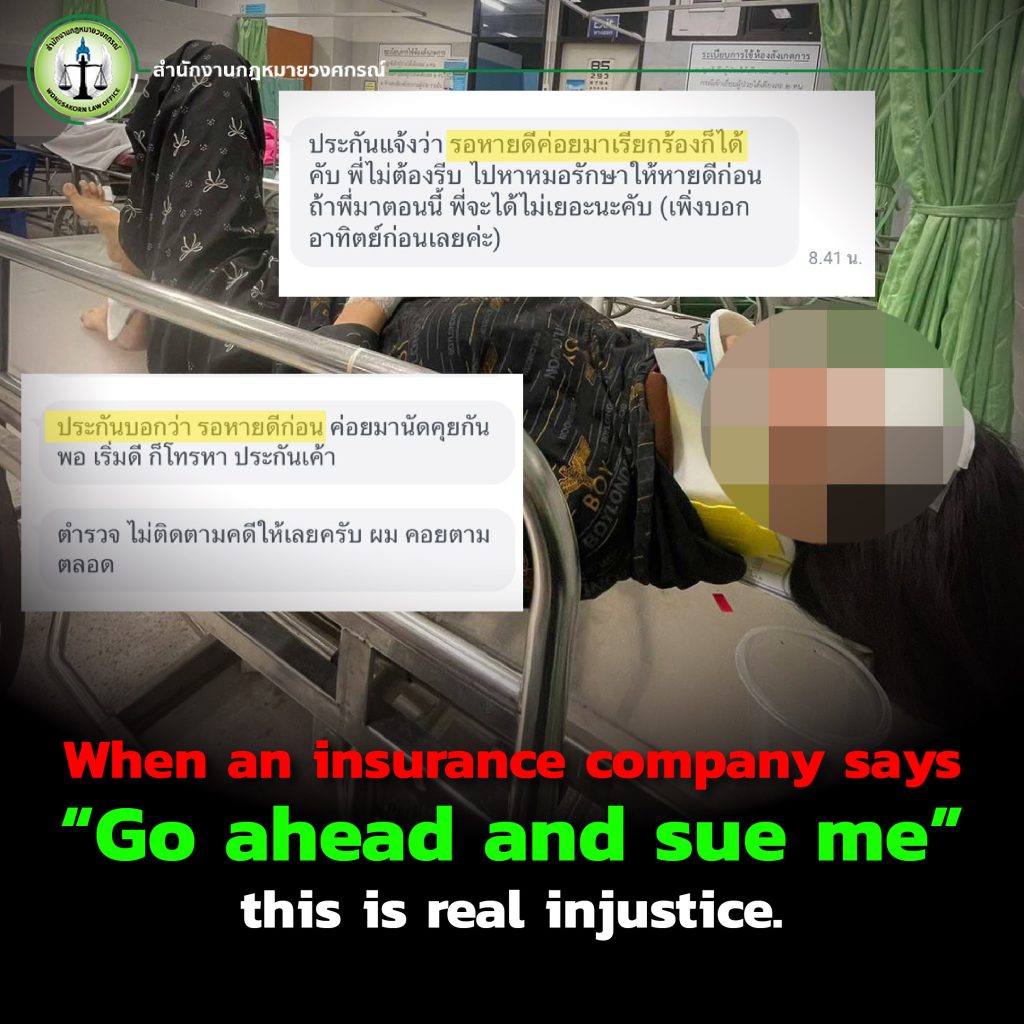
When an insurance company says “Go ahead and sue me” – this is real injustice.

This sentence reflects the power gap between ordinary victims and large insurance companies equipped with full legal teams.

Key questions are:

  • Why do insurance companies earning billions each year refuse to compensate injured people who are hospitalized and unable to walk normally?
  • Why do they tell victims to “sue us” when they know most people have no legal knowledge, no money, and no time to file a lawsuit?

This becomes a tool of power forcing victims to accept a small settlement and drop the case.

Your Legal Rights Are Greater Than What They Tell You

Under tort law and insurance law, victims have the full right to claim compensation, not just lost income.

Insurance companies (or the liable party) are legally required to compensate for:

1. All medical expenses – including hospital bills, transportation to appointments, physiotherapy, and rehabilitation.

2. Loss of income during recovery – based on actual income, not just “350 baht per day” as some insurers arbitrarily claim.

3. Pain and suffering compensation – for physical pain, disability, or disruption of daily life.

4. Loss of career opportunities – especially for freelancers or self-employed individuals who cannot work.

So if an insurance company says “we won’t pay” or “go sue us,” it doesn’t mean you have no rights, it means they are avoiding responsibility.

Why Do Insurance Companies Dare Victims to Sue?

Because they know:

  • Ordinary people don’t understand legal procedures.
  • They think lawyers are expensive.
  • They feel exhausted and eventually accept a low settlement.

This is why injustice happens repeatedly.

But at Wongsakorn Law Office and Lawyer Arm, we believe truth and people’s rights must come before corporate profit.

A Good Insurance Company Should Take Responsibility — Not Push It Away
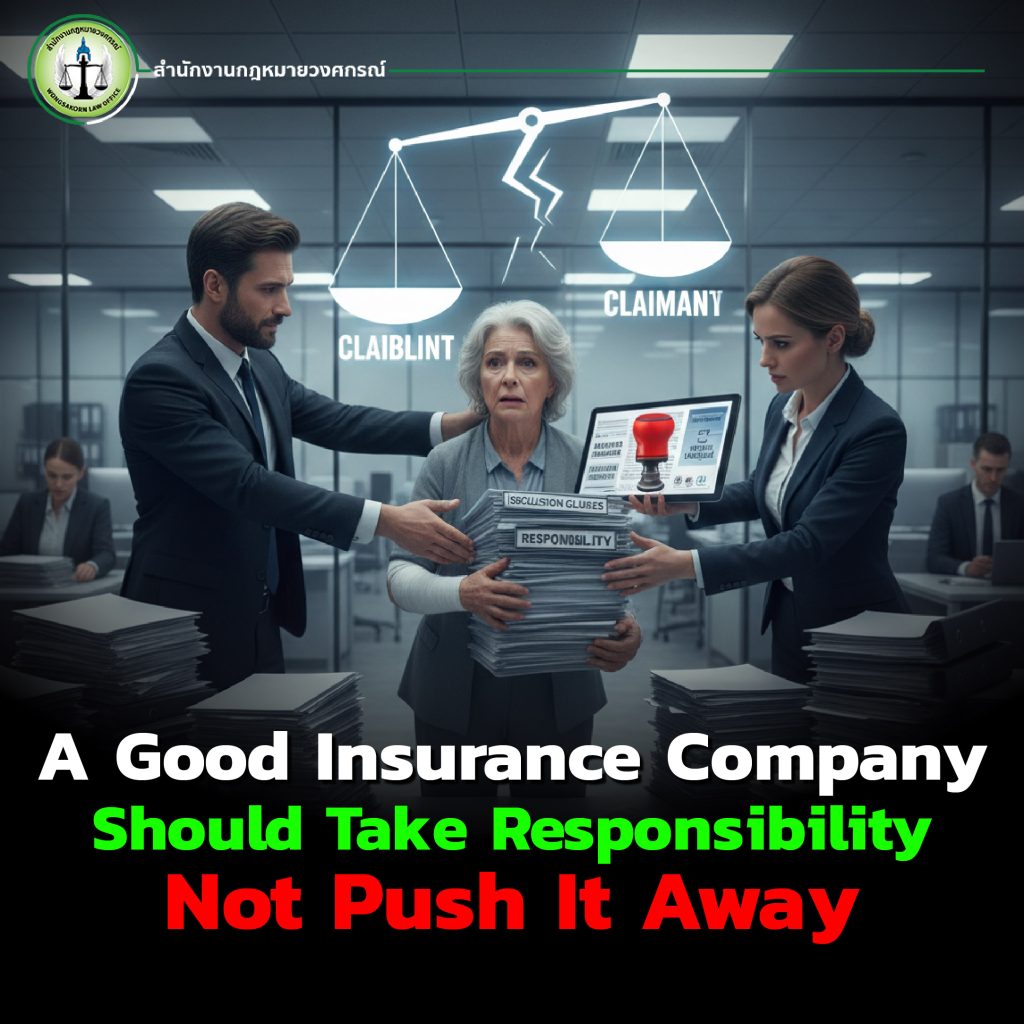
Insurance companies are legally obligated to take care of victims fairly, not threaten them or push them into legal battles.

Real people are suffering  lying in pain, unable to walk, losing income.
They should not be left behind just because they don’t have a lawyer.

What Should You Do If the Insurance Company Says “Companies Dare Victims to Sue “ ?
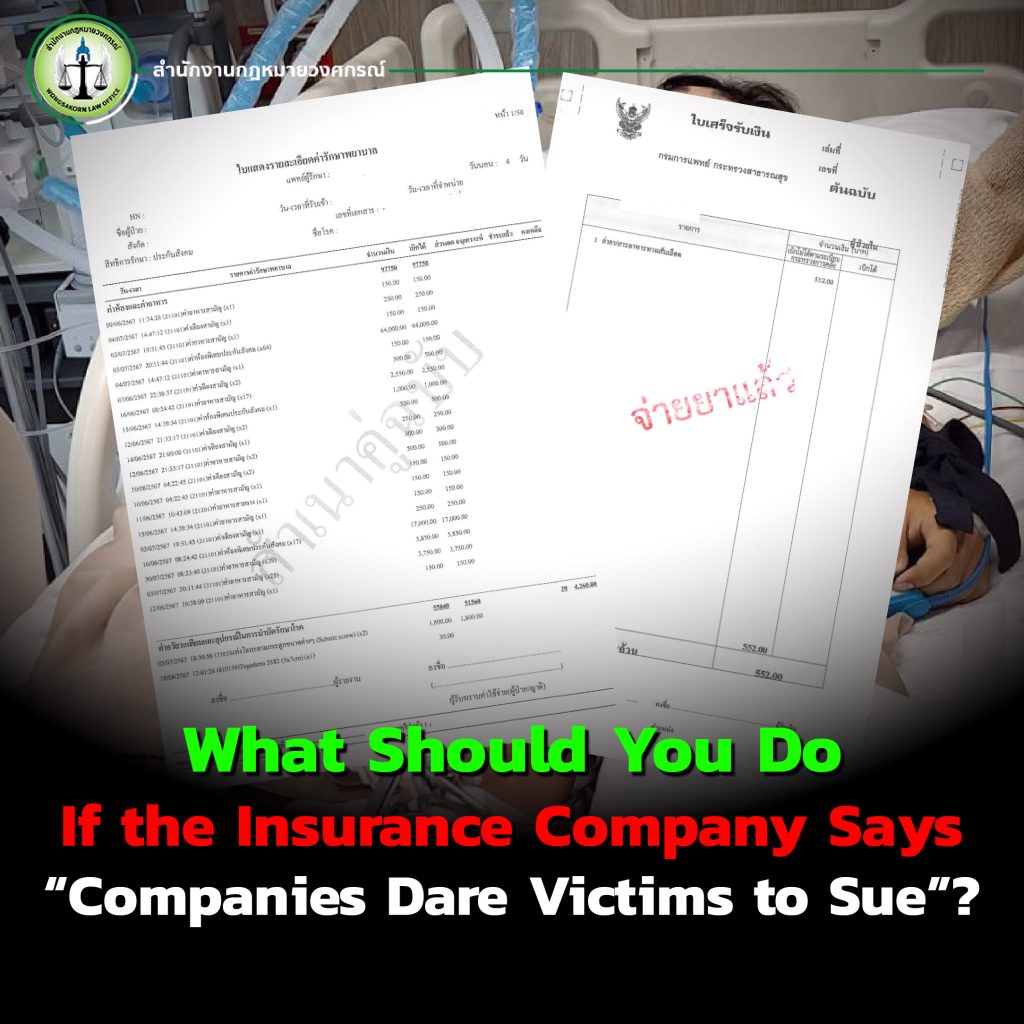
Right after an accident, many people believe the insurer who says, “Let’s talk after you recover.”
This misunderstanding may cause you to lose your rights.

Remember:

  • Insurance companies have lawyers from the moment the accident happens.
  • Every conversation, request for documents, or legal interpretation all are designed to minimize payout.

While citizens fight alone, injured, and uninformed, time is ticking.
So do not wait until you recover; you can have a lawyer immediately after the accident.

Here’s what to do:

1.Don’t sign or accept low compensation. Once signed, you lose your legal right to claim more.

2.Keep every piece of evidence – medical certificates, receipts, messages, conversations with insurers.

3.Consult a lawyer as soon as possible.

If They Say “Sue Us If You Want More” – Don’t Stay Silent

This shows a serious injustice within Thailand’s insurance system.

Insurance companies have lawyers before the accident even happens. It’s time for victims to have lawyers too.

At Wongsakorn Law Office, the Lawyer Arm stands with you from consultation to legal representation to ensure you receive not just “compensation,” but true justice.

Should You Claim Compensation from the Insurance Company or the Other Driver After a Car Accident?

A Legal Perspective from Lawyer Arm Knowing Where to Start to Get Fair Compensation

Road accidents can happen anytime, whether you’re driving a short or long distance. The resulting damages go beyond just vehicle repairs or property loss; they also include physical and emotional injuries that victims are legally entitled to claim. However, when it’s time to actually make a claim, many people are unsure: Should I claim from the insurance company or from the other driver directly?

According to Lawyer Arm from Wongsakorn Law Office, who has extensive experience handling car accident compensation cases, claiming from the insurance company is often the more practical choice. It is usually faster, more reliable, and more likely to result in fair compensation.

Who is Responsible for the Damages?

After an accident, the first step is to report the incident to the police to record the details and determine fault. Then, check whether the other party has insurance.

If they do, the insurance company will be responsible for covering the damages within the limits of the insurance policy, such as:

  • Repair costs for your car
  • Medical expenses
  • Lost income during recovery
  • Compensation for serious injury or death
  • Other related damages

In these cases, the insurance company must pay compensation on behalf of the insured driver within the coverage limits.

Can You Claim Directly from the Other Driver?

Legally, yes, you can. The person at fault must pay for all damages caused. If the other driver has no insurance or insufficient coverage, you can sue them directly.

However, in practice, this is rarely easy.
You may face challenges like:

  • The other driver denying fault
  • Inability to contact them or lack of assets to enforce judgment
  • Long court procedures to prove the claim amount
  • Even if you win, you may still not get paid if the driver has no money

So, while claiming directly from the other party is possible, it’s often slow and uncertain.

Why Is Claiming from the Insurance Company Better?

Lawyer Arm emphasizes:

“Claiming from the insurance company isn’t necessarily easier, but it’s more reliable because the company is legally obliged to pay and has the financial capacity to do so.”

Insurance companies, especially large, publicly listed ones have legal obligations and reserve funds to handle claims. While documentation and review steps may take time, victims are more likely to receive proper compensation.

Additionally, dealing with a professional insurance claim department makes negotiation smoother, compared to individuals who might avoid responsibility.

What Should You Do Right After the Accident?

When the accident happens, remember this key step:

“Ask which insurance company the other driver uses.”

This information is crucial for filing a proper claim. Then:

1. Get a police report or official record.

2. Notify the at-fault driver’s insurance company that you intend to claim as a victim.

3. Gather documents: repair receipts, medical certificates, bills, photos, and evidence of loss.

4. Negotiate with the insurer’s claim department.

5. If the insurer denies responsibility, you may pursue legal action with an attorney’s help.

Set a Clear Goal: How Much to Claim and From Whom?

Before making a claim, Attorney Arm advises:

“Be clear about how much you want to claim and who is responsible for paying it.”

This clarity helps you plan properly and avoid confusion. For example:

  • Property damage → claim from voluntary insurance (if applicable)
  • Medical costs → may be claimed from both the insurer and compulsory motor insurance (P.A.)
  • Lost income or extra compensation → may require negotiation or litigation

Evidence and Understanding Are the Keys to Successful Claims

Compensation claims rely on both complete documentation and knowledge of legal procedures. If you’re unsure how to proceed, consult an experienced lawyer in insurance and accident cases to help verify coverage, negotiate with the insurer, or file a lawsuit if needed.

The Keys to Successful Claims Talk to a Lawyer Early

“Don’t rush to blame anyone after an accident. First, identify who’s responsible for paying and the best way to claim fair compensation.”

Claiming from the insurance company might take time and paperwork, but it’s the safest and most reliable way to receive compensation. Insurance companies are legally required to pay and have the resources to do so.

Important: Always ask, “Which insurance company is the other driver insured with?” it might be the key to receiving full and timely compensation.

Wongsakorn Law Office provides expert legal services for insurance and accident claims, handled by experienced attorneys who specialize in compensation law.

 Consult our legal team today. Click [Contact Us]

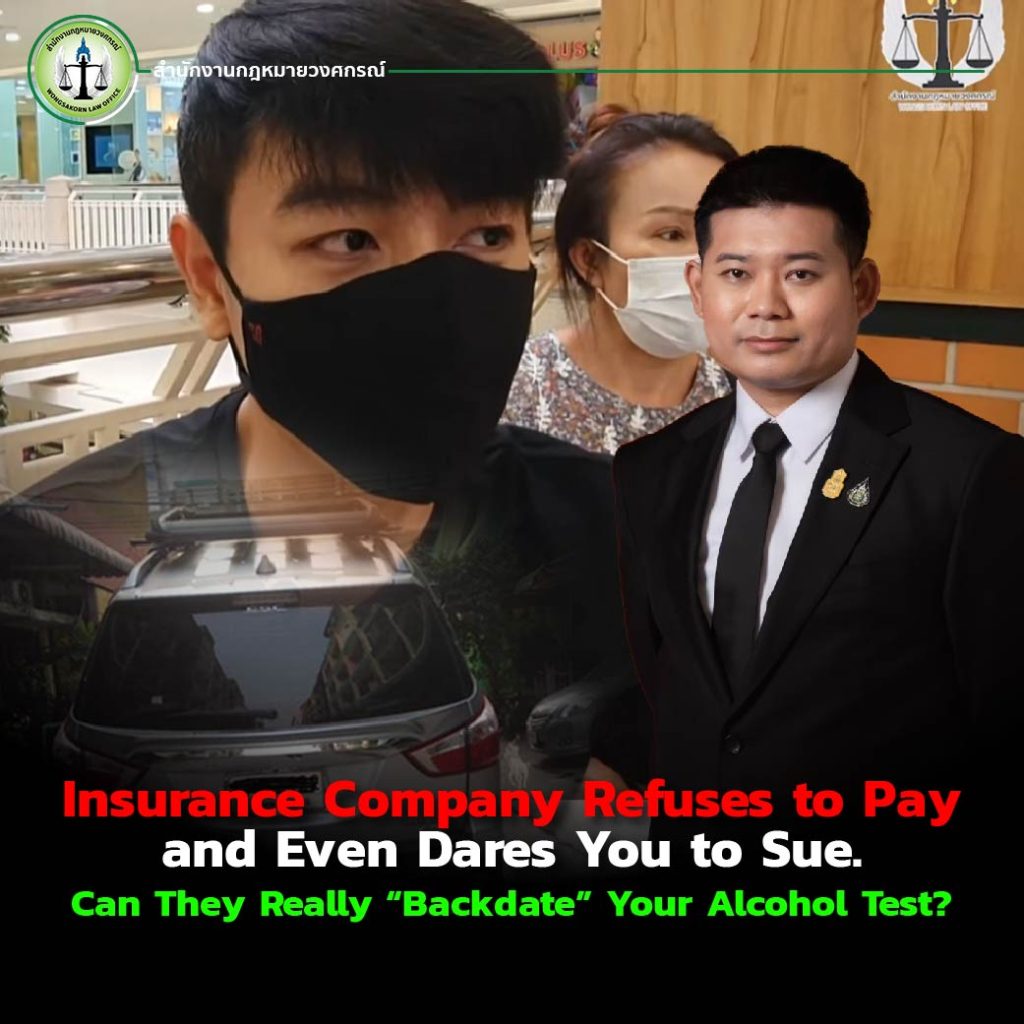
 Insurance Company Refuses to Pay and Even Dares You to Sue. Can They Really “Backdate” Your Alcohol Test?

Changed their mind!
 At first, the insurance company promised to take responsibility for the accident and even approved car repairs that took nearly a month. But later, they suddenly called the client and claimed they would not cover the damages after all, arguing that the driver’s blood alcohol level must have been higher before the breathalyzer test.

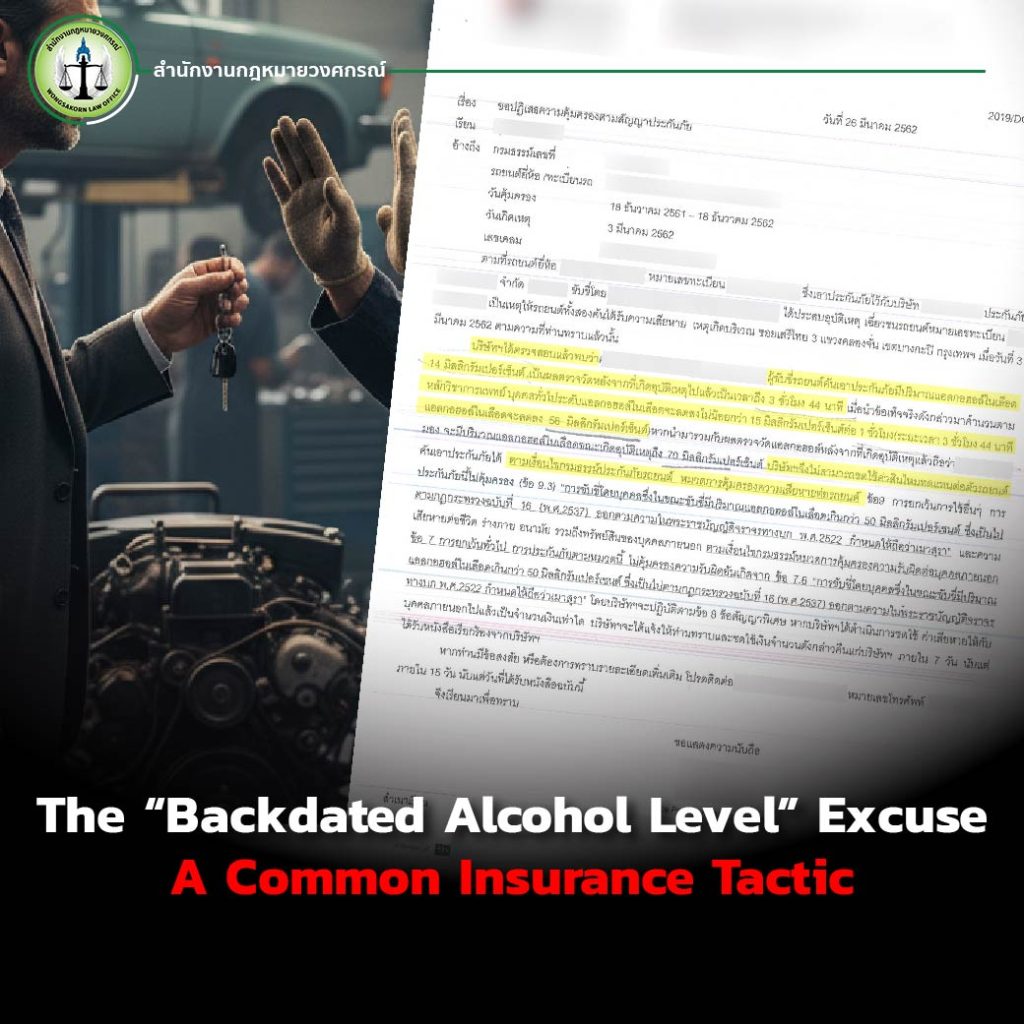
The client’s actual test result was only 14 milligrams percent (mg%), well below the legal limit of 50 mg%, yet the company insisted that the level “must have exceeded 50 mg% before testing.” Using this reasoning, they refused to pay and told the client, “If you want to fight this, go find a lawyer and sue us.”

The “Backdated Alcohol Level” Excuse A Common Insurance Tactic

This isn’t an isolated case. Many accident victims have faced the same issue: insurers “recalculating” alcohol levels after the fact to justify denying payment. It’s become one of the most common and questionable tactics in the industry.

But for this particular client, it was shocking. He had trusted a seemingly reputable insurance company, believing they would stand by him. Instead, he was abandoned and accused unfairly of being intoxicated beyond the legal limit.

The Accident: A Minor Collision at 3 A.M.

The incident occurred around 3:00 a.m. The driver was heading home after a night out. Only about 100 meters from the venue, on a one-way street, his car brushed against a parked pickup truck that was sticking out into the lane. The collision caused only surface scratches along the side of the client’s vehicle, no dents, no severe damage.

The insurance company initially accepted responsibility and arranged for repairs, which took about a month. Then, out of the blue, they called back:

“We’re no longer responsible for repairing your car.”

The reason? A so-called retrospective alcohol analysis. Even though the actual breath test at the scene showed 14 mg%, the insurer claimed that “the driver’s alcohol level must have been over 50 mg% before testing.”

The client was stunned how they could retroactively raise the alcohol level just to deny coverage?

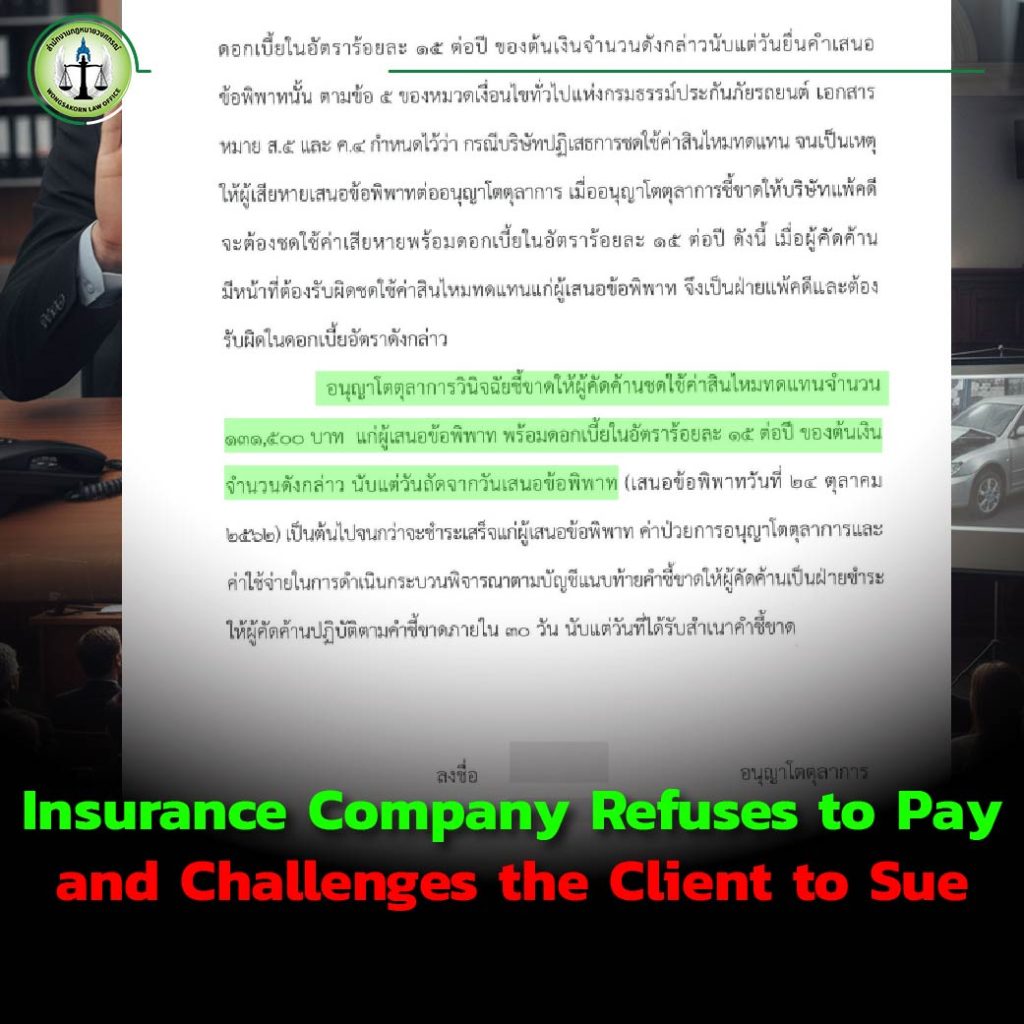
Insurance Company Refuses to Pay and Challenges the Client to Sue

As if denying coverage weren’t enough, the insurer told the client directly:

“Go hire a lawyer and sue us.”

They flatly refused to take responsibility, despite the police report clearly stating that the accident resulted from careless driving, not intoxication. The victim was left completely helpless and betrayed by the company that was supposed to protect him.

The Victim’s Reaction Shock and Disbelief

“I just don’t understand,” he said. “I paid for insurance so that the company would take care of me. My breath test was only 14 mg%, which is legal. Why are they refusing to help and leaving me to deal with everything alone?”

He had trusted the insurer, believing that his policy guaranteed protection. But instead, the company abandoned him mid-process even after his car had been in the repair shop for a month.

After the Denial Turning to a Lawyer for Help

After being told to “go sue,” the victim didn’t hesitate. He contacted the Lawyer Arm at Wongsakorn Law Office to handle the case. Having endured both the accident and the insurer’s betrayal, he realized that having a lawyer from the start would have saved him stress, time, and unnecessary financial loss.

Why Having a Lawyer from the Beginning Matters?

Don’t wait until the insurer pulls a trick like “backdating alcohol levels” before you seek legal help. Consulting a lawyer right after an accident gives you peace of mind and ensures your rights are protected.

Here’s why:

  • You won’t have to negotiate directly with the insurance company or risk falling for their tactics.
  • You save time when your lawyer will handle all communication, documentation, and follow-ups.
  • A lawyer safeguards your rights and interests from day one until the case is fully resolved.

In short: a lawyer protects you before problems start, not just after they arise.

Legal Insight: Drunk Driving and Insurance Liability

Insurance companies often refuse to pay if the driver’s blood alcohol level exceeds 50 mg%, as this violates both insurance terms and traffic laws. Even with first-class coverage, insurers can deny payment to both the policyholder and the third party if the driver was legally intoxicated.

However, if your voluntary insurance (first-class policy) denies payment, your compulsory insurance (Por Ror Bor) will still cover bodily injury to the other party regardless of intoxication, lack of license, or other traffic violations.
  But compulsory insurance only covers injuries, not vehicle damage. You’ll still be personally liable for damage to the other car.

So the best advice? Don’t drink and drive. It’s not just illegal, it can cost you your safety, your money, and your peace of mind.

If Talking to Your Insurer Is Hard. Talk to Us Instead

Some insurers are clever at dodging responsibility. They claim things like “You must have been drunk before the test” or use made-up formulas to deny your claim.

If you’ve been hit with this “backdated alcohol” excuse don’t fall for it, and don’t fight alone.

📍 Contact Wongsakorn Law Office, led by Lawyer Arm, a legal expert specializing in car insurance and accident disputes.
  We’re here to protect your rights, fight unfair insurance denials, and make sure you get the justice and compensation you deserve. 

Tricked Again!!! The Insurance Company’s Deceptive Phrase: “Get Well First”

“Get well first”  is a phrase that sounds caring and considerate when spoken by an insurance company. At first glance, it seems to show concern and goodwill. However, in reality, it is nothing more than a deceptive tactic designed to delay compensation payments to victims. When an insurance company tells you to “get well first”, it is not out of genuine concern for your health, but rather an attempt to stall and avoid immediate settlement.

Insurance or a Ghost? Victims Fooled by “Get Well First” Three Times

Case 1
This victim was severely injured in February 2021 when another driver rear-ended their vehicle. The insurance company immediately expressed “concern” and told the victim to “get well first.” The victim was seriously injured, suffering a fractured tailbone, and had to stay in the hospital for more than a week. Even after being discharged, they needed more than two months of home recovery.

Case 2
The victim further revealed that during their hospitalization, the insurance company never contacted them again. After initially saying “get well first,” the insurer went completely silent. The victim waited in vain but eventually had to reach out to the insurer themselves despite still being in pain and recovery. When they finally managed to meet at a police station, the insurance company repeated the same phrase: “get well first.” Believing the insurer’s words, the victim didn’t suspect anything wrong.

Case 3
Months later, around May–June 2021, the victim once again contacted the insurer and arranged another meeting. By this time, their condition had slightly improved; they could now sit for about 10–20 minutes, although still not fully recovered. Upon hearing this, the insurance company played another trick, pretending to care: “Your doctor is still monitoring your condition,” “If you claim now, you might face extra costs,” “It might not be worth it.” And once again, they ended the conversation with the classic line: “get well first.” That was the third time.

The Victim Realizes the Trick Behind “Get Well First”

After being told “get well first” three times over a six-month period, with no follow-up or compensation, the victim finally realized the insurer’s strategy was to delay until rights expired. They turned to Wongsakorn Law Office after finding our Facebook page and YouTube channel, where similar cases had been explained. Upon learning that others had also been deceived with the same tactic, the victim immediately sought legal assistance instead of waiting for the insurer.

3 Major Risks When an Insurance Company Tells You to “Get Well First”

1.      Your case may expire due to statute of limitations
Delays can cause your claim or lawsuit rights to lapse. While you spend months or years recovering, the insurer’s tactic may result in your case expiring, leaving you unable to claim or sue at all.

2.      You may lose the right to future medical expenses
Many do not realize that you are entitled to claim not only current but also future medical costs. For example, if you suffer a broken leg and require metal implants, the insurer may treat your case as “completed” once initial treatment ends and push you to sign a settlement. Later, when surgery is needed to remove the implants, you will no longer be able to claim further costs.

3.      Insurers may underpay compensation
Once you appear “fully recovered,” insurers can argue that no further suffering or damage exists and will only pay based on your visible condition at that time, often far less than you deserve.

These are just the initial drawbacks. Insurance companies often use many more tricks to avoid paying fair compensation.

Don’t Be Fooled by “Get Well First” Consult a Lawyer Immediately

When you hear the phrase “get well first” from an insurance company, don’t assume it is genuine concern. In truth, it is often a strategy to delay, minimize, or avoid their payout obligations. Believing it blindly may cost you your rights, your time, and even your chance to claim fair compensation.

To protect yourself from these unfair tactics, consult an experienced lawyer immediately. With proper legal guidance, you can safeguard your rights and ensure justice.

👉 Contact Wongsakorn Law Office today — don’t wait until it’s too late.

Line @ คลิก! โทรหาเรา คลิก!