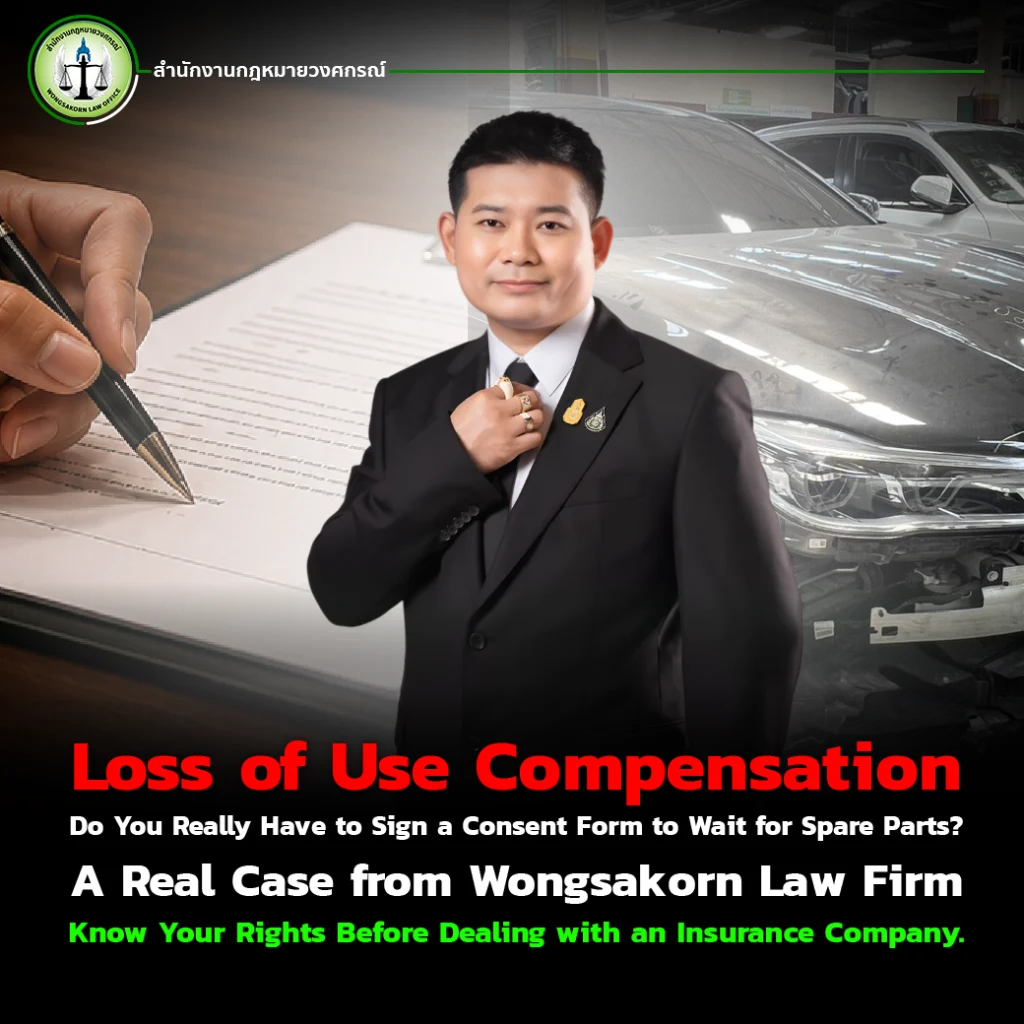
Loss of Use Compensation: Do You Really Have to Sign a Consent Form to Wait for Spare Parts? A Real Case from Wongsakorn Law Firm: Know Your Rights Before Dealing with an Insurance Company.

When a road traffic accident occurs, most people focus on getting their vehicle repaired and back on the road as quickly as possible. However, many policyholders overlook an important legal right—the right to claim Loss of Use Compensation. If a damaged vehicle cannot be used while it is undergoing repairs, the injured party may be legally entitled to compensation for the loss of its use. 

Based on the extensive experience of Lawyer Arm Supasit Siri of Wongsakorn Law Firm in handling insurance disputes, it has been observed that in many cases involving lengthy vehicle repairs, insurance companies ask consumers to sign documents consenting to wait for spare parts or agreeing to an extended repair period. Unfortunately, many consumers are unaware that signing such documents may later affect their legal rights, including their ability to claim Loss of Use Compensation or other forms of compensation available under the law.

Through this article, Lawyer Arm Supasit Siri shares insights drawn from actual cases handled by Wongsakorn Law Firm to shed light on legal issues that many consumers do not know. The goal is to help readers understand their legal rights before dealing with insurance companies and to avoid unintentionally waiving compensation to which they may be legally entitled.

Real Case: An Insurance Company Asked Our Client to Sign a Consent Form to Wait for Spare Parts

The case began when a client of Wongsakorn Law Firm was involved in a road traffic accident, and the damaged vehicle had to be repaired at an authorized service center.

During the repair process, a representative from the insurance company contacted Lawyer Arm Supasit Siri and stated that the client needed to sign a Consent to Wait for Spare Parts form, acknowledging and agreeing to the delay in repairs caused by the unavailability of spare parts.

Lawyer Arm immediately asked a straightforward question:

“If my client refuses to sign this document, will the insurance company still repair the vehicle?”

The insurance company’s response was:

“Yes, we will.”

Upon hearing this, Lawyer Arm asked a follow-up question:

“If the vehicle will be repaired regardless of whether the document is signed, why is my client required to sign it?”

The response was:

“It is simply to acknowledge that the customer has been informed.”

However, the key question remains:

Is the document truly intended only to acknowledge that the customer has been informed, or could it also affect the customer’s right to claim Loss of Use Compensation or other legal entitlements at a later stage?

Why Should You Carefully Consider Before Signing Such a Document?
In practice, the contents of these documents vary from case to case. If a document contains provisions relating to consenting to repair delays, agreeing to wait for spare parts, or other terms that may affect your legal rights, consumers should carefully read and fully understand every provision before signing.

Such documents may later be relied upon as evidence or referenced in the event of a dispute. Whether they affect your legal rights will depend on the specific wording of the document and the facts of each individual case.

For this reason, before signing any document, an injured party should ensure they fully understand its contents. If there is any uncertainty about the legal implications, it is always advisable to consult a lawyer before signing, in order to avoid unintentionally affecting any legal rights or potential claims.

What Is Loss of Use Compensation? 

Loss of Use Compensation refers to damages arising from an owner’s inability to use their vehicle while it is being repaired following an accident for which another party is legally responsible.

In other words, if your vehicle cannot be used during the repair period because of an accident caused by someone else, you may be legally entitled to claim compensation from the at-fault party or their insurance company for the loss of use.

For example:

  • A vehicle used for commuting to and from work
  • A vehicle used to transport children to and from school or other activities
  • A vehicle used for business purposes
  • A vehicle used to meet or transport clients
  • A vehicle used in the company’s day-to-day operations

When a vehicle cannot be used, the owner inevitably suffers inconvenience or financial loss. Accordingly, the law allows an injured party to claim compensation for such loss, subject to the facts of the case and the applicable legal principles. 

Why Do So Many People Unknowingly Lose Their Legal Rights? 
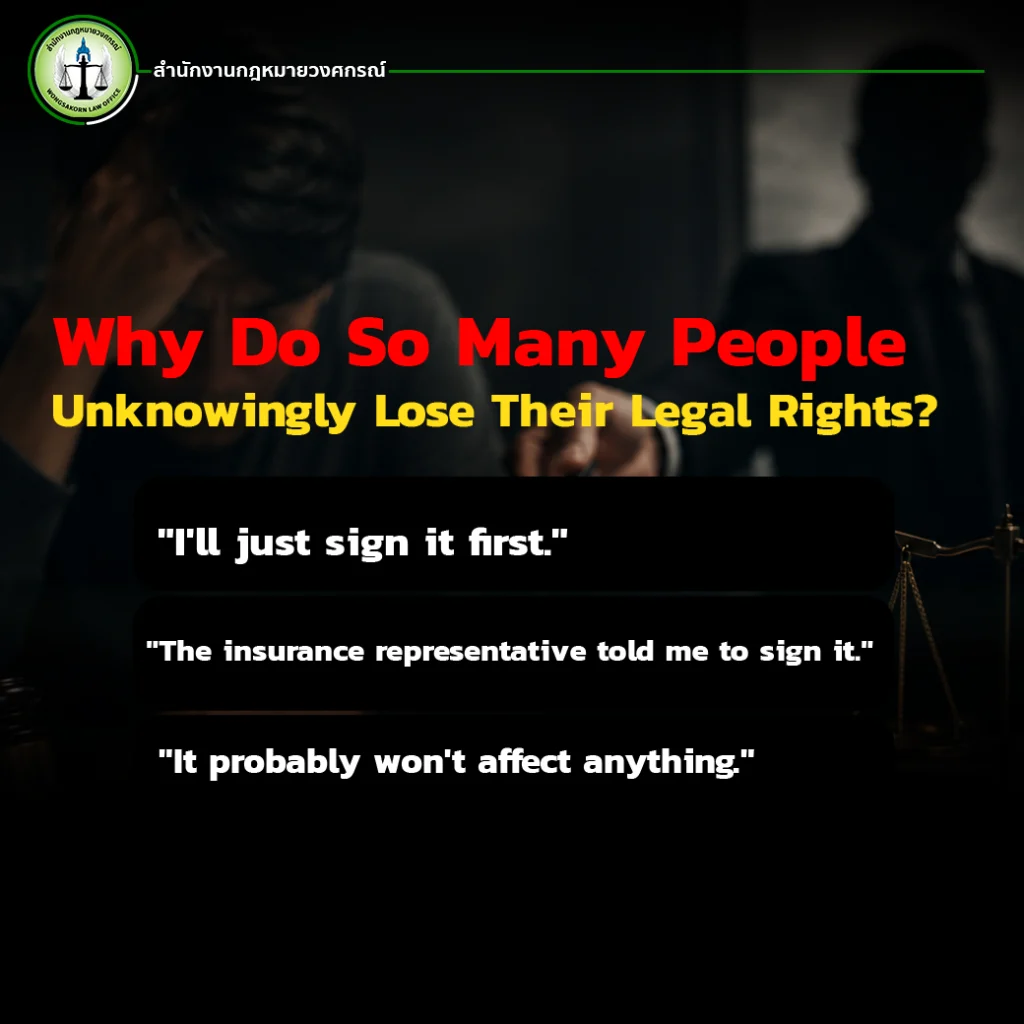
Based on the experience of Wongsakorn Law Firm, many accident victims focus primarily on getting their vehicle repaired as quickly as possible.

However, during the repair and insurance claims process, they are often asked to sign several documents. Many people simply assume:

  • “I’ll just sign it first.”
  • “The insurance representative told me to sign it.”
  • “It probably won’t affect anything.”

Unfortunately, when they later attempt to claim Loss of Use Compensation, those previously signed documents may become a point of dispute or be relied upon in the claims process.

This is why it is essential to carefully read and fully understand any document before signing it. A seemingly routine signature may later have significant implications for your legal rights and entitlement to compensation.

Key Point to Know: Insurance Companies Have Legal Support from Lawyers from the Very Beginning.

From the perspective of Lawyer Arm Supasit Siri, insurance companies operate through established procedures, internal systems, and with the support of legal counsel who provide advice throughout the claims process.

By contrast, most consumers are dealing with a traffic accident for the first time and may not fully understand their legal rights or the legal implications of the documents they are asked to sign.

Seeking legal advice is therefore not about creating unnecessary conflict. Rather, it enables injured parties to fully understand their rights and make informed decisions based on a complete understanding of the legal consequences before signing any document or proceeding with an insurance claim.
If You’re Involved in a Car Accident, Consult a Lawyer from Day One 

Many people wait until a dispute arises with an insurance company before seeking legal advice.

However, based on the experience of Wongsakorn Law Firm, obtaining legal guidance immediately after a traffic accident allows the matter to be handled in a structured and strategic manner, helping to protect your legal rights from the outset. This may include:

  • Preserving and collecting relevant evidence
  • Communicating and dealing with the insurance company
  • Reviewing documents before signing
  • Monitoring the vehicle repair process
  • Protecting your right to claim Loss of Use Compensation
  • Assessing the damages you may be entitled to recover under applicable law. 

Planning from the outset can significantly reduce the risk of unintentionally losing your legal rights.

A traffic accident does not end once the vehicle is sent for repairs. It may involve several legal rights that an injured party is entitled to pursue, particularly Loss of Use Compensation and Diminution in Value claims. Unfortunately, many people unknowingly compromise these rights by signing documents without fully understanding their legal consequences.

If you are currently experiencing issues with an insurance company—such as being asked to sign documents, agreeing to wait for spare parts, dealing with repair delays, claiming Loss of Use Compensation, or seeking compensation for your vehicle’s diminished value—do not rush to sign any document before carefully reviewing its contents. Understanding the legal implications in advance can help protect your rights and avoid unnecessary disputes later.

Wongsakorn Law Firm is ready to provide legal advice and help you develop an appropriate legal strategy from the very first day after a traffic accident. Our goal is to ensure that you fully understand your legal rights and can make informed decisions at every stage of the claims process.

Rather than waiting until a dispute arises, early legal planning can significantly reduce the risk of unintentionally losing the rights and compensation to which you may be legally entitled.

To consult Lawyer Arm, please click “Contact Us.” 
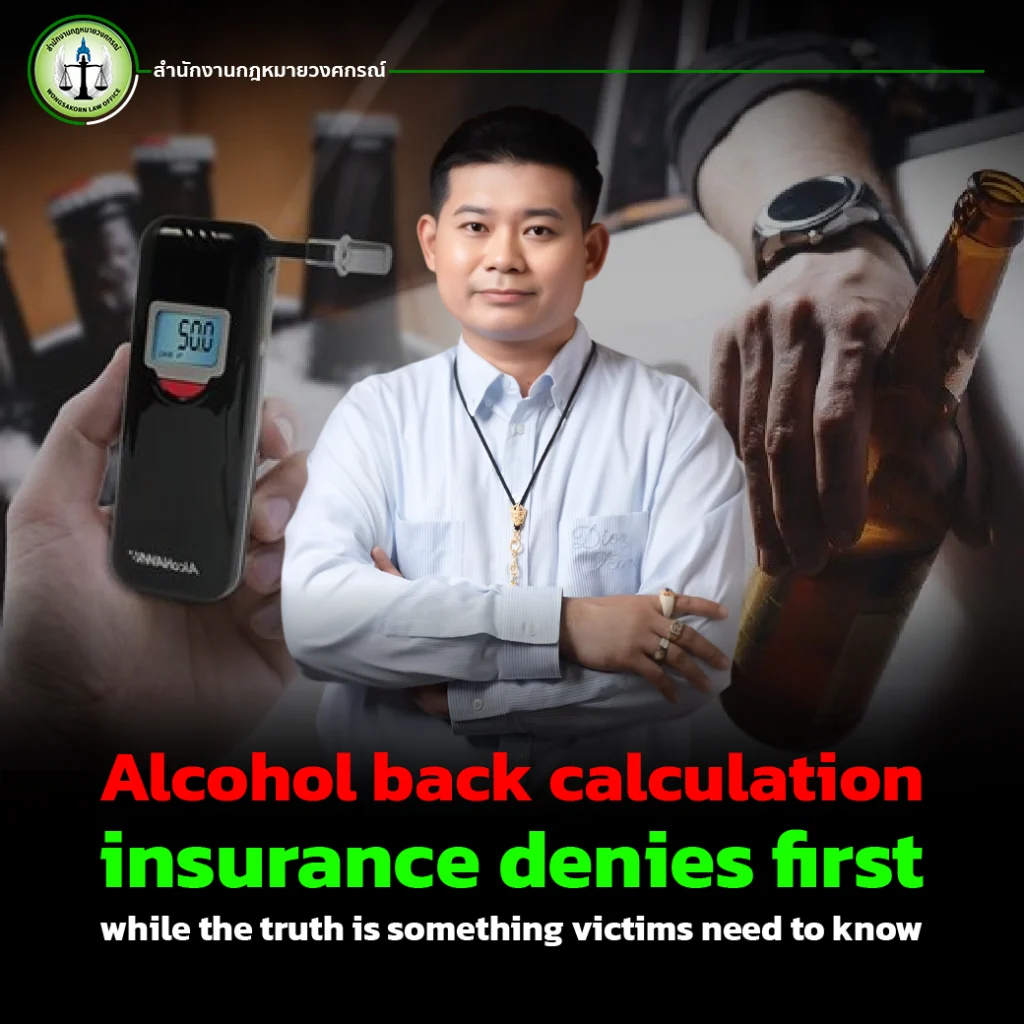
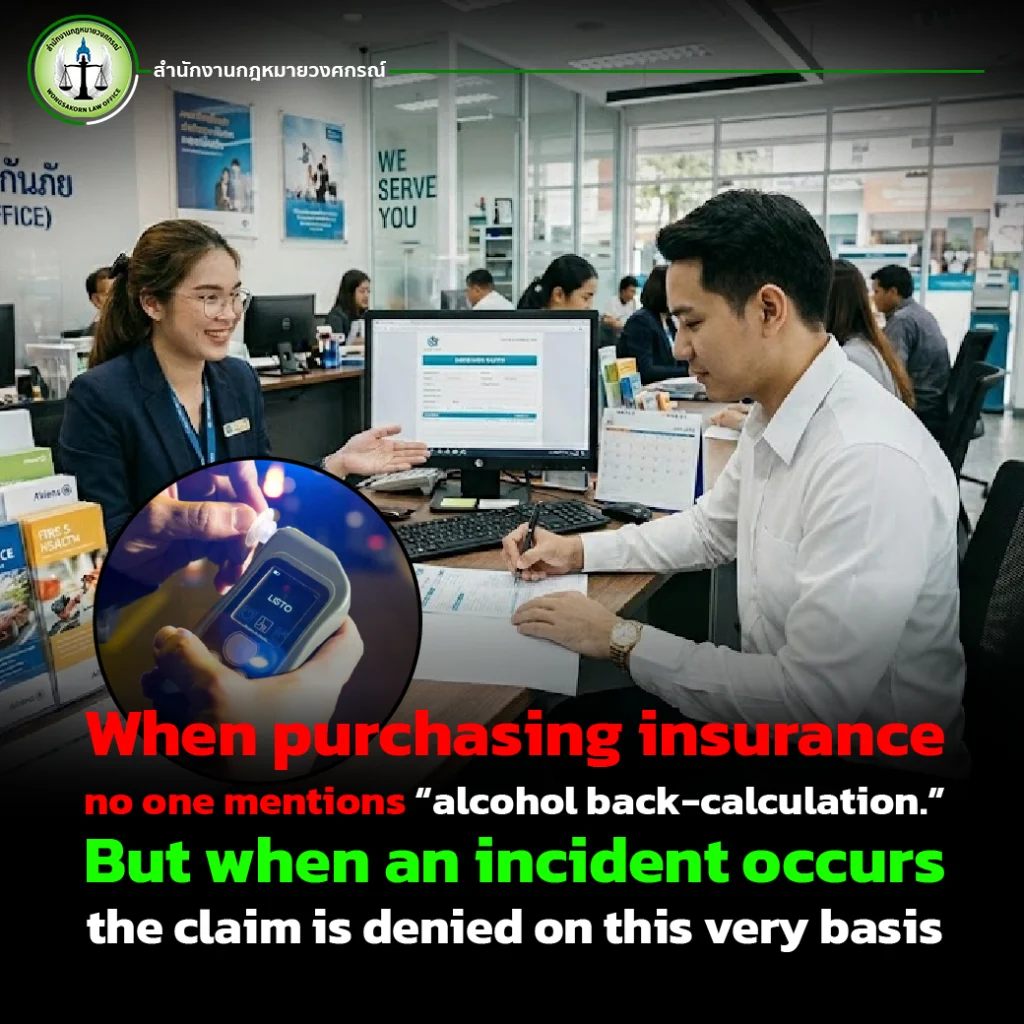
Alcohol back calculation  insurance denies first, while the truth is something victims need to know.

Alcohol exceeding 50 milligrams percent while driving becomes a major point of conflict between victims and insurance companies. When a road accident occurs, one of the issues that is always raised for consideration is the “back-calculation of blood alcohol content” of the driver, especially in cases involving insurance claims. Many people may have encountered situations like this.

The key question is: Is this kind of alcohol back-calculation fair to consumers?
This article from Wongsakorn Law Office will take you deeper into the issue of alcohol and insurance, explaining mechanisms that many people may have never known before.

Conditions in insurance contracts regarding alcohol
In general, motor insurance policies clearly state an important condition:
The company will not pay compensation if the driver’s blood alcohol level exceeds 50 milligrams percent “while driving.”

It sounds straightforward, but in practice there is a significant “gap,”
because the term “while driving” cannot be measured in real time.

The starting point of the issue of alcohol back-calculation

In reality, when an accident occurs, alcohol testing usually takes place “after the incident.” This leads to the concept of “alcohol back-calculation,” which is a medical principle used to calculate backward from the level detected at a later time.

So who determines that “back-calculation” should be used?
There are guidelines from regulatory authorities that allow back-calculation in certain cases, such as using the rate of alcohol metabolism in the body.

But the problem is that the general public has little to no knowledge about this.

Why do victims feel they are being “treated unfairly”?
Try to imagine this situation:

  1. You did not feel intoxicated while driving.
    There was no explanation about back-calculation when purchasing the insurance.
    But after the incident, the insurance company uses “back-calculation”
    and concludes that your alcohol level exceeded the limit while driving.

The result is that your claim is immediately denied afterward.

Can this be called “tricky” or “cunning” insurance?

From the victim’s perspective, many people see it as the use of technical or legal loopholes, because it was never explained at the time of purchase that alcohol back-calculation would be applied while driving; it relies on medical principles that are difficult to understand, as not every member of the public can grasp such concepts; and it is often used at the moment of “denying payment.” When it is found that the driver had alcohol in their system while driving, the insurance company uses this approach to immediately deny the claim, in order to protect its own interests, rejecting first in the hope that the victim will believe it. If the victim believes it, the company does not have to pay any compensation.

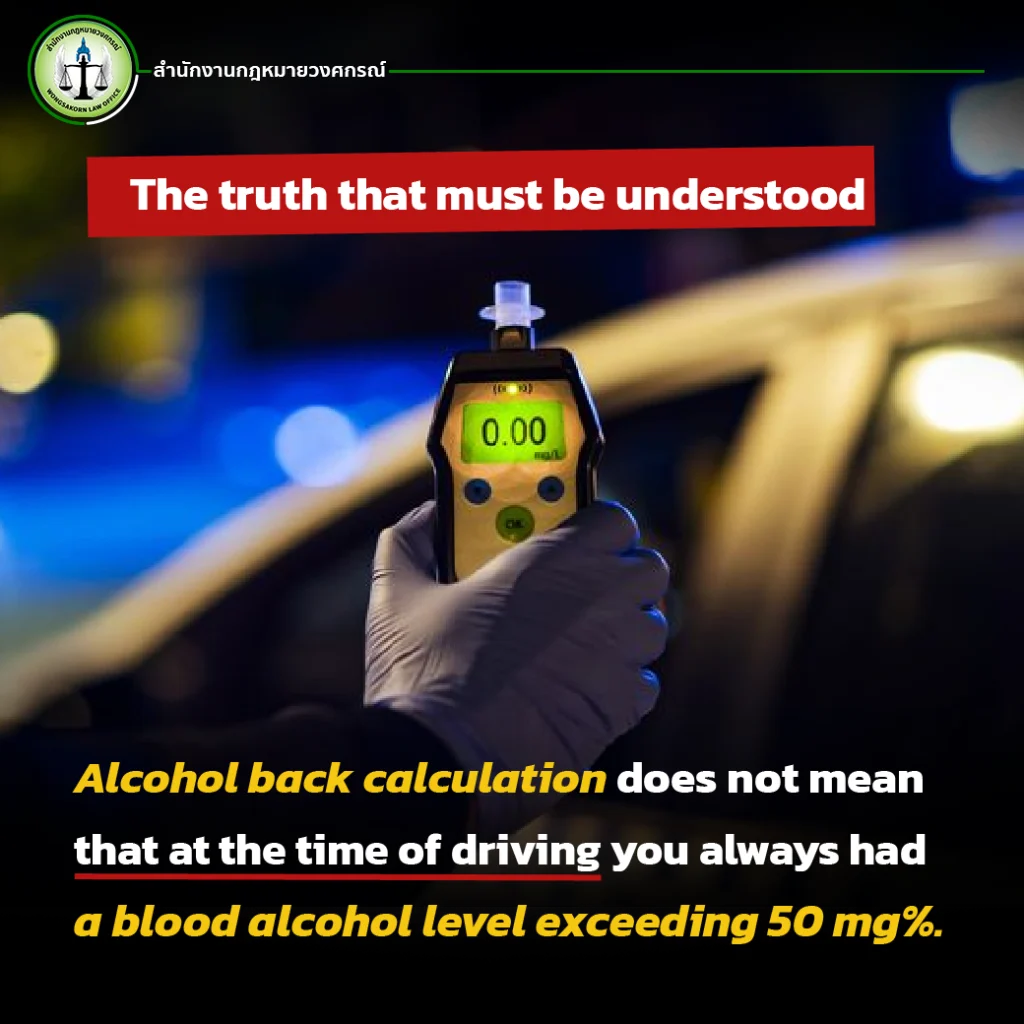
The truth that must be understood Back-calculation is not a 100% conclusion.

 What is important for victims to know is

Alcohol back-calculation does not mean that at the time of driving, you always had a blood alcohol level exceeding 50 mg.%

Because the level of alcohol in the body
depends on many factors, such as
the time of drinking,
the amount of food in the stomach,
body weight,
and each individual’s metabolism.

Therefore, back-calculation is only an “estimation,” not a 100% fixed fact.

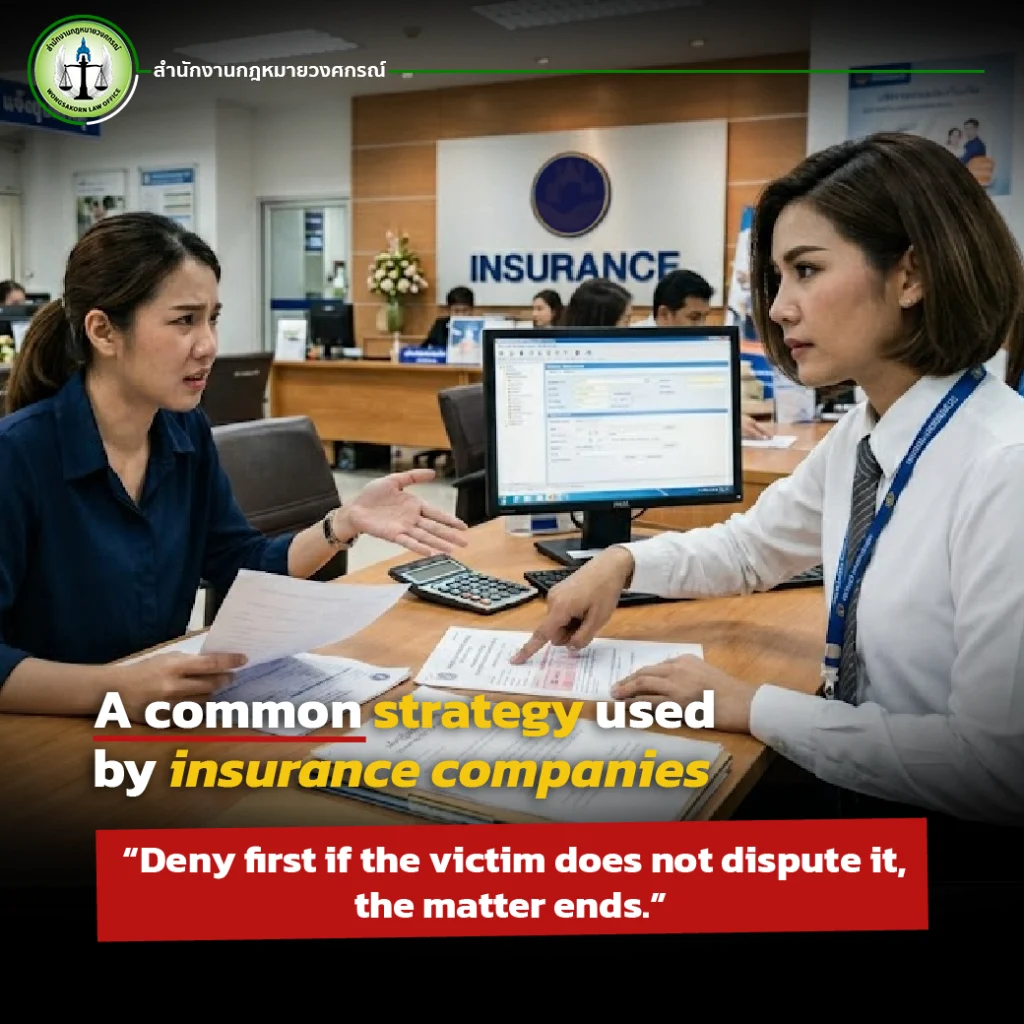
A common strategy used by insurance companies

From experience in many insurance cases, one approach frequently used is

 “Deny first if the victim does not dispute it, the matter ends.”

Why does this strategy work?

 Because most victims do not know the law. Insurance companies use terminology and principles in a way that leads victims to believe they are actually at fault. Most people are reluctant to fight or dispute, as they do not want trouble or to go to court. This becomes a loophole that allows insurance companies to gain an advantage with minimal effort, because in the end, the company does not have to pay any compensation.

Do not immediately believe that you had “excess alcohol” without verification

The most dangerous thing is when a victim “immediately believes” that they are at fault,
when in reality, there may still be many legal arguments available.

Questions you should ask

  • When was the alcohol test conducted?
  • How much time had passed since the incident?
  • How accurate is the back-calculation method?
  • Are there other factors that could affect the measured value?

The best solution consult a lawyer immediately after the incident

If you or someone close to you has been involved in an accident and there is an issue regarding alcohol or alcohol back-calculation,
What you should do immediately is do not wait, do not assume, and do not immediately believe the insurance company.

Why is it necessary to consult a lawyer right away?
Because a case must be “structured” from the very beginning. Certain evidence or information must be collected immediately, and responding requires specialized knowledge.

Because insurance companies already have legal teams
What many people may not know is that insurance companies already have legal teams, litigation approaches, and negotiation strategies to persuade victims to settle, even from “before the incident” occurs.

Therefore, if a victim does not have an expert to handle the compensation claim process, they are clearly at a disadvantage.

Being subjected to alcohol back-calculation is not the end of your rights
Having an issue related to alcohol back-calculation does not mean you “lose your rights” immediately. What matters is that you stay informed and do not allow yourself to be taken advantage of by the insurance company.

If you are facing this problem
If your claim has been denied due to “alcohol back-calculation,”
do not let the matter end easily. In many cases our office has handled, there has not been a single case lost, because we pursued each case to the fullest extent. Victims can fight and claim their rights.

An option for those seeking fairness
Consulting a lawyer who specializes in insurance cases, especially those involving alcohol back-calculation, will help you understand your rights, plan your case correctly, and increase your chances of receiving fair compensation.

Do not let a lack of knowledge cause you to lose your rights.

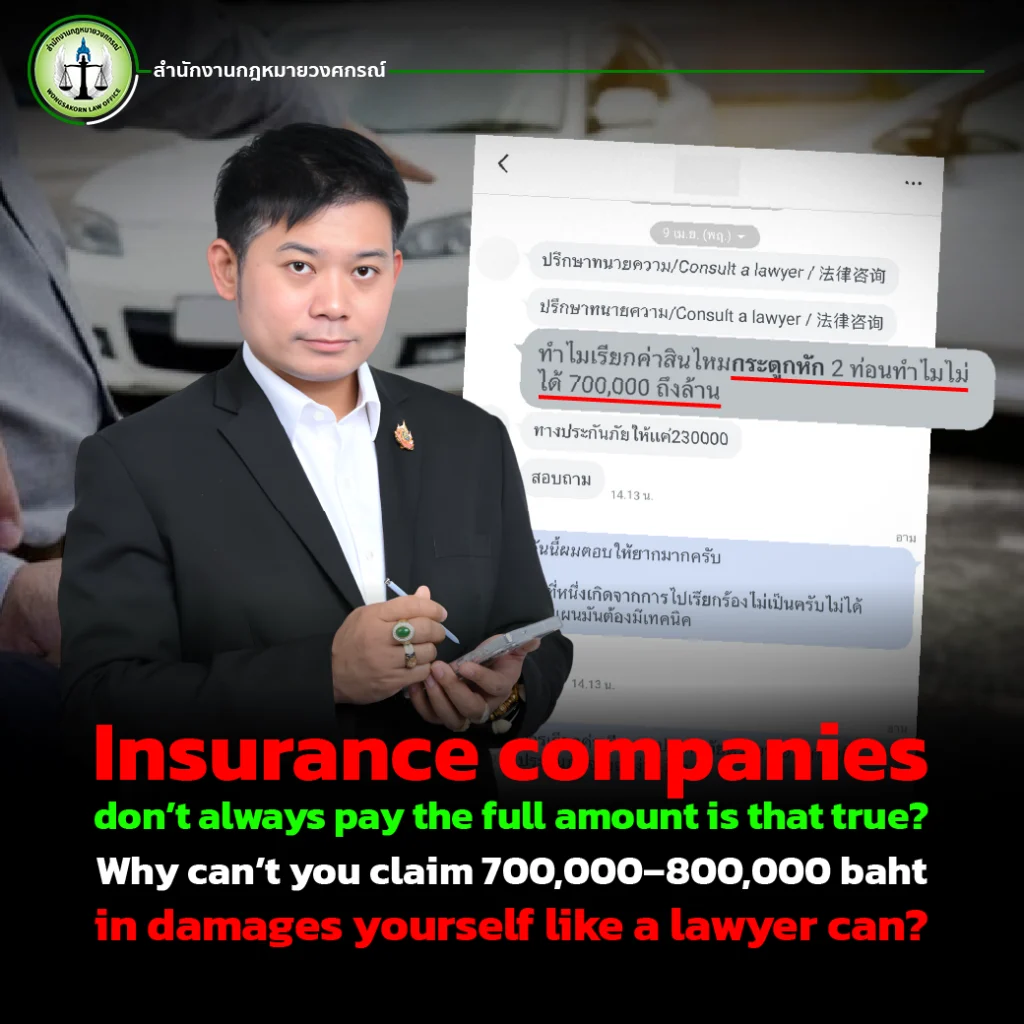
Insurance companies don’t always pay the full amount. Is that true? Why can’t you claim 700,000–800,000 baht in damages yourself like a lawyer can?

Do insurance companies really not pay in full? This is a very common question when a car accident results in serious injuries. One of the key doubts victims often have is
“Why is it that when I file a claim with the insurance company myself, I don’t receive as much compensation as when a lawyer handles it?”

Many people may have seen cases where compensation reaches 700,000–1,000,000 baht.
But when they deal with the insurance company on their own, they receive only a portion of that amount, or less than expected.

The truth is, this does not depend on the injury alone. Legal factors, strategy, and the method of making the claim all play a significant role.

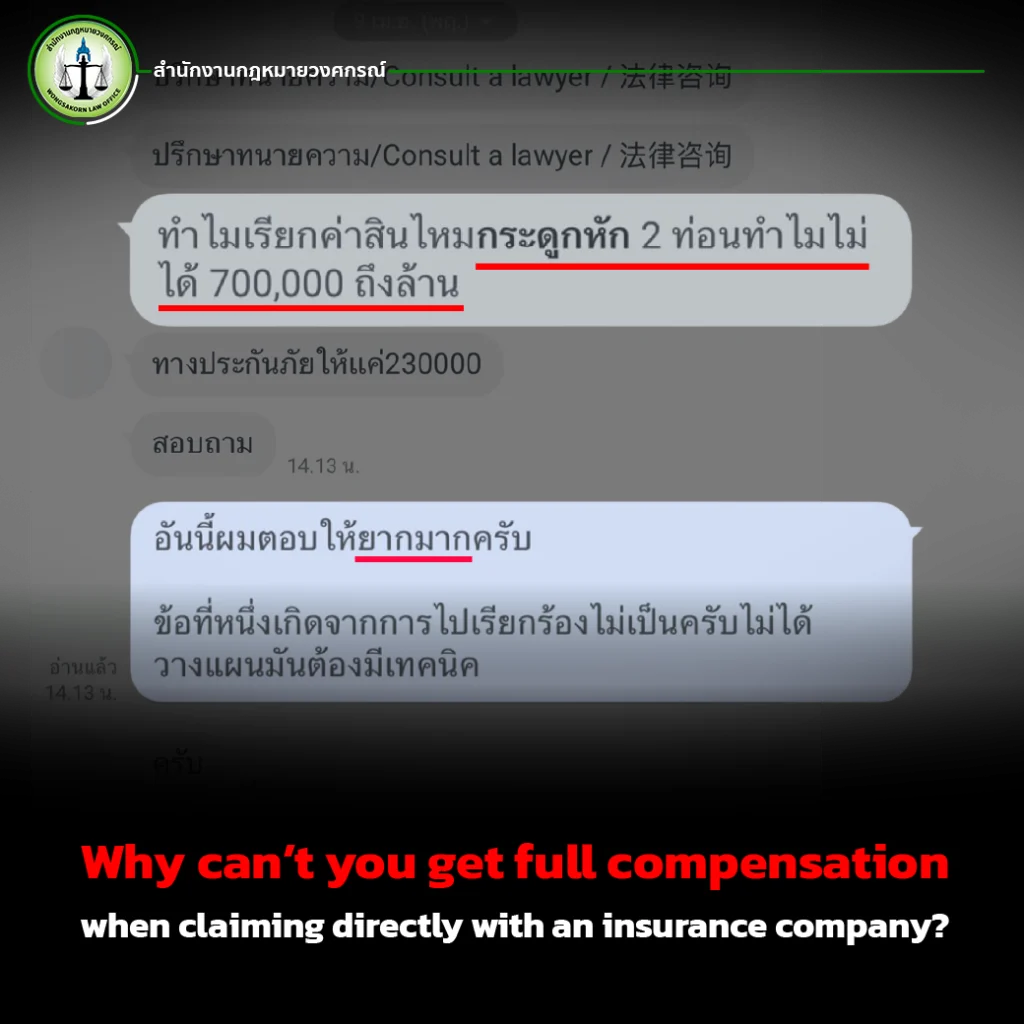
Why can’t you get full compensation when claiming directly with an insurance company?

From the experience of lawyers who work directly in the insurance field, it must be said honestly that
for an insurance company to pay a large sum such as 700,000–800,000 baht at the general claims stage is “very unlikely.”
It’s not that it’s completely impossible, but in practice, it is considered “very difficult” if the injured party handles the claim on their own.
The main reasons why victims often receive lower compensation when handling claims on their own

1. Lack of legal understanding
Most victims assume that “serious injury = high compensation.”
However, legally, compensation claims involve many elements, such as:

-Medical evidence

-Continuity of treatment

-Future damages

If these are not properly structured, the value of the damages may be “underestimated.”

2. No planning from the beginning
Claiming compensation from an insurance company is not just about submitting documents. It requires “case structuring” from the start. If the process begins incorrectly, the final outcome is often lower than it should be.

3. Lack of understanding of insurance company strategies
It is important to understand that insurance companies are not responsible for “helping victims,”
but for “paying based on provable damages.”

In practice, insurance companies usually have legal teams ready to deny or handle claims. They deal with cases every day, meaning they have extensive negotiation experience and established approaches. Additionally, they have internal strategies for evaluating compensation.

Therefore, it is quite clear that handling a claim alone makes it difficult to obtain a high level of compensation. If the victim lacks sufficient knowledge, they are more likely to be at a disadvantage.

Key technique Don’t wait until you fully recover before making a claim

One of the “biggest mistakes” victims often make is
waiting until they have fully recovered before claiming compensation.

From the perspective of insurance cases, this means being “at a disadvantage from the very beginning.”

Why shouldn’t you wait?

Insurance companies often tell victims to complete their treatment first and then come back later to claim compensation. The question is can you really do that?

In reality, who do those words truly benefit? The longer you wait to fully recover, the more your injuries improve over time until you reach 100% recovery. In some cases, this may take several months, or even years. When the time finally comes to claim compensation from the insurance company, they may say, “You have fully recovered, so this amount of compensation is sufficient.”

This is considered a common strategy used by insurance companies. It often starts with a denial or delay, in case the victim believes it. If the victim does believe it, they will almost certainly receive less compensation than expected.

Therefore, consulting a lawyer from the very beginning after the accident is a way to increase the chances of receiving higher compensation. Importantly, the lawyer should be someone who understands how insurance companies operate.

“Understanding insurance” is the key.

An important piece of advice is
Do not beg the insurance company to pay,
because the insurance system does not operate on sympathy,
but on “law and evidence.”

What should victims do?

-Gather all documents and evidence completely

-Keep a continuous record of injuries and medical treatment

-Assess both short-term and long-term damages

-Plan the claim process systematically

However, these things are “difficult to do on your own” without legal knowledge. Therefore, it is important to “consult a lawyer from the moment the accident happens.”

Why do you need a lawyer from the beginning?
What many people misunderstand is:
“Only look for a lawyer after a problem arises.”

But in reality, for insurance cases, you should have a lawyer even before any dispute occurs.

This is because insurance companies already have legal teams in place before any incident happens. They have systems and strategies ready, including evaluating damages to be “as low as possible.”

Therefore, if a victim wants “fairness,” they must also have a professional to plan and handle the case in the same way.

Don’t be at a disadvantage with insurance because of a wrong start

Claiming compensation from an insurance company is not about “luck,” but about “strategy.”

If:

– You start off wrong
If you make a mistake from the very beginning like buttoning a shirt incorrectly it can cause the whole situation to spiral out of control.

– You misunderstand
Nowadays, on various social media platforms, there are many lawyers or so-called experts who provide incorrect information. Consuming misleading or inaccurate content may cause victims to misunderstand and take the wrong steps, which may ultimately lead to outcomes that fall short of expectations.

– You have no plan
Whether you handle the claim yourself or follow general advice, if you do not have a proper plan or structured process and no lawyer to shape the case the chances of receiving compensation lower than the actual value are very high.

Consult a lawyer starting today, no need to wait until you have fully recovered.

If you or someone close to you has been in an accident and wants to claim fair compensation from an insurance company, our key advice is:
Do not wait until you are fully recovered. Do not be misled by negotiations that put you at a disadvantage.

Most importantly, you should consult a lawyer from the very beginning, because your rights “must be protected.”

The injuries you have suffered are real damages, and you have the right to receive appropriate compensation.

Don’t let a lack of knowledge cause you to lose the rights you deserve.

Start planning today so you won’t be at a disadvantage with insurance companies in the future. Consult a lawyer click >>Contact Us<<

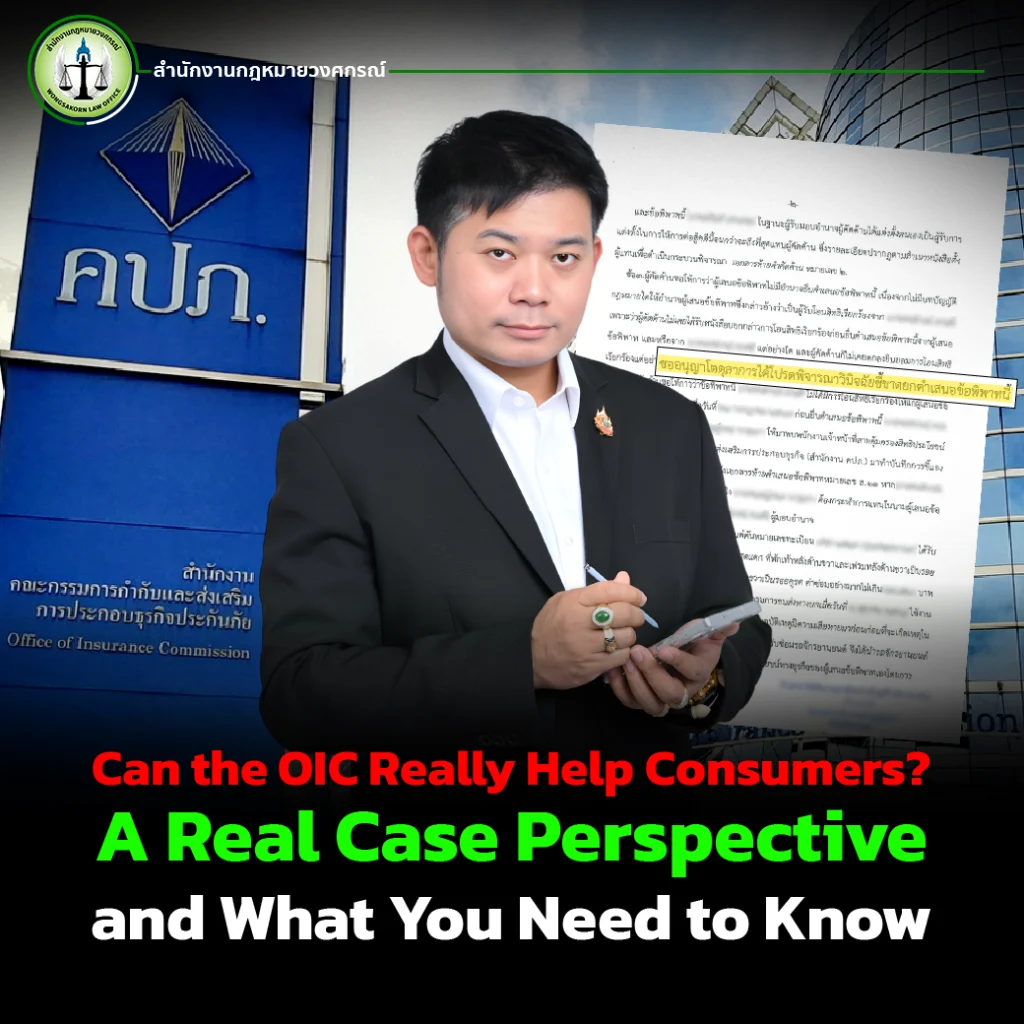
Can the OIC Really Help Consumers? A Real Case Perspective and What You Need to Know

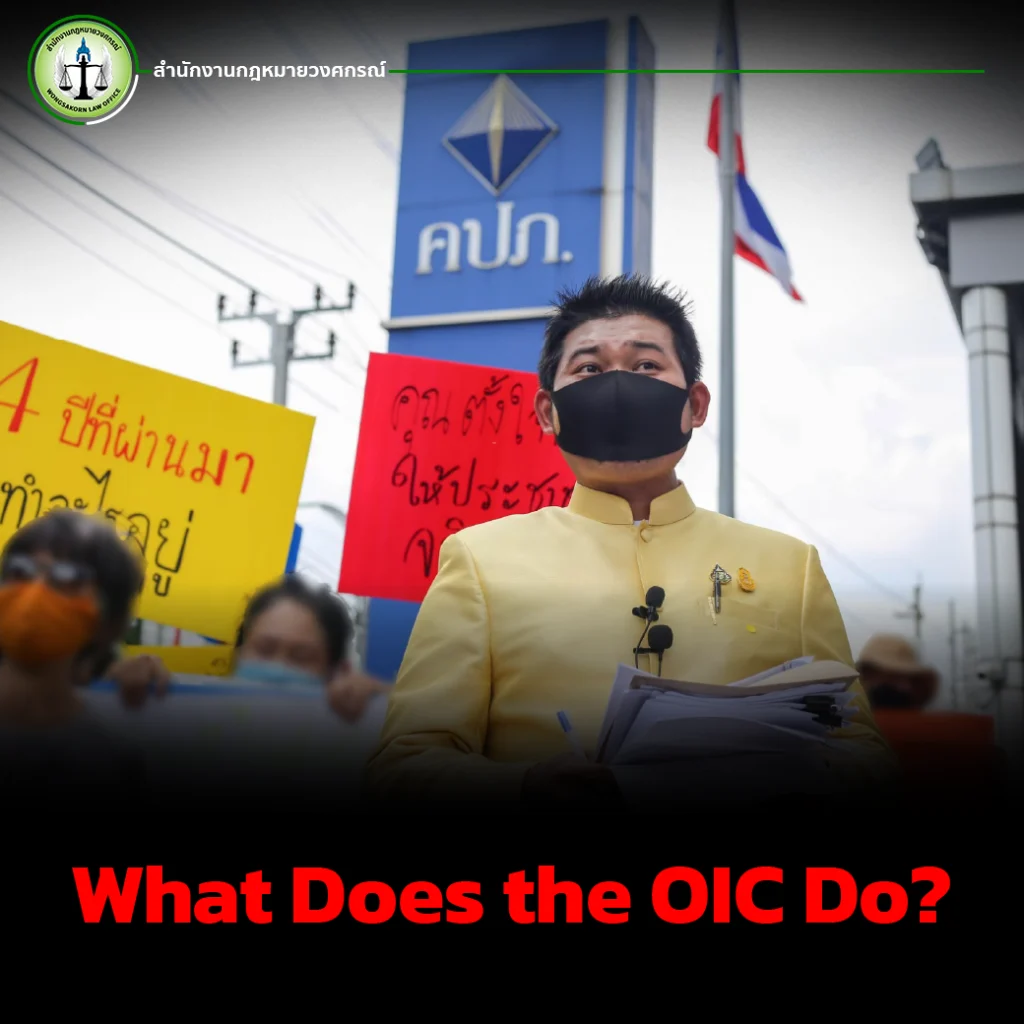
In today’s world, insurance has become essential not only for drivers on the road but also for business operators such as auto repair companies (like our client). One key organization many people are familiar with is the Office of Insurance Commission (OIC), the regulatory body responsible for overseeing insurance companies and assisting the public in dispute situations.

But the crucial question is Can the OIC truly help consumers?

This article by Wongsakorn Law Firm takes a closer look at a real case, offering legal insights to help you better understand the OIC’s role and who you should rely on to avoid losing your rights.

What Does the OIC Do?

The OIC’s main responsibilities include

-Regulating the insurance industry

-Protecting policyholders’ rights

-Acting as a mediator in disputes

-Providing arbitration as an alternative to court proceedings

On paper, it sounds like a reliable support system for consumers. However, in practice, things do not always work out that way.

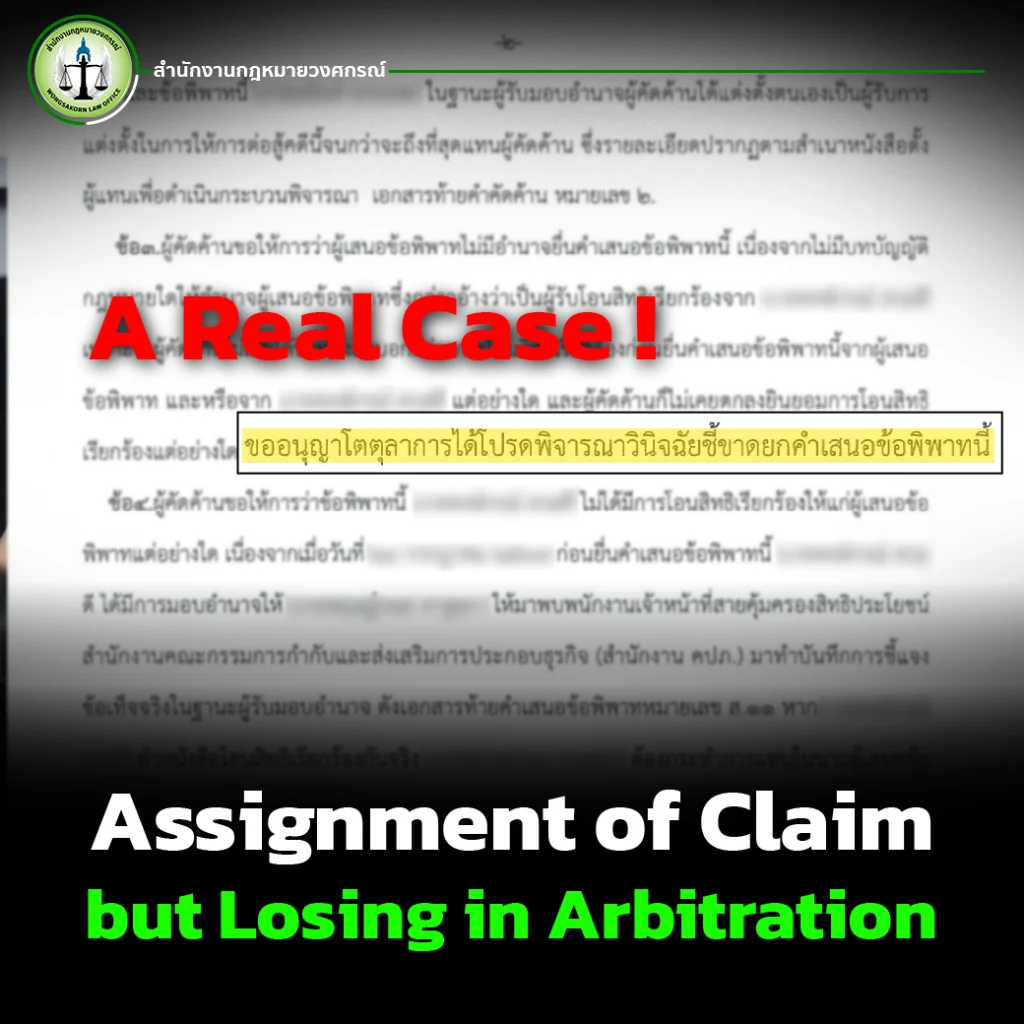
A Real Case Assignment of Claim but Losing in Arbitration

In one notable case, an auto repair company received an assignment of claim from a customer, allowing it to directly claim repair costs from the insurance company.

However, during the OIC process and arbitration, the insurance company argued:

“We were never notified of the assignment of claim.”

This was despite the fact that all relevant documents had already been submitted during the OIC process.

The Turning Point An Internal Issue at the OIC

The critical issue in this case was that an OIC officer failed to properly record a key document.

As a result, the arbitrator ruled that there had been no valid notification, causing the repair company (our client) to lose the case in arbitration.

This raises an important question: Who does the OIC really serve?

Justice from the Court

Although the case was lost at the arbitration stage, the matter was later brought before the court and the outcome was completely different.

The court ruled in favor of our client, citing Section 306 of the Civil and Commercial Code, which states that once a debtor has been informed of an assignment of claim, the assignment is legally valid.

The court found that notification had indeed occurred. As a result:

-The assignment of claim was legally effective

-The arbitration award was set aside

-Justice was ultimately delivered by the court, not the OIC

Is the OIC Still Reliable?

This case highlights several important realities:

-The OIC is not a court of law

-Arbitrators can make errors in evaluating evidence

-Internal processes may have flaws

-Arbitration awards can be challenged and overturned

From our experience handling insurance disputes, such cases where arbitration decisions are overturned are not uncommon.

What Should Consumers Do When Facing Insurance Disputes?

If you are involved in an accident and need to claim compensation from an insurance company, here are key precautions

1. Do Not Rely on Verbal Assurances

Always ensure everything is supported by clear documentation.

2. Monitor the OIC Process Carefully

Even after filing a complaint, follow up to ensure all documents are properly recorded and no key facts are overlooked.

3. Do Not Depend Solely on Arbitration

While faster, arbitration is not always accurate or fair.

4. Consult a Lawyer Early

This is the most important step. An experienced lawyer can:

-Structure your case correctly from the beginning

-Prevent procedural mistakes

-Develop an effective legal strategy

Having a legal expert in insurance disputes not only prevents you from being disadvantaged by insurance companies but also helps you avoid costly mistakes.

In complex disputes, relying solely on the OIC may cause you to lose your rights without realizing it.

Don’t Place All Your Trust in the OIC

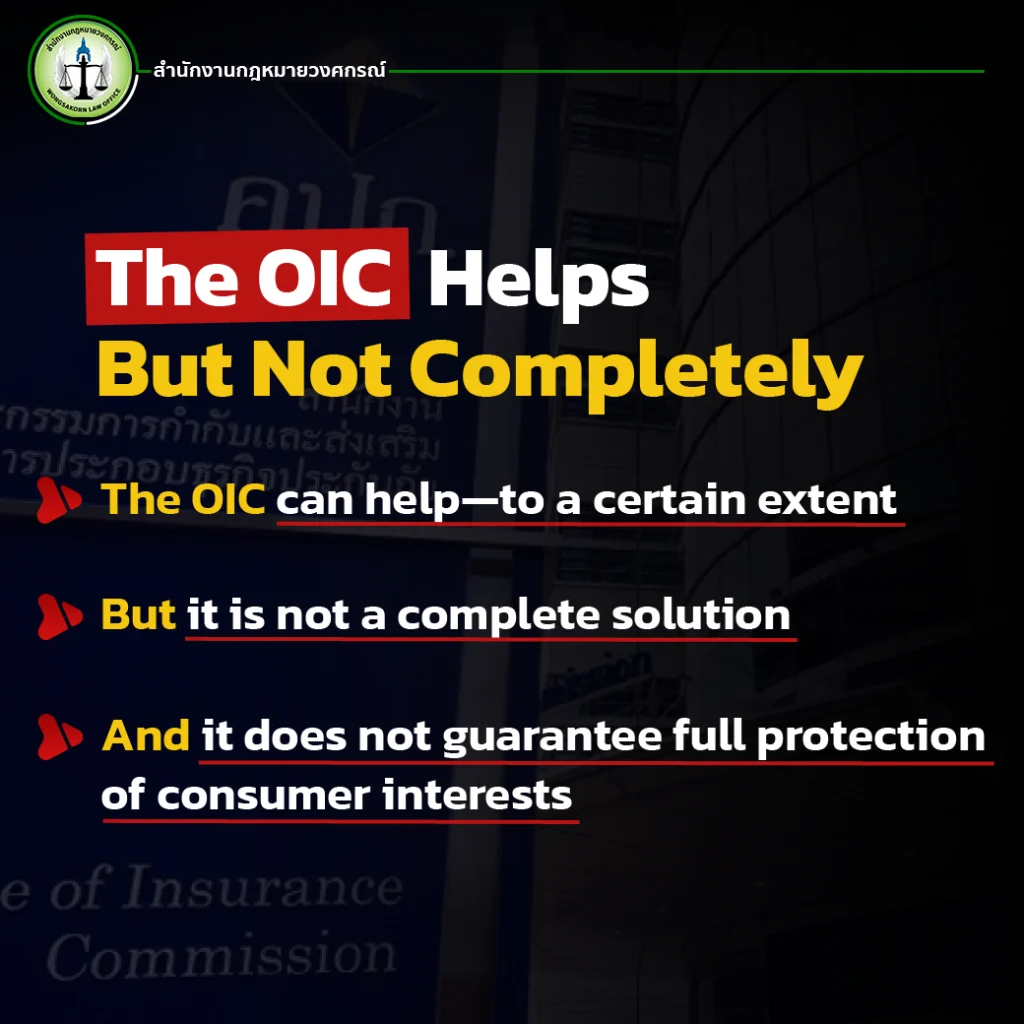
So, can the OIC really help consumers?

The answer is: Yes but not always.

Ultimately, the outcome depends on

-The strength of your evidence

-Legal strategy

-And proper case handling by an experienced lawyer

If You Are Facing an Insurance Dispute

Whether your case involves personal injury or property damage, do not let the situation escalate by filing a complaint with the OIC without proper legal preparation.

Consult with us today. Our legal team specializes in insurance disputes and can:

-Analyze your case

-Develop a strategic legal approach

-Represent you effectively both before the OIC and in court

Because we believe that justice should never depend on systemic errors.

Get legal advice today so you don’t become a victim of the system or insurance companies.

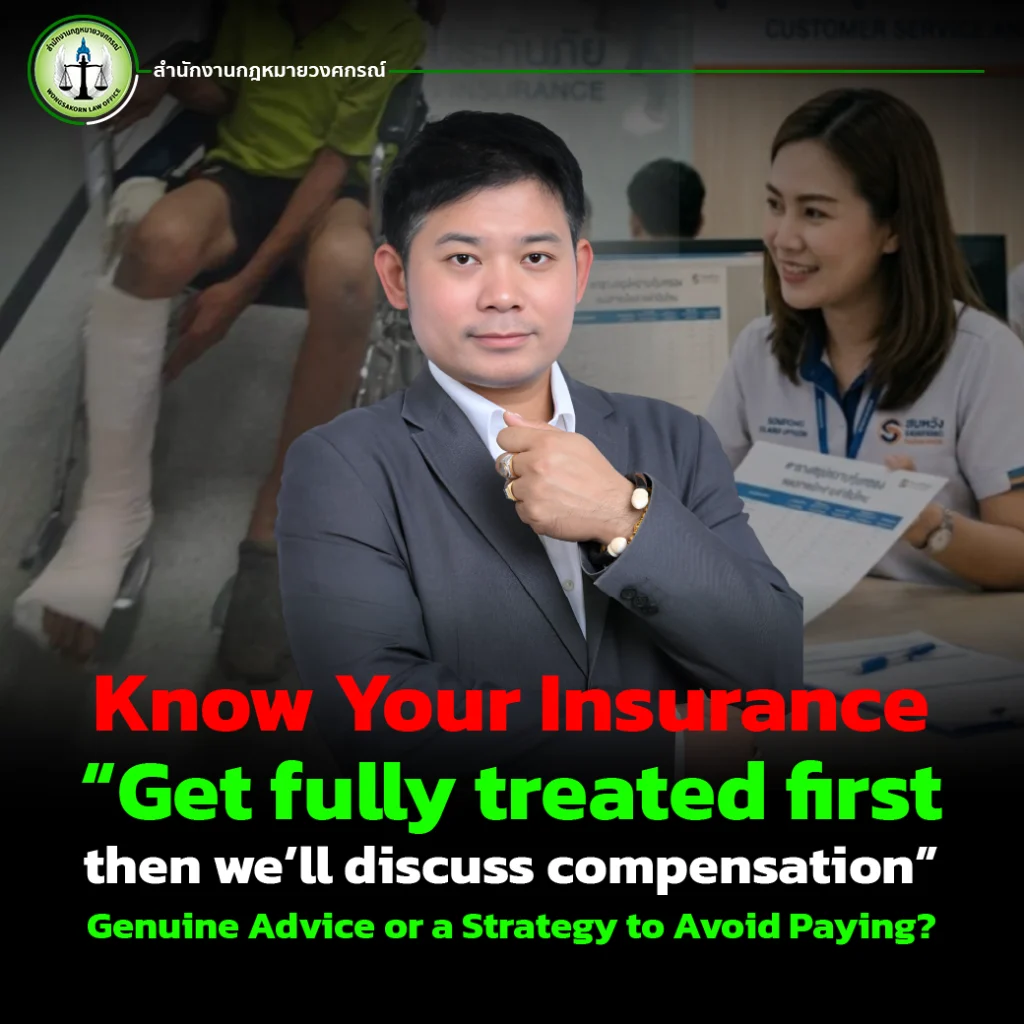
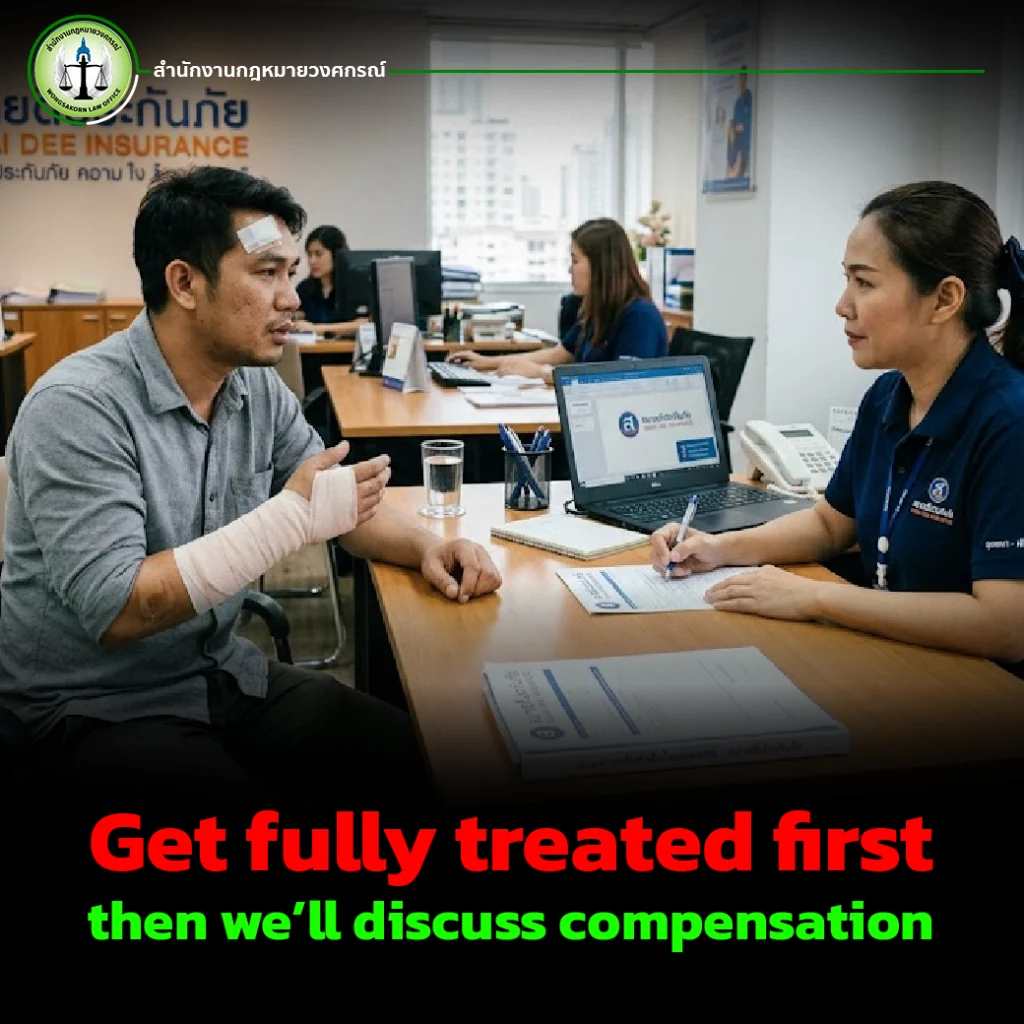
Know Your Insurance: “Get fully treated first, then we’ll discuss compensation” Genuine Advice or a Strategy to Avoid Paying?

When a car accident occurs, especially in cases involving injuries, one of the most common phrases victims hear from insurance companies is

It may sound like well-intentioned advice. However, in reality, this statement could be merely a “strategy” used by insurance companies to delay or avoid paying compensation. If victims believe this, they may unknowingly lose their legal rights, and in some cases, end up “suffering for free” without receiving the compensation they deserve.

This article will help you understand insurance tactics, know your rights, and learn what to do after a car accident.

Why You Should Be Cautious About “Settle Later”?

In practice, insurance companies are highly experienced in handling claims and often have strategies to minimize liability or limit payouts.

Common phrases include:

  • “Get treated first”
  • “We’ll settle everything later”
  • “Let’s wait until you fully recover”

Although these sound reasonable, they are often used to delay the process, because the longer it takes, the lower the chances for victims to claim full compensation.

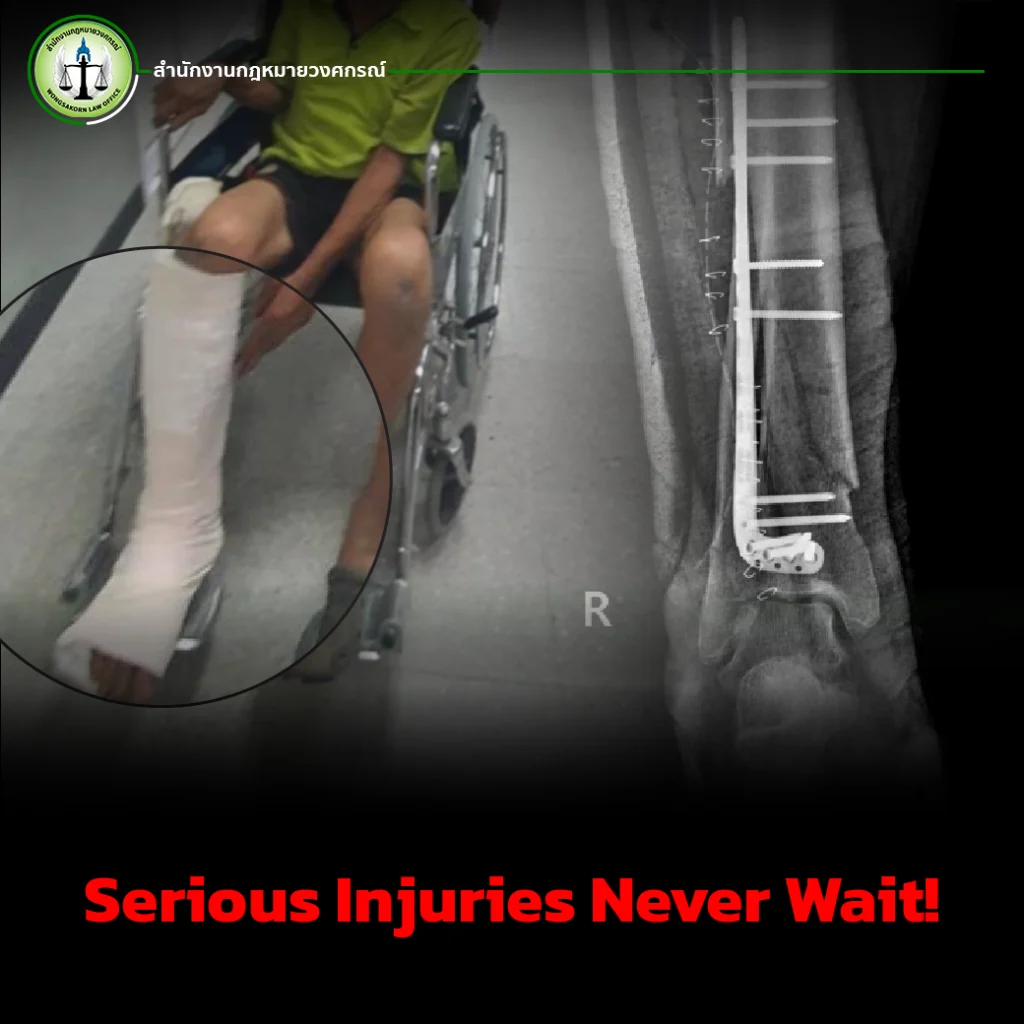
Serious Injuries Never Wait!

-In cases of severe injuries such as

-Bone fractures requiring surgery

-Long-term recovery

-Temporary loss of working ability

You should never wait until full recovery before claiming compensation, because damages include more than just medical expenses

-Loss of income

-Future medical care

-Emotional distress

-Loss of quality of life

Delays may result in missing evidence or incomplete damage assessments.

The Truth You Don’t Need to Wait

Many people misunderstand that they must fully recover before making a claim.

 In reality, this is NOT legally required.

Claims can be pursued alongside medical treatment, and in many cases, the earlier you start, the better your position.

Insurance Tactics You Should Know

Some insurers may

Initially deny claims to test your reaction

-Delay communication

-Request excessive documents

-Offer low compensation

Without legal knowledge, victims may accept less than they deserve.

Timing Is Critical

Time plays a crucial role in injury claims. Delays may lead to

-Lost evidence

-Incomplete evaluations

-Arguments like “you’ve already recovered”

-Reduced compensation

The Right Approach Consult a Lawyer Early

The best way to protect your rights is to consult a lawyer from the very beginning.

A lawyer can help

-Assess your legal rights

-Plan your claim strategy

-Gather evidence

-Negotiate with insurers

-Prevent unfair treatment

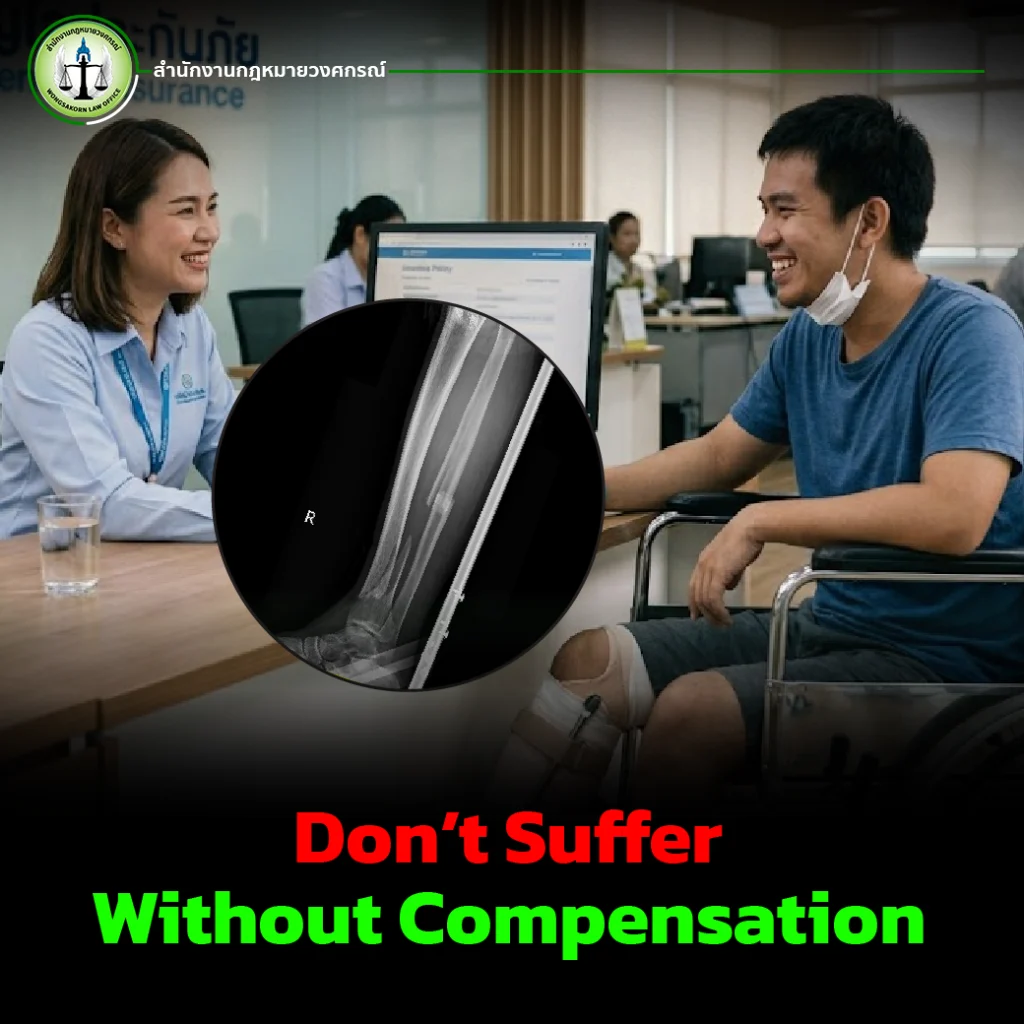
Don’t Suffer Without Compensation

Many victims trust insurers too much, delay action, or fail to seek expert advice, resulting in incomplete or no compensation. With proper legal guidance from the start, victims can fully protect their rights.

Awareness Protects Your Rights

The phrase “Get treated first, then we’ll talk” is not always good advice, it can be a tactic.

Remember

-You don’t need to wait to claim compensation

-Acting early gives you an advantage

-Evidence and timing are crucial

-Legal advice prevents loss of rights

Consult a Lawyer Before It’s Too Late

If you or someone close to you has experienced a car accident and heard this from an insurer, don’t wait.

The sooner you act, the better you can protect your rights.

Wongsakorn Law Office is ready to provide legal advice and strategic support from day one so you don’t suffer both physically and legally.

👉 Contact a lawyer today to fully protect your rights without waiting for full recovery.

Compensation for Car Accidents: If You Are at Fault, Can You Still Claim Insurance? Understand Before You Lose Your Rights

Car accident compensation in cases where you are at fault is a topic that often causes confusion. Accidents can happen to anyone whether you are a new driver or experienced. One of the most common questions is:

“If I am at fault, can I still claim compensation from my insurance company?”

Many people have been told by insurers that “you cannot claim because you are at fault,” leading them to believe they have no rights at all. However, in reality, car accident compensation involves more complex legal considerations, and in some cases, the insured may still have the right to claim.

This article and the accompanying video aim to clearly explain what rights you may have when you are at fault, and under what circumstances you can still claim additional compensation from your insurance company.

What Is Car Accident Compensation?

Car accident compensation refers to the amount paid by an insurance company to the insured or injured party to cover damages caused by an accident, such as:

  • Vehicle repair costs
  • Medical expenses
  • Damage to third-party property
  • Loss of use of the vehicle

However, the right to receive compensation depends on the type of insurance policy, policy conditions, and facts of the accident.

If You Are at Fault, Can You Still Claim Compensation?

Consider a real case where a driver lost control and slid off the road. When contacting the insurance company, they were told:

“You cannot claim because you are at fault.”

Legally, this situation must be analyzed in two key scenarios:

1. General Rule: When You Cannot Claim

If the insured is at fault, for example:

  • Crashing into a pole
  • Rear-ending another vehicle
  • Causing an accident due to negligence

In such cases, you generally cannot claim compensation from your own insurance company for damages caused by your own fault, especially if the policy has coverage limitations.

2. Exceptions: When You May Still Claim

Even if you are at fault, you may still be able to claim compensation if the insurance company:

  • Fails to perform its duties
  • Ignores or delays your claim
  • Does not control or manage repair costs
  • Fails to provide reasonable repair estimates
  • Causes unjustified delays (e.g., waiting indefinitely for assessment)
  • Rejects your claim without valid reasons

In such cases, you may claim damages resulting from the insurer’s negligence or improper conduct.

Examples of Claimable Situations

Case 1:
You caused the accident, but the insurer delays repairs excessively
➡ You may claim compensation for loss of use

Case 2:
The insurer fails to coordinate repairs
➡ This may be considered negligence

Case 3:
The insurer rejects your claim without clear justification
➡ You may challenge the decision

👉 Therefore, being at fault does not always mean losing all rights to compensation.

Key Techniques for Claiming Compensation

Successfully claiming compensation in such cases requires Legal analysis, Evidence collection, Proper case structuring, Strategic claim presentation.

In practice, how the case is structured legally can significantly affect the outcome.

Importance of Having Car Insurance

Car insurance remains essential because it helps reduce financial burdens after an accident. Even if not all damages are claimable, insurance still covers:

  • Third-party liability
  • Medical expenses
  • Property damage

Choosing the right policy and understanding its terms is crucial.

Why Should You Consult a Lawyer?

Many people try to handle claims themselves. However, insurance disputes can be legally complex, especially when dealing with insurer misconduct.

Consulting a lawyer early helps you

  • Understand your rights
  • Evaluate your claim
  • Plan legal strategy
  • Avoid losing benefits

Being at Fault Doesn’t Mean Losing All Rights

Being at fault does not automatically mean you lose all rights to compensation. It depends on the facts and the insurer’s conduct.

If the insurance company acts improperly, delays, or rejects claims unfairly, you still have the right to seek compensation.

Consult a Lawyer to Protect Your Rights

If you are involved in a car accident whether at fault or not consulting a lawyer early is the best decision.

Proper legal guidance from the beginning can help you secure full compensation and protect your rights.

Wongsakorn Law Office, led by Lawyer Arm, is ready to assist you with professional legal strategies to safeguard your interests.
👉 Contact us today

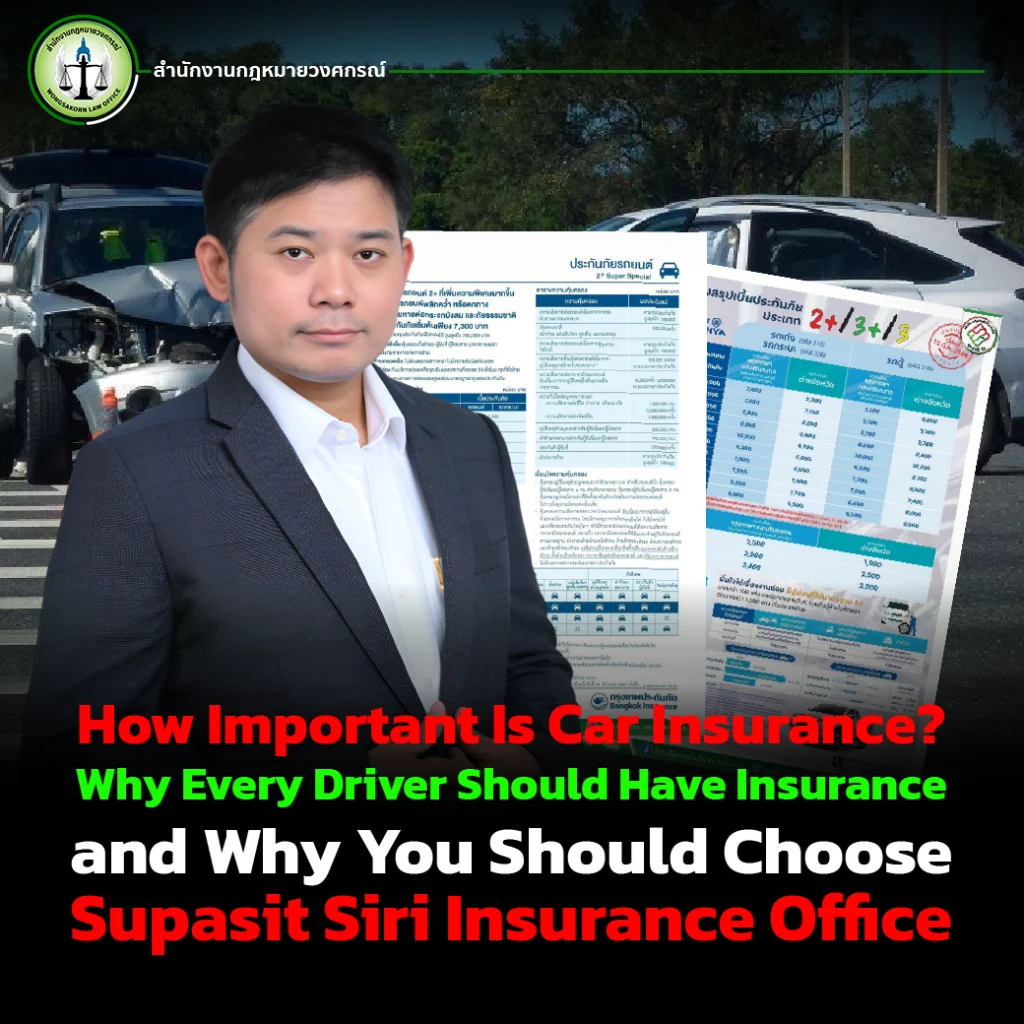
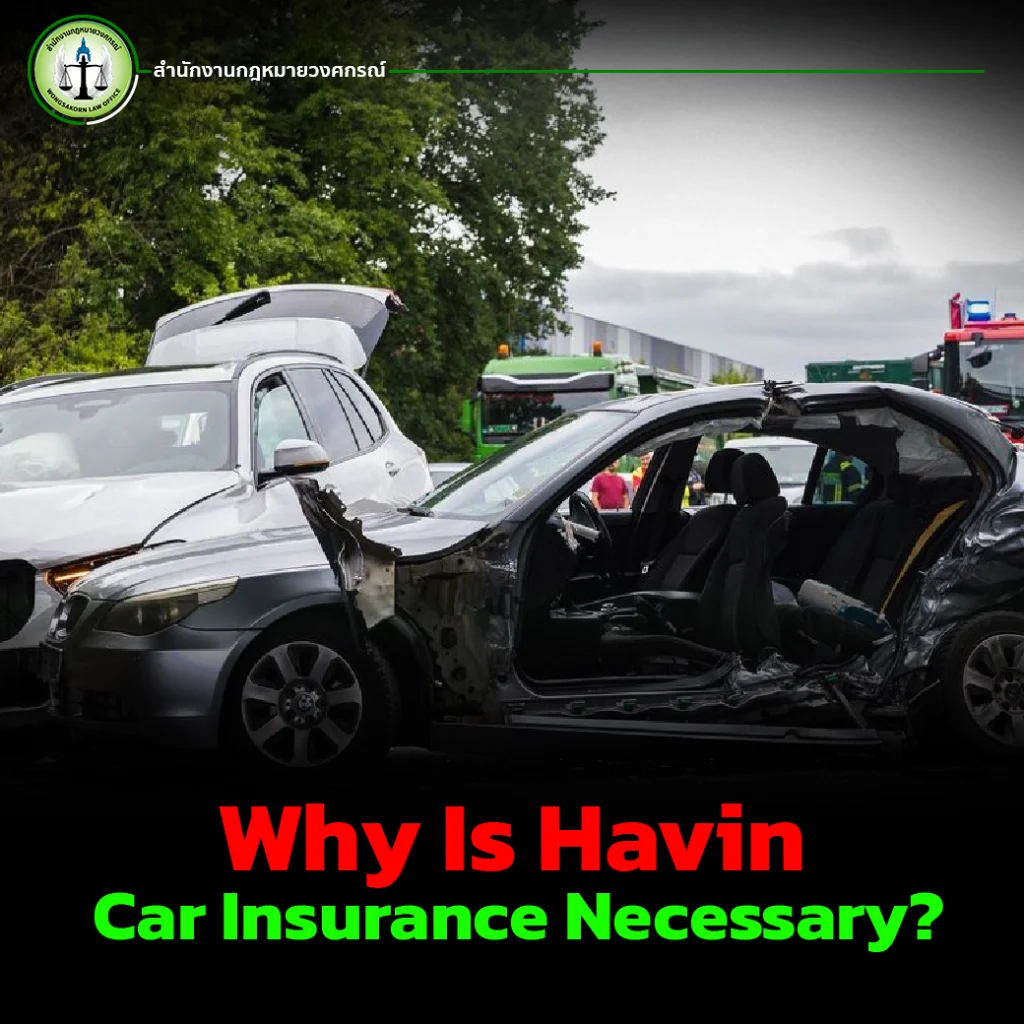
How Important Is Car Insurance? Why Every Driver Should Have Insurance and Why You Should Choose Supasit Siri Insurance Office

Insurance Today, automobiles are an essential part of daily life, whether for commuting to work, traveling, or conducting business. However, road accidents can happen at any time without warning. The best way to reduce financial risks and potential losses is to have car insurance or motor insurance.

Many people still view “insurance” as an unnecessary expense. In reality, insurance is a form of proactive risk management. When an unexpected incident occurs, the resulting costs can be many times higher than the insurance premium. Therefore, having insurance is something every driver should prioritize.

What Is Car Insurance and What Does It Cover?

Car insurance is a contract between the insured person and an insurance company to provide protection against damages caused by accidents or unforeseen events, such as:

  • Repair costs for the insured vehicle
  • Repair costs for the other party’s vehicle
  • Medical expenses
  • Compensation in cases of injury or death
  • Property damage
  • Legal expenses and litigation costs

Car insurance does not only protect the vehicle but also covers the lives and property of the driver, passengers, and third parties.

Why Is Having Car Insurance Necessary?

Road accidents do not choose a time or place. Sometimes, in just a split second, damages can reach hundreds of thousands or even millions of baht. Without insurance, the driver may have to bear all expenses personally, which could seriously affect financial stability.

Having car insurance helps to:

  • Reduce financial risks
  • Provide assistance when accidents occur
  • Prevent facing problems alone
  • Increase peace of mind on every journey

Insurance is therefore not a luxury but a necessity for every driver.

Advantages of Car Insurance

1. Reduces Major Financial Burden

When an accident occurs, the insurance company will be responsible for damages according to the terms and conditions of the policy.

2. Covers Both Vehicle and People

Insurance protects the car, the driver, passengers, and third parties.

3. Professional Assistance in Handling Problems

In case of disputes or legal proceedings, a team of experts will provide guidance and support.

4. Increases Confidence in Driving

Drivers can travel with less worry about unexpected incidents.

Disadvantages of Car Insurance You Should Know

Although insurance provides many benefits, there are also important considerations, such as:

  • Annual insurance premiums must be paid
  • Some cases require a deductible
  • Policy terms and conditions can be complex
  • Choosing an unsuitable plan may result in less coverage than expected

Therefore, selecting a knowledgeable and reliable service provider who offers proper advice is extremely important.

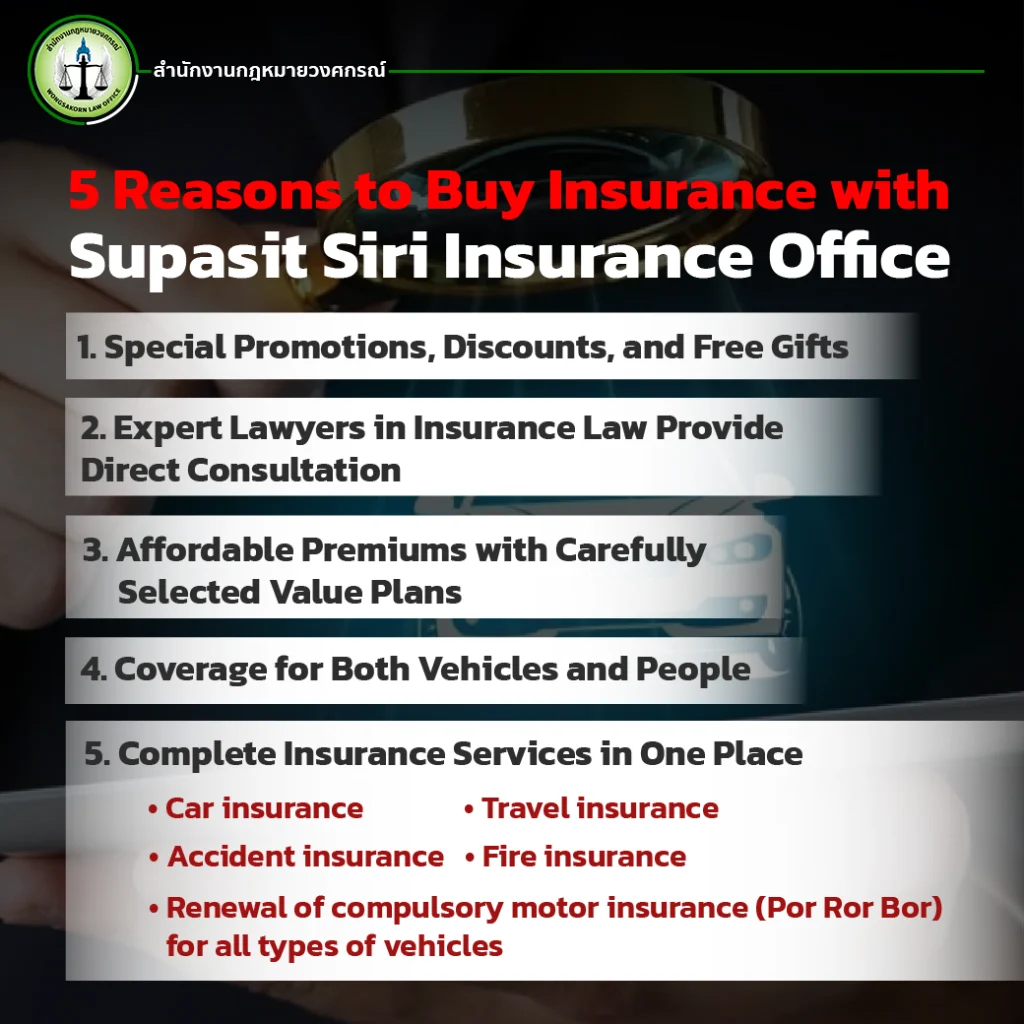
1. Special Promotions, Discounts, and Free Gifts

Customers receive better value than purchasing insurance on their own, including discounts and additional benefits.

2. Expert Lawyers in Insurance Law Provide Direct Consultation

A key advantage is having lawyers who specialize in insurance cases to assist customers. This ensures that clients do not lose out to insurance companies and fully understand their legal rights.

3. Affordable Premiums with Carefully Selected Value Plans

Only insurance plans that best match customers’ needs are selected, reasonably priced and truly beneficial.

4. Coverage for Both Vehicles and People

Insurance plans cover vehicles, lives, and property of all parties involved in accidents.

5. Complete Insurance Services in One Place

Services include:

  • Car insurance
  • Travel insurance
  • Accident insurance
  • Fire insurance
  • Renewal of compulsory motor insurance (Por Ror Bor) for all types of vehicles

Customers can manage all insurance matters in one convenient location.

Good Insurance Helps Create a More Secure Life

With the right insurance, you will:

  • Live with greater peace of mind
  • Reduce financial burdens when accidents occur
  • Receive professional support
  • Protect both your property and your family

Insurance is not just a document it is a safeguard for your future.

Choose Valuable Insurance. Choose Experts to Take Care of You.

If you are looking for car insurance and general insurance that offer true value, professional consultation, and fair treatment, choosing a provider with expertise in both insurance and legal matters is the best decision.

Good insurance, complete solutions in one place – Supasit Siri Insurance Office

  • Excellent promotions
  • Professional lawyers available for consultation
  • Affordable premiums
  • Coverage for both vehicles and people
  • All types of insurance in one place

Do not wait until an accident happens before thinking about insurance.
Start planning your protection today for peace of mind on every journey.

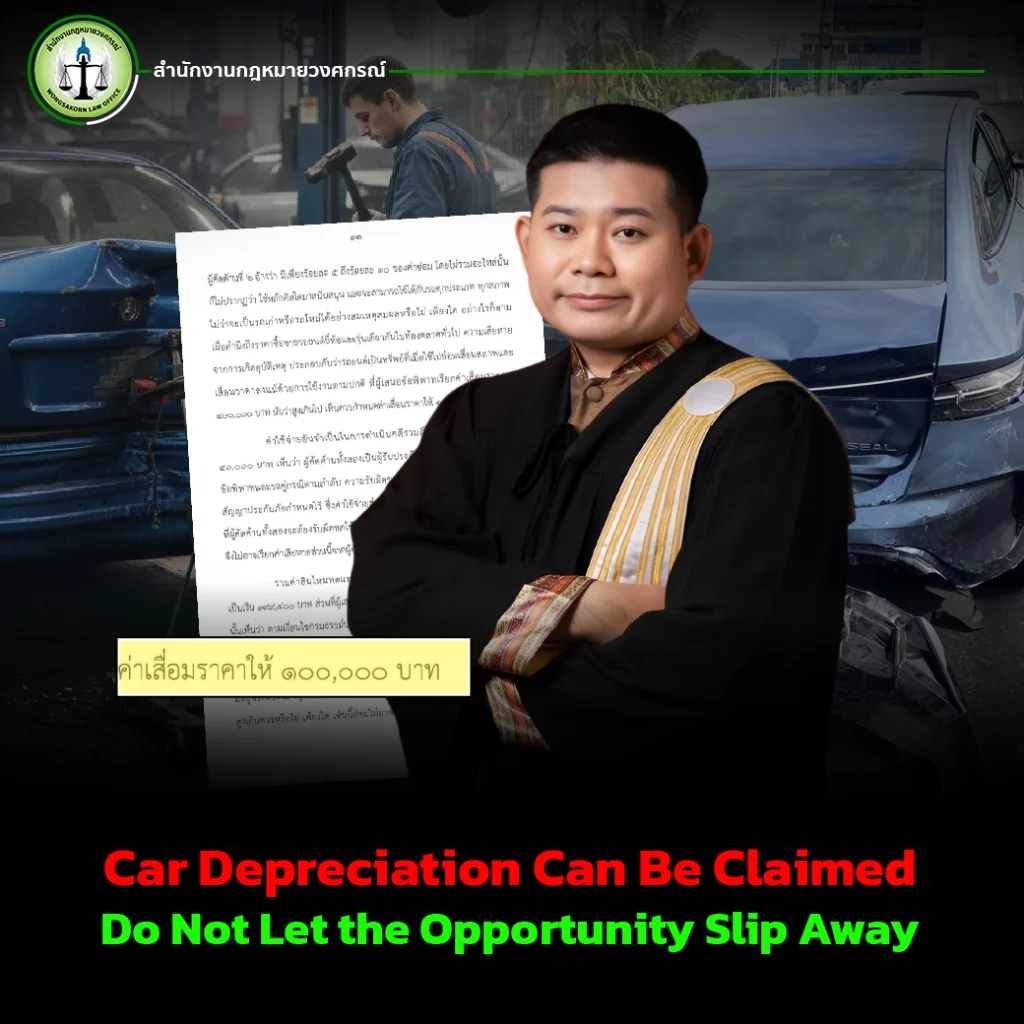
Car Depreciation Is a Legal Right Most People Don’t Know After an Accident, You Can Claim More Than You Think

When a car accident occurs, most people immediately think of repair costs and loss of use compensation, such as rental car expenses during repairs or the inconvenience of being unable to use their vehicle. However, there is another important legal right that many car owners overlook: car depreciation compensation.

Car depreciation is a type of damage that can be claimed under the law, and in many cases, it can amount to hundreds of thousands of baht.

Car depreciation refers to the reduction in a vehicle’s market value after an accident. Even if the car is fully repaired and can be used normally, in the resale market, a “previously damaged car” is worth less than a car that has never been in an accident. No one wants to buy a car with an accident history at the same price as an undamaged one. This is why the law allows victims to claim car depreciation in addition to repair costs and loss of use compensation.

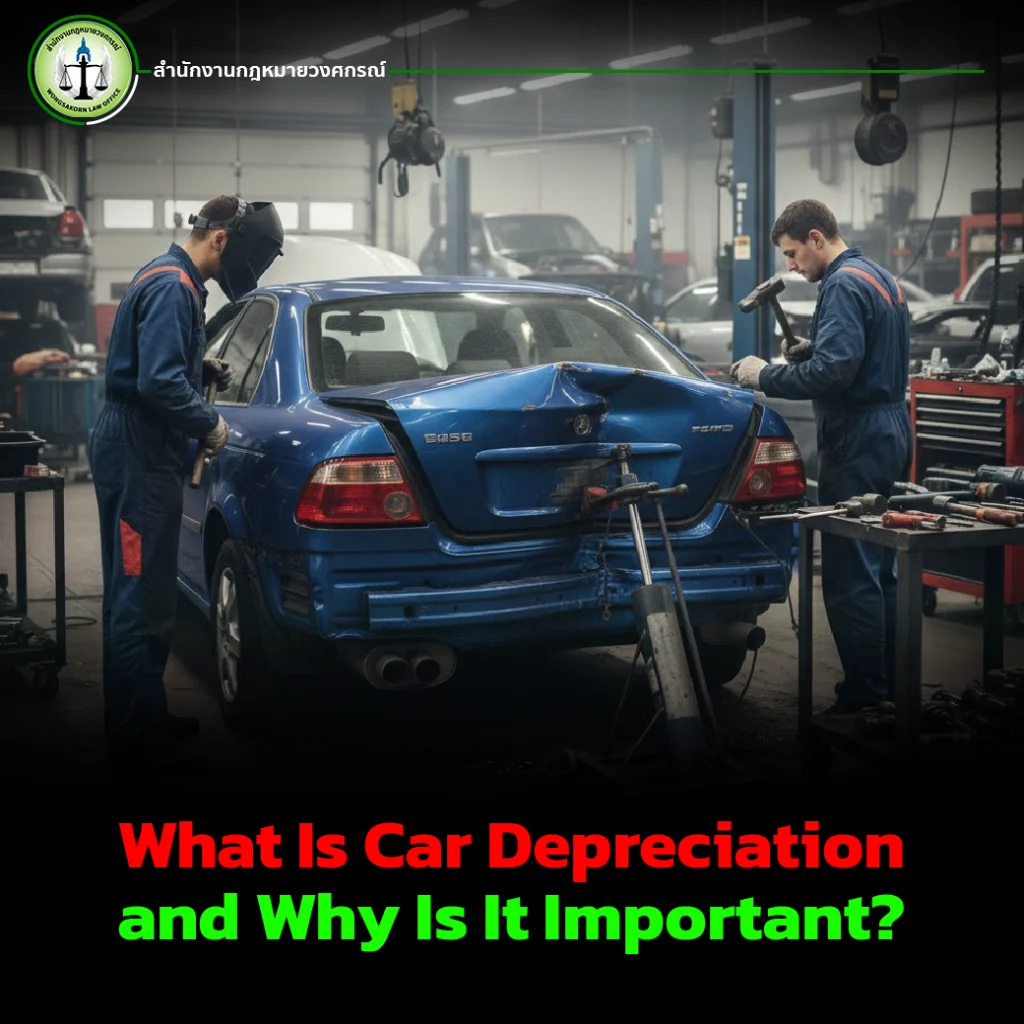
What Is Car Depreciation and Why Is It Important?

Car depreciation means the economic loss caused by the reduction in a vehicle’s value after an accident, even if the car has been repaired and restored to working condition. In practice, a car that has been involved in an accident is perceived as having higher risk, a damage history, and a greater chance of future problems.

For example, a new car worth 1,200,000 baht that has never been in an accident may be resold at a high price. But once it is involved in an accident and repaired, no matter how well it is fixed, its market value may drop to only 1,000,000 baht.
The difference of 200,000 baht is the car depreciation, which can be claimed from the party at fault.

Common Problems Victims Face When Claiming Car Depreciation

In practice, claiming car depreciation is not easy. Many people are rejected by insurance companies or told that “it is not covered by the policy” or that “the law does not support such claims.” This causes victims to mistakenly believe that they have no right to claim depreciation compensation.

The main problems include:

  • Not knowing that car depreciation can be claimed
  • Not knowing how to calculate and prove the damage
  • Not understanding legal procedures
  • Lacking professional guidance to plan an effective legal strategy

As a result, many people accept only repair costs and loss of use compensation and unfortunately miss the opportunity to claim car depreciation.

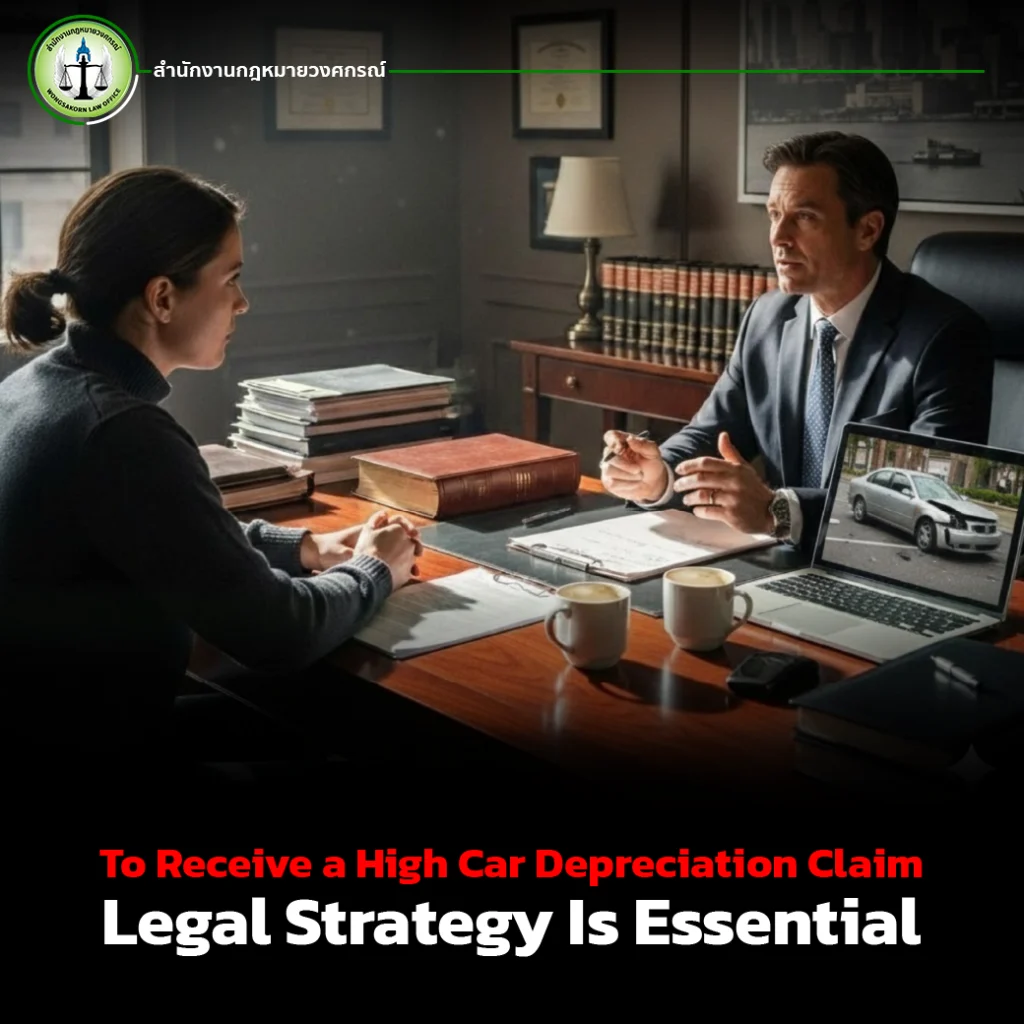
To Receive a High Car Depreciation Claim, Legal Strategy Is Essential

Successfully claiming a significant amount of car depreciation does not depend on luck, it depends on the skills and legal techniques of a lawyer from the very beginning of the case. This includes:

1. Systematic collection of facts and evidence

2. Accurate assessment of the true value of damages

3. Proper legal planning and strategy

4. Choosing the most effective and time-efficient legal process

5. Avoiding unnecessary negotiations that waste time without results

In many cases, filing a lawsuit directly can be the most effective option, rather than repeatedly negotiating with insurance companies without reaching a clear conclusion.

Real Case Example – Claiming Car Depreciation Worth Hundreds of Thousands

In one case handled by Attorney Arm, the victim consulted a lawyer from the very beginning and explained the incident step by step in detail. The lawyer then gathered the information and prepared the case file systematically.

The key strategy in this case was not wasting time negotiating with the insurance company, but proceeding directly with legal action, as it was clear that negotiation would only delay justice.

The results were:

  • Car depreciation compensation of 100,000 baht
  • Loss of use compensation of approximately 99,000 baht
  • Repair time lasted 142 days

Notably, the car depreciation compensation was higher than the loss of use compensation. This clearly demonstrates that with proper legal strategy, victims can obtain fair and meaningful compensation.

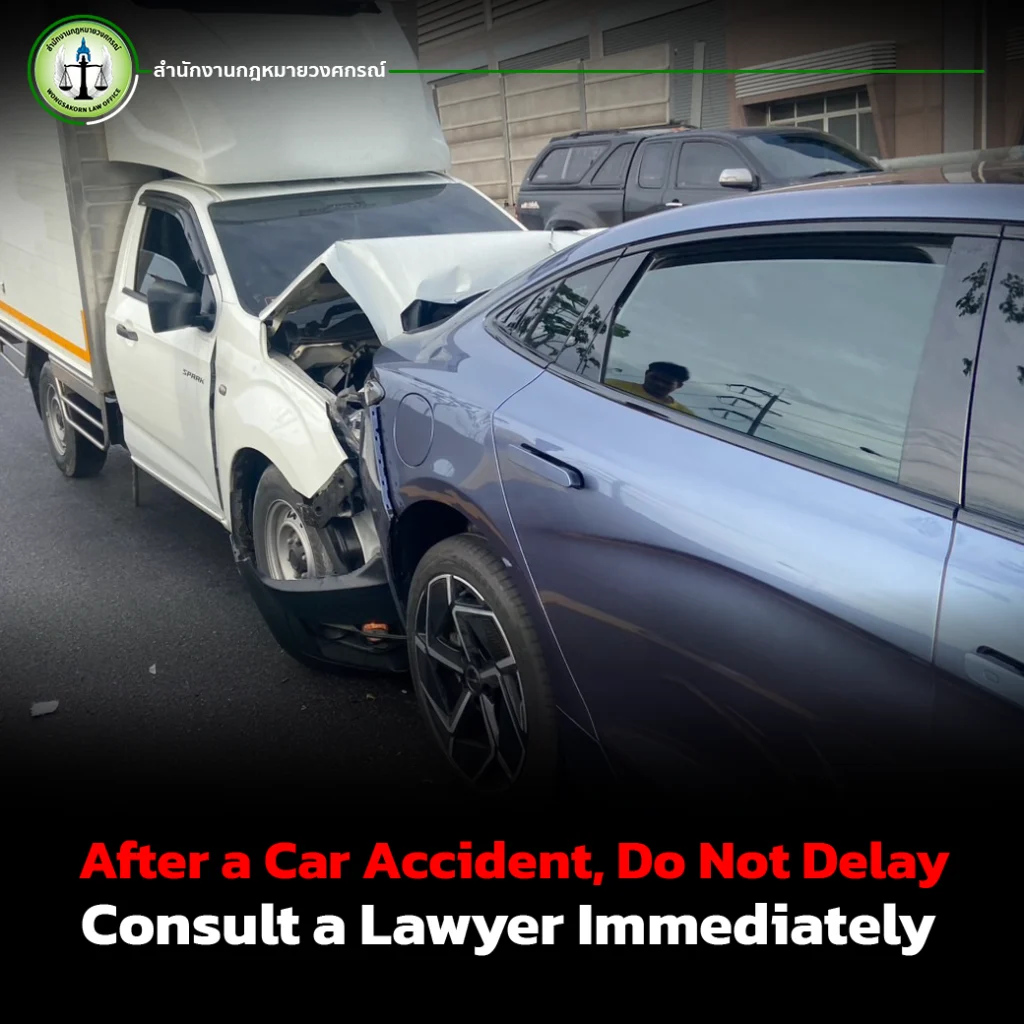
After a Car Accident, Do Not Delay  Consult a Lawyer Immediately

Many people wait too long before thinking about claiming car depreciation, which can result in lost evidence or weakened legal positions. Consulting a lawyer from the beginning helps to:

  • Ensure that your right to claim car depreciation is not overlooked
  • Develop a careful legal strategy
  • Increase the chances of receiving higher compensation
  • Reduce the risk of being taken advantage of by the opposing party or insurance company

No one wants an accident to happen. But once it does, it is crucial not to let a lack of legal knowledge cause you to lose your rightful compensation.

Car Depreciation Can Be Claimed Do Not Let the Opportunity Slip Away

After a car accident, victims are not limited to claiming only repair costs and loss of use compensation. They are also entitled to claim car depreciation, which represents the true financial loss caused by the reduction of the vehicle’s market value.

Whether you receive a high or low depreciation claim depends on your legal strategy and the expertise of your lawyer. If handled properly from the start, your chances of obtaining full and fair compensation increase significantly.

If you have been involved in a car accident, do not let your opportunity to claim car depreciation slip away.

Consulting a lawyer from the beginning is the key to protecting your rights.

Wongsakorn Law Office is ready to provide professional legal consultation and strategic guidance to ensure that you receive appropriate compensation both for loss of use and car depreciation fully and fairly.

  • Car accident? Do not wait and lose your opportunity.
  • Consult a lawyer today to claim car depreciation correctly and effectively.

Wongsakorn Law Office – Standing by your side in every legal matter.

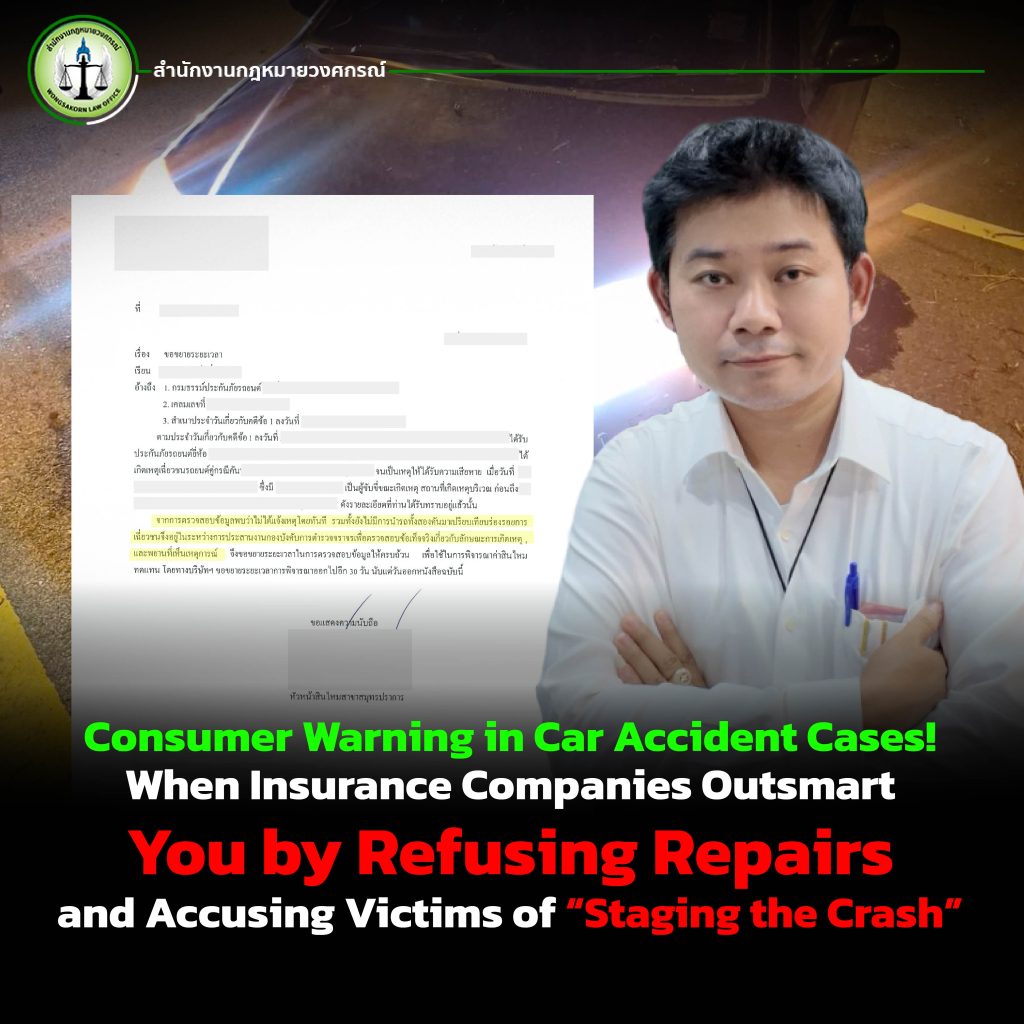
Consumer Warning in Car Accident Cases! When Insurance Companies Outsmart You by Refusing Repairs and Accusing Victims of “Staging the Crash”

As car accident cases continue to rise, many consumers still believe that once an accident occurs, the insurance company will handle everything, arranging repairs, assessing damage, and compensating the injured party fairly. Unfortunately, reality is far from this assumption. Many insurance companies adopt strategies to avoid responsibility: refusing to repair, claiming documents are incomplete, or even alleging that the victim contributed to the incident.

One such case involves an elderly woman, a case that has now become an important lesson for all consumers regarding their rights in car accident disputes.

Insurance Company Ignored the Case for 2 Full Months No Repairs, No Assessment, No Response

The incident began when the elderly woman’s car was hit and severely damaged. Instead of arranging repairs as required, the at-fault driver’s insurance company did nothing.
For two months, they:

  • did not contact her,
  • did not assess the damage,
  • did not bring the vehicle in for repair.

The woman, who had no legal knowledge, had no idea what to do. People around her advised her to file a complaint with the OIC (Office of Insurance Commission). However, it is widely known that the OIC often works in ways that lean toward supporting insurance companies. Starting the process this way may cause unnecessary delays and potential loss of rights.

Fortunately, she had not filed the complaint yet and instead chose to consult the Lawyer Arm from Wongsakorn Law Office.

Lawyer Arm Immediately Took Over the Case and Issued a Formal Notice Demanding Repairs

After reviewing all the details, Lawyer Arm found that the case carried a high risk of the insurance company misleading the victim or avoiding responsibility.

The office immediately drafted and sent a formal letter to the insurance company instructing them to:

  • bring the damaged vehicle in for repair,
  • restore it to its pre-accident condition,
  • fulfill all duties required under the insurance policy.

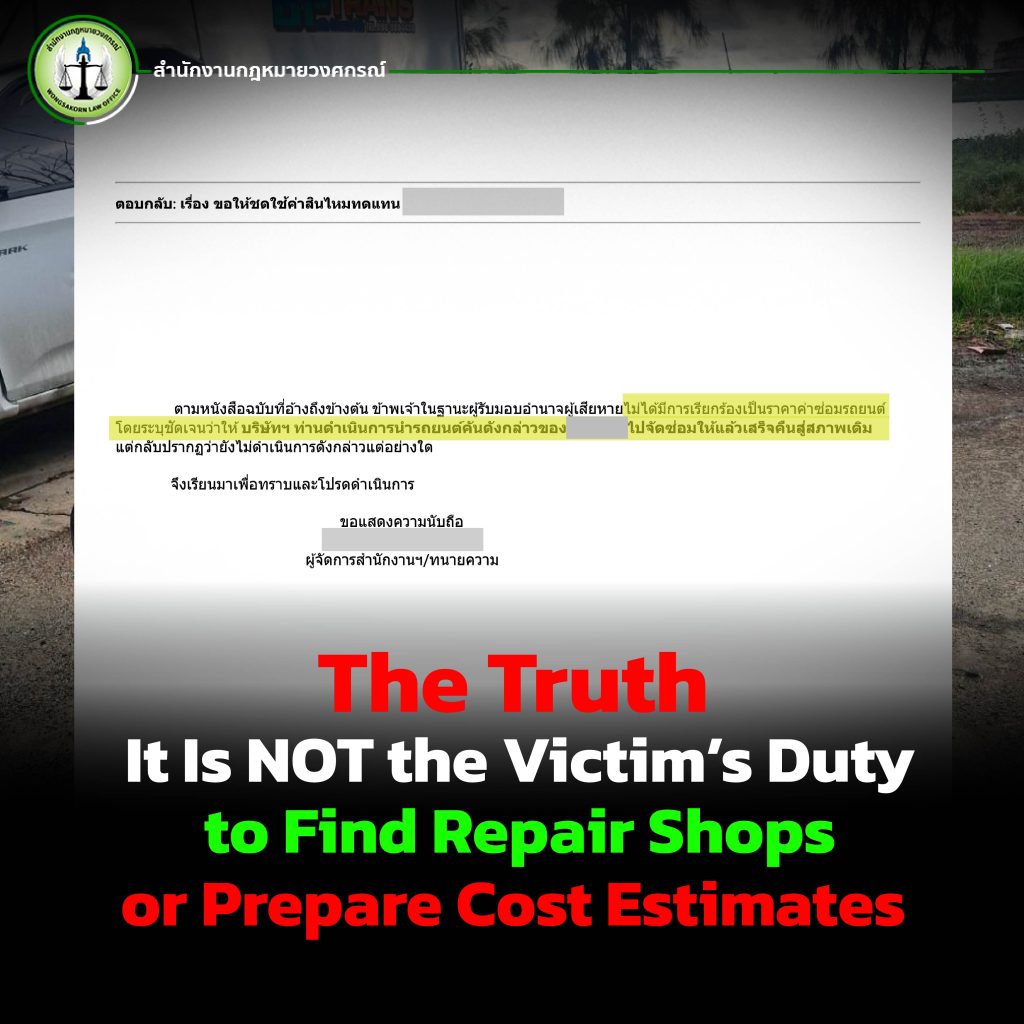
Importantly, the letter did NOT demand any repair costs from the insurance company; it merely required them to take the car and repair it, as the responsible insurer.

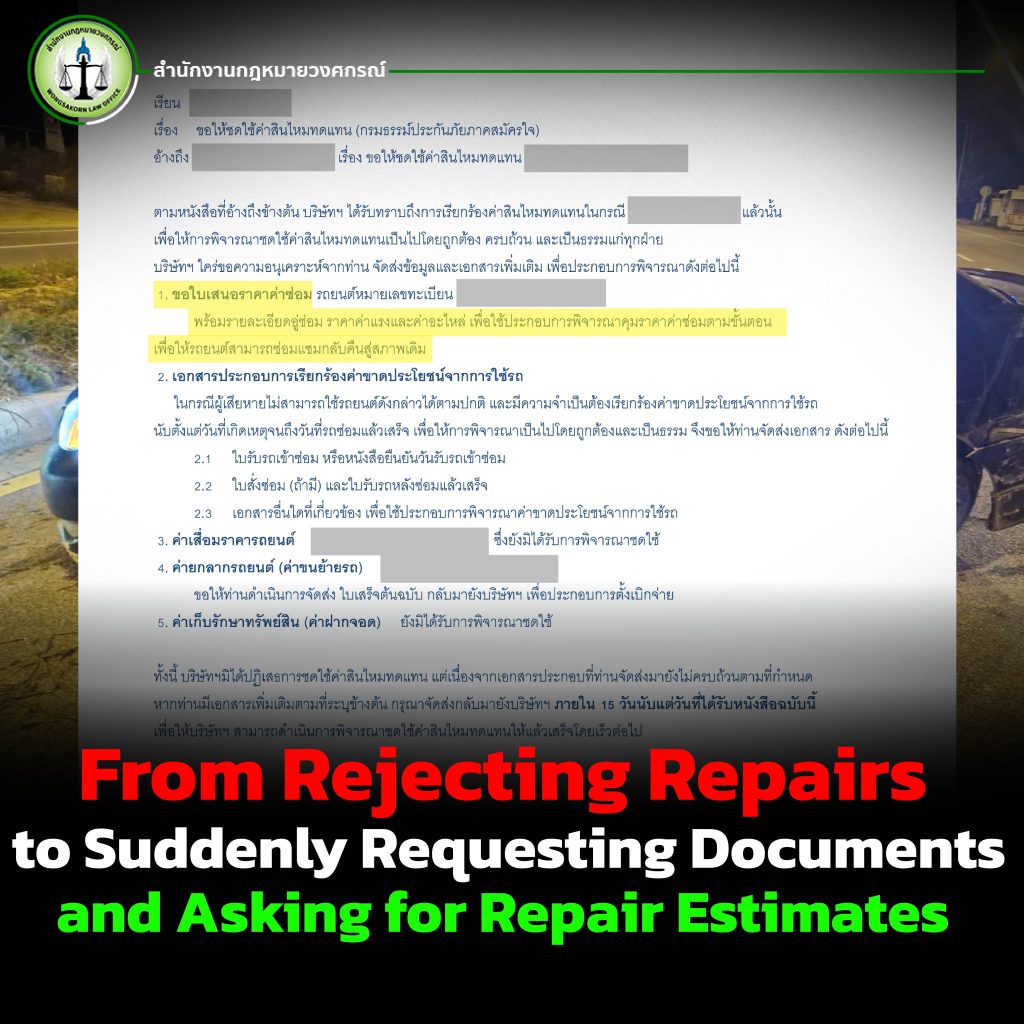
From Rejecting Repairs to Suddenly Requesting Documents and Asking for Repair Estimates

After receiving the letter, the insurance company shifted their attitude and responded by requesting:

  • repair cost estimates,
  • repair shop details,
  • labor costs,
  • parts pricing,

which they claimed were needed for “price control procedures.”

Although it might sound reasonable, in reality…

 This is a strategy designed to shift responsibility onto the victim.

Why Did the Lawyer Advise “Do NOT Prepare Repair Estimates”?

According to Lawyer Arm, preparing repair estimates poses high risks, because the insurance company could later accuse the victim of:

  • providing a fake estimate,
  • listing incorrect parts,
  • inflating prices,
  • adding unnecessary items.

They could even file a counter-lawsuit against the victim, claiming attempted fraud.

Most consumers have no idea this can happen.

The Truth: It Is NOT the Victim’s Duty to Find Repair Shops or Prepare Cost Estimates

In car accident and insurance law:

  • The insurance company must manage all repair arrangements.
  • The insurance company must select the repair garage.
  • The insurance company must assess repair costs.
  • The insurance company must restore the car to its original condition.

The victim has zero responsibility to prepare repair estimates.

Therefore, the insurance company’s attempt to push this duty onto the victim is a clear violation of proper procedure.

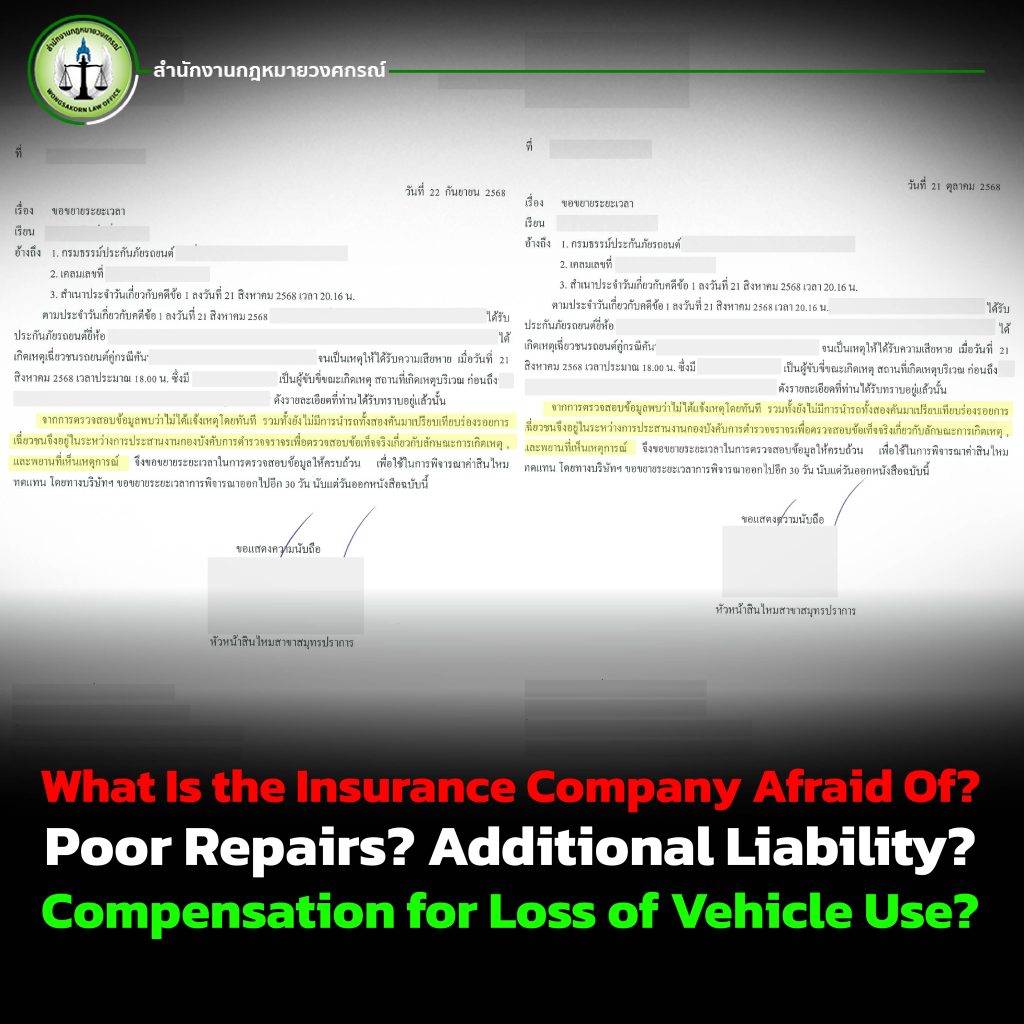
What Is the Insurance Company Afraid Of? Poor Repairs? Additional Liability? Compensation for Loss of Vehicle Use?

Many people wonder:

  • Are they afraid repairs will not meet standards?
  • Are they afraid they will incur additional liability if problems arise later?
  • Are they afraid they will have to pay loss of vehicle use compensation while the car is being repaired?

Regardless of the reason, the victim should not be forced to bear these burdens.

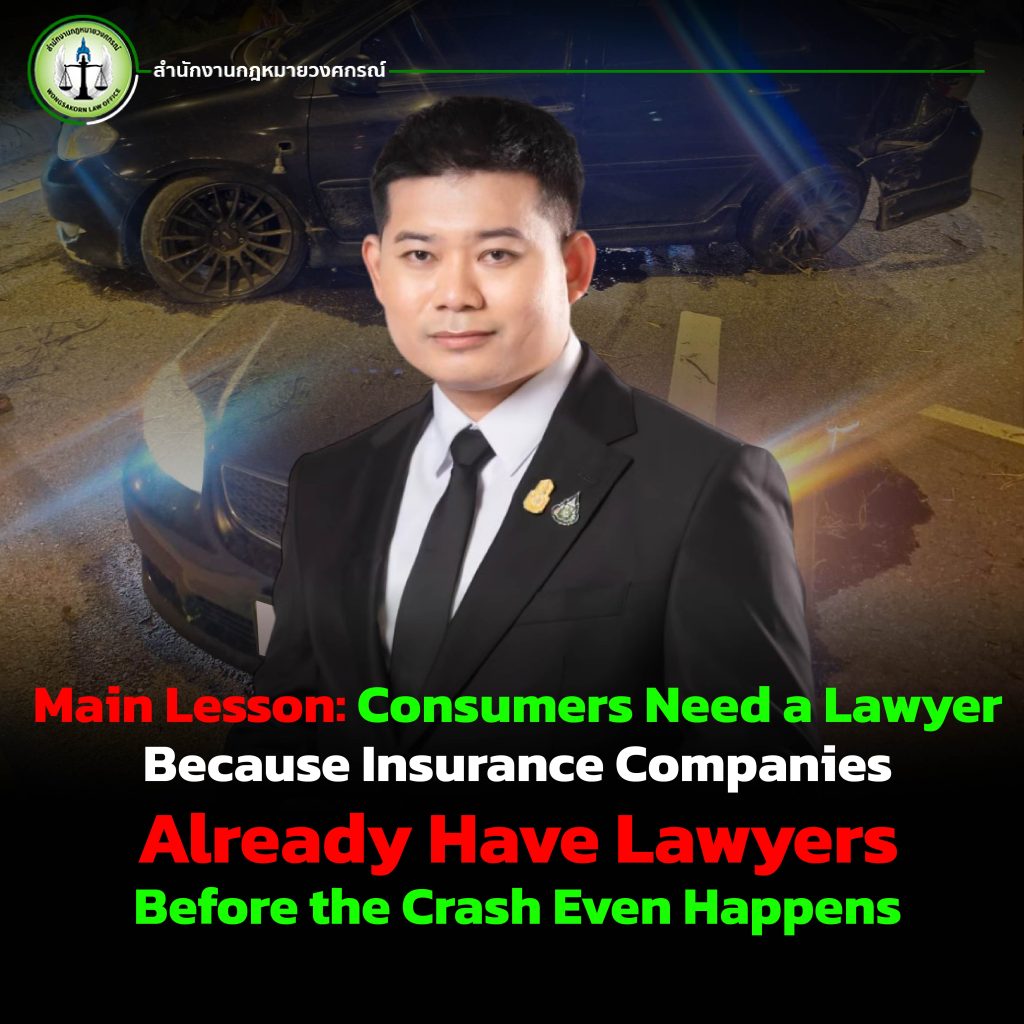
Main Lesson: Consumers Need a Lawyer Because Insurance Companies Already Have Lawyers Before the Crash Even Happens

Most people do not realize:

Insurance companies already have lawyers prepared before any car accident occurs.
They have time, legal resources, and strategies ready to reduce liability.

But consumers usually:

  • have no legal advisor,
  • have no knowledge of their rights,
  • lack experience dealing with insurance tactics.

Thus, when an accident occurs, consumers should consult a lawyer to:

  • protect their rights,
  • prevent unfair treatment,
  • compel the insurance company to fulfill its duties,
  • avoid being pushed into taking responsibility for things they shouldn’t.

Don’t Let Insurance Companies Manipulate Your Rights

This case shows how some insurers may:

  • reject repairs altogether,
  • accuse the victim of staging the crash,
  • demand documents the victim is not responsible for,
  • twist procedures to avoid paying compensation.

Consumers must stay informed and have a professional to protect their interests.

If you are facing a car accident dispute, if your insurance company refuses repairs, or if you feel the company is avoiding responsibility:

👉 Consult Lawyer Arm – Wongsakorn Law Office
📞 Tel: 062-195-1661

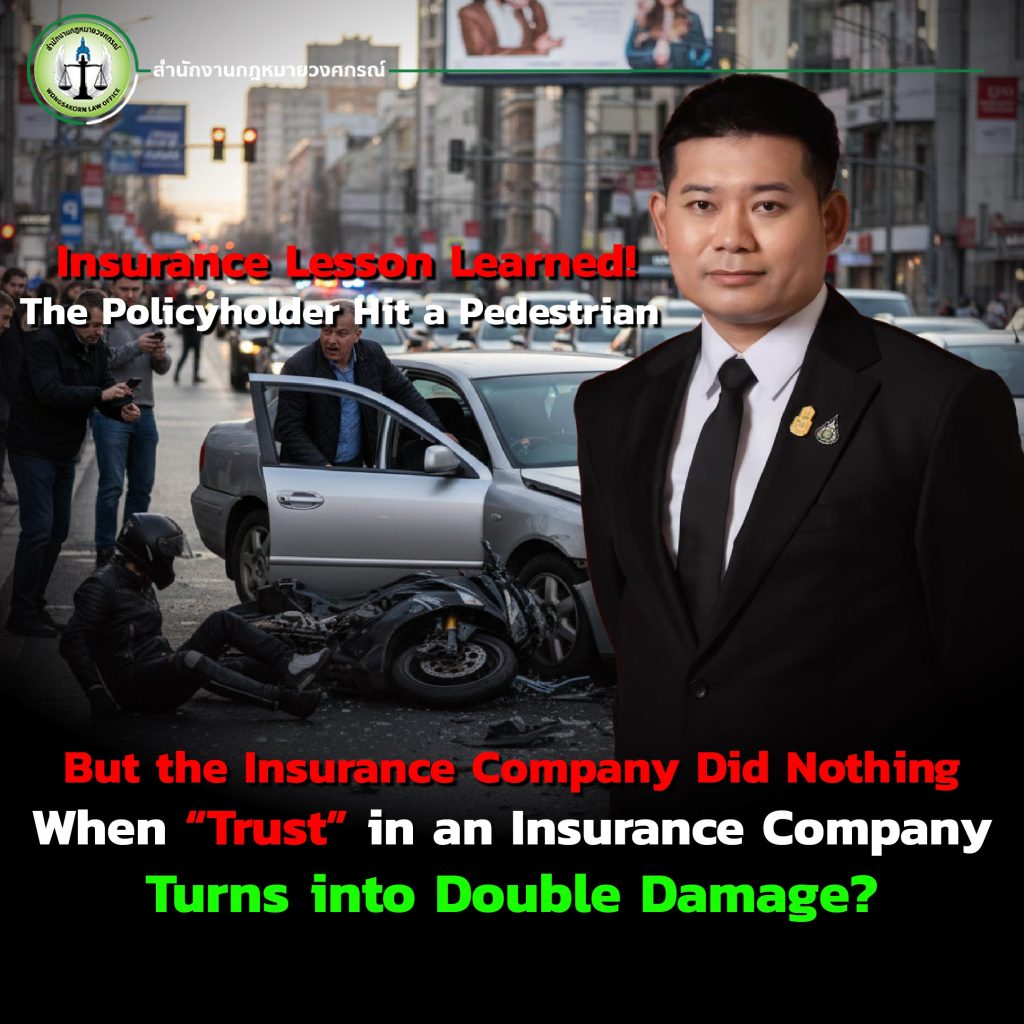
Insurance Lesson Learned! The Policyholder Hit a Pedestrian but the Insurance Company Did Nothing When “trust” in an insurance company turns into double damage?

Lawyer Arm shares how to claim your legal rights correctly from the start.

In the world of insurance, many people believe that having a policy is a shield of protection when unexpected accidents happen, especially road accidents.
However, in reality, there are many cases where the insured must handle everything on their own, and worse, insurance companies sometimes refuse to take responsibility, leaving the policyholder to share the financial burden with the injured party.

This true story happened to a man who held a car insurance policy. He hit a pedestrian, causing injuries that required hospitalization. The police ruled him at fault. Everything seemed to proceed normally toward a claim until the insurance company refused to help, even with the advance payment for medical expenses.

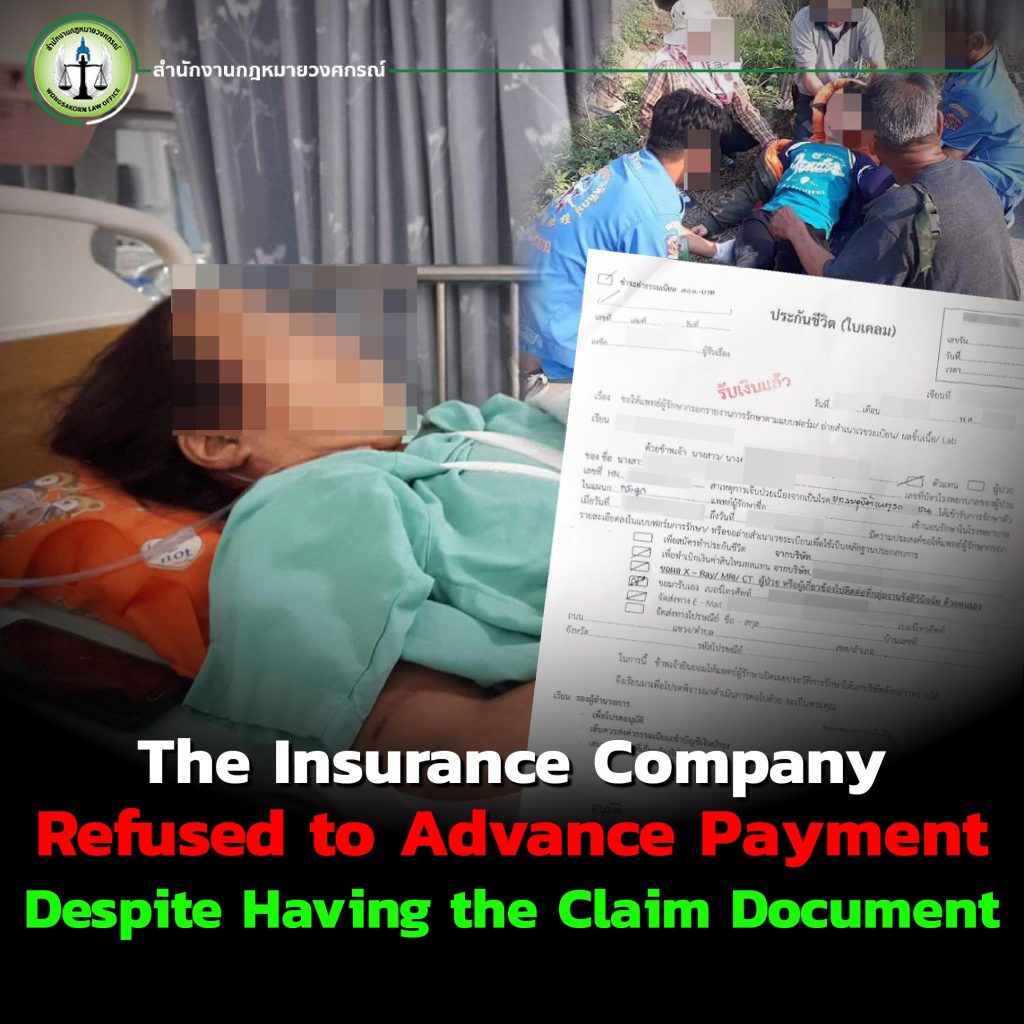
The Insurance Company Refused to Advance Payment Despite Having the Claim Document

The insured man said he had all the required documents, a claim form and an accident report but the company told him both he and the injured person must “advance the payment first.”
Even with the claim form in hand, the insurer would not issue a guarantee letter for the hospital to claim directly. As a result, both the insured and the victim had to pay medical expenses from their own pockets first.

This might sound unbelievable, but such cases do happen. It’s a clear reminder that:

“Having insurance doesn’t automatically mean you’ll be protected in every case.”

When the Insured Becomes a Double Victim?

Since the police ruled him at fault, the insured had the legal duty to compensate the injured party.
But instead of the insurer managing the claim as promised, both the insured and the injured person had to jointly demand compensation from the insurance company.
This turned the policyholder into a “double victim” losing money, time, and peace of mind.

Lawyer Arm’s Advice: File a Joint Lawsuit as a Consumer Protection Case

Lawyer Arm suggests that if both the policyholder and the injured person file a lawsuit together against the insurance company, it can be considered a consumer protection case, as both are consumers suffering from unfair business practices.

If the court finds that damage truly occurred, the insured can claim full compensation including Lawyer’s fees.
In many cases, the court orders the insurer to pay for legal costs, though it depends on the evidence and court discretion.
That’s why having a lawyer from the very beginning is essential to ensure that every step follows the law and that your rights are fully protected.

Lawyers Can Legally Charge a Percentage of the Awarded Amount

Under Thai law, lawyers can legally charge a percentage-based fee from the recoverable amount.
Therefore, policyholders can make a transparent agreement with their lawyer, for example:

  • Setting a fair percentage from the total recovered amount; or
  • Paying a flat fee for the entire case.

This clarity helps avoid disputes later and ensures smoother case progression.

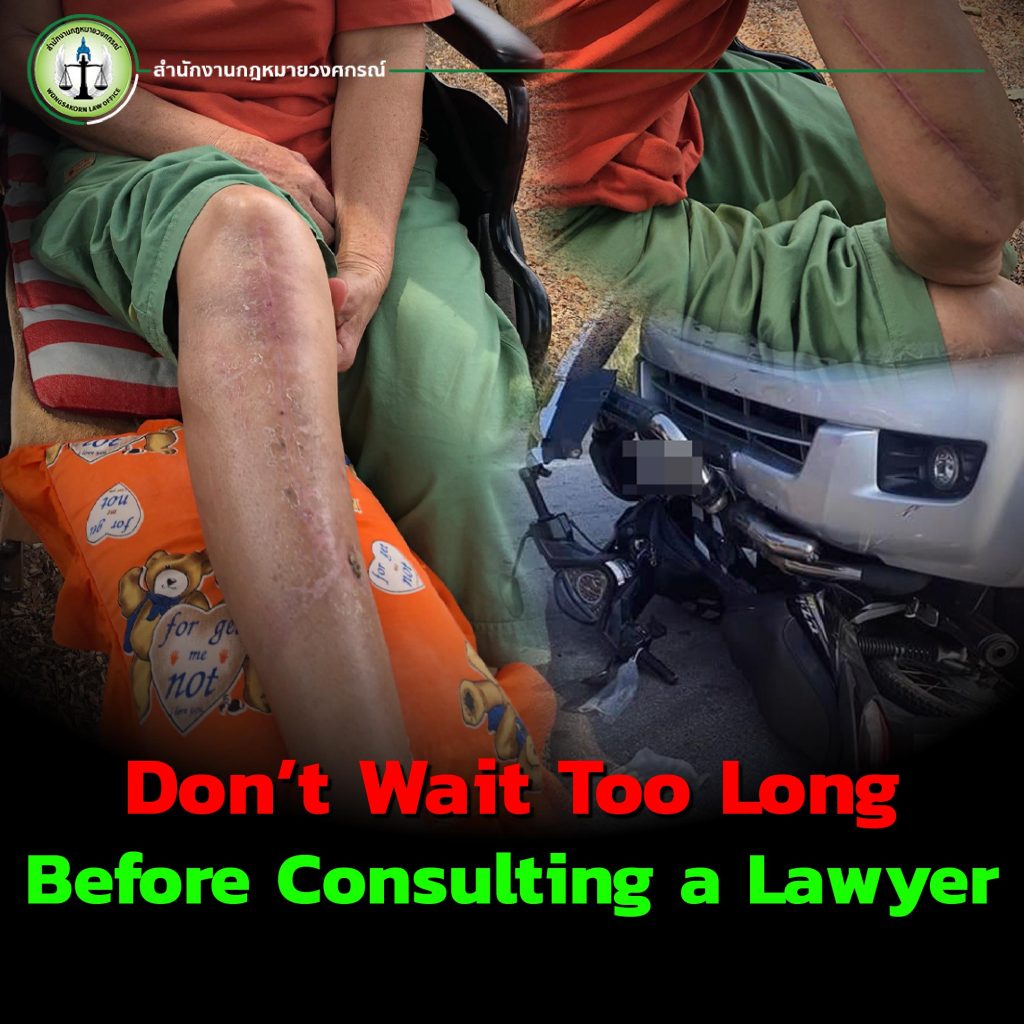
Don’t Wait Too Long Before Consulting a Lawyer

Lawyer Arm also warns:

“Don’t wait until you fully recover or years have passed before filing your claim. Once you’ve recovered, you may lose the right to claim compensation for permanent disability.”

In practice, many people wait too long only to receive partial compensation.
Always seek legal advice immediately after an accident, so your lawyer can verify your claim and documentation right from the start.

Insurance Companies Sell Easily but Claims Are Hard

Many insurance companies market themselves as “fast and reliable”, but when accidents actually happen, they often give excuses such as:

  • “We’re overloaded with cases.”
  • “It’s not our department’s responsibility.”
  • “We need to wait for documents from the hospital.”

In the end, the policyholder ends up doing all the paperwork and follow-ups.
As Lawyer Arm often says:

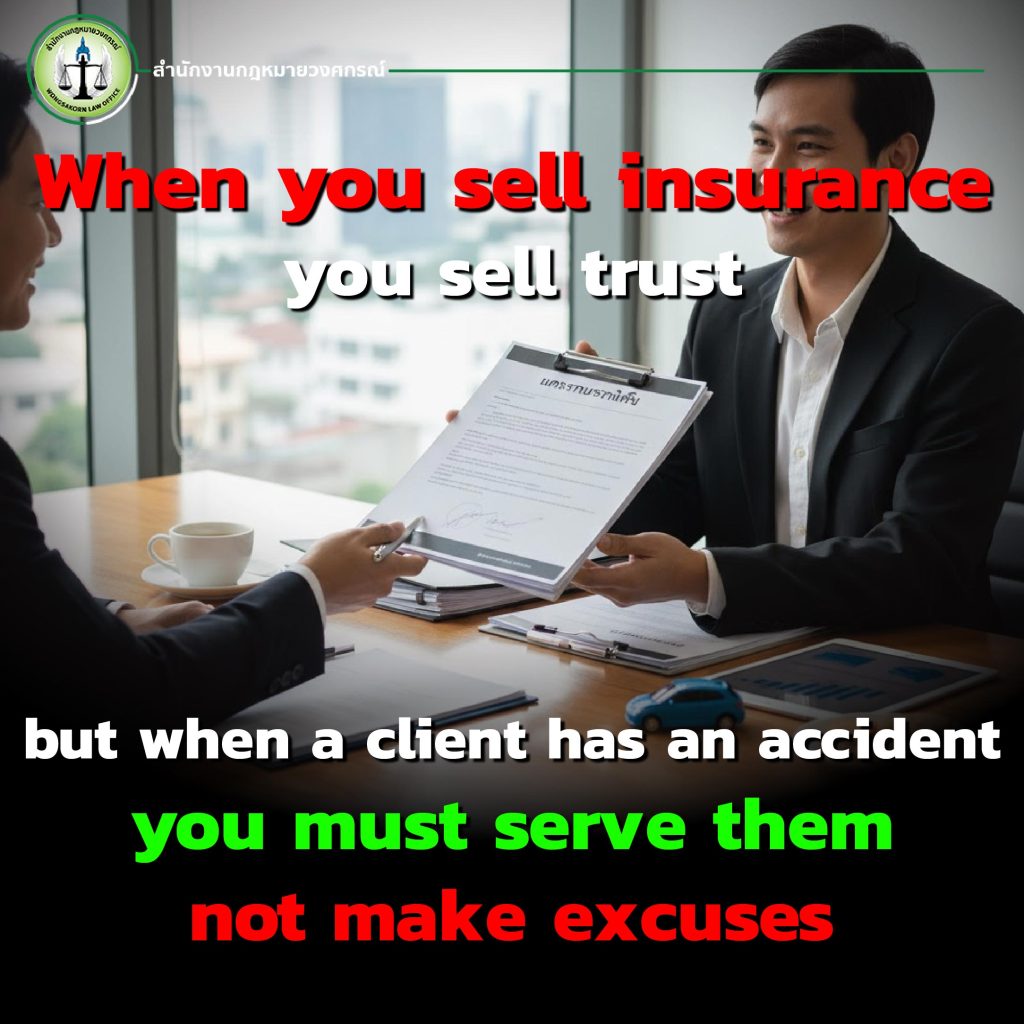
“When you sell insurance, you sell trust but when a client has an accident, you must serve them, not make excuses.”

Key Advice for Every Policyholder

1.Keep all evidence — claim forms, police reports, medical certificates, receipts.

2.Notify your insurer immediately after an accident and ask for a claim number.

3.Don’t sign any documents you don’t fully understand especially waivers or settlements.

4.Consult a lawyer right away if the insurer refuses to pay or delays the claim.

The Takeaway

Having insurance doesn’t guarantee fair treatment but knowing your rights and having a lawyer by your side can help you recover your losses and gain true justice.
In a world where companies compete to sell insurance, don’t forget as a policyholder, you must also learn to understand and defend your rights.
Consult a lawyer today so you’ll never be taken advantage of by an insurance company again.

Line @ คลิก! โทรหาเรา คลิก!