


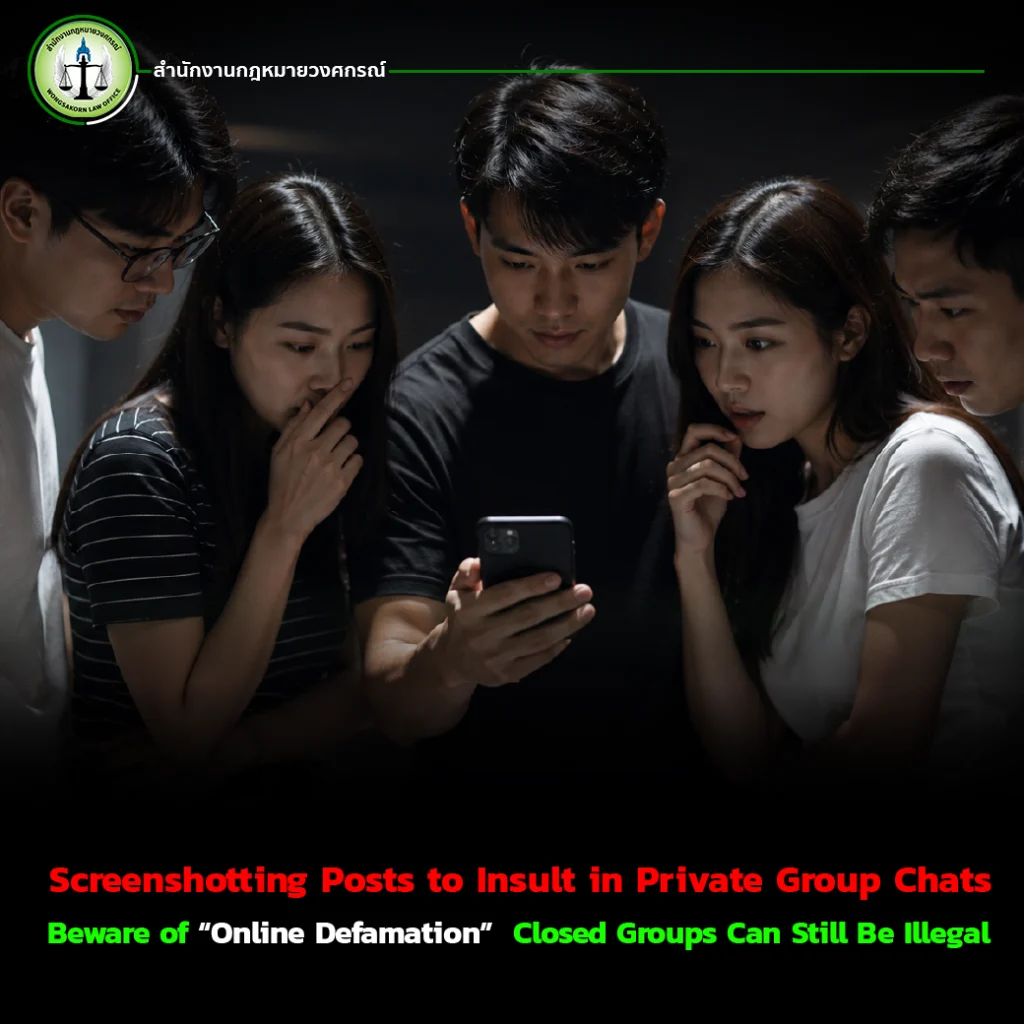
In an era where communicating through social media platforms like Facebook, LINE, and IG has become second nature, many people might mistakenly believe that “private group chats” or “closed groups” are personal spaces where they can discuss or criticize others without incurring legal liability especially when it comes to screenshotting someone’s post or photo and forwarding it to a group for discussion or public shaming.
However, from a legal perspective, the key factor is not whether the content was posted in an open or closed group. As long as the shared content imputes a statement to another person in a way that is harmful, and a third party becomes aware of it, it can potentially lead to issues of defamation.
Private group chats does not mean no legal liability.
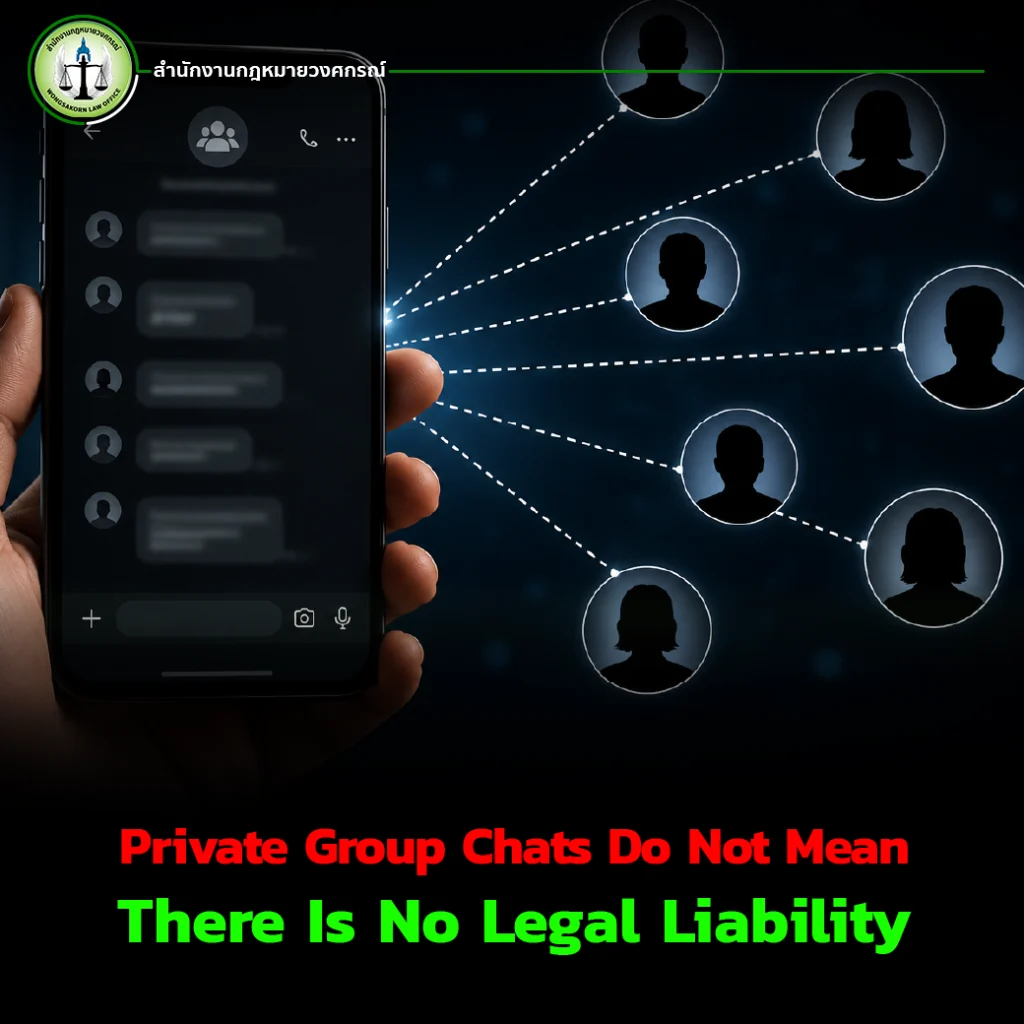
The belief that “being in a closed group where outsiders cannot see” allows one to say anything is a misconception that requires caution. The essential element of defamation involves imputing a statement about another person to a third party; it does not require a public post visible to the general public.
For example, Mr. A sees Mr. B’s post on Facebook, screenshots it, and sends it to a group chat with multiple members, followed by typing messages that accuse or discuss Mr. B in a way that leads other members to believe Mr. B has bad behavior or engaged in something that damages his reputation.
Even if the group is closed and inaccessible to the general public, as long as someone other than the speaker and the accused becomes aware of the message, legal issues can arise. Therefore, the term “private chat” should never be relied upon as a guarantee that one can say anything without incurring legal liability.”
Screenshotting Others’ Posts to Publicly Shame Them: What to Watch
Out For?
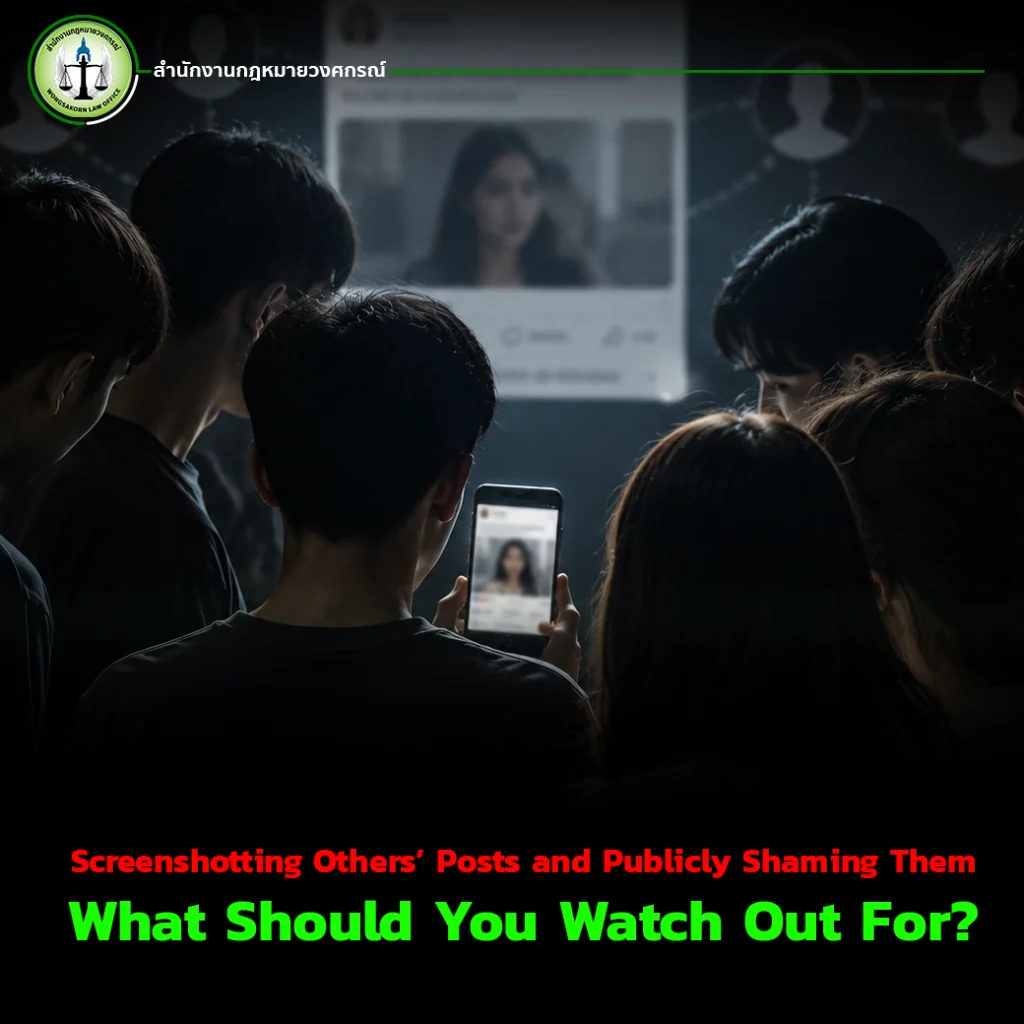
Another behavior commonly found online is screenshotting someone else’s post and sharing it in other groups or chats, accompanied by commentary criticizing or accusing the post owner.
Screenshotting alone does not automatically constitute defamation in every case, as the presented text, intent, context, and overall facts must be evaluated on a case by case basis.
However, if sharing that image includes additional statements that impute harm or lead a third party to believe the referenced individual engaged in behavior that damages their reputation, holds them up to contempt, or creates hatred, it can create legal risks.
This is especially true when the sender does not merely share the post for group members to see, but adds commentary, accusations, or attacks directed at that individual. Such actions should therefore be carefully considered.
What If Someone Screenshots the Chat and Leaks It?
Many people might think, “No one will know I was the one who typed it,” or “We’re talking in a closed group, there’s no way to trace it back to me.” But in practice, members within the group can take screenshots, forward messages, or preserve relevant data.
If there is evidence that can link who sent the message or published the content, the injured party can use that information to pursue legal action.
Therefore, do not assume that using an online account or speaking in a closed group makes you untraceable.
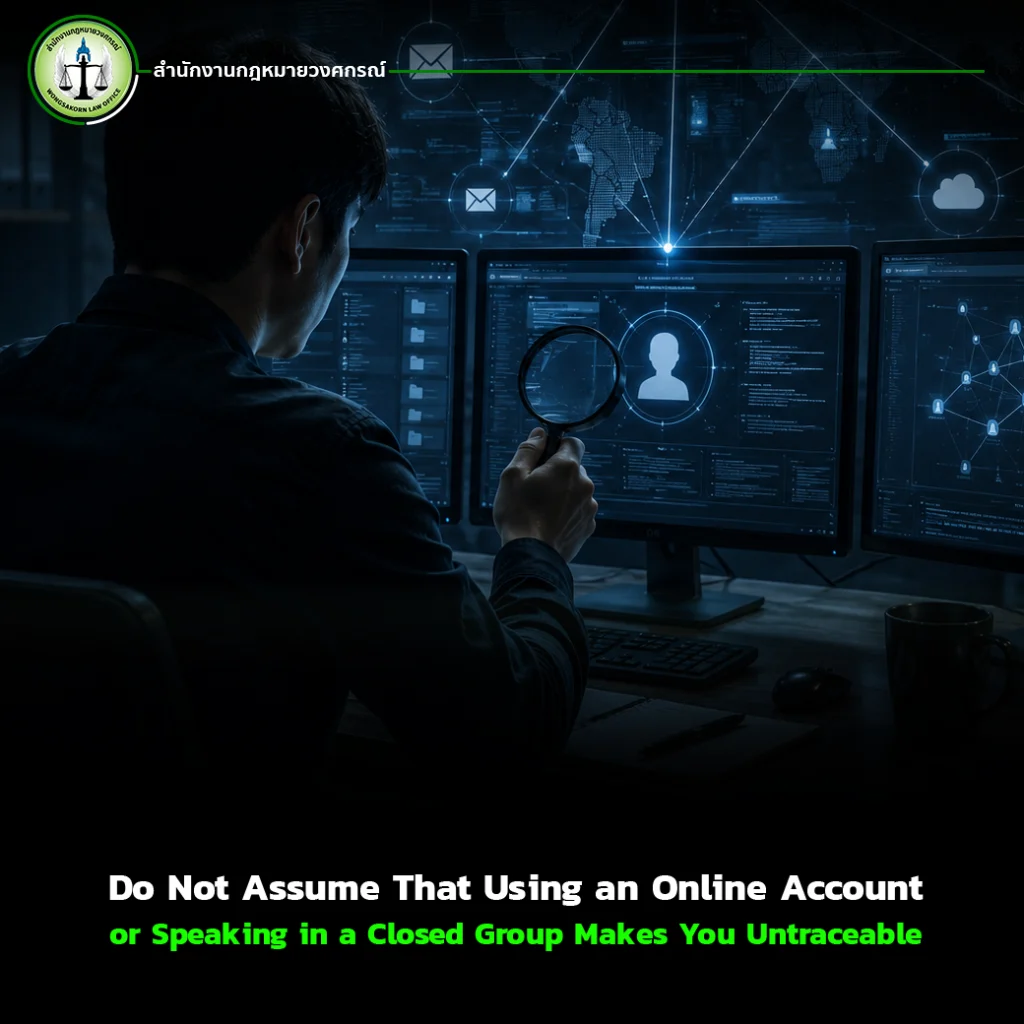
In cases involving online communication, proper gathering of data and evidence is crucial.
Evidence may include screenshots, chat messages, user account details, timestamps of sent messages, and other data that can connect the dots. That said, the credibility and admissibility of such evidence in court must be evaluated based on the specific facts of each case.
How is “Online Defamation” Evaluated?
The term “online defamation“ refers to cases where an individual is slandered or libelously imputed through electronic channels such as Facebook, TikTok, LINE, or other platforms. However, whether an act constitutes an offense should not be judged solely by the word online.
Key considerations include: whether there is an imputation of fact; who is being referenced; whether a third party has become aware of it; the nature of the message; and whether the circumstances meet the essential legal elements of the offense.
Additionally, if the distribution occurs through a computer system, other legal issues may also come into play depending on the nature of the act and the content published. Therefore, one should not conclude that every instance of posting or sending a message shares the exact same legal fault.
What Should You Do If Someone Screenshots Your Post to Insult You?
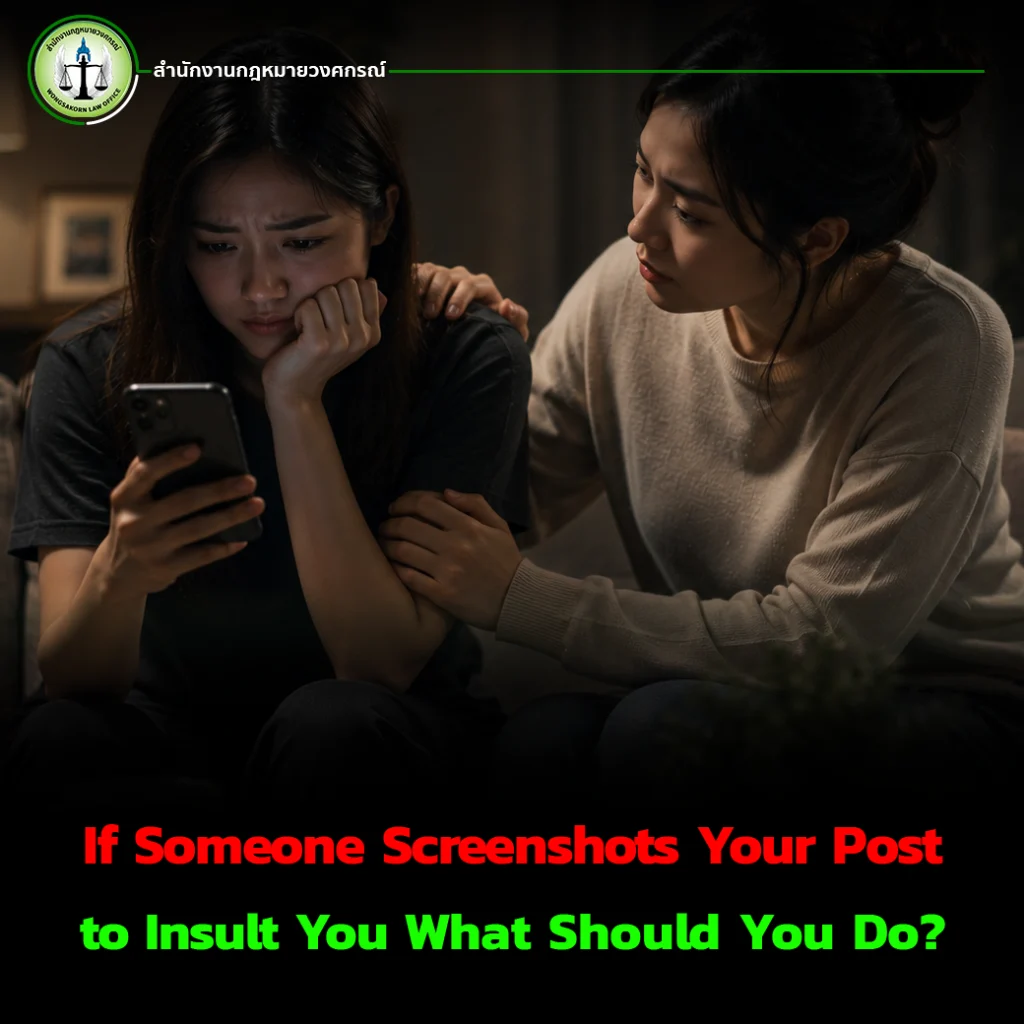
If you discover that someone has forwarded your post or image with statements that accuse you, damage your reputation, or cause others to perceive you negatively, the first thing you should do is avoid reacting emotionally.
You should gather all relevant information thoroughly first, such as screenshots of the messages, user accounts, dates and timestamps, members or recipients of the messages, as well as details of the original post. Evidence should be collected in a manner that allows for official verification of the incident.
If you do not know who the perpetrator is or suspect that online accounts are being used to attack or publicly shame you, you can consult an attorney to assess the facts, map out a strategy for gathering evidence, and determine the appropriate legal action to pursue.
“No Such Thing as a Secret Chat” Under the Law: Consult an Attorney Immediately

Communicating in a closed group does not automatically exempt an individual from the law. If someone screenshots another person’s information, forwards it, and attaches statements that impute harm to the point that a third party becomes aware, issues of defamation or online defamation can arise. However, the specific facts and legal elements must be evaluated on a case by case basis.
For those who find themselves having their posts screenshotted for public shaming, their messages shared in groups, or being accused in online chats, and who wish to trace the perpetrator, gather evidence, or consider claiming damages, consulting a lawyer from the outset is recommended to structure the case and take appropriate action, rather than reacting emotionally and escalating the situation further.