


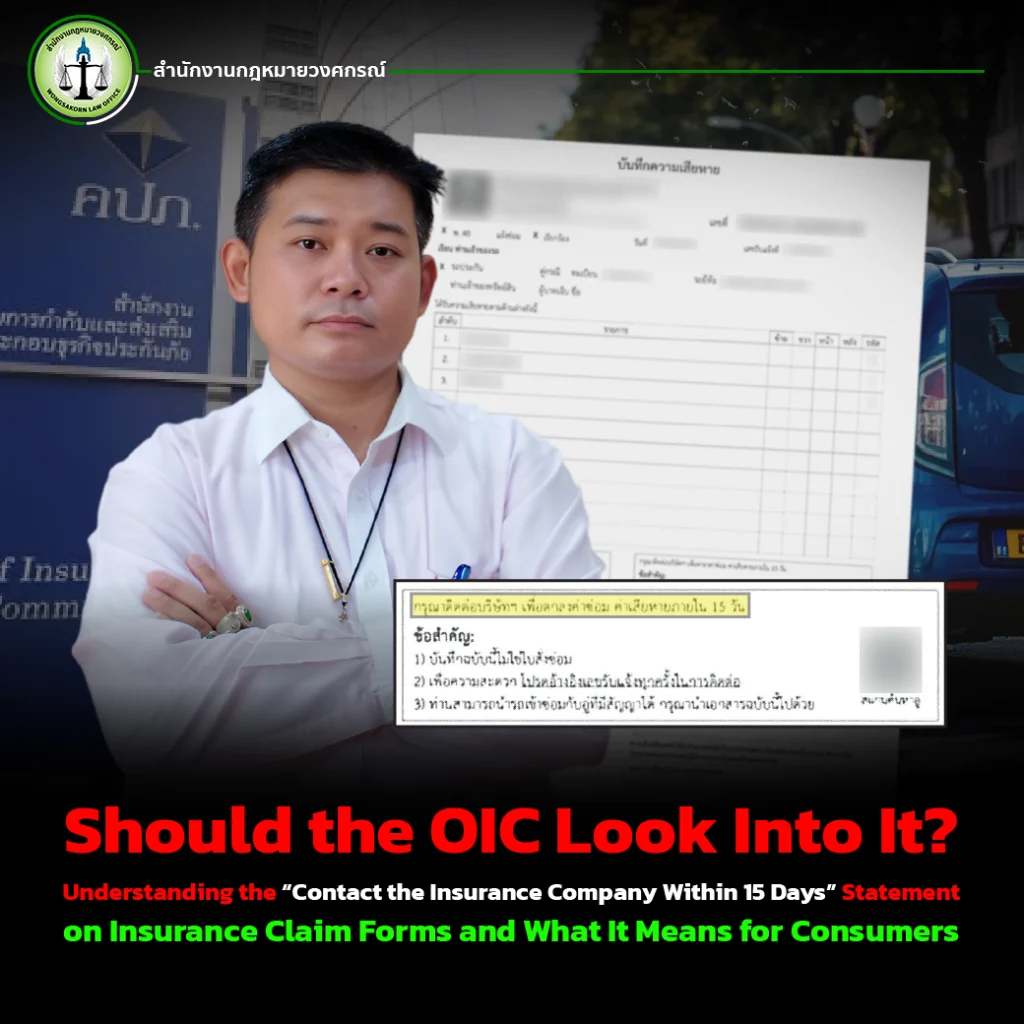
When a road traffic accident occurs, most policyholders are familiar with the standard procedure of waiting for an insurance surveyor or claims adjuster to arrive at the scene to assess the damage and issue a document commonly referred to by the public as a “claim form,” which is then used to facilitate vehicle repairs or the filing of an insurance claim.
However, many people may not have noticed that some insurance companies include the following statement on their claim forms:
“Please contact the insurance company within 15 days to negotiate and agree on the repair costs and compensation for the damages.”
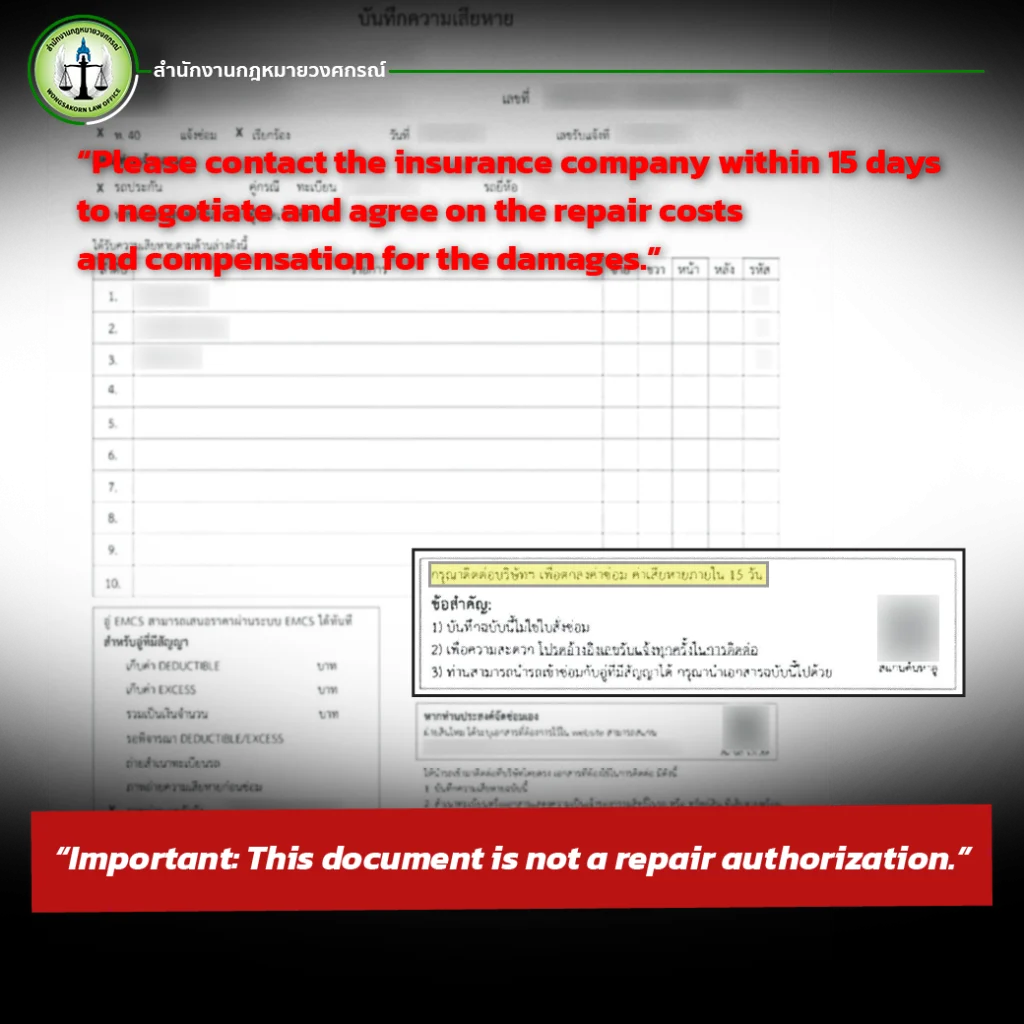
In addition, the claim form contains the following notice:
“Important: This document is not a repair authorization.”
Although consisting of only a few lines, this statement may cause many consumers to misunderstand their legal rights.
In this article, Lawyer Arm Supasit Siri of Wongsakorn Law Firm invites members of the public and consumers to examine the issue from the perspectives of law and consumer rights, with the aim of helping them better understand their legal entitlements and avoid unnecessarily forfeiting their rights.
What Role Does the Office of Insurance Commission (OIC) Play in the Insurance Industry?
The Office of Insurance Commission (OIC) is the regulatory authority responsible for supervising and promoting the insurance industry. Its role is to ensure that insurance businesses operate in compliance with the law and to foster public confidence in the insurance sector.
In practice, however, when a road traffic accident occurs, an insurance company’s surveyor will inspect the circumstances of the accident and prepare the relevant documentation for reporting the damage in accordance with the company’s claims procedures.
Nevertheless, the assessment of damages, the determination of liability, and the payment of insurance indemnity must still be based on the facts of the case, the terms and conditions of the insurance policy, and the applicable laws.
What Does the Statement “Please Contact the Insurance Company Within 15 Days to Reach an Agreement on the Repair Costs and the Amount of Damages” Mean?
Based on Wongsakorn Law Firm’s practical experience, many members of the public and consumers mistakenly believe that if they fail to contact the insurance company within 15 days, they will immediately lose their right to claim compensation.
Such a misunderstanding may cause consumers unnecessary concern or prompt them to take action before they have fully understood their legal rights.
In the view of Lawyer Arm Supasit Siri, this statement should be communicated more clearly to prevent the public from misunderstanding their legal rights. It is also important to distinguish between an insurance company’s internal claims procedures and a policyholder’s legal right to seek compensation, as these may constitute two separate legal issues.
What Is an Insurance Claim Form?
A claim form, or damage assessment document, is a document issued by an insurance company after conducting a preliminary assessment of the damage. It is used to support the subsequent claims process or other related procedures.
However, the format and wording of such documents may vary from one insurance company to another.
Policyholders should therefore carefully read all the details before signing any document or taking any action based on it.
If any part of the document is unclear, they should seek clarification from the insurance company or obtain advice from a legal professional before proceeding.
Key Information Consumers Should Know After a Road Traffic Accident
After a road traffic accident, it is important not only to have your vehicle repaired but also to protect your legal rights. This includes:
- Obtaining copies of all relevant documents;
- Carefully reading every statement on the insurance claim form;
- Seeking clarification if any part of the document is unclear;
- Preserving all evidence and records relating to the accident;
- Reviewing the terms and conditions of your insurance policy.
Having a clear understanding of your legal rights from the outset can help minimize the risk of future disputes.
One key difference between insurance companies and consumers is that consumers often do not have legal representation.
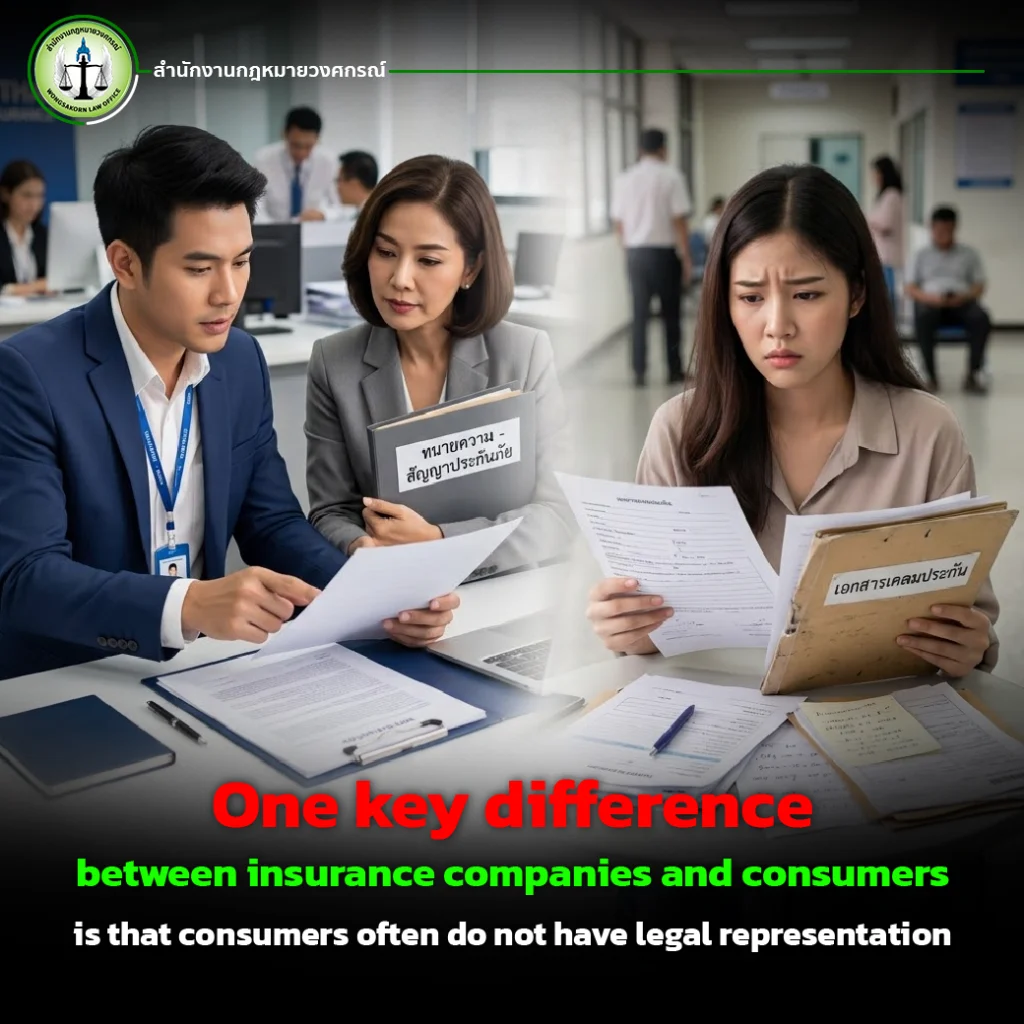
Lawyer Arm Supasit Siri is of the view that one important difference between consumers and business organizations is that many organizations have in-house legal departments or legal counsel to provide ongoing legal support for their operations.
By contrast, most members of the public may be experiencing a road traffic accident for the first time and may therefore be unfamiliar with the procedures involved, their legal rights, or the legal implications of the documents they receive.
For this reason, obtaining relevant information or seeking advice from a legal professional before making important decisions is one way consumers can better protect their legal rights and interests.
What Should You Do If You Have Questions About Your Rights?
If a policyholder has questions regarding:
- the insurance claim form;
- vehicle repairs;
- a denial of liability;
- the payment of insurance indemnity; or
- any statements or wording contained in documents issued by the insurance company.
As a first step, you should seek clarification from the insurance company to ensure that you fully understand the relevant documents and procedures.
If you still have questions about your legal rights, or believe that the proposed course of action may affect your rights or interests, consulting a lawyer is another option. Doing so can help you better understand the applicable law and make informed and well-considered decisions.
Purchasing insurance is not merely about paying insurance premiums. It also means understanding your rights and obligations when unexpected events occur.
In the view of Lawyer Arm Supasit Siri, any wording on an insurance claim form that may cause consumers to misunderstand their rights should be communicated clearly and accurately. This helps ensure that members of the public can exercise their legal rights correctly and reduces the risk of losing those rights due to misunderstanding.
If you are involved in a dispute with an insurance company—whether it concerns an insurance claim form, a refusal to authorize repairs, an insurance indemnity claim, or questions regarding a policyholder’s legal rights—Wongsakorn Law Firm is available to provide legal advice, assess your case, develop an appropriate legal strategy, and assist you in pursuing compensation from the insurance company in accordance with the law. To consult Lawyer Arm, please contact us.