Arrest Warrant Why Foreign Nationals Must Check for an “Arrest Warrant” Before Traveling to Thailand?

Arrest Warrant   In an era where international travel has become fast and convenient, Thailand remains one of the most popular destinations for foreigners, whether as tourists, investors, or long-term residents. However, an important legal issue that many foreigners tend to overlook is the matter of an “arrest warrant,” which may become a major obstacle to entering the country if not properly verified in advance.

There have been numerous cases where foreigners arrived at Thai airports with good intentions, only to be detained by immigration authorities due to an outstanding arrest warrant recorded in the database of the Royal Thai Police. These cases may involve criminal offenses, fraud, labor disputes, or business-related conflicts from the past. Even a single arrest warrant is sufficient to immediately halt a person’s entry into Thailand.

What Is an Arrest Warrant and How Does It Affect Foreigners?

An arrest warrant is a court order authorizing law enforcement officers to arrest a person who is suspected of committing an offense and has failed to appear before investigators as summoned, or where there is reasonable cause to believe that the person may flee.

Currently, Thailand’s arrest warrant database is connected to the immigration system, enabling officers to check a person’s legal status instantly upon entry or exit from the country.

For foreigners, the consequences of having an arrest warrant in Thailand are often more severe than for Thai nationals. In addition to immediate arrest at the airport, they may be detained in immigration holding facilities, face visa scrutiny, and suffer long-term effects on their travel history. In some cases, their visa may be revoked or they may be blacklisted and prohibited from re-entering Thailand.

Common Problems When Foreigners Enter Thailand While Having an Arrest Warrant

A frequent issue is that foreigners are unaware they have an arrest warrant. This may stem from past business activities, such as serving as a company director involved in litigation, acting as a guarantor in business transactions, or being sued in a civil case that later escalated into a criminal matter without their knowledge.

Upon arrival in Thailand, immigration officers check the traveler’s name and personal data in the system. If an arrest warrant is found, the status immediately appears, and the individual is separated from other passengers and placed into legal proceedings. This often causes shock, embarrassment, and serious reputational damage especially for those traveling for business or investment purposes.

In some cases, detainees are unable to contact a lawyer immediately and may be held for several days before being brought before a court. This directly affects travel plans, mental well-being, and business operations.

Why Foreigners Should Check for an Arrest Warrant Before Traveling to Thailand?

Preliminary arrest warrant verification is a crucial preventive legal measure, particularly for foreigners who have previously had business dealings, investments, or legal disputes in Thailand. Checking in advance allows individuals to know their true legal status and prepare an appropriate response.

If an arrest warrant is found, a lawyer can coordinate with investigators or the court to obtain case details and develop a proper legal strategy, such as arranging a lawful surrender or resolving the case in advance rather than facing unexpected arrest at the airport.

Moreover, arrest warrant verification provides peace of mind to foreigners entering Thailand in good faith, ensuring that their travel proceeds smoothly without hidden legal issues.

Long-Term Consequences of Failing to Check for an Arrest Warrant

If a foreigner enters Thailand without knowing that an arrest warrant exists, the consequences go beyond immediate detention. Long-term impacts may include visa denial, heightened scrutiny by immigration authorities, or even being placed on a blacklist, preventing future entry into Thailand.

From a business perspective, the damage may extend to partners and associated companies. If a key executive or shareholder is suddenly arrested, it may severely affect the company’s credibility and operational continuity.

Arrest Warrant Checks Must Be Conducted Legally

Checking for an arrest warrant is not merely searching information online. It must be conducted through proper legal channels by a qualified lawyer or law firm experienced in coordinating with government authorities such as the Royal Thai Police or local investigators. This ensures that the information obtained is accurate, up-to-date, and compliant with personal data protection laws.

A lawyer can also interpret the legal implications of the arrest warrant, including the type of case involved, its seriousness, and the appropriate next steps.

Arrest Warrant Verification Services for Foreigners by Wongsakorn Law Office

Wongsakorn Law Office provides arrest warrant verification services for foreigners intending to travel to Thailand for tourism, investment, or long-term residence, through a team of lawyers experienced in criminal law and immigration law.

The firm’s services include:
– Legal verification of arrest warrant status
– Risk assessment and legal consequence analysis
– Strategic legal advice before traveling to Thailand
– Coordination with relevant authorities if an arrest warrant is found

Because knowing in advance is the best way to prevent future legal problems.

Checking for an arrest warrant before traveling to Thailand is not a remote concern for foreigners; it is a critical step in protecting personal freedom, safety, and business interests. Neglecting this issue may lead to serious legal complications and long-term damage.If you are a foreign national planning to enter Thailand or have had past legal or business involvement in the country, arrest warrant verification before travel is the most prudent decision.


Arrested by a Warrant Without Knowing It: How Is It Possible? Understanding Arrest Warrants and Common Misconceptions

In recent years, Wongsakorn Law Office has received consultations from many individuals who share the same serious concern:

  • “I was subject to an arrest warrant without knowing it.”
  • “I never received any documents, yet officers informed me that an arrest warrant existed.”
  • “I don’t even know what I did wrong, why was an arrest warrant issued against me?”

These questions reflect a widespread misunderstanding about the arrest warrant process. Many people believe that if no official notice, summons, or documents are sent to their home, an arrest warrant cannot be issued. From a legal perspective, this belief is not entirely correct.

This article aims to explain what an arrest warrant is, how it can be issued, why prior notice to the suspect is not always required, and how to properly verify whether an arrest warrant exists so you do not unknowingly place yourself at legal risk.

What Is an Arrest Warrant?

An arrest warrant is a court order authorizing police officers to arrest a person accused of committing a criminal offense, in order to bring them into the investigation or legal proceedings.

Issuing an arrest warrant is not a minor matter, nor can it be done at the discretion of the police alone. It requires judicial consideration. The court will review the evidence presented by investigators and determine whether it is sufficient to justify issuing the warrant.

An Arrest Warrant Can Be Issued Without Prior Notice to the Suspect

One of the most common misconceptions is the belief that:

“Before an arrest warrant is issued, a summons or written notice must first be sent to the suspect’s home.”

In reality, the law does not require prior notice in all cases.

If investigators have sufficient evidence demonstrating that:

  • A criminal offense has occurred,
  • The individual is a suspect or accused person, and
  • There is reasonable cause to believe that the suspect may flee, tamper with evidence, or fail to appear as summoned,

They may immediately petition the court for an arrest warrant without notifying the suspect in advance.

This is a key reason why many individuals find themselves subject to an arrest warrant without ever knowing it beforehand.

Why Do Some People Never Receive Summons but Still Face an Arrest Warrant?

In practice, certain criminal cases, especially serious offenses or cases involving a risk of flight, may lead the court to issue an arrest warrant immediately, without first issuing a summons.

Additionally, situations may arise where:

  • A summons was sent to a former registered address,
  • The suspect changed residence without notifying authorities, or
  • The case is an old matter unknown to the individual,

As a result, the person may be entirely unaware that legal proceedings have reached the stage of an arrest warrant.

Risks of Being Unaware That an Arrest Warrant Exists

Having an arrest warrant without knowing it can lead to serious consequences, such as:

  • Sudden arrest in a public place,
  • Immediate detention during routine identity checks,
  • Disruption to employment, travel, or legal transactions,
  • For foreign nationals, complications with visas or entry and exit from the country.

Many individuals become legally disadvantaged simply because they were unaware of their legal status from the outset.

Ignoring an Arrest Warrant Without Fleeing: What Are the Risks?

Some people, upon suspecting or learning that an arrest warrant exists, choose not to flee but also take no action continuing life as usual, believing that as long as they commit no further wrongdoing, no serious consequences will follow. Legally, this is a misconception.

First, an outstanding arrest warrant authorizes officers to arrest the individual anytime and anywhere, including during routine checks, government transactions, or even unrelated incidents. Arrests often occur without warning, leaving no time for legal preparation.

Second, prolonged inaction may place the accused in a weaker legal position, as courts may view the individual as unwilling to cooperate, potentially affecting bail considerations or resulting in stricter conditions.

Third, unresolved arrest warrants can quietly affect daily life job applications, background checks, international travel, or immigration scrutiny especially for foreign nationals.

Most importantly, allowing an arrest warrant to remain unresolved allows legal risk to accumulate unnecessarily, when many cases could be handled appropriately with early legal advice. Not fleeing does not mean safety if one has not properly entered the legal process.

What Should You Do If You Suspect an Arrest Warrant Exists?

What you should never do:

  • Ignore the situation,
  • Make assumptions,
  • Or wait until you are arrested before taking action.

The correct approach is to officially verify the arrest warrant and plan appropriate legal steps early. In some cases, this allows for:

  • Proper voluntary surrender,
  • Bail preparation,
  • Or strategic case defense planning.

Such actions require substantial legal knowledge and experience.

Arrest Warrant Verification Services by Wongsakorn Law Office

Wongsakorn Law Office provides arrest warrant verification and legal consultation services for both Thai and foreign nationals. We understand that arrest warrants are sensitive and stressful matters. Knowing your legal status clearly from the beginning is the most important first step in protecting your rights.

If you:

  • Suspect that an arrest warrant may exist,
  • Have a past case but are unsure whether it has concluded,
  • Or have received concerning information,

Do not let the problem escalate. You may consult us immediately.
👉 Click “Contact Us” (Arrest Warrant Verification Services for Thai and Foreign Nationals)

Did You Know? An Arrest Warrant Can Be Issued Without Prior Notice to the Suspect

Many people still have misconceptions about legal procedures, particularly regarding arrest warrants. A common misunderstanding is that before the police can issue an arrest warrant, they must first send documents, issue a summons, or notify the suspect in advance. Such misunderstandings may cause individuals to act carelessly and unknowingly expose themselves to serious legal consequences.

In reality, under Thai law, an arrest warrant can be issued without any prior notice to the suspect if the investigating officer has sufficient evidence and reasonable grounds to believe that the person has committed a criminal offense. This article explains what an arrest warrant is, how it can be issued, how it differs from a summons, and why failing to check for an arrest warrant may pose serious legal risks.

What Is an Arrest Warrant?

An arrest warrant is a court order authorizing police officers to arrest a person suspected of committing a criminal offense in order to proceed with legal prosecution. An arrest warrant takes immediate effect, and officers are legally empowered to arrest the suspect wherever they are found.

Key characteristics of an arrest warrant include:

  • Issued by a court
  • Used in criminal cases
  • Legally binding and enforceable
  • Does not require prior notification to the suspect

Is It True That an Arrest Warrant Can Be Issued Without a Summons?

Yes, it is true.

Under the Thai Criminal Procedure Code, an investigating officer may apply to the court for an arrest warrant without first issuing a summons or notifying the suspect, provided there are reasonable grounds to believe that:

  • The suspect has committed the offense
  • There is sufficient evidence
  • The suspect may flee
  • The suspect may interfere with evidence or witnesses
  • The offense is serious in nature

In such cases, the court may issue an arrest warrant immediately without informing the suspect in advance.

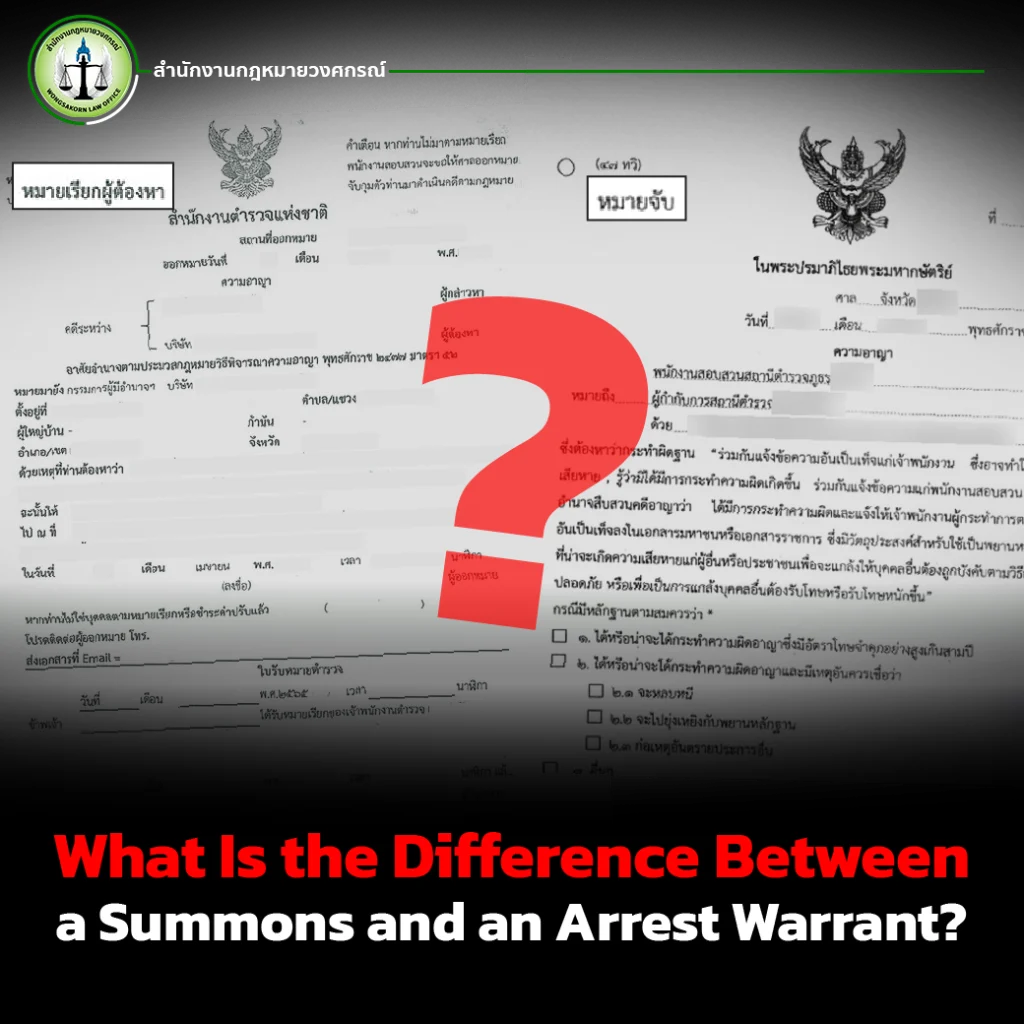
What Is the Difference Between a Summons and an Arrest Warrant?

Many people confuse a summons with an arrest warrant and believe that an arrest warrant cannot be issued unless a summons has been issued first. This misunderstanding can lead to serious misjudgment of one’s legal situation.

A Summons

  • A written request inviting the suspect to meet the investigating officer
  • Used when arrest is not yet necessary
  • Does not restrict personal liberty

An Arrest Warrant

  • A court order authorizing arrest
  • Issued when legally necessary
  • Allows immediate detention by authorities

Importantly, the law does not require a summons to be issued before an arrest warrant in every case.

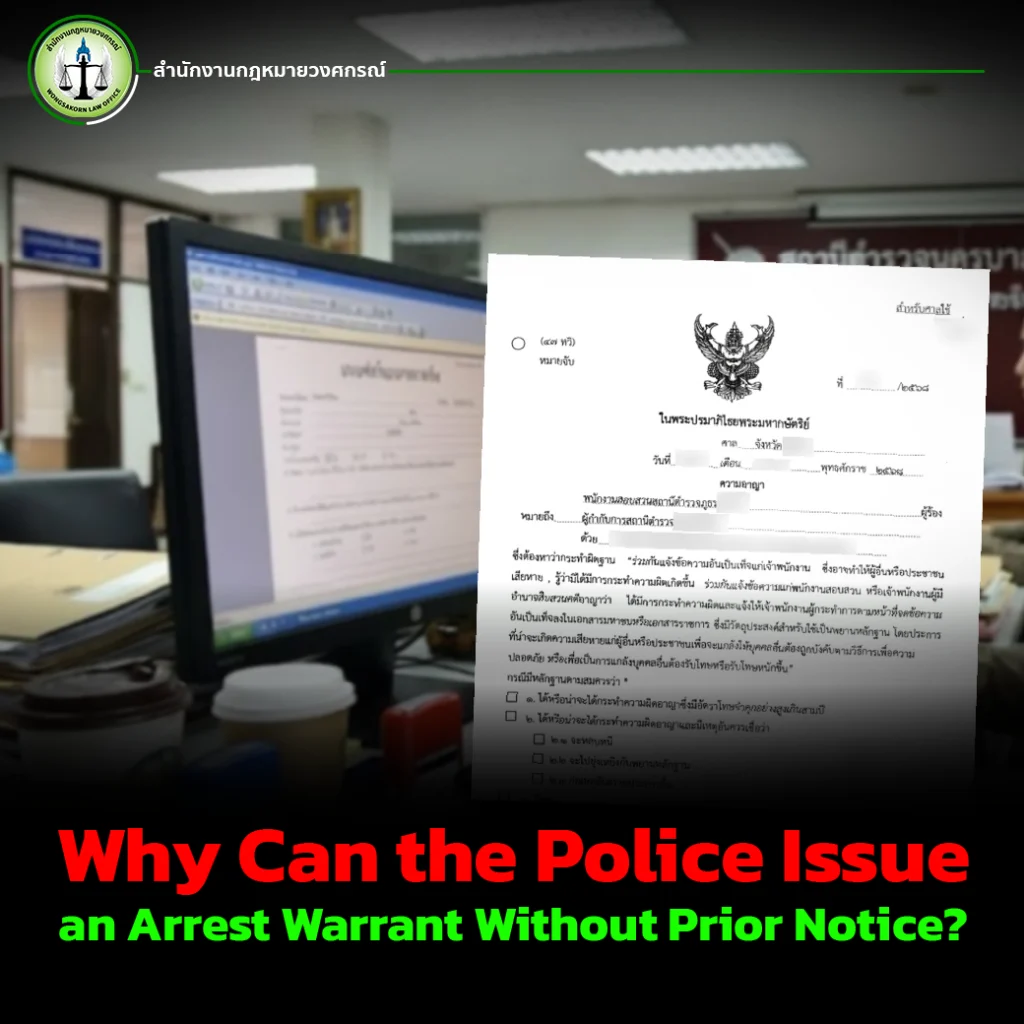
Why Can the Police Issue an Arrest Warrant Without Prior Notice?

The main purpose of allowing arrest warrants without prior notice is to prevent suspects from:

  • Fleeing the area or leaving the country
  • Destroying evidence
  • Intimidating witnesses
  • Repeating the offense

Requiring prior notification in all cases would undermine the effectiveness of law enforcement and the justice system.

Risks of Being Unaware of an Existing Arrest Warrant

In practice, many individuals are unaware that an arrest warrant has been issued against them until they:

  • Are arrested at an airport
  • Are detained while traveling
  • Have their documents checked by authorities
  • Are denied certain transactions or procedures

Such situations often occur unexpectedly and can severely affect one’s reputation, career, and personal life.

Why Should You Check for an Arrest Warrant in Advance?

Checking for an arrest warrant is an important preventive legal measure, especially if you:

  • Have been involved in a dispute or legal case
  • Have been accused of a criminal offense
  • Have previously given a statement to police
  • Are planning to travel internationally
  • Are a foreigner residing or working in Thailand

Knowing your legal status in advance allows you to plan appropriately, such as voluntarily meeting investigators or preparing a bail application.

How Should an Arrest Warrant Be Properly Checked?

Checking for an arrest warrant should be done lawfully and confidentially. Consulting a lawyer allows you to:

  • Verify information from reliable sources
  • Assess legal risks
  • Plan appropriate legal responses if a warrant exists
  • Reduce the risk of sudden arrest

Understanding Arrest Warrants Is Essential  Legal Consultation Is Available

In summary, an arrest warrant can be issued without prior notice or a summons if legal requirements are met and sufficient evidence exists. Understanding arrest warrants correctly is essential to avoid unintended legal risks.

If you wish to check whether an arrest warrant has been issued against you or have concerns about your legal status, you may contact us for consultation. We provide confidential, careful, and professional legal advice to help you handle the situation properly and lawfully.

Line @ คลิก! โทรหาเรา คลิก!