How Can Chinese Nationals Legally Own a Home in Thailand? What You Should Know Before Investing in Thai Real Estate

Over the past several years, Thailand has remained one of the most popular destinations for foreign nationals, particularly Chinese nationals seeking to live, invest, or retire in the country. This is largely due to Thailand’s reasonable cost of living, well-developed infrastructure, diverse cuisine, and convenient transportation system.

However, one of the most common questions asked by Chinese nationals is:

“Can Chinese nationals purchase a house or own land in Thailand?”

The answer is that foreign nationals may acquire rights in certain types of real estate in Thailand, but such ownership or use must be structured and carried out in compliance with Thai law.

In this article, Wongsakorn Law Firm explains the lawful options available to Chinese nationals who wish to own a home or make use of real estate in Thailand.

Can Chinese Nationals Own Land in Thailand?

Under Thai law, foreign nationals are generally prohibited from directly owning land in Thailand in the same manner as Thai citizens.

As a result, a Chinese national cannot, in ordinary circumstances, purchase land and register ownership in his or her own name.

In the past, some individuals attempted to acquire land through nominees or other structures that were not compliant with Thai law. Such arrangements may create significant legal risks, including civil and criminal liability, as well as the potential loss of the property in the future.

For this reason, foreign nationals who wish to invest in or reside in Thailand should pursue only those ownership or investment structures that are clearly recognized and permitted under Thai law.

Chinese Nationals Can Purchase Condominium Units in Thailand

One of the most popular ways for Chinese nationals to own real estate in Thailand is through the purchase of a condominium unit.

Thai law permits foreign nationals to own condominium units, provided that the legal requirements are satisfied, including compliance with the foreign ownership quota applicable to the condominium project.

Key advantages include:

  • Direct ownership of the condominium unit
  • The ability to resell the unit in the future
  • The ability to lease the unit and generate rental income
  • Greater legal certainty and security compared to high-risk ownership structures

For these reasons, purchasing a condominium has become one of the most common and practical options for Chinese nationals seeking either a residence or a real estate investment in Thailand.

How Can Chinese Nationals Have a House with Land in Thailand?
Although Chinese nationals cannot directly own land in Thailand, Thai law provides several legal mechanisms that allow foreign nationals to lawfully use and benefit from land.

Usufruct

A usufruct is a right that can be registered with the relevant authority, granting the holder the right to possess, use, and enjoy the benefits derived from the land or immovable property.

Examples include:

  • Living in a house on the land
  • Gardening or agricultural use
  • Operating a business as permitted by law
  • Leasing the property and receiving rental income

A usufruct allows Chinese nationals to legally use and benefit from land in Thailand, even though they do not hold ownership of the land itself.

Long-Term Lease Rights

Another option is to enter into a long-term lease agreement in accordance with Thai law.

Leasing land or a house on a long-term basis can enable foreign nationals to reside in and make use of real estate without acquiring ownership.

However, lease agreements should be carefully reviewed and structured by legal professionals to help prevent future disputes and protect the interests of all parties involved.

Where the Foreign National Has a Thai Spouse

Many Chinese nationals who are married to Thai citizens often ask:

“Can a house or land be purchased if my spouse is Thai?”

As a general rule, a Thai national spouse may legally own land in Thailand.

However, the ownership structure and rights relating to the property should be carefully planned to avoid potential issues in the future, such as:

  • Division of property
  • Transfer of ownership rights
  • Divorce proceedings
  • Inheritance matters

In many cases, legal mechanisms such as a usufruct or other rights recognized under Thai law may be utilized to provide greater security and protection for both parties.

Do Not Rely on Illegal Land Ownership Arrangements

Today, there is a significant amount of information and advertising online regarding ways for foreign nationals to acquire land rights in Thailand.

Some of these arrangements may carry substantial legal risks or could be regarded as attempts to circumvent Thai law.

Before making any investment decision, Chinese nationals should carefully verify the information they receive and seek advice from qualified real estate legal professionals.

Establishing a legally compliant ownership or usage structure from the outset is always safer and more effective than attempting to resolve legal disputes after problems arise.

Wongsakorn Law Firm Is Ready to Assist Chinese Nationals Seeking to Own a Home in Thailand

If you are a Chinese national or other foreign investor seeking to purchase a home, invest in real estate, enter into a long-term lease, register a usufruct, or establish a legally compliant real estate ownership structure in Thailand, Wongsakorn Law Firm is ready to provide comprehensive legal consultation, document review, and related legal services.

A successful real estate investment is not merely about acquiring property. It is about ensuring that the property can be legally owned, used, and enjoyed in a secure manner while receiving long-term protection under Thai law.

If you require legal advice regarding the purchase of a home, the registration of a usufruct, long-term lease arrangements, or real estate ownership structures for Chinese nationals, you may contact Wongsakorn Law Firm for guidance tailored to your specific circumstances.

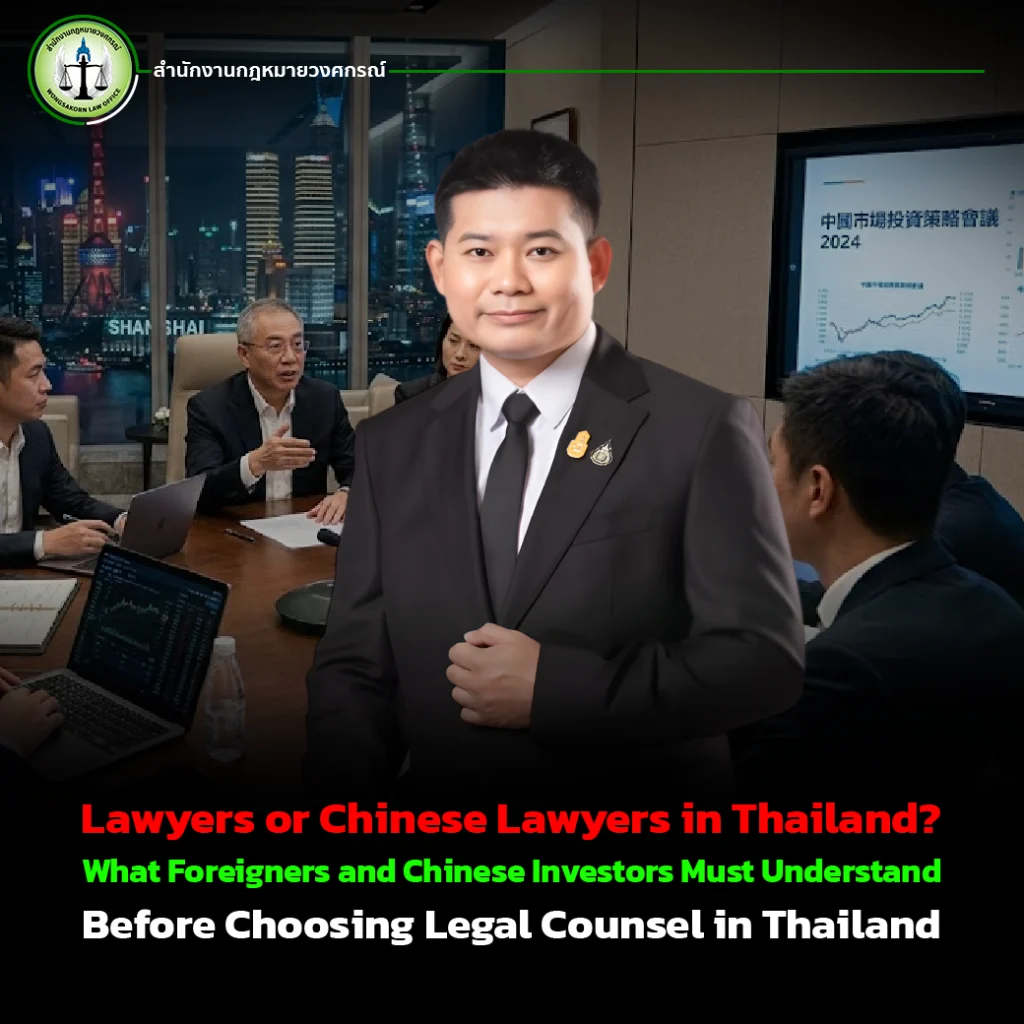
Lawyers or Chinese Lawyers in Thailand? What Foreigners and Chinese Investors Must Understand Before Choosing Legal Counsel in Thailand

Chinese Lawyers in Thailand In today’s landscape, Thailand has become one of the key destinations for foreign investors, especially Chinese nationals and investors from China. Whether engaging in business, investing in real estate, operating factories, running restaurants, or conducting import-export activities, one thing that cannot be avoided is Thai law, which investors must understand and navigate with the support of legal counsel. 

When it comes to choosing a lawyer, many foreigners, particularly Chinese clients, often believe that they “must hire a lawyer who can speak Chinese.” This assumption is usually based on communication concerns. However, in reality, this way of thinking may cause investors to miss the opportunity to work with a truly capable legal team that genuinely understands their case.

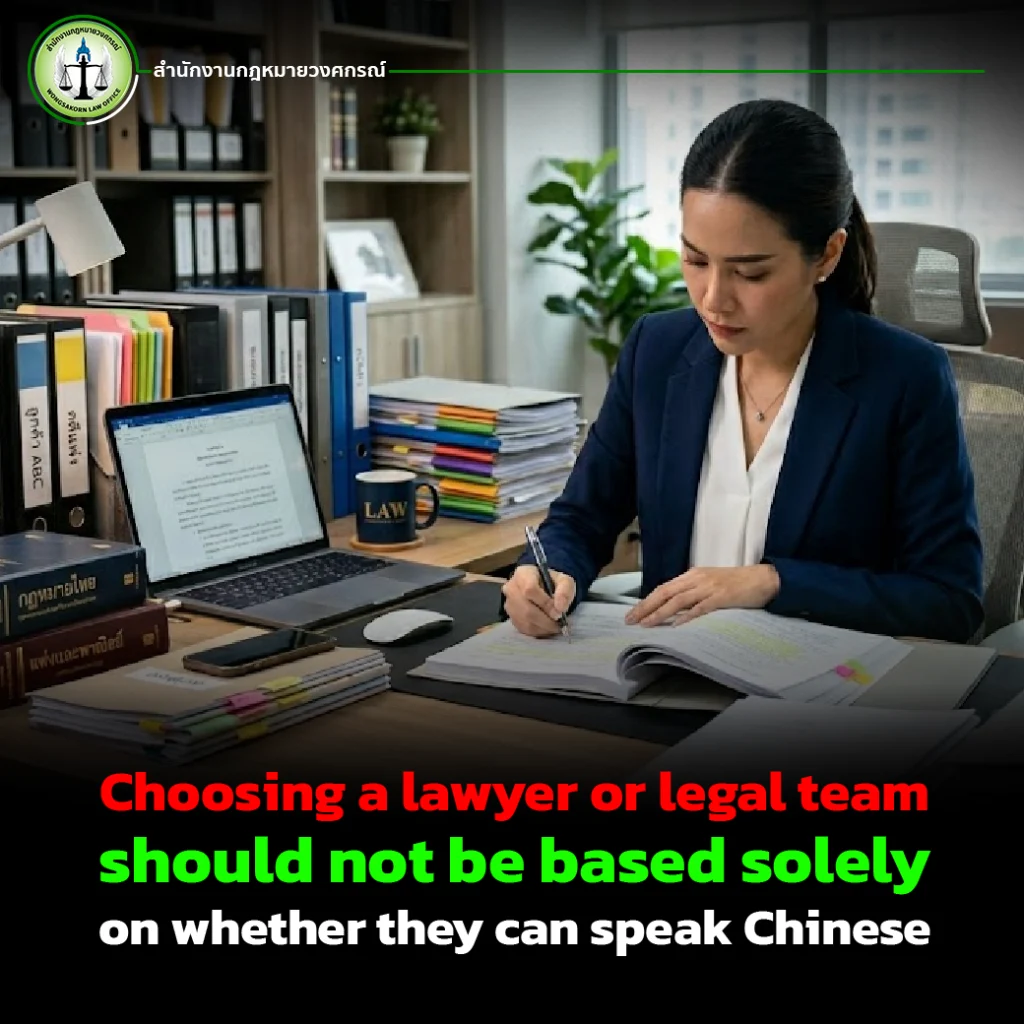
Choosing a lawyer or legal team should not be based solely on whether they can speak Chinese

but rather on their understanding of the case, attention to detail, and experience.

This article from Wongsakorn Law Firm will clarify an important point: why having a lawyer who is skilled in structuring legal strategy, or having a qualified legal assistant who speaks Chinese and understands Chinese law, can be more valuable than having a lawyer who is fluent in Chinese. 

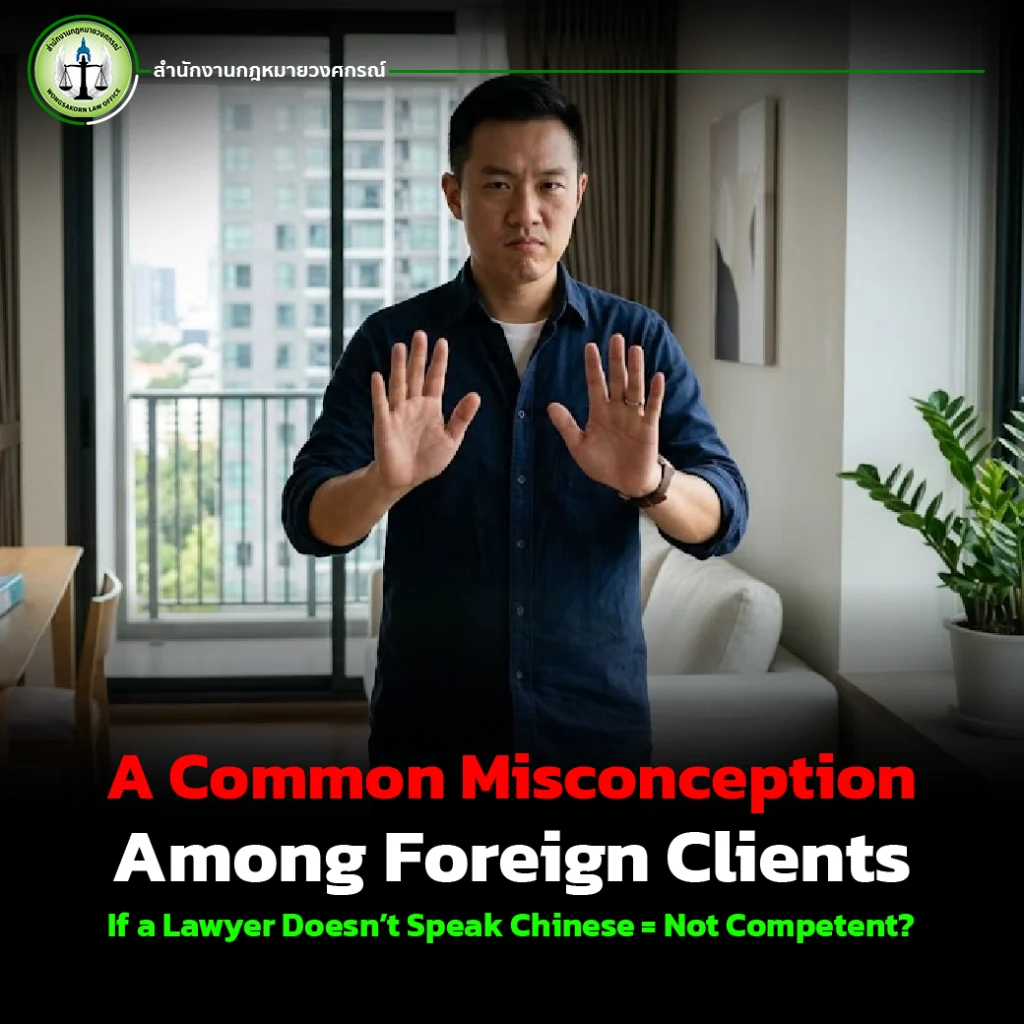
A Common Misconception Among Foreign Clients: If a Lawyer Doesn’t Speak Chinese = Not Competent?

This is a common misunderstanding. Many believe that if they are Chinese or foreign nationals doing business or handling legal matters in Thailand, they must choose a Chinese lawyer or a lawyer who speaks Chinese.                                                                                       In reality, the key factors in legal work are not language alone, but rather:

-Understanding of Thai law

-Case structure and legal strategy

-Attention to detail

Language is merely a tool for communication, not a measure of a lawyer’s competence.

A Lawyer Who Does Not Speak Chinese Can Still Serve Chinese Clients

At Wongsakorn Law Firm, although the lawyers themselves may not primarily communicate in Chinese, we have a highly qualified team of legal assistants.                                                        In particular, our legal assistants:

-Graduated from China

-Understand the Chinese legal system

-Understand Thai law

-Have over 10 years of professional experience

This allows us to effectively bridge communication between Chinese clients and our lawyers.

Legal Assistants Without Litigation Licenses Are Not Necessarily Less Knowledgeable

Many people mistakenly believe that if someone does not hold a litigation license, they lack legal knowledge. This is not true. A litigation license is specifically required for appearing in court. However, it does not mean that every licensed lawyer is highly skilled in all legal matters, nor that those without a license lack legal understanding. Legal knowledge and professional licensing are not the same. In fact, experienced legal assistants often have deep insight into case facts and details, which is crucial in building a strong case.

Why Communication Matters in Cases Involving Chinese Clients?

Whether Chinese or foreign clients are hiring a lawyer, the actual working process always involves a team. No lawyer can handle every aspect alone.

In practice

-The client provides information

-Legal assistants gather details and review documents

-They summarize facts and present them to the lawyer

-The lawyer then develops legal strategy and case structure

A lawyer’s ability to strategically structure a case directly impacts its effectiveness.

Therefore, even if a lawyer speaks Chinese, legal assistants are still essential.

Understanding Language Is Not Enough Cultural Understanding Matters More

In cases involving Chinese clients, challenges go beyond language. They include:

-Communication style

-Business mindset

-Word choice and tone

Certain Chinese expressions, when translated directly into Thai, may lead to misunderstandings.

This is why legal assistants with a background in China are extremely valuable; they interpret meaning, not just translate words.

They also understand Chinese lifestyle and cultural context, which enhances communication accuracy.

The Most Important Factor in Choosing a Lawyer Is “Attention to Detail”

Whether you are looking for a lawyer or a Chinese lawyer in Thailand, the real question is:

Does the law firm truly care about your case?

The outcome of a case depends not on language, but on:

-Thorough analysis

-Strategic planning

-Case follow-up

-Dedication and seriousness in handling the matter

Speaking Chinese Is Only a Basic Advantage

Being able to speak Chinese is certainly helpful; it makes initial communication easier and helps clients feel more comfortable.

However, it is only a basic starting point.

What truly matters is

-A team that understands the client

-A team that understands the case

-A team that is fully committed to achieving the best possible outcome

Legal work involves handling the client’s problems and responsibilities therefore, it must be carried out with the utmost care and professionalism.

Wongsakorn Law Firm and Chinese Clients

Over the years, Wongsakorn Law Firm has earned the trust of many Chinese clients across various areas, including:

-Civil cases

-International business disputes

-Insurance cases

-Labor cases

-Partnership disputes

-Business investment in Thailand

Corporate legal advisory services

Clients trust us not because we are Chinese lawyers, but because we are a dedicated and professional legal team, supported by legal assistants who truly understand the Chinese language and legal system.

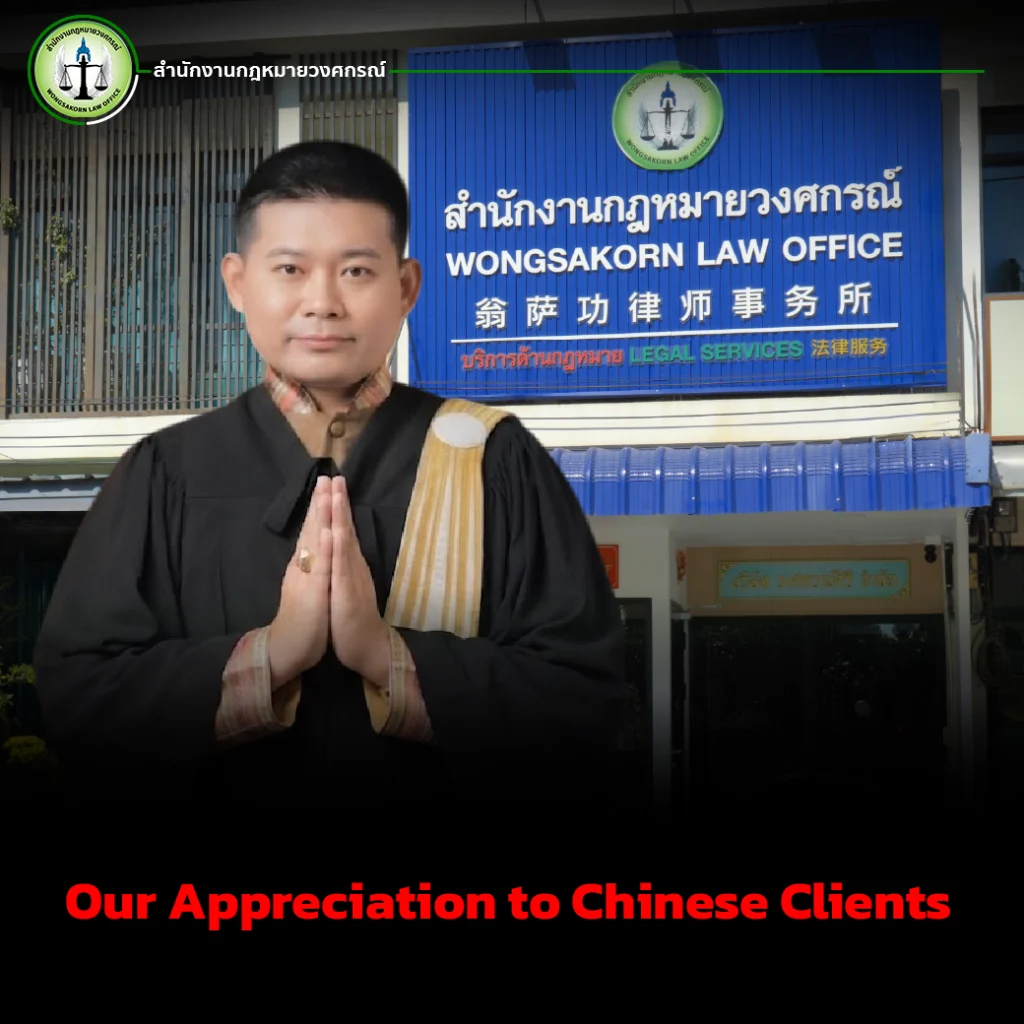
Our Appreciation to Chinese Clients

Wongsakorn Law Firm, led by Lawyer Arm Supasit Siri, would like to sincerely thank all Chinese clients for placing their trust in us.

Your trust is our greatest value.

We believe that excellent legal service does not begin with language, It begins with sincerity, attention, and responsibility.

Do Not Choose a Lawyer Based on Language Alone

If you are a foreigner or a Chinese client looking for a lawyer, do not base your decision solely on language.

A good lawyer does not necessarily need to be fluent in Chinese, but must have a team capable of

-Communicating accurately

-Understanding your facts

-Working fully in your best interest

Whether it is a lawyer or a legal team with Chinese-speaking assistants, the most important question is:

Are you receiving the best possible legal care for your case?

This is the principle that the Wongsakorn Law Firm always prioritizes.Click >> Contact Us <<

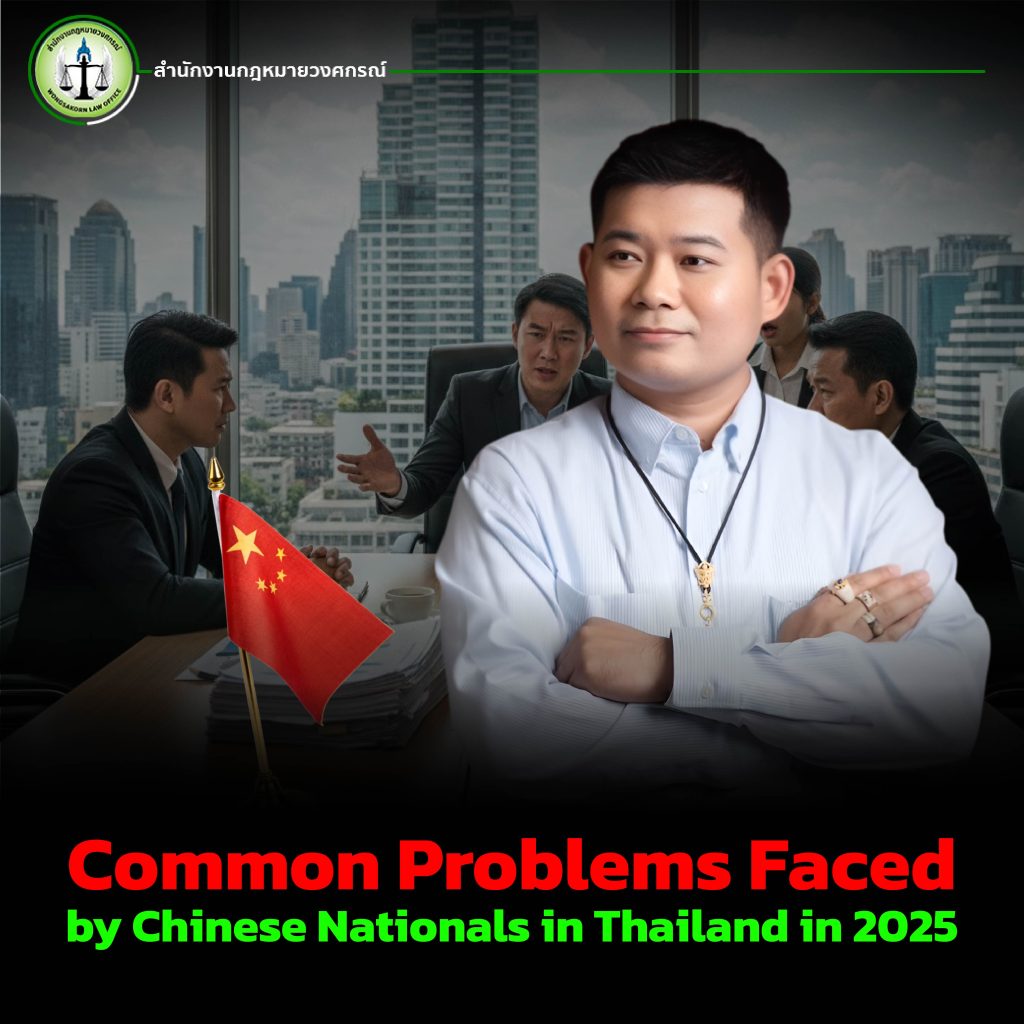
Common Problems Faced by Chinese Nationals in Thailand in 2025

Investment, Tourism, and Legal Solutions When Disputes Arise

In 2025, Thailand will continue to be one of the most popular destinations for Chinese nationals, whether for tourism, business investment, or long-term residence. With its attractive tourist destinations, rich cultural diversity, affordable cost of living, and promising economic opportunities, Thailand remains highly appealing. However, in practice, many Chinese nationals encounter various challenges arising from differences in language, legal systems, cultural norms, and administrative procedures in Thailand.

This article outlines the common problems faced by Chinese nationals when traveling to or investing in Thailand in 2025, covering tourism-related issues, business and investment challenges, and legal risks. It also provides guidance on prevention and proper solutions, concluding with recommendations for consulting lawyers who specialize in legal cases involving Chinese nationals in Thailand through Wongsakorn Law Office.

One of the most common challenges faced by Chinese nationals in Thailand is language barriers. While English or Chinese may be used in major cities, Thai remains the primary language in rural areas, government offices, and official administrative procedures.

Unclear communication may result in:

  • Misinterpretation of legal provisions
  • Signing contracts or legal obligations without fully understanding the content
  • Inability to communicate effectively with authorities such as police officers, hospitals, or banks
  • Being placed at a disadvantage during negotiations or disputes

Due to significant differences between Thai law and the Chinese legal system, as well as differences in enforcement practices, Chinese nationals often face legal challenges in the following areas:

Traffic Regulations and Driving Licenses
Many are unaware that an international driving permit or a Thai driving license is required. Failure to present proper documentation may result in fines or vehicle seizure.

Copyright and Intellectual Property Infringement
Selling counterfeit branded goods or importing infringing products may lead to both criminal and civil liability.

Labor Law Issues
Chinese investors who employ workers may encounter disputes due to a lack of understanding of Thai labor laws, including working hours, employee benefits, and employment contracts.

Thailand attracts many foreign investors, but Chinese investors often face business-related obstacles, including:

Company Registration
There are legal restrictions on foreign shareholding ratios and foreign business regulations that may be misunderstood or improperly applied.

Business Contracts
Signing contracts drafted in Thai without proper legal understanding may lead to unfair terms or unfavorable legal obligations.

Taxation and Financial Compliance
Lack of understanding of VAT, corporate income tax, or Bank of Thailand regulations may result in violations, penalties, or legal accusations.

Differences in culture and working styles may also create difficulties, such as:

  • Different corporate management systems
  • Misunderstandings during negotiations
  • Differing expectations regarding service quality, standards, or timelines

Although these issues may not be purely legal, they can significantly affect business operations and long-term success.

When facing criminal accusations or legal disputes whether criminal, civil, or labor-related many Chinese nationals find themselves in difficult situations due to:

Lack of Understanding of the Thai Legal System
Thailand’s judicial process differs from China’s, and misunderstanding procedural requirements may result in legal disadvantages.

Language Barriers
Without interpreters or lawyers fluent in Chinese and Thai law, critical information may be misunderstood or overlooked.

Arrest and Detention Risks
If an arrest warrant exists or a criminal complaint has been filed, arrest in Thailand may significantly impact bail proceedings and long-term legal outcomes.

Legal Solutions: Consulting Lawyers Specialized in Chinese-Related Cases

When legal issues escalate into disputes or litigation in Thailand, Chinese nationals need not worry. Specialized legal services are available to support Chinese investors and tourists, including:

Pre-Entry Legal Consultation
Advisory services before traveling to or investing in Thailand to minimize legal risks.

Legal Status Verification
Such as checking whether an arrest warrant exists, without the need to travel to Thailand.

Legal Representation in Thailand
Including statements to authorities, filing petitions, initiating lawsuits, and court representation through legal counsel.

Document Translation and Legal Representation
Lawyers experienced in handling cases involving Chinese nationals can provide accurate translations and clear legal explanations.

Thailand remains an attractive destination for Chinese nationals in 2025. However, living, investing, or traveling in Thailand inevitably involves legal risks and challenges that differ from those in China. Verifying legal status, understanding local laws, and engaging experienced legal counsel can help Chinese nationals navigate these challenges with confidence.

If you are a Chinese national facing legal, business, or investment-related issues in Thailand, you may consult lawyers specializing in Chinese-related legal cases at Wongsakorn Law Office, ensuring that your stay, business operations, and activities in Thailand proceed smoothly and lawfully.

Line @ คลิก! โทรหาเรา คลิก!