In an era where financial transactions occur rapidly through mobile banking, online banks, and various digital platforms, the terms “money trail” and “money laundering” frequently appear in news reports and online discussions. Many people may have heard phrases such as “irregular money trails,” “money trail investigation,” or “linked to money laundering,” yet still do not clearly understand what these terms mean and why they matter in daily life.
This article explains what a money trail is, why authorities investigate it, and how it connects to money laundering so you can stay informed and reduce the risk of being investigated or mistakenly considered involved in financial crime.
What Is a Money Trail?
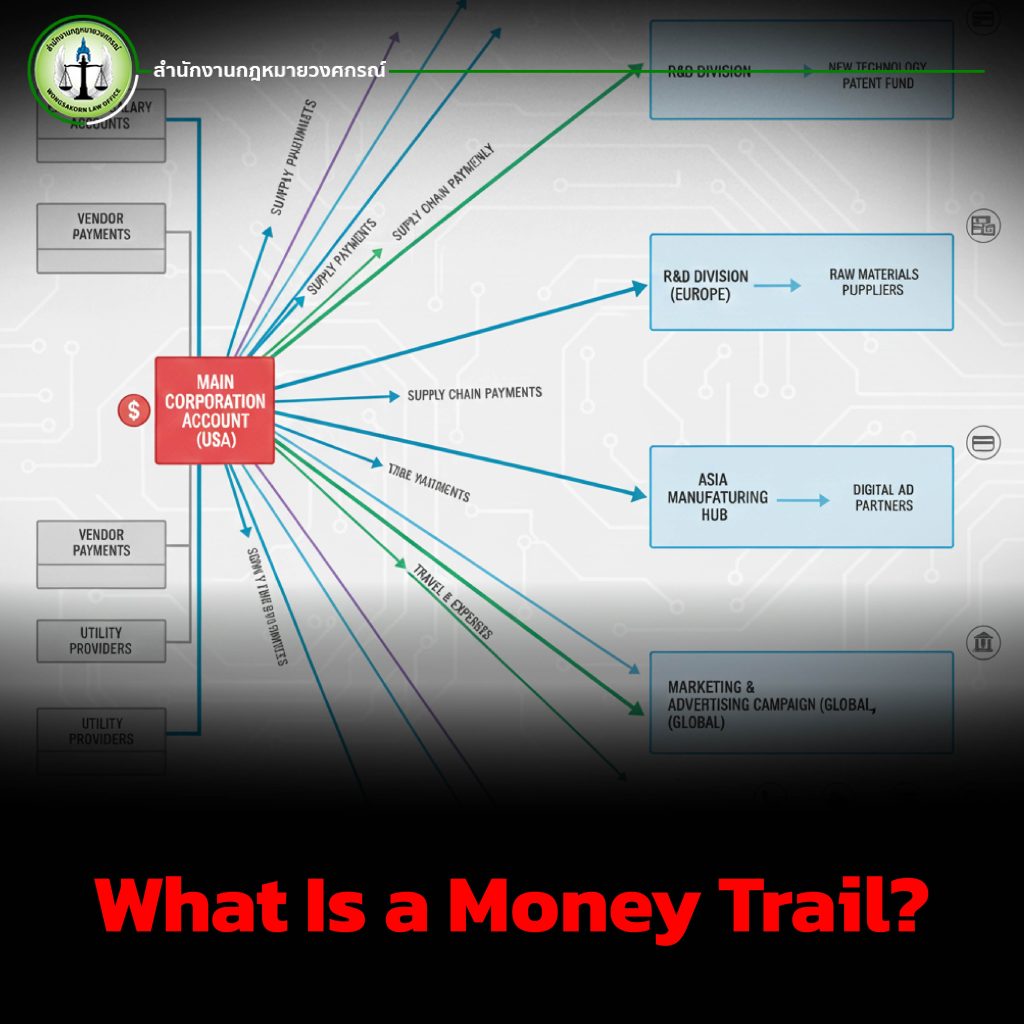
A “money trail” refers to the path of money movement from its origin to its final destination. It shows where the money came from, which accounts it passed through, who received it, and how it was used.
In simple terms, it is the tracking of every step a sum of money takes, to determine whether anything is suspicious.
Money trails are crucial in investigations involving:
- Fraud
- Ponzi schemes
- Online gambling cases
- Human trafficking
- Drug trafficking
- Cyber financial crimes
If the movement of funds appears suspicious such as unusually large amounts, transactions inconsistent with one’s income, or transfers through multiple accounts without reason authorities will trace the money to determine whether it originates from illegal activities.
How Are Money Trails Connected to Money Laundering?

Money laundering refers to the process of making illegal money appear legal by disguising its origin. Criminals often use multiple accounts to obscure the trail and make it difficult to trace.
Therefore, a money trail is the primary tool authorities use to uncover money laundering activities.
Money laundering typically involves three stages:
1. Placement – Introducing illegal money into the financial system
Examples:
- Depositing large amounts of cash into personal accounts
- Transferring funds into mule accounts
- Adding funds into digital wallets
2. Layering – Creating complex layers of transactions to hide the source
Examples:
- Transferring money through multiple accounts
- Rapid transfers
- Splitting amounts into smaller transactions
- Moving across platforms (e.g., wallet → bank → crypto → third-party account)
This stage creates the most complex and confusing money trails.
3. Integration – Reintroducing the cleaned money into the legal economy
Examples:
- Purchasing real estate
- Opening a business
- Buying vehicles
- Investing
- Using it as everyday spending
A highly complex money trail is a red flag indicating possible money laundering.
Examples of Suspicious Money Trails

Here are common scenarios seen in real-life cases:
1. Income does not match account activity
Example: Someone earning 20,000 THB monthly has over 100,000 THB moving in and out daily.
This may be considered suspicious.
2. Transfers through many accounts without purpose
Example:
Account A → B → C → D, all within 5 minutes.
This pattern indicates layering in money laundering.
3. Allowing others to use your bank account (Mule accounts)
Criminals may use someone’s account to receive and forward money.
The account owner becomes a primary suspect.
4. Money comes from unclear or dubious online investments
Some platforms unknowingly use investors as tools in money laundering.
Consequences of Irregular Money Trails
The impact can be severe:
- Bank account freezing
- Asset investigation
- Having to prove innocence
- Credit and loan eligibility issues
- Potential prosecution for money laundering
- Loss of future business opportunities
Money trail investigations are serious; everyone should protect themselves.
How to Protect Yourself From Money Laundering Risks?

1. Never allow anyone to use your bank account
Not even close friends.
Your bank account represents your money trail, and you are responsible for it.
2. Check all unfamiliar deposits
Report suspicious transactions to the bank immediately.
3. Avoid jobs involving receiving and transferring money
These are often fronts for money laundering.
4. Keep all financial records
Examples:
- Slips
- Receipts
- Chat logs
- Contracts
These serve as evidence to explain your money trail.
5. Use transparent financial channels
Avoid unnecessary transfers across multiple accounts.
6. Consult a lawyer immediately if you suspect involvement
The earlier the clarification, the better.
What to Do If You Are Investigated or Accused of Money Laundering?
1.Contact a lawyer immediately.
2.Gather all financial records.
3.Stop the questionable transactions.
4.Allow your lawyer to communicate with authorities.
5.Explain your money trail only with documented evidence, not assumptions.
Do not testify on your own without legal representation; misunderstandings can lead to criminal charges.
Money Trails and Money Laundering Are Closer Than You Think

Many people believe money laundering only concerns criminals but anyone can be unintentionally involved if they fail to manage their money trail properly. Staying informed and conducting transactions transparently is the best protection.
If your money trail is being investigated or you suspect money laundering within your account, consulting a lawyer is the safest and most effective way to protect your rights.