In the digital age, where anyone can easily post, comment, or leave reviews online, online defamation has become one of the most common legal issues. Whether it is posting harsh reviews on Google, public shaming on Facebook, attacking someone on TikTok, or spreading damaging information in messaging groups, all of these actions may constitute defamation under the law.
Many people mistakenly believe that “it’s just a review” or “just expressing feelings” is not illegal. In reality, if a statement causes damage to another person’s reputation, subjects them to contempt, or leads to public hatred, it may immediately fall under defamation.
This article explains what online defamation is, what victims can do, whether reviews can be removed, and why consulting a lawyer is an important solution.
What Is Online Defamation?
Online defamation is the act of making false statements or publishing messages, images, videos, or other content through online platforms in a way that damages another person’s reputation, exposes them to contempt, or causes them to be hated by society. This applies to individuals, business owners, companies, shops, and organizations alike.
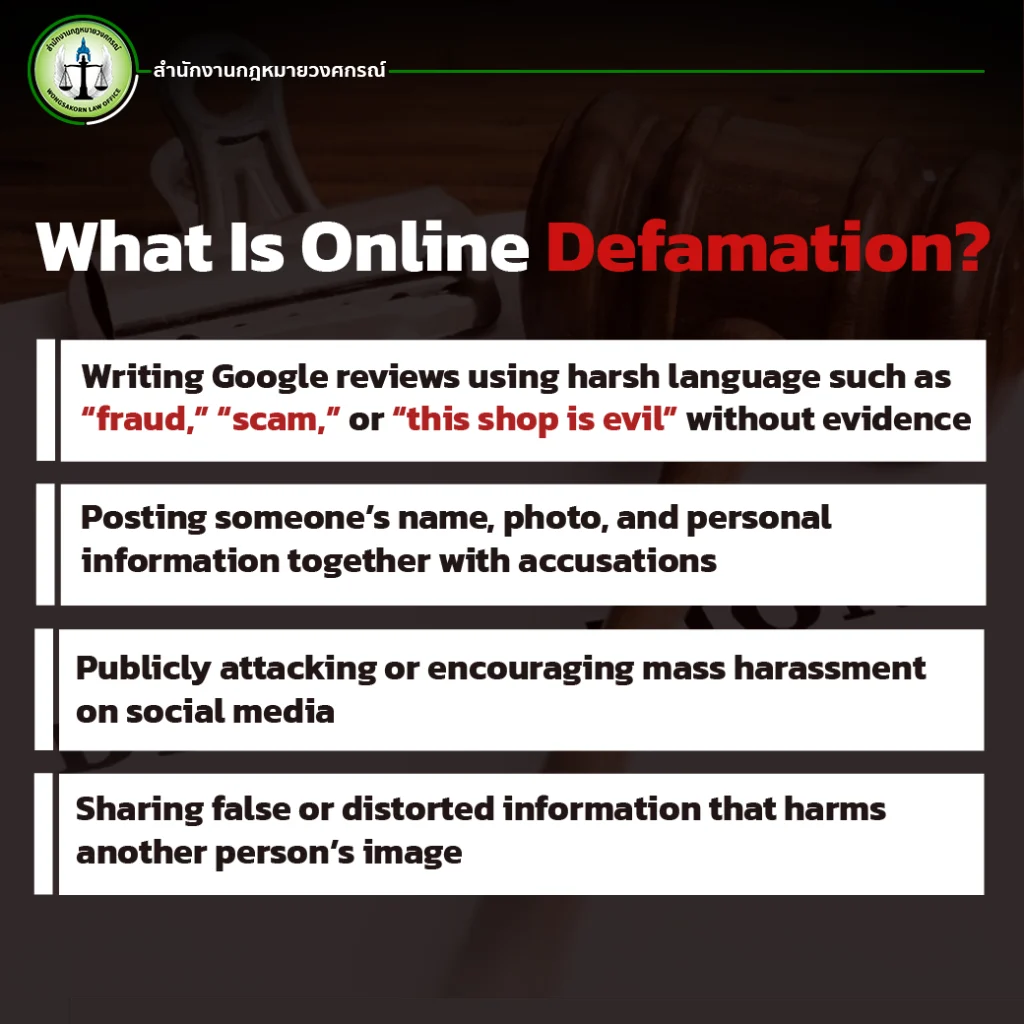
Common examples include:
- Writing Google reviews using harsh language such as “fraud,” “scam,” or “this shop is evil” without evidence
- Posting someone’s name, photo, and personal information together with accusations
- Publicly attacking or encouraging mass harassment on social media
- Sharing false or distorted information that harms another person’s image
Even if the poster claims it is “personal opinion,” if the message harms another person’s reputation, it can still be considered defamation.
When Does a Google Review Become Defamation?
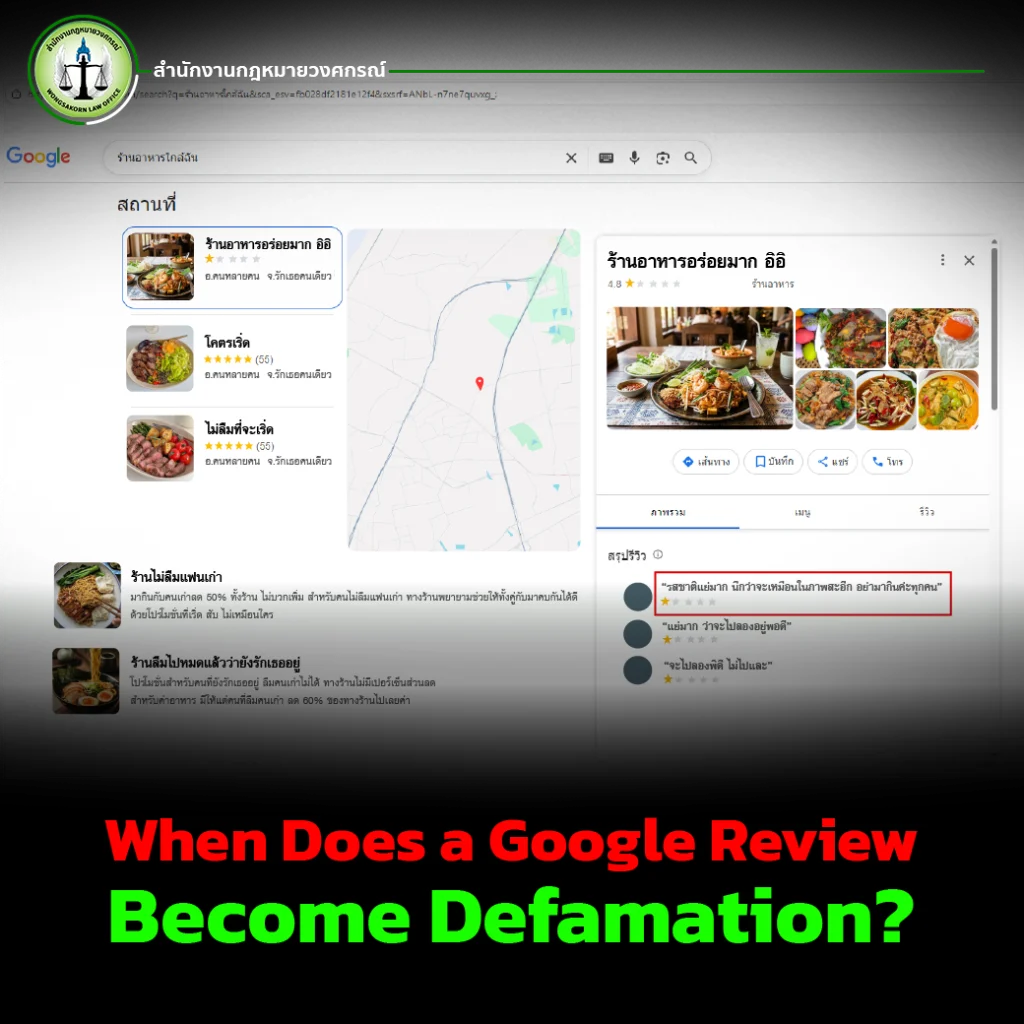
Posting a business review is not illegal if it is an honest opinion based on real experience, such as slow service, poor food quality, or dissatisfaction with service. However, it becomes defamation when:
- Harsh or insulting language is used without evidence
- False or misleading information is provided
- There is intent to damage reputation or harass
- Others are encouraged to attack the business or individual
The line between “honest review” and “defamation” depends mainly on the intent and the content of the statement.
What Should You Do If You Are Defamed Online?
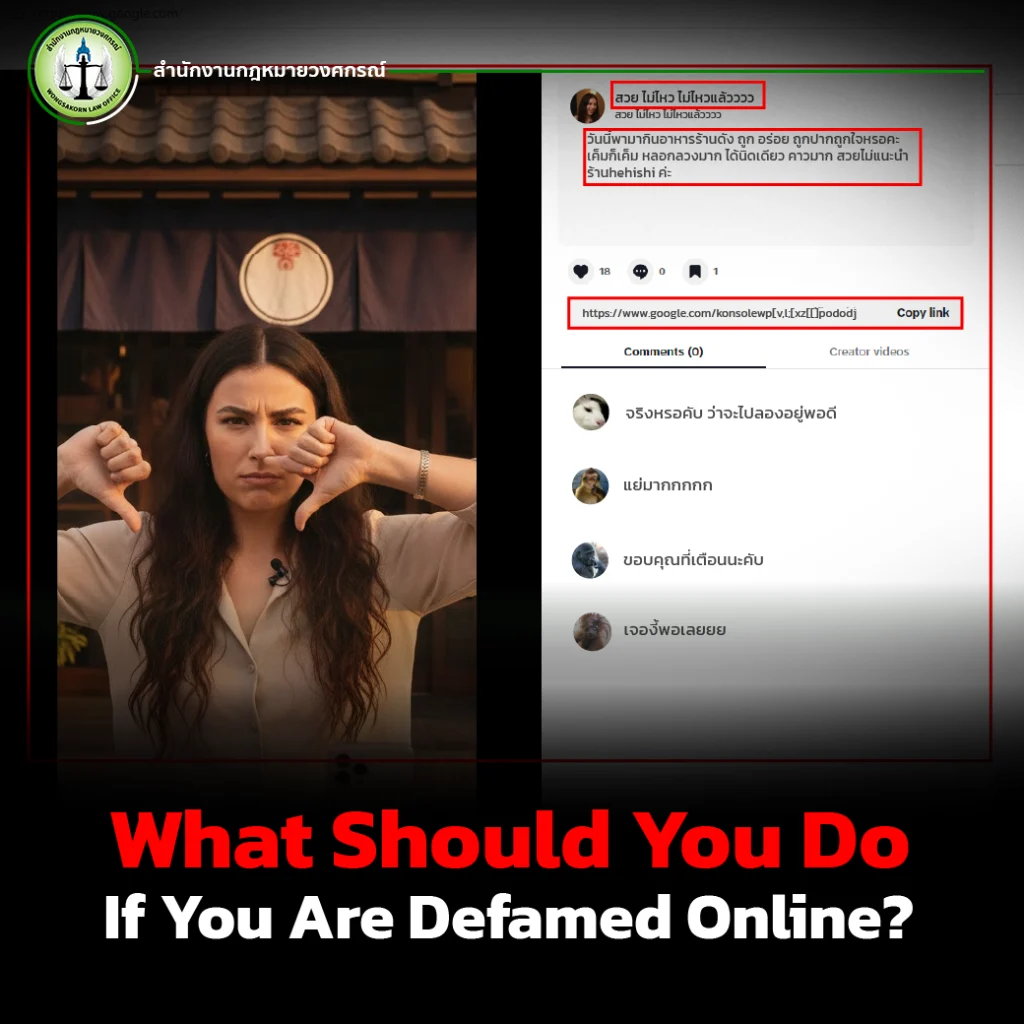
If you become a victim of online defamation, it is important not to react emotionally but to proceed systematically:
1. Collect Evidence Immediately
Such as:
- Screenshots of the messages
- URLs or links to the posts
- Date, time, and account name of the poster
- Profile photos or related information
This evidence is crucial for legal proceedings.
2. Consult a Lawyer
A lawyer can help determine:
- Whether the content constitutes defamation
- Whether to pursue a civil or criminal case
- Whether to start with negotiation or file a police report
Having legal guidance from the beginning reduces procedural mistakes and risks.
3. Request Removal of the Post or Review
In many cases, it is possible to:
- Report the content to platforms such as Google or Facebook
- Send a legal notice or warning letter
- Ask the poster to delete or correct the statement
Some disputes can be resolved without going to court.
Can the Offender Be Identified?
Many people believe that using fake accounts or aliases makes them untraceable. In reality, if the case involves defamation, legal procedures can be used to:
- Request IP address information
- Obtain user data from online platforms
- Use investigators and legal authorities to identify the offender
Posting defamatory content online does not exempt anyone from legal responsibility.
Damage Caused by Online Defamation
The impact is not limited to emotions but includes:
- Loss of reputation and credibility
- Decrease in income or business revenue
- Misunderstanding by society
- Stress and psychological harm
- Escalation of conflicts
In some cases, victims may file civil lawsuits demanding significant compensation.
Why Should You Consult a Lawyer When Defamed?

Consulting a lawyer provides many advantages:
- Legal evaluation of the strength of the case
- Guidance on lawful content removal
- Drafting legal warning letters
- Representing victims in legal proceedings
- Systematic protection of rights and reputation
Lawyers do not only file lawsuits; they can also seek the most appropriate solution, such as negotiation, mediation, or legal action when necessary.
Defamation Is Not a Minor Issue in the Online Era
In the past, defamation occurred within limited circles. Today, a single post can reach thousands or even tens of thousands of people within minutes. The damage is therefore far more severe.
Both posters and victims should realize that:
- Opinions must be expressed honestly and responsibly
- Harsh language carries legal risks
- Reputation is an asset that must be protected
Online Defamation Has Legal Solutions When the Law Is Used Properly
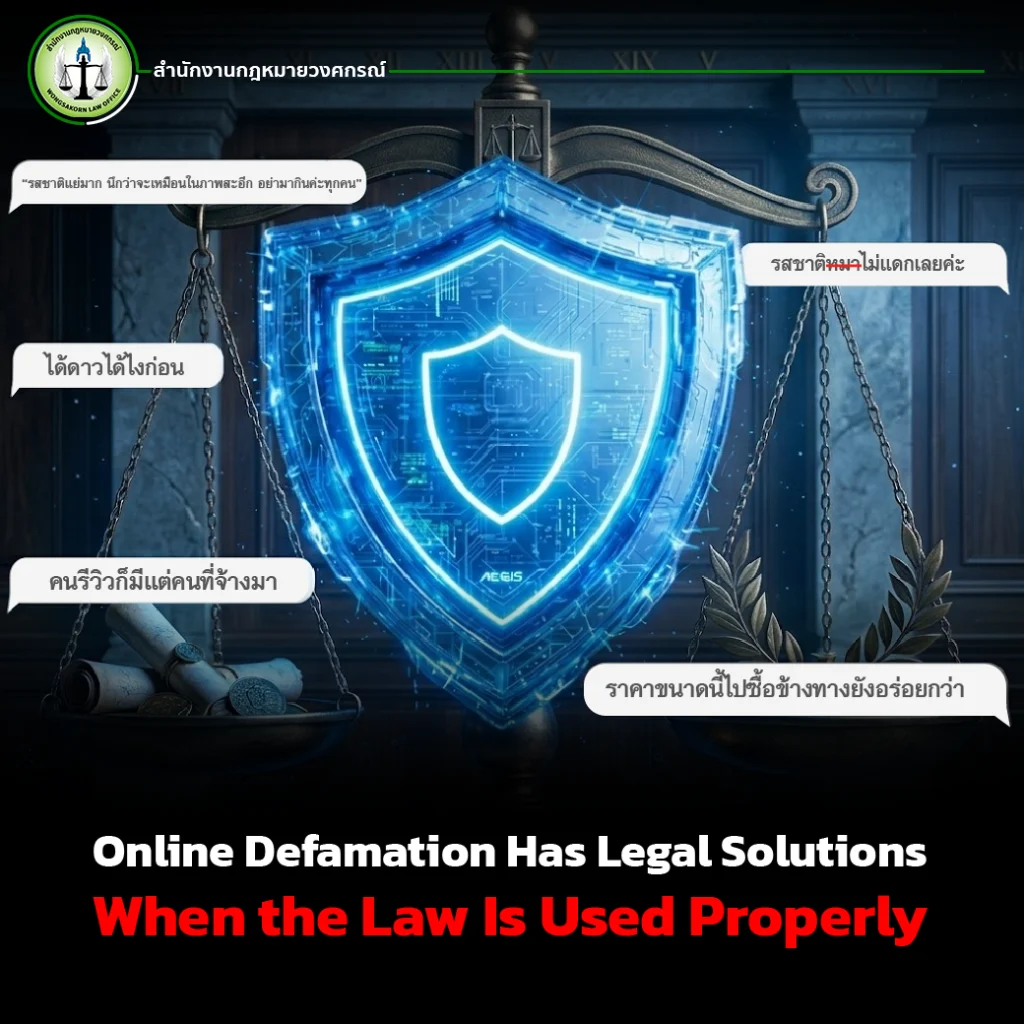
Whether you are defamed through Google reviews or attacked on social media, you do not have to endure the damage alone. The law provides options to:
- Remove unlawful content
- Identify the offender
- Take legal action to seek justice
Consulting a lawyer from the beginning is the safest and most effective approach.
If you are facing online defamation, do not let a small issue become a major problem. Protecting your reputation means protecting your future in the digital world.