In today’s world where business operations and collaborations are increasingly complex, “contracts” have become the core foundation of every deal, partnership, purchase–sale transaction, and even personal agreements. Whether it is a loan agreement, lease agreement, employment contract, joint venture agreement, or a high-value purchase contract, one crucial step that all parties should prioritize is contract review by a legal expert.
Many people assume that having a lawyer draft the contract is sufficient. However, in reality, reviewing the contract before signing is just as important. Even if the contract is drafted well by one party, it may still be incomplete, unfair, or contain hidden details that could create long-term consequences especially when the contract was prepared by the opposing party to protect their own interests.
This article explains why contract review by a lawyer is essential before signing, helping you understand hidden risks and avoid potential legal disputes in the future.
Why Should a Lawyer “Review the Contract” Before Signing?

• To prevent unfair or exploitative terms
Contracts often contain terms that benefit one side more than the other, especially when the document is provided by your counterpart. Examples include:
- Employment contracts that restrict employee rights
- Purchase–sale agreements with overly burdensome conditions
- Joint venture agreements that grant excessive advantage to one party
Contract review by a lawyer helps you identify which terms are unfair and should be renegotiated before signing.
• Lawyers can detect “loopholes” that ordinary readers overlook
Contracts often contain complex legal wording that can be interpreted in different ways. If not drafted clearly, it may lead to:
- Misinterpretation by each party
- Unclear entitlements
- No penalties when a breach occurs
- Clauses that violate the law, rendering the contract void
Lawyers have the experience to analyze the content, identify risks, and detect issues that could cost you significant losses later.
• To ensure the contract is complete, comprehensive, and legally enforceable
A well-constructed contract must contain essential elements, such as:
- Correct party identification
- Clear description of goods or services
- Duties, responsibilities, and scope of work
- Duration
- Payment terms
- Termination conditions
- Liability limitations
- Dispute resolution mechanisms
A lawyer ensures that all necessary clauses are included, leaving no gaps that may cause future problems.
• To reduce the risk of future disputes
Contract disputes commonly arise from:
- Ambiguous terms
- Misunderstandings during interpretation
- Absence of breach clauses
- Clauses that conflict with the law
Contract review significantly minimizes these risks by ensuring the agreement is clear, fair, and aligned with legal requirements from the beginning.
• Lawyers can negotiate fair and balanced terms
A lawyer not only reviews contracts but also advises on negotiation, such as:
- Revising disadvantageous conditions
- Adding warranties
- Adjusting penalty clauses
- Increasing client protections
Even minor adjustments can help ensure safer and more balanced business dealings.
• Contract review can save enormous future costs
Many people believe that skipping contract review helps save money.
However, when disputes arise, the damages often exceed the cost of review many times over:
- Losses from breach of contract
- Litigation expenses
- Business interruption
- Time and resource waste
Contract review is an investment that prevents long-term financial damage.
• Contract review gives you confidence when signing
A signed contract is legally binding. Once your signature is on the document, you cannot claim that you “didn’t understand” or “didn’t intend to agree.”
Contract review ensures:
- Fair and reasonable terms
- No hidden risks
- No legal vulnerabilities
- No unnecessary obligations
- Genuine protection of your rights and interests
This level of confidence can only come from a skilled lawyer.
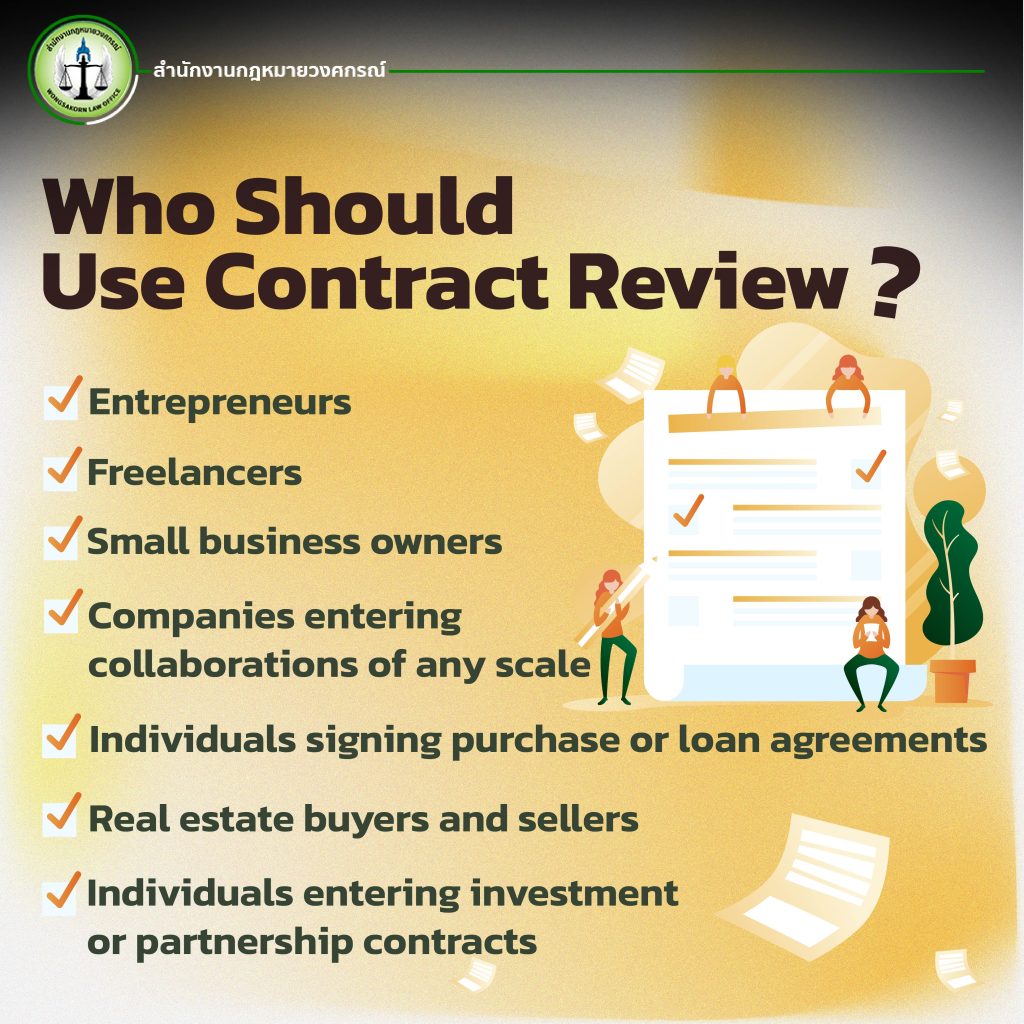
In short, anyone signing a legally binding document can benefit from contract review.
Contract Review: Preventing Risks Before It’s Too Late
Contract review by a lawyer is a crucial step that should never be overlooked because it allows you to:
✔ Avoid exploitation
✔ Detect hidden risks
✔ Reduce future disputes
✔ Negotiate fair terms
✔ Prevent long-term financial loss
✔ Sign with full confidence
A single contract can shape the future of your business or personal life. Do not let negligence expose you to unnecessary legal problems.
If you need a professional lawyer to review your contract, we are ready to provide legal consultation and thoroughly examine each clause to protect your best interests.