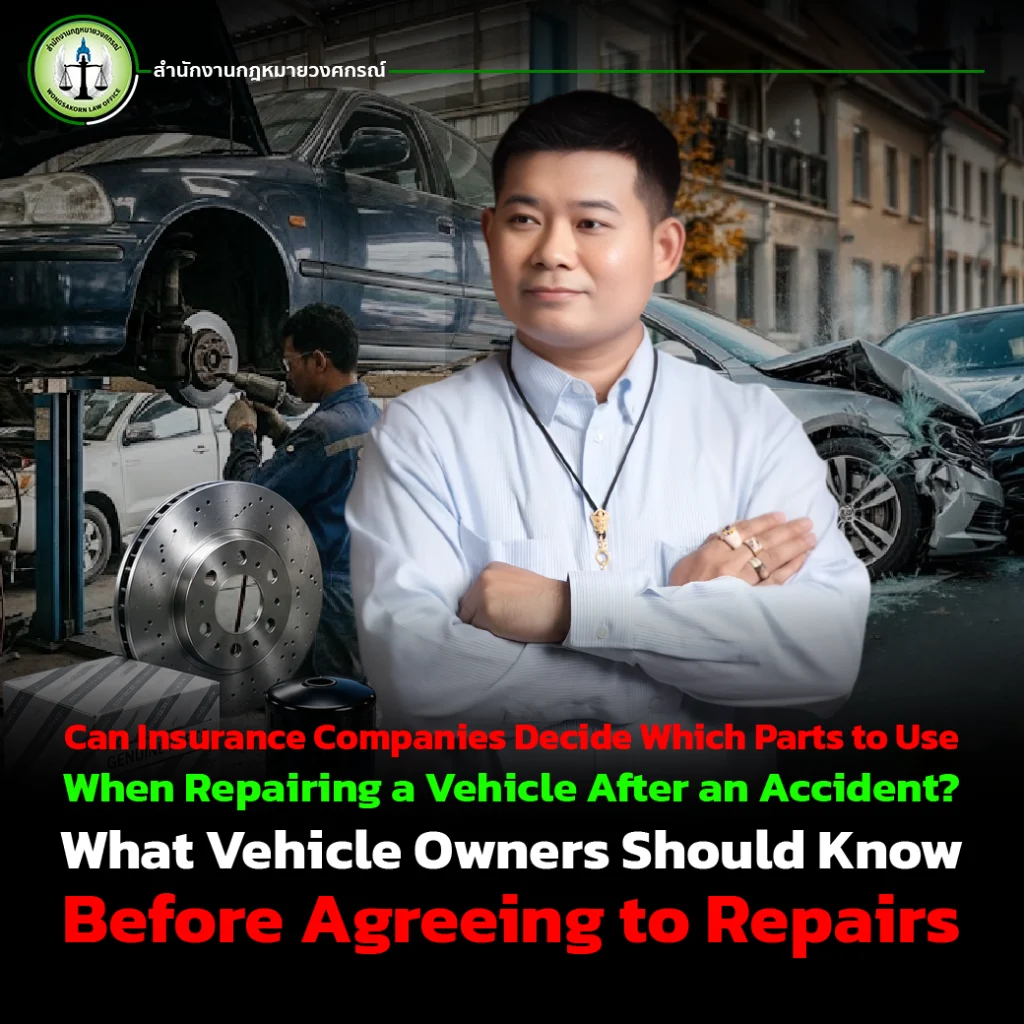
Broken leg with metal implants due to a car accident — Insurance refuses to pay? What should you do?

Many people believe that if they have insurance, they will automatically receive compensation without any issues. But in reality, it’s not that simple — especially when the incident is so severe that it results in a broken leg that requires metal implants . The medical costs can reach hundreds of thousands of baht, plus many other related expenses, yet insurance companies still find ways to deny or minimize the payout by all possible means.

In this case, the victim was a minor who had to undergo  surgery to insert metal plates  and will continue to incur medical expenses in the future. However, what the family faced was fierce pushback from the insurance company. Even with all the required documents — the birth certificate and the father’s marriage certificate clearly proving the legal relationship — the insurance company still claimed that they could not confirm the father was truly the victim’s parent, despite having official documents right in front of them! The father was told he could not file a lawsuit to claim the rights on behalf of his child. So what should be done in this situation? Today, Wongsakorn Law Office would like to share some practical legal insights with you.

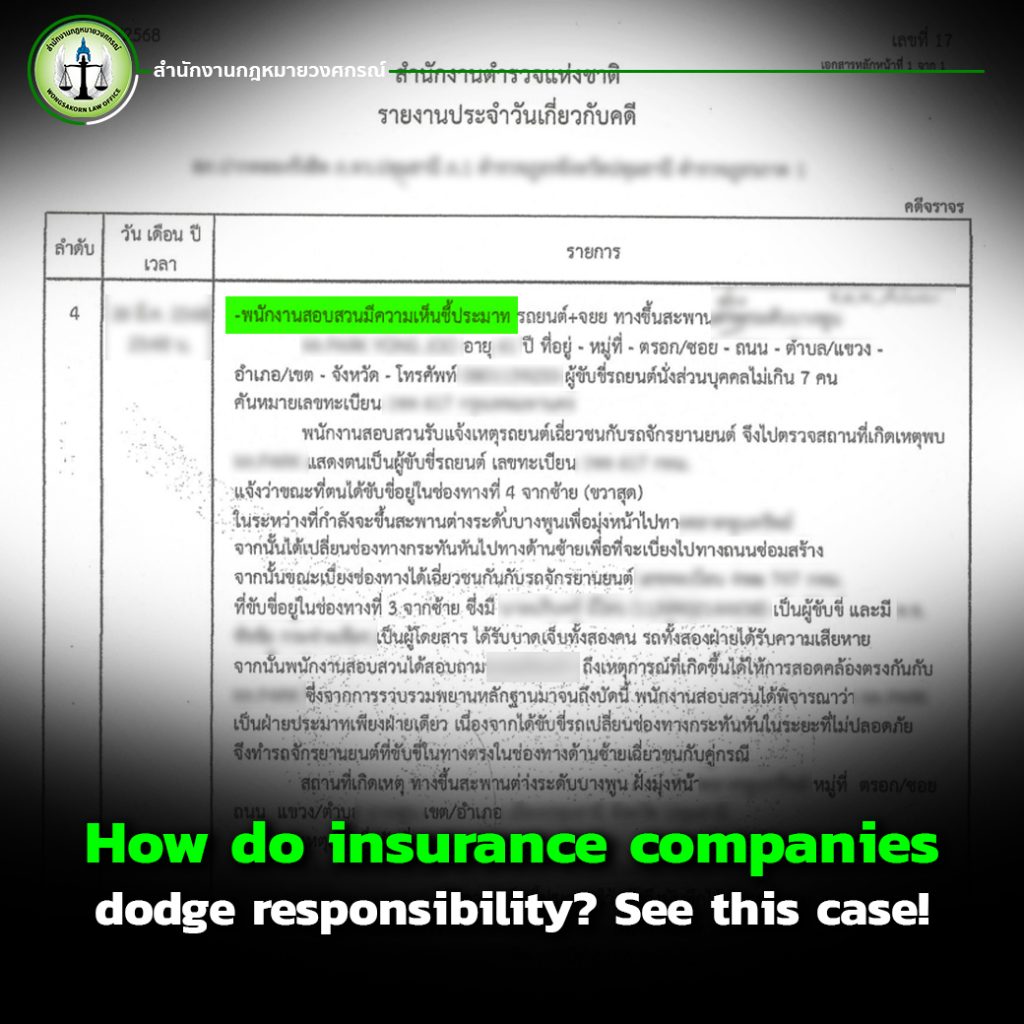
How do insurance companies dodge responsibility? See this case!

How Do Insurance Companies Avoid Liability? Check Out This Case!

Many people don’t realize that insurance companies can find loopholes to dispute almost anything. For example, in this case:

They claimed that the relationship certificate documents were incomplete, even though there was a clear birth certificate and the father’s marriage certificate.

They argued that the medical expenses were exaggerated, even though the victim needed repeated treatments and would have future costs for surgery to remove the metal plates.

They claimed the compensation claim was unclear — saying who was at fault hadn’t been concluded yet, despite full police evidence and the other party’s confession.

This shows clearly how insurance companies will try every possible way to reduce the amount they have to pay or to deny liability altogether.

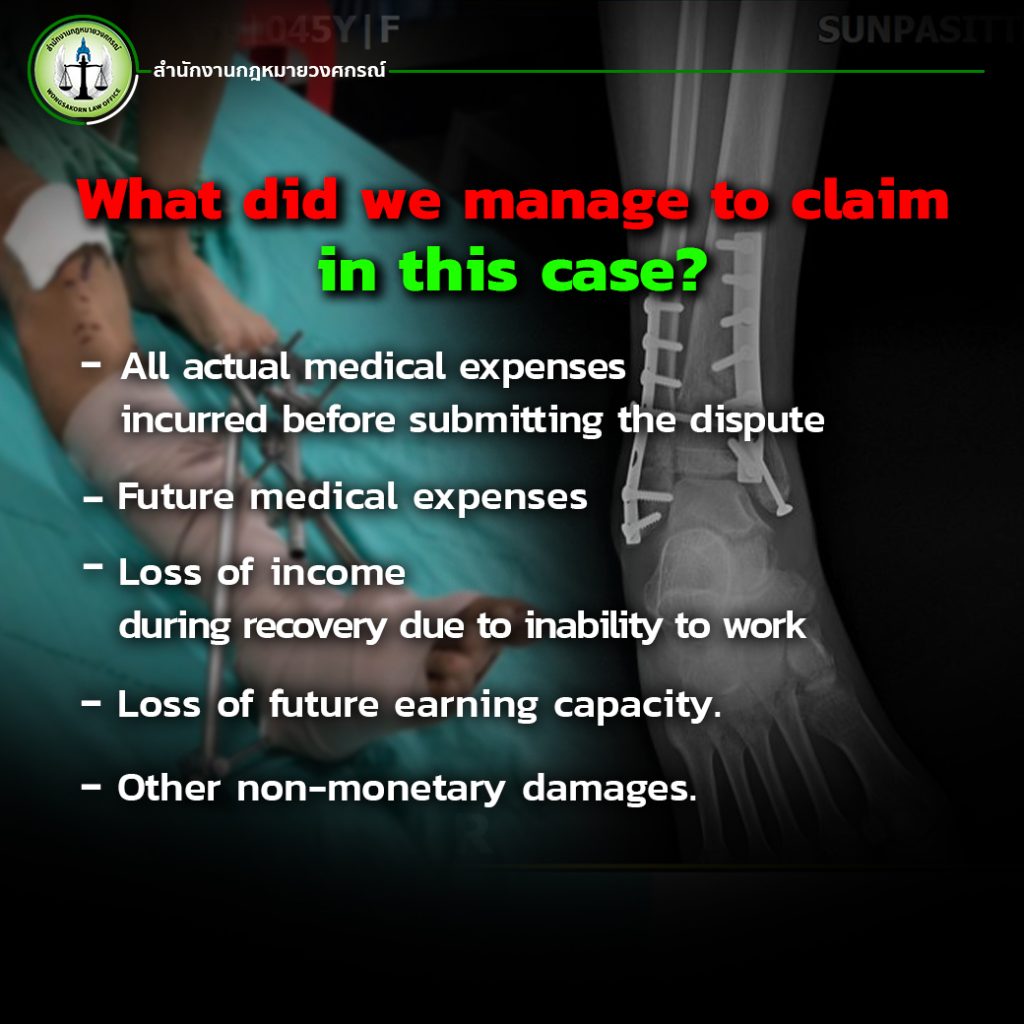
What did we manage to claim in this case?

Despite facing many objections, our legal team prepared witnesses, gathered evidence, and managed the entire arbitration process until full compensation was successfully claimed according to the client’s rights, covering:

  • All actual medical expenses incurred before submitting the dispute, including major surgery costs, room fees, and all related care costs.
  • Future medical expenses for hardware removal surgery and ongoing physical rehabilitation.
  • Loss of income during recovery due to inability to work.
  • Loss of future earning capacity.
  • Other non-monetary damages.

All of this ensures that the injured party receives what they are entitled to under the insurance policy, without being taken advantage of or forced to surrender to the insurance company.

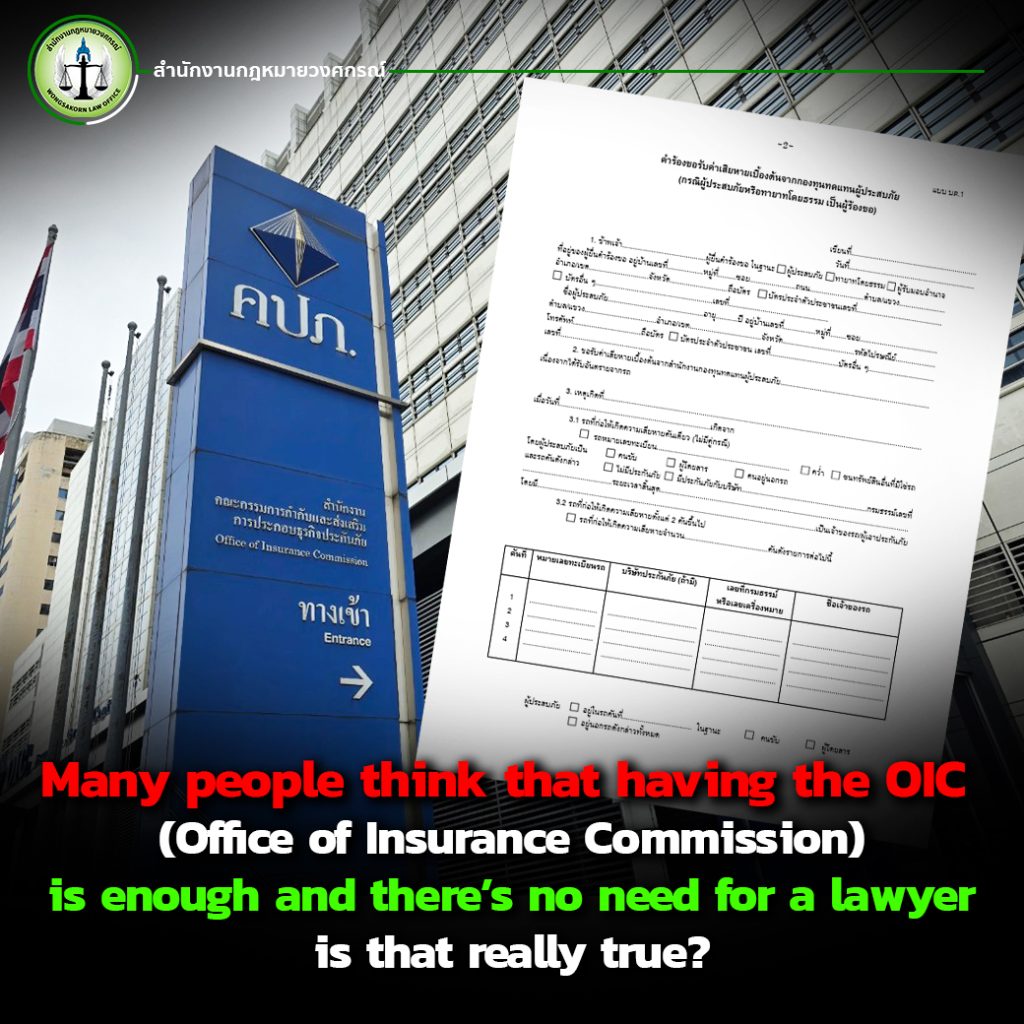
Many people think that having the OIC (Office of Insurance Commission) is enough and there’s no need for a lawyer — is that really true?

Many people believe that when an incident happens, the Office of Insurance Commission (OIC) will help and that hiring a lawyer or legal advisor isn’t necessary and just an extra expense. But in reality, there have been many cases where people were confident they could handle it themselves through government channels — only to end up receiving no compensation or just a small amount, far from covering the pain and damages suffered.

👉 In this very case

 you can clearly see that the insurance company already had lawyers and legal advisors prepared long before any claim even arose. They have complete strategies to counter every angle. But ordinary people, without legal knowledge, complete evidence, or experience to fight an insurer’s legal team, have a very high chance of losing their rights.

See how insurance companies have so many ways to avoid responsibility? Without someone who understands the legal game and knows how to counter these tactics, you are far more likely to be at a disadvantage.

Why Wongsakorn Law Office?

Wongsakorn Law Office is a legal team specializing in insurance cases and compensation claims for car accidents in particular. We fully understand the relevant laws, the evidence needed, and how to negotiate with insurance companies from all perspectives.

What makes us different is our experience and meticulous preparation that ensures you don’t miss your rights. We focus on evidence planning, thorough preparation at every step, and fighting to get you your full legal entitlement, no matter what tactics the insurance company uses to deny your claim.

If today you or someone you know faces the same problem —  broken leg with metal implants due to a car accident,
the insurer refuses to pay, pays too little, or won’t pay at all —
don’t handle it alone and risk losing your rights or wasting time unnecessarily. Let Wongsakorn Law Office handle every step systematically to make sure you receive the full legal compensation you deserve.

>> Contact us << — We’re ready to serve you professionally ✅

How to Review Without Being Sued When Free Speech Can Become a Defamation Case?

In today’s digital age, anyone with a smartphone and social media account can become a reviewer—whether it’s for restaurants, hotels, attractions, repair shops, or clinics. However, many overlook the fact that an impulsive or careless review could immediately expose you to a defamation lawsuit by the business owner—especially if your review harms their reputation or causes public embarrassment.

Many believe “telling the truth” protects you from being sued. But legally speaking, truth alone is not always a defense. Courts also consider your intent, wording, and the impact of your review.

Wongsakorn Law Office invites you to explore the hidden legal risks behind impulsive reviews and offers practical guidelines on how to review safely without facing defamation charges.

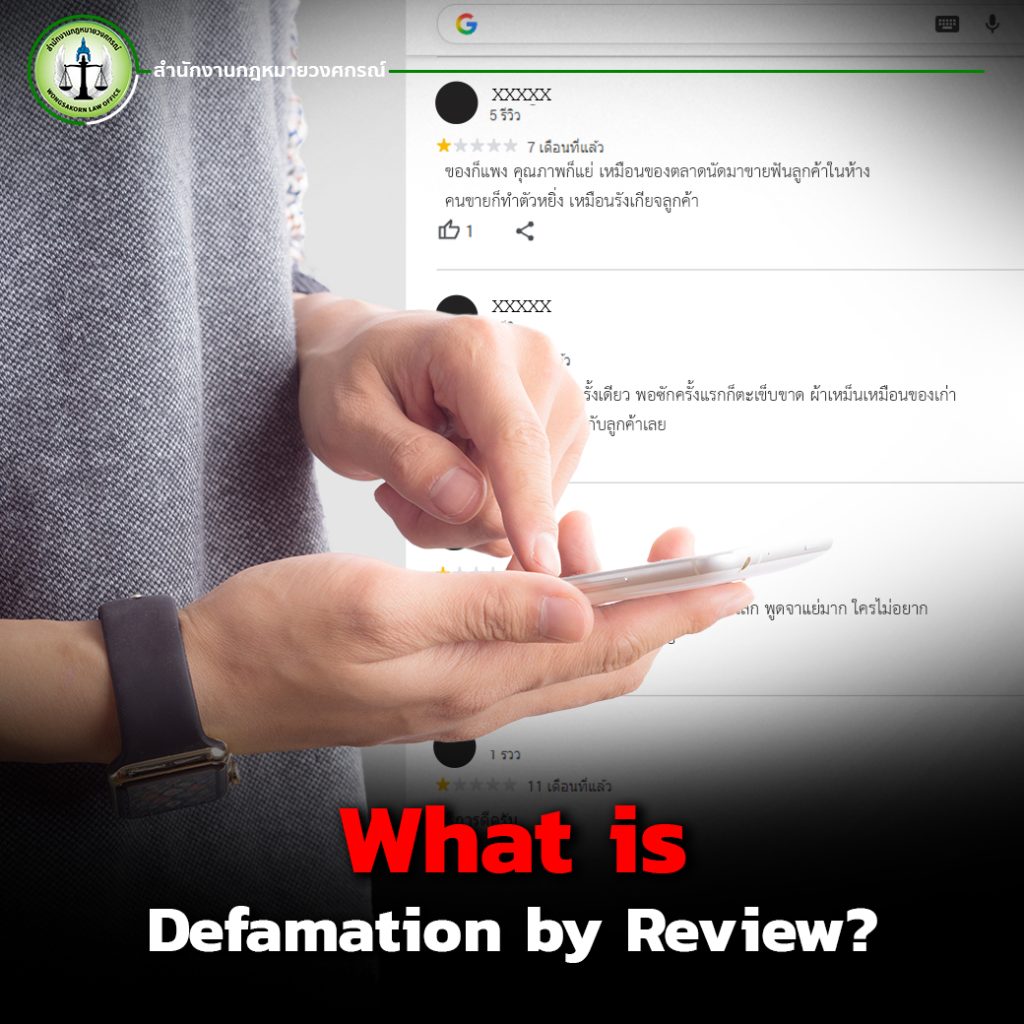
What is Defamation by Review?

Defamation occurs when someone’s reputation is harmed by false statements or allegations shared with third parties. If you post public reviews on platforms like:

        •Google Review

        •Facebook

        •X (Twitter)

        •Pantip

        •TikTok

        •Any review website

…you may be liable under Article 328 of Thailand’s Criminal Code, which defines “defamation by advertising.” Penalties include up to 2 years in prison and/or fines up to 200,000 THB.

Real Cases :  Reviewers Were Sued

Several reviewers or consumers posted negative experiences such as

        •Calling food “smelly like rotten”

        •Saying a staff member spoke “as if on drugs”

        •Claiming “I fear the doctor will kill me”

Even if subjective, if the review names individuals, uses harsh language, or lacks evidence, legal action can be taken immediately—without needing the review to be widely shared.

Free Speech ≠ Unlimited Speech

Many assume reviewing is protected free speech. But legally, your right to speak must not infringe upon others’ rights.

Reviews colored by emotion, exaggeration, harsh insults, or personal vendettas can violate the business owner’s rights—even if your intent was personal opinion.

Inaccurate Reviews Are Even Riskier

Reviews that contain falsehoods or exaggerations especially when they harm a business’s reputation or revenue can be treated as intentional defamation. Courts may impose heavier penalties if

        •The reviewer never used the service

        •The incident never occurred

        •The reviewer intended to damage the business’s image

In such cases, businesses may pursue both criminal defamation charges and civil damages.

Case Example: Fake Negative Review

A business owner received a Google Review claiming poor service and dirty food. CCTV confirmed the person never entered the store. The owner hired legal counsel and successfully filed defamation claims and demanded compensation for reputational harm.

How to Review Safely Without Risk of a Lawsuit?

        1.Avoid naming specific individuals

        •Use neutral terms like “a staff member during my visit” instead of identifying individuals.

        2.Use neutral, polite language

        •Avoid emotional or defamatory labels. Prefer “I felt disappointed” rather than “worst ever,” “dumb,” or “shouldn’t exist.”

        3.Provide solid evidence

        •Back your review with photos, receipts, or recordings not just feelings or hearsay.

        4.Give the business a chance to resolve first

        •Always contact the business directly before posting your review.

        5.Don’t share or repost defamatory content written by others

        •Even if you’re not the original author, sharing defamatory posts can make you liable.

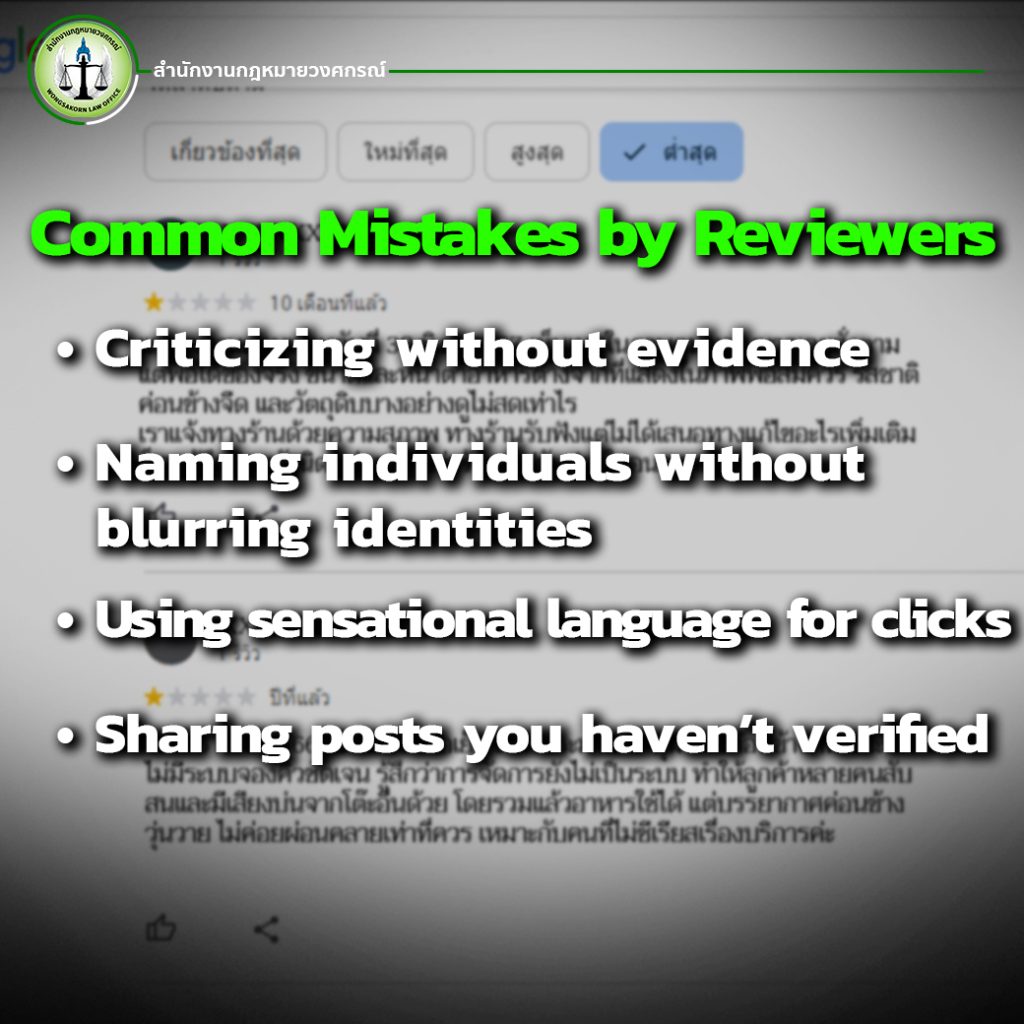
Common Mistakes by Reviewers

        •        Criticizing without evidence

        •        Naming individuals without blurring identities

        •        Using sensational language for clicks

        •        Sharing posts you haven’t verified

Warnings in the Age of Review Power

        •        Always consider the impact your reviews have on others.

        •        If you’re an influencer or have many followers, your words carry more weight and risk.

        •        Avoid turning reviews into public shaming instead of constructive feedback.

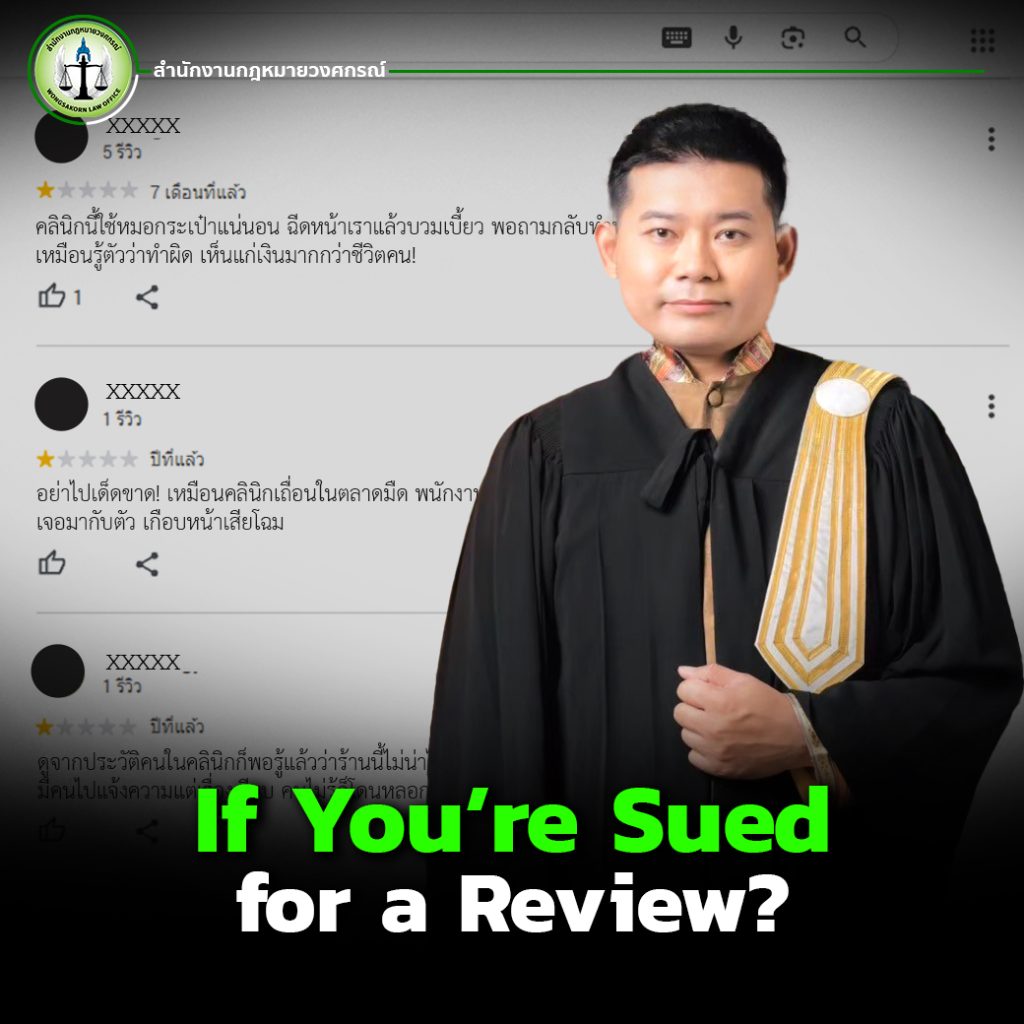
 If You’re Sued for a Review?

If you receive legal notice or a letter from the affected party’s lawyer

        •Stop sharing or reposting the content immediately.

        •Collect all relevant evidence (photos, messages, receipts).

        •Contact a lawyer promptly for legal advice.

        •Avoid negotiating or apologizing on your own such acts can be used against you in court.

A thoughtless review can turn your effort to warn others into a criminal case. Words on social media have power and sometimes legal consequences.

If you’re unsure whether your review could be defamatory, or if you’re facing legal action, contact Lawyer Arm at Wongsakorn Law Office for expert legal consultation. Click to contact us.

Being “Named and Shamed” on X ( Twitter) Can Be Defamation — Legal Action Can Be Taken Immediately

In today’s world dominated by social media—especially the platform X, formerly known as Twitter—a few lines of text can have unexpectedly serious consequences. This is particularly true when a post explicitly refers to a specific individual, potentially damaging their reputation and public image.

One recent case has drawn significant public attention: an individual was publicly “named and shamed” in a post on X, with their real name and surname tagged. The post led many viewers to form negative opinions of the person, resulting in widespread public ridicule and misunderstanding.

The incident had a severe emotional and reputational impact on the victim. Unable to bear the consequences, they quickly consulted a lawyer and proceeded with a criminal defamation lawsuit. The victim stated clearly that they had no intention of negotiating or settling, as the situation had already spiraled out of control. Delaying legal action could allow the post to be shared or re-posted by others, causing even greater damage.

What Is Defamation by Publication? Know This Before It’s Too Late

According to Section 326 of the Thai Criminal Code, anyone who makes a defamatory statement about another person to a third party—whether in a way that harms their reputation, subjects them to contempt, or incites hatred—commits the offense of defamation, which carries a penalty of up to one year in prison, a fine of up to 20,000 Baht, or both.

If such an act occurs on social media platforms such as Facebook, X (formerly Twitter), TikTok, or Instagram, it falls under the more serious offense of defamation by means of publication as stated in Section 328. This carries a harsher penalty of up to two years in prison, a fine of up to 200,000 Baht, or both.

In a recent case involving X, the incident clearly constituted defamation by publication. The offender tagged the victim’s full name in a public post, which resulted in significant reputational damage and widespread misunderstanding. As the post was made available to the general public, this qualifies as defamation by publication beyond any doubt.

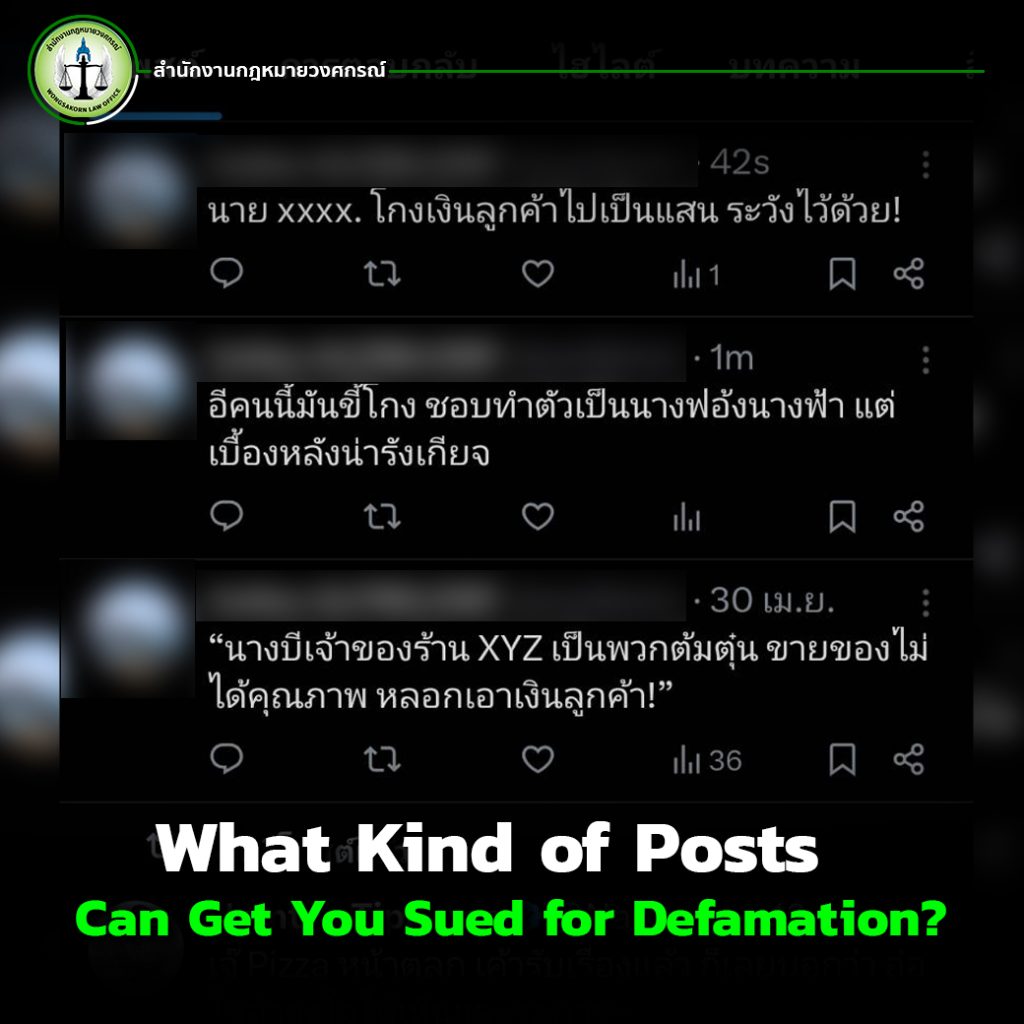
What Kind of Posts Can Get You Sued for Defamation?

Not every social media post is illegal—but certain characteristics may expose you to a defamation lawsuit, especially if your content includes:

  • Accusations or false information about another person
  • Mention of someone’s full name or clearly identifiable personal details
  • Sarcastic, mocking, or misleading language that may cause public misunderstanding
  • Wide sharing or reposting of the defamatory content to a large audience
  • Use of images or added context to make the accusation seem more credible

In this particular case, the poster deliberately defamed the victim, tagged their real name, and shared the content widely. These elements fulfill the legal criteria for defamation by means of publication, and the victim can immediately use the post as evidence to file a police complaint.ามารถใช้โพสต์ดังกล่าวเป็นพยานหลักฐานในการแจ้งความได้ทันที

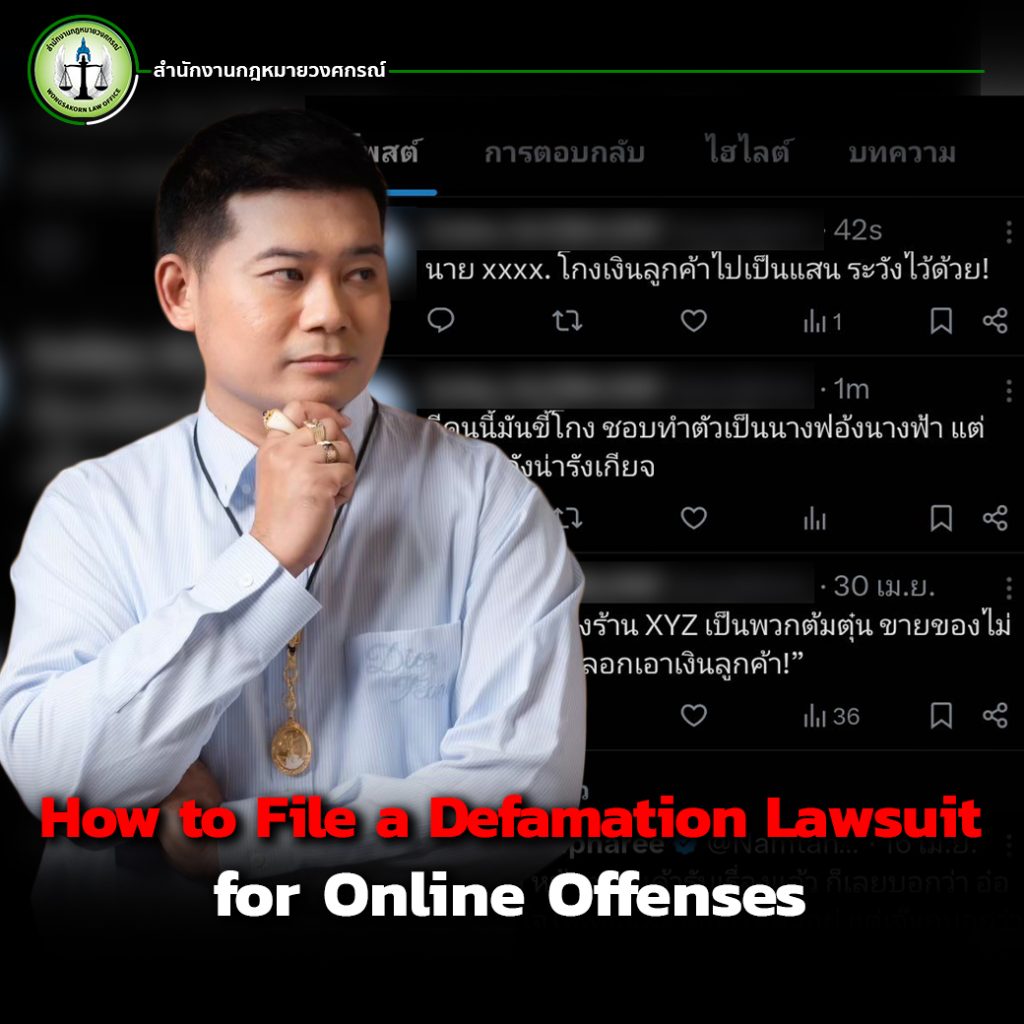
How to File a Defamation Lawsuit for Online Offenses

If you become a victim of online defamation, don’t ignore it. Failing to take action could allow the offender to repeat the behavior or target others in the future. Here’s how to begin the legal process:

1. Collect Evidence Immediately
Take screenshots of the post, message, or image in question. Make sure to include the date, time, and the username or profile of the poster.

2. Contact a Legal Professional
Consult a lawyer who specializes in defamation or cybercrime. They will guide you through the process and help you prepare the necessary documents.

3. File a Report at the Police Station
Inform the officers that you wish to press charges for defamation by publication, and submit all collected evidence.

4. Consider Filing a Civil Lawsuit (if applicable)
If the defamation has caused damage to your reputation or business, you may be eligible to claim monetary compensation through a civil case in addition to the criminal charges.

Pursuing legal action for defamation is not only a way to protect your rights—it also helps set a social standard that encourages responsible online behavior and the respectful use of free speech.

Don’t Hesitate to Exercise Your Legal Rights — Consult a Lawyer to Protect Your Reputation

Many people who experience online defamation choose to stay silent, hoping the issue will fade on its own. But in reality, the longer you wait, the harder it becomes to assert your legal rights and hold the offender accountable. In today’s digital age, a single post can go viral within hours — thousands of retweets or shares can permanently damage your name and reputation.

If you or someone close to you has experienced online defamation, do not delay. Contact a lawyer immediately to take legal action and defend your reputation and dignity to the fullest extent of the law.

WongsaKorn Law Office — Specialists in All Types of Online Defamation Cases

At WongsaKorn Law Office, we specialize in handling defamation cases across all social media platforms, including Facebook, X (formerly Twitter), TikTok, and others. Our legal team provides clear, professional advice and will guide you through the legal process to ensure justice is served.

Whether you are facing false accusations, harmful public posts, or targeted harassment, we’re here to help. Contact WongsaKorn Law Office today for trusted legal support — our team is ready to assist you with professionalism and genuine care.

Why Choose Insurance with Lawyer Arm? Exploring the Benefits of Having a Legal Advisor During Tough Times

In today’s world, where driving has become an essential part of everyday life, car insurance is something every driver should take seriously. Accidents can happen at any time—whether due to our own mistakes or someone else’s. When the unexpected occurs, having insurance can significantly reduce financial burdens and effectively protect both your life and property.

However, choosing the right car insurance shouldn’t be based solely on price or coverage. One important factor often overlooked is a true understanding of your rights as the insured. That’s why choosing to purchase any type of insurance through Lawyer Arm is a smart and reliable option. Lawyer Arm is not only an expert in law and car  insurance, but also has deep knowledge of policy terms and conditions. He’s ready to assist you every step of the way—from selecting the right coverage to helping you file claims and even representing you if disputes arise. With a legal expert by your side, you’re not just buying a policy—you’re gaining a trusted advisor who ensures your rights are fully protected.

Car Insurance Isn’t Just About Protection — It’s About Knowing Your Rights

Many policyholders find themselves in complicated situations, such as when an insurance company denies responsibility by retroactively Retrospective alcohol testing to reject claims from victims or insured parties, or when the other party in an accident is uninsured. In such cases, having a lawyer who specializes in insurance law — like Attorney Arm — is crucial. With professional legal advice, strategy, and action, you can ensure true justice is served.

Why Choose Us?

  1. Expertise in Auto Insurance Cases
    Attorney Arm has extensive experience handling a wide range of auto insurance cases, including landmark legal interpretations of policy conditions — such as retroactive BAC (blood alcohol content) analysis — and was among the first lawyers in Thailand to win such a case.
  2. Professional and Systematic Legal Consultation
    From selecting the right insurance type and interpreting policy terms to preparing documents, negotiating claims, and litigating when necessary — every step is managed with close attention to detail.
  3. Transparency, Fairness, and Personalized Care
    Our services are grounded in transparency, with reasonable and clearly defined fees. Clients can be confident they’re receiving expert legal care — not just sales advice from someone lacking legal knowledge.

Benefits of Having a Legal Advisor for Insurance Matters

  • Be Prepared Before an Incident Occurs
    With proper legal guidance, you’ll know exactly what to do in the event of an accident — what evidence to gather and how to protect your rights — so you won’t be at a disadvantage.
  • Professional Negotiation
    In case of a dispute, a lawyer can negotiate on your behalf to ensure you receive fair and reasonable compensation from the insurance company.
  • Immediate Legal Action When Needed
    No need to change teams or start over. With all the necessary information already in place, we can proceed with legal action promptly and correctly in accordance with the law.

Get Insured with Lawyer Arm: Protecting Both Your Car and Your Legal Rights

Unlike buying insurance from general agents, choosing Attorney Arm is a smart investment. Not only do you receive comprehensive coverage, but you also gain the strongest legal shield to protect you when it matters most. Whether it’s dealing with an insurance company that refuses to pay, unfair negotiations, or complex legal disputes — Attorney Arm is the trusted professional you can count on.

In today’s world full of risks and uncertainties, having a lawyer who deeply understands both the legal system and car insurance is no longer a luxury — it’s essential. This is especially true as insurance policies become more complex and insurers increasingly rely on fine print to deny claims.

If you’re looking for reliable car insurance backed by expert legal support, Lawyer Arm is your best choice.
Interested in all types of insurance with Lawyer Arm, including car insurance, compulsory motor insurance , and other types of insurance.📌 Contact Us:
Facebook Page:
โปรเด็ดประกันภัย By ทนายอาม or LINE ID: @901unfpl
📞 Call us at: 02-136-7501 or 061-874-4448

Line @ คลิก! โทรหาเรา คลิก!