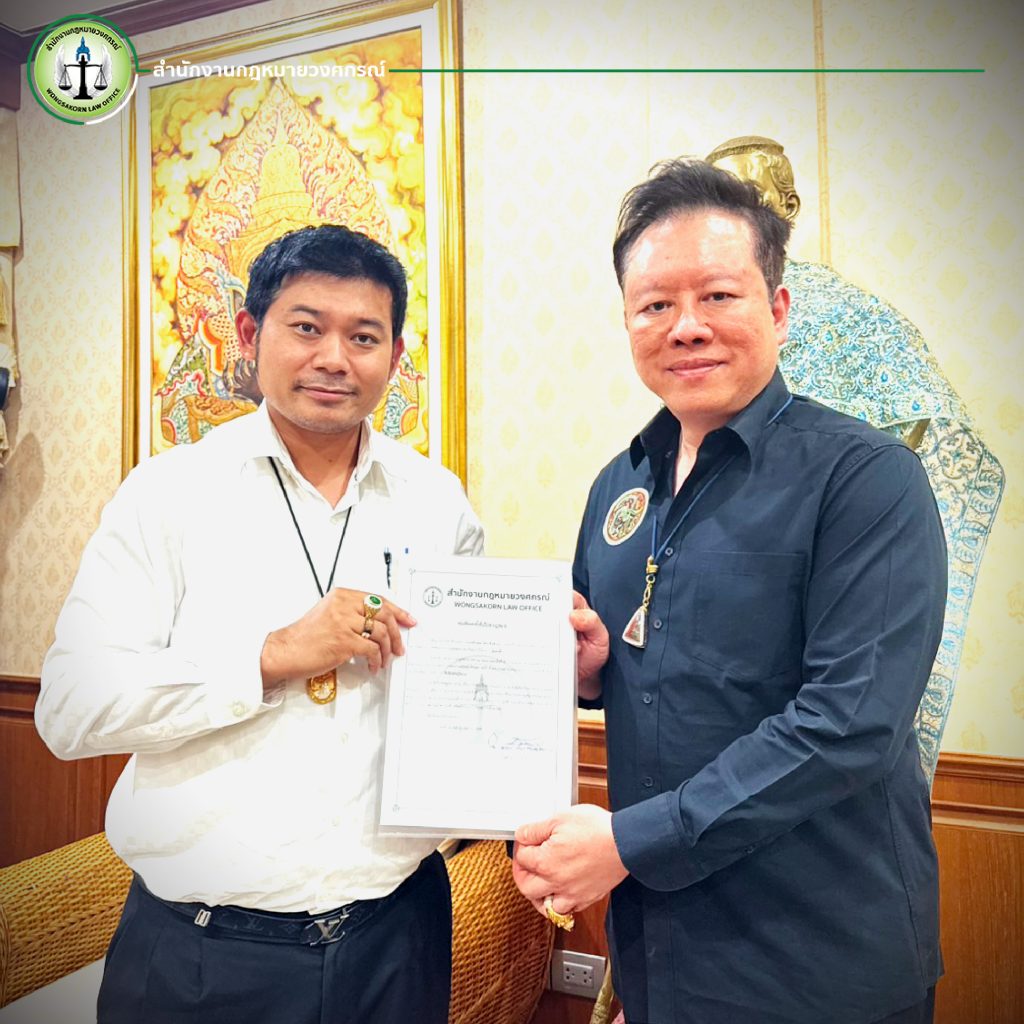
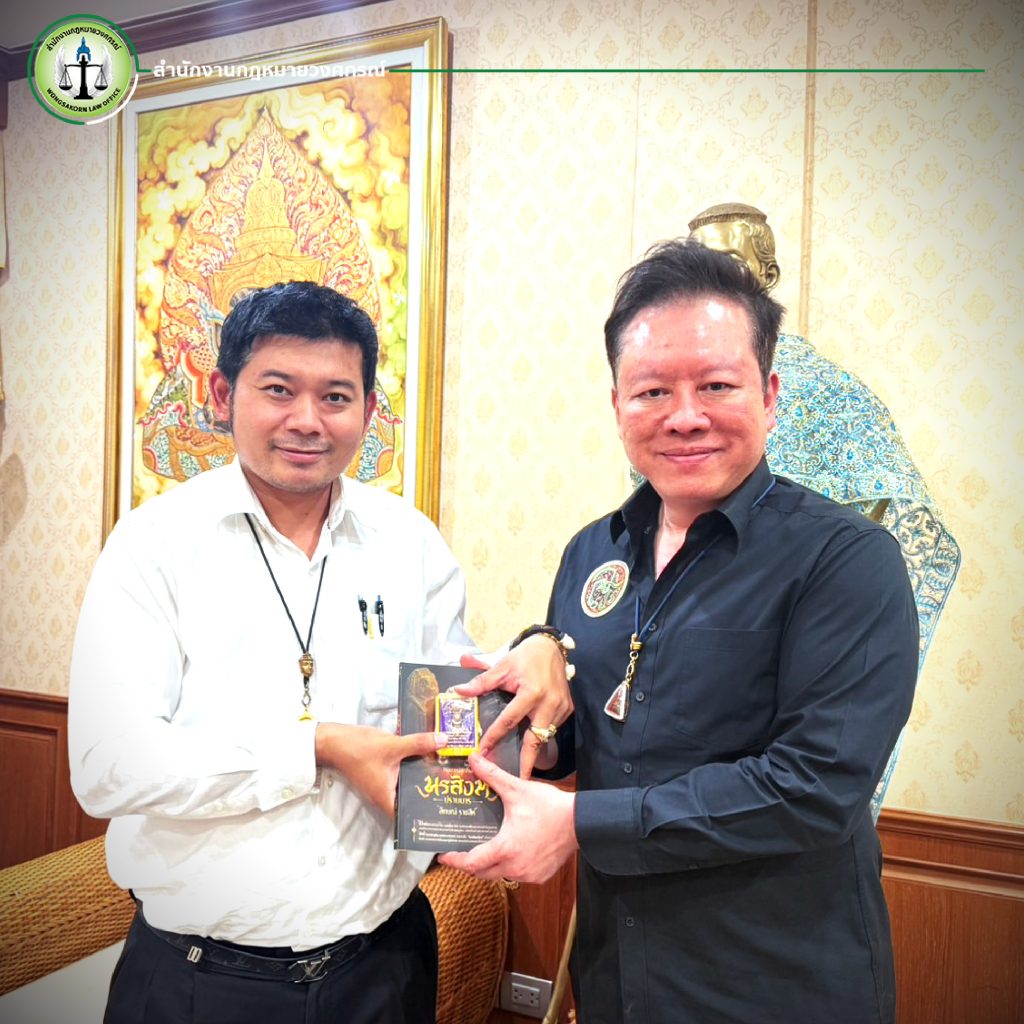
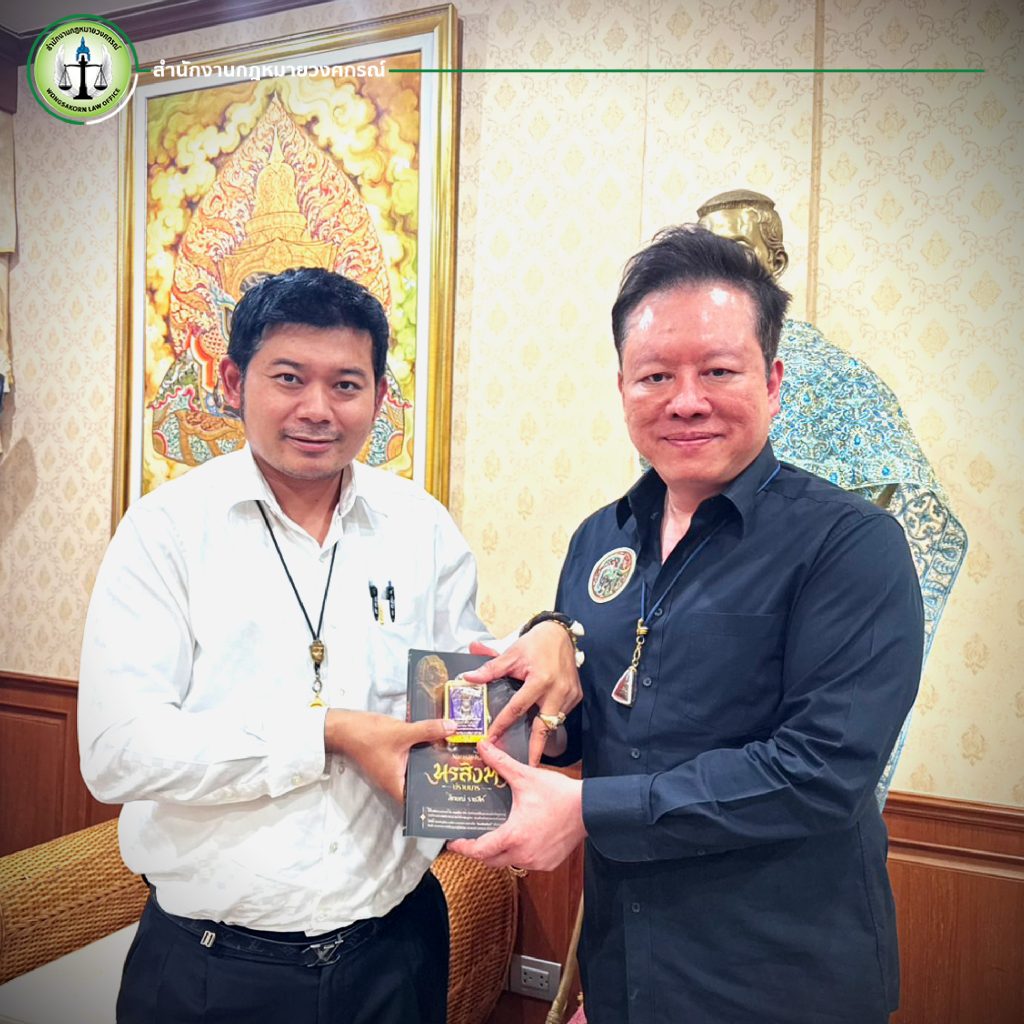
March 25, 2026 marked another special occasion for Wongsakorn Law Office, as Ajarn Sun Mahathotsadara, also known as Ajarn Sun of the Thao Wiroopak Nakaraj Association, a well-known figure in Thailand’s spiritual and astrology circles, honored the firm with a visit.
Ajarn Sun is widely recognized for providing astrological guidance, fortune analysis, auspicious timing selection, and spiritual enhancement in areas such as finance, career, and relationships. His work has attracted a large following across social media platforms.
This meeting not only reflected a strong relationship between professionals from different fields, but also highlighted the integration of perspectives between the “science of law” and the “science of belief” both of which play significant roles in the lives of people in Thai society. On this occasion, Lawyer Arm Supasit Siri warmly welcomed Ajarn Sun and engaged in a meaningful exchange of ideas, discussing both legal perspectives and approaches to client care in a multidimensional context.
In addition, Wongsakorn Law Office serves as a legal advisor to Ajarn Sun Mahathotsadara, providing support on legal matters, particularly those related to media copyrights. Having a legal advisor who understands the unique nature and context of a specialized profession is considered a key factor in strengthening long-term stability.
The atmosphere of the visit was warm and friendly, reflecting mutual trust and confidence. Wongsakorn Law Office remains committed to delivering professional legal services while continuously building collaborative networks across various industries, with the goal of providing comprehensive and truly client-centered solutions.
A car repair shop is something every car owner has to deal with at some point especially after an accident. But surprisingly, even if you already have car insurance, many consumers still fall victim to the practices of certain repair shops and insurance companies without realizing it.
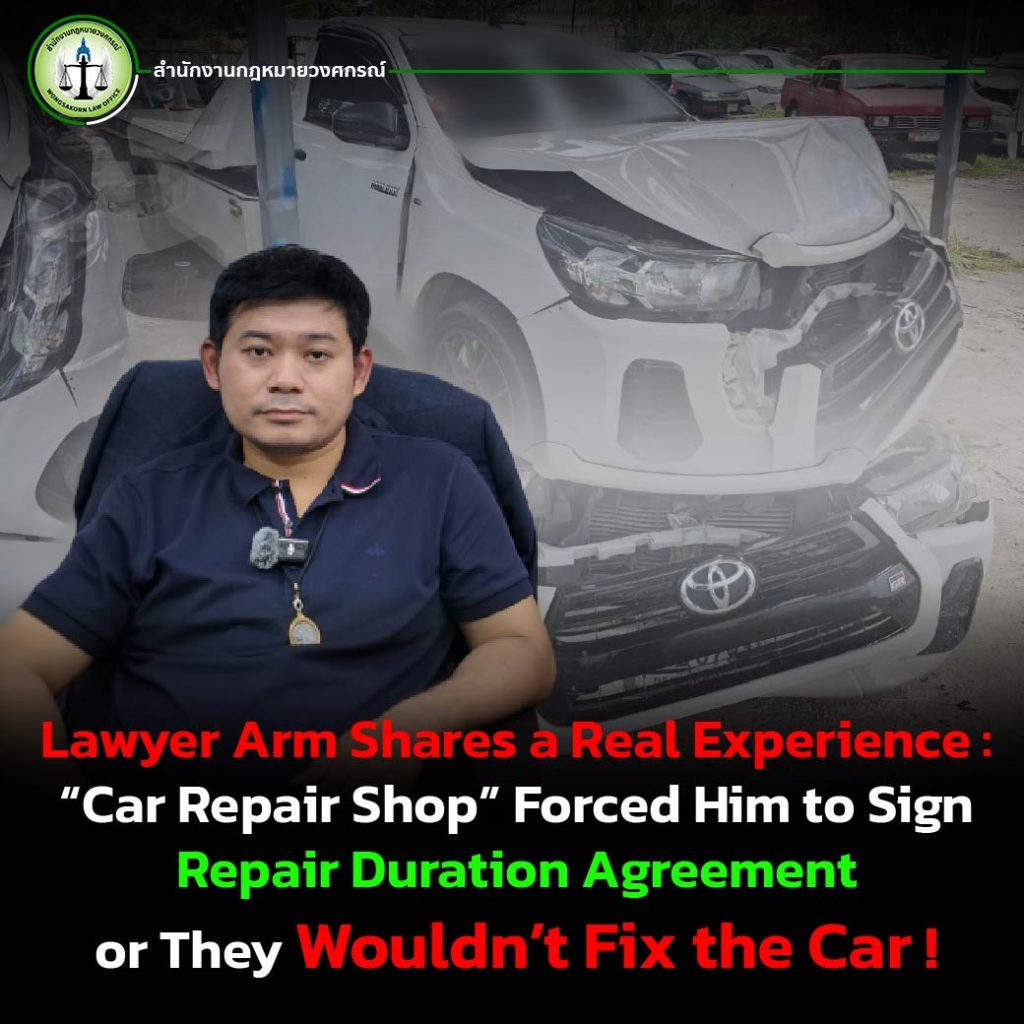
Recently, Lawyer Arm shared a real-life experience that happened to him. One of his employees accidentally crashed his car, and when he brought it in for repairs, something shocking happened. In this article, Lawyer Arm aims to raise awareness and warn the public: If you don’t understand your rights or have a lawyer guiding you from the beginning, you could easily be taken advantage of by the repair shop or the insurance company.
The Repair Shop Called and Demanded a Signature Before Continuing the Repair
After the accident, Lawyer Arm’s car was sent to an insurance-affiliated repair shop. One day, the shop called and said:
“You must sign to accept the repair period and waiting time for parts. If you don’t sign, we can’t continue fixing your car.”
It might sound like a standard request for customer acknowledgment, but for someone who knows the law, Lawyer Arm immediately recognized this was not in line with OIC (Office of Insurance Commission) regulations.
OIC Clarifies: “Notification” Doesn’t Mean “Signature Required”
According to the OIC’s official regulation, “notifying the insured” means informing them not requiring a signature.
Notification can be done through:
Phone call
Email
LINE message
Written document or repair report
The intent is simply to update progress, not to make customers accept unfair conditions, such as excessive waiting periods or the use of mixed genuine and imitation parts. However, in this case, the repair shop twisted the rule, turning a simple “notification” into a forced signature, which is both misleading and unfair to consumers.
The Problem with Mixing Genuine and Imitation Parts
Besides forcing a signature, the repair shop also said:
“We’ll use both genuine and imitation parts.”
At first, this might sound like a compromise but in legal and professional terms, repairs must restore the vehicle to its pre-accident condition as closely as possible.
Lawyer Arm explained:
“It’s simple if your car originally had genuine parts, the repair should use genuine parts. Mixing parts reduces quality, safety, and future resale value.”
If the repair shop must wait for genuine parts, they only need to notify the customer, not force them to sign anything. Refusing to continue repairs unless you sign is a clear violation of regulations.
What to Do If the Repair Shop Refuses to Fix Your Car?
Lawyer Arm recommends consulting a lawyer immediately if you face such a situation. A lawyer can communicate directly with the insurance company and document the shop’s refusal properly, for instance, by email or chat to preserve evidence in case of future disputes.
Understand Clearly “Notify” ≠ “Sign”
Many people confuse the two terms. Lawyer Arm clarifies:
“‘Notify’ doesn’t mean signing acknowledgment, nor does it release the repair shop from responsibility for delays. It’s just a progress update, not an agreement to delay.”
So, if a repair shop says, “If you don’t sign, we won’t fix your car,” you have the right to refuse and report the matter to your insurance company immediately.
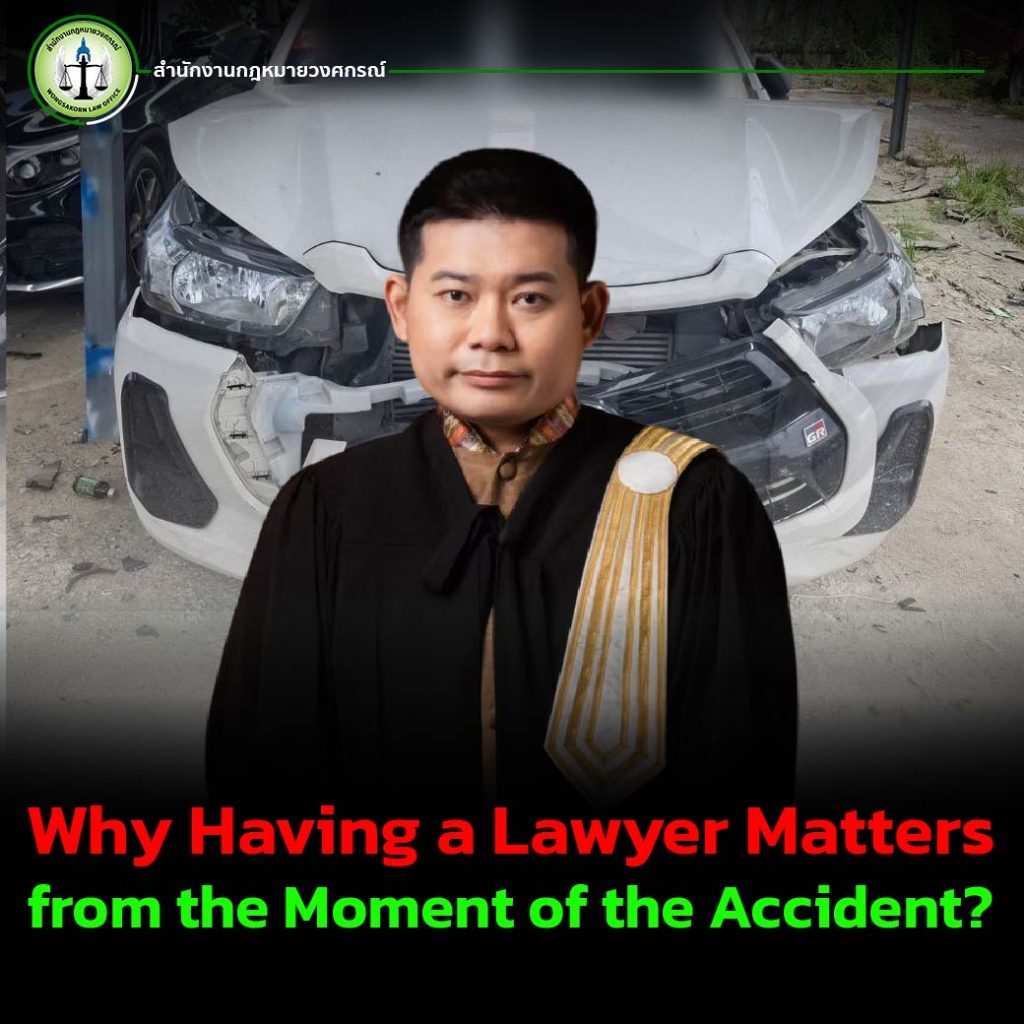
Why Having a Lawyer Matters from the Moment of the Accident?
Lawyer Arm’s real experience shows that even someone knowledgeable about the law can face unfair treatment without proper legal representation. Both the repair shop and the insurance company might interpret regulations in their own favor, not yours.
Without a lawyer to guide you from the start, you risk losing your rights without realizing it. In reality, “If you don’t have a lawyer from the moment of the accident, you can easily be taken advantage of.”
Know Your Rights Before You Sign Anything
This case perfectly illustrates why understanding the law and OIC regulations protects consumers. If any repair shop or insurance company pressures you to sign documents or accept unclear conditions don’t hesitate to consult a lawyer.
Because at the end of the day:
“The insurance company always has their lawyer. Do you have yours?”
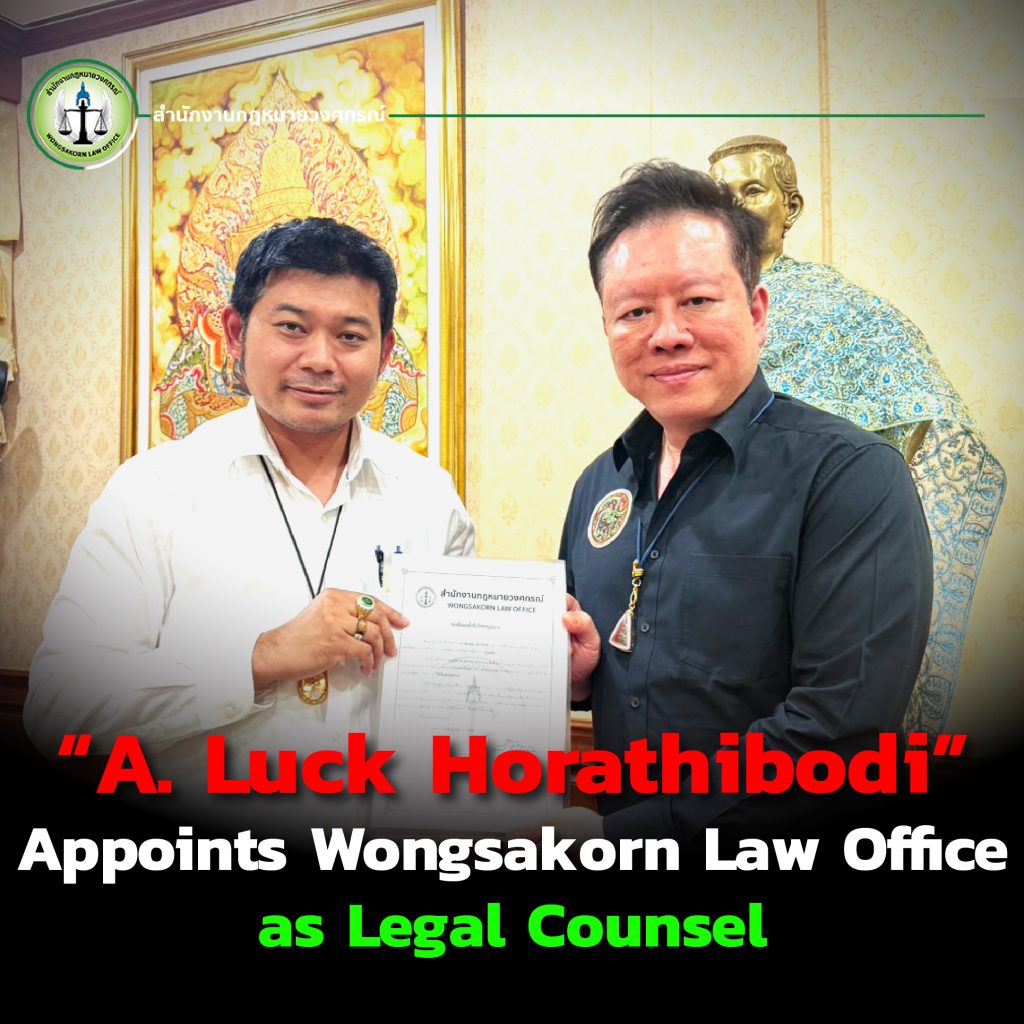
On September 26, 2025, Wongsakorn Law Office, under the leadership of Lawyer Arm – Supasit Siri, Managing Director, was honored to be appointed by A. Luck Horathibodi , a renowned astrologer in Thailand, as legal counsel to handle significant cases involving violations of rights through online platforms.
This appointment follows incidents where malicious individuals created fake TikTok accounts and disseminated misleading content, causing damage to A. Luck’s reputation and credibility. Wongsakorn Law Office has been entrusted to take legal action to fully protect the rights and dignity of the injured party.
Attorney Arm and his team affirm their commitment to carrying out their duties with integrity, diligence, and the full capacity of legal expertise to ensure that justice is served. They are dedicated to upholding the trust that A. Luck has placed in Wongsakorn Law Office.
This appointment not only reflects confidence in the firm’s capabilities but also marks another important milestone, highlighting that Wongsakorn Law Office remains committed to safeguarding rights and delivering justice to all who face legal challenges.
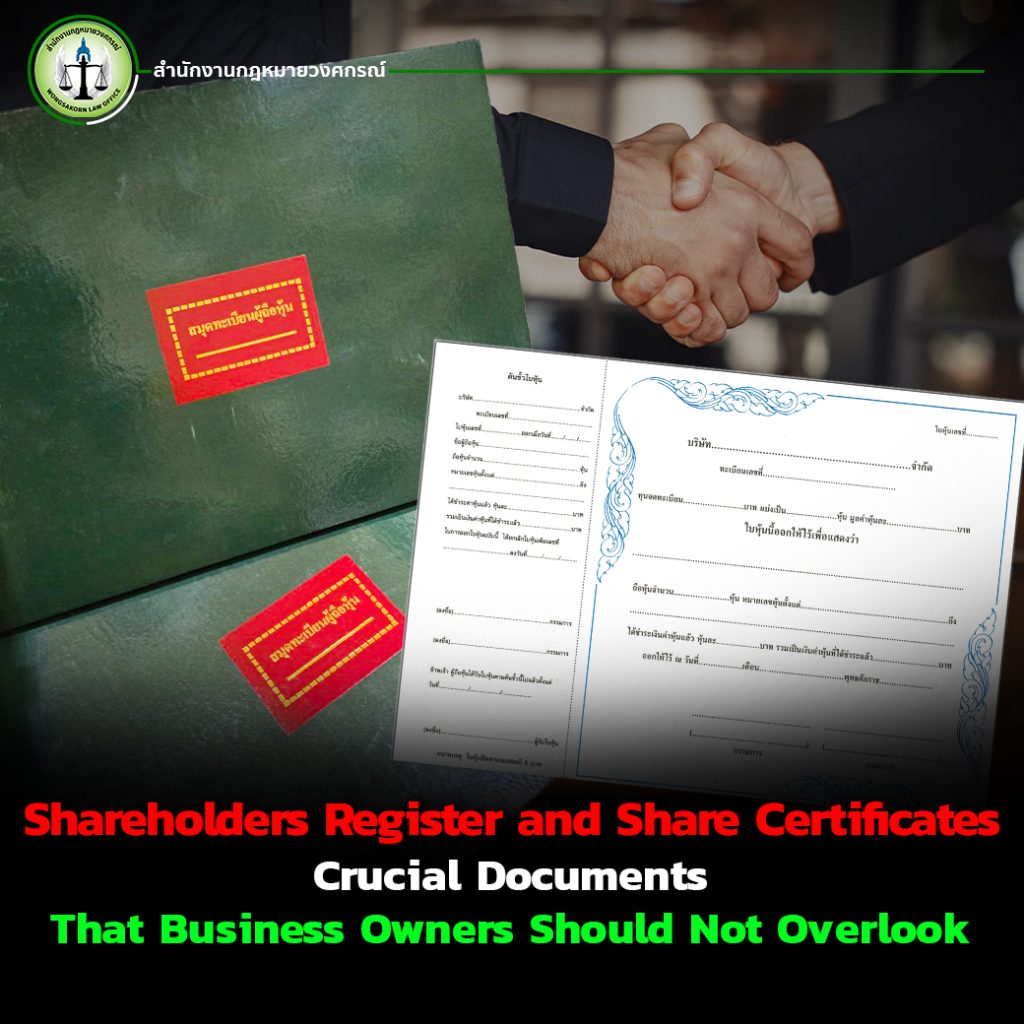
The “Shareholders Register” and “Share Certificates” are essential legal documents for operating a limited company, especially when there are changes in shareholder structure, share transfers, or disputes concerning shareholder rights. If these documents are improperly prepared or there is a lack of legal understanding, unexpected business issues may arise.
Wongsakorn Law Office would like to explain the importance of these two types of documents and provide guidance on how to prepare them correctly in accordance with the law, so that business owners and executives can confidently manage internal corporate matters.
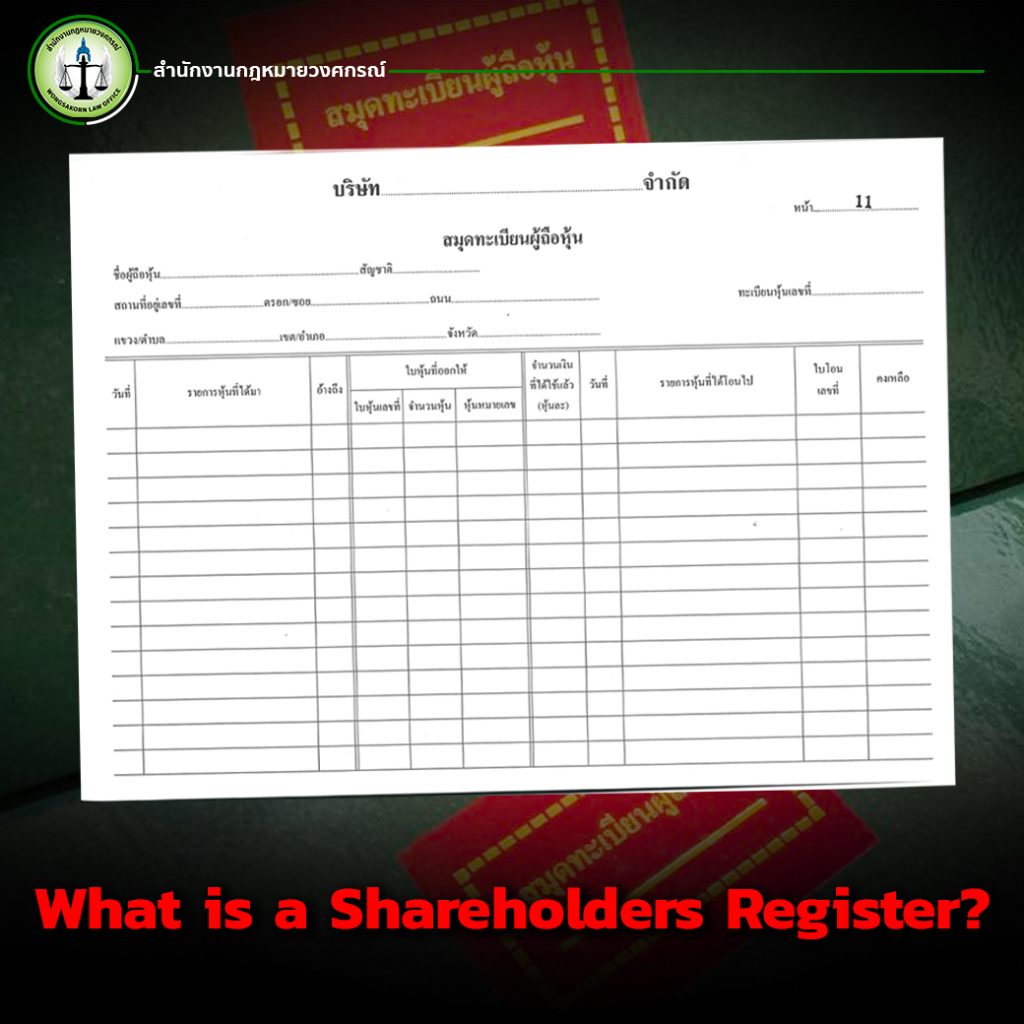
What is a Shareholders Register?
A Shareholders Register is a document created by a company to record the names of all shareholders. Information required in the Shareholders Register includes:
Name and address of each shareholder
Number of shares held
Share certificate number (if any)
Date of acquiring the shares
Date of share transfer (if applicable)
Other information as required by law
This register serves as critical evidence to prove who the rightful “owner” of the company’s shares is. It must be kept at the company’s registered office and be made available for inspection by the Department of Business Development or other legally entitled parties.
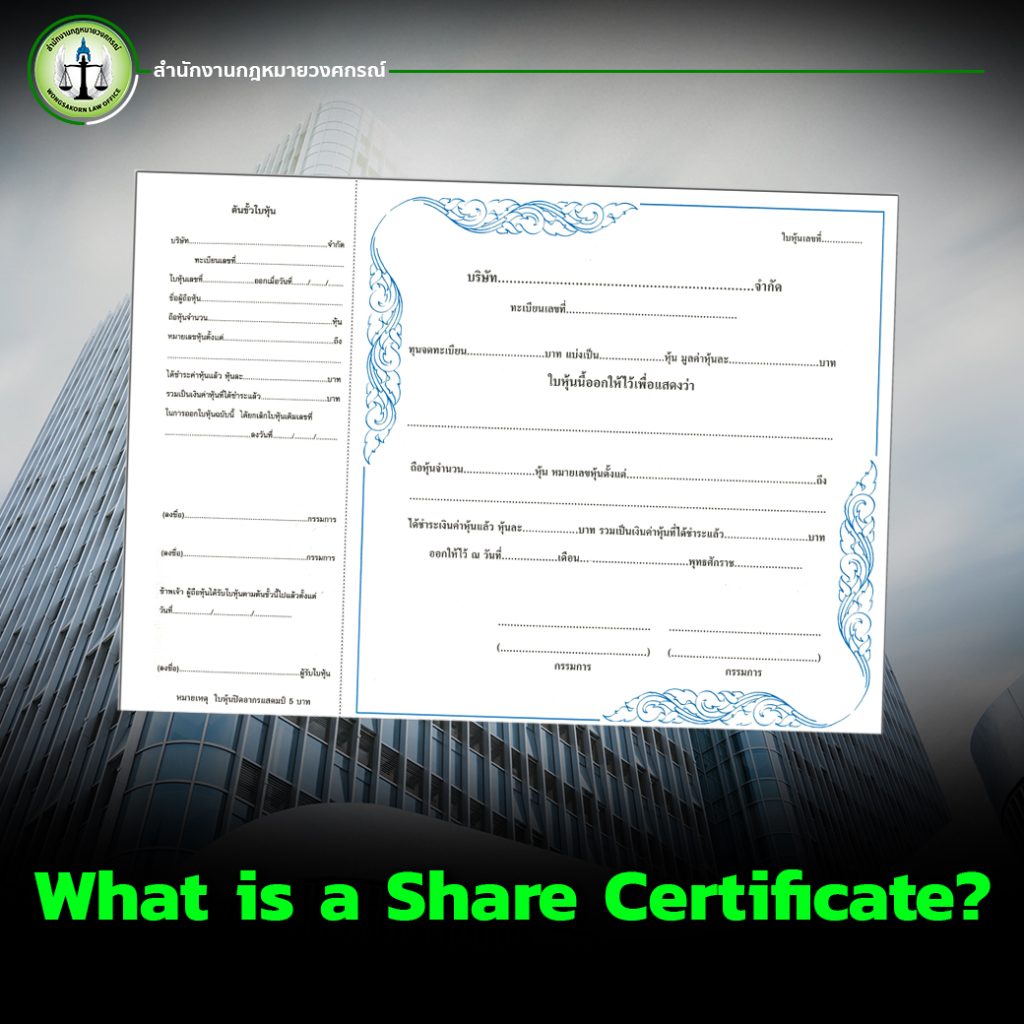
What is a Share Certificate?
A Share Certificate is a document issued by a company to its shareholders as official proof of share ownership. It usually includes the certificate number, shareholder’s name, number of shares, and is signed by a company director as per the Articles of Association.
Although a Share Certificate is not as legally significant as the Shareholders Register (which is considered the primary legal evidence), it still holds psychological and practical value. Many shareholders prefer to have tangible proof and use it in business negotiations or to demonstrate their right to transfer shares.
The Relationship Between the Shareholders Register and Share Certificates
The Shareholders Register carries more legal weight than Share Certificates. In the event of ownership disputes, the register is used as the primary proof of shareholding.
In practice, Share Certificates support changes in the register. For example, when shares are transferred, the original certificate must be returned, a new certificate issued to the transferee, and the register updated accordingly.
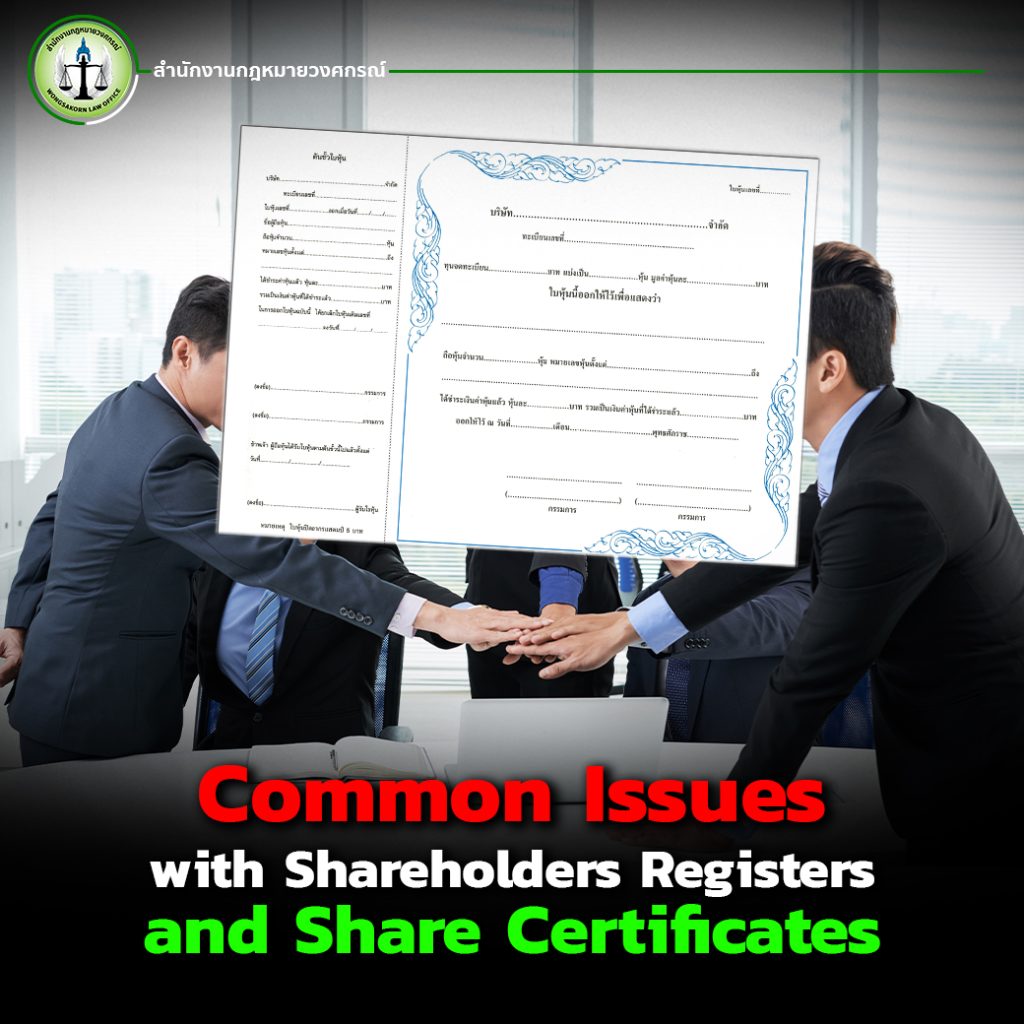
Common Issues with Shareholders Registers and Share Certificates
1.Failure to maintain a Shareholders Register This is common among SMEs and family-run businesses. If a legal dispute arises, the company may be at a disadvantage in court.
2.Issuing Share Certificates without updating the Register If the shareholder’s name does not appear in the register, they may not be entitled to legal rights, such as voting at meetings or receiving dividends.
3.Failure to update share transfer information If shares are transferred but the register is not updated, the buyer may not be legally recognized as the shareholder.
4.Fake or duplicate Share Certificates Without proper control systems, a company may accidentally issue certificates exceeding the registered number of shares, leading to serious consequences.
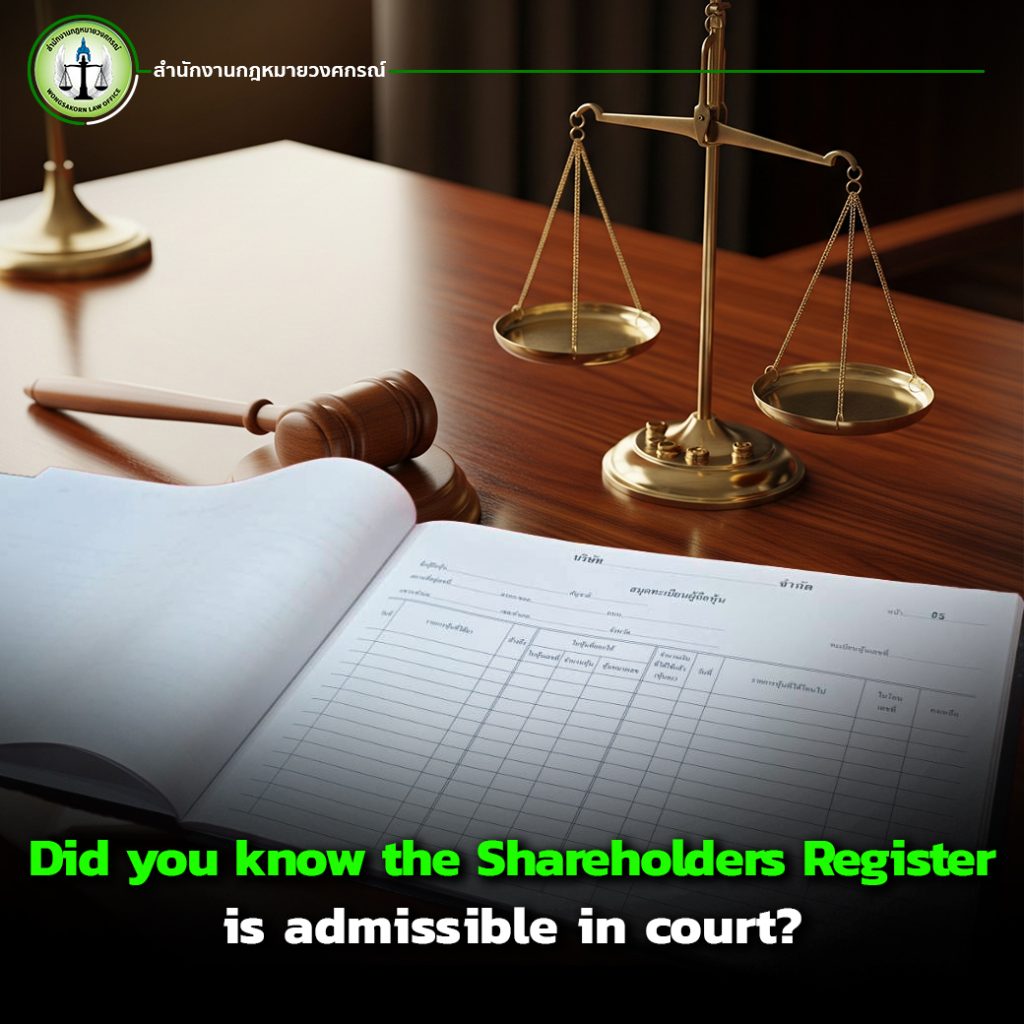
Did you know the Shareholders Register is admissible in court?
Courts give significant weight to the Shareholders Register as it clearly documents internal shareholder rights. Failure to maintain or inaccuracies in the register may heavily impact legal proceedings, such as:
Disputes over shareholding proportions
Appointment of directors or voting rights
Requests to annul meeting resolutions
Claims for past dividends
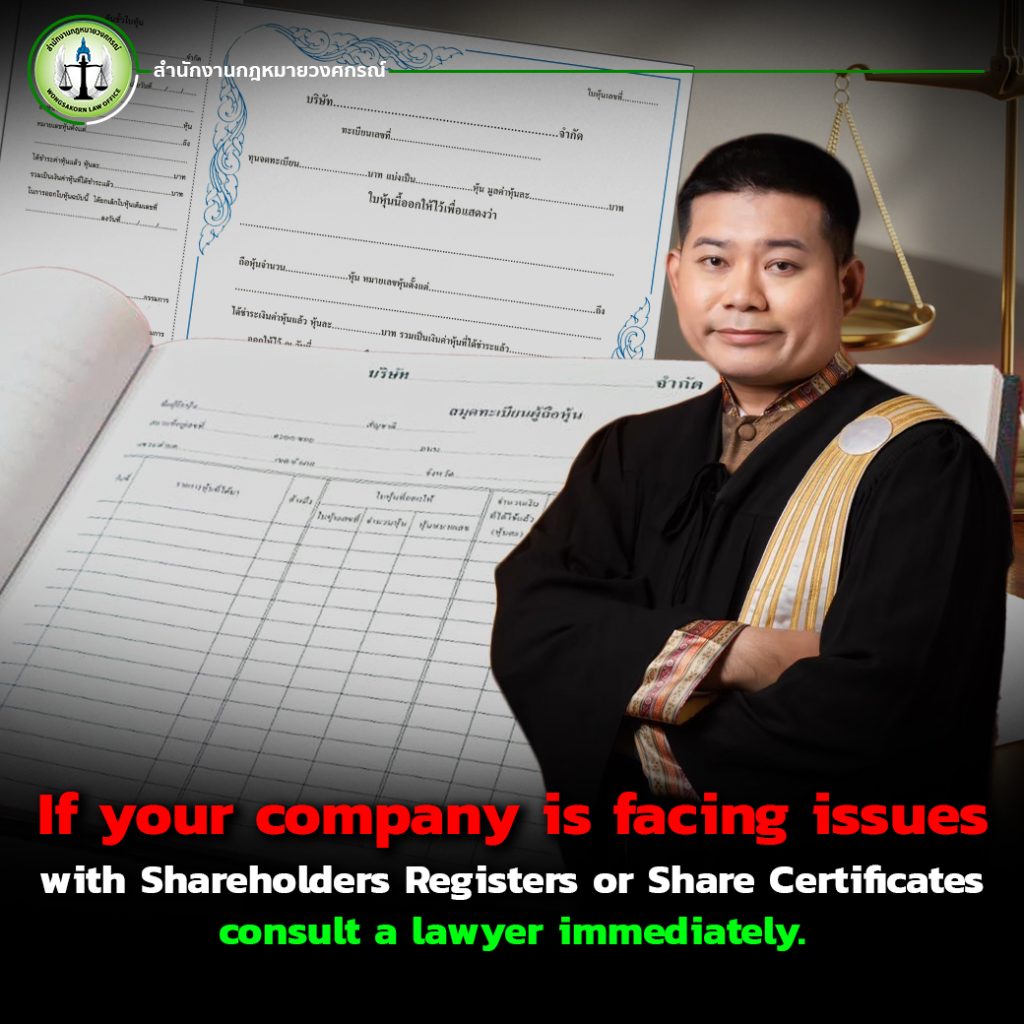
If your company is facing issues with Shareholders Registers or Share Certificates, consult a lawyer immediately.
Preparing these documents is not a minor clerical task—it is crucial to managing a company’s shareholder structure. Mistakes can affect ownership rights and corporate control.
Wongsakorn Law Office has a team of lawyers specializing in business and corporate law, ready to assist with preparing or correcting registers, issuing certificates, transferring shares, and resolving shareholder disputes in compliance with the law.
If your company is facing uncertainty regarding shareholding or wants to ensure legal compliance, we recommend seeking legal advice promptly to avoid turning small issues into major legal disputes.
Even though Shareholders Registers and Share Certificates may seem like just a few sheets of paper, legally, they carry the weight of defining who truly owns a company. Proper, systematic documentation is key to transparent and stable business management.consult a lawyer immediately.
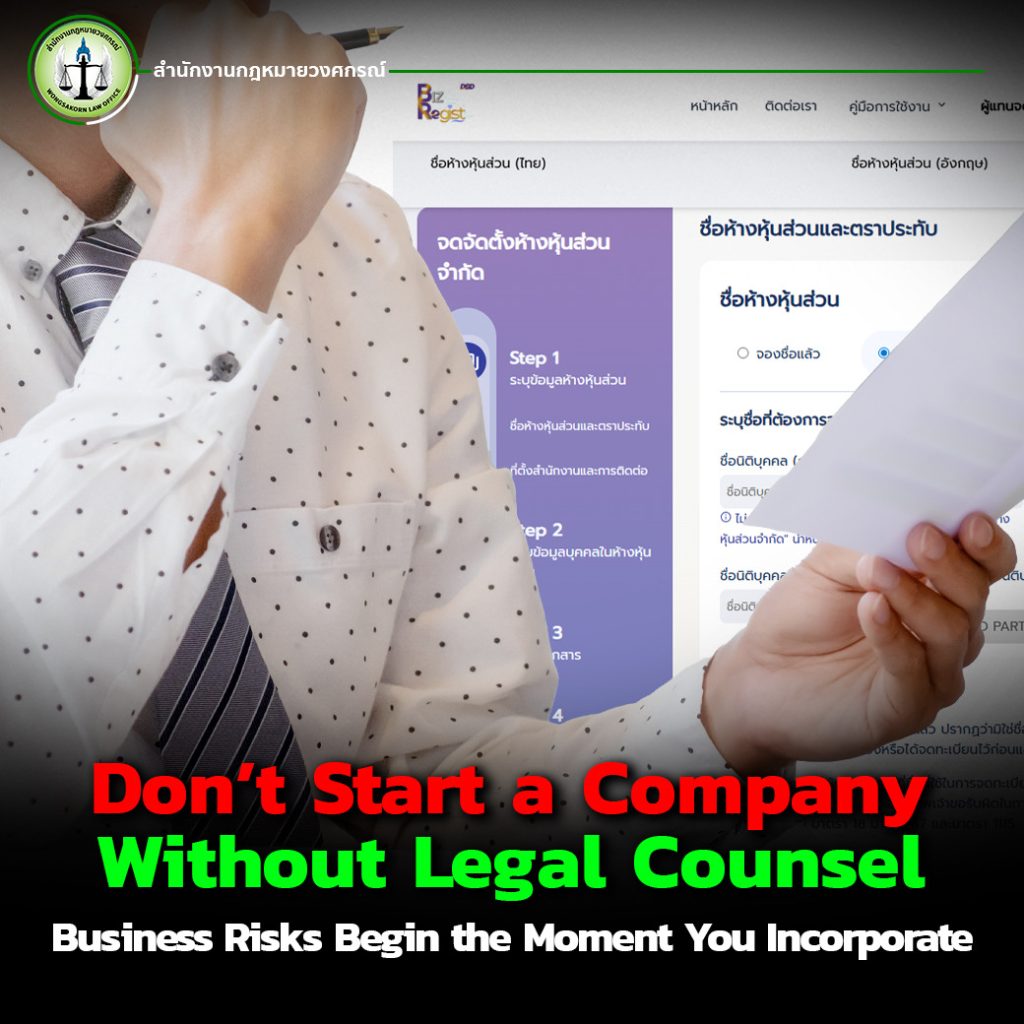
A solid legal foundation is essential for a successful business Starting a company or launching a new venture isn’t as simple as it seems—it’s one of the most important steps in an entrepreneur’s life. Amid the excitement of making dreams real, many founders overlook a critical element:legal counsel.
Registering a company may seem like just paperwork, but in reality, it means stepping into a world of contracts, regulations, liabilities, and obligations that can seriously affect your business in the long run. Without a legal advisor, you’re effectively entering a battlefield without armor.
Incorporating without legal guidance = Inviting problems
Launching a company isn’t just about having a great idea or capitalizing in time—you need a strong legal foundation. Incorporation marks the beginning of legal responsibilities—structuring the organization, drafting contracts with clients or partners, handling personnel, labor, taxes. Yet many founders go solo, without legal help, which greatly increases the risk of future issues—many of which could have been anticipated and prevented with proper legal support.
What can go wrong without legal counsel?
1.Misunderstanding optimal company structure Registering as the wrong type (e.g., limited partnership instead of limited company) or forming a board without clear agreements can lead to disputes. A legal advisor helps set up the best structure for your goals and risk management.
2.Lacking contract know-how Every venture needs contracts (leases, employment, franchises, partnerships). Signing without counsel risks exploitation or litigation.
3.Ignoring labor law compliance Many startups operate without employee guidelines, contracts, or proper understanding of Thai labor laws—exposing themselves to lawsuits or hefty compensation.
4.Not understanding your legal rights Without guidance, your business may be taken advantage of, missing opportunities for legal recourse.
5.Overpaying taxes Legal advisors can work with accountants to structure taxes correctly and minimize unnecessary costs.
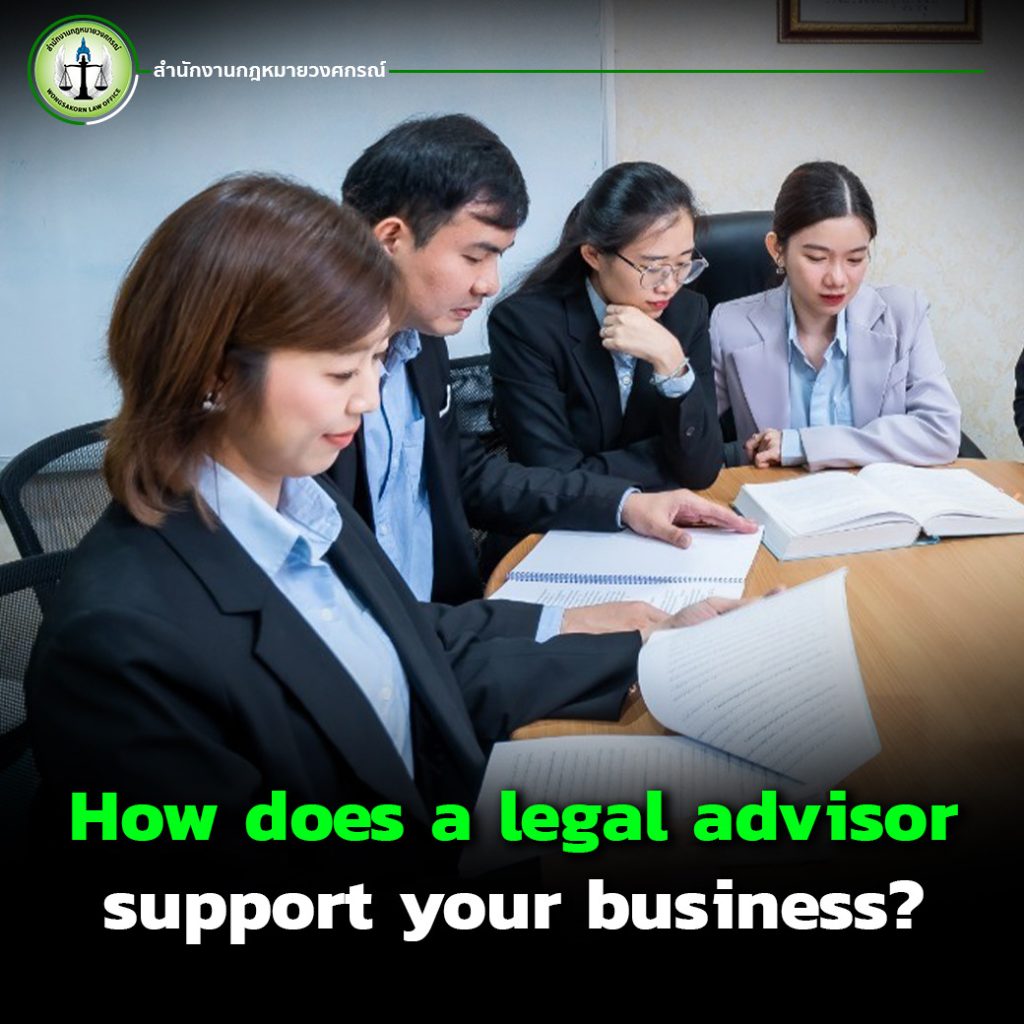
How does a legal advisor support your business?
Advises on incorporation and corporate structure
Drafts and reviews contracts before signing
Represents you in dispute resolution or negotiations
Provides guidance on labor and tax law
Monitors regulatory changes affecting your business
Prepares you for legal claims or IP issues
Don’t risk costly oversight
❌ No formal structure = conflicts among partners
❌ No contract oversight = higher risk of exploitation or lawsuits
❌ Labor law ignorance = employee lawsuits
❌ Unaware of your rights = lost business advantage
❌ No tax strategy = unnecessary tax burdens
A legal advisor isn’t an avoidable expense—they are an investment in your company’s long-term strength and stability.
Real-world examples
A startup signed with a foreign company without legal review and ended up facing court proceedings abroad, incurring huge legal and travel expenses with no recourse.
An SME was forced to pay significant compensation for unfair termination—all of which could have been avoided with proper legal guidance from the start.
It’s time to get legal help
Don’t wait until problems arise. Many legal issues can be prevented with early planning and professional support—especially in a fast-changing legal environment.
Let Wongsakorn Law Office Be Your Legal Advisor
We offer comprehensive legal consultancy for SMEs, startups, and businesses across industries.
Why choose us?
Monthly or annual legal consulting services
Skilled legal team specialized in corporate law
On-site reviews of documents, contracts, and operational issues
Full transparency with no hidden costs
Alegal advisor is not a luxury—it’s a strategic investment in safe, sustainable growth.
If you’re starting a company or already operating without trusted legal counsel,contact Wongsakorn Law Office. We’re ready to support you in handling legal issues so your business can thrive with confidence.
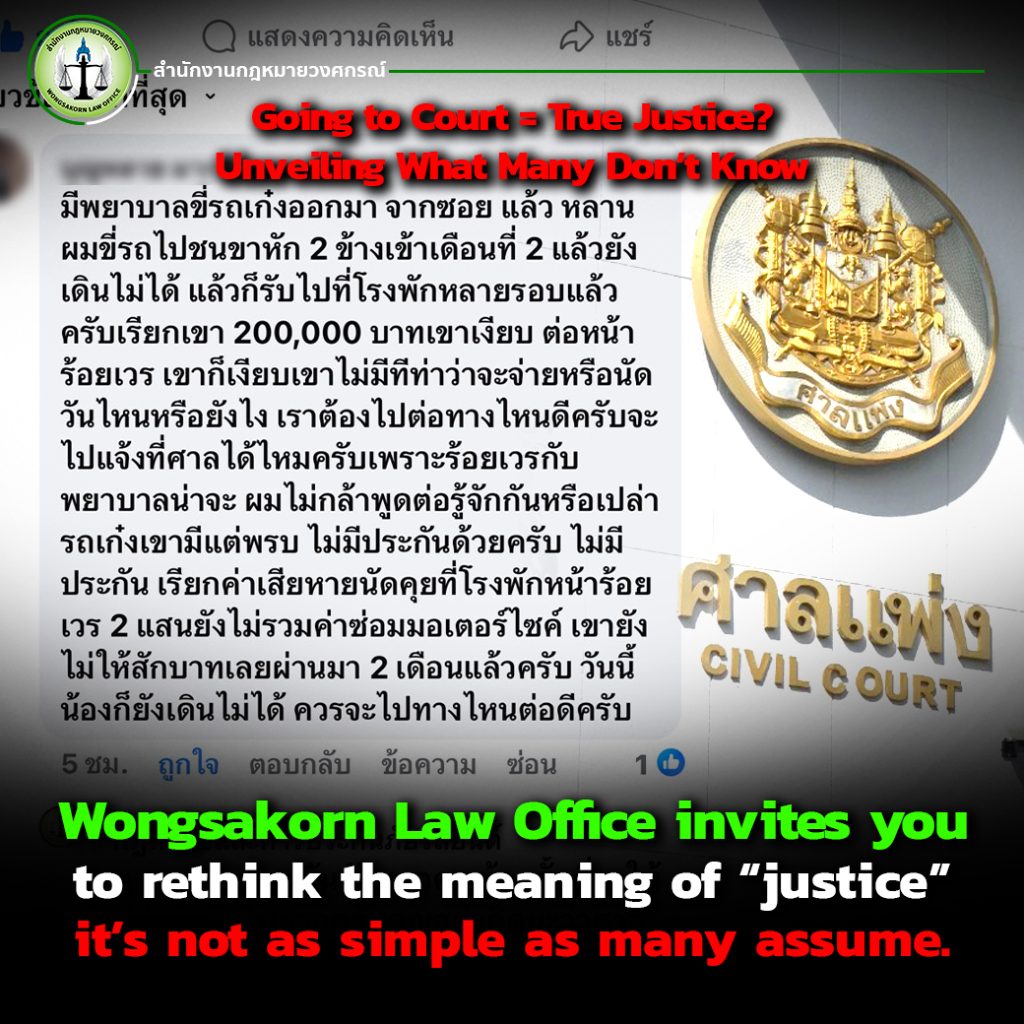
Wongsakorn Law Office invites you to rethink the meaning of “justice,” which isn’t as simple as many assume.
In Thai society, when conflicts arise or harm is done, people often say, “Sue them!” or “Take it to court!” believing that going to court is the ultimate path to justice. Many believe that the injured or wronged party will always win in court.
But in reality, the legal system does not operate based on emotion. Courts don’t judge who hurts more, who is poorer, or who suffers more. Because going to court doesn’t always mean you’ll get justice.
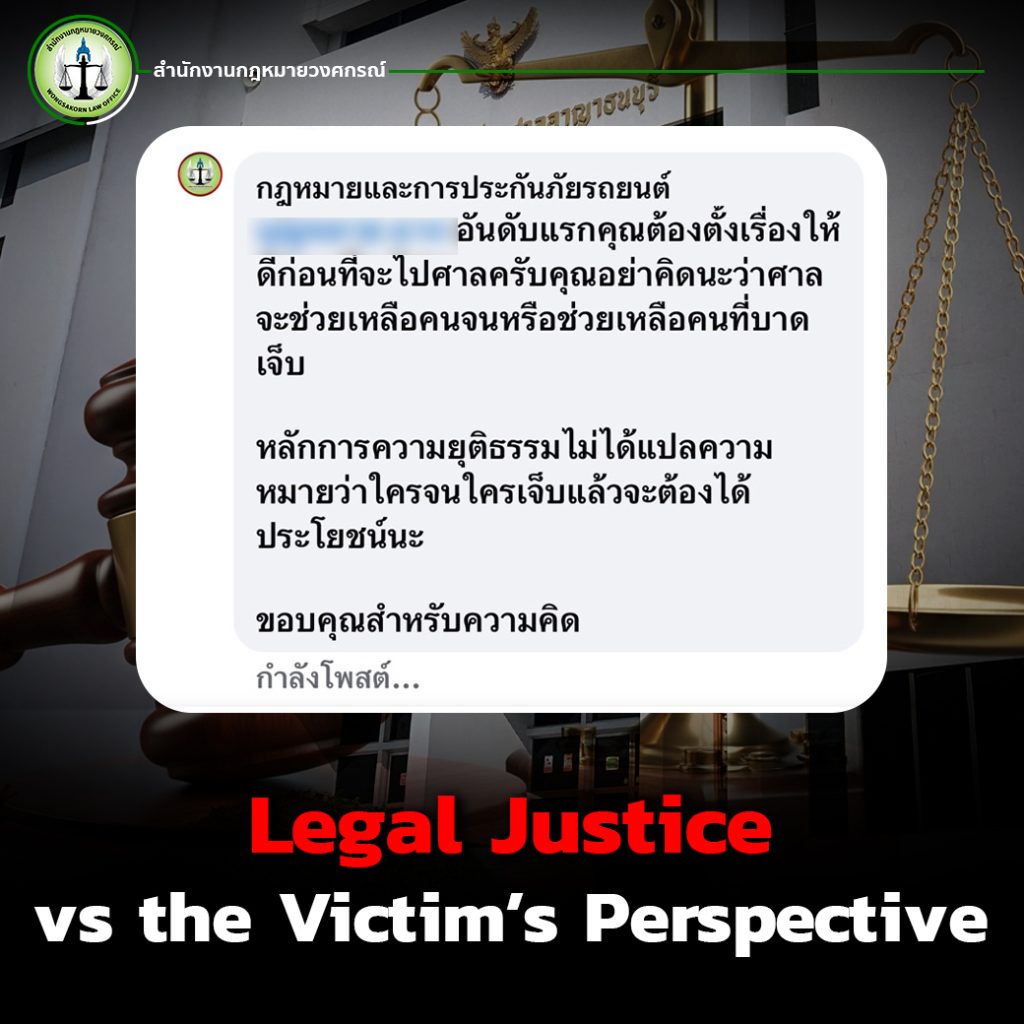
Legal Justice vs the Victim’s Perspective
To most people, “justice” means the victim should be helped, or the injured should be compensated. While that perspective is valid and compassionate, the legal definition of justice relies on facts, evidence, and legal provisions.
No matter how much pain you’ve endured, if you lack evidence, witnesses, or clear facts, the court cannot rule in your favor.
Thus, going to court does not guarantee the outcome you expect. Many times, the person who suffers the most loses the case, while someone with better documents, evidence, or legal representation may win, even if they seem to be at fault.
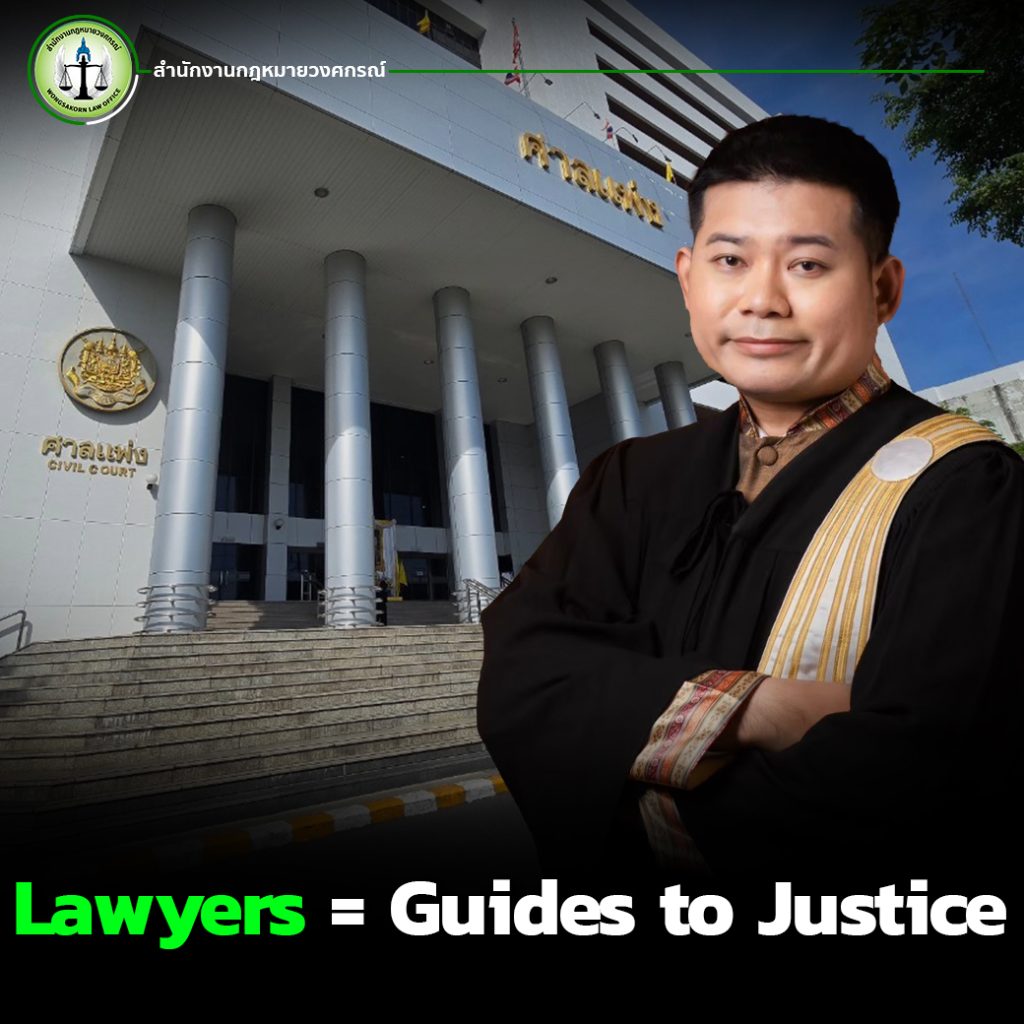
Lawyers = Guides to Justice
Some may think hiring a lawyer is an unnecessary cost. But in truth, lawyers know the law, the system, and how to turn “justice” into reality.
At Wongsakorn Law Office, we often help victims who tried to navigate the system alone and failed. Our lawyers assist from step one:
Case analysis
Evidence review
Document preparation
Strategic planning
Court representation So you’re never alone in your legal fight.
Go to Court with a Plan = Real Chance for Justice
Going to court without a plan, team, or legal knowledge can lead to confusion, delays, and disadvantage. But with a skilled lawyer who understands your case and prepares professionally, your chances of success rise.
Justice doesn’t arrive by itself. It must be pursued.
Wongsakorn Law Office believes justice shouldn’t be reserved only for the wealthy or well-connected. We proudly serve:
We offer both legal and humane support so you don’t face injustice alone.
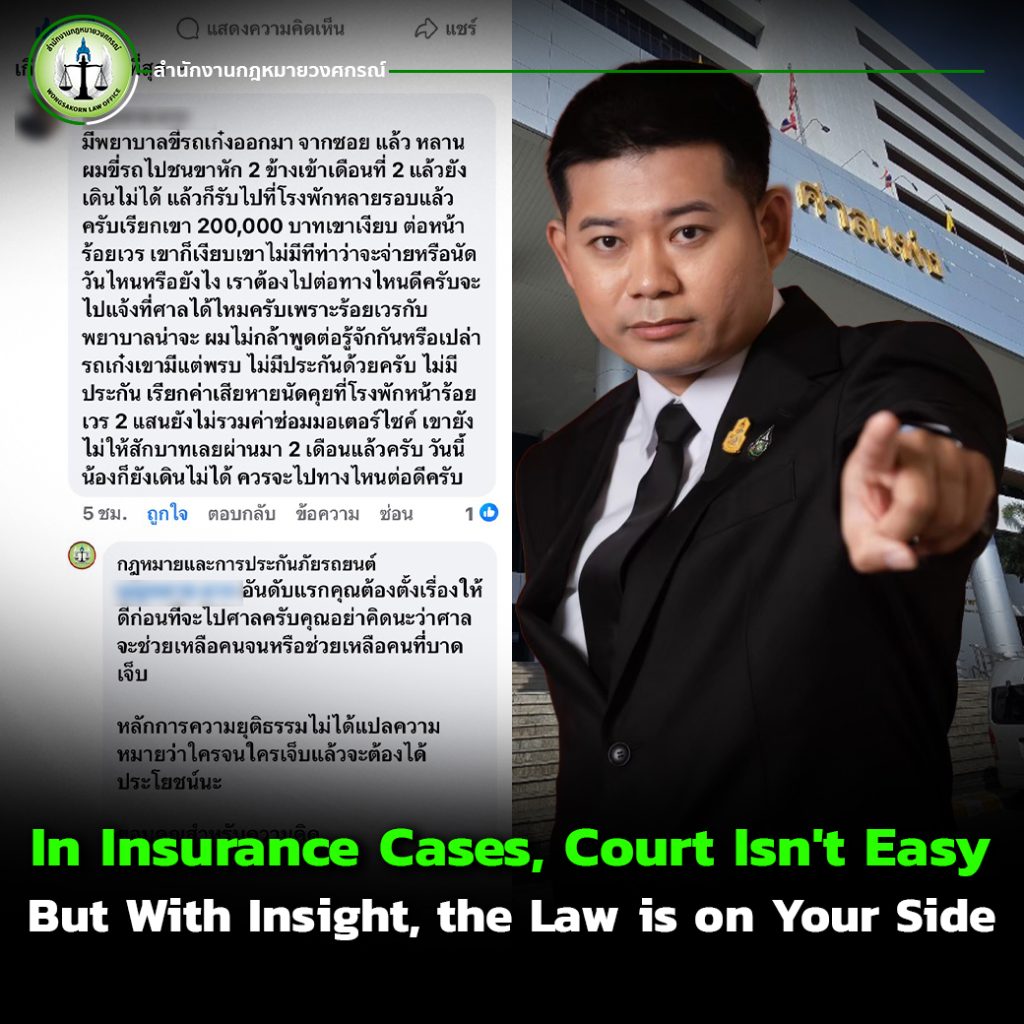
In Insurance Cases, Court Isn’t Easy—But With Insight, the Law is on Your Side
Handling an insurance case alone is difficult. Insurance companies often have legal teams before problems even occur. How can a victim feel confident navigating the system solo?
This system isn’t built for the inexperienced. That’s why a specialized insurance litigation lawyer is key. Wongsakorn Law Office has grown from years of fighting insurance cases. With extensive experience and knowledge of insurance company tactics, we help victims claim their rightful compensation.
What’s most important is consulting a lawyer immediately after an incident. Don’t wait. Starting correctly from step 1 ensures a steady path through steps 2, 3, and 4. Better than wasting time and losing rights or lifelong opportunities.
Going to court isn’t the final answer without preparation.
Justice requires evidence, law, and someone who understands the system.
A lawyer is your guide to achieving true justice.
If you’re facing legal issues and don’t know where to begin,contact Wongsakorn Law Office. We are ready to listen, plan, and help you move toward real justice.
In human resources management, issuing warning letters to employees is common—especially if employees misbehave or violate company regulations. But what happens if an employee refuses to sign the letter? Can the employer still take disciplinary action, or is the employee considered defying a superior’s order?
This article by Wongsakorn Law Office dives into this issue from every angle and offers guidance for both employers and employees.
Does an employee’s refusal to sign mean defiance of a superior?
Absolutely not. Under Thai labour law, an employee does not commit wrongdoing simply by refusing to sign a warning letter—this refusal does not equate to defying an employer’s order.
There is no legal requirement for employees to sign warning letters to make them legally valid. The key requirement is that the employer must notify the employee clearly of the warning and its grounds.
How is a warning letter viewed under labour law?
A warning letter is an internal disciplinary tool:
It details misconduct like repeated lateness, fraud, or rule violations.
It serves as advisory documentation and can later support grounds for dismissal.
Importantly, not signing the letter does not nullify it, as long as the employee has been properly informed and is aware of the contents.
How employers can handle unsigned warnings?
If an employee refuses to sign, employers can still proceed by taking these lawful measures:
Read the warning aloud to the employee in the presence of a witness (e.g., supervisor or HR), and have the witness sign.
Video record the meeting, provided the employee has given verbal consent or it’s reasonable under the circumstances.
Send the letter by registered mail with delivery receipt to the employee’s address.
Document the refusal in writing, including details of the refusal and witness signatures.
These methods help employers show they have acted fairly and clearly notified the employee.
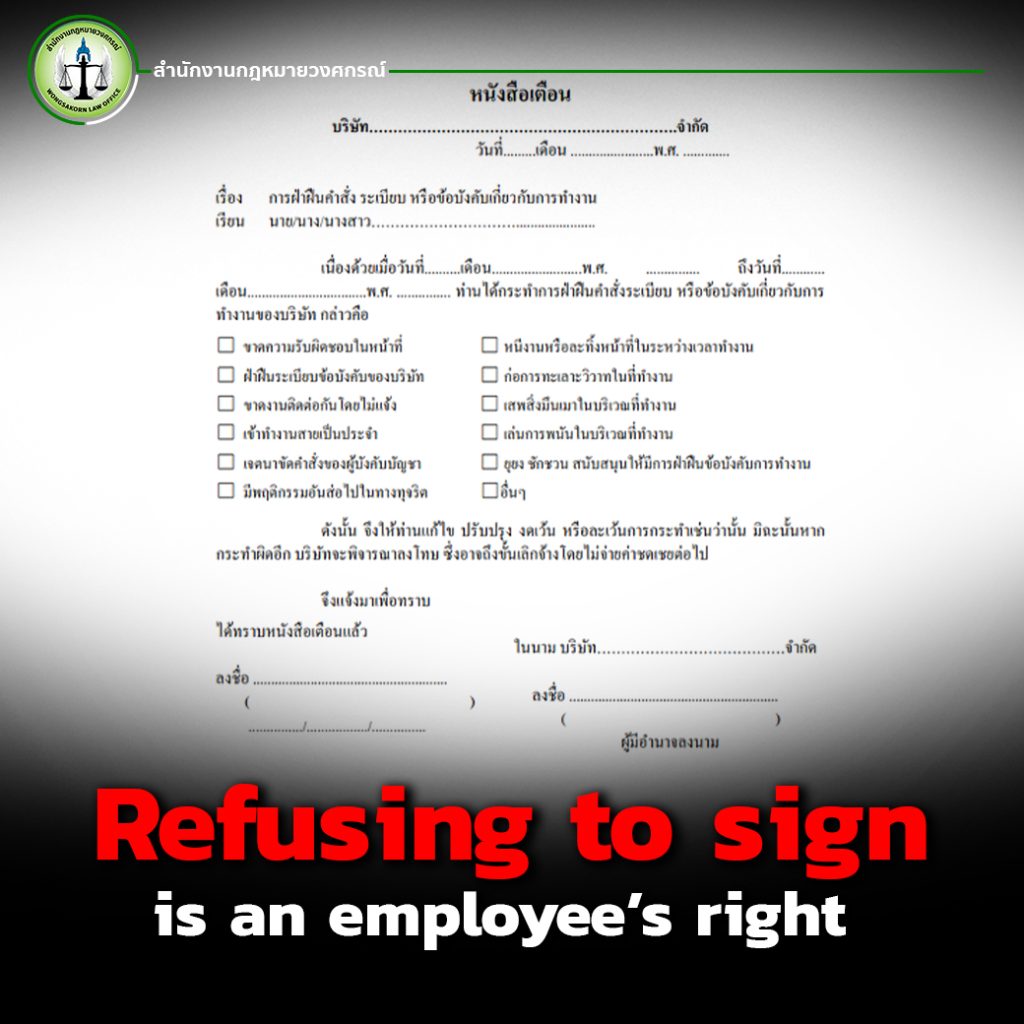
Refusing to sign is an employee’s right
Employees have the right to refuse to sign if they believe the letter’s contents are incorrect or require clarification.
However, refusing to sign does not invalidate the warning: what matters legally is that the employee was notified and acknowledged (verbally or via other means) the warning.
Can the employer still proceed with disciplinary action?
Yes. If misconduct continues within the warning period, the employer may issue a second warning. In severe cases, the employer may terminate employment without compensation, under Section 119 of the Thai Labour Protection Act, when misconduct is serious enough to warrant immediate dismissal.
Issue a written rebuttal or request a clarification meeting
Keep records of your work to protect your position
Seek legal consultation to guide your response
Summary
An employee’s refusal to sign a warning letter is not misconduct.
The employer can still issue the warning and begin disciplinary steps.
Both parties should understand their rights and obligations to foster fairness and avoid workplace disputes.
Whether you’re an employer or employee seeking clarity…
Wongsakorn Law Office is here to help. Our labour law experts offer consultations, mediation, and legal representation when needed. We assist both employers and employees in resolving conflicts professionally, preserving workplace harmony, and protecting everyone’s legal interests.
Contact us today to navigate warning letters, disciplinary actions, or any employment-related legal matter.
Did you know? Car accidents are not just about vehicle damage or temporary injuries. You may be entitled to claim compensation worth hundreds of thousands of baht if you know how to properly exercise your legal rights.
The Case Study: “Serious Injuries” and “Claim Compensation”
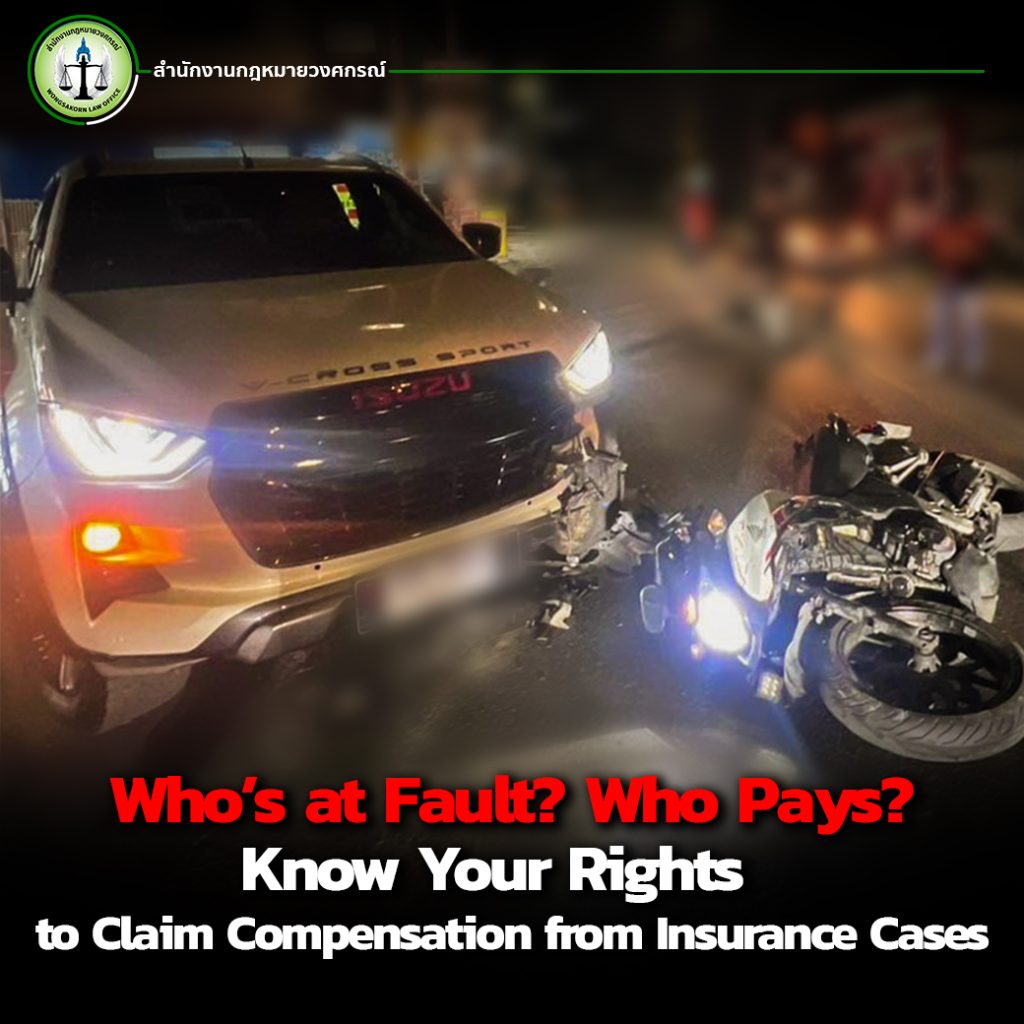
The case study we present today involves a victim riding a motorcycle who was suddenly cut off by a car turning in front of them, resulting in “serious injuries”. Ultimately, the victim was able to “claim compensation” from the insurance company totaling 564,828.25 baht through arbitration proceedings.
Real Incident: Severely Injured by a Car Turning in Front
The victim was riding a motorcycle normally when suddenly a car coming from the opposite direction turned right abruptly cutting in front. A severe collision occurred causing multiple bone fractures. The victim was hospitalized for 17 days and had to recuperate for over 2 months before regaining normal function. Although the car involved had private insurance and the driver admitted negligence, the insurance company disputed responsibility and refused to pay the requested compensation, leading to arbitration.
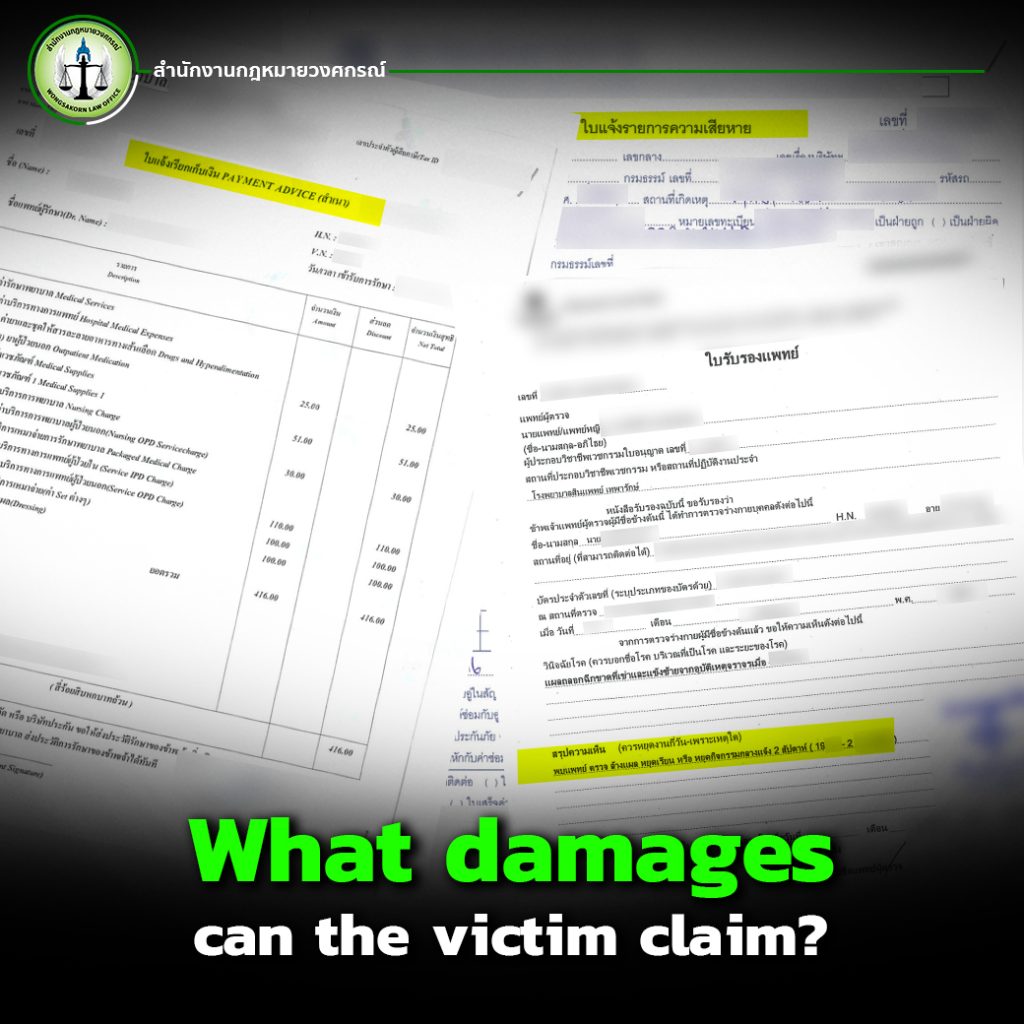
What damages can the victim claim?
According to the Civil and Commercial Code Sections 438 and 444, victims of accidents have the right to claim various compensations including:
Medical expenses, both past and future
Nurse wages and caregiver travel costs
Loss of income during illness, such as income from side jobs
Compensation for non-monetary damages such as pain and loss of normal life
These rights are very important because they help the victim return to life as close to normal as possible without bearing the financial burden alone.
Arbitration Result: Insurance Company Must Pay According to Victim’s Rights The arbitrator examined all evidence and found the car driver clearly negligent, ruling that the insurance company must pay compensation as follows:
Medical expenses: 11,228.25 baht
Future medical expenses: 100,000 baht
Nurse wages and travel costs: 20,000 baht
Loss of income from side work: 33,600 baht
Compensation for physical and mental pain: 400,000 baht Total: 564,828.25 baht
Personal Opinion from the Team
Even though the insured driver was a government official knowledgeable about the law and admitted fault, the insurance company fought vigorously to deny responsibility. This shows that you should never be complacent even if the facts seem clear, because insurance companies often dispute to reduce or avoid payment.
Another interesting point is about paying caregivers during illness. Even if the victim has the caregiver’s ID card as proof, this is insufficient if the caregiver does not testify in person. Incomplete evidence can lead courts or arbitrators to reject the claim immediately.
Don’t Be Complacent! You Have More Rights to Claim Compensation Than You Think Many mistakenly believe that if they have free medical care from the government, such as civil servants or social security, they cannot claim money from the responsible party or insurance company. In fact, these rights do not exclude each other! You can still claim future medical expenses, loss of income, and compensation for physical and mental damages if you have evidence and valid explanations.
Why Should You Have a Lawyer for Insurance Cases?
Having a lawyer specialized in insurance cases helps you preserve your rights because the lawyer will assist you in every step, including:
Assessing the damages you can claim
Collecting and organizing evidence
Negotiating with the insurance company
Professionally filing a lawsuit in court or arbitration
Wongsakorn Law Office – True Experts in Insurance Cases
We are ready to support you at every stage of your case, whether it is advising, gathering evidence, or claiming full compensation down to the last baht. Whether you are a victim of a car accident, insurance case, or other tort cases, WongSakorn is the legal team you can trust.
Consulting a lawyer from the start is the way to avoid disadvantage against insurance companies. If you or someone close to you experiences an accident, remember that you have the right to claim medical expenses, loss of income, and compensation—just prepare your evidence and exercise your rights fully under the law.
WongSakorn Law Office is here to support you in every accident and insurance case, ensuring you receive full legal rights without omission or disadvantage. If you want our legal team to help evaluate your case, gather documents, or proceed with compensation claims, contact usimmediately. Because true justice begins with knowing your rights and using them correctly.
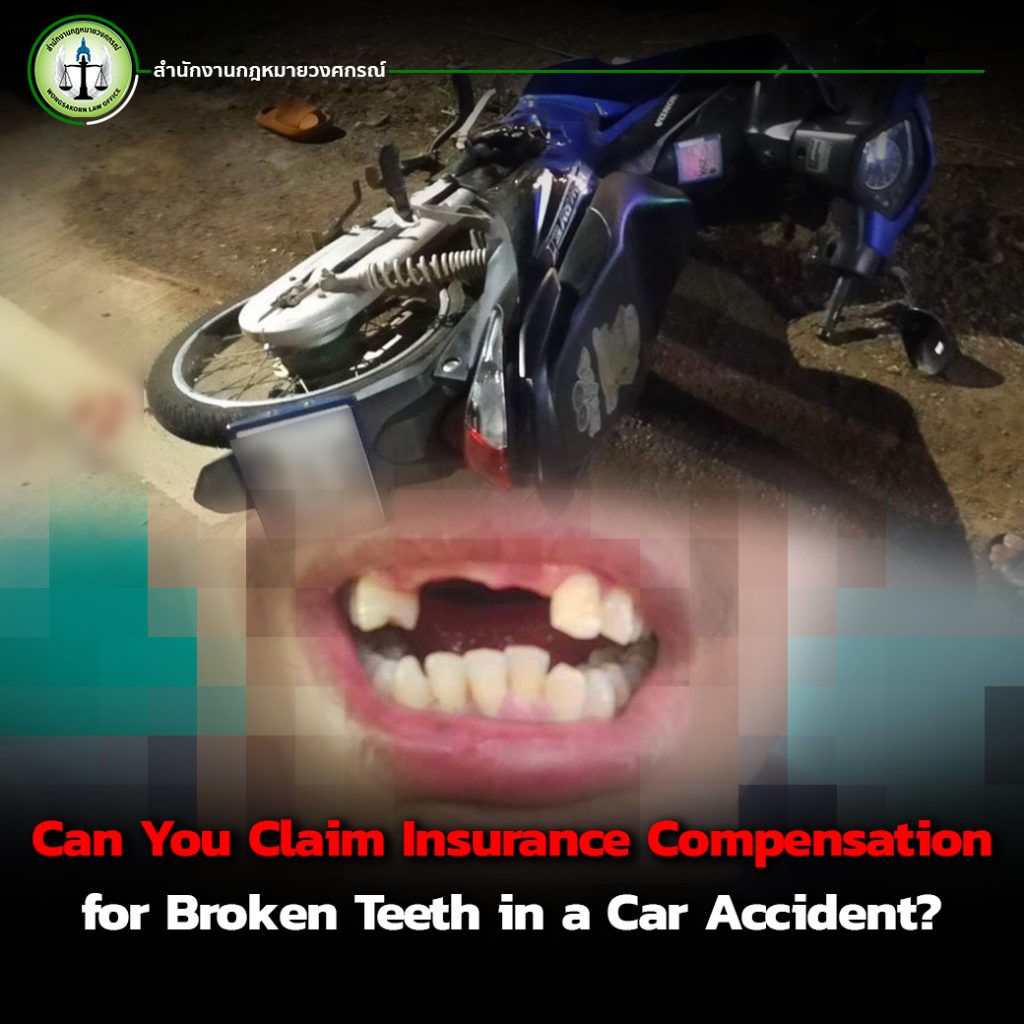
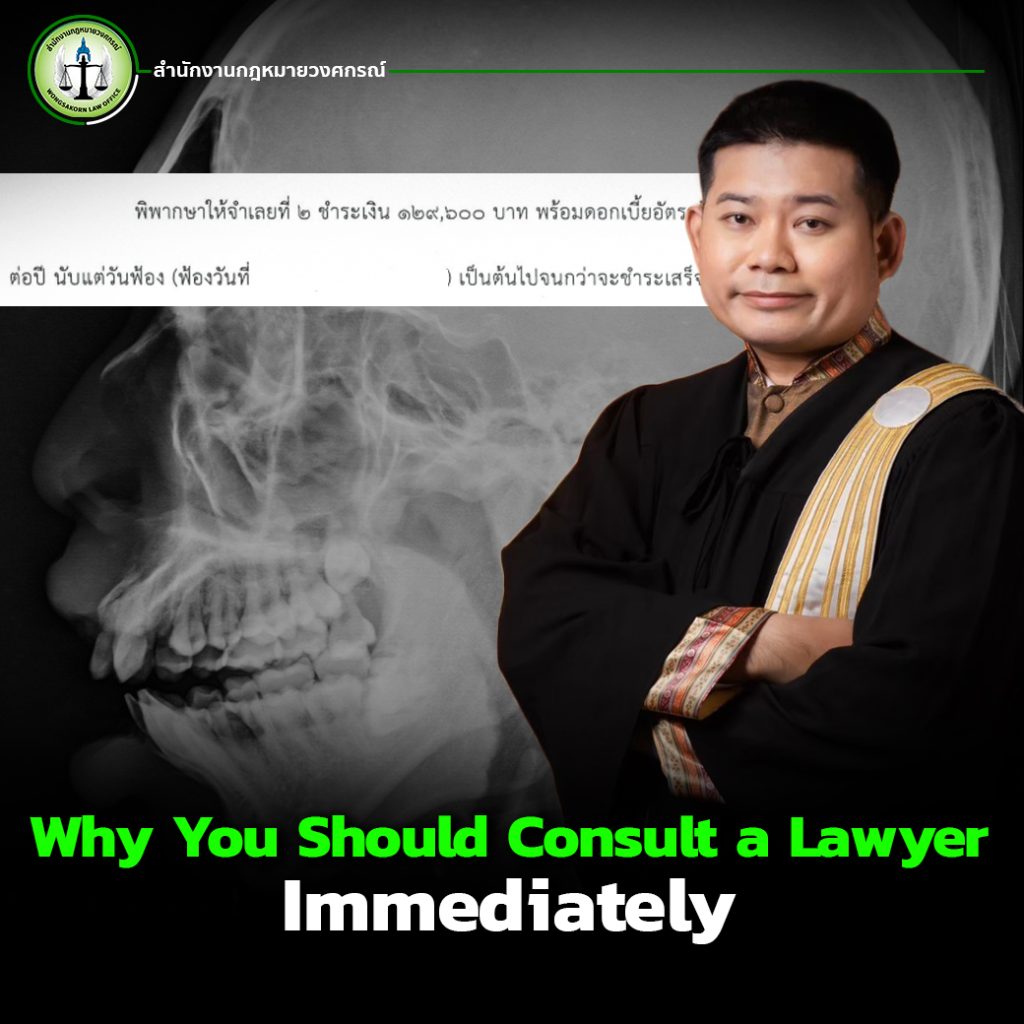
A car accident doesn’t just damage vehicles—it can also seriously harm drivers and passengers. One common and painful injury is broken or loosened teeth due to impact, which isn’t just a cosmetic issue but a serious health concern requiring immediate treatment. So, in such cases, can you claim compensation from your insurer for “car crash with broken teeth”?
The answer is yes, but it depends on several factors: the type of car insurance you have, whether it covers personal accidents, and whether you have adequate documentation to support your claim.
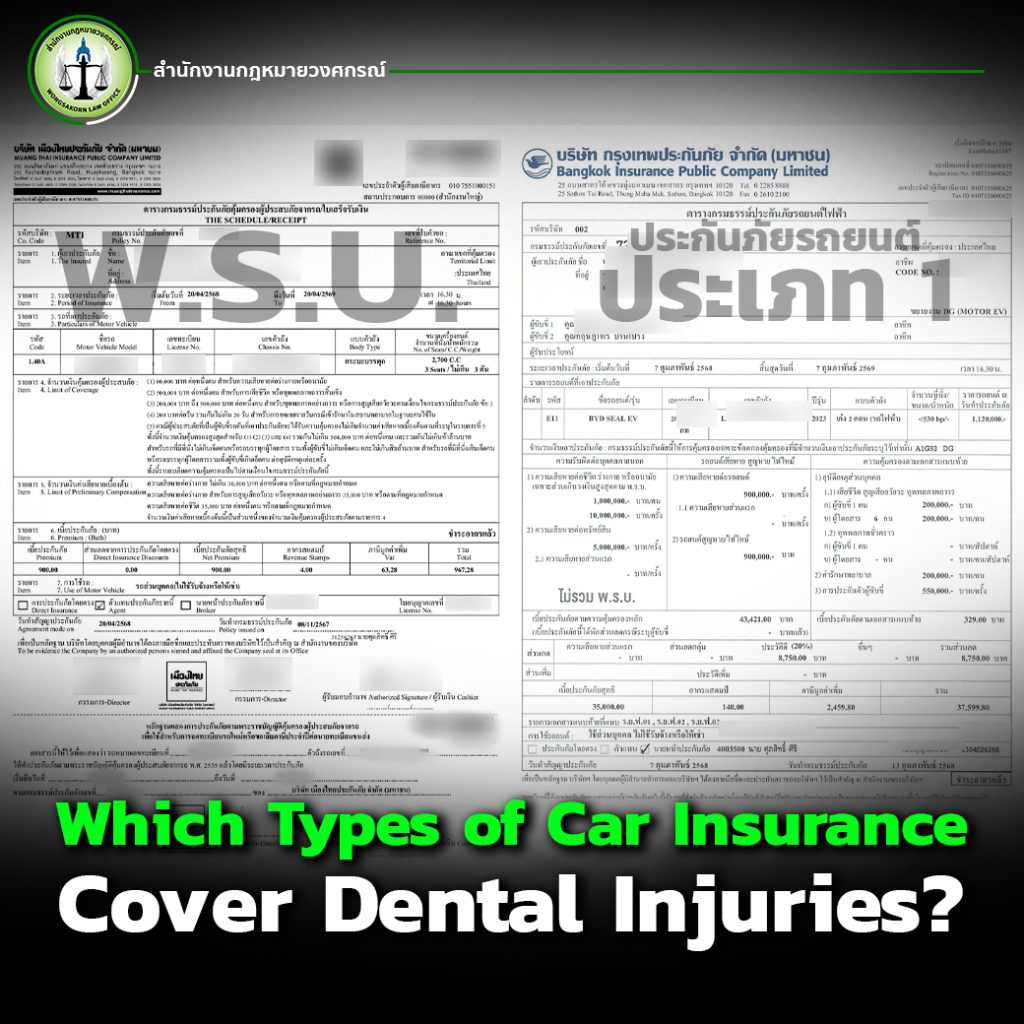
Which Types of Car Insurance Cover Dental Injuries?
To claim dental treatment under car insurance, consider the following policy types:
1.Voluntary Car Insurance (Comprehensive – Class 1, 2+, 3+)
o Class 1 typically covers both vehicle damage and bodily injury, including dental treatment for broken teeth.
o Class 2+ and 3+ may cover personal accident injuries—but you must check the actual terms in your policy.
o If your policy has a Personal Accident (PA) rider, it may cover dental treatment or broken teeth.
o CTPL covers medical treatment up to 30,000 THB per person for injuries. If a broken tooth is part of that injury, you can claim it.
o With a valid medical certificate and dental or hospital receipts, you can submit your claim accordingly.
Documents Required to Claim Dental Treatment
If you’re injured and experience dental trauma in an accident, gather these documents:
1.Copy of your insurance policy
2.Medical or dental certificate stating the injury (e.g., broken or loose teeth, need for crowns or implants)
3.Dental treatment receipts
4.Police accident report or daily log copy
5.Photos of the injuries or post-treatment (if available)
6.Copies of your ID card and house registration
Key Tips Before Filing a Dental Claim
Insurers may categorize treatment as “cosmetic” unless medical necessity is proven, so strong documentation is essential.
You can still claim excess coverage under Class 1 or a PA rider even after claiming CTPL.
Passengers can directly claim from the at-fault vehicle’s insurance.
What to Do If Your Claim Is Denied
If your insurer refuses or underpays your dental claim, do the following:
1.Consult a lawyer first to evaluate legal validity and policy terms, and to prepare legal action if severe injury or bad-faith denial occurs.
2.Contact your insurer and provide additional medical documents, e.g., detailed certificates.
3.File a complaint with the Office of Insurance Commission (OIC) to seek mediation.
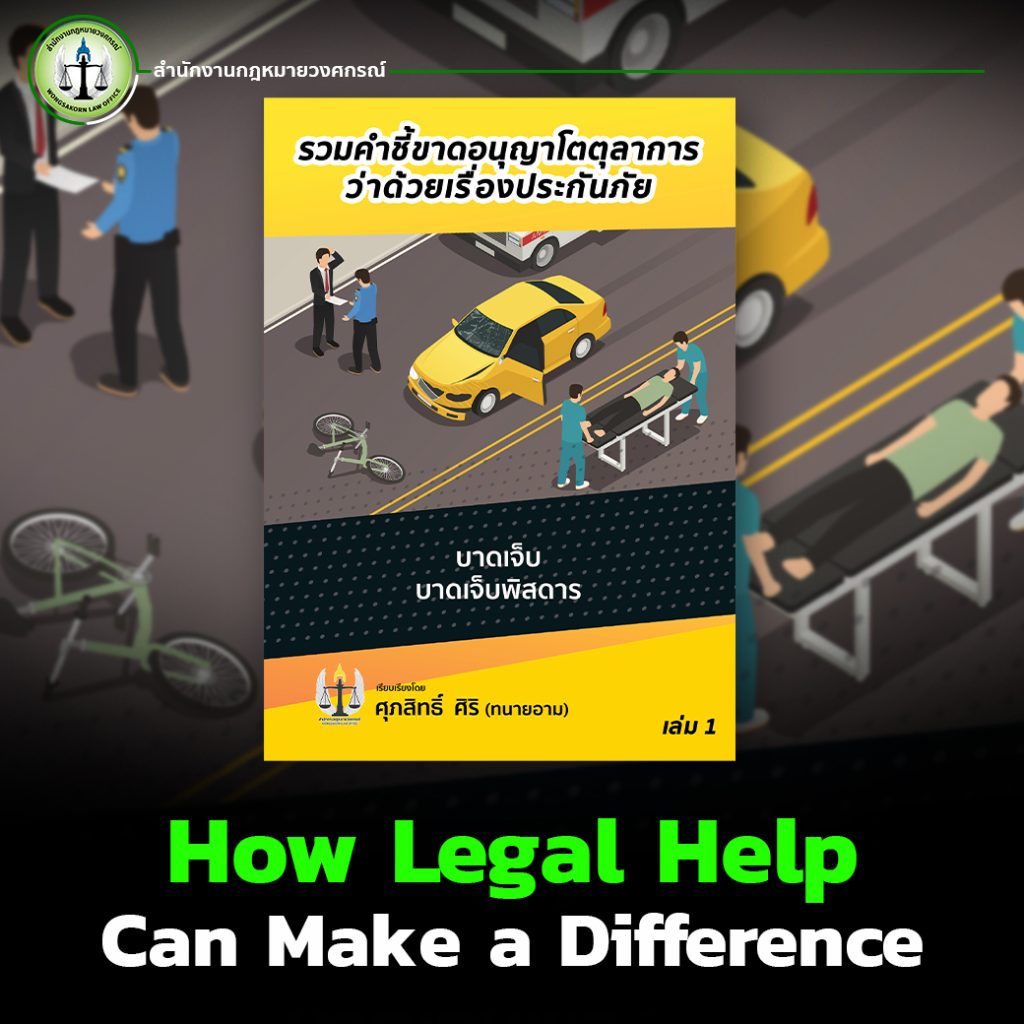
How Legal Help Can Make a Difference
A real arbitration case illustrates the importance of legal representation. In Arbitration Case No. 217/2561 (Sourced from Arbitration Decisions on Insurance Injury, by Supasit Siri, Attorney Arm):
Claimant requested ~900,000 THB—including medical costs, future treatment, lost income, and mental distress.
Insurer contested the high amount and cited a 500,000 THB coverage limit.
Arbitrators awarded 379,310 THB (with interest), breaking down as:
Future dental treatment: 100,000 THB
Lost income during recovery: 29,310 THB
Future earning capacity loss: 100,000 THB
Non-economic damages: 150,000 THB
Plus legal interest of 15% p.a.
This case shows dental injury claims are complex. Legal guidance can ensure you receive what you rightfully deserve.
Why You Should Consult a Lawyer Immediately?
Consulting a lawyer first is the most effective way to protect your rights. A legal expert can help you draft demand letters, file police reports, review policy details, and pursue litigation when necessary. With legal support, you’ll be equipped to claim full compensation—covering medical bills, lost wages, and emotional harm—without being shortchanged by insurers.
Summary
In case of a car crash with broken teeth, you may claim under CTPL and voluntary insurance (Class 1 or PA rider).
Prepare full documentation and understand your policy.
If your claim is unjustly denied,consult a lawyer first, then follow up with the insurer and OIC if needed.
🔑 Remember: Protect your rights and ensure you receive all the compensation you deserve.
Stay one step ahead of insurers—and protect your rights before it’s too late
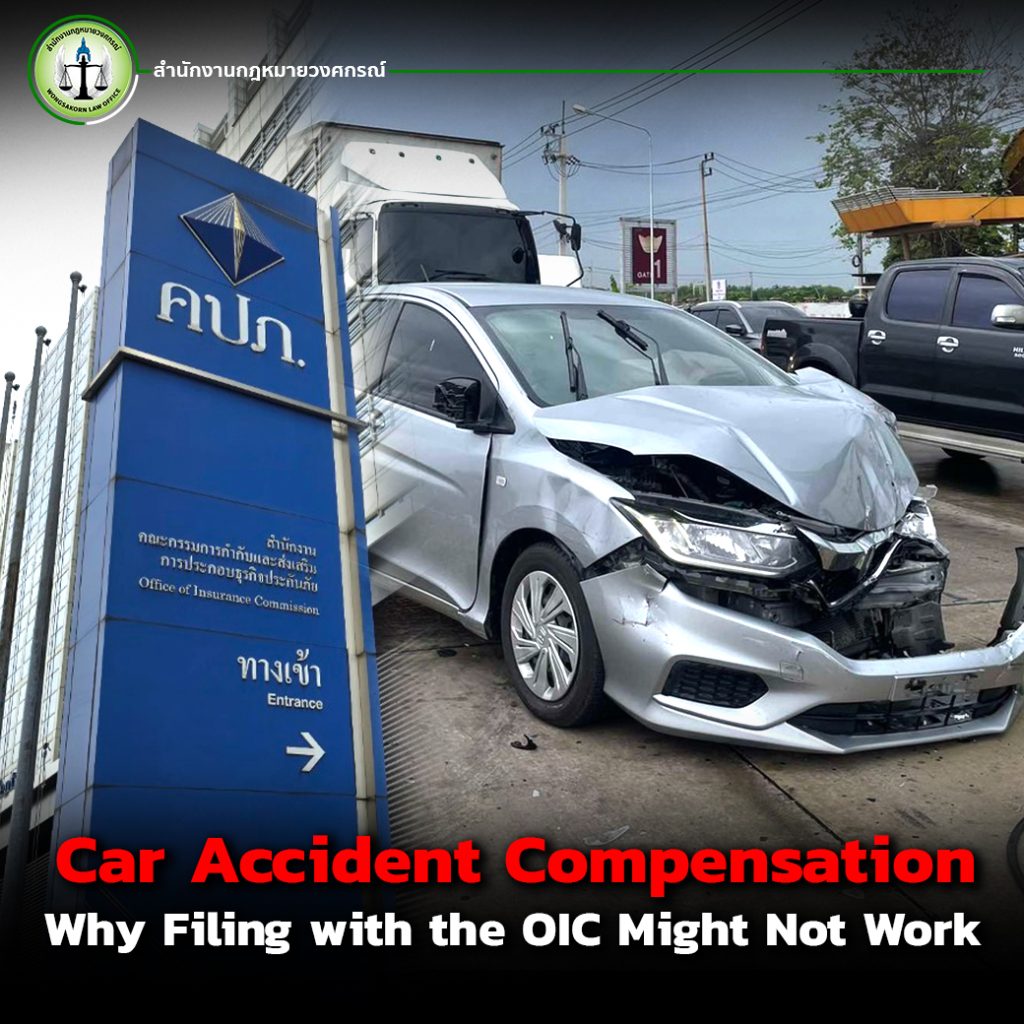
When a road accident happens, many people assume that having insurance is enough. But in reality, claiming compensation—especially for “loss of use” of your vehicle—is not an easy matter. This often leads to lengthy disputes between the victim and the insurer. In many cases, even filing a complaint with the Office of Insurance Commission (OIC) may not yield results, especially if you lack legal knowledge or professional guidance.
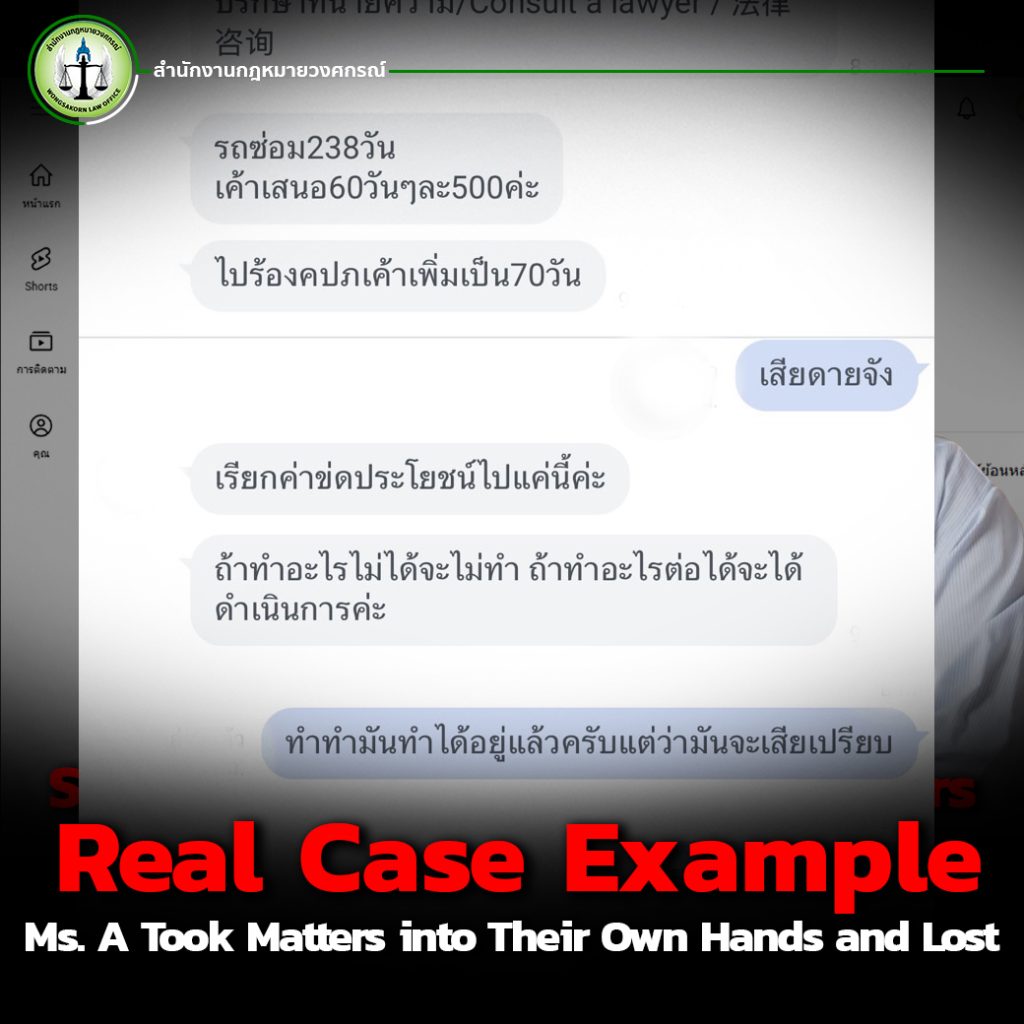
Real Case Example: Ms. A Took Matters into Their Own Hands—and Lost
In a clear example, Ms. A was involved in a car accident on July 10, 2024, and their car required 240 days of repairs. When they filed for “loss-of-use compensation,” the insurer offered only THB 500 per day for 60 days, totaling THB 30,000. Believing it was unfair, they filed a complaint with the OIC themselves. The OIC mediated, and the insurer increased the offer to 70 days—THB 35,000—still far below their actual loss.
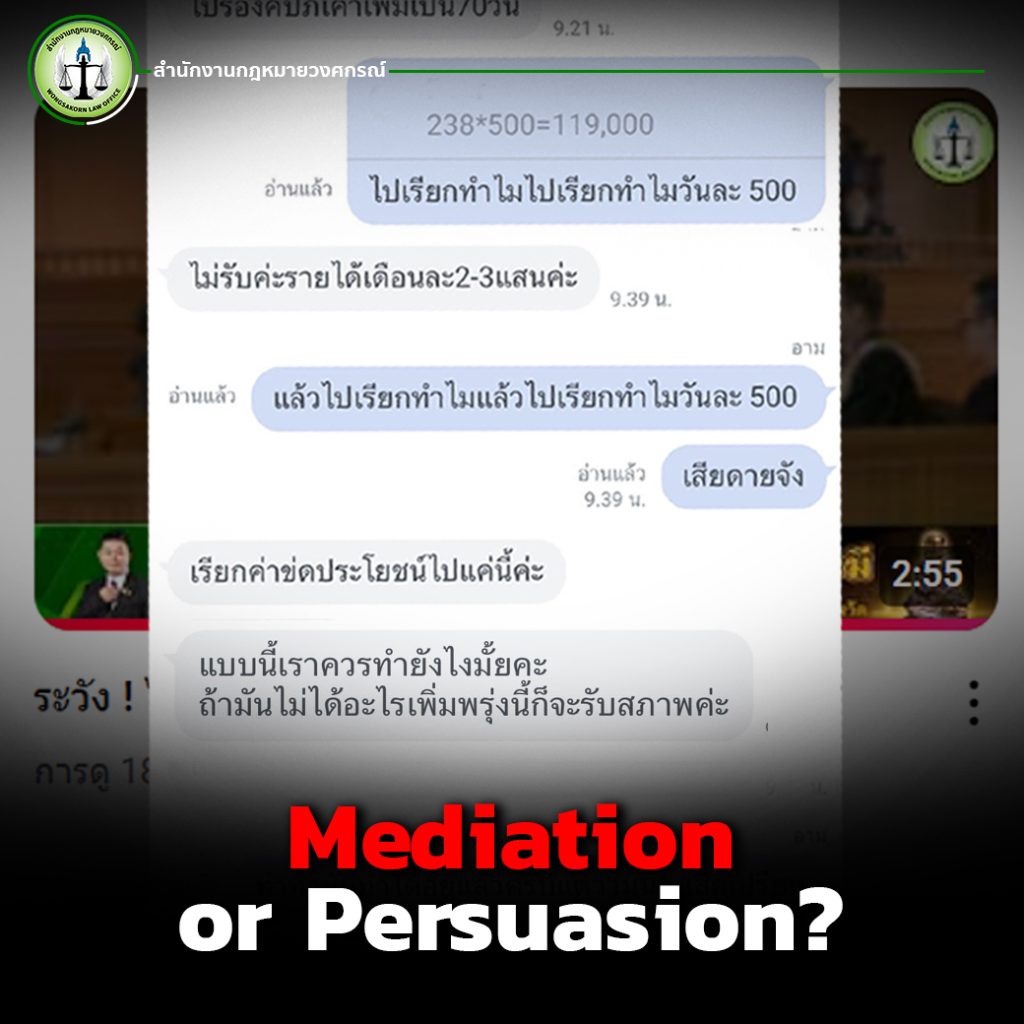
Mediation—or Persuasion?
Feeling unjustly treated, Mr./Ms. A then consulted Wongsakorn Law Office and spoke with Lawyer Arm, a specialist in insurance claims. But it was too late. Because the victim had initiated mediation before obtaining legal advice, they were at a disadvantage from the beginning.
Lawyer Arm explains:
“Mediation without knowledge often becomes persuasion—insurance companies come prepared with legal teams, negotiation tactics, even psychological strategies. If the victim lacks knowledge, they may agree to subpar deals, unknowingly giving up rights.”
Did You Know? You Can Claim More Than THB 500 Per Day!
Many believe “loss-of-use compensation” is capped at THB300–500/day, but in truth, if you can prove actual financial loss—e.g., using the vehicle for business or delivery—you may claim THB800–1,500 per day, depending on evidence and circumstances.
Key Point: Knowledge and Strategy Are Essential
Insurance companies often start with low offers. Without negotiation, proper documentation, or legal support, you risk losing deserving compensation.
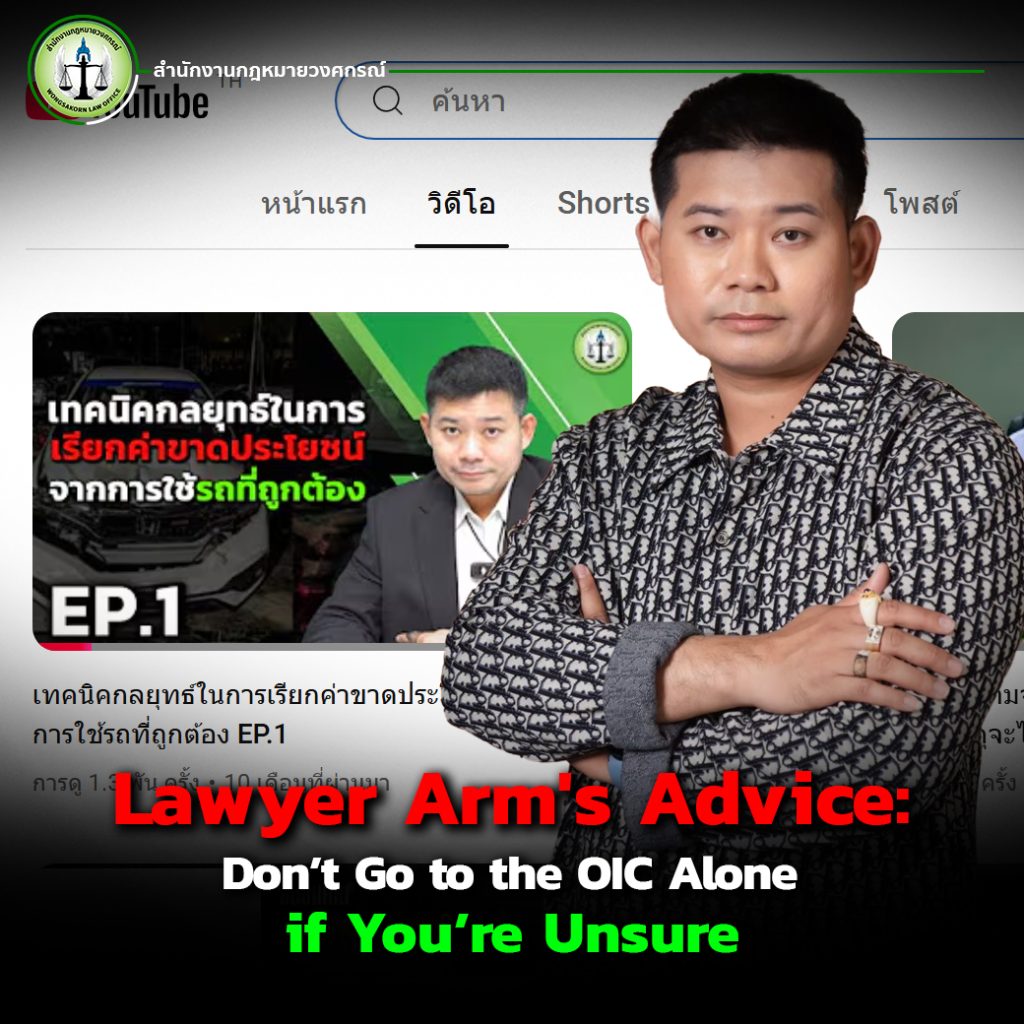
Lawyer Arm’s Advice: Don’t Go to the OIC Alone if You’re Unsure
Many see the OIC as a last resort—which is true in theory. But in practice, if you go in without a plan or expert support, you might fall victim to what’s known as “rights-reducing mediation.” Insurers may use this stage to push you into accepting less, hoping to close the case quickly.
“If you intend to file with the OIC, hire a lawyer from the start—or at least seek legal advice beforehand.” Once you’re at a disadvantage in OIC mediation, reversing or reclaiming your rights is extremely difficult, and you may lose them entirely.
Don’t Be Unnecessarily Disadvantaged!
🔍 Watch Lawyer Arm’s video tutorial series:
Key Takeaways
Don’t underestimate insurance companies—they have teams and tactics ready before any accident occurs.
You can claim more compensation than you may think.
Filing with the OIC without preparation may put you at legal disadvantage.
Consult an attorney from the start—that’s your best defense.
Don’t wait until you’ve lost your rights like Mr./Ms. A.
If you want to avoid going through a frustrating, unfair process, contactWongsakorn Law Office today—or click “Contact Us” on their website.