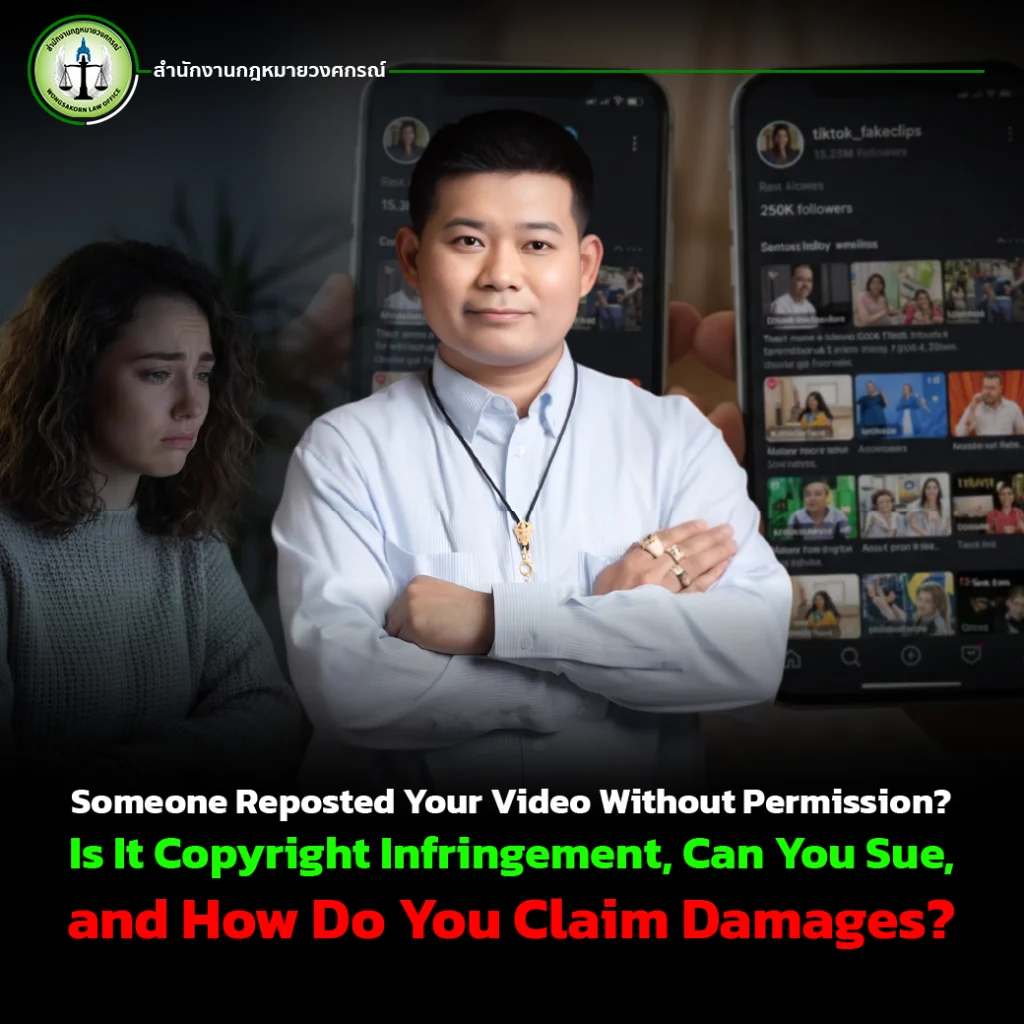
Someone Reposted Your Video Without Permission? Is It Copyright Infringement, Can You Sue, and How Do You Claim Damages?

In today’s digital era, where video content is rapidly growing across platforms like TikTok, Facebook, YouTube, and others, the issue of “video scraping” or unauthorized reposting has become increasingly common.

Many content creators who invest time and effort into producing original videos often suffer significant losses whether in terms of revenue, reputation, or business opportunities.

The key question is:
If your video is taken and reposted elsewhere such as on gambling websites, adult platforms, or other unauthorized channels does it constitute copyright infringement? Can you take legal action, claim damages, or identify the offender?

This article from Wongsakorn Law Office will help you understand your legal rights and the proper steps you can take.

What Is “Video Scraping” and Is It Illegal?

“Video scraping” generally refers to the act of downloading, reposting, or re-uploading someone else’s video content without permission from the original creator.

Under Thai copyright law, a video is automatically protected as a copyrighted work from the moment it is created. Therefore, any unauthorized use typically constitutes copyright infringement, unless it falls under specific legal exceptions (which usually do not apply when the content is reused for personal or commercial benefit).

👉 In most cases, if your video is reposted without permission, it is very likely a copyright violation.

What Are the Impacts of Video Theft?

Some people may think, “It’s just a repost, it doesn’t really cause harm.” In reality, the damage can be significant, such as:

  • Loss of revenue from views or advertisements
  • Missed opportunities to build your brand
  • Audience confusion about content ownership
  • Removal of original credits or replacement with another logo

In some cases, the stolen content may even be used for commercial purposes, leading to even greater financial damage.

What Should You Do If Your Video Is Stolen?
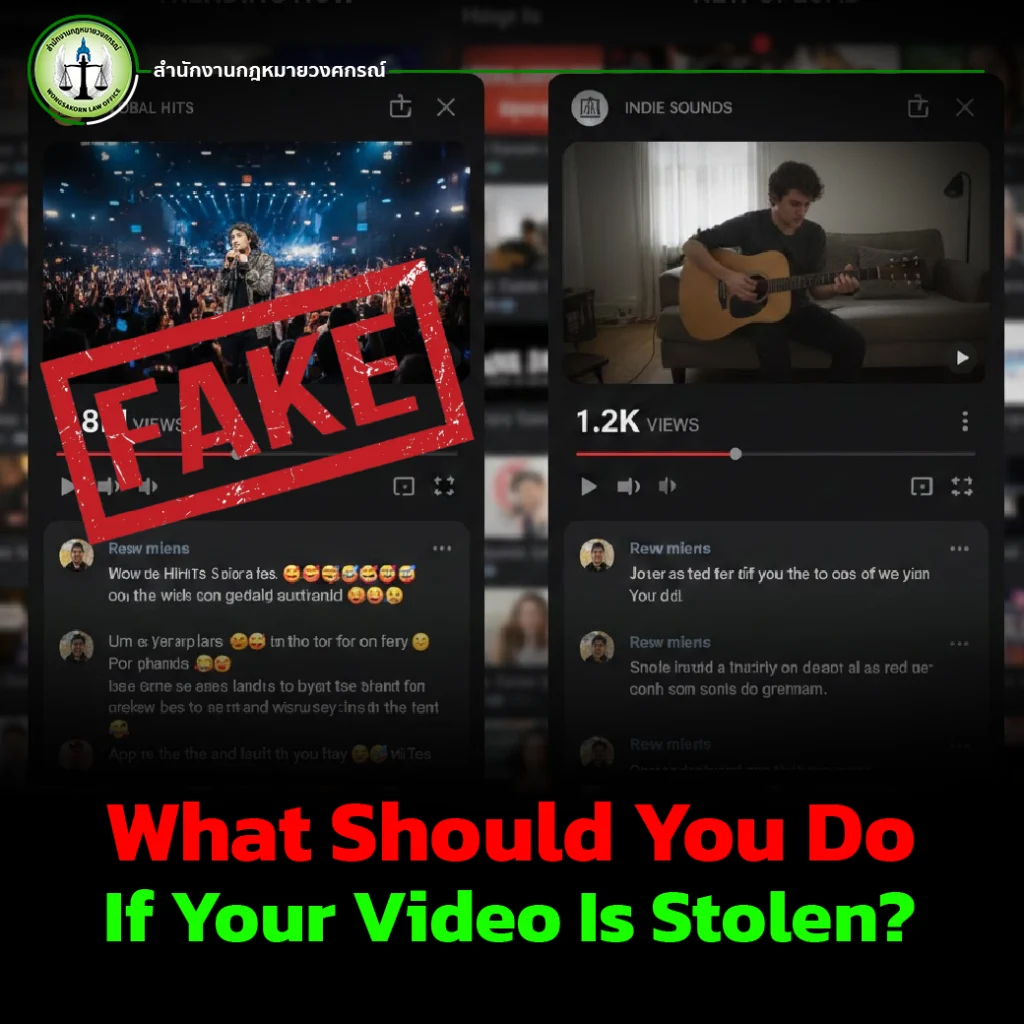
If you are facing this issue, here are the steps you should take immediately:

1. Collect Evidence

  • Take screenshots of the reposted content
  • Save the URL links
  • Record the date, time, and platform

These pieces of evidence are crucial for any legal action.

2. Submit a Takedown Request

Most platforms provide copyright reporting systems, such as:

  • Facebook
  • YouTube
  • TikTok

You can file a request to have the unauthorized content removed.

3. Contact the Offender Directly

In some cases, sending a notice requesting removal can resolve the issue quickly.

4. Consult a Lawyer

If the content is not removed or damages have already occurred, consulting a lawyer is the most important step.

Can You Sue for Copyright Infringement?

The answer is: Yes, you can.

If the situation meets the legal criteria for copyright infringement, the content owner has the right to:

  • File a civil lawsuit to claim damages
  • File a criminal case in cases of intentional infringement

The court will consider factors such as the extent of damage, the behavior of the offender, and whether the content was used commercially.

How Much Compensation Can You Claim?

Damages may include:

-Loss of income (expected earnings)

-Reputational damage

-Legal expenses

In some cases, the court may also award punitive damages if the infringement is considered severe.

What If You Don’t Know Who Reposted Your Video?

Many people worry that they cannot take action because they do not know the identity of the offender.

However, legal action is still possible through

-Requesting information from the platform

-Investigating user accounts

-Using digital evidence and forensic methods

These steps require both legal expertise and technical knowledge, making the role of a lawyer essential.
Why Should You Consult a Lawyer?

Handling unauthorized video use is not just about removing the content it directly involves your legal rights.

A lawyer can help you Structure your case properly, Collect and secure digital evidence, Analyze legal details, Develop strategies to claim damages Most importantly, legal assistance ensures that you are not at a disadvantage and increases your chances of receiving fair compensation.

Don’t Ignore It If Your Video Is Stolen
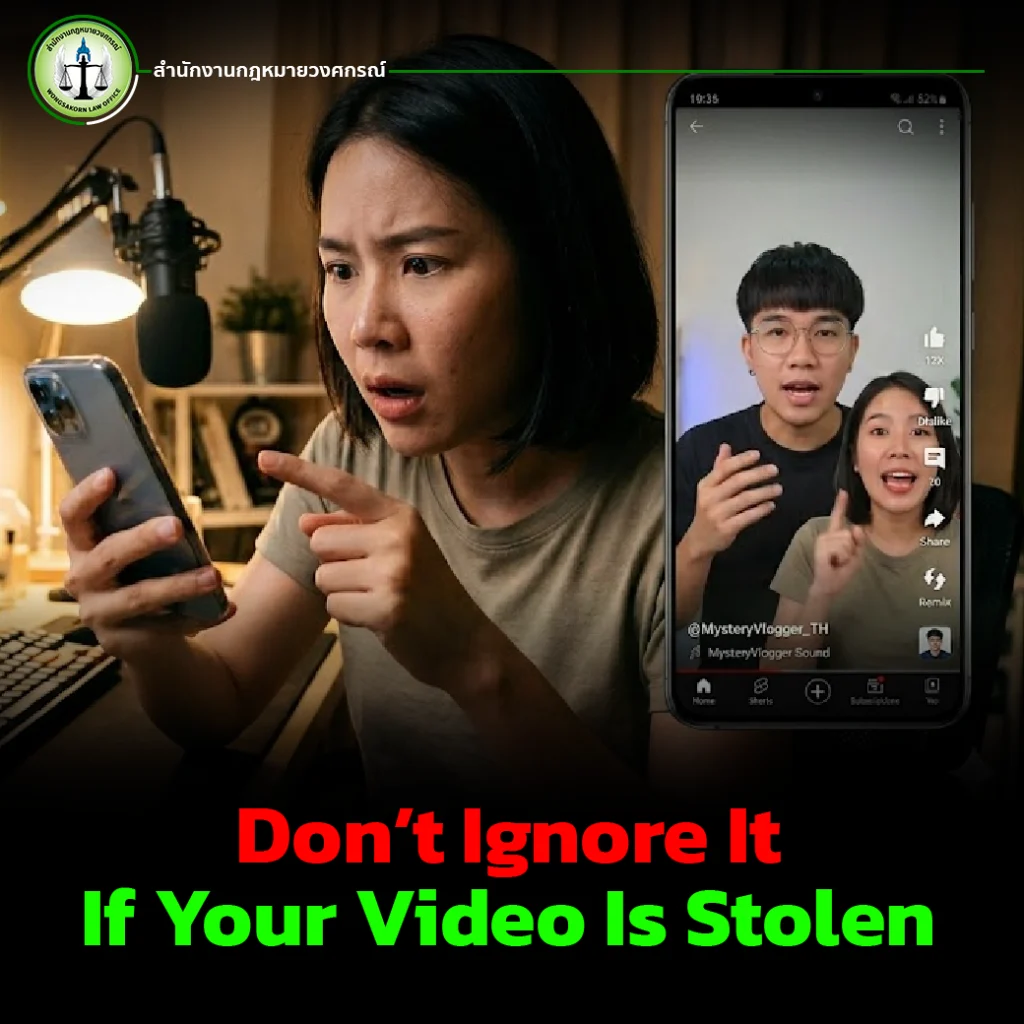
If your video has been reposted without permission, do not treat it as a minor issue.

What you lose may not be just a single video but your opportunities, income, and reputation.
👉 You have legal rights
👉 You can claim damages
👉 You can take legal action against the offender

Consult a Lawyer for the Right Solution
If you are facing this issue and don’t know where to start, Wongsakorn Law Office is here to help.

We provide Legal consultation on copyright infringement cases, Case analysis and litigation strategy, Damage claims and legal proceedings, Assistance in identifying offenders. We understand that content creators deserve fair protection.

Contact us today to protect your rights before the damage becomes more severe.
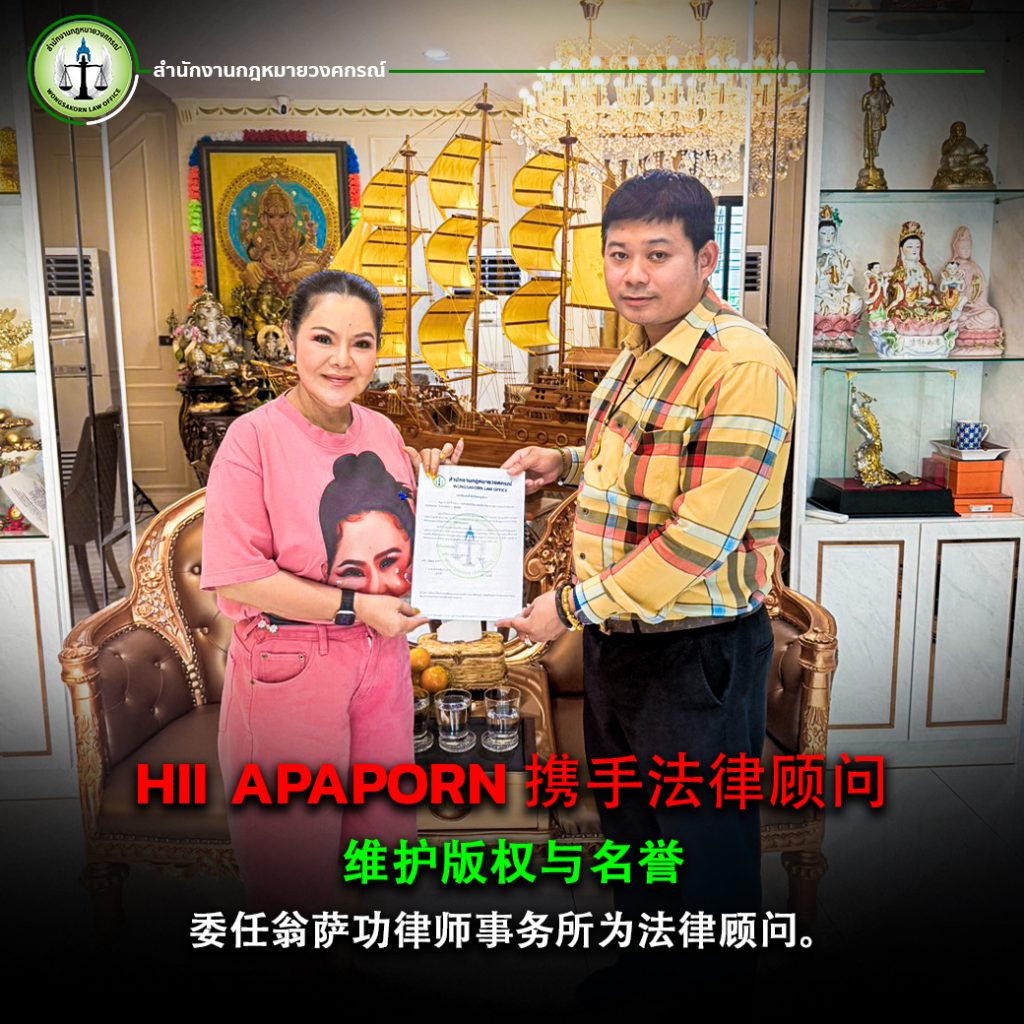
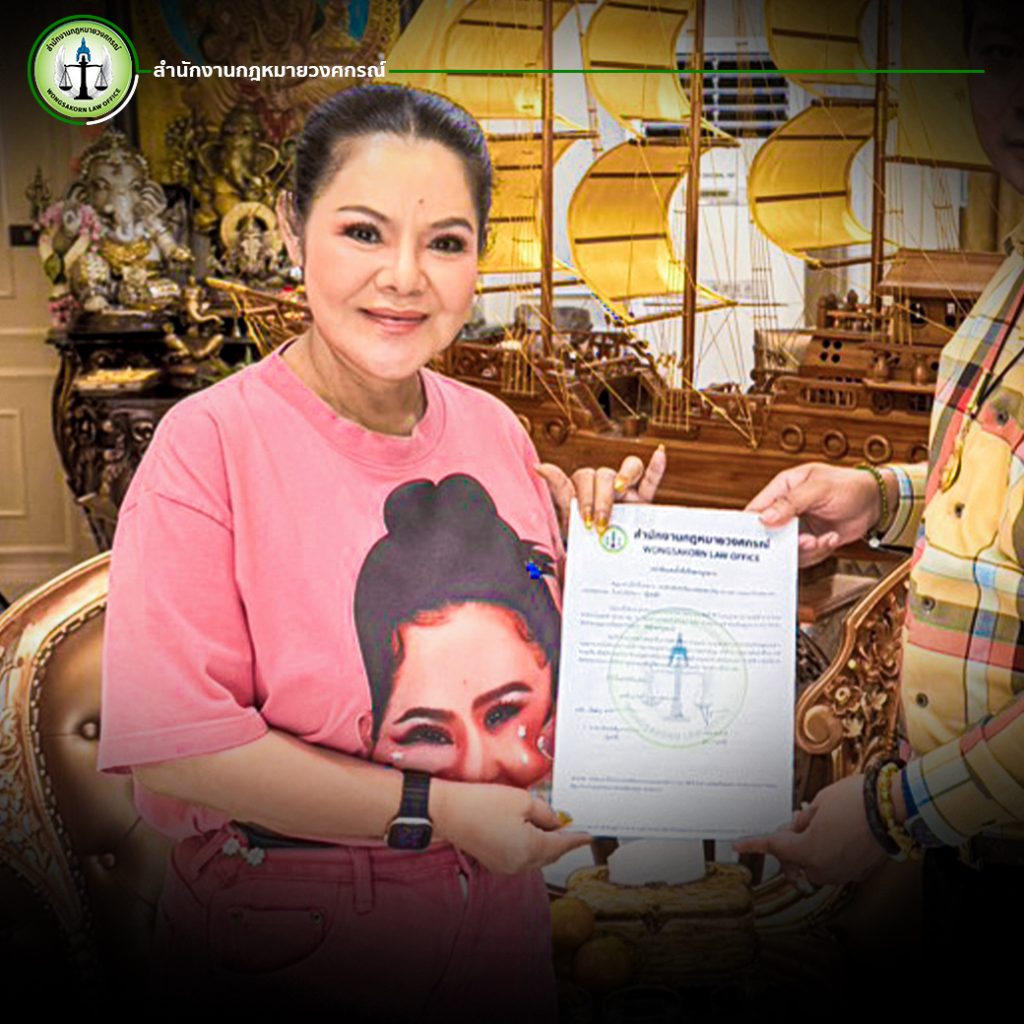
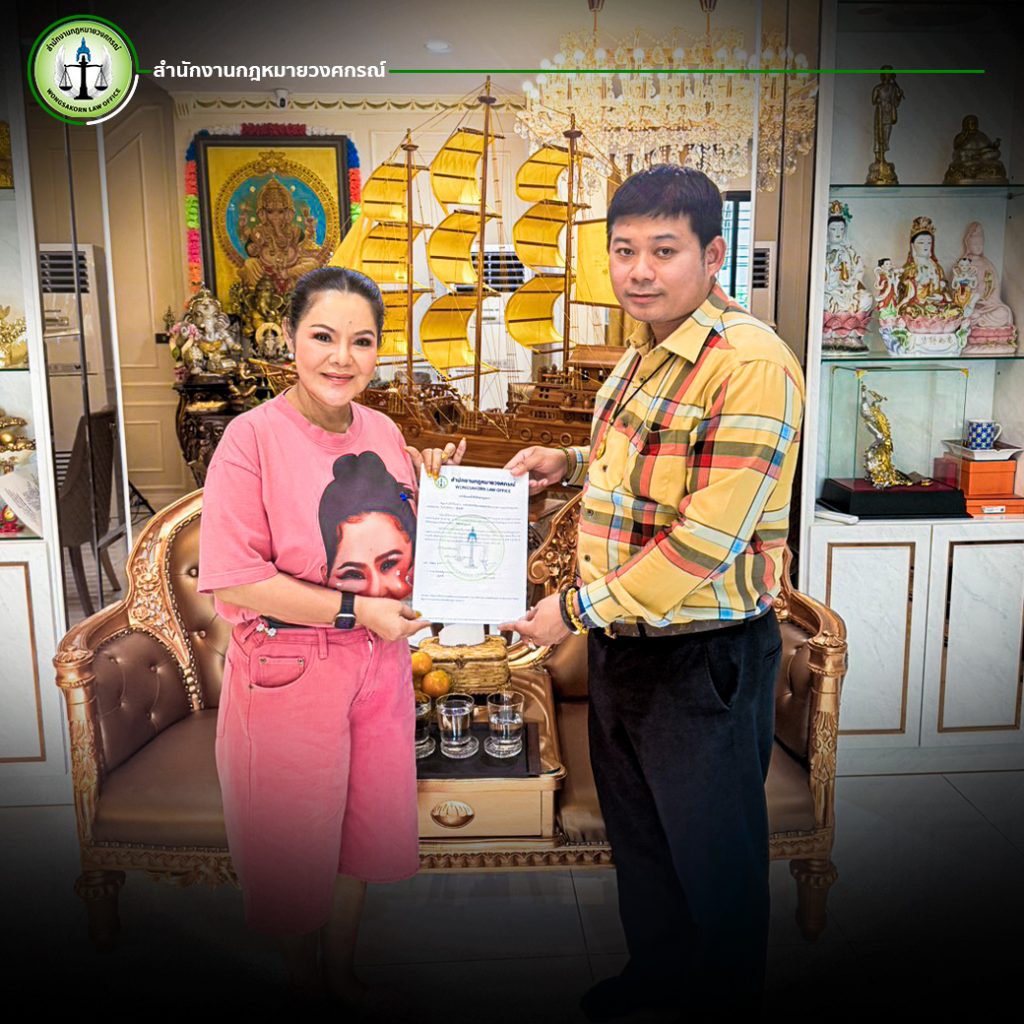
Hi Apaporn Joins Hands with Legal Counsel to Protect Copyright and Reputation Appoints Wongsakorn Law Office as Legal Advisor

On March 2, 2026, Hi Apaporn Nakhonsawan, a renowned Thai singer and actress, entrusted and appointed Supasit Siri (Lawyer Arm) from Wongsakorn Law Office to serve as her legal advisor. His role is to oversee and handle legal matters related to copyright protection, including taking legal action against individuals who unlawfully use the artist’s media content, such as images, audio, and videos that have been altered or disseminated in ways that cause damage to her reputation.

The issue currently arising involves the unauthorized use of media belonging to well-known public figures on online platforms. In particular, images, audio, or videos of artists are often misused to invite or persuade the public to participate in online gambling websites or lottery platforms. Such content is frequently distributed through various social media platforms. These actions not only constitute copyright infringement but also create public misunderstanding, leading people to believe that the owner of the media is involved in inappropriate activities. This directly affects the artist’s public image, credibility, and reputation that has been built over many years.

For Hi Apaporn Nakhonsawan, who has been a prominent figure in the Thai entertainment industry for a long time, the misuse of her name and image inevitably damages the trust of her fans, as well as employers and followers who have continuously supported her work. Therefore, appointing legal counsel to take legal action is an important step in protecting the artist’s rights and reputation, while also pursuing legal proceedings against those who misuse her media. This effort also aims to prevent further harm to society and to consumers who may be deceived by such false representations.

This action reflects the importance of protecting copyright and reputation in the digital era, where information can spread rapidly across the online world. Having a legal team to oversee and handle such matters systematically will help track down offenders and utilize legal processes to effectively stop rights violations. It also helps establish standards for protecting the works and public image of public figures in online society.

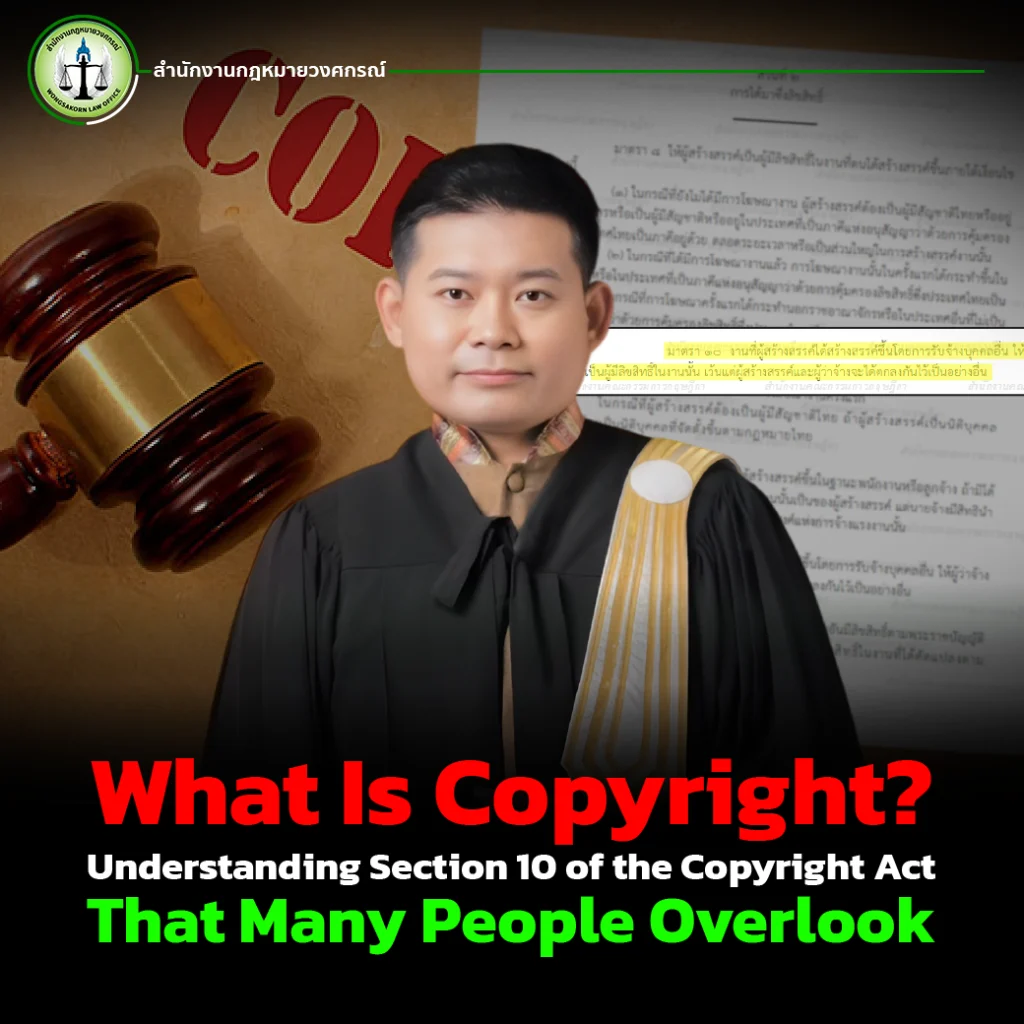
What Is Copyright? Understanding Section 10 of the Copyright Act That Many People Overlook

In the digital age, where anyone can easily create and publish content at their fingertips, copyright has become a legal issue much closer to everyday life than many people realize. Whether it is articles, images, music, videos, short clips on social media, or content on platforms such as YouTube, TikTok, and Facebook, copyright plays a crucial role.

Many people mistakenly believe that copyright protection only exists after registration, or that using a small portion of someone else’s work does not constitute infringement. In reality, Thai copyright law protects creative works from the moment they are created, and one of the most fundamental provisions is Section 10 of the Copyright Act B.E. 2537 (1994).

This article will help you understand what Section 10 covers, who owns copyright, and what kinds of actions may unknowingly lead to copyright infringement.

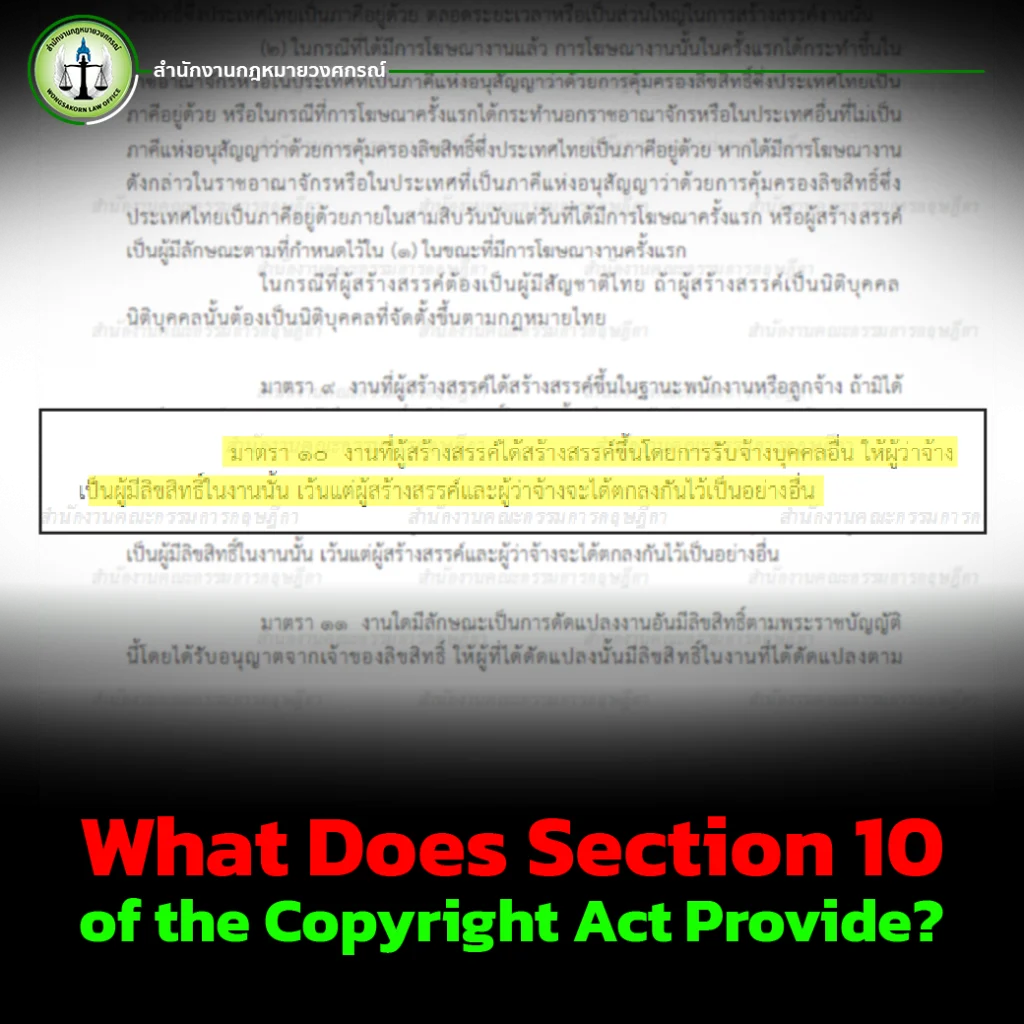
What Does Section 10 of the Copyright Act Provide?

Section 10 provides that where a work is created by a creator under a contract of hire or employment for another person, the employer or the person who commissioned the work shall be the owner of the copyright in such work, unless the creator and the employer or commissioning party have otherwise agreed.

Section 10 of the Copyright Act B.E. 2537 governs the creation of copyright, stating the essential principle that:

“Copyright arises in favor of the creator immediately upon the creation of the work, without the need for registration.”

In summary, Section 10 confirms that copyright protection does not require registration. Once a creative work is created in a tangible form such as writing an article, drawing, photography, recording a video, composing music, or designing graphics the creator automatically becomes the copyright owner.

What Types of Works Are Protected by Copyright?

Under Thai copyright law, copyright protection covers creative works such as:

  • Literary works (articles, books, posts, captions)
  • Artistic works (paintings, photographs, graphic designs)
  • Musical works and lyrics
  • Audiovisual works (videos, films, clips)
  • Broadcast works
  • Computer programs

As long as the work is original, creative, and expressed in a tangible form, it is immediately protected under Section 10.

Case Example: Posting First — Who Owns the Copyright?

Example 1: Articles on Social Media

A writer publishes a legal analysis article on their Facebook Page. Later, another person copies the article and republishes it on their own website without permission or credit.

Even though the article was not registered for copyright, under Section 10, the writer remains the copyright owner. Republishing the article without authorization constitutes copyright infringement.

Case Example: Downloading and Reposting Clips — Is It Infringement?

Example 2: TikTok or YouTube Shorts Clips

An influencer creates an educational video clip. Another user downloads (“rips”) the clip and reuploads it on their own channel to generate views and income.

Although the clip has already been made public, copyright still belongs to the original creator. Reusing it without permission constitutes copyright infringement under the law.

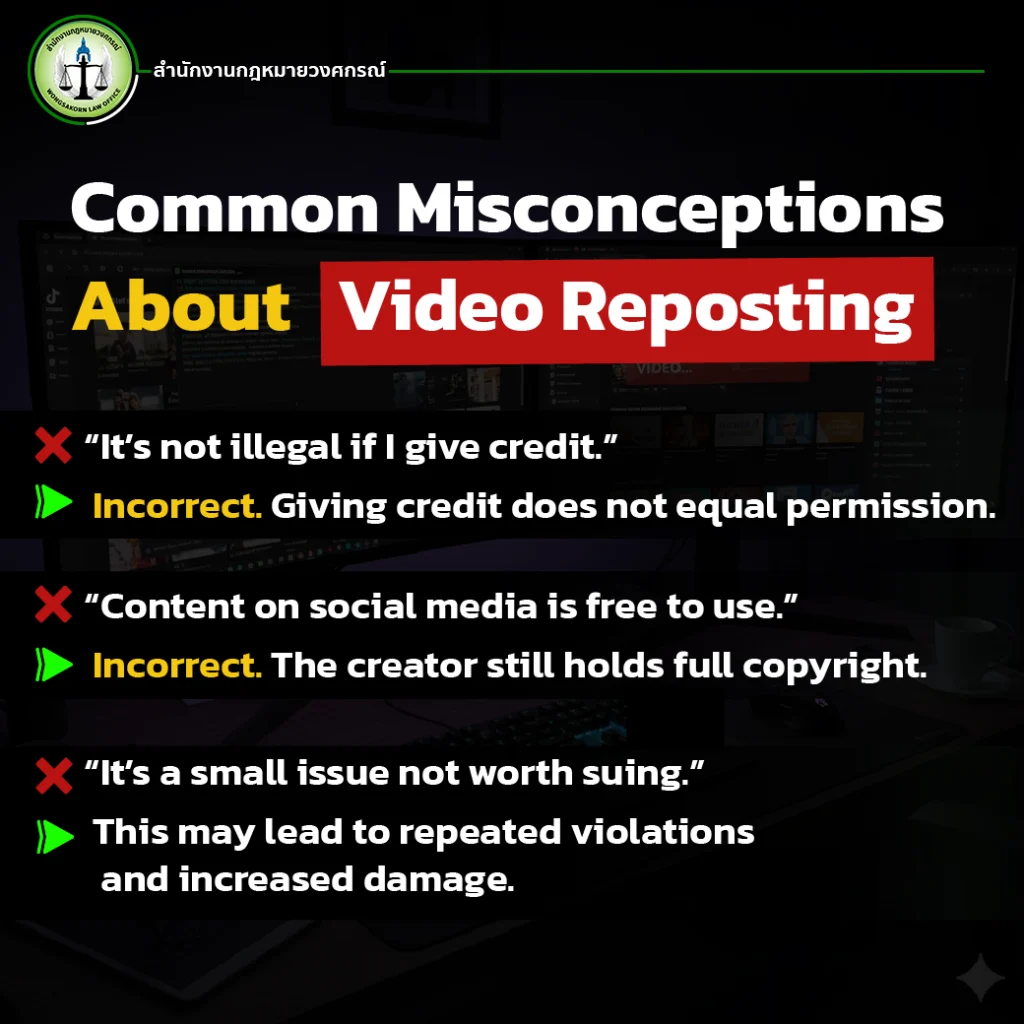
A Common Misunderstanding: Giving Credit Means No Infringement?

Many people believe that as long as credit is given to the original creator, copyright infringement does not occur. This understanding is not always correct.

Giving credit is not a legal license. If the copyright owner has not granted permission, reproducing, modifying, or redistributing the work may still constitute copyright infringement.

Copyright Infringement Is Not a Minor Issue

Copyright infringement may result in civil liability (compensation for damages) and criminal liability (fines and/or imprisonment). In many cases, infringers may not even realize they are violating the law, yet legal consequences still apply.

Why Is It Important to Understand Copyright from the Beginning?

Whether you are a creator, influencer, online business owner, or general social media user, understanding copyright under Section 10 allows you to protect your own works, avoid infringing others’ rights unknowingly, and reduce the risk of lawsuits or compensation claims.

Copyright Arises Immediately  No Registration Required

The key takeaway of Section 10 is that creative works are protected immediately upon creation. In a world where content is rapidly shared, copyright law is no longer distant. A single click can unintentionally lead to legal issues.

Why Copyright Awareness Matters in the Online Era?

In an era of fast-paced content creation and sharing, copyright infringement can easily occur and affect both creators and users. Understanding copyright law, especially Section 10, helps creators know their rights, encourages users to be cautious, and reduces legal risks.

If you require legal consultation regarding copyright, copyright infringement, or protecting your creative works, click “Contact Us.”

Section 10 of the Copyright Act is a fundamental provision everyone should know whether you are a writer, creator, designer, business owner, or general social media user. Copyright arises immediately upon creation, and infringement may lead to both civil and criminal liability.

Wongsakorn Law Office is ready to provide careful and systematic legal advice to help you protect your rights and use them safely in the long term.

Line @ คลิก! โทรหาเรา คลิก!