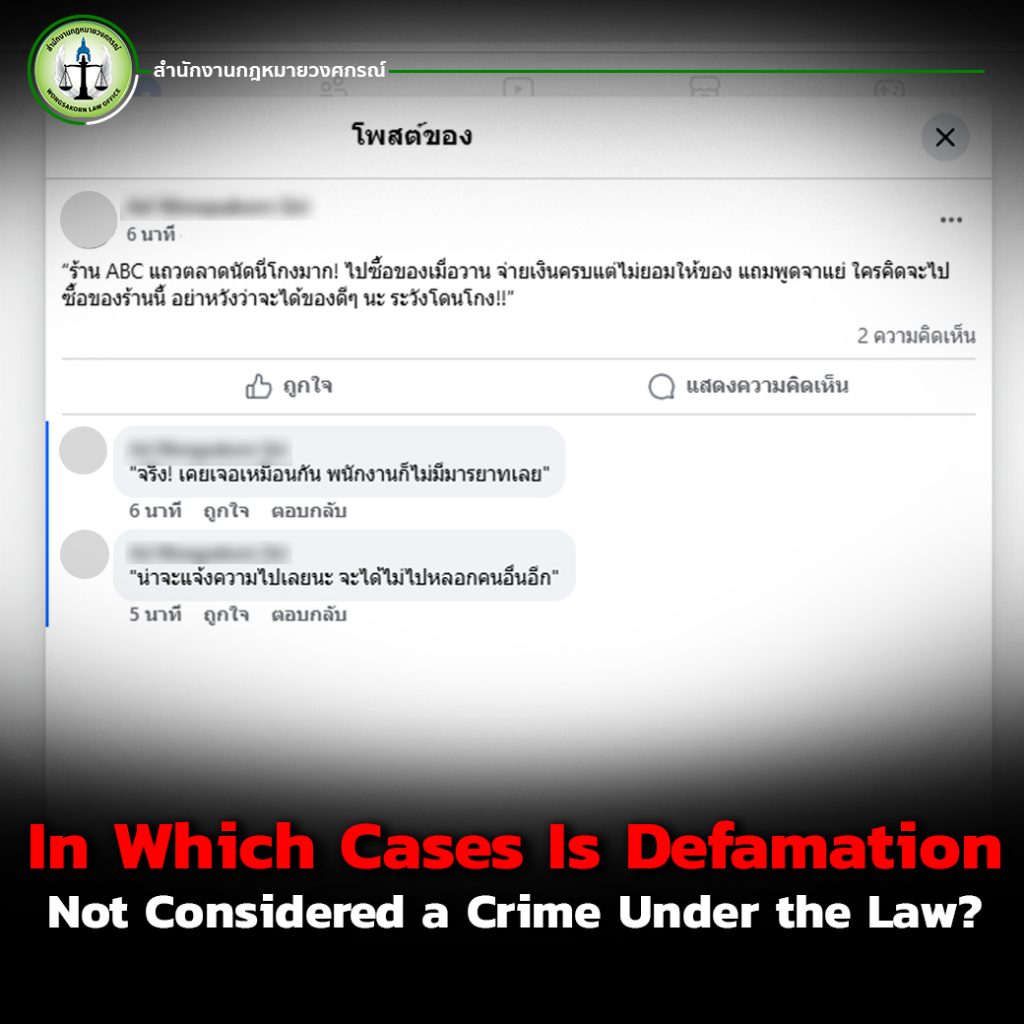
In Which Cases Is Defamation Not Considered a Crime Under the Law?

In the era of social media, expressing opinions, posting, sharing, or criticizing others has become a daily occurrence. However, many times these actions may unknowingly lead to charges of “defamation.” Nevertheless, not every case of speaking negatively about someone is always considered illegal. The Criminal Code, Section 329, clearly provides exceptions where such speech is “not considered a crime” if it falls under the legal provisions.

This article will help you understand the types of cases in which, although the conduct may amount to defamation, it is not considered a crime because it is justified and protected by law.

What is Defamation?

According to Section 326 of the Criminal Code:
“Whoever makes a false statement about another person to a third party in a manner likely to damage that person’s reputation, cause them to be despised or hated, commits the offense of defamation.”

The act of “making a false statement” can occur through spoken words, writing, posting messages online, sending private messages, or any action that causes others to believe negatively about the person, resulting in harm to that individual.

The penalties for defamation range from imprisonment for up to 1 year, a fine of up to 20,000 baht, or both. The penalties may be more severe if the offense is committed publicly (Section 328).

Exceptions: “Not Guilty of Defamation” under Section 329

Even if the statements cause damage to another person, if there is a justifiable reason or the act is protected by law, it is not considered an offense. Clear examples of exceptions under Section 329 include:

1. Opinions or Statements Made in Court
“Any opinion or statement made by a party, lawyer, or witness during judicial proceedings.”
This includes testimonies, witness statements, or factual declarations made in court. If done in good faith, these are not considered defamation—even if the statements damage someone’s reputation.

2. Honest Criticism
“An expression of opinion or criticism made in good faith.”
The law recognizes the following types of criticism as not being offenses if made honestly:

  • Criticizing someone’s actions for public benefit
  • Criticizing government officials or public office holders
    Criticism made in the capacity of a teacher, instructor, or supervisor
    Criticism of individuals who voluntarily present themselves to the public, such as singers, actors, or politicians
  • Expressing opinions on publicly disclosed works such as books, TV shows, songs, or articles

It’s important that these criticisms are made in good faith, not intended to cause harm, and kept within reasonable limits—such as constructive feedback rather than public shaming or insults.

3. Protection of Lawful Rights or Interests
“The act of reporting, expressing opinions, or making allegations to officials so they may carry out their official duties.”
If you file a police report, give information to authorities, or submit a complaint to a government agency in good faith and with supporting evidence, such actions are not considered defamation—even if they involve negative statements about others.

Real-Life Examples of When ‘Speaking Out’ Is Not a Crime

  1. An employee posts publicly about an employer who failed to pay wages If the post is made in good faith, with supporting evidence, and without exaggeration or malicious intent, the court may consider it a truthful expression of opinion made for the public benefit.
  2. A journalist criticizes a politician
    If the information presented is based on verifiable facts and the language used is not excessively insulting or defamatory, it would not be considered an offense.
  3. Residents file a complaint about government officials 

involved in corruption If the allegations are supported by evidence and reported to the appropriate authority, it is not regarded as defamation under the law.

What to Do If You Are Accused of Defamation?
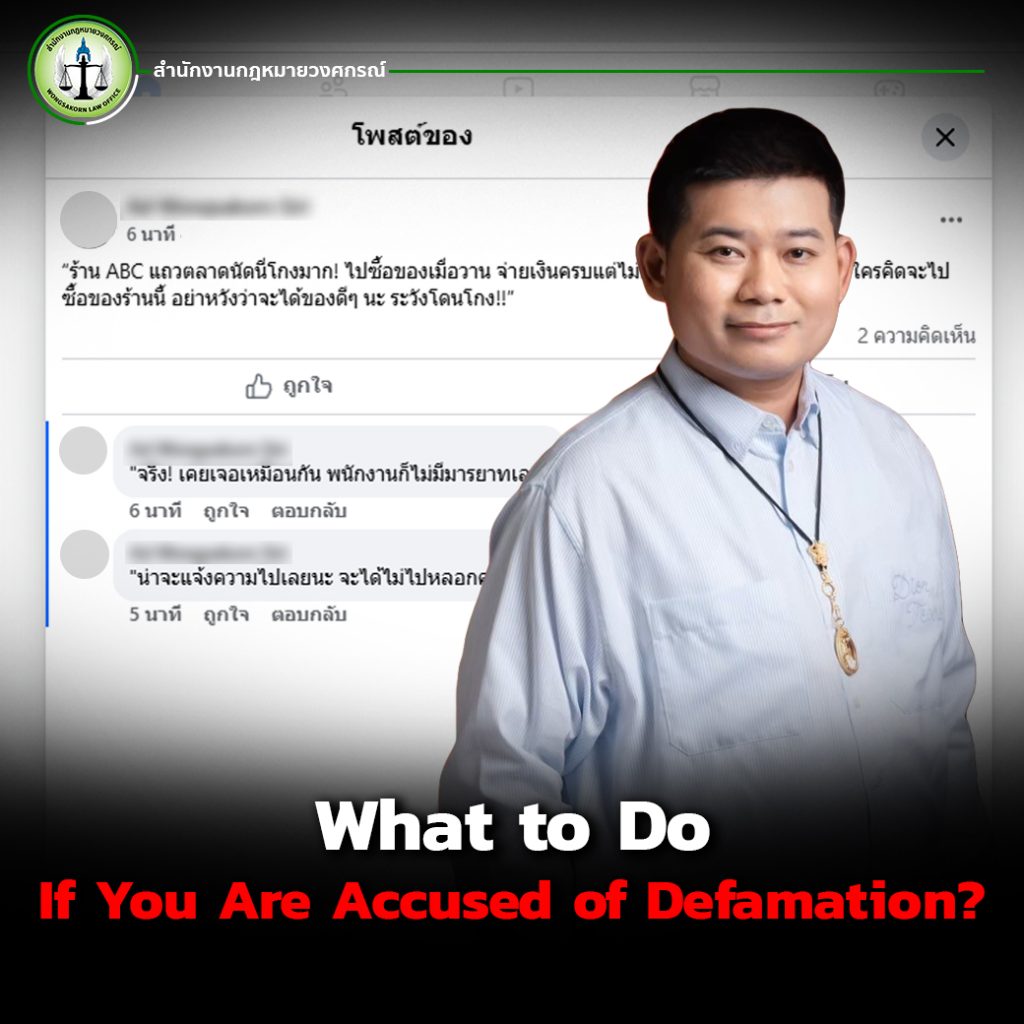
If you have been accused of defamation and believe that your actions fall within the legal exceptions, you should take the following steps:

  1. Gather evidence that shows your intention was in good faith — such as proof of unpaid wages, screenshots, photos, or chat logs that support your claims.
  2. Avoid posting further responses that might be considered repeated or additional defamatory statements.
  3. Consult a lawyer immediately to assess whether your actions fall under any legal exceptions and to plan a clear strategy for defending your case.

Defamation Is Not Always a Crime — If Made in Good Faith

Even if you are accused of defamation, your actions may not be considered unlawful if they meet one of the following legal exceptions:

  • It was a good-faith critique made in the public interest
  • It was a report or accusation made to a public official with authority
  • It was an opinion or statement made in court proceedings
  • It was an honest opinion made within reasonable limits

These situations are protected under Section 329 of the Thai Criminal Code, which provides exceptions to defamation liability.

If you or someone you know is accused of defamation, do not panic or admit guilt immediately. Instead, consult a defamation lawyer promptly to plan a clear defense strategy and fully protect your rights.

👉 Click here to consult a defamation lawyer.

Influencer Rights Violated! Sexy Photos Used in Ads Without Permission – Can You Sue?

In today’s digital age, being an influencer has become one of the most sought-after careers in the online world. An influencer’s image and identity are valuable assets that drive both income and reputation. However, as online media becomes increasingly widespread, there are growing instances of bad actors misusing influencers’ photos—especially sexy or revealing ones—for commercial purposes. These include unauthorized use in advertisements for products, supplements, or services.

This is no small matter. If you’re an influencer—or even just a regular person—whose image has been used without consent, you have full legal rights to take action against those responsible. Thai law offers protection in such cases, and it’s important to consult a lawyer promptly to explore your legal options and potentially file a lawsuit.

Using pornographic or sexy images without permission = Violation of personal rights + Defamation

Using someone’s image without permission, especially images that could damage their reputation—such as sexy outfits, swimsuit photos, or provocative poses—and using them to advertise products without proper context, or alongside misleading text, may constitute multiple legal violations under Thai law, including:

  • Violation of personal rights under the Civil and Commercial Code, Section 420
  • Defamation by means of advertisement, if the image or accompanying message causes damage, contempt, or hatred toward the person, under the Criminal Code, Sections 326 and 328
  • Violation of the Personal Data Protection Act, B.E. 2562 (PDPA) if a person’s image is used for benefit without their consent

Offense under the Computer Crime Act, B.E. 2560, in the case of publishing images or data that causes harm to the data subject

Influencers = Public Figures Who Must Be Protected in the Same Way

Although influencers are considered “public figures” in the context of marketing or media, this does not mean that anyone can freely use their image or leverage their fame for commercial gain. Influencers, like any other individual, have Image Rights and Personal Data Rights.

If the image is taken for a specific purpose—such as to promote art, fashion, or personal work—and is later edited or used inappropriately to advertise products related to sex, weight-loss supplements, or anything that could damage their reputation, this is considered a serious violation.

Common Examples of Such Incidents:

  • A fashion influencer posts a bikini photo on the beach, and it is edited with misleading text to advertise weight-loss products.
  • A photo from an Instagram account of a social media personality is taken and used in a page selling cream without prior consent.
  • A model’s sexy photo taken in a fashion context is placed on an advertisement for gambling websites or inappropriate services.

These situations, even without direct slander or accusations, can still cause significant harm to the individual’s reputation and career opportunities. They are entitled to claim damages or even pursue criminal charges.

What Should Influencers Do When Their Rights Are Violated?

  1. Gather evidence immediately, such as screenshots of the infringing post, information about the poster, and the original image that was used.
  2. Do not respond emotionally, as it may escalate the situation or cause you to become the wrongdoer yourself.
  3. Consult a lawyer to assess the damages, collect evidence, and take legal action both civilly and criminally.
  4. File a police report or a lawsuit in court. A lawyer can assist in handling the case correctly and quickly.

Request removal of the content or file a complaint with the relevant platform, such as Facebook, Instagram, TikTok, or the website where the infringement occurred.

Why Consult a Lawyer Specifically?

The process of filing a lawsuit for violations of personal rights and defamation on the internet involves complex legal details. These include claiming rights to the image, determining the intent of the violator, and demanding fair compensation for damages. An experienced lawyer will help you:

  • Analyze the case accurately
  • Collect all necessary evidence
  • Professionally file the lawsuit
  • Protect your reputation and rights in the long run

Influencers should not remain passive when their rights are violated, whether it is the unauthorized use of their image or the malicious editing that harms their reputation. Your image and reputation are valuable assets. If they are damaged, immediate legal action must be taken.

If you’re facing such an incident, don’t wait! Consult lawyer Arm from Wongsakorn Law Office immediately — because your image is your right, and we are here to protect it to the fullest.

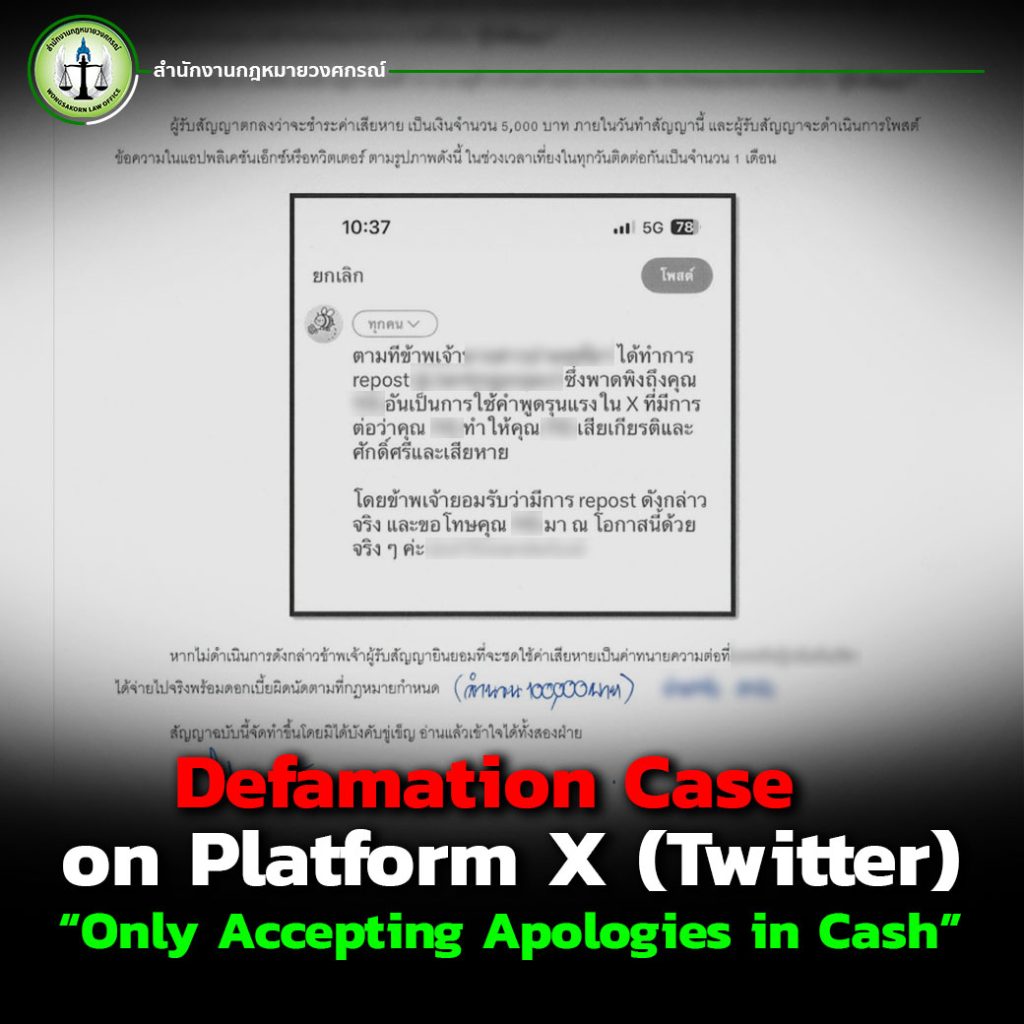
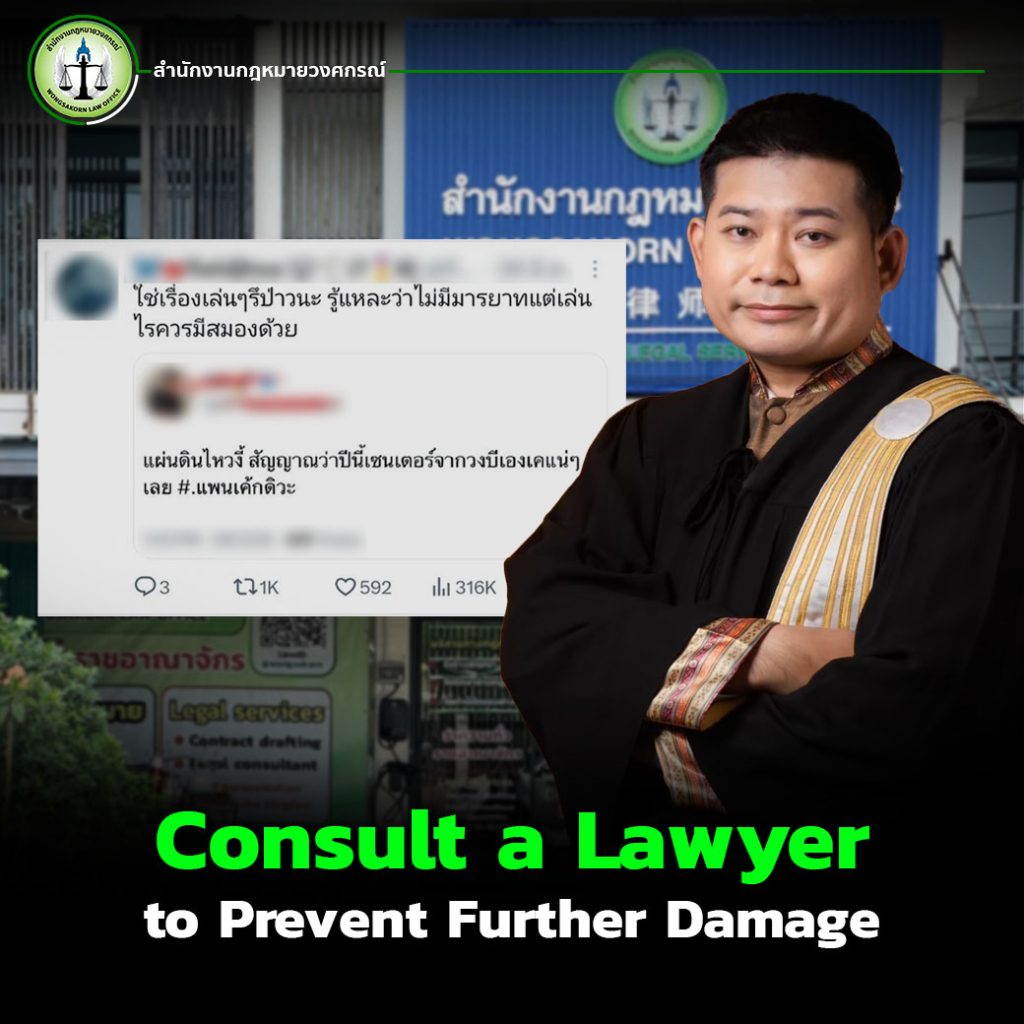
Defamation Case on Platform X (Twitter): Only Accepting Apologies in Cash

“In an era where social media has become a platform for free expression, many may forget that ‘freedom of speech’ must still operate within the boundaries of the law. This is especially true when posting or retweeting messages that may be considered defamatory, which Thai law clearly regards as an offense. Even if you did not write the message yourself, simply retweeting a post that insults or uses offensive language towards others can lead to legal action and potential liability for damages.”

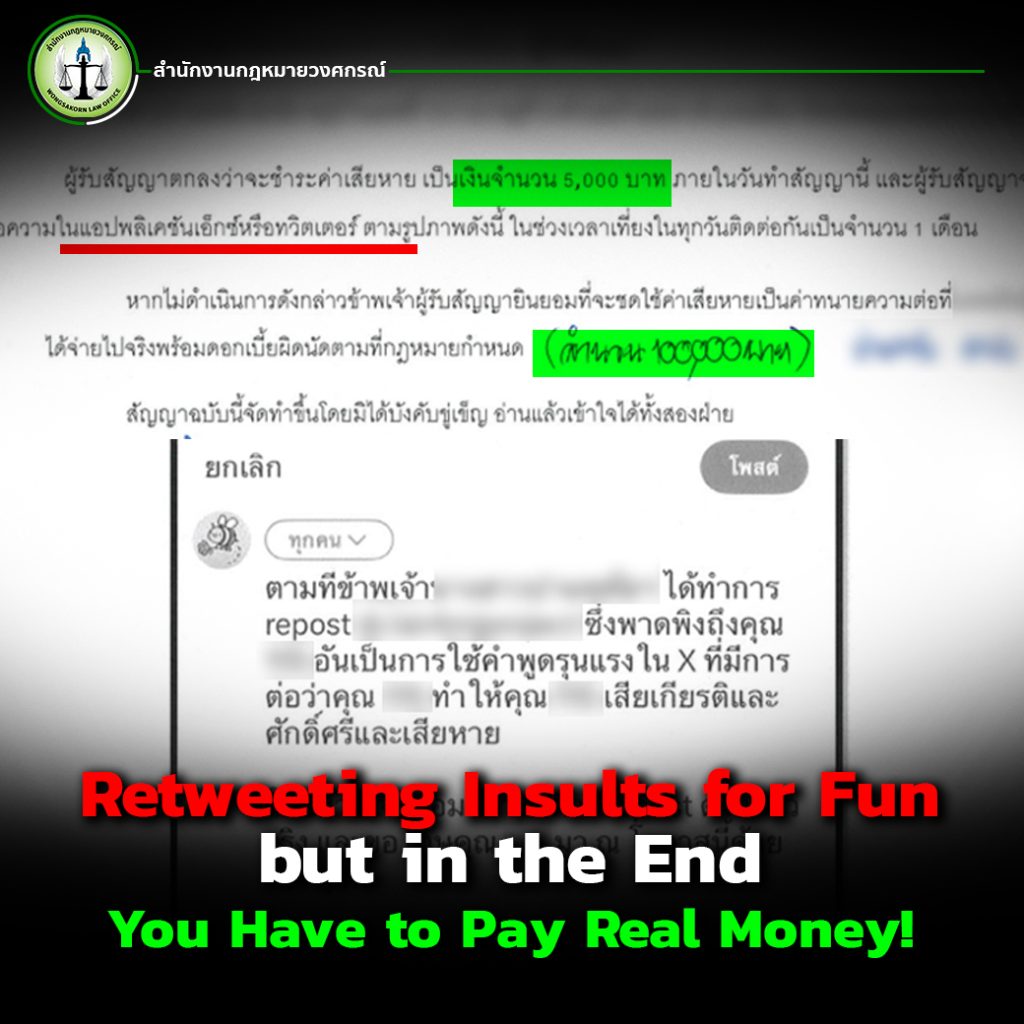
Retweeting Insults for Fun, but in the End, You Have to Pay Real Money!

This is based on a real case handled by Wongsakorn Law Office, which represented a victim who had been defamed through rude comments reposted on Platform X (formerly known as Twitter). The victim felt that their reputation was tarnished, their honor was damaged, and they were publicly slandered.

Although the perpetrator did not write the original post, retweeting the message without denying or indicating disagreement led the court to see it as spreading defamatory content, which violates the law.

As a result, Wongsakorn Law Office issued a formal warning to the individual, and an agreement was made stating that the person who retweeted must:

  • Pay 5,000 Baht in damages to the victim.
  • Post an apology to the victim every day at 12:00 PM for one month.
  • Pledge not to post or mention the victim again.
  • Not delete the apology posts.
  • Failure to comply with this agreement will result in an additional 100,000 Baht in damages, along with interest as per the law.

This is not a threat, but rather the outcome of careless use of social media.”

What is Defamation?

According to the Criminal Code, Section 326, “Anyone who makes false statements about another person to a third party in a manner that damages the reputation, dishonors, or incites hatred towards that person is committing the offense of defamation.” This includes speaking, writing, printing, or even posting and sharing online.

If the act is committed through online platforms such as Facebook, Twitter, Instagram, or TikTok, it will be considered defamation by advertisement, which carries a heavier penalty. The maximum punishment can be up to 2 years in prison, a fine of up to 200,000 Baht, or both imprisonment and a fine.

Retweet = Being an Accomplice in Defamation? Is it a Crime?”

A popular question is, “Can just retweeting be considered a crime?”The answer is “Yes.” If you retweet defamatory content without denying or expressing disagreement, the court may view it as your intention to spread the defamatory message publicly, which can make you an “accomplice” in committing the offense.

Don’t Claim It’s Just a Joke or Fun

 Many people post or share content simply to join online trends, without realizing the potential harm to someone else’s reputation, which can be severe and have real consequences. It’s not just a trivial matter.

Statements like “It’s just a retweet, why sue me?” are not valid excuses in court. When the court summons arrives at your door, every post you made can be used as evidence in the case.

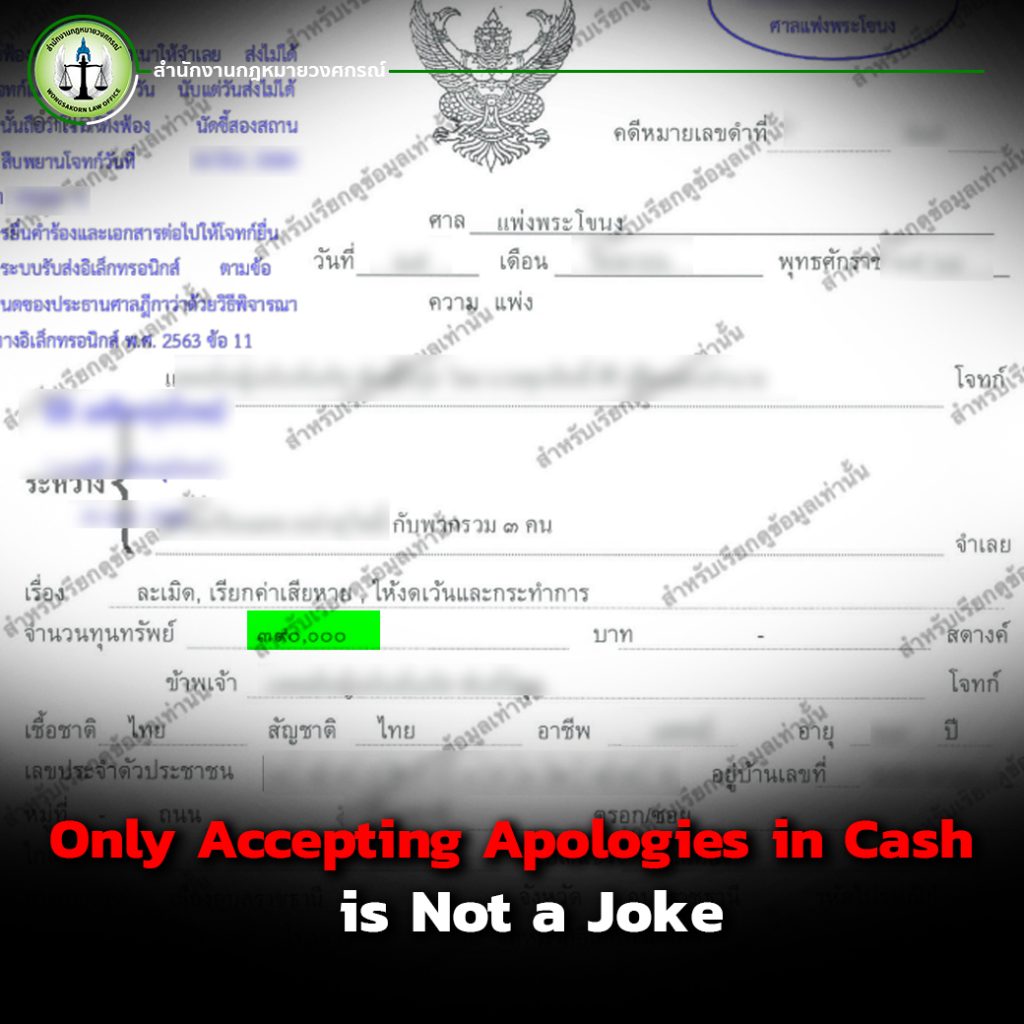
Only Accepting Apologies in Cash” is Not a Joke

Online defamation cases have been on the rise, with many victims choosing to pursue legal action seriously. They are not just asking for an apology, but also seeking compensation for the damage to their reputation. In some cases, the compensation can amount to hundreds of thousands or even millions of Baht.

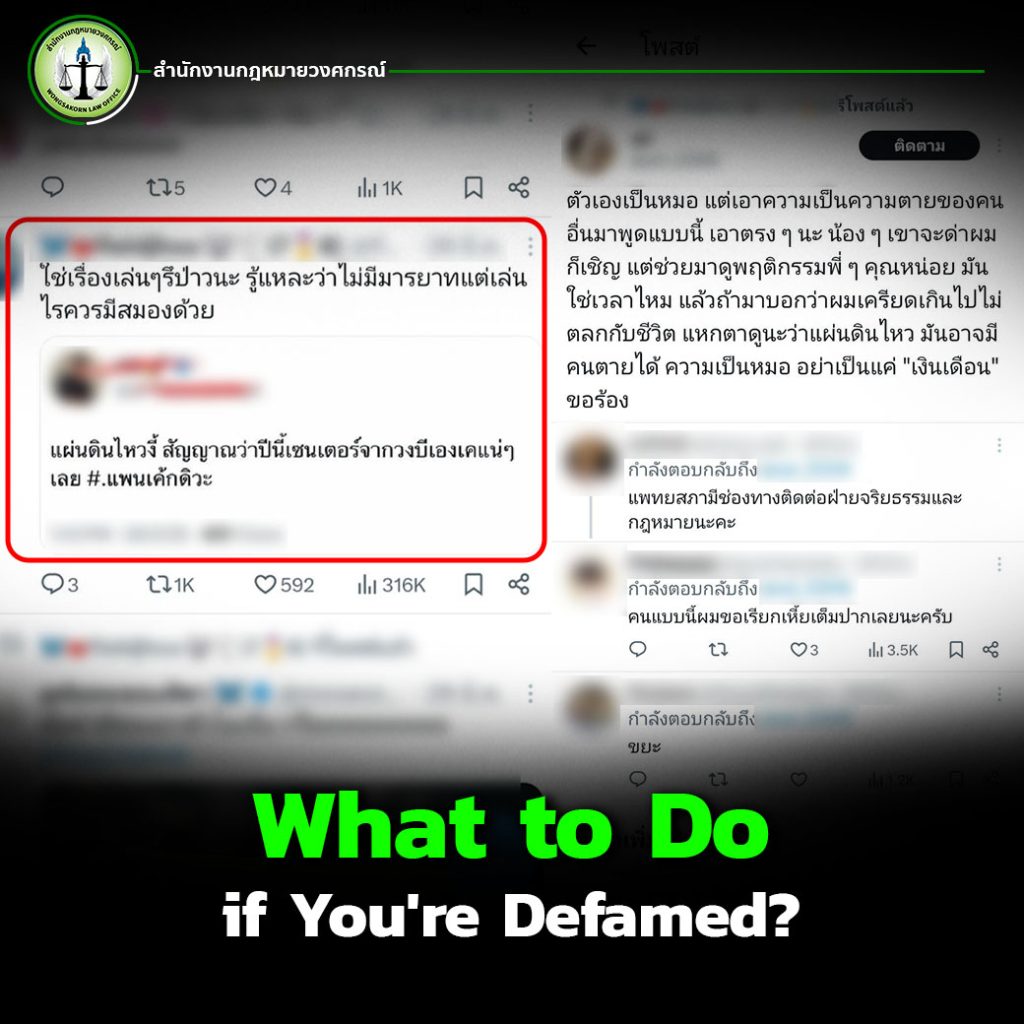
What to Do if You’re Defamed?

 If you are the victim of defamatory posts on social media, here are the steps you should take:

  1. Take screenshots and gather evidence, including images, messages, links, and the date and time of the post.
  2. Consult a lawyer immediately to evaluate your legal options.
  3. Do not respond by insulting or retaliating, as this could make you liable as an accomplice in the offense.

Consult a Lawyer to Prevent Further Damage

Fighting a defamation case is no small matter, as it requires legal expertise in analyzing messages, gathering evidence, and navigating the court process. If you’re looking for reliable legal support, Wongsakorn Law Office is here to assist you every step of the way.

We have a team of lawyers specializing in defamation cases, whether it involves posting, sharing, retweeting, or sending private messages that could be considered defamatory. We will help you assess the case and strategize to protect your rights professionally.

The online world is not a law-free zone. Don’t think that a simple retweet or “playful” insult won’t have consequences, because every message can become evidence in a defamation case. Before you share or post, think carefully, as your words online could come with a real price to pay.

If you need legal advice regarding a defamation case, contact Wongsakorn Law Office immediately to prevent further damage from escalating beyond control.

Line @ คลิก! โทรหาเรา คลิก!