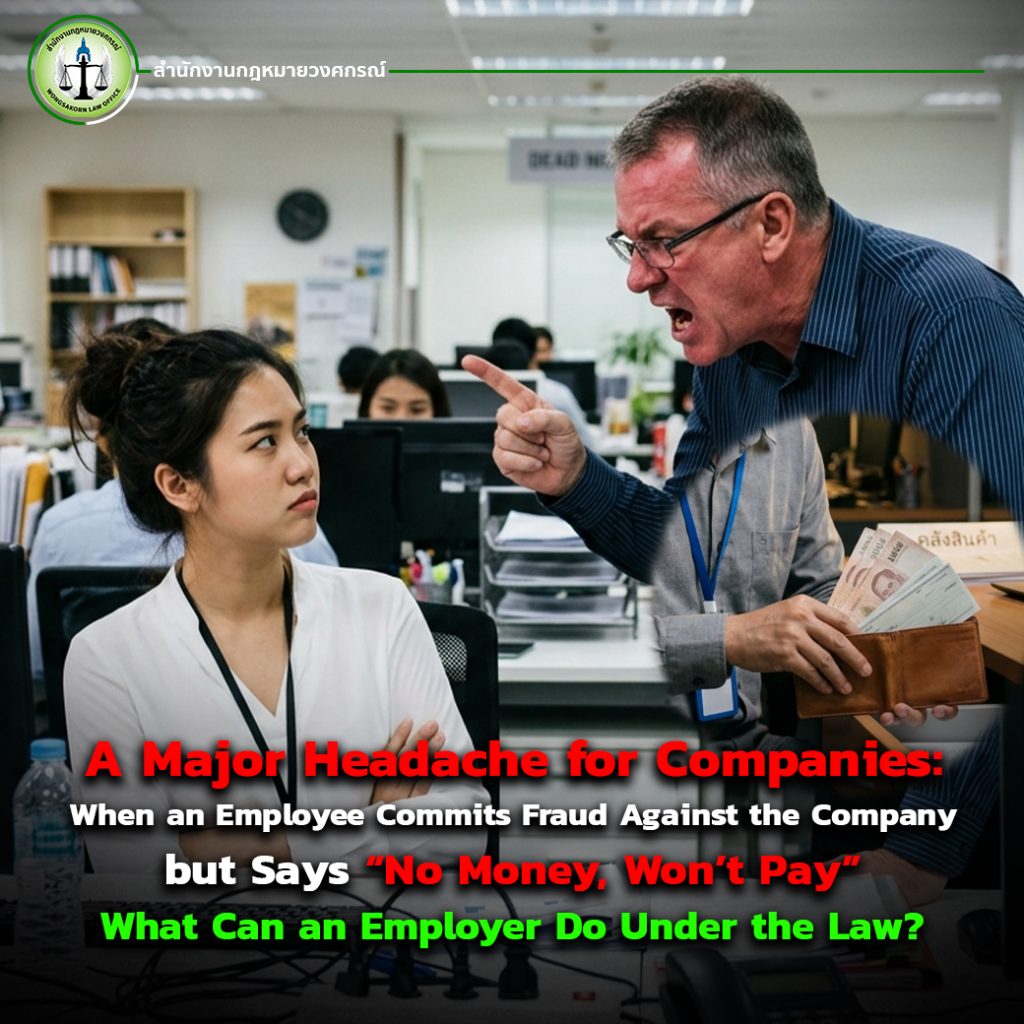
A Major Headache for Companies: When an Employee Commits Fraud Against the Company but Says “No Money, Won’t Pay” What Can an Employer Do Under the Law?

In the business world, one of the situations that entrepreneurs and organizations fear the most is internal fraud committed by employees. The damage caused is not limited to financial loss; it can also affect the company’s credibility, operational systems, and the overall workplace environment. In many cases, when a company discovers that an employee has committed misconduct such as embezzling company funds, using company assets for personal purposes, or conducting unauthorized financial transactions the employee may simply respond with the phrase: “No money, won’t pay.” This leaves many organizations wondering what legal actions an employer can take.

This article by Wongsakorn Law Office explains the legal options available to employers when they discover that an employee has committed fraud or misconduct against the company.

Employee Fraud Within an Organization

Employee fraud is an issue that can occur in organizations of all sizes, whether small, medium, or large enterprises. Common examples of fraudulent behavior include

  • Employees embezzling company funds
  • Employees falsifying accounting documents
  • Employees selling or using company property for personal benefit
  • Employees using company information for personal gain
  • Employees colluding with external parties to defraud the company

When a company discovers such actions, one of the most challenging issues is recovering the damages, especially when the employee refuses to take responsibility and claims “no money, won’t pay.”

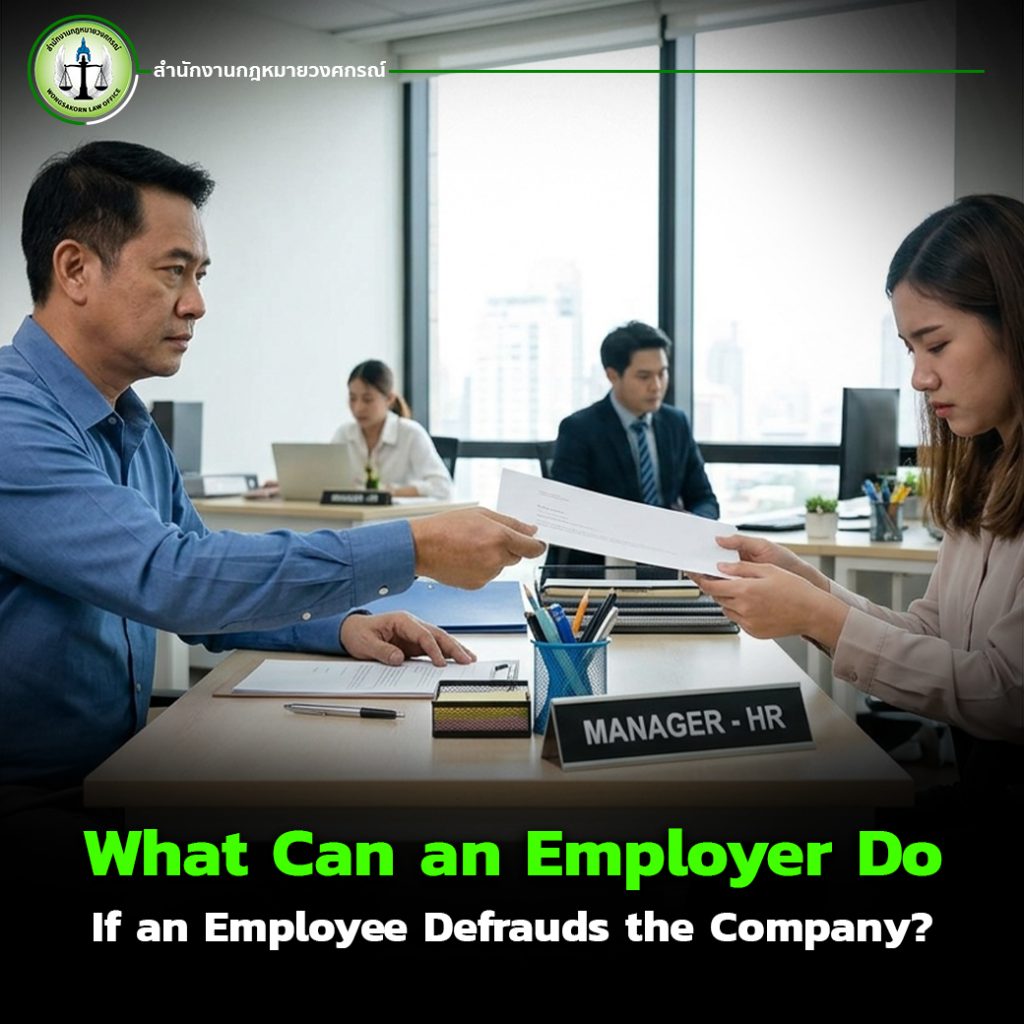
What Can an Employer Do If an Employee Defrauds the Company?

When a company finds that an employee has committed fraud, the employer has several legal options, including the following:

1. Disciplinary Action and Termination

Under labor law, if an employee commits serious misconduct, such as fraud or dishonesty in the course of their duties, the employer has the right to terminate the employee without paying severance compensation.

Fraud is considered a serious breach of trust between the employer and employee. Therefore, the company may immediately terminate the employment. However, it is essential to have clear and sufficient evidence to prevent potential counterclaims from the employee later.

2. Criminal Proceedings

If the employee’s actions constitute a criminal offense, such as Embezzlement, Fraud, Forgery of documents the employer may file a criminal complaint against the employee. If found guilty, the employee may face legal penalties such as imprisonment, fines, or both.

Criminal proceedings can also create pressure on the offender to take responsibility for the damages caused.

3. Civil Lawsuit to Claim Damages

Even if the employee claims “no money, won’t pay,” the employer can still file a civil lawsuit to claim compensation for damages.

If the court rules that the employee must compensate the company, the employer may enforce the judgment through legal procedures such as Seizure of assets, Freezing bank accounts, Legal enforcement of the court judgment

Therefore, saying “I won’t pay” does not mean the employee can escape legal responsibility.

4. Collecting Evidence Before Taking Legal Action

Before initiating legal action against an employee, the most important step is to gather sufficient evidence, such as Accounting records, Proof of financial transfers, Emails or messages, CCTV footage, Witness testimony

These pieces of evidence are crucial for proving that the employee actually committed the misconduct.

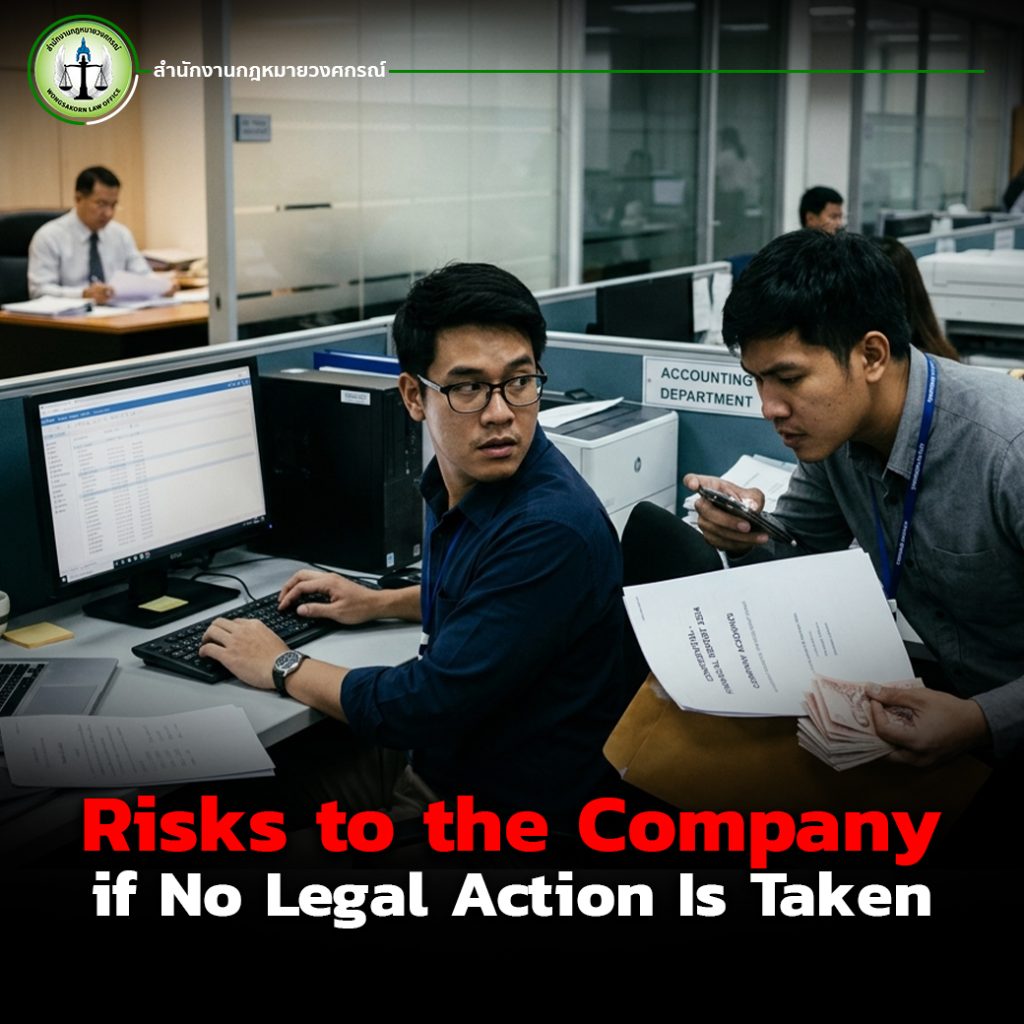
Risks to the Company if No Legal Action Is Taken

Some organizations choose to overlook the issue to avoid the time and effort involved in legal proceedings. However, failing to take action can lead to several negative consequences, such as

1. Other employees may imitate the misconduct

2. The company may suffer further financial or asset losses

3. The organization’s credibility may decline

4. Internal control systems may become weak

Therefore, when employee fraud is discovered, the company should take the matter seriously and respond appropriately.

How to Prevent Employee Fraud in a Company

In addition to resolving existing issues, organizations should implement preventive measures, such as

  • Establishing internal audit systems
  • Separating financial duties among different employees
  • Implementing multi-step approval processes
  • Regularly reviewing financial transactions

These measures can significantly reduce the risk of employee fraud within the organization.

Why Should You Consult a Lawyer When Employee Fraud Occurs?

Taking legal action against a fraudulent employee is not always straightforward because it may involve labor law, criminal law, and civil law simultaneously.

A lawyer can assist in several ways, including

  • Analyzing the legal aspects of the case
  • Reviewing and organizing evidence
  • Developing legal strategies
  • Filing criminal complaints
  • Initiating civil lawsuits for compensation

Having legal professionals involved from the beginning helps ensure that the company proceeds correctly under the law and reduces the risk of counterclaims.

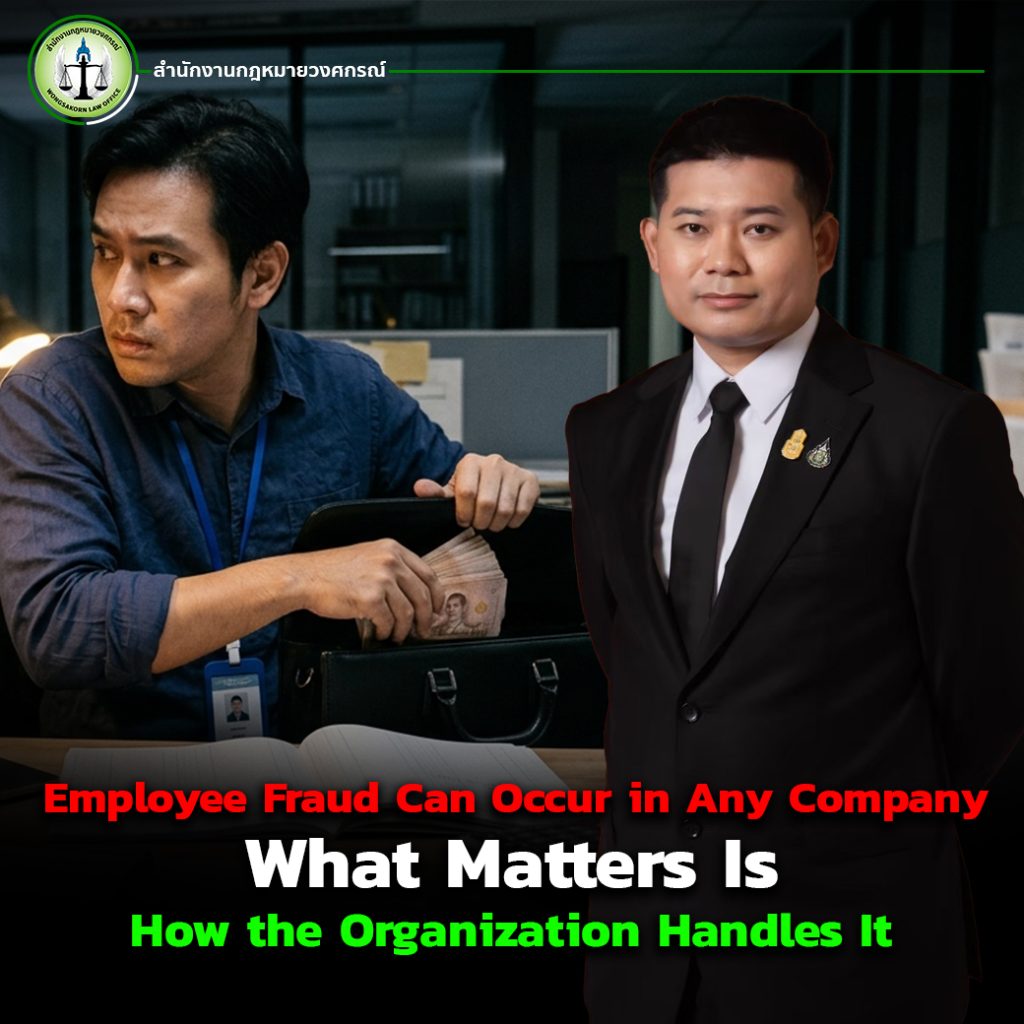
Employee Fraud Can Occur in Any Company What Matters Is How the Organization Handles It

Employee fraud can happen in almost any organization, regardless of whether it is a small, medium, or large business. However, the key issue is not whether the problem occurs, but how the organization manages and addresses it legally.

If a company has effective internal control systems, carefully gathers evidence, and follows the proper legal procedures, it can protect its interests and minimize potential damage.

For companies or organizations facing problems involving employee fraud or embezzlement, you can consult Wongsakorn Law Office for professional legal advice. Our team can help analyze the situation, develop solutions, and take appropriate legal action efficiently.

If you are experiencing issues with employee fraud, click “Contact Us” to consult with our legal team.

Employee Damages Company Systems: How Can Employers Sue Under Section 12/1? What Are Their Rights?

In today’s digital era, every business relies heavily on computer systems, databases, and technology. Damage caused by data loss or system destruction doesn’t just interrupt day-to-day operations it can result in severe business consequences, including the loss of major clients, the collapse of multi-million-baht deals, or long-term reputational harm.

But what if this damage is caused by the company’s own employee? Particularly in cases where a disgruntled employee deliberately damages the system, what legal actions can the employer take?
And how can the employer file a case that falls under Section 12/1 of the Computer Crime Act B.E. 2550 (2007)?

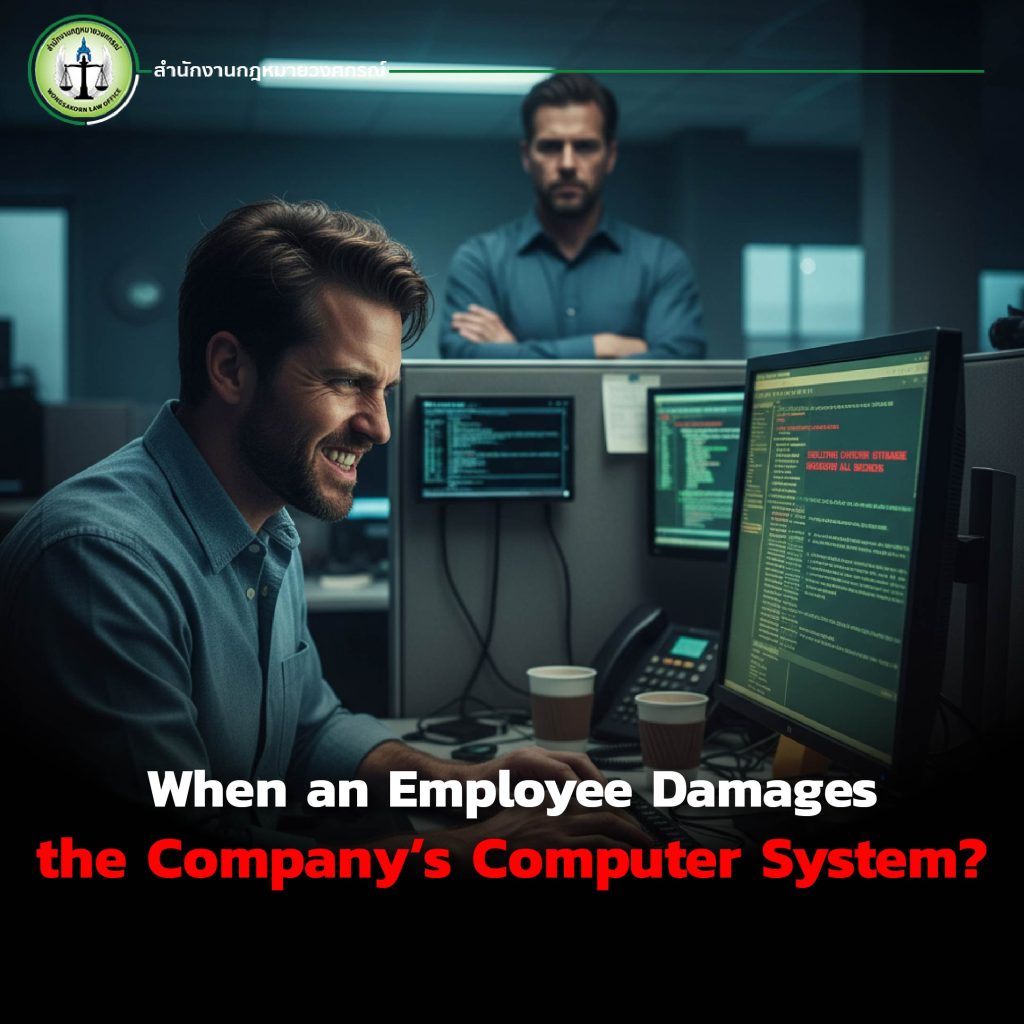
When an Employee Damages the Company’s Computer System?

Suppose Mr. A, an IT staff member responsible for managing the company’s client database, becomes dissatisfied after a dispute with management. Out of anger, he uses his authorized system access to delete the entire client database and changes the login password to lock everyone else out.
The result: all customer data is lost, multi-million-baht business deals collapse, and company operations come to a halt. This isn’t merely a case of “data loss” , it’s a severe blow to the company’s reputation and credibility.

Such an act constitutes a computer-related offense committed by an employee, falling directly under Section 12/1 of the Computer Crime Act.

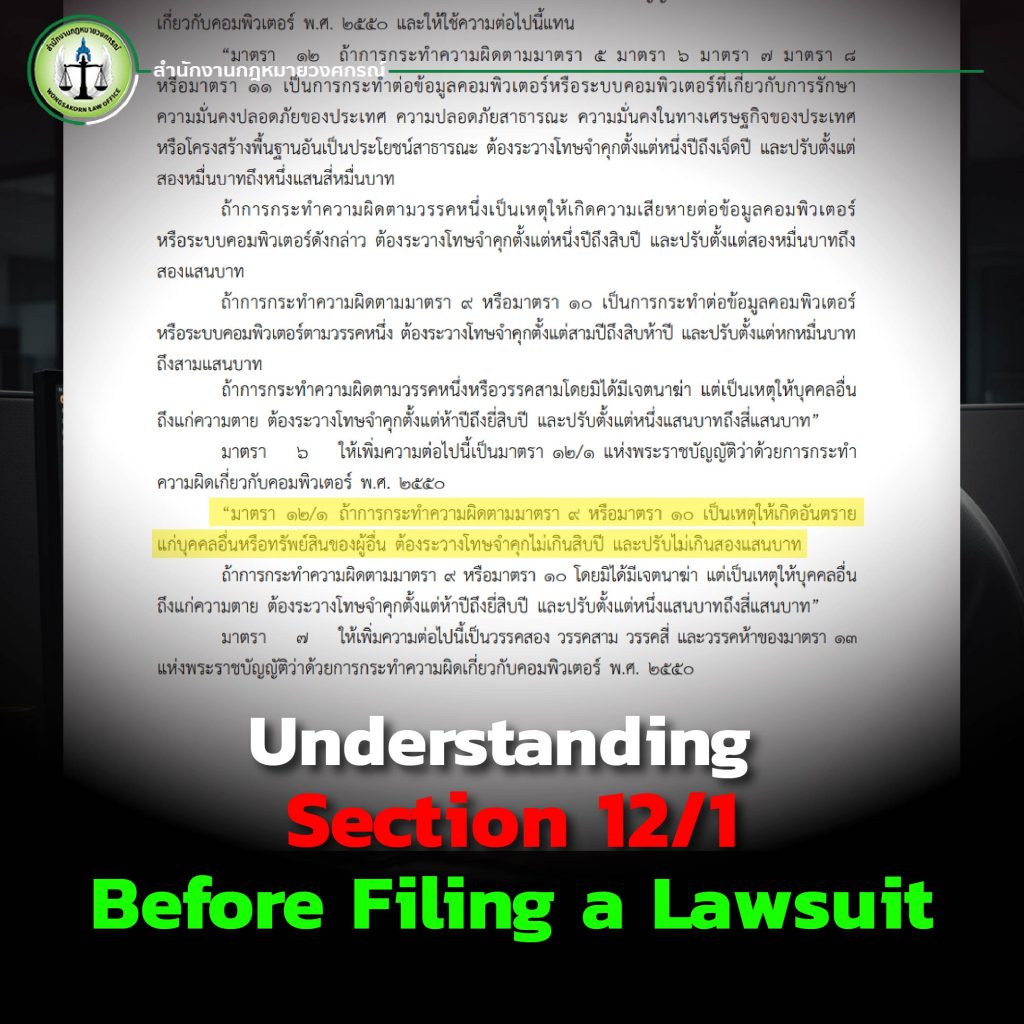
Understanding Section 12/1 Before Filing a Lawsuit

Reference: Computer Crime Act (No. 2) B.E. 2560 (2017)

Section 12:
If any offense under Section 5, Section 6, Section 7, Section 8, or Section 11 is committed against computer data or a computer system related to the national security, public safety, economic stability of the country, or any critical public infrastructure,
the offender shall be liable to imprisonment for a term of one to seven years and a fine of twenty thousand to one hundred and forty thousand baht.

If the offense under the first paragraph causes damage to such computer data or computer system,
the offender shall be liable to imprisonment for a term of one to ten years and a fine of twenty thousand to two hundred thousand baht.

If the offense under Section 9 or Section 10 is committed against computer data or a computer system as mentioned in the first paragraph,
the offender shall be liable to imprisonment for a term of three to fifteen years and a fine of sixty thousand to three hundred thousand baht.

What Can the Employer Do?

Employers can pursue both criminal and civil actions as follows:

1.File a Criminal Complaint Under Section 12/1
The employer can report the case to the police, supported by evidence such as:

o    System access logs

o    Proof of data deletion or alteration

o    Witness statements or written communications showing intent

The offender may face up to 5 years’ imprisonment, a fine up to 100,000 baht, or both.

2.File a Civil Lawsuit for Damages
The employer can also claim compensation for:

o    Loss of business opportunities

o    Costs to repair or recover data

o    Reputational damage

The employer must prove that the damages were directly caused by the employee’s intentional act.

3.Take Disciplinary Action
If the employee is still under employment, the company may terminate without compensation, under Section 119 of the Labour Protection Act B.E. 2541, which allows dismissal for serious misconduct causing employer’s damage.

Proving “Intent” Is Key

The court will focus on the employee’s intent.
If the damage was accidental for instance, due to technical error it may not fall under Section 12/1.
However, deliberate actions such as:

  • Deleting critical data,
  • Blocking system access, or
  • Corrupting important files
    clearly demonstrate intent to cause harm and are punishable under the law.

What Employers Must Be Careful About?

Even if the damage is serious, all actions against employees must comply with labor laws.
Wrongful dismissal without sufficient evidence can result in counterclaims.
Also, unauthorized access to an employee’s private accounts could violate personal data protection laws.
Therefore, it is crucial to let a qualified lawyer handle evidence collection and procedural steps from the start.

Why Should Employers Consult a Lawyer Early?

This type of case involves three areas of law:

  • Criminal law (computer-related offenses),
  • Civil law (claims for damages), and
  • Labor law (employee rights).

If handled incorrectly, employers might lose legal advantage or face additional lawsuits.
A lawyer ensures the case aligns properly with Section 12/1 and maximizes the employer’s legal protection.

Don’t Handle It Alone-Consult a Lawyer First

When an employee causes damage to your company’s computer system whether intentionally or in a moment of anger do not attempt to handle it on your own.
These cases are legally complex, and employees remain protected under labor law.

Consulting an experienced lawyer helps determine:

  • The proper legal charge,
  • How to preserve evidence, and
  • How to file effectively under Section 12/1.

Wongsakorn Law Office offers legal consultation and representation for employers and companies harmed by employee misconduct.
Our team of experts specializes in labor law and computer-related cases ensuring your rights and your company’s interests are fully protected.

👉 Consult our lawyers before taking any action to protect your company’s future.

Employee Resigns and Deletes LINE Groups / LINE Official or Company Data – What Can Employers Do?

In today’s digital-driven business environment, communication and operations rely heavily on online platforms. A problem that many companies increasingly face is that after resigning, employees may not only submit their resignation and hand over tasks as required, but in some cases, they go further deleting work-related LINE groups, removing the company’s LINE Official account, or even erasing crucial computer data. Such actions can cause serious harm to the organization.

The key question for many employers is: “What can the company do if this happens?”
This article explains the employer’s legal rights, possible courses of action, and why consulting a lawyer is essential.

Employee Duties and Responsibilities Toward the Company

Employees are not only responsible for performing assigned tasks but also for safeguarding the employer’s interests, including protecting information, assets, and tools used for work such as computers, LINE Official accounts, and client-related documents.

Upon resignation, employees still have the duty to properly hand over work and avoid causing damage to the company. Failure to do so gives employers the right to pursue legal remedies.

How Does Deleting LINE Groups, LINE Official, or Company Data Cause Damage?

With businesses relying on digital platforms for communication, customer contact, and data storage, these tools are valuable assets comparable to physical property. Thus, when a disgruntled employee resigns and deletes a LINE group, LINE Official, or company computer data, it directly causes operational, reputational, and financial losses.

Examples of potential damage include:

1.Deleting LINE work groups – Often used for internal communication, deletion can erase important records and disrupt workflow tracking.

2.Deleting LINE Official – For many businesses, LINE Official is a primary customer communication channel. Deletion or access denial can result in customer loss, damaged credibility, and revenue decline.

3.Deleting computer data – Removing client files or key documents is equivalent to destroying the company’s digital assets, directly impacting business operations.

What Legal Actions Can Employers Take?

1. Civil Proceedings
Employers can sue employees for damages if the deletion of data or LINE Official leads to financial loss, such as losing clients, revenue, or incurring recovery costs.

2.Criminal Proceedings
Under Thailand’s Computer Crime Act B.E. 2550 (2007), amended B.E. 2560 (2017), unauthorized deletion or destruction of computer data can constitute a criminal offense.

oSection 9: Destroying or altering computer data belonging to others is punishable by fine and imprisonment.

oSection 10: Damaging computer systems also carries penalties.
Employers can also file criminal charges if a LINE Official account considered a business asset is deleted.

3. Labor Law Measures
If the misconduct occurs before the employee’s termination takes effect (e.g., during the notice period), employers may terminate employment without severance or claim compensation under the employment contract.

Risks of Inaction by Employers

Failure to respond may result in:

  • Loss of customer base and business opportunities
  • Loss of vital strategic data
  • Damage to corporate reputation and credibility

Why Should Employers Consult a Lawyer?

While employers have legal rights, handling cases alone can be complex. Lawyers provide critical support by:

1.Assessing the case – Determining whether civil, criminal, or labor remedies apply.

2.Gathering evidence – Ensuring proper collection of chat records, screenshots, or computer logs admissible in court.

3.Filing lawsuits systematically – Lawyers streamline proceedings and reduce employer burden.4.Minimizing risks – Proper legal interpretation prevents costly mistakes.

Preventive Measures to Avoid Recurrence

  • Establish clear policies on the use of LINE Official and company data.
  • Limit access rights to essential personnel.
  • Regularly back up important data.
  • Include employment contract clauses requiring proper handover and prohibiting data destruction.

Protect Your Business with Confidence – Consult Wongsakorn Law Office

When employees resign and delete LINE groups, LINE Official, or company data, the act may constitute civil and criminal wrongdoing. Employers have the right to claim damages and pursue legal proceedings.

👉 If you are an employer facing such an issue, don’t let your company suffer unnecessary loss. Consulting an expert lawyer is the safest and most effective solution. Contact Wongsakorn Law Office for legal advice and protection today.

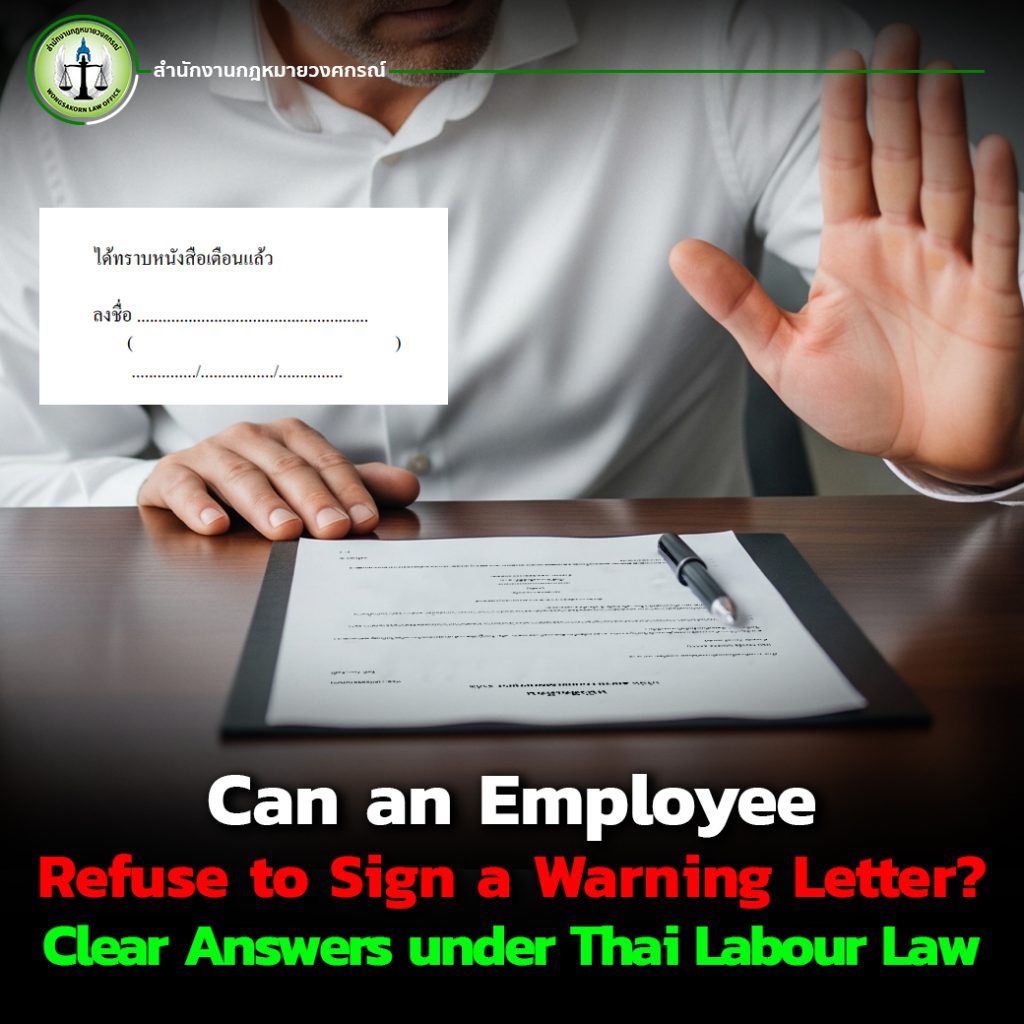
Can an Employee Refuse to Sign a Warning Letter? Clear Answers under Thai Labour Law

In human resources management, issuing warning letters to employees is common—especially if employees misbehave or violate company regulations. But what happens if an employee refuses to sign the letter? Can the employer still take disciplinary action, or is the employee considered defying a superior’s order?

This article by Wongsakorn Law Office dives into this issue from every angle and offers guidance for both employers and employees.

Does an employee’s refusal to sign mean defiance of a superior?

Absolutely not. Under Thai labour law, an employee does not commit wrongdoing simply by refusing to sign a warning letter—this refusal does not equate to defying an employer’s order.

There is no legal requirement for employees to sign warning letters to make them legally valid. The key requirement is that the employer must notify the employee clearly of the warning and its grounds.

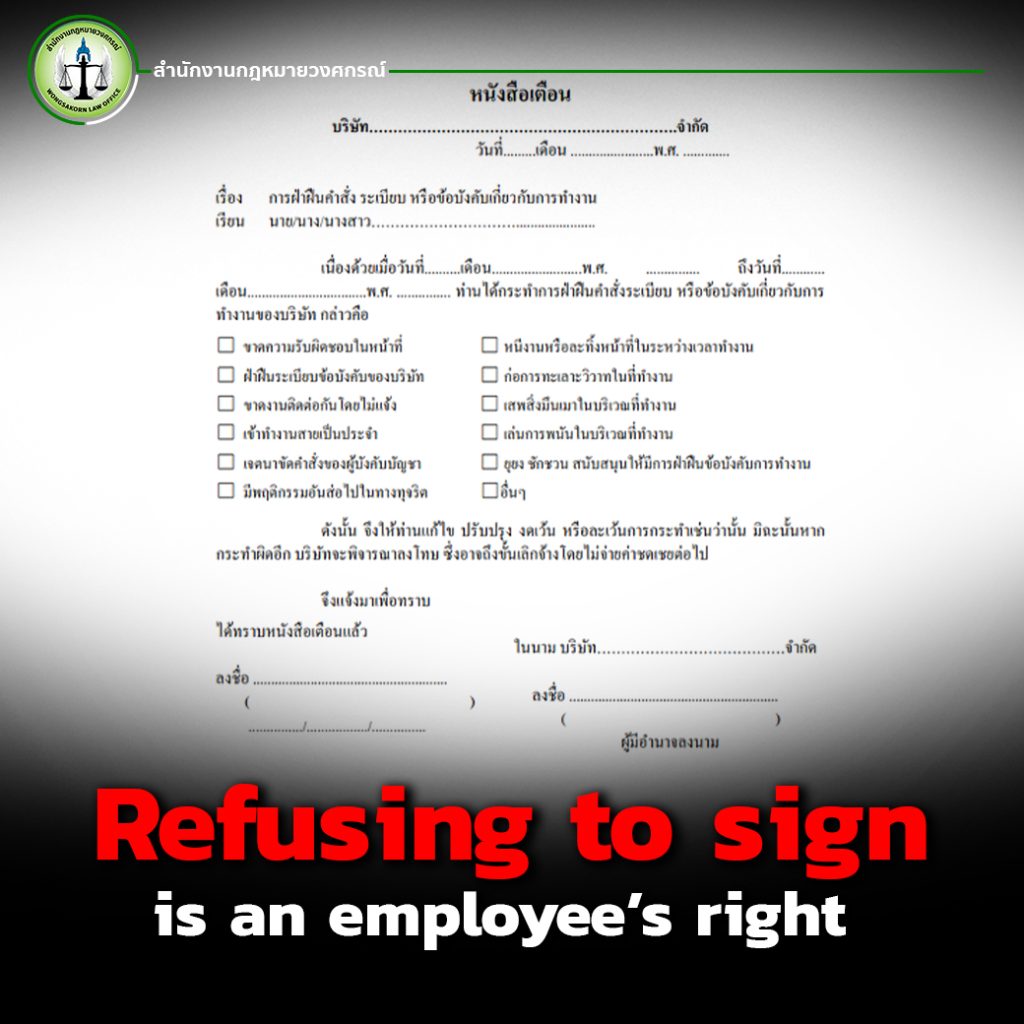
How is a warning letter viewed under labour law?

A warning letter is an internal disciplinary tool:

  • It details misconduct like repeated lateness, fraud, or rule violations.
  • It serves as advisory documentation and can later support grounds for dismissal.

Importantly, not signing the letter does not nullify it, as long as the employee has been properly informed and is aware of the contents.

How employers can handle unsigned warnings?

If an employee refuses to sign, employers can still proceed by taking these lawful measures:

  • Read the warning aloud to the employee in the presence of a witness (e.g., supervisor or HR), and have the witness sign.
  • Video record the meeting, provided the employee has given verbal consent or it’s reasonable under the circumstances.
  • Send the letter by registered mail with delivery receipt to the employee’s address.
  • Document the refusal in writing, including details of the refusal and witness signatures.

These methods help employers show they have acted fairly and clearly notified the employee.

Refusing to sign is an employee’s right

Employees have the right to refuse to sign if they believe the letter’s contents are incorrect or require clarification.

However, refusing to sign does not invalidate the warning: what matters legally is that the employee was notified and acknowledged (verbally or via other means) the warning.

Can the employer still proceed with disciplinary action?

Yes. If misconduct continues within the warning period, the employer may issue a second warning. In severe cases, the employer may terminate employment without compensation, under Section 119 of the Thai Labour Protection Act, when misconduct is serious enough to warrant immediate dismissal.

Employer’s legal checklist

To avoid legal risk, employers should:

  • Maintain clear documentation and records
  • Include witnesses at warning meetings
  • Regularly review internal policies and procedures
  • Consult with a lawyer before taking action in complex or disputed cases

Employees—know your rights and responsibilities

If you receive a warning and disagree with it:

  • Issue a written rebuttal or request a clarification meeting
  • Keep records of your work to protect your position
  • Seek legal consultation to guide your response

Summary

  • An employee’s refusal to sign a warning letter is not misconduct.
  • The employer can still issue the warning and begin disciplinary steps.
  • Both parties should understand their rights and obligations to foster fairness and avoid workplace disputes.

Whether you’re an employer or employee seeking clarity…

Wongsakorn Law Office is here to help. Our labour law experts offer consultations, mediation, and legal representation when needed. We assist both employers and employees in resolving conflicts professionally, preserving workplace harmony, and protecting everyone’s legal interests.

Contact us today to navigate warning letters, disciplinary actions, or any employment-related legal matter.

Line @ คลิก! โทรหาเรา คลิก!