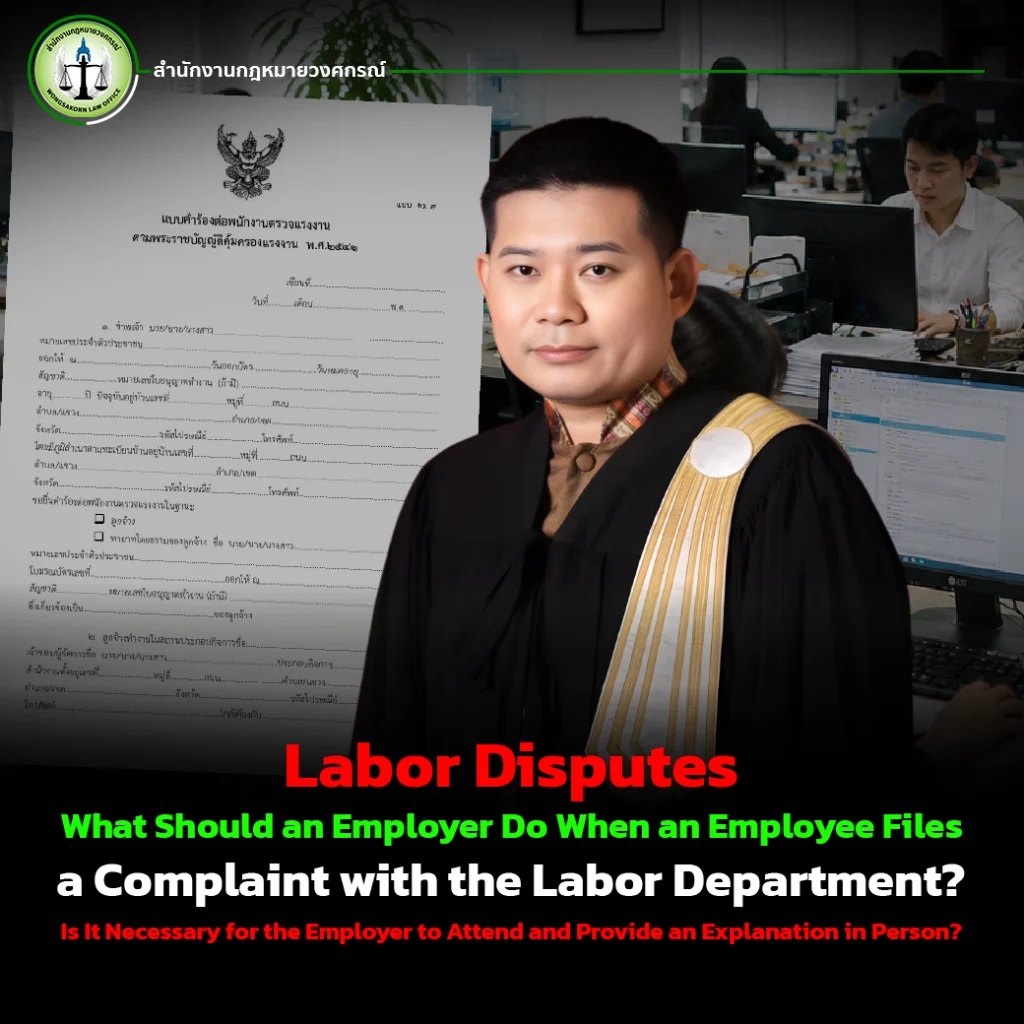
Labor Disputes: What Should an Employer Do When an Employee Files a Complaint with the Labor Department? Is It Necessary for the Employer to Attend and Provide an Explanation in Person?

Labor disputes are one of the most significant risks faced by business owners and employers, regardless of whether they operate a small business, a medium-sized enterprise, or a large organization. Even with careful management, disagreements between employers and employees can arise at any time.

When a dispute occurs, one of the most common ways employees seek to enforce their rights is by filing a complaint with the Department of Labour Protection and Welfare, commonly referred to as “filing a complaint with the Labor Department.”

However, once an employer receives a summons or notice from a Labor Inspector, what steps should be taken? Is the employer required to appear and provide explanations in person? If attending is inconvenient, are there alternative options available? This article from Wongsakorn Law Firm provides the answers.

What Happens When an Employee Files a Complaint with the Labor Department?
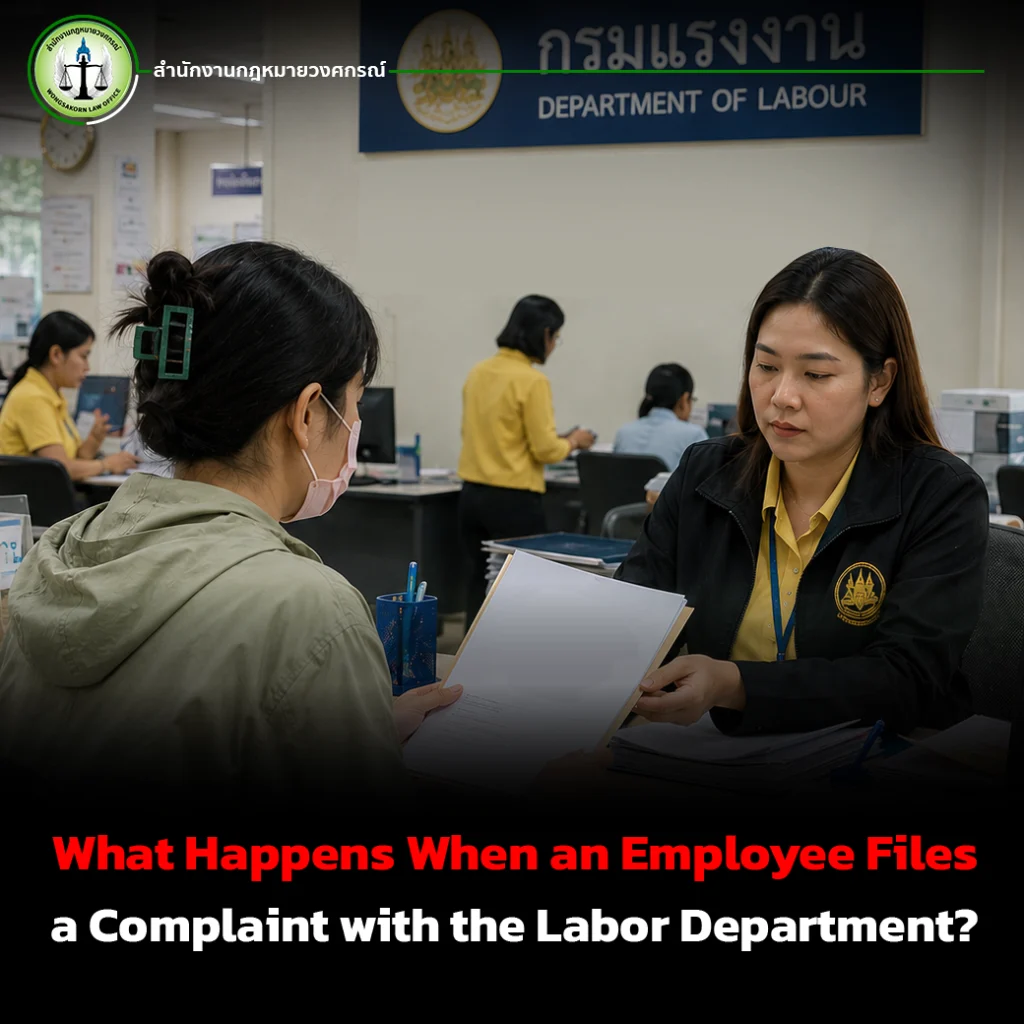
When a complaint relating to labor rights is filed, a Labor Inspector will review the facts of the case and may issue a notice requiring the employer to provide an explanation or submit relevant documents for consideration.

Common complaints include:

  • Unpaid wages
  • Overtime pay (OT)
  • Severance pay upon termination
  • Special compensation
  • Leave and holiday entitlements
  • Unfair dismissal
  • Employee rights and benefits under labor law

Upon receiving a notice from the Labor Inspector, employers should not ignore or overlook it, as doing so may affect the consideration of the facts and their legal rights at a later stage.

If the Employer Is Unable to Attend, Can a Lawyer Be Authorized to Act on Their Behalf?
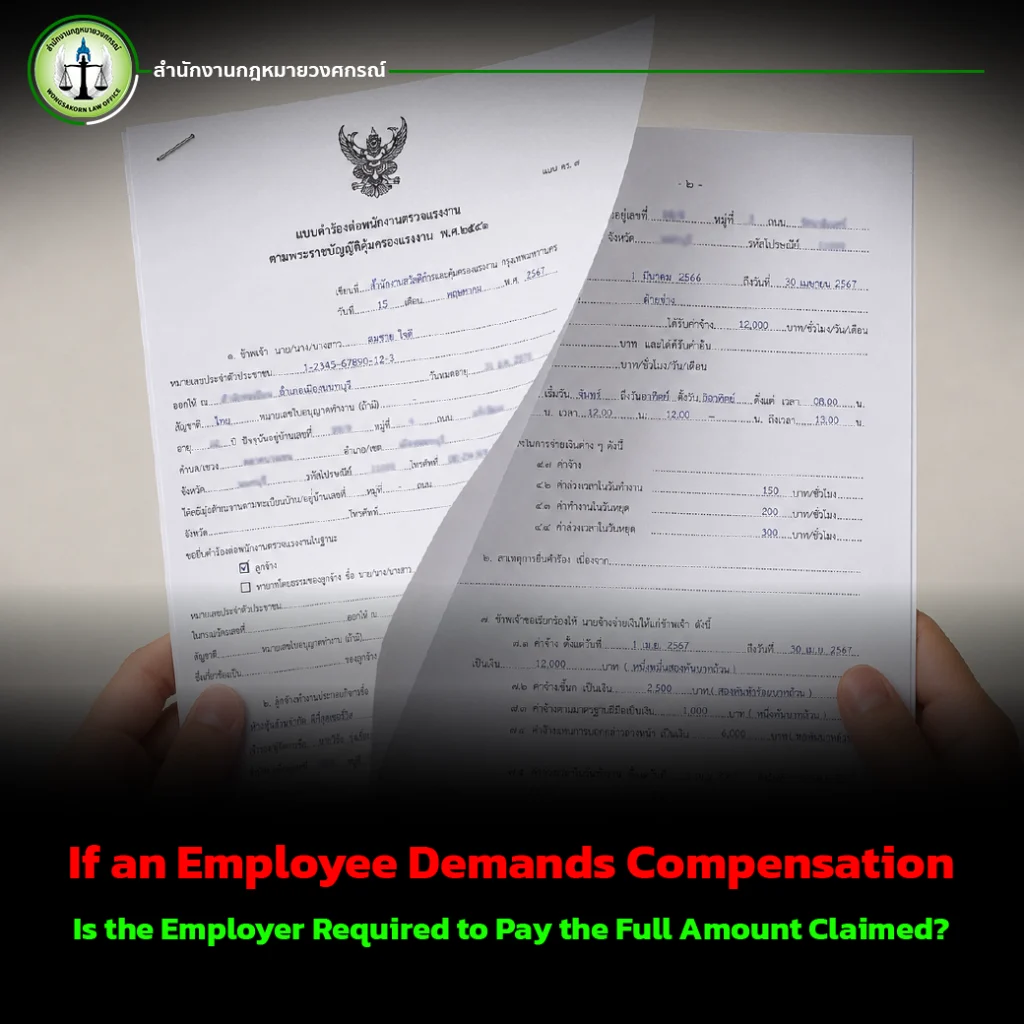
One of the most common misconceptions is that once an employee files a complaint and specifies the amount they are seeking, the employer is automatically required to pay the full amount claimed.

In reality, an employee’s claim is merely an initial allegation or demand.

The relevant authorities will consider:

  • The facts of the particular case
  • Documentary evidence
  • The employment agreement
  • The company’s rules and regulations
  • Witness testimony and documentary evidence
  • Applicable labor laws

Therefore, the fact that an employee claims a certain amount of money does not necessarily mean that the employer will be liable for that amount. If there are facts or evidence showing that the employer has complied with the law, the employer has the right to provide explanations and contest the claim.

Why Should Labor Issues Be Addressed from the Beginning?
Based on Wongsakorn Law Firm’s experience in providing labor law consultation, many organizations only seek legal assistance after a dispute has already arisen.

In reality, most labor-related problems can be prevented before they occur through the implementation of proper labor law compliance and internal employment systems.

Examples include:

  • Preparing comprehensive employment agreements
  • Establishing workplace rules and regulations
  • Implementing employee disciplinary policies
  • Managing leave and holiday entitlements properly
  • Ensuring accurate payment of wages and overtime compensation
  • Establishing legally compliant termination procedures

When an organization has proper systems in place from the outset, the likelihood of labor disputes arising with employees can be significantly reduced.

Why Should Every Organization Have Legal Counsel?

Today, labor laws are becoming increasingly complex and subject to ongoing changes. As a result, personnel management is no longer solely a human resources function, but also a matter that directly affects an organization’s legal risk exposure.

Having legal counsel as part of the organization can help businesses:

  • Prevent problems before disputes arise
  • Review important legal documents
  • Provide legal guidance before making termination decisions
  • Reduce the risk of litigation
  • Establish legally compliant human resource management systems
  • Address other legal issues that may arise in the future

Which is significantly less costly than resolving problems after legal proceedings have already commenced.

Wongsakorn Law Firm Is Ready to Assist with Your Organization’s Labor Law Matters
If your organization has received a notice from the Labor Department, is currently facing a dispute with an employee, or has concerns regarding labor law compliance, Wongsakorn Law Firm is ready to provide legal advice and develop appropriate solutions tailored to your situation.

Our services include representing employers in meetings and proceedings before government authorities, reviewing labor-related documents, drafting employment agreements, establishing human resource management systems, and serving as ongoing legal counsel for organizations.

Because the best labor dispute is the one that is prevented before it arises.
Having legal counsel from the very beginning is one of the most effective tools for helping organizations operate with confidence, reduce legal risks, and prepare for future labor-related challenges.

For legal consultation, click >> Contact Us <<.
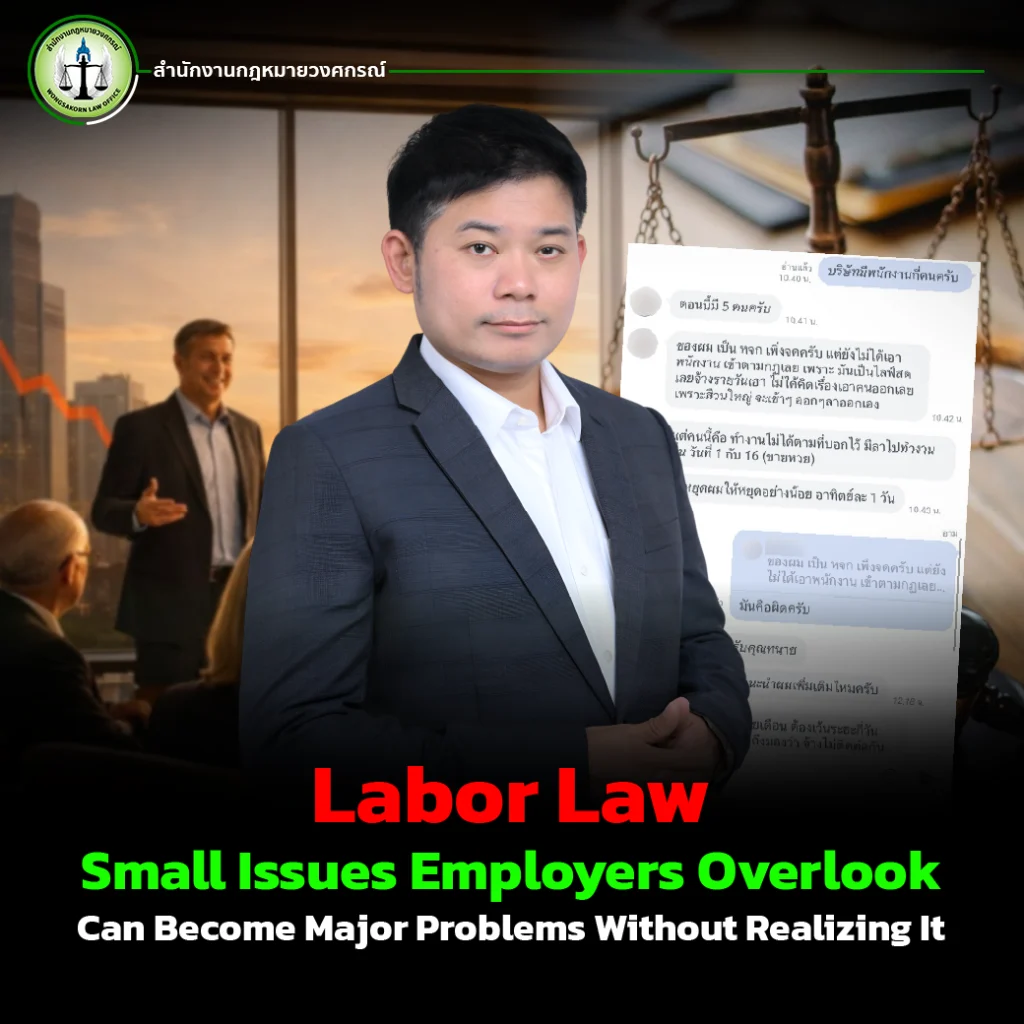
Labor Law: Small Issues Employers Overlook Can Become Major Problems Without Realizing It

Labor law and employment-related issues are among the unavoidable challenges faced by business owners in the world of business. Regardless of whether a business is small or large, once employees are hired, labor law immediately becomes involved.

The key issue is that many employers do not intentionally violate the law, but instead unknowingly make mistakes due to a lack of understanding of legal requirements or the absence of professional legal guidance from the very beginning.

Recently, Lawyer Arm Supasit Siri spoke out about another real issue that frequently occurs in Thai workplaces. This has become an important matter that employers should be aware of, because many business owners engage in these practices every day without realizing that they may be at risk of violating labor law.

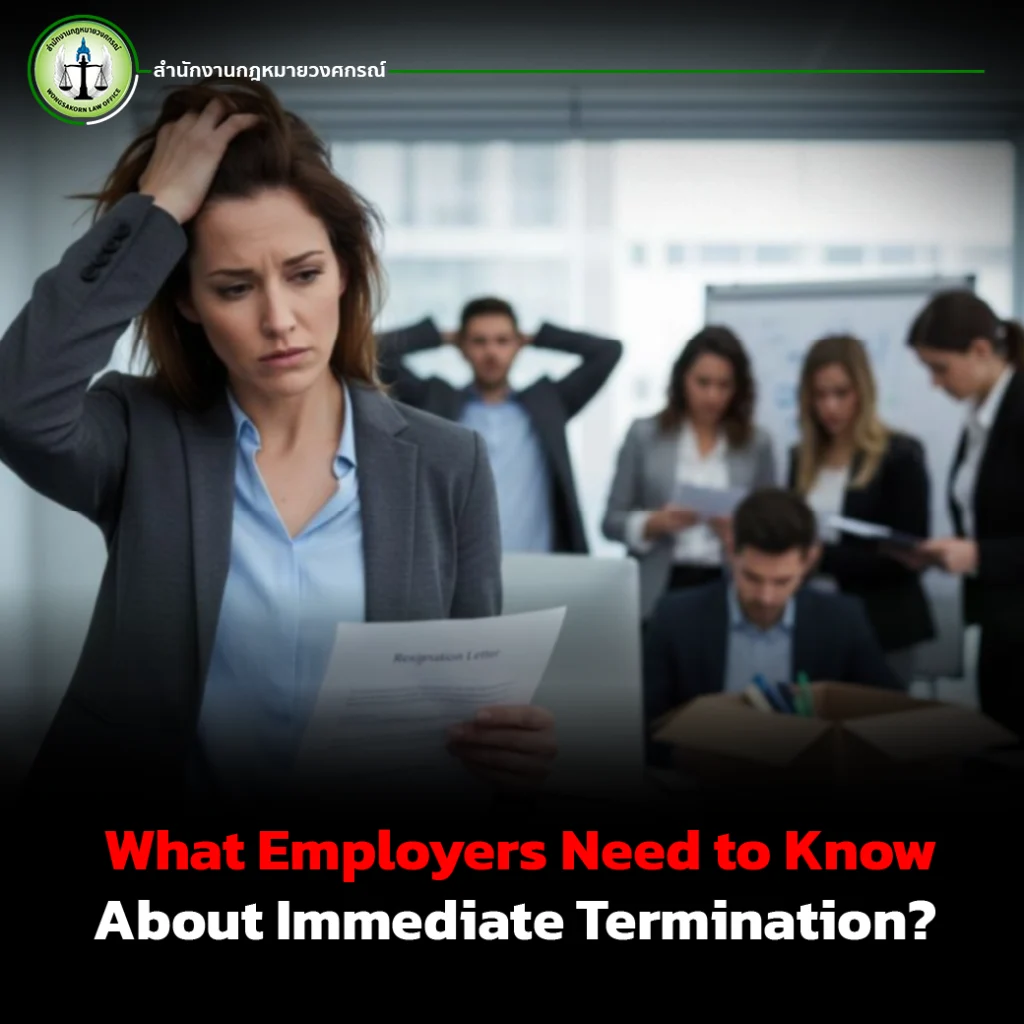
Issue No. 1: What Employers Need to Know About Immediate Termination?

One of the most common issues between employers and employees is when an employer orders an employee to “leave the job immediately.” Many employers mistakenly believe that if there is no written employment contract, the individual is not considered an employee, or that the employer is not legally responsible.

However, in reality, under labor law principles, an “employee” relationship is established immediately once there is an agreement for employment.

This means that even without a written employment contract, if there is an agreement for work to be performed and wages are paid, that person is already considered an employee under the law.

Therefore, if an employer orders an employee to leave immediately without lawful grounds, the employer may be required to pay severance compensation, payment in lieu of advance notice, or other damages in accordance with labor law.

Termination Is Not Just About Telling an Employee to Leave

Many companies believe that if they are dissatisfied with an employee, they can immediately ask the employee to stop working. However, legally, the issue is more complicated than many people think, especially regarding the “grounds for termination.” If the employer does not have clear evidence or cannot prove that the employee actually committed serious misconduct, the employer may ultimately become the disadvantaged party in a labor case.

Can an Employer Require an Employee to Leave Immediately?

In practice, if an employer wants an employee to leave immediately, the key is to handle the process properly and in accordance with the legal system.

Lawyer Arm Supasit shared an interesting perspective that employers are able to record in the Social Security system that:

  • the employee’s employment has ended,
  • together with the reason for the termination.

Such information will be recorded in the Social Security system, and in the future, the employee may also look back on or remember these events or employment records as well. For this reason, employers must handle the matter carefully and always remain within the framework of labor law.

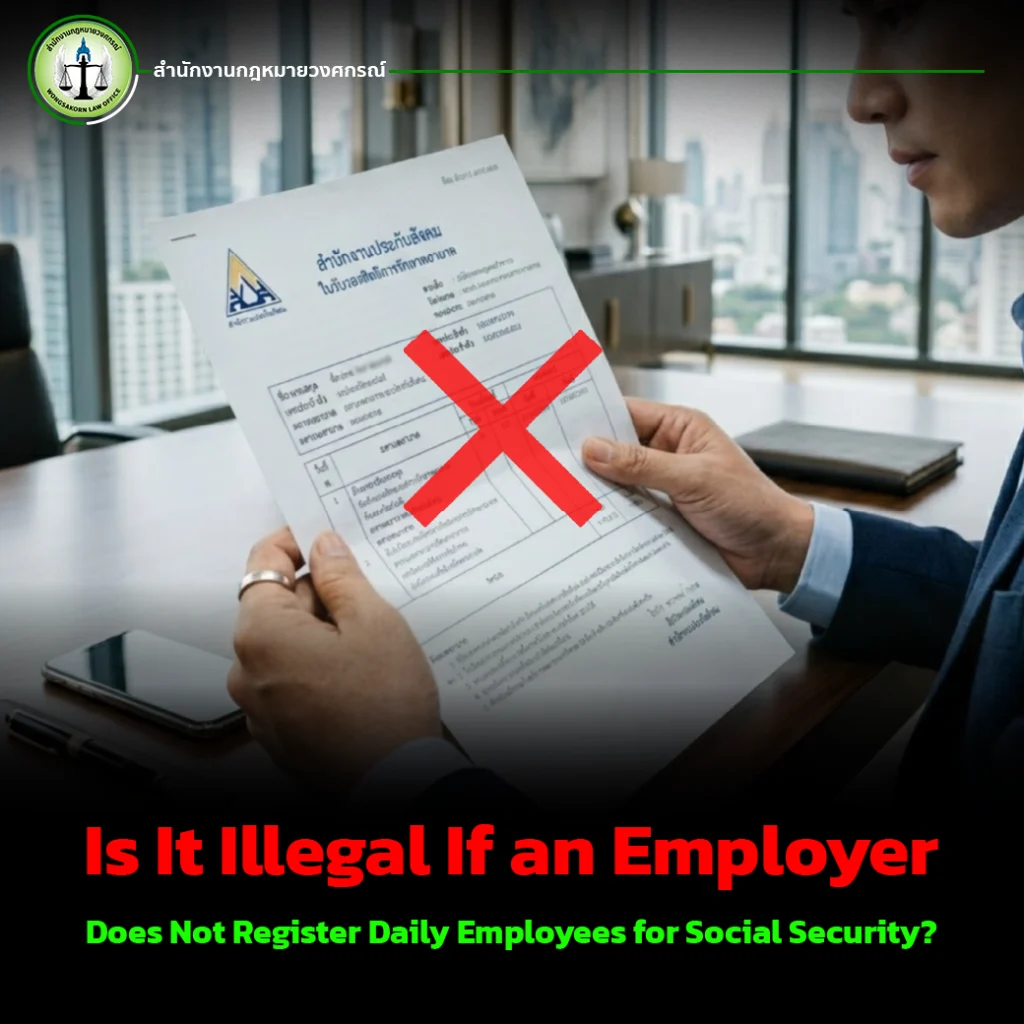
Issue No. 2: Is It Illegal If an Employer Does Not Register Daily Employees for Social Security?

Another real case brought to Lawyer Arm involved a company with only five employees hired on a “daily wage” basis. The employer believed that there was no need to register them in the Social Security system. However, in reality, Lawyer Arm Supasit clearly confirmed that this is “against the law.” Under labor law and social security law, once an employee starts working on the very first day, the employer is legally required to register that employee in the Social Security system immediately.

Just Opening a Company or Recently Registering a Business Is Not an Excuse

Many employers often claim that:

  • the business has just started,
  • the company was only recently registered,
  • or the business is still small.

However, legally speaking, these reasons are not exceptions. The moment a person becomes an “employer” and hires an “employee,” legal obligations arise immediately as well.

Labor Problems Often Begin with Small Issues

One concerning reality in labor law is that many labor disputes do not begin with major problems. Instead, they often start from “small issues” that employers overlook, such as:

  • incomplete documentation,
  • failure to register employees for Social Security,
  • incorrect wage payments,
  • terminating employees without understanding the law,
  • or issuing company regulations improperly.

When these issues accumulate over time, they can eventually develop into labor disputes that may cause significant damage to a business.

If You Have Legal Counsel, the Problem May Never Occur

This is one of the key reasons why modern businesses should have legal counsel. A lawyer’s role is not simply to wait until a lawsuit happens, but to help “establish proper systems,” especially in labor law matters.

For example:

  • reviewing employment contracts,
  • establishing company regulations,
  • reviewing Social Security compliance systems,
  • providing legal advice before termination,
  • and setting proper labor management guidelines.

All of these can significantly reduce legal risks.

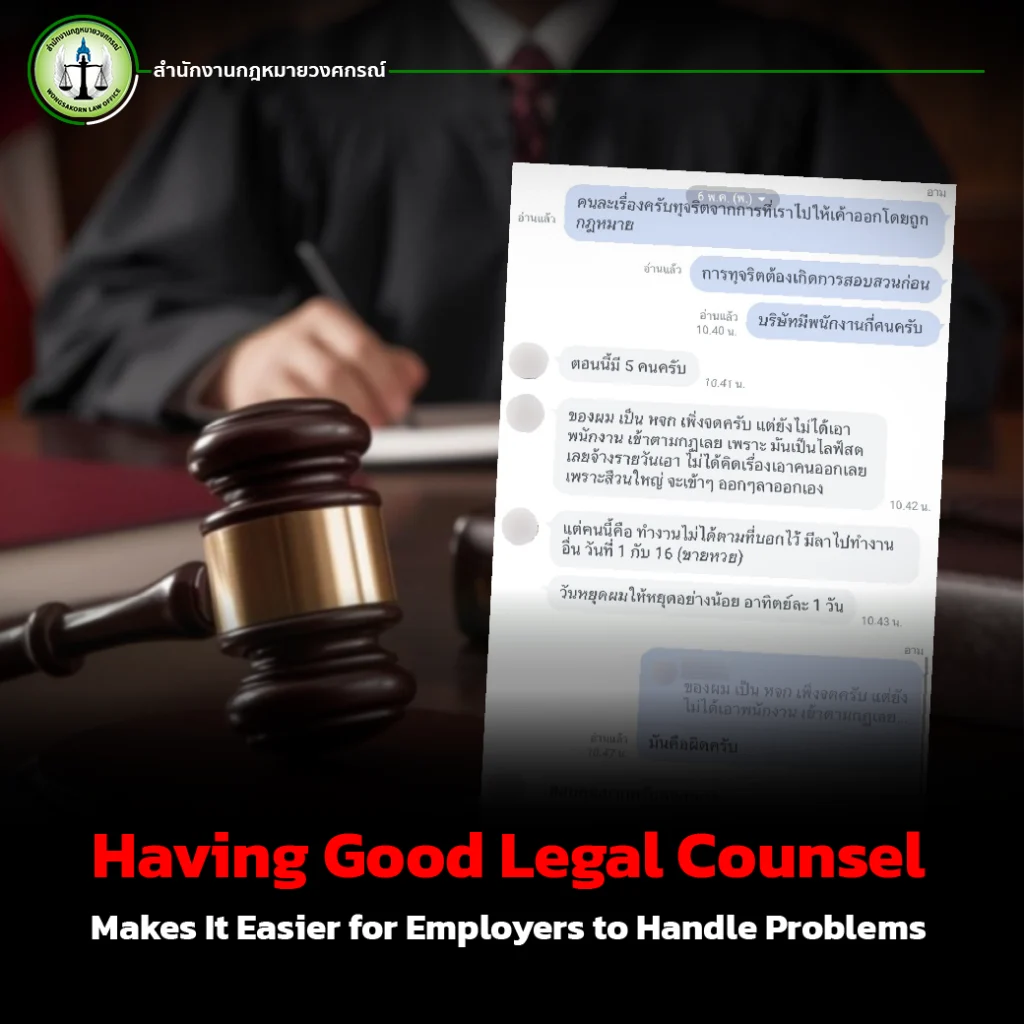
Having Good Legal Counsel Makes It Easier for Employers to Handle Problems

When problems arise, the most important things are evidence and systems. If a company has managed things properly from the beginning, such as documentation, company regulations, Social Security systems, and recordkeeping, employers will be able to handle labor issues much more easily.

Labor Law Is Not a Distant Issue for Business Owners

Many business owners focus heavily on sales, profit, and marketing, while overlooking labor law. In reality, however, labor law is one of the most important risks within any organization because as long as you have employees, labor-related issues are unavoidable.

A Small Issue Today May Become a Major Case Tomorrow

From the case examples shared by Lawyer Arm Supasit Siri, it is clear that many problems often begin as “small issues” that employers tend to overlook. However, in the context of labor law, these small matters can always develop into major legal disputes.

Therefore, the best solution is to have legal counsel involved from the very beginning.

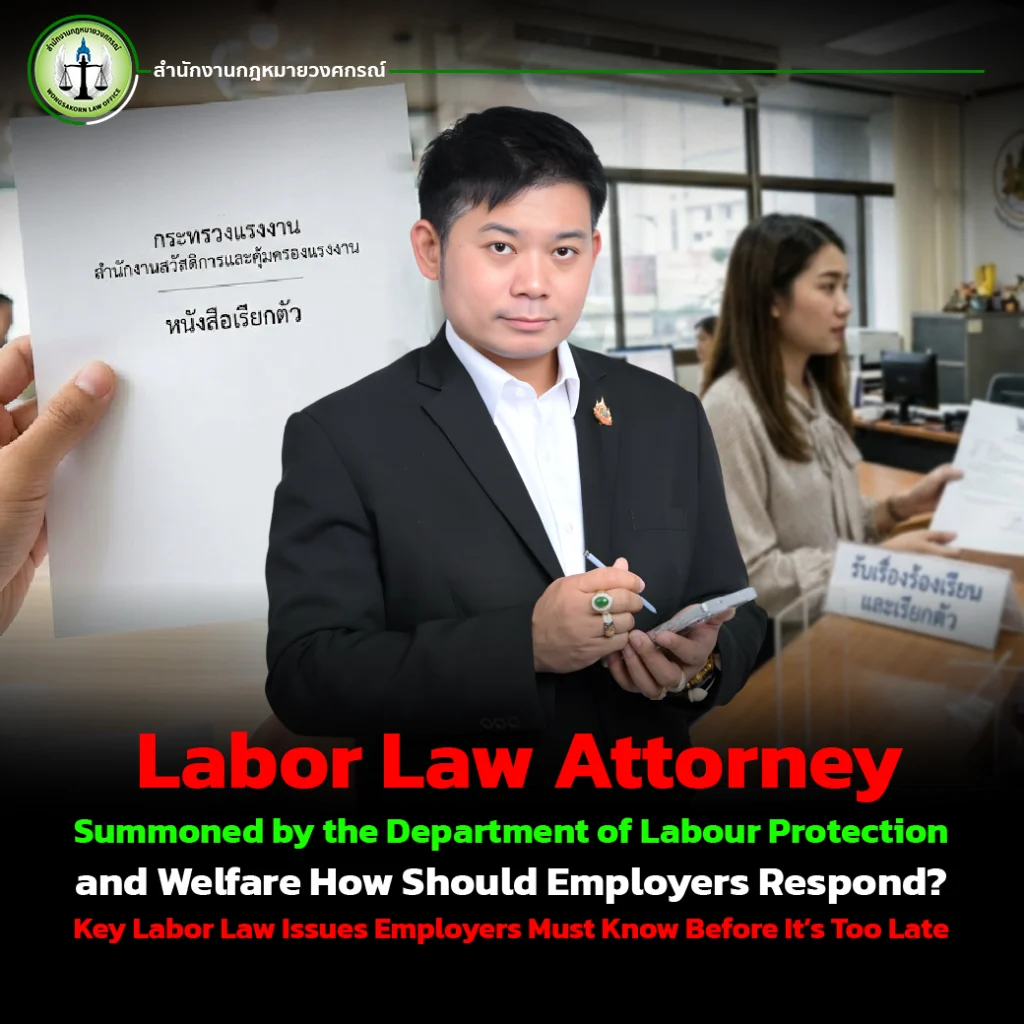
 Labor Law Attorney: Summoned by the Department of Labour Protection and Welfare—How Should Employers Respond? Key Labor Law Issues Employers Must Know Before It’s Too Late

A labor law attorney becomes essential when a business starts to grow. Along with business expansion and the core issues employers face, “legal problems” inevitably follow—especially labor law issues, which are among the most common challenges that all business owners, employers, and executives must inevitably encounter.

Many employers or business owners mistakenly believe that:

“If the Department of Labour Protection and Welfare summons us, we can just hire a lawyer at that time.”

In reality, this mindset can place employers at a disadvantage from the very beginning. The core principle of labor law is not to wait until problems arise and then fix them, but to have legal counsel from the outset. In particular, when you are a business owner or employer, starting a company does not only involve revenue or profit. It must be acknowledged that “problems” will inevitably follow—and one of the unavoidable issues is labor-related matters.

What Does It Mean to Be Summoned by the Department of Labour Protection and Welfare?

The Department of Labour Protection and Welfare is responsible for monitoring employers’ compliance with labor law, such as:

  • Wage payment
  • Overtime payment
  • Termination of employment
  • Severance pay
  • Employee welfare arrangements
  • Employment contracts

If employees file complaints or if there is an official inspection, employers may be required to “clarify facts,” which is often when business owners begin to feel alarmed.

Do Not Wait Until You Are Summoned Before Hiring a Lawyer

This is a very common mistake. Many business owners tend to:

  • Ignore employee problems
  • Do nothing when complaints are filed
  • Only seek legal counsel when summoned by the labor office

To be direct, by that point, it is already “too late.” In labor cases and labor law matters, the preparation of information, factual strategy, and documentation can significantly affect the direction of the case. Without proper planning from the beginning, the risk of being placed at a serious disadvantage is extremely high.

How Should You Respond to the Department of Labour Protection and Welfare?

The key principles of response are:

1. Rely on facts
Officers will consider evidence and factual circumstances, not the employer’s feelings.

2. Prepare complete documentation, such as:

  • Employment contracts
  • Company regulations
  • Warning letters
  • Time attendance records
  • Payment evidence

3. Do not respond without legal counsel
This is the most important point. Certain statements may later become evidence used against the company.

Therefore, having a labor law attorney involved from the beginning is essential.

Major Business Problems That Never Disappear

The reality of business is that no business is free from problems.

Common issues include at least five major areas:

1. Labor law issues
This is one of the most common problems employers face, such as:

  • Employee lawsuits or complaints
  • Unfair dismissal claims
  • Severance pay disputes
  • Overtime pay (OT) disputes
  • Leave and tardiness issues

Labor law issues are something every employer will inevitably encounter.

2. Contract issues
Every business involves contracts, such as:

  • Employment contracts
  • Lease agreements
  • Sale and purchase agreements
  • Partnership agreements

If contracts are drafted incorrectly or improperly, problems will inevitably follow.

3. Business partner disputes
Business transactions between companies and their partners often involve disputes regarding payment, product delivery, or breach of contract. This is why businesses should have lawyers draft agreements and legal documents, or review and supervise them from the very beginning. 

4. International business issues
If your business involves international trade or foreign transactions, legal issues become even more complex, such as:

  • Foreign laws
  • Contract enforcement
  • Taxation
  • International disputes

5. Internal management issues
For example:

  • Partnership disputes
  • Profit-sharing conflicts
  • Disagreements in decision-making

All of these involve legal dimensions that may require proper legal consultation and targeted solutions to ensure the business can continue operating smoothly in the future.

Starting a Business = Accepting That Problems Will Follow

This is a reality every business owner must understand. A company is not only about sales and profit—it always comes with legal obligations. In particular, as long as you have employees, labor law issues are unavoidable.

The more employees you have, the more problems may arise.

Employee-Related Problems Have No Fixed Formula Because Every Employee Is Different

For example:

  • Tardiness
  • Absenteeism
  • Refusal to follow instructions
  • Sudden resignation
  • Lawsuits or complaints

The greater the amount of labor, the more complex these problems become.

Labor Law Attorneys Are a Protective Shield for Your Business — Consult Us Today

Many people think labor lawyers exist only to solve problems. In reality, their primary role is to “prevent” problems.

Services provided to employers include:

✔ Reviewing labor systems
✔ Drafting company regulations
✔ Reviewing employment contracts
✔ Advising before termination
✔ Planning before labor inspections

All of these significantly reduce business risk.

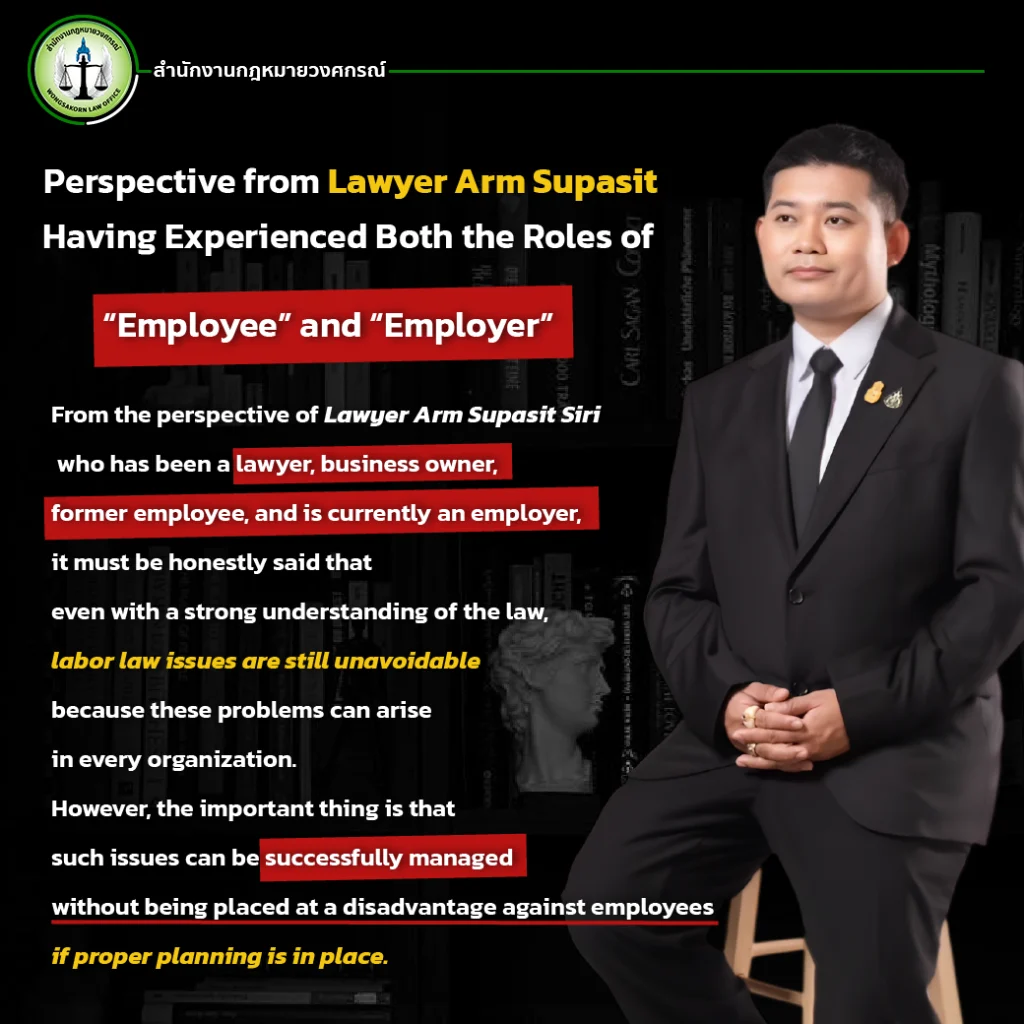
Perspective from Lawyer Arm Supasit: Having Experienced Both the Roles of “Employee” and “Employer”

From the perspective of Lawyer Arm Supasit Siri, who has been a lawyer, business owner, former employee, and is currently an employer, it must be honestly said that even with a strong understanding of the law, labor law issues are still unavoidable because these problems can arise in every organization.

However, the important thing is that such issues can be successfully managed without being placed at a disadvantage against employees—if proper planning is in place.

Labor Problems Never End, But They Can Be Managed

This is the reality: labor and employment issues never completely disappear, but they can be properly managed through establishing a strong company system from the beginning, preparing accurate and complete documentation, and having reliable legal counsel.

Do Not Wait Until You Are Summoned Before Looking for a Lawyer

If you are a business owner, executive, employer, or HR professional managing employees within your organization:

Do not wait for problems to arise.
Do not wait for complaints to be filed.
Do not wait until the labor office summons you.

Because by that point, you may already be at a disadvantage.

The best approach is to have a labor law attorney or labor law advisor from the very beginning. If you are currently facing labor law issues or want to establish a proper system from the start, you may consult Lawyer Arm Supasit today. Click >> Contact Us <<

Because a stable business must always begin with a strong legal foundation.

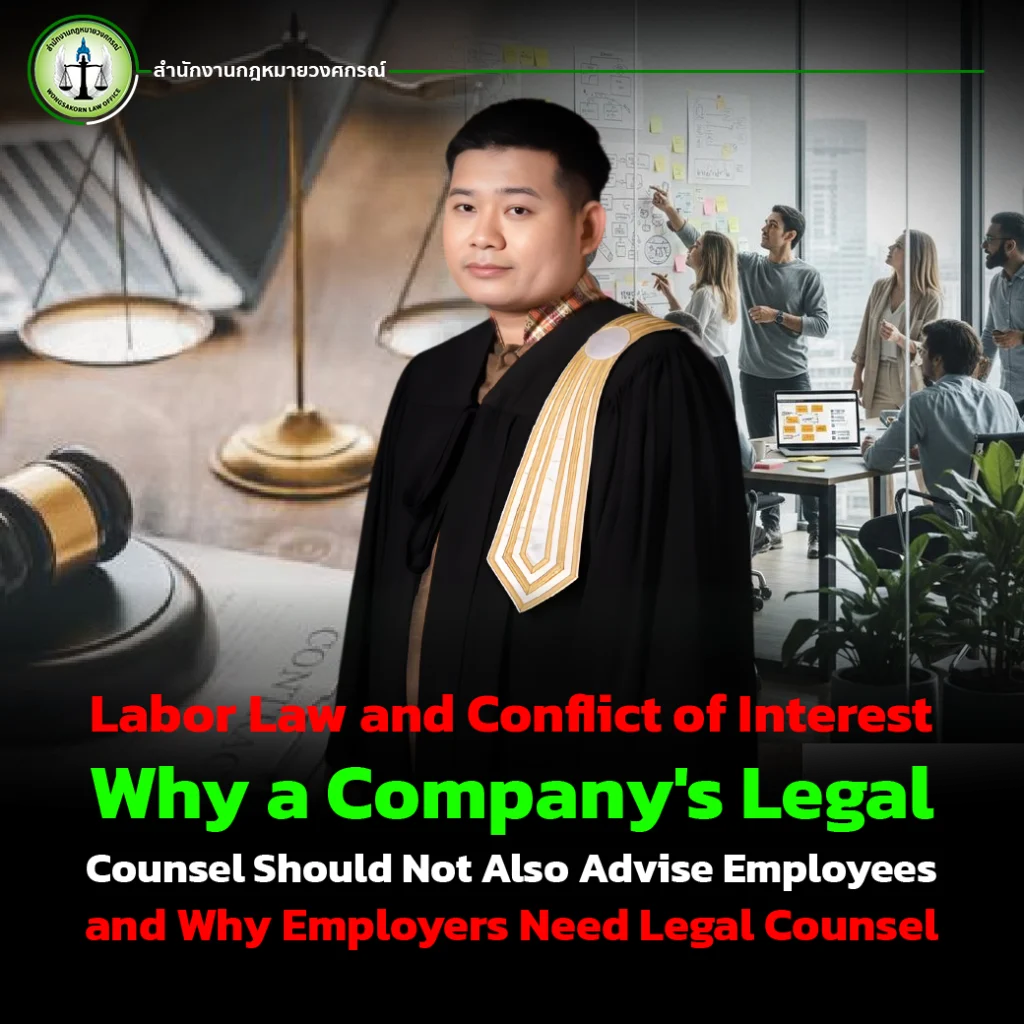
Labor Law and Conflict of Interest Why a Company’s Legal Counsel Should Not Also Advise Employees, and Why Employers Need Legal Counsel

Labor Law in Today’s Business World Managing an organization today involves far more than just sales, finance, or marketing. One of the most important matters that executives and business owners must pay close attention to is labor law.

This is because employment-related issues can arise every day, whether involving employment contracts, termination, severance pay, the issuance of company regulations, or disputes between employers and employees.

As a result, one thing that many organizations are placing increasing importance on is having legal counsel on retainer for the company.

But the interesting question is

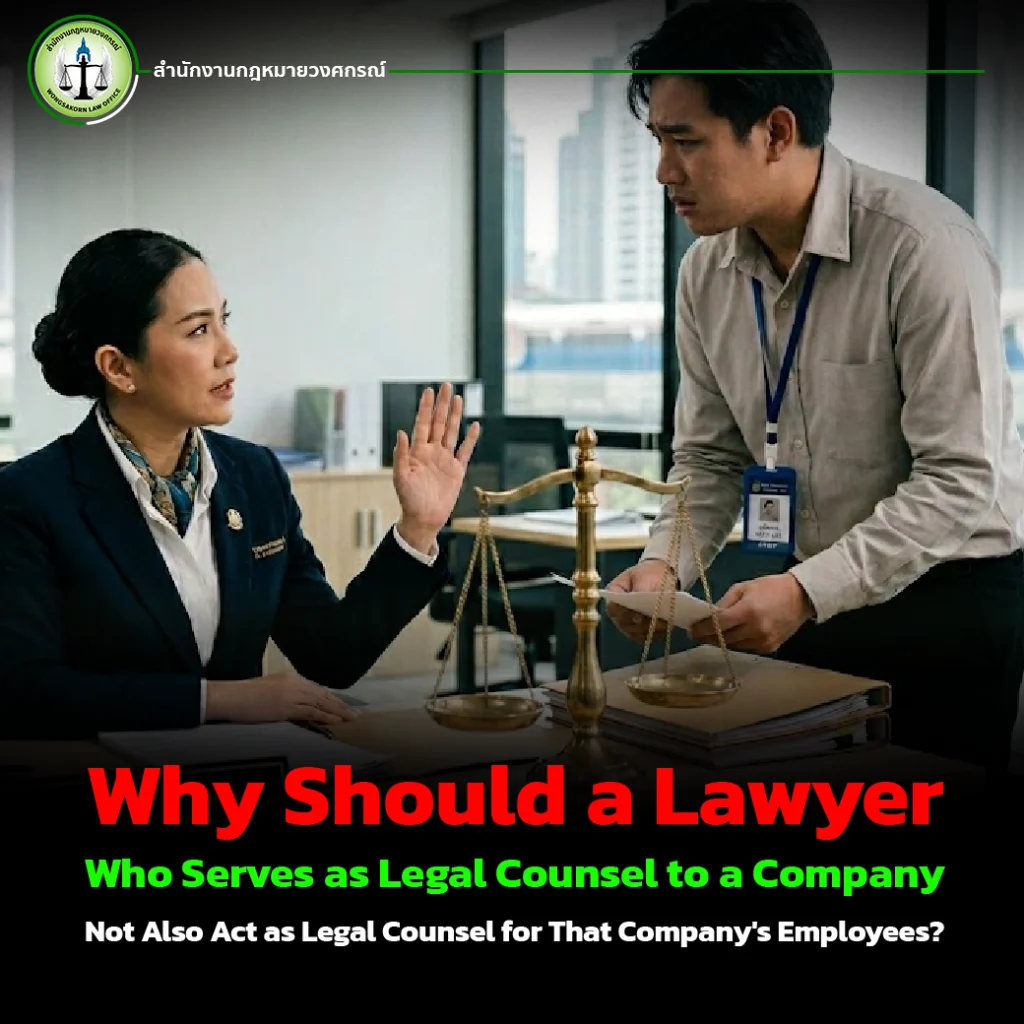
Why Should a Lawyer Who Serves as Legal Counsel to a Company Not Also Act as Legal Counsel for That Company’s Employees?

More importantly, why should an employer or business owner have legal counsel from the very beginning?

This article will take you through the key issues in labor law that every executive should understand.

Labor Law Is About “Two Sides of Interests”

By its very nature, labor law governs the rights and obligations between the employer and the employee. Both parties have direct and often competing interests, including

-The right to hire

-The right to terminate employment

-Severance pay

-Wages

-Employee benefits

-Workplace discipline

When a dispute arises, the interests of the two parties are almost always on opposite sides.

Why Should a Company’s Legal Counsel Not Also Advise Its Employees?

One of the fundamental principles of the legal profession is the avoidance of conflicts of interest.

This is a core ethical duty of every lawyer.

What Would Happen If a Lawyer Represented Both Sides?

Consider this situation A lawyer serves as legal counsel to Company A, but also provides legal advice to an employee of Company A.

This would immediately create serious concerns. For example, the company’s internal information could become relevant to the employee’s case, a conflict of interest could arise, and the lawyer could risk violating professional ethics.

A Lawyer’s Credibility Begins with Clarity of Role 

For a lawyer serving as legal counsel to a company, the primary role is to protect the interests of the organization.

Therefore, if that lawyer also represents an employee within the same organization, their role becomes unclear and may undermine the company’s trust and confidence.

Why Should a Company Have Legal Counsel?

Many executives believe that they can simply hire a lawyer when a problem arises. In reality, this mindset is often the starting point of much larger problems. Labor law and legal matters in general should not be addressed only after an issue has already occurred.

Legal Counsel Exists to Prevent Problems

This is the key point. Having legal counsel is not merely about waiting to defend a lawsuit; it is about establishing the right systems and safeguards to ensure that disputes never arise in the first place.

Common Mistakes Employers Often Make

-Issuing company regulations improperly

-Drafting employment contracts that are not sufficiently comprehensive

-Issuing warning letters incorrectly

-Terminating employment without following proper procedures

-Miscalculating severance pay

All of these can become the starting point of labor law disputes.

Labor Law Is More Complex Than Many Realize

Many companies rely entirely on their HR departments to handle employment matters. While HR professionals may have extensive experience, this does not necessarily mean they fully understand every aspect of labor law.

Labor law involves highly specialized issues, such as:

-Interpreting what constitutes serious misconduct

-The legal requirements for termination

-Employees’ statutory rights

-Labor Court precedents and judicial interpretations

These are matters that require the expertise of a legal professional.

Benefits of Having Legal Counsel on Retainer for Your Company

1. Reduces Legal Risk
Having a lawyer review every step helps minimize the risk of legal claims and lawsuits.

2. Establishes Proper Employment Systems
Such as employment contracts, company rules and regulations, and disciplinary procedures.

3. Provides Immediate Legal Advice When Problems Arise
There is no need to search for a new lawyer each time an issue occurs. Your legal counsel is already in place and ready to advise.

4. Saves Costs in the Long Run
Preventing legal problems is always less costly than resolving disputes or defending litigation.

Modern Executives Must Address Labor Law from the Start

When employee-related issues arise every day, having legal counsel is the solution.

The reality is this: employees resign every day, employees file claims every day, and disciplinary issues arise every day. None of these are unusual. What is truly risky is operating without proper legal oversight in labor matters.

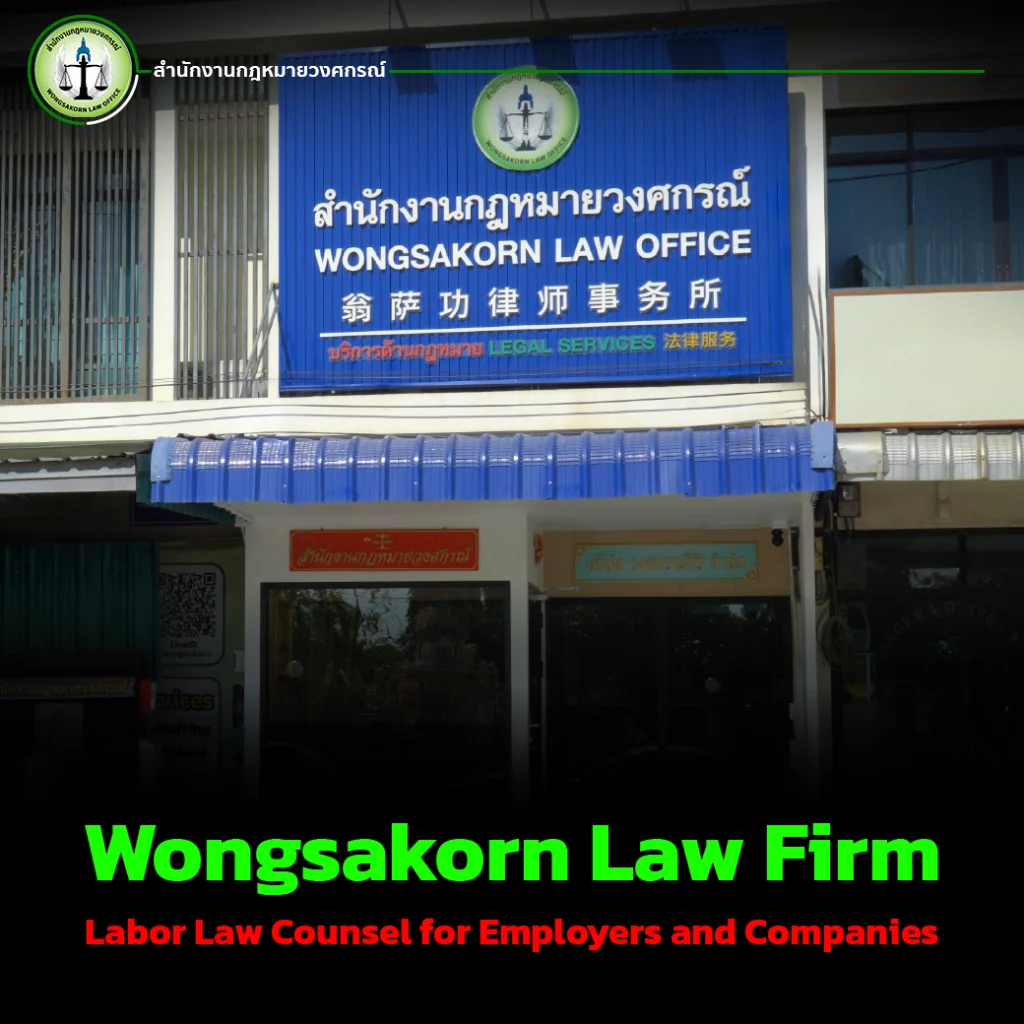
Wongsakorn Law Firm Labor Law Counsel for Employers and Companies

Wongsakorn Law Firm currently serves as legal counsel to numerous companies and has direct experience in advising clients on labor law matters.

Guided by clear professional principles, once we act as legal counsel for a company, we do not provide legal advice to that company’s employees. This is to prevent conflicts of interest and to uphold the highest standards of professional ethics.

This reflects our unwavering commitment to protecting the interests of our corporate clients.

If you are an employer, do not wait until a dispute arises before seeking legal advice.

Having legal counsel is like building a protective shield around your business—especially in labor law, where the rules are complex and the risks are high.

Whether you are a business owner, executive, employer, or HR professional, if you want to reduce labor-related risks, having legal counsel is the answer.

Labor Law Is Something Executives Must Plan For, Not Merely React To 

Do not wait for an employee to file a claim.
Do not wait for litigation to arise.
Do not wait for your company to suffer damage.

In labor law, prevention is always more important than cure. And having legal counsel is an essential tool for the modern executive.

If you want to establish a proper employment system, reduce risk, and manage your organization with confidence and stability, Wongsakorn Law Firm is ready to serve as your trusted legal advisor starting today.

Click >> Contact Us <<

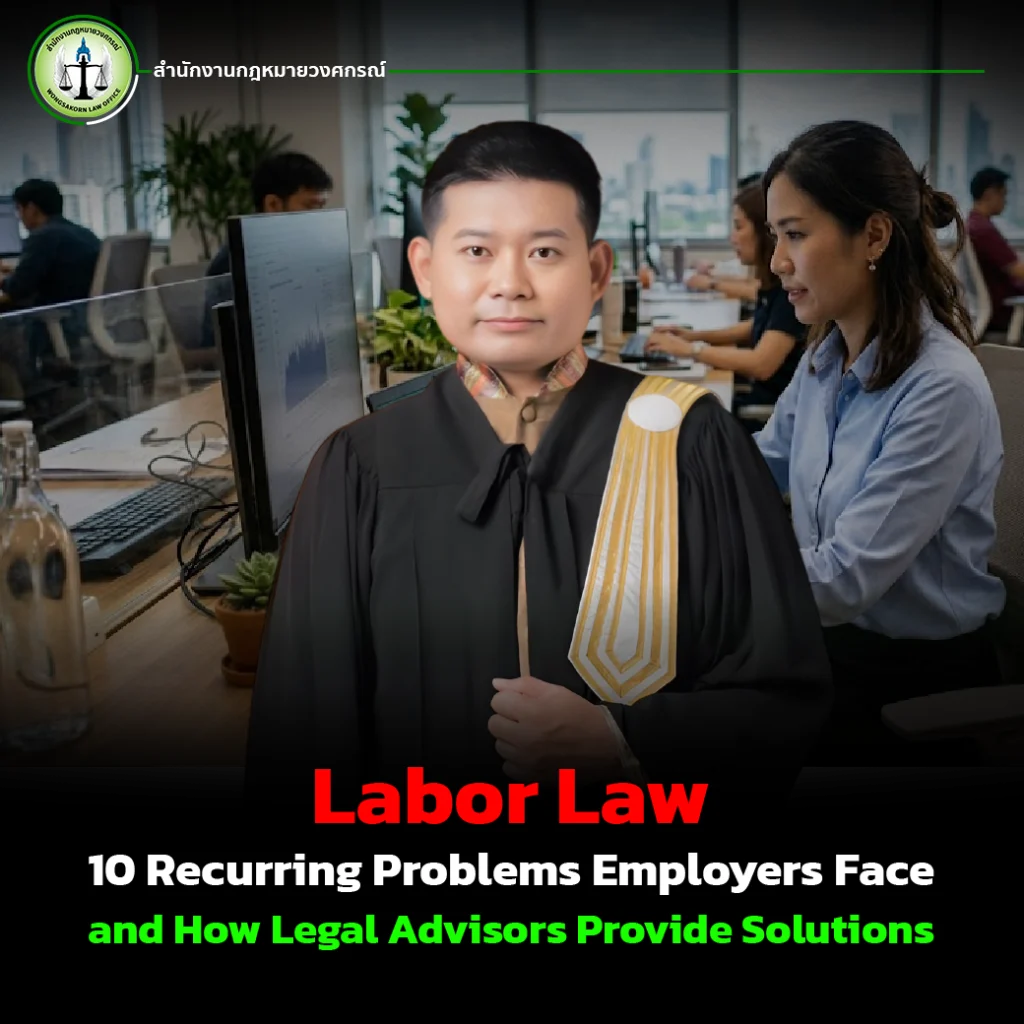
Labor Law 10 Recurring Problems Employers Face and How Legal Advisors Provide Solutions

In the world of business whether SMEs, medium-sized enterprises, or large organizations, labor law is one of the most problematic areas. It often creates issues that repeatedly occur in a “cycle,” to the point where many employers begin to see them as normal.

However, in reality, these problems should not occur in the first place if proper systems are established and a legal advisor is involved from the beginning.

This article from Wongsakorn Law Firm analyzes 10 common labor law problems faced by business owners, identifies their root causes, and provides professional prevention strategies by legal advisors who understand both law and business.


Why Are Labor Law Problems So Difficult to Solve?

Interestingly, labor law issues are not caused solely by “difficult employees.”

In many cases, they stem from employers themselves such as unclear employment contracts, lack of understanding of labor laws, reliance on personal management experience, or the absence of a legal advisor to establish proper systems from the start.

As a result, small issues accumulate over time and eventually turn into major problems.

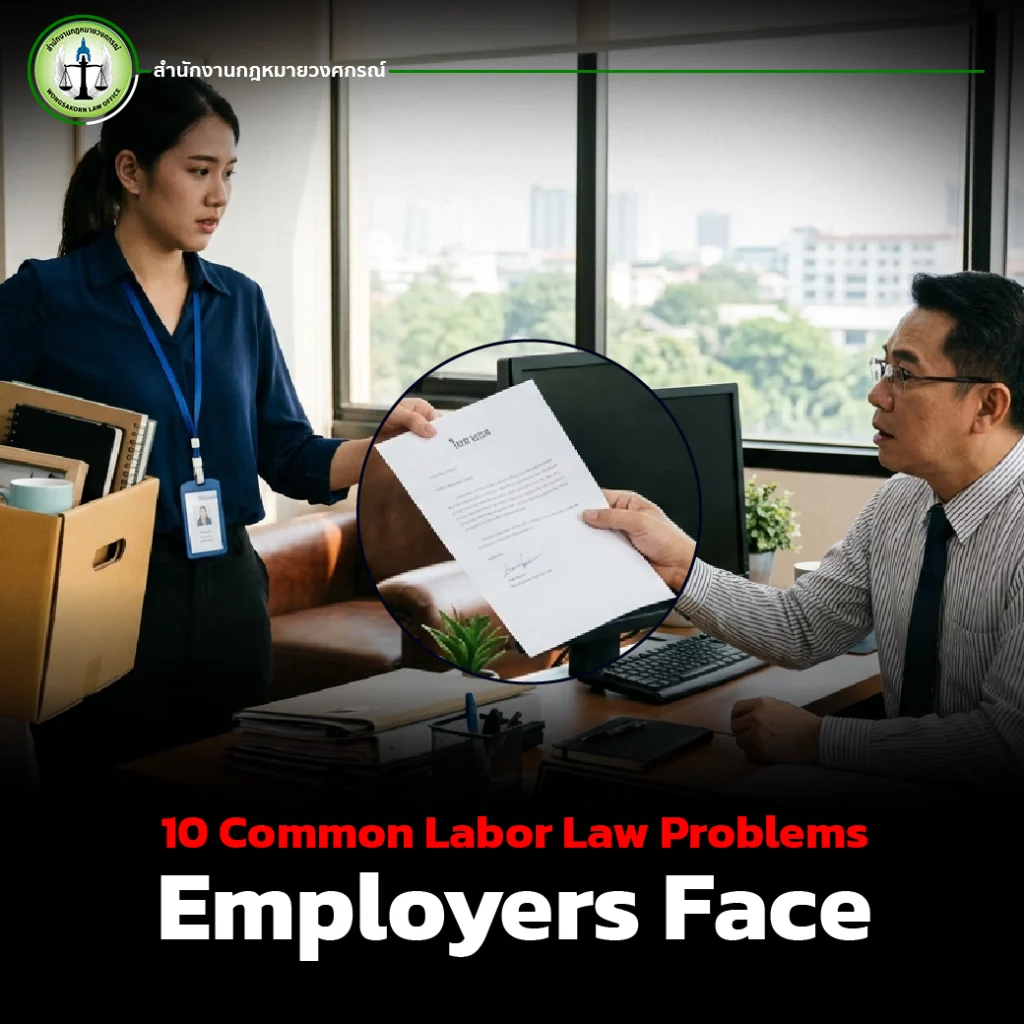
10 Common Labor Law Problems Employers Face

1. Lack of Proper Employment Contracts

Many businesses rely on verbal agreements or generic templates from the internet, making them ineffective in disputes.

2. Improper Termination Procedures

Employers may terminate employees without valid cause or fail to follow legal procedures, leading to unnecessary compensation payments.

3. Sudden Employee Resignations

Especially in service industries, employees may resign without notice, while contracts lack enforcement provisions.

4. Overtime (OT) Issues

Incorrect calculations or lack of time-tracking systems often result in wage disputes or complaints filed with labor authorities.

5. Lack of Clear Company Regulations

Without written policies on lateness, absenteeism, leave, or discipline, employers cannot enforce rules properly.

6. Non-compliance with Labor Laws

Such as excessive working hours or lack of required benefits, often leading to complaints and disputes.

7. Employee Lawsuits

Employers are often at a disadvantage due to insufficient documentation or lack of legal support.

8. Overpayment of Compensation

Employers may unknowingly pay more than required due to misunderstanding legal obligations.

9. Opportunistic Employees

Some employees exploit legal loopholes or weak contracts to claim excessive benefits.

10. Repeated Unresolved Problems

Problems recur because root causes are never addressed properly.


These Problems Should Not Be “Normal”

Many employers become accustomed to these issues, assuming they are part of doing business.

In reality, every problem has a root cause and can be prevented with proper labor law systems and guidance from a legal advisor.

Legal Advisors The Key to Breaking the Cycle

A legal advisor does more than solve disputes; they prevent problems from happening.

Establish Strong Employment Contracts

  • Tailored contracts for your business
  • Eliminate legal loopholes

Create Clear Company Policies

  • Legally enforceable regulations
  • Clear operational guidelines

Provide Legal Guidance During Issues

  • Correct legal strategies
  • Reduce litigation risks

Help Employers Make Confident Decisions

No guesswork decisions are based on legal principles.

Don’t Wait Until Problems Arise

A common misconception is to hire a lawyer only after issues occur. By then, damages are often unavoidable.

A legal advisor exists to prevent problems, not just fix them.


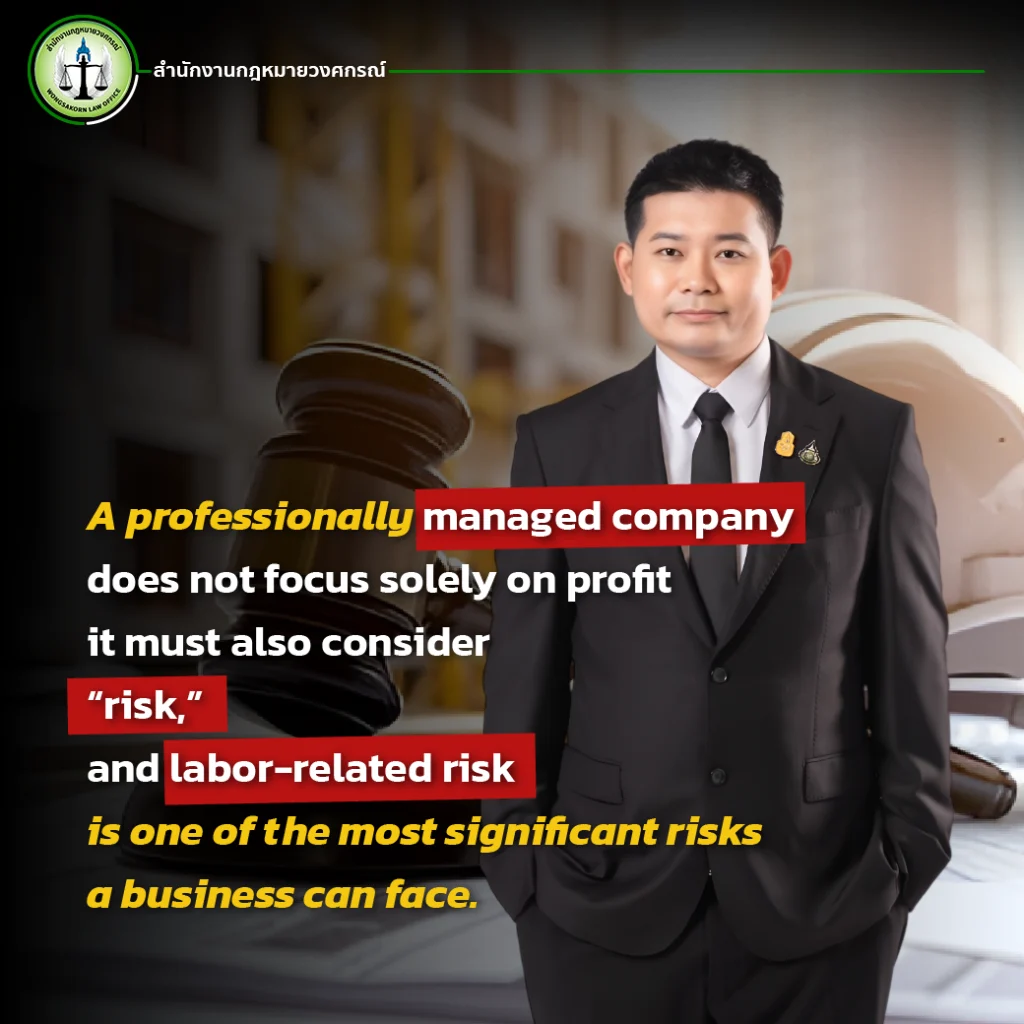
Sustainable Businesses Manage Risks

Successful businesses are not only good at sales they excel in risk management.

Labor law is one of the most critical risks, and having a legal advisor is essential for long-term stability.


Legal Advisors from Wongsakorn Law Firm

If you are a business owner facing labor law issues or want to prevent them entirely Wongsakorn Law Firm is ready to assist.

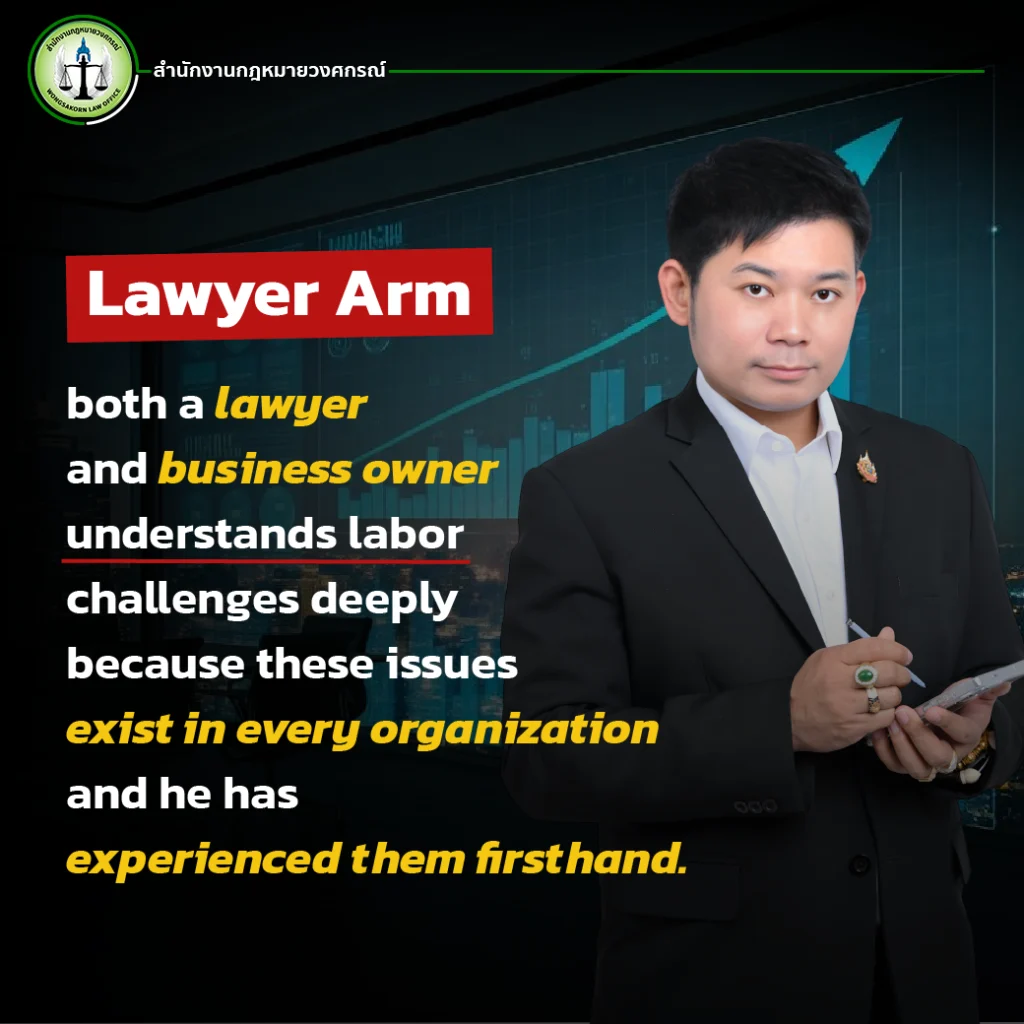
Lawyer Arm, both a lawyer and business owner, understands labor challenges deeply because these issues exist in every organization and he has experienced them firsthand.

Why Choose Us?

Focus on prevention rather than correction

Expertise in both legal and business perspectives

Practical solutions not just theoretical advice

Stop Labor Law Problems Before It’s Too Late

Labor law issues are not minor and should not be repeated. Without a legal advisor, the potential damage may exceed expectations.

Start today, build the right system and ensure sustainable business growth.
Click here to contact us

Line @ คลิก! โทรหาเรา คลิก!