Is the OIC Truly Fast and Fair? Another Perspective from the Real Experience of Lawyer Arm Supasit

Many people who purchase insurance, whether life insurance, health insurance, or motor insurance, are familiar with the “OIC,” or the Office of Insurance Commission, as the agency responsible for regulating the insurance business in Thailand, as well as protecting the rights of consumers who hold all types of insurance policies.
But the important question is:

Is the OIC Truly Fast and Fair?

This is another perspective from Lawyer Arm Supasit of Wongsakorn Law Firm, who would like to reveal facts based on direct experience so that the public can think, analyze, and gain a better understanding of the OIC’s processes before deciding to enter arbitration proceedings.
What Is the OIC? What Are Its Responsibilities?

Many people may still not fully understand that the OIC is the agency responsible for regulating all insurance businesses in Thailand, including:

  • Health insurance
  • Life insurance
  • Motor insurance
  • Accident insurance
  • Property insurance
  • As well as all other types of insurance

The OIC’s main responsibilities are to:

  • Supervise insurance companies
  • Protect consumers
  • Receive complaints
  • Conduct arbitration proceedings in certain cases

At first glance, it may seem like an agency that fully supports and assists the public. However, once people enter the actual process, many begin to question whether it is truly “fast and fair” as promoted.

What Is OIC Arbitration?

When members of the public visit the OIC website, they will find a description of “arbitration” as a process that is:

  • Fast
  • Fair
  • Cost-effective

The phrase “fast and fair” immediately gives many people confidence because the general public naturally understands that if a dispute arises with an insurance company, this process should help them obtain justice quickly.

However, from the perspective of Lawyer Arm Supasit, the following questions are raised:

“What does speed really mean?”

And more importantly:

“Who determines what is fair?”

Even Lawyer Arm Supasit himself believes that the meaning of the word “fair” is something that is very difficult to define in practice.

Revealing the Actual Timeline of a Case at Wongsakorn Law Firm

To help the public see the process more clearly, Lawyer Arm Supasit shared a real case handled by Wongsakorn Law Firm.

Step 1: Submission of the Petition
8 May 2025
The OIC accepted the arbitration petition.

Step 2: First Hearing Appointment
17 June 2025
The first hearing was scheduled.

Many people may ask: Was that fast?

From the perspective of the general public, some people may feel that this already took quite a long time.

From the first hearing to the appointment of the arbitrator, the process took another month.

After 17 June 2025, the parties had to wait until:

18 July 2025

to appoint the arbitrator, or the neutral party who would decide the dispute.

The question is:

Why did appointing the neutral decision-maker alone take almost another full month?

This is one of the observations raised by Lawyer Arm Supasit, who believes that if something is described as “fast,” each person’s standard of what counts as fast may be different.

Preliminary Hearing, Witness Examination, and Waiting for the Award

After the arbitrator was appointed, the next stage was the preliminary hearing, which is the stage used to:

  • Define the disputed issues
  • Determine what evidence the consumer would present
  • Determine what arguments the insurance company would raise in response

After that, the process moved into the witness examination hearing.

However, reaching this stage required waiting until:

8 October 2025

A simple calculation shows that from June to October, the process took approximately four months.

When Was the Arbitration Award Issued?

After the witness examination was completed on 8 October 2025, the arbitration award was issued on:

12 February 2026

Meanwhile, the OIC had already received the arbitration award on:

6 February 2026

When calculating the total period from the submission of the petition to receiving the arbitration award, the process took many months.

The question therefore returns:

Can this truly be considered “fast”?

The Meaning of Speed for the Public and for an Agency May Not Be the Same

From the perspective of the general public, the word “fast” may mean:

  • Not having to wait for several months
  • Not having to spend a long time going through procedures
  • Receiving an answer quickly

However, from the perspective of an institutional process or the arbitration system, there may be a different standard.

Therefore, Lawyer Arm Supasit would like the public to:

  • Analyze it for themselves
  • Compare it for themselves
  • And decide for themselves whether the process is truly fast

The Agency Says It Is Cost-Effective. Is That Really True?

Another phrase that the public often sees is “cost-effective.” However, based on a real case handled by Wongsakorn Law Firm, the total cost came to approximately:

THB 12,800

And simply to begin the process, the party submitting the arbitration petition was required to pay an initial filing fee of:

THB 10,000

This means that the process is not free, as many people may understand.

From the perspective of the general public, the word “fast” may mean:

  • Not having to wait for several months
  • Not having to spend a long time going through procedures
  • Receiving an answer quickly

However, from the perspective of an institutional process or the arbitration system, there may be a different standard.

Therefore, Lawyer Arm Supasit would like the public to:

  • Analyze it for themselves
  • Compare it for themselves
  • And decide for themselves whether the process is truly fast

The Agency Says It Is Cost-Effective. Is That Really True?

Another phrase that the public often sees is “cost-effective.” However, based on a real case handled by Wongsakorn Law Firm, the total cost came to approximately:

THB 12,800

And simply to begin the process, the party submitting the arbitration petition was required to pay an initial filing fee of:

THB 10,000

What Should the Public Do When They Have a Problem with an Insurance Company?

The most important thing is not to make a decision based solely on advertising messages or short descriptions.

Whether it is claims such as:

  • Fast
  • Fair
  • Cost-effective

Because in reality, every case has different details and circumstances.

Why Should You Consult a Lawyer Before Entering the OIC Process?

Many people only consult a lawyer after they have already:

  • Entered the process
  • Paid the fees
  • Spent several months waiting

Even though proper planning from the beginning is extremely important.

Because a lawyer can:

  • Analyze which process is the most appropriate
  • Assess the chances of success in the case
  • Develop the legal strategy for the case
  • Help prevent the client from being placed at a disadvantage

Especially in insurance disputes, where insurance companies often have legal teams involved from the very beginning.

Is the OIC Truly Fast and Fair? Let the Public Decide

This article from Wongsakorn Law Firm is not intended to criticize any agency. Its purpose is to reflect another perspective based on real experience so that the public can gain a better understanding of the OIC process.

Because in the end, the terms:

  • “Fast”
  • “Fair”
  • “Cost-effective”

may carry different meanings depending on each person’s perspective.

Therefore, before entering any insurance-related process, people should carefully study all available information and consult a lawyer with direct experience in this area in order to avoid wasting time, incurring unnecessary expenses, and being placed at a disadvantage in the future.

For consultation with Lawyer Arm Supasit, click >> Contact Us <<

 Does the OIC Really Help the Public? The Truth Policyholders Need to Know About Why Many People Unknowingly End Up at a Disadvantage

When people talk about insurance, most assume that if an accident or damage occurs, the agency responsible for helping the public is the OIC, or the Office of Insurance Commission, which oversees the insurance industry in Thailand.

However, in reality, there are many things that the public may not know, especially regarding the process of filing complaints or claiming compensation from insurance companies. In many cases, policyholders or injured parties unknowingly end up at a disadvantage.

Recently, Lawyer Arm Supasit of Wongsakorn Law Firm shared real stories about the complaint process with the OIC that many people may never have known before. This is important information for everyone who has insurance.

When Filing a Complaint with the OIC but Being Told “The Officer Cannot Make a Decision”

หOne real issue that often occurs is when an injured party or policyholder files a complaint with the OIC, only to be told by the officer that:

“The officer cannot make a decision.”

The officer may then recommend that the person proceed through:

  • arbitration proceedings, or
  • court proceedings.

At first glance, this may seem normal. However, in reality, the issue is far more complex than many people realize.

Lawyer Arm Supasit believes that the public should not immediately believe everything without careful consideration. In some cases, officers may provide accurate information, but in other situations, matters should still be analyzed thoroughly.

The key problem is this: if an ordinary person has no legal knowledge, how can they determine:

  • what should be trusted, and
  • what should be further examined?

This is exactly why many injured parties unknowingly end up at a disadvantage.

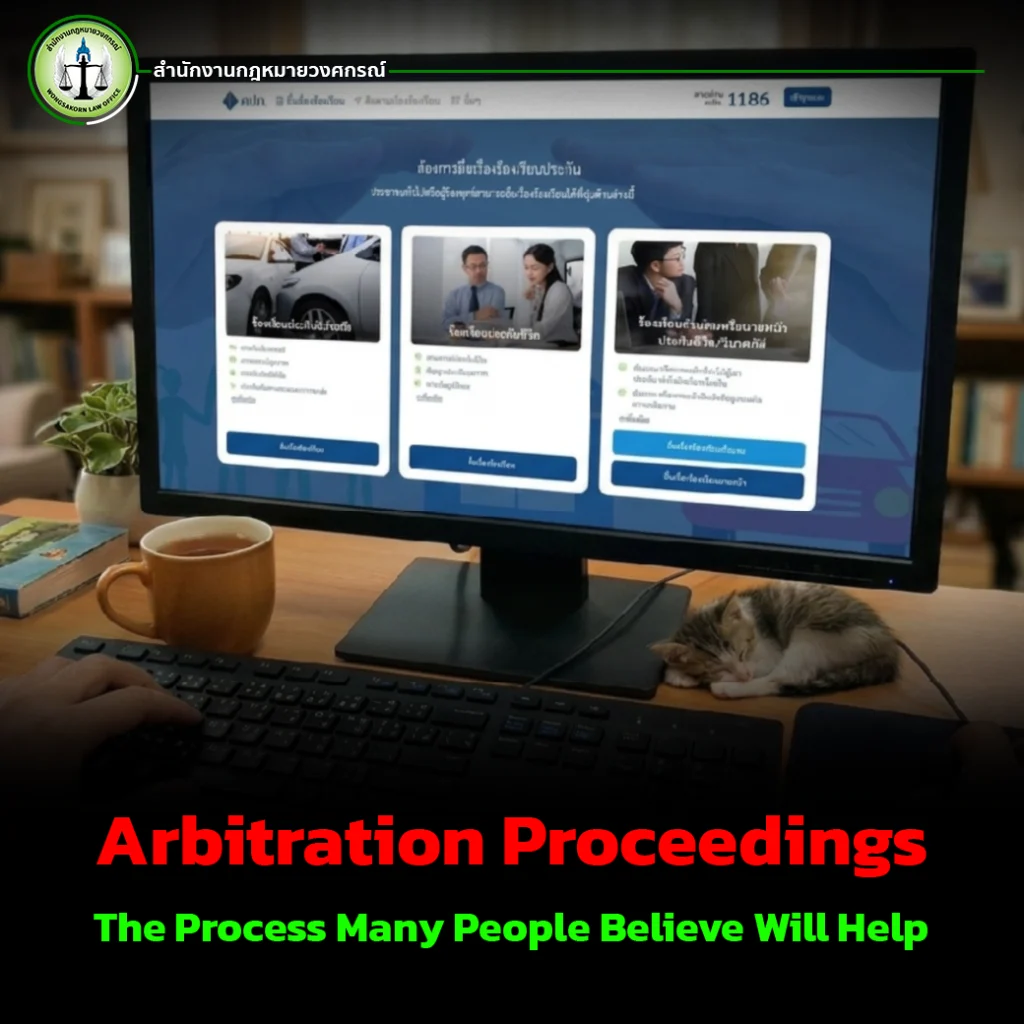
Arbitration Proceedings: The Process Many People Believe Will Help

Most insurance policies contain provisions stating that:

the injured party or claimant has the right to choose to proceed through arbitration.

The important question is:

if the law or the insurance contract gives policyholders or injured parties the right to choose this process, why do problems often arise once they actually enter the proceedings?

The Truth Many People Have Never Known

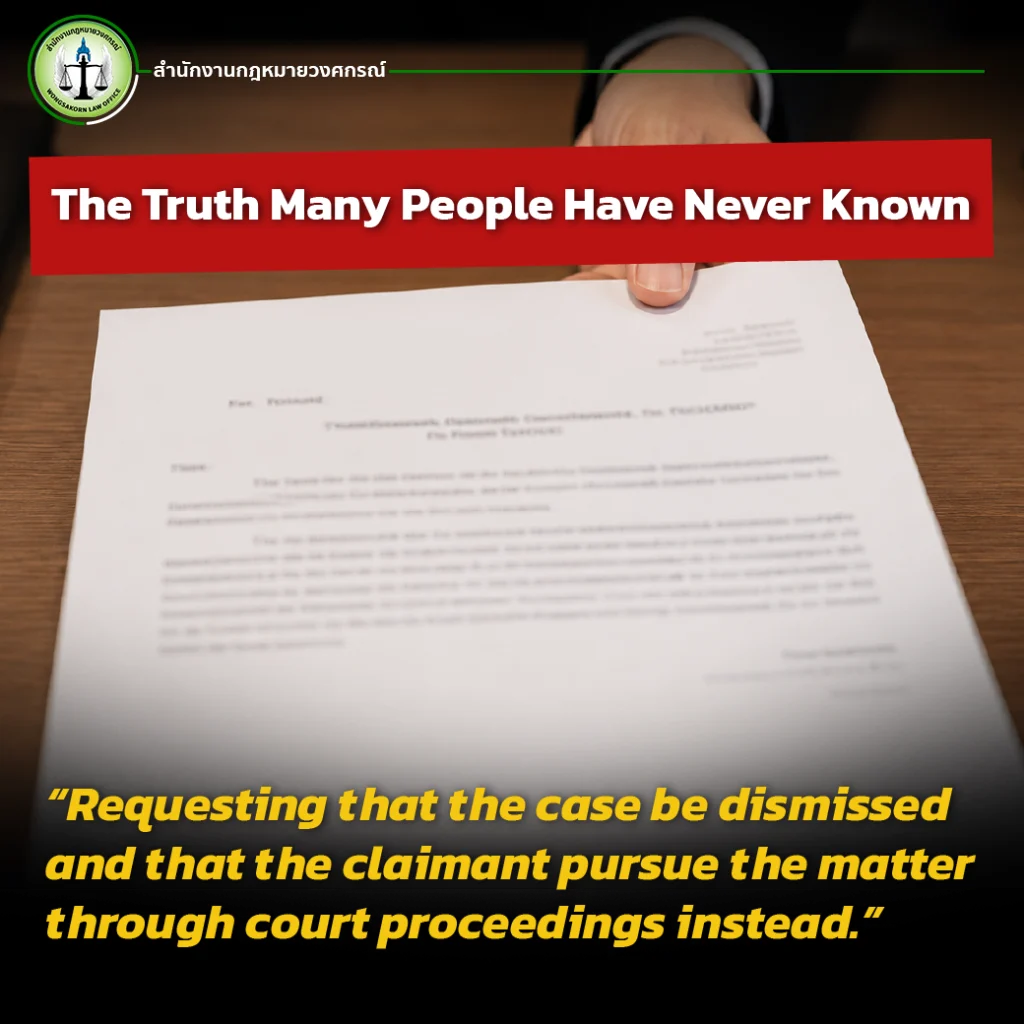
From the experience of Wongsakorn Law Firm in handling client consultations, it has been found that in many cases, injured parties chose to enter arbitration proceedings based on the recommendation of the OIC. However, once the process began, the insurance company submitted a petition to the arbitration panel stating that:

“Requesting that the case be dismissed and that the claimant pursue the matter through court proceedings instead.”

This raises an important question:

if, in the end, the injured party must still return to court anyway,

then why should they first have to:

  • lose time,
  • incur expenses, and
  • pay arbitration-related costs?

In some cases, injured parties may have already spent tens of thousands of baht before discovering that the case had been dismissed from the arbitration process.

What Role Should the OIC Play in Situations Like This?

An important question many people have begun asking is: if this type of situation repeatedly happens to the public, what responsibility or protective role should the OIC have?

Most people believe that 

  • once they enter the process,
  • they will receive assistance,
  • or at least be given a clear path for exercising their legal rights.

However, when reality turns out differently, many injured parties end up feeling disadvantaged in terms of both time and expenses.

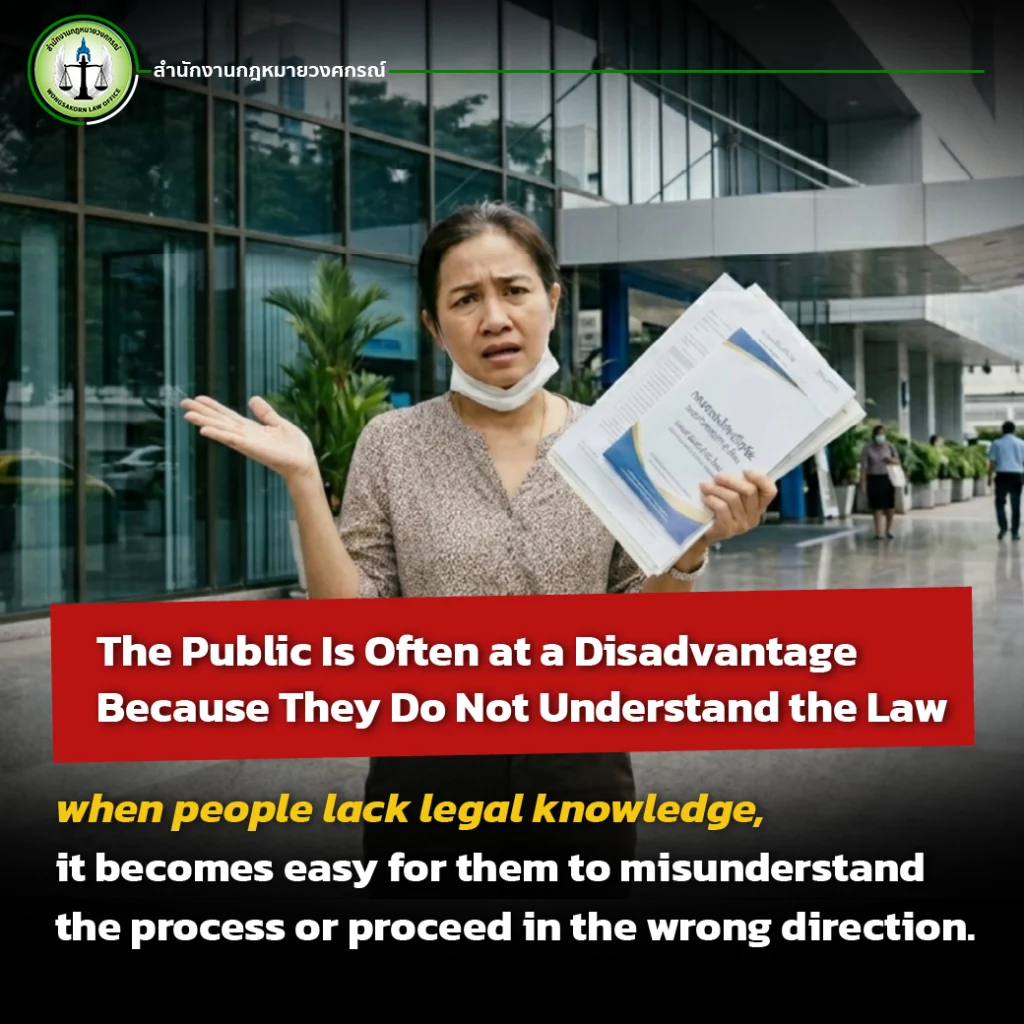
The Public Is Often at a Disadvantage Because They Do Not Understand the Law

The biggest issue is that most injured parties are not legal professionals.

As a result, they often do not understand:

  • which legal process is most appropriate,
  • which steps should be taken first, or
  • what rights insurance companies actually have within the process.

And when people lack legal knowledge, it becomes easy for them to misunderstand the process or proceed in the wrong direction.

This is exactly why many people end up at a disadvantage against insurance companies, even when they are genuinely the injured party.

Insurance Companies Have Legal Teams from the Very Beginning

One important thing injured parties must understand is that insurance companies already have:

  • legal teams,
  • lawyers, and
  • case specialists

handling matters from the moment an incident occurs. As a result, if an injured party handles the matter alone without legal counsel to guide the strategy, the chances of being placed at a disadvantage are extremely high.

This is especially true in cases involving:

  • denial of insurance claims,
  • interpretation of policy terms,
  • arbitration proceedings, and
  • court litigation.

Do Not Wait Until Problems Arise Before Looking for a Lawyer

This is something Lawyer Arm Supasit has consistently emphasized. Many injured parties wait until problems occur, wait until the insurance company denies the claim, or wait until they are already at a disadvantage before consulting a lawyer. In reality, establishing the right legal approach from the very beginning is far more important.

Because sometimes, simply:

  • drafting the complaint properly,
  • organizing the facts and supporting information, or
  • choosing the appropriate legal process

can significantly affect the entire direction of the case.

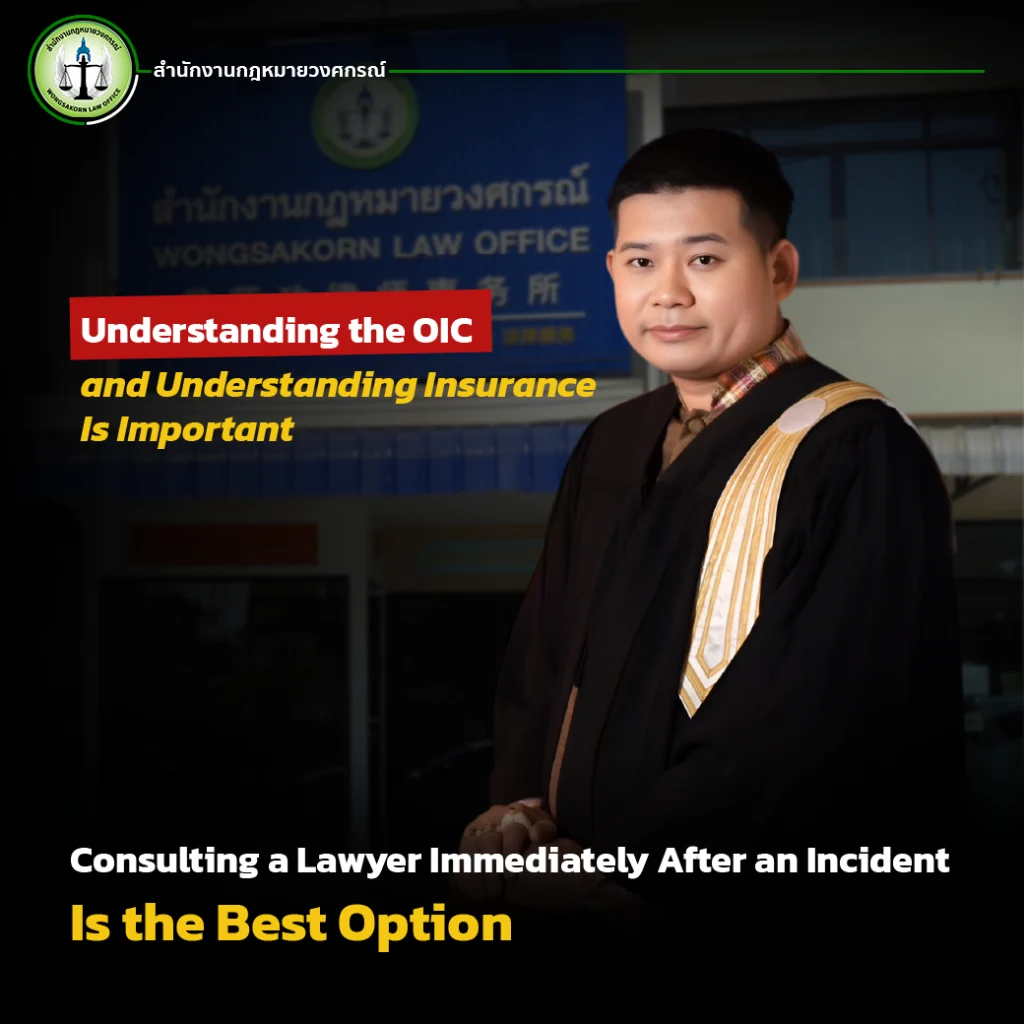
Understanding the OIC and Understanding Insurance Is Important

This article from Wongsakorn Law Firm is not intended to attack any organization. Its purpose is to help the public “stay informed” because in the world of insurance:

  • not every recommendation is suitable for everyone, and
  • not every process will always benefit the injured party.

Therefore, before deciding to enter any legal or insurance-related process, people should always study the information carefully and consult an insurance law specialist first.

Consulting a Lawyer Immediately After an Incident Is the Best Option

Wongsakorn Law Firm, led by Lawyer Arm Supasit, believes that the most important thing after an accident or insurance dispute occurs is:

“to consult a lawyer immediately”

in order to:

  • structure the case properly,
  • analyze the relevant legal issues,
  • assess the appropriate approach for claiming compensation, and
  • prevent being placed at a disadvantage throughout the legal process.

Because if the case is handled incorrectly from the very beginning, the injured party may ultimately lose significant time and incur unnecessary expenses.

Do Not Be Misled by Insurance Companies or the Process Itself

Today, having insurance is not just about purchasing coverage.

Policyholders must also:

  • understand their rights,
  • understand the legal process, and
  • stay informed about legal strategies.

This is especially important when dealing with the OIC, arbitration proceedings, or insurance compensation claims.

If you do not want to be placed at a disadvantage by insurance companies or by the legal process itself, consulting a lawyer from the very beginning is the safest option.

You may consult Lawyer Arm Supasit of Wongsakorn Law Firm today to properly structure your case from the start.

Can the OIC Really Help Consumers? A Real Case Perspective and What You Need to Know

In today’s world, insurance has become essential not only for drivers on the road but also for business operators such as auto repair companies (like our client). One key organization many people are familiar with is the Office of Insurance Commission (OIC), the regulatory body responsible for overseeing insurance companies and assisting the public in dispute situations.

But the crucial question is Can the OIC truly help consumers?

This article by Wongsakorn Law Firm takes a closer look at a real case, offering legal insights to help you better understand the OIC’s role and who you should rely on to avoid losing your rights.

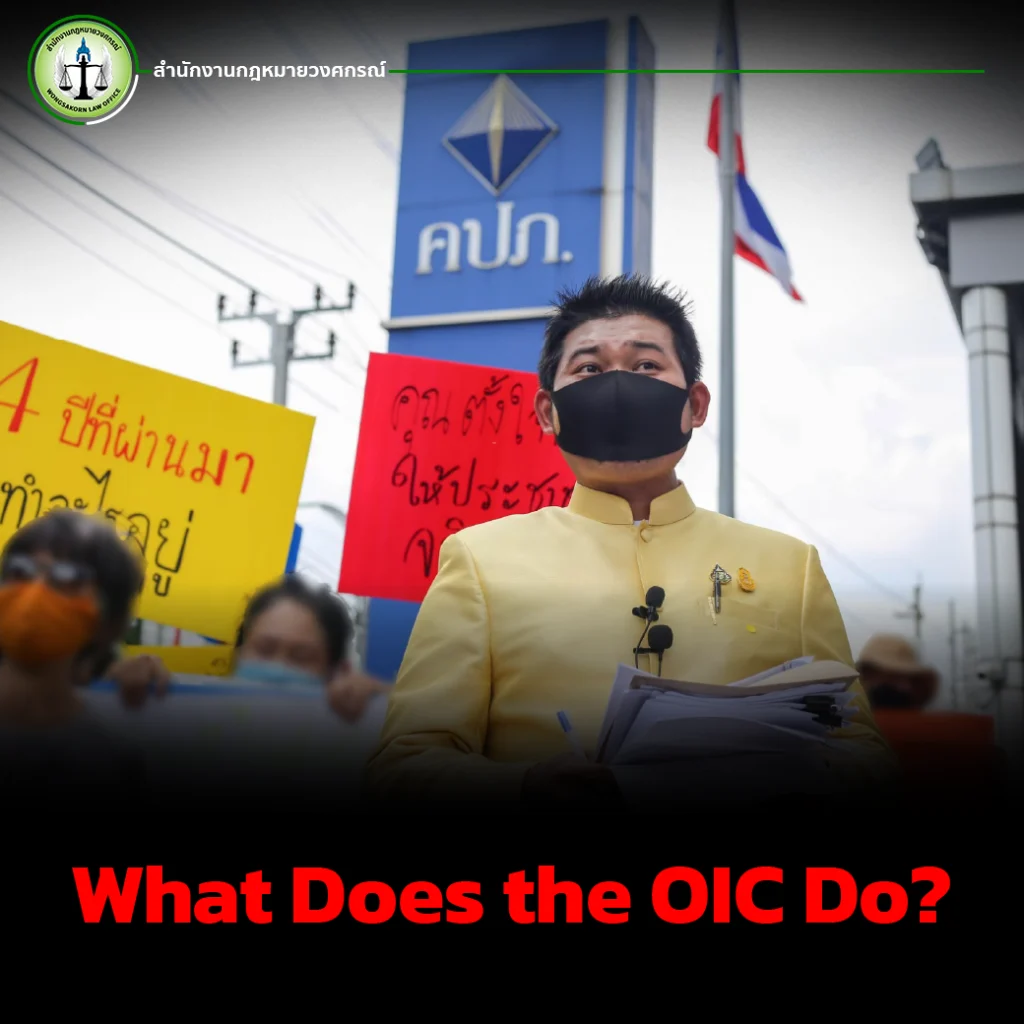
What Does the OIC Do?

The OIC’s main responsibilities include

-Regulating the insurance industry

-Protecting policyholders’ rights

-Acting as a mediator in disputes

-Providing arbitration as an alternative to court proceedings

On paper, it sounds like a reliable support system for consumers. However, in practice, things do not always work out that way.

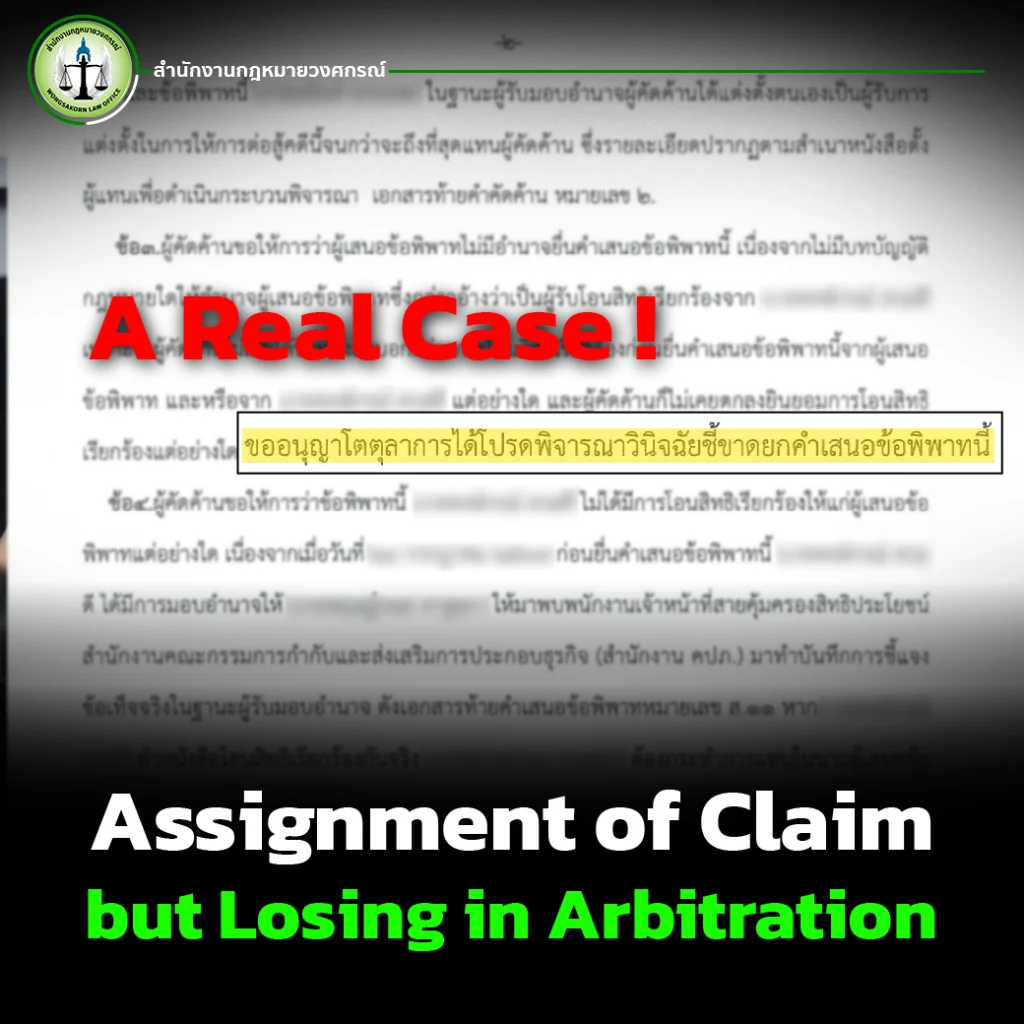
A Real Case Assignment of Claim but Losing in Arbitration

In one notable case, an auto repair company received an assignment of claim from a customer, allowing it to directly claim repair costs from the insurance company.

However, during the OIC process and arbitration, the insurance company argued:

“We were never notified of the assignment of claim.”

This was despite the fact that all relevant documents had already been submitted during the OIC process.

The Turning Point An Internal Issue at the OIC

The critical issue in this case was that an OIC officer failed to properly record a key document.

As a result, the arbitrator ruled that there had been no valid notification, causing the repair company (our client) to lose the case in arbitration.

This raises an important question: Who does the OIC really serve?

Justice from the Court

Although the case was lost at the arbitration stage, the matter was later brought before the court and the outcome was completely different.

The court ruled in favor of our client, citing Section 306 of the Civil and Commercial Code, which states that once a debtor has been informed of an assignment of claim, the assignment is legally valid.

The court found that notification had indeed occurred. As a result:

-The assignment of claim was legally effective

-The arbitration award was set aside

-Justice was ultimately delivered by the court, not the OIC

Is the OIC Still Reliable?

This case highlights several important realities:

-The OIC is not a court of law

-Arbitrators can make errors in evaluating evidence

-Internal processes may have flaws

-Arbitration awards can be challenged and overturned

From our experience handling insurance disputes, such cases where arbitration decisions are overturned are not uncommon.

What Should Consumers Do When Facing Insurance Disputes?

If you are involved in an accident and need to claim compensation from an insurance company, here are key precautions

1. Do Not Rely on Verbal Assurances

Always ensure everything is supported by clear documentation.

2. Monitor the OIC Process Carefully

Even after filing a complaint, follow up to ensure all documents are properly recorded and no key facts are overlooked.

3. Do Not Depend Solely on Arbitration

While faster, arbitration is not always accurate or fair.

4. Consult a Lawyer Early

This is the most important step. An experienced lawyer can:

-Structure your case correctly from the beginning

-Prevent procedural mistakes

-Develop an effective legal strategy

Having a legal expert in insurance disputes not only prevents you from being disadvantaged by insurance companies but also helps you avoid costly mistakes.

In complex disputes, relying solely on the OIC may cause you to lose your rights without realizing it.

Don’t Place All Your Trust in the OIC

So, can the OIC really help consumers?

The answer is: Yes but not always.

Ultimately, the outcome depends on

-The strength of your evidence

-Legal strategy

-And proper case handling by an experienced lawyer

If You Are Facing an Insurance Dispute

Whether your case involves personal injury or property damage, do not let the situation escalate by filing a complaint with the OIC without proper legal preparation.

Consult with us today. Our legal team specializes in insurance disputes and can:

-Analyze your case

-Develop a strategic legal approach

-Represent you effectively both before the OIC and in court

Because we believe that justice should never depend on systemic errors.

Get legal advice today so you don’t become a victim of the system or insurance companies.

Line @ คลิก! โทรหาเรา คลิก!