Foreigners Investing in Thailand: Do You Have a Legal Advisor Before Starting Your Business?

A legal advisor is one of the most essential elements for foreign investors. Thailand has long been recognized as a key destination for international investment due to its strong economic potential, strategic location in Southeast Asia, and diverse business opportunities ranging from real estate and tourism to restaurants and service industries.

However, one critical question that many investors overlook is
“Do you already have a legal advisor?”Although Thailand welcomes foreign investment, there are strict legal requirements and limitations that must be followed. Having a legal advisor who understands Thai laws and regulations is therefore absolutely essential.

Thailand Welcomes Foreign Investment But You Must Enter the Right Way

The Thai government actively promotes foreign investment through various initiatives, such as incentives from the Board of Investment (BOI) and allowing foreign shareholding in certain sectors.

However, not all businesses are fully open to foreign ownership. Under Thai law particularly the Foreign Business Act there are restricted business categories, including

-Businesses related to national security

-Industries where Thai nationals are not yet ready to compete

-Certain service sectors

Without proper legal guidance from a legal advisor, foreign investors may unknowingly operate in violation of the law.

Common Problems: Wrong Investment Structure, High Legal and Financial Risks

Many foreign investors enter Thailand with misunderstandings, such as

-Using “nominee shareholders” (the most common issue)

-Establishing a company without understanding shareholding restrictions

-Entering into business contracts without legal review

-Failing to obtain required licenses before starting operations

The consequences can be severe, including license revocation, legal penalties, and significant financial losses.

All of these risks can be avoided with proper guidance from a legal advisor from the very beginning.

Why Is a Legal Advisor Important for Foreign Investors?

A legal advisor is not only there to resolve disputes but also to plan ahead and ensure that your business operates legally and sustainably.

1. Structuring Your Business Correctly

-Choosing the right business structure (Limited Company / BOI / Joint Venture)

-Ensuring compliant shareholding structures

-Avoiding nominee-related risks

2. Licensing and Compliance

-Foreign Business License (FBL)

-Industry-specific licenses (restaurants, hotels, import-export businesses)

3. Contract Drafting and Review

-Joint venture agreements

-Lease agreements

-Employment contracts

-Sales and purchase agreements

Well-drafted contracts can significantly prevent future disputes.

4. Tax and Legal Planning

-Proper tax structuring

-Compliance with labor laws

-Accurate accounting practices

How Risky Is It to Invest Without a Legal Advisor?

Imagine a foreign investor planning to open a restaurant in Thailand with millions in capital but without knowing:

-Which licenses are required

-Whether using a nominee shareholder is legal

-Whether the lease agreement contains unfavorable terms

The result could be

-Investigation for illegal nominee arrangements

-Disadvantageous contracts

-Inability to continue the business

The losses are not only financial but also include lost business opportunities.

How to Start Investing in Thailand the Right Way

If you are a foreign investor interested in doing business in Thailand, here are the key steps:

1. Consult a Legal Advisor Early

Do not wait until problems arise by then, it may be too late.

2. Study Your Business Category

Check whether your business falls under restricted categories.

3. Set Up the Right Business Structure

Ensure your investment complies with Thai law.

4. Prepare Documents and Obtain Licenses

Complete all legal requirements before starting operations.

5. Review All Contracts

Every contract big or small should be reviewed or drafted by a legal advisor.

Why is a Legal Advisor the Key to Business Success?

In business, starting correctly is more important than fixing problems later.

A legal advisor helps you Minimize legal risks, save long-term costs, Operate with confidence, Build credibility with partners and government authorities

Especially in a country like Thailand, where specific laws apply to foreign investors, having a legal expert is not optional, it is essential.

Don’t Invest in Thailand Without a Legal Advisor

Although Thailand offers many opportunities for foreign investors, ensuring that your business is legally compliant is the most important factor.

Do not let a lack of knowledge lead to costly mistakes.
Because a good legal advisor does not just solve problems, they prevent them before they arise, and form the foundation of your long-term business success in Thailand.

 Contact us today to consult with a legal advisor and start your business in Thailand with confidence.

Foreigners and Land Purchases in Thailand: Why Consulting a Lawyer Before Investing in Real Estate Is Essential

In recent years, Thailand has become one of the most popular destinations for foreign retirees who wish to reside long-term. This is due to its favorable climate, reasonable cost of living, and overall quality of life. Many foreigners therefore decide to invest their life savings in purchasing a house or land to serve as their residence in later years.

However, a major issue that many foreigners do not fully understand is that Thai law does not permit foreigners to directly own land or houses. Purchasing real estate without consulting a lawyer thus poses significant legal and financial risks. This article explains the commonly used arrangements, their advantages and disadvantages, and why consulting a lawyer before purchasing land or holding real estate in Thailand is critically important.

Why Foreigners Cannot Own Land in Thailand?

Under Thai law, foreigners are not permitted to hold ownership of land or houses directly, except in very limited and special circumstances, such as large-scale investments approved by the government, which are rare in practice.

Due to these restrictions, foreigners who wish to own a home in Thailand often use indirect methods, such as:

  • Having a Thai spouse or partner hold legal ownership of the land
  • Investing their own money to purchase or build a house, while the title deed is registered in the Thai spouse’s name

At first glance, this approach may seem simple and safe. However, from a legal perspective, it carries significant risks if there is no proper legal structure in place.

Usufruct as a Common Legal Solution for Foreigners

To protect their rights, many foreigners choose to register a lifetime usufruct (right of use) on the land title deed at the Land Department on the same day the ownership is registered.

A usufruct means that:

  • The foreigner has the right to live in, use, and benefit from the house and land for the rest of their life
  • Even though the land is legally owned by the Thai spouse, the foreigner cannot be evicted from the property
  • If the land is to be sold, consent from the usufruct holder is required first

As a result:

  • The Thai spouse obtains ownership of the land
  • The foreigner obtains the right to live on and use the property for life
  • The investment is not given away without legal protection

From one perspective, this method provides security for foreigners. However, it also creates legal and commercial consequences that must be carefully considered.

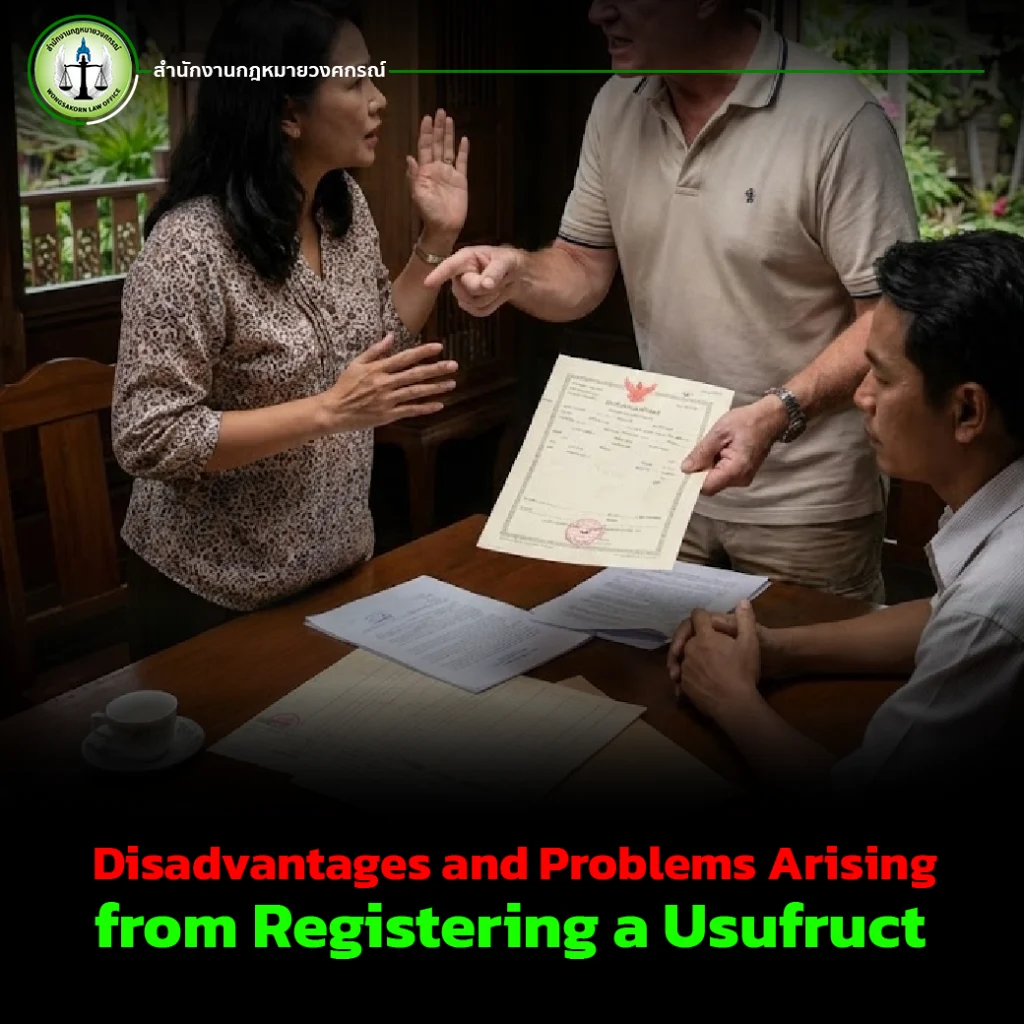
Disadvantages and Problems Arising from Registering a Usufruct

Although a usufruct protects the foreigner’s rights, it often creates practical problems, especially when family relationships change.

Common issues include:

  • If disputes or separation occur, the land becomes burdened with legal encumbrances
  • When the Thai spouse wishes to sell the land, prospective buyers will inspect the title deed and find a “lifetime usufruct” registered on it
  • Most buyers will be reluctant to purchase because they cannot immediately use or possess the property
  • The selling price may drop significantly, or the land may not be sellable at all

This is one of the key reasons why many foreigners choose to buy condominiums instead of houses or land. Thai law allows foreigners to directly own condominium units, subject to the legal quota specified by law.

Risks of Buying Land Without Consulting a Lawyer

Many foreigners decide to purchase a house or land based on trust in their spouse or close acquaintances, without seeking advice from legal professionals. The consequences may include:

  • A large financial investment without proper legal protection
  • Disputes arising when personal relationships change
  • Inability to sell or transfer the property
  • Risk of being considered as indirectly or unlawfully owning land through a nominee arrangement
  • Exposure to both civil and criminal legal liability

Real estate is a high-value asset. Even a small legal mistake can result in the loss of a lifetime’s savings.

Why You Should Consult a Lawyer Before Buying Land or Real Estate?

Consulting a lawyer before investing in land or a house can provide the following benefits:

  • Analysis of ownership structures to ensure compliance with Thai law
  • Drafting legal agreements that protect the foreigner’s rights
  • Due diligence on title deeds and existing encumbrances
  • Prevention of future disputes in case of separation or sale
  • Advice on suitable alternatives, such as purchasing a condominium instead of land

A lawyer is not only someone who resolves problems after disputes arise, but also a professional who helps prevent risks from the very beginning.

Land Is Not Just Property, but Stability for Retired Foreigners

For retired foreigners, a house or land represents their final place of security and comfort in life. A single wrong decision can result in the loss of money, peace of mind, and long-term stability.

Understanding the law and planning correctly from the start is the key to ensuring that life in Thailand remains safe, secure, and sustainable.

Consult a Lawyer Before Buying Land in Thailand

If you or someone close to you is a foreigner planning to purchase a house or land in Thailand, do not make decisions based solely on trust or informal advice from others.

Wongsakorn Law Office is ready to provide legal consultation on real estate ownership for foreigners, including structuring legal rights, reviewing documents, and carefully preventing future legal problems in full compliance with Thai law.

Because buying land is not a small matter.
It is an investment in your entire life.

Let a lawyer take care of the process from the beginning,
so you can enjoy long-term security and peace of mind.

Foreigners Blacklisted or Imprisoned in Thailand – How to Solve This Problem?

In recent years, Thailand has become a popular destination for foreigners worldwide — whether for tourism, residency, business, or retirement. However, some foreigners face serious legal problems, including being blacklisted or imprisoned in Thailand, which can significantly affect their lives. In some cases, they are banned from entering Thailand for life.

This article explains why foreigners may be imprisoned in Thailand, what a blacklist means, and what to do if you or someone you know is in this situation.

Why Do Foreigners Get Imprisoned in Thailand?

1.Violation of Thai Laws
Many foreigners unintentionally violate Thai laws, such as overstaying visas, possessing illegal drugs, working without a permit, or committing fraud. Although some claim they “didn’t know the law,” this is rarely accepted as a valid legal excuse. Courts may still issue prison sentences according to Thai law.

2.Criminal Offenses
Foreigners who commit crimes like fraud, assault, or sexual offenses in Thailand are prosecuted under Thai law, just like Thai citizens. Being a foreigner does not exempt one from punishment, which can include imprisonment or deportation.

3. Business or Tax Offenses
Some foreigners establish businesses using nominees or evade taxes due to a lack of understanding of local laws. These actions can lead to criminal charges and imprisonment.

What Is a Blacklist?

A “blacklist” is a list of individuals banned from entering Thailand or conducting legal transactions. Reasons include:

  • Overstaying visa for more than 90 days
  • Having served a prison sentence in Thailand
  • Outstanding arrest warrants
  • Behaving in ways deemed a threat to public order or morality

Blacklisting may last for years or even a lifetime in severe cases.

Does Imprisonment Mean No More Chances?

Although imprisonment is serious, it doesn’t always mean the end of all hope. If the accused shows remorse, compensates the victim, and receives proper legal help, there may be options such as:

  • Requesting bail during trial
  • Appealing the verdict or negotiating settlements
  • Requesting extradition (if applicable under treaty agreements)

How to Handle Imprisonment or Blacklisting

If you or your family member faces such a situation, take prompt action:

1.Consult an Experienced Thai Lawyer
A lawyer can assess the situation, recommend legal solutions, and help minimize long-term impacts such as permanent blacklisting.

2.Contact Your Embassy
Embassies often assist their citizens abroad, offering visits, advice, or contacting family members.

3.Gather Supporting Documents
Collect documents like character references, tax records, or community involvement photos. These can support bail or reduced sentences.

4.For Blacklisting: Request Removal
After serving time and being deported, you may be eligible to request removal from the blacklist. This requires a waiting period and documentation showing rehabilitation.

Prevention Is Better Than Cure

Foreigners should take proactive steps:

  • Learn basic Thai laws before arrival
  • Never work or conduct business without legal permits
  • Avoid illegal agents offering company registration or visas
  • Always follow legal visa requirements and renewals

Imprisonment in Thailand Is Serious – Consult a Legal Expert

Getting imprisoned in Thailand can lead to blacklisting and deportation. But with timely legal advice, there’s still a way forward.

👉 If you or someone close is facing legal issues in Thailand, consult a lawyer with experience in handling foreigner cases to fully protect your rights. Click >>Contact Us<<

Line @ คลิก! โทรหาเรา คลิก!