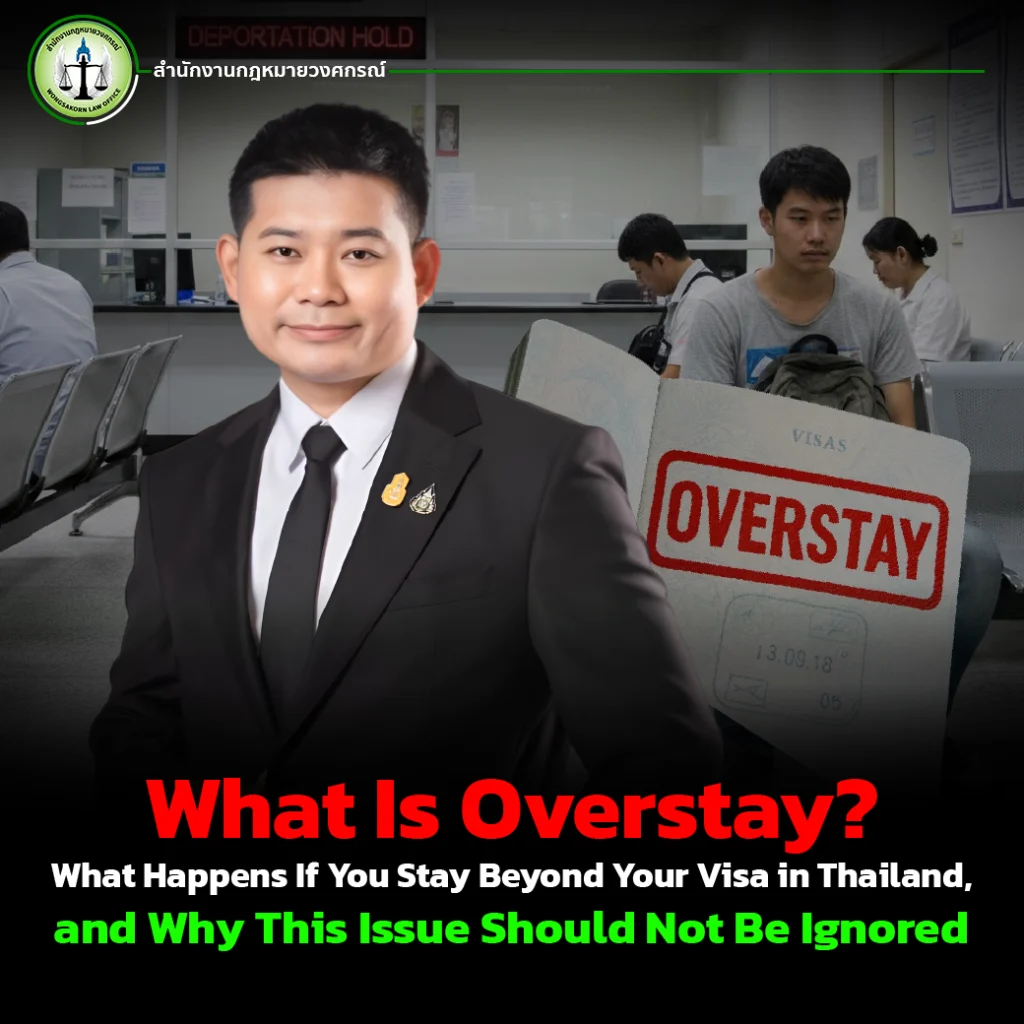
What Is Overstay? What Happens If You Stay Beyond Your Visa in Thailand, and Why This Issue Should Not Be Ignored

Overstay Thailand is one of the most popular destinations for foreigners, whether for tourism, work, study, or long-term residence. However, one of the most common and legally serious problems is staying beyond the permitted visa period, known as Overstay.

Many people believe that Overstay is only a minor issue or that it can be easily resolved when leaving the country. In reality, Overstay is a violation of Thai immigration law and may result in severe penalties, including fines, detention, blacklisting, and being banned from re-entering Thailand in the future.

Understanding what Overstay is and its legal consequences is extremely important for foreigners residing in Thailand.

What Is Overstay?

Overstay means that a foreign national remains in Thailand beyond the period permitted under their visa or extension of stay granted by immigration authorities.

For example:

  • Permission to stay was granted until June 30, but the person remained until July 5.
  • The visa expired and no extension was filed, yet the person stayed in Thailand.
  • The person misunderstood the visa validity and believed it was still valid even though the permitted stay had already ended.

Even overstaying by just one day is considered an overstay under Thai law.

What Happens Under Thai Law If You Overstay?

When a foreign national overstays their visa, several legal consequences may arise:

1. Fine

Thai law requires an overstay fine calculated on a daily basis, up to the maximum amount prescribed by law. This fine must be paid before leaving the country.

2. Detention

If discovered while still in Thailand, the individual may be detained at an Immigration Detention Center while legal procedures are carried out.

3. Deportation

In many cases, authorities may order the individual to leave the country, with an official record of the immigration violation.

4. Blacklisting (Entry Ban)

Long periods of Overstay may result in being placed on a blacklist and banned from re-entering Thailand for a specific period, such as 1 year, 3 years, 5 years, or longer, depending on the length of the Overstay.

Some individuals avoid leaving their accommodation for fear of arrest, while others avoid contacting government authorities. This allows the problem to grow more serious over time.
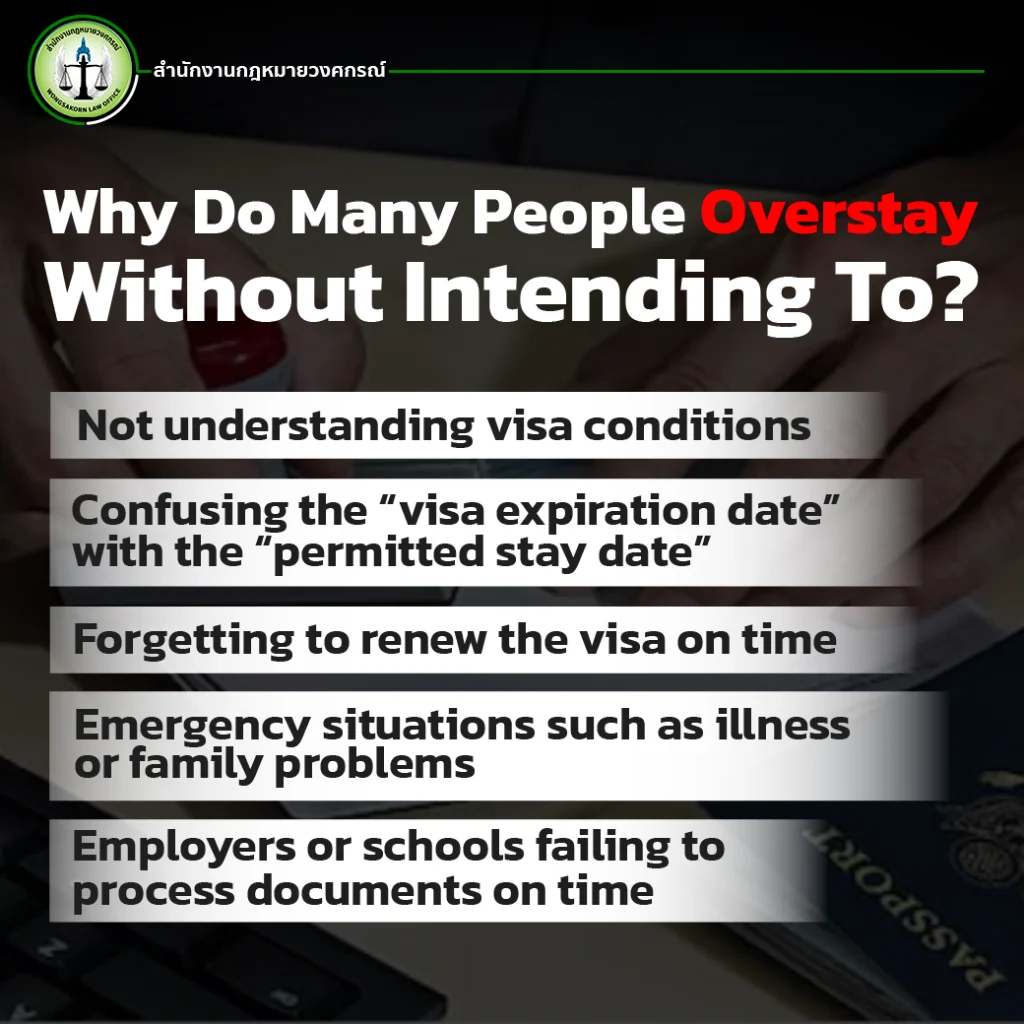
Even if the Overstay was unintentional, it is still considered a legal violation under Thai law.

What Should You Do If You Realize You Have Overstayed?

The most important rule is: do not ignore or avoid the problem, as this will only make the situation worse. Proper steps should be taken, such as:

1.Clearly verify the number of days overstayed

2.Gather all relevant documents

3.Seek advice from an immigration law specialist

4.Develop the safest legal strategy

5.Contact immigration authorities through proper legal procedures

Handling the issue correctly from the beginning can significantly reduce long-term damage and consequences.

Why Should You Consult a Lawyer About Overstay?

Many people believe they can resolve Overstay issues on their own. In reality, each case has different legal factors, such as:

  • Length of Overstay
  • Reasons for Overstay
  • Employment or residency status
  • Immigration history

A lawyer can assist in many ways, including:

  • Analyzing the legal status of the individual
  • Designing an appropriate legal solution
  • Reducing the risk of severe penalties
  • Coordinating with relevant authorities
  • Protecting the foreign national’s legal rights

Importantly, consultations with a lawyer are confidential, allowing individuals to seek help without fear or embarrassment.

Overstay Can Be Solved With Proper Legal Advice
Although Overstay is a serious legal issue, it is not impossible to resolve. With early and correct legal guidance, the impact can be minimized and future plans can still be protected.

Laws exist to maintain order in society, not to destroy lives. Seeking professional assistance is a critical step toward protecting both your rights and your future.

If you or someone close to you is facing an Overstay issue or is worried about exceeding a visa period in Thailand, do not let fear make the situation more complicated.

Wongsakorn Law Office is ready to provide confidential, careful, and lawful guidance to help resolve Overstay problems and find the safest and most appropriate solution for your case.

  • Overstay can be resolved when handled correctly.
  • Consult a lawyer today to protect your rights and your future.
    Click >> Contact Us <<

Important Things to Know! Foreigners Buying Real Estate in Thailand Face Risks – Always Consult a Thai Lawyer First

In recent years, Thai real estate has become one of the most attractive markets for foreigners in Southeast Asia. From luxury condominiums in central Bangkok to vacation homes in Phuket, Chiang Mai, and Pattaya, Thailand continues to attract global investors and retirees.

However, while buying property in Thailand may seem appealing, the truth is that foreigners cannot legally own every type of real estate. Without a proper understanding of Thai law, buyers risk losing money, having property seized, or being unable to transfer ownership.

Therefore, before purchasing a home or condominium in Thailand, it is crucial to consult a qualified Thai real estate lawyer to review all documents, design a proper ownership structure, and prevent potential legal issues in the future.

Thai Law Restricts Foreign Ownership of Real Estate

Under Thai law, foreigners are not allowed to directly own land, which is one of the most important restrictions on real estate investment in Thailand. Foreigners may only hold property under the following conditions:

1.Condominium Ownership (up to 49%)

oForeigners can own up to 49% of the total sellable area in a condominium project.

oFor example, in a 100-unit project, foreigners may own no more than 49 units.

2.Long-Term Leasehold (up to 30 years)

oForeigners may lease land for a maximum of 30 years.

oThe contract can be renewed by agreement, but without proper drafting, renewal may be denied.

3.Ownership through a Thai Company

oSome foreigners establish Thai companies to hold land under a corporate name.

oHowever, if foreign shareholders hold more than 49% or if the company is found to be a nominee to evade the law, it is illegal and subject to criminal penalties.

Understanding these restrictions is vital to avoid legal trouble. That is why having a Thai lawyer experienced in real estate is essential.

Common Risks for Foreigners Buying Property in Thailand

Many foreign investors face legal problems when purchasing real estate in Thailand due to misunderstandings or the lack of legal advice. Common issues include:

  • Using a Thai Nominee to Hold Land
    This may seem convenient but is illegal. If discovered, the property may be confiscated, and both the Thai nominee and the foreigner could face prosecution.
  • Unclear or Fraudulent Sale Contracts
    Some sellers or developers are unlicensed, causing buyers to lose deposits without ever receiving the title deed.
  • Lease Agreements Offering No Long-Term Protection
    After 30 years, the landowner may refuse to renew the lease, leaving the tenant without any legal recourse.
  • Failure to Check for Encumbrances
    For example, the land may be mortgaged or subject to a court dispute, preventing legal transfer.

All these examples highlight one thing: without a professional real estate lawyer, the financial loss may be irreversible.

What Can a Lawyer Do for You?

A professional legal advisor acts as a shield of protection for foreigners investing in Thai real estate. A qualified lawyer can help:

1.      Verify the Legal Status of the Land or Project
– Ensure the title deed is valid and free from mortgage or restrictions.

2.      Draft and Review Contracts Carefully
– Protect the buyer’s interests and close legal loopholes.

3.      Design a Legal Ownership Structure
– Advise on investment via a company, joint venture, or leasehold arrangements.

4.      Negotiate with Sellers and Government Agencies
– Ensure the transfer of ownership proceeds smoothly and legally.

5.      Provide Tax and Cost Consultation
– Including business tax, transfer fees, and capital gains tax.

A lawyer is not just a paperwork assistant but a protector of the client’s legal and financial interests.

Why Should You Consult a Lawyer Before Buying, Not After?

Many believe hiring a lawyer is unnecessary or too costly. In reality, having a legal advisor from the beginning can save you far more time and money than fixing legal issues later.

With a Thai lawyer’s guidance, foreigners can receive proper advice such as:

  • Which condominium projects are legally eligible for purchase
  • Which types of land cannot be owned
  • Whose name should appear on the ownership documents
  • What taxes and fees to expect

Such knowledge ensures your real estate investment in Thailand is safe and 100% legal.

Thai Real Estate is Worth Investing In – But You Must Know the Law

Thailand remains one of the most attractive destinations for foreign investors whether for tourism, retirement, or real estate. However, every transaction must comply with Thai law.

Without proper legal advice, one small mistake can turn your dream investment into a nightmare.

So, before you buy a home or condo in Thailand, make sure you have a trusted Thai real estate lawyer by your side.

In Thailand’s real estate world, legal knowledge is the strongest protection an investor can have. Consult a lawyer, click >>Contact us<<

Can Foreigners Who Invest and Contribute to Thailand Obtain Thai Citizenship?

Obtaining Thai citizenship is a dream for many foreigners who come to live, work, or invest in Thailand. The country offers stability, convenience, rich natural resources, and cultural heritage that attract people from all over the world. A common question is: if a foreigner invests and contributes positively to Thailand, are they entitled to apply for Thai citizenship?

This article clarifies the legal framework, conditions, and procedures for applying for Thai citizenship, giving accurate and complete information for those interested.

General Principles of Acquiring Thai Citizenship

Thai law provides three main pathways to acquire Thai citizenship:

1. By Birth – A child born in Thailand to a Thai parent, or a child born abroad to a Thai parent, is eligible for Thai citizenship by birth.

2. By Marriage – Foreigners married to Thai citizens who meet the legal requirements can apply for naturalization.

3. By Naturalization – Foreigners residing in Thailand continuously and meeting the statutory conditions can apply for naturalization as Thai citizens.

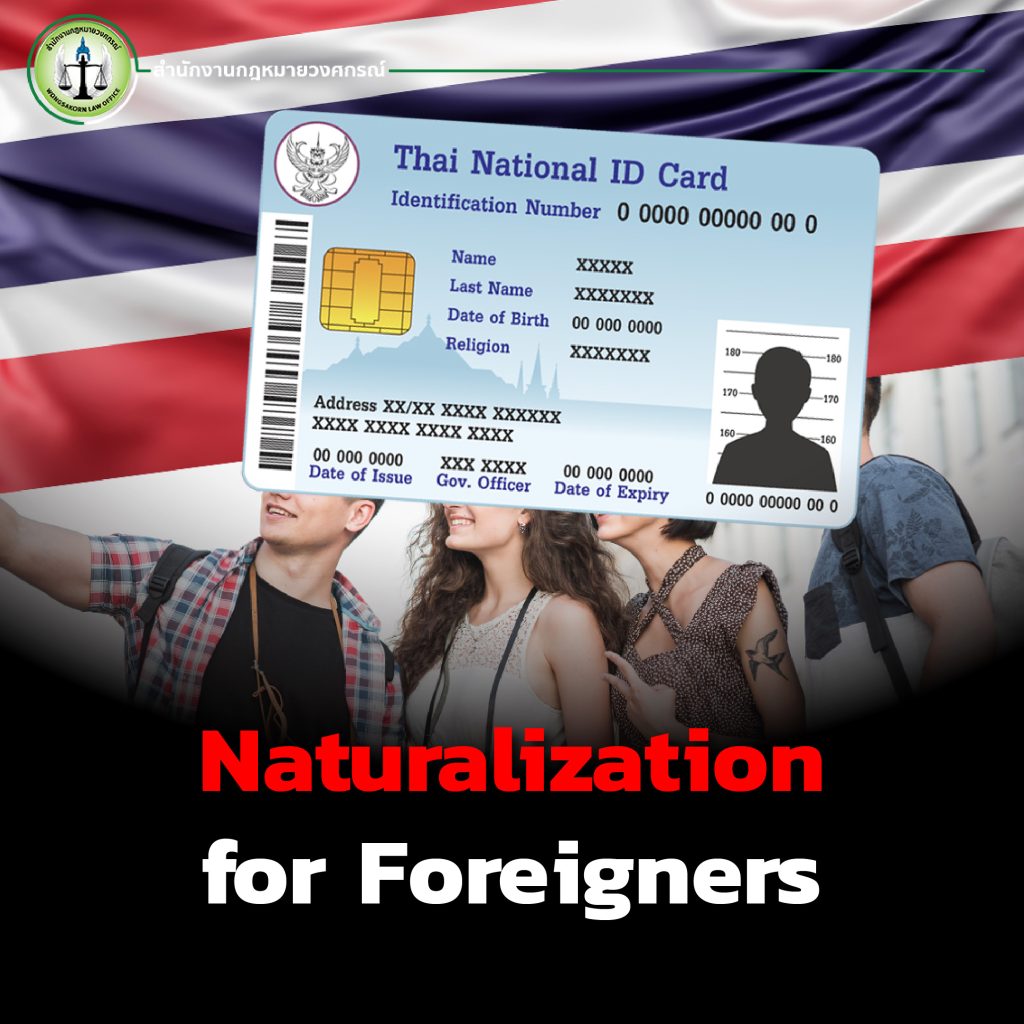
Naturalization for Foreigners

For foreigners who invest, run businesses, or conduct professional activities in Thailand, acquiring Thai citizenship typically falls under naturalization. Key requirements include:

  • Be at least 18 years old and legally competent under Thai law.
  • Reside continuously in Thailand for at least five years prior to application (with possible exceptions for those who have contributed significantly to the nation).
  • Have good conduct with no serious criminal record.
  • Have stable employment and income. Foreign investors must prove genuine business operations and lawful income.
  • Demonstrate knowledge of Thai language – speaking, reading, and comprehension.
  • Pay taxes lawfully for several consecutive years.

Investment and Contributions to Thailand

Many wonder if simply investing or doing good deeds in Thailand grants automatic Thai citizenship. The answer is no  but such actions serve as strong supporting factors.

Examples:

  • Foreign investors who establish companies, create jobs, generate income, and pay taxes are viewed as contributing to the nation.
  • Individuals who contribute to Thai society, such as donating to public causes, supporting community projects, or engaging in social welfare, may be considered for special approval.

However, investment or good deeds alone do not guarantee citizenship. They increase the weight and chances of approval during the application process.

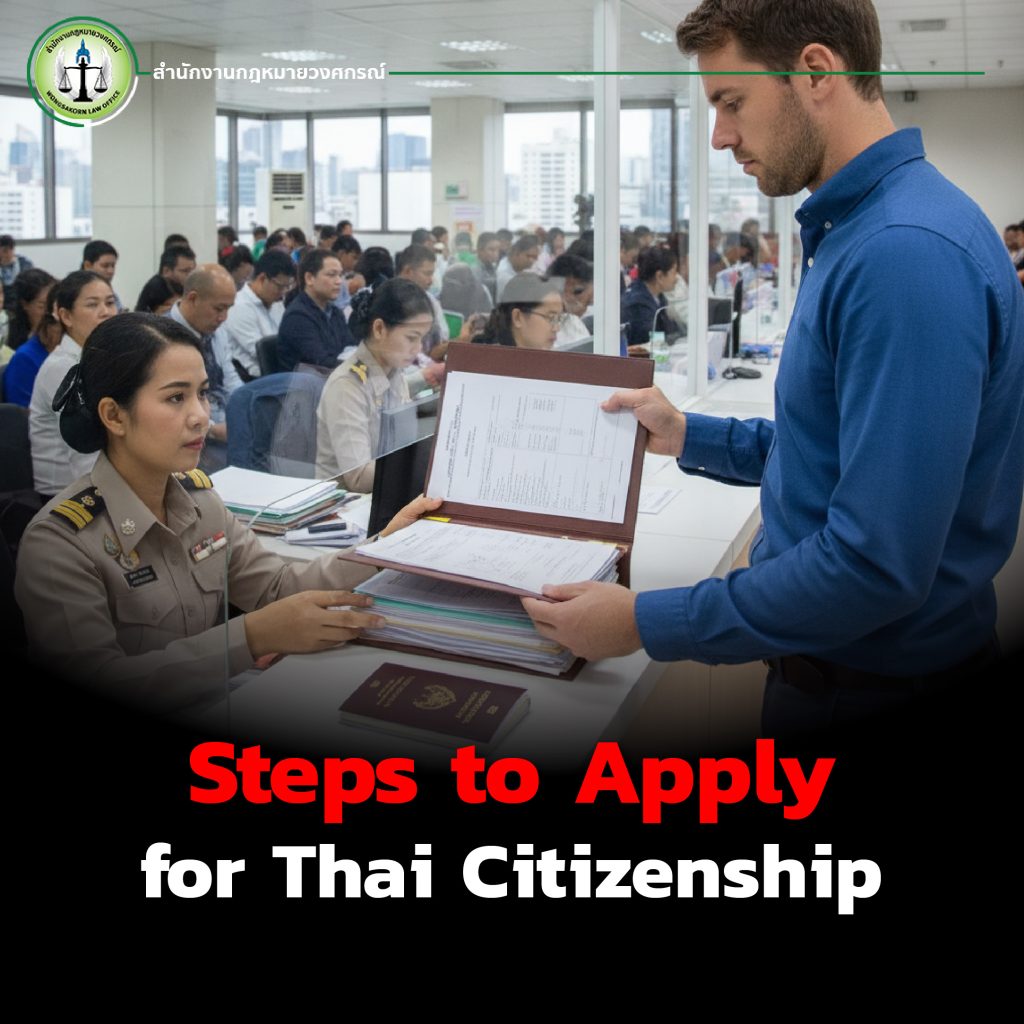
Steps to Apply for Thai Citizenship

1. Prepare Documents – Passport, work permit, residency evidence, tax records, marriage certificate (if any), and proof of income.

2. Submit Application – At the Department of Provincial Administration, Ministry of Interior.

3. Pay Fees – Currently, fees amount to tens of thousands of baht, depending on the case (general foreigner or spouse of a Thai citizen).

4. Attend Interview – Questions cover Thai language skills, personal history, and cultural understanding.

5.  Await Decision – The process can take months to years, involving multi-level checks before official publication in the Royal Gazette.

Key Points and Precautions

  • Even large investments in Thailand do not guarantee Thai citizenship. Approval rests entirely with government authorities.
  • Contributions such as donations or community service can support the application but cannot substitute for the legal requirements.
  • Consulting a lawyer or legal expert in nationality law increases accuracy and the chance of success.

Legal Consultation on Thai Citizenship for Foreigners – Wongsakorn Law Office

Foreigners who invest and contribute positively to Thailand can apply for Thai citizenship but not solely based on investment or good deeds. Applicants must still meet all statutory requirements and undergo thorough government review.

If you are a foreigner seeking Thai citizenship, you should prepare in advance: proper documentation, continuous residence, lawful tax compliance, and proof of value to Thai society. Having a legal advisor ensures a smoother process and higher chances of approval.

At Wongsakorn Law Office, our team of lawyers and experts in immigration and nationality law are ready to provide consultation and guide you through every step of the application from eligibility checks and document preparation to submission with relevant authorities.

If you or someone you know plans to apply for Thai citizenship, feel free to contact Wongsakorn Law Office for professional legal advice and accurate guidance. “Your rights, we are here to protect.”

Foreigners Blacklisted or Imprisoned in Thailand – How to Solve This Problem?

In recent years, Thailand has become a popular destination for foreigners worldwide — whether for tourism, residency, business, or retirement. However, some foreigners face serious legal problems, including being blacklisted or imprisoned in Thailand, which can significantly affect their lives. In some cases, they are banned from entering Thailand for life.

This article explains why foreigners may be imprisoned in Thailand, what a blacklist means, and what to do if you or someone you know is in this situation.

Why Do Foreigners Get Imprisoned in Thailand?

1.Violation of Thai Laws
Many foreigners unintentionally violate Thai laws, such as overstaying visas, possessing illegal drugs, working without a permit, or committing fraud. Although some claim they “didn’t know the law,” this is rarely accepted as a valid legal excuse. Courts may still issue prison sentences according to Thai law.

2.Criminal Offenses
Foreigners who commit crimes like fraud, assault, or sexual offenses in Thailand are prosecuted under Thai law, just like Thai citizens. Being a foreigner does not exempt one from punishment, which can include imprisonment or deportation.

3. Business or Tax Offenses
Some foreigners establish businesses using nominees or evade taxes due to a lack of understanding of local laws. These actions can lead to criminal charges and imprisonment.

What Is a Blacklist?

A “blacklist” is a list of individuals banned from entering Thailand or conducting legal transactions. Reasons include:

  • Overstaying visa for more than 90 days
  • Having served a prison sentence in Thailand
  • Outstanding arrest warrants
  • Behaving in ways deemed a threat to public order or morality

Blacklisting may last for years or even a lifetime in severe cases.

Does Imprisonment Mean No More Chances?

Although imprisonment is serious, it doesn’t always mean the end of all hope. If the accused shows remorse, compensates the victim, and receives proper legal help, there may be options such as:

  • Requesting bail during trial
  • Appealing the verdict or negotiating settlements
  • Requesting extradition (if applicable under treaty agreements)

How to Handle Imprisonment or Blacklisting

If you or your family member faces such a situation, take prompt action:

1.Consult an Experienced Thai Lawyer
A lawyer can assess the situation, recommend legal solutions, and help minimize long-term impacts such as permanent blacklisting.

2.Contact Your Embassy
Embassies often assist their citizens abroad, offering visits, advice, or contacting family members.

3.Gather Supporting Documents
Collect documents like character references, tax records, or community involvement photos. These can support bail or reduced sentences.

4.For Blacklisting: Request Removal
After serving time and being deported, you may be eligible to request removal from the blacklist. This requires a waiting period and documentation showing rehabilitation.

Prevention Is Better Than Cure

Foreigners should take proactive steps:

  • Learn basic Thai laws before arrival
  • Never work or conduct business without legal permits
  • Avoid illegal agents offering company registration or visas
  • Always follow legal visa requirements and renewals

Imprisonment in Thailand Is Serious – Consult a Legal Expert

Getting imprisoned in Thailand can lead to blacklisting and deportation. But with timely legal advice, there’s still a way forward.

👉 If you or someone close is facing legal issues in Thailand, consult a lawyer with experience in handling foreigner cases to fully protect your rights. Click >>Contact Us<<

Line @ คลิก! โทรหาเรา คลิก!