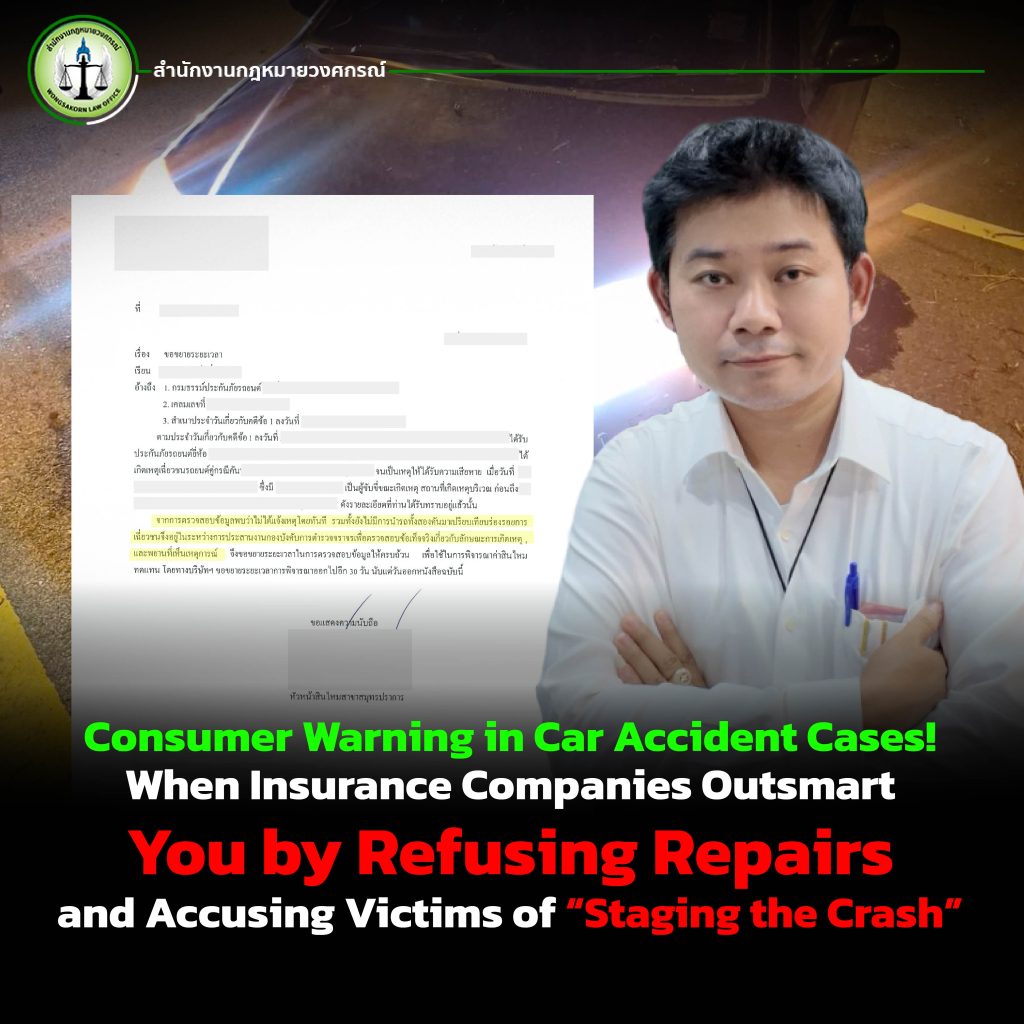
Consumer Warning in Car Accident Cases! When Insurance Companies Outsmart You by Refusing Repairs and Accusing Victims of “Staging the Crash”

As car accident cases continue to rise, many consumers still believe that once an accident occurs, the insurance company will handle everything, arranging repairs, assessing damage, and compensating the injured party fairly. Unfortunately, reality is far from this assumption. Many insurance companies adopt strategies to avoid responsibility: refusing to repair, claiming documents are incomplete, or even alleging that the victim contributed to the incident.

One such case involves an elderly woman, a case that has now become an important lesson for all consumers regarding their rights in car accident disputes.

Insurance Company Ignored the Case for 2 Full Months No Repairs, No Assessment, No Response

The incident began when the elderly woman’s car was hit and severely damaged. Instead of arranging repairs as required, the at-fault driver’s insurance company did nothing.
For two months, they:

  • did not contact her,
  • did not assess the damage,
  • did not bring the vehicle in for repair.

The woman, who had no legal knowledge, had no idea what to do. People around her advised her to file a complaint with the OIC (Office of Insurance Commission). However, it is widely known that the OIC often works in ways that lean toward supporting insurance companies. Starting the process this way may cause unnecessary delays and potential loss of rights.

Fortunately, she had not filed the complaint yet and instead chose to consult the Lawyer Arm from Wongsakorn Law Office.

Lawyer Arm Immediately Took Over the Case and Issued a Formal Notice Demanding Repairs

After reviewing all the details, Lawyer Arm found that the case carried a high risk of the insurance company misleading the victim or avoiding responsibility.

The office immediately drafted and sent a formal letter to the insurance company instructing them to:

  • bring the damaged vehicle in for repair,
  • restore it to its pre-accident condition,
  • fulfill all duties required under the insurance policy.

Importantly, the letter did NOT demand any repair costs from the insurance company; it merely required them to take the car and repair it, as the responsible insurer.

From Rejecting Repairs to Suddenly Requesting Documents and Asking for Repair Estimates
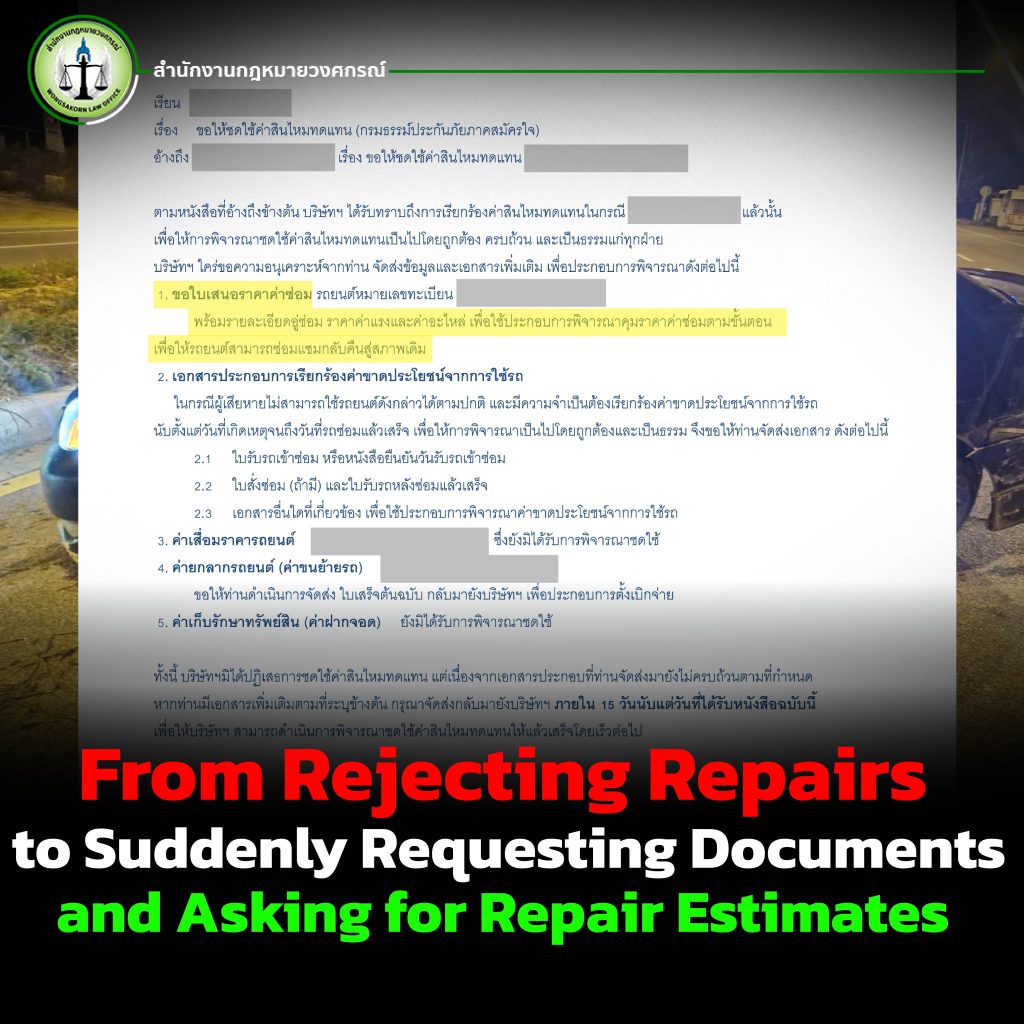
After receiving the letter, the insurance company shifted their attitude and responded by requesting:

  • repair cost estimates,
  • repair shop details,
  • labor costs,
  • parts pricing,

which they claimed were needed for “price control procedures.”

Although it might sound reasonable, in reality…

 This is a strategy designed to shift responsibility onto the victim.

Why Did the Lawyer Advise “Do NOT Prepare Repair Estimates”?
According to Lawyer Arm, preparing repair estimates poses high risks, because the insurance company could later accuse the victim of:

  • providing a fake estimate,
  • listing incorrect parts,
  • inflating prices,
  • adding unnecessary items.

They could even file a counter-lawsuit against the victim, claiming attempted fraud.

Most consumers have no idea this can happen.

The Truth: It Is NOT the Victim’s Duty to Find Repair Shops or Prepare Cost Estimates
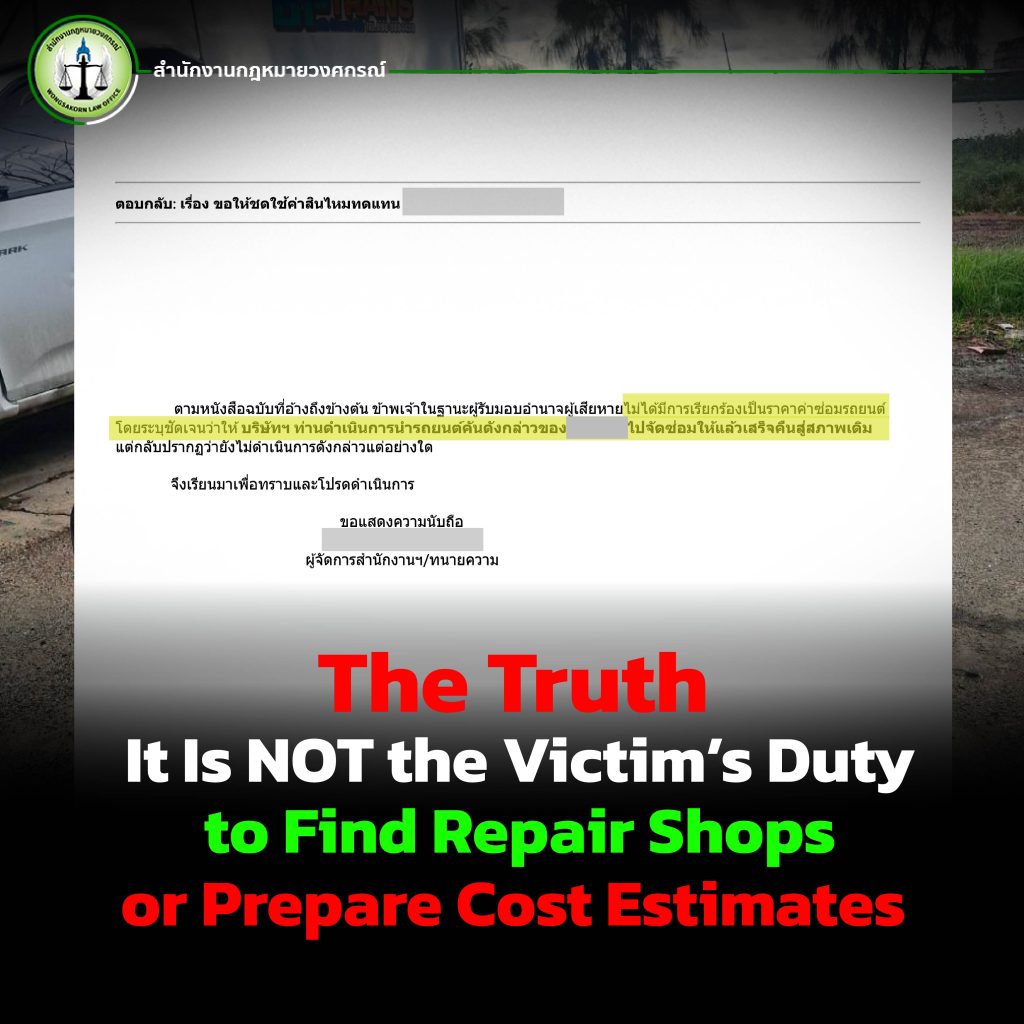
In car accident and insurance law:

  • The insurance company must manage all repair arrangements.
  • The insurance company must select the repair garage.
  • The insurance company must assess repair costs.
  • The insurance company must restore the car to its original condition.

The victim has zero responsibility to prepare repair estimates.

Therefore, the insurance company’s attempt to push this duty onto the victim is a clear violation of proper procedure.

What Is the Insurance Company Afraid Of? Poor Repairs? Additional Liability? Compensation for Loss of Vehicle Use?
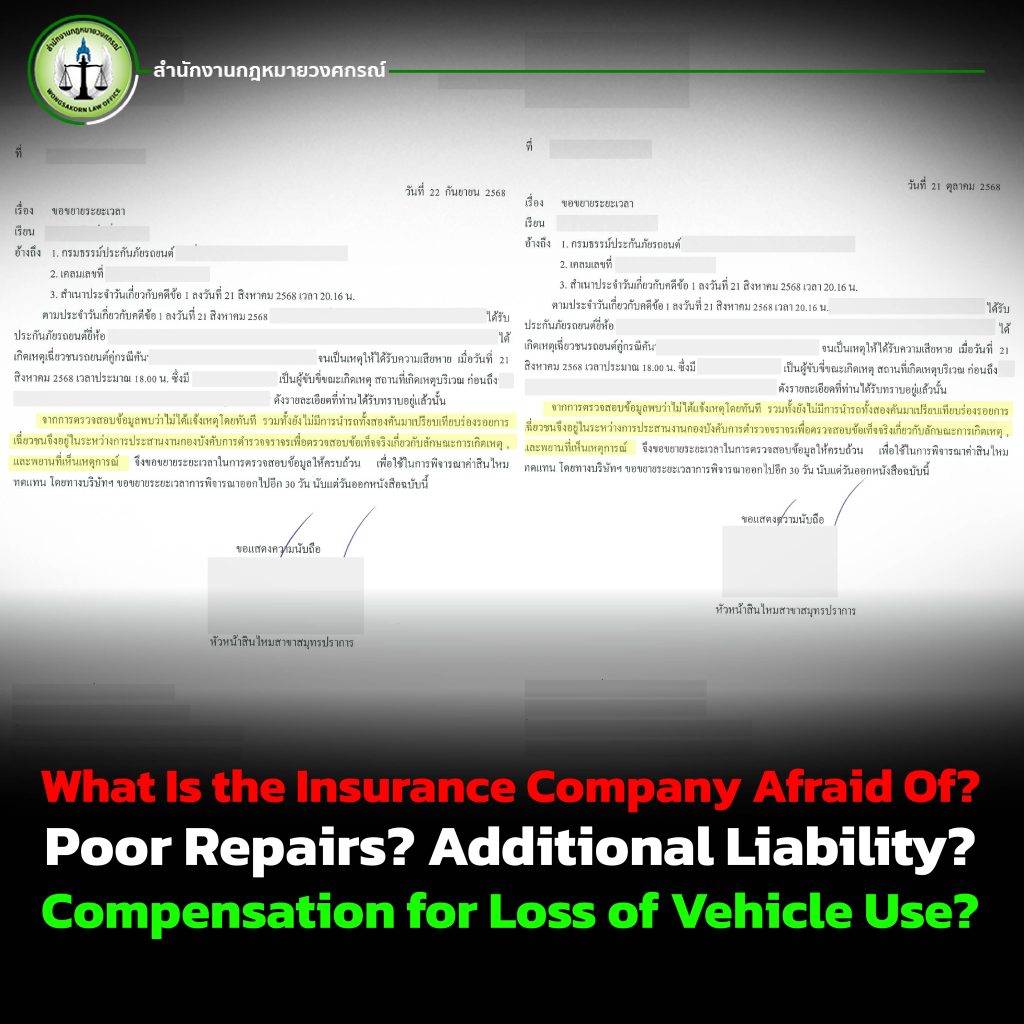
Many people wonder:

  • Are they afraid repairs will not meet standards?
  • Are they afraid they will incur additional liability if problems arise later?
  • Are they afraid they will have to pay loss of vehicle use compensation while the car is being repaired?

Regardless of the reason, the victim should not be forced to bear these burdens.

Main Lesson: Consumers Need a Lawyer Because Insurance Companies Already Have Lawyers Before the Crash Even Happens
Most people do not realize:

Insurance companies already have lawyers prepared before any car accident occurs.
They have time, legal resources, and strategies ready to reduce liability.

But consumers usually:

  • have no legal advisor,
  • have no knowledge of their rights,
  • lack experience dealing with insurance tactics.

Thus, when an accident occurs, consumers should consult a lawyer to:

  • protect their rights,
  • prevent unfair treatment,
  • compel the insurance company to fulfill its duties,
  • avoid being pushed into taking responsibility for things they shouldn’t.

Don’t Let Insurance Companies Manipulate Your Rights

This case shows how some insurers may:

  • reject repairs altogether,
  • accuse the victim of staging the crash,
  • demand documents the victim is not responsible for,
  • twist procedures to avoid paying compensation.

Consumers must stay informed and have a professional to protect their interests.

If you are facing a car accident dispute, if your insurance company refuses repairs, or if you feel the company is avoiding responsibility:

👉 Consult Lawyer Arm – Wongsakorn Law Office
📞 Tel: 062-195-1661
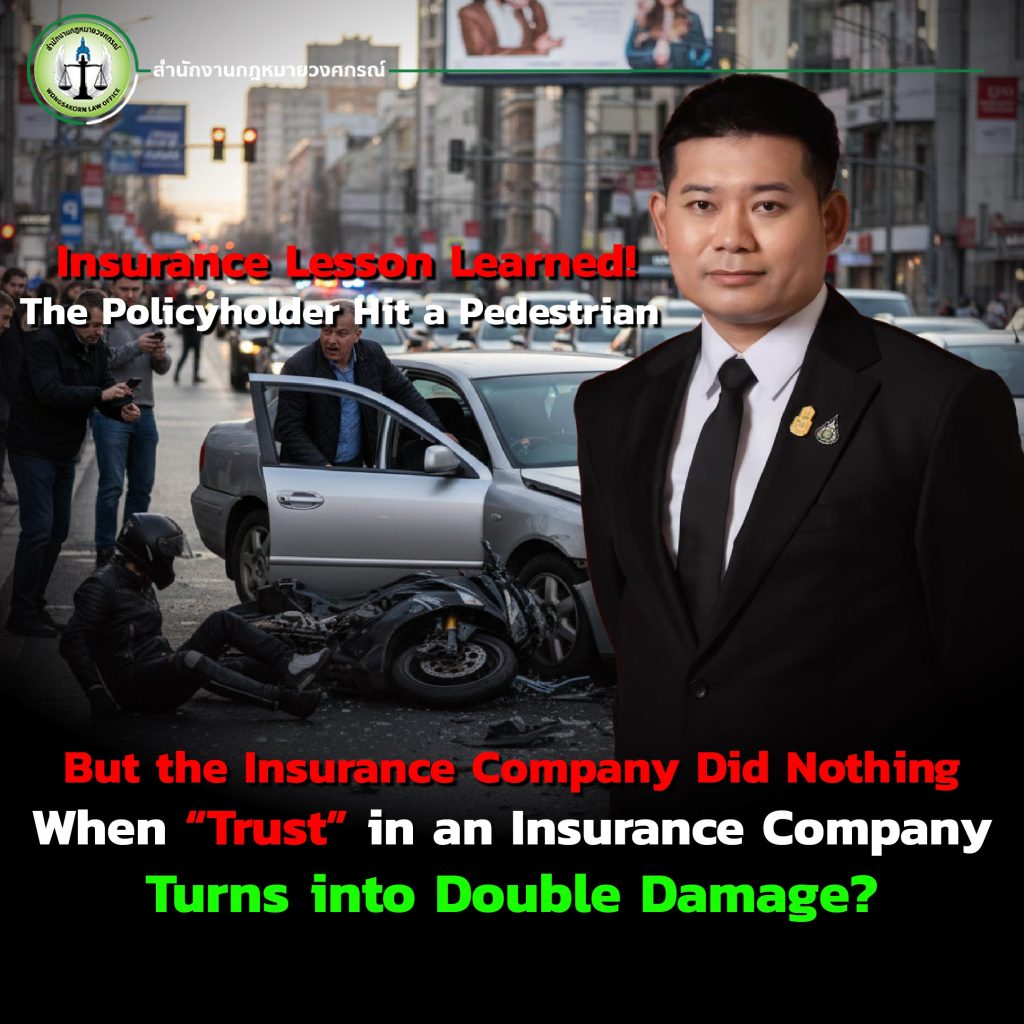
Insurance Lesson Learned! The Policyholder Hit a Pedestrian but the Insurance Company Did Nothing When “trust” in an insurance company turns into double damage?

Lawyer Arm shares how to claim your legal rights correctly from the start.

In the world of insurance, many people believe that having a policy is a shield of protection when unexpected accidents happen, especially road accidents.
However, in reality, there are many cases where the insured must handle everything on their own, and worse, insurance companies sometimes refuse to take responsibility, leaving the policyholder to share the financial burden with the injured party.

This true story happened to a man who held a car insurance policy. He hit a pedestrian, causing injuries that required hospitalization. The police ruled him at fault. Everything seemed to proceed normally toward a claim until the insurance company refused to help, even with the advance payment for medical expenses.

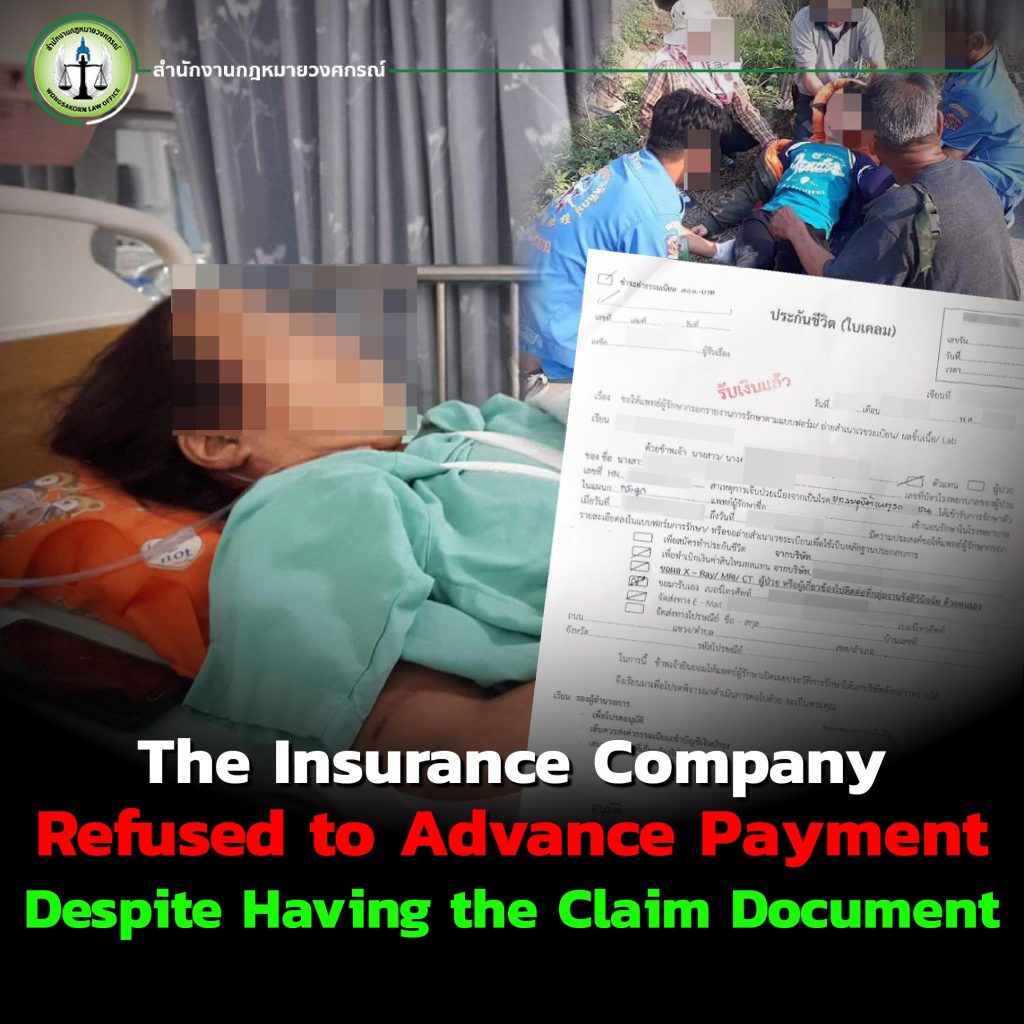
The Insurance Company Refused to Advance Payment Despite Having the Claim Document

The insured man said he had all the required documents, a claim form and an accident report but the company told him both he and the injured person must “advance the payment first.”
Even with the claim form in hand, the insurer would not issue a guarantee letter for the hospital to claim directly. As a result, both the insured and the victim had to pay medical expenses from their own pockets first.

This might sound unbelievable, but such cases do happen. It’s a clear reminder that:

“Having insurance doesn’t automatically mean you’ll be protected in every case.”

When the Insured Becomes a Double Victim?

Since the police ruled him at fault, the insured had the legal duty to compensate the injured party.
But instead of the insurer managing the claim as promised, both the insured and the injured person had to jointly demand compensation from the insurance company.
This turned the policyholder into a “double victim” losing money, time, and peace of mind.

Lawyer Arm’s Advice: File a Joint Lawsuit as a Consumer Protection Case

Lawyer Arm suggests that if both the policyholder and the injured person file a lawsuit together against the insurance company, it can be considered a consumer protection case, as both are consumers suffering from unfair business practices.

If the court finds that damage truly occurred, the insured can claim full compensation including Lawyer’s fees.
In many cases, the court orders the insurer to pay for legal costs, though it depends on the evidence and court discretion.
That’s why having a lawyer from the very beginning is essential to ensure that every step follows the law and that your rights are fully protected.

Lawyers Can Legally Charge a Percentage of the Awarded Amount

Under Thai law, lawyers can legally charge a percentage-based fee from the recoverable amount.
Therefore, policyholders can make a transparent agreement with their lawyer, for example:

  • Setting a fair percentage from the total recovered amount; or
  • Paying a flat fee for the entire case.

This clarity helps avoid disputes later and ensures smoother case progression.

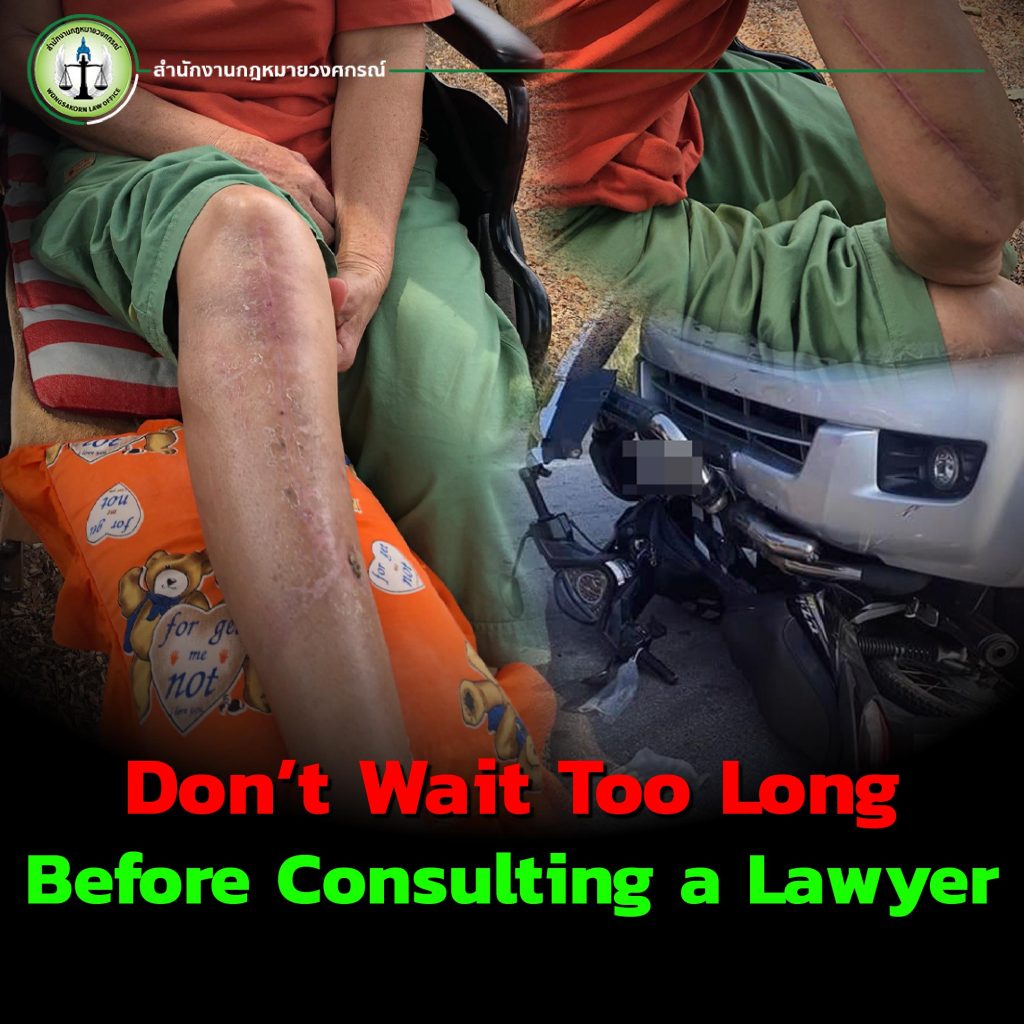
Don’t Wait Too Long Before Consulting a Lawyer

Lawyer Arm also warns:

“Don’t wait until you fully recover or years have passed before filing your claim. Once you’ve recovered, you may lose the right to claim compensation for permanent disability.”

In practice, many people wait too long only to receive partial compensation.
Always seek legal advice immediately after an accident, so your lawyer can verify your claim and documentation right from the start.

Insurance Companies Sell Easily but Claims Are Hard

Many insurance companies market themselves as “fast and reliable”, but when accidents actually happen, they often give excuses such as:

  • “We’re overloaded with cases.”
  • “It’s not our department’s responsibility.”
  • “We need to wait for documents from the hospital.”

In the end, the policyholder ends up doing all the paperwork and follow-ups.
As Lawyer Arm often says:

“When you sell insurance, you sell trust but when a client has an accident, you must serve them, not make excuses.”

Key Advice for Every Policyholder

1.Keep all evidence — claim forms, police reports, medical certificates, receipts.

2.Notify your insurer immediately after an accident and ask for a claim number.

3.Don’t sign any documents you don’t fully understand especially waivers or settlements.

4.Consult a lawyer right away if the insurer refuses to pay or delays the claim.

The Takeaway

Having insurance doesn’t guarantee fair treatment but knowing your rights and having a lawyer by your side can help you recover your losses and gain true justice.
In a world where companies compete to sell insurance, don’t forget as a policyholder, you must also learn to understand and defend your rights.
Consult a lawyer today so you’ll never be taken advantage of by an insurance company again.

“Car Depreciation After an Accident” Why Insurance Companies Refuse to Pay, and Why You Need a Lawyer to Get Your Rights Back?

When a car accident occurs, most vehicle owners face not only physical or property damage but also the long and often frustrating process of claiming compensation from their insurance company.
One of the most debated issues is “car depreciation” after repairs does the insurance company have to pay for it?The answer is yes it can be legally claimed.
However, in reality, insurance companies often refuse to pay.
As a result, many victims have to rely on experienced insurance lawyers to claim their rightful compensation.
That’s because “car depreciation” isn’t something anyone can simply demand; it requires legal knowledge, technical evidence, and professional strategies to prove the true loss in value.

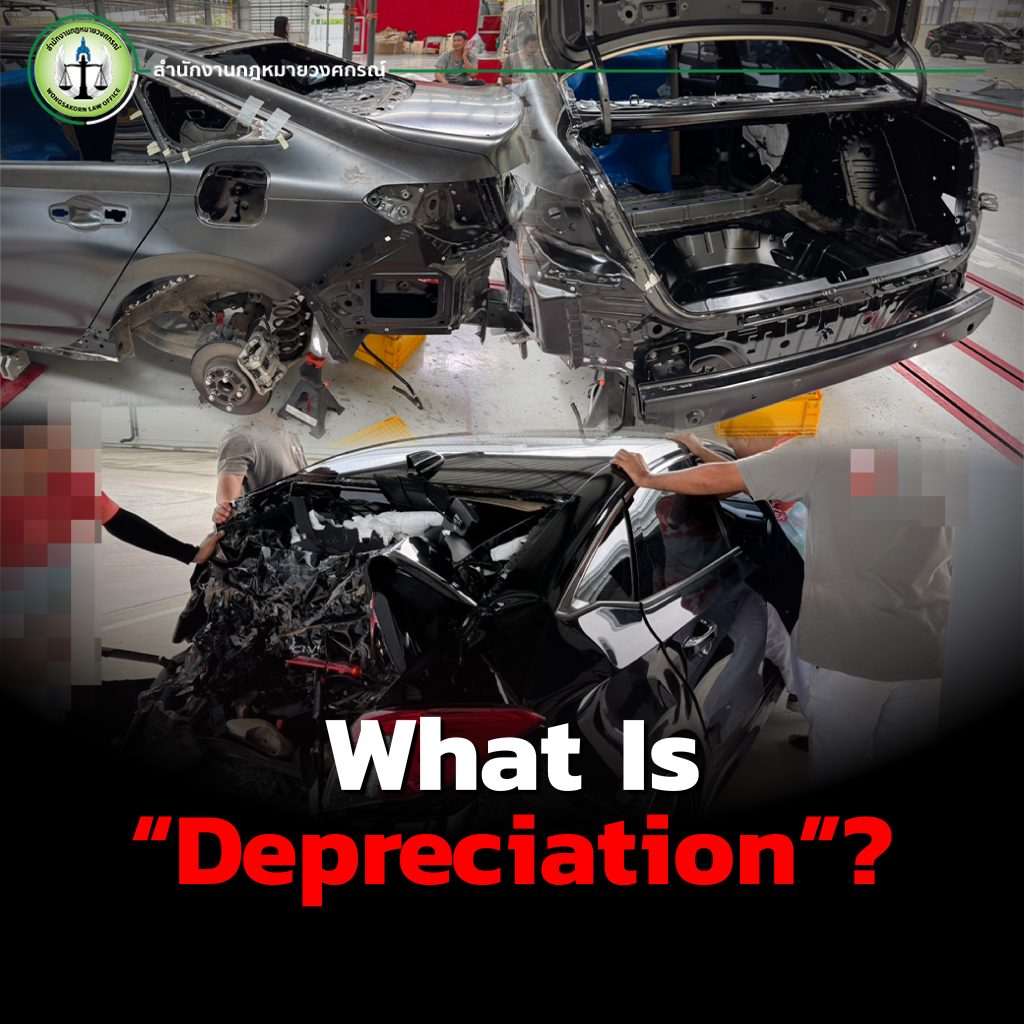
What Is “Depreciation”?

Depreciation refers to the loss in value of a property after an accident.
Even if a car has been perfectly repaired, its market value is no longer the same.
In the used car market, a vehicle that has been in an accident always sells for less than one that hasn’t.

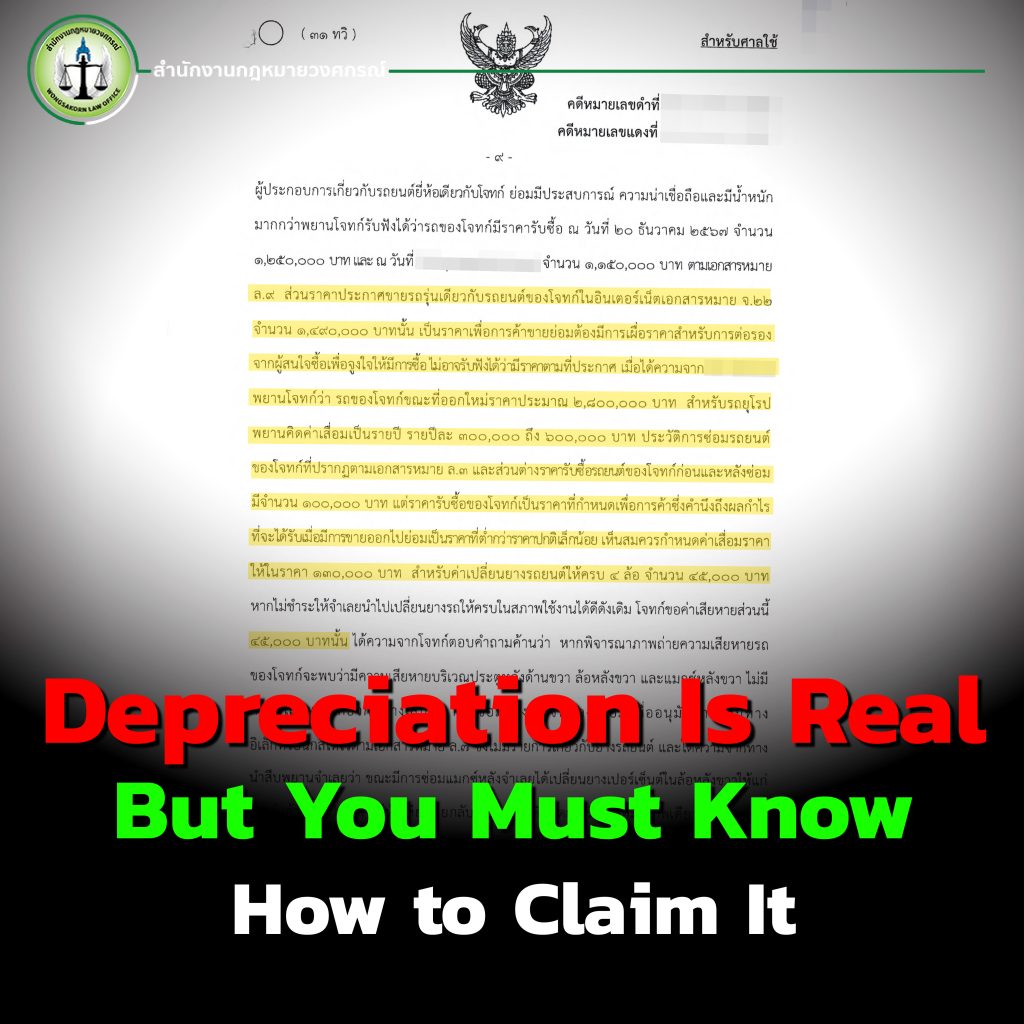
For example, if your car was worth 1,000,000 THB before an accident, and after repair you can only sell it for 900,000 THB,
The 100,000 THB difference represents the “depreciation value” , a real financial loss that you have the right to claim from the insurer or the at-fault party under Thai law.

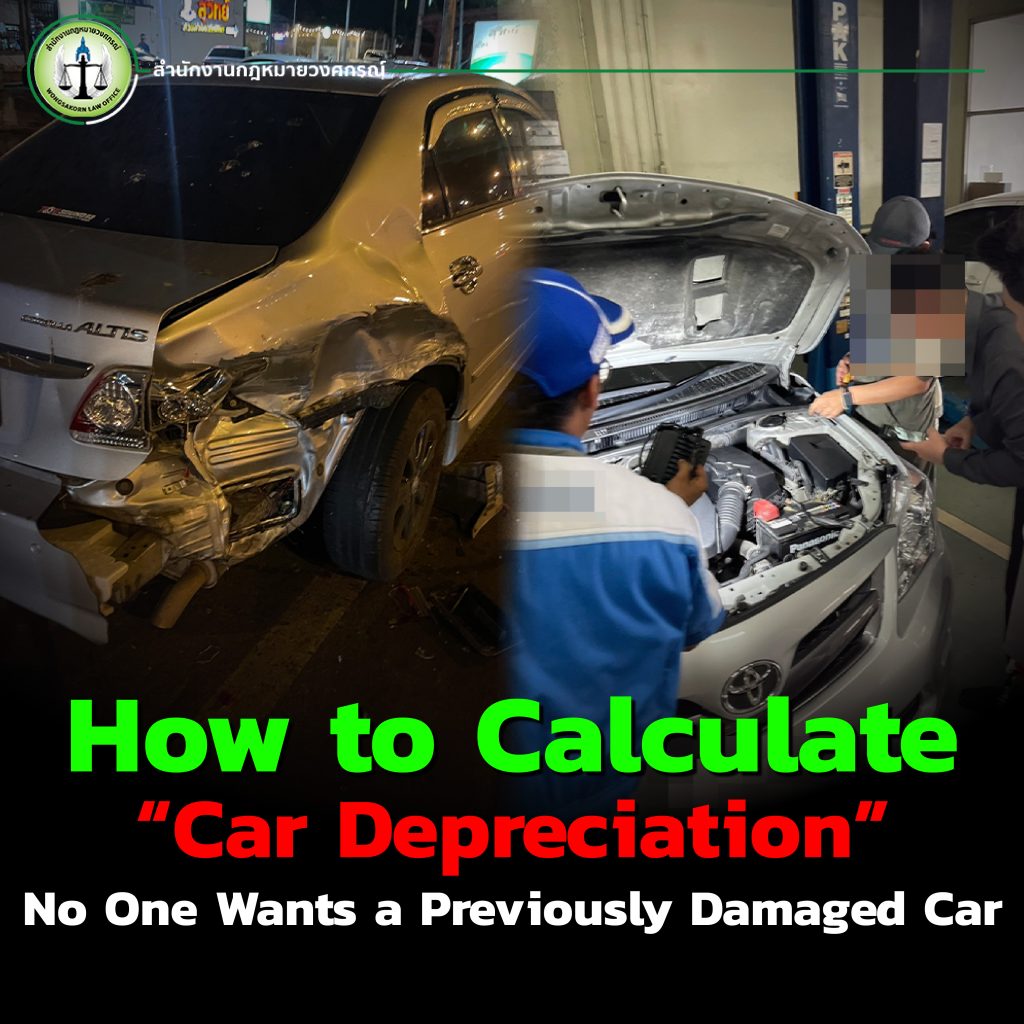
How to Calculate “Car Depreciation” No One Wants a Previously Damaged Car

Even after a full repair, a damaged car will never be the same. Its value drops that drop is what we call “depreciation.”
According to Lawyer Arm, there are three main methods to assess car depreciation:

Method 1 – Based on Real-Life Sales

A client who ran a used car business got into an accident while driving to meet a buyer.
The customer refused to buy the car after learning it had been in an accident, saying, “No one wants a crashed car.”
Originally priced at 500,000 THB, the buyer offered only 100,000 THB.
👉 The 400,000 THB difference was the actual depreciation caused by the accident.

Method 2 – Appraisal from Used-Car Dealers

Sometimes, the victim can ask car dealers to appraise the price difference.
For example, a dealer might say that a certain model usually sells for 500,000 THB, but if it’s been in an accident, they would only buy it for 200,000 THB.
👉 The 300,000 THB difference also represents the depreciation value.

Method 3 – Assessment by Certified Experts or Mechanics

If there’s no real transaction, an expert mechanic or auto body specialist can assess the car’s post-repair value based on comparable models in the market.
👉 This method is fair, transparent, and technically verifiable.

Key Points from Lawyer Arm

  • Claiming depreciation is a legal right because an accident reduces your vehicle’s market value.
  • Insurers must not advise victims to lie to car dealers that the vehicle has never been in an accident that’s unethical.
  • In reality, no one wants to buy a heavily damaged vehicle, and resale value inevitably drops.

Depreciation is therefore a real and provable loss, and victims are entitled to compensation under the law.

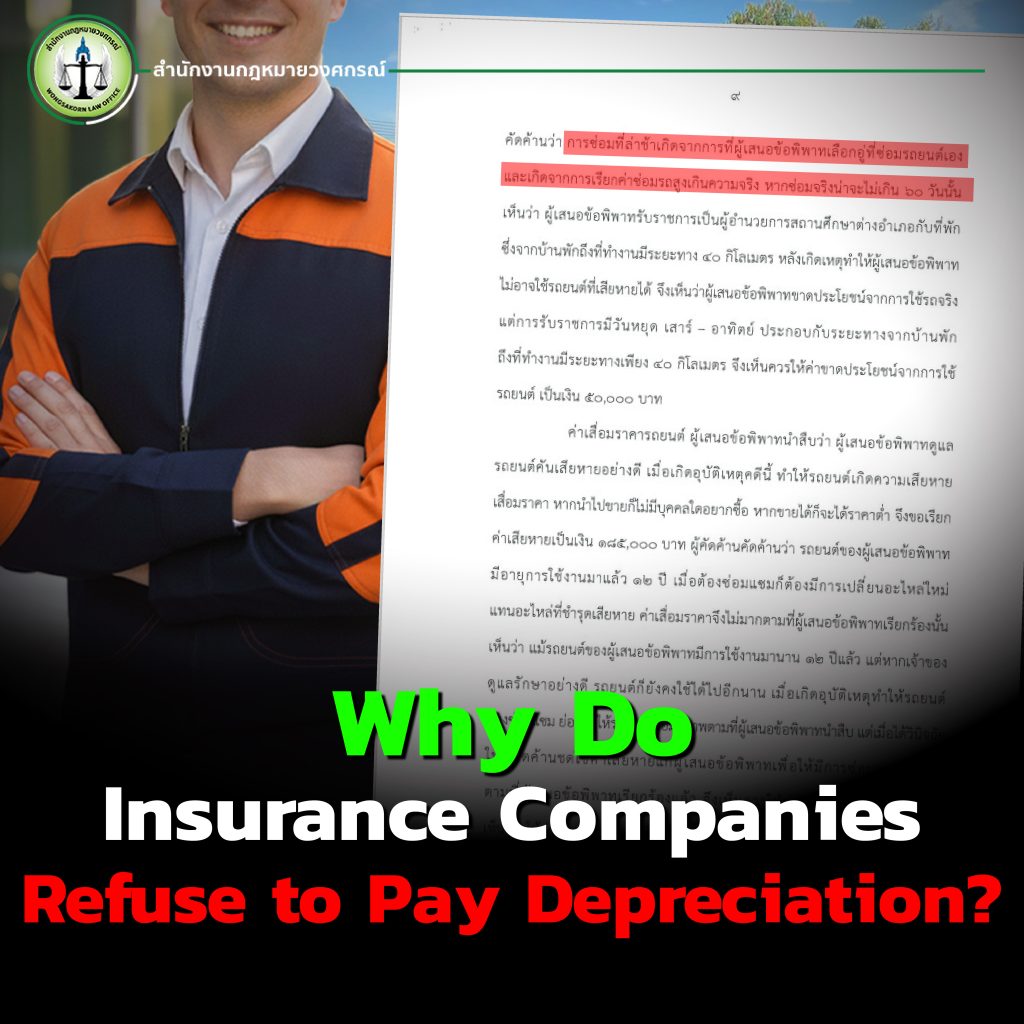
Why Do Insurance Companies Refuse to Pay Depreciation?

Even though depreciation is a real loss, insurance companies often deny the claim using reasons such as:

1.The repaired car is “as good as new.”

2.There’s no market evidence supporting the price drop.

3.The insurance policy doesn’t explicitly mention depreciation coverage.

But legally, depreciation does not need to be stated in the policy.
If you can prove the loss in value, the company must compensate under Civil and Commercial Code Section 420 (tort law).

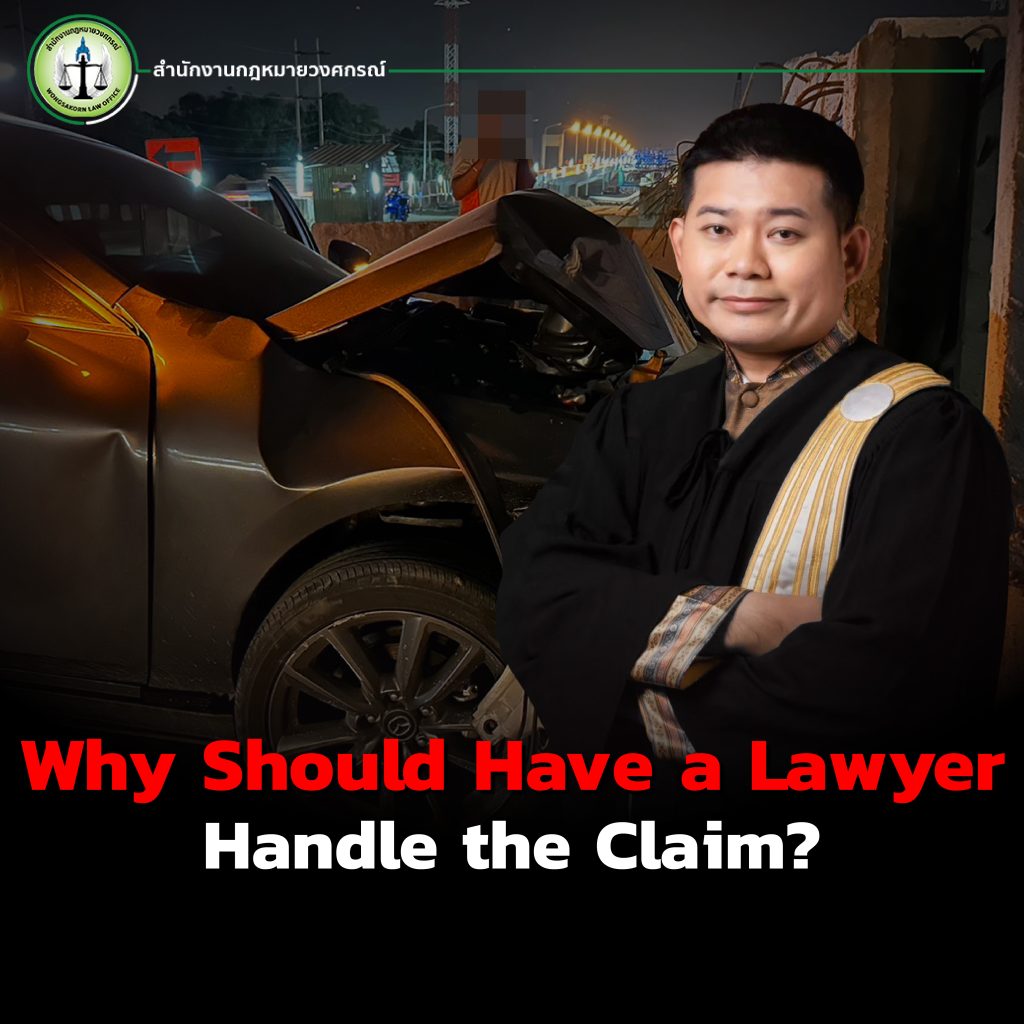
 Why Should Have a Lawyer Handle the Claim?

While victims can technically file claims themselves, proving depreciation requires strong, technical evidence, such as:

  • Pre- and post-repair valuation reports
  • Expert witness opinions
  • Repair receipts and documents
  • Photographs of the damaged car

A lawyer’s role is crucial in:
✅ Assessing the true financial loss
✅ Preparing admissible evidence for court
✅ Referencing previous court rulings on depreciation to strengthen your case

Simply put:
If the insurance company has a legal team before the crash even happens,
then you should also have your own lawyer from the moment the crash occurs.

Depreciation Is Real But You Must Know How to Claim It

Car depreciation is not a bonus or a favor from the insurer, it’s a real, lawful damage you deserve to recover.
Unfortunately, many people lose this right because they don’t know how to claim it properly.

If your insurer refuses to pay for car depreciation, don’t stay silent.
Consult a lawyer immediately to ensure your rights are fully protected.

 Wongsakorn Law Office, led by Lawyer Arm, specializes in car insurance cases including repair costs, loss of use, and depreciation claims.
We’re ready to fight for your rightful compensation in every step of the process.
Consult a lawyer today Contact Us or call 062-195-1661.

What Should You Do If Your Pawned Car Goes Missing? Wongsakorn Law Office – Ready to Provide Full Legal Assistance and Consultation

In today’s volatile economy, pawnbroking a car has become a short-term financial solution for many people. However, one issue that car owners often don’t anticipate is when the pawned car goes missing or when they lose contact with the pawnshop or agent. These situations often arise when the car is pawned through unregistered dealerships, unlicensed brokers, or individuals without a permanent business address.

When such incidents occur, many owners panic or hesitate to take legal action; some are even afraid to file a police report because they believe they have no right to do so under the pawn agreement. In reality, car owners still have legal rights and can take legal action to seek justice as long as there is proper evidence and correct legal procedures are followed.

Why Does “Pawned Car Missing” Happen?

Most cases occur when vehicles are pawned with unlicensed pawnshops or individual agents without proper documentation such as a pawn contract, receipt, or written acknowledgment of payment. Over time, these individuals may disappear or become uncontactable and some owners later discover their cars were sold or rented out without consent.

Common scenarios include:

  • Pawning with unlicensed or illegal pawnshops
  • Brokers transferring the car to third parties
  • No written or signed pawn agreement
  • The pawnee selling or transferring ownership without notice

All of these situations may constitute criminal offenses such as misappropriation or fraud, and car owners have the right to pursue legal action.

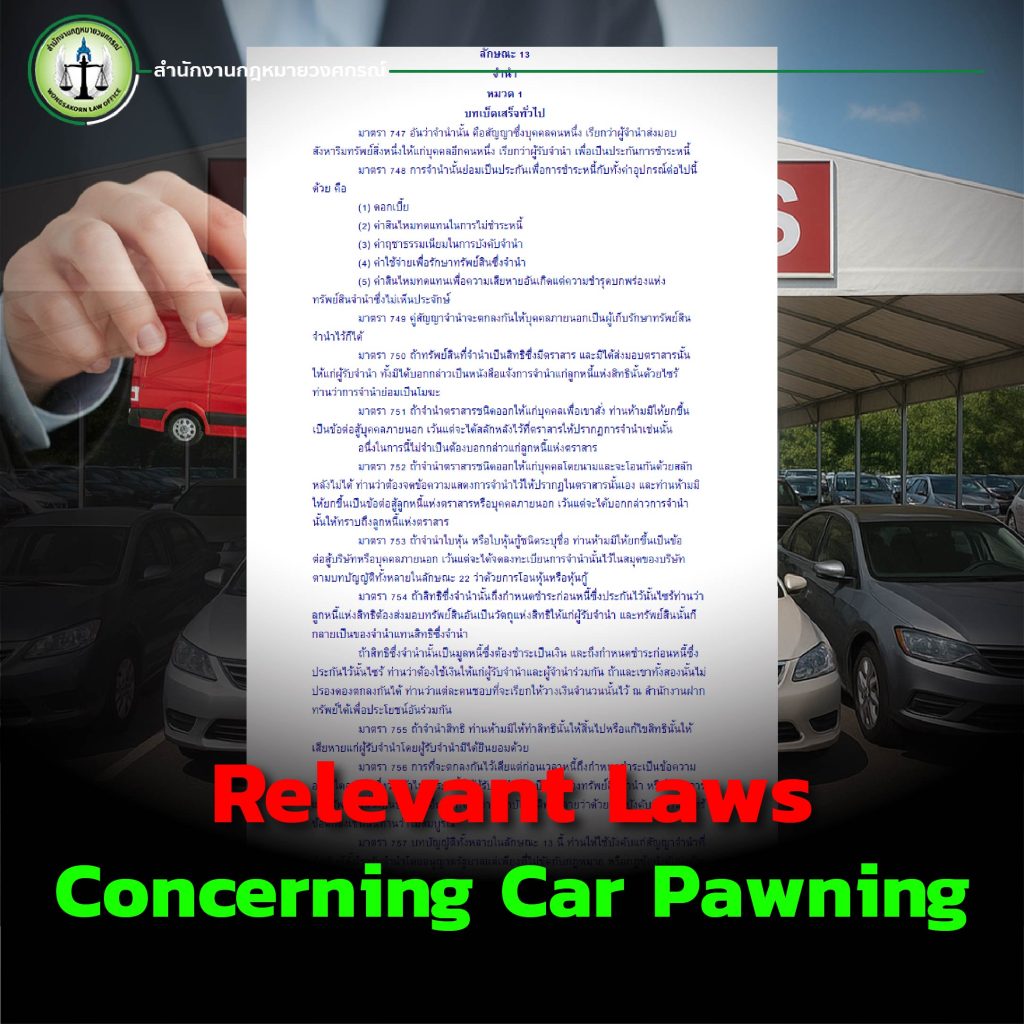
Relevant Laws Concerning Car Pawning

Under the Civil and Commercial Code (Sections 747–756),
the pledgee (pawn holder) must take care of the pledged property. If the property is lost or damaged, they are liable for full compensation.

Under the Criminal Code, Section 352,
if the pledgee sells or uses the pledged property without authorization, it constitutes embezzlement, punishable by up to 3 years imprisonment or a fine of 60,000 baht, or both.

If the person pawning the vehicle is not the rightful owner or has no legal authorization, their actions may also constitute embezzlement under the same section.

If they sell, transfer ownership, or alter the vehicle with fraudulent intent, the act may amount to fraud or receiving stolen property if the receiver knew the car was obtained unlawfully.

Therefore, if your vehicle has been pawned or sold without your consent, you should immediately file a police report to prevent further loss or illegal transfer.

Can the Person Who Pawned the Car Be Liable Under the Law?

If the person pawning the vehicle is not the real owner or has no legal authorization from the owner, such conduct may also fall under misappropriation of property (Criminal Code, Section 352), with the same penalties as above.

If the vehicle is sold, transferred, or modified with fraudulent intent or to deprive the rightful owner of benefits, it may constitute fraud or even receiving stolen property, if the recipient knew the car was obtained unlawfully.

Therefore, if you discover that your car has been pawned or sold without your consent, or if someone deceived you into transferring ownership and later pawned your car, you should immediately report to the police to prevent further loss or transfer.

What to Do If You Can No Longer Contact the Pawnshop?

This is one of the most common and frustrating situations for car owners.
If the pawn shop closes down, disappears, or changes contact numbers, you should take the following steps:

1.Gather all communication records and documents — such as chat history, transfer receipts, or pawn contracts.

2. File a police report immediately — record the case and pursue legal action for embezzlement or fraud.

3.Check your vehicle’s status with the Department of Land Transport — to see if it has been sold, transferred, or reported missing.

4.Consult a lawyer as soon as possible — a lawyer can review your documents, prepare legal notices, and assist in locating your car.

Why Hire a Lawyer from the Start?

Many victims try to handle the matter themselves, but this often leads to wasted time and lost opportunities to recover the vehicle.
A lawyer can:

  • Verify the identity and location of the pawn holder
  • Draft proper demand or police notification letters
  • Coordinate with the police and related agencies
  • File lawsuits to reclaim your property or compensation
  • Advise you on your legal rights as the car owner

 If Your Pawned Car Goes Missing Contact Wongsakorn Law Office

When facing a missing pawned car case, don’t wait until it’s too late. This is not just about property loss it directly affects your daily life, work, and financial stability.

Wongsakorn Law Office fully understands the distress and frustration of victims. Our experienced lawyers provide complete legal services for cases involving missing pawned cars.

We can assist you if:

  • You pawned your car but cannot contact the dealer or agent
  • Your car was sold or transferred without consent
  • Your car was misappropriated or illegally taken over

Wongsakorn Law Office Professional legal advice and full-scale assistance for pawned car issues. Click >> Contact Us <<

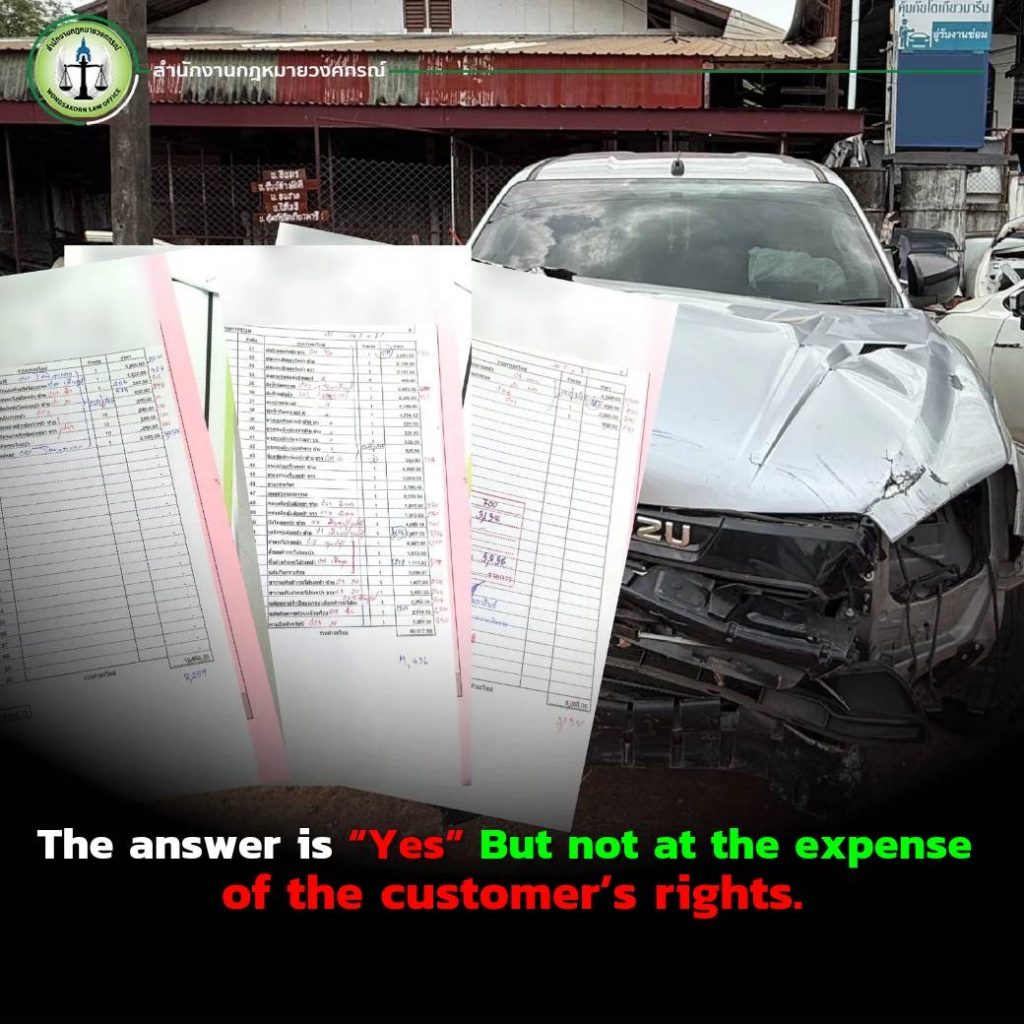
Does an Insurance Company Have the Right to Choose a Lump-Sum Repair for the Customer’s Car?

The answer is “Yes” But not at the expense of the customer’s rights.

When a car accident happens, many insured drivers feel reassured knowing that their insurance company will handle the repair costs. However, what most policyholders don’t realize is that insurance companies can manage car repairs in several ways. One common practice is “lump-sum repair” or “contracted repair,” where the insurer negotiates a fixed amount with a repair shop. This often leads to dissatisfaction among customers who feel their cars were “not restored to their original condition” or “poorly repaired.”

So, does an insurance company have the right to do this?
Legally, yes, they do but that right must remain within reasonable limits and must not cause harm to the insured party. The goal of repairing the customer’s car should be to restore it to its original condition, not to cut costs for the company’s own benefit.

Understanding “Lump-Sum Repairs” in the Insurance Industry

A “lump-sum repair” means the insurer estimates the total repair cost and agrees on a fixed price with a repair shop or service center often without consulting the customer. For example, if your car sustains 40,000 baht in damages, the company might strike a deal with a garage for that amount, leaving you out of the decision-making process.

While this may sound reasonable from a business perspective  as insurers must control costs in practice, this often leads to cost-cutting repairs rather than quality restoration.

Common problems include:

  • Incomplete or substandard repairs
  • Use of second-hand or non-genuine parts
  • Paintwork that doesn’t match the original
  • Or worst of all recurring issues requiring multiple repair attempts

Even though insurers have the right to choose lump-sum repairs, they do not have the right to infringe upon the customer’s legal rights.

The Customer’s Legal Right: “Restoration to the Original Condition”

Under motor insurance principles, repairs after an accident must restore the vehicle to its pre-accident condition.
 That means your car should be as close as possible to its original state in terms of structure, paint quality, safety, and functionality.

If an insurer’s chosen repair method worsens the car’s condition or reduces its quality, that could amount to a “tortious act.”
 An insurer cannot act in bad faith under the contract to the detriment of the insured.

Legally, even though the insurer is a contracting party, this doesn’t grant them unlimited authority over your vehicle.
Customers are entitled to fair, quality repairs that return their property to its original state. Acting solely for the company’s financial gain is not legally justifiable.

Lawyer Arm’s View: “Yes, They Can  But Not at the Customer’s Expense”

Lawyer Arm explains:

“The insurer may have the right to choose lump-sum repairs, but they have no right to cause the customer further harm.”

The insurer’s right to manage operations is protected by law, but it must be exercised in good faith and responsibility  consistent with Section 420 of the Thai Civil and Commercial Code, which states:

“A person who, willfully or negligently, unlawfully injures another is bound to make compensation.”

If the insurer’s repair decision leads to further damage such as mismatched paint, reduced performance, or new mechanical issues that could constitute a tort.

Moreover, a car is not just a financial asset it directly relates to safety. Poor-quality repairs may not only devalue the car but could cause further accidents, making the insurer liable under civil or even criminal law.

Why Should You Consult a Lawyer from the Start?

When an accident occurs, and your car needs repair, the first thing you should do is ask for clarity upfront:
 Where will the repair take place? How will it be handled? Can you choose your preferred repair center?

If you let the insurer take full control of the repair without reviewing the terms, you might end up with a poorly repaired vehicle  and the struggle to demand compensation afterward can cost you both time and money.

Consulting a lawyer early ensures that you:

  • Understand your rights under your insurance policy
  • Know your options regarding repair types
  • Can take legal action if the insurer breaches its obligations

The Insurer’s Right Exists But It Must Be Fair

Ultimately, insurers do have the right to manage repairs, including using lump-sum arrangements.
However, that right must never override the customer’s right to fair treatment.
The car must be restored as closely as possible to its original state, not just “patched up” to save the insurer money.

If you’ve been in an accident, don’t wait until problems arise to seek legal advice.
Consult a lawyer immediately. It’s the best way to protect your rights and ensure a fair outcome.

WongSakorn Law Office

Our team of experienced insurance and compensation lawyers can help you file and pursue insurance claims properly and effectively ensuring you receive the full amount you deserve and that your car is restored to its original condition without compromise.

Let us “restore your rights” just like restoring your car  properly, and completely.

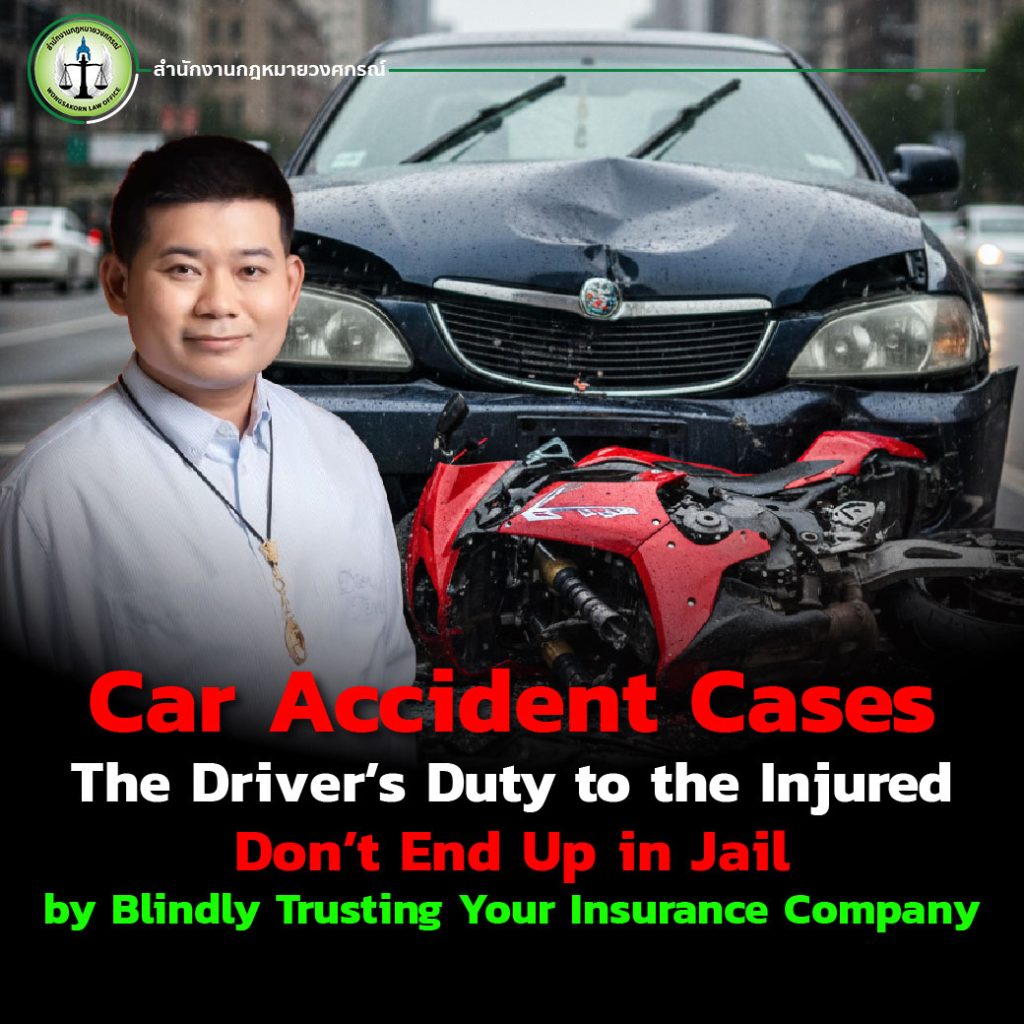
Car Accident Cases: The Driver’s Duty to the Injured – Don’t End Up in Jail by Blindly Trusting Your Insurance Company

When a car accident case occurs, the first thing many people think is, “The insurance company will take care of everything, since I’ve already paid my premiums.” But in reality, the driver or vehicle owner still has legal duties that must be fulfilled. Ignoring these responsibilities or blindly following the insurance company’s advice can not only disadvantage the injured party but also expose you to criminal charges. You could even end up in jail because of your own insurer.

This article explains why drivers must care for the injured, rather than arguing or saying, “If you want compensation, go sue,” and provides the right approach to avoid serious consequences.

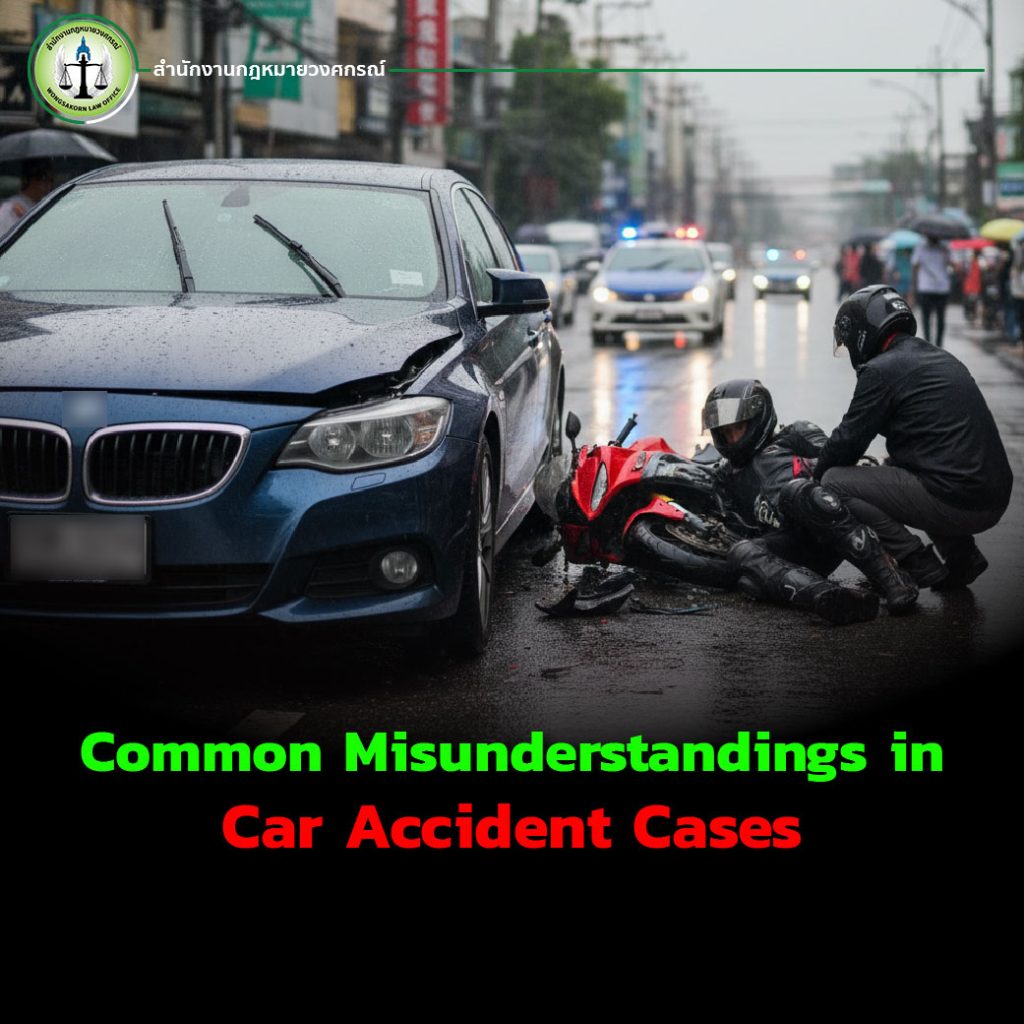
Common Misunderstandings in Car Accident Cases

After a collision, many drivers tend to:

  • Obey everything the insurance company’s staff says.
  • Deny responsibility and tell the injured party, “Go sue the insurance company yourself.”
  • Believe that compensation is solely the insurer’s job, not theirs.

These mindsets are dangerous. Legally, the driver and vehicle owner are still the primary responsible parties regardless of insurance coverage. Neglecting the injured or acting confrontational can lead to additional charges, such as failure to provide assistance or even criminal liability for reckless driving causing serious injury or death.

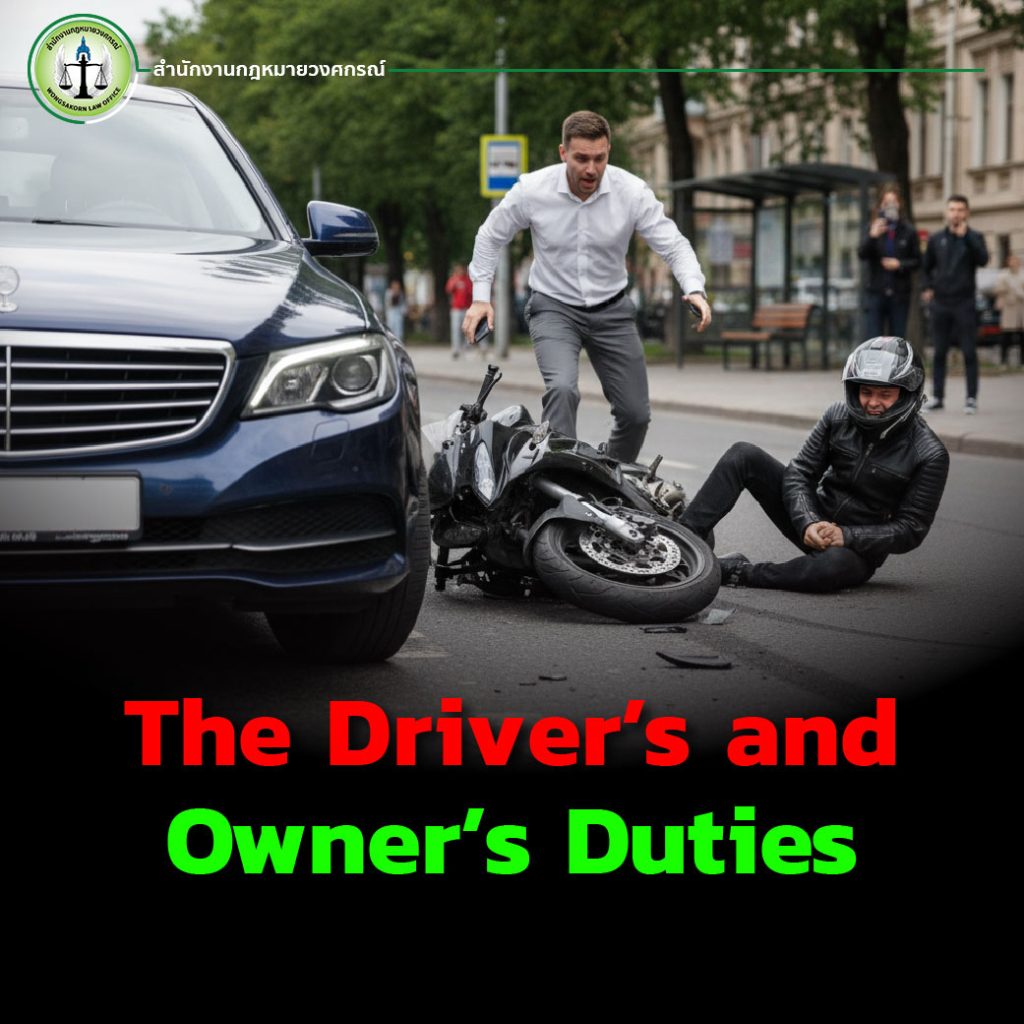
The Driver’s and Owner’s Duties

When a car accident happens, the law and society expect the driver to:

Stop the vehicle and render aid – fleeing the scene is a criminal offense and can result in imprisonment.
Notify the police – to ensure the incident is officially recorded.
Take the injured to the hospital – even if insurance will later cover costs, immediate assistance is the driver’s duty.
Cooperate with the injured in claiming from insurance – often overlooked, this duty ensures the insurer compensates properly. The driver must support the victim’s rights, not oppose them.

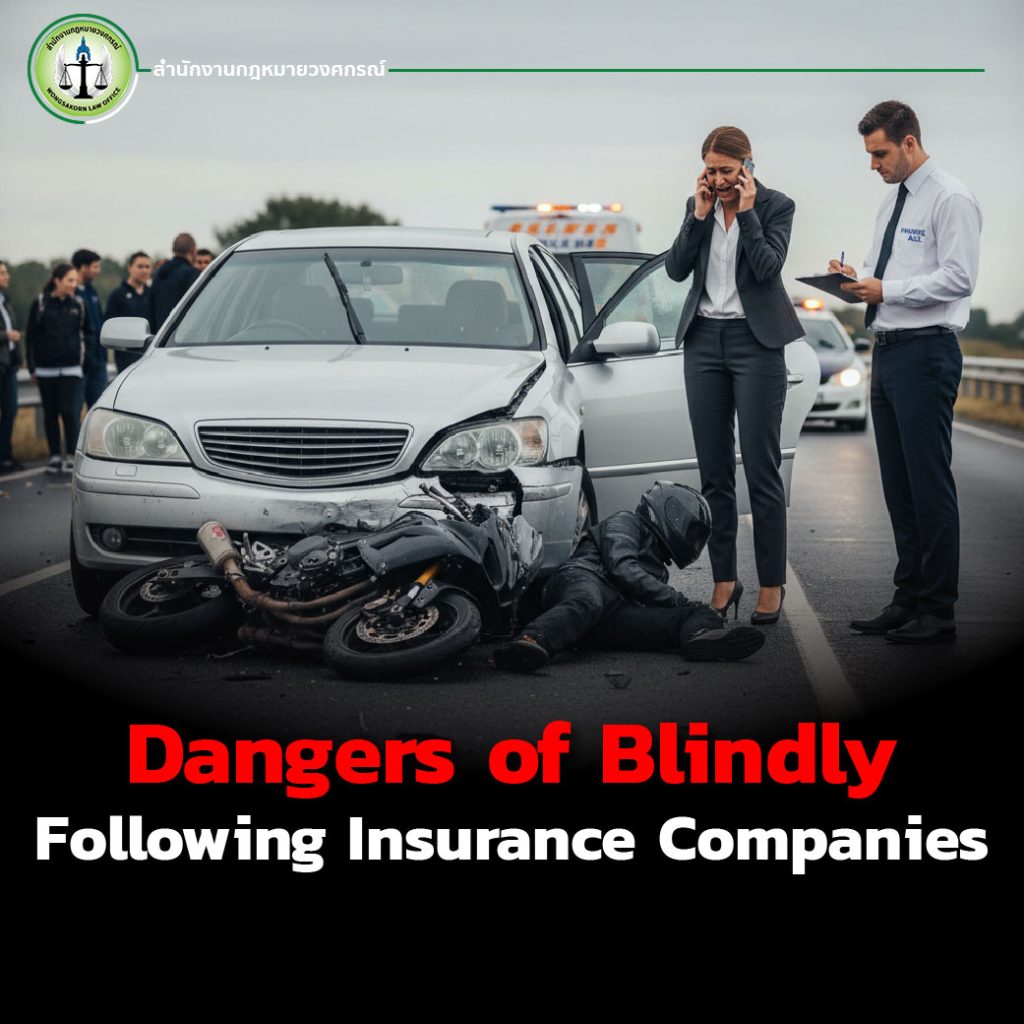
Dangers of Blindly Following Insurance Companies

Insurance companies aim to minimize payouts, not to protect drivers at all costs. If drivers follow company instructions without judgment, they may bear full liability. For example:

  • Refusing to compensate → the victim sues both driver and insurer, but the burden mainly falls on the driver.
  • Not cooperating with the victim → the court sees this as obstruction, leading to harsher punishment.
  • Believing insurance covers everything → the insurer may deny coverage if policy conditions are breached.

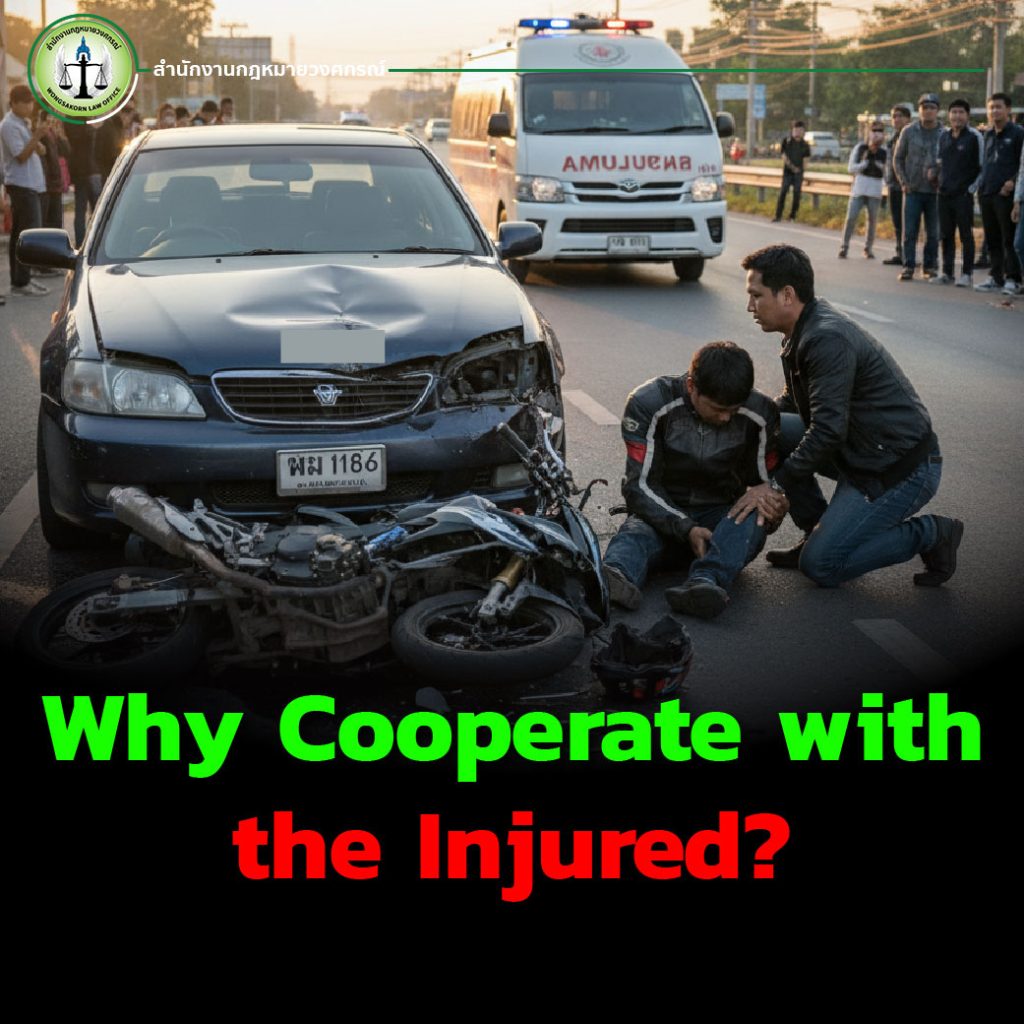
Why Cooperate with the Injured?

Cooperation is not “surrendering,” but fulfilling your legal duty, with benefits such as:

1. Lower risk of criminal prosecution – courts see willingness to help as good faith.

2. Forcing the insurer to pay – when the victim asserts their rights with your support, the insurer cannot easily refuse.

3. Building social trust – assisting shows responsibility and reduces tension with the victim.

4. Saving money long-term – early resolution prevents costly lawsuits.

Mistakes That Can Lead to Jail

  • Telling the injured: “If you want compensation, sue.” → seen as defiance and irresponsibility.
  • Following the insurer’s advice to deny everything → insurer may refuse coverage, leaving you fully liable.
  • Refusing to take the injured to hospital → criminal charge for failure to provide assistance.

Correct Steps After a Car Accident Case

1. Stop immediately and help.

2. Call the police and insurer to record the incident.

3. Take the injured to hospital without hesitation over costs.

4. Collect evidence (photos, witness names).

5. Cooperate with the injured in filing insurance claims.

6. Consult a lawyer to prevent misinterpretation of your actions.

In the event of a car accident, you can consult a lawyer immediately, whether you are at fault or not.

Car accident cases are never minor; they involve lives, property, and your own freedom. Blindly trusting insurance companies may leave you facing criminal liability.

The most important duty of a driver is to assist the injured, support their rights, and treat the insurance company as a tool, not as your master.

If you are unsure how to handle a case, seek legal advice immediately to protect your rights.

👉 If you or someone you know is facing a car accident case and fears being sued or jailed, consult Wongsakorn Law Office. Our expert legal team specializes in insurance and accident cases, providing professional advice, case handling, and comprehensive protection of your rights.

Line @ คลิก! โทรหาเรา คลิก!