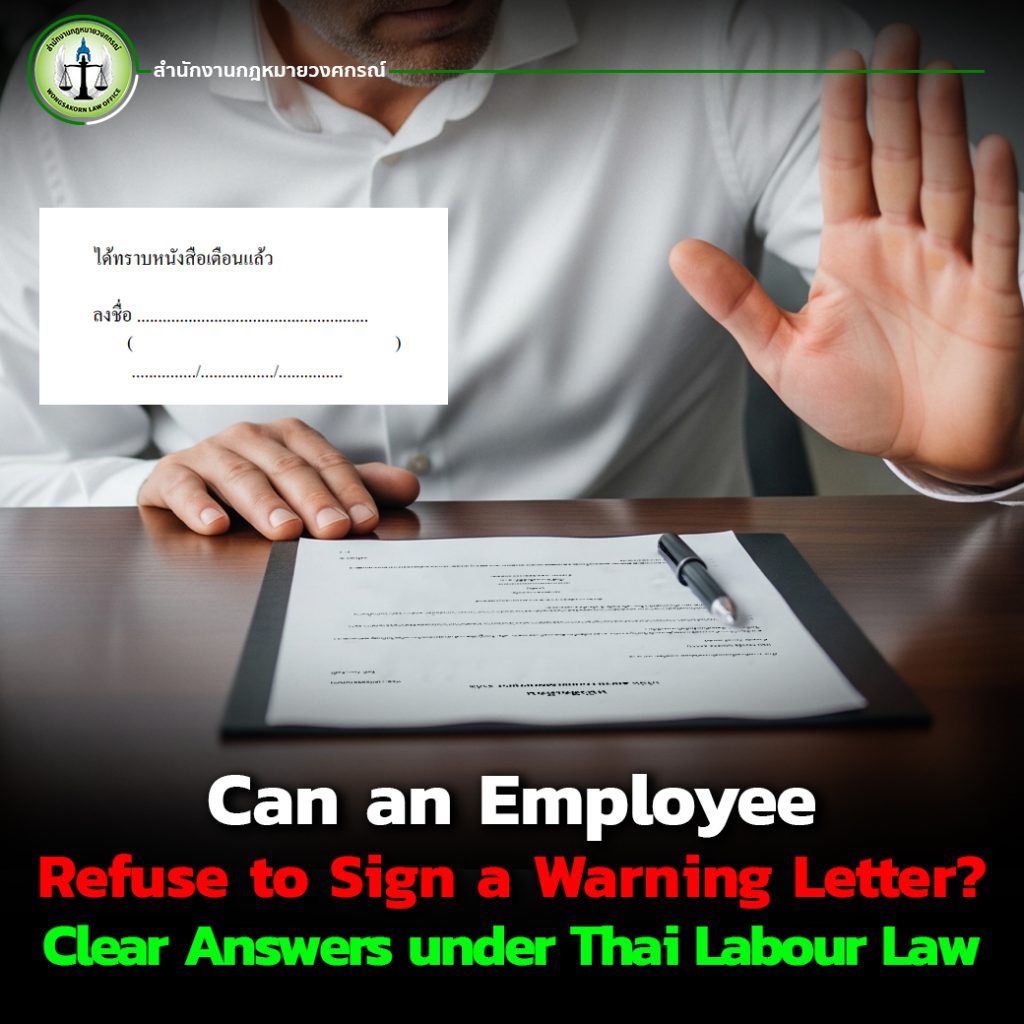
In human resources management, issuing warning letters to employees is common—especially if employees misbehave or violate company regulations. But what happens if an employee refuses to sign the letter? Can the employer still take disciplinary action, or is the employee considered defying a superior’s order?
This article by Wongsakorn Law Office dives into this issue from every angle and offers guidance for both employers and employees.
Does an employee’s refusal to sign mean defiance of a superior?

Absolutely not. Under Thai labour law, an employee does not commit wrongdoing simply by refusing to sign a warning letter—this refusal does not equate to defying an employer’s order.
There is no legal requirement for employees to sign warning letters to make them legally valid. The key requirement is that the employer must notify the employee clearly of the warning and its grounds.
How is a warning letter viewed under labour law?
A warning letter is an internal disciplinary tool:
- It details misconduct like repeated lateness, fraud, or rule violations.
- It serves as advisory documentation and can later support grounds for dismissal.
Importantly, not signing the letter does not nullify it, as long as the employee has been properly informed and is aware of the contents.
How employers can handle unsigned warnings?
If an employee refuses to sign, employers can still proceed by taking these lawful measures:
- Read the warning aloud to the employee in the presence of a witness (e.g., supervisor or HR), and have the witness sign.
- Video record the meeting, provided the employee has given verbal consent or it’s reasonable under the circumstances.
- Send the letter by registered mail with delivery receipt to the employee’s address.
- Document the refusal in writing, including details of the refusal and witness signatures.
These methods help employers show they have acted fairly and clearly notified the employee.
Refusing to sign is an employee’s right
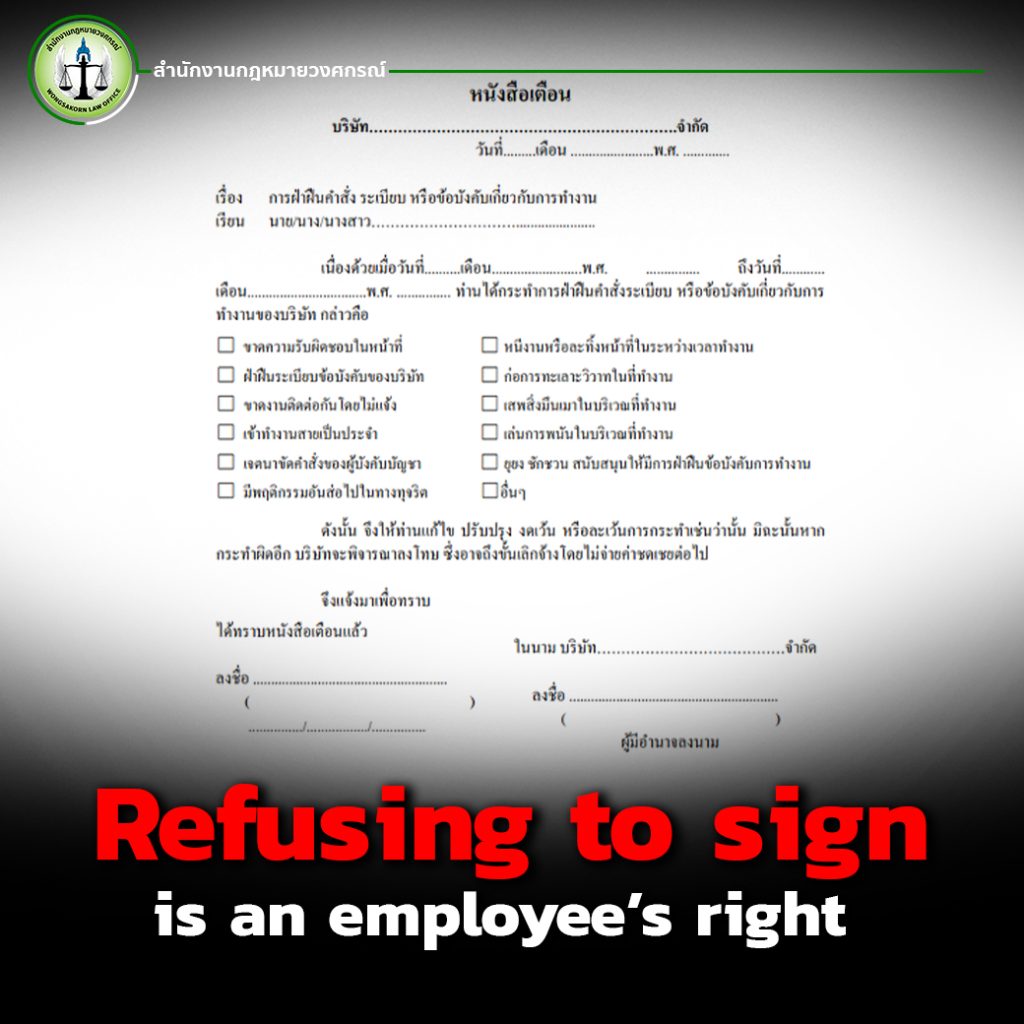
Employees have the right to refuse to sign if they believe the letter’s contents are incorrect or require clarification.
However, refusing to sign does not invalidate the warning: what matters legally is that the employee was notified and acknowledged (verbally or via other means) the warning.
Can the employer still proceed with disciplinary action?

Yes. If misconduct continues within the warning period, the employer may issue a second warning. In severe cases, the employer may terminate employment without compensation, under Section 119 of the Thai Labour Protection Act, when misconduct is serious enough to warrant immediate dismissal.
Employer’s legal checklist
To avoid legal risk, employers should:
- Maintain clear documentation and records
- Include witnesses at warning meetings
- Regularly review internal policies and procedures
- Consult with a lawyer before taking action in complex or disputed cases
Employees—know your rights and responsibilities
If you receive a warning and disagree with it:
- Issue a written rebuttal or request a clarification meeting
- Keep records of your work to protect your position
- Seek legal consultation to guide your response
Summary
- An employee’s refusal to sign a warning letter is not misconduct.
- The employer can still issue the warning and begin disciplinary steps.
- Both parties should understand their rights and obligations to foster fairness and avoid workplace disputes.
Whether you’re an employer or employee seeking clarity…

Wongsakorn Law Office is here to help. Our labour law experts offer consultations, mediation, and legal representation when needed. We assist both employers and employees in resolving conflicts professionally, preserving workplace harmony, and protecting everyone’s legal interests.
Contact us today to navigate warning letters, disciplinary actions, or any employment-related legal matter.