Knowledge Has No Limits: Lawyer Supasit Siri Joins Training on Inheritance Transfer, Estate Tax Planning, and Will Drafting 12th

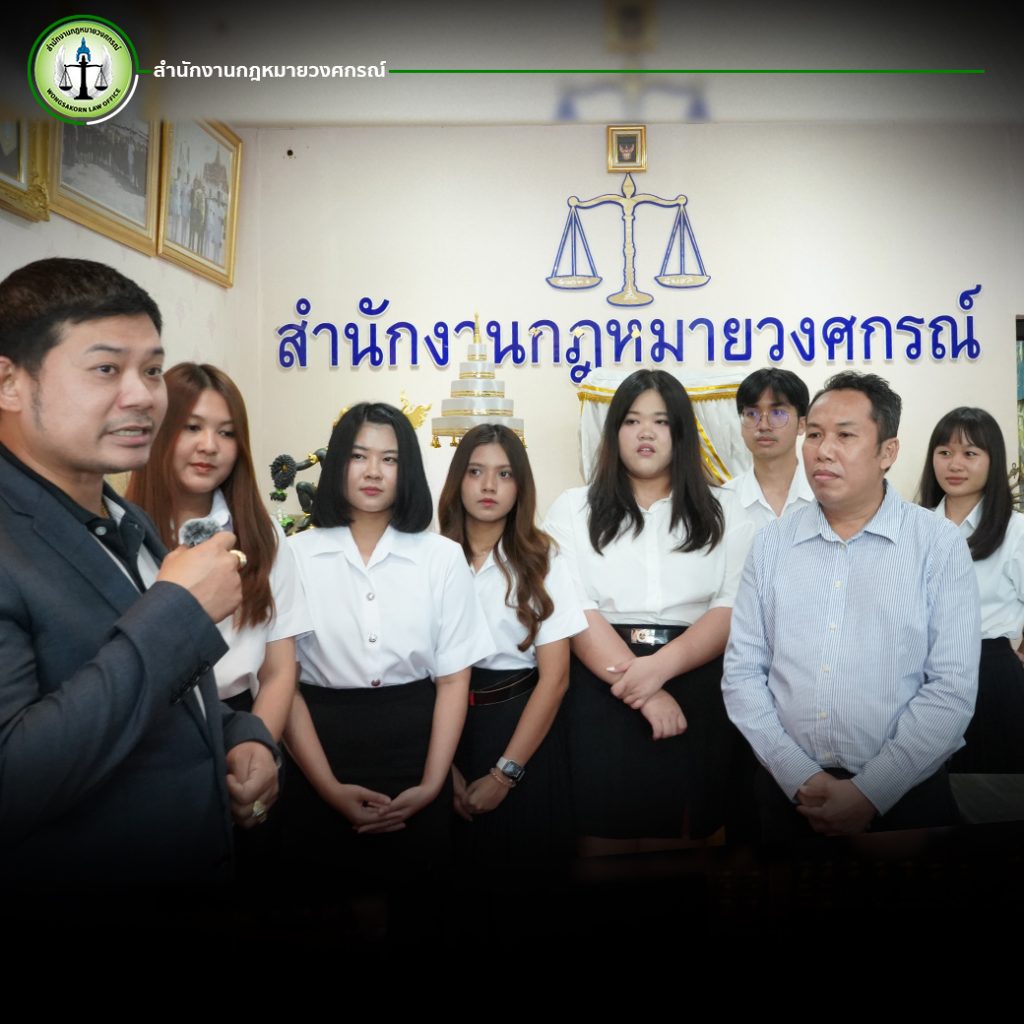
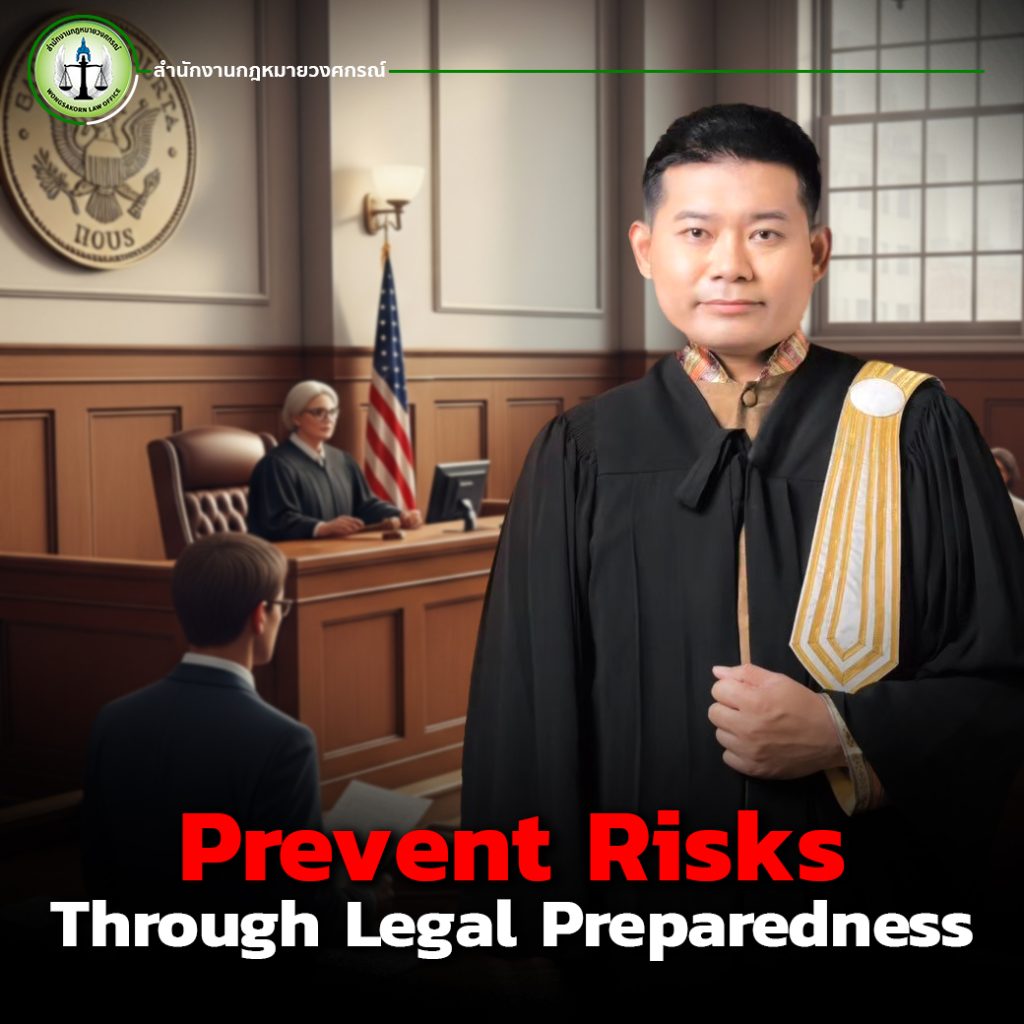
On May 29, 2025, Mr. Supasit Siri, widely known as Lawyer Arm, attended the 12th professional training course on “Inheritance Transfer, Estate Tax Planning, and Will Drafting” at the Miracle Grand Convention Hotel in Bangkok. The session was conducted by Mr. Palachai Fukiattipong (Kru Ta), a renowned advisor in business and tax planning, and the Chairman and CEO of the Yaksuk Group.

To commemorate the occasion and express his sincere respect, Lawyer Supasit presented Mr. Palachai with a framed Pha Yant (sacred cloth) of Luang Pho Ngern, a highly revered Buddhist monk. The training was held in a collegial and engaging atmosphere, fostering a meaningful exchange of knowledge and mutual respect between the speaker and participants.

In addition to acquiring comprehensive knowledge in the field of inheritance and tax planning, Lawyer Supasit also engaged in discussions with professionals and entrepreneurs from various sectors. These interactions not only enriched the learning experience but also served as a valuable opportunity to build strategic connections that may lead to future professional collaborations.

Lawyer Supasit’s participation reflects his dedication to continuous professional development and reinforces the reputation of Wongsakorn Law Office as a trusted provider of legal expertise. It is a clear testament to the principle that learning is a lifelong pursuit and that staying open to new opportunities is essential for sustained growth in the legal profession.

Shares Stolen? Named as a Shareholder Without Consent? Here’s What to Do!

Understanding Shareholder Rights and Legal Remedies When Your Rights Are Violated

In the business world, owning “shares” means having a stake in a company—whether small or large. Shareholders have both rights and responsibilities under the law. However, problems often arise, such as being named as a shareholder without knowing, or suddenly finding that your name has disappeared from the shareholder list without explanation.

If you suspect you’re in one of these situations, this article will help you understand your legal rights and what actions to take.

What is a Share?

A share represents ownership in a company, especially a limited company or public limited company. Shareholders are entitled to dividends, voting rights at shareholder meetings, access to certain documents, and the right to claim benefits proportional to their shareholding.

Common Shareholder Problems

1. Being Named a Shareholder Without Consent
You may be shocked to discover your name listed as a shareholder in a company you’ve never dealt with. This often happens when someone uses your personal information (e.g., copy of ID card, house registration) to register a company without your knowledge or consent.

2. Name Removed from the Shareholder List
On the other hand, some genuine investors find their names missing from the official shareholder register, possibly due to forged transfers, internal manipulation, or deliberate exclusion by the company.

What Can You Do Legally?

Check Records with the Department of Business Development (DBD)
Visit the DBD website to verify your shareholder status or request copies of shareholder lists (Form BorJor.5). If you find your name wrongly added or missing without cause, follow these steps:

If You Were Wrongfully Listed as a Shareholder

🔹 File a Police Report
Report the unauthorized use of your identity at your local police station. This report will serve as key evidence in any future legal proceedings.

🔹 Notify the Department of Business Development
File a complaint with the DBD and request a correction or cancellation. Attach evidence such as the police report, denial letter, and any documents misused without your permission.

🔹 Take Legal Action
If the case involves forgery or falsified signatures, consider filing a criminal case for document forgery and a civil case to claim damages or nullify the registration.

If Your Name Was Removed as a Shareholder

🔸 Gather Investment Evidence
Collect proof of your investment, such as fund transfer slips, share purchase contracts, or bond certificates.

🔸 Send a Written Request to the Company
Formally demand that the company correct the shareholder list and attach your investment evidence.

🔸 File a Petition with the Court
If the company refuses to cooperate, you may file a petition with the court to compel the company to correct its records and legally recognize your shareholder rights.

Legal Penalties

Forgery or unauthorized removal of shareholder names may constitute criminal offenses under Thai law:

  • Document forgery (Section 264 of the Penal Code)
  • Using forged documents (Section 268)
  • Fraud (Section 341)

Penalties may include imprisonment, fines, or both.

Protect Yourself from Becoming a Victim

• Never hand over sensitive documents (ID card, house registration) unnecessarily.
• Regularly check your shareholder status, especially if involved in business dealings.
• Consult a lawyer immediately if anything seems suspicious.

Don’t Lose Your Legal Rights—Seek Legal Help

Shares are not just pieces of paper—they represent your rights and financial stake. If your name was added or removed without your consent, take immediate legal steps. These issues can lead to serious legal and financial consequences if ignored.

If you suspect you’re a victim of shareholder fraud or rights violation, consult a lawyer without delay. >>Contact Us<<
What is a Notary Public? Why Do Certain Documents Need Notarization?

You may have heard the term “Notary Public,” especially when dealing with legal documents related to overseas matters. However, many people still don’t fully understand what it means, why it’s important, and why certain documents require this kind of verification. This article will explain it clearly to help you avoid legal issues in the future.

What is a Notary Public?

A Notary Public in Thailand is a licensed lawyer who has been officially appointed by the Lawyers Council of Thailand. They are authorized to verify signatures, certify documents, and confirm certain facts. The notarization process gives a document legal credibility and enables it to be accepted in other countries.

The role of a Notary Public is not just to stamp and sign. They must also verify the authenticity of the document, identify the person signing, and ensure that the document truly exists and is genuine. This helps prevent forgery and fraudulent use.

What Types of Documents Require a Notary Public?

Notarization is often necessary for documents involving international dealings, such as:

1.     Power of Attorney
Especially when used abroad, such as authorizing a lawyer in another country or handling overseas property transactions.

2.     International Business Contracts
Including joint venture agreements, sales contracts, or documents submitted for foreign tax filings or company registration.

3.     Documents for Visa Applications or Overseas Study
Such as income certifications or parental consent forms.

4.     Educational or Government Certificates
Required for embassy procedures or use in another country, often needing both signature and document authenticity verification.

5.     Affidavits
Used to confirm someone’s identity or legal standing in overseas legal applications.6.     Documents for Embassies or Consulates
Many embassies require notarized documents before translation and legalization by the Ministry of Foreign Affairs or the embassy itself.

What Happens If You Don’t Have a Notarized Document?

If your documents are not notarized when required, you may face:

  • Rejection by foreign authorities.
  • Delays due to having to redo the documents properly.
  • Visa rejections or failed financial/property transactions.
  • Missed business opportunities due to invalid or late documentation.

That’s why it’s important to check beforehand whether your documents require notarization and to prepare them correctly from the start.

Common Misunderstandings About Notary Publics

Some people believe that their own signature or a witness is enough. Others mistakenly think a village headman or local official can act as a Notary Public. In Thailand, only licensed lawyers who have been formally certified may serve as Notary Publics.

If someone who lacks legal authority certifies your documents, those documents may be invalid or rejected outright.

Notary Publics Are More Relevant Than Ever

In today’s globalized world, international transactions are common—for students, businesspeople, or even travelers. Many will eventually need notarization services.

Even if you’re not currently dealing with foreign affairs, having certified documents from a qualified lawyer helps prevent future legal issues.

Notarization Builds Trust

A Notary Public is a legal safeguard that ensures your documents are trustworthy and valid—especially when used internationally. Don’t overlook this crucial step.

If you’re unsure whether your document needs notarization or you don’t know how to prepare it properly, consult a lawyer to avoid unnecessary problems.

Certified Notary Public Services from Wongsakorn Law Office

Wongsakorn Law Office offers notarization services through licensed Notary Public lawyers who are officially recognized by Thai law. We can notarize all types of documents, whether for education, business, or international litigation.

We focus on accuracy, speed, and security—so you can be confident your documents will be accepted and legally valid wherever they go.

📞 Need Notary Public services? Contact us today or reach us on LINE: @wongsakorn

In Which Cases Is Defamation Not Considered a Crime Under the Law?

In the era of social media, expressing opinions, posting, sharing, or criticizing others has become a daily occurrence. However, many times these actions may unknowingly lead to charges of “defamation.” Nevertheless, not every case of speaking negatively about someone is always considered illegal. The Criminal Code, Section 329, clearly provides exceptions where such speech is “not considered a crime” if it falls under the legal provisions.

This article will help you understand the types of cases in which, although the conduct may amount to defamation, it is not considered a crime because it is justified and protected by law.

What is Defamation?

According to Section 326 of the Criminal Code:
“Whoever makes a false statement about another person to a third party in a manner likely to damage that person’s reputation, cause them to be despised or hated, commits the offense of defamation.”

The act of “making a false statement” can occur through spoken words, writing, posting messages online, sending private messages, or any action that causes others to believe negatively about the person, resulting in harm to that individual.

The penalties for defamation range from imprisonment for up to 1 year, a fine of up to 20,000 baht, or both. The penalties may be more severe if the offense is committed publicly (Section 328).

Exceptions: “Not Guilty of Defamation” under Section 329

Even if the statements cause damage to another person, if there is a justifiable reason or the act is protected by law, it is not considered an offense. Clear examples of exceptions under Section 329 include:

1. Opinions or Statements Made in Court
“Any opinion or statement made by a party, lawyer, or witness during judicial proceedings.”
This includes testimonies, witness statements, or factual declarations made in court. If done in good faith, these are not considered defamation—even if the statements damage someone’s reputation.

2. Honest Criticism
“An expression of opinion or criticism made in good faith.”
The law recognizes the following types of criticism as not being offenses if made honestly:

  • Criticizing someone’s actions for public benefit
  • Criticizing government officials or public office holders
    Criticism made in the capacity of a teacher, instructor, or supervisor
    Criticism of individuals who voluntarily present themselves to the public, such as singers, actors, or politicians
  • Expressing opinions on publicly disclosed works such as books, TV shows, songs, or articles

It’s important that these criticisms are made in good faith, not intended to cause harm, and kept within reasonable limits—such as constructive feedback rather than public shaming or insults.

3. Protection of Lawful Rights or Interests
“The act of reporting, expressing opinions, or making allegations to officials so they may carry out their official duties.”
If you file a police report, give information to authorities, or submit a complaint to a government agency in good faith and with supporting evidence, such actions are not considered defamation—even if they involve negative statements about others.

Real-Life Examples of When ‘Speaking Out’ Is Not a Crime

  1. An employee posts publicly about an employer who failed to pay wages If the post is made in good faith, with supporting evidence, and without exaggeration or malicious intent, the court may consider it a truthful expression of opinion made for the public benefit.
  2. A journalist criticizes a politician
    If the information presented is based on verifiable facts and the language used is not excessively insulting or defamatory, it would not be considered an offense.
  3. Residents file a complaint about government officials 

involved in corruption If the allegations are supported by evidence and reported to the appropriate authority, it is not regarded as defamation under the law.

What to Do If You Are Accused of Defamation?

If you have been accused of defamation and believe that your actions fall within the legal exceptions, you should take the following steps:

  1. Gather evidence that shows your intention was in good faith — such as proof of unpaid wages, screenshots, photos, or chat logs that support your claims.
  2. Avoid posting further responses that might be considered repeated or additional defamatory statements.
  3. Consult a lawyer immediately to assess whether your actions fall under any legal exceptions and to plan a clear strategy for defending your case.

Defamation Is Not Always a Crime — If Made in Good Faith

Even if you are accused of defamation, your actions may not be considered unlawful if they meet one of the following legal exceptions:

  • It was a good-faith critique made in the public interest
  • It was a report or accusation made to a public official with authority
  • It was an opinion or statement made in court proceedings
  • It was an honest opinion made within reasonable limits

These situations are protected under Section 329 of the Thai Criminal Code, which provides exceptions to defamation liability.

If you or someone you know is accused of defamation, do not panic or admit guilt immediately. Instead, consult a defamation lawyer promptly to plan a clear defense strategy and fully protect your rights.

👉 Click here to consult a defamation lawyer.

Influencer Rights Violated! Sexy Photos Used in Ads Without Permission – Can You Sue?

In today’s digital age, being an influencer has become one of the most sought-after careers in the online world. An influencer’s image and identity are valuable assets that drive both income and reputation. However, as online media becomes increasingly widespread, there are growing instances of bad actors misusing influencers’ photos—especially sexy or revealing ones—for commercial purposes. These include unauthorized use in advertisements for products, supplements, or services.

This is no small matter. If you’re an influencer—or even just a regular person—whose image has been used without consent, you have full legal rights to take action against those responsible. Thai law offers protection in such cases, and it’s important to consult a lawyer promptly to explore your legal options and potentially file a lawsuit.

Using pornographic or sexy images without permission = Violation of personal rights + Defamation

Using someone’s image without permission, especially images that could damage their reputation—such as sexy outfits, swimsuit photos, or provocative poses—and using them to advertise products without proper context, or alongside misleading text, may constitute multiple legal violations under Thai law, including:

  • Violation of personal rights under the Civil and Commercial Code, Section 420
  • Defamation by means of advertisement, if the image or accompanying message causes damage, contempt, or hatred toward the person, under the Criminal Code, Sections 326 and 328
  • Violation of the Personal Data Protection Act, B.E. 2562 (PDPA) if a person’s image is used for benefit without their consent

Offense under the Computer Crime Act, B.E. 2560, in the case of publishing images or data that causes harm to the data subject

Influencers = Public Figures Who Must Be Protected in the Same Way

Although influencers are considered “public figures” in the context of marketing or media, this does not mean that anyone can freely use their image or leverage their fame for commercial gain. Influencers, like any other individual, have Image Rights and Personal Data Rights.

If the image is taken for a specific purpose—such as to promote art, fashion, or personal work—and is later edited or used inappropriately to advertise products related to sex, weight-loss supplements, or anything that could damage their reputation, this is considered a serious violation.

Common Examples of Such Incidents:

  • A fashion influencer posts a bikini photo on the beach, and it is edited with misleading text to advertise weight-loss products.
  • A photo from an Instagram account of a social media personality is taken and used in a page selling cream without prior consent.
  • A model’s sexy photo taken in a fashion context is placed on an advertisement for gambling websites or inappropriate services.

These situations, even without direct slander or accusations, can still cause significant harm to the individual’s reputation and career opportunities. They are entitled to claim damages or even pursue criminal charges.

What Should Influencers Do When Their Rights Are Violated?

  1. Gather evidence immediately, such as screenshots of the infringing post, information about the poster, and the original image that was used.
  2. Do not respond emotionally, as it may escalate the situation or cause you to become the wrongdoer yourself.
  3. Consult a lawyer to assess the damages, collect evidence, and take legal action both civilly and criminally.
  4. File a police report or a lawsuit in court. A lawyer can assist in handling the case correctly and quickly.

Request removal of the content or file a complaint with the relevant platform, such as Facebook, Instagram, TikTok, or the website where the infringement occurred.

Why Consult a Lawyer Specifically?

The process of filing a lawsuit for violations of personal rights and defamation on the internet involves complex legal details. These include claiming rights to the image, determining the intent of the violator, and demanding fair compensation for damages. An experienced lawyer will help you:

  • Analyze the case accurately
  • Collect all necessary evidence
  • Professionally file the lawsuit
  • Protect your reputation and rights in the long run

Influencers should not remain passive when their rights are violated, whether it is the unauthorized use of their image or the malicious editing that harms their reputation. Your image and reputation are valuable assets. If they are damaged, immediate legal action must be taken.

If you’re facing such an incident, don’t wait! Consult lawyer Arm from Wongsakorn Law Office immediately — because your image is your right, and we are here to protect it to the fullest.

Defamation Case on Platform X (Twitter): Only Accepting Apologies in Cash

“In an era where social media has become a platform for free expression, many may forget that ‘freedom of speech’ must still operate within the boundaries of the law. This is especially true when posting or retweeting messages that may be considered defamatory, which Thai law clearly regards as an offense. Even if you did not write the message yourself, simply retweeting a post that insults or uses offensive language towards others can lead to legal action and potential liability for damages.”

Retweeting Insults for Fun, but in the End, You Have to Pay Real Money!

This is based on a real case handled by Wongsakorn Law Office, which represented a victim who had been defamed through rude comments reposted on Platform X (formerly known as Twitter). The victim felt that their reputation was tarnished, their honor was damaged, and they were publicly slandered.

Although the perpetrator did not write the original post, retweeting the message without denying or indicating disagreement led the court to see it as spreading defamatory content, which violates the law.

As a result, Wongsakorn Law Office issued a formal warning to the individual, and an agreement was made stating that the person who retweeted must:

  • Pay 5,000 Baht in damages to the victim.
  • Post an apology to the victim every day at 12:00 PM for one month.
  • Pledge not to post or mention the victim again.
  • Not delete the apology posts.
  • Failure to comply with this agreement will result in an additional 100,000 Baht in damages, along with interest as per the law.

This is not a threat, but rather the outcome of careless use of social media.”

What is Defamation?

According to the Criminal Code, Section 326, “Anyone who makes false statements about another person to a third party in a manner that damages the reputation, dishonors, or incites hatred towards that person is committing the offense of defamation.” This includes speaking, writing, printing, or even posting and sharing online.

If the act is committed through online platforms such as Facebook, Twitter, Instagram, or TikTok, it will be considered defamation by advertisement, which carries a heavier penalty. The maximum punishment can be up to 2 years in prison, a fine of up to 200,000 Baht, or both imprisonment and a fine.

Retweet = Being an Accomplice in Defamation? Is it a Crime?”

A popular question is, “Can just retweeting be considered a crime?”The answer is “Yes.” If you retweet defamatory content without denying or expressing disagreement, the court may view it as your intention to spread the defamatory message publicly, which can make you an “accomplice” in committing the offense.

Don’t Claim It’s Just a Joke or Fun

 Many people post or share content simply to join online trends, without realizing the potential harm to someone else’s reputation, which can be severe and have real consequences. It’s not just a trivial matter.

Statements like “It’s just a retweet, why sue me?” are not valid excuses in court. When the court summons arrives at your door, every post you made can be used as evidence in the case.

Only Accepting Apologies in Cash” is Not a Joke

Online defamation cases have been on the rise, with many victims choosing to pursue legal action seriously. They are not just asking for an apology, but also seeking compensation for the damage to their reputation. In some cases, the compensation can amount to hundreds of thousands or even millions of Baht.

What to Do if You’re Defamed?

 If you are the victim of defamatory posts on social media, here are the steps you should take:

  1. Take screenshots and gather evidence, including images, messages, links, and the date and time of the post.
  2. Consult a lawyer immediately to evaluate your legal options.
  3. Do not respond by insulting or retaliating, as this could make you liable as an accomplice in the offense.

Consult a Lawyer to Prevent Further Damage

Fighting a defamation case is no small matter, as it requires legal expertise in analyzing messages, gathering evidence, and navigating the court process. If you’re looking for reliable legal support, Wongsakorn Law Office is here to assist you every step of the way.

We have a team of lawyers specializing in defamation cases, whether it involves posting, sharing, retweeting, or sending private messages that could be considered defamatory. We will help you assess the case and strategize to protect your rights professionally.

The online world is not a law-free zone. Don’t think that a simple retweet or “playful” insult won’t have consequences, because every message can become evidence in a defamation case. Before you share or post, think carefully, as your words online could come with a real price to pay.

If you need legal advice regarding a defamation case, contact Wongsakorn Law Office immediately to prevent further damage from escalating beyond control.

Certificate Presentation for Chinese Language Interns from Khon Kaen University (Class of 2025)

On May 20, 2025, Wongsakorn Law Office proudly celebrated the successful completion of a two-month internship by two fourth-year students majoring in Chinese Language from the Faculty of Humanities and Social Sciences, Khon Kaen University.

These dedicated students traveled from Khon Kaen Province to our office in Samut Prakan, far from home, to gain real-world experience in Chinese language applications within a legal context. Throughout their internship, they actively participated in translating legal documents, communicating with Chinese-speaking clients, and creating Chinese-language content and articles aimed at cross-cultural communication. Their academic knowledge was effectively applied to practical work, proving the value and relevance of their studies.

On the day of completion, Mr. Supasit Siri (Attorney and Managing Director) and Ms. Nat Polakan (Attorney and Deputy Managing Director) awarded certificates of achievement and shared words of encouragement. They emphasized the importance of using this experience as a stepping stone to future success and professional growth.

Wongsakorn Law Office is honored to have played a role in shaping the career paths of these promising students. We always welcome young individuals with a passion for learning and believe that “real-world experience is one of the most valuable teachers.”

Congratulations once again, and we wish both of you continued happiness, growth, and success in every step of your journey.

How do you choose a lawyer with confidence? Should you go with an independent lawyer or a law firm?

When facing legal issues—whether civil cases, criminal charges, or general disputes—the first thing many people think of is finding a trustworthy lawyer who can offer advice and professional legal representation. But the key question is: What kind of lawyer should you choose? Should you go with an independent solo attorney or a lawyer from a registered law firm?

This article will help you understand the pros and cons of each option, and explain why Wongsakorn Law Office is a strong choice for those who want long-term confidence and reliable legal support.

Pros and Cons of Hiring an Independent Lawyer

Pros of Hiring an Independent Lawyer

  1. Personalized and Flexible Communication
    Independent lawyers often offer a more informal and approachable communication style, making it easier and more flexible to discuss your case.
  2. Potentially Lower Fees
    Since they don’t carry the overhead costs of an office or staff, independent lawyers may offer more competitive or negotiable rates in some cases.
  3. Direct Attention from the Lawyer
    Clients receive one-on-one attention directly from the lawyer, without having to go through assistants or support staff, creating a more personalized experience.

Cons of Hiring an Independent Lawyer

  1. Lack of Continuity in Emergencies
    If the lawyer becomes ill, travels, or unexpectedly passes away, the client may face difficulties continuing the case smoothly.
  2. Harder to Track or File Complaints
    In situations where the lawyer disappears, abandons the case, or becomes unreachable, it may be difficult to pursue accountability or legal recourse.
  3. No Support Team
    For complex cases involving large volumes of documentation or requiring specialized knowledge, a solo lawyer may struggle to handle everything alone.

Pros and Cons of Hiring a Law Firm

An increasingly popular option today is choosing legal services from an established law firm, such as Wongsakorn Law Office, which provides clients with a full-service team of professional attorneys.

Pros of Hiring a Law Firm

  1. Clear Structure and Accountability
    Corporate law firms are registered with the Department of Business Development and the Lawyers Council of Thailand. They have a verified office location and can be reliably contacted in any situation.
  2. Team-Based Support
    If your assigned lawyer is unavailable due to personal issues, another qualified team member can seamlessly step in to continue handling your case without disruption.
  3. Long-Term Stability
    Ideal for cases that take several years, as clients can rely on the firm’s continued operations and consistent support throughout the legal process.
  4. Comprehensive Legal Services
    Firms like Wongsakorn Law Office offer a full range of services—from criminal, civil, and administrative law to asset investigations, missing persons searches, and property recovery—all in one place.

Cons of Hiring a Law Firm (Compared to an Independent Lawyer)

  1. Slightly Higher Fees
    Due to office overhead and staff salaries, the cost may be slightly higher—but it reflects the added stability, security, and professional standards clients receive.
  2. Advance Appointments Required
    With structured workflows and scheduled operations, clients are usually required to book appointments in advance to ensure smooth and timely consultations.

Why Choose Wongsakorn Law Office?

  • Officially Registered with a Verified Office
    More than just a Facebook page or a mobile number—Wongsakorn Law Office has a physical, verifiable office location registered with the proper authorities.
  • In-House Legal Team
    If one lawyer is unavailable, other qualified team members are ready to step in, ensuring your case is never left unattended.
  • Emergency Support and Multiple Contact Channels
    Whether by phone, Facebook, or LINE, clients can easily reach the firm for updates, consultations, or urgent matters at any time.
  • Proven Reputation and Real Results
    Wongsakorn Law Office has served a wide range of clients—from individuals to corporate entities—with consistently high levels of satisfaction.
  • Integrity and Accountability First
    We understand that every legal case deeply impacts our clients’ lives, and we are committed to handling each one with honesty and responsibility.

Think Carefully Before Choosing a Lawyer

Choosing a lawyer isn’t just about the price—it’s about trust, accountability, consistent case follow-up, and long-term legal security. No matter which type of lawyer you consider, credibility and responsibility are essential qualities to look for.

If you’re seeking dependable, organized, and long-term legal support, Wongsakorn Law Office is a wise and secure choice. Let us be the legal partner you can rely on—whether your case is big or small, our dedicated team is here for you every step of the way. Consult with a Lawyer Today — Click to >>Contact Us<<
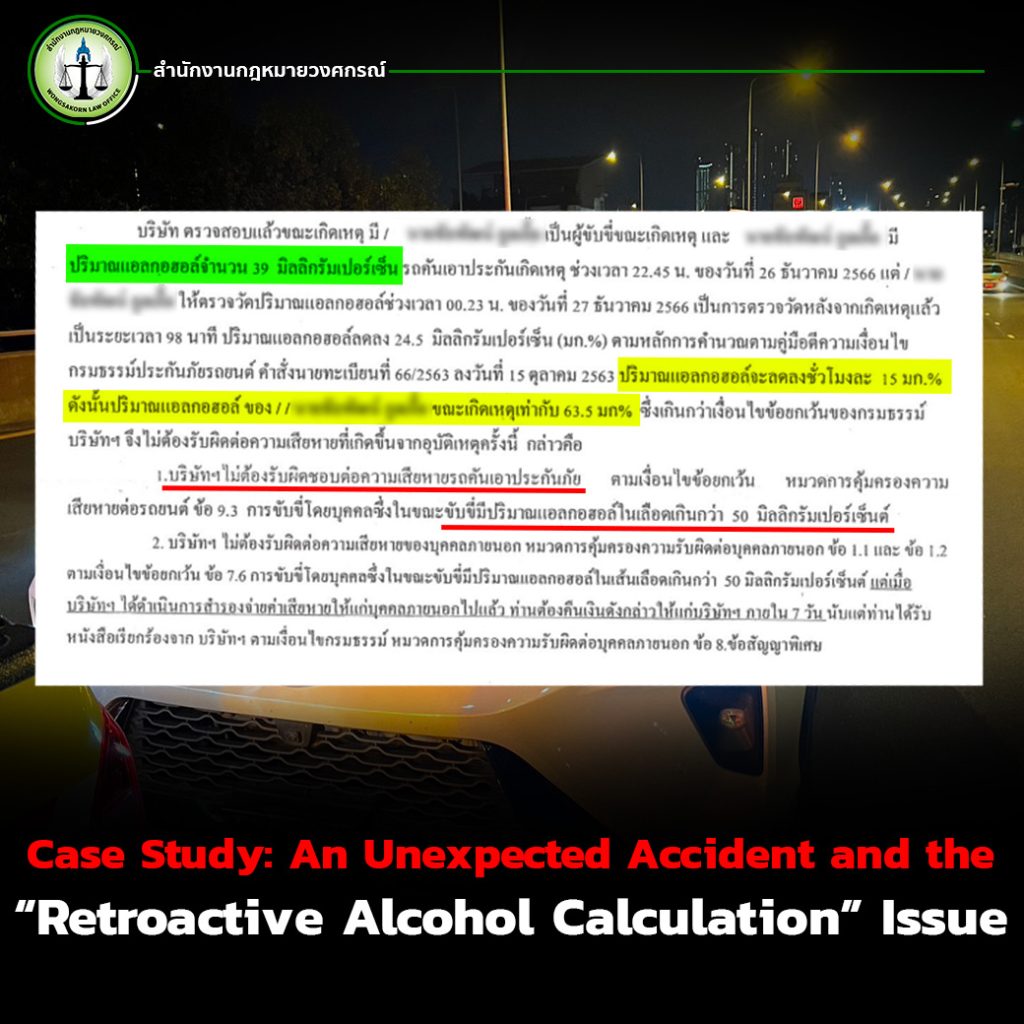
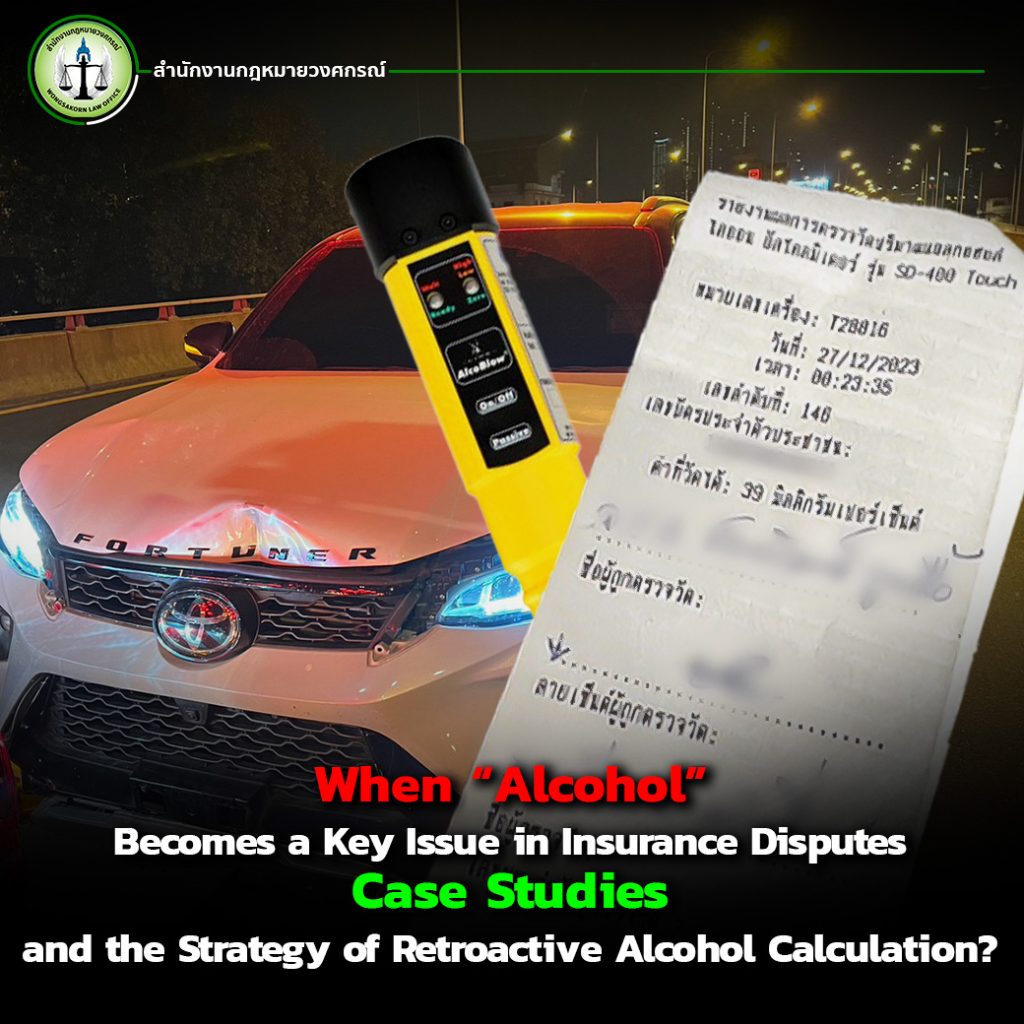
Accident Sparks Dispute Over Responsibility: Authorities Turn to Retrospective Blood Alcohol Calculation

In the world of insurance, particularly in traffic accident cases, the interpretation of policy conditions often becomes a critical issue that can lead to disputes between insurance companies and policyholders. One case that clearly illustrates this problem involved an insurer denying liability by citing a “retrospective calculation of blood alcohol content (BAC),” even though the actual test result was within the legal limit. The court ruled that the insurer’s denial was unjustified and ordered the company to pay full compensation in accordance with the terms of the policy.

Accident and Legal Dispute: Retrospective Alcohol Calculation at the Center of Insurance Claim Denial

The case stems from a serious accident that occurred on February 9, 2024, involving a pickup truck with license plate 2 XX 3456, Bangkok. The vehicle was heavily damaged in the crash, with three passengers seriously injured and one fatality. The plaintiff, who is both the vehicle owner and the insured party, advanced medical and funeral expenses on behalf of the victims and their families.

The truck was covered by both mandatory and voluntary motor insurance policies. Defendant No. 1 is the compulsory insurance provider, responsible for coverage under Thailand’s Motor Vehicle Accident Victims Protection Act, while Defendant No. 2, Company 1234 Public Co., Ltd., is the voluntary insurer, liable for damages including vehicle repair, loss of use, medical expenses, and death compensation according to the insurance policy.

However, when the plaintiff submitted a claim to Defendant No. 2, it was rejected. The company cited that the driver allegedly had a blood alcohol content (BAC) above the legal limit, based on retrospective calculation methods using partial data. This was despite an official hospital test result confirming that the driver’s BAC was only 37 milligrams percent—well below the legal threshold of 50 milligrams percent.

The controversy now centers on whether such retrospective estimations can legally override verified medical test results, and whether the insurer’s refusal constitutes a breach of contract and consumer rights.

Dispute Over Facts and Legal Grounds: 

The plaintiff has strongly contested the insurer’s rejection of the claim, arguing that it lacks both legal and scientific merit. Key points raised by the plaintiff include:

  • No scientifically valid retrospective test was conducted by the defendant.
  • The insurer had no access to the driver’s BMI or relevant health data necessary for an accurate alcohol metabolism calculation.

The investigating police officer did not file any DUI charges against the driver, indicating that authorities did not consider the driver intoxicated at the time of the accident.

The plaintiff contends that the insurer’s reliance on a retrospective blood alcohol content (BAC) calculations is merely a pretext to evade responsibility, contradicting both the factual evidence and applicable legal standards.

As a result, the plaintiff appointed legal counsel to formally request supporting documents and follow up with the defendant. However, the defendant ignored all inquiries, failed to respond, and withheld evidence, leaving the plaintiff no choice but to bring the matter before the court for adjudication.

Court Ruling Establishes Insurer’s Liability in Dispute Over Accident Claim

After a thorough review of the evidence and testimony presented, the court issued a final ruling holding Thai Vivat Insurance Public Company Limited (Defendant No. 2) liable for compensation to the plaintiff, with the judgment detailing the following:

  1. Vehicle Damage Compensation:
    The insurer must pay for the damages to the vehicle under the terms of the voluntary motor insurance policy, specifically under the “Own Damage” section, up to the insured amount stated in the policy.
    ▸ Alternatively, the company may opt to repair the vehicle to its original condition.
  2. Towing Fee:
    The insurer must pay 10,500 THB for towing, along with 15% annual interest, calculated from March 6, 2023, until full payment is made.
  3. Vehicle Storage Fee:
    The insurer must pay 10,000 THB per month from the filing date (June 18, 2024) until the compensation is fully paid or the vehicle is removed from storage.
    ▸ However, the total amount for towing and storage shall not exceed 20% of the repair cost.
  4. Legal Representation:
    The insurer must pay 5,000 THB in attorney’s fees to the plaintiff.
  5. Court Fees:
    The insurer is responsible for court fees based on the portion of the claim awarded to the plaintiff.
  6. Compulsory Insurance Claim (Defendant No. 1):
    The court dismissed the case against the compulsory insurance provider, ordering each party to bear its own legal costs.
  7. Other Requests:
    All additional claims by the plaintiff were dismissed.

Don’t Wait Until You’re a Victim! Seek Legal Advice if Faced with Retrospective Alcohol Calculations in Insurance Claims

This case serves as a powerful example of how insurers may wrongfully use “retrospective blood alcohol content (BAC) calculations” without valid scientific or legal grounds. Such practices not only lack credibility but may also violate principles of fairness and due process.

If an official alcohol test conducted by a certified medical facility shows that the BAC is within the legal limit, and if no charges were filed by the investigating officer, an insurance company cannot lawfully rely on retrospective estimates to deny a claim.

retrospective blood alcohol content (BAC) calculations results without clear scientific evidence should not be allowed as a justification to avoid liability. Doing so may unfairly deprive policyholders of their rights and potentially expose the insurance company to legal consequences.

This case reaffirms a critical principle: insurance contracts must be interpreted based on facts and evidence—not speculation or unsupported assumptions. Insurers are obligated to comply with the terms of the policy strictly, without discrimination or unjustified denials of coverage.

If you are facing issues related to insurance claims or retrospective alcohol calculations, we strongly recommend consulting with a qualified legal professional. Protect your legal rights before it’s too late.

If you or someone you know has encountered a similar situation, don’t stay silent—your silence may be interpreted as acceptance of injustice.
📲 Contact a lawyer via LINE: @Wongsakorn or click Contact Us.

Insurance Denies Claim Citing Retroactive Alcohol Test — Lawyer Sues and Wins!

In the world of car insurance, policyholders generally expect that when unforeseen incidents occur, the insurance company will fulfill its duty to provide assistance and fairly compensate for any damages. However, reality doesn’t always align with such expectations. One particularly notable case involves an insurance company that cited retroactive alcohol test results as grounds to deny a claim, despite lacking clear evidence. Ultimately, the dispute escalated to a court battle.

A Cautionary Case: How It Began – The Accident and Insurance Denial

The incident began when a policyholder was involved in a car accident that caused significant damage to the vehicle. Under standard insurance obligations, the company is expected to inspect the damage, assess the situation, and arrange for timely repairs to restore the vehicle to its original condition.
However, instead of providing coverage, the insurance company issued a formal letter denying the claim, citing the reason that “the driver’s blood alcohol level exceeded 50 milligrams percent at the time of the incident.”

When Evidence Is Unclear: No Actual Test Results at the Time of the Incident

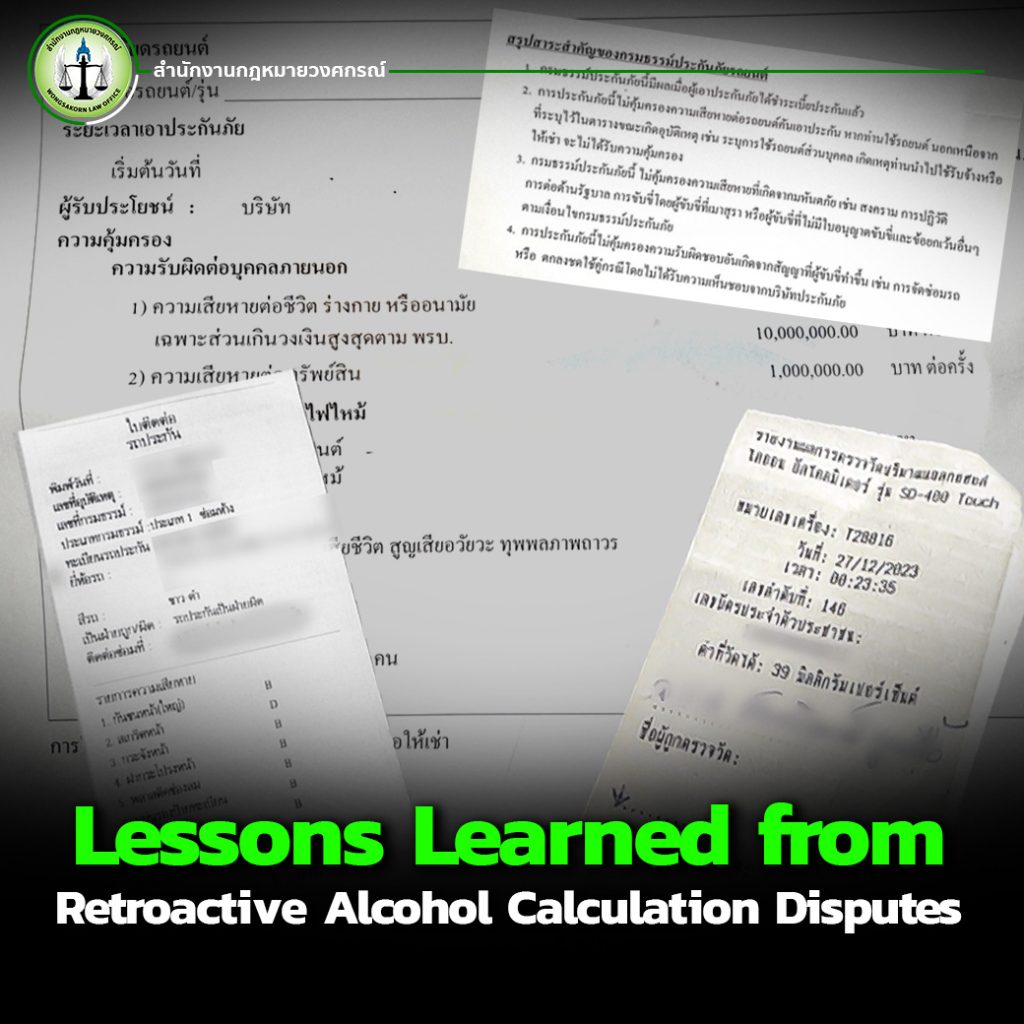
Although it may seem that the insurance company was following the terms of the policy, upon closer examination, several uncertainties emerge. The company was unable to provide clear evidence of an alcohol test conducted at the time of the accident. Furthermore, they could not confirm that the testing equipment was certified to meet the required standards, nor was there a signature from the driver on the document confirming the test results.

Key Issue of the Case: Retroactive Alcohol Testing Without Evidence

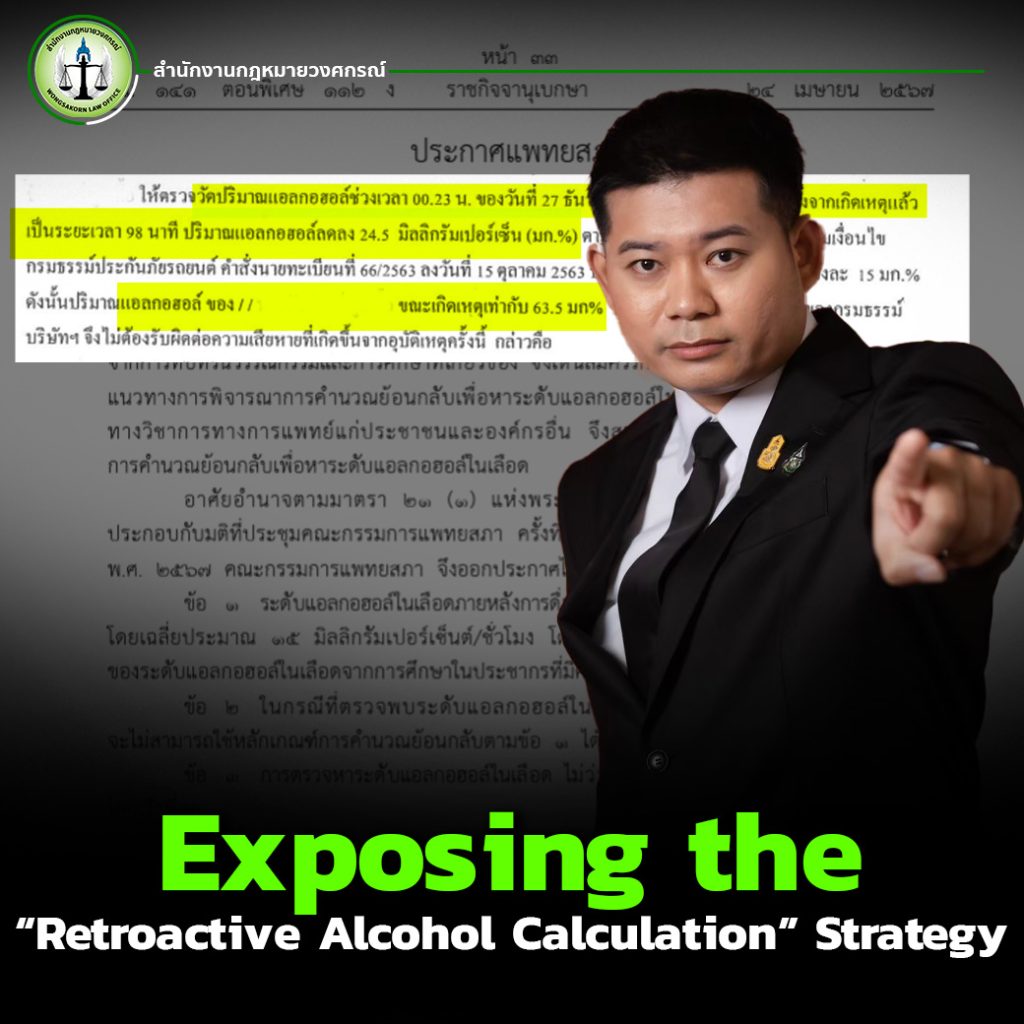
The key issue in this case revolves around the insurance company’s practice of retroactively counting alcohol levels without any evidence of an actual alcohol test conducted at the time of the incident. This approach contradicts the directive issued by the Registrar’s Order No. 66/2563, which clearly states that the exclusion of liability based on alcohol conditions must be assessed based solely on the time of the incident.

Not Waiting to Be Exploited: Lawyer Takes Immediate Action

When the policyholder realized they were not being treated fairly, they reached out to Wongsakorn Law Office for assistance. The lawyer then took immediate steps to assert the policyholder’s rights by sending a formal letter demanding compensation from the insurance company. The letter referenced the regulations of the Office of Insurance Commission (OIC), stating that the insurance company’s delay or disregard in processing the claim violated the standards set under the Non-Life Insurance Business Act, B.E. 2566.

Court Ruling: Insurance Company Must Compensate

Ultimately, the case was brought to court, where all the evidence was considered. The court ruled in favor of the plaintiff, stating that the insurance company’s claim of retroactive alcohol testing without evidence to confirm the driver’s status at the time of the incident was an unlawful denial of liability.

Court Orders Compensation of Nearly 620,000 Baht, Including:

  • Car repair costs: 550,000 Baht, with 15% annual interest
  • Towing fees: 4,500 Baht
  • Loss of use of the vehicle: 50,000 Baht
  • Medical expenses: 5,506.69 Baht
  • Legal fees: 10,000 Baht

Key Lesson from This Case: Consumers Should Consult a Lawyer Immediately After an Incident

This case clearly illustrates that consumers are at a disadvantage when dealing with insurance companies that seek to avoid liability using vague excuses, such as retroactive alcohol testing, without proper and clear supporting evidence.
This serves as another example emphasizing the importance for policyholders to have a lawyer who understands insurance law to provide advice and help pursue legal action if they are being taken advantage of.

Experienced Insurance Lawyer : When Insurance Companies Cite Retroactive Alcohol Testing – Wongsakorn Law Office

Wongsakorn Law Office is a law firm with extensive experience and expertise in insurance litigation, particularly in cases where insurance companies deny liability by citing retroactive alcohol test results without scientific evidence to support the claim. With our experience, we have never lost a case of this nature. If you or someone close to you has encountered a similar issue, don’t give up. We highly recommend consulting a lawyer as soon as possible, so you can fully exercise your legal rights and demand fairness.

 Moreover, it is crucial to have a lawyer from the very beginning. In reality, insurance companies have lawyers ready to fight from the moment the accident happens. So, why shouldn’t you have a lawyer from the moment the incident occurs?
Don’t wait until it’s too late and end up with nothing — consulting a lawyer right away is the best solution. >>Contact us<<

Line @ คลิก! โทรหาเรา คลิก!