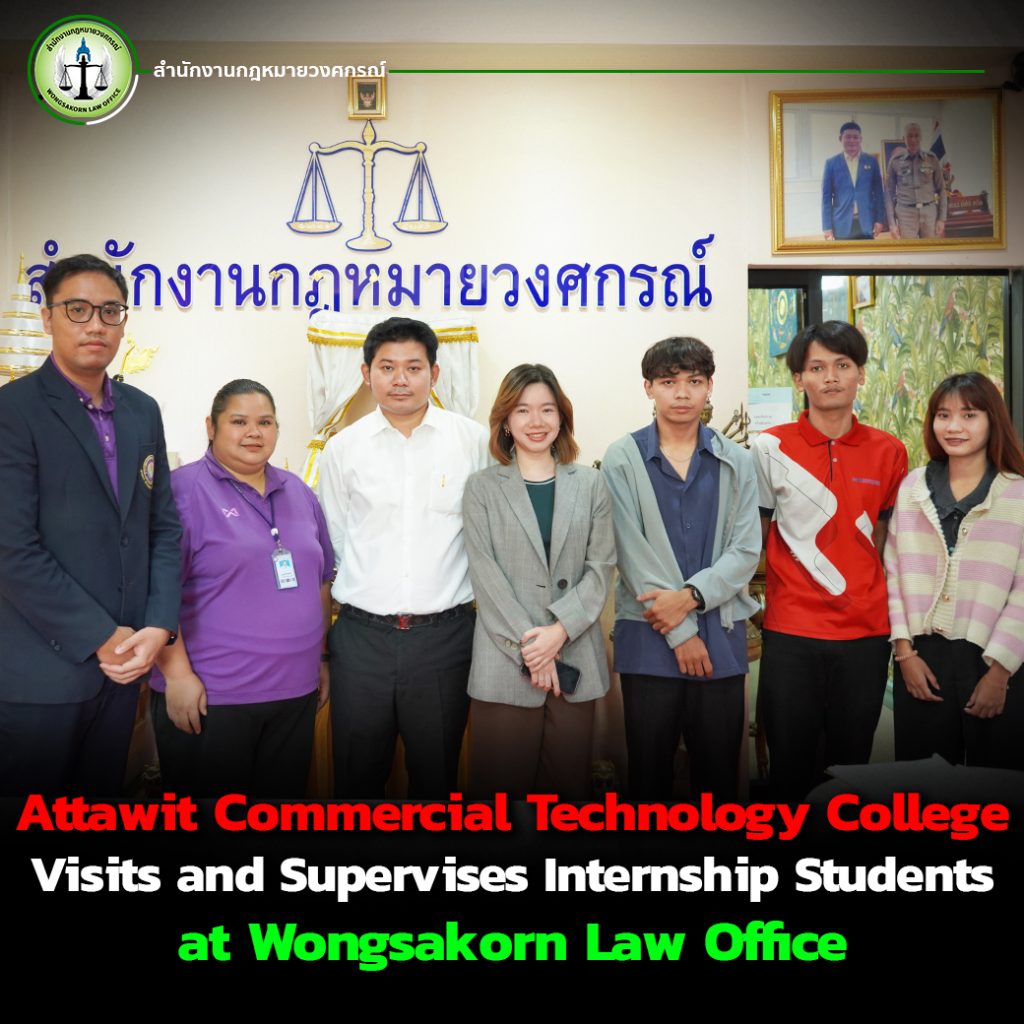
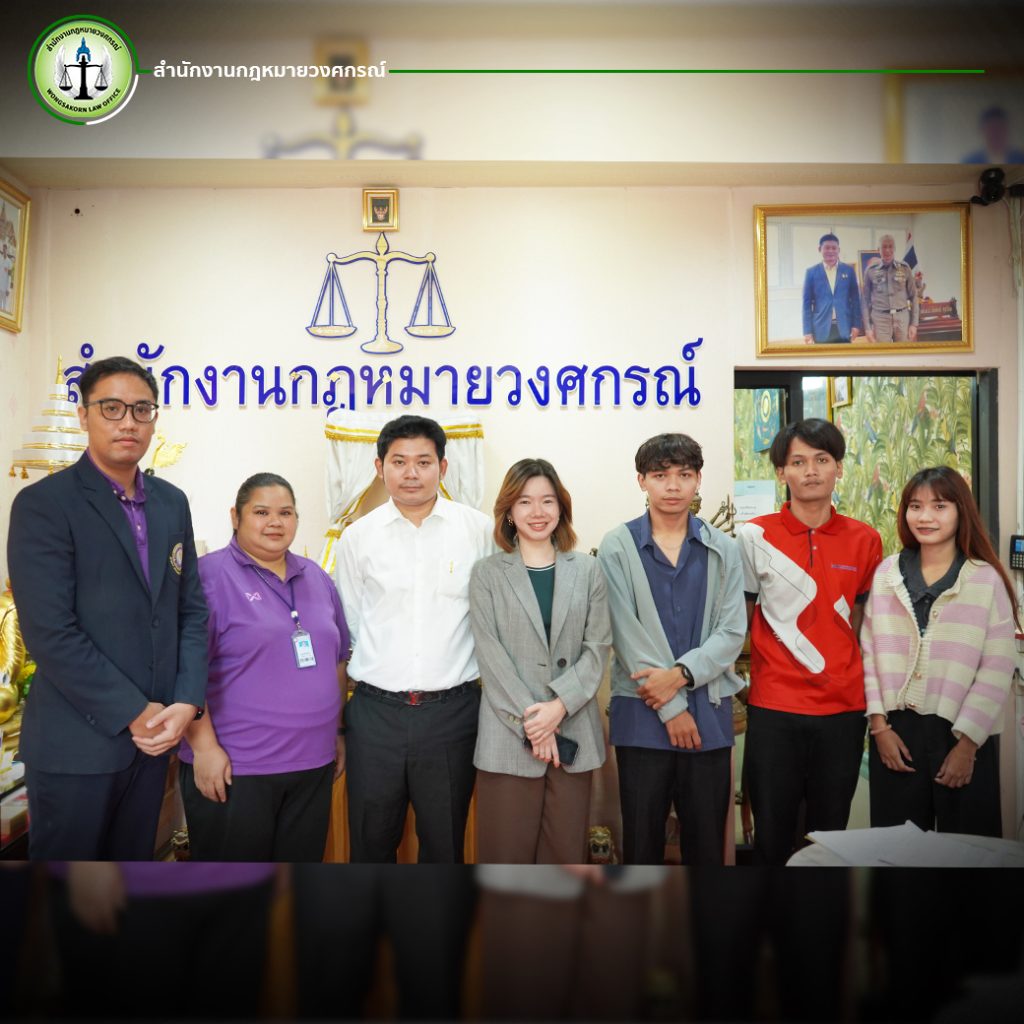
On August 15, 2025, Wongsakorn Law Office had the pleasure of welcoming faculty members from Attawit Commercial Technology College, namely Ms. Natrapee Ritasos, Lecturer in Accounting, and Mr. Chattrathongchai Jitrucktham, Lecturer in Logistics. The visit aimed to follow up and supervise three accounting students currently undertaking their professional internship at the firm.
During the visit, Mr. Arm Supasit Siri, Managing Director, and Ms. Nat Nat Pollakan, Deputy Managing Director, warmly welcomed the guests and engaged in discussions regarding the students’ capabilities and progress. They also provided an overview of the valuable experiences the students had gained during their internship, including professional knowledge, assigned responsibilities, and practical work skills in a real legal office environment.
The meeting was conducted in a friendly and constructive atmosphere. Wongsakorn Law Office is truly delighted to be part of the students’ professional development and looks forward to welcoming more students from Attawit Commercial Technology College for internships in the future.
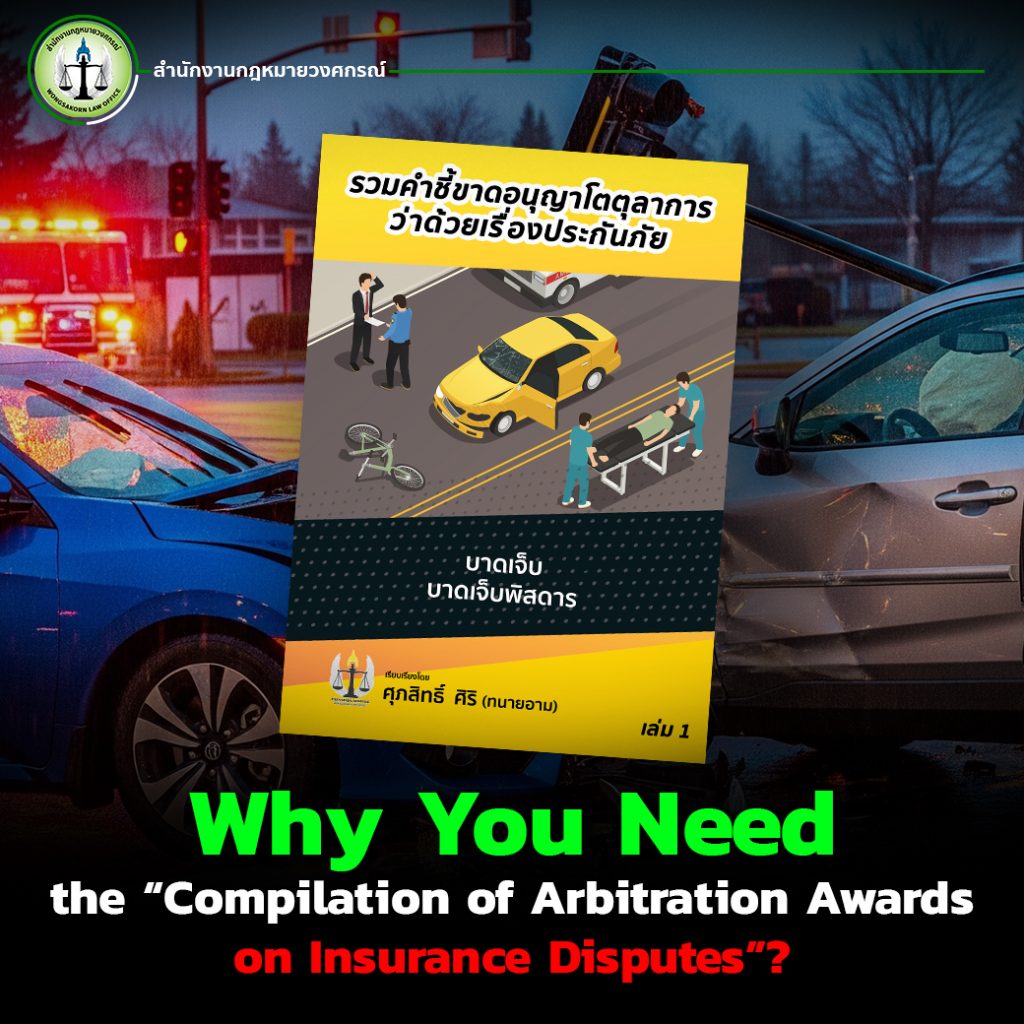
Accidents can happen at any time, without warning, and the consequences can change a life in a matter of seconds. When such incidents occur, policyholders and their families face not only physical pain but also mounting expenses, loss of income, career disruptions, and ongoing family responsibilities as if nothing had happened. The most valuable lesson for every insurance policyholder is to understand their rights and to exercise them properly according to legal procedures. The Compilation of Arbitration Awards on Insurance Disputes published by Wongsakorn Law Office is more than just a collection of case studies; it is a practical guide showing what steps victims should take to protect their rights when disputes arise.
Case Study: Motorcycle Taxi Accident – Loss of a Finger, Loss of Income, and Lost Opportunities
In this case, the victim was a motorcycle taxi driver, a profession that requires full physical capability. Following a serious accident, he lost two joints of his left ring finger. He underwent multiple surgeries and had to stop working for several months, losing the income that supported his family. When he recovered, he sought compensation from his insurer under the terms of his policy, only to face an obstacle: the insurance company claimed he had already settled in a criminal case, which meant he could not claim certain portions of compensation. Without legal knowledge, many policyholders might accept such arguments without realizing they have given up part of their rights, nor knowing how to recover them. This is why having an experienced lawyer to handle the case is crucial to ensure you get what you are entitled to under the law and to protect your rights in full.
The Arbitration Award: Facts Over Allegations from the Insurer
Wongsakorn Law Office pursued the rightful claims, and the arbitrator examined all relevant evidence in light of the policy terms. The decision was as follows:
Medical expenses before the dispute: Verified hospital receipts totaled 79,097 THB, fully payable by the insurer.
Loss of body parts: Loss of two joints of the left ring finger was covered up to the maximum policy limit of 200,000 THB, even if the claim was higher.
Future medical expenses: Claims for prosthetic finger, physiotherapy, and acupuncture were denied due to lack of medical prescriptions or supporting documents.
Other related medical expenses: Travel costs to hospitals and for document handling totaled 4,250 THB, deemed reasonable.
Loss of income: Previously earning 1,000 THB/day, but after reviewing actual circumstances, 750 THB/day was awarded for a 7-month work break, totaling 157,500 THB.
Loss of future earning capacity: Due to the impact on his ability to work as a motorcycle taxi driver, 200,000 THB was awarded.
Non-economic damages: For pain, scarring, and emotional distress, 300,000 THB was awarded.
Attorney’s fees and collection costs: Not awarded under the law.
Total additional payment: 306,997 THB, plus 15% annual interest.
Why You Need the “Compilation of Arbitration Awards on Insurance Disputes”?
This compilation by Wongsakorn Law Office is not theoretical; it contains real cases with actual rulings, serving as an important reference for policyholders, business owners managing risk, and law students seeking practical understanding beyond textbooks. In reality, insurance disputes don’t end with the policy wording or claim form they hinge on facts, evidence, and interpretations shaped by arbitration decisions. Many overlook indirect costs, such as travel to the hospital, medical documentation fees, time spent managing the case, or caregiver costs during recovery. Without proof, these often go uncompensated.
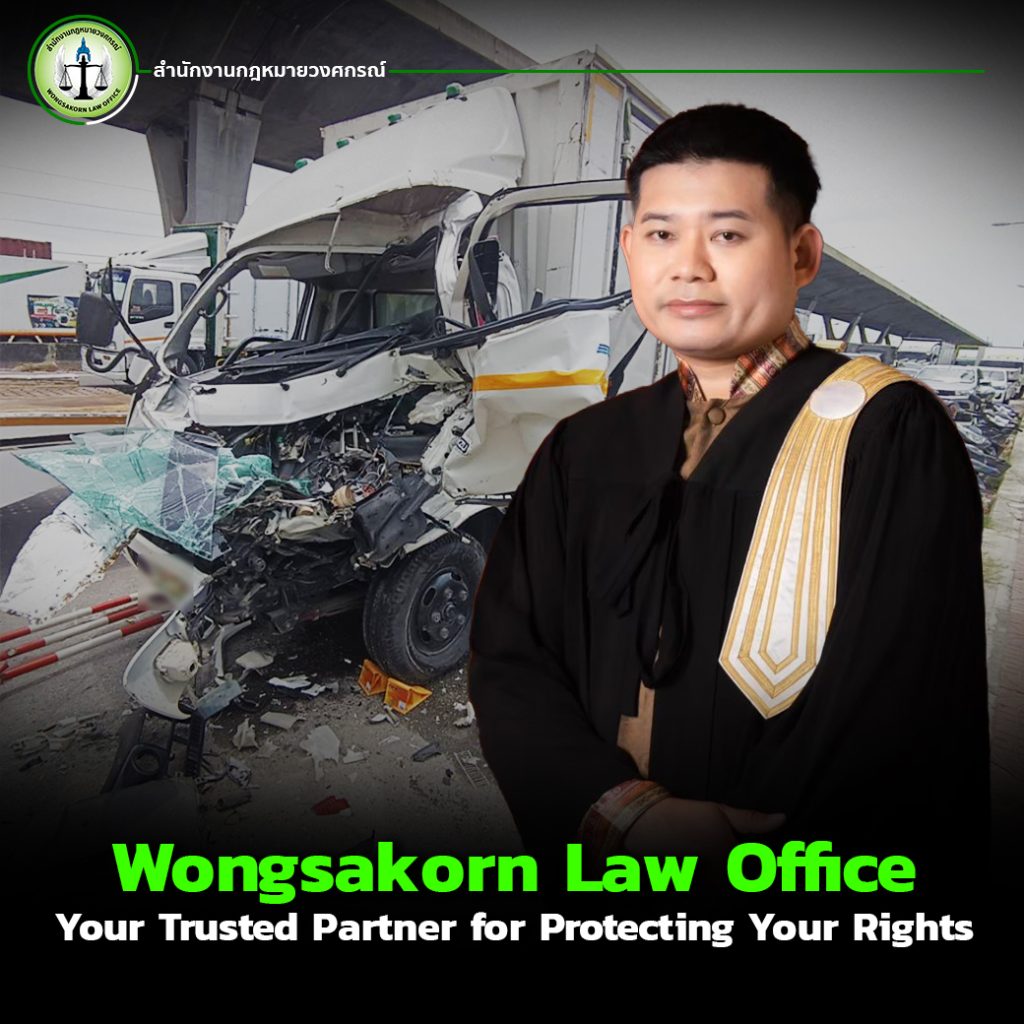
Wongsakorn Law Office: Your Trusted Partner for Protecting Your Rights
Many policyholders try to handle claims themselves, only to lose rights due to insufficient evidence, procedural errors, or legal tactics by insurers to limit liability. Wongsakorn Law Office reviews policy terms, analyzes facts, gathers evidence, and executes precise legal actions whether in court or arbitration to ensure your rights are fully protected. In an accident, the right knowledge and an expert legal team are essential for maximizing your claims. With complete documentation and strategic planning, you avoid trial-and-error approaches or letting the insurer dictate the interpretation. If you are facing an insurance dispute, contact Wongsakorn Law Office to plan your case and claim the compensation you are rightfully entitled to.
Road accidents can happen anytime and anywhere. Even if we are careful, we can still be injured due to the negligence of others. When a person drives without responsibility or caution, they inevitably cause trouble and suffering for others. The responsible party should take full responsibility for the injuries and damages caused.
This is the story of a victim who became permanently disabled due to another person’s negligence, resulting in theloss of a finger. Let’s follow the case.
Becoming Disabled from an Accident You Didn’t Cause!
In this unfortunate incident, the victim was riding a motorcycle cautiously and following traffic laws when a car, driven recklessly and without due care, collided with the victim’s motorcycle. The impact caused the victim to lose control and fall, with their body thrown under the other vehicle. The victim sustained multiple serious injuries, the worst of which required a finger amputation, leaving them permanently disabled.
After the investigation, the police concluded that the car driver was at fault. The driver admitted responsibility at the scene.
Severe Injuries Leading to Finger Amputation
The accident caused the victim severe lacerations on the left little finger, with bone loss extending deep into two finger joints. Doctors determined that the little finger had to be amputated, resulting in permanent disability. Additional injuries included deep lacerations on the left wrist, loose lower teeth, and large, deep abrasions in multiple areas.
The victim had to travel to the hospital every day for wound cleaning and follow-ups, which was extremely inconvenient and distressing.
From a Healthy Individual to a Disabled Person Missing a Limb
Aside from the emotional trauma of losing a limb, the victim also suffered a major loss of income. Before the accident, the victim earned around 120,000 Baht per month through a full-time sandwich-selling business and an additional 50,000 Baht from side jobs.
After the accident, the victim lost the ability to work and the income that supported their livelihood. It remains uncertain whether they will ever be able to work as before, as the disability significantly impacts daily life.
Compensation of 100,000 Baht Cannot Replace a Lost Finger
Adding insult to injury, the liable party’s insurance company grossly undervalued the victim’s damages. They offered only 20,000 Baht for future medical expenses, lost income, hygiene, and suffering combined, plus a lump sum of 100,000 Baht for disability, far less than the actual damages.
In fact, under the compulsory motor insurance policy, the insurance company was required to pay up to 600,000 Baht. Yet, they delayed the process and refused to provide a written decision, leaving the victim uncompensated to this day.
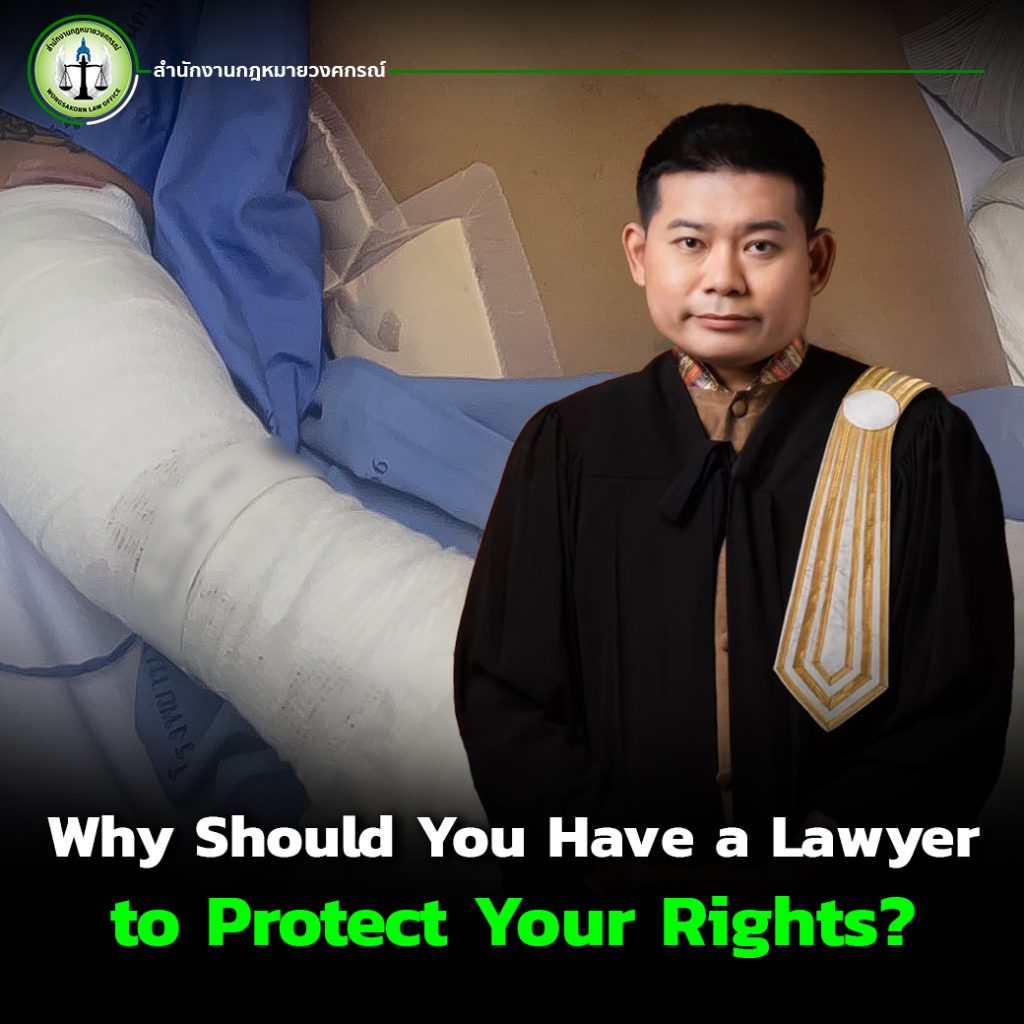
Why Should You Have a Lawyer to Protect Your Rights?
The victim felt they were being treated unfairly by the insurance company and sought help from Wongsakorn Law Office, renowned for handling serious injury cases.
Upon reviewing the case, the legal team found the offered compensation grossly inadequate compared to the actual loss. They proceeded to file a lawsuit demanding full and fair damages, ensuring that the victim receives the compensation they rightfully deserve for a loss that is both severe and permanent.
Today, many insurance companies attempt to minimize payouts to protect their profits, often neglecting fairness and compassion. Wongsakorn Law Office specializes in insurance litigation, with a strong legal team ready to handle every step until justice is achieved.
If you are being taken advantage of by an insurance company, click >>Contact Us<<.
Starting a business today might seem straightforward, just secure capital or funding and you’re set. In reality, launching a business involves numerous legal considerations that entrepreneurs must understand and manage. Especially in the early stages, knowledge ofbusiness law becomes a key tool to ensure smooth operations, avoid unexpected legal pitfalls, and prevent disruptions before they happen.
What challenges do new business owners face?
Many founders begin business based on their professional skill say, a chef opening a restaurant, a designer starting a studio, or a programmer launching software. However, lacking a foundation in business law can lead to issues such as:
Signing contracts without fully reviewing details or understanding legal obligations
Hiring employees without proper employment agreements or compliance with labor laws
Registering the company in the wrong legal form or mishandling business-appropriate taxation
Disputes with partners or investors
Intellectual property problems involving copyrights, logos, or trademarks
These issues may seem minor at first but if not correctly addressed, can escalate into lawsuits or even shutdowns later.
Business law advisor: the essential partner any owner should have
A business law advisor or company’s legal counsel is someone who provides legal guidance, manages risks, and handles all legal matters from start to finish. Their services include:
Drafting and reviewing business contracts: employment, sales, partnership, and more
Advising on company registration and structuring properly for your business type
Compliance with tax rules and industry-specific legal regulations
Negotiating and mediating disputes before they become courtroom cases
Protecting your business from unnecessary lawsuits or rights violations
Having legal counsel from the beginning helps owners make confident decisions and avoid costly mistakes later.
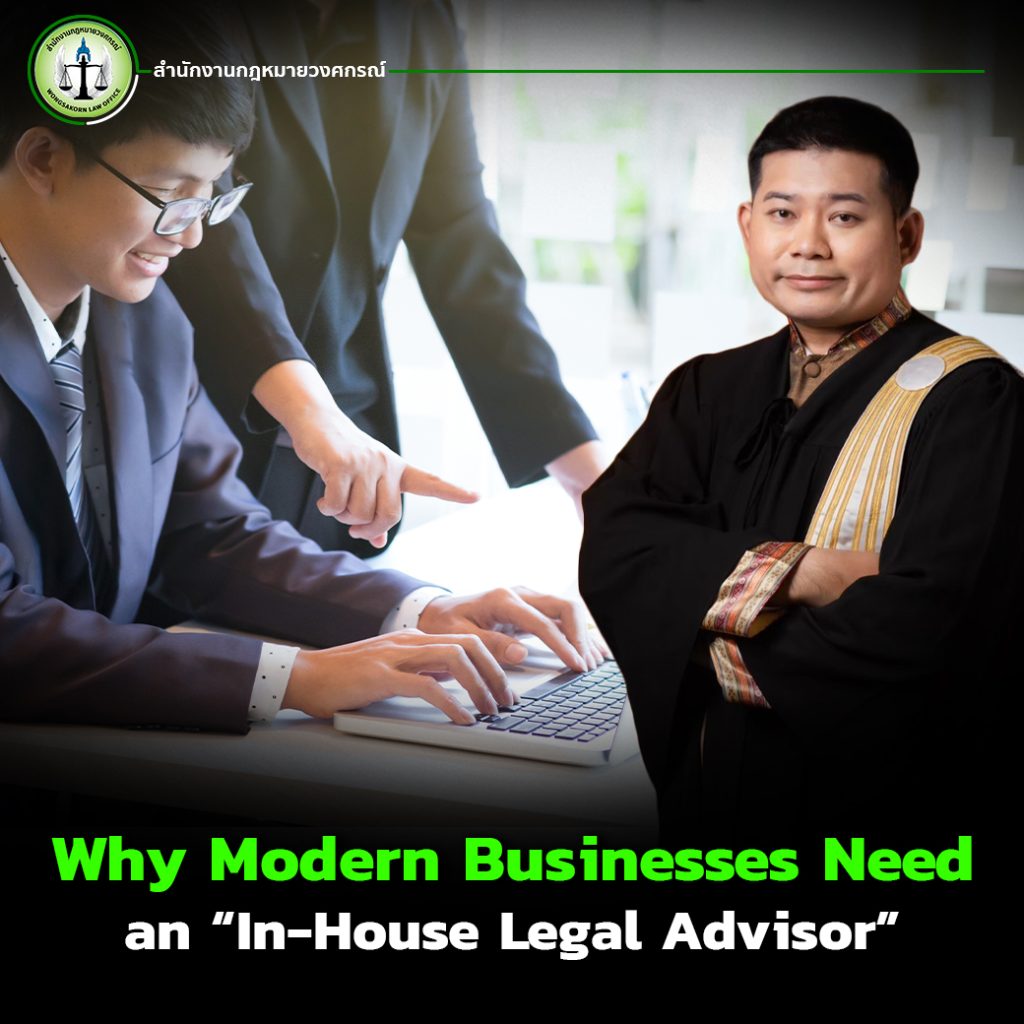
Why engage in-house legal counsel from day one?
Some believe “I can hire a lawyer only when issues arise.” That’s a misconception. In practice, a lawyer is not just a problem-solver but also lays the groundwork for business stability. With dedicated in-house legal counsel, management need not worry about minor legal matters and can focus fully on business growth. In our fast-evolving legal environment, having a professional who monitors changes and provides continuous advice becomes a competitive advantage.
Problems employers face without legal counsel
Examples of issues commonly seen when business owners lack legal support:
Employees filing suit over employment terms or unpaid wages/benefits
Disputes with clients over delivery terms or service obligations
Tax audits and retroactive tax demands from authorities
Inadvertently infringing others’ trademark rights
If legal counsel is in place from the beginning, such problems can be prevented or managed effectively saving time, money, and reputation.
Investing in legal stability is the most valuable investment
Starting a business often demands significant capital but investing in a business law advisor requires less budget and offers greater returns: confidence, legal security, and readiness for future challenges. If you’re launching a business or seeking a company’s legal advisor, contact Wongsakorn Law Office for reliable legal consultation.
Wongsakorn Law Office : Your trusted business law advisor
Our firm has a team of legal advisors and business law attorneys ready to support everything from startup planning to dispute resolution or expansion strategies. We understand that business owners need a reliable legal partner not just temporary advice. We offer services on a case-by-case basis, monthly retainers, or in-house counsel arrangements tailored to client needs.
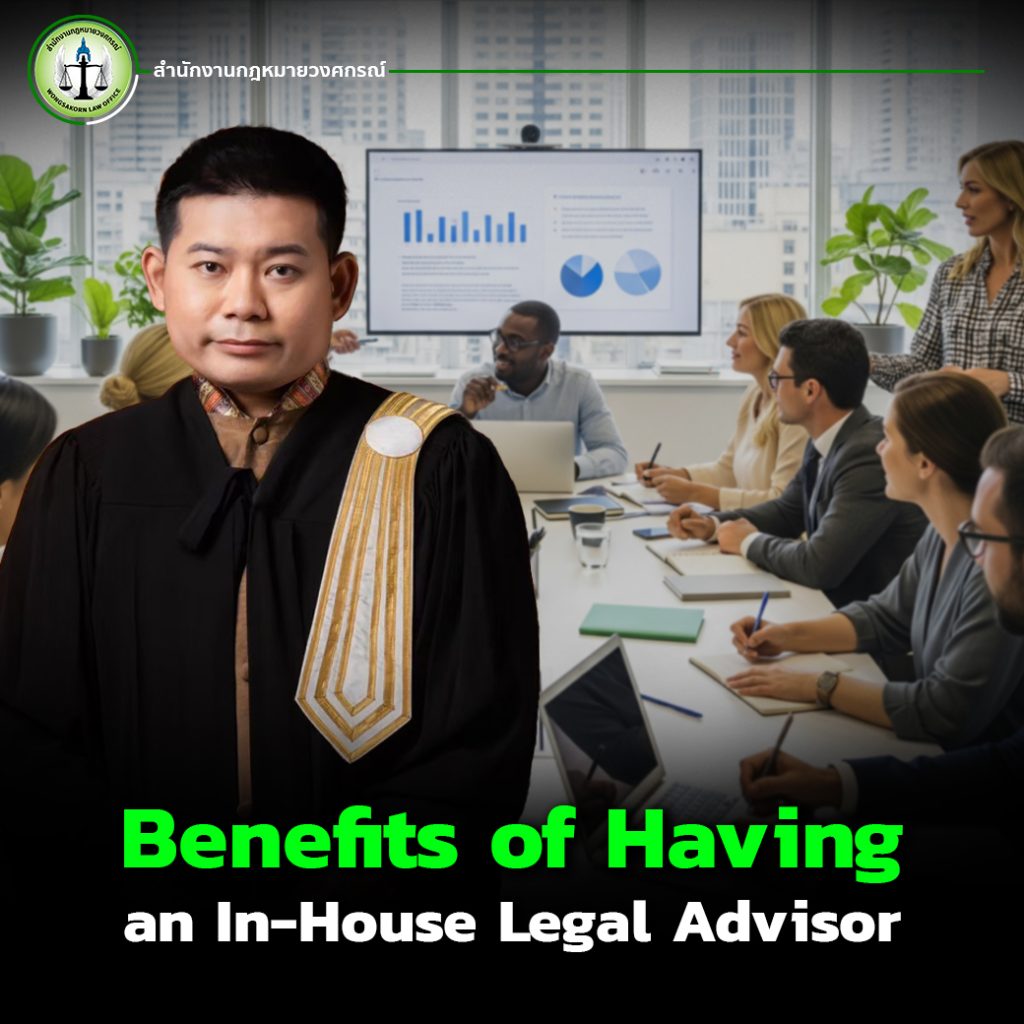
In today’s fast-paced business world, laws evolve continuously, and regulatory criteria can change at any moment. As a result, businesses of all sizes often confront legal risks from contract management and dispute resolution to intellectual property protection and labor compliance. Without legal expertise on hand, a business could suffer unexpected damages. This is why having anin-house legal advisor and a dedicated company counsel has become indispensable for forward-thinking Thai companies.
The Complexity of Thai Law in Modern Business
Thailand enforces a wide range of laws covering taxation, international trade, labor, environmental protection, and consumer rights. Moreover, many government agencies have detailed regulations that change frequently. Companies that don’t truly grasp these regulations risk violating them unintentionally which can lead to lawsuits or hefty penalties. As a business grows, so does its legal exposure: from drafting sales contracts and payment terms to defining breach penalties. Without a legal advisor to review and strategize, companies may unintentionally forfeit significant benefits over time.
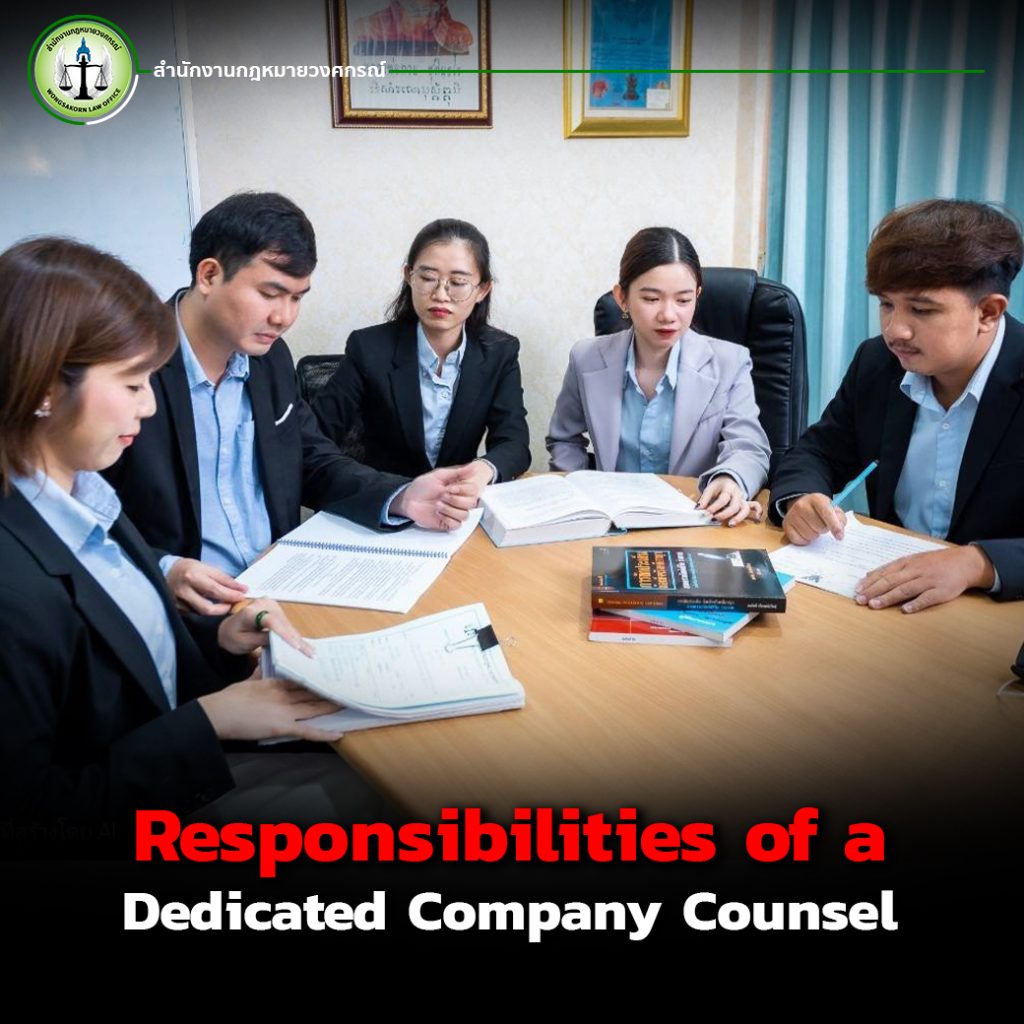
Responsibilities of a Dedicated Company Counsel
An in-house legal advisor orcompany counsel provides comprehensive legal support tailored to business needs. Key responsibilities include:
Drafting, reviewing, and amending commercial contracts
Advising on labor law issues including hiring and termination
Ensuring all legal documents from internal approvals to partner agreements are compliant
Implementing legal risk management strategies
Acting as negotiator in disputes with partners or employees
Supporting legal action when lawsuits arise Additionally, a company counsel acts as liaison with government agencies, simplifies complex legal rules for management, and ensures the business operates within legal boundaries at all times.
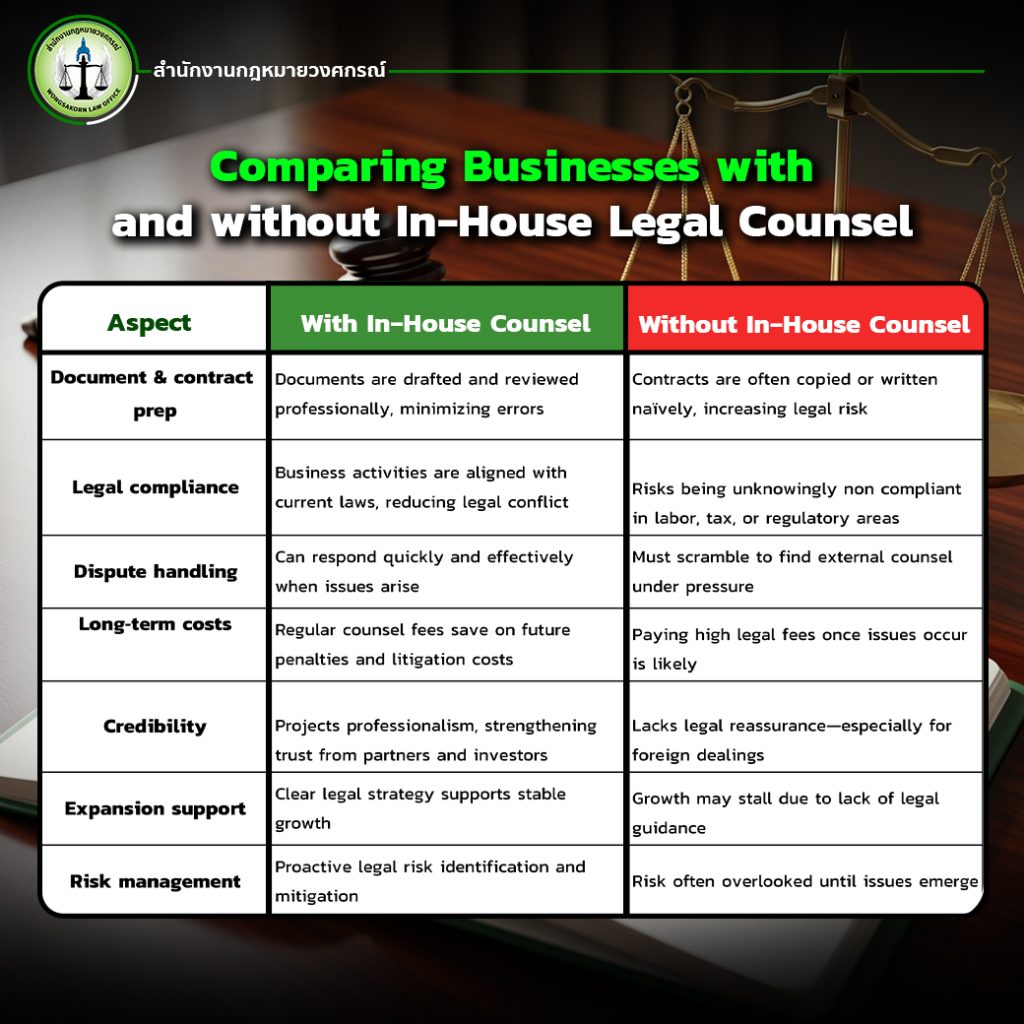
Comparing Businesses with and without In‑House Legal Counsel
5.Professional image – Legal advice signals credibility to stakeholders.
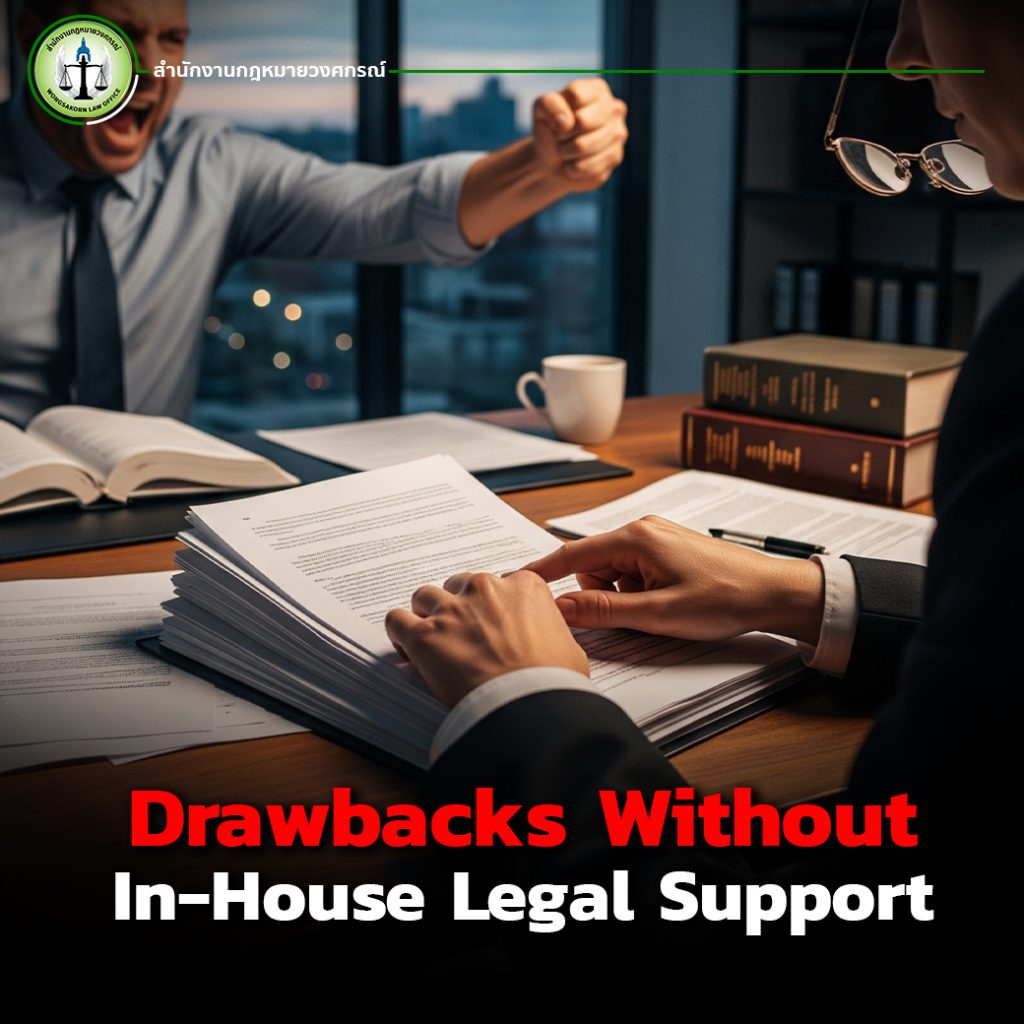
Drawbacks Without In‑House Legal Support
1.Higher risk of suits or unfair contract terms.
2.Waste of time fixing preventable legal mistakes.
3.Reliance on external counsel who lacks business context.
4.Lack of proactive legal risk planning.
Who Should Have an In‑House Legal Advisor?
SME owners entering new contracts or hiring employees
Medium to large companies looking to expand or operate across legal domains
Foreign investors who require legal assurance in Thailand
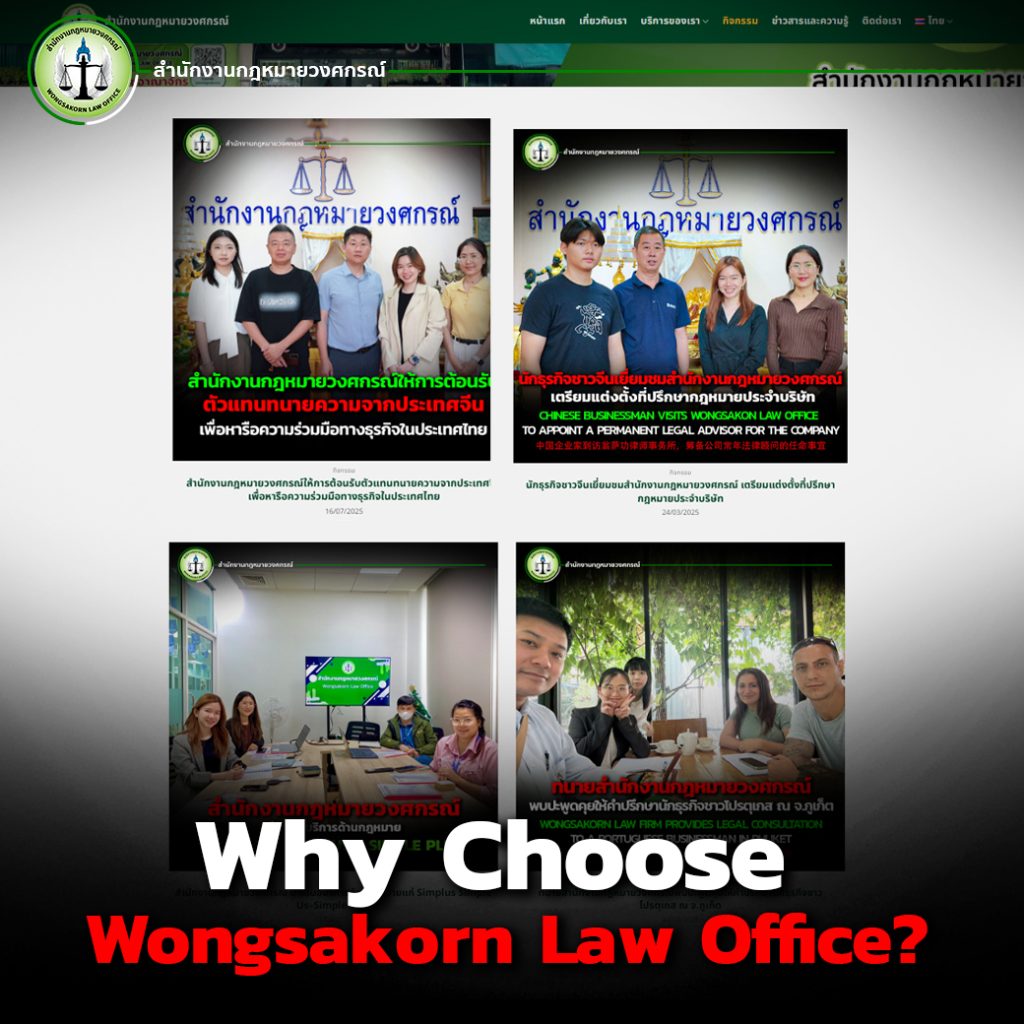
Why Choose Wongsakorn Law Office?
Wongsakorn Law Office, led by Lawyer Arm, brings over 10 years of experience in business and contract law. Our legal team specializes in drafting, reviewing, and negotiating agreements, as well as advising on labor, international trade, and intellectual property matters. We serve clients ranging from SMEs and startups to public companies, delivering strategic legal counsel for sustainable growth.
Whether your company is just starting or already established, having an in-house legal advisor ensures you can plan confidently, reduce legal risk, and scale efficiently. If you need professional legal support tailored to your business, Wongsakorn Law Office is here to help. Contact us to speak with our in-house counsel today.
“Indecency cases” are among the most socially sensitive criminal matters, as they directly involve morality, personal dignity, and the rights of victims. If someone is accused in such a case whether based on solid evidence or unfounded allegations it can swiftly damage their reputation and personal life.
In this article, we explain the legal process for indecency cases, the defendant’s right to apply for bail, and why having a lawyer from the very beginning is essential.
What qualifies as an indecency case?
Under the Thai Criminal Code (Sections 278–285), indecency involves any act of sexual misconduct without the victim’s consent such as inappropriate touching with sexual intent, offenses involving minors, indecent behavior in public, and sexual gestures or language. Penalties vary based on the act and victim’s age • If the victim is under 15, imprisonment may reach 10 years or more. • Using force or a weapon can elevate the offense to rape, which carries harsher penalties.
First steps when accused in an indecency case
If you or someone close is accused, the first and most crucial step is to remain calm and seek legal counsel immediately. Providing information to the police alone may lead to misunderstandings or unintended statements used in court. Even if allegations rely solely on verbal testimony without other evidence, in Thailand a complainant’s statement can still function as admissible evidence. This is why legal strategy and protection are vital from the outset.
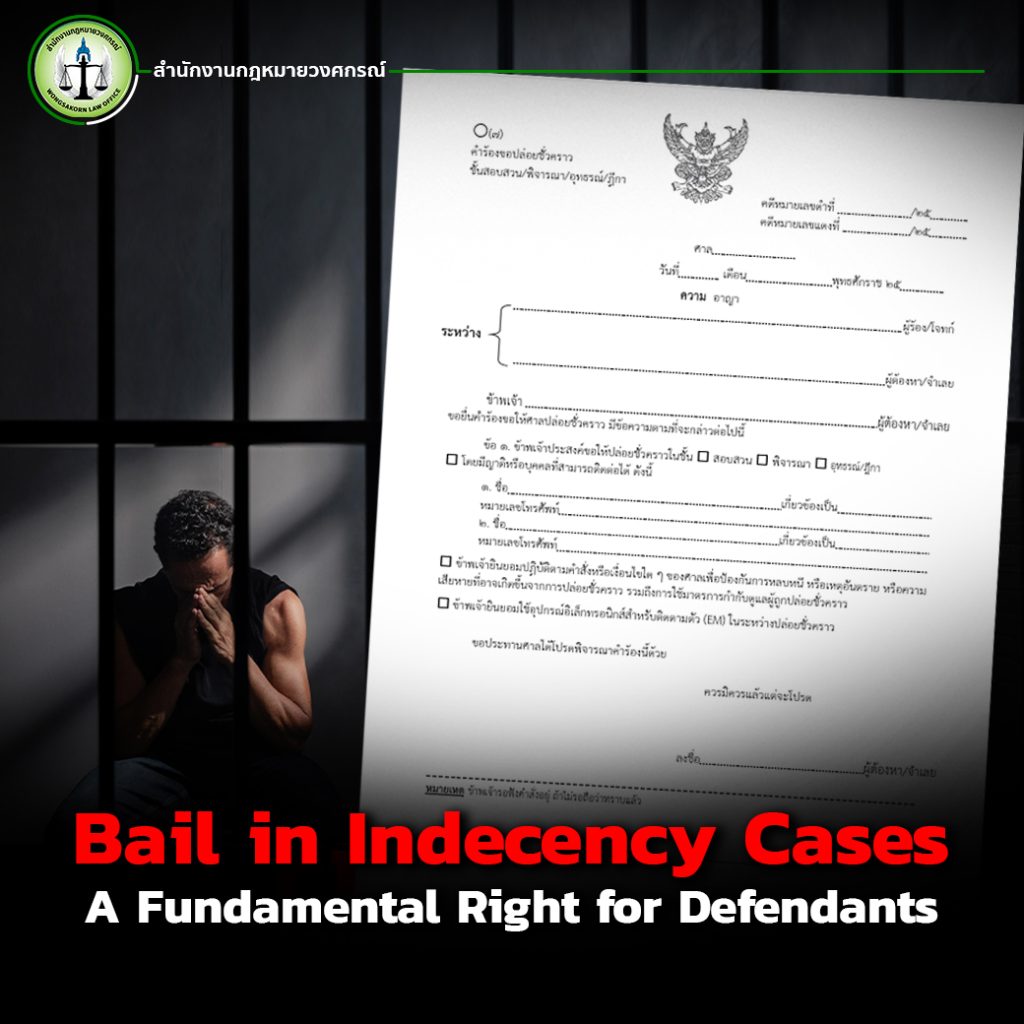
Bail in indecency cases: A fundamental right for defendants
In Thailand, the right to bail is afforded to all criminally accused individuals, including those facing indecency charges. Here’s the process
1. Submit a bail application to the investigating officer or court (if the suspect has been detained).
2. Prepare suitable collateral such as cash, land title deeds, or qualified surety bonds.
3. Await the court’s decision. If approved, the suspect is temporarily released.
Courts consider several factors when granting bail • Seriousness of the alleged act • Credibility of the defendant • Risk of flight or interference with witnesses
If a defendant is cooperative, has stable ties to their community, and adequate collateral, courts often grant bail. The careful preparation of documentation and professional presentation can significantly increase approval chances.
Why legal representation is crucial in indecency cases?
Having a lawyer early in an indecency case means true protection of your rights. Every word spoken can become decisive evidence. Lawyers assist by
1. Advising what to say and not say before interviewing with authorities.
2. Preparing bail applications professionally and assembling necessary documentation.
3. Tracking the case through investigation, prosecution, and court hearings.
4. Gathering facts or witnesses that may prove your innocence.
5. Minimizing reputational harm through strategic communication guidance.
Without legal counsel, defendants risk losing the chance to obtain bail, fail to exercise their legal rights, and may face unjust verdicts due to misunderstanding of legal procedures.
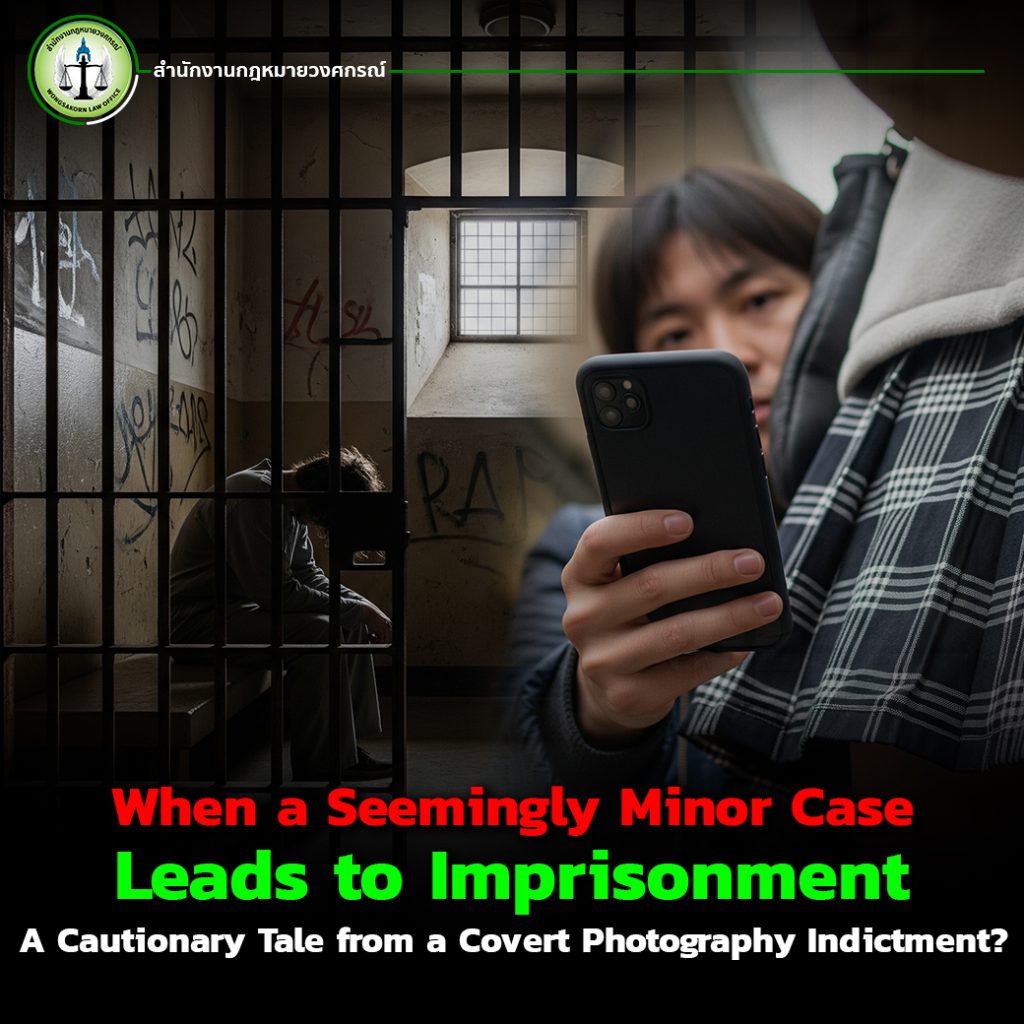
When a seemingly minor case leads to imprisonment: A cautionary tale from a covert photography indict?
One defendant thought the case was minor, so attended court without a lawyer. The court set bail at THB 600,000 a sum he could not secure in time so He was immediately remanded to prison. This issue stemmed from the interrogation stage, When He lacked legal counsel and misunderstood charges. He also lacked anyone to coordinate with the public prosecutor on likely charges or required bail amount. Ultimately, though he could have afforded bail, he entered prison needlessly simply because he had no legal guidance.
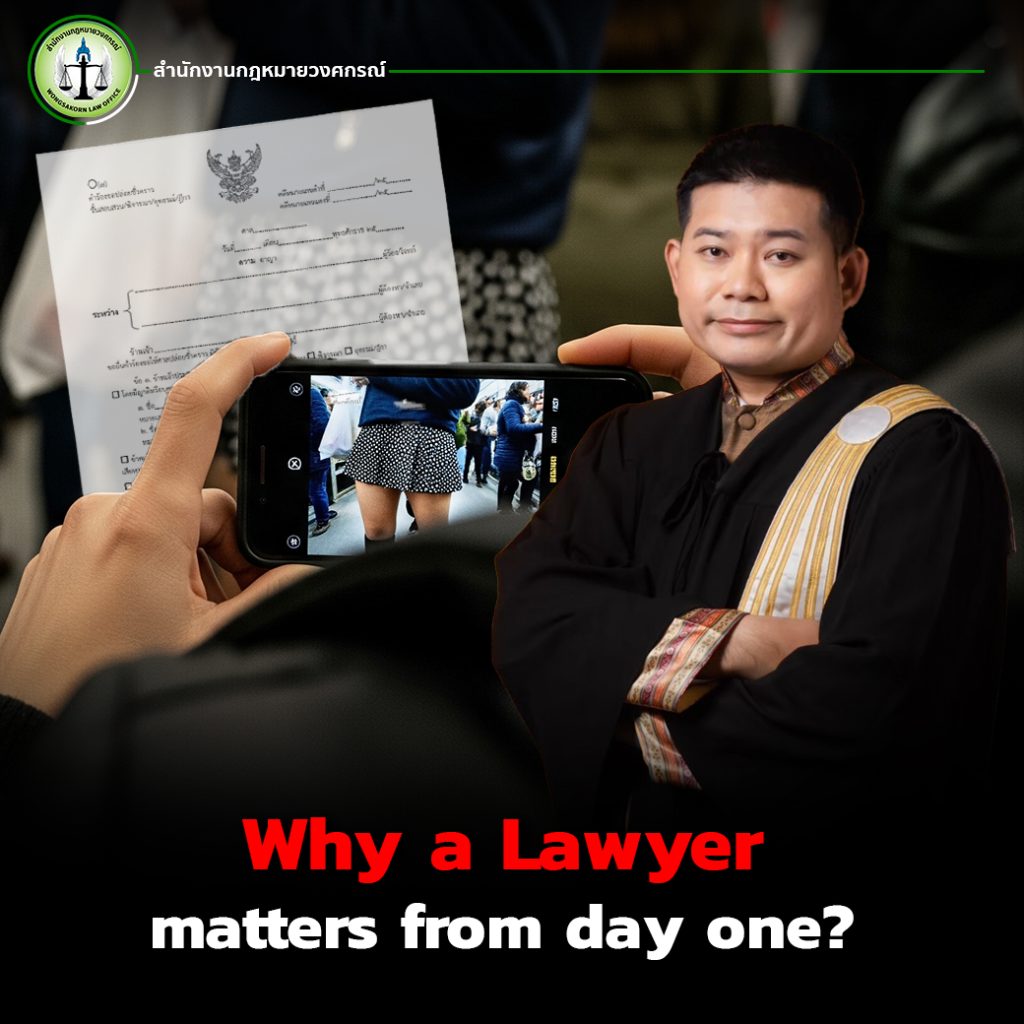
Why a Lawyer matters from day one?
Even when someone is labeled as a “suspect,” they retain full legal rights including the right to legal counsel, guaranteed by Thai law and international human rights standards. A lawyer’s early involvement ensures awareness and exercise of rights such as to remain silent, refusal to confess, and timely bail application to fight the case fairly and avoid procedural errors that could prejudice the outcome.
Indecency allegations even those without strong evidence can swiftly upend one’s life. Maintaining the right to bail is essential, and securing legal representation early is not optional it’s the most vital step to protect your rights and reputation. Police questioning, bail applications, and legal strategy are best handled by a lawyer to ensure smooth, strategic handling of the case and reduce risks.
If you or a loved one faces an indecency allegation, consult a lawyer promptly. Comprehensive legal planning today can prevent injustice tomorrow. For expert legal support on bail applications and criminal defense in indecency cases, feel free to reach out. Click >>Contact Us<<
In today’s booming social media era, Facebook is no longer just a place to share personal stories. It has become a source of income, a marketing channel, and a storage for critical business information. Being hacked or suddenly disabled without reason is not just annoying, it can cause massive losses and missed opportunities you never expected.
Even though there are countless DIY guides for recovering Facebook accounts online, when a real problem occurs, many people find that account recovery is not as easy as they thought. Some try to submit recovery requests themselves and wait months with no success. Others spend money on so-called recovery “services” with no real expertise only to be disappointed with no results.
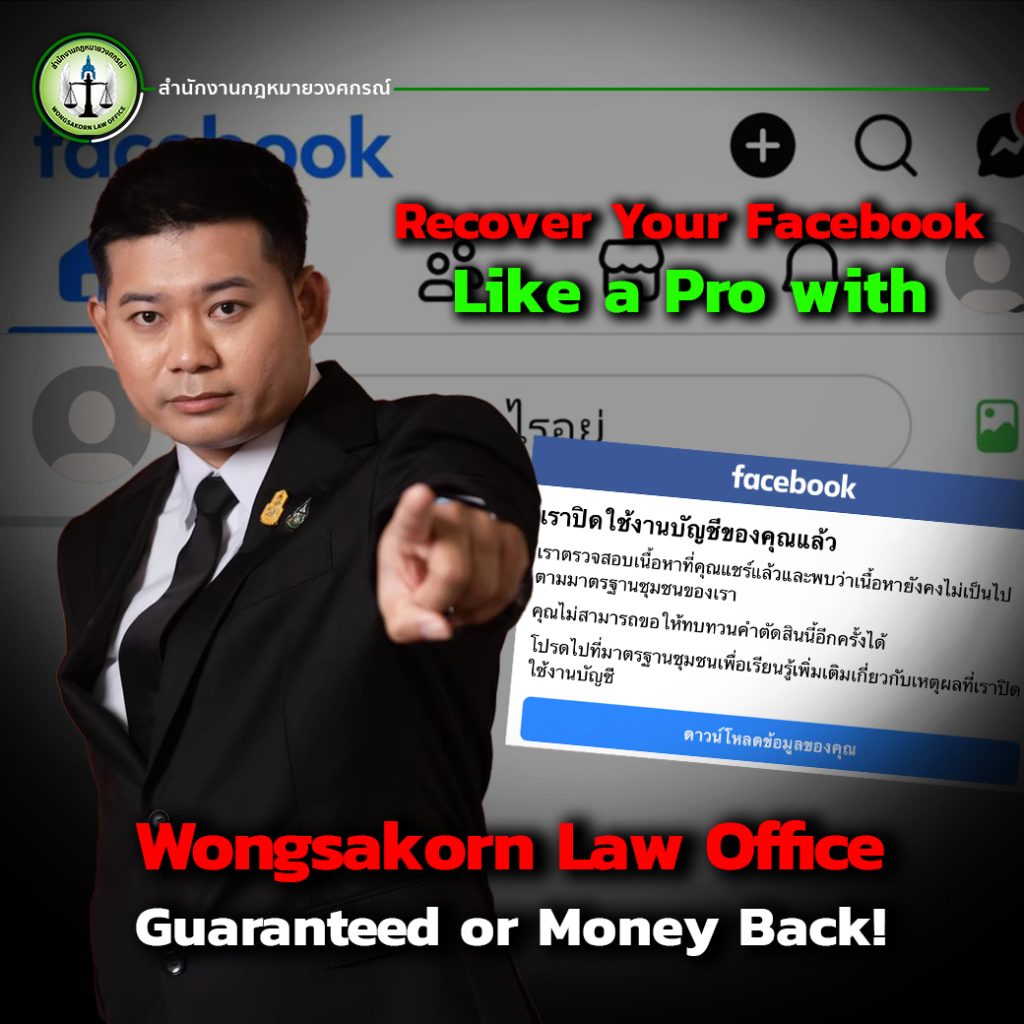
This is why the Wongsakorn Law Office takes Facebook account recovery seriously and professionally. We have a dedicated team of cyber law attorneys and technology experts who deeply understand Meta’s system. We follow proper procedures, operate transparently, and most importantly we guarantee a full refund if we can’t recover your account!
Why Losing Your Facebook Hurts More Than You Think?
Many people think, “If my account is gone, I’ll just make a new one.” But it’s not that simple. When you lose your old account, you also lose:
Connections with loyal customers or followers you’ve built over the years
Personal or business data stored in Messenger or file attachments
Opportunities to run ads, promote products, or generate sales
The credibility of a page or brand you’ve spent years developing
The longer you wait, the harder it becomes to get your account back. Identity verification gets more complicated due to Meta’s security system.
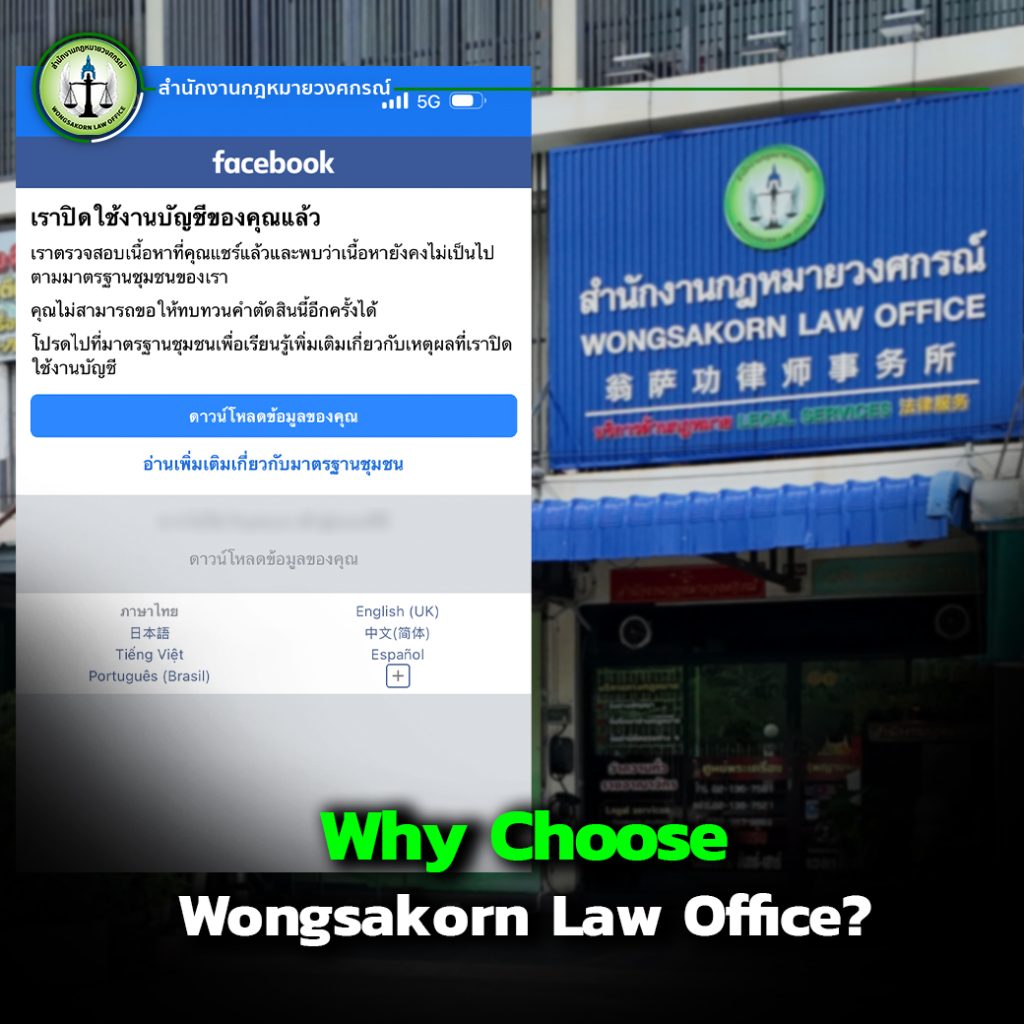
Why Choose Wongsakorn Law Office?
There are countless “Facebook recovery agents” online, but not everyone can truly deliver. Many people fall victim to upfront fees and false promises left only with the same old excuse: “Wait for Meta to respond.” But there’s no proper plan to solve the issue according to Meta’s rules.Wongsakorn Law Office has a team of experienced cyber law attorneys and real tech experts who know how Meta works. We handle every step for you preparing documents, verifying your identity, coordinating with Meta support not just filling out forms and waiting passively.
What Makes Us Different:
✅ Proven track record of successful recoveries both personal and business accounts ✅ Clear legal contract guaranteeing your data’s safety ✅ 100% money-back guarantee if we fail to recover your account ✅ Frequent updates so you’re never left in the dark ✅ Full-service not just a middleman
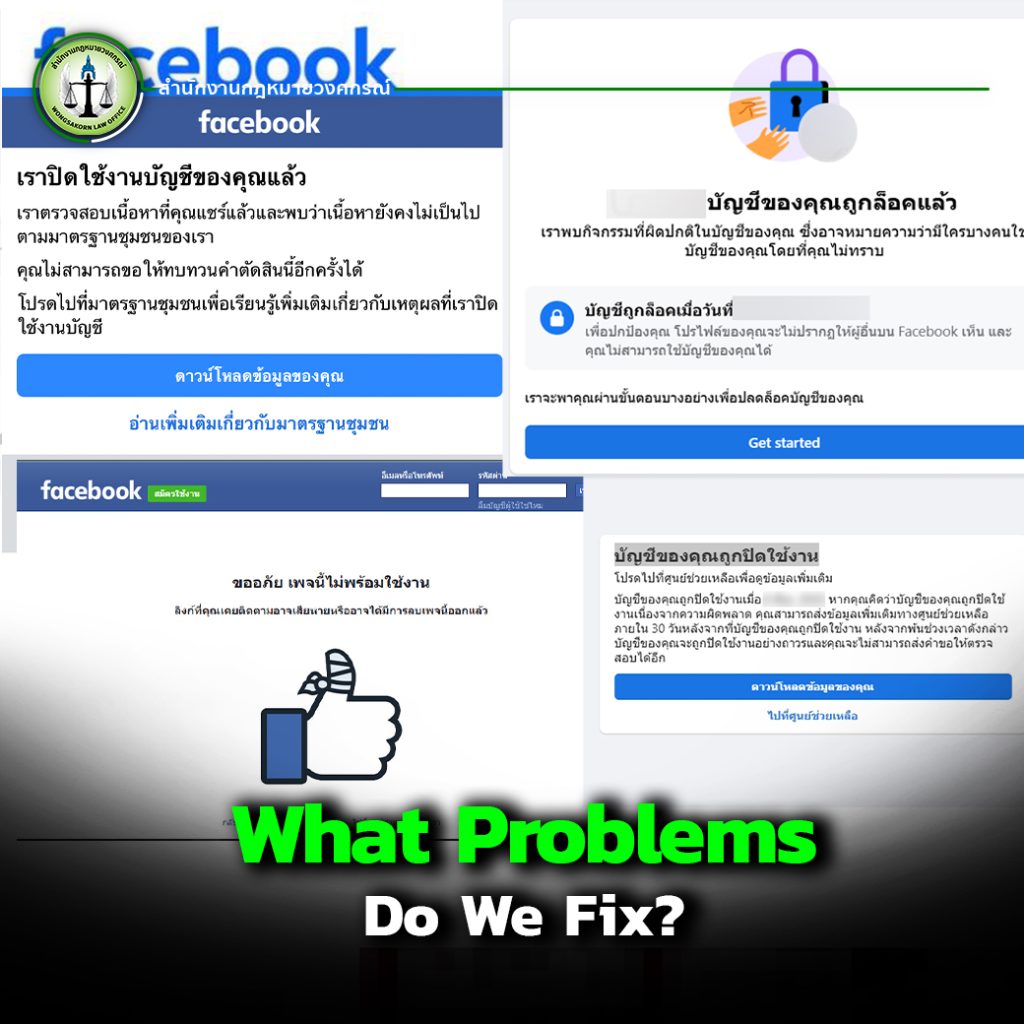
What Problems Do We Fix?
Our Facebook recovery service covers much more than hacking. We also handle complex cases such as:
Accounts hacked with emails and passwords fully changed
Disabled due to policy violations, even when you did nothing wrong
Forgotten login information, unable to verify your identity
Business accounts or pages suspended, freezing your ads and sales
Meta requesting repeated ID verifications for unclear reasons
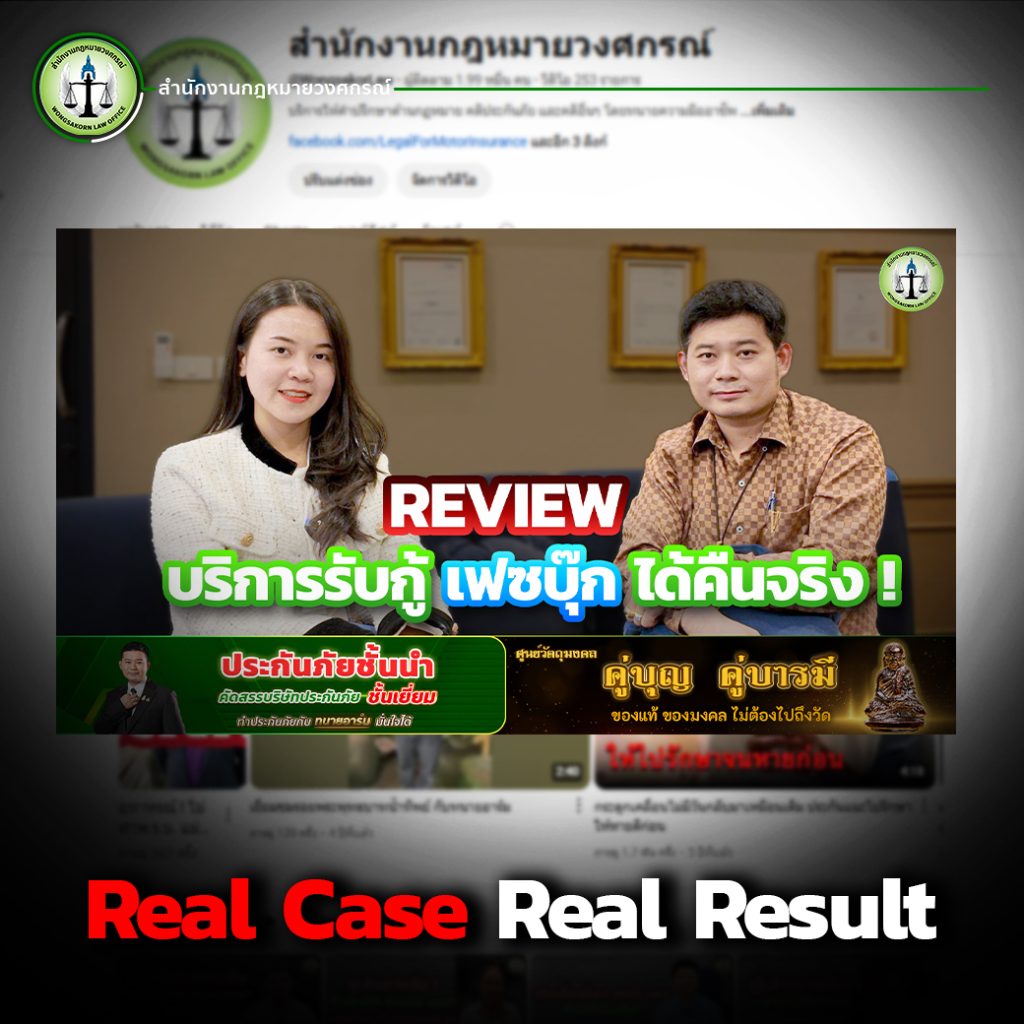
Real Case, Real Result
We have successfully recovered Facebook accounts for many clients. For example, an executive at a well-known construction materials company was hacked late at night. His email and Facebook were fully taken over within minutes. Despite multiple attempts to recover it himself, he failed until he contacted Wongsakorn Law Office.
Our tech experts stepped in immediately tracing access points, gathering evidence, contacting Meta support, and preparing new ID documents. Within two months, the entire account was fully restored. The client could run ads and manage the original page without wasting time starting over.
Simple, Clear, Safe Process
1️⃣ Contact our team via our Facebook page or call us directly
2️⃣ Provide account info (email, phone number, profile name, account link, etc.)
3️⃣ Our experts assess your account status and recovery chances
4️⃣ Sign a clear contract secure and transparent
5️⃣ Get real-time progress updates
6️⃣ Get your account back or get a full refund if recovery fails
Don’t Lose Opportunities Contact Wongsakorn Law Office Now
Facebook is more than just a social platform it’s a business tool that connects you with customers and generates revenue. Don’t risk everything with unreliable agents. Don’t lose your business opportunities for no reason.
If you’ve been hacked, disabled, suspended, or failed to recover it yourself let Wongsakorn Law Office handle it professionally. We take care of every step with clear contracts and a transparent money-back guarantee.
Let our team protect your important account so you can get back to Facebook with confidence and never miss an opportunity again.
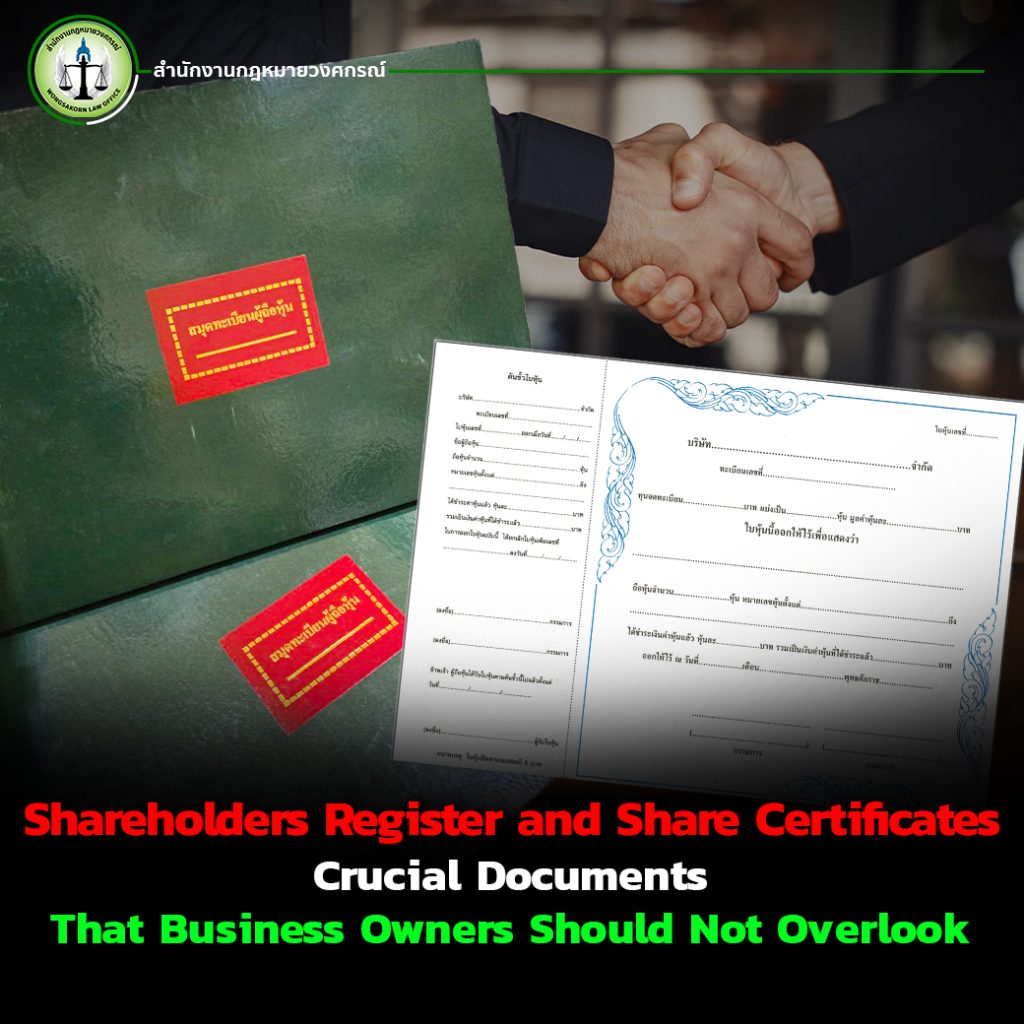
The “Shareholders Register” and “Share Certificates” are essential legal documents for operating a limited company, especially when there are changes in shareholder structure, share transfers, or disputes concerning shareholder rights. If these documents are improperly prepared or there is a lack of legal understanding, unexpected business issues may arise.
Wongsakorn Law Office would like to explain the importance of these two types of documents and provide guidance on how to prepare them correctly in accordance with the law, so that business owners and executives can confidently manage internal corporate matters.
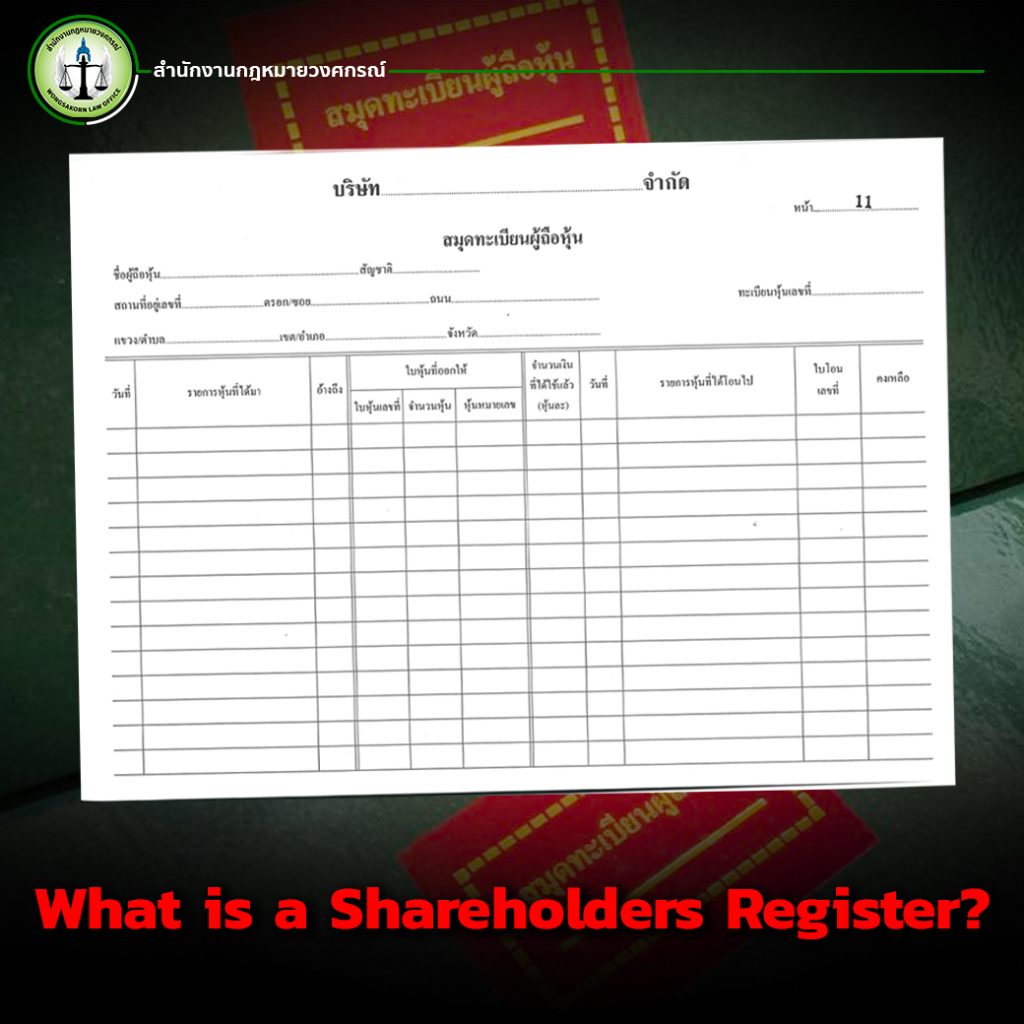
What is a Shareholders Register?
A Shareholders Register is a document created by a company to record the names of all shareholders. Information required in the Shareholders Register includes:
Name and address of each shareholder
Number of shares held
Share certificate number (if any)
Date of acquiring the shares
Date of share transfer (if applicable)
Other information as required by law
This register serves as critical evidence to prove who the rightful “owner” of the company’s shares is. It must be kept at the company’s registered office and be made available for inspection by the Department of Business Development or other legally entitled parties.
What is a Share Certificate?
A Share Certificate is a document issued by a company to its shareholders as official proof of share ownership. It usually includes the certificate number, shareholder’s name, number of shares, and is signed by a company director as per the Articles of Association.
Although a Share Certificate is not as legally significant as the Shareholders Register (which is considered the primary legal evidence), it still holds psychological and practical value. Many shareholders prefer to have tangible proof and use it in business negotiations or to demonstrate their right to transfer shares.
The Relationship Between the Shareholders Register and Share Certificates
The Shareholders Register carries more legal weight than Share Certificates. In the event of ownership disputes, the register is used as the primary proof of shareholding.
In practice, Share Certificates support changes in the register. For example, when shares are transferred, the original certificate must be returned, a new certificate issued to the transferee, and the register updated accordingly.
Common Issues with Shareholders Registers and Share Certificates
1.Failure to maintain a Shareholders Register This is common among SMEs and family-run businesses. If a legal dispute arises, the company may be at a disadvantage in court.
2.Issuing Share Certificates without updating the Register If the shareholder’s name does not appear in the register, they may not be entitled to legal rights, such as voting at meetings or receiving dividends.
3.Failure to update share transfer information If shares are transferred but the register is not updated, the buyer may not be legally recognized as the shareholder.
4.Fake or duplicate Share Certificates Without proper control systems, a company may accidentally issue certificates exceeding the registered number of shares, leading to serious consequences.
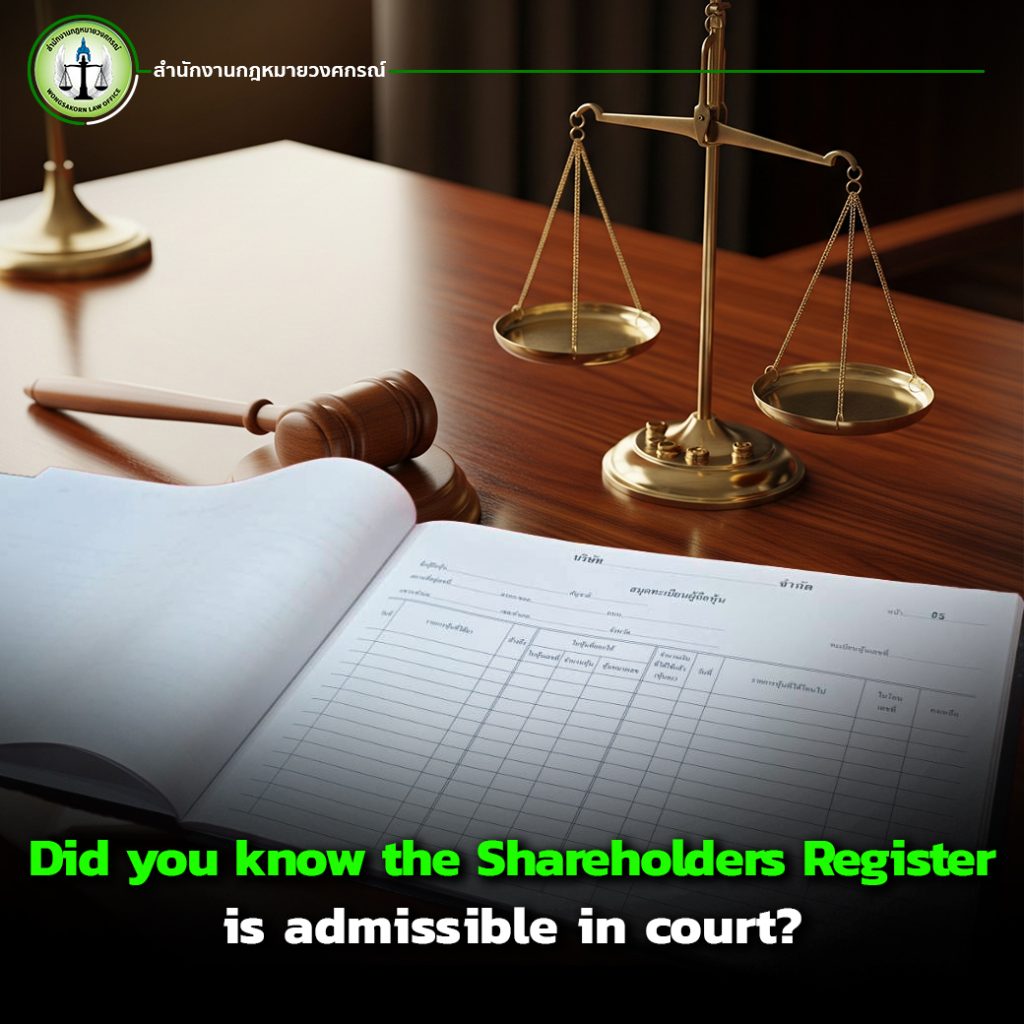
Did you know the Shareholders Register is admissible in court?
Courts give significant weight to the Shareholders Register as it clearly documents internal shareholder rights. Failure to maintain or inaccuracies in the register may heavily impact legal proceedings, such as:
Disputes over shareholding proportions
Appointment of directors or voting rights
Requests to annul meeting resolutions
Claims for past dividends
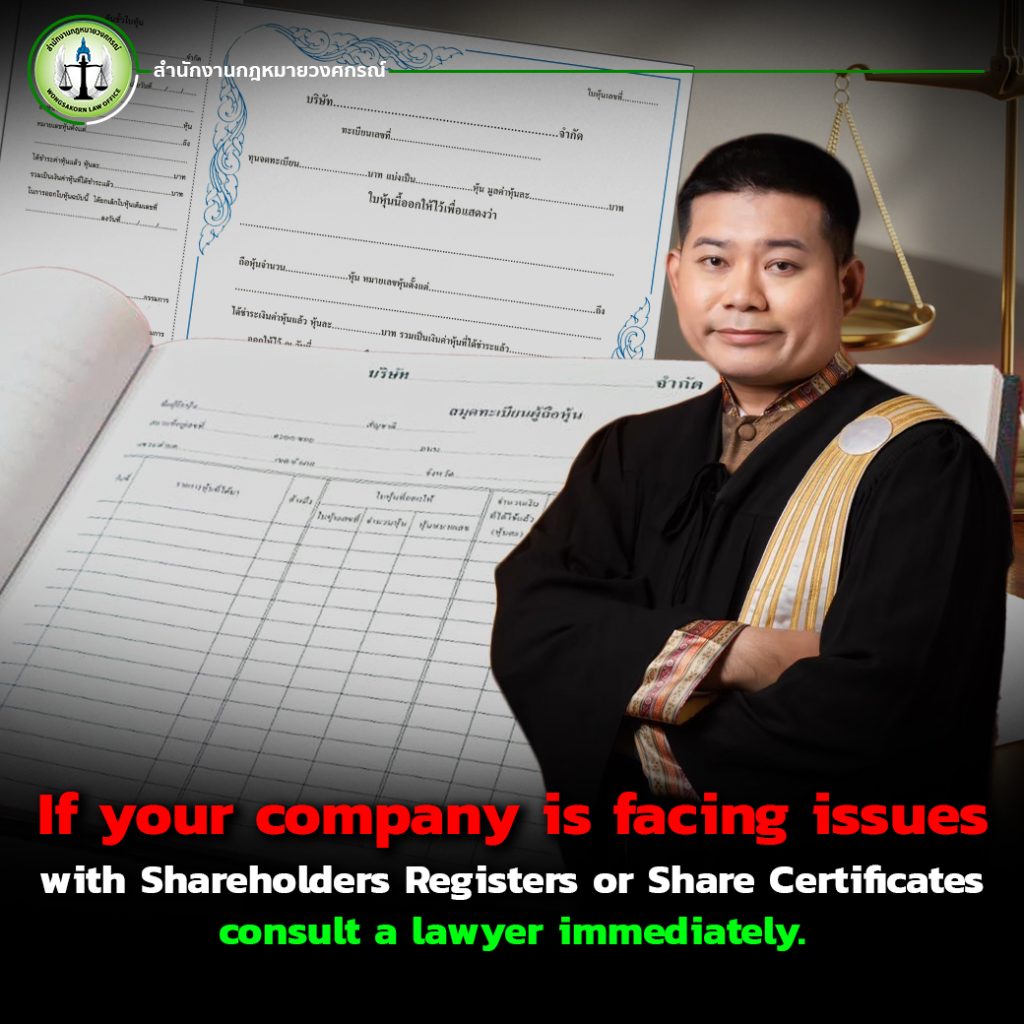
If your company is facing issues with Shareholders Registers or Share Certificates, consult a lawyer immediately.
Preparing these documents is not a minor clerical task—it is crucial to managing a company’s shareholder structure. Mistakes can affect ownership rights and corporate control.
Wongsakorn Law Office has a team of lawyers specializing in business and corporate law, ready to assist with preparing or correcting registers, issuing certificates, transferring shares, and resolving shareholder disputes in compliance with the law.
If your company is facing uncertainty regarding shareholding or wants to ensure legal compliance, we recommend seeking legal advice promptly to avoid turning small issues into major legal disputes.
Even though Shareholders Registers and Share Certificates may seem like just a few sheets of paper, legally, they carry the weight of defining who truly owns a company. Proper, systematic documentation is key to transparent and stable business management.consult a lawyer immediately.
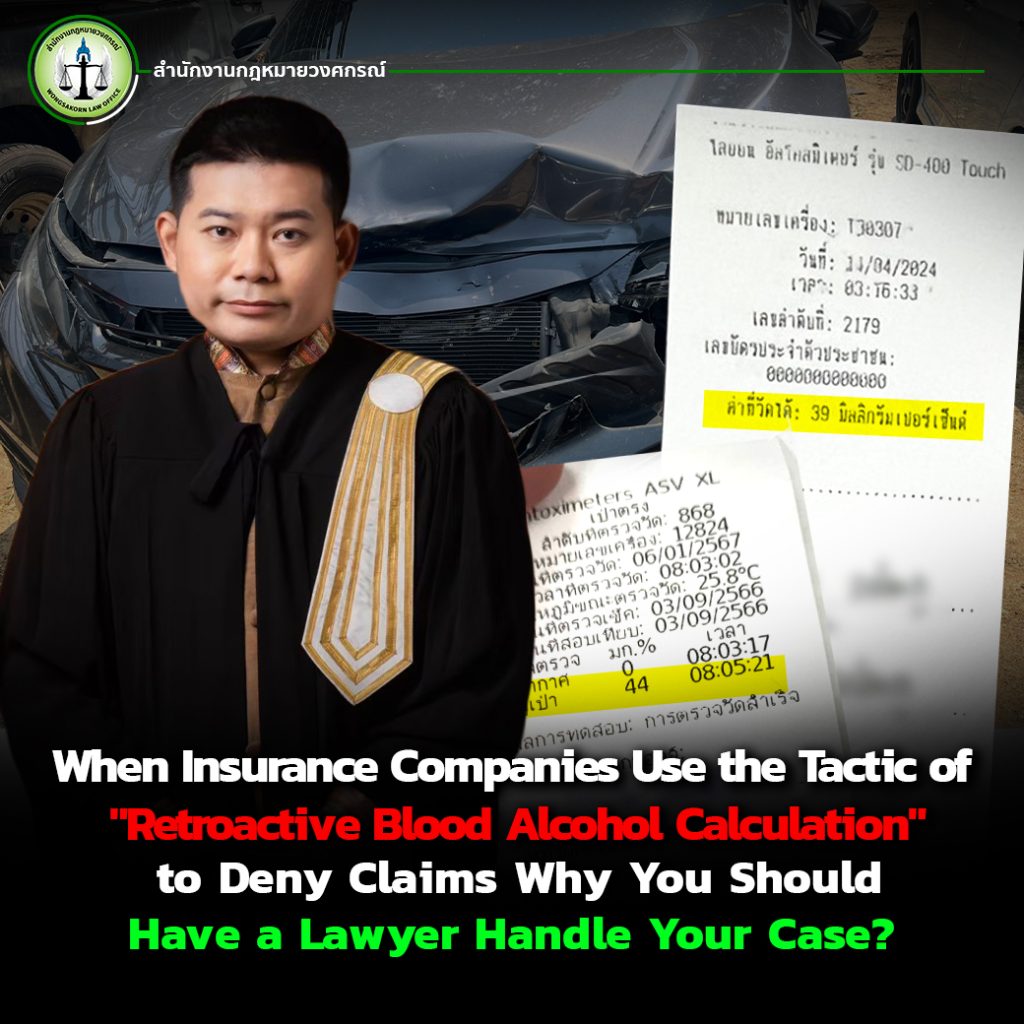
One of the common strategies used by many insurance companies to avoid paying compensation to policyholders is byclaiming a retroactive blood alcohol level, even when the insured driver was not over the legal alcohol limit at the time of driving. This issue is highly controversial and has led to many disputes, causing prolonged hardship and damage to numerous victims or insured parties.
This often leads to confusion among victims Who question: If the breathalyzer test shows a blood alcohol content below 50 milligrams percent as allowed by law. Why does the insurance company still deny liability? And why is it better to let an experiencedinsurance litigation lawyer handle the process instead of managing it yourself?
This article from Wongsakorn Law Office aims to answer these questions by providing clarity and showcasing real case studies.
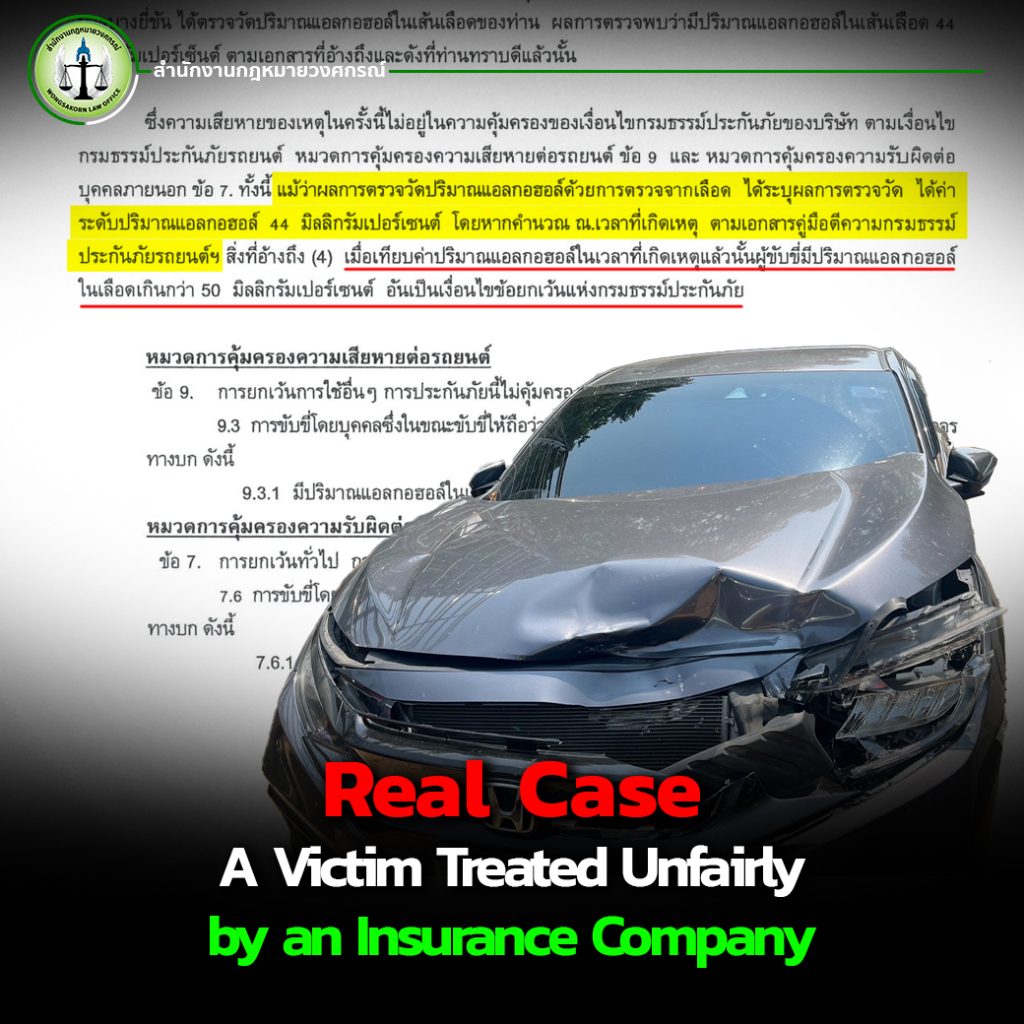
Real Case: A Victim Treated Unfairly by an Insurance Company
In this case, our client experienced an accident and admitted to consuming a small amount of alcohol—but not exceeding the legal limit. At the scene, the driver cooperated fully and took a breathalyzer test, which confirmed a result under 50 mg%, within legal limits.
Yet, the insurance company exploited a legal gray area. Despite the test result being legal, they refused to pay, citing “retroactive alcohol level calculation,” claiming that the driver’s BAC (blood alcohol content) must have been higher at the time of the accident. They made this assumption without any scientific or medical basis.
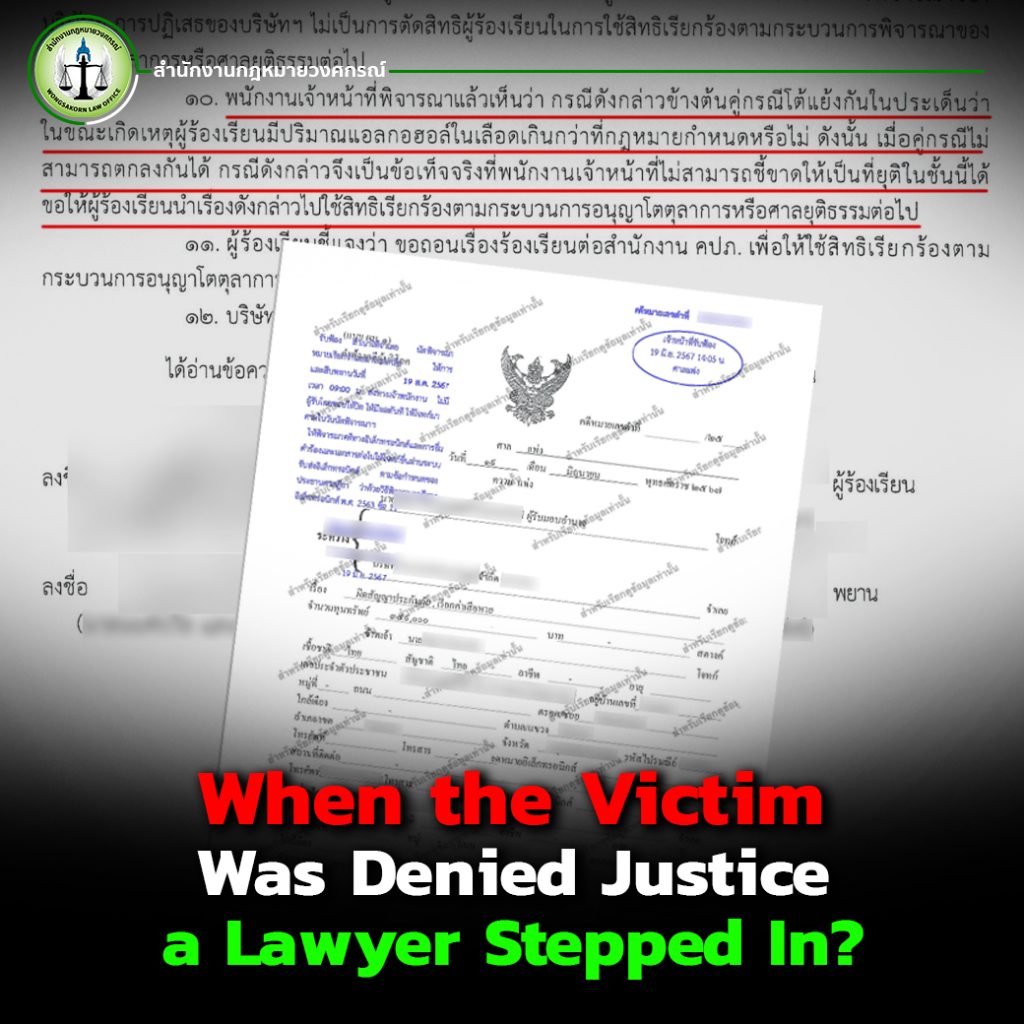
When the Victim Was Denied Justice, a Lawyer Stepped In?
The client assigned Wongsakorn Law Office to handle the case. We started by sending a formal Notice to the insurer. Still, they denied responsibility using the same flawed reasoning.
We escalated the issue to the Office of Insurance Commission (OIC), but OIC disappointingly replied that they had no authority to settle the dispute, leaving victims without reliable government recourse.
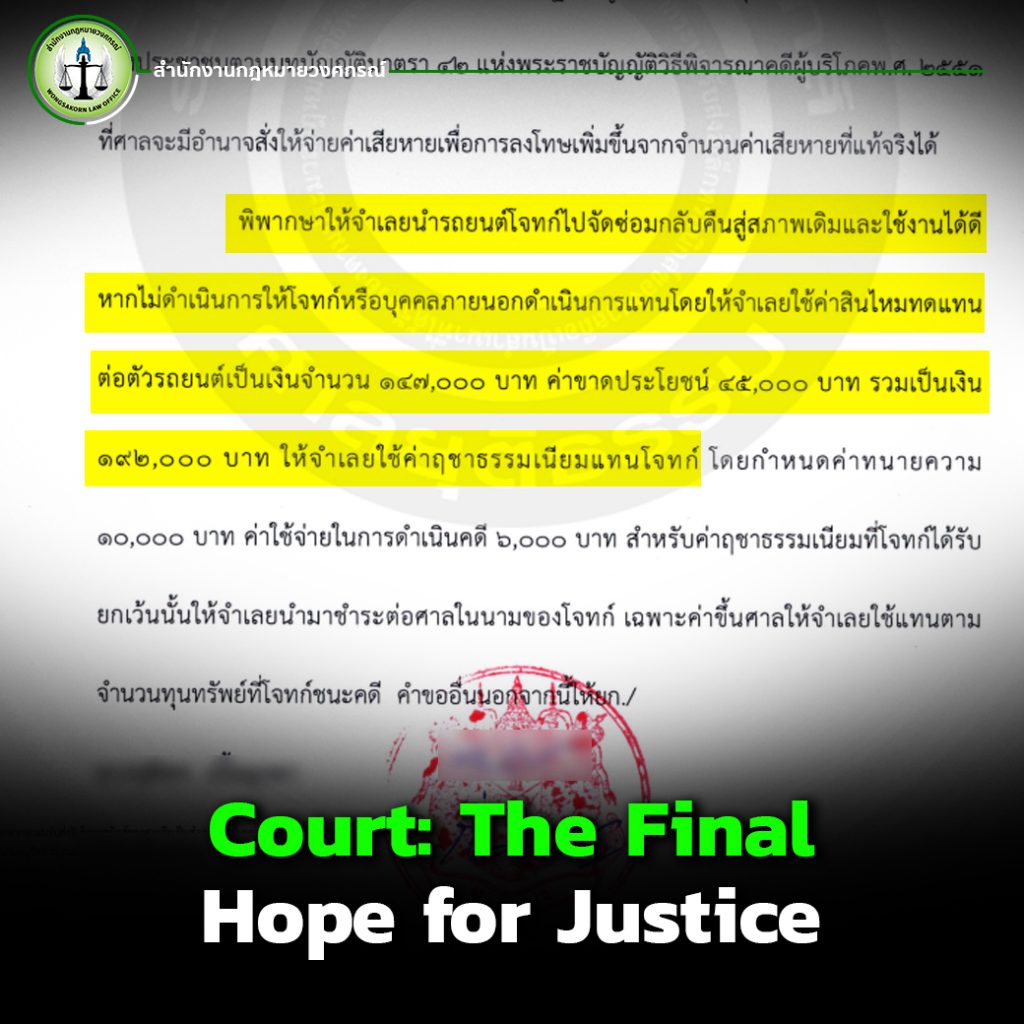
Court: The Final Hope for Justice
With no help from regulatory bodies, we filed the case in court. After thorough examination of the evidence and witness testimonies, the court ruled that the insurance company must pay compensation.
The judgment made it clear: retroactive alcohol calculation is not scientifically valid and cannot be used as a legal defense.
Why Is This Tactic a Dangerous Trap?
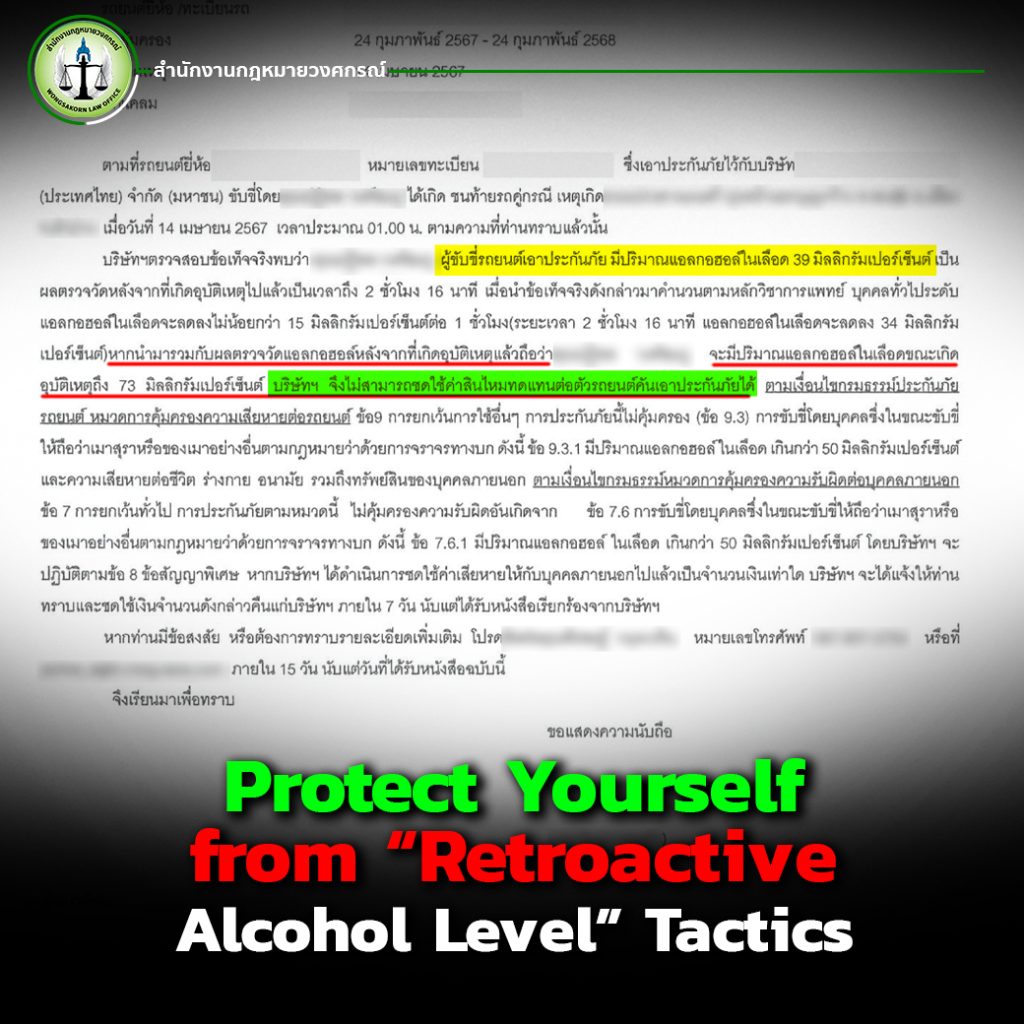
Many don’t realize that retroactive alcohol calculation is a common tactic among insurers. Our law firm has seen nearly every company use this to deny claims especially when victims don’t have legal counsel.
Without a lawyer, many victims give up their rights unknowingly and suffer unnecessary losses.
Which Companies Use This Tactic?
Sadly, almost all insurance companies have used this technique when they see that victims lack legal support. It’s a way to reduce company risk while unfairly shifting the burden onto customers.
Without a lawyer, policyholders are at the mercy of the insurer, with no checks or balances.
Protect Yourself from “Retroactive Alcohol Level” Tactics
If the victim in this case didn’t have a lawyer, the result might have been unjust even though the truth was on their side. That’s why having a legal expert on your side isn’t just about claiming rights, it’s about protecting them.
Don’t let this tactic become a systematic tool for companies to avoid payouts. Be informed, and get proper legal help when needed.
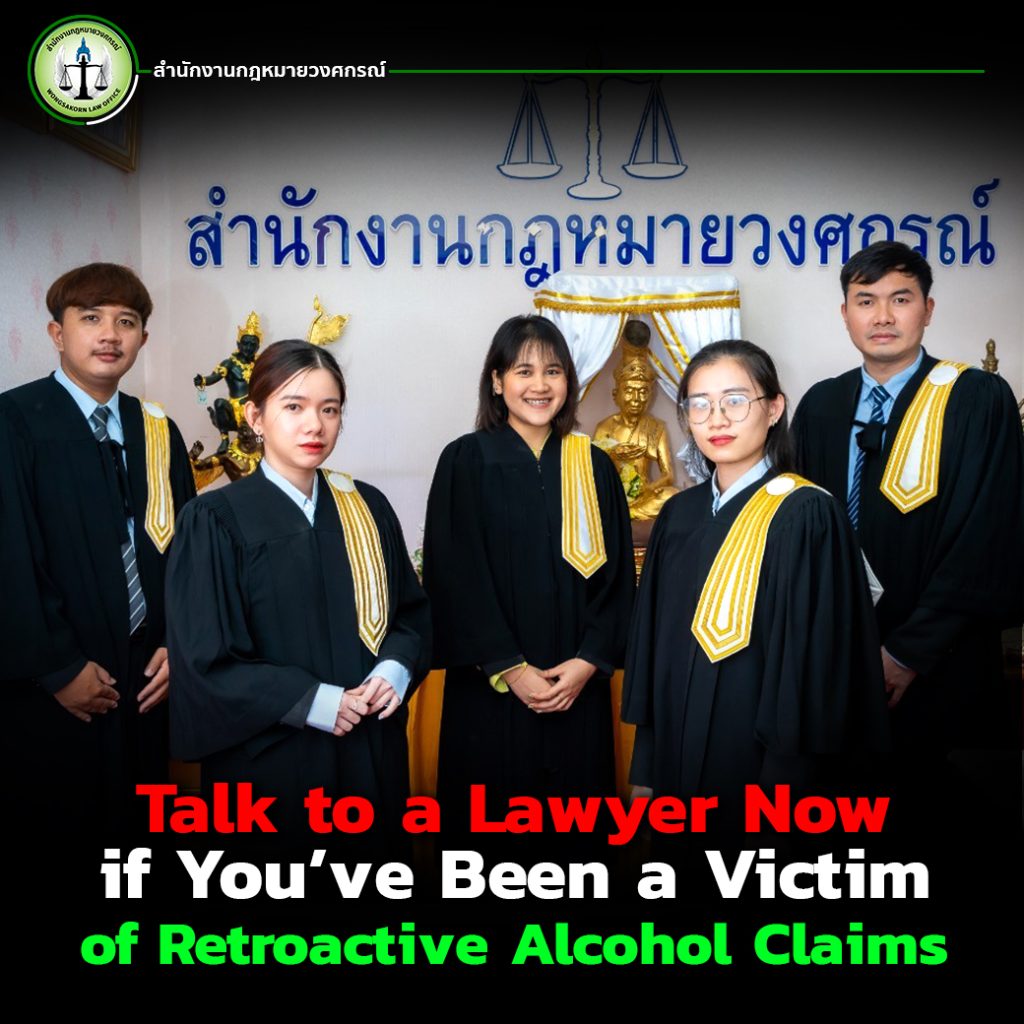
Talk to a Lawyer Now if You’ve Been a Victim of Retroactive Alcohol Claims
Car insurance shouldn’t just give you peace of mind, it should come with awareness of insurer strategies. If you or someone you know is facing denial of a claim based on this tactic, don’t delay. Consult with a lawyer.
The legal team at Wongsakorn Law Office has direct experience handling insurance disputes and is ready to protect your legal rights. If you need help with a case involving “retroactive alcohol calculations,” click tocontact us.
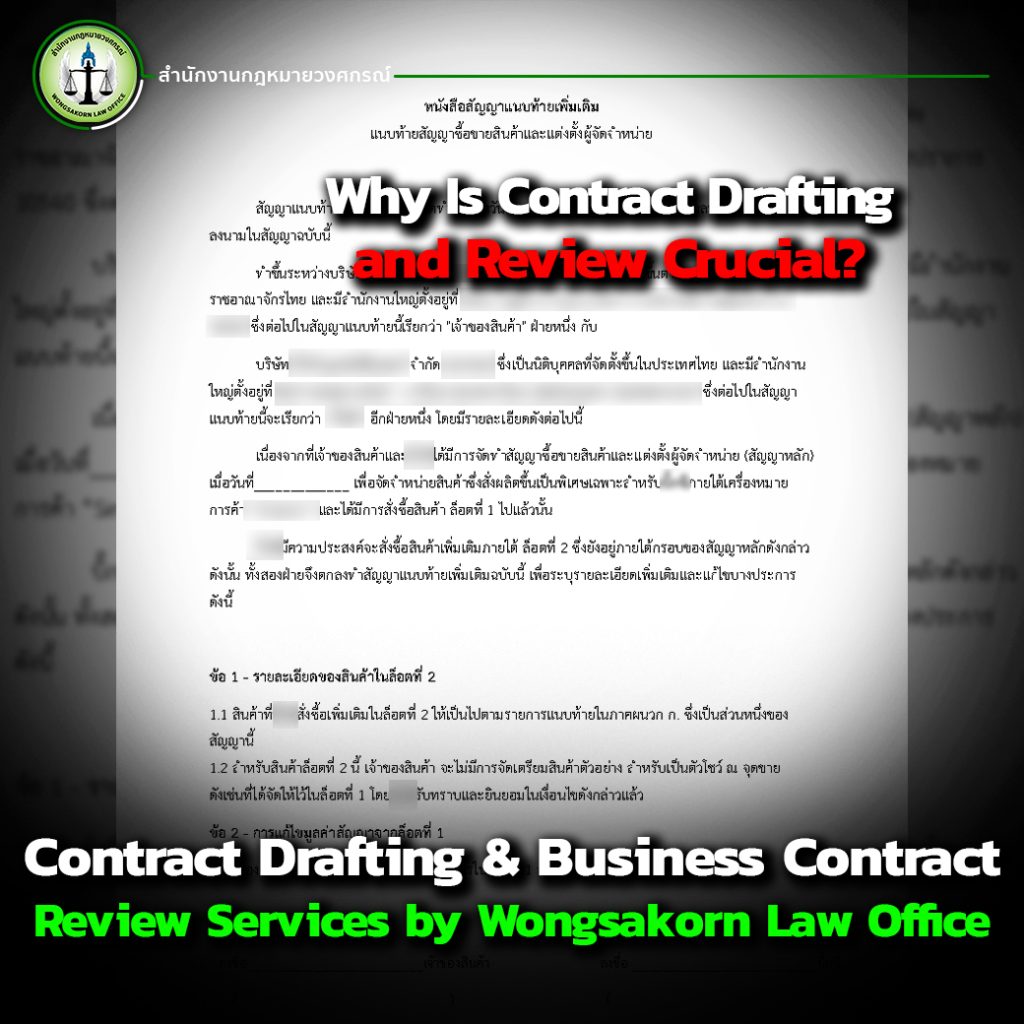
In today’s fast-paced business world, contracts serve as legal instruments that clarify agreements and prevent disputes between parties. Proper contract drafting is the cornerstone of business success, while thorough contract review helps ensure you won’t be disadvantaged or exposed to future litigation.
Whether you’re a small business owner, startup, or large organization, having contracts tailored to your business environment and relevant laws is essential. Wongsakorn Law Office drafts all types of agreements, including:
Joint Venture Agreements
Employment & Service Agreements
Sales, Lease, Hire-Purchase Contracts
Representation or Brokerage Agreements
Non-Disclosure Agreements (NDAs)
Franchise & Licensing Agreements
Technology Contracts (Software, SaaS, Hosting)
Our lawyers will meet with you to understand your objectives, assess risks, and draft clear, comprehensive, and fair agreements.
Why Have Us Review Your Contracts?
Many individuals sign contracts without thorough review, only to face costly issues later. Our contract review service ensures your agreements are safe and do not contain hidden disadvantages. We will check for:
Long-term binding conditions
Unfair or vulnerable clauses
Excessive penalties
Ambiguous legal interpretations
Authority of signatories
We offer review services for both Thai and English versions ideal for cross-border business arrangements.
Pros and Cons of Engaging a Lawyer for Contracts
Advantages
1.Reduce risk of future disputes
2.Prevent legal disadvantages
3.Tailor contracts to your business needs
4.Boost credibility and professionalism
5.Facilitate enforcement if the other party breaches
Disadvantages
1.Requires upfront legal fees
2.May take longer than generic templates
3.Must choose a lawyer specialized in your industry
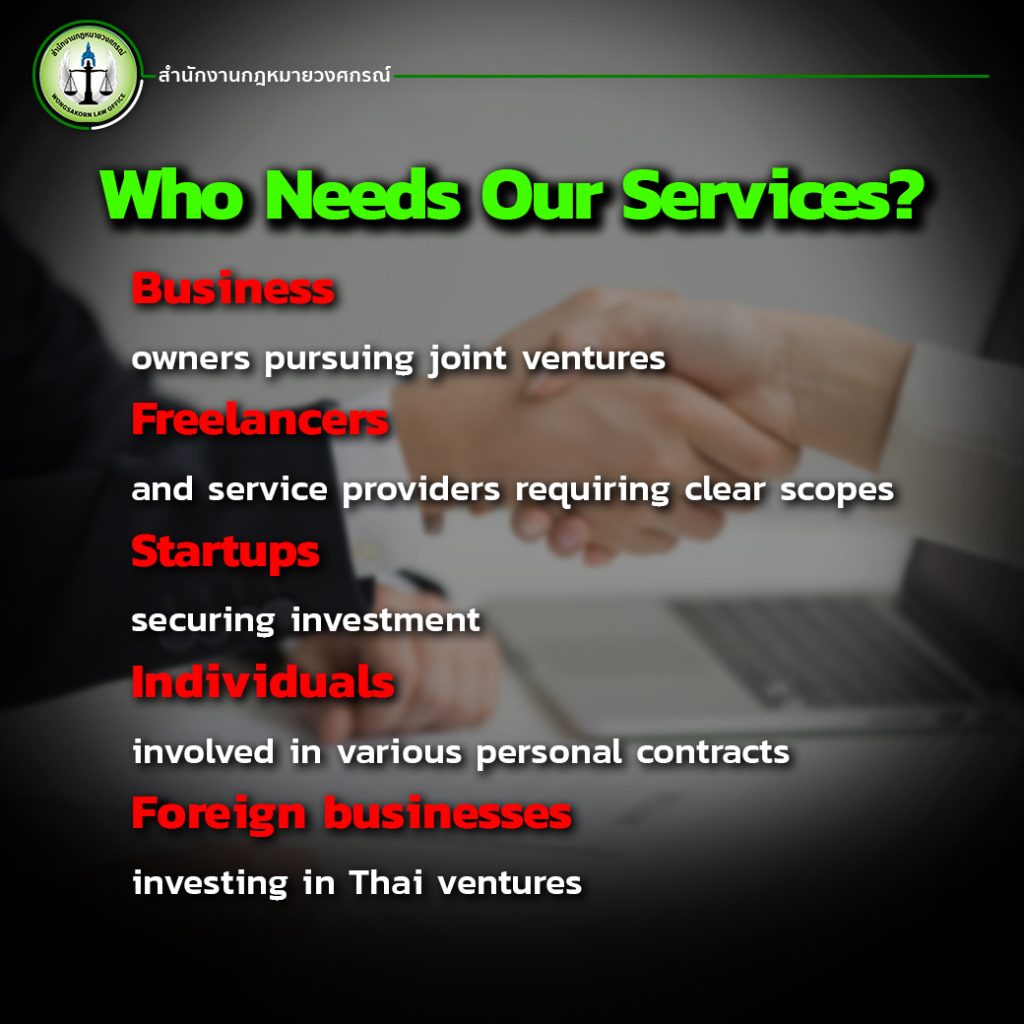
Who Needs Our Services?
Business owners pursuing joint ventures
Freelancers and service providers requiring clear scopes
Startups securing investment
Individuals involved in various personal contracts
Foreign businesses investing in Thai ventures
Regardless of your sector, we’re here to be your trusted legal partner.
Why Choose Wongsakorn Law Office?
Over 10 years of experience in business and contract law
A team skilled in legal and language nuances
Personalized advice not one-size-fits-all forms
Full drafting, review, and amendment services
Flexible engagement: one-time or ongoing retainer
Wongsakorn Law Office your ally in every business agreement.
If you’re a business owner who wants airtight contracts to minimize legal risk and avoid being taken advantage of, our professional drafting and review services are crucial. Reach out for comprehensive, trusted legal support. Click >>Contact Us<<