Does an Insurance Company Have the Right to Choose a Lump-Sum Repair for the Customer’s Car?

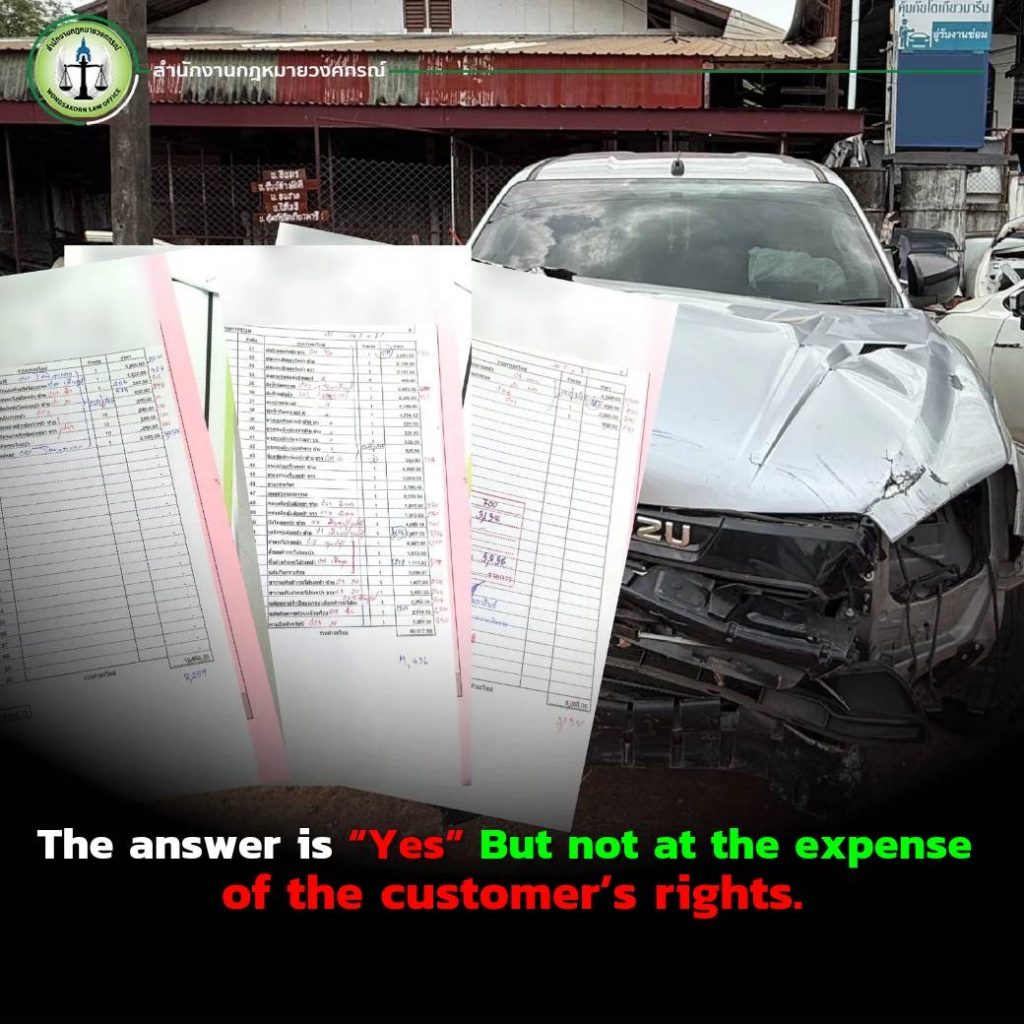
The answer is “Yes” But not at the expense of the customer’s rights.

When a car accident happens, many insured drivers feel reassured knowing that their insurance company will handle the repair costs. However, what most policyholders don’t realize is that insurance companies can manage car repairs in several ways. One common practice is “lump-sum repair” or “contracted repair,” where the insurer negotiates a fixed amount with a repair shop. This often leads to dissatisfaction among customers who feel their cars were “not restored to their original condition” or “poorly repaired.”

So, does an insurance company have the right to do this?
Legally, yes, they do but that right must remain within reasonable limits and must not cause harm to the insured party. The goal of repairing the customer’s car should be to restore it to its original condition, not to cut costs for the company’s own benefit.

Understanding “Lump-Sum Repairs” in the Insurance Industry

A “lump-sum repair” means the insurer estimates the total repair cost and agrees on a fixed price with a repair shop or service center often without consulting the customer. For example, if your car sustains 40,000 baht in damages, the company might strike a deal with a garage for that amount, leaving you out of the decision-making process.

While this may sound reasonable from a business perspective  as insurers must control costs in practice, this often leads to cost-cutting repairs rather than quality restoration.

Common problems include:

  • Incomplete or substandard repairs
  • Use of second-hand or non-genuine parts
  • Paintwork that doesn’t match the original
  • Or worst of all recurring issues requiring multiple repair attempts

Even though insurers have the right to choose lump-sum repairs, they do not have the right to infringe upon the customer’s legal rights.

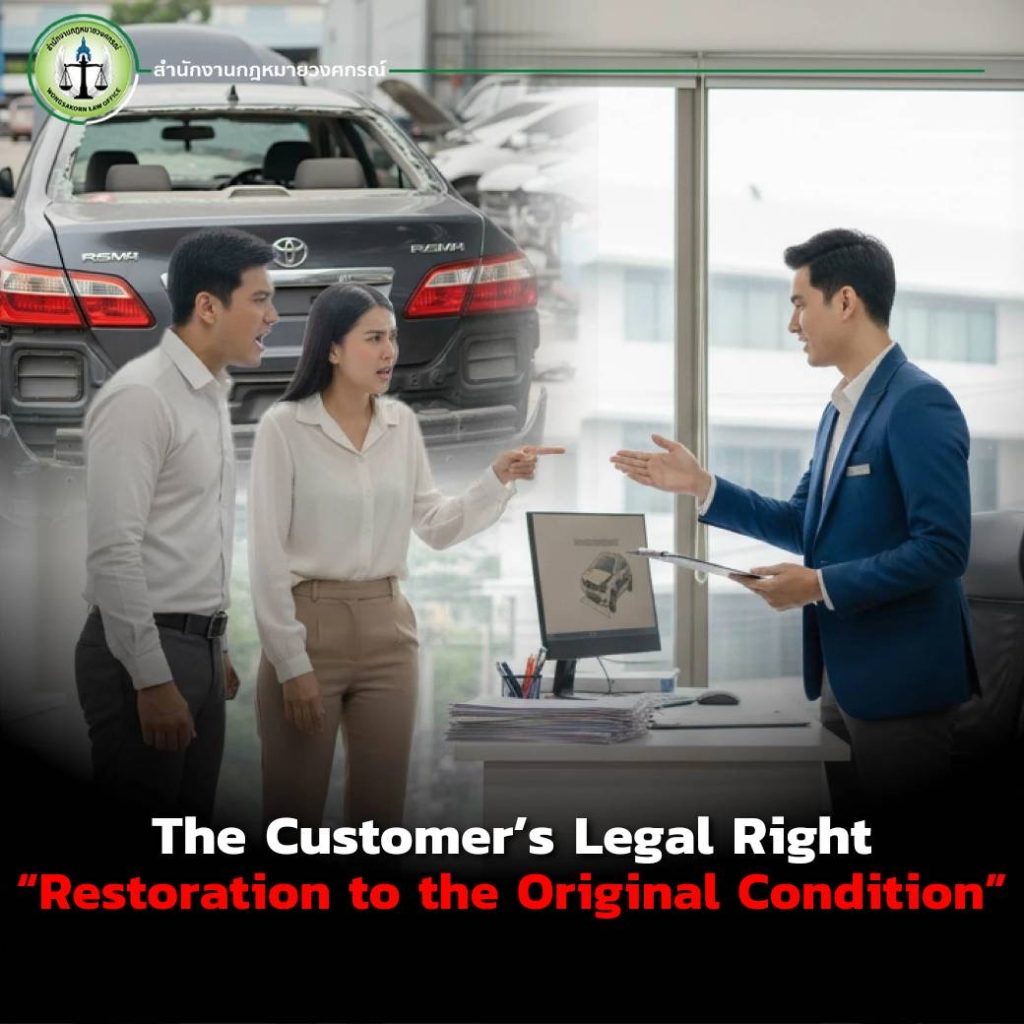
The Customer’s Legal Right: “Restoration to the Original Condition”

Under motor insurance principles, repairs after an accident must restore the vehicle to its pre-accident condition.
 That means your car should be as close as possible to its original state in terms of structure, paint quality, safety, and functionality.

If an insurer’s chosen repair method worsens the car’s condition or reduces its quality, that could amount to a “tortious act.”
 An insurer cannot act in bad faith under the contract to the detriment of the insured.

Legally, even though the insurer is a contracting party, this doesn’t grant them unlimited authority over your vehicle.
Customers are entitled to fair, quality repairs that return their property to its original state. Acting solely for the company’s financial gain is not legally justifiable.

Lawyer Arm’s View: “Yes, They Can  But Not at the Customer’s Expense”

Lawyer Arm explains:

“The insurer may have the right to choose lump-sum repairs, but they have no right to cause the customer further harm.”

The insurer’s right to manage operations is protected by law, but it must be exercised in good faith and responsibility  consistent with Section 420 of the Thai Civil and Commercial Code, which states:

“A person who, willfully or negligently, unlawfully injures another is bound to make compensation.”

If the insurer’s repair decision leads to further damage such as mismatched paint, reduced performance, or new mechanical issues that could constitute a tort.

Moreover, a car is not just a financial asset it directly relates to safety. Poor-quality repairs may not only devalue the car but could cause further accidents, making the insurer liable under civil or even criminal law.

Why Should You Consult a Lawyer from the Start?

When an accident occurs, and your car needs repair, the first thing you should do is ask for clarity upfront:
 Where will the repair take place? How will it be handled? Can you choose your preferred repair center?

If you let the insurer take full control of the repair without reviewing the terms, you might end up with a poorly repaired vehicle  and the struggle to demand compensation afterward can cost you both time and money.

Consulting a lawyer early ensures that you:

  • Understand your rights under your insurance policy
  • Know your options regarding repair types
  • Can take legal action if the insurer breaches its obligations

The Insurer’s Right Exists But It Must Be Fair

Ultimately, insurers do have the right to manage repairs, including using lump-sum arrangements.
However, that right must never override the customer’s right to fair treatment.
The car must be restored as closely as possible to its original state, not just “patched up” to save the insurer money.

If you’ve been in an accident, don’t wait until problems arise to seek legal advice.
Consult a lawyer immediately. It’s the best way to protect your rights and ensure a fair outcome.

WongSakorn Law Office

Our team of experienced insurance and compensation lawyers can help you file and pursue insurance claims properly and effectively ensuring you receive the full amount you deserve and that your car is restored to its original condition without compromise.

Let us “restore your rights” just like restoring your car  properly, and completely.
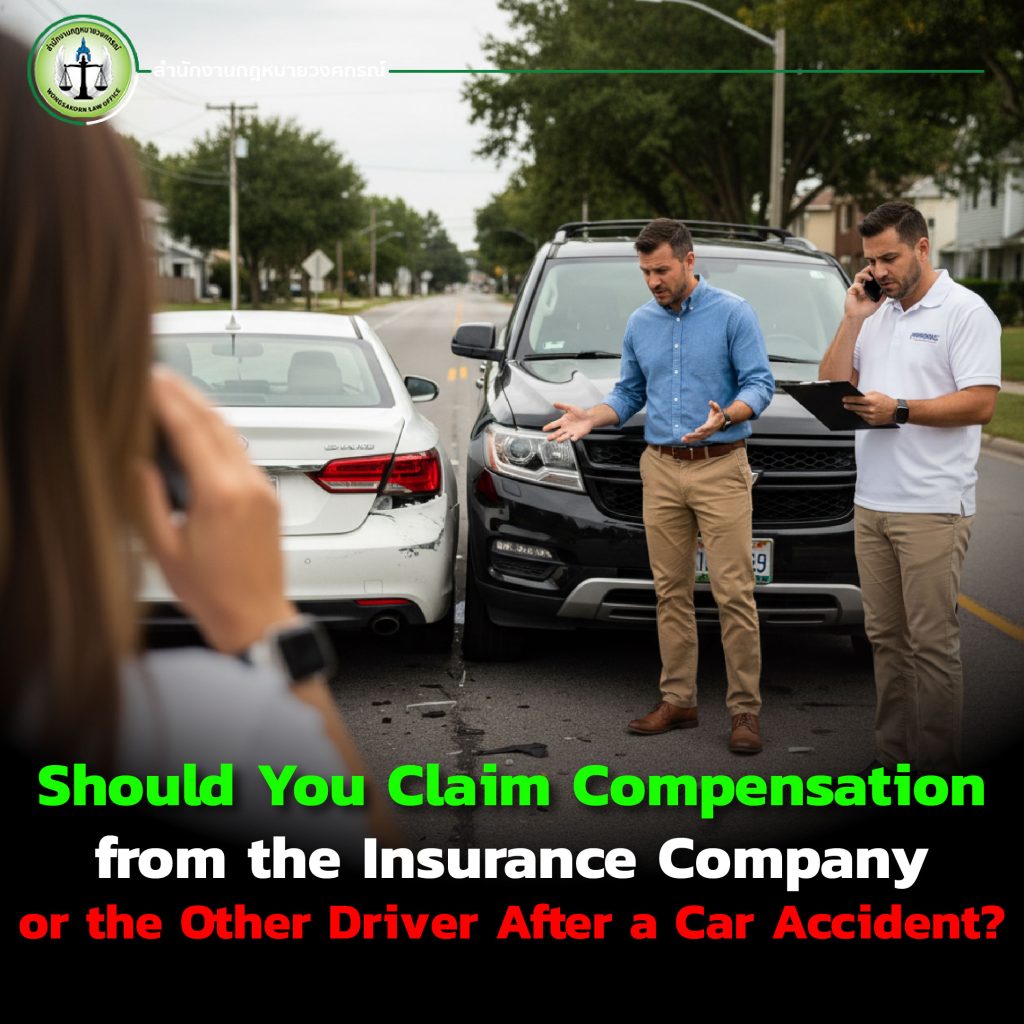
Should You Claim Compensation from the Insurance Company or the Other Driver After a Car Accident?

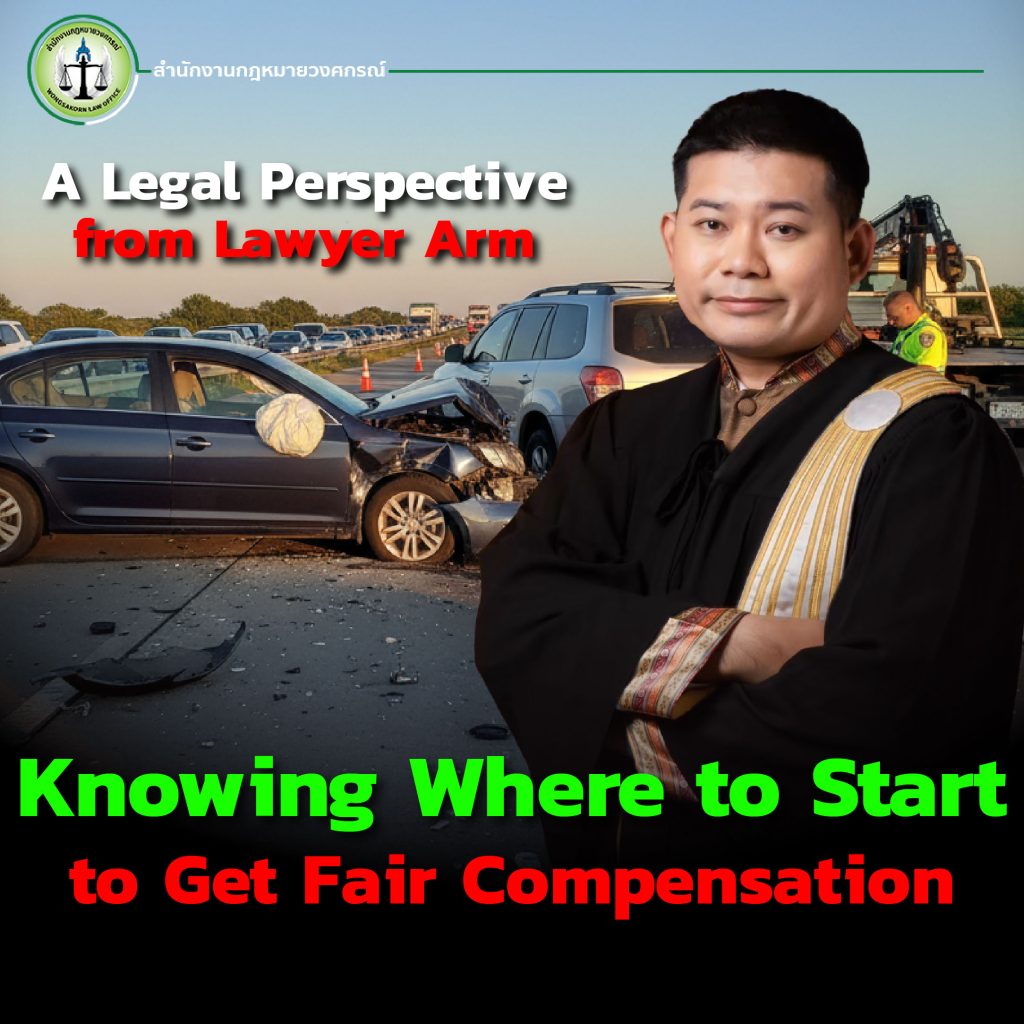
A Legal Perspective from Lawyer Arm Knowing Where to Start to Get Fair Compensation

Road accidents can happen anytime, whether you’re driving a short or long distance. The resulting damages go beyond just vehicle repairs or property loss; they also include physical and emotional injuries that victims are legally entitled to claim. However, when it’s time to actually make a claim, many people are unsure: Should I claim from the insurance company or from the other driver directly?

According to Lawyer Arm from Wongsakorn Law Office, who has extensive experience handling car accident compensation cases, claiming from the insurance company is often the more practical choice. It is usually faster, more reliable, and more likely to result in fair compensation.

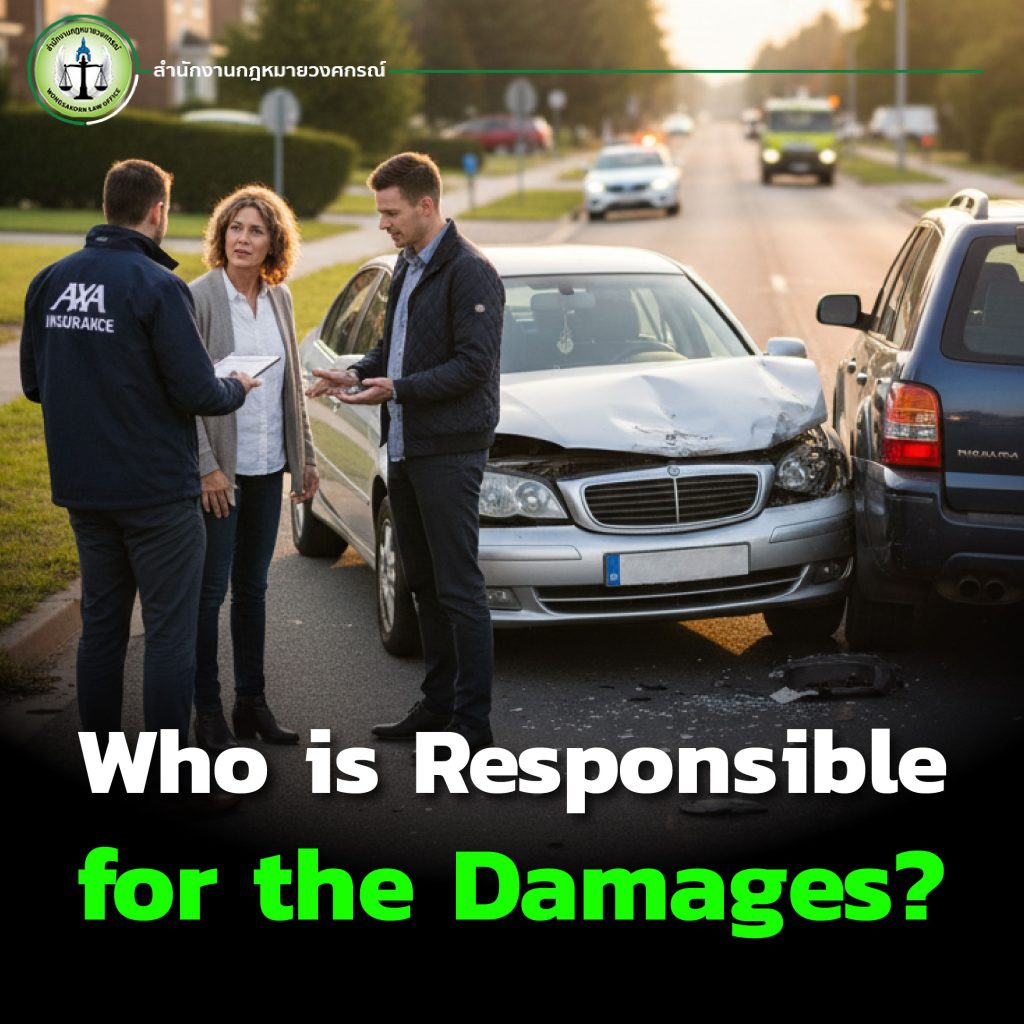
Who is Responsible for the Damages?

After an accident, the first step is to report the incident to the police to record the details and determine fault. Then, check whether the other party has insurance.

If they do, the insurance company will be responsible for covering the damages within the limits of the insurance policy, such as:

  • Repair costs for your car
  • Medical expenses
  • Lost income during recovery
  • Compensation for serious injury or death
  • Other related damages
In these cases, the insurance company must pay compensation on behalf of the insured driver within the coverage limits.

Can You Claim Directly from the Other Driver?

Legally, yes, you can. The person at fault must pay for all damages caused. If the other driver has no insurance or insufficient coverage, you can sue them directly.

However, in practice, this is rarely easy.
You may face challenges like:

  • The other driver denying fault
  • Inability to contact them or lack of assets to enforce judgment
  • Long court procedures to prove the claim amount
  • Even if you win, you may still not get paid if the driver has no money

So, while claiming directly from the other party is possible, it’s often slow and uncertain.

Why Is Claiming from the Insurance Company Better?

Lawyer Arm emphasizes:

“Claiming from the insurance company isn’t necessarily easier, but it’s more reliable because the company is legally obliged to pay and has the financial capacity to do so.”

Insurance companies, especially large, publicly listed ones have legal obligations and reserve funds to handle claims. While documentation and review steps may take time, victims are more likely to receive proper compensation.

Additionally, dealing with a professional insurance claim department makes negotiation smoother, compared to individuals who might avoid responsibility.

What Should You Do Right After the Accident?

When the accident happens, remember this key step:

“Ask which insurance company the other driver uses.”

This information is crucial for filing a proper claim. Then:

1. Get a police report or official record.

2. Notify the at-fault driver’s insurance company that you intend to claim as a victim.

3. Gather documents: repair receipts, medical certificates, bills, photos, and evidence of loss.

4. Negotiate with the insurer’s claim department.

5. If the insurer denies responsibility, you may pursue legal action with an attorney’s help.

Set a Clear Goal: How Much to Claim and From Whom?

Before making a claim, Attorney Arm advises:

“Be clear about how much you want to claim and who is responsible for paying it.”

This clarity helps you plan properly and avoid confusion. For example:

  • Property damage → claim from voluntary insurance (if applicable)
  • Medical costs → may be claimed from both the insurer and compulsory motor insurance (P.A.)
  • Lost income or extra compensation → may require negotiation or litigation

Evidence and Understanding Are the Keys to Successful Claims

Compensation claims rely on both complete documentation and knowledge of legal procedures. If you’re unsure how to proceed, consult an experienced lawyer in insurance and accident cases to help verify coverage, negotiate with the insurer, or file a lawsuit if needed.

The Keys to Successful Claims Talk to a Lawyer Early

“Don’t rush to blame anyone after an accident. First, identify who’s responsible for paying and the best way to claim fair compensation.”

Claiming from the insurance company might take time and paperwork, but it’s the safest and most reliable way to receive compensation. Insurance companies are legally required to pay and have the resources to do so.

Important: Always ask, “Which insurance company is the other driver insured with?” it might be the key to receiving full and timely compensation.

Wongsakorn Law Office provides expert legal services for insurance and accident claims, handled by experienced attorneys who specialize in compensation law.

 Consult our legal team today. Click [Contact Us]

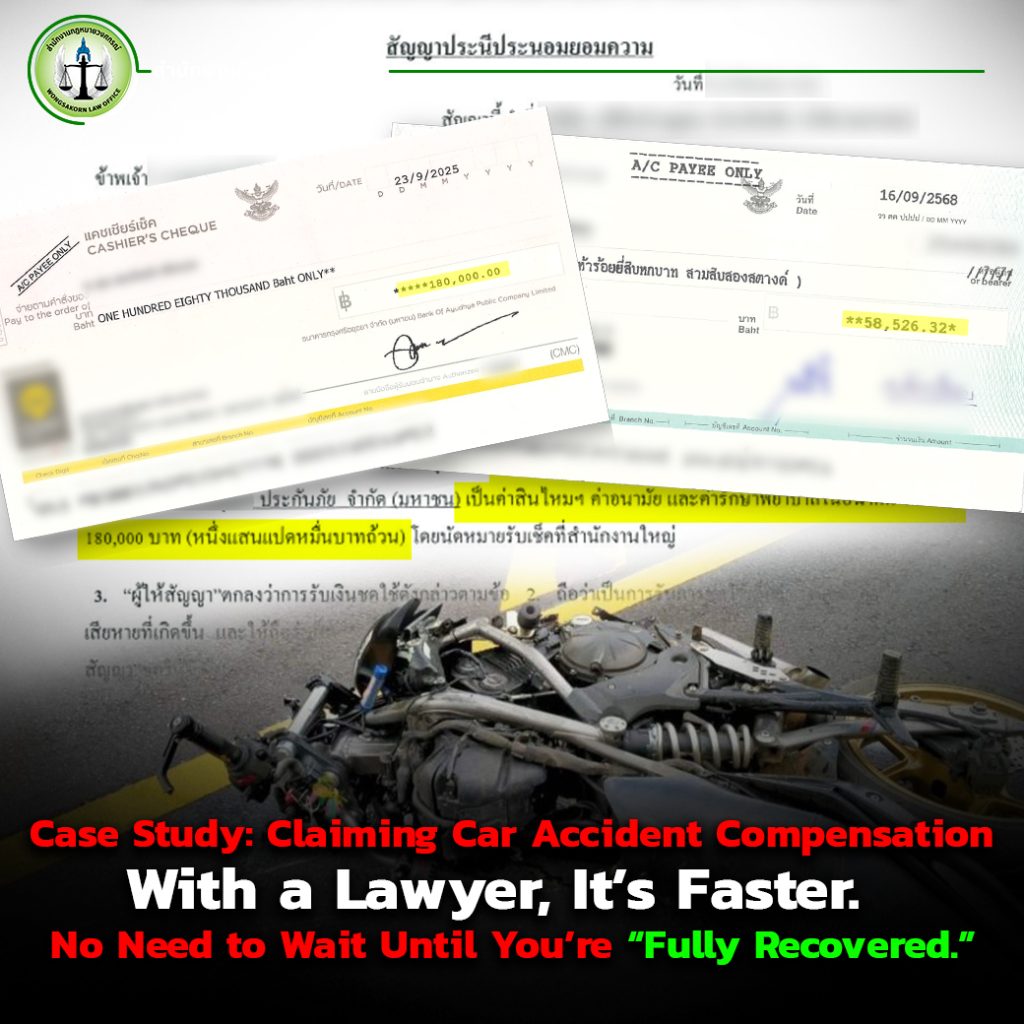
Case Study: Claiming Car Accident Compensation – With a Lawyer, It’s Faster. No Need to Wait Until You’re “Fully Recovered.”

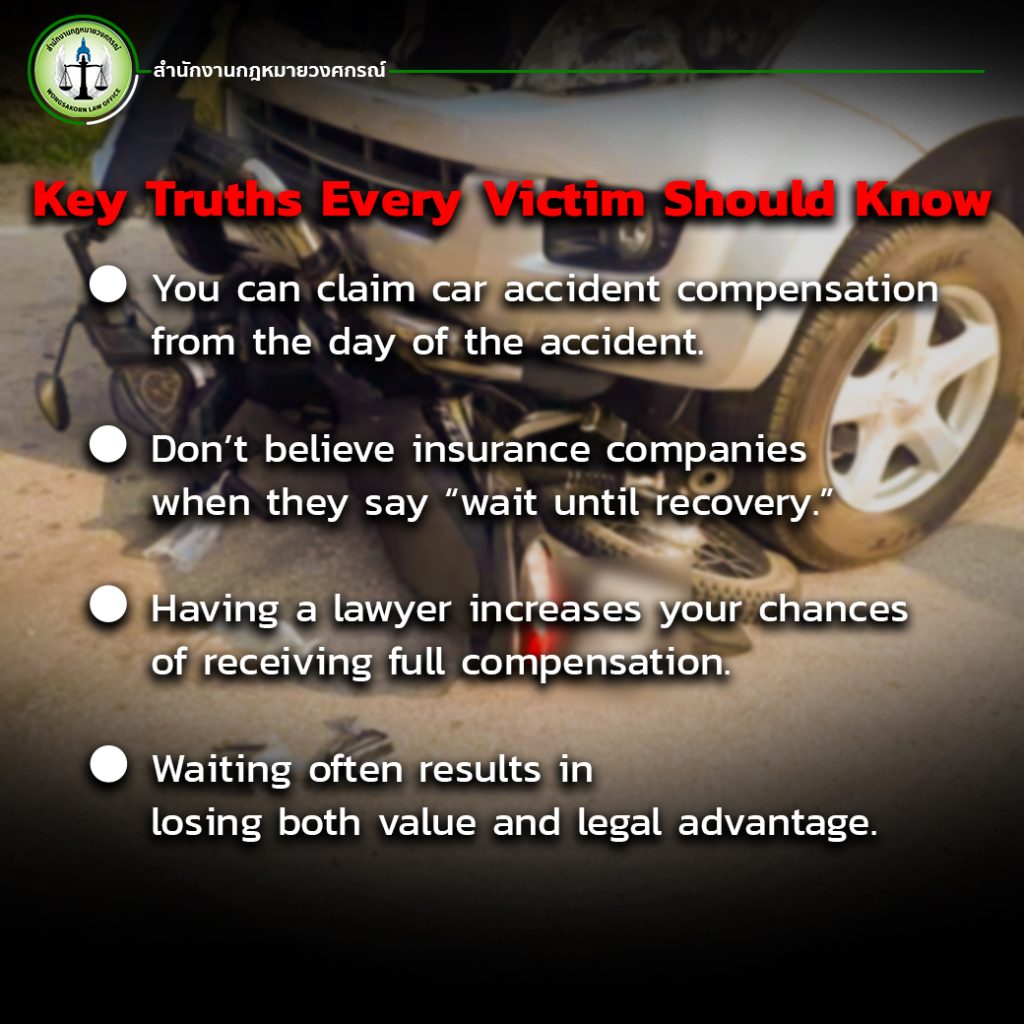
Road accidents are something no one wants to experience. But when they do occur, victims have the legal right to claim car accident compensation to cover actual damages, physical, emotional, and property-related. In reality, however, many insurance companies attempt to delay or avoid responsibility by discouraging victims with phrases like: “Wait until you’re fully recovered before filing a claim.” Legally, victims are entitled to file claims immediately from the day of the accident.

This article highlights the case of Mr. A, who was seriously injured in a car accident. Instead of believing the insurance company’s words, he sought legal counsel right away. With the help of a lawyer, he received compensation much faster than those who waited until they were “fully recovered.”

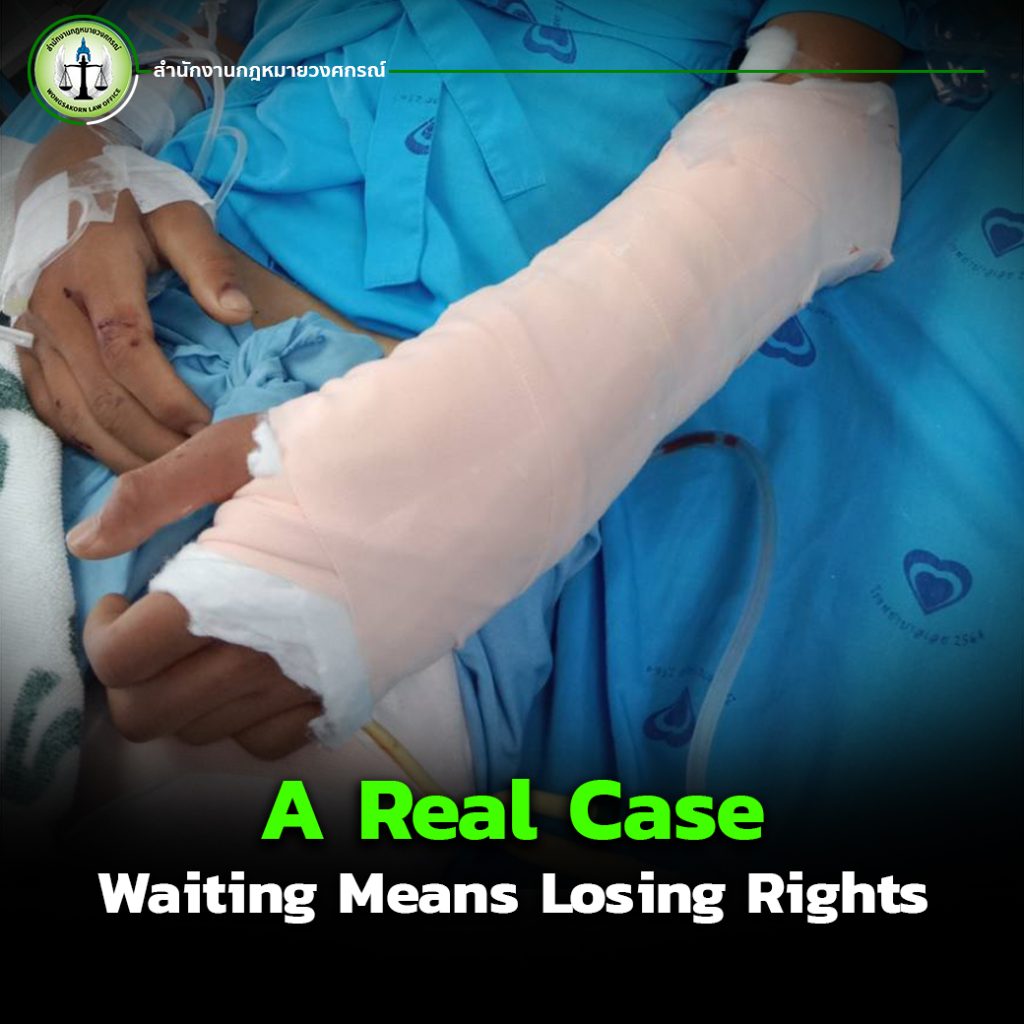
A Real Case: Waiting Means Losing Rights

Mr. A suffered severe injuries in a car accident and required hospitalization. When his family first contacted the insurance company, they were told:
“Wait until he recovers, then file the claim later.”

Many victims who are unaware of their rights might have followed this advice and waited. Fortunately, Mr. A and his family chose not to wait. They consulted Lawyer Arm from Wongsakorn Law Office, who immediately pursued the claim even while Mr. A was still receiving treatment.

The result was completely different: within less than a month after the law office sent a demand letter (notice) to the insurance company, the insurer quickly responded and paid the compensation.

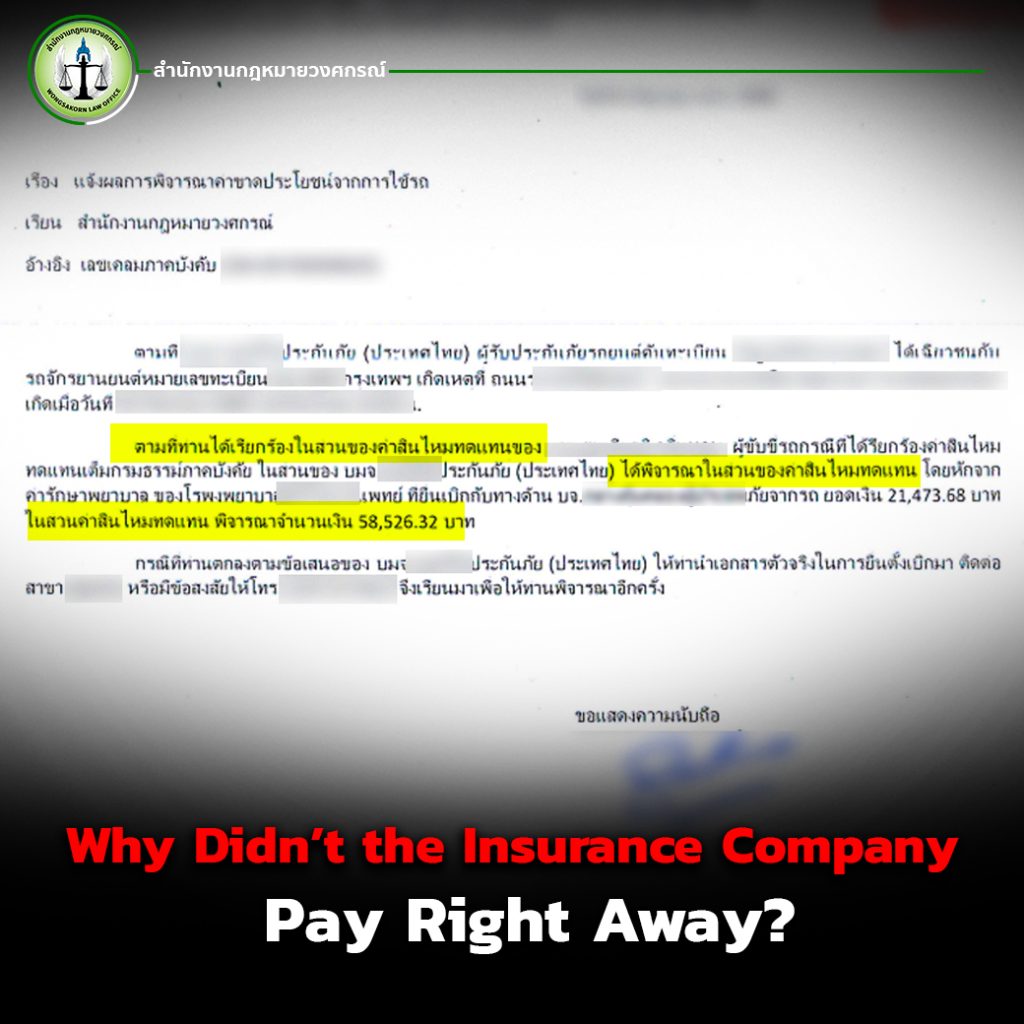
Why Didn’t the Insurance Company Pay Right Away?

A common question is: “Why didn’t the insurance company pay at first, even though they could have?”

The simple answer: when victims don’t know their rights or lack a lawyer, insurance companies can easily delay, deny, or underpay compensation.

The phrase “Wait until you’re fully recovered” may sound caring, but in reality, it’s a tactic. Once victims recover, insurers often argue:

  • “Since you’re healed, there’s no need to pay much.”
  • “You can walk normally now, why claim high damages?”

This reduces the true value of the damages, ignoring the pain, suffering, and life impact victims already endured from day one.

Thus, waiting until recovery isn’t beneficial; it only weakens your case and diminishes your rightful compensation. Claims can and should be filed immediately after the accident.

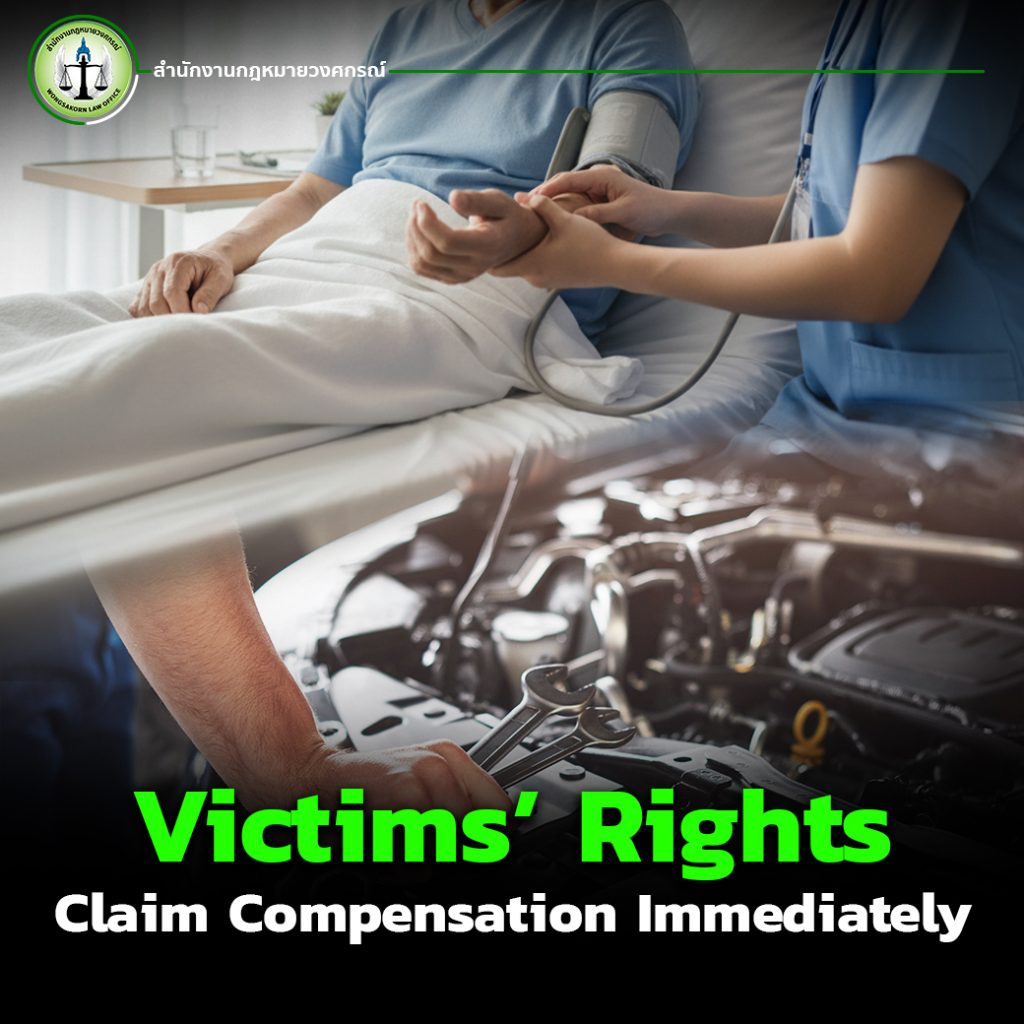
Victims’ Rights: Claim Compensation Immediately

Under the law, car accident victims can claim compensation from the day of the accident, including:

  • Medical expenses (current and future)
  • Lost income during recovery
  • Rehabilitation costs (physical and psychological)
  • Compensation for pain and suffering
  • Property damage (e.g., vehicle repairs, other belongings)

If the case reaches court, the court can also reserve the right for victims to file additional claims later, should further damages appear.

Why Do You Need a Lawyer?

Mr. A’s case clearly shows that having a lawyer forces the insurance company to act. Lawyers know the process, the rights, and the tactics insurers use so they can ensure victims get fair compensation quickly.

Victims who try to file claims alone often hear excuses such as:

  • “Your documents are incomplete.”
  • “Wait until recovery first.”
  • “The company will reconsider later.”

This wastes time and leads to serious loss of rights.

Don’t Let Insurance Companies Take Away Your Rights

Mr. A’s case proves that with a lawyer’s help, victims can claim car accident compensation quickly and fully without waiting for the misleading “recover first” advice.

If you or someone close to you experiences an accident, don’t let your rights slip away. Collect evidence, contact a lawyer, and file your claim immediately to ensure justice and fair compensation.

Wongsakorn Law Office is ready to stand by your side in every case.

✍️ Wongsakorn Law Office, led by Lawyer Arm and our professional team, is ready to stand by your side in every case to secure the compensation and rights you truly deserve.

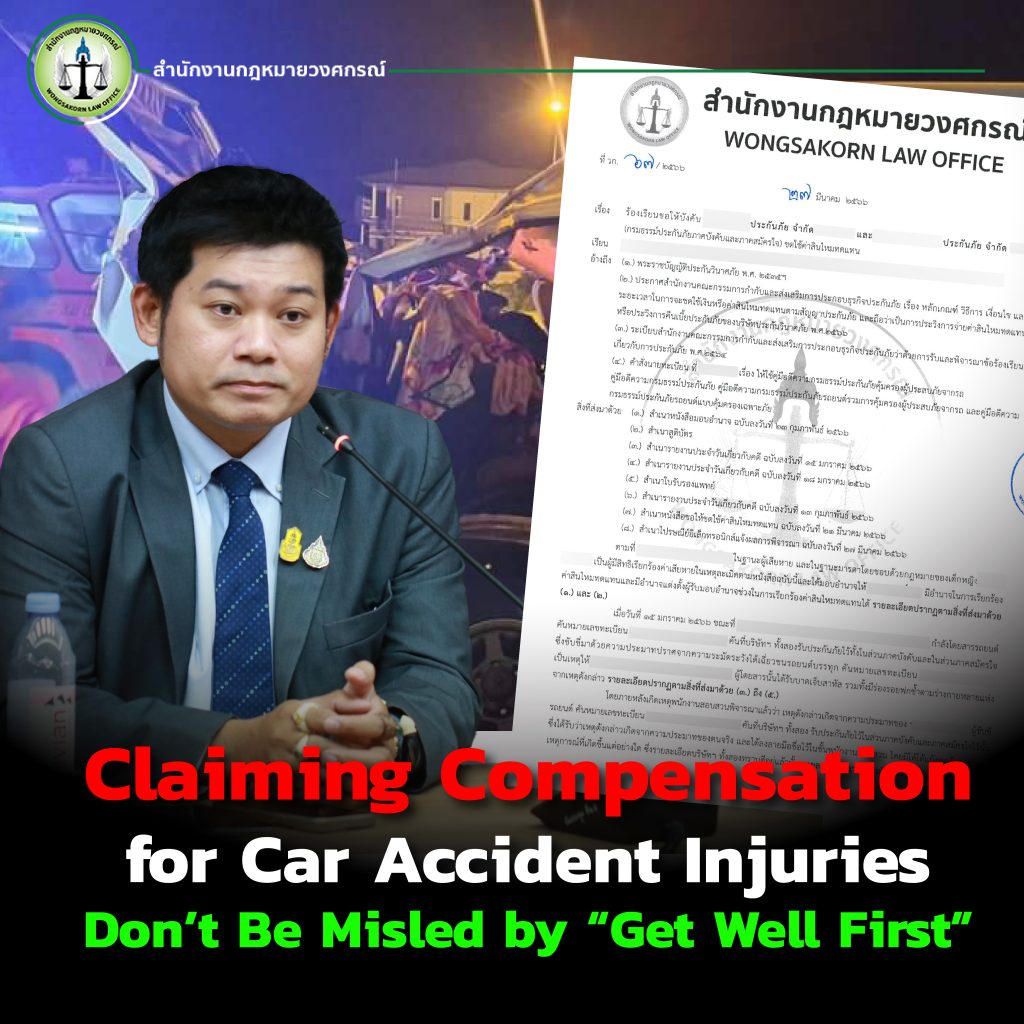
Claiming Compensation for Car Accident Injuries: Don’t Be Misled by “Get Well First”

When a road accident occurs, victims often suffer both physical and emotional pain. The most important thing is to receive fair and timely compensation. However, many insurance companies use delaying tactics, often saying, “Get well first, then make your claim.” In reality, this can cause victims to lose their right to claim full compensation.

Insurance Tactic: “Get Well First”

At first glance, this advice may sound reasonable since victims naturally want to recover. But legally, waiting until full recovery can weaken the case because:

  • Evidence of injuries fades over time.
  • In court, insurers often argue:
    • The victim has already recovered.
    • There is no ongoing damage.
    • No need to pay the claimed compensation.

Thus, “get well first” is not just about delaying it’s a legal strategy to weaken the victim’s claim.

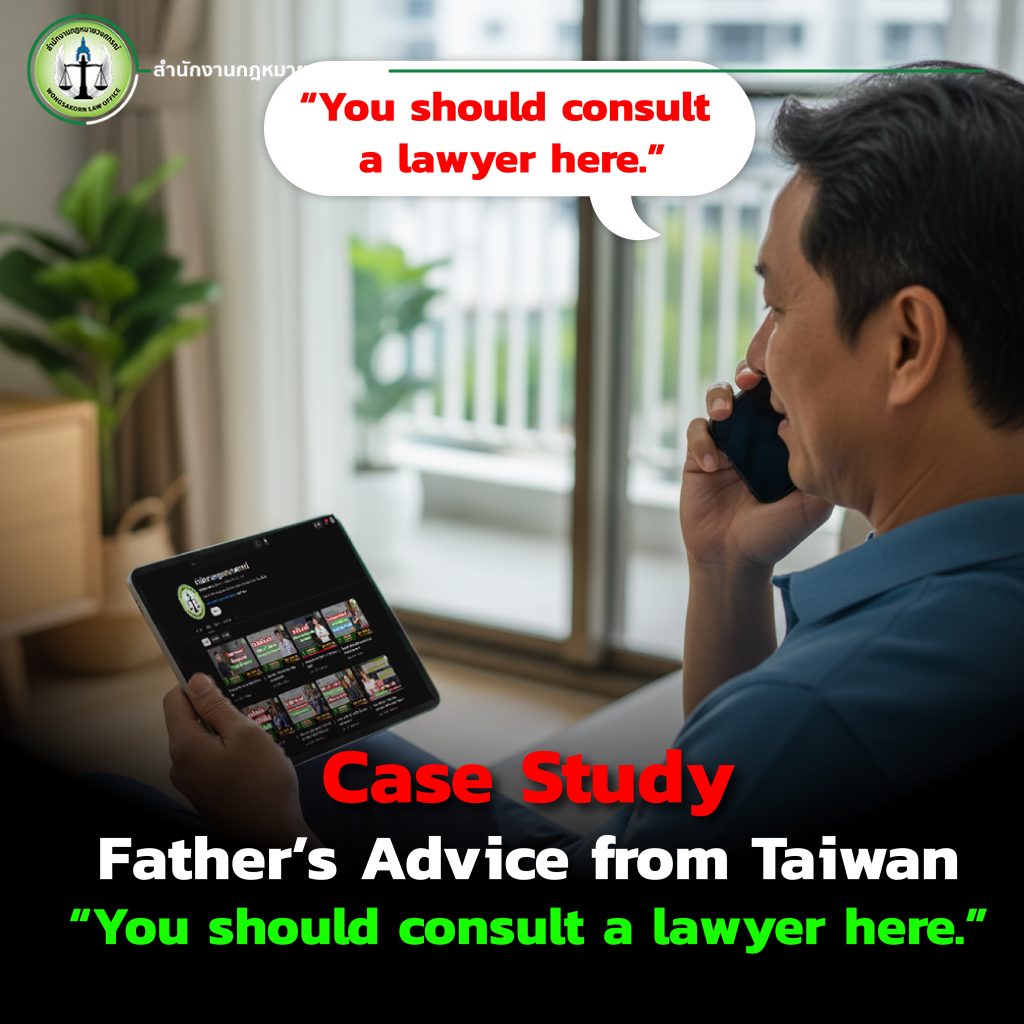
Case Study: Father’s Advice from Taiwan “You should consult a lawyer here.”

In one real case, a passenger injured in a van accident was told by the insurance company: “Recover first, then claim.”
Initially, the vehicle owner promised to help but soon withdrew support, leaving the victim anxious and helpless. Fortunately, her father, working in Taiwan and following Lawyer Arm’s YouTube channel, insisted: “If you hear this phrase, contact Lawyer Arm immediately.” This changed everything the victim sought proper legal counsel.

Why Consult a Lawyer Immediately?

Claiming compensation is not just paperwork, it’s a legal battle against insurance companies backed by professional lawyers. Without legal support, victims are at a huge disadvantage. Lawyers can:

  • Assess damages (medical bills, lost income, future costs).
  • Prepare legally valid medical and legal documents.
  • Represent victims effectively in court.
  • Prevent insurers from delaying or denying compensation.

Attorney Arm emphasizes: Insurance companies already have lawyers before an accident even happens, but victims often have none.

The Pitfalls of “Get Well First”

Victims who follow this advice often find:

  • Insurers argue recovery means no claim.
  • Compensation is reduced or denied.
  • Crucial evidence (medical certificates, injury photos, receipts) is lost.

The law allows victims to claim both present and future damages. Waiting only weakens the claim.

The Danger of Wrong Advice from “Fake Lawyers”

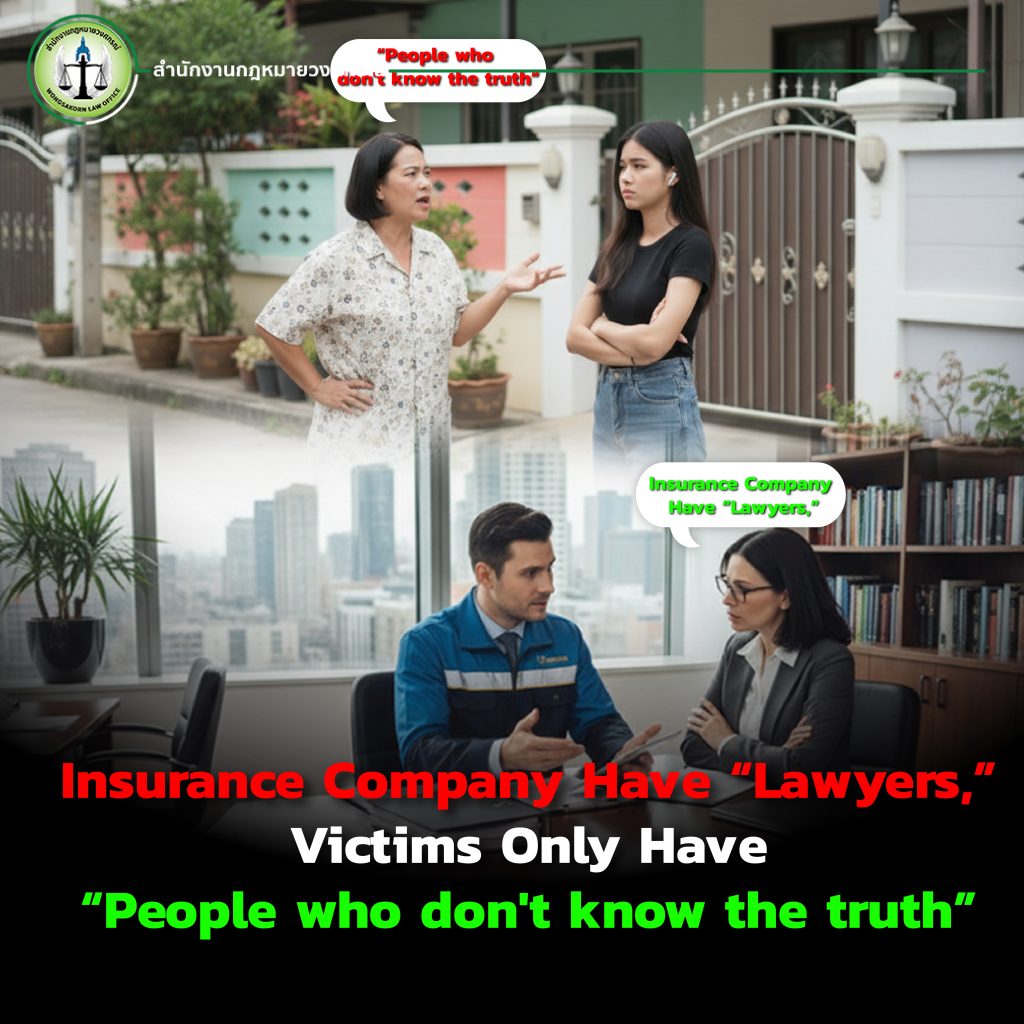
Victims often receive misleading advice from so-called “know-it-alls” or “People who don’t know the truth” neighbors or acquaintances without legal training. For example:
“If you claim it once, you can’t claim it again.”
This is legally incorrect. Courts allow victims to claim for future damages and even add claims later if necessary.

Insurance Company Have “Lawyers,” Victims Only Have “People who don’t know the truth”

Insurance companies have legal teams from the start. Victims, however, often rely on unqualified advice, making them vulnerable. One common tactic:
“Recover first, then claim.”
Later in court, insurers counter with: “You’re already recovered, so you can’t claim more.”

Only Real Lawyers Can Protect Your Rights

Being a lawyer requires years of study and licensing. “People who don’t know the truth” only pretend to know and mislead victims. Believing them risks losing your legal rights.

  • Don’t rely on unqualified advice.
  • Consult an experienced lawyer immediately after an accident.
  • Don’t let insurers delay or trick you with “get well first.”

Claiming compensation after a car accident is not a minor issue. Insurance companies protect their interests with legal teams. Victims need real lawyers too. Acting fast ensures fair compensation and justice.

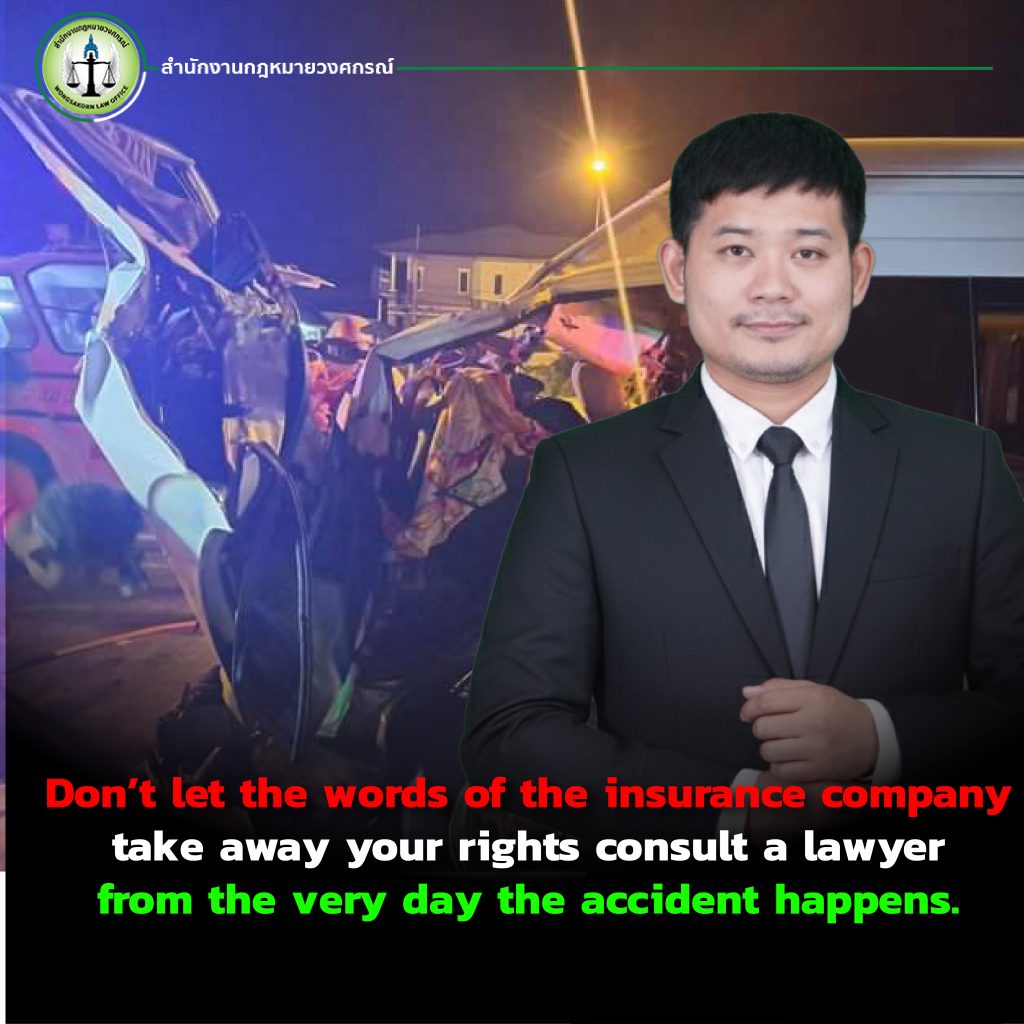
Don’t let the words of the insurance company take away your rights to consult a lawyer from the very day the accident happens.

In the event of a car accident, no matter how serious or minor your injuries are, do not wait until you have fully recovered before making a claim. Doing so may put you at a disadvantage in court and cause you to lose your right to claim compensation. From the moment the accident occurs, you should collect evidence, contact a lawyer, and proceed with your claim according to your legal rights.

If you or your loved one has been in a car accident and hears the phrase “Get well first before claiming” from the insurance company, do not believe it. Immediately seek advice from a professional lawyer. The legal team at Wongsakorn Law Office, led by Lawyer Arm, is ready to consult with you and stand by your side, ensuring that you receive justice and the full compensation you deserve.

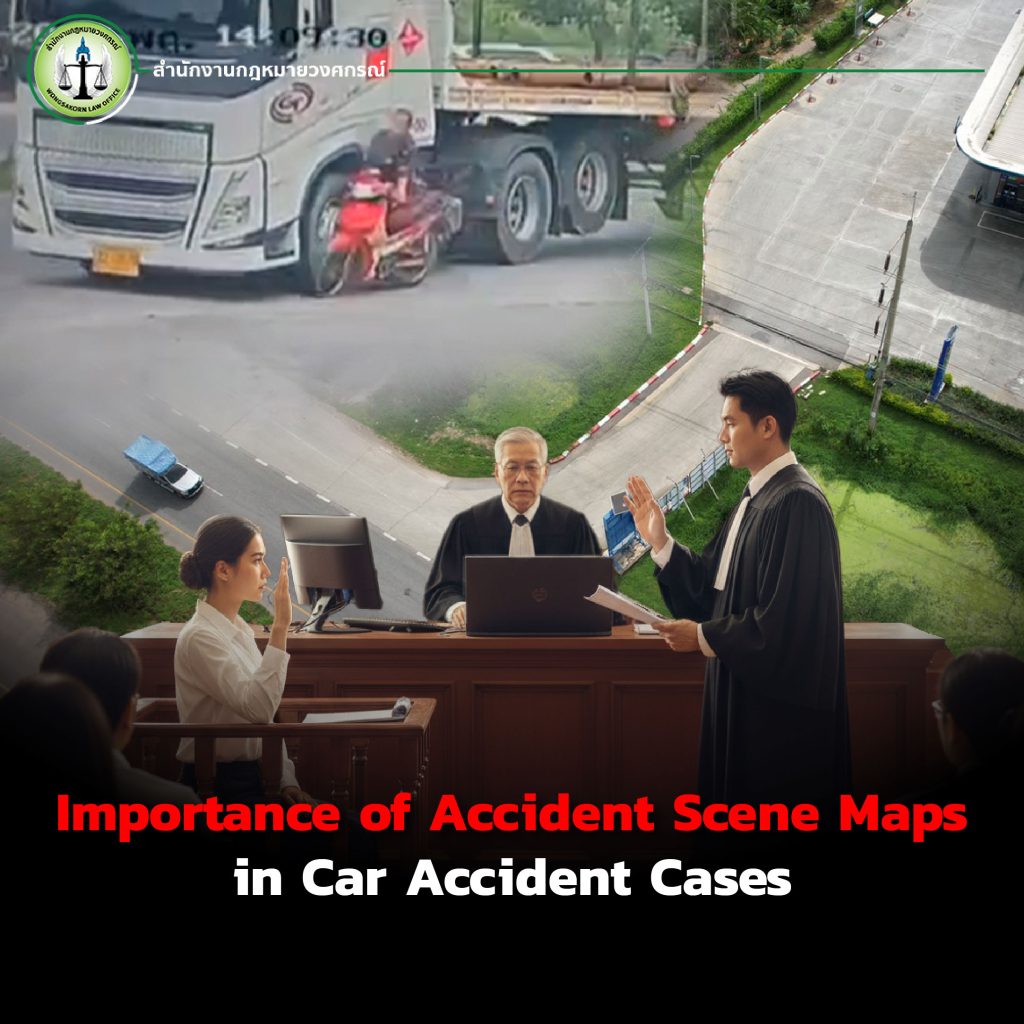
Why Are Accident Scene Maps Important in Car Accident Cases? And How Can Drone Technology Enhance Their Accuracy?

When a road accident occurs whether it involves a private car, motorcycle, truck, or even public transportation one of the most critical pieces of evidence required by all parties, including the police, courts, lawyers, and insurance companies, is the accident scene map.

This map is not merely a rough sketch of the collision site; rather, it is an essential tool used to prove facts and illustrate the sequence of events systematically, which can directly affect the judgment of who is at fault.

Importance of Accident Scene Maps in Car Accident Cases

Accident scene maps are vital documents frequently included in investigation reports and court proceedings because they serve to:

  • Verify the positions of vehicles and persons involved: Showing where each vehicle was at the time of the incident.
  • Indicate directions of movement: Helping determine which driver may have been negligent.
  • Record surrounding conditions: Such as traffic signals, road markings, signage, pedestrian crossings, or obstacles.
  • Serve as legal evidence: Courts and lawyers rely on accident maps to explain and present cases before judges.

Many car accident cases have been overturned or weakened simply because the accident map was incomplete or lacked crucial details, preventing victims from fully proving their rights. Therefore, preparing an accurate accident map is a process that must not be overlooked.

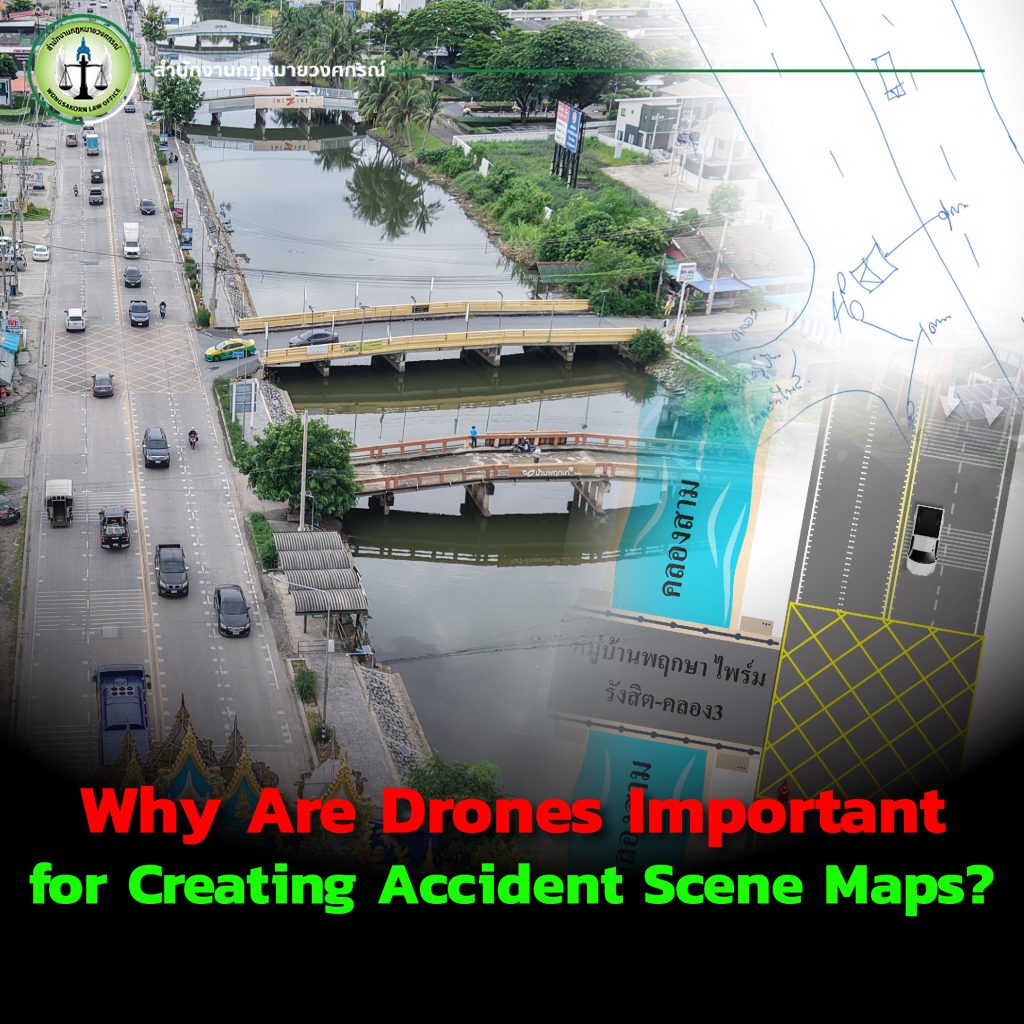
Why Are Drones Important for Creating Accident Scene Maps?

Traditionally, accident maps were drawn by hand or based on ground-level photographs, which often lacked clarity and detail. With the advent of drone technology, accident scene mapping has become more precise and effective.

1.Aerial Perspective
Drones capture images from above, providing a clear overview of the accident site. This includes roads, collision points, traffic signals, and surrounding environments all in a single frame greatly improving analysis accuracy.

2.High Resolution and Precision
Drone imagery can capture details down to the centimeter level. This is invaluable for verifying collision points, brake marks, or skid traces that may not be visible from the ground. These images can also be processed into digital maps for legal use.

3.3D Mapping
Modern technology allows drone footage to be processed into 3D maps that realistically illustrate the accident scene. This helps courts and lawyers understand the sequence of events more easily and can even support accident re-enactments.

4.Reducing On-Site Risks
Accident sites are sometimes dangerous or congested. Using drones eliminates the need for ground personnel to measure or record details directly, thereby reducing risk.

The Lawyer’s Role in Using Drone-Based Accident Maps

Having an accurate accident scene map serves as a critical legal weapon in litigation. With drone data, lawyers can:

  • Analyze the driving behaviors of all parties in detail.
  • Present clear and indisputable evidence in court, rather than relying solely on testimonies.
  • Increase credibility when negotiating compensation with insurance companies.

In other words, drone-based accident maps are not just photographs; they are tools that enhance the victim’s chances of obtaining justice.

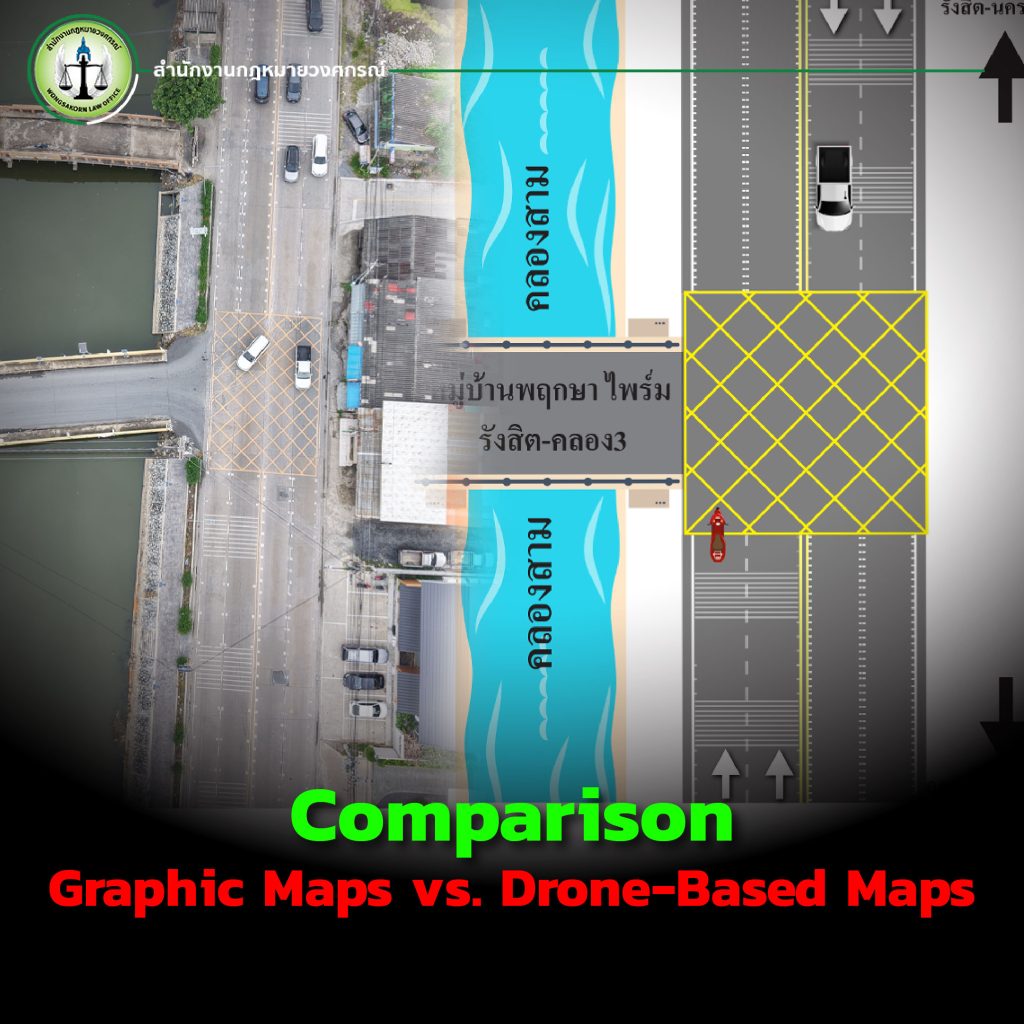
Comparison: Graphic Maps vs. Drone-Based Maps

1.Accuracy

o Graphic: Manually drawn, often prone to errors, especially with small details (brake marks, distances, collision angles).

o Drone: Provides actual aerial images with precise data, reducing misinterpretation.

2.Completeness of Perspective

o Graphic: Usually limited to 2D diagrams, giving only a rough overview.

o Drone: Offers a full aerial view and can be developed into 3D models.

3.Credibility in Court

o Graphic: May be questioned for accuracy since it is a reconstruction.

o Drone: Supported by real photographic evidence, highly credible.

4.Convenience

o Graphic: Time-consuming, requiring manual measurements and sketches.

o Drone: Captures complete images within minutes and processes them into usable maps.

5.Cost

o Graphic: Cheaper but less reliable.

o Drone: Slightly more expensive, but well worth the quality and legal strength it provides.

Conclusion: Drone-based accident maps surpass graphic maps in accuracy, reliability, and completeness, making them ideal for car accident cases where solid evidence is essential.

Drone Accident Mapping Services by Wongsakorn Law Office

To ensure that victims receive true justice, Wongsakorn Law Office has established a specialized team providing drone mapping services for road accident cases. The team is led by Pol. Lt. Pisuth Ritkajorn, Deputy Inspector of Planning Division 3, Office of the Commissioner-General, Royal Thai Police, together with certified drone aviation experts. All team members have been officially accredited by the Civil Aviation Authority of Thailand (CAAT), ensuring legality, safety, and the highest quality of work.

With extensive experience in both litigation and using drone-based evidence, we provide professional support whether you are a victim seeking compensation or a defendant proving your innocence.

Accident scene maps are decisive evidence in car accident trials. Using drones ensures fact-finding is accurate, complete, and credible compared to traditional methods.

👉 If you are facing a car accident case and need strong evidence, choosing Wongsakorn Law Office’s Drone Accident Mapping Service is the key to confidently achieving justice.

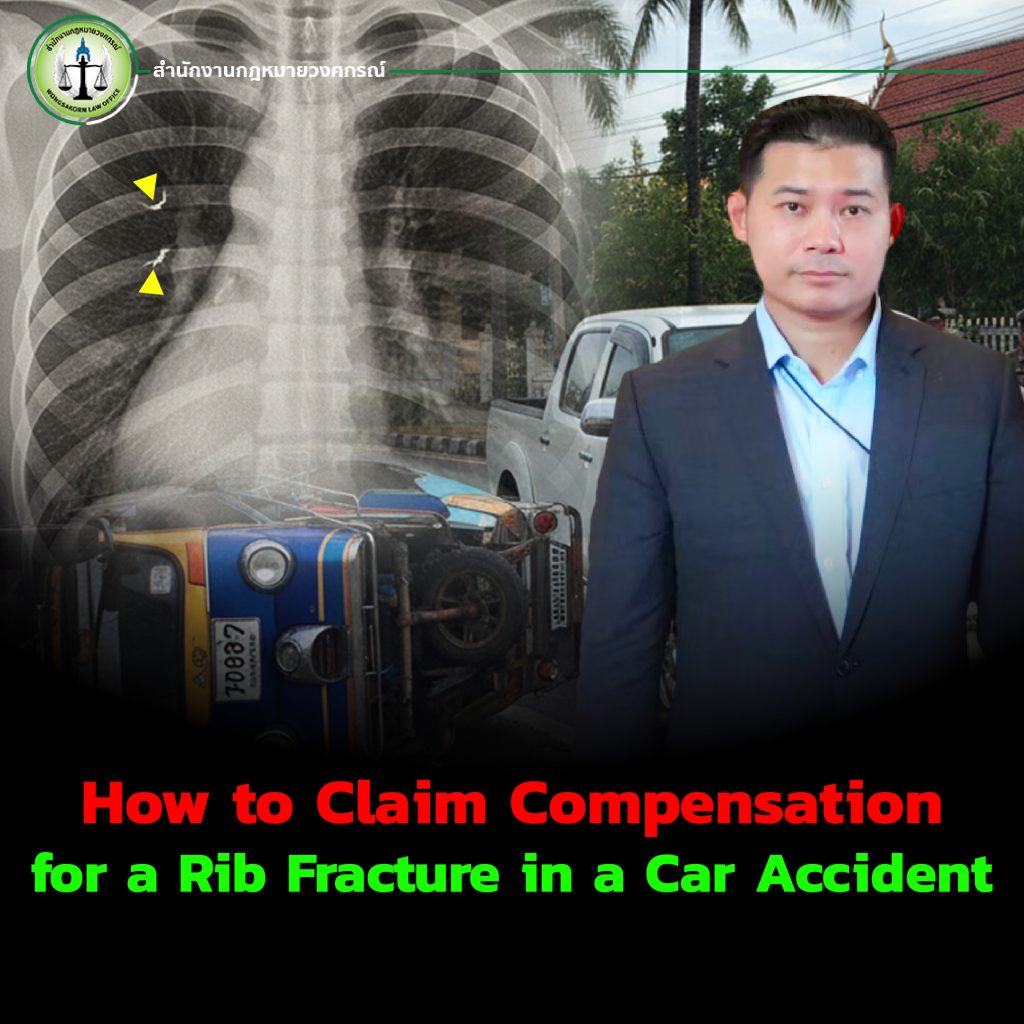
 How to Claim Compensation for a Rib Fracture in a Car Accident?

 Dispute Case No. Red ChM.113/2020
Awarded Compensation: 29,542 THB

The claimant demanded compensation as follows:

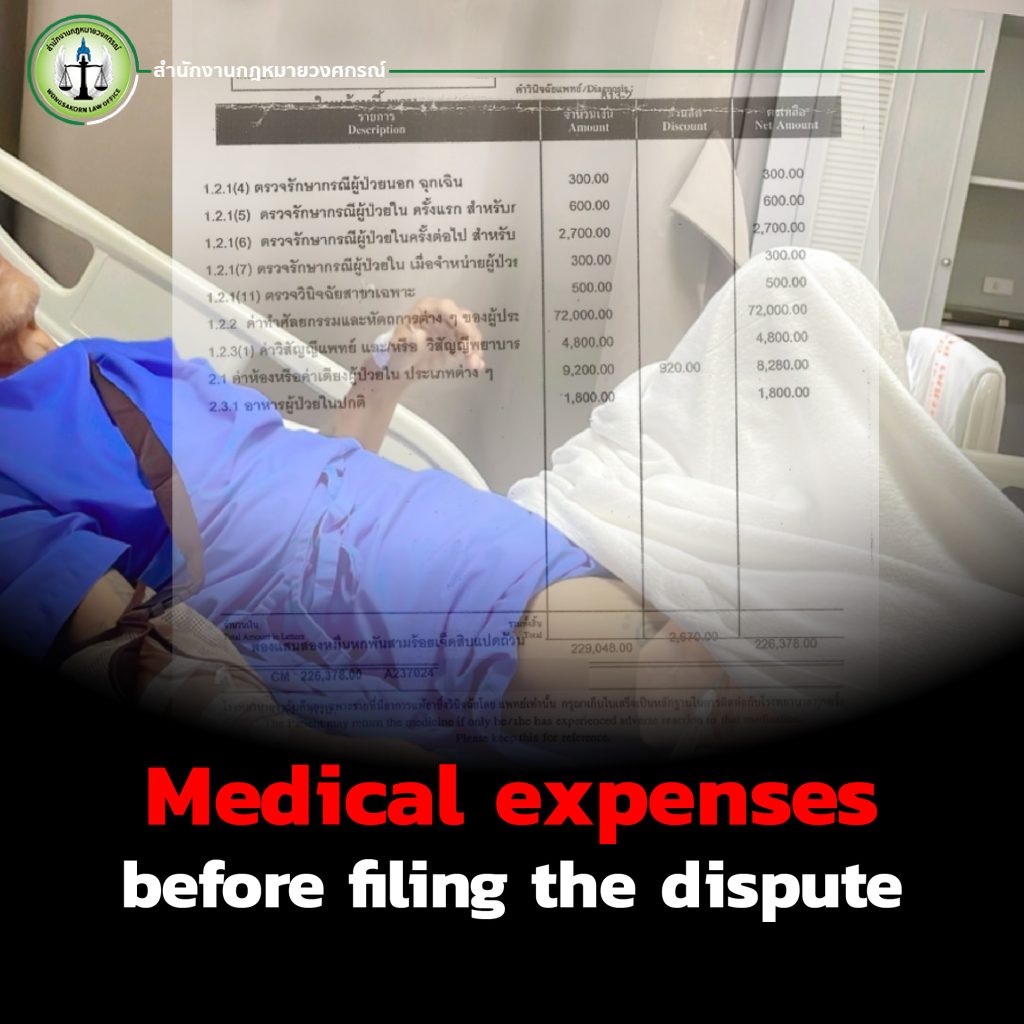
  • Medical expenses before filing the dispute: 50,000 THB
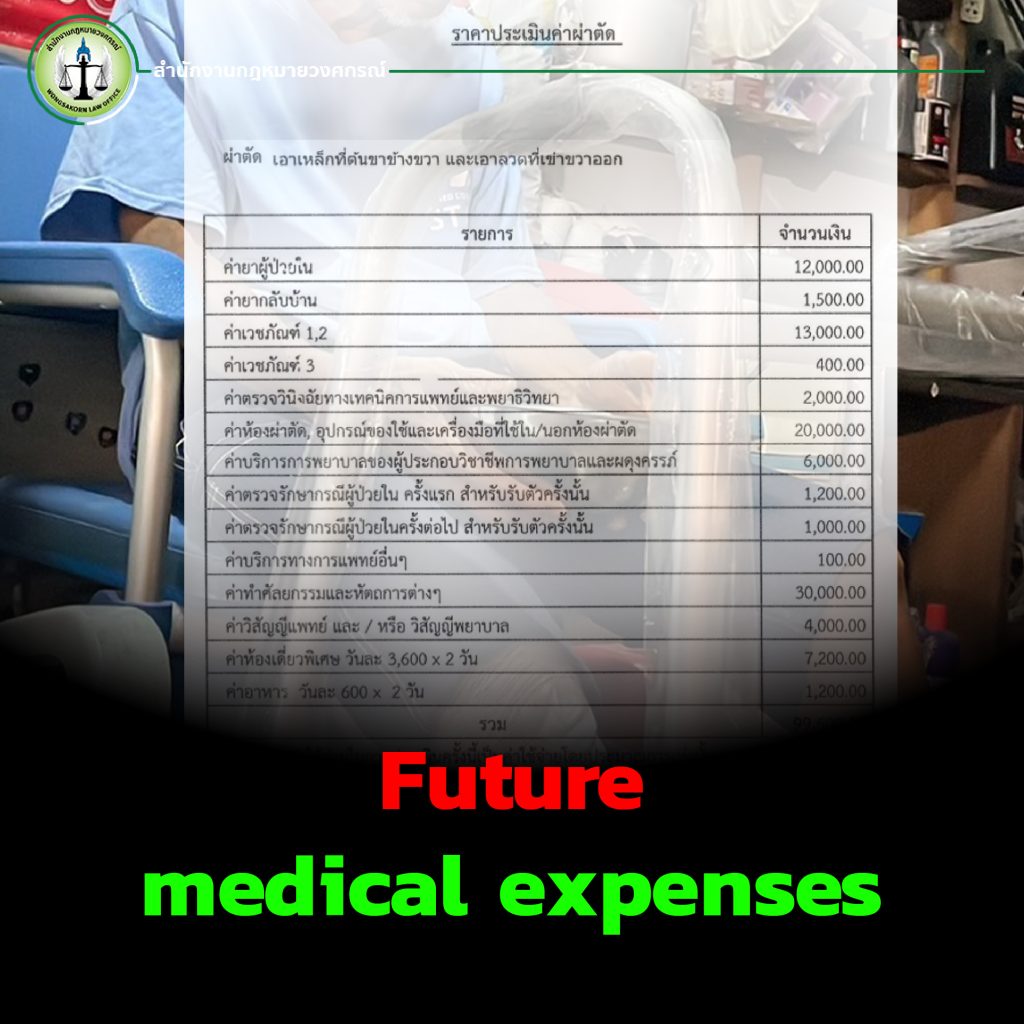
  • Future medical expenses: 150,000 THB
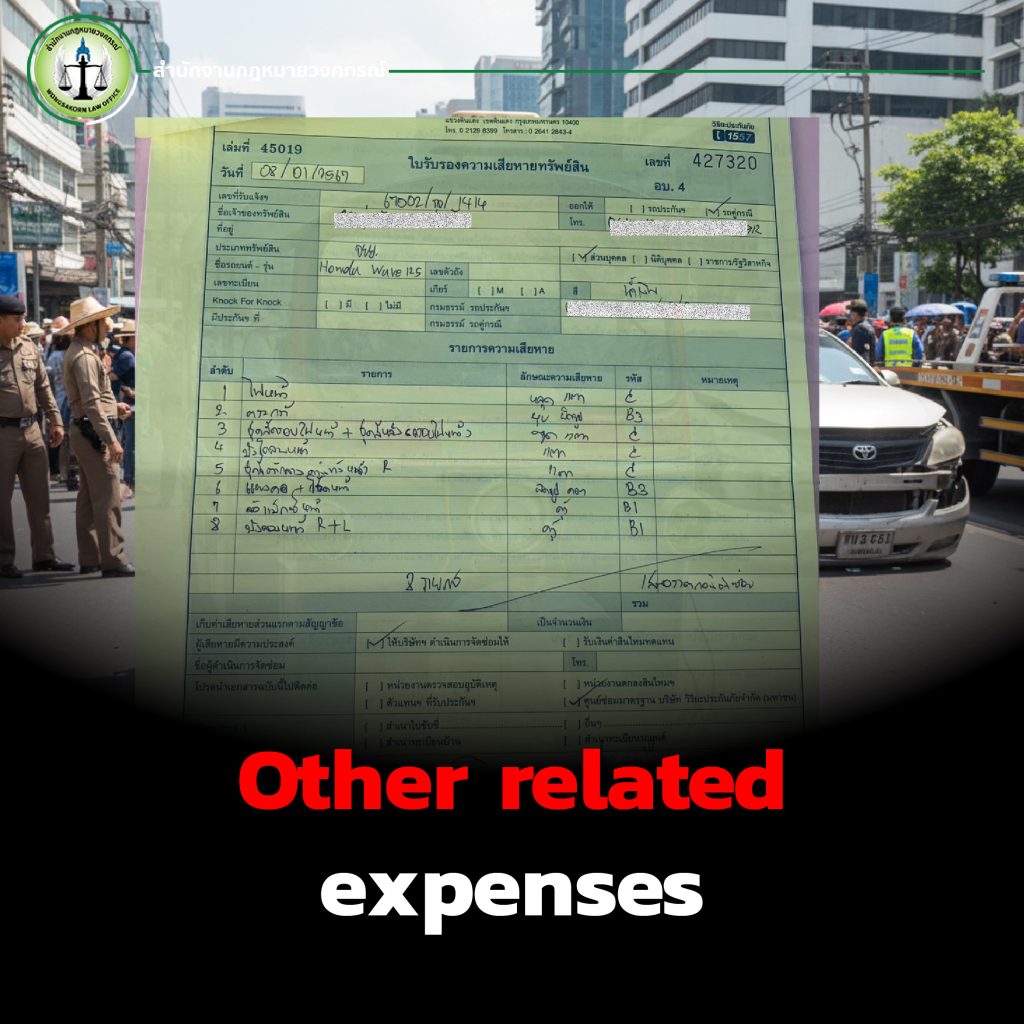
  • Other related expenses: 50,000 THB
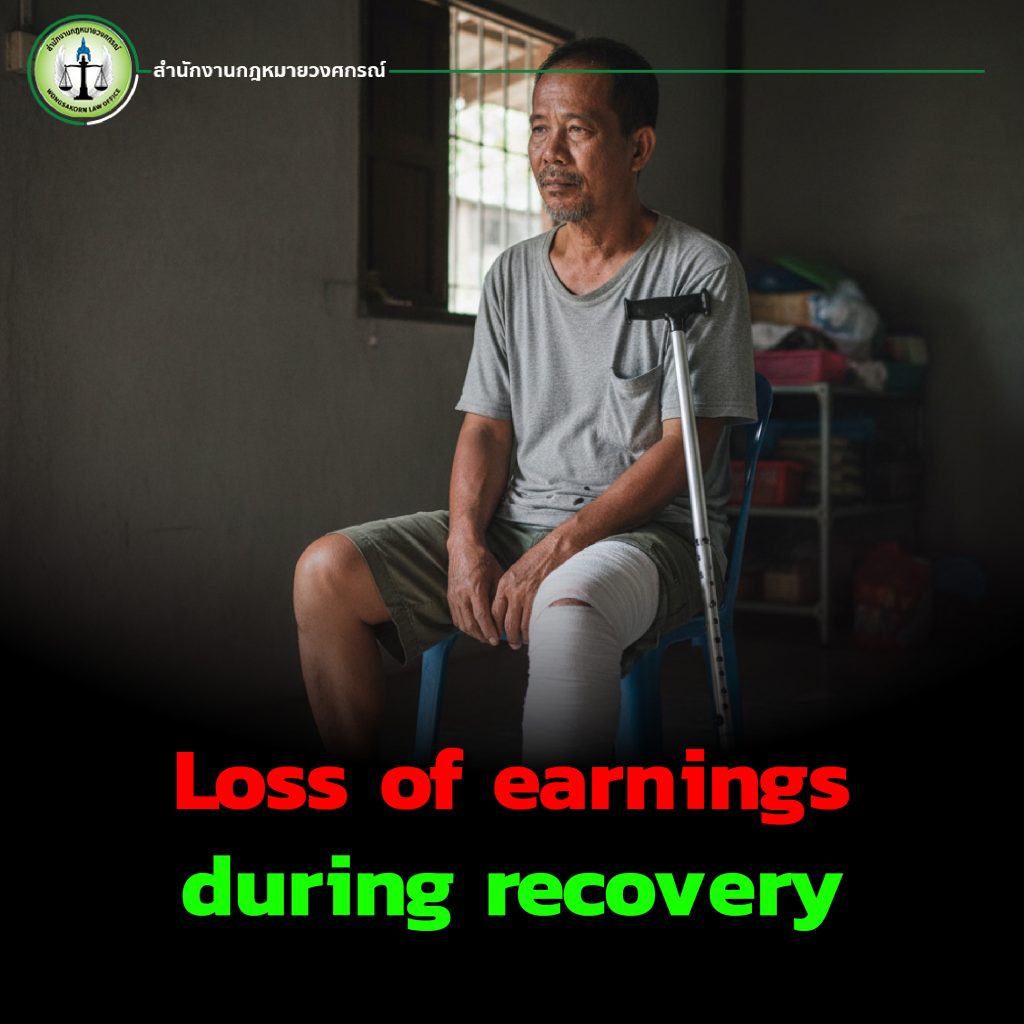
  • Loss of earnings during recovery: 45,160 THB
  • Loss of future earning capacity: 100,000 THB
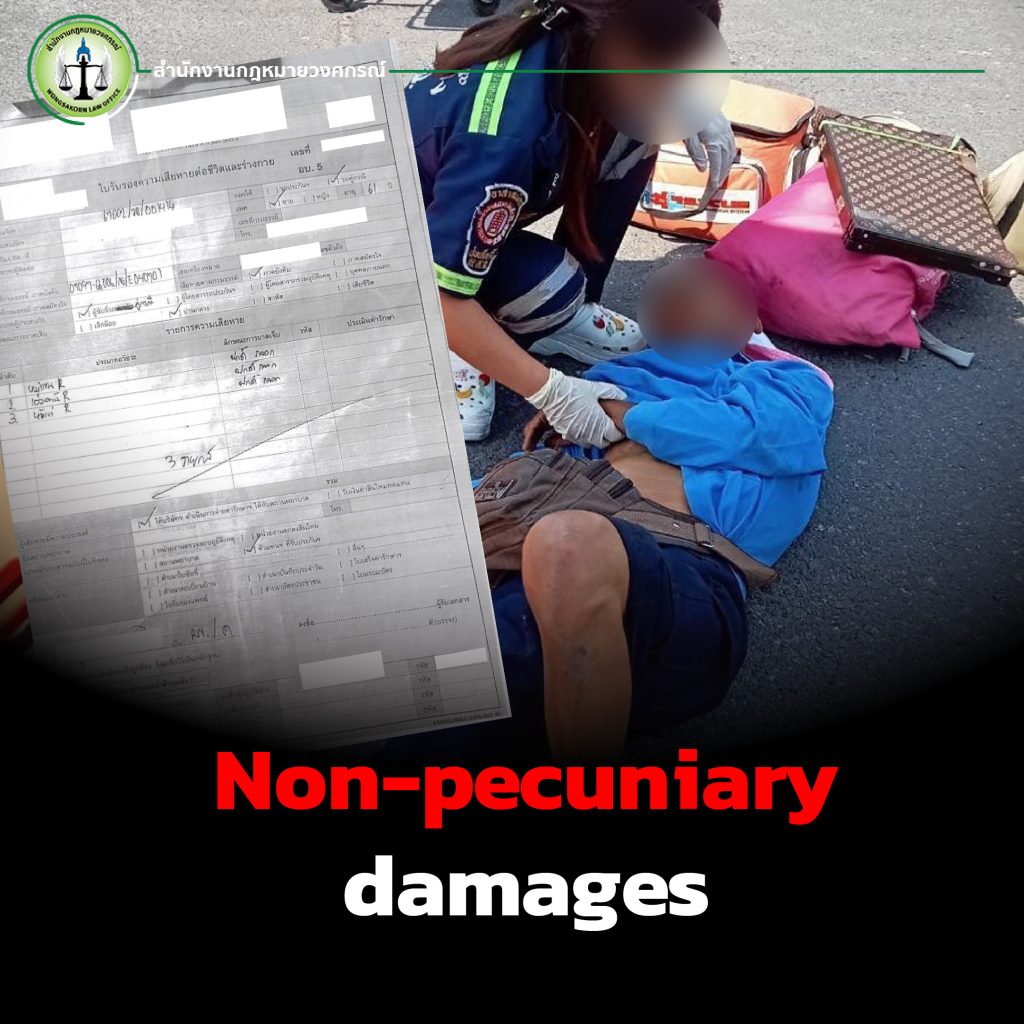
  • Non-pecuniary damages: 200,000 THB

The respondent (Company A Insurance Co., Ltd.) was the insurer of the vehicle registered in Samut Prakan, driven by Mr. A on the date of the accident, which collided with the claimant’s car.

The respondent objected to the claims, arguing that:

1.Medical expenses before filing the dispute (50,000 THB) were exaggerated, with no evidence of such loss.

2.Future medical expenses (150,000 THB) were unreasonable since the claimant’s injuries were not serious enough to require long-term treatment.

3.Other related expenses (50,000 THB) were unfounded.

4.Loss of earnings (45,160 THB) was unsubstantiated, as the claimant continued receiving salary.

5.Loss of future earning capacity (100,000 THB) and non-pecuniary damages (200,000 THB) were baseless.

The respondent claimed the demands were made in bad faith and thus should not be liable.

Issues for Consideration:

1.Is the respondent liable to compensate the claimant, and to what extent?

2.Is the claimant entitled to claim 15% annual interest from the date of filing until full payment?

Arbitration Decision

Medical expenses before filing the dispute

Evidence confirmed the claimant received treatment at Hospital A and Hospital S, paying 425 THB and 4,737 THB respectively, totaling 5,162 THB. The respondent failed to refute this evidence.
➡ The respondent must compensate 5,162 THB.

Future medical expenses

 The claimant initially claimed 150,000 THB but later testified for 21,400 THB. Since the treatment methods cited (high-power laser, MRI) were not medically prescribed, and the claimant only researched them online without medical recommendation, the claim lacked justification.
➡ The respondent is not liable for future medical expenses.

Other related expenses

Transportation to the hospital (approx. 35.9 km, 3 trips) cost 1,800 THB, which was reasonable and uncontested. However, the 200 THB fee for requesting medical records was litigation-related and not compensable.
➡ The respondent must compensate 1,800 THB.

Loss of earnings during recovery

 The claimant, a state enterprise employee earning 22,580 THB/month, alleged 2 months of lost income (45,160 THB). However, testimony later confirmed only 1 month of leave. Under labor law, sick leave up to 30 days per year is paid. No evidence proved salary deduction.
➡ The respondent is not liable for 22,580 THB claimed salary loss.
➡ The claim for loss of additional freelance income (air conditioning installation and electrical work) of 39,000 THB was also dismissed due to insufficient proof.

Loss of future earning capacity

  • As a state enterprise employee: The claim that sick leave beyond 15 days affects promotions and bonuses was inaccurate. Regulations only apply to special promotions, not standard salary increases or annual bonuses. No evidence proved loss of benefits.
  • As a freelance technician: No valid evidence confirmed such employment.

➡ The respondent is not liable for this claim.

Non-pecuniary damages

 Medical records confirmed rib fractures and bruises requiring 30 days of rest. However, no severe suffering was proven beyond temporary discomfort. The claim for 200,000 THB was deemed excessive.
➡ The tribunal awarded 20,000 THB.

Final Award

The respondent must compensate the claimant as follows:

1.Medical expenses before filing: 5,162 THB

2.Other related expenses: 1,800 THB

3.Non-pecuniary damages: 22,580 THB
Total: 29,542 THB, plus 15% annual interest from the date of filing until payment in full.

Arbitration costs are to be borne by the respondent. Payment must be made within 30 days from receipt of this award.

Legal References: Civil and Commercial Code, Sections 877, 446
Arbitrator: Mr. Somchai Yuwawitthayaphanit
Dispute Case No.: ChM.96/2020

Editorial Note

Although the arbitrator concluded the claimant was not severely affected, the working group observed that the claimant did endure suffering since the accident. The arbitrator’s dismissal of this aspect may not fully reflect the claimant’s hardship. Additionally, under the insurance policy terms, once the insurer denied compensation, interest at 15% per year should apply a condition the insurer was fully aware of but still contested.

Protect Your Rights – Start with Legal Consultation

Claiming compensation from accidents or injuries is complex, involving laws, evidence, and negotiations with insurers. Mistakes can cost you your rightful compensation.

👉 To ensure fair treatment, consult an insurance litigation lawyer at Wongsakorn Law Office. Our team is ready to advise, strategize, and act to fully protect your rights. Click >> Contact Us <<

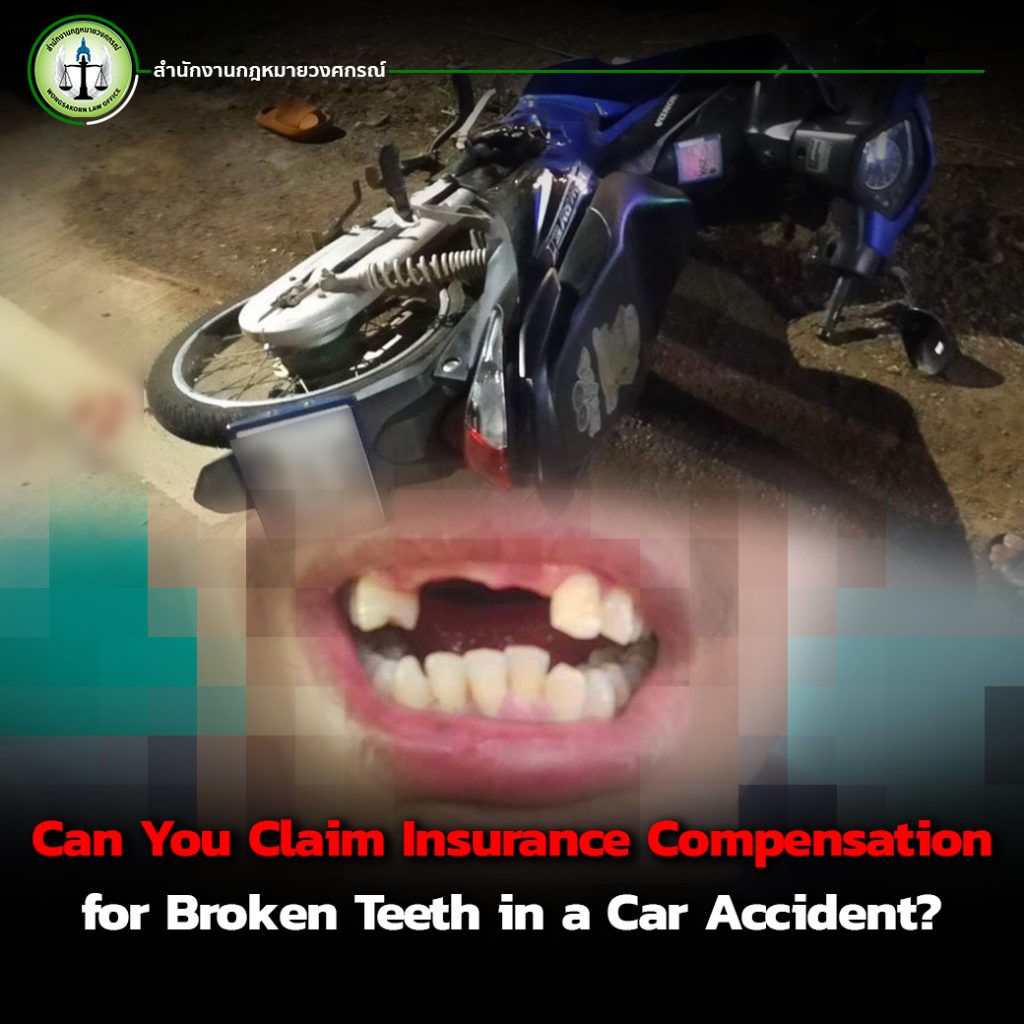
Can You Claim Insurance Compensation for Broken Teeth in a Car Accident?

A car accident doesn’t just damage vehicles—it can also seriously harm drivers and passengers. One common and painful injury is broken or loosened teeth due to impact, which isn’t just a cosmetic issue but a serious health concern requiring immediate treatment. So, in such cases, can you claim compensation from your insurer for “car crash with broken teeth”?

The answer is yes, but it depends on several factors: the type of car insurance you have, whether it covers personal accidents, and whether you have adequate documentation to support your claim.

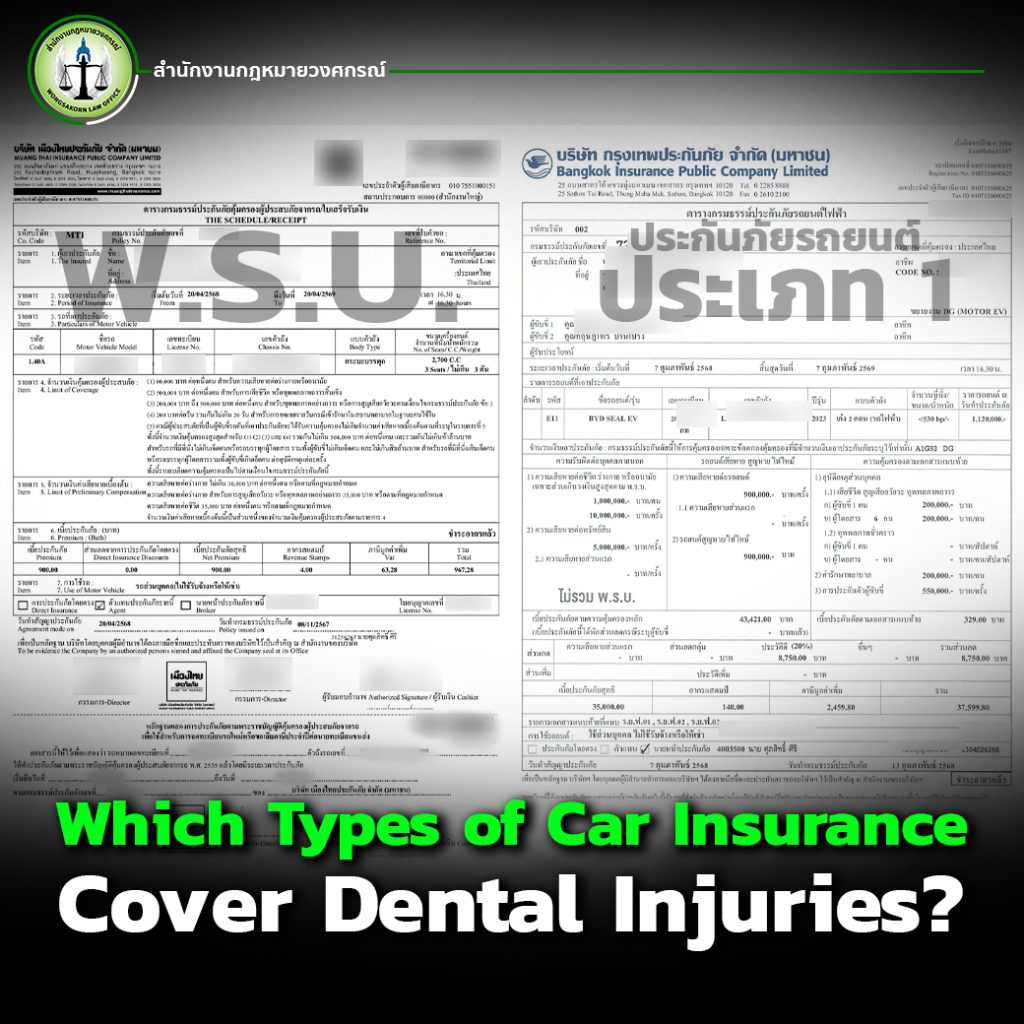
Which Types of Car Insurance Cover Dental Injuries?

To claim dental treatment under car insurance, consider the following policy types:

1.Voluntary Car Insurance (Comprehensive – Class 1, 2+, 3+)

o    Class 1 typically covers both vehicle damage and bodily injury, including dental treatment for broken teeth.

o    Class 2+ and 3+ may cover personal accident injuries—but you must check the actual terms in your policy.

o    If your policy has a Personal Accident (PA) rider, it may cover dental treatment or broken teeth.

2.Compulsory Third-Party Liability Insurance (CTPL / พ.ร.บ.)

o    CTPL covers medical treatment up to 30,000 THB per person for injuries. If a broken tooth is part of that injury, you can claim it.

o    With a valid medical certificate and dental or hospital receipts, you can submit your claim accordingly.

Documents Required to Claim Dental Treatment

If you’re injured and experience dental trauma in an accident, gather these documents:

1.Copy of your insurance policy

2.Medical or dental certificate stating the injury (e.g., broken or loose teeth, need for crowns or implants)

3.Dental treatment receipts

4.Police accident report or daily log copy

5.Photos of the injuries or post-treatment (if available)

6.Copies of your ID card and house registration

Key Tips Before Filing a Dental Claim

  • Insurers may categorize treatment as “cosmetic” unless medical necessity is proven, so strong documentation is essential.
  • You can still claim excess coverage under Class 1 or a PA rider even after claiming CTPL.
  • Passengers can directly claim from the at-fault vehicle’s insurance.

What to Do If Your Claim Is Denied

If your insurer refuses or underpays your dental claim, do the following:

1.Consult a lawyer first to evaluate legal validity and policy terms, and to prepare legal action if severe injury or bad-faith denial occurs.

2.Contact your insurer and provide additional medical documents, e.g., detailed certificates.

3.File a complaint with the Office of Insurance Commission (OIC) to seek mediation.

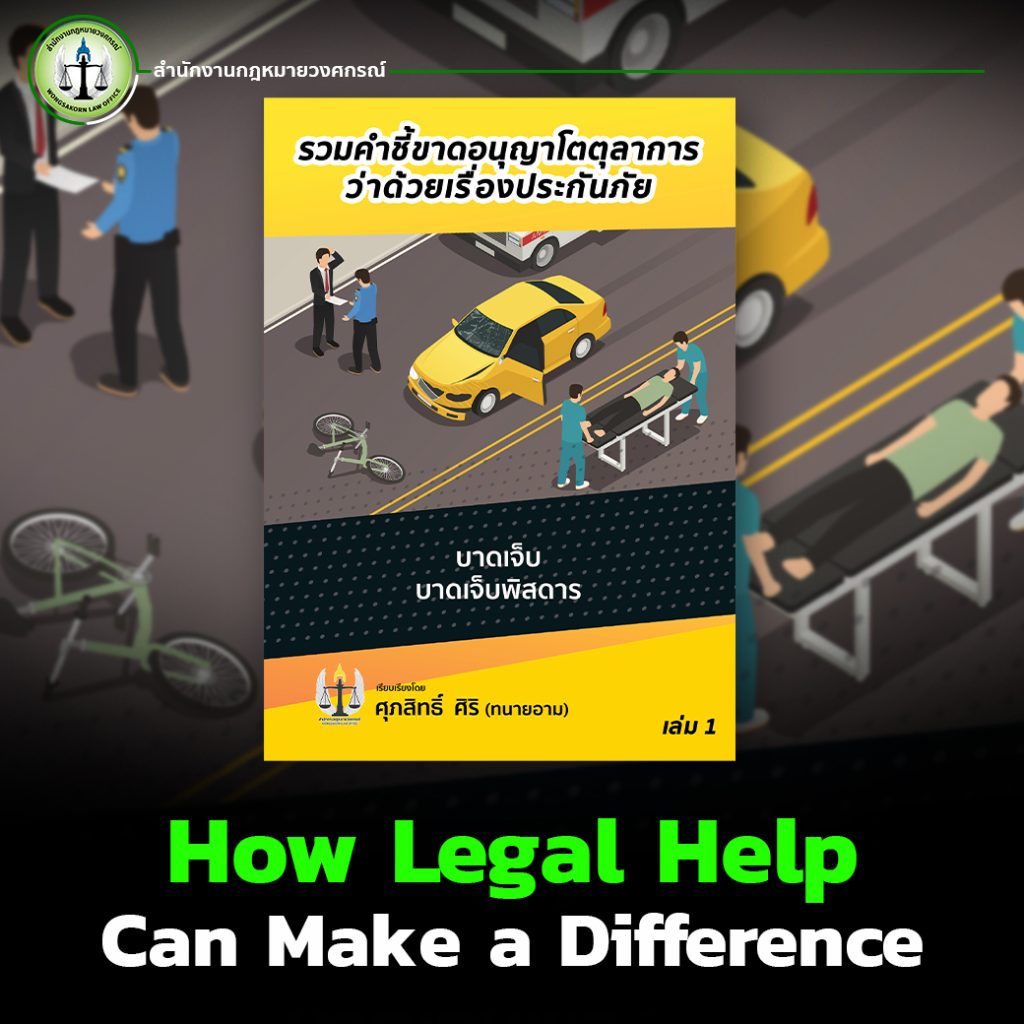
How Legal Help Can Make a Difference

A real arbitration case illustrates the importance of legal representation. In Arbitration Case No. 217/2561 (Sourced from Arbitration Decisions on Insurance Injury, by Supasit Siri, Attorney Arm):

  • Claimant requested ~900,000 THB—including medical costs, future treatment, lost income, and mental distress.
  • Insurer contested the high amount and cited a 500,000 THB coverage limit.
  • Arbitrators awarded 379,310 THB (with interest), breaking down as:
    • Future dental treatment: 100,000 THB
    • Lost income during recovery: 29,310 THB
    • Future earning capacity loss: 100,000 THB
    • Non-economic damages: 150,000 THB
    • Plus legal interest of 15% p.a.

This case shows dental injury claims are complex. Legal guidance can ensure you receive what you rightfully deserve.

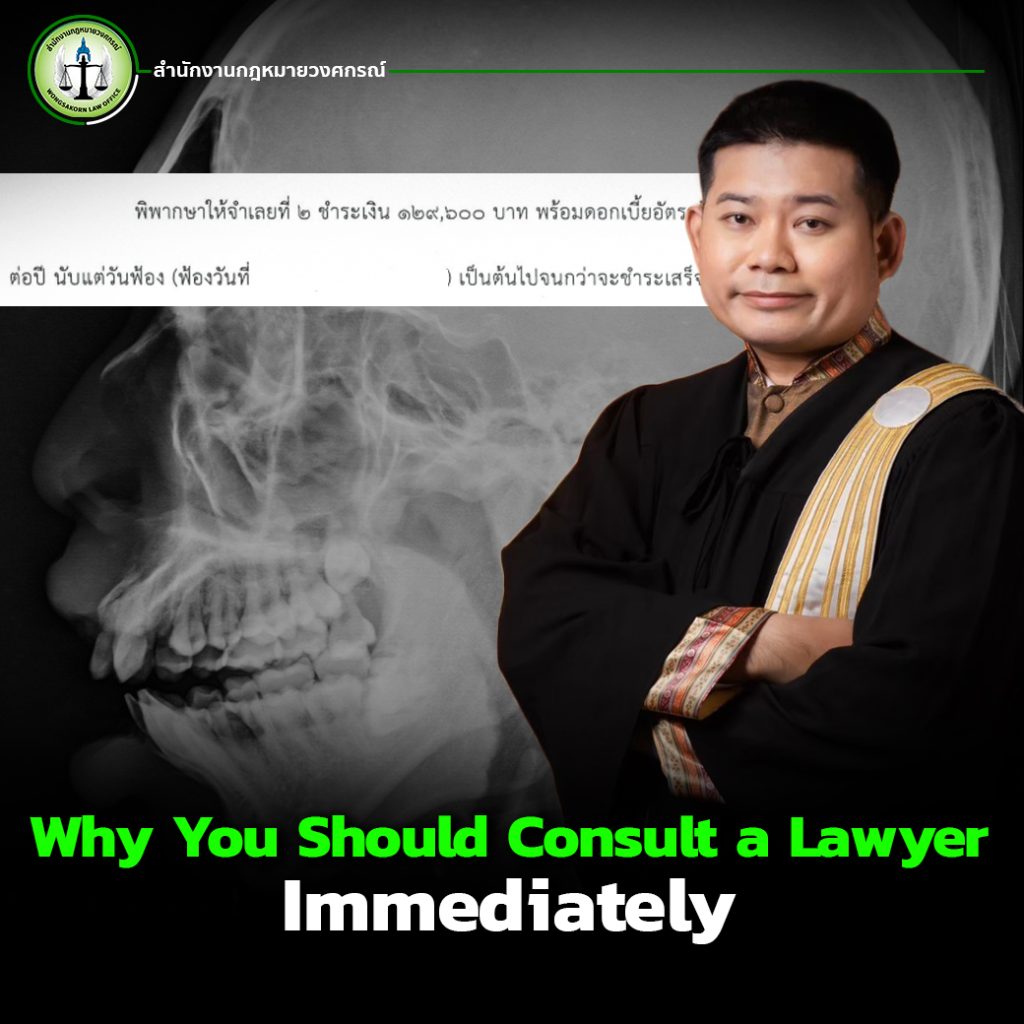
Why You Should Consult a Lawyer Immediately?

Consulting a lawyer first is the most effective way to protect your rights. A legal expert can help you draft demand letters, file police reports, review policy details, and pursue litigation when necessary. With legal support, you’ll be equipped to claim full compensation—covering medical bills, lost wages, and emotional harm—without being shortchanged by insurers.

Summary

  • In case of a car crash with broken teeth, you may claim under CTPL and voluntary insurance (Class 1 or PA rider).
  • Prepare full documentation and understand your policy.
  • If your claim is unjustly denied, consult a lawyer first, then follow up with the insurer and OIC if needed.

🔑 Remember: Protect your rights and ensure you receive all the compensation you deserve.

Line @ คลิก! โทรหาเรา คลิก!