Drafting an Agreement: Why You Shouldn’t Do It Yourself and What Risks It Brings?

In the world of business and collaboration whether between individuals, companies, or organizations one of the most important tools is the agreement contract. An agreement serves as written evidence that clearly specifies the rights, duties, and responsibilities of both parties. Without a well-prepared agreement, disputes may easily arise in the future.

A common problem is that many people choose to draft an agreement on their own, using templates from the internet or adapting old documents. While this may seem to save time and money, in reality, drafting an agreement without legal knowledge can create enormous risks ranging from incomplete legal coverage, vague provisions, to conditions that fail to adequately protect your rights.

Why is self-drafting an agreement risky?

Many people think that “drafting an agreement” is simple, just find a sample online and adjust it. But in truth, an agreement is not just a piece of paper recording details; it is a legally binding document that defines rights, duties, liabilities, and can be enforced in court. If not drafted carefully, disputes may arise, putting you at a disadvantage.

Here are 4 major risks of drafting agreements on your own:

1. Lack of legal expertise – Laws contain many details and exceptions. Without legal training, you may unknowingly include unenforceable provisions or leave loopholes for the other party.

2. Over-reliance on templates – Online contracts are only samples and not tailored to your specific situation, often missing crucial details such as termination clauses, liability, or payment terms.

3. Risk of misinterpretation – Legal language is complex. Ambiguous wording may be interpreted against you in court.

4. Weak dispute resolution clauses – Many self-drafted agreements omit jurisdiction or arbitration clauses, which are critical in case of conflict.

Real-life examples of poorly drafted agreements

  • A company used an online joint investment contract that lacked clear profit-sharing terms. Later disputes led to costly litigation.
  • A landlord used a simple rental agreement without specifying termination procedures. When the tenant defaulted, damages could not be fully recovered.
  • An SME signed an international trade contract without specifying jurisdiction. The dispute had to be litigated abroad, costing time and money.

Why should you let a lawyer draft your agreement?

1.Legal accuracy – Lawyers ensure every clause complies with current laws and is enforceable.

2.Risk prevention – Professional lawyers close loopholes and protect against unfair interpretations.

3.Tailored to your case – A lawyer drafts a contract specifically suited to your business or transaction.

4.Credibility – A lawyer-drafted contract increases trust and reduces disputes.

5.Cost-saving in the long run – Legal fees are far cheaper than litigation expenses.

Choosing the right lawyer

  • Look for expertise in your type of contract (business, trade, commercial).
  • Review experience and past work.
  • Clearly communicate your needs to ensure the contract reflects your objectives.

Confidence in every agreement starts with professional legal drafting.

👉 If you want certainty in your contracts, consult a lawyer or engage Wongsakorn Law Office (翁萨功律师事务所) to draft your agreements with professionalism, safety, and minimized risks.

Borrowed Money Not Returned: What Can Creditors Do?

In today’s society, the problem of borrowing money and not repaying it occurs frequently. Sometimes the borrower is a close friend, relative, or even a colleague. Many lenders feel uncomfortable pressing for repayment, hoping the money will be returned soon. However, in the end, this often becomes a stressful problem, damaging relationships and resulting in a financial loss with no repayment.

When money is borrowed but not repaid, many people do not know what to do. Some try to collect on their own, leading to conflict, while others give up because they think it’s too troublesome. In reality, Thai law provides clear avenues for creditors to assert their rights. One of the most effective solutions is to let a lawyer handle the lawsuit.

Is Failing to Repay Borrowed Money Against the Law?

According to Section 653 of the Thai Civil and Commercial Code, a loan agreement is a contract in which one party (the lender) delivers money to another (the borrower), and the borrower is obliged to return the same amount of money as agreed. If the borrower fails to repay as promised, it is a breach of contract, giving the lender the right to take legal action.

Evidence such as written contracts, chat messages, bank transfer records, or even audio recordings can be submitted in court, as long as they prove that a genuine loan transaction took place.

Initial Steps to Claim Money Back

1. Ask for repayment directly
Begin with verbal or written requests, giving the borrower a chance to pay without conflict.

2. Send a written demand letter
A formal letter serves as evidence and can support a future lawsuit.

3. Negotiate repayment terms
If the borrower cannot pay in one lump sum, negotiate installments—but make sure to put the agreement in writing for protection.

If the borrower still refuses to pay, taking legal action through the court is the most appropriate option.

Filing a Lawsuit on Your Own

If the borrower does not repay, the lender can file a civil lawsuit to enforce payment. The main steps are:

1.Filing the complaint
While creditors can file lawsuits themselves, lack of legal knowledge may cause errors or delays. Having a lawyer draft the complaint is a safer choice.

2.Court proceedings
The court will attempt mediation first. If unsuccessful, the case will proceed to trial, requiring evidence such as contracts, chats, or bank records.

3.Judgment and enforcement
If the court orders repayment but the borrower still refuses, the lender can request enforcement measures such as asset seizure, wage garnishment, or bank account garnishment.

Why It’s Better to Let a Lawyer Handle the Case?

Although creditors can file lawsuits on their own, legal proceedings are complex. Mistakes are easy to make, which can waste time and weaken the case. Having a lawyer greatly improves efficiency and success. Key benefits include:

1.Correct procedures and documents
Lawyers know how to draft accurate complaints to avoid dismissal or delays.

2.Negotiation and mediation skills
A lawyer can negotiate on your behalf, reducing stress and conflict.

3.Higher chance of success
With experience in presenting evidence, lawyers increase the likelihood of recovering money.

4.Professional enforcement of judgments
Even after winning a case, enforcement is crucial. Lawyers can handle seizure or garnishment properly.

Preparing Evidence Before Filing

If you decide to have a lawyer file the case, prepare the following:

  • Copy of the loan agreement (if available)
  • Bank transfer slips or account records
  • Chat messages or other communications
  • Copies of demand letters sent to the borrower
  • Any other proof showing that money was lent

The more complete the evidence, the stronger the case.

Don’t Waste Time Arguing Let Lawyers Handle It

Being owed money is not a trivial matter. It causes financial loss, emotional stress, and strains relationships. If the borrower ignores or avoids repayment, creditors have the right to sue. Most importantly, having a lawyer manage the lawsuit ensures every step is correct, efficient, and increases the chance of recovery.

Many creditors, out of anger, resort to posting on social media or publicly insulting borrowers. However, such actions can backfire, exposing creditors to defamation claims. Instead of wasting time and risking legal consequences, the smarter choice is to let a lawyer file the case through proper legal channels. This way, you protect your rights while maximizing your chance of actually getting your money back.

So, if you are facing the problem of unpaid debt, do not let it drag on. Consult a lawyer immediately to find the best solution and safeguard your legal rights.

How to Draft a Debt Acknowledgment Agreement to Be Legally Enforceable?

In the world of transactions, whether it is borrowing money, purchasing property, or providing services with outstanding payments, the term “debt” is something frequently encountered. When a debt arises, the most important thing is to have clear documents or evidence to confirm the legal relationship between the debtor and the creditor. One of the most effective tools to safeguard the rights of the creditor is the “Debt Acknowledgment Agreement.”

The question is: how can you draft a Debt Acknowledgment Agreement so that it is truly legally enforceable? This article will explain the key principles, essential components, and precautions, as well as why hiring a lawyer to draft such agreements can provide greater protection of your rights.

What is a Debt Acknowledgment Agreement?

A Debt Acknowledgment Agreement is a document in which the debtor expressly admits that they owe a debt to the creditor and agree to repay it as stipulated. This agreement serves as confirmation of an existing debt, not the creation of a new one. Therefore, having a Debt Acknowledgment Agreement provides the creditor with strong evidence in case legal enforcement in court becomes necessary.

Why is a Debt Acknowledgment Agreement Important?

1. Clear Legal Evidence
In the event of a dispute, the creditor can use the agreement to confirm their right to claim repayment.

2. Reduces the Chance of Debt Denial
Once the debtor signs the acknowledgment, it becomes much harder for them to deny the existence of the debt.

3. Facilitates Litigation
Courts can rely on the agreement as evidence when ruling that the debtor must repay the debt.

Essential Components of a Debt Acknowledgment Agreement

Drafting such an agreement involves more than just writing down numbers and signatures. It must include complete details to be legally enforceable:

1. Details of the Parties – Full names, ID numbers, and addresses of both creditor and debtor.

2. Exact Debt Amount – Clearly state the total debt owed, and specify which contract it originated from (loan, sales, or services).

3. Interest Rate (if applicable) – Must be explicitly stated and within the legal limit (currently not exceeding 15% annually, unless otherwise stipulated by law).

4. Repayment Period – Specify when repayment must be made and the consequences of default (e.g., late interest charges).

5. Method of Repayment – Lump sum, installments, and how payments must be made (e.g., bank transfer).

6. Default Clause – State that in case of default, the creditor may immediately file a lawsuit without further notice.

7. Signatures of Debtor and Witnesses – Having witnesses strengthens the legal weight of the document.

Example of a Debt Acknowledgment Clause

“I, Mr. A, acknowledge that I owe Mr. B the sum of … baht under the Loan Agreement dated … and agree to repay by … date. In case of default, I agree that Mr. B has the right to sue and enforce repayment immediately according to the law.”

This type of wording clearly confirms that the debtor acknowledges the debt and agrees to pay.

Precautions in Drafting a Debt Acknowledgment Agreement

1. Avoid ambiguous wording – state clearly the origin and amount of the debt.

2. Avoid generic templates – they may miss essential legal details.

3. Check the legality of interest – excessive rates may not be enforceable.

4. Require real signatures – not just typed names.

5. Safely store documents – losing them may result in losing the right to prove the debt.

What if the Debtor Fails to Comply?

If the debtor does not comply with the agreement, the creditor may file a lawsuit using the agreement as strong evidence in court to enforce repayment.

Why Should a Lawyer Draft the Agreement?

Although creditors may draft the agreement themselves, in reality self-drafted agreements often contain flaws, missing information, ambiguous terms, or legally invalid clauses. These shortcomings may result in losing rights during litigation.

Engaging a lawyer or professional law Office ensures that the agreement is comprehensive, legally correct, and minimizes future disputes.

A Debt Acknowledgment Agreement is a crucial tool to protect creditors’ rights by confirming that the debtor owes and agrees to repay. If drafted correctly, it serves as strong evidence in lawsuits and enforcement proceedings.

However, drafting such an agreement is not a simple task. Doing it without legal knowledge may render the agreement unenforceable. Therefore, using the services of Wongsakorn Law Office or engaging a professional lawyer ensures that your documents are accurate, enforceable, and fully protective of your rights.

👉 If you want your Debt Acknowledgment Agreement to be legally enforceable, contact Wongsakorn Law Office for consultation and professional legal services.

Why Should Companies or Organizations Have a Legal Advisor from the Start Instead of Waiting Until Problems Arise?

In today’s business world filled with competition and complex legal frameworks, every company or organization whether small or large inevitably deals with legal matters. These may involve contracts, labor, intellectual property, taxation, or regulatory compliance. All of these directly affect the stability and growth of the business.

If an organization does not have a Legal Advisor from the start, when problems occur, the solutions may come too late resulting in wasted time, high costs, or even damage to the company’s reputation.

This article explains why companies or organizations should appoint a Legal Advisor proactively, rather than waiting until legal disputes arise.

Who Is a Legal Advisor and What Do They Do?

A Legal Advisor is a lawyer or legal professional who provides guidance, analyzes risks, and creates legal strategies for the organization. They may work on a monthly retainer, per project, or on a case-by-case basis.

Unlike lawyers who are hired only after a dispute arises, a Legal Advisor works preventively ensuring that the organization operates correctly from the very beginning.

Key responsibilities include:

  • Reviewing and drafting contracts to prevent future disputes
  • Advising on labor law to prevent conflicts with employees
  • Ensuring business compliance with relevant laws and regulations
  • Handling company registration, mergers, or investments
  • Providing strategies for dispute resolution and litigation

Common Problems Without a Legal Advisor

Many companies try to “save costs” by not having a Legal Advisor, but the consequences are often more expensive. For example:

  • Weak contracts – Using generic templates without legal review often leaves businesses unprotected during disputes.
  • Labor disputes – Employers may unknowingly violate labor laws, such as wrongful termination or unpaid severance, leading to costly lawsuits.
  • Intellectual property violations – Using copyrighted images, software, or content without permission can lead to infringement lawsuits.
  • Tax and compliance issues – Failure to comply with tax or regulatory laws can result in heavy fines and penalties.

Most of these problems arise due to a lack of prevention, which a Legal Advisor could have avoided.

Benefits of Having a Legal Advisor

Hiring a Legal Advisor is not an unnecessary expense but rather an investment in security. Key benefits include:

  • Prevention before problems occur – Legal Advisors identify risks early and prevent costly disputes.
  • Long-term cost savings – Legal retainers are far cheaper than litigation costs, damages, and court fees.
  • Enhanced credibility – Clients, investors, and partners trust organizations with proper legal governance.
  • Stronger compliance and governance – Legal Advisors ensure the company operates within legal frameworks.

  • Emergency support – When sudden issues arise, a Legal Advisor familiar with the business can respond quickly and effectively.

Real Case Examples

  • A small business was sued for breach of contract due to unclear payment terms. The damages amounted to millions. A Legal Advisor could have prevented this by reviewing the contract beforehand.


  • A factory unlawfully terminated employees without paying compensation and was sued in labor court, resulting in heavy financial loss. With a Legal Advisor, they would have been guided on the proper termination process.

Why Start Looking for a Legal Advisor Today?

Running a business today is inseparable from the law. With growing competition and stricter regulations, legal risks are higher than ever. Waiting until a dispute arises is often too late.

Having a Legal Advisor from the beginning is an investment in the future of the business helping the organization move forward with confidence, reduce risks, and build long-term credibility.

Legal Advisors: The Shield for Your Company’s Future

“Prevention is better than cure.” For companies or organizations without a Legal Advisor, appointing one today means building a strong shield for long-term stability.

If you are looking for a Legal Advisor to guide your business with confidence and security, this is the right time to act.

👉 Contact our Legal Advisor at Wongsakorn Law Office
👉 Consult our expert lawyers here

Police Major General “Khemarin Hassiri” A Model “Advisor,” Expert, and a Vital Lesson for Thais Abroad

In today’s globalized world, traveling abroad for work, education, or business has become a common reality for Thai people. However, this increasing international mobility also brings legal risks that are often unpredictable. Many individuals have encountered situations involving criminal prosecution, arrest, or complex disputes that require the expertise and guidance of advisors who truly understand both Thai law and foreign legal systems.

One notable example that reflects the crucial role of a “legal advisor” is Pol. Maj. Gen. Khemarin Hassiri, former Commander of the Foreign Affairs Division. With extensive experience in special investigations, combating transnational crime, and coordinating international cooperation, he currently serves as an advisor to the Royal Thai Police on foreign affairs.

Key Roles of Police Major General Khemarin Hassiri as an “Advisor”

1.Foreign Affairs Advisor

o Acts as the Foreign Affairs Advisor to the Commissioner-General of the Royal Thai Police.

o Participates in ASEAN Senior Officials Meetings on Transnational Crime (SOMTC).

o Represents Thai police in coordinating with Chinese security agencies and other international platforms such as Interpol and ASEANAPOL.

2. Public Relations and Communication

o Served as part of the “Media–Build–Message” team, establishing a new police spokesperson group to enhance the image of the Royal Thai Police.

3. Tourist Police Bureau

o Former Advisor for community relations within the Tourist Police Bureau.

o Currently leads the Bureau as Commander, focusing on tourist safety and border security, which directly links to Thailand’s international image and security.

Outstanding Achievements as an “Advisor”

  • Represented Thailand at the 89th Interpol General Assembly (Turkey) and 40th ASEANAPOL (Cambodia).
  • Led joint Thai–Cambodian police training on counter-terrorism.
  • Coordinated high-profile extraditions, such as returning fugitives from Canada to face justice in Thailand.
  • Shaped ASEAN strategies against transnational crimes like human trafficking, money laundering, and cybercrime.

These achievements highlight that having an “advisor” with international knowledge and networks is crucial to law enforcement and national security.

Why Is an “Advisor” Important for Thais Abroad?

When Thais face legal issues overseas, common challenges include:

  • Lack of understanding of local laws.
  • Unfamiliarity with trial procedures.
  • Inability to communicate legal matters effectively.
  • Not knowing where to seek help.

Having an advisor skilled in both Thai and foreign laws ensures safe, proper, and strategic solutions. Police Major General Khemarin’s expertise and global network demonstrate how critical such advisors are in resolving complex international legal matters.

Wongskorn Law Office: Legal “Advisor” for Thais Worldwide

For Thai citizens abroad, legal issues can be overwhelming. Wongskorn Law Office, led by Lawyer Arm, offers comprehensive legal advisory services, bridging Thai and international legal systems.

Our services include:

  • Legal consultation and strategy for foreign cases.
  • Coordination with local lawyers in destination countries.
  • Comparative legal analysis between Thai and foreign laws.
  • Legal assistance in criminal cases, business disputes, or labor issues.
  • Negotiation and mediation support to protect clients’ rights.

Facing Legal Action Abroad? Don’t Worry – We’re Here to Help

Living or working overseas comes with unforeseen risks  from contract disputes to misunderstandings of local laws, or even criminal and civil lawsuits. These situations often leave people unsure of where to turn.

At Wongskorn Law Office, we recognize the complexity of foreign legal systems, compounded by language, culture, and procedural differences. That’s why we provide immediate consultation, assess the situation, and guide clients to connect with local lawyers or authorities.

Most importantly, acting quickly is essential. Having a legal advisor ensures accurate information, reduces risks of being taken advantage of, and improves chances of a proper legal defense.

Whether in Hong Kong, Singapore, or anywhere else, we stand ready to be the trusted advisor for Thais abroad, protecting their rights to the fullest.

Final Note

Police Major General Khemarin Hassiri exemplifies what it means to be a professional advisor at both national and international levels. His experience and networks highlight a vital truth: in a world full of legal risks, having a skilled advisor is the best protection.

If you or your loved ones face legal challenges abroad, don’t fight alone. Wongskorn Law Office is ready to be the trusted advisor for Thais worldwide, safeguarding your rights and finding the best solutions in every situation.

Certificate Presentation Ceremony for Internship Trainees from the Lawyers Council of Thailand, 2025

On September 3, 2025, Wongsakorn Law Office had the honor of having Ms. Muttamas Siri, Managing Director of the company, represent Mr. Supasit Siri, Managing Director, in presenting certificates to the internship trainees from the Lawyers Council of Thailand under the Royal Patronage for the year 2025.

This certificate presentation marks another proud moment for our firm, as we continue to contribute to the development of young talents and legal professionals. Through practical training, the interns gained both professional knowledge and hands-on experience in legal work, which form the foundation for becoming high-quality lawyers in the future.

This year, Wongsakorn Law Office was delighted to host three interns from the Lawyers Council of Thailand: Ms. Poorichaya Choorusamee , Ms. Sirichom Sangsri , and Ms. Surattikan  Saenkaeo. Throughout their training, they demonstrated true dedication, perseverance, and a strong commitment to developing themselves continuously in the legal profession.

The completion of this internship represents a significant milestone for each participant. Wongsakorn Law Office sincerely congratulates them and wishes all continued success in their professional journey, with the hope that the knowledge and experience gained here will be carried forward into their future careers and personal lives.

Finally, Wongsakorn Law Office reaffirms its commitment to supporting the growth of new generations in the legal field, with the firm belief that cooperation with the Lawyers Council of Thailand will continue to play an essential role in producing quality lawyers for Thai society.

If you get “Arrested” In a freign countryDo you need a Thai lawyer to handle my case?

Working abroad is a dream for many Thais, not only because of the higher income but also for the chance to gain new life and work experiences beyond Thailand. However, living overseas comes with unpredictable risks, especially if you get “arrested” by foreign police. This could happen due to misunderstandings, unintentional violations of local laws, or even being falsely accused. The key question is: in such situations, is it necessary to have a Thai lawyer who can handle cases across borders?

Differences Between Thai and Foreign Laws

Each country’s legal system is different from trial procedures, detention periods, to the rights of detainees. For example, some countries allow detainees to immediately contact their family and embassy, while others may temporarily restrict such rights. Without a clear understanding of local law, Thai workers abroad may find themselves at a legal disadvantage. Therefore, if arrested, having legal counsel familiar with both Thai and foreign law provides more comprehensive defense strategies.

The Role of the Embassy and Consulate

When a Thai national is arrested abroad, the Thai Embassy or Consulate is the first to intervene. They provide initial support such as contacting family members, helping find local lawyers, and ensuring that detainees receive basic legal rights under local law. However, the embassy cannot represent you in court. This is why having a Thai lawyer who speaks your language, communicates with your family, and coordinates with local lawyers is crucial.

Why Thai Lawyers Handling International Cases Are Essential

1.Cultural & Language Understanding – Communication is key. Misunderstandings can occur if relying only on local lawyers. A Thai lawyer fluent in both languages ensures accurate communication.

2.Liaison with Family in Thailand – Families back home are often anxious. A Thai lawyer experienced in foreign law keeps them informed with accurate updates.

3.Reduced Legal Disadvantage – Local lawyers may not understand the Thai worker’s context. A Thai lawyer provides additional legal protection.

4.Linking Thai & Foreign Law – Some cases involve evidence, witnesses, or background checks in Thailand. Thai lawyers play a vital role in bridging both systems.

Common Scenarios for Thai Workers Abroad

  • Arrested for working beyond visa limits or without proper permits.
  • Arrested on drug charges, where even minor possession can mean severe penalties, including death sentences in some countries.
  • Arrested for fights or violence, sometimes from self-defense but still prosecuted.
  • Arrested from misunderstandings or false accusations, especially when language barriers exist.

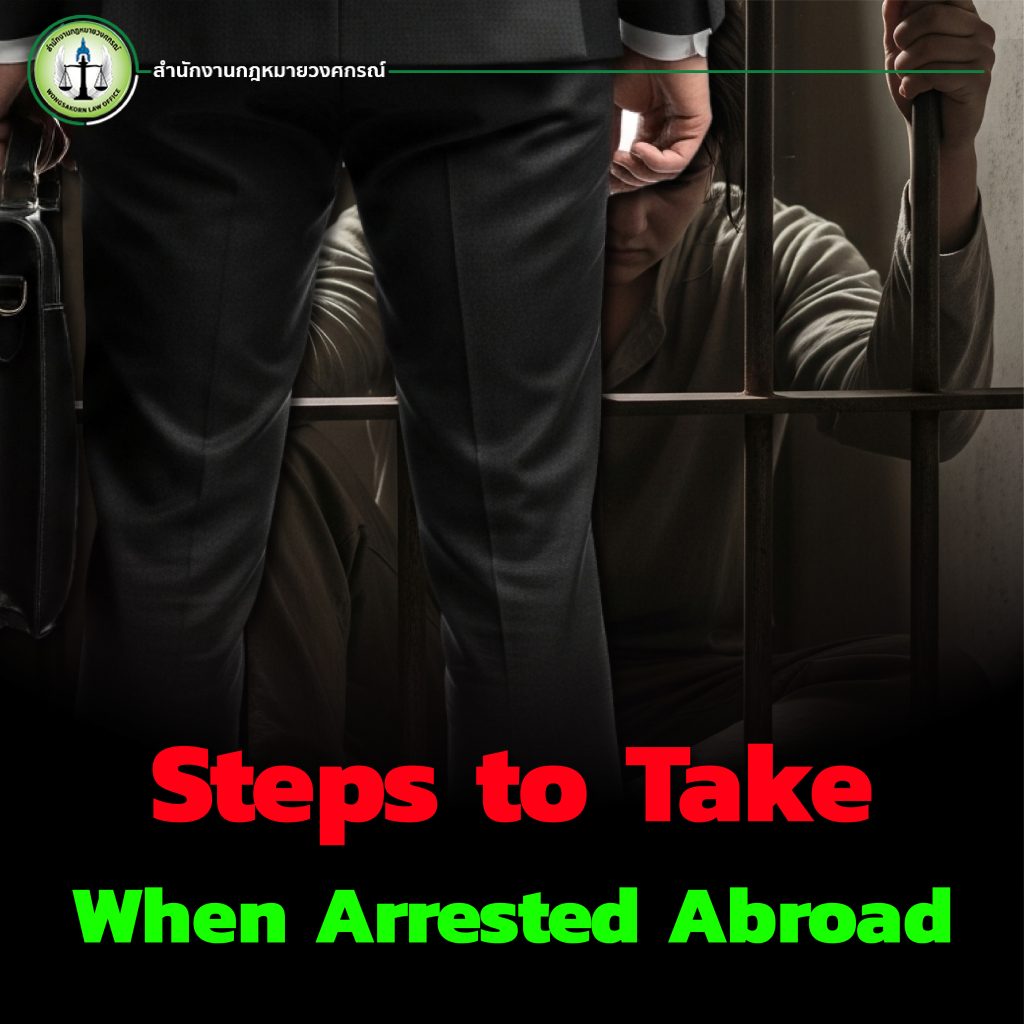
Steps to Take When Arrested Abroad

1.Request to see the Thai embassy staff immediately.

2.Exercise your right to legal representation.

3.Inform your family in Thailand to find a Thai lawyer specializing in international cases.

4.Keep all documents and evidence (arrest warrant, police records, work permits) for review by both Thai and local lawyers.

Advice for Thai Migrant Workers

  • Learn the basic laws of the destination country.
  • Always keep embassy and consulate contact numbers.
  • Never sign confessions without consulting a lawyer.
  • Plan ahead by having access to a Thai lawyer who can assist if arrested.

A Lawyer Is Your First Line of Defense

Unexpected arrests can happen to any Thai worker abroad. While embassies and local lawyers provide basic support, having a Thai lawyer who can handle international cases makes your legal defense more effective. They act as a bridge between Thai and local laws, while ensuring your family in Thailand stays informed.

If you or a loved one face legal prosecution abroad, being prepared with the right legal assistance is essential. Click >>Contact Us<< for professional consultation with our lawyers.

Why Every Business Should Have a “Legal Advisor” or “Corporate Legal Counsel” from Day One?

In today’s fast-paced business environment, whether you are running a small, medium, or growing enterprise, legal complexity is something you cannot avoid. From drafting contracts with partners, managing employees, handling taxation, to protecting intellectual property, the challenges are everywhere. Many companies seek legal help only after problems arise. However, having a legal advisor or corporate legal counsel from the very beginning can help reduce risks, prevent potential disputes, and ensure your business moves forward securely.

This article will help you understand the role of a legal advisor, especially a corporate legal counsel, and why businesses without one should start considering this seriously.

What Is a “Legal Advisor” and How Is It Different from a “Corporate Legal Counsel”?

In the business world, a legal advisor refers to a professional who provides advice and solutions in a specific area such as a marketing consultant, accounting consultant, or legal consultant helping business owners make informed and correct decisions.

A corporate legal counsel, however, possesses direct legal expertise. They not only advise on compliance but also help prevent disputes, draft and review contracts, negotiate on behalf of the company, and even represent the business in court if necessary. The key difference lies in the legal specialization that a lawyer brings, enabling them to work both proactively (“prevention”) and reactively (“problem-solving”).

Why Should Businesses Have a Corporate Legal Counsel?

1. Prevent Problems Before They Occur
Many business owners assume lawyers are only for litigation. In reality, a corporate legal counsel helps prevent disputes from happening in the first place by carefully reviewing contracts, advising on labor issues, and ensuring proper business setup.

2.  Save Long-Term Costs
Litigation and dispute resolution costs are often far higher than the cost of having a legal advisor from the start. Investing in preventive legal consultation saves businesses significant expenses in the future.

3. Boost Business Credibility
Having a corporate legal counsel to review agreements and oversee compliance increases trust among partners, investors, and stakeholders, showing that your business is transparent and legally sound.

4. Immediate Support in Emergencies
When facing lawsuits, government audits, or internal conflicts, having a legal advisor already familiar with your business ensures faster and more effective responses, minimizing potential damages.

Common Risks Businesses Face Without a Corporate Legal Counsel

  • Weak contracts → partners may exploit loopholes.
  • Labor issues → wrongful termination may lead to costly lawsuits.
  • Tax errors → risk of penalties or backdated audits.
  • Intellectual property infringement → unauthorized logo or trademark use may result in lawsuits.
  • Internal disputes → shareholder or partner conflicts could harm operations.

All of these risks can be prevented with the support of a corporate legal counsel from the beginning.

How to Choose the Right Corporate Legal Counsel for Your Business?

Selecting the right corporate legal counsel is not easy. Each business has unique needs, and choosing the wrong lawyer may result in poor advice or unnecessary costs. Before making a decision, consider:

1. Industry-Specific Experience – e.g., logistics businesses should seek counsel familiar with transportation law.

2. Specialized Expertise – e.g., labor law, tax law, or intellectual property law.

3. Proactive Consultation – a lawyer who prevents issues, not just reacts to them.

4. Transparent Fees – clear billing structures with no hidden charges.

A Good Advisor Helps Your Business Move Forward with Confidence

Having a legal advisor or corporate legal counsel is not an unnecessary expense but a worthwhile investment. It ensures compliance, reduces risks, prevents disputes, and strengthens your business credibility.

If you are an entrepreneur without a legal advisor yet, now is the perfect time to start. Don’t wait for problems to arise, partner with a corporate legal counsel today to help your business grow steadily and sustainably.

👉 Need legal consultation? Click here >> Contact Us <<

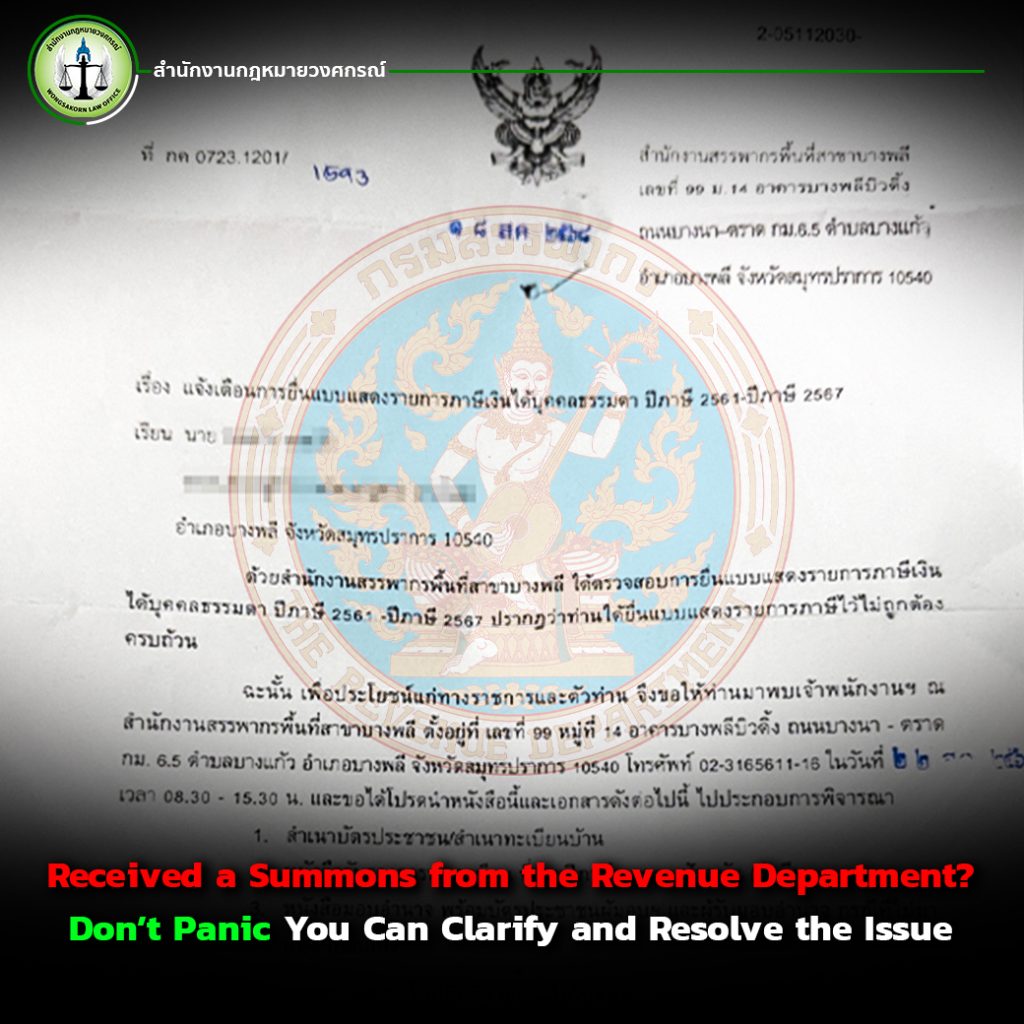
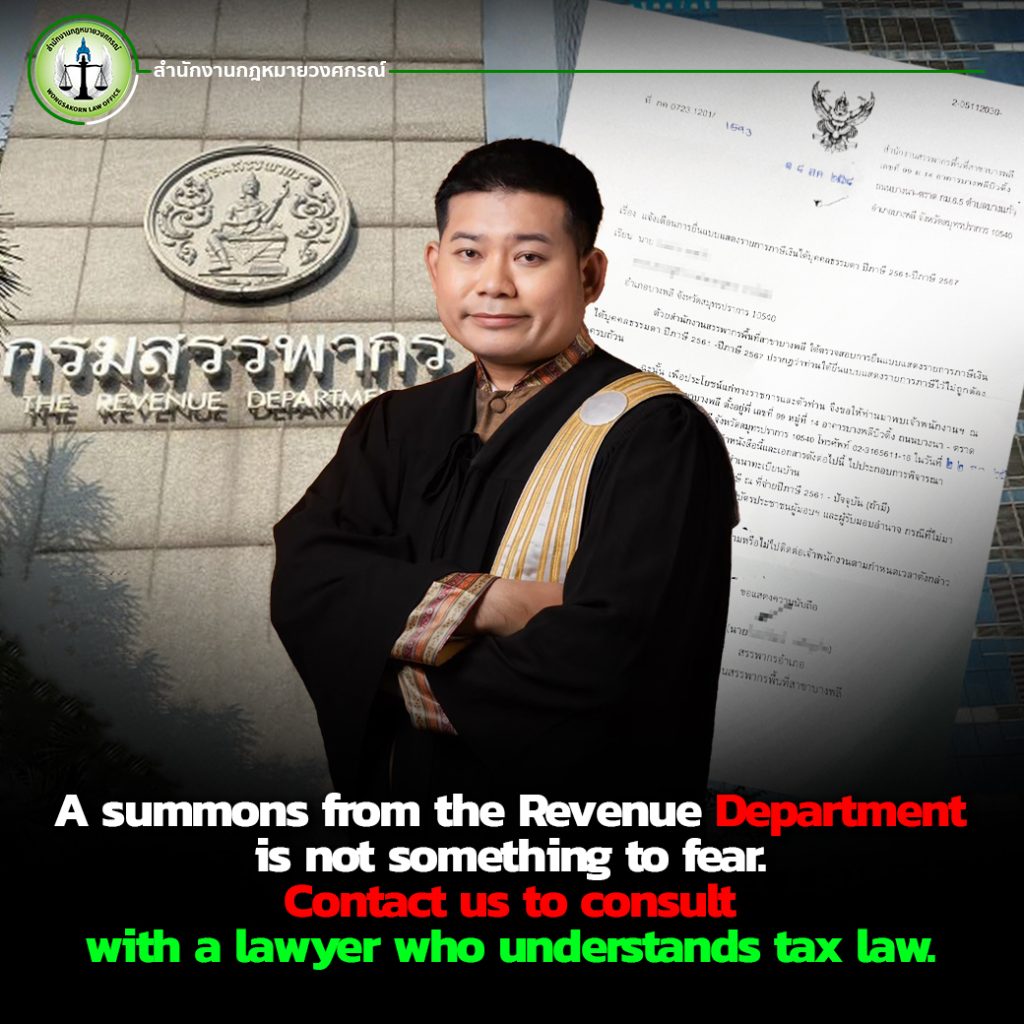
Received a Summons from the Revenue Department? Don’t Panic You Can Clarify and Resolve the Issue

Receiving a summons from the Revenue Department often causes taxpayers to worry. Many fear that it might lead to criminal charges or serious legal trouble. In reality, however, a summons is usually part of the normal process where officials request taxpayers to clarify certain information or correct misunderstandings in their tax filings. If you understand the procedure and prepare the necessary documents, the issue can usually be resolved without undue concern.

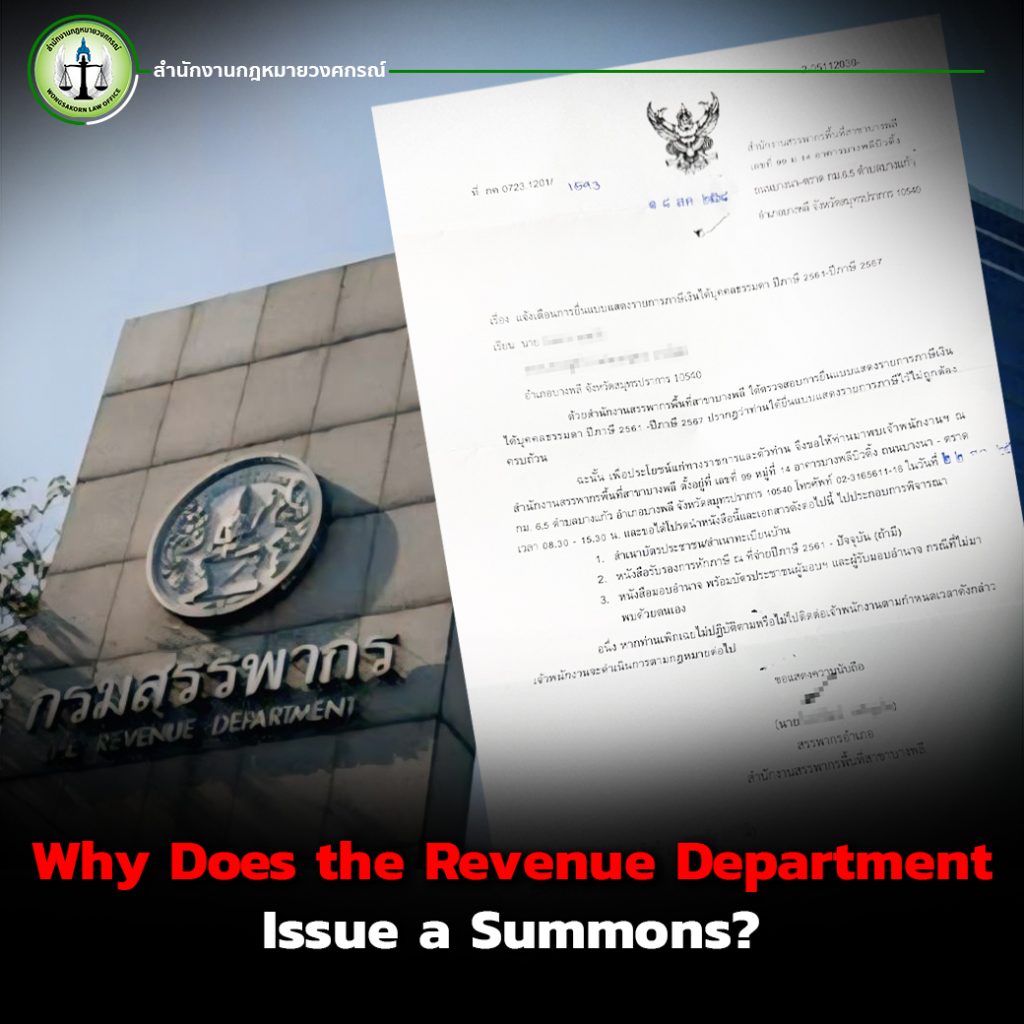
Why Does the Revenue Department Issue Summons?

Many wonder what it means to be summoned by the Revenue Department. The main reasons include:

1. Suspicious tax filings – for example, declared income does not match information reported by other agencies.

2. Errors in tax calculation – such as incorrect data entry or misinterpretation of tax deductions.

3. Discrepancy between income and spending – e.g., large bank transactions that do not align with declared income.

4. Random audits – sometimes officials conduct random checks to verify accuracy.

Thus, receiving a summons does not automatically mean wrongdoing; it is an opportunity to provide clarification.

What Should You Do If You Receive a Summons?

1. Read the summons carefully – It specifies the date, time, place, and purpose. Understand clearly why you were summoned.

2. Prepare relevant documents – such as income statements, withholding tax certificates, bank statements, expense records, or investment documents.

3. Verify your information before the meeting – Ensure that the filed data matches the actual documents.

4. Attend as scheduled – Ignoring the summons could escalate the matter unnecessarily.

Meeting with the Revenue Department Is Not as Intimidating as It Seems

Many fear they will be accused immediately, but in reality, the meeting is a chance to explain. If errors are found in your tax return, you can file an amended return. With proper documentation, officers are usually willing to accept corrections.

Situations That Require Extra Caution

  • Filing taxes that do not match actual income, which may appear as intentional evasion.
  • Lacking proof of income or expenses, which could affect tax deductions.
  • Failing to appear after being summoned, which may result in fines or legal action.

In such cases, consult an expert such as a tax expert. A lawyer can help you respond properly and minimize risk.

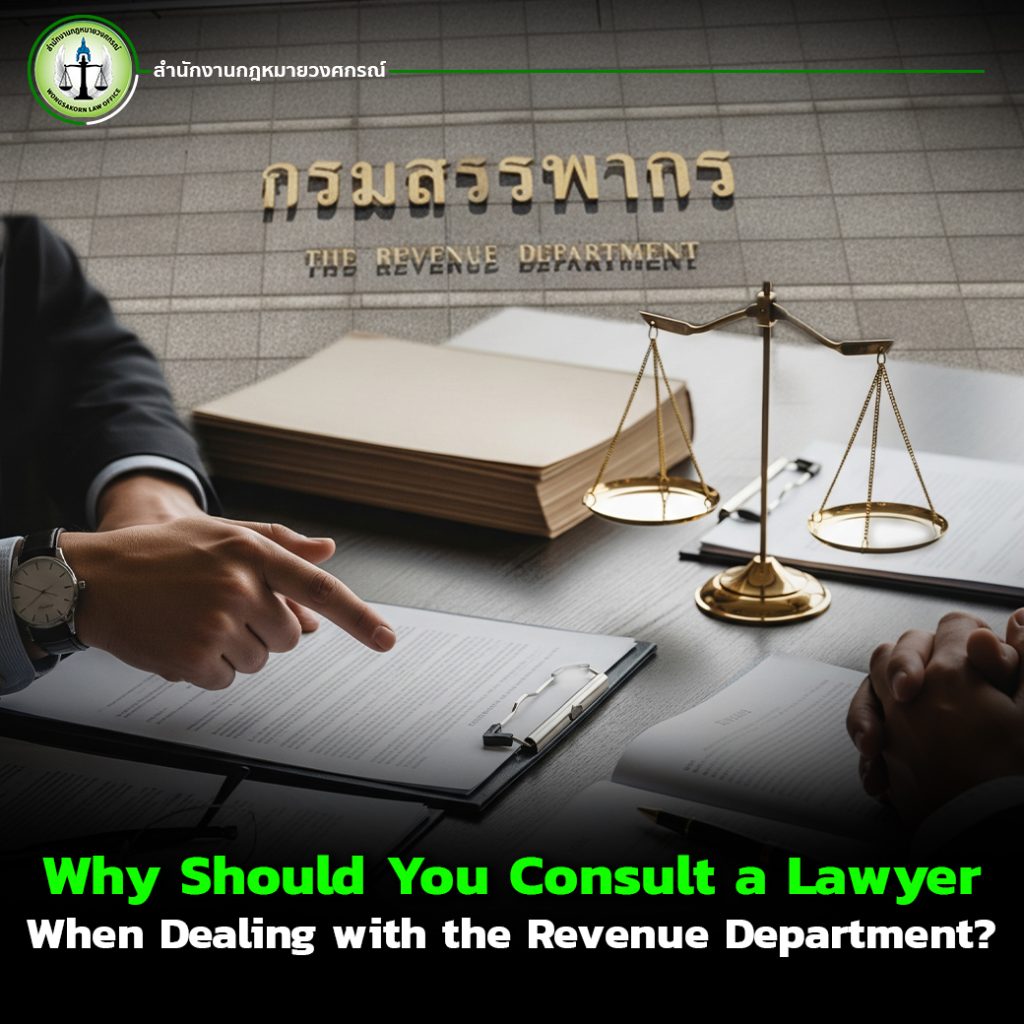
Why Should You Consult a Lawyer When Dealing with the Revenue Department?

A summons may cause anxiety, but having a lawyer by your side can make the process far smoother. Lawyers can:

1. Analyze and review documents – Identify errors or weak points in your filing.

2. Communicate with officials effectively – Legal and tax language may be clearer when explained by a lawyer.

3. Prevent misinterpretation – A lawyer ensures that your statements are not misunderstood as tax evasion.

4. Suggest solutions – Such as filing an amended return or negotiating reduced penalties.

Having a knowledgeable lawyer helps you prepare accurate explanations, avoid unnecessary penalties, and proceed with confidence.

A summons from the Revenue Department is not something to fear. Contact us to consult with a lawyer who understands tax law.

How Can Tax Issues Be Resolved?

  • Amended returns – Correct inaccurate information by filing additional forms.
  • Back tax payments – Settle unpaid taxes along with surcharges.
  • Tax appeals – If you disagree with the assessment, you may file an appeal under the law.

👉 A summons from the Revenue Department is not something to fear. It is an opportunity to clarify matters and resolve misunderstandings. The key is preparation, proper documentation, and, if necessary, professional legal support.
Click >>Contact Us<< for professional tax legal consultation.

The Revenue Department is not to be panick. If you are truthful, prepared, and well-advised, any issue can be resolved!

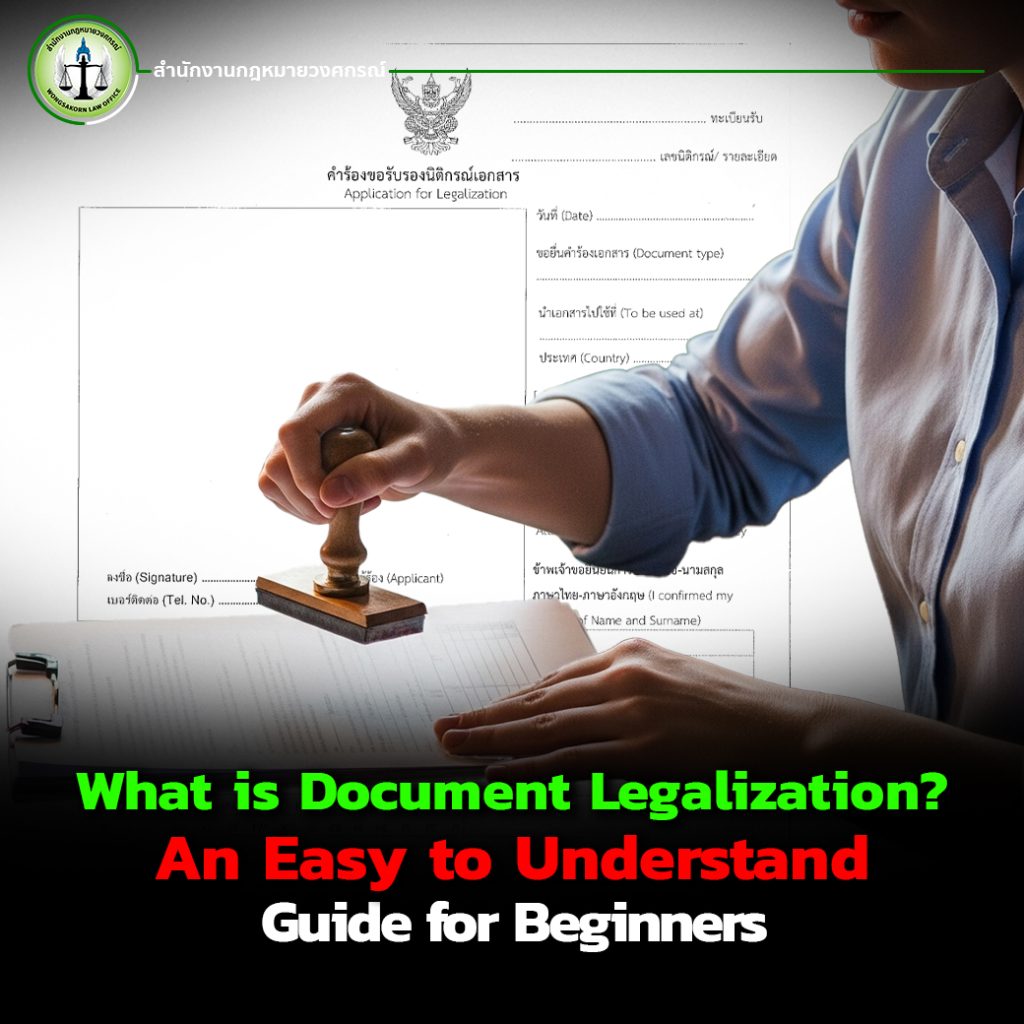
What is Document Legalization? An Easy to Understand Guide for Beginners

In today’s world, where business, education, and career opportunities extend internationally, it is common to use documents issued in one country in another. However, before these documents can be recognized abroad, they must go through a process known as Document Legalization.

This article explains in detail what Legalization is, Why it is important, How to apply for it, what supporting documents are needed, and Why hiring a lawyer can be the most efficient approach.

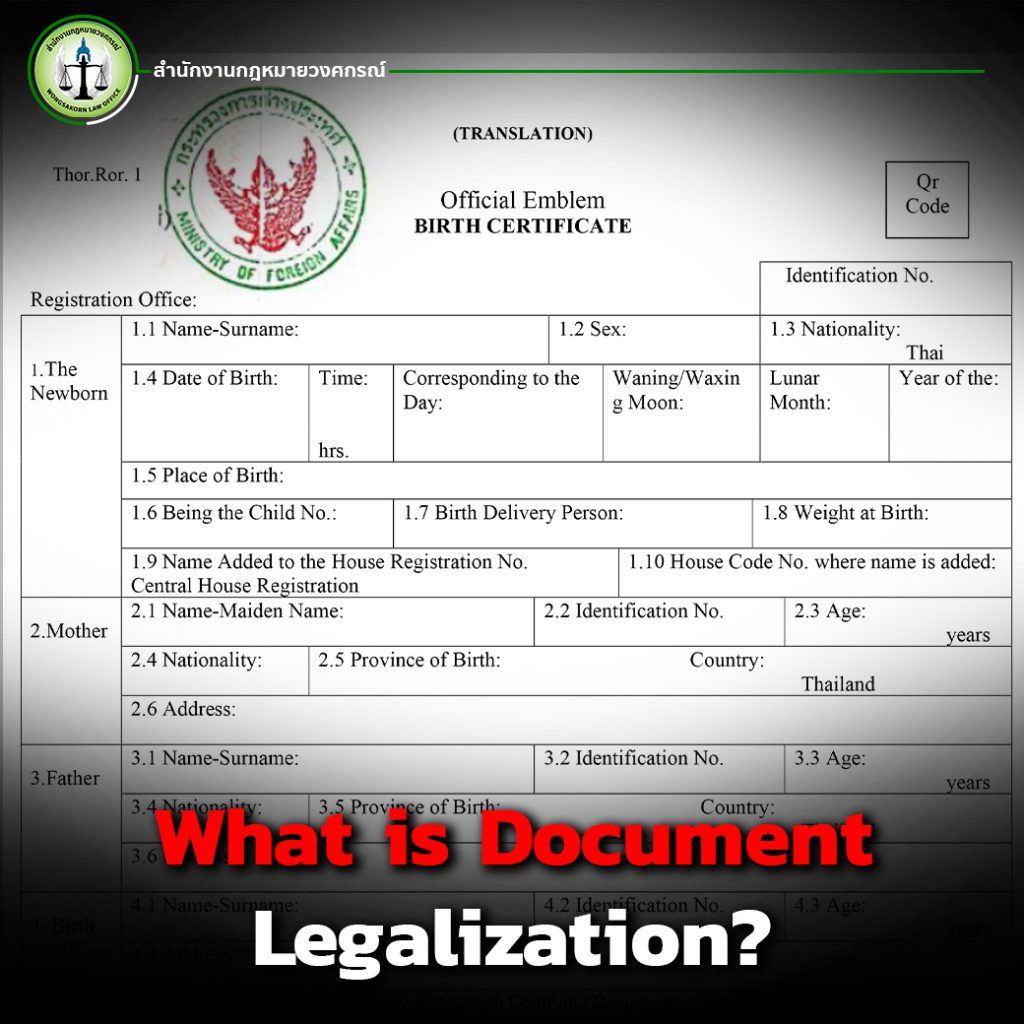
What is Document Legalization?

Document Legalization is the process of verifying and certifying the authenticity of a document so it can be legally used abroad. This involves confirming that the document was issued by an authorized entity and that the signature or seal on it is genuine.

Examples:

  • You need to submit your degree and transcript from a Thai university to study abroad.
  • A company needs to use its Thai business registration certificate overseas to conduct business.
    In both cases, the documents must undergo the Legalization process before use.

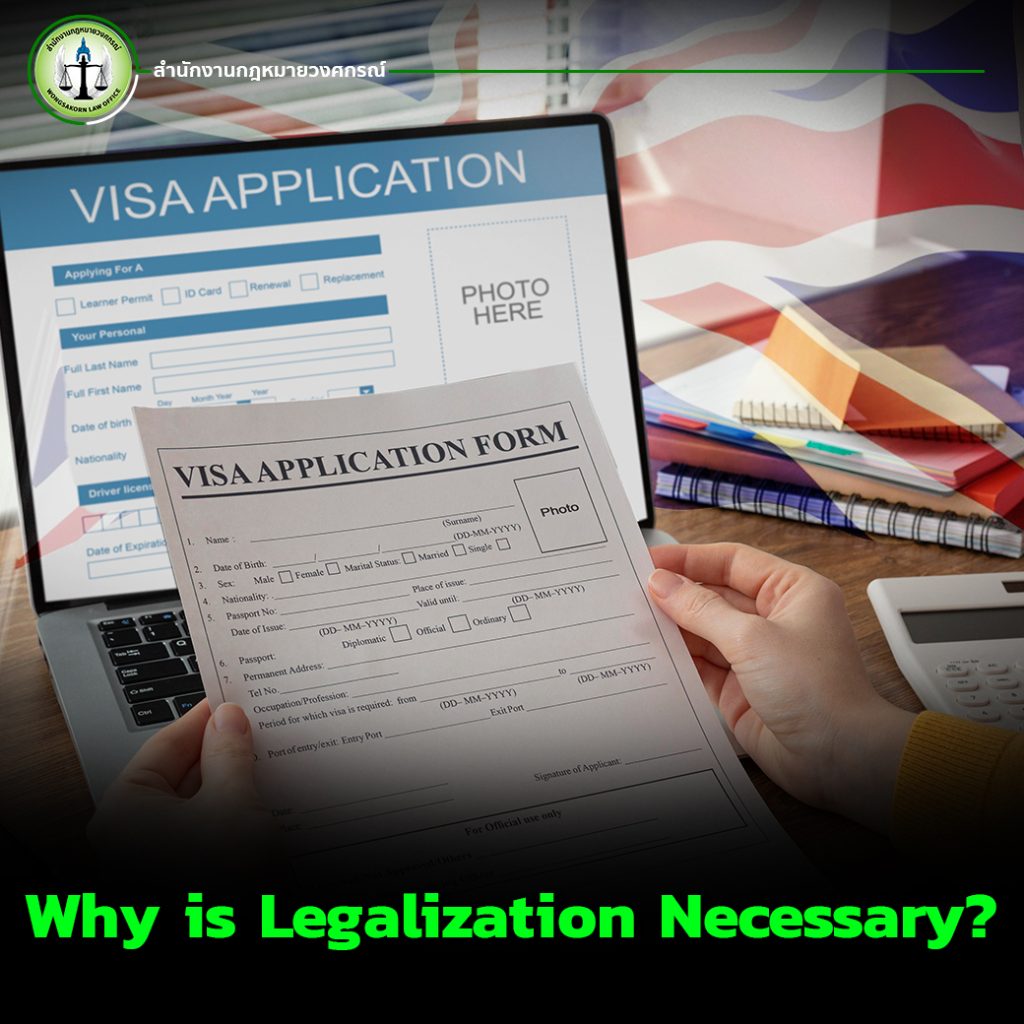
Why is Legalization Necessary?

1.Builds Credibility – Ensures that foreign authorities recognize the document as authentic and issued by the correct authority.

2.Meets Legal Requirements – Many countries require foreign documents to be legalized before acceptance.

3.Avoids Delays and Rejections – Without legalization, processes such as visa applications, school enrollment, or contract signing may be rejected.

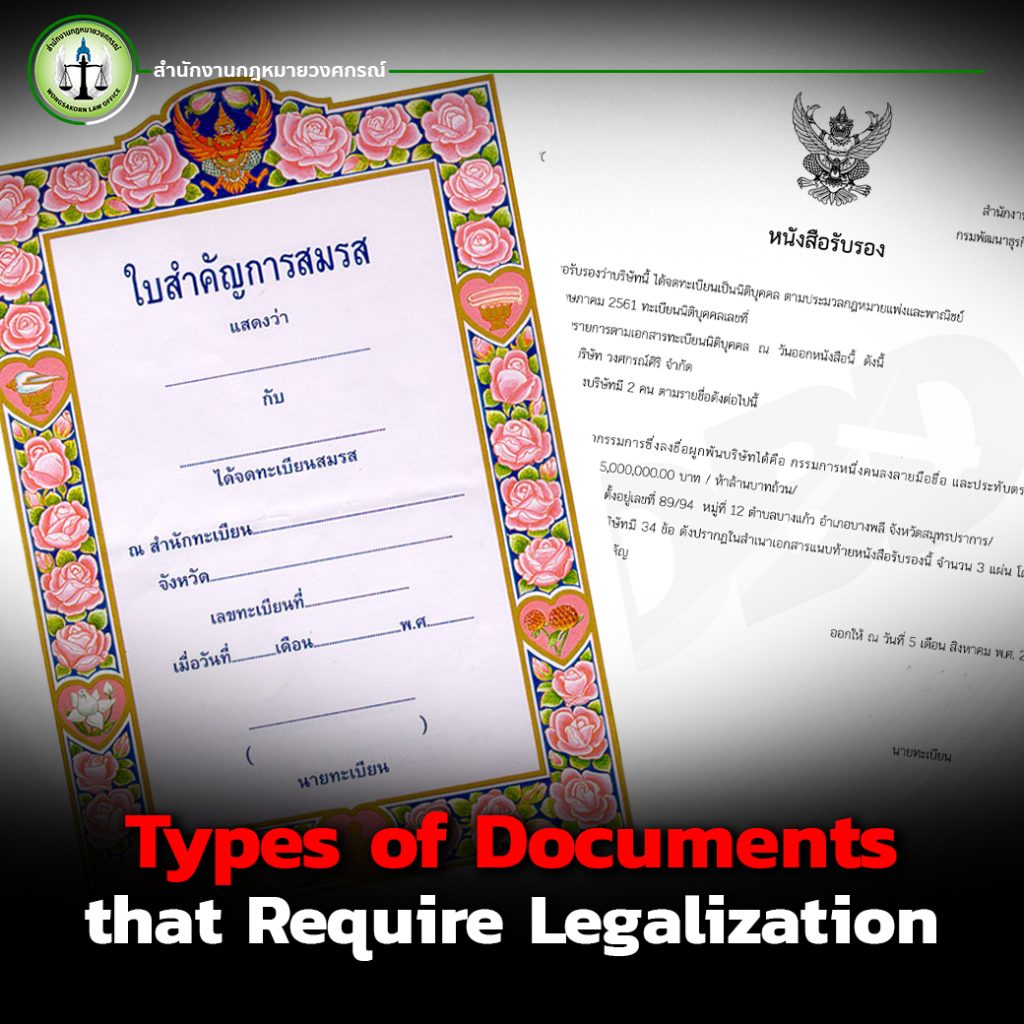
Types of Documents that Require Legalization

  • Educational documents: Degrees, transcripts, graduation certificates.
  • Personal documents: Birth certificates, marriage certificates, divorce decrees, name change certificates.
  • Business documents: Company registration certificates, commercial contracts, powers of attorney.
  • Official documents: Professional licenses, residence certificates.

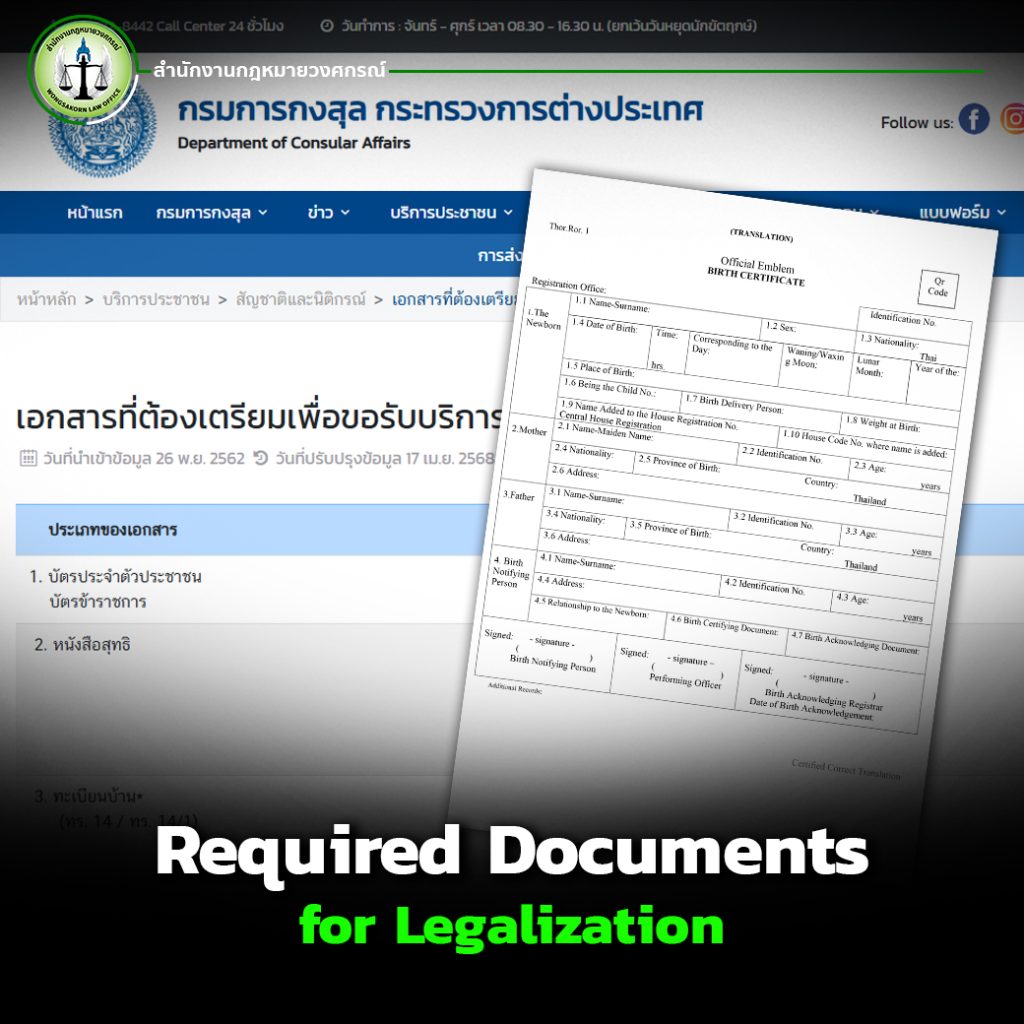
Required Documents for Legalization

Whether you apply yourself or hire a lawyer, prepare the following:

1.Original documents – Official degree, transcript, birth certificate, marriage certificate, company registration, etc. Must be original or certified copies from the issuing authority.

2.Copies of documents – 1–2 sets, signed to certify true copies.

3.Copy of ID or passport – For the document owner or authorized representative.

4.Power of attorney – If someone applies on your behalf; must be signed and stamped with a duty stamp as required by law, plus copies of both parties’ IDs.

5.Payment receipt or proof of payment – If fees are paid online in advance.

6.Certified translations – If the original document is not in the language of the destination country, a certified translation may be required, and in some cases, it must be certified by the Thai Ministry of Foreign Affairs.

💡 Tip: Check with the Ministry of Foreign Affairs or the embassy of the destination country for any additional requirements. Some countries require extra certifications from the Ministry of Education or Ministry of Justice.

Steps for Document Legalization in Thailand

1.Prepare originals and required supporting documents.

2.Translate documents if necessary (by a certified translator).

3.Obtain certification from the issuing authority (e.g., universities, government offices).

4.Submit to the Department of Consular Affairs, Ministry of Foreign Affairs.

5.Submit to the destination country’s embassy (if required).

Legalization vs. Apostille

  • Legalization – Used in countries not part of the Apostille Convention; involves multiple steps such as consular and embassy certification.
  • Apostille – Used in member countries of the Apostille Convention; requires only a single Apostille stamp.

Why Hire a Lawyer for Legalization?

  • Expertise in legal and international procedures.
  • Ensures document completeness before submission, reducing rejection risk.
  • Saves time and effort.
  • Provides end-to-end services: translation, submission, follow-up.

For speed, accuracy, and peace of mind, hiring a lawyer to handle the process from start to finish is the best option.

Legalization is a crucial step to ensure Thai documents can be validly used abroad. Whether for study, work, or business, correct preparation and compliance with procedures make the process smoother and safer. For maximum assurance, entrusting the task to a lawyer is a convenient and worthwhile choice.

Line @ คลิก! โทรหาเรา คลิก!