Famous Individuals Having Their Videos “Scraped” and Used to Promote Online Gambling Websites: A Silent Threat Causing Greater Damage Than Expected

In the era where social media has become a platform for building personal identity, reputation, and income, one increasingly common and serious problem is the unauthorized “scraping” of video clips for improper use. This issue is particularly prevalent among famous individuals, influencers, and content creators whose videos are taken and reposted with links to online gambling websites. Such acts not only damage their reputation but also carry severe legal consequences.

Many people may perceive video scraping as merely reusing content. However, in reality, scraping videos for deceptive purposes, impersonation, or association with illegal activities such as online gambling constitutes a violation of rights and may place the original content owner at legal risk without their knowledge.

What Is “Video Scraping,” and Why Is It a Legal Issue?
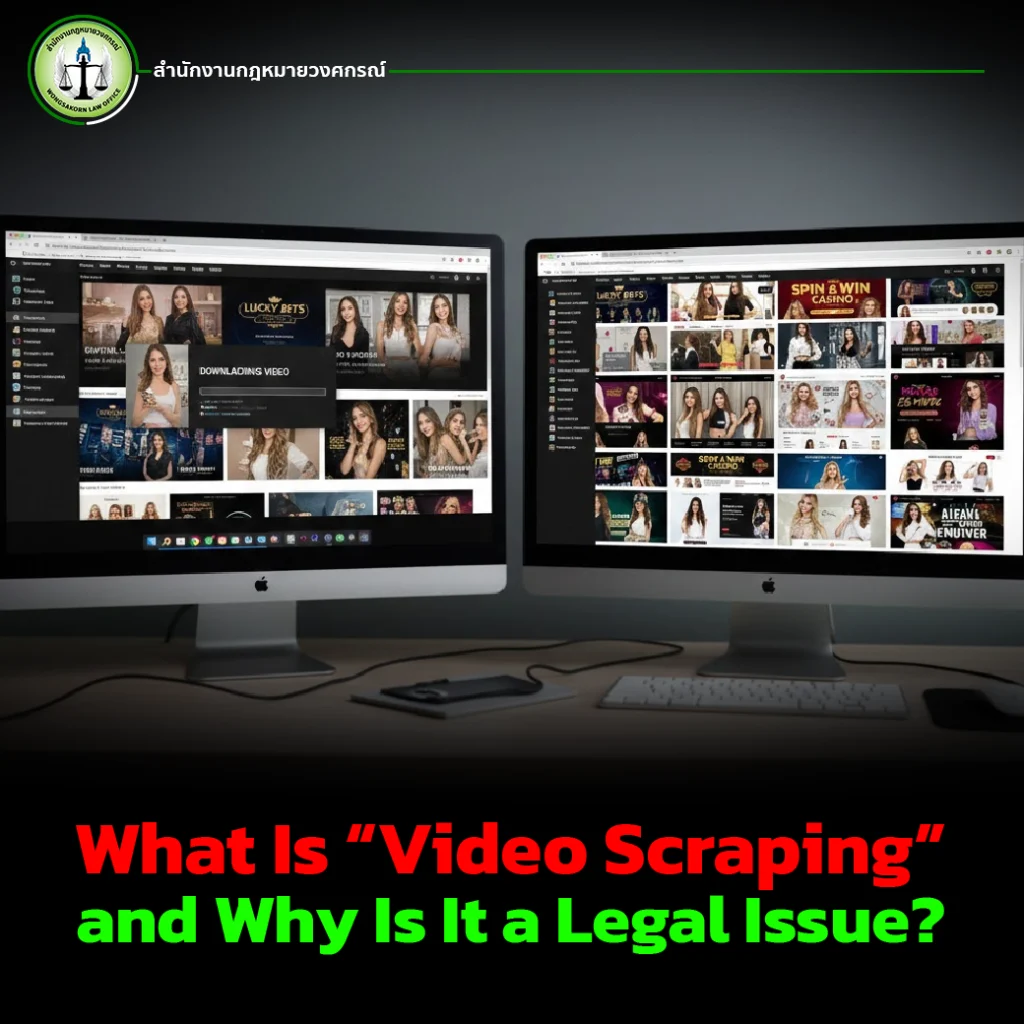
In practice, “video scraping” refers to taking video clips belonging to others from platforms such as TikTok, Facebook, YouTube, or Instagram and re-uploading them to one’s own account without the copyright owner’s permission.

The issue becomes more serious when the scraped videos are used to:

  • Attach links to online gambling websites
  • Promote illegal websites
  • Encourage gambling activities
  • Mislead the public into believing that the original content owner is affiliated with gambling websites

Such actions go beyond copyright infringement; they also involve impersonation and may directly expose the original content owner to legal consequences.

Why Are Famous Individuals at Risk of Having Their Videos Used for Gambling Websites?

The groups most frequently targeted for video scraping linked to online gambling websites include:

  • Influencers
  • Internet celebrities
  • YouTubers
  • Online business owners
  • Individuals with viral or widely recognized content

Perpetrators often select videos from creators with credible images and large followings, then edit the content, add captions, or attach gambling links to enhance the credibility of their illegal websites without regard for the harm caused to the real content owners.

Impacts Faced by Content Owners When Their Videos Are Used for Gambling Websites

Many people are unaware that having their videos scraped and used in connection with online gambling can result in multiple forms of damage, such as:

1.Damage to Reputation and Public Image
Followers and the general public may mistakenly believe the content owner is involved in gambling activities.

2.Loss of Income and Advertising Opportunities
Brands or business partners may terminate collaborations to avoid association with gambling websites.

3.Risk of Government Scrutiny
Even if the content owner is not involved, impersonation may require time and resources to clarify matters with authorities.

4.Long-Term Loss of Opportunities
An online reputation takes years to build but can be destroyed by a single misused video.

How Is Scraping Videos for Gambling Websites Illegal?

Legally, scraping videos for such purposes may constitute several offenses, including:

  • Copyright infringement under the Copyright Act
  • Violation of personality and image rights
  • Impersonation and public deception
  • Involvement in the promotion or support of online gambling

Even if the offender does not directly use the content owner’s name, legal action and claims for damages may still be pursued if the conduct misleads the public.

What Should You Do If Your Video Is Scraped and Linked to a Gambling Website?

If you discover that your video has been misused in this manner, you should not remain passive. Proper steps include:

1. Immediately Collect Evidence
Such as account links, scraped videos, screenshots, and dates of discovery.

2. Avoid Emotional Confrontations
Responding without evidence may place you at a disadvantage later.

3. Report to the Relevant Platforms
Request investigation and removal of infringing content.

4.  Consult a Lawyer for Legal Action
To assess damage claims and protect your legal rights.

Can You Claim Compensation for Scraped Videos Used for Gambling?

Yes, compensation can be claimed if it can be proven that:

  • You are the copyright owner of the video
  • The unauthorized use caused actual damage
  • There was impersonation or unauthorized association with gambling websites

Engaging a lawyer from the outset allows for proper legal strategy, increases the likelihood of compensation, and reduces long-term risks.

Consult Wongsakorn Law Office When Your Videos Are Used Illegally
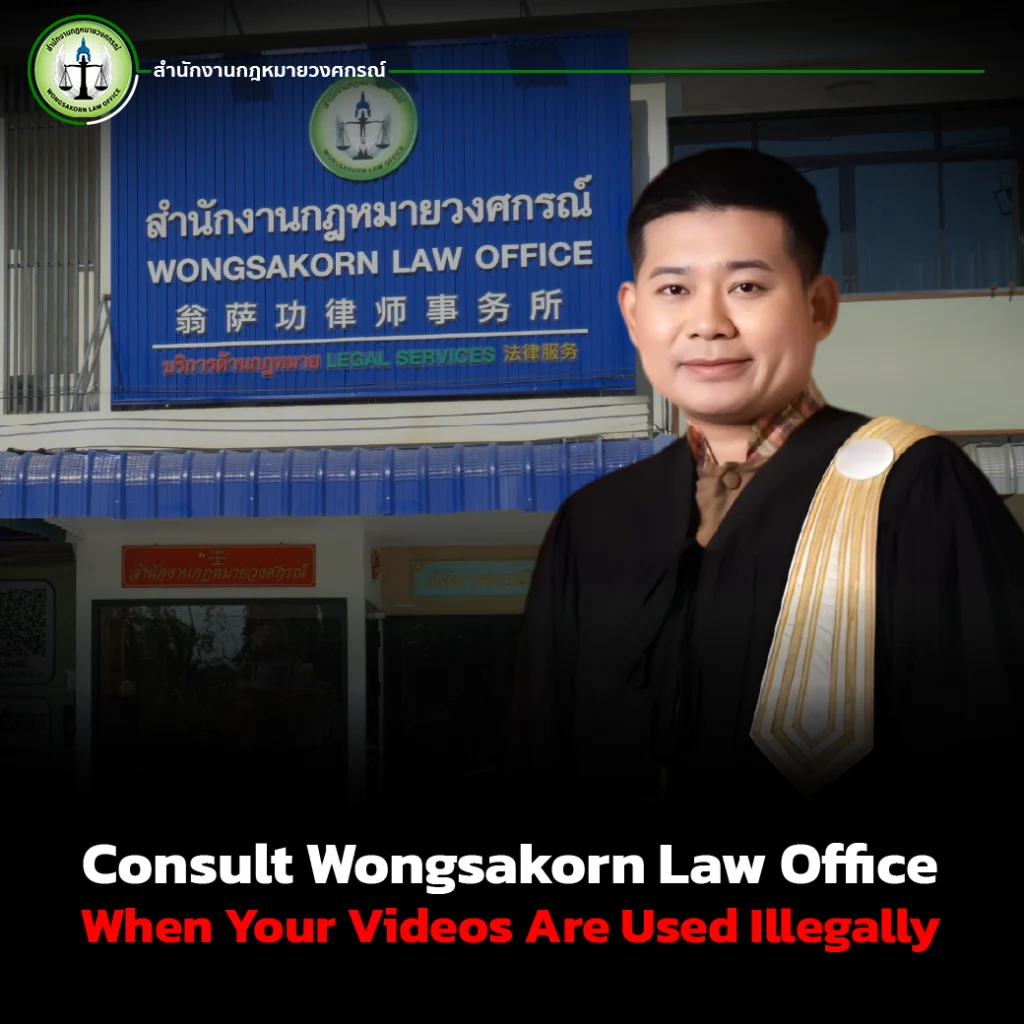
If you are a public figure, influencer, or content creator facing the issue of having your videos scraped and linked to online gambling websites, do not let the damage escalate.

Wongsakorn Law Office has experience handling cases involving:

  • Video scraping
  • Copyright infringement
  • Online impersonation and reputation abuse
  • Compensation claims arising from illegal use of content

Early consultation with legal professionals helps you protect your rights, reputation, and interests carefully and lawfully.

Because in the online world, a single video may generate income for others but the damage may fall upon you if it is not handled properly.
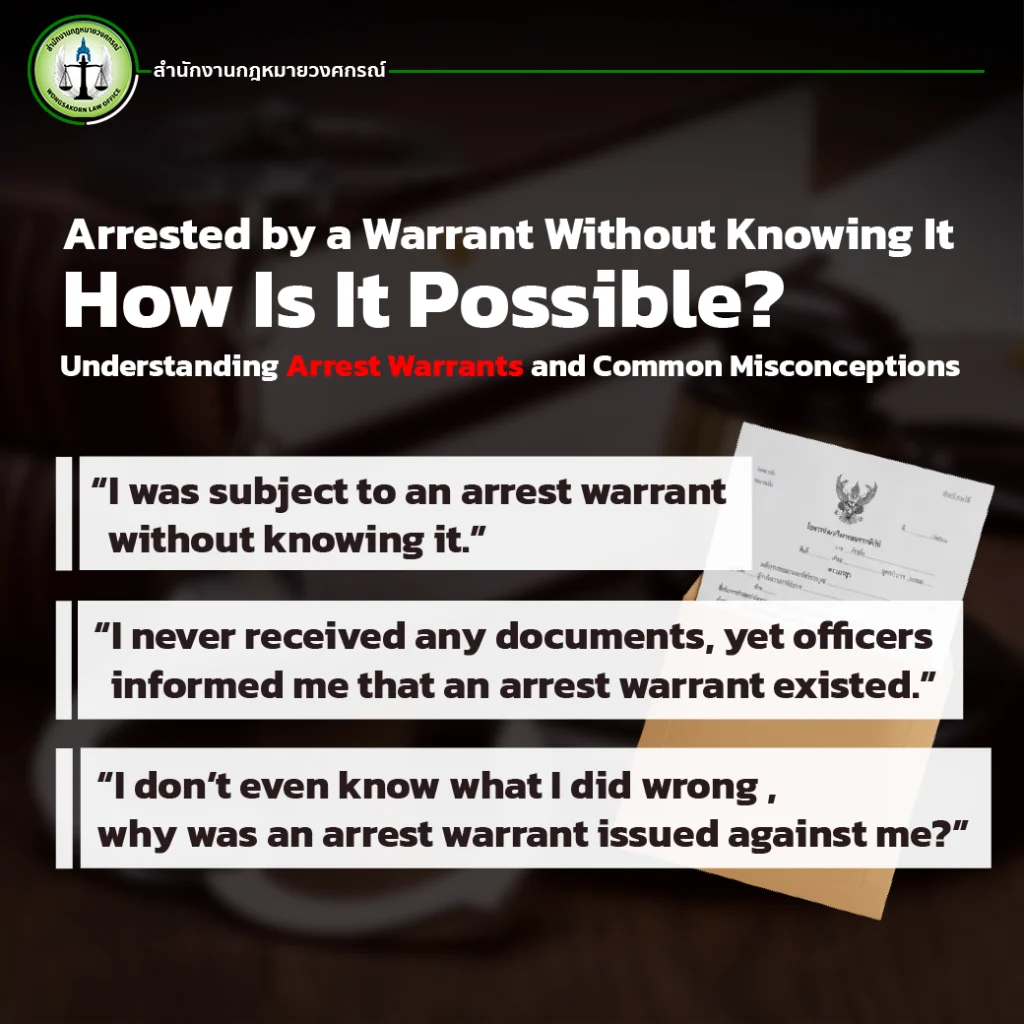
Arrested by a Warrant Without Knowing It: How Is It Possible? Understanding Arrest Warrants and Common Misconceptions

In recent years, Wongsakorn Law Office has received consultations from many individuals who share the same serious concern:

  • “I was subject to an arrest warrant without knowing it.”
  • “I never received any documents, yet officers informed me that an arrest warrant existed.”
  • “I don’t even know what I did wrong, why was an arrest warrant issued against me?”

These questions reflect a widespread misunderstanding about the arrest warrant process. Many people believe that if no official notice, summons, or documents are sent to their home, an arrest warrant cannot be issued. From a legal perspective, this belief is not entirely correct.

This article aims to explain what an arrest warrant is, how it can be issued, why prior notice to the suspect is not always required, and how to properly verify whether an arrest warrant exists so you do not unknowingly place yourself at legal risk.

What Is an Arrest Warrant?

An arrest warrant is a court order authorizing police officers to arrest a person accused of committing a criminal offense, in order to bring them into the investigation or legal proceedings.

Issuing an arrest warrant is not a minor matter, nor can it be done at the discretion of the police alone. It requires judicial consideration. The court will review the evidence presented by investigators and determine whether it is sufficient to justify issuing the warrant.

An Arrest Warrant Can Be Issued Without Prior Notice to the Suspect

One of the most common misconceptions is the belief that:

“Before an arrest warrant is issued, a summons or written notice must first be sent to the suspect’s home.”

In reality, the law does not require prior notice in all cases.

If investigators have sufficient evidence demonstrating that:

  • A criminal offense has occurred,
  • The individual is a suspect or accused person, and
  • There is reasonable cause to believe that the suspect may flee, tamper with evidence, or fail to appear as summoned,

They may immediately petition the court for an arrest warrant without notifying the suspect in advance.

This is a key reason why many individuals find themselves subject to an arrest warrant without ever knowing it beforehand.

Why Do Some People Never Receive Summons but Still Face an Arrest Warrant?

In practice, certain criminal cases, especially serious offenses or cases involving a risk of flight, may lead the court to issue an arrest warrant immediately, without first issuing a summons.

Additionally, situations may arise where:

  • A summons was sent to a former registered address,
  • The suspect changed residence without notifying authorities, or
  • The case is an old matter unknown to the individual,

As a result, the person may be entirely unaware that legal proceedings have reached the stage of an arrest warrant.

Risks of Being Unaware That an Arrest Warrant Exists

Having an arrest warrant without knowing it can lead to serious consequences, such as:

  • Sudden arrest in a public place,
  • Immediate detention during routine identity checks,
  • Disruption to employment, travel, or legal transactions,
  • For foreign nationals, complications with visas or entry and exit from the country.

Many individuals become legally disadvantaged simply because they were unaware of their legal status from the outset.

Ignoring an Arrest Warrant Without Fleeing: What Are the Risks?

Some people, upon suspecting or learning that an arrest warrant exists, choose not to flee but also take no action continuing life as usual, believing that as long as they commit no further wrongdoing, no serious consequences will follow. Legally, this is a misconception.

First, an outstanding arrest warrant authorizes officers to arrest the individual anytime and anywhere, including during routine checks, government transactions, or even unrelated incidents. Arrests often occur without warning, leaving no time for legal preparation.

Second, prolonged inaction may place the accused in a weaker legal position, as courts may view the individual as unwilling to cooperate, potentially affecting bail considerations or resulting in stricter conditions.

Third, unresolved arrest warrants can quietly affect daily life job applications, background checks, international travel, or immigration scrutiny especially for foreign nationals.

Most importantly, allowing an arrest warrant to remain unresolved allows legal risk to accumulate unnecessarily, when many cases could be handled appropriately with early legal advice. Not fleeing does not mean safety if one has not properly entered the legal process.

What Should You Do If You Suspect an Arrest Warrant Exists?

What you should never do:

  • Ignore the situation,
  • Make assumptions,
  • Or wait until you are arrested before taking action.

The correct approach is to officially verify the arrest warrant and plan appropriate legal steps early. In some cases, this allows for:

  • Proper voluntary surrender,
  • Bail preparation,
  • Or strategic case defense planning.

Such actions require substantial legal knowledge and experience.

Arrest Warrant Verification Services by Wongsakorn Law Office

Wongsakorn Law Office provides arrest warrant verification and legal consultation services for both Thai and foreign nationals. We understand that arrest warrants are sensitive and stressful matters. Knowing your legal status clearly from the beginning is the most important first step in protecting your rights.

If you:

  • Suspect that an arrest warrant may exist,
  • Have a past case but are unsure whether it has concluded,
  • Or have received concerning information,

Do not let the problem escalate. You may consult us immediately.
👉 Click “Contact Us” (Arrest Warrant Verification Services for Thai and Foreign Nationals)

What Is Copyright? Understanding Section 10 of the Copyright Act That Many People Overlook

In the digital age, where anyone can easily create and publish content at their fingertips, copyright has become a legal issue much closer to everyday life than many people realize. Whether it is articles, images, music, videos, short clips on social media, or content on platforms such as YouTube, TikTok, and Facebook, copyright plays a crucial role.

Many people mistakenly believe that copyright protection only exists after registration, or that using a small portion of someone else’s work does not constitute infringement. In reality, Thai copyright law protects creative works from the moment they are created, and one of the most fundamental provisions is Section 10 of the Copyright Act B.E. 2537 (1994).

This article will help you understand what Section 10 covers, who owns copyright, and what kinds of actions may unknowingly lead to copyright infringement.

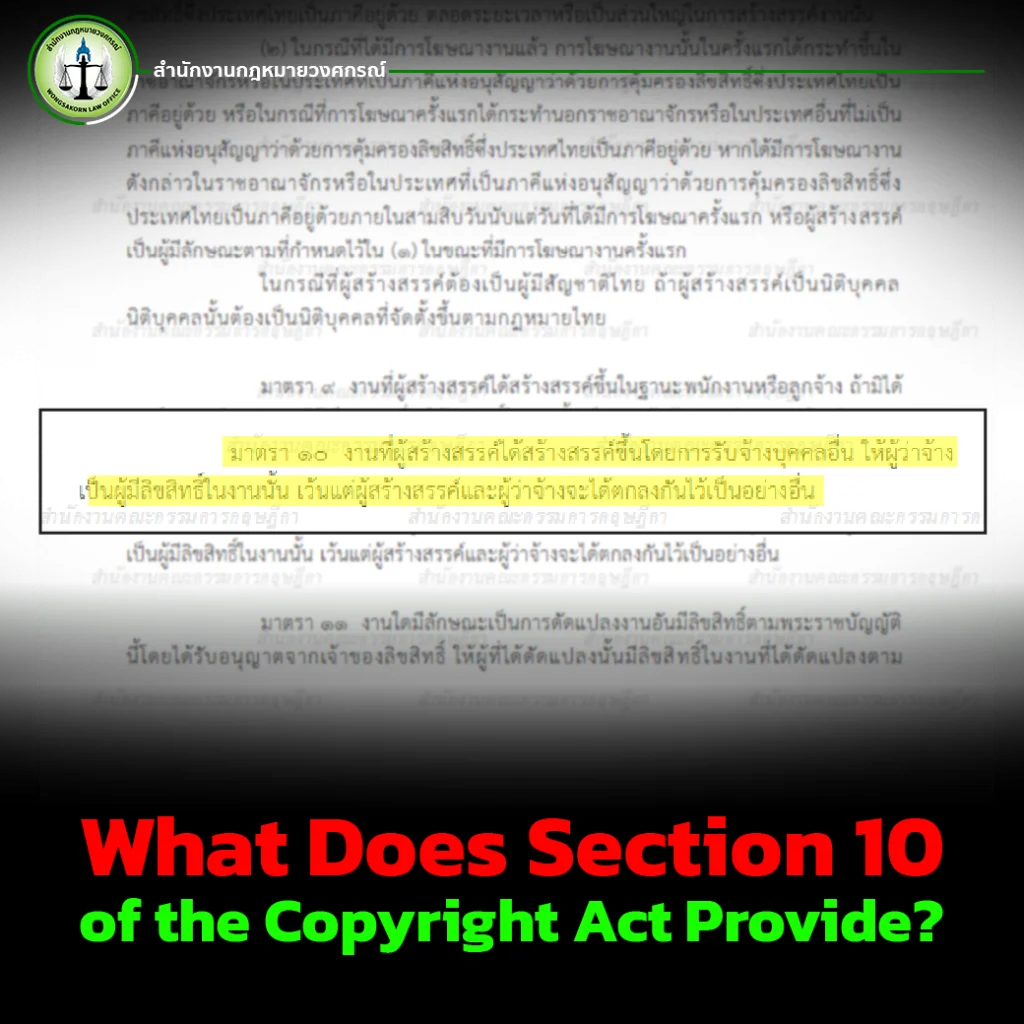
What Does Section 10 of the Copyright Act Provide?

Section 10 provides that where a work is created by a creator under a contract of hire or employment for another person, the employer or the person who commissioned the work shall be the owner of the copyright in such work, unless the creator and the employer or commissioning party have otherwise agreed.

Section 10 of the Copyright Act B.E. 2537 governs the creation of copyright, stating the essential principle that:

“Copyright arises in favor of the creator immediately upon the creation of the work, without the need for registration.”

In summary, Section 10 confirms that copyright protection does not require registration. Once a creative work is created in a tangible form such as writing an article, drawing, photography, recording a video, composing music, or designing graphics the creator automatically becomes the copyright owner.

What Types of Works Are Protected by Copyright?

Under Thai copyright law, copyright protection covers creative works such as:

  • Literary works (articles, books, posts, captions)
  • Artistic works (paintings, photographs, graphic designs)
  • Musical works and lyrics
  • Audiovisual works (videos, films, clips)
  • Broadcast works
  • Computer programs

As long as the work is original, creative, and expressed in a tangible form, it is immediately protected under Section 10.

Case Example: Posting First — Who Owns the Copyright?

Example 1: Articles on Social Media

A writer publishes a legal analysis article on their Facebook Page. Later, another person copies the article and republishes it on their own website without permission or credit.

Even though the article was not registered for copyright, under Section 10, the writer remains the copyright owner. Republishing the article without authorization constitutes copyright infringement.

Case Example: Downloading and Reposting Clips — Is It Infringement?

Example 2: TikTok or YouTube Shorts Clips

An influencer creates an educational video clip. Another user downloads (“rips”) the clip and reuploads it on their own channel to generate views and income.

Although the clip has already been made public, copyright still belongs to the original creator. Reusing it without permission constitutes copyright infringement under the law.

A Common Misunderstanding: Giving Credit Means No Infringement?

Many people believe that as long as credit is given to the original creator, copyright infringement does not occur. This understanding is not always correct.

Giving credit is not a legal license. If the copyright owner has not granted permission, reproducing, modifying, or redistributing the work may still constitute copyright infringement.

Copyright Infringement Is Not a Minor Issue

Copyright infringement may result in civil liability (compensation for damages) and criminal liability (fines and/or imprisonment). In many cases, infringers may not even realize they are violating the law, yet legal consequences still apply.

Why Is It Important to Understand Copyright from the Beginning?

Whether you are a creator, influencer, online business owner, or general social media user, understanding copyright under Section 10 allows you to protect your own works, avoid infringing others’ rights unknowingly, and reduce the risk of lawsuits or compensation claims.

Copyright Arises Immediately  No Registration Required

The key takeaway of Section 10 is that creative works are protected immediately upon creation. In a world where content is rapidly shared, copyright law is no longer distant. A single click can unintentionally lead to legal issues.

Why Copyright Awareness Matters in the Online Era?

In an era of fast-paced content creation and sharing, copyright infringement can easily occur and affect both creators and users. Understanding copyright law, especially Section 10, helps creators know their rights, encourages users to be cautious, and reduces legal risks.

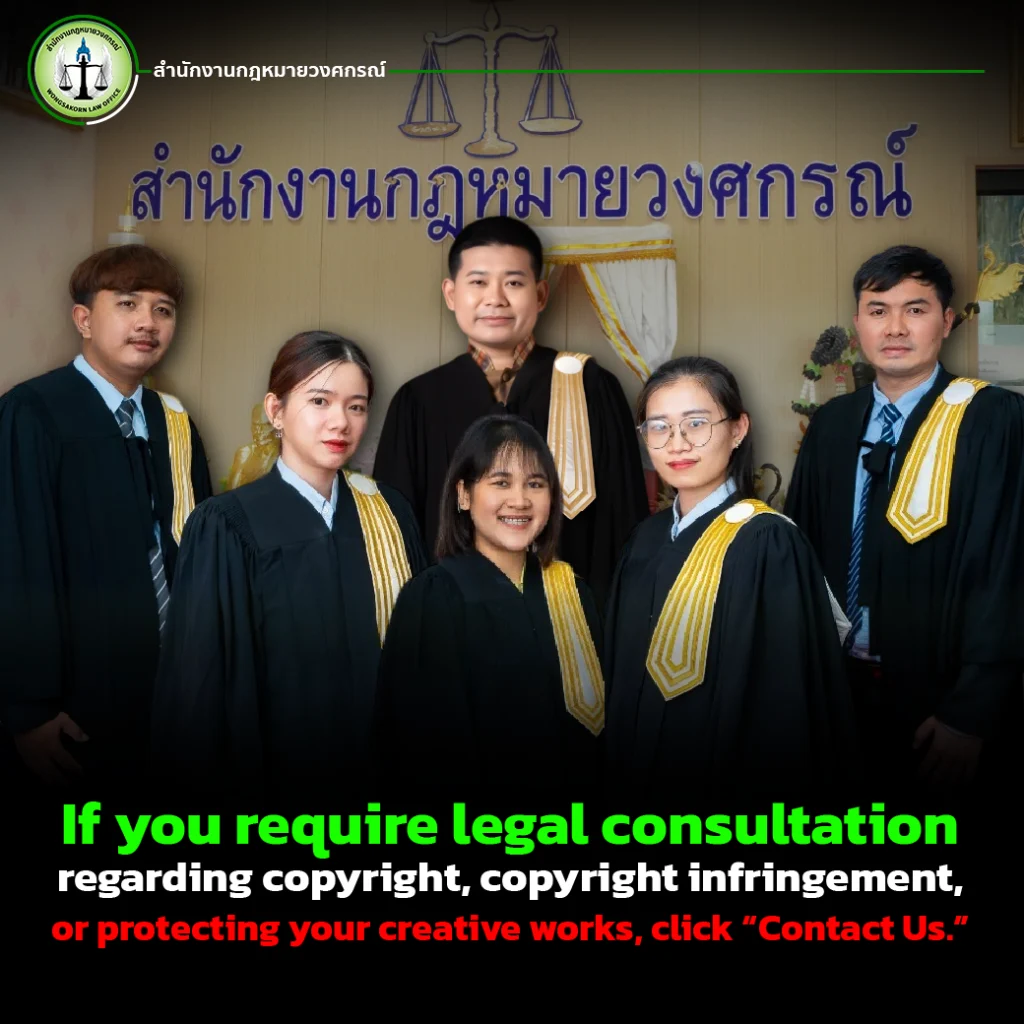
If you require legal consultation regarding copyright, copyright infringement, or protecting your creative works, click “Contact Us.”

Section 10 of the Copyright Act is a fundamental provision everyone should know whether you are a writer, creator, designer, business owner, or general social media user. Copyright arises immediately upon creation, and infringement may lead to both civil and criminal liability.

Wongsakorn Law Office is ready to provide careful and systematic legal advice to help you protect your rights and use them safely in the long term.

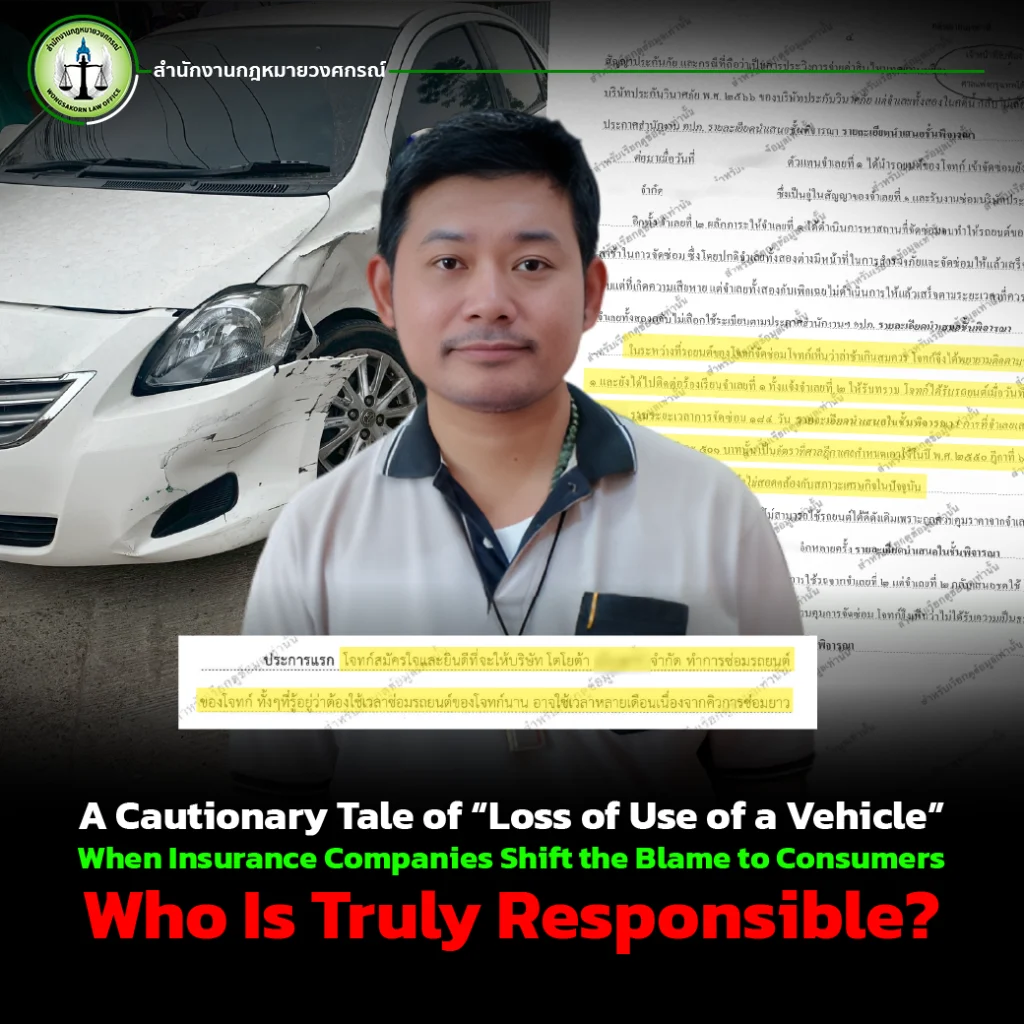
A Cautionary Tale of “Loss of Use of a Vehicle”: When Insurance Companies Shift the Blame to Consumers Who Is Truly Responsible?

Those who regularly follow legal content on the Wongsakorn Law Office website will notice that loss of use of a vehicle is one of the recurring legal issues that causes significant hardship to insured persons. Many cases reveal a troubling pattern in which insurance companies attempt to avoid liability or shift the burden onto policyholders, even though the damage results from accidents and repair processes beyond the insured’s control.

Loss of use of a vehicle is not a new legal concept. However, many consumers remain unaware of their legal rights, leading them to accept losses without receiving fair compensation. This article presents another real-life case that clearly illustrates why having a lawyer involved from the very beginning is critically important once damage occurs.

What Is “Loss of Use of a Vehicle”?

Loss of use of a vehicle refers to damages that a vehicle owner is legally entitled to claim when they are unable to use their vehicle under normal circumstances due to reasons not caused by their own fault for example, when the vehicle is damaged in an accident and must undergo lengthy repairs, preventing its use for work, business, or daily life.

Such damages may be claimed even if the injured party does not rent a replacement vehicle, provided it can be proven that the vehicle was normally in use and that the inability to use it caused actual damage. However, the method and effectiveness of claiming loss-of-use damages largely depend on the legal techniques and strategies employed by the lawyer handling the case, which can significantly affect the amount recoverable.

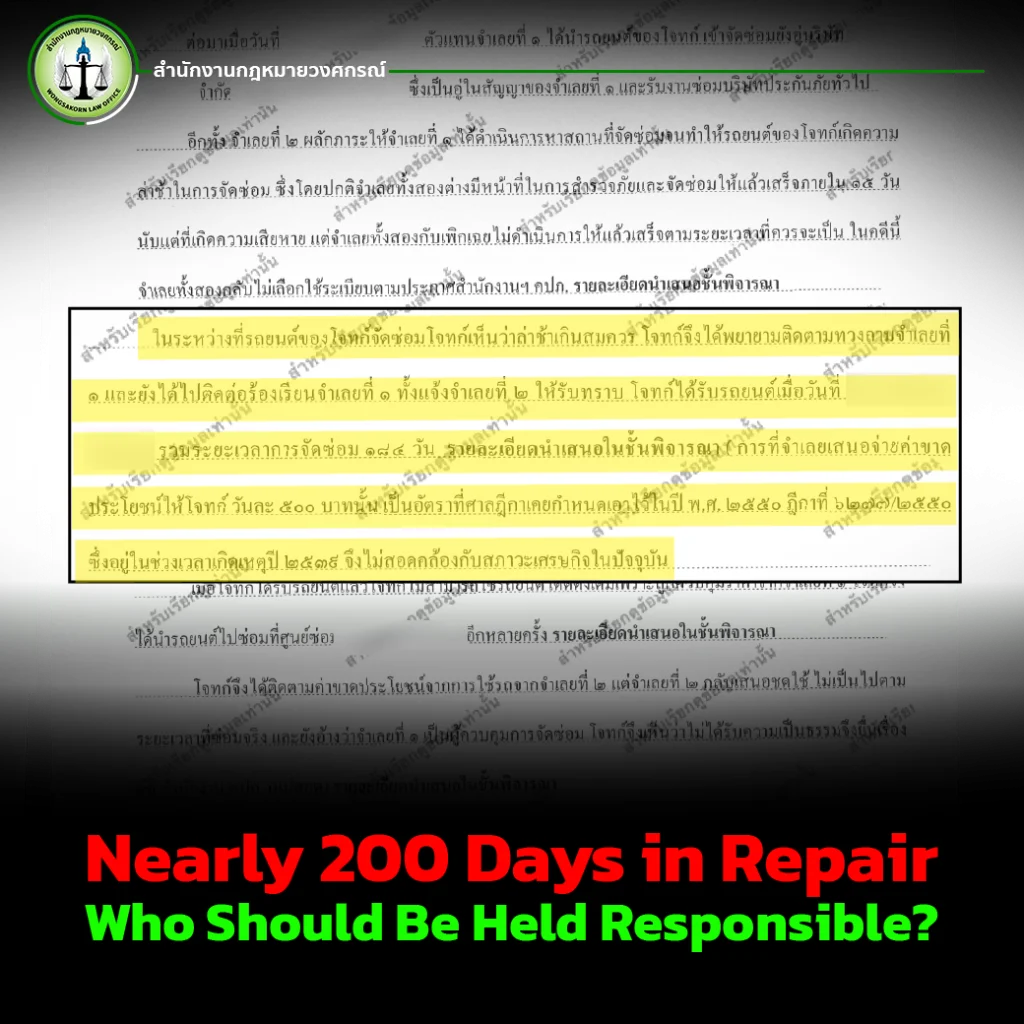
Nearly 200 Days in Repair Who Should Be Held Responsible?

In one illustrative case, the victim’s vehicle was severely damaged in an accident and required nearly 200 days of repair far exceeding a reasonable repair period. Due to this prolonged delay, the victim was unable to use the vehicle and therefore appointed a lawyer to pursue compensation, including loss-of-use damages, from the insurance company. However, what transpired in court raised serious concerns regarding the insurer’s conduct.

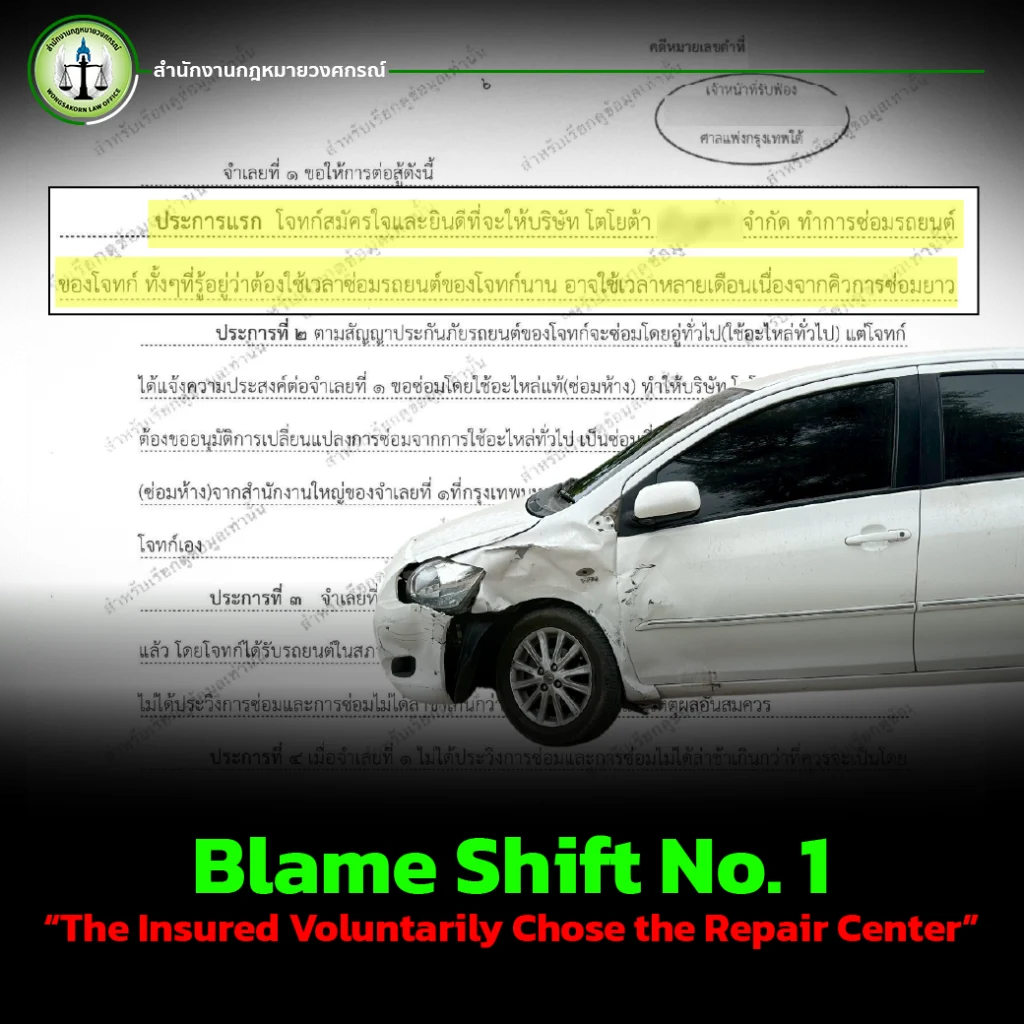
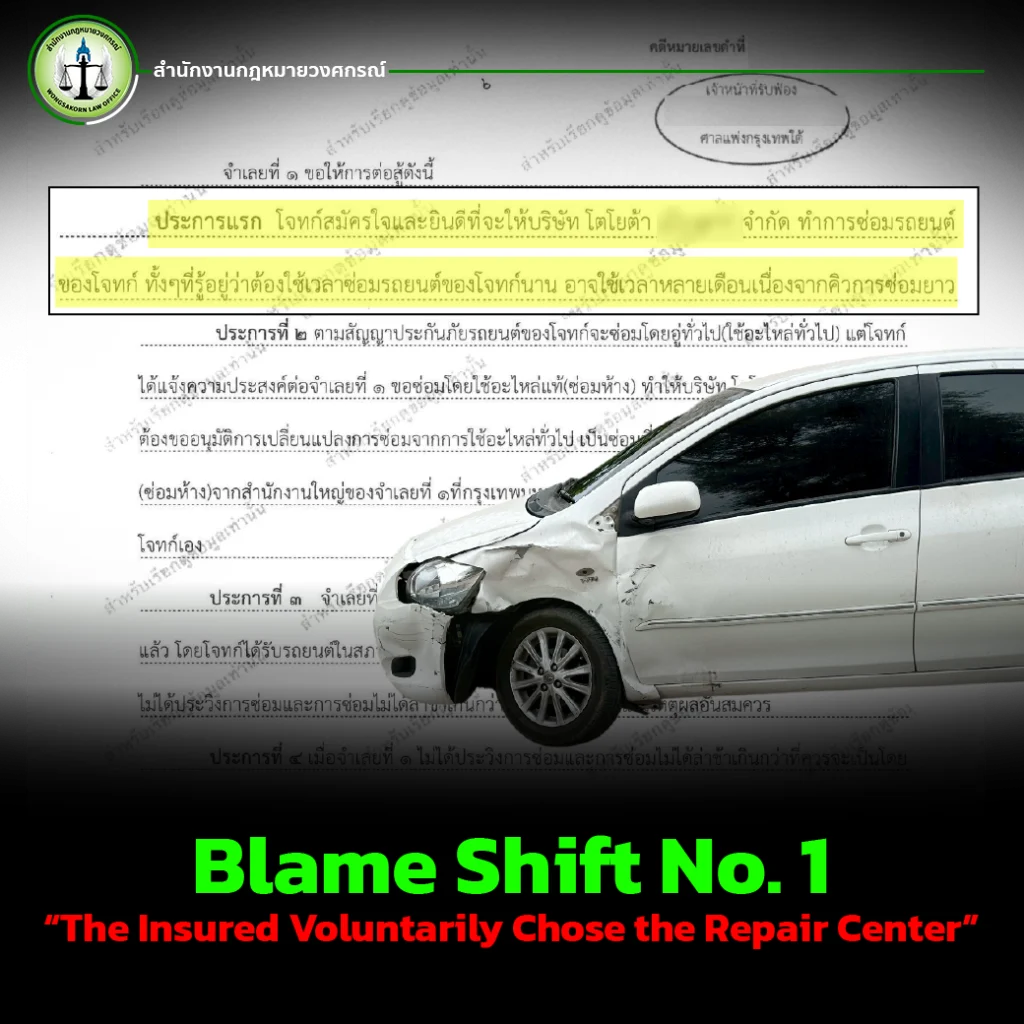
Blame Shift No. 1: “The Insured Voluntarily Chose the Repair Center”

The insurance company argued that:

“The plaintiff voluntarily chose to repair the vehicle at that service center, fully aware that the repair queue would take several months.”

In other words, the insurer attempted to shift responsibility onto the insured, claiming that the insured must bear the consequences of the repair delay. In reality, insured persons often have little bargaining power and must rely on repair processes controlled by insurers, particularly regarding repair cost approvals.

Blame Shift No. 2: Passing Responsibility to the Repair Center

After blaming the insured, the insurance company further shifted responsibility to the repair center, citing long repair queues. However, evidence showed that the insurer itself contributed to the delay through slow repair approval processes.

As a result, the insured was left in a situation where “no one takes responsibility,” despite being the insurer’s customer. This raises a crucial question: When should an insurance company, as the insurer, be held accountable to its policyholders?

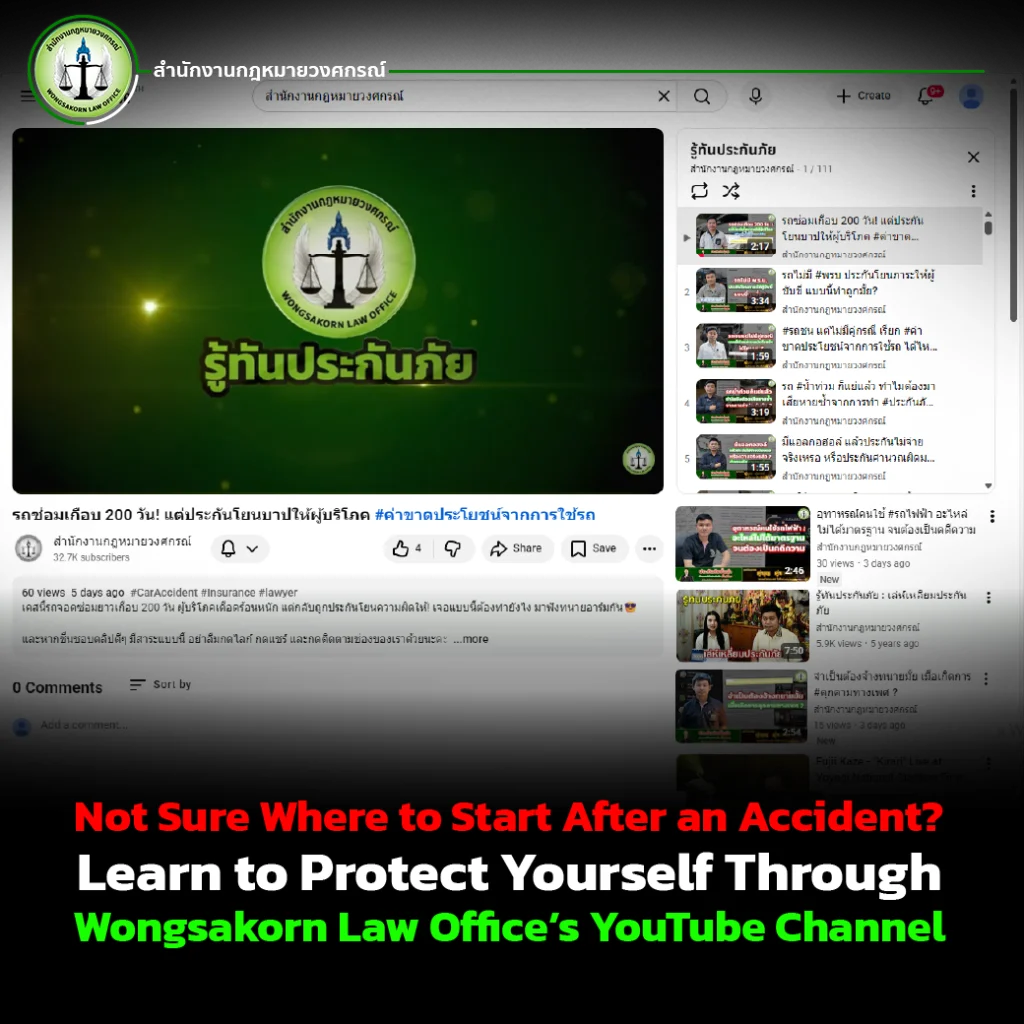
Not Sure Where to Start After an Accident? Learn to Protect Yourself Through Wongsakorn Law Office’s YouTube Channel

After an accident, many people are unsure how to begin claiming loss-of-use damages, what to say to insurance companies, what documents are required, or whether the insurer’s explanations should be accepted. Numerous cases demonstrate that individuals who pursue claims on their own often face rejection, blame-shifting, or legal misinformation, ultimately giving up without fair compensation.

In truth, loss of use of a vehicle is a legally recognized right, and insurance companies cannot deny liability merely by citing long repair queues or claiming that the insured selected the repair center. The real issue is not the absence of rights, but the lack of knowledge on how to properly exercise them.

If you are unsure where to begin, we recommend following Wongsakorn Law Office’s YouTube channel, which offers real case studies, legal insights, and practical strategies regarding loss-of-use claims and insurance disputes in an easy-to-understand format empowering you to stay informed and avoid being taken advantage of.

Knowing your rights, knowing the techniques, and understanding insurance practices from the very first step can make all the difference.

Why Is It Crucial to Have a Lawyer from the Start?

This case clearly demonstrates the importance of involving a lawyer immediately after damage occurs. A lawyer can:

  • Develop a compensation strategy from the outset
  • Collect evidence regarding vehicle usage and repair duration
  • Properly assess loss-of-use damages
  • Prevent unfair denial of liability by insurance companies

In contrast, many victims first attempt to handle matters themselves and only consult a lawyer after repeated denials by which time they may have already lost critical legal advantages.

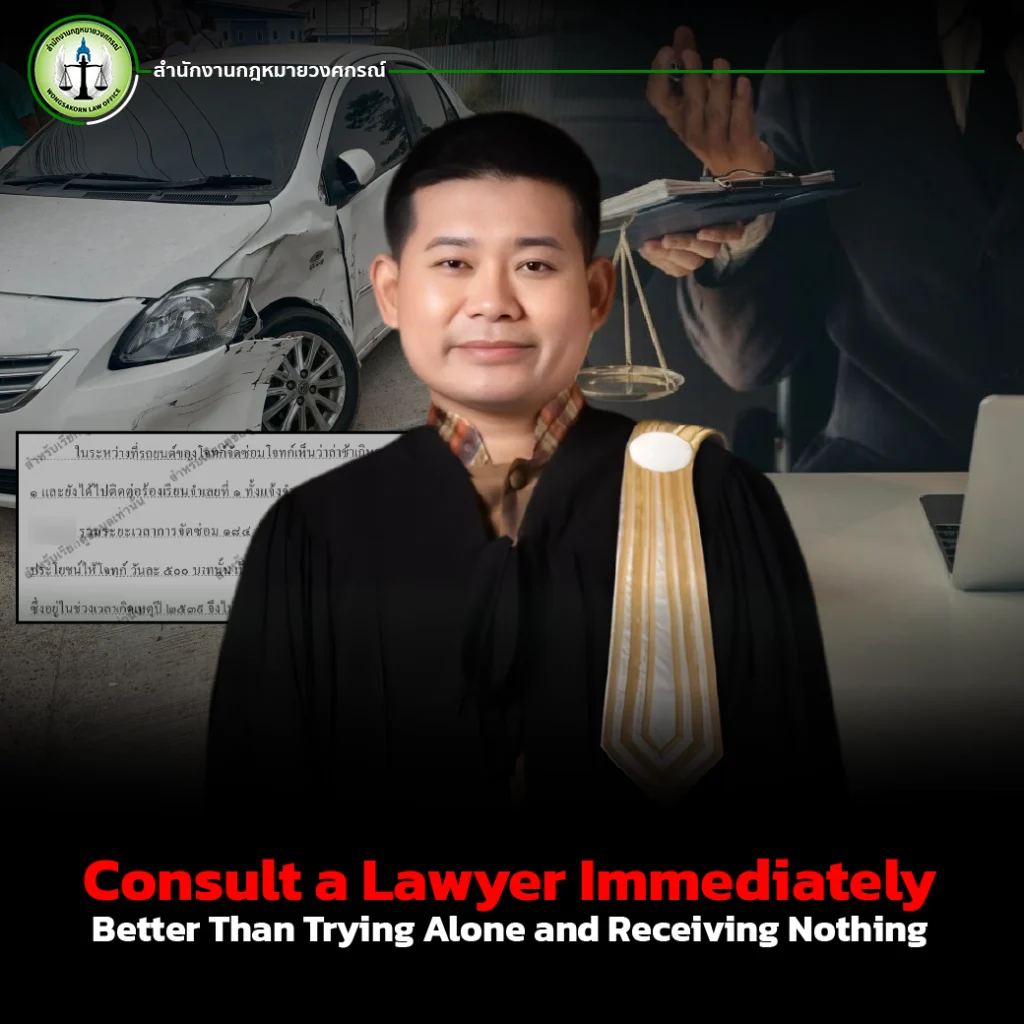
Consult a Lawyer Immediately Better Than Trying Alone and Receiving Nothing

This nearly 200-day repair case serves as a powerful reminder that victims should not bear the burden of delays and unfair treatment alone. Once damage occurs, insured persons’ rights deserve genuine protection.

If your vehicle has been in long-term repair or your loss-of-use claim has been denied, do not wait for the damage to escalate. You may consult a lawyer immediately to plan a fair, lawful, and strategic compensation claim from the very beginning. Consult a lawyer today Click “Contact Us”

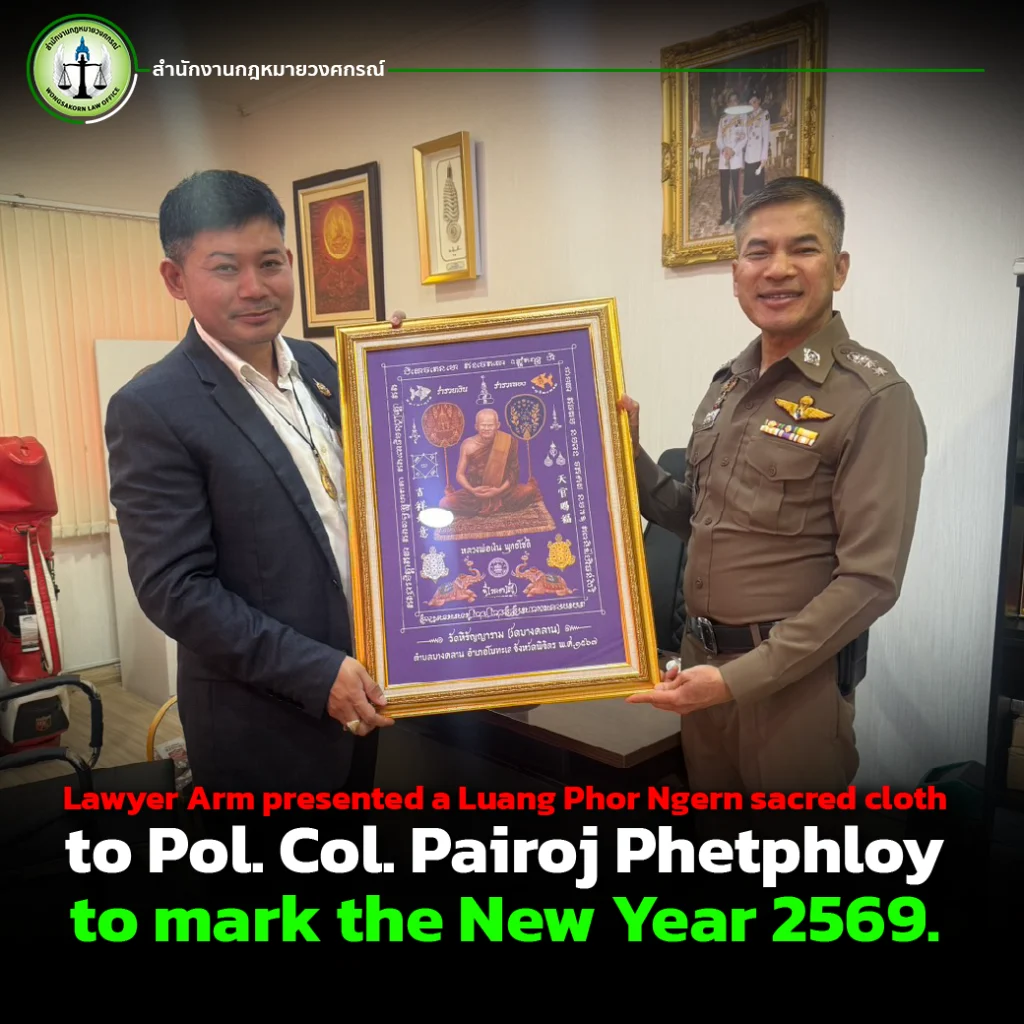
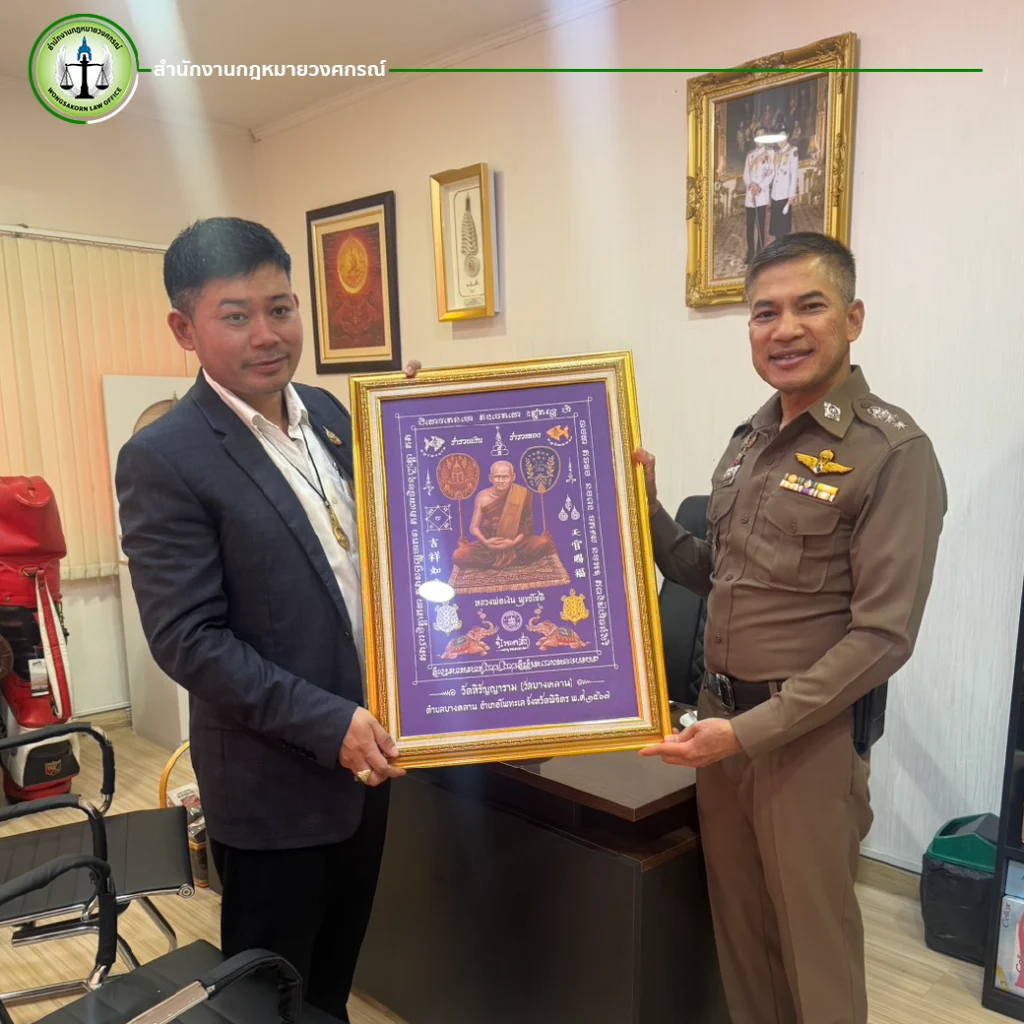
Lawyer Arm presented a Luang Phor Ngern sacred cloth to Pol. Col. Pairoj Phetphloy to mark the New Year 2026

On the occasion of the New Year of the Buddhist Era 2569, Lawyer Arm Supasit Siri presented a Luang Phor Ngern sacred cloth as an auspicious keepsake and New Year’s greeting to Pol. Col. Pairoj Phetphloy, Superintendent of Bang Phli Police Station, on Tuesday, 6 January 2569, as a gesture of respect and to bring auspiciousness at the beginning of the new year.

During the meeting, Lawyer Arm expressed his sincere appreciation to the Superintendent for the goodwill and continued support, reflecting a strong friendship and constructive cooperation in working together.

The Luang Phor Ngern sacred cloth, a highly revered auspicious object, was presented with good intentions to convey blessings for prosperity, good health, and success in duty throughout the new year, serving as a symbol of mutual respect and care.

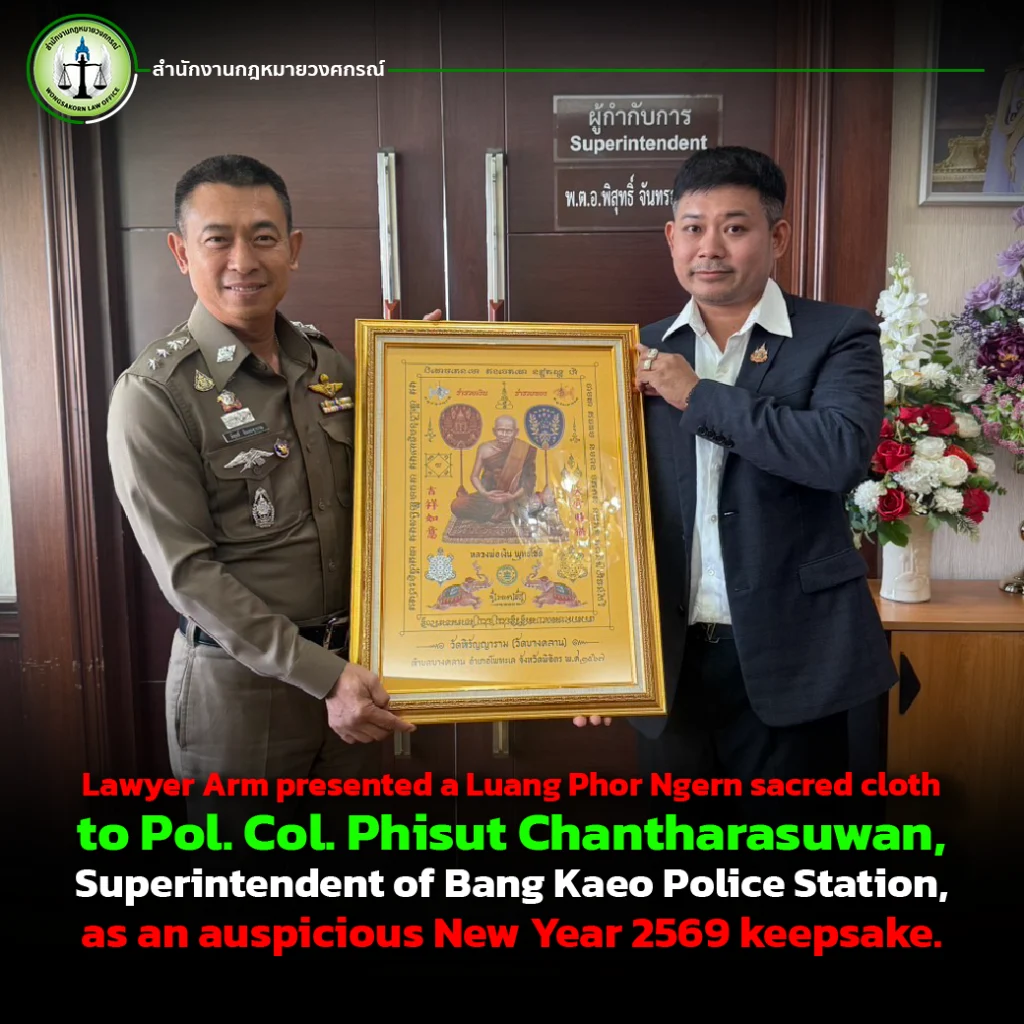
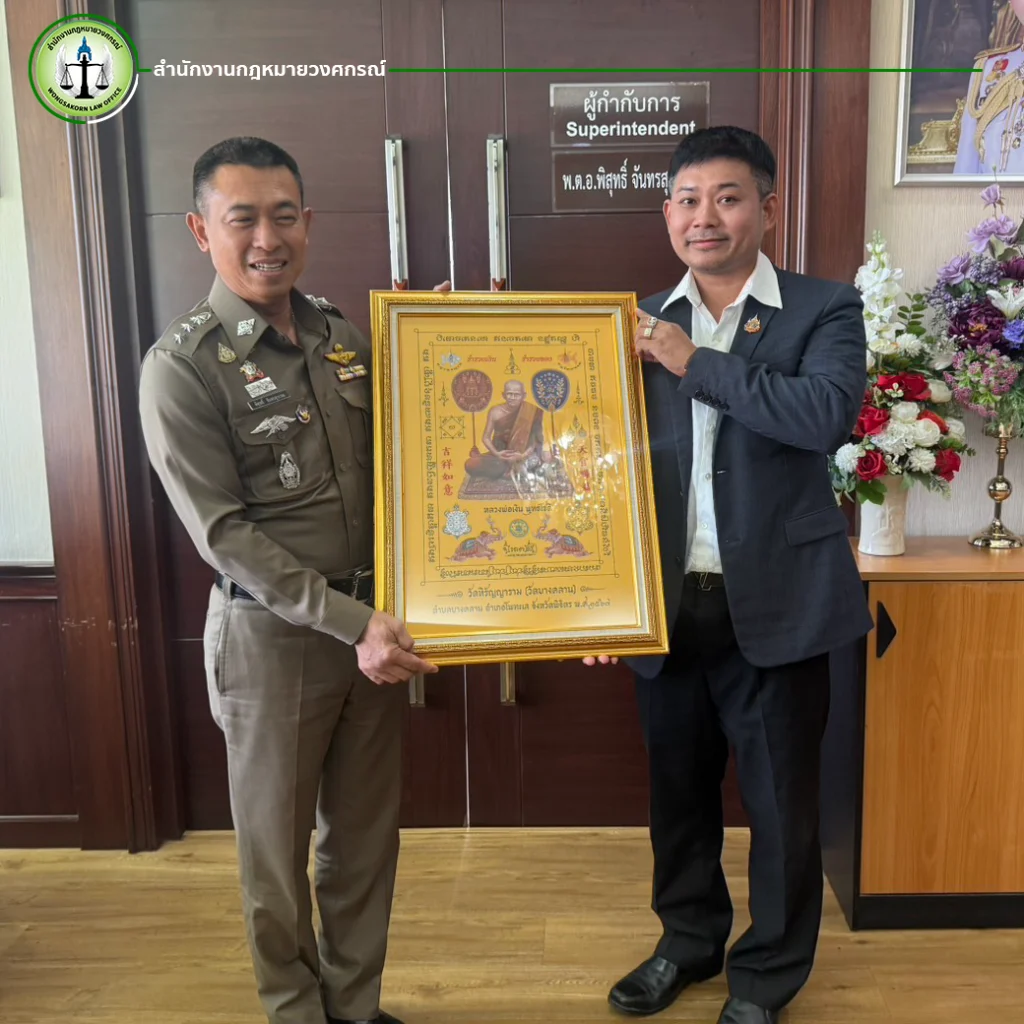
Lawyer Arm presented a Luang Phor Ngern sacred cloth to Pol. Col. Phisut Chantharasuwan, Superintendent of Bang Kaeo Police Station, as an auspicious New Year 2569 keepsake.

On Tuesday, 6 January 2569, on the occasion of the New Year of the Buddhist Era 2569, Lawyer Arm Supasit Siri presented a Luang Phor Ngern sacred cloth as an auspicious keepsake and New Year’s greeting to Pol. Col. Phisut Chantharasuwan, Superintendent of Bang Kaeo Police Station, as a gesture of respect and to invoke auspiciousness at the beginning of the new year.

The Luang Phor Ngern sacred cloth is widely revered as an auspicious object, symbolizing good fortune, prosperity, and protection from harm. This presentation therefore represented both a symbol of goodwill and mutual respect. The atmosphere was warm and friendly, reflecting a strong working relationship for the benefit of society, and marking a positive beginning toward continued constructive cooperation throughout the year.

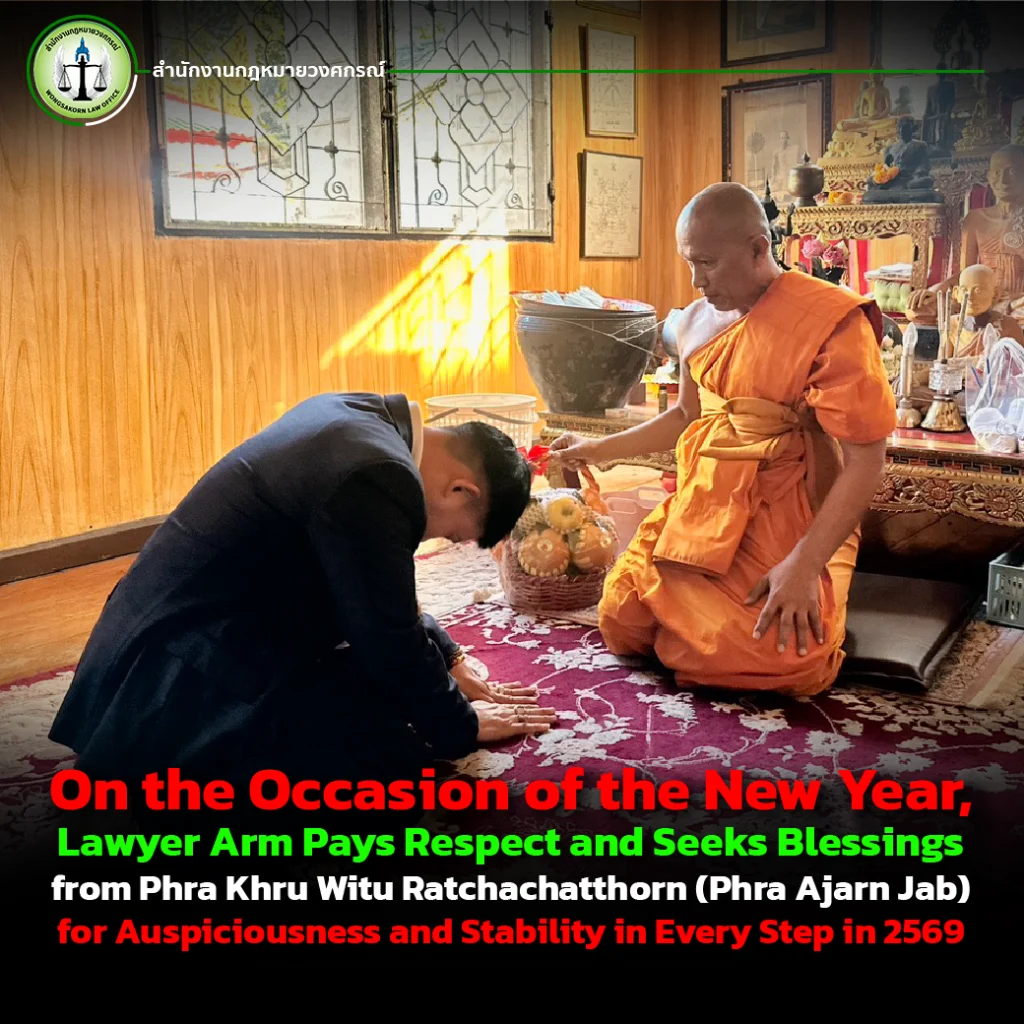
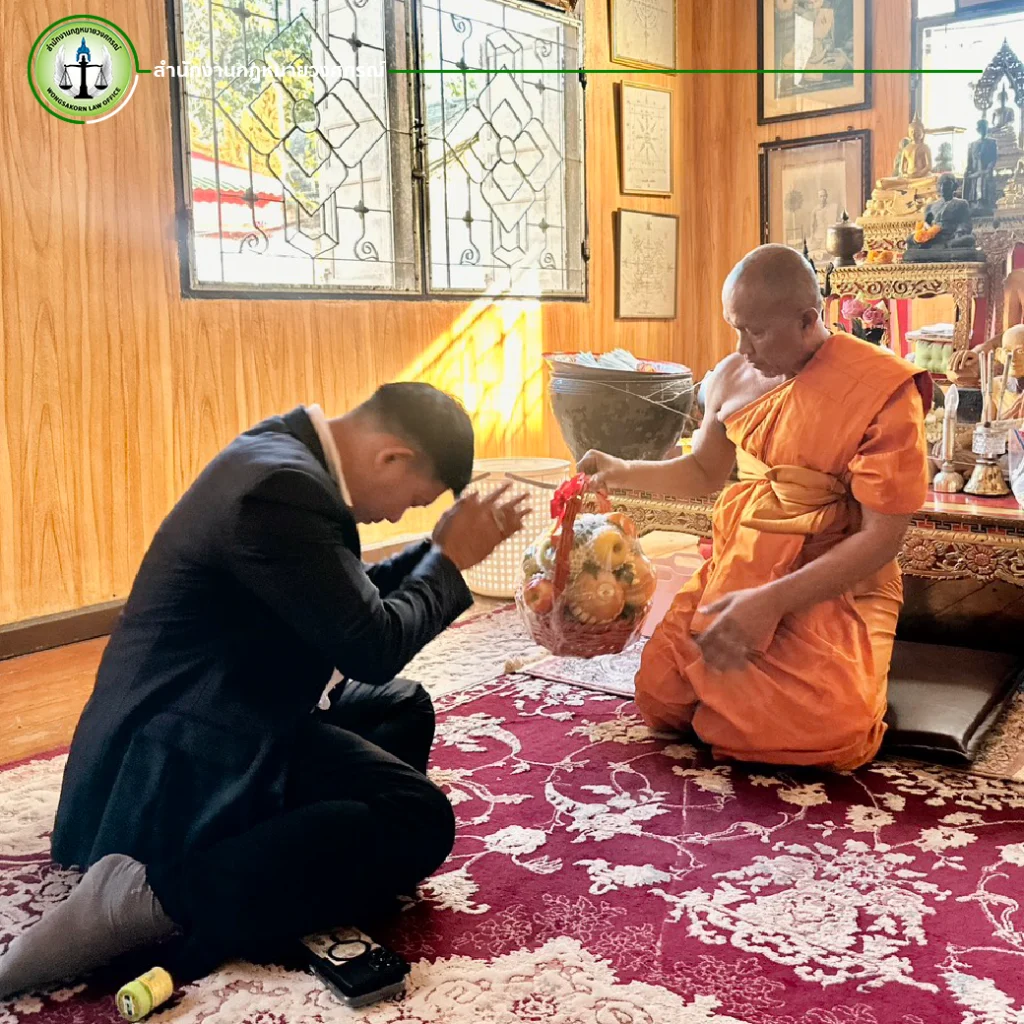
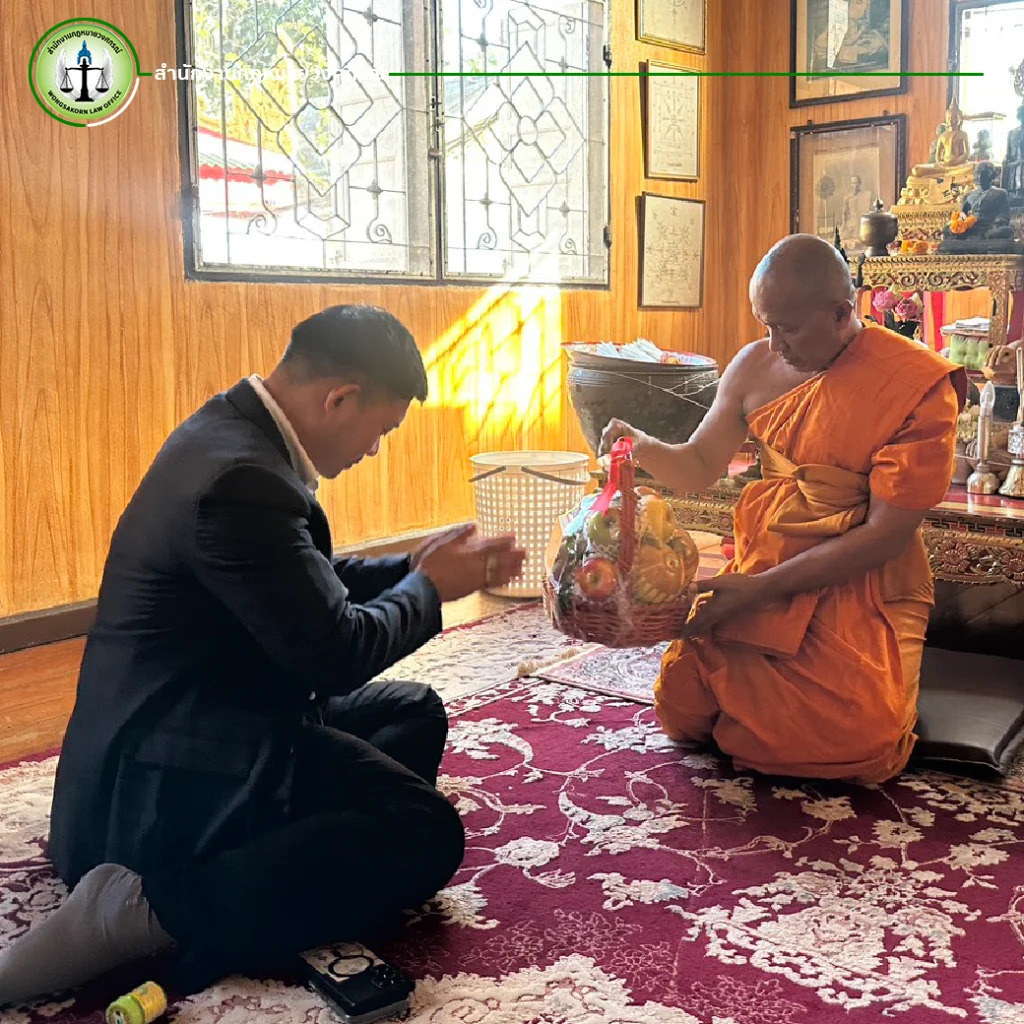
On the Occasion of the New Year, Lawyer Arm Pays Respect and Seeks Blessings from Phra Khru Witu Ratchachatthorn (Phra Ajarn Jab) for Auspiciousness and Stability in Every Step in 2569

On Tuesday, 6 January 2569 (2026), on the occasion of the New Year of the Buddhist Era 2569, Lawyer Arm Supasit Siri traveled to pay respect and seek blessings from Phra Khru Witu Ratchachatthorn (Boonlert Panyatharo, also known as Kaew Namkhang or Phra Ajarn Jab), the Abbot of Wat Nam Daeng, at Wat Nam Daeng. The visit was made to bring auspiciousness to his life and professional endeavors in the New Year.

With sincere faith, Lawyer Arm offered prayers for happiness, progress, and prosperity in the coming year, particularly in his career, finances, and stability in every step forward. He also received blessings and compassionate teachings from Phra Khru Witu Ratchachatthorn.

The atmosphere within the temple was calm, simple, and filled with spiritual faith, reflecting Lawyer Arm’s intention to begin the New Year with a strong and steady mindset. He remains ready to move forward with determination, dedicating himself to creating benefits for society while living his life grounded in moral values throughout the year 2026.

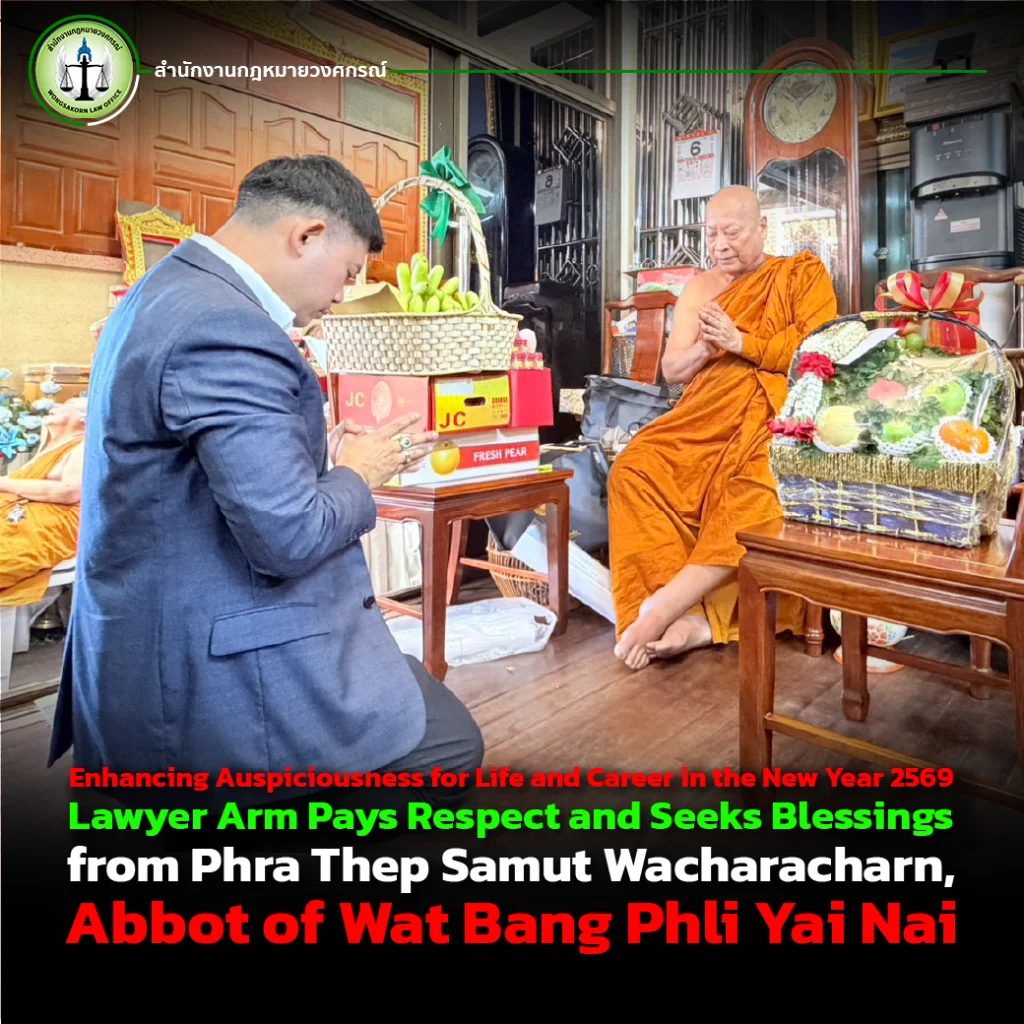
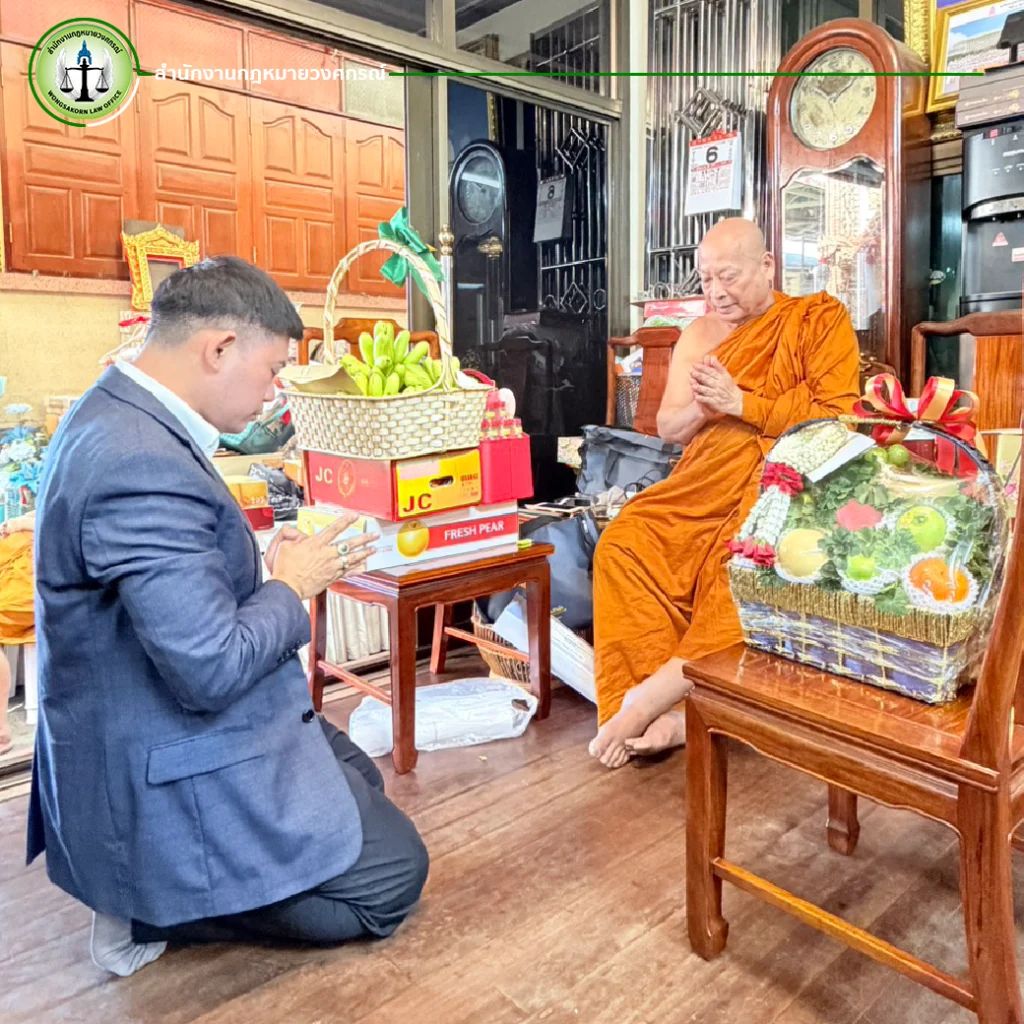
Enhancing Auspiciousness for Life and Career in the New Year 2026 : Lawyer Arm Pays Respect and Seeks Blessings from Phra Thep Samut Wacharacharn, Abbot of Wat Bang Phli Yai Nai

On Tuesday, 6 January 2569 (2026), on the occasion of the New Year of the Buddhist Era 2569, Lawyer Arm Supasit Siri traveled to pay respect and seek blessings from Phra Thep Samut Wacharacharn (Charan Siridhammo), Abbot of Wat Bang Phli Yai Nai, a Royal Temple, and the Ecclesiastical Governor of Samut Prakan Province, in order to bring auspiciousness to his life and professional duties.

With deep respect and faith, Lawyer Arm offered prayers and received blessings and compassionate teachings from Phra Thep Samut Wacharacharn. These teachings serve as important guidance for living one’s life with honesty, integrity, and a strong commitment to moral values.

The atmosphere was calm, simple, and filled with spiritual faith, reflecting Lawyer Arm’s intention to begin the New Year with a stable and focused mind. He remains determined to carry out his responsibilities with dedication and accountability, striving to create meaningful benefits for society and the public to the fullest extent throughout the New Year.

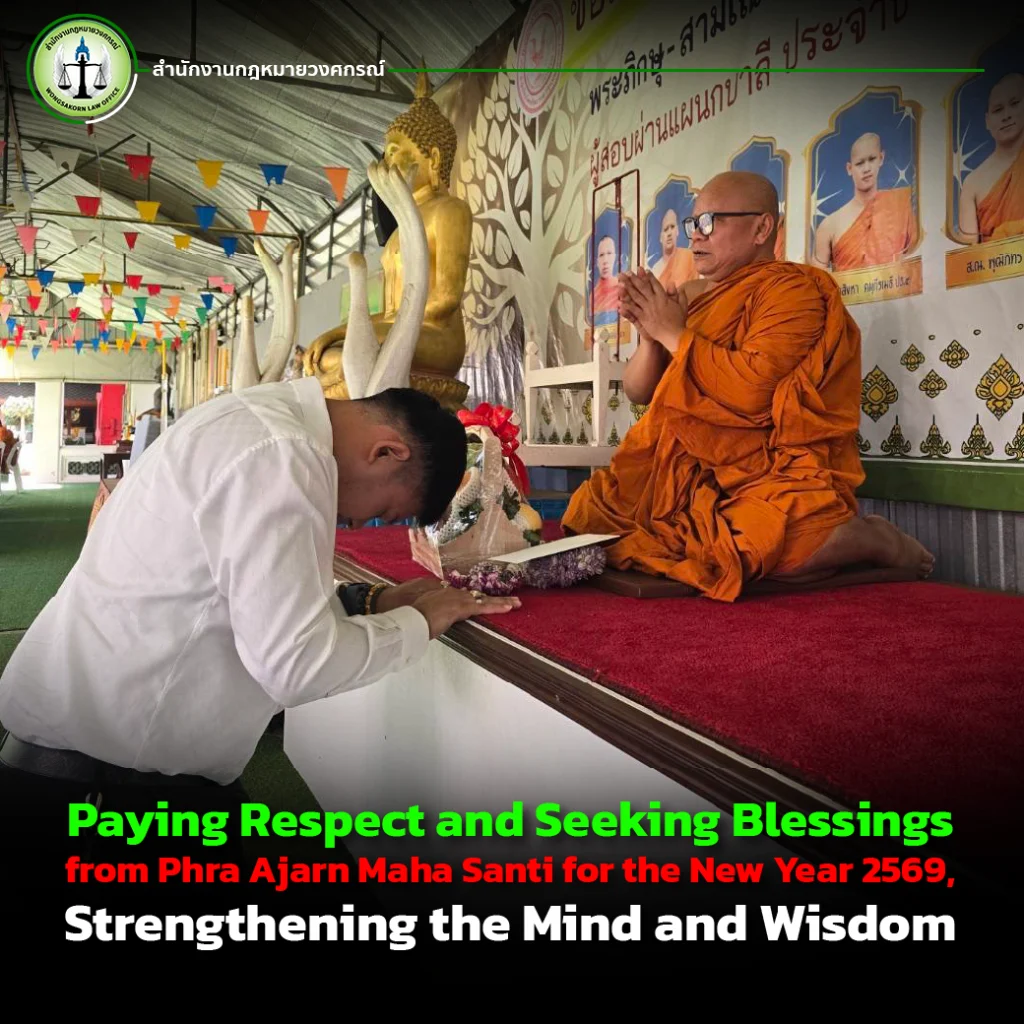
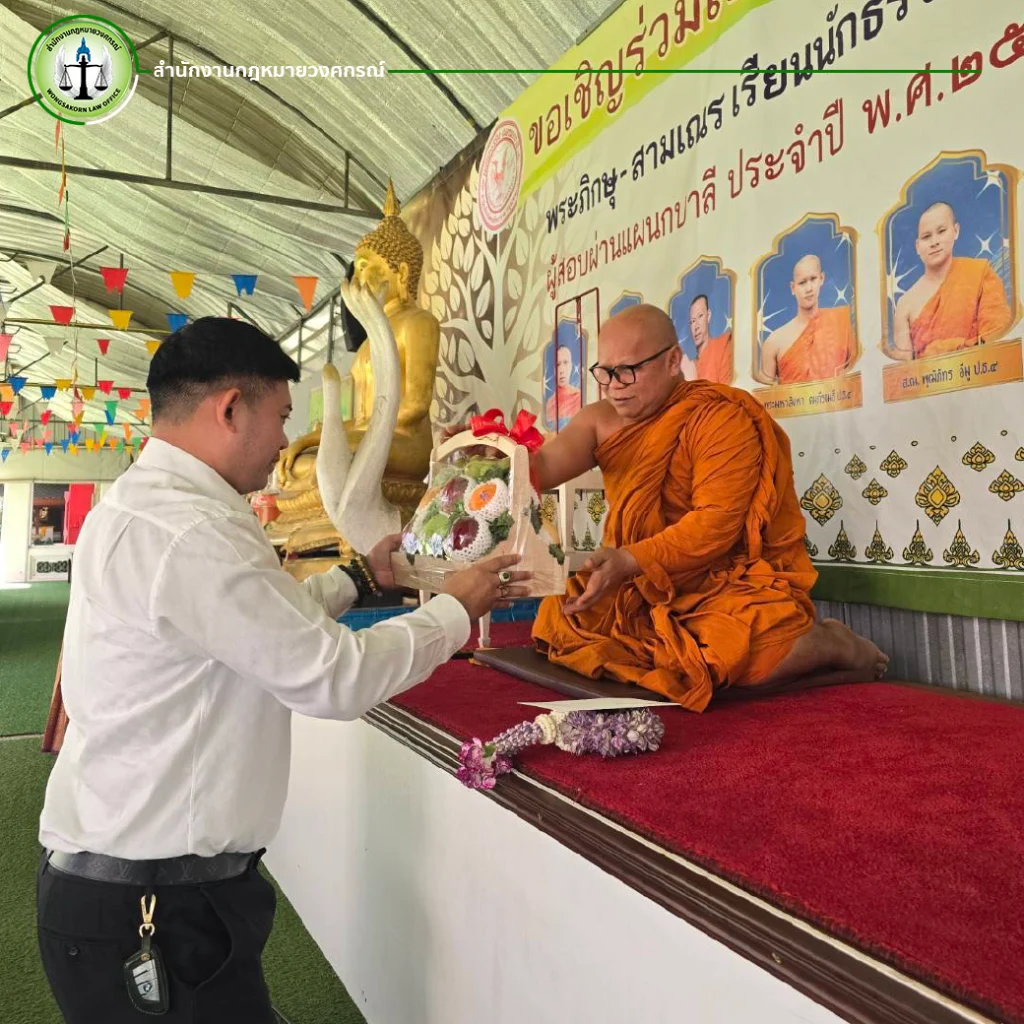
Paying Respect and Seeking Blessings from Phra Ajarn Maha Santi for the New Year 2026, Strengthening the Mind and Wisdom

On the occasion of the New Year of the Buddhist Era 2569, Lawyer Arm Supasit Siri traveled to pay respect and seek blessings from Phra Ajarn Maha Santi Yanamethi, the principal instructor of the monastic education center at Hong Rattanaram Temple, a holder of the highest level of Pali studies (Parian 9), and Assistant Abbot of Hong Rattanaram Ratchaworawihan Temple. The visit was made to bring auspiciousness to his life and professional duties at Hong Rattanaram Ratchaworawihan Temple on Tuesday, 6 January 2569 (2026).

With deep respect and faith, Lawyer Arm offered prayers and received compassionate teachings from Phra Ajarn Maha Santi. These teachings serve as important guiding principles for living one’s life with mindfulness, wisdom, and integrity.

The atmosphere was calm, simple, and filled with spiritual faith, reflecting Lawyer Arm’s intention to begin the New Year with a stable and focused mind. He remains committed to upholding moral values and righteousness, and to dedicating himself fully to serving society and the public throughout the year 2026

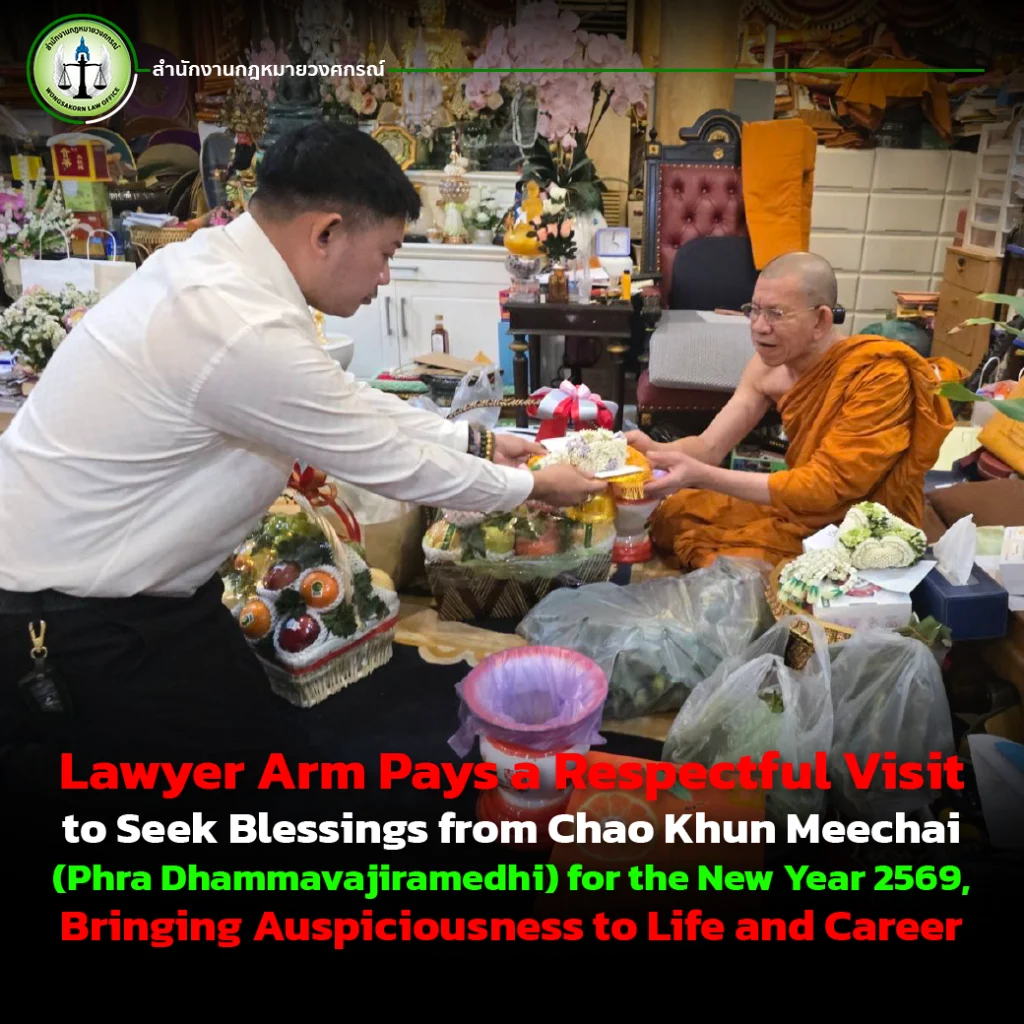
Lawyer Arm Pays a Respectful Visit to Seek Blessings from Chao Khun Meechai (Phra Dhammavajiramedhi) for the New Year 2569, Bringing Auspiciousness to Life and Career

On Tuesday, 6 January 2569 (2026), on the occasion of the New Year of the Buddhist Era 2569, Lawyer Arm Supasit Siri traveled to Hong Rattanaram Ratchaworawihan Temple to respectfully pay homage and seek blessings from Chao Khun Meechai (Phra Dhammavajiramedhi). He is a senior monk who has made significant contributions to Buddhism and currently serves as the Abbot of Hong Rattanaram Ratchaworawihan Temple, as well as the Ecclesiastical Regional Governor of Region 1, in order to bring auspiciousness to his life and professional career.

With deep respect and faith, Lawyer Arm offered prayers and received compassionate teachings and guidance from Chao Khun Meechai. These teachings are regarded as valuable principles for living one’s life and practicing the legal profession with honesty, integrity, and steadfast adherence to moral and ethical values.

The atmosphere was calm and filled with spiritual faith, reflecting Lawyer Arm’s sincere intention to begin the New Year with determination and commitment. He remains dedicated to continuing his mission of serving society and the public to the best of his abilities, while moving forward on the path of righteousness, justice, and virtue throughout the year 2026.

Line @ คลิก! โทรหาเรา คลิก!