Iti Piso Ratanamala With deep faith in Buddhism and belief in the sacred power of the Triple Gem (the Buddha, the Dhamma, and the Sangha), on February 8, 2026, Mr. Supasit Siri (Lawyer Arm) invited a group of monks from Wat Suthat Thepwararam Ratchaworamahawihan to conduct the chanting ceremony of “Iti Piso Ratanamala” for 108 recitations at Wongsakorn Law Office. The ceremony was held to bring auspiciousness, prosperity, and good fortune to the organization for the year 2026. The ceremony was graciously led by Phra Maha Somchai Mahapanno, Phra Khru Sri Wachirawong, Phra Maha Naratha Vijito, Phra Maha Atthasiddhi Aggasiddhi, and Phra Maha Phakphum Vimokkha-cinno, who jointly performed the sacred chanting.
The chanting of Iti Piso Ratanamala 108 times is regarded as an important Buddhist prayer that fully praises the virtues of the Buddha, the Dhamma, and the Sangha. It symbolizes the invocation of the protective power of the Triple Gem to safeguard both life and work, guiding all undertakings toward smoothness and success. This sacred chant is believed to embody the power of loving-kindness, peace, and wisdom, strengthening the mind to face obstacles with mindfulness and prudence.
In addition to the chanting ceremony, the event was further blessed by the compassionate presence of Phra Khru Withurakit Jathorn (Boonlert Panyatharo Kaewnarmkhang), also known as Ajarn Jab, the abbot of Wat Nam Daeng, who presided over the ritual by sitting in meditation and offering prayers of blessing. His participation symbolized the unification of faith and purity of mind, dedicating merit to bring peace and well-being to all participants and to the premises of the law office.
Such Buddhist ceremonies are not merely traditional rituals but also serve to cultivate moral values and inner peace among those involved. This is especially significant in the legal profession, which requires careful judgment, fairness, and wisdom as guiding principles. Beginning the year with chanting and prayer represents a commitment to righteousness and to conducting professional duties in accordance with moral and ethical principles throughout the year.
The importance of chanting Iti Piso Ratanamala 108 times also lies in fostering positive energy at both the individual and organizational levels. When the mind is calm and filled with faith, it naturally leads to unity, confidence, and strength in facing the changes and challenges of the outside world. This reflects a harmonious integration of spiritual practice with daily life and professional work.
Therefore, this chanting ceremony was not only an occasion to bestow auspicious blessings upon Wongsakorn Law Office for the year 2026, but also a reaffirmation of the enduring value of Buddhism as a source of spiritual support and a foundation of stability in both inner life and organizational development. For when the mind abides in the Dhamma, work proceeds with righteousness, and lasting success arises sustainably in the long term.
In recent years, Thailand has remained one of the most attractive destinations for real estate investment for both Thai and foreign investors. This is due to various factors such as economic stability, tourism potential, quality of life, and relatively reasonable investment costs compared to many countries in the region.
However, although real estate in Thailand is highly attractive, for foreigners who wish to purchase property either for investment purposes or for personal residence, having a correct understanding of Thai law and consulting a lawyer before making a purchase decision is extremely important. Even a small legal mistake can turn an investment into long-term legal risk.
Why Is Real Estate in Thailand Attractive for Investment?
Thailand continues to draw strong interest from both domestic and international investors in the real estate sector due to several factors that support long-term asset value growth. These include its strategic geographic location, tourism potential, government infrastructure development, and competitive investment costs compared to developed countries in Asia.
From an economic and business perspective, real estate in Thailand is not only a form of housing but also an investment asset capable of generating returns through both capital appreciation and rental income, particularly in major cities and key tourist destinations.
The main factors that make real estate in Thailand attractive to investors can be summarized as follows:
1. Competitive Prices Compared to Other Countries
Real estate prices in Thailand, especially condominiums in Bangkok and major tourist cities such as Phuket, Chiang Mai, and Pattaya, remain significantly lower than those in many large Asian cities such as Singapore, Hong Kong, or Tokyo. This creates strong opportunities for long-term returns on investment.
2. Tourism and Rental Potential
Thailand is one of the world’s leading tourist destinations. As a result, condominiums and vacation homes are easy to rent out, both for short-term and long-term stays.
3. Infrastructure Development and Urban Growth
New mass transit systems, airports, and infrastructure projects continue to increase property values in many areas across the country.
4. Stability of the Real Estate Market
Despite economic fluctuations, real estate remains a relatively stable asset and suitable for long-term ownership.
Can Foreigners Purchase Real Estate in Thailand?
Under Thai law, foreigners are not permitted to own land directly. However, they may purchase property in forms permitted by law, such as:
Purchasing condominium units up to 49% of the total saleable area of the building
Leasing land or houses under long-term lease agreements (Leasehold) for up to 30 years, with renewal options subject to contract terms
Purchasing through a company registered in Thailand (with caution regarding nominee structures)
These legal limitations are critical issues that foreigners must clearly understand before investing in real estate in Thailand.
What Should Foreigners Know Before Buying Property in Thailand?
1. Ownership Structure
Foreign buyers must verify whether the property can be legally owned and whether it is Freehold or Leasehold, and ensure that the ownership structure complies with Thai law.
2. Source of Investment Funds
Thai law requires that funds used to purchase condominiums be transferred from abroad in foreign currency and supported by bank documentation (Foreign Exchange Transaction Form).
3. Land and Building Title Documents
Buyers must verify land title deeds, construction permits, subdivision approvals, and the legal status of the project.
4. Legal Encumbrances
Such as mortgages, leases, seizures, or unresolved legal disputes.
5. Taxes and Fees
Including transfer fees, withholding tax, stamp duty, or specific business tax.
Why Is Consulting a Lawyer Before Buying Real Estate Important?
Purchasing real estate is not merely a matter of price negotiation and ownership transfer; it is a complex legal process involving many legal details. If foreigners do not understand the Thai legal system, they may face risks such as:
Purchasing property that cannot be legally registered
Signing unfair or invalid contracts
Transferring funds without adequate legal protection
Being deceived or unknowingly engaging in nominee ownership structures
A lawyer can assist in critical areas such as:
1. Conducting legal due diligence on the property
2. Drafting and reviewing sale and purchase agreements in compliance with Thai law
3. Advising on lawful ownership structures for foreign buyers
4. Assessing legal risks and future legal consequences
5. Handling ownership transfer procedures and tax matters comprehensively
Why Are Lawyers Essential to Real Estate Investment in Thailand?
Real estate investment is a long-term investment involving significant capital. Making decisions without legal consultation may lead to serious consequences that are difficult to resolve later, such as revocation of ownership rights or future legal disputes.
A lawyer’s role extends beyond document review. Lawyers provide strategic legal planning to ensure that property purchases are lawful, secure, and aligned with the buyer’s objectives, whether for personal residence or investment purposes.
Lawyers = The Key to Secure Real Estate Investment in Thailand for Foreigners
Real estate in Thailand remains a highly promising investment opportunity for both Thai and foreign investors. However, for foreigners, understanding Thai law and proper legal procedures is the foundation of successful investment.
Consulting a lawyer before purchasing real estate is not an unnecessary expense; it is a long-term investment in legal security. It reduces risks, prevents costly mistakes, and builds confidence that property ownership in Thailand will be lawful and stable.
Because real estate is not merely property it is the foundation of life and investment. Having a lawyer who understands both Thai law and the specific circumstances of foreign buyers is the key to success in Thailand’s real estate market.
In today’s world, when legal problems arise whether civil cases, criminal cases, business issues, or everyday legal disputes the first thing many people do is search online for “lawyer near me” to find a law firm that can provide fast, accurate, and reliable legal advice.
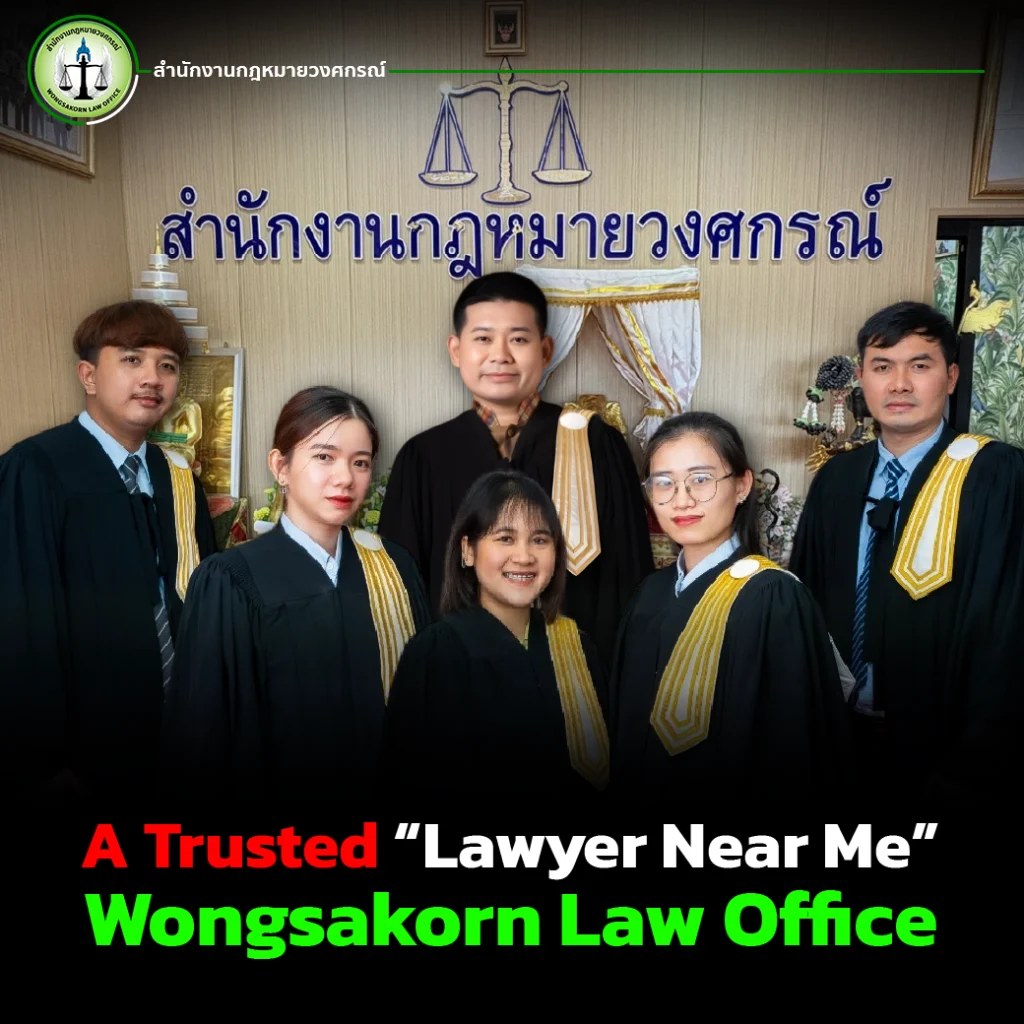
However, choosing a lawyer should not depend solely on distance. It is essential to consider expertise, experience, and dedication to protecting the client’s best interests. Wongsakorn Law Office is one of the law firms trusted by both Thai and international clients as a full-service legal provider operating with professional standards and integrity.
Why Is “Lawyer Near Me” Important?
Having a lawyer who is easily accessible is a crucial factor in resolving legal issues promptly, as many situations require urgent legal guidance, such as:
Receiving a summons or arrest warrant
Being sued in court
Drafting or reviewing business contracts
Being defrauded or having one’s rights violated
Family and inheritance disputes
Searching for “lawyer near me” is a good starting point. However, what matters more is selecting a law firm with strong legal knowledge and the ability to develop appropriate legal strategies for each individual case.
Wongsakorn Law Office focuses on providing accessible services, clear communication, and close client support at every stage of the legal process.
Wongsakorn Law Office: Expertise Beyond Just “Lawyer Near Me”
Wongsakorn Law Office offers comprehensive legal services through a team of experienced lawyers in various fields, including:
Whether clients are individuals, companies, organizations, or entrepreneurs, Wongsakorn Law Office provides in-depth legal advice tailored to each situation not only answering legal questions but also assessing risks and proposing strategic solutions.
Service Standards Focused on Client Understanding
One of the key strengths of Wongsakorn Law Office is its emphasis on clear, simple, and transparent communication with clients. Legal issues often create stress and uncertainty, so the firm adheres to the following principles:
1. Listening carefully to understand facts and client needs
2. Explaining the law in simple and understandable language
3. Proposing realistic solutions with honest risk assessments
4. Strictly maintaining client confidentiality in accordance with professional ethics
These principles make Wongsakorn Law Office not only a “lawyer near me” in terms of location but also a “trusted legal advisor close to your heart.”
Serving Both Domestic and International Clients
Wongsakorn Law Office currently serves both Thai and foreign clients, particularly in the areas of:
Providing services at an international level allows the firm to understand both Thai law and international legal standards, which is a significant advantage for clients seeking a “lawyer near me” while dealing with international legal matters.
“Lawyer Near Me” for Businesses and Organizations
In addition to litigation services, Wongsakorn Law Office also acts as a legal advisor for companies, helping organizations conduct business lawfully and reduce future legal risks.
For entrepreneurs searching for “lawyer near me” to support their business on an ongoing basis, Wongsakorn Law Office is a reliable choice offering both expertise and convenience.
A Trusted “Lawyer Near Me”: Wongsakorn Law Office
Searching for “lawyer near me” may begin with an urgent legal need, but choosing the right law firm means selecting a long-term partner to protect your rights and interests.
Wongsakorn Law Office is committed to providing legal services with honesty, transparency, and a client-centered approach whether for personal cases, business matters, or corporate legal advisory services.
If you are looking for a “lawyer near me” with knowledge, experience, and a true understanding of client concerns, Wongsakorn Law Office is ready to be your legal advisor and service provider in every situation.
Because legal problems should not wait, and having a trusted lawyer nearby is the first step toward confidence and legal security in both life and business.
Looking for a lawyer near you? Click >> Contact Us<<
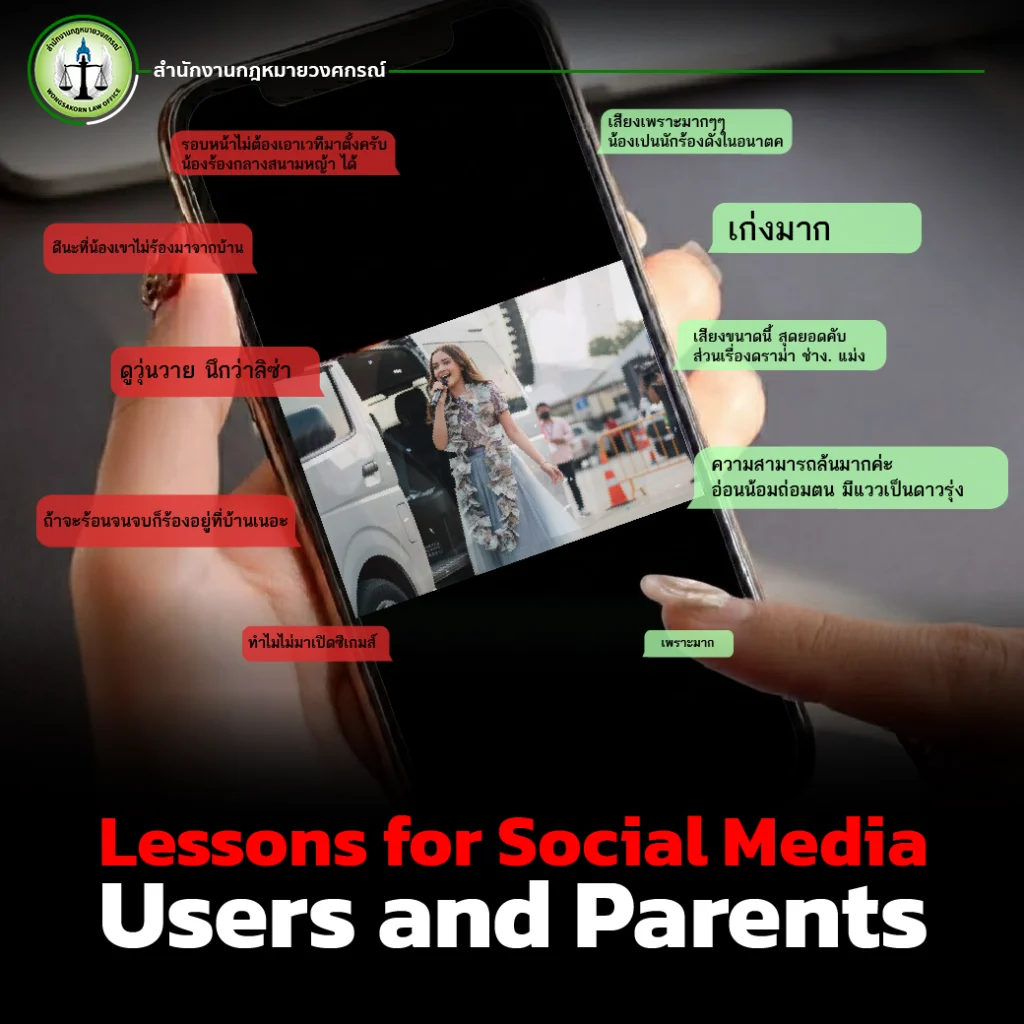
In the era where social media has become a public space, a single video clip or image can spread rapidly, leading to parody, criticism, or excessive comments. This case example reflects that “content” does not end with view counts; it can affect a person’s rights, dignity, and mental well-being, especially when the person mentioned is a minor. Legal responsibility must therefore be considered carefully.
Parody and Social Media Comments: Freedom with Boundaries
expression turns into insults, mockery, harassment, or distortion of facts causing harm to others, the person responsible may face legal consequences. This includes comments, messages, laughter reactions, edited images, or reposts with misleading captions.
In the context of minors, laws and legal practices often provide special protection. Using images, audio, or video clips without considering potential impact may constitute a violation of personal rights and may lead to multiple layers of legal liability.
Copyright Law Fundamentals: How Much Can You Use Other People’s Clips?
Copyright law protects copyrighted works such as videos, audio, music, and motion pictures. Rights holders have authority to allow or prohibit reproduction, modification, or redistribution. Editing someone else’s clip, adding effects, captions, or using it as a base for parody beyond legal limits may constitute copyright infringement.
Even if claimed to be for criticism or public interest, usage must be “necessary and reasonable,” must not cause excessive damage to the rights holder, and must not distort the core meaning. Using content to create humor from someone else’s suffering, especially involving children, is often a high-risk legal area.
Parody and the Legal Boundary
Viral trends often lead to parody content, such as copying dances or imitating gestures from original clips. In some countries, parody for entertainment may fall under “Fair Use.” However, if parody results in degradation, humiliation, or bullying that causes harm, social media platforms usually enforce strict community guidelines and safety policies to protect minors.
Public voices calling for protection of children reflect the vulnerability of minors in the online world. Legally, protection of children’s rights is considered more important than unrestricted freedom of expression.
Legal Liability Goes Beyond Copyright
Besides copyright issues, parody or comments may also involve other laws such as personal rights violations, defamation, online harassment, or actions affecting child welfare. Those who think they are “just joking” or “just sharing” should not ignore these risks.
In practice, liability may arise for content creators, editors, reposting users, and even commenters if their actions contribute to damage. Legal risk assessment should be done before every post.
Lessons for Social Media Users and Parents
This case highlights at least three important lessons:
• Social media users should ask whether their content respects the rights and dignity of others. • Parents should be aware of their children’s digital footprint and be prepared to respond to online harassment or unauthorized use of content. • Brands and pages should have responsible comment moderation and content usage policies. Virality should not come at the cost of legal and ethical risks.
When Your Rights Are Violated? Consult a Lawyer Early
If your clip or image is used without permission, if you are mocked, or if harmful comments cause damage, systematic evidence collection, legal assessment, and proper communication are key. Consulting a Lawyer early helps create the right legal strategy, reduce long-term damage, and protect victims’ rights comprehensively.
Wongsakorn Law Office provides consultation on copyright and online media-related cases, from risk assessment and negotiation to legal proceedings. If you or your family face similar problems, consult a lawyer. Click >> Contact Us <<. Professional support is the first step you should not overlook.
In 2026, the business world no longer competes solely in terms of products and services. Competition has inevitably expanded into the areas of law and legal risk management. More and more organizations, companies, and startups are realizing that having a legal advisor is not a luxury, but an essential tool for preventing problems and ensuring long-term business stability.
Modern laws have become increasingly complex, including business law, labor law, tax law, personal data protection law (PDPA), and regulations related to online transactions. Without sufficient legal knowledge, entrepreneurs may unknowingly expose their businesses to serious risks. A legal advisor therefore acts as an “early warning system” for the organization.
Businesses in 2026 Face Greater Legal Risks Than Ever Before
In the past, many companies believed that legal problems only arose when lawsuits occurred. In reality, legal issues often begin with small matters such as:
Unclear or poorly drafted contracts
Employment practices that violate labor laws
Improper use of customer data under PDPA
Advertising that may violate consumer protection laws
These issues can escalate into serious disputes that cause financial loss and reputational damage. Having a legal advisor from the beginning allows an organization to review each step of its business operations and reduce risks before they become major problems.
A Legal Advisor Helps Build the Proper Business Structure
For new companies and startups, establishing the correct legal and business structure from the outset is crucial, including:
Company registration
Shareholding structure
Relationships among co-founders
Profit-sharing arrangements
Contracts with business partners
Without a legal advisor, businesses may rely on generic contract templates from the internet, which may not suit their actual business model and could create loopholes for future disputes.
A legal advisor can design contracts and legal structures tailored specifically to each business, rather than using standard templates that may not cover all risks.
Reducing Long-Term Litigation Costs
Many organizations mistakenly believe that hiring a legal advisor is an unnecessary expense. In reality, not having one often leads to much higher costs.
Monthly or annual legal advisory fees are usually far lower than litigation expenses. Once a lawsuit occurs, a company may suffer:
Attorney’s fees
Loss of time
Loss of business opportunities
Damage to corporate reputation
A legal advisor is therefore not a cost, but an investment in preventing future losses.
In 2026, businesses are inseparable from technology, such as:
E-commerce
Online platforms
AI and personal data
Digital marketing
Smart contracts
These activities involve specific legal risks, including personal data breaches, copyright infringement, and violations of consumer protection laws. Legal advisors must understand both the law and modern business models in order to provide accurate and practical guidance.
Enhancing Corporate Credibility
Having an in-house or dedicated legal advisor enhances an organization’s credibility in the eyes of:
Investors
Business partners
Customers
Government authorities
When an organization operates in compliance with the law, maintains clear contracts, and manages legal risks effectively, partners are more willing to collaborate and investors are more confident in providing funding.
A Legal Advisor as Support in Urgent Situations
When problems arise such as being sued, audited, requested to submit documents, or facing disputes with partners, organizations without legal advisors may make critical mistakes due to lack of legal knowledge, such as providing unnecessary information or signing unfavorable documents.
With a legal advisor, the organization can seek immediate guidance, plan an appropriate response, and minimize damage from emergency situations.
In 2026, Legal Advisors Are Strategic Business Partners
The role of legal advisors today goes beyond dispute resolution. It also includes strategic business planning, such as:
International expansion
Mergers and acquisitions
Investment planning
Long-term contracts
Risk management
A good legal advisor enables businesses to grow lawfully and sustainably.
Legal Advisors as a Business Advantage in 2026
In 2026, businesses face more legal complexity than ever before. Organizations, companies, and startups that wish to grow sustainably must include legal advisors as part of their management team, rather than waiting for problems to arise before seeking legal help.
Legal advisors help prevent risks, structure businesses properly, reduce litigation costs, and enhance organizational credibility.
In the modern business world:
“Legal knowledge is a business advantage.” and “A legal advisor is the long-term shield of your business.”
If your organization, company, or startup seeks stable growth in 2026, having a legal advisor from today is the first step toward future business security.
In today’s era of global business competition, many Thai entrepreneurs are seeking opportunities to expand their markets abroad, whether through selling products, providing services, or establishing international business partnerships. One of the most important and powerful legal tools is a “business contract,” particularly an International Commercial Agency Contract. This legal mechanism enables businesses to conduct commercial activities efficiently and securely while reducing long-term risks.
For example, a company in Thailand appointed Wongsakorn Law Office as its legal advisor and requested assistance in drafting contracts with foreign companies to expand its product market overseas. The law office adopted a legal strategy known as an “International Commercial Agency Contract,” which is a form of business contract expressly recognized under Thai law pursuant to the Civil and Commercial Code.
What Is an International Commercial Agent?
According to Section 833 of the Thai Civil and Commercial Code, a Commercial Agent refers to a person or organization whose main occupation is to conclude contracts of sale or procure customers in their own name but for the benefit of the principal.
In summary, a commercial agent is a professional in marketing and international trade who negotiates and enters into sales contracts with third parties in their own name, while the business benefits belong to the principal.
Therefore, an International Commercial Agency Contract is a form of business contract that allows entrepreneurs to expand their markets without the need to establish a branch office abroad.
Why Should Businesses Use an International Commercial Agency Contract?
Using an International Commercial Agency Contract offers several strategic advantages:
1. Business expansion without direct disclosure of the company name Businesses can conduct commercial activities through an agent without having their company name appear in every sales contract, thereby reducing reputational risks and minimizing cross-border disputes.
2. Access to professional marketing expertise Commercial agents specialize in marketing and international trade and possess knowledge of local culture, laws, and consumer behavior. This significantly increases the likelihood of business success compared to operating independently.3. The commercial agent bears direct liability to third parties Under the law, the commercial agent contracts in their own name and is directly responsible to third parties. This serves as a legal “buffer” for the principal business and helps reduce the risk of being sued directly by foreign trading partners.
Why Must a Lawyer Draft Business Contracts?
Although an International Commercial Agency Contract is a useful legal tool, an improperly drafted or legally inconsistent contract may cause serious future damage, such as disputes over remuneration, liability, trade secrets, or jurisdiction.
Having a lawyer draft a business contract is critically important for the following reasons:
To analyze the business structure in compliance with Thai and foreign laws
To clearly define the duties and liabilities of the commercial agent
To prevent tax risks and overseas litigation
To carefully stipulate termination clauses and dispute resolution mechanisms
To protect intellectual property and business confidentiality
A well-drafted contract is not merely an agreement but a preventive legal instrument.
A Well-Drafted Business Contract Is an Investment, Not an Expense
Many entrepreneurs view legal fees as costs that should be minimized. However, from a legal perspective, the cost of drafting a proper contract is often far less than the cost of litigation.
Common problems arising from contracts not prepared by legal professionals include:
Ambiguous wording
Unclear scope of authority and responsibilities
Lack of protective clauses in case of breach
Selection of unfavorable governing law and jurisdiction
These issues can lead to international disputes that require lengthy proceedings and substantial expenses.
Business Contract Drafting Services by Wongsakorn Law Office
For entrepreneurs, organizations, companies, and even startup businesses seeking to expand into foreign markets, Wongsakorn Law Office provides comprehensive business contract drafting services, especially International Commercial Agency Contracts. The services range from analyzing business structures and designing legally appropriate contracts to offering strategic legal consultation.
Whether you are a large corporation or a newly established business, having a proper contract is the foundation of long-term business stability.
An International Commercial Agency Contract is one of the key legal tools that enables businesses to expand their markets intelligently and safely. When drafted by professional lawyers, it can reduce legal risks and increase the chances of long-term business success.
For any organization, company, or startup wishing to expand its market, Wongsakorn Law Office is ready to provide contract drafting services.
Before signing any contract, consult a lawyer first. Paying legal fees is far better than paying future litigation costs resulting from unclear or poorly drafted contracts.
Because a good business contract is the long-term shield protecting your business.
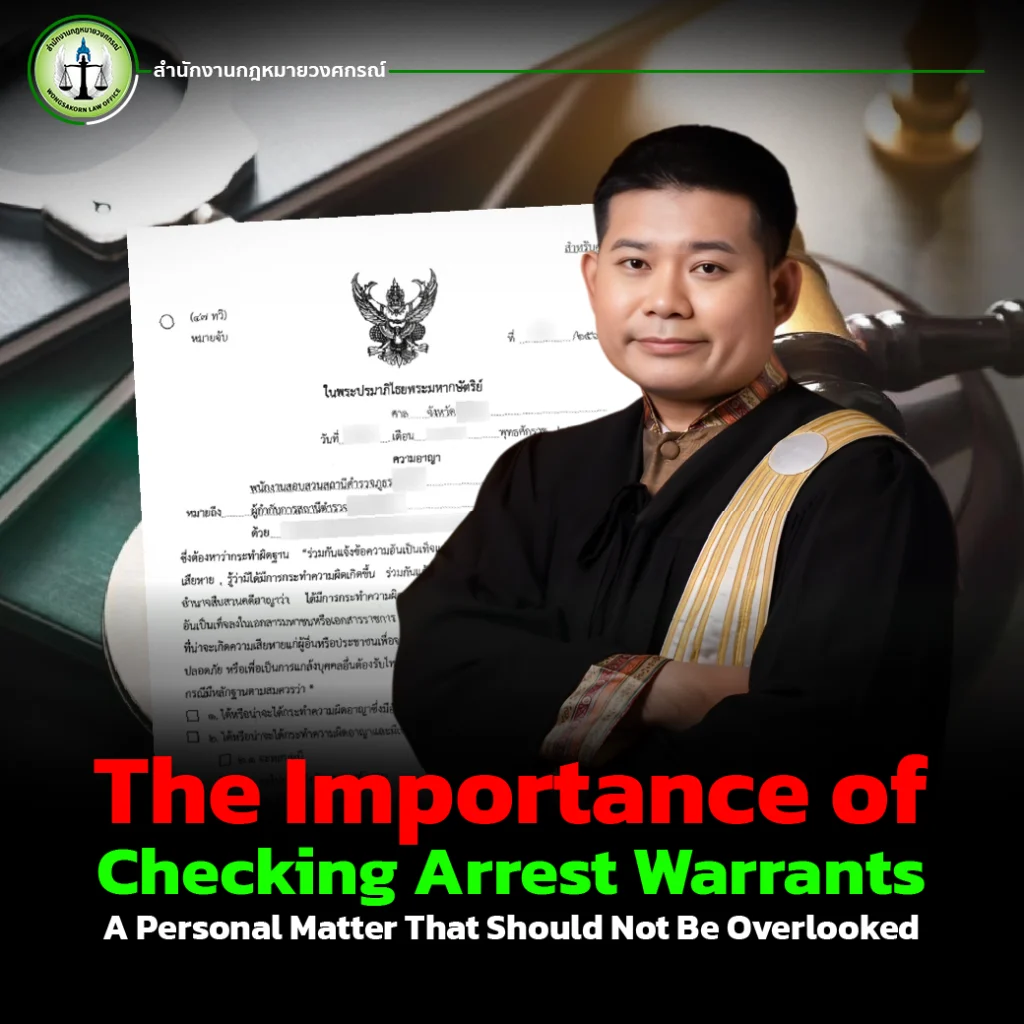
In everyday life, many people believe that an “arrest warrant” is something distant and only applies to those who have committed serious crimes. However, in reality, many cases begin with minor issues such as civil cases, dishonored checks, unpaid debts, traffic offenses, or misunderstandings. These situations can later develop into the issuance of an arrest warrant without the individual even realizing it. Therefore, checking for arrest warrants is extremely important in preventing legal problems that may affect one’s life, career, and reputation.
In many cases, individuals who are subject to arrest warrants do not intend to evade the law. Instead, they are unaware that legal proceedings exist against them for example, after changing their address and not receiving court summons, failing to appear in court as scheduled, or neglecting to follow up on their own cases. When a person fails to appear as ordered, the court may automatically issue an arrest warrant, causing that person to become a suspect or defendant without knowing it.
What Is an Arrest Warrant and How Does It Affect Daily Life?
An arrest warrant is a court order authorizing police officers to detain a person suspected of committing an offense or failing to comply with a court summons. Having even a single arrest warrant can result in serious consequences, such as being arrested anytime and anywhere at home, at work, or while traveling. It may also affect job applications, financial transactions, visa applications, and overseas travel.
Many people only discover that they have an arrest warrant when their identification is checked or when they are suddenly arrested, which can cause panic and damage both mental well-being and reputation. If arrest warrants are checked in advance, individuals can prepare themselves and plan appropriate legal actions.
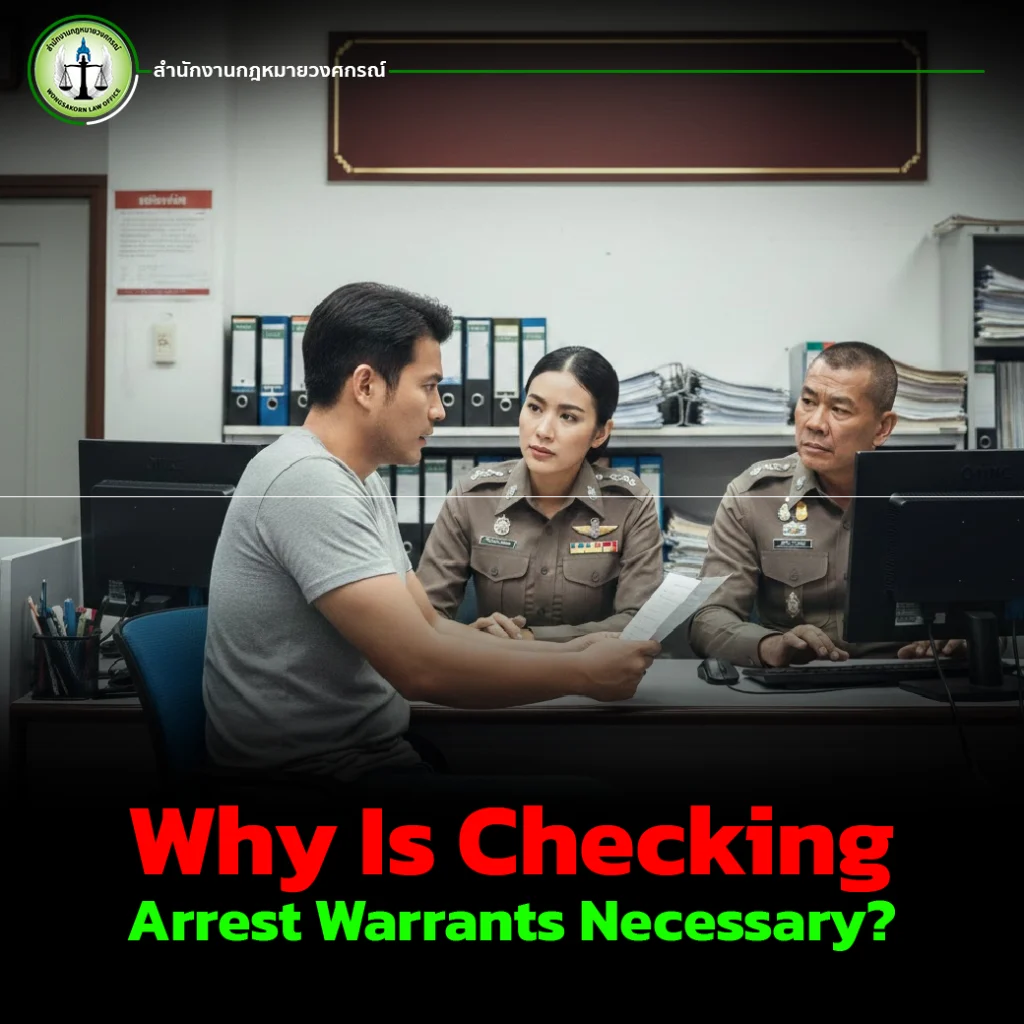
Why Is Checking Arrest Warrants Necessary?
Checking arrest warrants is not only for those who have committed crimes, but also a way to protect one’s legal security especially for those who have been involved in legal disputes, civil or criminal cases, or business conflicts. Case status checks help determine whether a case has been concluded and whether any summons or arrest warrants remain outstanding.
In today’s fast-paced society, many people neglect to follow up on their legal matters. Checking arrest warrants is like a legal health check-up. Detecting problems early allows them to be resolved before they escalate.
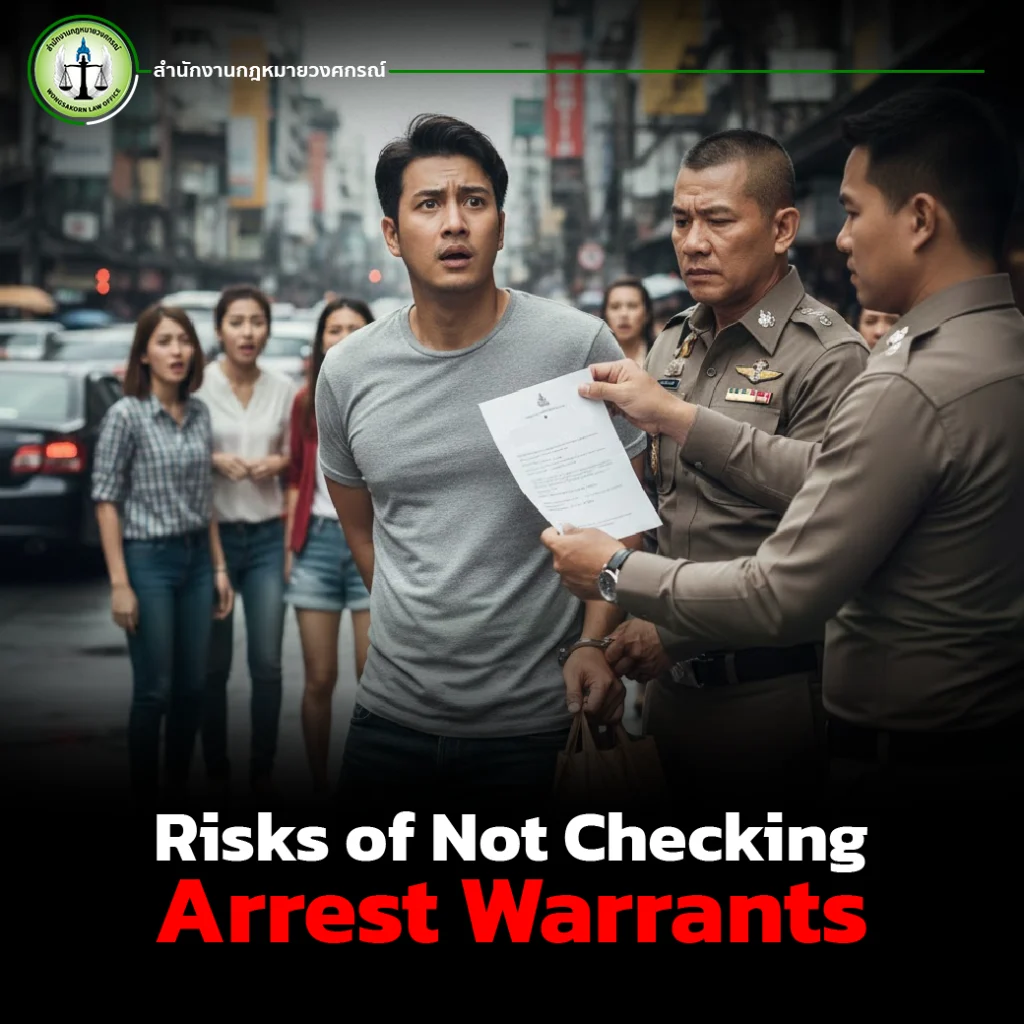
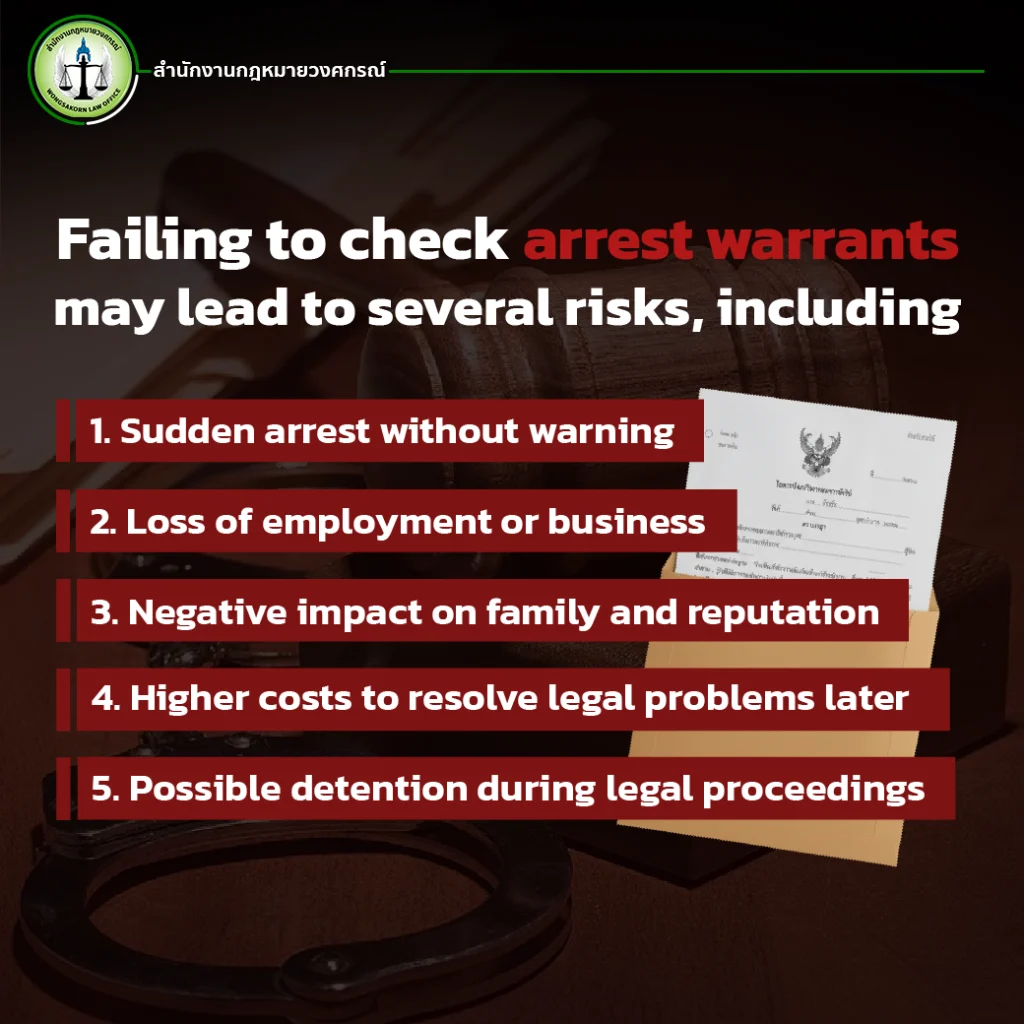
Risks of Not Checking Arrest Warrants
Many people assume that if they have not committed a serious offense, there is no need to check for arrest warrants. In reality, many legal problems do not start with major crimes but with small neglected matters such as missing court appointments, failing to receive court documents, or misunderstanding legal procedures. Over time, these issues can escalate into arrest warrants without the person’s knowledge and severely affect their life, career, and freedom.
In some cases, if checked early, individuals with arrest warrants can voluntarily meet investigators or the court with a lawyer and apply for bail properly, significantly reducing legal consequences.
Who Should Check for Arrest Warrants?
Those who should pay particular attention to checking arrest warrants include:
Individuals who have had previous legal disputes or cases
Those who received court summons but failed to attend
Business owners or company directors
Individuals planning to travel abroad
Those who frequently change their address and may not receive court documents
Checking for arrest warrants does not mean you are guilty; it is simply verifying your legal status for peace of mind and safety.
How Should Arrest Warrants Be Checked?
Arrest warrant checks should be conducted through lawful channels and preferably with legal professionals who can review all details thoroughly. Some cases are complex, such as warrants issued in other provinces or cases still under investigation. Having a lawyer conduct the check ensures correct and safe guidance.
Check First, Solve Later Is Riskier
Many people believe that “if nothing is wrong, there is no need to check.” In fact, checking arrest warrants is a form of preventive risk management similar to life or car insurance. Once legal problems arise, their impact is often greater than expected.
Knowing one’s legal status early allows better planning for life, work, and travel without fear or anxiety.
Arrest Warrant Checking Services by Wongsakorn Law Office for Your Safety
If you are unsure whether you have an arrest warrant or had previous legal cases and want clarity, Wongsakorn Law Office provides lawful arrest warrant checking services with careful and confidential legal consultation.
Checking arrest warrants today is to prevent legal problems tomorrow. Check first for maximum safety.
Wongsakorn Law Office is ready to protect your rights and legal security with professional care.
In recent years, the term Nominee has been increasingly discussed in the fields of business and law, especially in cases involving shareholding on behalf of others or concealing the true controlling person of a company. Many people who have never been directly involved in business are shocked and confused when they receive a “Nominee Summons” from an investigator, wondering how they became involved in such a case.
The most important thing to understand is that being summoned as a Nominee is not the end of your life, nor is it as frightening as many people think. If you clearly understand your legal status and take appropriate action from the beginning, the issue can be properly handled under the law.
What is a Nominee?
Legally, a Nominee refers to a person who allows another person to use their name as a shareholder, director, or authorized person of a business, instead of the true owner. This is commonly found where the beneficial owner cannot legally hold shares or operate the business directly, such as in cases involving foreign ownership restrictions.
In simple terms, a Nominee is a “name holder,” not the real owner, but whose name appears in legal documents.
Why Are You Summoned as a Nominee?
A summons does not mean that you are already guilty. It only means that the authorities need to investigate facts, such as:
Your name appears as a shareholder or director of a company
Financial transactions are linked to the case
There are indications that you may act as a Nominee
There has been a complaint or government inspection
In many cases, the summoned person is merely someone whose name appears in documents without actual control or benefit.
Should You Be Worried?
Not necessarily. A summons is only part of the investigation process, not a judgment and not an arrest warrant.
If you had no intention to evade the law and did not engage in fraudulent conduct, providing accurate information with proper evidence can significantly reduce legal risk. Many cases are resolved at the investigation stage without going to court.
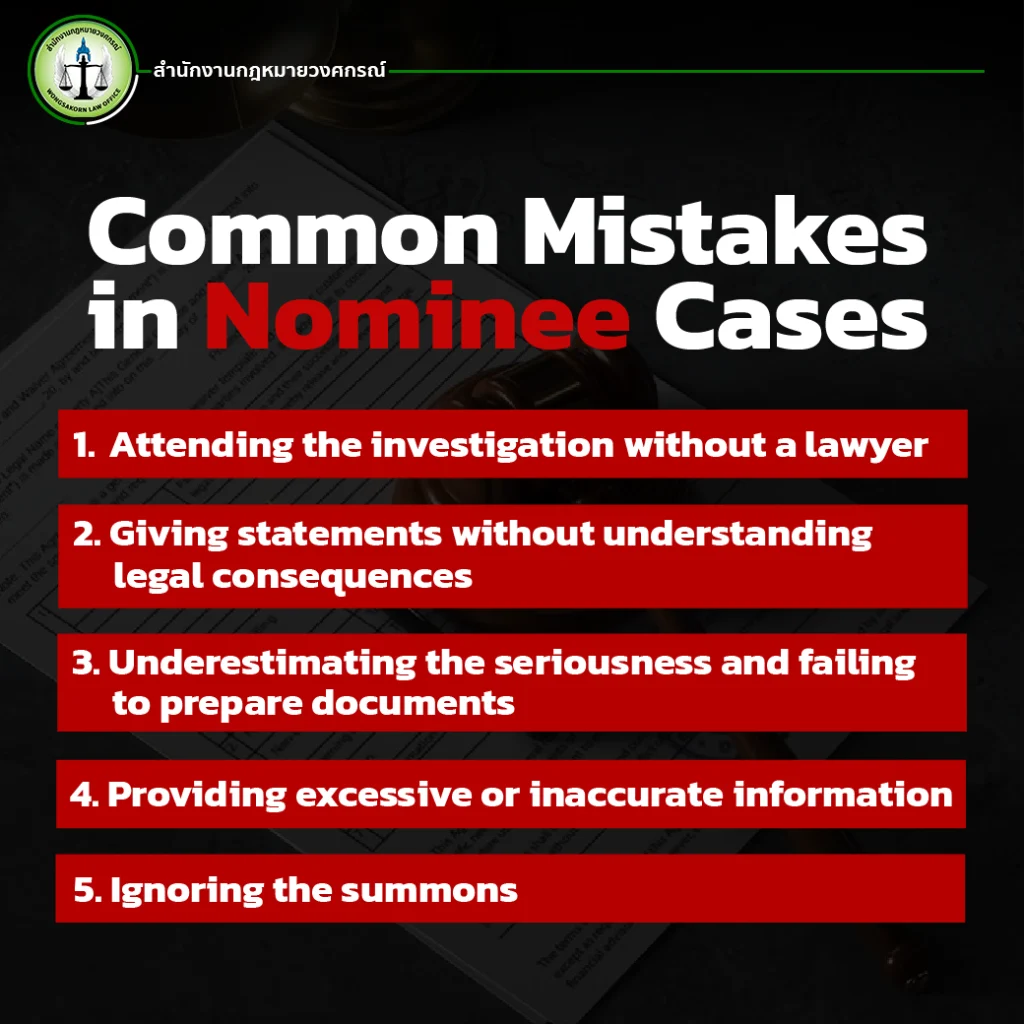
These mistakes may put you at a legal disadvantage unnecessarily.
Is Acting as a Nominee Illegal?
Nominee conduct may violate several laws, such as:
Foreign Business Act
Company law
Anti-Money Laundering law
Criminal law regarding false statements
Penalties may include fines and imprisonment, depending on the circumstances.
Proper Steps When Summoned as a Nominee
If you receive a Nominee summons, you should:
1. Do not ignore it
2. Consult a lawyer immediately
3. Prepare relevant documents (contracts, share certificates, bank records)
Many people fear the word “Nominee” and believe they will be imprisoned immediately. In reality, many cases can be resolved by clarifying facts and proving your true role. The law aims to punish those who misuse Nominee structures to evade regulations, not innocent individuals.
The Importance of Legal Counsel
A lawyer plays a crucial role in:
Analyzing your legal status and risks
Preparing appropriate legal strategies and statements
Coordinating with investigators
Preventing disadvantageous statements
Reducing the risk of prosecution
Having legal counsel from the beginning is essential to protect your rights.
In today’s world, where driving is part of daily life, car insurance is not merely a document for vehicle registration. It is a vital form of financial and legal protection. Accidents can happen at any time, and the damage from a single incident can be far greater than many people expect.
However, a common problem is that many policyholders “buy car insurance without truly understanding the policy conditions.” When an accident occurs, they later find that the coverage does not meet their needs or that the insurance company refuses certain liabilities. This leads to financial loss, wasted time, and the unintentional loss of legal rights.
This article will help you understand how to choose car insurance wisely and why purchasing car insurance through a lawyer can significantly reduce long-term risks.
Types of Car Insurance and Their Differences
Before buying car insurance, you should understand the main types
1.First-Class Car Insurance (Comprehensive Insurance) Provides the highest level of coverage, including damage to your own vehicle, third-party vehicles, collisions, fire, flood, and theft. Suitable for new or high-value cars.
2.Second-Class Plus Insurance (Type 2+) Similar to comprehensive insurance but mainly covers collisions with other vehicles, including fire and theft. Suitable for general use vehicles.
3.Third-Class Plus Insurance (Type 3+) Covers only collisions with other vehicles. It does not cover theft or fire.
4.Third-Class Insurance (Type 3) Covers only bodily injury and property damage to third parties, not the insured vehicle.
Choosing car insurance should depend on the age of the car, usage, and budget not solely on the lowest premium.
Common Mistakes That Cause Policyholders to Lose Their Rights
Many drivers believe that “having insurance means no worries,” but in reality, policies contain many conditions and exclusions, such as:
Insufficient coverage limits
Garage vs. dealer repair conditions
Deductibles
Exclusions for drunk driving or illegal acts
Late accident reporting
Insurance companies may interpret policies narrowly. Without legal knowledge, policyholders may accept unfair conditions and lose their rightful benefits.
Why Buy Car Insurance Through Us?
The key difference between a general insurance agent and Supasit Siri Non-Life Insurance Office with Lawyer Arm is the legal perspective.
Lawyer Arm not only recommends suitable insurance packages but also explains legal terms, policyholder rights, and contract risks in detail. When disputes arise, you can consult a lawyer immediately without having to suffer losses first and seek help later.
Car Insurance Is Not Only to Protect Your Car, but to Protect Others
Many people think car insurance exists mainly to protect their own vehicle. In fact, its primary purpose is to cover damages caused to others. Accidents are unpredictable, and compensation for injury or property damage can exceed what an individual can afford. Therefore, car insurance is a crucial financial and legal safeguard.
Good Car Insurance Is More Than a Cheap Premium
A quality policy should be evaluated based on
Scope of coverage
Appropriate liability limits
Claim processing efficiency
Fair legal conditions
Post-sale consultation support
Having legal expertise from the beginning ensures that your policy truly protects you when problems occur.
How Car Insurance Helps You After an Accident?
Car insurance covers more than vehicle repairs. It also involves:
Compensation to third parties
Medical expenses
Loss-of-use compensation
Legal damages
Negotiation and dispute resolution
Without proper legal guidance, you may bear unnecessary costs.
Where to Buy Car Insurance with a Lawyer Arm?
You can purchase car insurance with lawyer Arm at Supasit Siri Non-Life Insurance Office, offering multiple plans from various companies, tailored specifically to your needs.
The Best Car Insurance Is the One That Does Not Put You at a Disadvantage
Car insurance is a long-term investment for peace of mind. Buying without understanding the terms may cost more than expected. With a Lawyer Arm, you gain both coverage and legal knowledge.
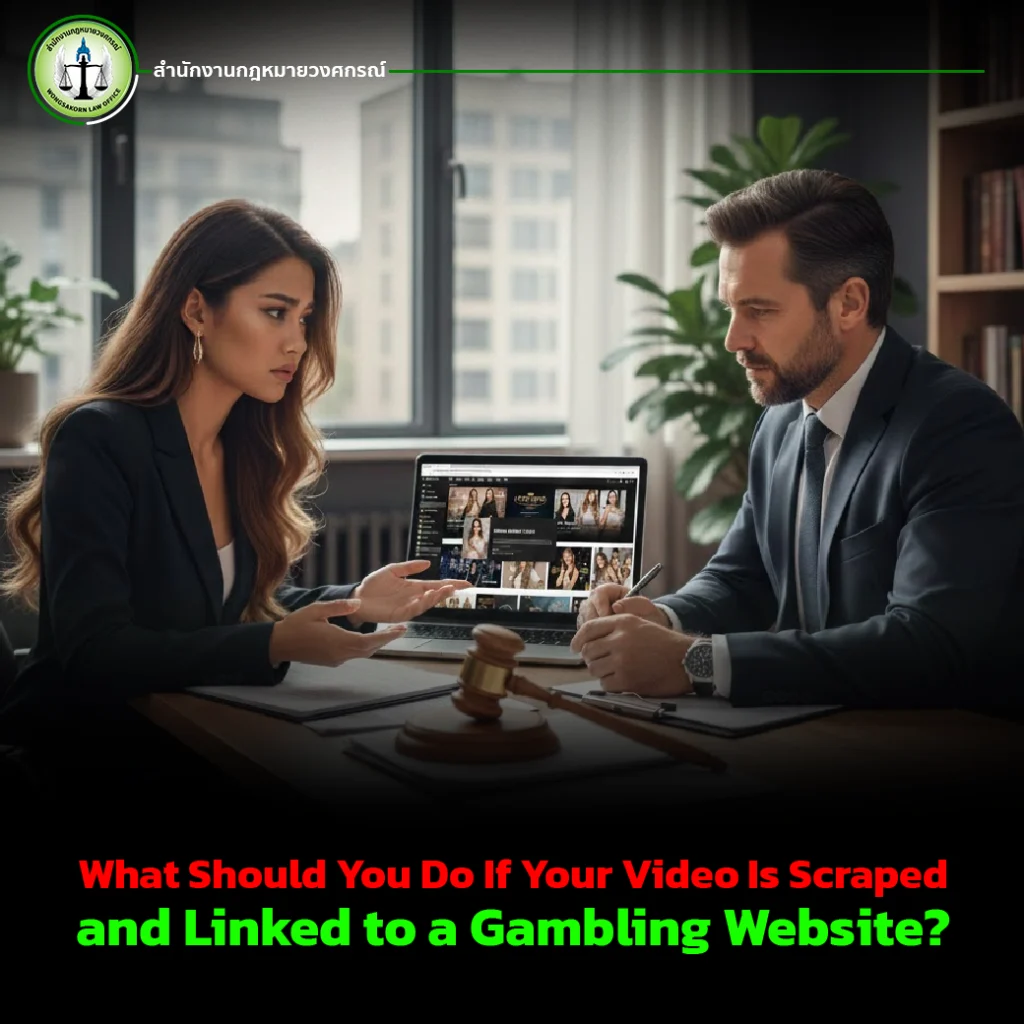
In the era where social media has become a platform for building personal identity, reputation, and income, one increasingly common and serious problem is the unauthorized “scraping” of video clips for improper use. This issue is particularly prevalent among famous individuals, influencers, and content creators whose videos are taken and reposted with links to online gambling websites. Such acts not only damage their reputation but also carry severe legal consequences.
Many people may perceive video scraping as merely reusing content. However, in reality, scraping videos for deceptive purposes, impersonation, or association with illegal activities such as online gambling constitutes a violation of rights and may place the original content owner at legal risk without their knowledge.
What Is “Video Scraping,” and Why Is It a Legal Issue?
In practice, “video scraping” refers to taking video clips belonging to others from platforms such as TikTok, Facebook, YouTube, or Instagram and re-uploading them to one’s own account without the copyright owner’s permission.
The issue becomes more serious when the scraped videos are used to:
Attach links to online gambling websites
Promote illegal websites
Encourage gambling activities
Mislead the public into believing that the original content owner is affiliated with gambling websites
Such actions go beyond copyright infringement; they also involve impersonation and may directly expose the original content owner to legal consequences.
Why Are Famous Individuals at Risk of Having Their Videos Used for Gambling Websites?
The groups most frequently targeted for video scraping linked to online gambling websites include:
Influencers
Internet celebrities
YouTubers
Online business owners
Individuals with viral or widely recognized content
Perpetrators often select videos from creators with credible images and large followings, then edit the content, add captions, or attach gambling links to enhance the credibility of their illegal websites without regard for the harm caused to the real content owners.
Impacts Faced by Content Owners When Their Videos Are Used for Gambling Websites
Many people are unaware that having their videos scraped and used in connection with online gambling can result in multiple forms of damage, such as:
1.Damage to Reputation and Public Image Followers and the general public may mistakenly believe the content owner is involved in gambling activities.
2.Loss of Income and Advertising Opportunities Brands or business partners may terminate collaborations to avoid association with gambling websites.
3.Risk of Government Scrutiny Even if the content owner is not involved, impersonation may require time and resources to clarify matters with authorities.
4.Long-Term Loss of Opportunities An online reputation takes years to build but can be destroyed by a single misused video.
How Is Scraping Videos for Gambling Websites Illegal?
Legally, scraping videos for such purposes may constitute several offenses, including:
Copyright infringement under the Copyright Act
Violation of personality and image rights
Impersonation and public deception
Involvement in the promotion or support of online gambling
Even if the offender does not directly use the content owner’s name, legal action and claims for damages may still be pursued if the conduct misleads the public.
What Should You Do If Your Video Is Scraped and Linked to a Gambling Website?
If you discover that your video has been misused in this manner, you should not remain passive. Proper steps include:
1.Immediately Collect Evidence Such as account links, scraped videos, screenshots, and dates of discovery.
2. Avoid Emotional Confrontations Responding without evidence may place you at a disadvantage later.
3.Report to the Relevant Platforms Request investigation and removal of infringing content.
4.Consult a Lawyer for Legal Action To assess damage claims and protect your legal rights.
Can You Claim Compensation for Scraped Videos Used for Gambling?
Yes, compensation can be claimed if it can be proven that:
You are the copyright owner of the video
The unauthorized use caused actual damage
There was impersonation or unauthorized association with gambling websites
Engaging a lawyer from the outset allows for proper legal strategy, increases the likelihood of compensation, and reduces long-term risks.
Consult Wongsakorn Law Office When Your Videos Are Used Illegally