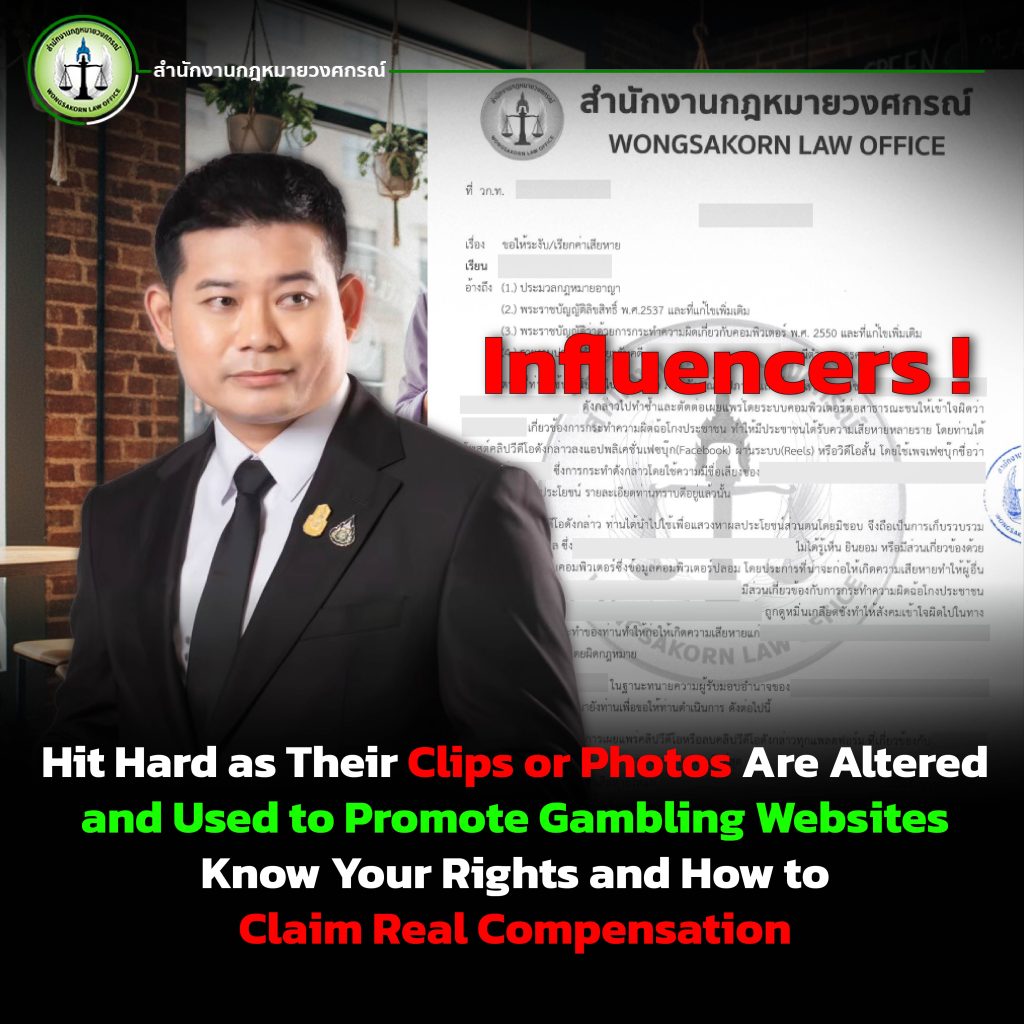
In today’s fast-moving social media era where anything can be shared within seconds, being an influencer means relying heavily on image, reputation, credibility, and self-created content. However, a rising problem has recently shocked many: influencers’ clips, photos, or creative works being altered and uploaded on other channels without permission especially when these modified clips are used to promote online gambling websites, online lottery platforms, or sports betting sites. This misleading practice makes viewers believe the influencer supports these websites, which is completely untrue.
The result? Influencers suffer severe damage to their reputation, credibility, income, and professional image.
But what many still don’t know is: Yes, you CAN sue and you can claim compensation in multiple categories, not just copyright damages.
This article from Wongsakorn Law Office explains your legal rights, especially for influencers currently facing this situation, and helps you understand what you can do and when you should “consult a lawyer.”
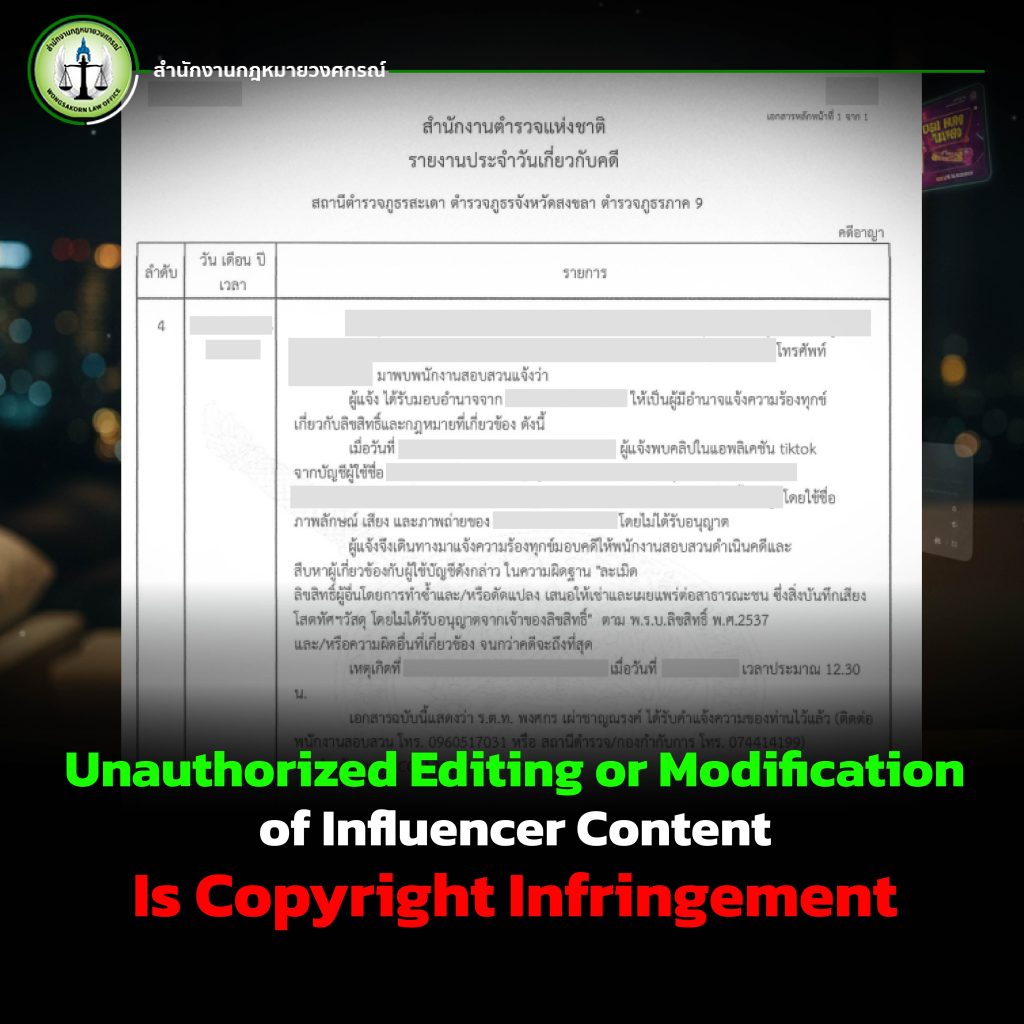
Unauthorized Editing or Modification of Influencer Content Is Copyright Infringement
Whether you are:
- A product-review influencer
- A YouTuber
- A photographer
- A content creator
- An athlete, actor, or creator of any kind
Your work, such as:
- Videos
- Photos
- Audio
- Graphics
- Scripts or spoken content
is automatically protected as intellectual property (copyright) without needing any registration.
Therefore, when someone:
✔ Edits your clip
✔ Modifies it
✔ Dubs over it
✔ Adds misleading text
✔ Re-uploads it to another channel
✔ Links it to gambling, lottery, or betting websites
All of these actions constitute direct copyright infringement, and the wrongdoer must be held legally responsible.
The Damage to Influencers Is Far More Than Just Copyright Issues
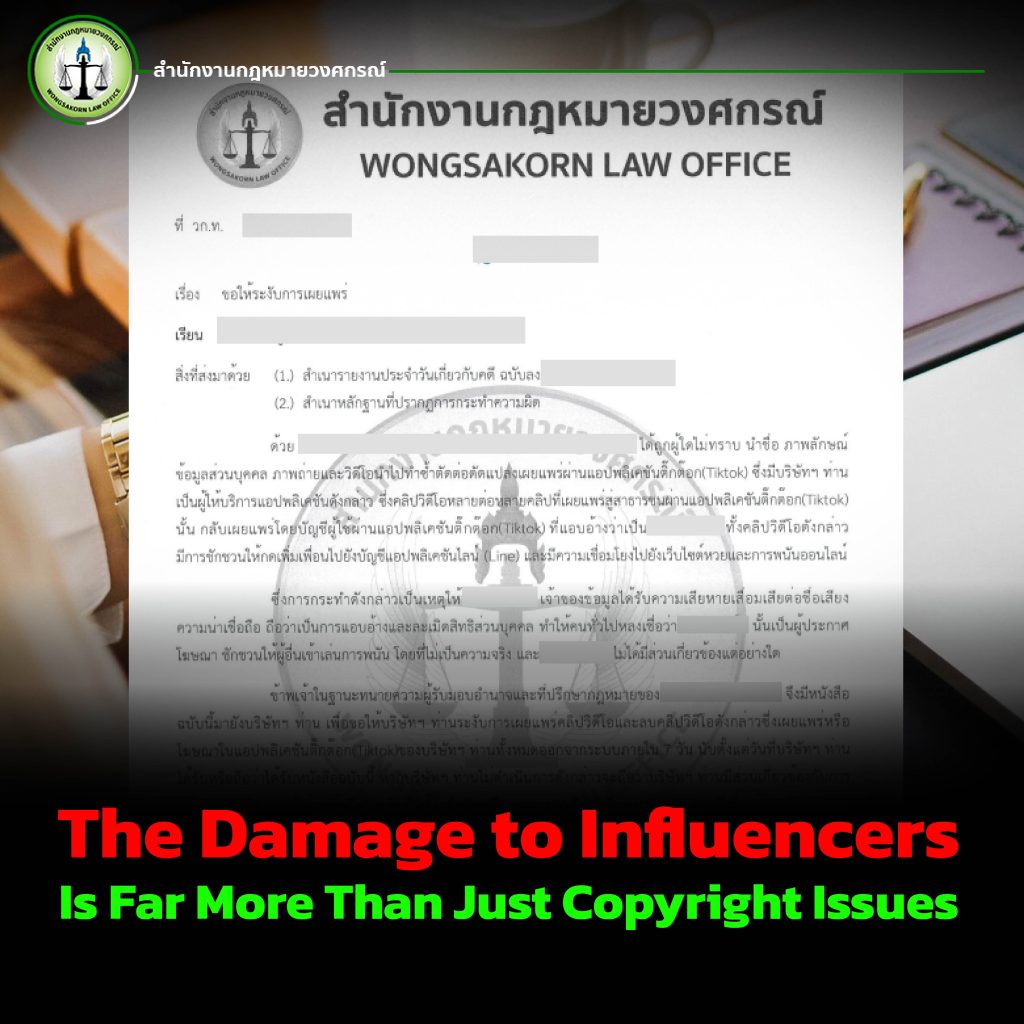
When your content is linked to gambling platforms, the consequences include:
1. Reputation Damage (Defamation or Public Disgrace)
This is the most serious harm because your public image is your profession.
Being falsely linked to gambling content can make viewers think:
❌ You support gambling
❌ You behave inappropriately
❌ You participate in illegal advertising
You can fully claim compensation for reputational damage.
2. Loss of Income (Business Disruption)
Brands may immediately withdraw or refuse future collaborations, even if the content was altered without your consent.
This results in future income loss, which is legally compensable.
3. Public Misunderstanding
Your fanbase or audience may misunderstand you permanently, harming your credibility long-term.
4. Emotional Distress
Many influencers face harassment, negative comments, and mental stress.
You may claim damages for emotional suffering as well.
What Can You Sue For? Influencers Should Know This
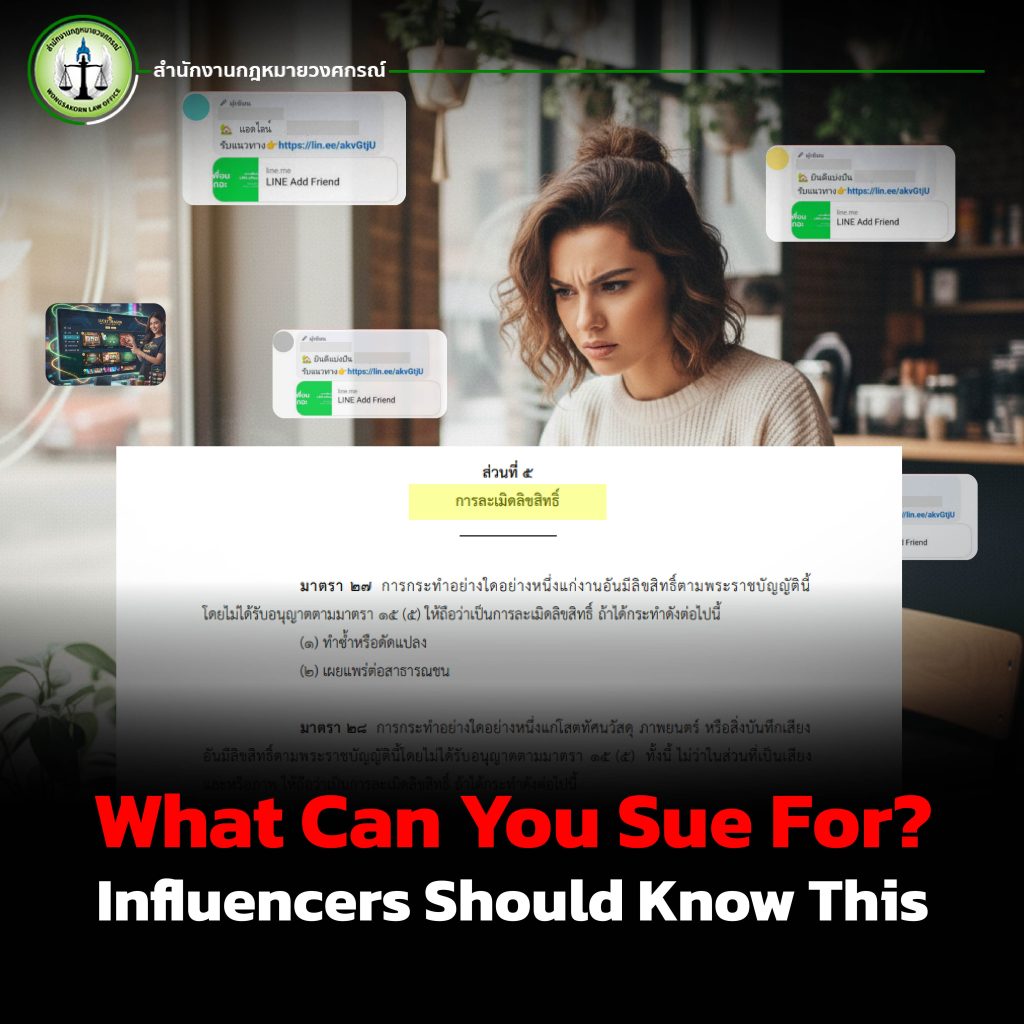
✔ 1. Copyright Infringement
For using your work without permission
✔ 2. Defamation (Public False Representation)
If viewers are misled into thinking you support illegal gambling
✔ 3. Civil Damages including:
- Lost income
- Loss of business opportunity
- Reputational damage
- Mental distress
- Costs of repairing your public image
✔ 4. Criminal Charges (in some cases)
Online gambling is illegal in Thailand.
Using altered clips to promote it may involve several criminal offenses.
Many Influencers Ignore the Issue Thinking It’s “Small” But It’s Not
Some may feel it’s “just one clip,” but the consequences can last years.
Remember:
👉 Gambling websites often operate overseas you need a lawyer to proceed correctly
👉 Online evidence must be collected properly or it may not be usable in court
👉 Delays may affect brand deals and long-term earnings
Therefore, you should consult a lawyer as soon as the issue occurs.
Consulting a Lawyer: The Most Effective Way to Protect Your Rights
Digital copyright cases are complex.
Incorrect evidence collection or self-handling can immediately undermine your rights.
Influencers whose clips or images have been altered should consult a lawyer experienced in digital law and copyright litigation to assess the case and pursue compensation effectively.
Don’t remain silent, your rights are being violated.
Influencers Have Full Rights to Claim Compensation
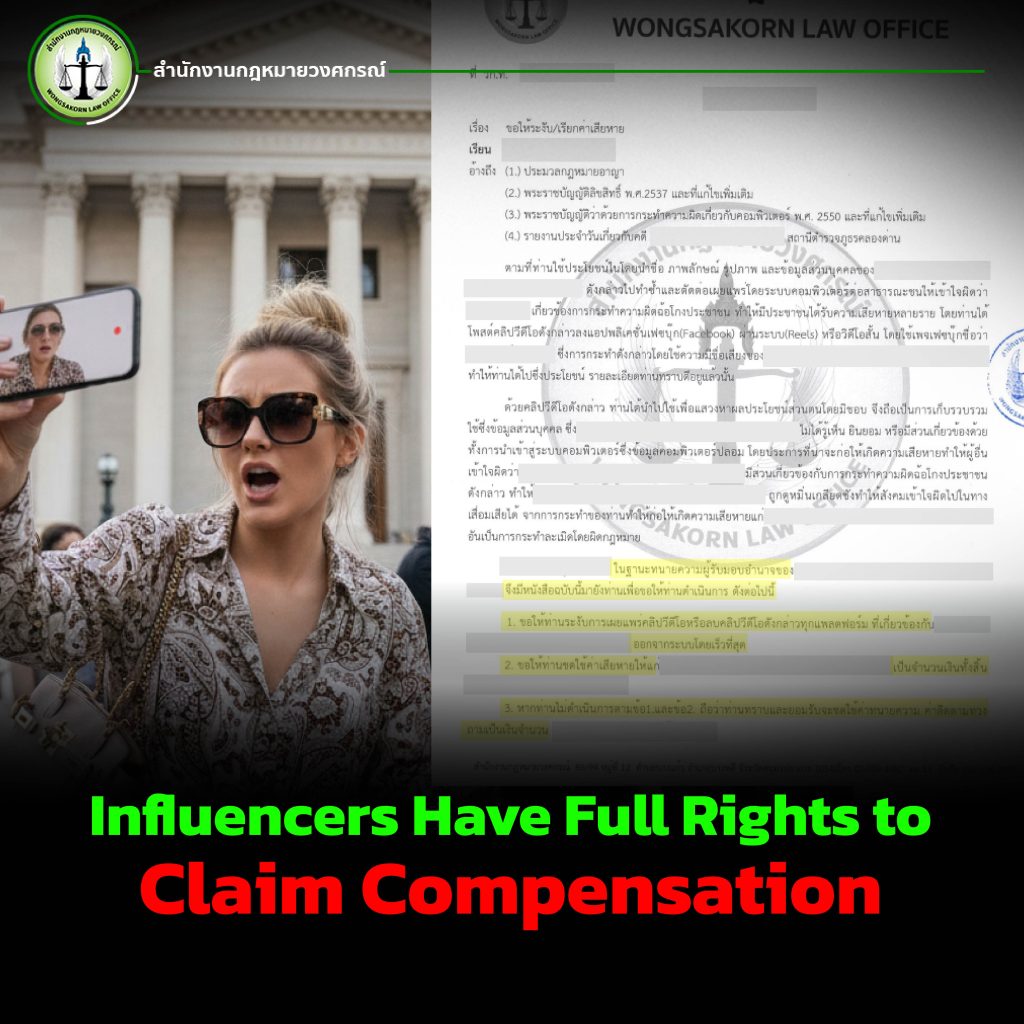
Using your clips or images, altering the content, uploading it to a new channel, and attaching gambling links is:
❌ Not a small issue
❌ Not something to tolerate
❌ Not something to ignore
It is copyright infringement, reputational harm, and direct financial damage.
You are legally entitled to claim complete compensation in all related categories.
If you are an influencer facing this problem, you can consult a lawyer immediately to plan your claims and restore your reputation as quickly as possible.