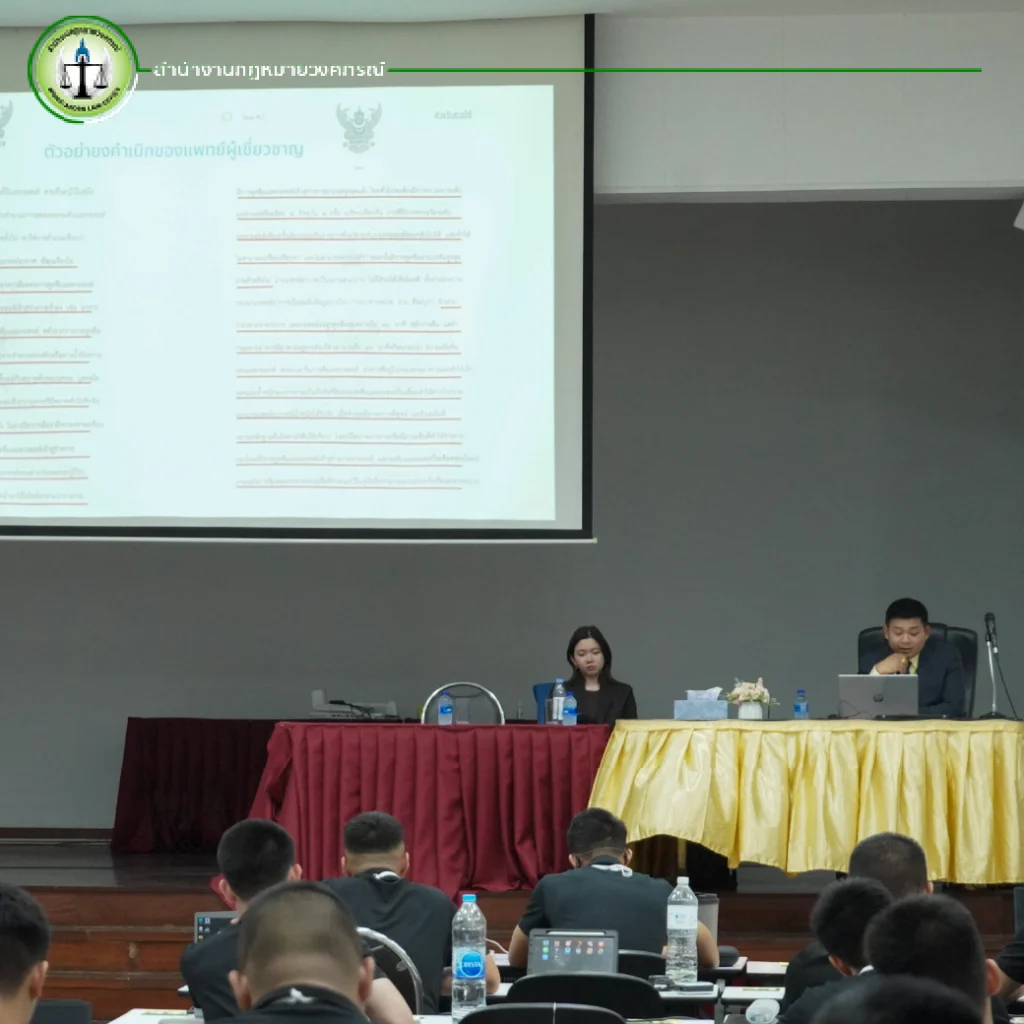
On February 3, 2026, Ajarn Sun Mahathosadara entrusted and appointed Lawyer Arm Supasit Siri as legal counsel to provide legal advisory services regarding cases involving copyright infringement and the misuse of Ajarn Sun’s media content. This includes the unauthorized use of images, audio, or videos of Ajarn Sun, particularly for inviting or persuading the public to participate in online gambling websites and lottery platforms through social media.

Such actions constitute forgery and the dissemination of Ajarn Sun’s work in inappropriate contexts, causing misunderstanding among the public and followers. This has resulted in significant damage to Ajarn Sun’s reputation and public image, especially among students and individuals who respect and follow him, who may mistakenly believe that Ajarn Sun is involved in illegal activities.
For this reason, Ajarn Sun has appointed Lawyer Arm Supasit Siri from Wongsakorn Law Office to serve as legal advisor, responsible for investigating the matter, collecting evidence, and pursuing legal action against individuals who have misused Ajarn Sun’s media in a systematic and careful manner in accordance with the law.
This appointment of legal counsel marks an important step in protecting intellectual property rights and maintaining Ajarn Sun’s positive public image. It also sends a clear message that the misuse of others’ media for deception or unlawful personal gain will be taken seriously and prosecuted under the law to prevent similar incidents from occurring in the future.
In the digital age, where anyone can easily post, comment, or leave reviews online,online defamation has become one of the most common legal issues. Whether it is posting harsh reviews on Google, public shaming on Facebook, attacking someone on TikTok, or spreading damaging information in messaging groups, all of these actions may constitute defamation under the law.
Many people mistakenly believe that “it’s just a review” or “just expressing feelings” is not illegal. In reality, if a statement causes damage to another person’s reputation, subjects them to contempt, or leads to public hatred, it may immediately fall under defamation. This article explains what online defamation is, what victims can do, whether reviews can be removed, and why consulting a lawyer is an important solution.
What Is Online Defamation?
Online defamation is the act of making false statements or publishing messages, images, videos, or other content through online platforms in a way that damages another person’s reputation, exposes them to contempt, or causes them to be hated by society. This applies to individuals, business owners, companies, shops, and organizations alike.
Common examples include:
Writing Google reviews using harsh language such as “fraud,” “scam,” or “this shop is evil” without evidence
Posting someone’s name, photo, and personal information together with accusations
Publicly attacking or encouraging mass harassment on social media
Sharing false or distorted information that harms another person’s image
Even if the poster claims it is “personal opinion,” if the message harms another person’s reputation, it can still be considered defamation.
When Does a Google Review Become Defamation?
Posting a business review is not illegal if it is an honest opinion based on real experience, such as slow service, poor food quality, or dissatisfaction with service. However, it becomes defamation when:
Harsh or insulting language is used without evidence
False or misleading information is provided
There is intent to damage reputation or harass
Others are encouraged to attack the business or individual
The line between “honest review” and “defamation” depends mainly on the intent and the content of the statement.
What Should You Do If You Are Defamed Online?
If you become a victim of online defamation, it is important not to react emotionally but to proceed systematically:
1. Collect Evidence Immediately
Such as:
Screenshots of the messages
URLs or links to the posts
Date, time, and account name of the poster
Profile photos or related information
This evidence is crucial for legal proceedings.
2. Consult a Lawyer
A lawyer can help determine:
Whether the content constitutes defamation
Whether to pursue a civil or criminal case
Whether to start with negotiation or file a police report
Having legal guidance from the beginning reduces procedural mistakes and risks.
3. Request Removal of the Post or Review
In many cases, it is possible to:
Report the content to platforms such as Google or Facebook
Send a legal notice or warning letter
Ask the poster to delete or correct the statement
Some disputes can be resolved without going to court.
Can the Offender Be Identified?
Many people believe that using fake accounts or aliases makes them untraceable. In reality, if the case involves defamation, legal procedures can be used to:
Request IP address information
Obtain user data from online platforms
Use investigators and legal authorities to identify the offender
Posting defamatory content online does not exempt anyone from legal responsibility.
Damage Caused by Online Defamation
The impact is not limited to emotions but includes:
Loss of reputation and credibility
Decrease in income or business revenue
Misunderstanding by society
Stress and psychological harm
Escalation of conflicts
In some cases, victims may file civil lawsuits demanding significant compensation.
Why Should You Consult a Lawyer When Defamed?
Consulting a lawyer provides many advantages:
Legal evaluation of the strength of the case
Guidance on lawful content removal
Drafting legal warning letters
Representing victims in legal proceedings
Systematic protection of rights and reputation
Lawyers do not only file lawsuits; they can also seek the most appropriate solution, such as negotiation, mediation, or legal action when necessary.
Defamation Is Not a Minor Issue in the Online Era
In the past, defamation occurred within limited circles. Today, a single post can reach thousands or even tens of thousands of people within minutes. The damage is therefore far more severe.
Both posters and victims should realize that:
Opinions must be expressed honestly and responsibly
Harsh language carries legal risks
Reputation is an asset that must be protected
Online Defamation Has Legal Solutions When the Law Is Used Properly
Whether you are defamed through Google reviews or attacked on social media, you do not have to endure the damage alone. The law provides options to:
Remove unlawful content
Identify the offender
Take legal action to seek justice
Consulting a lawyer from the beginning is the safest and most effective approach.
If you are facing online defamation, do not let a small issue become a major problem. Protecting your reputation means protecting your future in the digital world.
In an era when international travel has become easy, many foreigners travel to Thailand for tourism, work, investment, or long-term residence. However, one important issue that is often overlooked is the checking of arrest warrants before entering Thailand. In reality, this simple step can help prevent serious legal problems from the very beginning.
There have been many real cases in which foreigners traveled to Thailand without knowing that they had an arrest warrant or an old pending case either in Thailand or in their home country. When they passed through immigration control, they were immediately detained. This caused them to lose time, money, and important opportunities for business or daily life in Thailand. This article explains why checking for arrest warrants before entering Thailand is essential, while also highlighting both the advantages and disadvantages of conducting such a check in advance.
What Does Checking for an Arrest Warrant Mean?
Checking for an arrest warrant means verifying whether a person has any arrest warrants or pending cases recorded in government systems, such as:
Arrest warrants in Thailand
International arrest warrants
Ongoing criminal cases
Cases that may affect immigration or residency status in Thailand
This check does not necessarily mean that the person has committed a crime. In some cases, it may involve an old case that the individual was never aware of, or an administrative or legal matter that has not yet been formally closed.
Reasons Why Foreigners Should Check for Arrest Warrants Before Entering Thailand
Entering Thailand without knowing one’s legal status is highly risky. If a problem arises at the immigration checkpoint, the consequences can be immediate, such as:
Being detained
Being denied entry into the country
Facing criminal proceedings
Being deported back to the home country
Being placed on a watchlist
Conducting a preliminary check is like preparing before a journey. It helps determine:
Whether one can legally enter Thailand
What legal issues must be resolved in advance
What potential risks exist
Advantages of Checking for Arrest Warrants Before Entering Thailand
1. Prevents Immediate Arrest at the Airport
The most important advantage of checking in advance is avoiding a worst-case scenario, such as being arrested in front of many people at the airport or being detained unexpectedly.
2. Allows Advance Planning to Resolve Legal Issues
If an arrest warrant or pending case is found, foreigners can:
Contact a lawyer
Plan the correct legal process
Prepare documents or arrange for bail
instead of facing the problem without any options.
3. Reduces Business and Investment Risks
For investors or foreign employees, being arrested or denied entry can affect:
Business projects
Credibility and reputation
Business partners
Checking in advance ensures that travel is legally safe.
4. Increases Confidence in Traveling
After completing the check, foreigners can travel with peace of mind, without worrying about unexpected problems at immigration.
5. Prevents Impact on Visa and Residency Status
Cases or arrest warrants can affect visa renewal, work permits, or long-term residency. Early checking helps prevent future complications.
Disadvantages or Limitations of Checking for Arrest Warrants
Although checking has many advantages, there are some limitations that should be understood.
1. Requires Legal Expertise
Checking for arrest warrants is not something that ordinary individuals can do correctly on their own. It requires legal knowledge and an understanding of official procedures. If done incorrectly, the information obtained may be incomplete or inaccurate.
2. May Reveal Unexpected Problems
Some people may discover old cases they never knew about, which can cause anxiety or stress. However, knowing in advance is still far better than facing the problem at the airport.
3. Involves Costs
Using professional services or law firms to conduct the check may involve fees. Compared with the risk of arrest or deportation, these costs are relatively small.
4. Takes Time
In some cases, checking requires time to gather information from multiple systems. Therefore, it should be planned well in advance and not done too close to the travel date.
What Happens If You Do Not Check Before Entering Thailand?
If foreigners do not conduct a prior check, they may face:
Immediate detention
Damage to their reputation
High legal expenses
Being blacklisted from entering Thailand in the future
Negative impacts on family and business
These problems often occur suddenly and are difficult to resolve afterward.
Checking for Arrest Warrants Is Prevention, Not an Admission of Guilt
Many people misunderstand that checking for arrest warrants is like admitting guilt. In reality, checking is a way to:
Prevent risks
Prepare in advance
Protect one’s rights
Plan legally and carefully
It is similar to having a medical checkup before a long journey. The earlier you check, the lower the chance of facing serious problems.
Check First, Solve Later – Enter Thailand Safely
Checking arrest warrants for foreigners before entering Thailand is highly recommended in today’s world, where laws and immigration systems have become stricter. Knowing your legal status in advance is the best form of protection.
The advantages of checking include preventing problems, allowing advance planning, and increasing confidence in travel. The disadvantages are mainly related to time and minor costs, which are insignificant compared to the risks of arrest or denial of entry.
Check for Arrest Warrants Before Traveling to Thailand
If you or someone close to you is a foreigner planning to enter Thailand whether for tourism, work, or long-term residence, checking your legal status in advance is something that should not be overlooked.
Wongsakorn Law Office is ready to provide consultation and assist with arrest warrant checks in accordance with the law, so that you can enter Thailand with confidence, safety, and without unexpected legal problems.
Because checking today means preventing major problems tomorrow, and it is the key to living safely and legally in Thailand.
In recent years, Thailand has become one of the most popular destinations for foreign retirees who wish to reside long-term. This is due to its favorable climate, reasonable cost of living, and overall quality of life. Many foreigners therefore decide to invest their life savings in purchasing a house or land to serve as their residence in later years.
However, a major issue that many foreigners do not fully understand is that Thai law does not permit foreigners to directly own land or houses. Purchasing real estate without consulting a lawyer thus poses significant legal and financial risks. This article explains the commonly used arrangements, their advantages and disadvantages, and why consulting a lawyer before purchasing land or holding real estate in Thailand is critically important.
Why Foreigners Cannot Own Land in Thailand?
Under Thai law, foreigners are not permitted to hold ownership of land or houses directly, except in very limited and special circumstances, such as large-scale investments approved by the government, which are rare in practice.
Due to these restrictions, foreigners who wish to own a home in Thailand often use indirect methods, such as:
Having a Thai spouse or partner hold legal ownership of the land
Investing their own money to purchase or build a house, while the title deed is registered in the Thai spouse’s name
At first glance, this approach may seem simple and safe. However, from a legal perspective, it carries significant risks if there is no proper legal structure in place.
Usufruct as a Common Legal Solution for Foreigners
To protect their rights, many foreigners choose to register a lifetime usufruct (right of use) on the land title deed at the Land Department on the same day the ownership is registered.
A usufruct means that:
The foreigner has the right to live in, use, and benefit from the house and land for the rest of their life
Even though the land is legally owned by the Thai spouse, the foreigner cannot be evicted from the property
If the land is to be sold, consent from the usufruct holder is required first
As a result:
The Thai spouse obtains ownership of the land
The foreigner obtains the right to live on and use the property for life
The investment is not given away without legal protection
From one perspective, this method provides security for foreigners. However, it also creates legal and commercial consequences that must be carefully considered.
Disadvantages and Problems Arising from Registering a Usufruct
Although a usufruct protects the foreigner’s rights, it often creates practical problems, especially when family relationships change.
Common issues include:
If disputes or separation occur, the land becomes burdened with legal encumbrances
When the Thai spouse wishes to sell the land, prospective buyers will inspect the title deed and find a “lifetime usufruct” registered on it
Most buyers will be reluctant to purchase because they cannot immediately use or possess the property
The selling price may drop significantly, or the land may not be sellable at all
This is one of the key reasons why many foreigners choose to buy condominiums instead of houses or land. Thai law allows foreigners to directly own condominium units, subject to the legal quota specified by law.
Risks of Buying Land Without Consulting a Lawyer
Many foreigners decide to purchase a house or land based on trust in their spouse or close acquaintances, without seeking advice from legal professionals. The consequences may include:
A large financial investment without proper legal protection
Disputes arising when personal relationships change
Inability to sell or transfer the property
Risk of being considered as indirectly or unlawfully owning land through a nominee arrangement
Exposure to both civil and criminal legal liability
Real estate is a high-value asset. Even a small legal mistake can result in the loss of a lifetime’s savings.
Why You Should Consult a Lawyer Before Buying Land or Real Estate?
Analysis of ownership structures to ensure compliance with Thai law
Drafting legal agreements that protect the foreigner’s rights
Due diligence on title deeds and existing encumbrances
Prevention of future disputes in case of separation or sale
Advice on suitable alternatives, such as purchasing a condominium instead of land
A lawyer is not only someone who resolves problems after disputes arise, but also a professional who helps prevent risks from the very beginning.
Land Is Not Just Property, but Stability for Retired Foreigners
For retired foreigners, a house or land represents their final place of security and comfort in life. A single wrong decision can result in the loss of money, peace of mind, and long-term stability.
Understanding the law and planning correctly from the start is the key to ensuring that life in Thailand remains safe, secure, and sustainable.
Consult a Lawyer Before Buying Land in Thailand
If you or someone close to you is a foreigner planning to purchase a house or land in Thailand, do not make decisions based solely on trust or informal advice from others.
Wongsakorn Law Office is ready to provide legal consultation on real estate ownership for foreigners, including structuring legal rights, reviewing documents, and carefully preventing future legal problems in full compliance with Thai law.
Because buying land is not a small matter. It is an investment in your entire life.
The term bail is commonly heard when a criminal case occurs, whether it involves assault, traffic accidents, fraud, or other serious offenses. However, many people still do not fully understand what “bail” truly means, how the process works, and why some cases are granted bail while others are denied.
This article provides a clear and systematic explanation of bail in criminal cases, including its meaning, the types of assets used for bail, court conditions, and the consequences of not being granted bail.
What Is Bail in a Criminal Case?
Bail in a criminal case refers to a request for temporary release while the case is still under investigation or court consideration. The purpose is to allow the suspect or defendant to remain free and able to prepare and fight the case without being detained during the judicial process.
There are two main stages at which bail can be requested:
1. At the investigation or prosecutor stage
2. At the court stage (when detention has been ordered or the case has already been filed with the court)
What Assets Can Be Used as Bail?
Bail requires assets to guarantee that the suspect or defendant will not flee and will appear in court as required. Acceptable forms of bail include:
1. Cash
2. Land title deeds
3. Government or official positions (in certain cases recognized by law)
4. Other assets as deemed appropriate by the court
However, having a large amount of assets does not automatically guarantee that bail will be granted. The court considers several factors before making a decision.
Why Are Some Cases Granted Bail While Others Are Not?
The key reason is that bail depends on the discretion of the court, which evaluates multiple factors, such as:
1. Severity of the charge and possible punishment
If the offense carries a severe penalty, such as murder with a maximum sentence of death, the court will view the defendant as having a high risk of escape. In contrast, less serious cases, such as negligent driving causing injury, may be more likely to receive bail.
2. Circumstances of the case
For example, fraud committed as part of an organized scheme or cases involving many victims may be considered high-risk for repeat offenses or escape.
3. Criminal record of the suspect
If the suspect has a prior criminal history, the court may deny bail due to concerns that the person will not appear in court or may flee.
4. Risk of interfering with witnesses or evidence
In cases such as murder, there may be concern that the defendant could threaten witnesses, destroy evidence, or cause further harm.
H2: What Conditions May the Court Impose When Granting Bail?
When bail is granted, the court sets a bail amount and may impose additional conditions, such as:
Determining the bail amount according to the seriousness of the offense
Prohibiting travel outside the country
Requiring the defendant to wear an electronic monitoring device (EM)
Requiring the defendant to appear in court on every scheduled date
These conditions are designed to prevent escape and interference with witnesses or evidence.
H2: What Happens If Bail Is Denied?
If bail is denied, the suspect or defendant will be detained during the trial process, which may last for several months or even years.
The consequences include:
Loss of personal freedom
Negative impact on family and employment
Damage to reputation
Living in detention despite not yet being found guilty by a final judgment
Even if the court later dismisses the case and compensation can be claimed for wrongful detention, the time and opportunities lost can never be recovered.
Does Having a Lot of Money Guarantee Bail?
Many people mistakenly believe that having a large amount of money automatically ensures bail approval. In reality, money alone is not the deciding factor.
The court considers:
Whether the offense carries a severe penalty
Whether there is a risk of flight
Whether the amount of bail offered appears unusually high
In some cases, offering an unusually large sum of money may cause the court to suspect an intention to flee, leading to a denial of bail.
Why Should a Lawyer Handle the Bail Process?
Requesting bail is not simply a matter of submitting money or property to the court. It requires:
Legal analysis of the charges
Proper preparation of bail petitions
Clear legal reasoning presented to the court
Proposing appropriate and reasonable conditions
An experienced lawyer can significantly increase the chances of bail approval and reduce the risk of rejection.
H2: Bail Is an Important Right That Should Not Be Overlooked
Bail is not a minor matter it is a fundamental right within the justice system that allows defendants to fight their case fairly and with dignity.
If you or someone close to you has questions about bail or needs legal assistance with the bail process, you should seek advice from a legal professional immediately.
Understanding bail from the beginning is the key to protecting your rights, freedom, and future.
If you would like a lawyer to assist or handle your bail application: 👉 Click Contact Us to receive legal consultation right away.
The problem of overloaded trucks is one of the major issues faced by transportation operators and logistics business owners, especially in an era when the government has become stricter about road safety regulations. Being arrested for operating an overloaded truck is not merely a matter of paying a fine; it can also affect business licenses, corporate reputation, and long-term legal risks.
This article explains what overloaded trucks are, what to do if you are caught, what risks are involved, and why consulting Wongkorn Law Office is essential.
What Is an Overloaded Truck and Why Is It a Legal Issue?
An overloaded truck refers to a truck whose total weight, including cargo, exceeds the legal limit prescribed by law. Each type of truck has different maximum weight restrictions. Violating these limits constitutes an offense under traffic laws and transportation control regulations.
This issue not only poses dangers to other road users but also accelerates the deterioration of infrastructure such as roads and bridges. Therefore, authorities continuously set up weight inspection checkpoints. As a result, many business operators face legal cases related to overloaded trucks.
What Should You Do If Your Truck Is Caught for Being Overloaded?
If your truck is arrested for carrying excess weight, you should take the following steps:
1. Review the Details of the Arrest Check the location of the arrest, the weighing method, and the documents issued by officials to determine whether procedures were carried out legally and correctly.
2. Do Not Pay the Fine Without Legal Consideration In many cases, operators rush to pay the fine without knowing that they may have the right to contest the case or request mitigation.
3. Gather Relevant Documents Such as weight slips, cargo invoices, truck permits, and company documents.
4. Consult a Lawyer or Law Firm Immediately To evaluate possible solutions, reduce penalties, and plan preventive measures to avoid future violations.
Risks of Overloaded Truck Problems That Business Owners Must Know
Overloaded truck issues involve more than just fines. There are several serious risks, including:
Legal Risks Repeated violations may lead to multiple prosecutions or increased scrutiny from authorities.
Business Risks Temporary suspension of vehicle use can delay deliveries, dissatisfy customers, and cause financial losses.
Accident Risks Overloaded trucks are more likely to experience brake failure, tire blowouts, or loss of control, which may result in civil and criminal liability.
Corporate Reputation Risks A history of repeated legal violations can reduce trust from business partners and damage corporate credibility.
Why Is Prevention More Important Than Solving Problems After They Occur?
Many companies believe in “fixing the problem after being caught.” In reality, having proper truck weight control systems from the beginning such as staff training, proper cargo loading management, and legal consultation can significantly reduce the risk of violations.
Prevention also lowers long-term costs, including fines, vehicle repair expenses, and lost business opportunities. It is far more cost-effective than dealing with problems after they arise.
Why Should You Consult the Wongkorn Law Office If You Are Caught for an Overloaded Truck?
When an overloaded truck issue occurs, having legal experts involved from the start can prevent the situation from escalating. Wongkorn Law Office can assist in many areas, such as:
Providing legal consultation on overloaded truck cases
Reviewing the legality and procedures of the arrest
Developing strategies to contest charges or request penalty reductions in accordance with the law
Helping companies establish internal systems to prevent repeat violations
Handling criminal, administrative, and potential civil cases arising from the incident
Having a professional legal team not only minimizes immediate damage but also helps create long-term risk prevention strategies.
Overloaded Trucks Are Not a Small Issue but a Major Business Risk
In an era of intense competition and stricter regulations, overloaded truck problems can quickly become a business vulnerability if not managed properly. Business operators should view this issue as a matter of safety + legal compliance + corporate image, not merely as a one-time fine.
Having legal advisors from the beginning allows businesses to operate steadily, reduce risks, and build long-term confidence among partners and customers.
Consult Wongkorn Law Office for Overloaded Truck Issues
If you or your company is facing problems with overloaded trucks whether being arrested, fined, or concerned about future legal risks do not let a small issue turn into a major crisis.
Wongkorn Law Office is ready to provide comprehensive legal consultation and case management for overloaded truck matters, from case evaluation and legal strategy to long-term prevention planning.
Because having legal experts by your side is the safest solution for your business.
In the business world of 2026, where laws change rapidly covering labor law, personal data protection (PDPA), taxation, and commercial contracts many companies still choose to “wait until a problem arises before hiring a lawyer” instead of appointing a legal advisor from the beginning.
The result is unnecessary loss of money, time, and corporate credibility.This article highlights 10 major problems that many companies face due to the absence of a legal advisor and explains why having legal counsel from the start is a far more cost-effective way to prevent risks than fixing problems later.
1. Weak Business Contracts and Unfair Agreements
Many companies use contract templates downloaded from the internet or copied from other businesses without review by a legal advisor. This often leads to loopholes such as:
No clauses protecting the company
Unclear penalties and liabilities
Exposure to lawsuits or unfair treatment
A proper contract must be tailored to each business, not based on generic templates.
2. Labor Law Violations and Unlawful Termination
Terminating employees without legal knowledge can result in costly lawsuits, such as:
Failure to pay severance
Unfair dismissal
Improper employment contracts
A legal advisor can design a compliant HR system from the start and reduce the risk of labor disputes that damage the company’s reputation.
3. Being Sued Without Prior Warning
Many companies only discover legal issues when court summons arrive too late to prepare preventive strategies. With a legal advisor, companies can:
Assess risks in advance
Identify potential legal disputes
Negotiate settlements before litigation
4. Violations of PDPA and Personal Data Protection Laws
In the digital era, collecting customer data without understanding data protection laws can lead to heavy fines and loss of customer trust.
A legal advisor can establish proper compliance policies, such as:
Privacy Policies
Consent Forms
Contracts with employees and business partners
5. Lost Business Opportunities Due to Slow Contract Review
Many business deals require fast decisions. Without legal support, companies may:
Sign unfavorable contracts
Accept unnecessary conditions
Assume excessive risks
A legal advisor enables companies to “sign with confidence.”
6. Incorrect Tax and Corporate Structure from the Beginning
Establishing a company without legal consultation can cause:
Poor shareholding structures
Shareholder disputes
Excessive tax burdens
A legal advisor helps design a corporate structure suitable for long-term growth.
7. Lack of Knowledge When Inspected by Government Authorities
When audited by tax authorities, labor offices, or regulators, companies without legal advisors often panic and respond incorrectly, creating self-incriminating evidence.
8. No Neutral Party for Dispute Negotiations
When executives negotiate disputes themselves, emotions may override legal reasoning, turning small issues into major conflicts.
A legal advisor acts as a “legal buffer,” representing the company with professionalism and objectivity.
9. Legal Costs Far Exceed Prevention Costs
Legal fees after a lawsuit can be several times higher than monthly legal advisory fees. Having legal counsel from the start is an investment in damage prevention.
10. Damage to Corporate Image and Reputation
Lawsuits, legal disputes, and regulatory issues directly affect customer and partner confidence.
Having a legal advisor helps build a professional and trustworthy corporate image.
Why Every Company Must Have a Legal Advisor in 2026?
The year 2026 is an era where:
Business competition is intense
Laws are more complex
Online risks are increasing
Customers demand credibility and transparency
A legal advisor is not merely someone who handles lawsuits, but a strategic partner who guides businesses safely through legal challenges.
Prevention Is Better Than Cure: Legal Counsel from Day One Is the Smart Choice
Many organizations believe, “We don’t need a legal advisor yet,” until real problems arise at a much higher cost than prevention.
Having a legal advisor from the beginning helps to:
Reduce risks
Save long-term costs
Increase confidence in decision-making
Strengthen corporate credibility
In 2026, where law is the foundation of sustainable business, companies with legal advisors always have an advantage over those who wait until problems occur.
If you need a legal advisor, click >> Contact Us <<
Insurance Today, automobiles are an essential part of daily life, whether for commuting to work, traveling, or conducting business. However, road accidents can happen at any time without warning. The best way to reduce financial risks and potential losses is to have car insurance or motor insurance.
Many people still view “insurance” as an unnecessary expense. In reality, insurance is a form of proactive risk management. When an unexpected incident occurs, the resulting costs can be many times higher than the insurance premium. Therefore, having insurance is something every driver should prioritize.
What Is Car Insurance and What Does It Cover?
Car insurance is a contract between the insured person and an insurance company to provide protection against damages caused by accidents or unforeseen events, such as:
Repair costs for the insured vehicle
Repair costs for the other party’s vehicle
Medical expenses
Compensation in cases of injury or death
Property damage
Legal expenses and litigation costs
Car insurance does not only protect the vehicle but also covers the lives and property of the driver, passengers, and third parties.
Why Is Having Car Insurance Necessary?
Road accidents do not choose a time or place. Sometimes, in just a split second, damages can reach hundreds of thousands or even millions of baht. Without insurance, the driver may have to bear all expenses personally, which could seriously affect financial stability.
Having car insurance helps to:
Reduce financial risks
Provide assistance when accidents occur
Prevent facing problems alone
Increase peace of mind on every journey
Insurance is therefore not a luxury but a necessity for every driver.
Advantages of Car Insurance
1. Reduces Major Financial Burden
When an accident occurs, the insurance company will be responsible for damages according to the terms and conditions of the policy.
2. Covers Both Vehicle and People
Insurance protects the car, the driver, passengers, and third parties.
3. Professional Assistance in Handling Problems
In case of disputes or legal proceedings, a team of experts will provide guidance and support.
4. Increases Confidence in Driving
Drivers can travel with less worry about unexpected incidents.
Disadvantages of Car Insurance You Should Know
Although insurance provides many benefits, there are also important considerations, such as:
Annual insurance premiums must be paid
Some cases require a deductible
Policy terms and conditions can be complex
Choosing an unsuitable plan may result in less coverage than expected
Therefore, selecting a knowledgeable and reliable service provider who offers proper advice is extremely important.
1. Special Promotions, Discounts, and Free Gifts
Customers receive better value than purchasing insurance on their own, including discounts and additional benefits.
2. Expert Lawyers in Insurance Law Provide Direct Consultation
A key advantage is having lawyers who specialize in insurance cases to assist customers. This ensures that clients do not lose out to insurance companies and fully understand their legal rights.
3. Affordable Premiums with Carefully Selected Value Plans
Only insurance plans that best match customers’ needs are selected, reasonably priced and truly beneficial.
4. Coverage for Both Vehicles and People
Insurance plans cover vehicles, lives, and property of all parties involved in accidents.
5. Complete Insurance Services in One Place
Services include:
Car insurance
Travel insurance
Accident insurance
Fire insurance
Renewal of compulsory motor insurance (Por Ror Bor) for all types of vehicles
Customers can manage all insurance matters in one convenient location.
Good Insurance Helps Create a More Secure Life
With the right insurance, you will:
Live with greater peace of mind
Reduce financial burdens when accidents occur
Receive professional support
Protect both your property and your family
Insurance is not just a document it is a safeguard for your future.
Choose Valuable Insurance. Choose Experts to Take Care of You.
If you are looking for car insurance and general insurance that offer true value, professional consultation, and fair treatment, choosing a provider with expertise in both insurance and legal matters is the best decision.
Good insurance, complete solutions in one place – Supasit Siri Insurance Office
Overstay Thailand is one of the most popular destinations for foreigners, whether for tourism, work, study, or long-term residence. However, one of the most common and legally serious problems is staying beyond the permitted visa period, known as Overstay.
Many people believe that Overstay is only a minor issue or that it can be easily resolved when leaving the country. In reality, Overstay is a violation of Thai immigration law and may result in severe penalties, including fines, detention, blacklisting, and being banned from re-entering Thailand in the future.
Understanding what Overstay is and its legal consequences is extremely important for foreigners residing in Thailand.
What Is Overstay?
Overstay means that a foreign national remains in Thailand beyond the period permitted under their visa or extension of stay granted by immigration authorities.
For example:
Permission to stay was granted until June 30, but the person remained until July 5.
The visa expired and no extension was filed, yet the person stayed in Thailand.
The person misunderstood the visa validity and believed it was still valid even though the permitted stay had already ended.
Even overstaying by just one day is considered an overstay under Thai law.
Thai law requires an overstay fine calculated on a daily basis, up to the maximum amount prescribed by law. This fine must be paid before leaving the country.
2. Detention
If discovered while still in Thailand, the individual may be detained at an Immigration Detention Center while legal procedures are carried out.
3. Deportation
In many cases, authorities may order the individual to leave the country, with an official record of the immigration violation.
4. Blacklisting (Entry Ban)
Long periods of Overstay may result in being placed on a blacklist and banned from re-entering Thailand for a specific period, such as 1 year, 3 years, 5 years, or longer, depending on the length of the Overstay.
Some individuals avoid leaving their accommodation for fear of arrest, while others avoid contacting government authorities. This allows the problem to grow more serious over time.
Even if the Overstay was unintentional, it is still considered a legal violation under Thai law.
What Should You Do If You Realize You Have Overstayed?
The most important rule is: do not ignore or avoid the problem, as this will only make the situation worse. Proper steps should be taken, such as:
1.Clearly verify the number of days overstayed
2.Gather all relevant documents
3.Seek advice from an immigration law specialist
4.Develop the safest legal strategy
5.Contact immigration authorities through proper legal procedures
Handling the issue correctly from the beginning can significantly reduce long-term damage and consequences.
Why Should You Consult a Lawyer About Overstay?
Many people believe they can resolve Overstay issues on their own. In reality, each case has different legal factors, such as:
Length of Overstay
Reasons for Overstay
Employment or residency status
Immigration history
A lawyer can assist in many ways, including:
Analyzing the legal status of the individual
Designing an appropriate legal solution
Reducing the risk of severe penalties
Coordinating with relevant authorities
Protecting the foreign national’s legal rights
Importantly, consultations with a lawyer are confidential, allowing individuals to seek help without fear or embarrassment.
Overstay Can Be Solved With Proper Legal Advice
Although Overstay is a serious legal issue, it is not impossible to resolve. With early and correct legal guidance, the impact can be minimized and future plans can still be protected.
Laws exist to maintain order in society, not to destroy lives. Seeking professional assistance is a critical step toward protecting both your rights and your future.
If you or someone close to you is facing an Overstay issue or is worried about exceeding a visa period in Thailand, do not let fear make the situation more complicated.
Wongsakorn Law Office is ready to provide confidential, careful, and lawful guidance to help resolve Overstay problems and find the safest and most appropriate solution for your case.
Overstay can be resolved when handled correctly.
Consult a lawyer today to protect your rights and your future. Click >> Contact Us <<
When a car accident occurs, most people immediately think of repair costs and loss of use compensation, such as rental car expenses during repairs or the inconvenience of being unable to use their vehicle. However, there is another important legal right that many car owners overlook: car depreciation compensation.
Car depreciation is a type of damage that can be claimed under the law, and in many cases, it can amount to hundreds of thousands of baht.
Car depreciation refers to the reduction in a vehicle’s market value after an accident. Even if the car is fully repaired and can be used normally, in the resale market, a “previously damaged car” is worth less than a car that has never been in an accident. No one wants to buy a car with an accident history at the same price as an undamaged one. This is why the law allows victims to claim car depreciation in addition to repair costs and loss of use compensation.
What Is Car Depreciation and Why Is It Important?
Car depreciation means the economic loss caused by the reduction in a vehicle’s value after an accident, even if the car has been repaired and restored to working condition. In practice, a car that has been involved in an accident is perceived as having higher risk, a damage history, and a greater chance of future problems.
For example, a new car worth 1,200,000 baht that has never been in an accident may be resold at a high price. But once it is involved in an accident and repaired, no matter how well it is fixed, its market value may drop to only 1,000,000 baht. The difference of 200,000 baht is the car depreciation, which can be claimed from the party at fault.
Common Problems Victims Face When Claiming Car Depreciation
In practice, claiming car depreciation is not easy. Many people are rejected by insurance companies or told that “it is not covered by the policy” or that “the law does not support such claims.” This causes victims to mistakenly believe that they have no right to claim depreciation compensation.
The main problems include:
Not knowing that car depreciation can be claimed
Not knowing how to calculate and prove the damage
Not understanding legal procedures
Lacking professional guidance to plan an effective legal strategy
As a result, many people accept only repair costs and loss of use compensation and unfortunately miss the opportunity to claim car depreciation.
To Receive a High Car Depreciation Claim, Legal Strategy Is Essential
Successfully claiming a significant amount of car depreciation does not depend on luck, it depends on the skills and legal techniques of a lawyer from the very beginning of the case. This includes:
1. Systematic collection of facts and evidence
2. Accurate assessment of the true value of damages
3. Proper legal planning and strategy
4. Choosing the most effective and time-efficient legal process
5. Avoiding unnecessary negotiations that waste time without results
In many cases, filing a lawsuit directly can be the most effective option, rather than repeatedly negotiating with insurance companies without reaching a clear conclusion.
Real Case Example – Claiming Car Depreciation Worth Hundreds of Thousands
In one case handled by Attorney Arm, the victim consulted a lawyer from the very beginning and explained the incident step by step in detail. The lawyer then gathered the information and prepared the case file systematically.
The key strategy in this case was not wasting time negotiating with the insurance company, but proceeding directly with legal action, as it was clear that negotiation would only delay justice.
The results were:
Car depreciation compensation of 100,000 baht
Loss of use compensation of approximately 99,000 baht
Repair time lasted 142 days
Notably, the car depreciation compensation was higher than the loss of use compensation. This clearly demonstrates that with proper legal strategy, victims can obtain fair and meaningful compensation.
After a Car Accident, Do Not Delay Consult a Lawyer Immediately
Many people wait too long before thinking about claiming car depreciation, which can result in lost evidence or weakened legal positions. Consulting a lawyer from the beginning helps to:
Ensure that your right to claim car depreciation is not overlooked
Develop a careful legal strategy
Increase the chances of receiving higher compensation
Reduce the risk of being taken advantage of by the opposing party or insurance company
No one wants an accident to happen. But once it does, it is crucial not to let a lack of legal knowledge cause you to lose your rightful compensation.
Car Depreciation Can Be Claimed Do Not Let the Opportunity Slip Away
After a car accident, victims are not limited to claiming only repair costs and loss of use compensation. They are also entitled to claim car depreciation, which represents the true financial loss caused by the reduction of the vehicle’s market value.
Whether you receive a high or low depreciation claim depends on your legal strategy and the expertise of your lawyer. If handled properly from the start, your chances of obtaining full and fair compensation increase significantly.
If you have been involved in a car accident, do not let your opportunity to claim car depreciation slip away.
Consulting a lawyer from the beginning is the key to protecting your rights.
Wongsakorn Law Office is ready to provide professional legal consultation and strategic guidance to ensure that you receive appropriate compensation both for loss of use and car depreciation fully and fairly.
Car accident? Do not wait and lose your opportunity.