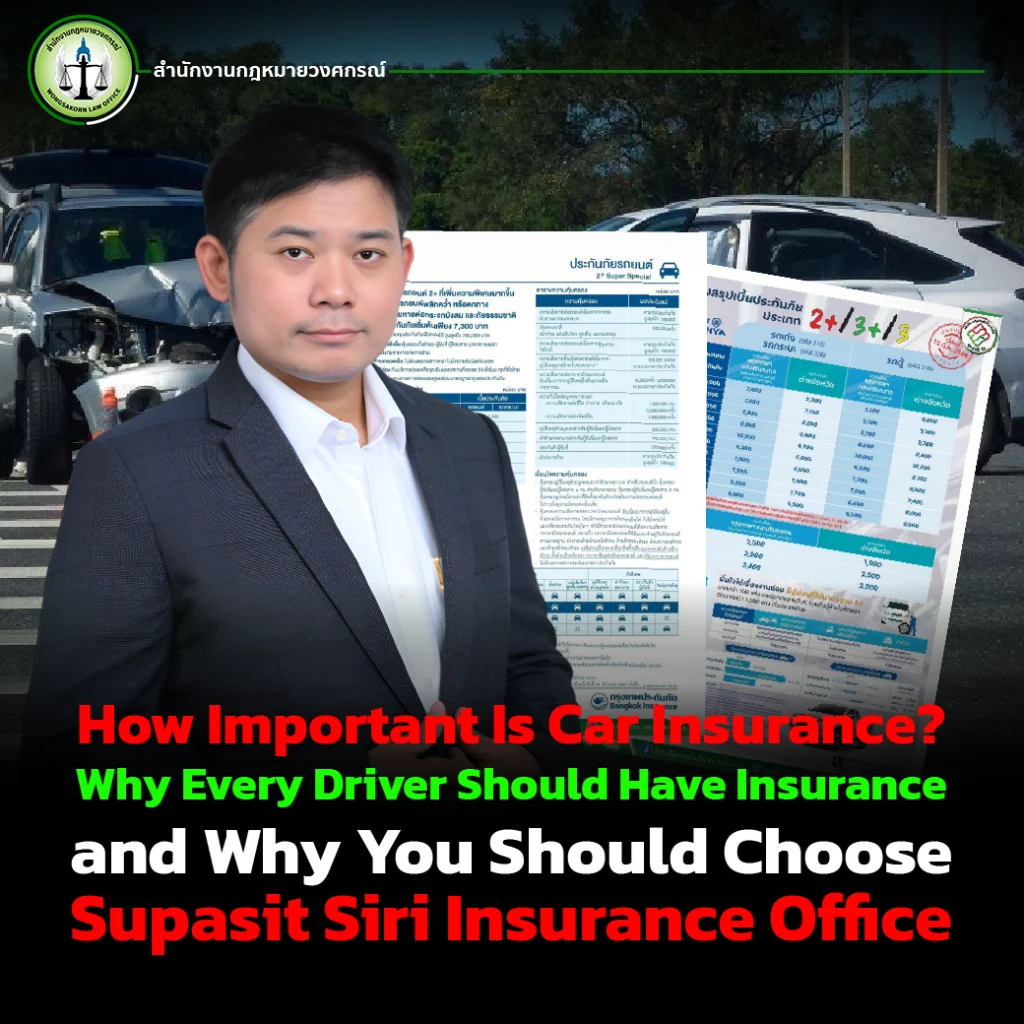
Insurance Today, automobiles are an essential part of daily life, whether for commuting to work, traveling, or conducting business. However, road accidents can happen at any time without warning. The best way to reduce financial risks and potential losses is to have car insurance or motor insurance.
Many people still view “insurance” as an unnecessary expense. In reality, insurance is a form of proactive risk management. When an unexpected incident occurs, the resulting costs can be many times higher than the insurance premium. Therefore, having insurance is something every driver should prioritize.
What Is Car Insurance and What Does It Cover?
Car insurance is a contract between the insured person and an insurance company to provide protection against damages caused by accidents or unforeseen events, such as:
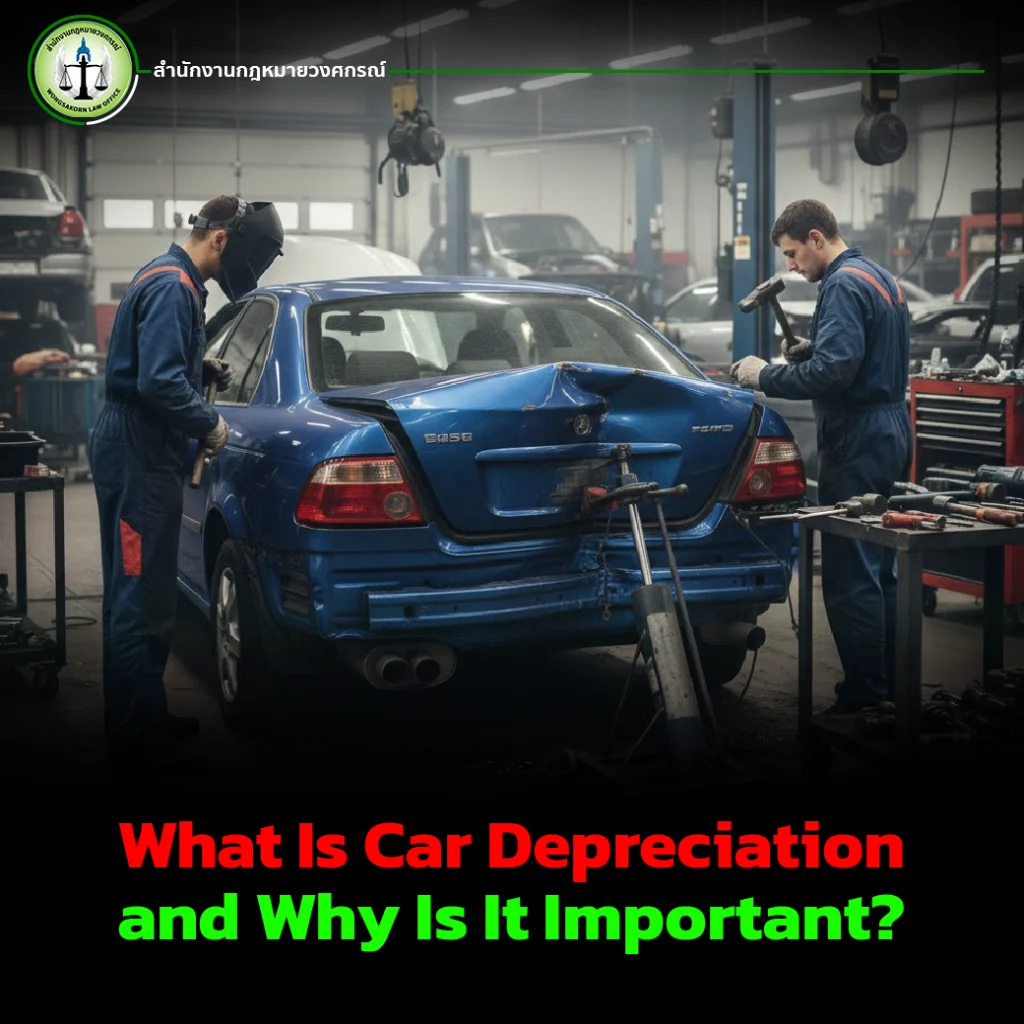
- Repair costs for the insured vehicle
- Repair costs for the other party’s vehicle
- Medical expenses
- Compensation in cases of injury or death
- Property damage
- Legal expenses and litigation costs
Car insurance does not only protect the vehicle but also covers the lives and property of the driver, passengers, and third parties.
Why Is Having Car Insurance Necessary?
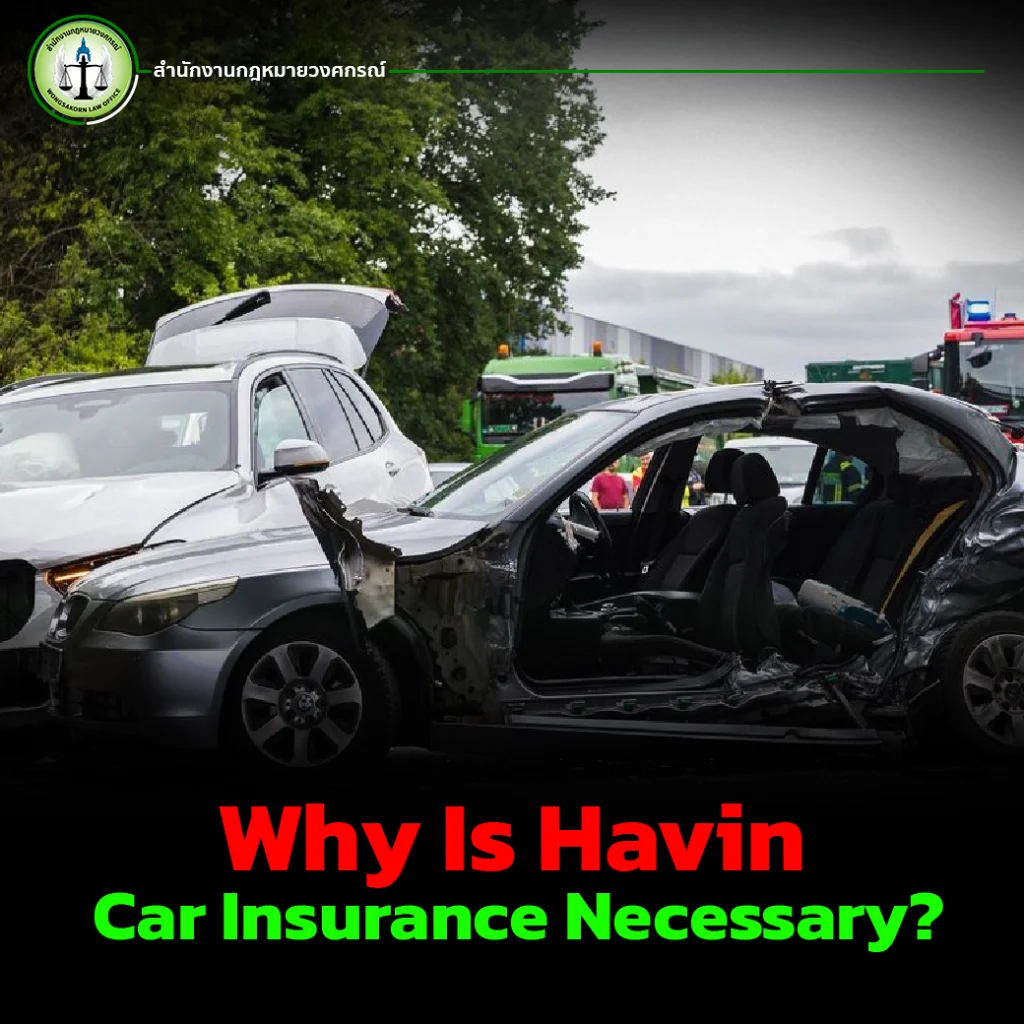
Road accidents do not choose a time or place. Sometimes, in just a split second, damages can reach hundreds of thousands or even millions of baht. Without insurance, the driver may have to bear all expenses personally, which could seriously affect financial stability.
Having car insurance helps to:
- Reduce financial risks
- Provide assistance when accidents occur
- Prevent facing problems alone
- Increase peace of mind on every journey
Insurance is therefore not a luxury but a necessity for every driver.
Advantages of Car Insurance
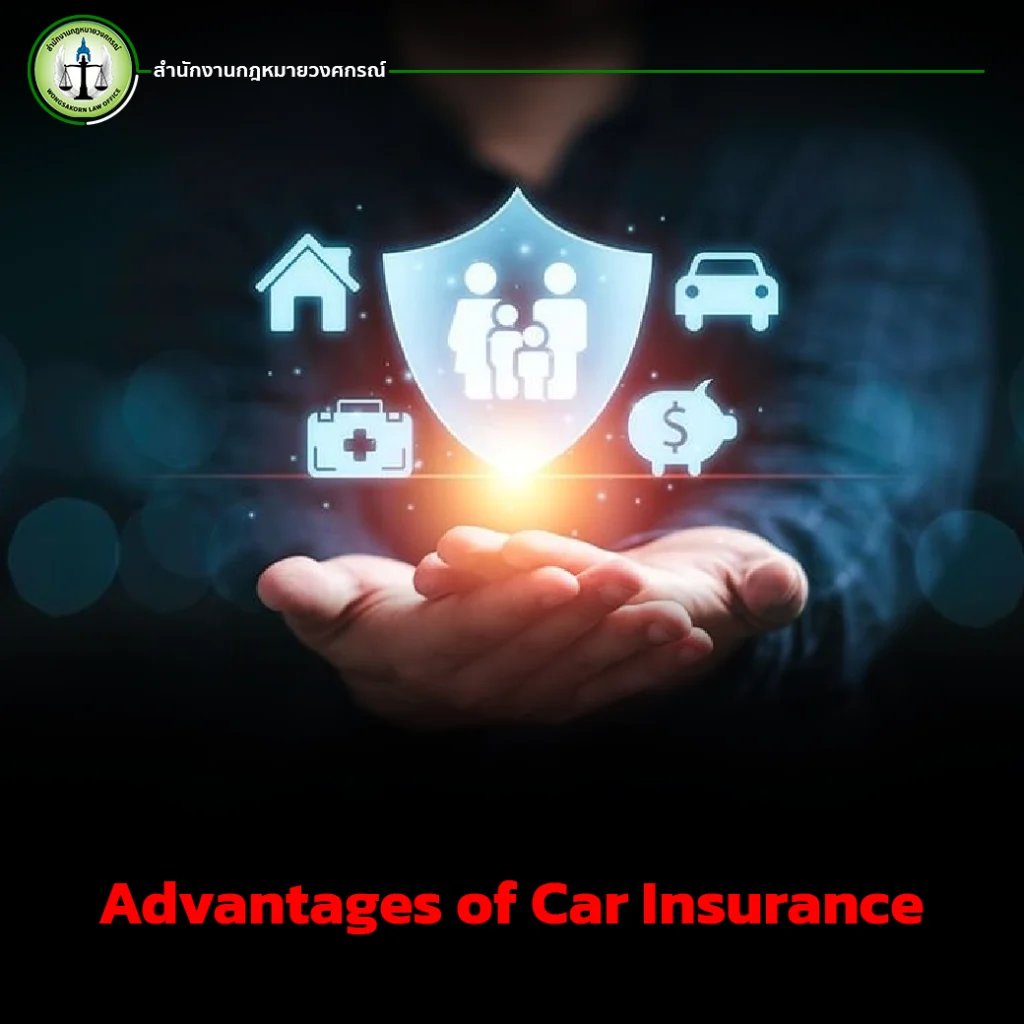
1. Reduces Major Financial Burden
When an accident occurs, the insurance company will be responsible for damages according to the terms and conditions of the policy.
2. Covers Both Vehicle and People
Insurance protects the car, the driver, passengers, and third parties.
3. Professional Assistance in Handling Problems
In case of disputes or legal proceedings, a team of experts will provide guidance and support.
4. Increases Confidence in Driving
Drivers can travel with less worry about unexpected incidents.
Disadvantages of Car Insurance You Should Know
Although insurance provides many benefits, there are also important considerations, such as:
- Annual insurance premiums must be paid
- Some cases require a deductible
- Policy terms and conditions can be complex
- Choosing an unsuitable plan may result in less coverage than expected
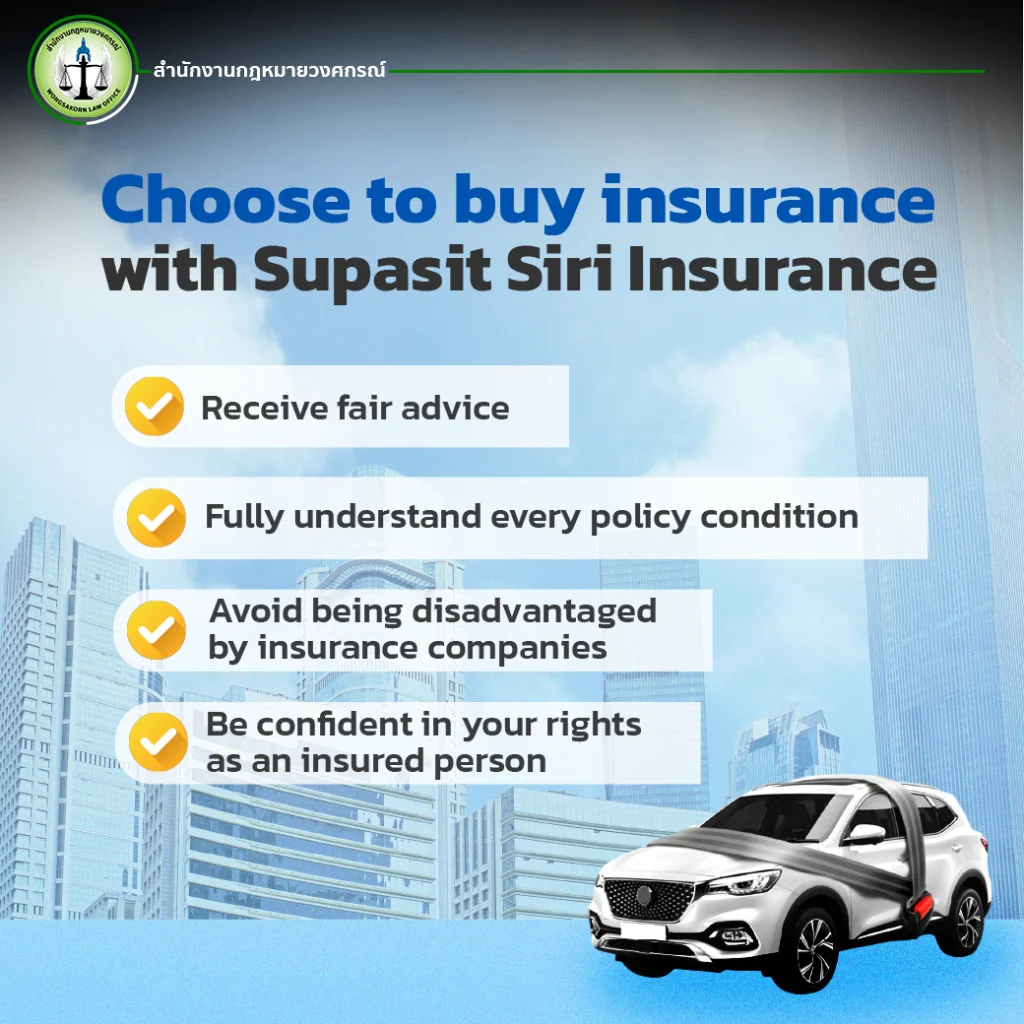
Therefore, selecting a knowledgeable and reliable service provider who offers proper advice is extremely important.
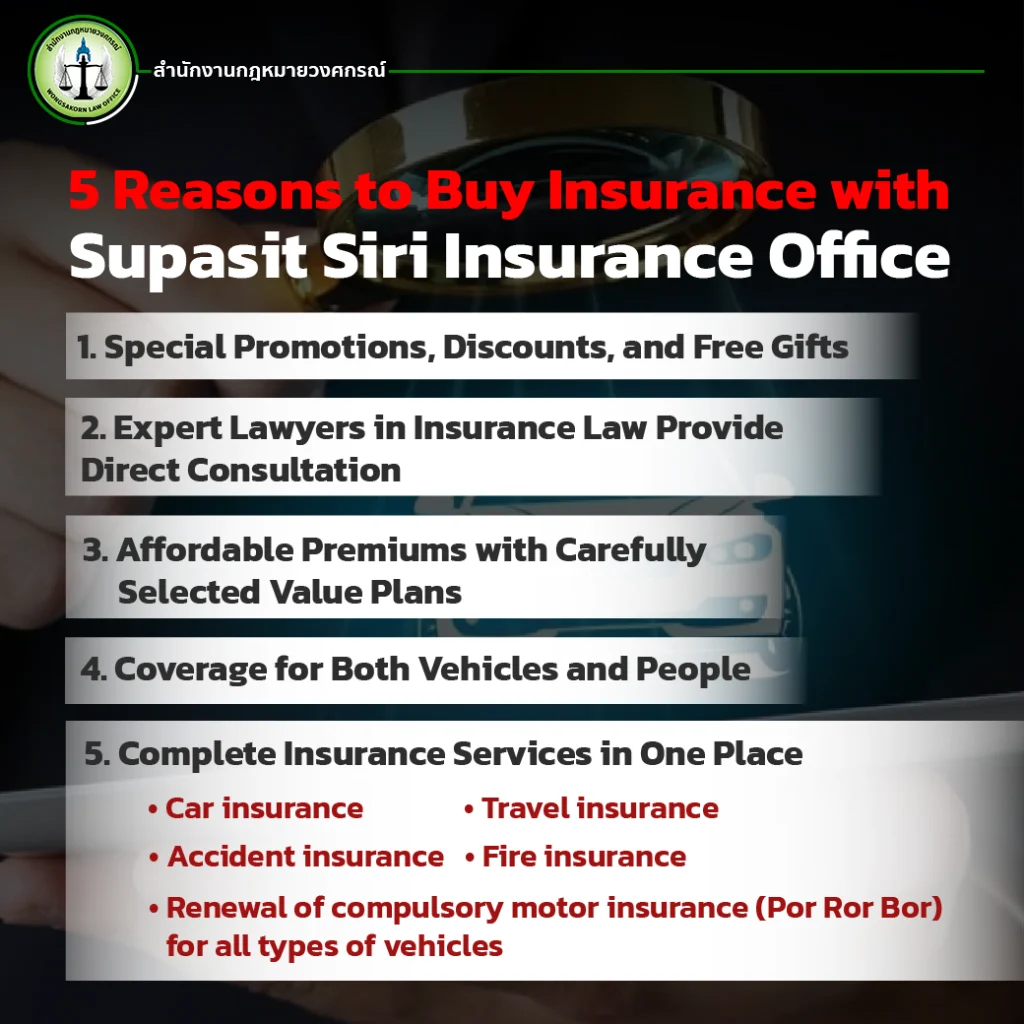
1. Special Promotions, Discounts, and Free Gifts
Customers receive better value than purchasing insurance on their own, including discounts and additional benefits.
2. Expert Lawyers in Insurance Law Provide Direct Consultation
A key advantage is having lawyers who specialize in insurance cases to assist customers. This ensures that clients do not lose out to insurance companies and fully understand their legal rights.
3. Affordable Premiums with Carefully Selected Value Plans
Only insurance plans that best match customers’ needs are selected, reasonably priced and truly beneficial.
4. Coverage for Both Vehicles and People
Insurance plans cover vehicles, lives, and property of all parties involved in accidents.
5. Complete Insurance Services in One Place
Services include:
- Car insurance
- Travel insurance
- Accident insurance
- Fire insurance
- Renewal of compulsory motor insurance (Por Ror Bor) for all types of vehicles
Customers can manage all insurance matters in one convenient location.
Good Insurance Helps Create a More Secure Life

With the right insurance, you will:
- Live with greater peace of mind
- Reduce financial burdens when accidents occur
- Receive professional support
- Protect both your property and your family
Insurance is not just a document it is a safeguard for your future.
Choose Valuable Insurance. Choose Experts to Take Care of You.
If you are looking for car insurance and general insurance that offer true value, professional consultation, and fair treatment, choosing a provider with expertise in both insurance and legal matters is the best decision.
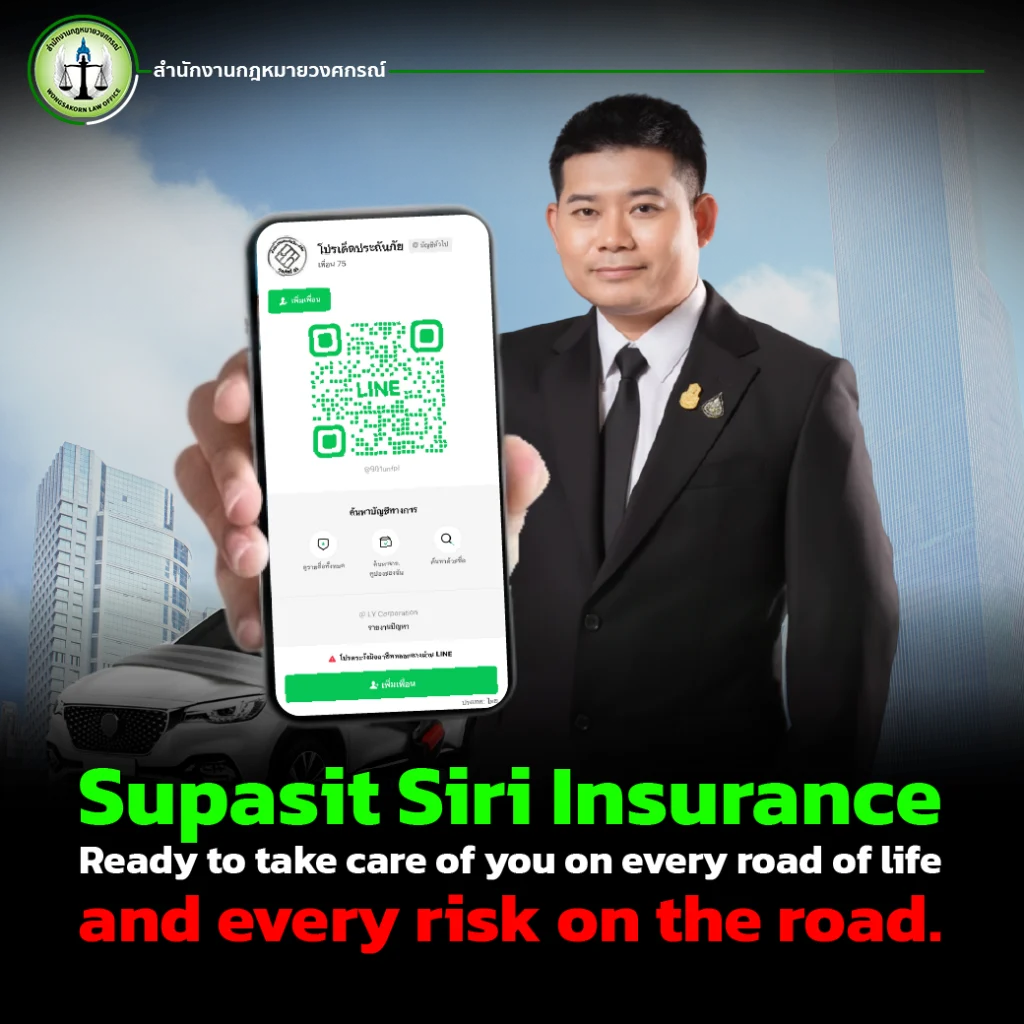
Good insurance, complete solutions in one place – Supasit Siri Insurance Office
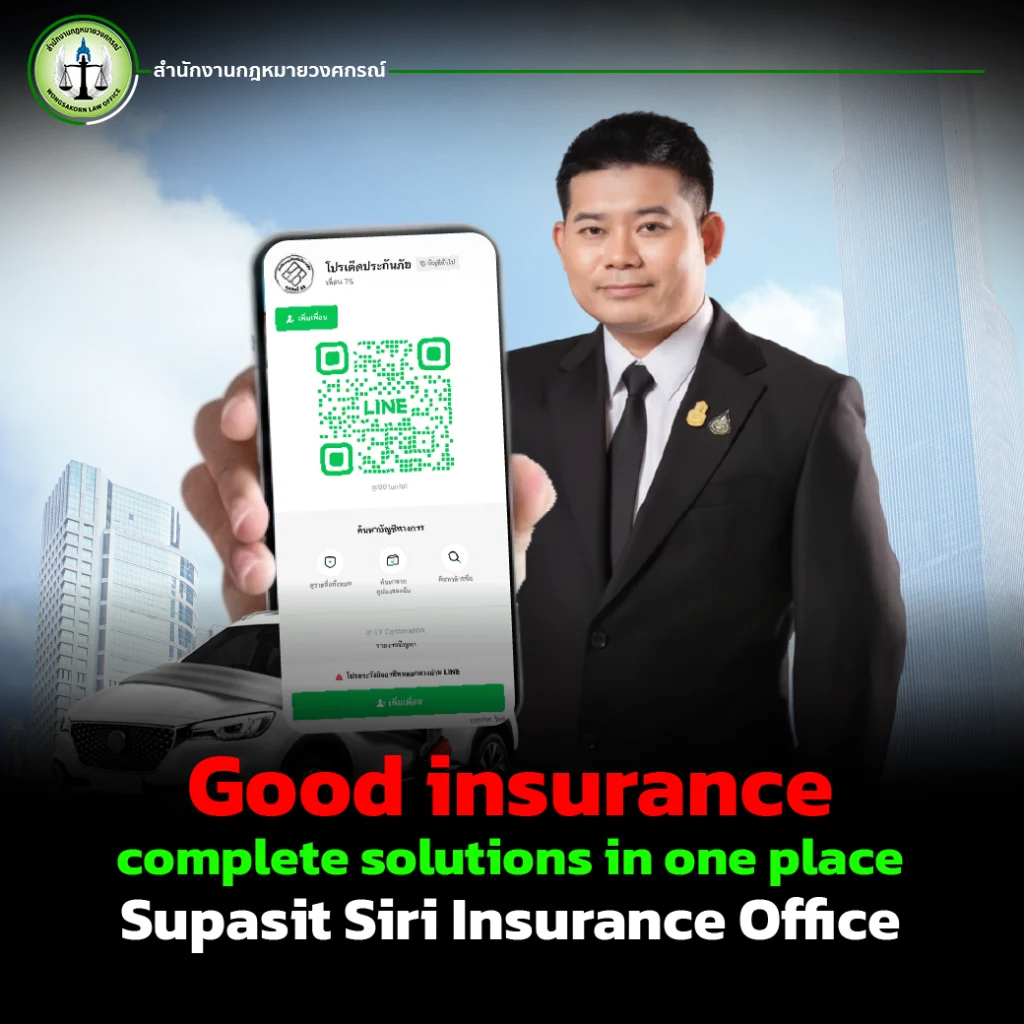
- Excellent promotions
- Professional lawyers available for consultation
- Affordable premiums
- Coverage for both vehicles and people
- All types of insurance in one place
Do not wait until an accident happens before thinking about insurance.
Start planning your protection today for peace of mind on every journey.