Labor Law 10 Recurring Problems Employers Face and How Legal Advisors Provide Solutions

In the world of business whether SMEs, medium-sized enterprises, or large organizations, labor law is one of the most problematic areas. It often creates issues that repeatedly occur in a “cycle,” to the point where many employers begin to see them as normal.

However, in reality, these problems should not occur in the first place if proper systems are established and a legal advisor is involved from the beginning.

This article from Wongsakorn Law Firm analyzes 10 common labor law problems faced by business owners, identifies their root causes, and provides professional prevention strategies by legal advisors who understand both law and business.


Why Are Labor Law Problems So Difficult to Solve?

Interestingly, labor law issues are not caused solely by “difficult employees.”

In many cases, they stem from employers themselves such as unclear employment contracts, lack of understanding of labor laws, reliance on personal management experience, or the absence of a legal advisor to establish proper systems from the start.

As a result, small issues accumulate over time and eventually turn into major problems.

10 Common Labor Law Problems Employers Face

1. Lack of Proper Employment Contracts

Many businesses rely on verbal agreements or generic templates from the internet, making them ineffective in disputes.

2. Improper Termination Procedures

Employers may terminate employees without valid cause or fail to follow legal procedures, leading to unnecessary compensation payments.

3. Sudden Employee Resignations

Especially in service industries, employees may resign without notice, while contracts lack enforcement provisions.

4. Overtime (OT) Issues

Incorrect calculations or lack of time-tracking systems often result in wage disputes or complaints filed with labor authorities.

5. Lack of Clear Company Regulations

Without written policies on lateness, absenteeism, leave, or discipline, employers cannot enforce rules properly.

6. Non-compliance with Labor Laws

Such as excessive working hours or lack of required benefits, often leading to complaints and disputes.

7. Employee Lawsuits

Employers are often at a disadvantage due to insufficient documentation or lack of legal support.

8. Overpayment of Compensation

Employers may unknowingly pay more than required due to misunderstanding legal obligations.

9. Opportunistic Employees

Some employees exploit legal loopholes or weak contracts to claim excessive benefits.

10. Repeated Unresolved Problems

Problems recur because root causes are never addressed properly.


These Problems Should Not Be “Normal”

Many employers become accustomed to these issues, assuming they are part of doing business.

In reality, every problem has a root cause and can be prevented with proper labor law systems and guidance from a legal advisor.

Legal Advisors The Key to Breaking the Cycle

A legal advisor does more than solve disputes; they prevent problems from happening.

Establish Strong Employment Contracts

  • Tailored contracts for your business
  • Eliminate legal loopholes

Create Clear Company Policies

  • Legally enforceable regulations
  • Clear operational guidelines

Provide Legal Guidance During Issues

  • Correct legal strategies
  • Reduce litigation risks

Help Employers Make Confident Decisions

No guesswork decisions are based on legal principles.

Don’t Wait Until Problems Arise

A common misconception is to hire a lawyer only after issues occur. By then, damages are often unavoidable.
A legal advisor exists to prevent problems, not just fix them.


Sustainable Businesses Manage Risks

Successful businesses are not only good at sales they excel in risk management.

Labor law is one of the most critical risks, and having a legal advisor is essential for long-term stability.


Legal Advisors from Wongsakorn Law Firm

If you are a business owner facing labor law issues or want to prevent them entirely Wongsakorn Law Firm is ready to assist.

Lawyer Arm, both a lawyer and business owner, understands labor challenges deeply because these issues exist in every organization and he has experienced them firsthand.

Why Choose Us?

Focus on prevention rather than correction

Expertise in both legal and business perspectives

Practical solutions not just theoretical advice

Stop Labor Law Problems Before It’s Too Late

Labor law issues are not minor and should not be repeated. Without a legal advisor, the potential damage may exceed expectations.

Start today, build the right system and ensure sustainable business growth.
Click here to contact us

Legal Advisor for SMEs: The Key to Solving Employee and Contract Issues Before They Escalate into Lawsuits

Why SMEs Need a Legal Advisor More Than Ever

In today’s SME business landscape whether you run a café, restaurant, service business, or small-to-medium enterprise challenges go far beyond sales and marketing.

One of the most persistent and stressful issues is internal problems, especially those related to employees and contracts.

What’s more concerning is that these problems often never truly go away. They tend to repeat themselves in cycles if there is no legal advisor guiding the business from the very beginning.

Common SME Problems: Employee and Labor Issues

Many SME business owners have experienced situations like these:

Endless Labor Problems

-Employees resign suddenly without prior notice

-Employee misconduct but uncertainty on how to handle it legally

-Termination followed by lawsuits from employees

-Lack of properly structured employment contracts

Many businesses rely on personal judgment when managing staff, which may not align with labor laws leading to disputes later on.


Contracts You Don’t Fully Understand but Have to Sign

-Opening a café with a long, complex lease agreement full of legal terms

-Not fully understanding the conditions, yet needing to sign to start the business

-Signing first, then worrying about being taken advantage of later

This is where hidden risks begin, often accepted unknowingly by business owners.


Business Grows… But So Do the Risks

Even if your business is running smoothly, underlying issues can accumulate over time:

-Incomplete documentation

-Weak or unclear contracts

-Improper employee managementEventually, these can turn into major legal problems when disputes arise.

The Real Impact More Costly Than You Think

Many underestimate small business issues, but in reality, the consequences can be severe

Unnecessary Financial Loss

-Paying excessive employee compensation unknowingly

-Losses from unfavorable contract terms

Fines due to non-compliance with laws


Loss of Time and Opportunities

-Repeatedly solving the same problems

-Time wasted on disputes instead of business growth

-Missed business opportunities


Risk of Legal Action

-Labor disputes

-Contract disputes

-Business litigation

Once these issues escalate, the costs and damages are significantly higher than prevention.

A Legal Advisor Is the Solution for SMEs

Business owners must understand that legal issues should not be addressed only after they arise.

Having a legal advisor is like having a “protective shield” for your business, minimizing risks from the start.


Proper Employee and Labor Management

-Structuring employment contracts

-Legal guidance on termination

-Reducing the risk of lawsuits


Contract Review Before Signing

-Analyzing contract advantages and disadvantages

-Revising unfair terms

-Preventing long-term disadvantages


Ongoing Business Legal Support

-Immediate consultation whenever questions arise

-No need to wait until problems occur

-Helping business owners make confident decisions

Smart Business Owners Don’t Wait for Problems

Sustainable SME growth is not just about sales or marketing it’s about risk management.

One of the best strategies is having a legal advisor from Wongsakorn Law Firm supporting your business behind the scenes.A small investment today could save you hundreds of thousands or even millions in the future.

Special Promotion from Wongsakorn Law Firm

For SME owners and entrepreneurs who want professional legal support

Monthly Legal Advisor Package

Only 10,000 THB per month


What You Will Receive?

✔ Document/Contract Review (up to 3 documents)
(Maximum 5 pages per document)

✔ Unlimited Legal Consultation Calls
(Subject to availability)

Why Start Today?

❗ Reduce risks before problems arise
❗ Have a legal expert like your in-house legal team
❗ Make business decisions with confidence

Take Your Business Further with Legal Support

Employee issues, contract problems, and business disputes will never truly end without professional legal guidance.

Don’t wait until problems arise by then, it may be too late.

Investing a small amount today can save your business significantly.

Contact us via Line ID: @Wongsakorn or click Contact Us

Let a trusted legal advisor from Wongsakorn Law Firm support your business and help it grow sustainably in the long term.

Foreigners Investing in Thailand: Do You Have a Legal Advisor Before Starting Your Business?

A legal advisor is one of the most essential elements for foreign investors. Thailand has long been recognized as a key destination for international investment due to its strong economic potential, strategic location in Southeast Asia, and diverse business opportunities ranging from real estate and tourism to restaurants and service industries.

However, one critical question that many investors overlook is
“Do you already have a legal advisor?”Although Thailand welcomes foreign investment, there are strict legal requirements and limitations that must be followed. Having a legal advisor who understands Thai laws and regulations is therefore absolutely essential.

Thailand Welcomes Foreign Investment But You Must Enter the Right Way

The Thai government actively promotes foreign investment through various initiatives, such as incentives from the Board of Investment (BOI) and allowing foreign shareholding in certain sectors.

However, not all businesses are fully open to foreign ownership. Under Thai law particularly the Foreign Business Act there are restricted business categories, including

-Businesses related to national security

-Industries where Thai nationals are not yet ready to compete

-Certain service sectors

Without proper legal guidance from a legal advisor, foreign investors may unknowingly operate in violation of the law.

Common Problems: Wrong Investment Structure, High Legal and Financial Risks

Many foreign investors enter Thailand with misunderstandings, such as

-Using “nominee shareholders” (the most common issue)

-Establishing a company without understanding shareholding restrictions

-Entering into business contracts without legal review

-Failing to obtain required licenses before starting operations

The consequences can be severe, including license revocation, legal penalties, and significant financial losses.

All of these risks can be avoided with proper guidance from a legal advisor from the very beginning.

Why Is a Legal Advisor Important for Foreign Investors?

A legal advisor is not only there to resolve disputes but also to plan ahead and ensure that your business operates legally and sustainably.

1. Structuring Your Business Correctly

-Choosing the right business structure (Limited Company / BOI / Joint Venture)

-Ensuring compliant shareholding structures

-Avoiding nominee-related risks

2. Licensing and Compliance

-Foreign Business License (FBL)

-Industry-specific licenses (restaurants, hotels, import-export businesses)

3. Contract Drafting and Review

-Joint venture agreements

-Lease agreements

-Employment contracts

-Sales and purchase agreements

Well-drafted contracts can significantly prevent future disputes.

4. Tax and Legal Planning

-Proper tax structuring

-Compliance with labor laws

-Accurate accounting practices

How Risky Is It to Invest Without a Legal Advisor?

Imagine a foreign investor planning to open a restaurant in Thailand with millions in capital but without knowing:

-Which licenses are required

-Whether using a nominee shareholder is legal

-Whether the lease agreement contains unfavorable terms

The result could be

-Investigation for illegal nominee arrangements

-Disadvantageous contracts

-Inability to continue the business

The losses are not only financial but also include lost business opportunities.

How to Start Investing in Thailand the Right Way

If you are a foreign investor interested in doing business in Thailand, here are the key steps:

1. Consult a Legal Advisor Early

Do not wait until problems arise by then, it may be too late.

2. Study Your Business Category

Check whether your business falls under restricted categories.

3. Set Up the Right Business Structure

Ensure your investment complies with Thai law.

4. Prepare Documents and Obtain Licenses

Complete all legal requirements before starting operations.

5. Review All Contracts

Every contract big or small should be reviewed or drafted by a legal advisor.

Why is a Legal Advisor the Key to Business Success?

In business, starting correctly is more important than fixing problems later.

A legal advisor helps you Minimize legal risks, save long-term costs, Operate with confidence, Build credibility with partners and government authorities

Especially in a country like Thailand, where specific laws apply to foreign investors, having a legal expert is not optional, it is essential.

Don’t Invest in Thailand Without a Legal Advisor

Although Thailand offers many opportunities for foreign investors, ensuring that your business is legally compliant is the most important factor.

Do not let a lack of knowledge lead to costly mistakes.

Because a good legal advisor does not just solve problems, they prevent them before they arise, and form the foundation of your long-term business success in Thailand.

 Contact us today to consult with a legal advisor and start your business in Thailand with confidence.

Contractor Abandonment & Overpayment Risk: Millions Lost Due to Poor Contract Review

Contractor abandonment In today’s environment, where construction and real estate investments continue to grow in value, “contractor abandonment” has become one of the top risks faced by project owners. This is especially true in cases where a project is less than 50% complete, yet payments have already exceeded the actual value of work done resulting in losses of millions, or even tens of millions.

This article explores the issue from a legal perspective and provides practical ways to prevent it.

What is “Contractor Abandonment” and Why Does It Happen?

“Contractor abandonment” refers to a situation where a contractor fails to complete the project as agreed in the contract, or stops work midway without valid reason. It is often accompanied by issues such as:

-Significant project delays

-Substandard work quality

-Overbilling or early withdrawal of funds beyond actual progress

-Avoidance of communication or disappearance

Common causes include poor financial management, taking on more work than they can handle, or even intentional fraud from the beginning.

Case Example: Half the Work Done, But Most of the Money Already Paid

Imagine a construction project worth 20 million. The project progresses to only 40–50% completion, yet the owner has already paid 60–70% of the total contract value.

The consequences include:

-Hiring a new contractor (usually at a higher cost)

-Repairing or redoing defective work

-Possible legal action to recover losses

The damage goes beyond the money already paid; it also includes hidden costs such as delays and rework.

A Critical Mistake Using Contractor-Drafted Contracts Without Legal Review

One of the most common mistakes is signing a contract prepared by the contractor without having it reviewed by a lawyer.

Typical issues found in such contracts include

1. Contractor-Favored Terms

-Easy payment terms with no performance guarantees

-No penalties for delays

-No deductions for substandard work

2. Unclear Work Milestones

-No defined percentage of completion required for each payment

-Lack of a structured inspection and acceptance process

3. Lack of Owner Protection

-No penalty clauses

-No bank guarantee or performance bond

-No clear termination conditions

These gaps make it much easier for contractors to abandon the project.

Why Should You Have a Lawyer Review or Draft the Contract?

Hiring a lawyer is not an unnecessary expense, it is an investment in risk prevention. A lawyer can

-Review contract details and eliminate loopholes

-Align payment schedules with actual progress

-Add protective clauses and penalties

-Plan for dispute resolution in advance

For a 20 million project, the losses caused by a weak contract can far exceed legal fees.

How to Prevent Contractor Abandonment

If you are planning to hire a contractor, you should:

1. Check the Contractor’s Background

-Review past projects

-Look for reviews or past disputes

-Verify company and financial information

2. Use a Strong Contract

-Have it drafted or reviewed by a lawyer

-Clearly define milestones

-Specify penalties for breach

3. Pay Based on Actual Progress

-Avoid large upfront payments

-Use a consultant or engineer to inspect work

4. Require Performance Security

-Bank Guarantee

-Performance Bond

5. Keep Complete Documentation

-Contracts

-Progress photos

-Payment records

These are crucial if legal action becomes necessary.

What to Do If a Contractor Abandons the Project?

If you are facing this issue, take action immediately:

  1. Consult a lawyer to plan your legal strategy
  2. Review contract terms for termination and damages
  3. Issue a formal termination notice
  4. Assess the total damage

In some cases, you may be able to recover payments or claim additional compensation through legal action.

A Good Contract Protects More Than You Think

Contractor abandonment is not uncommon and often stems from early-stage negligence, especially failing to properly review the contract.

Remember

If you are about to hire a contractor, do not overlook the importance of a well-drafted contract and professional legal review. It is your strongest protection in any construction project.

For legal consultation, click >>Contact Us<<

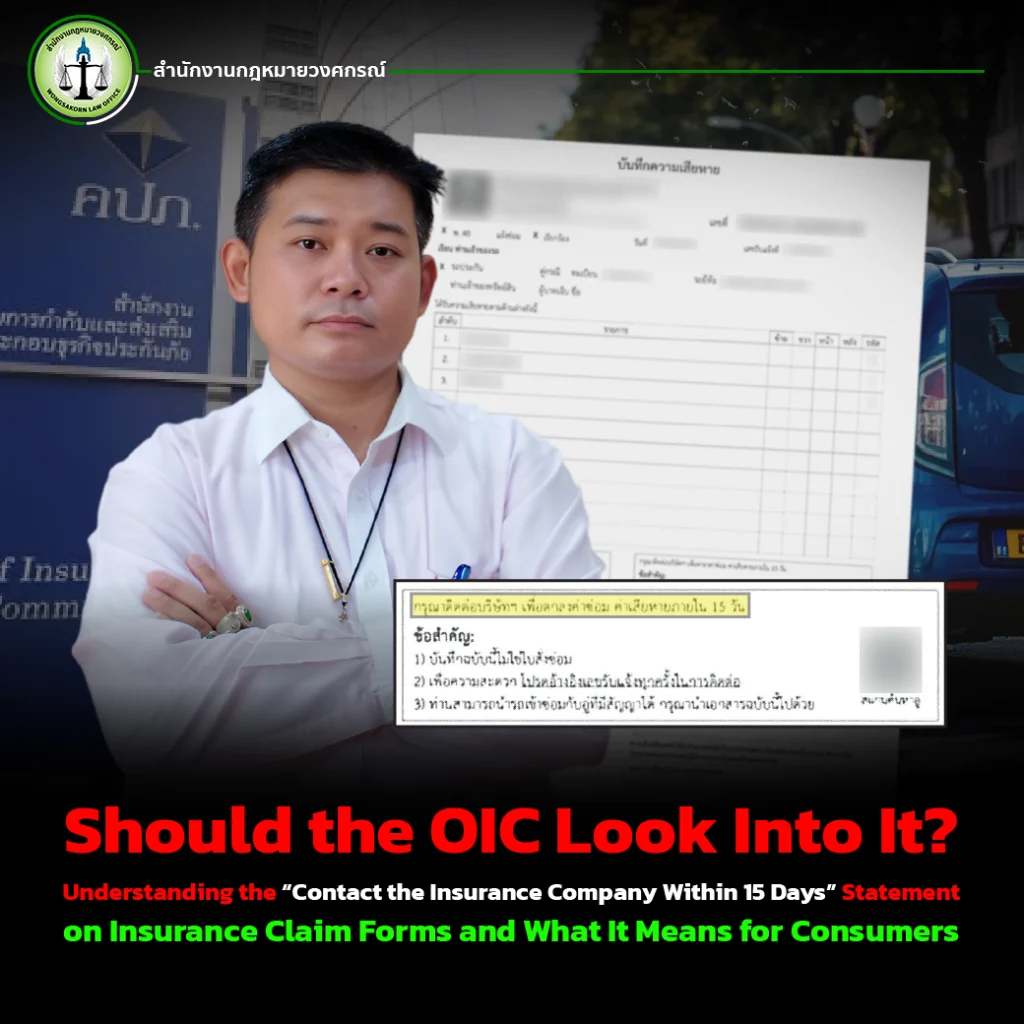
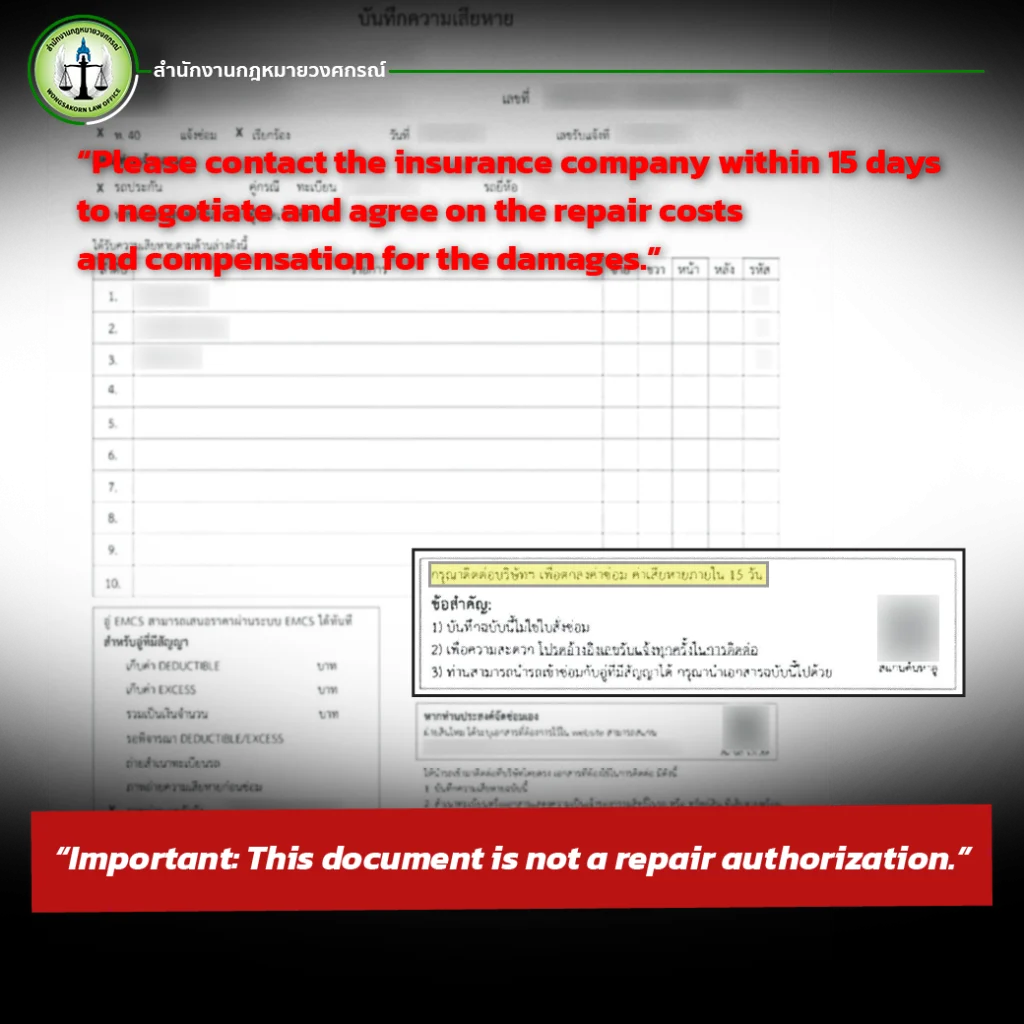
Can the OIC Really Help Consumers? A Real Case Perspective and What You Need to Know

In today’s world, insurance has become essential not only for drivers on the road but also for business operators such as auto repair companies (like our client). One key organization many people are familiar with is the Office of Insurance Commission (OIC), the regulatory body responsible for overseeing insurance companies and assisting the public in dispute situations.

But the crucial question is Can the OIC truly help consumers?

This article by Wongsakorn Law Firm takes a closer look at a real case, offering legal insights to help you better understand the OIC’s role and who you should rely on to avoid losing your rights.

What Does the OIC Do?

The OIC’s main responsibilities include

-Regulating the insurance industry

-Protecting policyholders’ rights

-Acting as a mediator in disputes

-Providing arbitration as an alternative to court proceedings

On paper, it sounds like a reliable support system for consumers. However, in practice, things do not always work out that way.

A Real Case Assignment of Claim but Losing in Arbitration

In one notable case, an auto repair company received an assignment of claim from a customer, allowing it to directly claim repair costs from the insurance company.

However, during the OIC process and arbitration, the insurance company argued:

“We were never notified of the assignment of claim.”

This was despite the fact that all relevant documents had already been submitted during the OIC process.

The Turning Point An Internal Issue at the OIC

The critical issue in this case was that an OIC officer failed to properly record a key document.

As a result, the arbitrator ruled that there had been no valid notification, causing the repair company (our client) to lose the case in arbitration.

This raises an important question: Who does the OIC really serve?

Justice from the Court

Although the case was lost at the arbitration stage, the matter was later brought before the court and the outcome was completely different.

The court ruled in favor of our client, citing Section 306 of the Civil and Commercial Code, which states that once a debtor has been informed of an assignment of claim, the assignment is legally valid.

The court found that notification had indeed occurred. As a result:

-The assignment of claim was legally effective

-The arbitration award was set aside

-Justice was ultimately delivered by the court, not the OIC

Is the OIC Still Reliable?

This case highlights several important realities:

-The OIC is not a court of law

-Arbitrators can make errors in evaluating evidence

-Internal processes may have flaws

-Arbitration awards can be challenged and overturned

From our experience handling insurance disputes, such cases where arbitration decisions are overturned are not uncommon.

What Should Consumers Do When Facing Insurance Disputes?

If you are involved in an accident and need to claim compensation from an insurance company, here are key precautions

1. Do Not Rely on Verbal Assurances

Always ensure everything is supported by clear documentation.

2. Monitor the OIC Process Carefully

Even after filing a complaint, follow up to ensure all documents are properly recorded and no key facts are overlooked.

3. Do Not Depend Solely on Arbitration

While faster, arbitration is not always accurate or fair.

4. Consult a Lawyer Early

This is the most important step. An experienced lawyer can:

-Structure your case correctly from the beginning

-Prevent procedural mistakes

-Develop an effective legal strategy

Having a legal expert in insurance disputes not only prevents you from being disadvantaged by insurance companies but also helps you avoid costly mistakes.

In complex disputes, relying solely on the OIC may cause you to lose your rights without realizing it.

Don’t Place All Your Trust in the OIC

So, can the OIC really help consumers?

The answer is: Yes but not always.

Ultimately, the outcome depends on

-The strength of your evidence

-Legal strategy

-And proper case handling by an experienced lawyer

If You Are Facing an Insurance Dispute

Whether your case involves personal injury or property damage, do not let the situation escalate by filing a complaint with the OIC without proper legal preparation.

Consult with us today. Our legal team specializes in insurance disputes and can:

-Analyze your case

-Develop a strategic legal approach

-Represent you effectively both before the OIC and in court

Because we believe that justice should never depend on systemic errors.

Get legal advice today so you don’t become a victim of the system or insurance companies.

Someone Reposted Your Video Without Permission? Is It Copyright Infringement, Can You Sue, and How Do You Claim Damages?

In today’s digital era, where video content is rapidly growing across platforms like TikTok, Facebook, YouTube, and others, the issue of “video scraping” or unauthorized reposting has become increasingly common.

Many content creators who invest time and effort into producing original videos often suffer significant losses whether in terms of revenue, reputation, or business opportunities.

The key question is:
If your video is taken and reposted elsewhere such as on gambling websites, adult platforms, or other unauthorized channels does it constitute copyright infringement? Can you take legal action, claim damages, or identify the offender?

This article from Wongsakorn Law Office will help you understand your legal rights and the proper steps you can take.

What Is “Video Scraping” and Is It Illegal?

“Video scraping” generally refers to the act of downloading, reposting, or re-uploading someone else’s video content without permission from the original creator.

Under Thai copyright law, a video is automatically protected as a copyrighted work from the moment it is created. Therefore, any unauthorized use typically constitutes copyright infringement, unless it falls under specific legal exceptions (which usually do not apply when the content is reused for personal or commercial benefit).

👉 In most cases, if your video is reposted without permission, it is very likely a copyright violation.

What Are the Impacts of Video Theft?

Some people may think, “It’s just a repost, it doesn’t really cause harm.” In reality, the damage can be significant, such as:

  • Loss of revenue from views or advertisements
  • Missed opportunities to build your brand
  • Audience confusion about content ownership
  • Removal of original credits or replacement with another logo

In some cases, the stolen content may even be used for commercial purposes, leading to even greater financial damage.

What Should You Do If Your Video Is Stolen?

If you are facing this issue, here are the steps you should take immediately:

1. Collect Evidence

  • Take screenshots of the reposted content
  • Save the URL links
  • Record the date, time, and platform

These pieces of evidence are crucial for any legal action.

2. Submit a Takedown Request

Most platforms provide copyright reporting systems, such as:

  • Facebook
  • YouTube
  • TikTok

You can file a request to have the unauthorized content removed.

3. Contact the Offender Directly

In some cases, sending a notice requesting removal can resolve the issue quickly.

4. Consult a Lawyer

If the content is not removed or damages have already occurred, consulting a lawyer is the most important step.

Can You Sue for Copyright Infringement?

The answer is: Yes, you can.

If the situation meets the legal criteria for copyright infringement, the content owner has the right to:

  • File a civil lawsuit to claim damages
  • File a criminal case in cases of intentional infringement

The court will consider factors such as the extent of damage, the behavior of the offender, and whether the content was used commercially.

How Much Compensation Can You Claim?

Damages may include:

-Loss of income (expected earnings)

-Reputational damage

-Legal expenses

In some cases, the court may also award punitive damages if the infringement is considered severe.

What If You Don’t Know Who Reposted Your Video?

Many people worry that they cannot take action because they do not know the identity of the offender.

However, legal action is still possible through

-Requesting information from the platform

-Investigating user accounts

-Using digital evidence and forensic methods

These steps require both legal expertise and technical knowledge, making the role of a lawyer essential.

Why Should You Consult a Lawyer?

Handling unauthorized video use is not just about removing the content it directly involves your legal rights.

A lawyer can help you Structure your case properly, Collect and secure digital evidence, Analyze legal details, Develop strategies to claim damages Most importantly, legal assistance ensures that you are not at a disadvantage and increases your chances of receiving fair compensation.

Don’t Ignore It If Your Video Is Stolen

If your video has been reposted without permission, do not treat it as a minor issue.

What you lose may not be just a single video but your opportunities, income, and reputation.

👉 You have legal rights
👉 You can claim damages
👉 You can take legal action against the offender

Consult a Lawyer for the Right Solution

If you are facing this issue and don’t know where to start, Wongsakorn Law Office is here to help.

We provide Legal consultation on copyright infringement cases, Case analysis and litigation strategy, Damage claims and legal proceedings, Assistance in identifying offenders. We understand that content creators deserve fair protection.

Contact us today to protect your rights before the damage becomes more severe.

Know Your Insurance: “Get fully treated first, then we’ll discuss compensation” Genuine Advice or a Strategy to Avoid Paying?

When a car accident occurs, especially in cases involving injuries, one of the most common phrases victims hear from insurance companies is

It may sound like well-intentioned advice. However, in reality, this statement could be merely a “strategy” used by insurance companies to delay or avoid paying compensation. If victims believe this, they may unknowingly lose their legal rights, and in some cases, end up “suffering for free” without receiving the compensation they deserve.

This article will help you understand insurance tactics, know your rights, and learn what to do after a car accident.

Why You Should Be Cautious About “Settle Later”?

In practice, insurance companies are highly experienced in handling claims and often have strategies to minimize liability or limit payouts.

Common phrases include:

  • “Get treated first”
  • “We’ll settle everything later”
  • “Let’s wait until you fully recover”

Although these sound reasonable, they are often used to delay the process, because the longer it takes, the lower the chances for victims to claim full compensation.

Serious Injuries Never Wait!

-In cases of severe injuries such as

-Bone fractures requiring surgery

-Long-term recovery

-Temporary loss of working ability

You should never wait until full recovery before claiming compensation, because damages include more than just medical expenses

-Loss of income

-Future medical care

-Emotional distress

-Loss of quality of life

Delays may result in missing evidence or incomplete damage assessments.

The Truth You Don’t Need to Wait

Many people misunderstand that they must fully recover before making a claim.

 In reality, this is NOT legally required.

Claims can be pursued alongside medical treatment, and in many cases, the earlier you start, the better your position.

Insurance Tactics You Should Know

Some insurers may

Initially deny claims to test your reaction

-Delay communication

-Request excessive documents

-Offer low compensation

Without legal knowledge, victims may accept less than they deserve.

Timing Is Critical

Time plays a crucial role in injury claims. Delays may lead to

-Lost evidence

-Incomplete evaluations

-Arguments like “you’ve already recovered”

-Reduced compensation

The Right Approach Consult a Lawyer Early

The best way to protect your rights is to consult a lawyer from the very beginning.

A lawyer can help

-Assess your legal rights

-Plan your claim strategy

-Gather evidence

-Negotiate with insurers

-Prevent unfair treatment

Don’t Suffer Without Compensation

Many victims trust insurers too much, delay action, or fail to seek expert advice, resulting in incomplete or no compensation. With proper legal guidance from the start, victims can fully protect their rights.

Awareness Protects Your Rights

The phrase “Get treated first, then we’ll talk” is not always good advice, it can be a tactic.

Remember

-You don’t need to wait to claim compensation

-Acting early gives you an advantage

-Evidence and timing are crucial

-Legal advice prevents loss of rights

Consult a Lawyer Before It’s Too Late

If you or someone close to you has experienced a car accident and heard this from an insurer, don’t wait.

The sooner you act, the better you can protect your rights.

Wongsakorn Law Office is ready to provide legal advice and strategic support from day one so you don’t suffer both physically and legally.

👉 Contact a lawyer today to fully protect your rights without waiting for full recovery.

Compensation for Car Accidents: If You Are at Fault, Can You Still Claim Insurance? Understand Before You Lose Your Rights

Car accident compensation in cases where you are at fault is a topic that often causes confusion. Accidents can happen to anyone whether you are a new driver or experienced. One of the most common questions is:

“If I am at fault, can I still claim compensation from my insurance company?”

Many people have been told by insurers that “you cannot claim because you are at fault,” leading them to believe they have no rights at all. However, in reality, car accident compensation involves more complex legal considerations, and in some cases, the insured may still have the right to claim.

This article and the accompanying video aim to clearly explain what rights you may have when you are at fault, and under what circumstances you can still claim additional compensation from your insurance company.

What Is Car Accident Compensation?

Car accident compensation refers to the amount paid by an insurance company to the insured or injured party to cover damages caused by an accident, such as:

  • Vehicle repair costs
  • Medical expenses
  • Damage to third-party property
  • Loss of use of the vehicle

However, the right to receive compensation depends on the type of insurance policy, policy conditions, and facts of the accident.

If You Are at Fault, Can You Still Claim Compensation?

Consider a real case where a driver lost control and slid off the road. When contacting the insurance company, they were told:

“You cannot claim because you are at fault.”

Legally, this situation must be analyzed in two key scenarios:

1. General Rule: When You Cannot Claim

If the insured is at fault, for example:

  • Crashing into a pole
  • Rear-ending another vehicle
  • Causing an accident due to negligence

In such cases, you generally cannot claim compensation from your own insurance company for damages caused by your own fault, especially if the policy has coverage limitations.

2. Exceptions: When You May Still Claim

Even if you are at fault, you may still be able to claim compensation if the insurance company:

  • Fails to perform its duties
  • Ignores or delays your claim
  • Does not control or manage repair costs
  • Fails to provide reasonable repair estimates
  • Causes unjustified delays (e.g., waiting indefinitely for assessment)
  • Rejects your claim without valid reasons

In such cases, you may claim damages resulting from the insurer’s negligence or improper conduct.

Examples of Claimable Situations

Case 1:
You caused the accident, but the insurer delays repairs excessively
➡ You may claim compensation for loss of use

Case 2:
The insurer fails to coordinate repairs
➡ This may be considered negligence

Case 3:
The insurer rejects your claim without clear justification
➡ You may challenge the decision

👉 Therefore, being at fault does not always mean losing all rights to compensation.

Key Techniques for Claiming Compensation

Successfully claiming compensation in such cases requires Legal analysis, Evidence collection, Proper case structuring, Strategic claim presentation.

In practice, how the case is structured legally can significantly affect the outcome.

Importance of Having Car Insurance

Car insurance remains essential because it helps reduce financial burdens after an accident. Even if not all damages are claimable, insurance still covers:

  • Third-party liability
  • Medical expenses
  • Property damage

Choosing the right policy and understanding its terms is crucial.

Why Should You Consult a Lawyer?

Many people try to handle claims themselves. However, insurance disputes can be legally complex, especially when dealing with insurer misconduct.

Consulting a lawyer early helps you

  • Understand your rights
  • Evaluate your claim
  • Plan legal strategy
  • Avoid losing benefits

Being at Fault Doesn’t Mean Losing All Rights

Being at fault does not automatically mean you lose all rights to compensation. It depends on the facts and the insurer’s conduct.

If the insurance company acts improperly, delays, or rejects claims unfairly, you still have the right to seek compensation.

Consult a Lawyer to Protect Your Rights

If you are involved in a car accident whether at fault or not consulting a lawyer early is the best decision.

Proper legal guidance from the beginning can help you secure full compensation and protect your rights.

Wongsakorn Law Office, led by Lawyer Arm, is ready to assist you with professional legal strategies to safeguard your interests.
👉 Contact us today

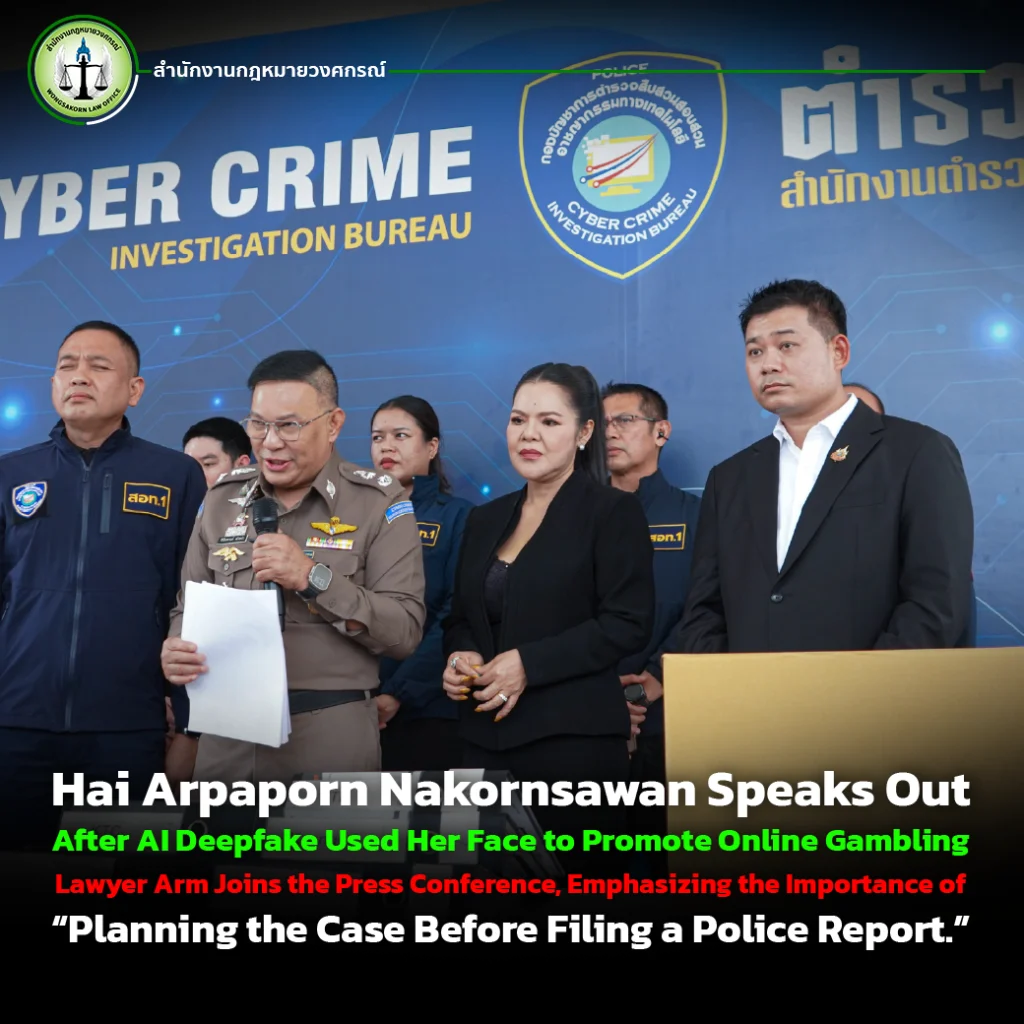
Hi Apaporn Joins Hands with Legal Counsel to Protect Copyright and Reputation Appoints Wongsakorn Law Office as Legal Advisor

On March 2, 2026, Hi Apaporn Nakhonsawan, a renowned Thai singer and actress, entrusted and appointed Supasit Siri (Lawyer Arm) from Wongsakorn Law Office to serve as her legal advisor. His role is to oversee and handle legal matters related to copyright protection, including taking legal action against individuals who unlawfully use the artist’s media content, such as images, audio, and videos that have been altered or disseminated in ways that cause damage to her reputation.

The issue currently arising involves the unauthorized use of media belonging to well-known public figures on online platforms. In particular, images, audio, or videos of artists are often misused to invite or persuade the public to participate in online gambling websites or lottery platforms. Such content is frequently distributed through various social media platforms. These actions not only constitute copyright infringement but also create public misunderstanding, leading people to believe that the owner of the media is involved in inappropriate activities. This directly affects the artist’s public image, credibility, and reputation that has been built over many years.

For Hi Apaporn Nakhonsawan, who has been a prominent figure in the Thai entertainment industry for a long time, the misuse of her name and image inevitably damages the trust of her fans, as well as employers and followers who have continuously supported her work. Therefore, appointing legal counsel to take legal action is an important step in protecting the artist’s rights and reputation, while also pursuing legal proceedings against those who misuse her media. This effort also aims to prevent further harm to society and to consumers who may be deceived by such false representations.

This action reflects the importance of protecting copyright and reputation in the digital era, where information can spread rapidly across the online world. Having a legal team to oversee and handle such matters systematically will help track down offenders and utilize legal processes to effectively stop rights violations. It also helps establish standards for protecting the works and public image of public figures in online society.

Defamation through Google Reviews and Social Media: What Can Victims Do?

In the digital age, where anyone can easily post, comment, or leave reviews online, online defamation has become one of the most common legal issues. Whether it is posting harsh reviews on Google, public shaming on Facebook, attacking someone on TikTok, or spreading damaging information in messaging groups, all of these actions may constitute defamation under the law.

Many people mistakenly believe that “it’s just a review” or “just expressing feelings” is not illegal. In reality, if a statement causes damage to another person’s reputation, subjects them to contempt, or leads to public hatred, it may immediately fall under defamation.
This article explains what online defamation is, what victims can do, whether reviews can be removed, and why consulting a lawyer is an important solution.

What Is Online Defamation?

Online defamation is the act of making false statements or publishing messages, images, videos, or other content through online platforms in a way that damages another person’s reputation, exposes them to contempt, or causes them to be hated by society. This applies to individuals, business owners, companies, shops, and organizations alike.

Common examples include:

  • Writing Google reviews using harsh language such as “fraud,” “scam,” or “this shop is evil” without evidence
  • Posting someone’s name, photo, and personal information together with accusations
  • Publicly attacking or encouraging mass harassment on social media
  • Sharing false or distorted information that harms another person’s image

Even if the poster claims it is “personal opinion,” if the message harms another person’s reputation, it can still be considered defamation.

When Does a Google Review Become Defamation?

Posting a business review is not illegal if it is an honest opinion based on real experience, such as slow service, poor food quality, or dissatisfaction with service. However, it becomes defamation when:

  • Harsh or insulting language is used without evidence
  • False or misleading information is provided
  • There is intent to damage reputation or harass
  • Others are encouraged to attack the business or individual

The line between “honest review” and “defamation” depends mainly on the intent and the content of the statement.

What Should You Do If You Are Defamed Online?

If you become a victim of online defamation, it is important not to react emotionally but to proceed systematically:

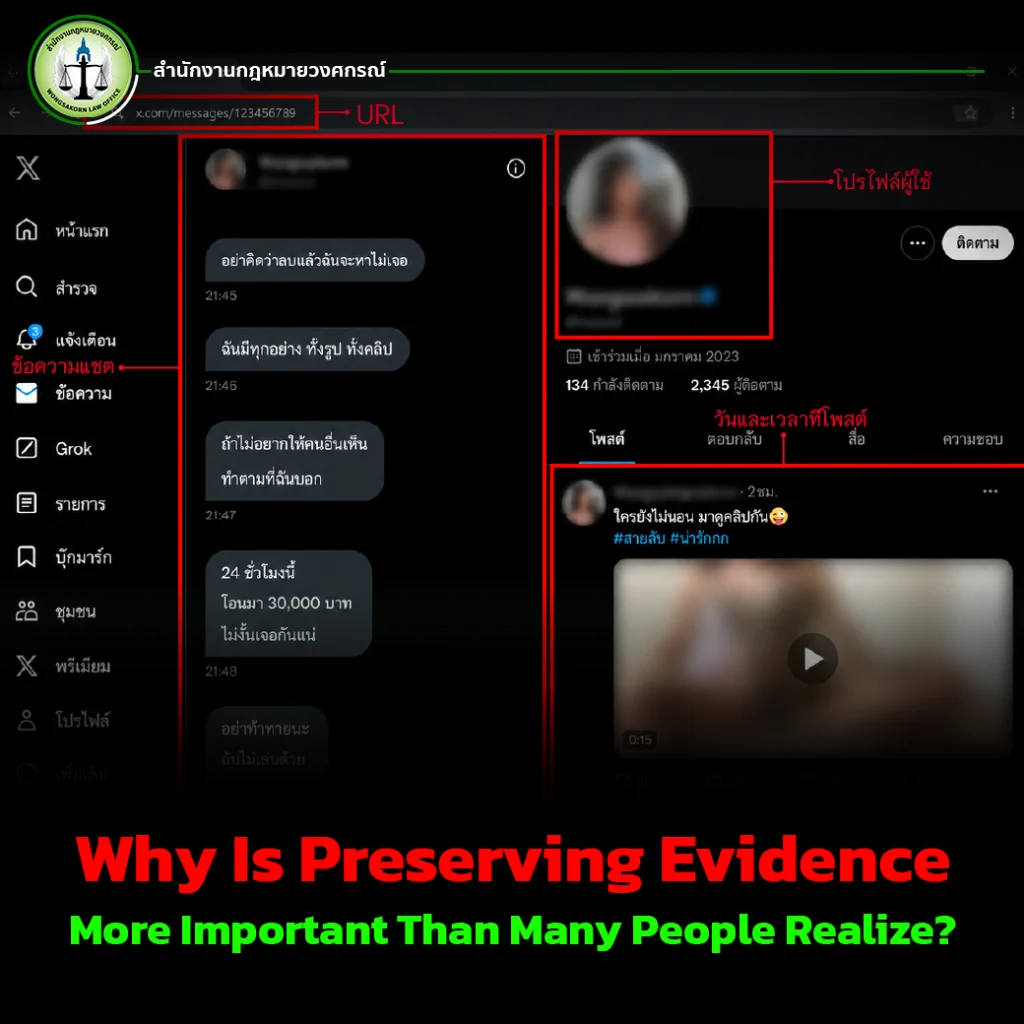
1. Collect Evidence Immediately

Such as:

  • Screenshots of the messages
  • URLs or links to the posts
  • Date, time, and account name of the poster
  • Profile photos or related information

This evidence is crucial for legal proceedings.

2. Consult a Lawyer

A lawyer can help determine:

  • Whether the content constitutes defamation
  • Whether to pursue a civil or criminal case
  • Whether to start with negotiation or file a police report

Having legal guidance from the beginning reduces procedural mistakes and risks.

3. Request Removal of the Post or Review

In many cases, it is possible to:

  • Report the content to platforms such as Google or Facebook
  • Send a legal notice or warning letter
  • Ask the poster to delete or correct the statement

Some disputes can be resolved without going to court.

Can the Offender Be Identified?

Many people believe that using fake accounts or aliases makes them untraceable. In reality, if the case involves defamation, legal procedures can be used to:
  • Request IP address information
  • Obtain user data from online platforms
  • Use investigators and legal authorities to identify the offender

Posting defamatory content online does not exempt anyone from legal responsibility.

Damage Caused by Online Defamation

The impact is not limited to emotions but includes:

  • Loss of reputation and credibility
  • Decrease in income or business revenue
  • Misunderstanding by society
  • Stress and psychological harm
  • Escalation of conflicts

In some cases, victims may file civil lawsuits demanding significant compensation.

Why Should You Consult a Lawyer When Defamed?

Consulting a lawyer provides many advantages:

  • Legal evaluation of the strength of the case
  • Guidance on lawful content removal
  • Drafting legal warning letters
  • Representing victims in legal proceedings
  • Systematic protection of rights and reputation

Lawyers do not only file lawsuits; they can also seek the most appropriate solution, such as negotiation, mediation, or legal action when necessary.

Defamation Is Not a Minor Issue in the Online Era

In the past, defamation occurred within limited circles. Today, a single post can reach thousands or even tens of thousands of people within minutes. The damage is therefore far more severe.
Both posters and victims should realize that:

  • Opinions must be expressed honestly and responsibly
  • Harsh language carries legal risks
  • Reputation is an asset that must be protected

Online Defamation Has Legal Solutions When the Law Is Used Properly

Whether you are defamed through Google reviews or attacked on social media, you do not have to endure the damage alone. The law provides options to:

  • Remove unlawful content
  • Identify the offender
  • Take legal action to seek justice

Consulting a lawyer from the beginning is the safest and most effective approach.

If you are facing online defamation, do not let a small issue become a major problem. Protecting your reputation means protecting your future in the digital world.

Line @ คลิก! โทรหาเรา คลิก!